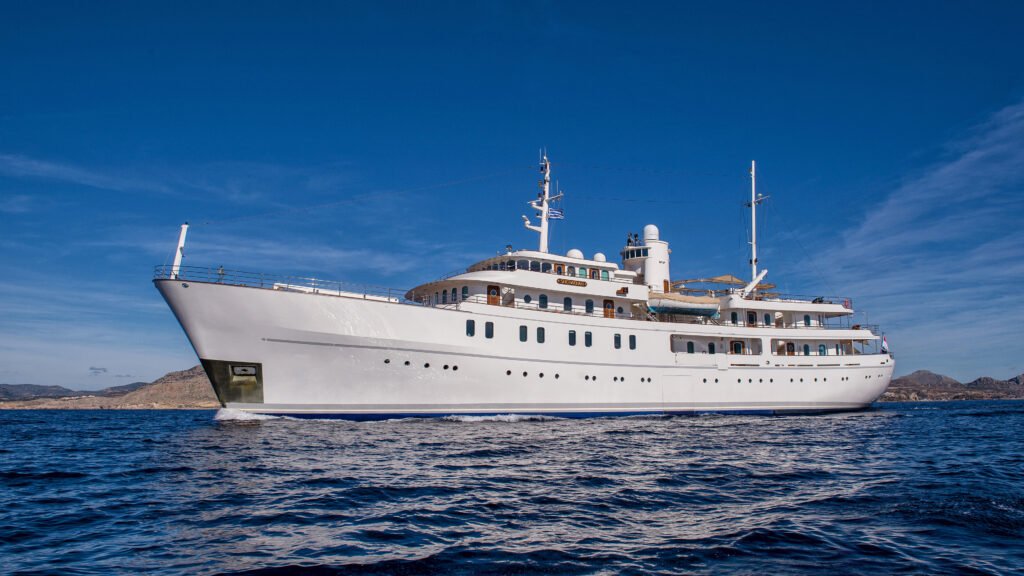
Buying a yacht for charter is not about turning ownership into a guaranteed investment product. It is about making ownership work harder.
For many buyers, the appeal is clear. A yacht offers personal freedom, privacy and time on the water. Charter adds another dimension: the ability to generate income when the yacht is not in private use, offset a portion of annual operating costs and strengthen the yacht’s market profile through visibility, professional management and consistent utilisation.
The best buy-to-charter decisions are not driven by emotion alone. They come from understanding the relationship between acquisition price, charter rate, seasonality, operating costs, crew, location, guest appeal and resale value.
The market moves in layers. A 40-foot day boat in Miami or Monaco operates on a very different model from a 50-metre superyacht in the Mediterranean. A 100-metre yacht sits in another category entirely, where scarcity, prestige and ultra-high-net-worth demand shape the economics.
The principle remains the same: the right yacht, in the right market, with the right positioning, can make ownership more strategic.
What does buy-to-charter mean?
Buy-to-charter is the acquisition of a yacht with the intention of offering it for charter when the owner is not using it privately.
The yacht remains an asset for personal enjoyment, but charter income helps reduce the net cost of ownership. Depending on the yacht, location and management structure, this may cover a meaningful share of annual running costs. In some high-volume day charter markets, well-positioned boats can produce particularly strong percentage returns relative to their purchase price.
But it is important to be precise. Charter income is not pure profit. Revenue must be viewed against operating costs, crew, maintenance, insurance, berthing, marketing, agency commissions, management fees, refit cycles and downtime.
The strongest buy-to-charter strategies begin with a realistic view.
Not every yacht belongs in charter. Not every charter yacht produces the same return. And not every owner wants the level of use required to maximise revenue.
Why charter appeal matters when buying
A yacht with strong charter appeal usually has a few defining qualities: an attractive layout, generous guest areas, easy water access, reliable systems, strong crew accommodation, practical storage and a recognised brand or design profile.
For day boats, charter appeal often comes down to capacity, comfort, deck space, music, shade, speed and ease of boarding. For larger yachts, the drivers become more layered: full-beam master suites, beach clubs, wellness spaces, toy selection, interior volume, crew service standards, cruising range and destination flexibility.
The yacht must work beautifully for guests.
That does not always mean the largest or most expensive yacht. Sometimes the strongest charter performer is the one that understands its market most clearly: a stylish 40-foot open yacht for Miami day charters, a Pardo-style walkaround for Monaco and the Riviera, a 50-metre steel-hulled yacht for Mediterranean weeks, or a 100-metre-plus icon for milestone charters at the very top of the market.
Charter success is about fit.
Day charters: Monaco, the Riviera and Miami
Day charter is one of the most accessible buy-to-charter models.
In markets such as Monaco, the French Riviera and Miami, demand is driven by short, high-intensity use: birthdays, corporate hospitality, beach club days, waterfront events, family outings and lifestyle-led cruising. Guests want a seamless day on the water without the commitment of a full week.
This makes day boats especially relevant for buyers seeking frequent utilisation.
Models such as the VanDutch 40, Pardo 43 and similar open or walkaround yachts can perform well in these environments. Their appeal is immediate: strong styling, easy boarding, sociable deck layouts, space for 10–12 guests, simple crew requirements and the ability to move quickly between marinas, anchorages and waterfront destinations.
In Monaco and the Riviera, daily charter rates for desirable day boats may sit around €2,000–€3,500 per day, depending on season, model, condition, crew, itinerary and positioning. In Miami, similar day charter demand is shaped by Biscayne Bay, Star Island, Miami Beach, the Sandbar, waterfront restaurants and event-led boating culture. Rates vary widely by size and specification, but the commercial logic is similar: high guest turnover, strong local demand and repeat short-duration bookings.
The attraction is volume. A well-managed day charter boat may operate far more frequently than a larger yacht, particularly in peak season.
The challenge is wear.
High usage brings more cleaning, more maintenance, more cosmetic upkeep and tighter scheduling. Owners must be comfortable with the boat being used often, and they need a management structure that protects both the asset and the guest experience.
Entry-level charter powerhouses
Smaller open yachts can offer one of the clearest buy-to-charter propositions.
Acquisition costs may range from the mid-six figures to under €1 million for many day charter models, depending on brand, age, condition and specification. Compared with larger yachts, barriers to entry are lower, crew requirements are simpler and the operational model is easier to understand.
This is where percentage returns can look attractive. A €350,000–€900,000 day boat operating regularly in a strong market may generate meaningful annual income, particularly if it secures peak-season volume and maintains a sharp guest-facing presentation.
However, high headline returns should be treated carefully. A boat advertised at €2,500 per day does not place that entire amount in the owner’s account. Costs must be deducted: skipper, fuel arrangements, cleaning, berthing, insurance, marketing, booking commissions, maintenance and downtime.
The smarter way to assess the opportunity is cost coverage.
Can charter income cover a portion of mooring, insurance, routine servicing and annual upkeep? Can it reduce the owner’s net holding cost while still preserving time for private use? Can the yacht maintain its condition under commercial activity?
For the right buyer, the answer can be yes.
The 50-metre charter yacht category
At around 50 metres, the buy-to-charter conversation becomes more sophisticated.
This is the territory of substantial yachts with genuine international charter appeal. Yachts such as Benetti B.Now models and Sanlorenzo 52Steel-style vessels sit in a segment that attracts serious weekly charter clients across the Mediterranean and Caribbean.
Rates in this category may range around €300,000–€350,000 per week plus APA for strong examples, depending on age, brand, layout, amenities, season and market demand. Acquisition values may sit in the tens of millions, often around €30 million–€38 million or more for modern, high-quality yachts in this range.
The financial model is different from day charter. Volume is lower, but weekly revenue is significantly higher. A successful season of 8–12 charter weeks can offset a meaningful portion of annual operating costs, which for larger yachts often run at approximately 10–15% of the yacht’s value per year.
This is not a passive structure. It requires professional charter marketing, excellent crew, strong yacht management and a yacht that presents extremely well. Guests at this level expect precision: service, cuisine, toys, itinerary planning, wellness, privacy and a flawless onboard rhythm.
A 50-metre yacht must deliver more than accommodation.
It must deliver a complete experience.
Why 50 metres can be a strategic midpoint
The 50-metre category holds a particular appeal because it can balance prestige, usability and charter economics.
These yachts are large enough to offer the spaces charter guests expect: generous master suites, beach clubs, sundecks, gyms, water toys, multiple guest cabins and strong crew operations. Yet they remain more manageable than the 80-metre-plus and 100-metre-plus segment, where annual operating costs, refit demands and crew numbers escalate significantly.
For owners who want private use with cost recovery, 50 metres can be a compelling point in the market.
The best examples also retain strong resale relevance when they come from respected builders, carry desirable layouts and have been well maintained. A yacht with a proven charter record may appeal to the next buyer, particularly if she shows consistent income potential and disciplined management.
Charter history can support confidence. Poor charter use can do the opposite.
Condition still leads.
The 100-metre-plus market
At the top of the market, buy-to-charter becomes less about percentage return and more about positioning, scarcity and legacy ownership.
Yachts such as Kismet, Ahpo and other 100-metre-plus icons occupy a rare space. Weekly charter rates can exceed €1 million and, for the most significant yachts, move substantially higher. Values may range from well over €175 million to €400 million or more, depending on size, provenance, build quality, age, interior, amenities and market timing.
These yachts attract a different client: ultra-high-net-worth charterers seeking privacy, status, space, service and an experience that cannot easily be replicated. Demand is highly selective. Availability can be limited. Booking decisions may be shaped by reputation as much as specification.
Annual revenue can be substantial, but so are the costs. Crew, maintenance, insurance, technical operations, refits, compliance, berthing and global logistics can reach extraordinary levels. For owners in this category, charter often serves a broader purpose: offsetting some operating costs, keeping the yacht active, maintaining crew excellence and strengthening market visibility.
The return is rarely just financial.
It is strategic.
Operating costs: the reality behind the rate
Any buy-to-charter decision must start with operating costs.
As a broad benchmark, annual running costs for larger yachts are often estimated at around 10–15% of the yacht’s value. This can vary depending on age, flag, crew, cruising programme, maintenance philosophy, class requirements and refit schedule.
For day boats, costs may be simpler but still meaningful: berth, insurance, cleaning, skipper, engine servicing, fuel policy, cosmetic repairs, marketing and booking platform fees. Heavy charter use accelerates wear on upholstery, teak, paint, engines, electronics and soft goods.
For larger yachts, the numbers become more substantial. Crew salaries, provisioning, technical servicing, winter works, shipyard periods, class surveys, uniforms, management, accounting and charter marketing all sit within the operating picture.
A yacht may produce impressive gross revenue and still deliver modest net return once all costs are accounted for.
Clarity matters.
Seasonality and utilisation
Charter demand is seasonal.
In the Mediterranean, peak demand concentrates around summer, particularly July and August. Shoulder seasons can be valuable but more sensitive to weather, events and pricing. The Caribbean typically operates around the winter season, with festive periods commanding particular attention.
Miami is more year-round than many markets, but it still responds to weather, events, holidays, Art Basel, boat shows, spring break, winter demand and local tourism patterns.
Day charter may target high annual utilisation — sometimes using benchmarks around 100–120 days for strong markets — while larger yachts may focus on 8–12 weeks of premium charter activity. The right benchmark depends entirely on the yacht and location.
Owners should avoid assuming full occupancy. A strong buy-to-charter model should still make sense under realistic utilisation, not only under best-case conditions.
Personal use versus charter income
The central tension in buy-to-charter ownership is simple: the best charter periods are often the same weeks owners want to use the yacht.
A Mediterranean yacht will generate the strongest demand in peak summer. A Miami day boat may be most valuable during events, holidays and high-season weekends. A Caribbean yacht may command its best rates during festive periods.
Owners need to decide what matters more: personal access or income maximisation.
There is no wrong answer. Some owners prioritise charter revenue and reserve only selected periods for private use. Others use charter to offset costs but protect key family dates. The right strategy depends on the buyer’s lifestyle.
This should be decided before purchase. Not after.
What makes a strong buy-to-charter yacht?
A strong buy-to-charter yacht is easy to understand, easy to market and easy for guests to enjoy.
For day charters, look for open decks, shade, music systems, swim platforms, clean styling, reliable engines, easy boarding, comfortable seating and simple guest flow.
For larger yachts, prioritise cabin layout, crew quality, exterior volume, water access, toy selection, stabilisation, interior condition, wellness spaces, sundeck appeal and a strong charter-friendly specification.
Brand recognition helps. So does recent refit work, professional photography, a clean charter history and a yacht that feels current.
The yacht must give charter guests a reason to choose it.
The Yacht Collection view
At The Yacht Collection, we see buy-to-charter as a useful strategy when approached with discipline. It can reduce the net cost of ownership, support stronger utilisation and give owners a clearer commercial framework around their yacht.
But it should not be oversold.
The best results come from aligning the yacht with the right market. A day boat in Miami or Monaco needs volume, local visibility and operational efficiency. A 50-metre yacht needs strong weekly appeal, experienced crew and premium positioning. A 100-metre yacht needs scarcity, reputation and a management team capable of handling global expectations.
Every decision should be shaped by the same questions: where will the yacht operate, who will charter it, how often can it realistically book, what will it cost to maintain, and how much private use does the owner want to protect?
A buy-to-charter yacht should still be a yacht you want to own.
The income matters.
The experience matters more.
A sharper strategy for ownership.
A clearer view of charter potential.
A more intelligent way to buy.
This approach reflects The Yacht Collection’s focus on clearer yacht discovery, market context and confident guidance through complex ownership decisions.