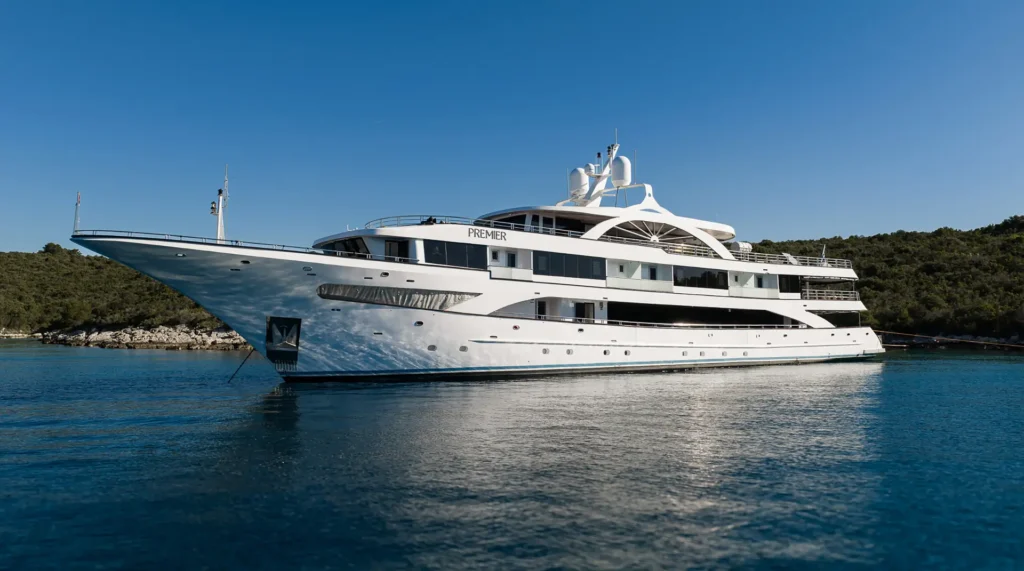
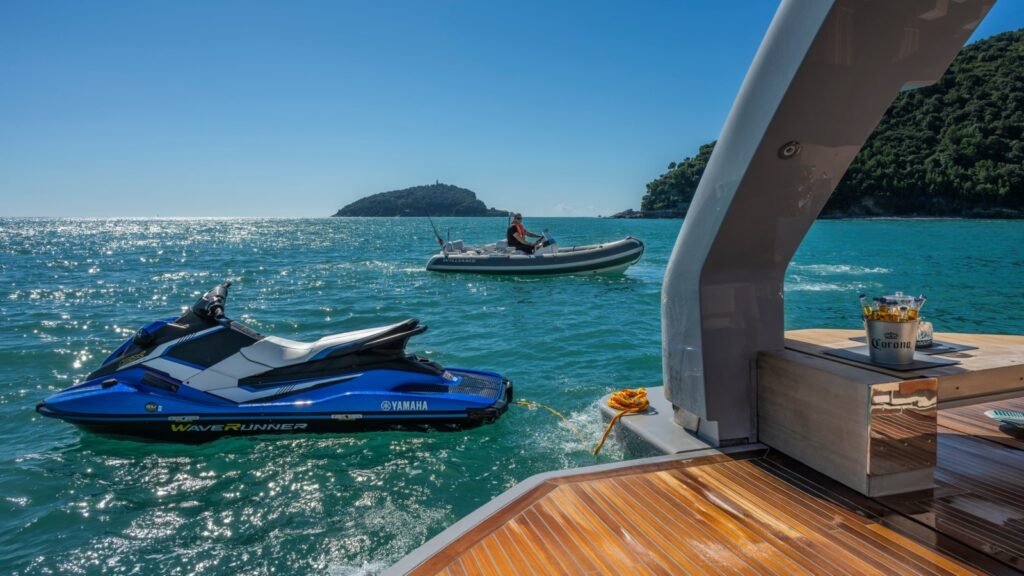
From Pampelonne to the Lérins Islands and Cap Ferrat, time at anchor is one of the pleasures of a Riviera yacht charter. Where your yacht can settle depends on its length, the precise location, protected seabed habitats and local restrictions.
Regulations change, seasonal arrangements differ and temporary measures may apply. Always plan using current official information, with the requirements confirmed for your yacht before arrival. This guide introduces popular stops and explains what the rules mean for your holiday.
Saint-Tropez and Pampelonne
Can we anchor close to our beach club?
Not necessarily. Pampelonne has regulated anchoring areas and an organised mooring system, known as a ZMEL. Your yacht’s size and the location of an available mooring influence where it can stay. A lunch reservation ashore does not reserve a position for the yacht.
Managed moorings provide an alternative to dropping anchor, with bookings and charges handled through the operator. Confirm availability, operating dates and suitability for your vessel in advance. Outside the managed arrangements, the applicable anchoring zones still need checking.
The Gulf of Saint-Tropez has separate mapped arrangements for different yacht sizes. Do not assume that Pampelonne’s rules apply unchanged around Canoubiers or the town. An authorised position farther offshore may mean a longer tender journey to lunch, but respecting the designated areas helps protect the seabed and avoid potentially substantial penalties.
Cannes and the Lérins Islands
Can we drop anchor anywhere between the islands?
The waters around Sainte-Marguerite and Saint-Honorat contain regulated areas, navigation channels and protected seabed. A popular anchorage is not unrestricted simply because other boats are present. The precise position must be checked against current charts and local orders.
Anse Sainte-Anne, north of Sainte-Marguerite, has a seasonal managed mooring area. Cannes currently advertises thirty places for vessels between six and twenty metres, operating from May to September. Its published conditions reserve access to personal-use pleasure vessels, so a charter yacht should not assume eligibility.
Tender journeys also follow local navigation rules. The channel between the islands and authorised anchoring areas have specific speed limits, so access to a restaurant or swimming spot should be planned around the permitted routes.
Cap d’Antibes and Golfe-Juan
Why can a smaller boat sit closer to shore?
Along this coastline, yachts of twenty-four metres and above face specific anchoring restrictions and defined areas. Antibes also applies a buoyage plan within the coastal three-hundred-metre band, with prohibited zones and designated channels.
The permitted position therefore depends on more than water depth. The vessel’s length, local boundaries and seabed must all be considered before selecting a stop. A photograph of another yacht beside the coast is not evidence that your vessel may anchor there.
At Anse du Croûton, an organised mooring zone provides installed moorings with its own access conditions. Anchoring outside the designated devices within the regulated area is prohibited. Confirm suitability rather than treating these buoys as a universal alternative for larger yachts.
Villefranche and Saint-Jean-Cap-Ferrat
Does a sheltered bay mean we can stay anywhere?
Shelter helps determine comfort, but does not establish permission. Villefranche has its own anchoring and navigation order, while neighbouring Cap Ferrat has separate coastal arrangements.
A 2026 Cap Ferrat order reiterates a permanent anchoring prohibition for vessels of twenty metres and above within the commune’s three-hundred-metre coastal band. It separately identifies Villefranche-facing waters as subject to another order. This illustrates why one rule cannot be applied to the whole peninsula.
Share your preferred beaches and restaurants during planning. Your charter team can discuss suitable stops and tender access with the captain, including alternatives if conditions or restrictions prevent the original plan.
What Applies Across the Riviera?
Is anchoring on sand always allowed?
No. Avoiding protected Posidonia is essential, but sand does not override a prohibited zone, navigation channel or managed mooring restriction. The anchoring arrangement must also avoid damaging protected habitats.
Do larger yachts need permission?
Yachts measuring 45 to under 80 metres generally require an anchoring declaration at least one hour before arrival; those 80 metres and above require authorisation. The wider framework also uses a 300 GT threshold for other vessel categories. GT measures enclosed volume, not weight. Smaller yachts still face local restrictions. The applicable requirements should be confirmed before arrival, with any necessary formalities coordinated by the captain, yacht management or local agent, as appropriate. A permitted anchoring area alone does not establish that every requirement has been met.
Can we stay overnight?
Check local duration limits, mooring conditions and weather suitability. A daytime stop does not automatically establish an unrestricted overnight stay. Many vessels not requiring authorisation have a general initial limit of 72 hours, but local rules and temporary measures may change this.
Which information should we trust?
Use current maritime-prefecture orders and appropriate nautical documents. Tools such as DONIA offer a useful visual guide to seabed habitats and anchoring restrictions, but should complement rather than replace official navigation information.
Explore the Riviera with The Yacht Collection, with an itinerary shaped around your preferred stops and the arrangements your yacht requires.