Beneteau / Beneteau Oceanis 42
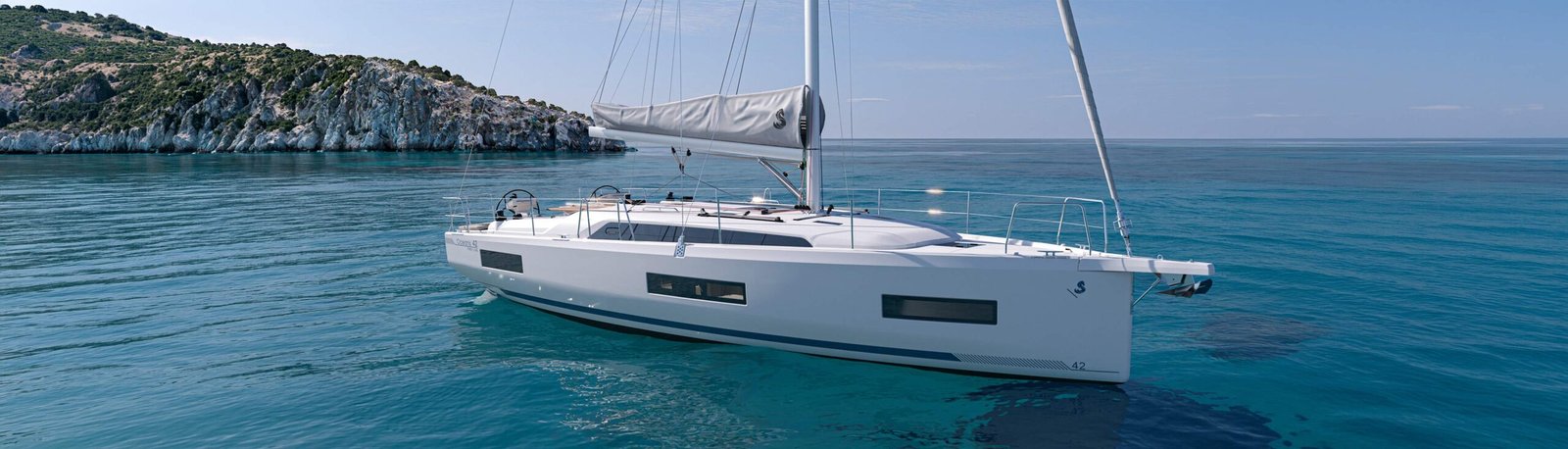
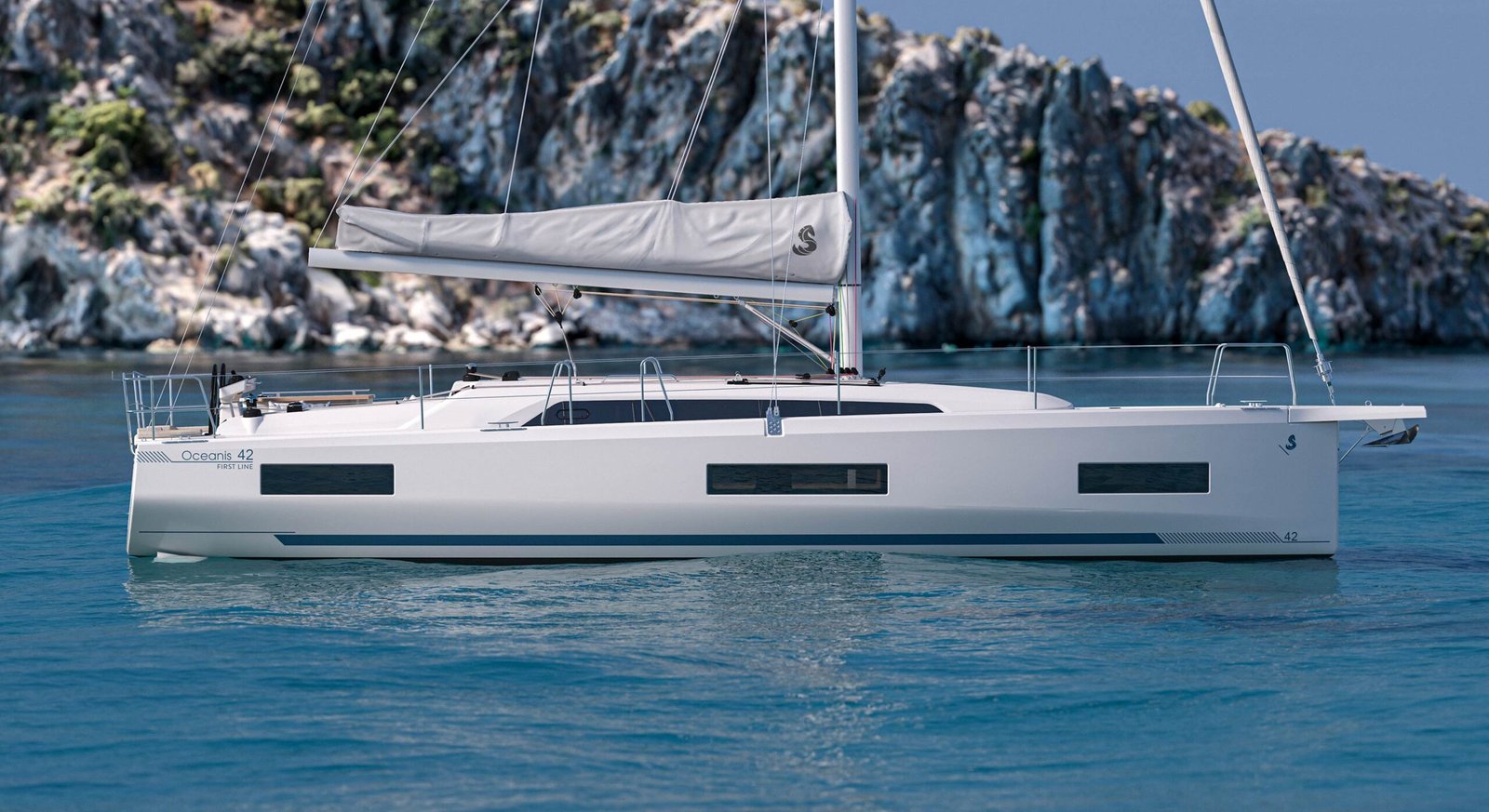
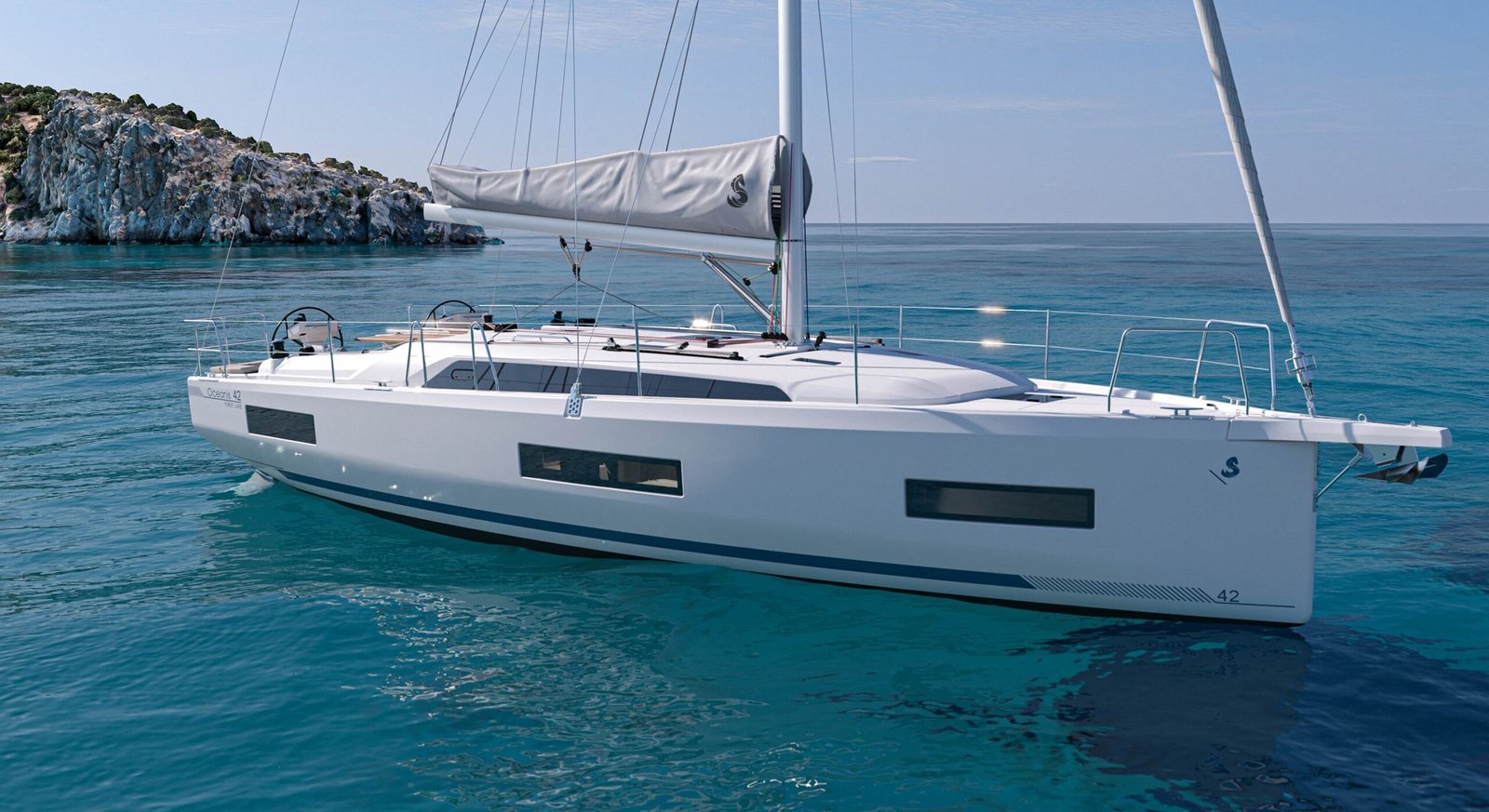
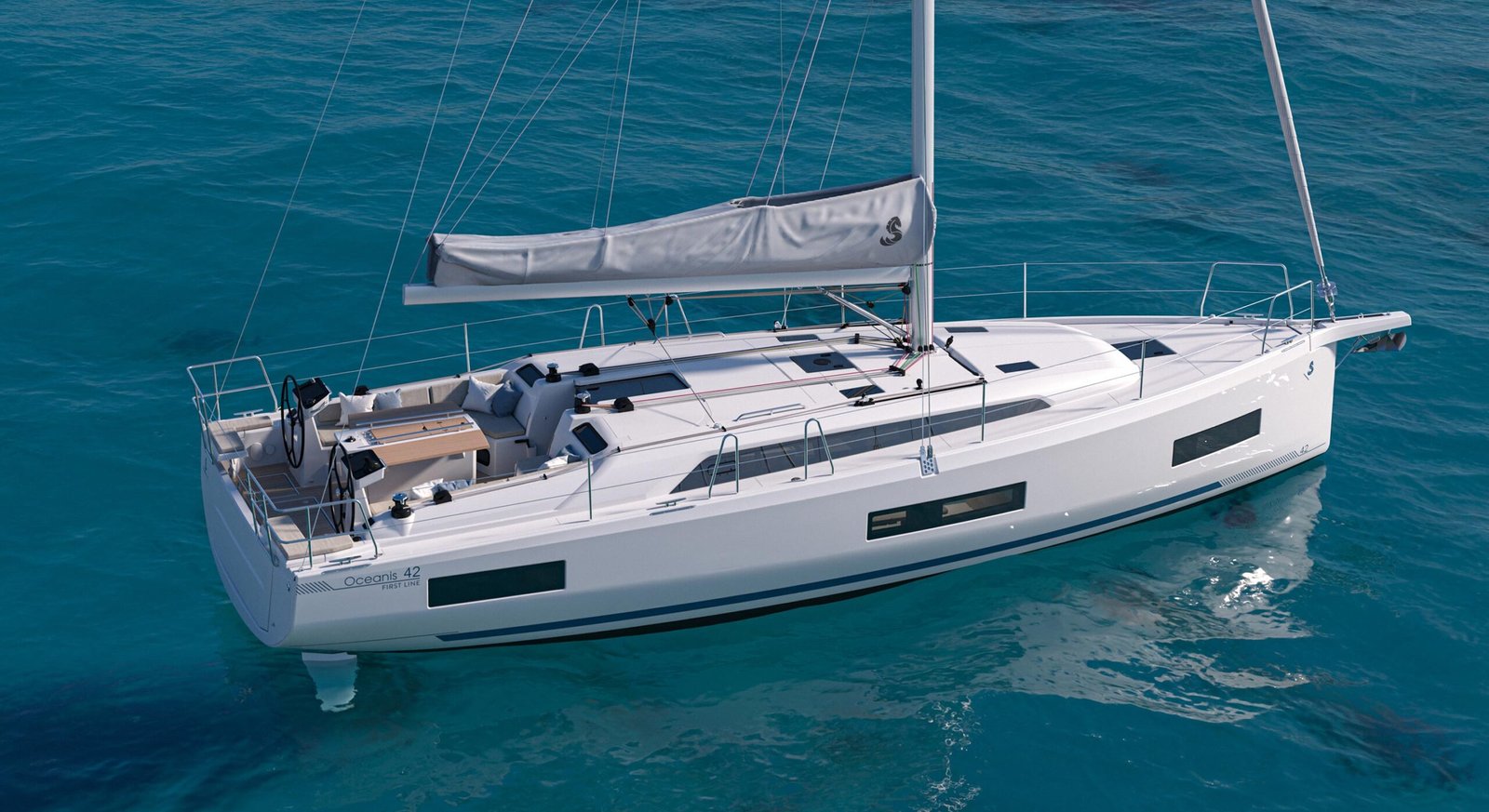
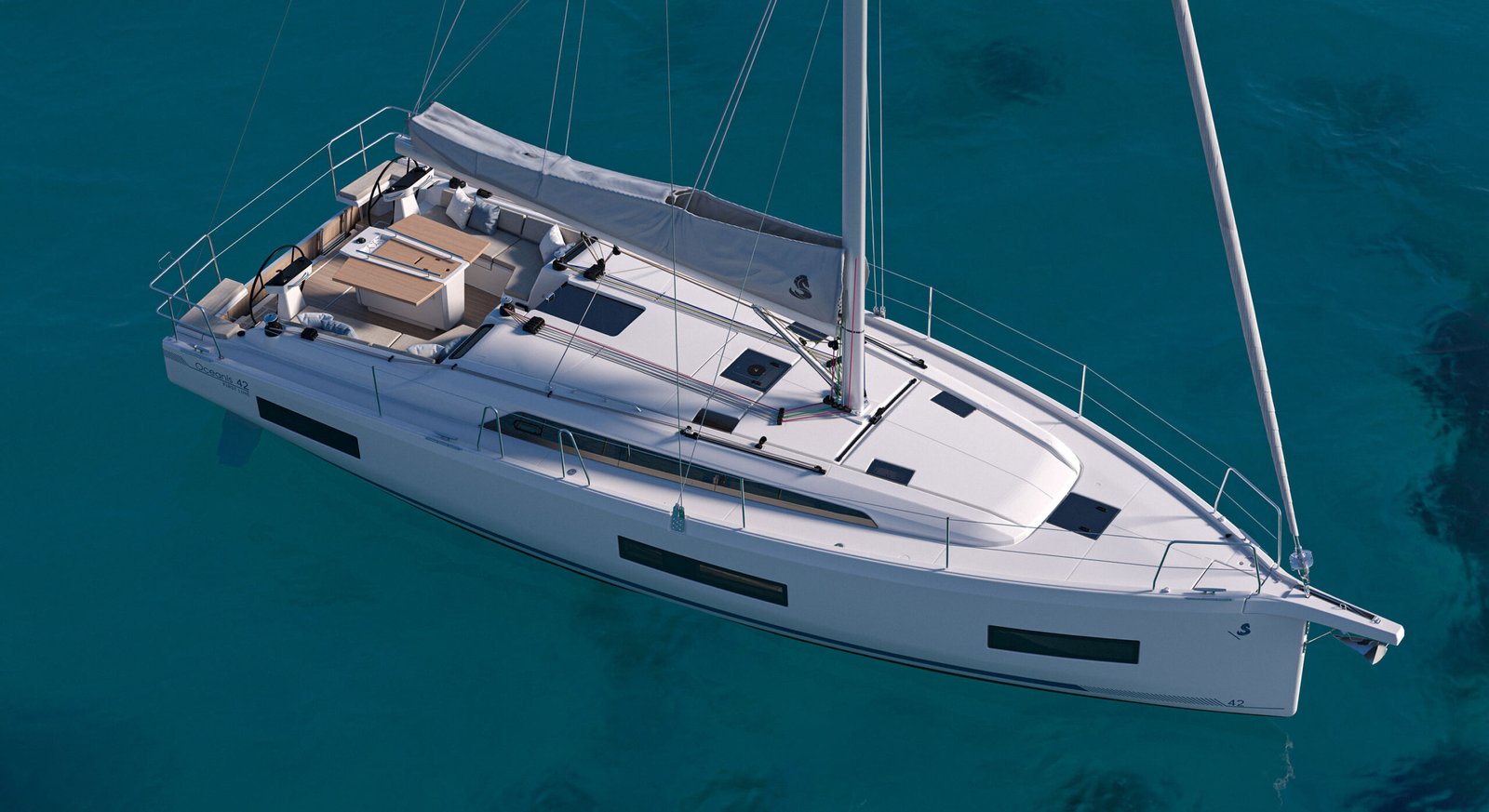
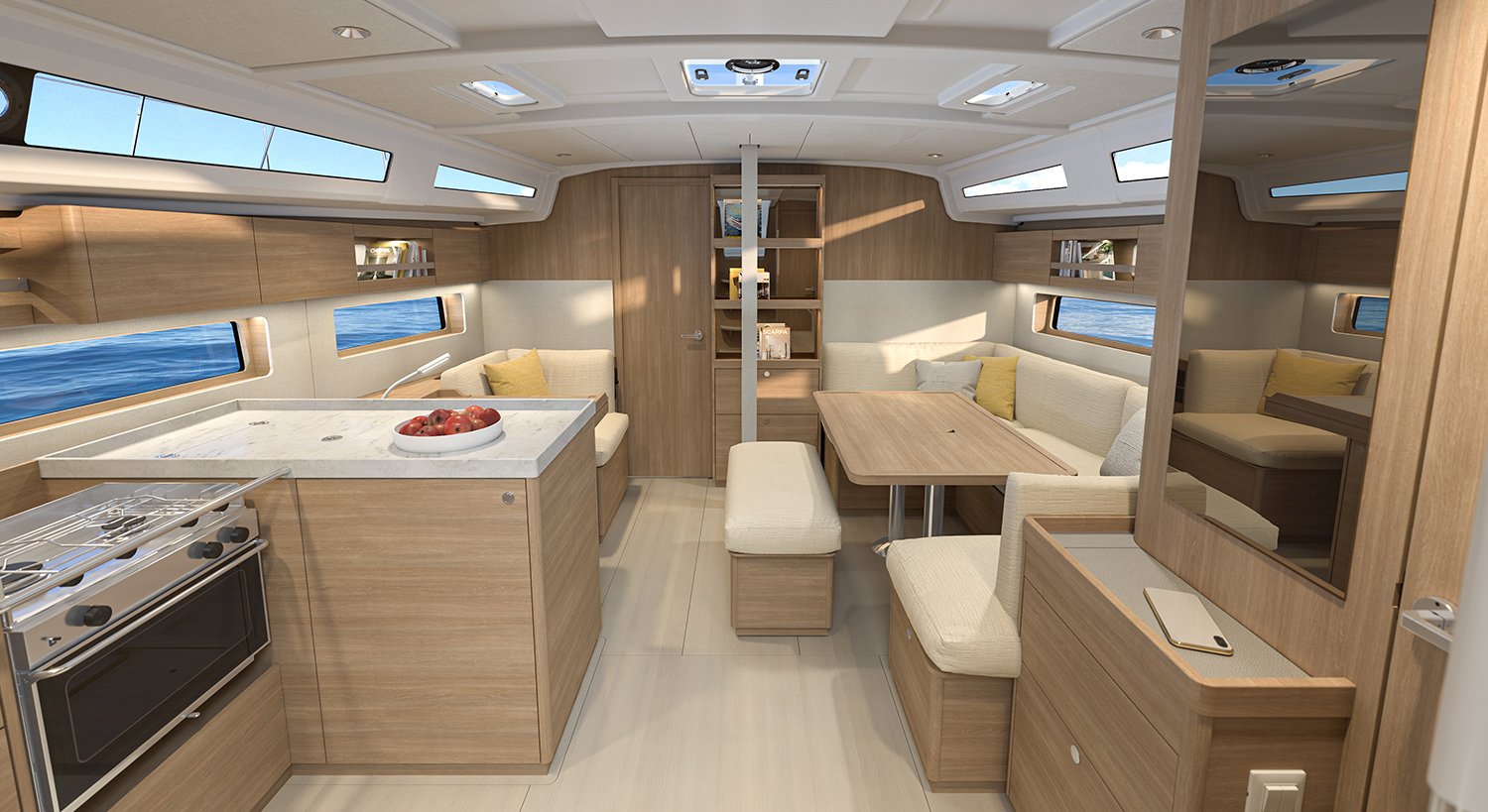
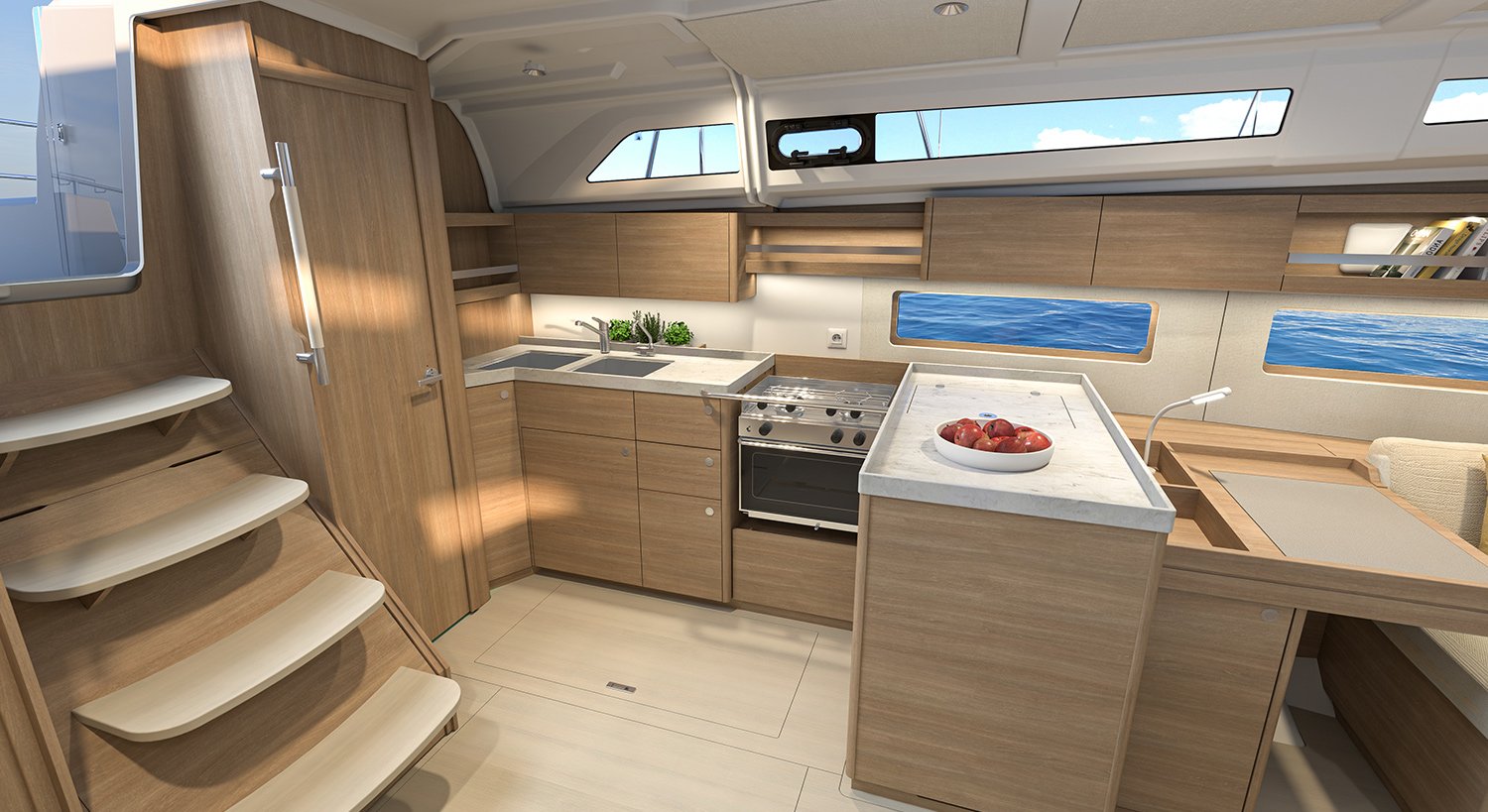
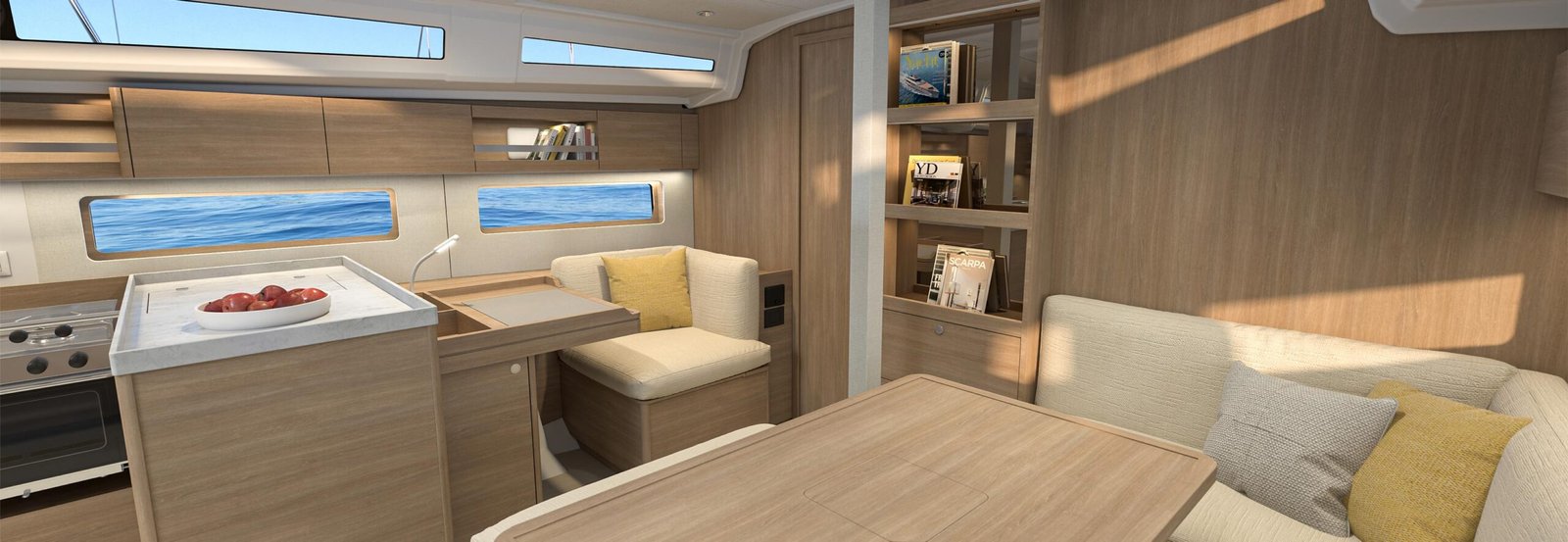
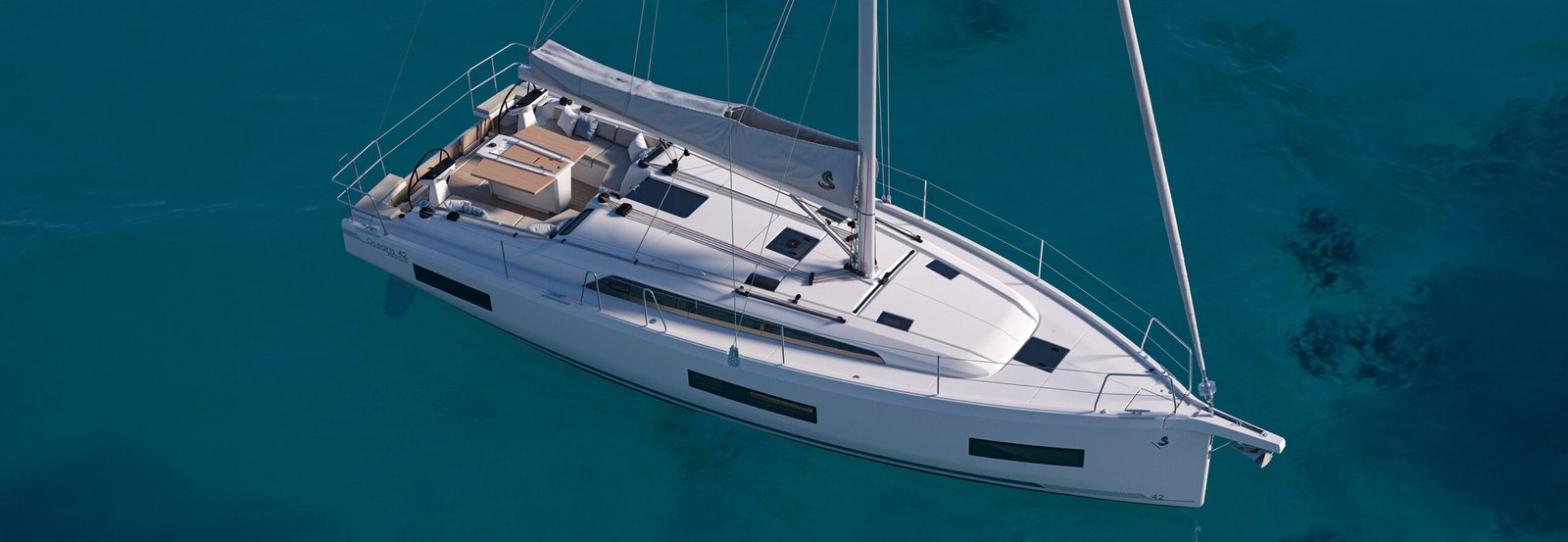
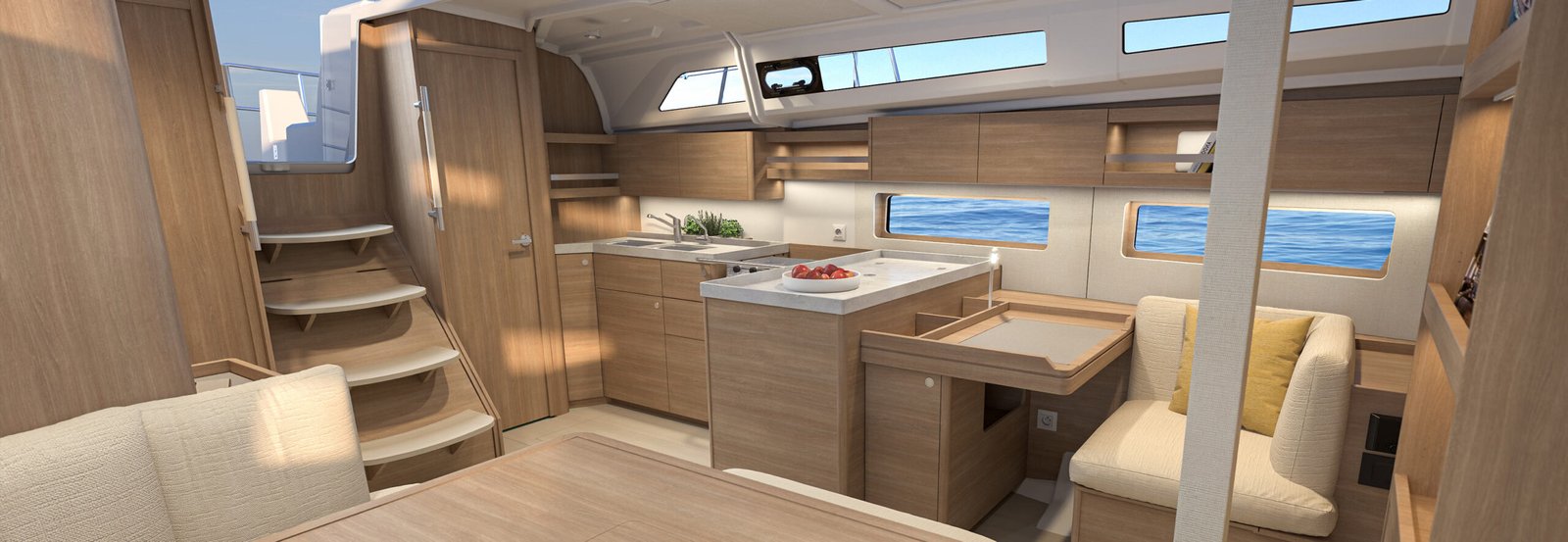
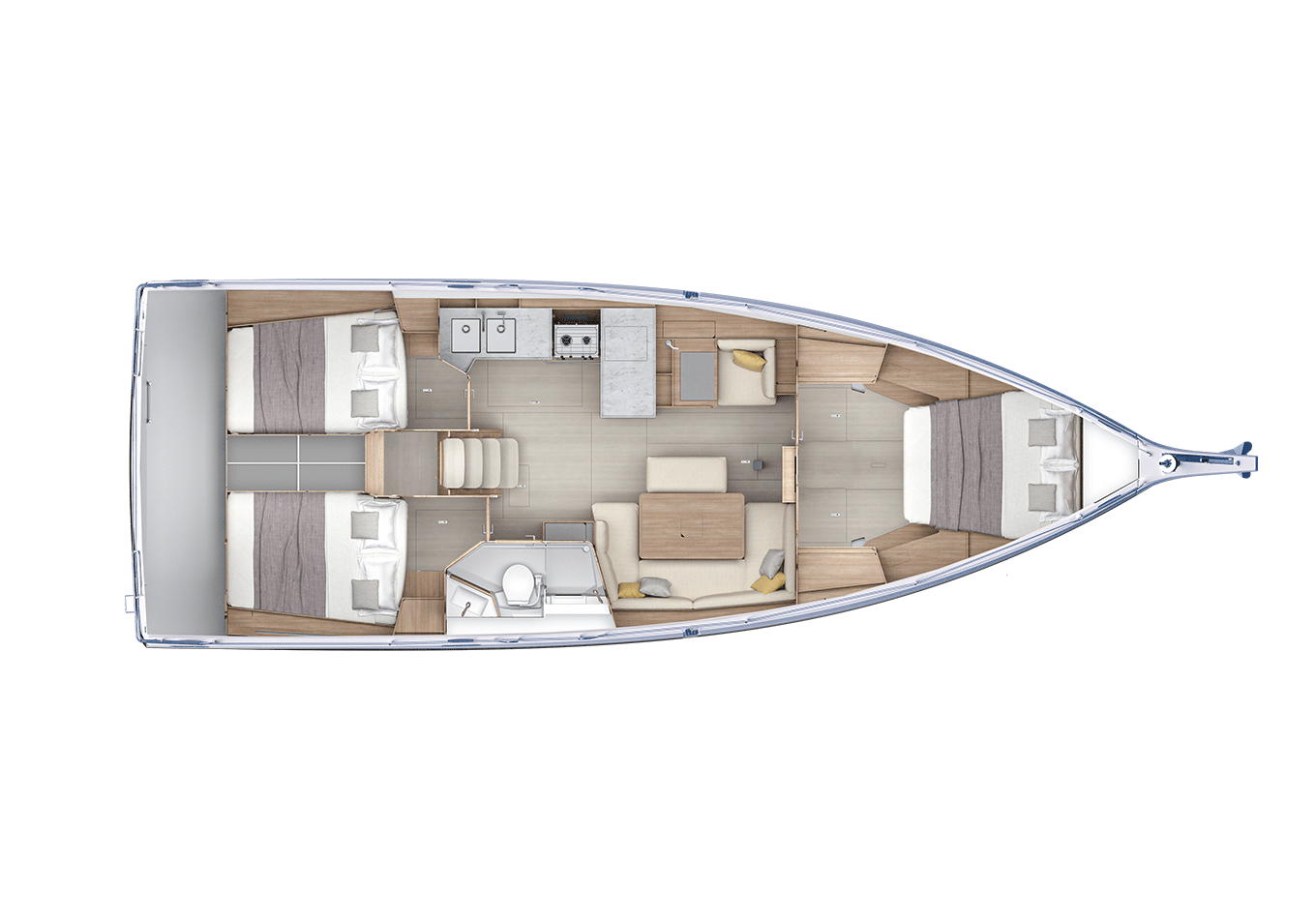
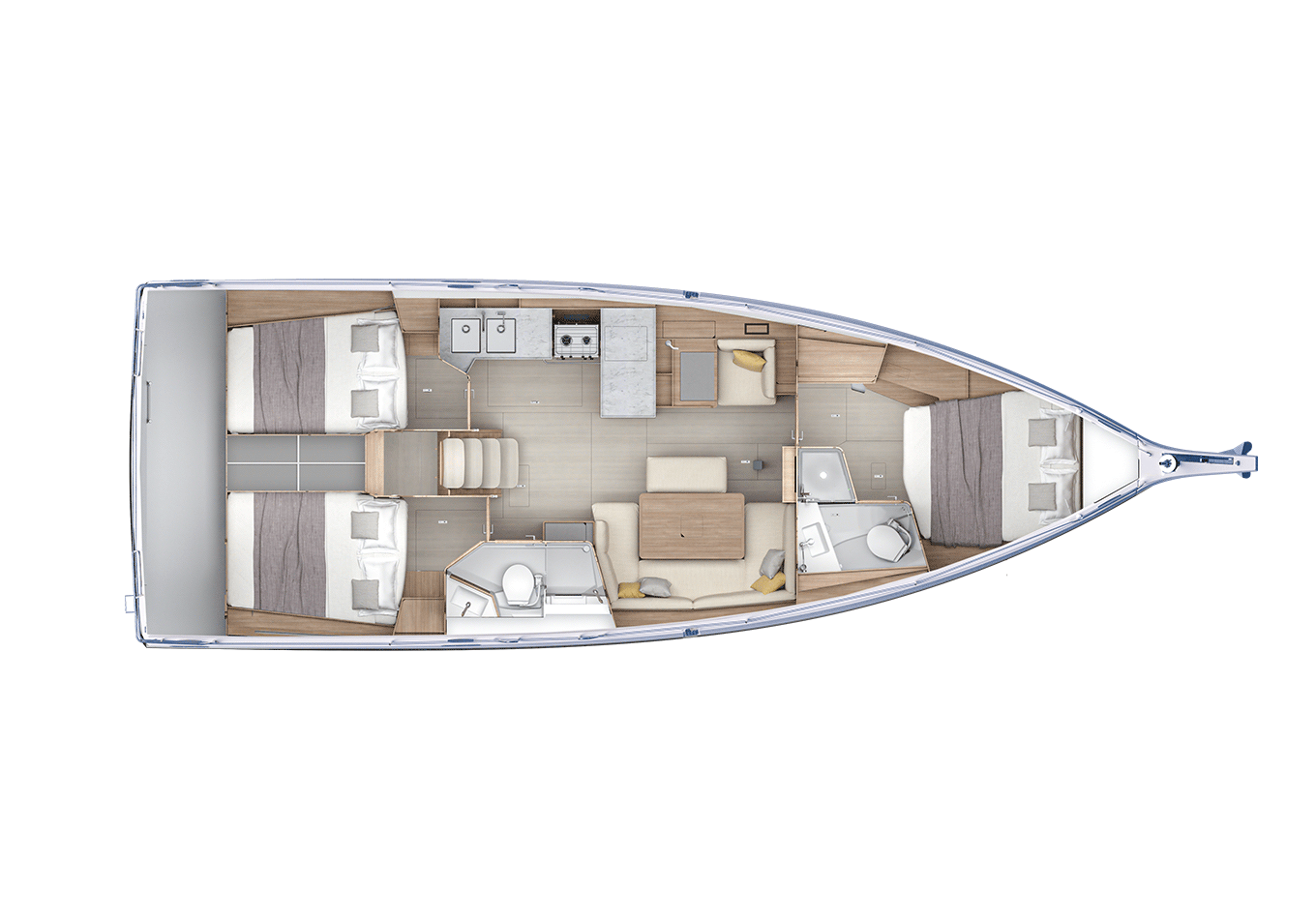
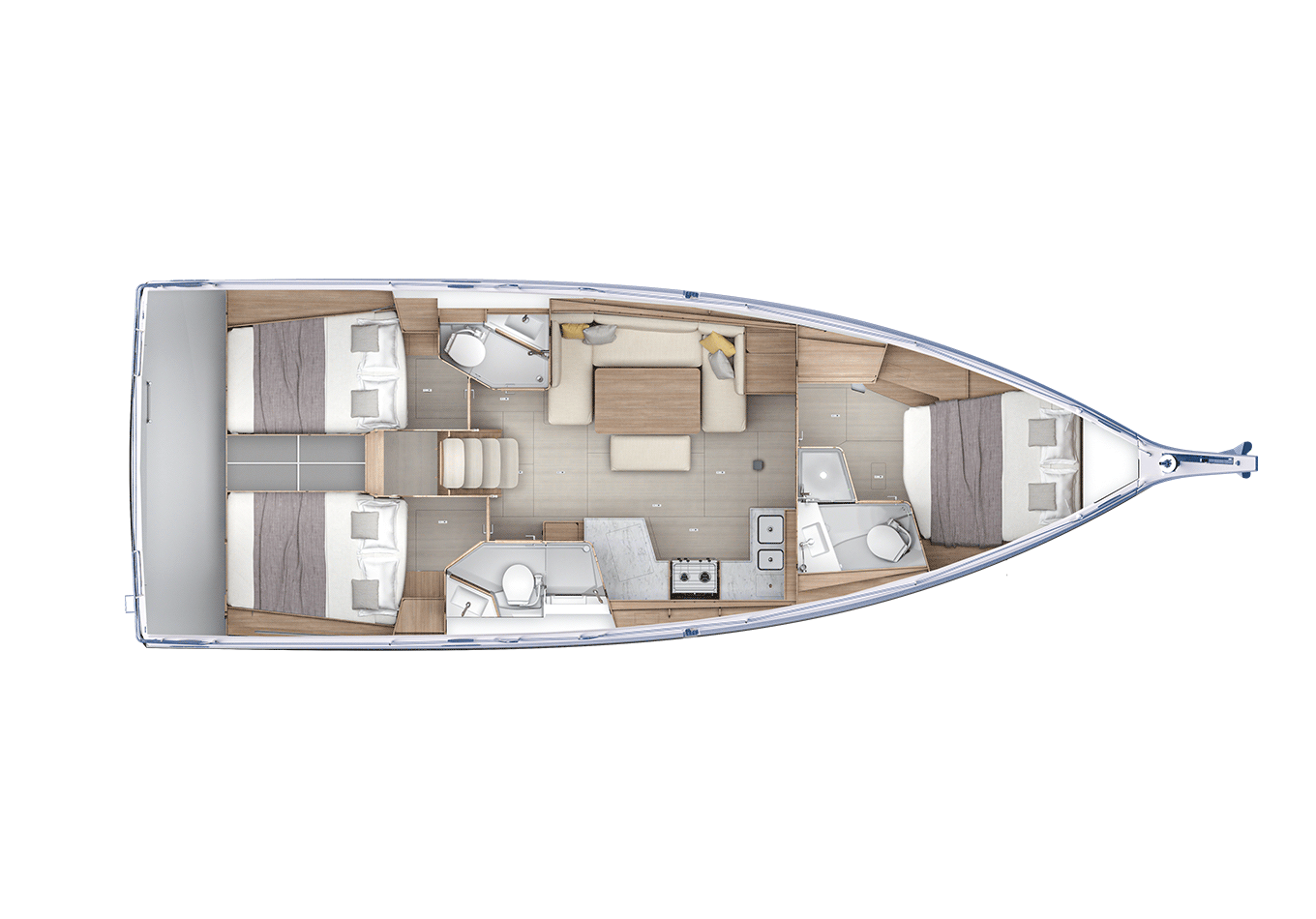
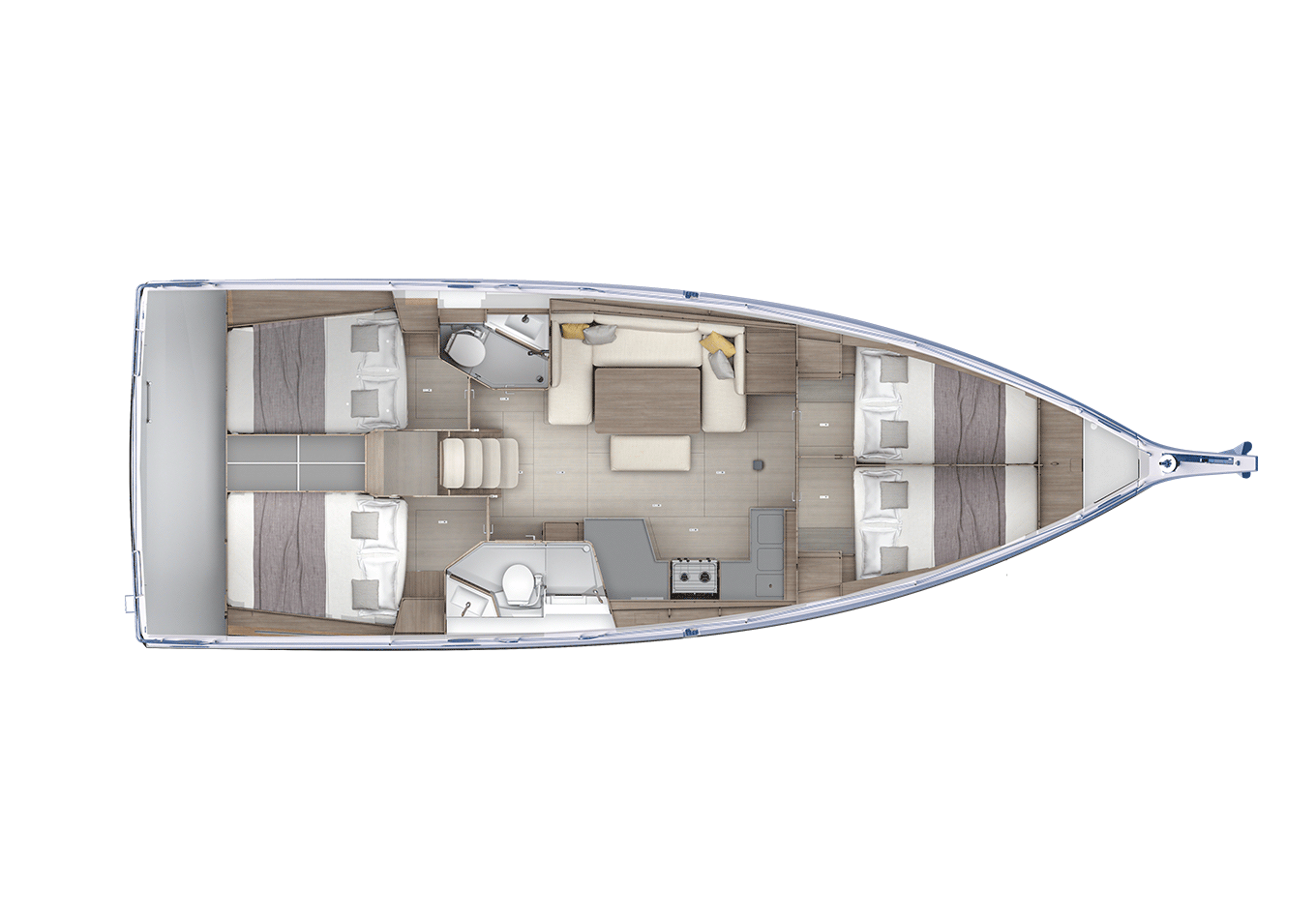
Beneteau replaces the Oceanis 40.1 with a boat that answers the question owners in this size range keep asking: how far can a 40-footer adapt to the way I actually sail? The Oceanis 42 offers five layout options, more than any rival at this length, and two galley configurations, an L-shaped seagoing version and a linear one built around a long working surface. Marc Lombard Yacht Design drew the hull. Nauta Design handled exterior and interior, and the difference shows in the cockpit: the aft platform opens to extend the cockpit at anchor, or closes to form a protected seating area that carries extra crew safely under way. The rig has grown. The furling mast stands 60 cm taller than the 40.1 carried, the classic and performance masts 30 cm taller, so the boat holds power in light air without asking more of the crew. Helm consoles come straight from the larger Oceanis 47 and 52, with integrated seats, grouped controls and the throttle set into the console. Below, sand-coloured oak, 2 mm wood edging and large hull portholes give the saloon a calm, contemporary feel. The galley holds 215 litres of refrigeration, the largest cooling volume in the segment, and a full-size desk faces the saloon with the electrical panel housed at the companionway. For a buyer weighing a first new-build cruiser, or trading up from a 37, the 42 makes a well-judged case.
Length
12.9M
Beam
4.2M
Draft
2.3M
Day Guests
12
Sleeping
6
Cabin
3
Cruise Speed
Max Speed
Fuel
195L
Engine
Yanmar 45 HP
Naval
Marc Lombard Yacht Design
Exterior
Nauta Design
Interior
Nauta Design
New Starting From
€248,500
No yachts found matching your criteria.
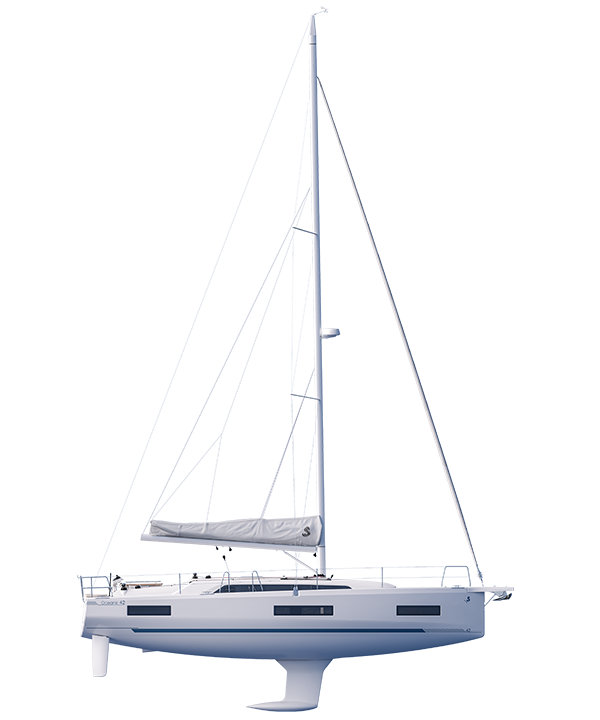
A taller rig does more than look good on paper.
Her furling mast stands 60 centimetres taller than the Oceanis 40.1 carried, and the classic and performance masts gain 30 centimetres, so she holds her power through a lighter breeze without asking the crew to carry more sail by hand. A self-tacking jib is standard, with a short-overlapping genoa and a Code Zero on deck halyard points offered for owners who want more drive off the wind. The main boom sits low on the mast, which keeps the sail easy to stow in the lazy bag, and the mainsheet runs through a sheet triangle forward of the companionway rather than across the cockpit, keeping the deck clear for guests.
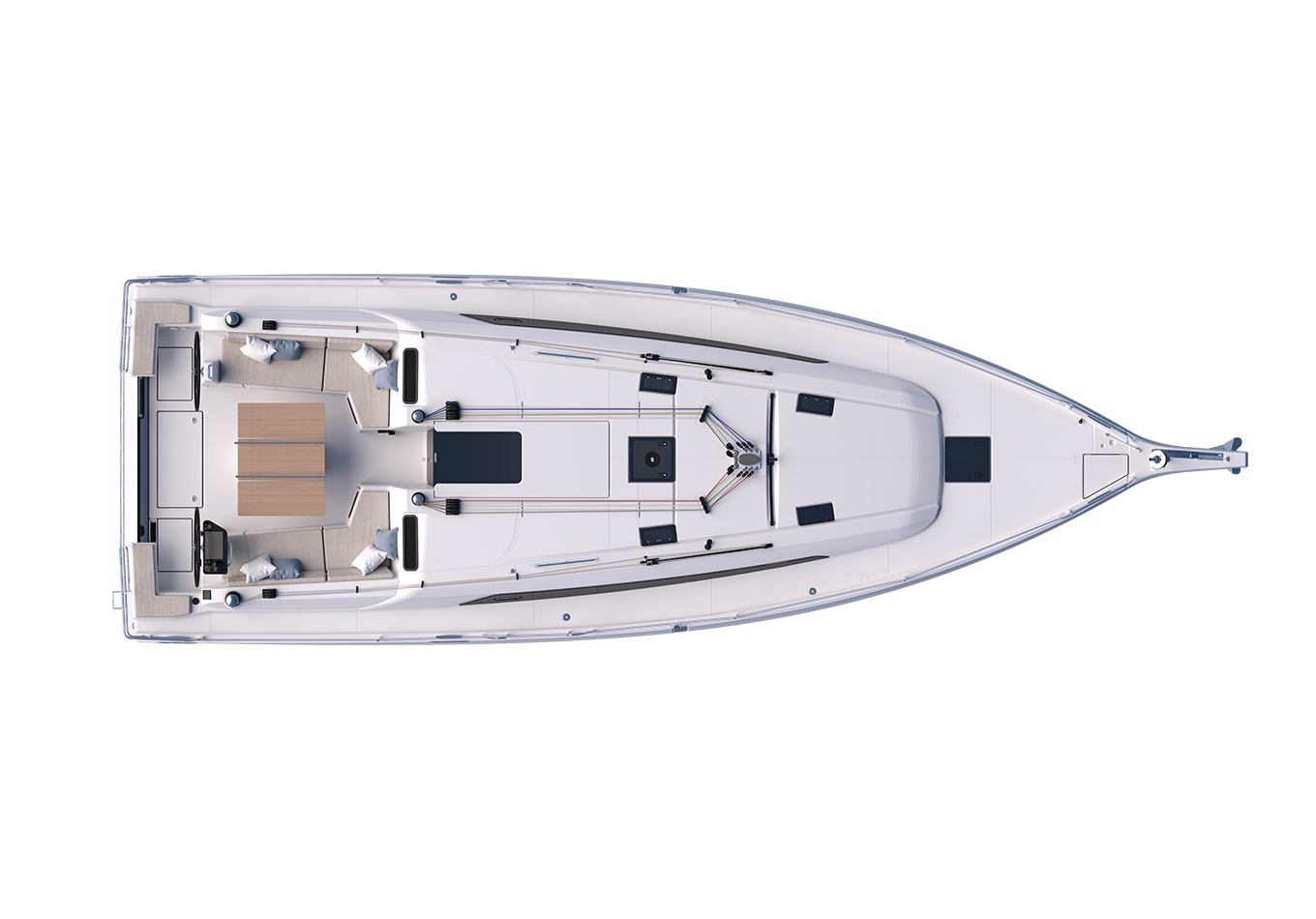
Two sterns, one boat.
Buyers choose between an open transom with a folding bathing platform or an enclosed stern with a continuous bench that adds extra seating beside the helms, a decision that comes down to whether she spends more time at anchor or under way with extra crew aboard. Nauta Design carried the twin helm consoles down from the larger Oceanis 47 and 52, each with an integrated seat and grouped controls, throttle included, so the layout feels familiar to an owner trading up through the range. Her cockpit floor is 12 per cent larger than the outgoing model’s and the seating areas 10 per cent larger, while her bilge lines run forward to the stem, adding both interior volume and stiffness under sail.
Light, not size, is the real upgrade below.
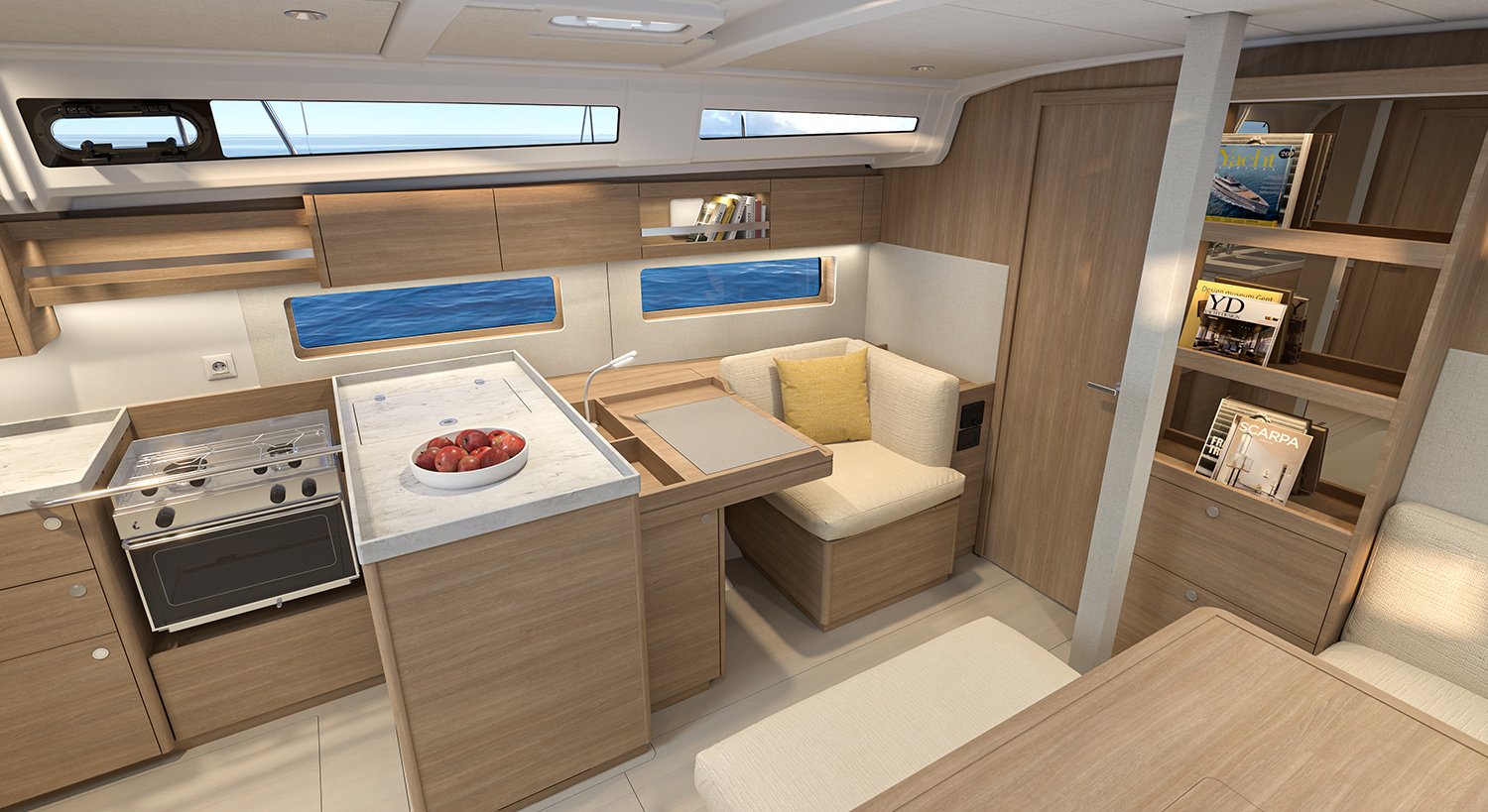
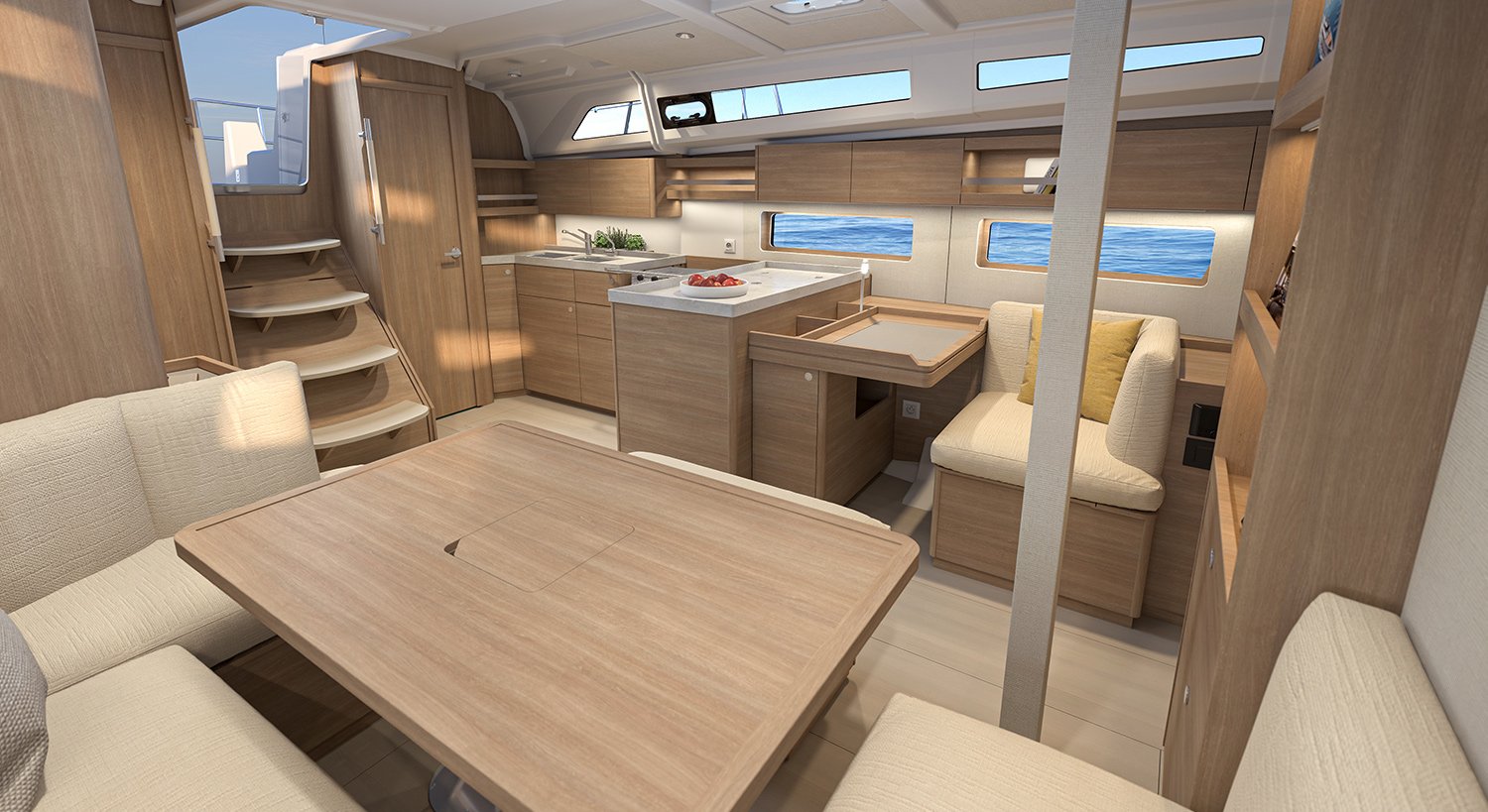
Total window area in her saloon and cabins runs to two and a half times the outgoing model’s, with larger and more numerous hatches, so the interior reads as open even where the footprint has not grown. Two galley layouts are offered: an L-shaped version by the companionway suited to cooking at sea, or a lengthways galley built into the saloon around a long worktop for entertaining at anchor. Sand coloured oak, fine wood edging and large hull portholes keep the mood calm rather than busy. A proper desk faces the saloon, with the electrical panel tucked beside the companionway rather than competing for space at the chart table.
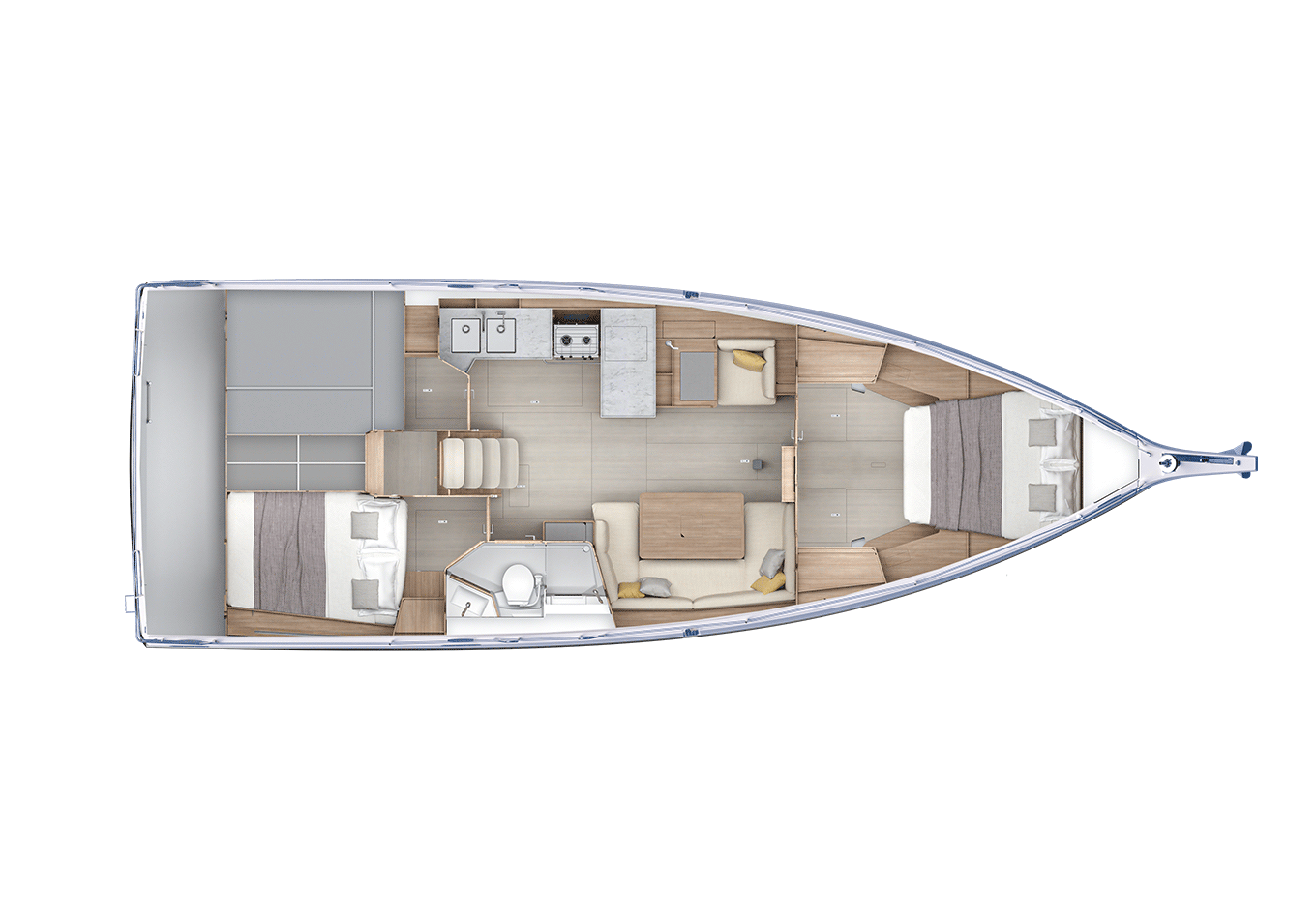
Five layouts share one hull.
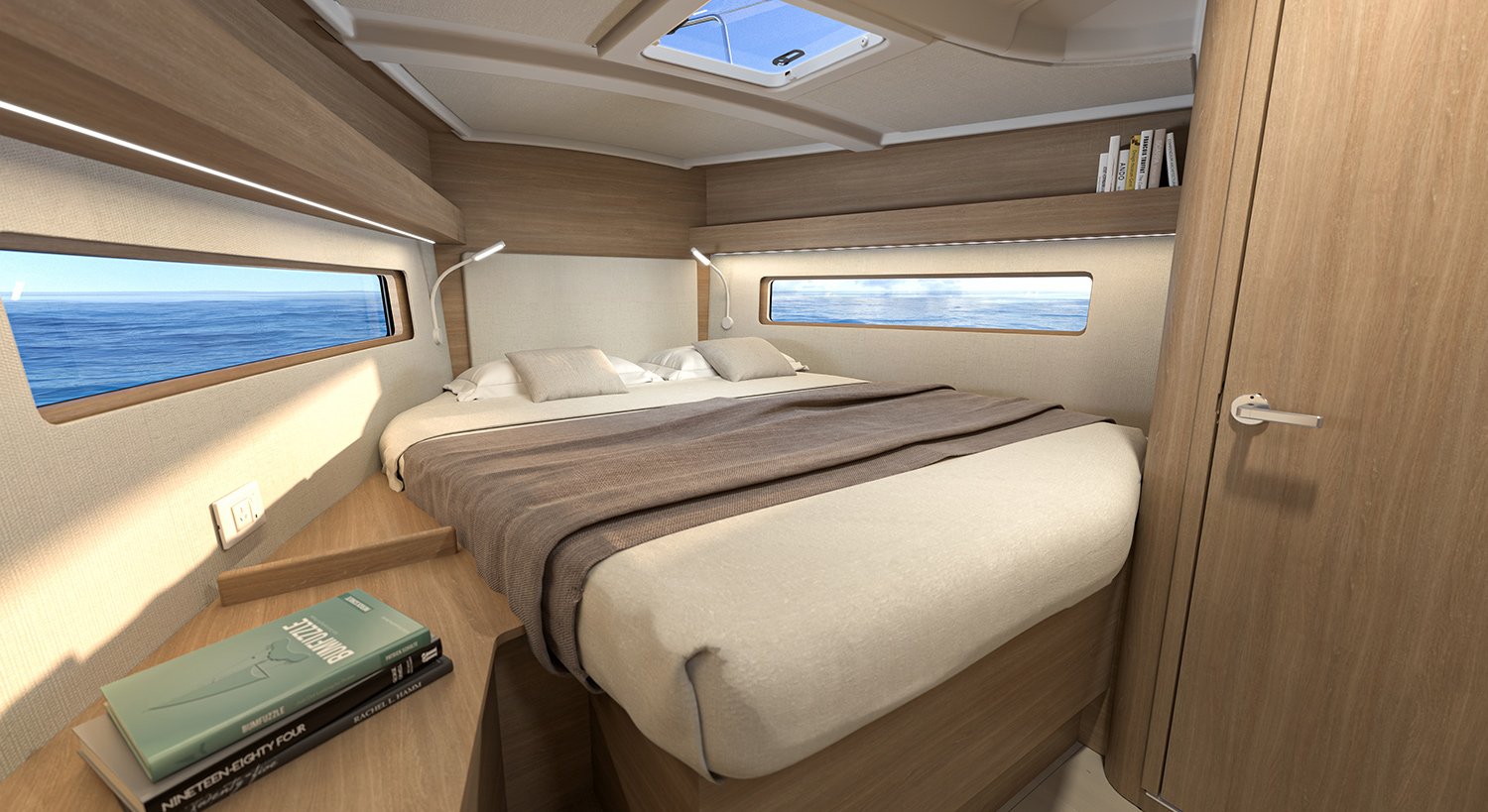
At one end sits an owner’s version with two cabins and a single wet room, built for a couple who want generous storage over berth count. At the other, a four cabin charter layout with two bathrooms spreads guests and crew with minimal overlap. Between the two, three cabin versions offer one, two or three wet rooms depending on how she will be used and by how many. This yacht’s own three cabin, six berth configuration sits firmly in that middle ground, giving a family or a pair of couples real separation without the compromises that come with cramming in a fourth cabin on a yacht this size.
Her real range is measured in wind, not litres.
A 45hp diesel, inboard or saildrive, carries 195 litres of fuel for manoeuvring in and out of harbour rather than for distance, which is exactly how a yacht built to sail should be specified. Fresh water runs to 235 litres, enough for a family to cruise for days between taps without rationing. Her galley refrigeration is sized generously for the same reason: real autonomy on a sailing yacht comes from provisioning and water, not from a bigger engine. For an owner planning genuine passages rather than afternoon sails, that balance of tankage and sail area is the more honest measure of what she can do.

Tell us what you would like to know, and our team will respond with clear details on availability, specification, pricing and next steps.