Norway / Alesund
Brosundet Guest Marina
Steinvagsundet
Aspoya
Hessa
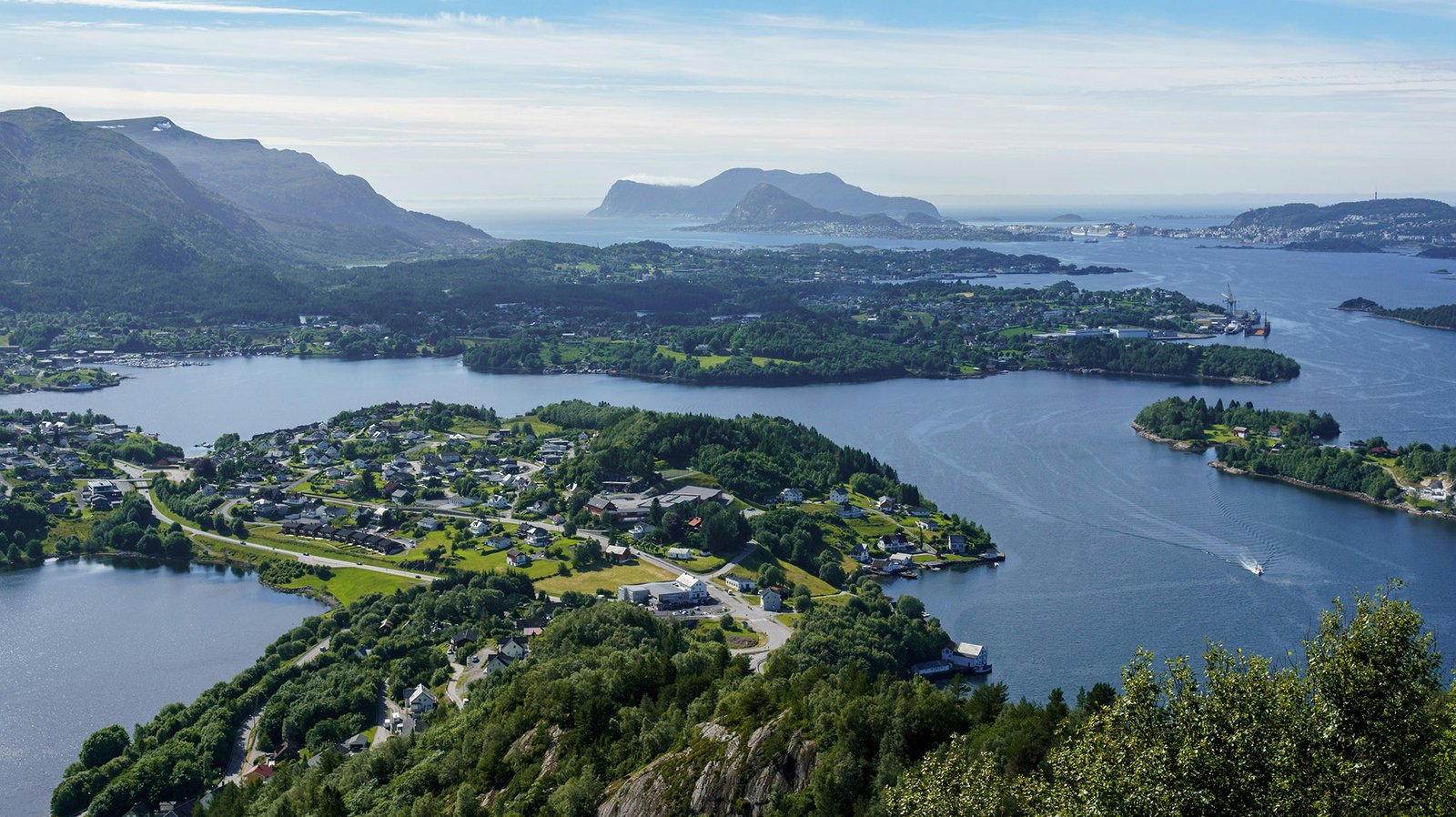
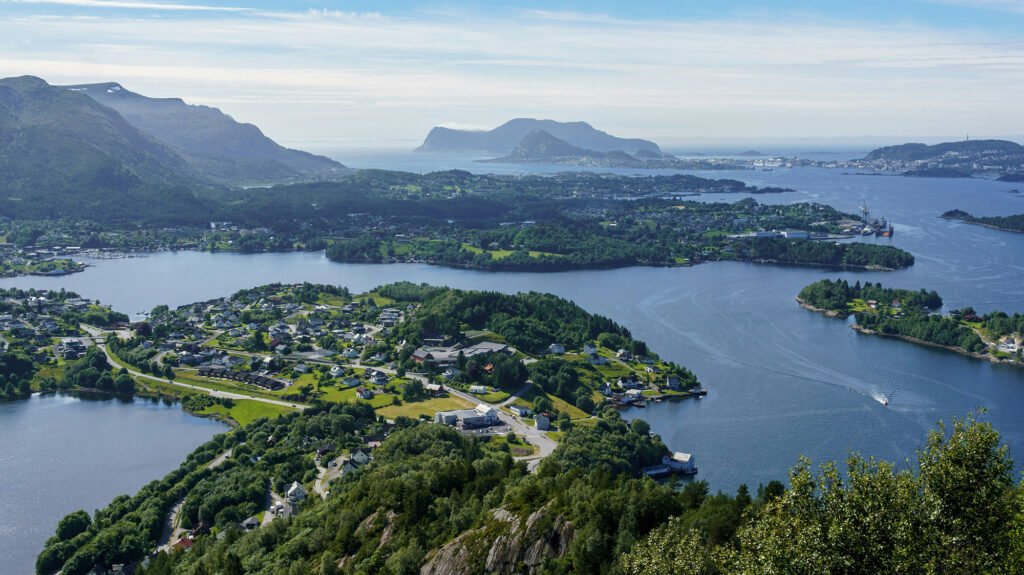
Giske
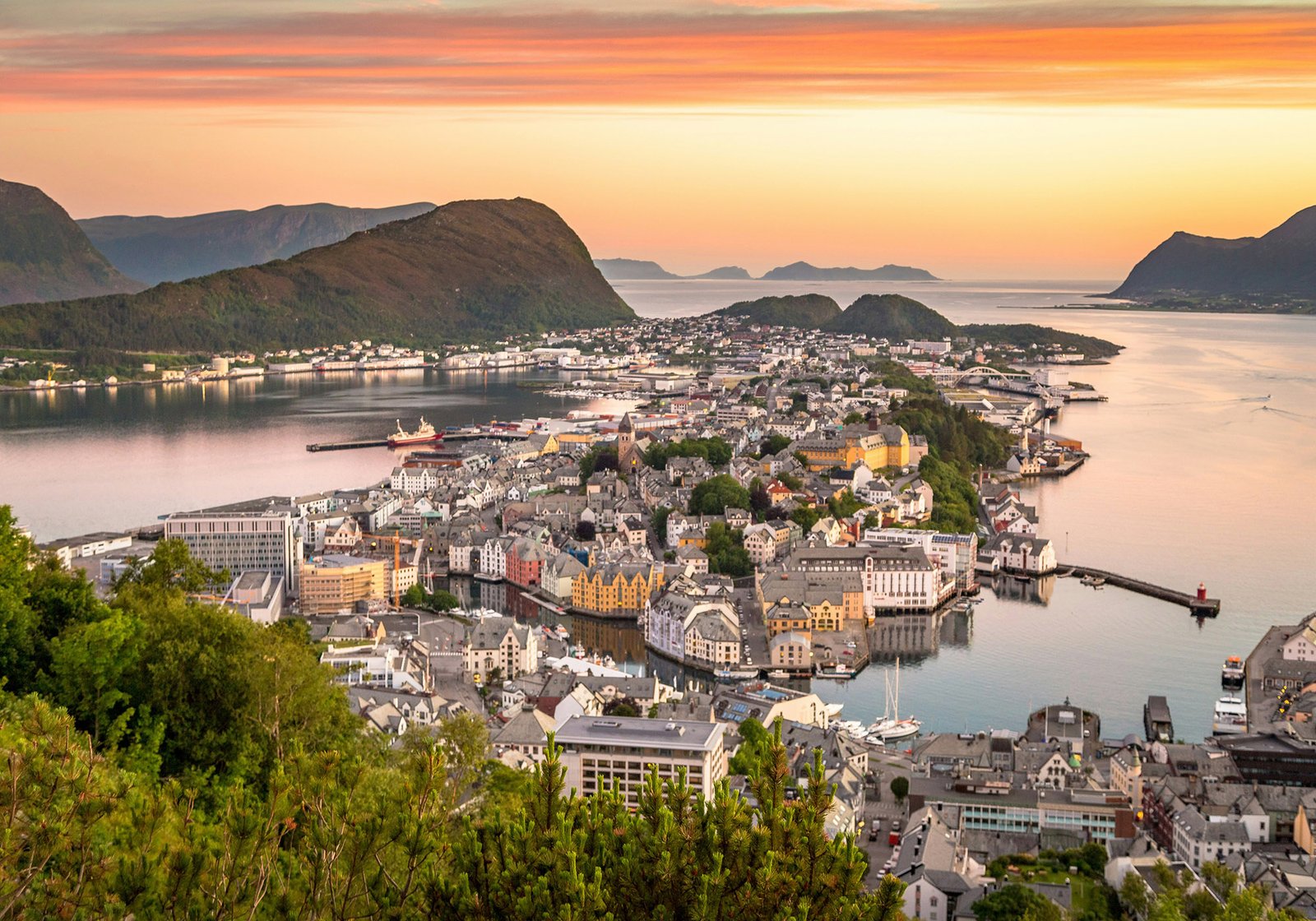
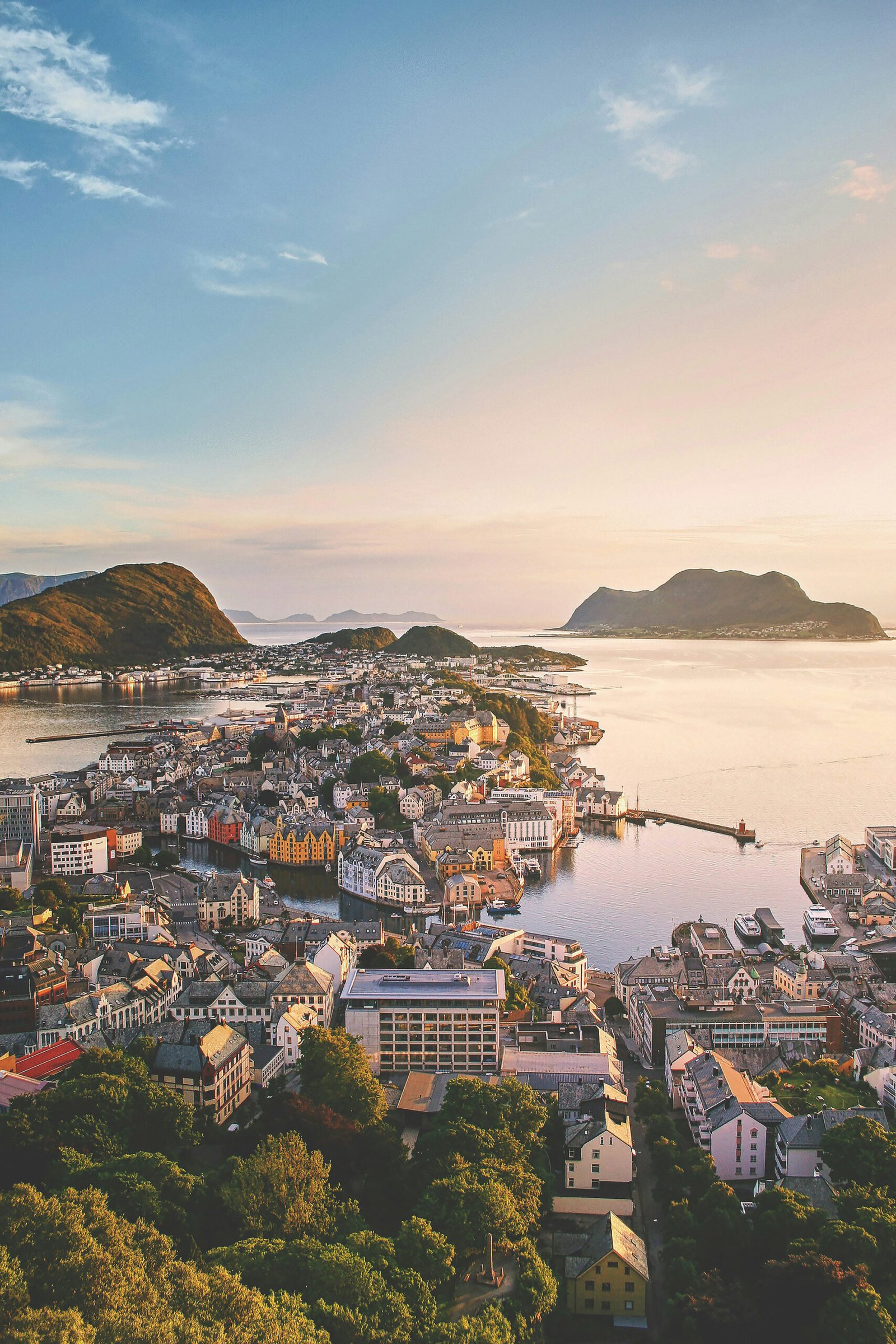
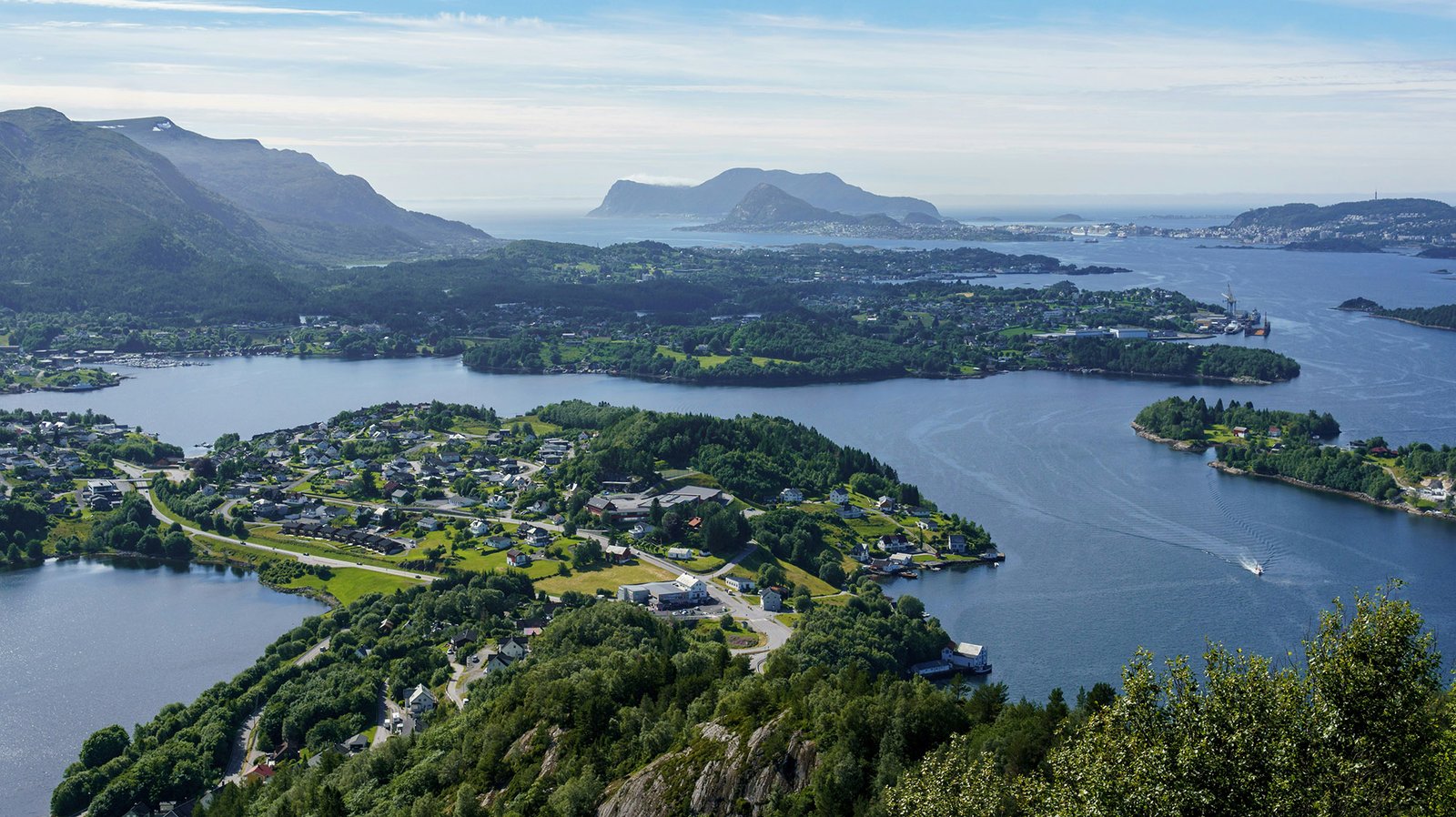
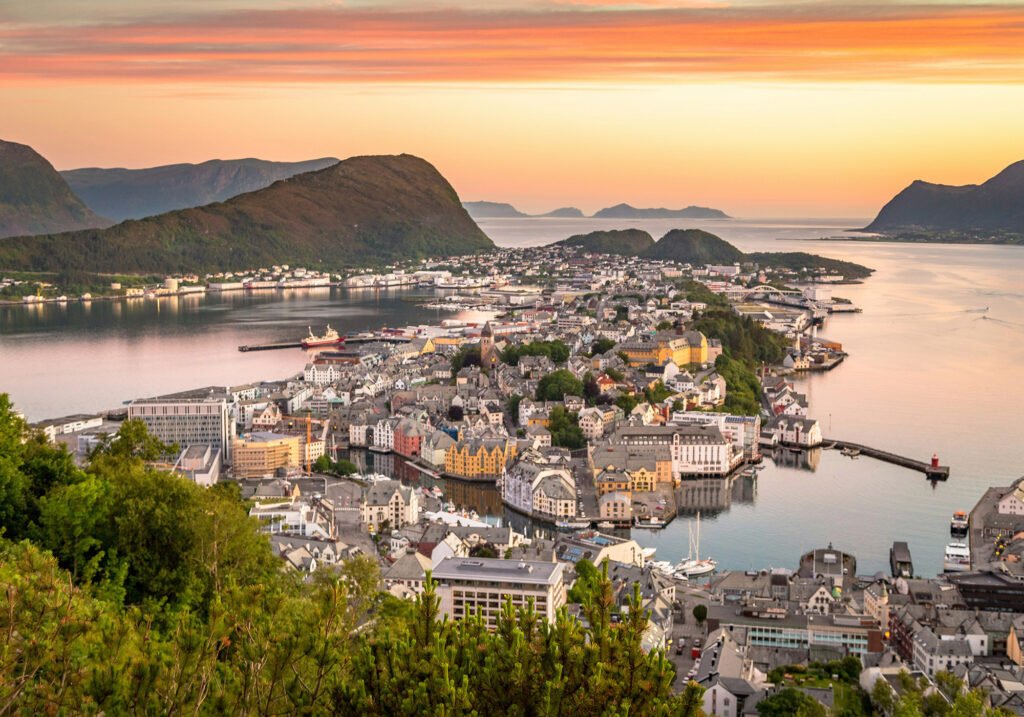
Climb the 418 steps to the Fjellstua viewpoint on Mount Aksla
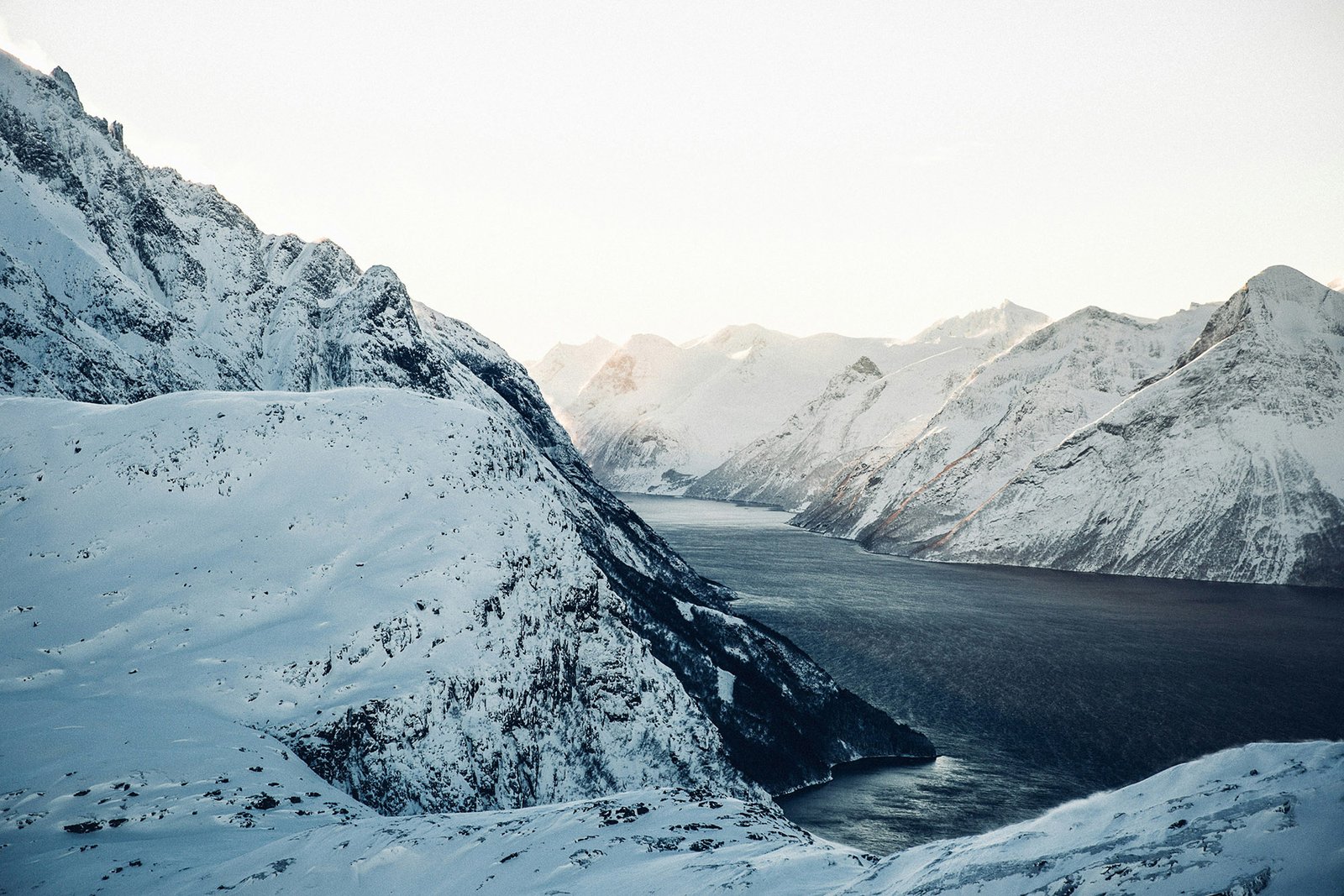
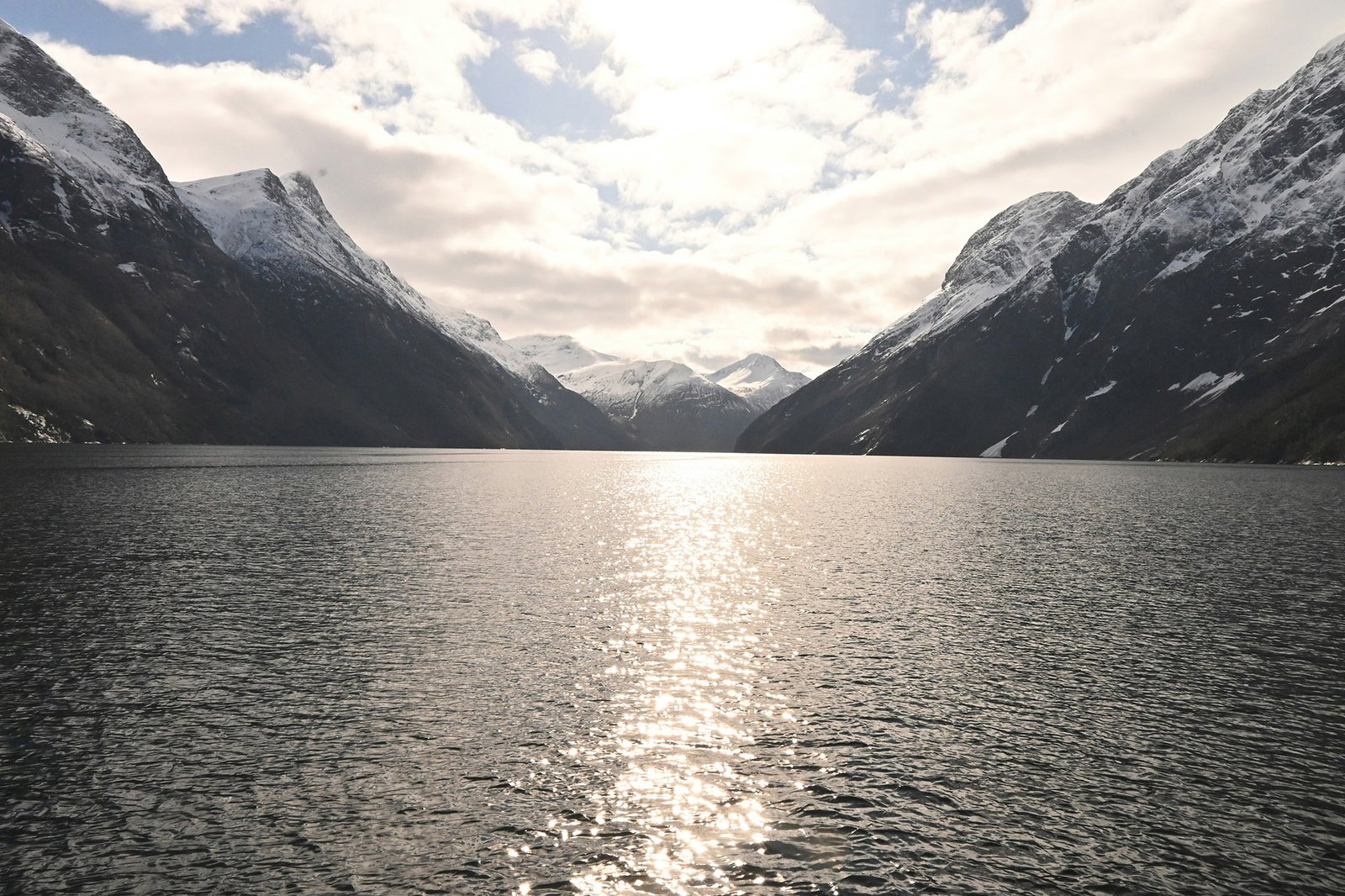
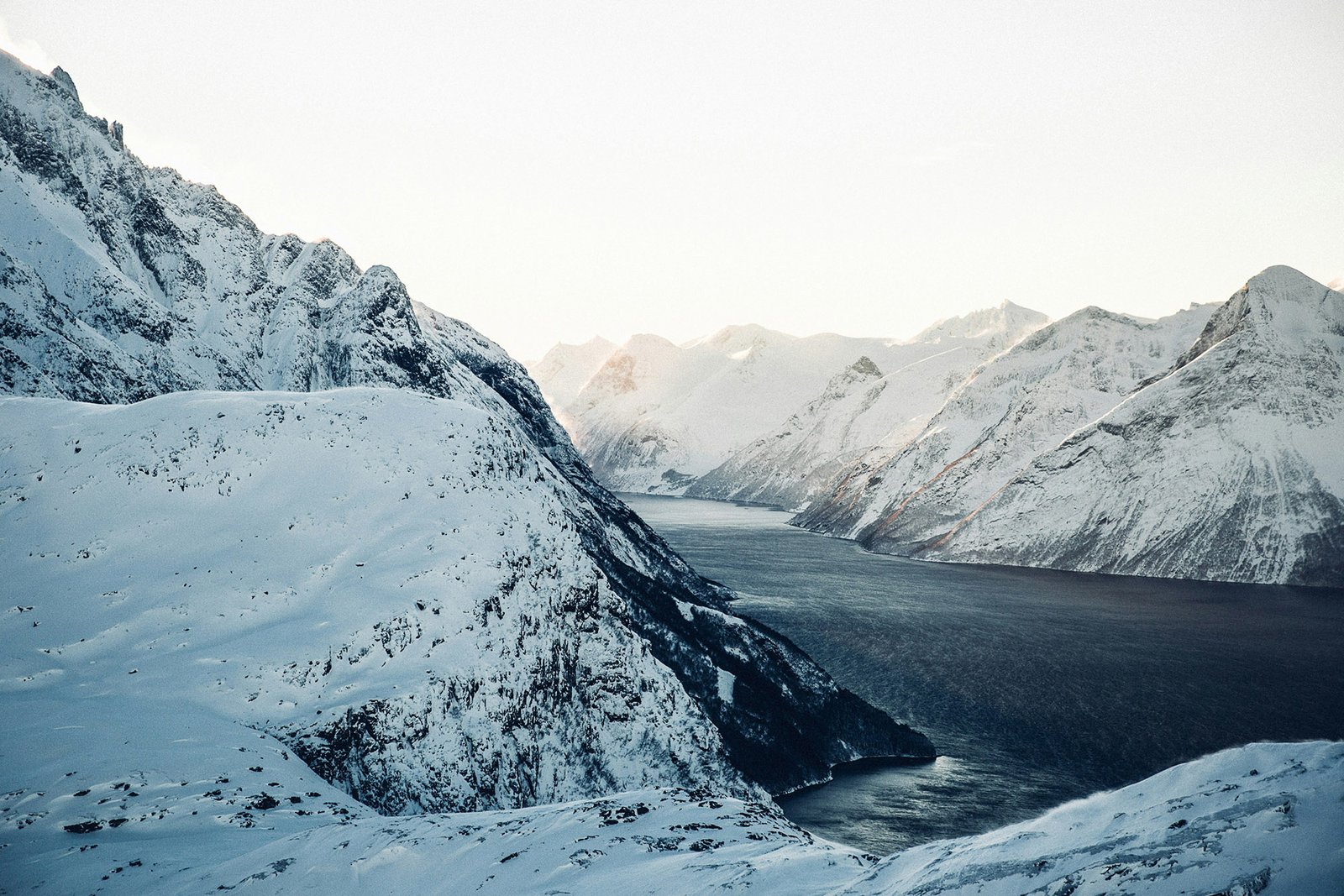
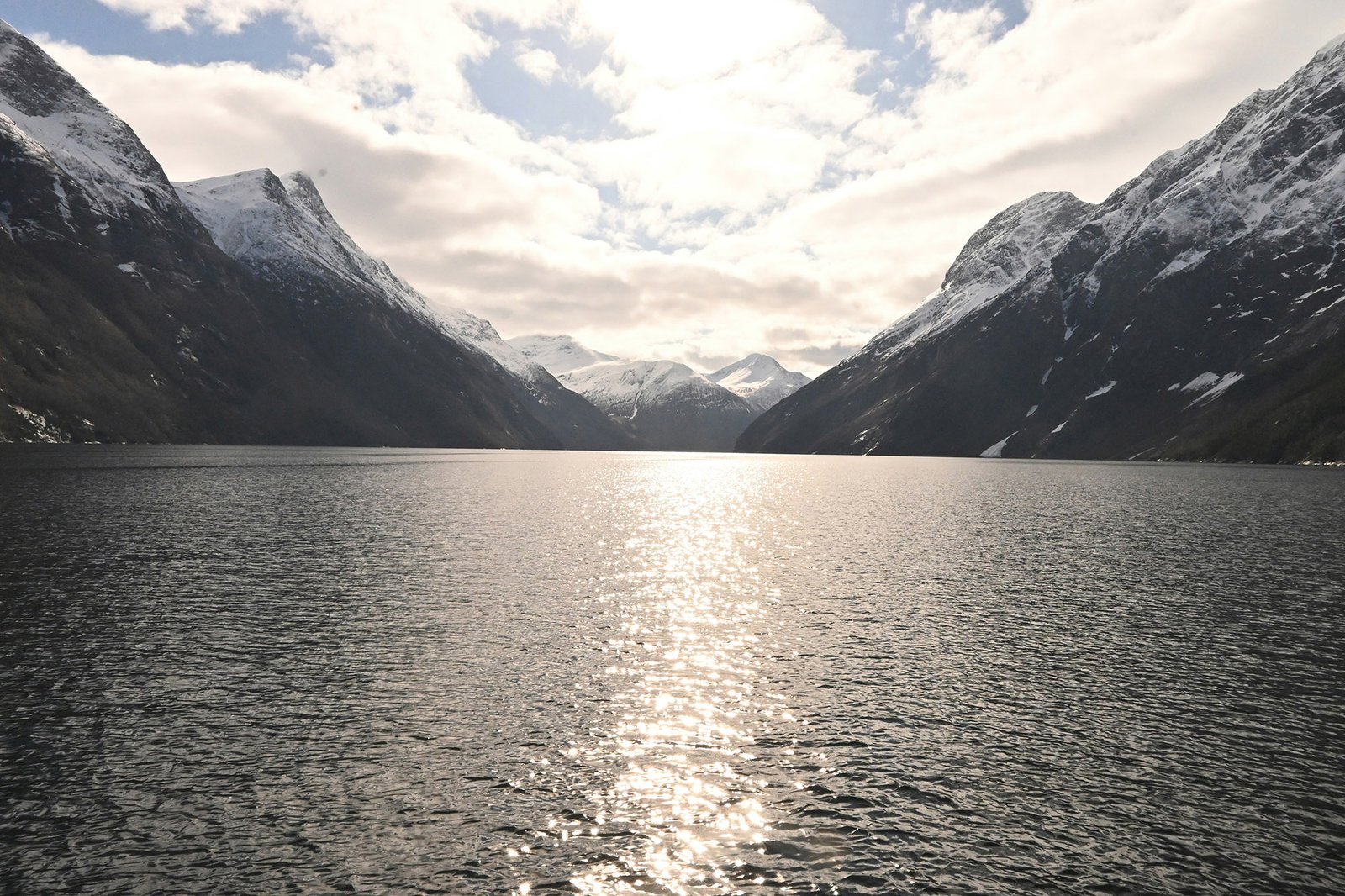
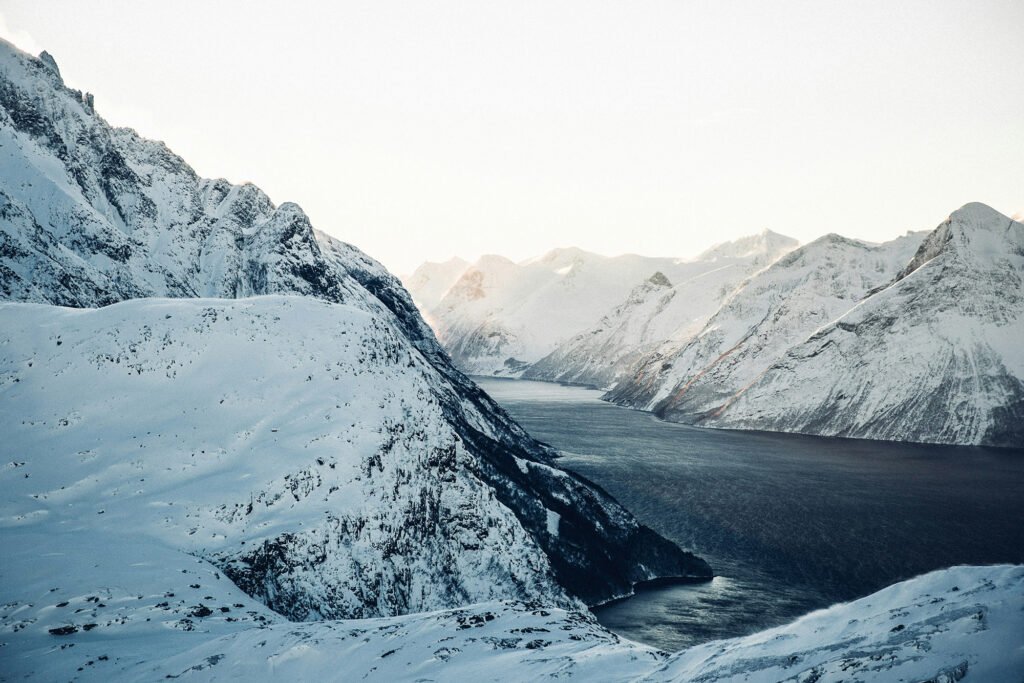
Cruise south to the Geirangerfjord past the Seven Sisters waterfalls
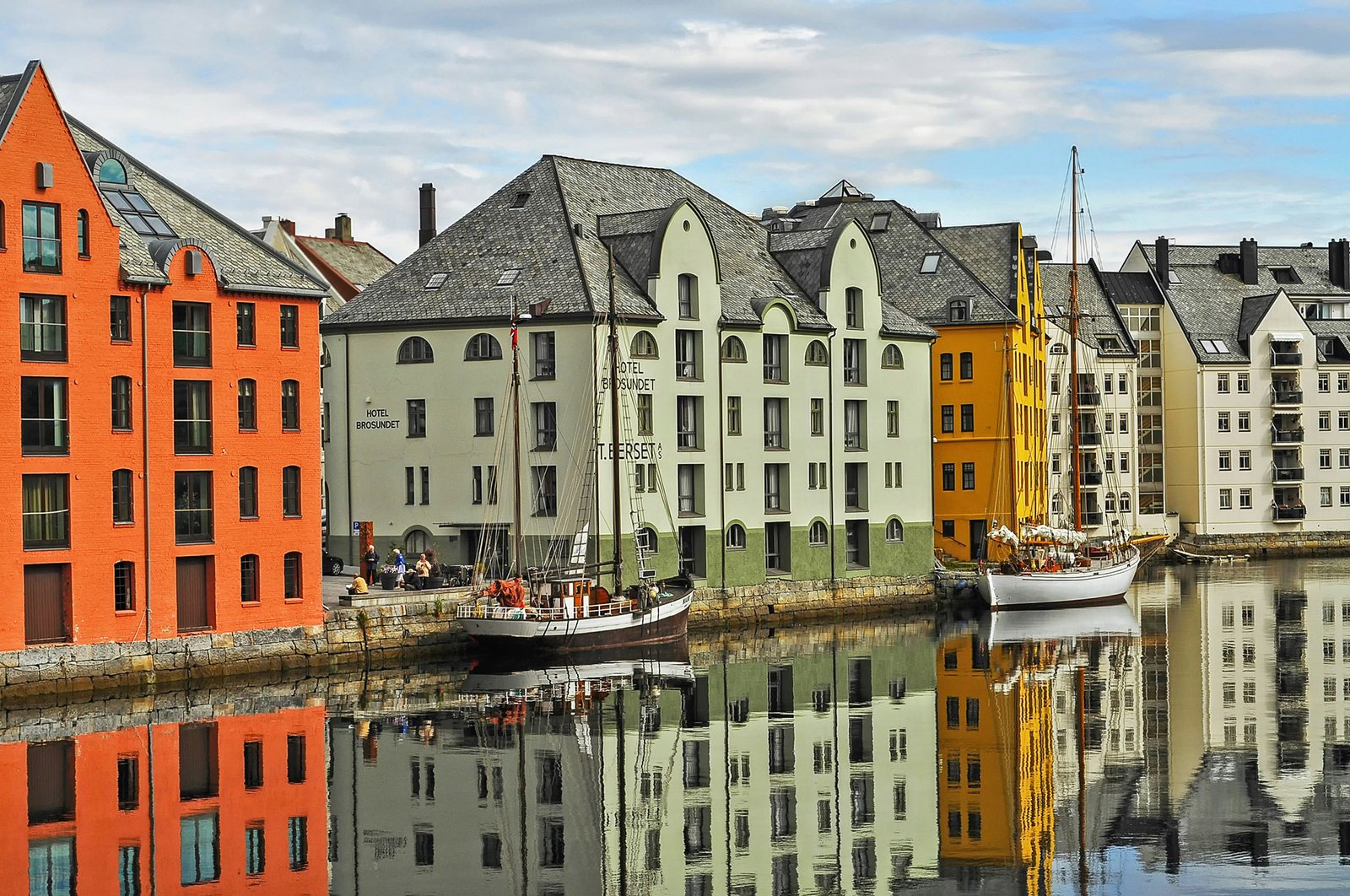
Tour the Jugendstilsenteret Art Nouveau Centre
Wander the harbourside streets of Aspoya
Visit Giske Church, the world’s northernmost medieval marble church
Fjellstua Viewpoint on Mount Aksla
Alnes Lighthouse on Godoy
Giske Church
Alesund Church
Sunnmore Alps
01
May through September offers the calmest seas and the longest daylight for cruising south to the Geirangerfjord, with June and July also bringing the clearest views from Mount Aksla and the surrounding islands. Alesund sits fully exposed to the open Norwegian Sea, so autumn and winter can bring genuinely rough conditions on the approach, even though the town’s inner channels stay comparatively sheltered year-round.
02
Alesund Airport, Vigra (AES), sits on its own island about 15 kilometres from the town centre, connected by an undersea tunnel and served by direct flights from Oslo, Bergen and a handful of other European cities. It’s one of the more remote gateways on this stretch of coast, so guests joining mid-charter more often fly via Oslo than attempt a same-day international connection.
03
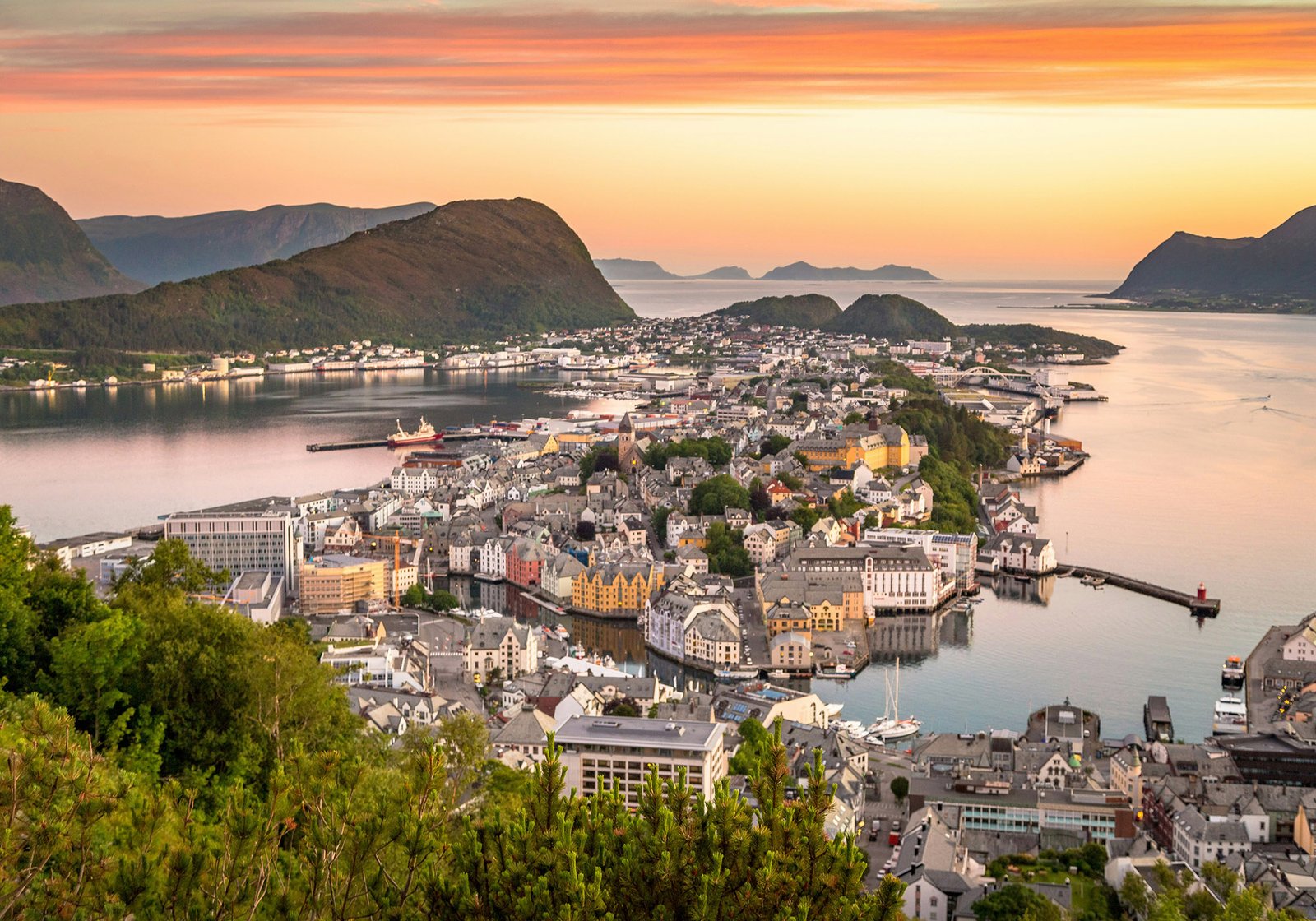
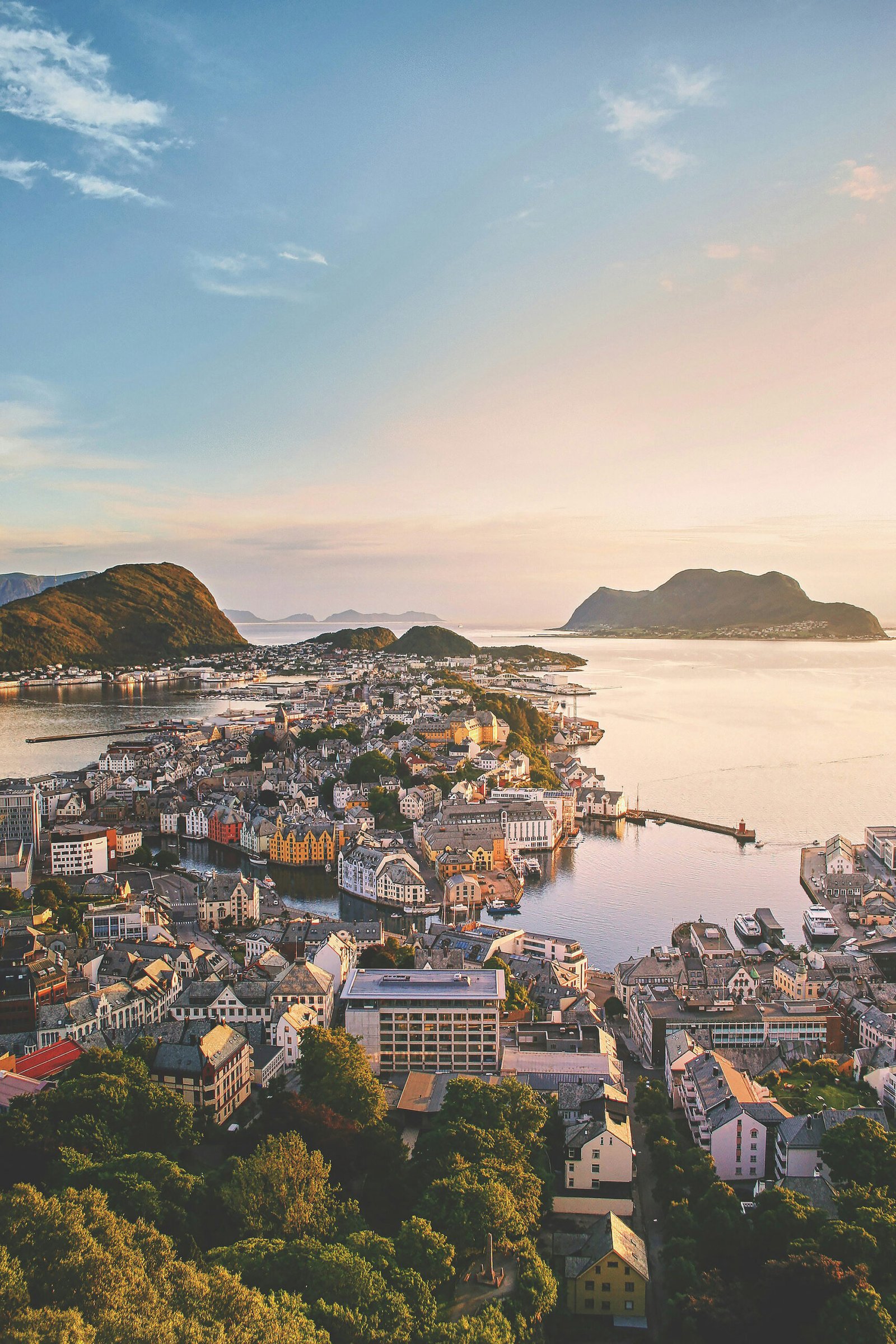
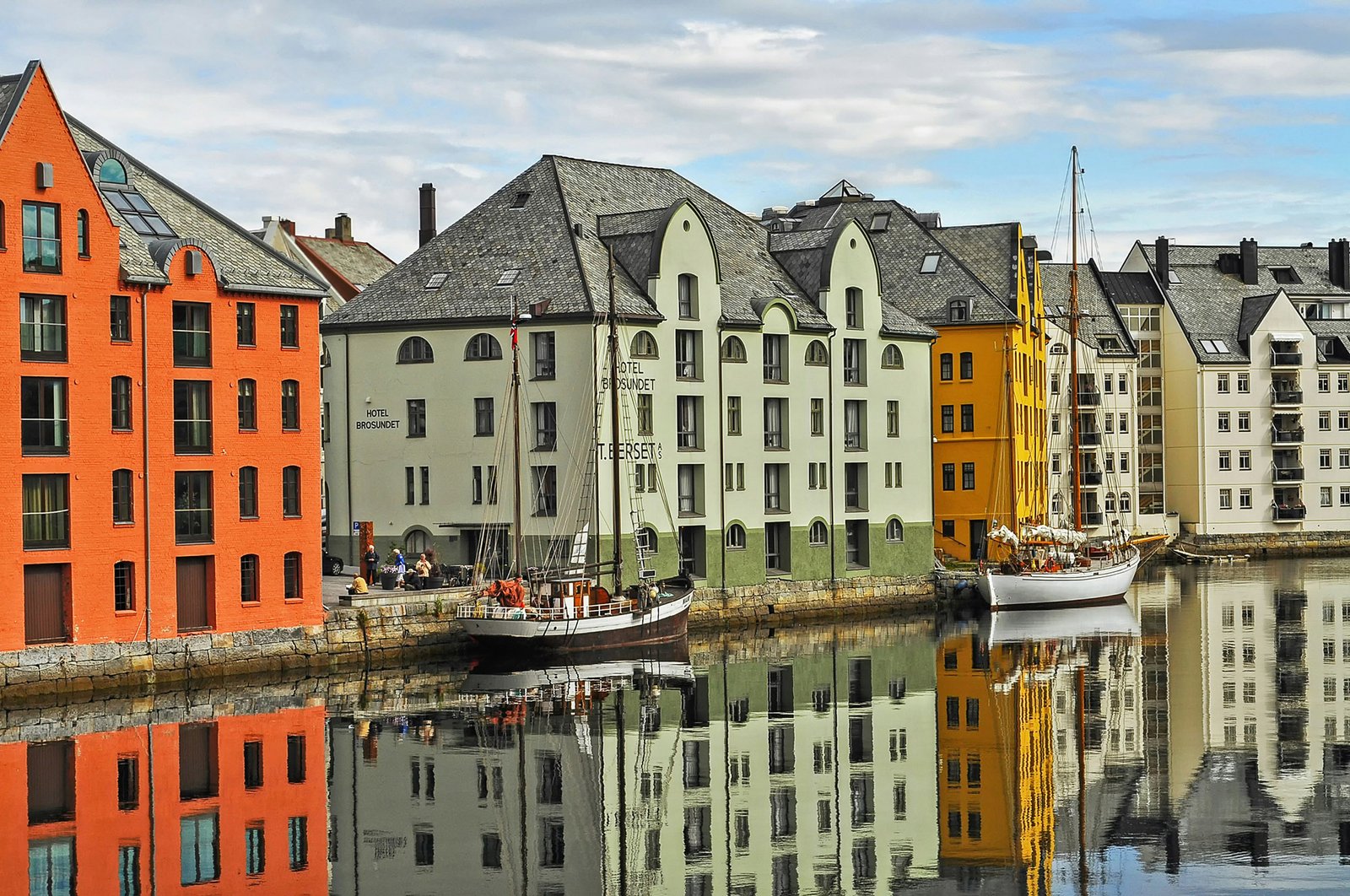
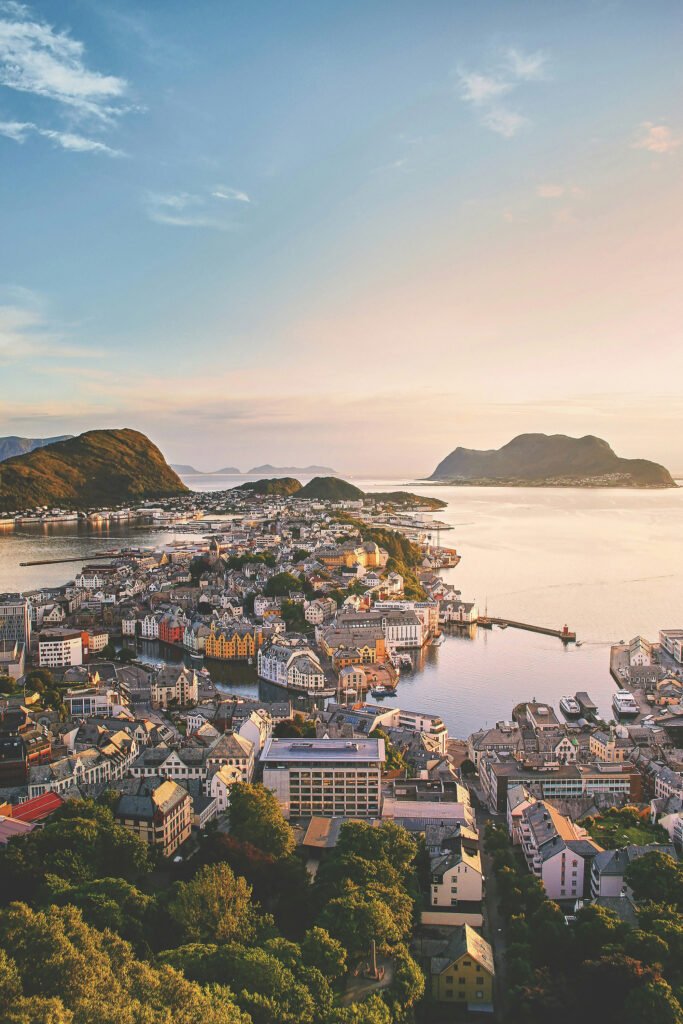
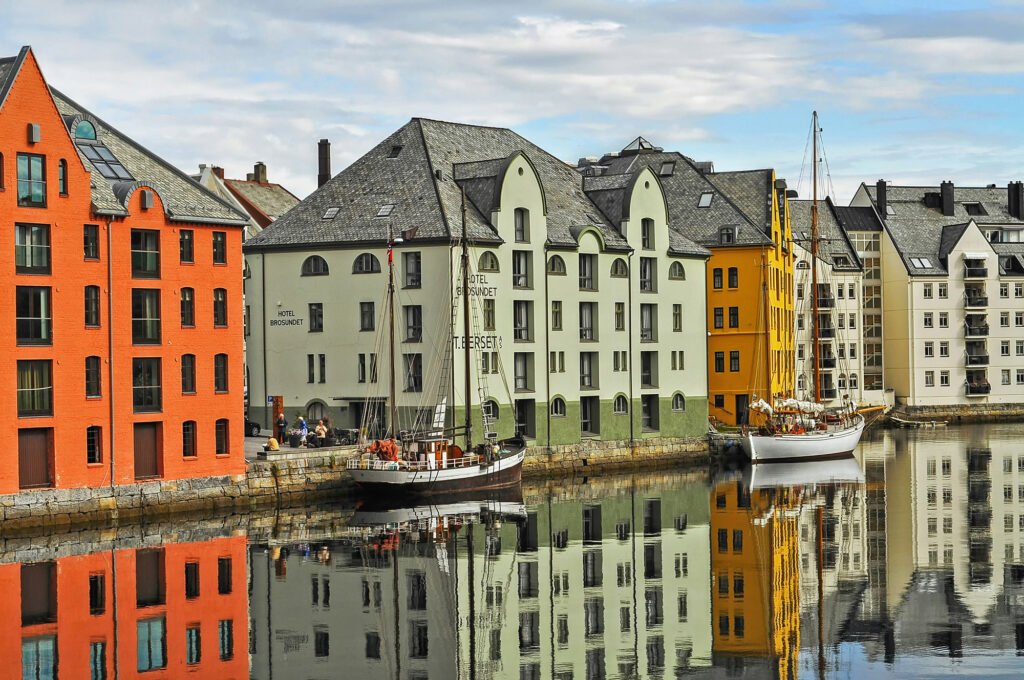
Brosundet, the channel running through the heart of town, is the most atmospheric overnight stop, putting guests’ yachts directly beneath the Art Nouveau quaysides within walking distance of restaurants and the Fjellstua viewpoint trail. Steinvagsundet, on the town’s other side, offers a quieter alternative with easy access back out toward the Geirangerfjord. In a strong westerly, the more sheltered channels around Giske and Vigra are worth considering instead.
04
One or two nights suit most itineraries, enough for a walk through the old Art Nouveau quarter and the climb up Mount Aksla, before setting off south for a full day cruising the Geirangerfjord and its waterfalls. Guests with more time often add a stop at the medieval church on Giske or the lighthouse at Alnes, both a short sail or drive from the harbour.
05
A fire that broke out on the night of 23 January 1904 destroyed around 850 of the town’s mostly wooden buildings within hours, leaving thousands homeless in the depths of a Norwegian winter. German Kaiser Wilhelm II, a regular visitor to the fjords, sent relief ships almost immediately, and the town was rebuilt within about three years in the Art Nouveau style then fashionable across Europe, using stone and brick this time rather than timber.

Tell us what you would like to know, and our team will respond with clear details on availability, specification, pricing and next steps.