Sunseeker / Sunseeker Predator 50
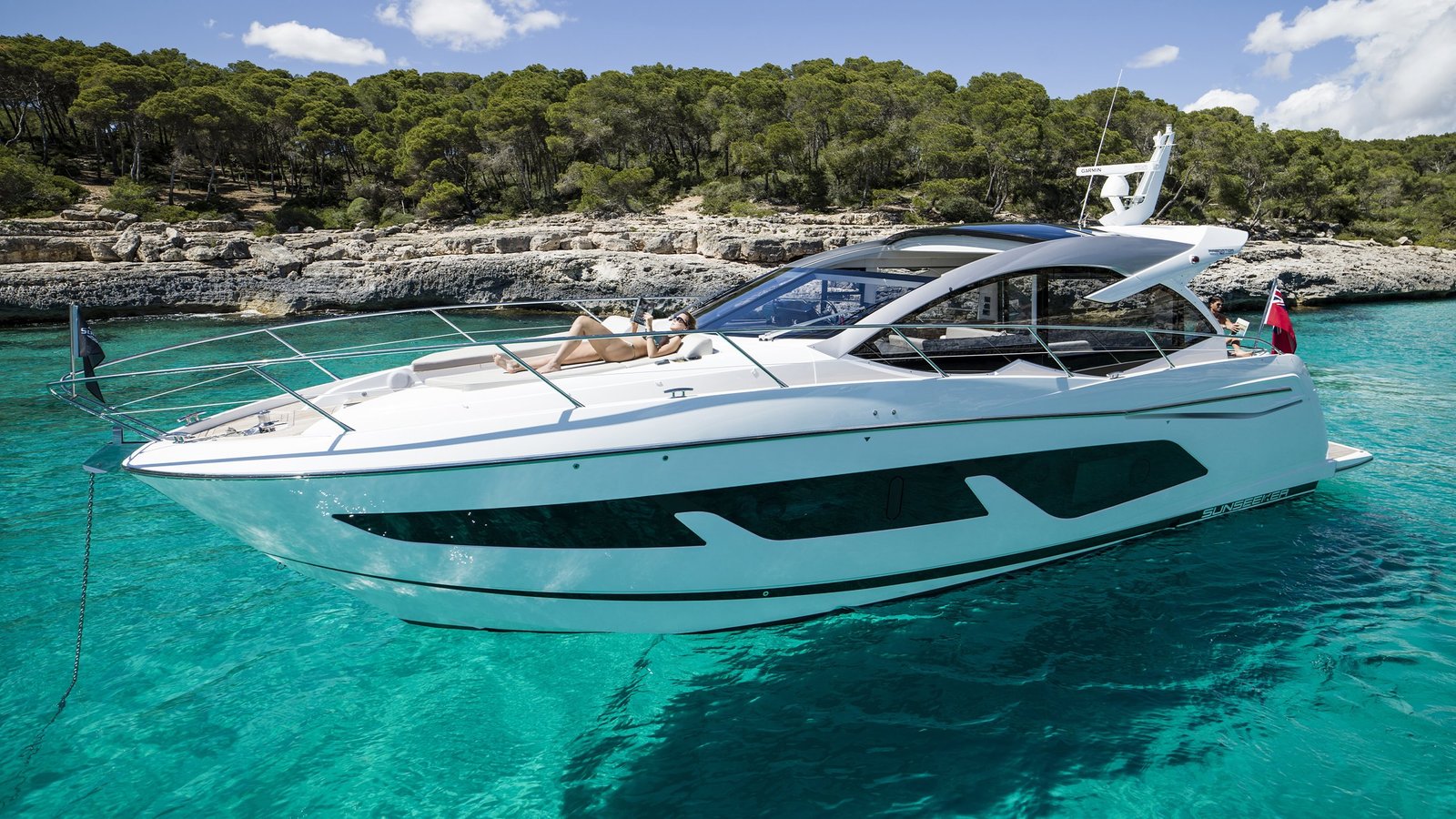
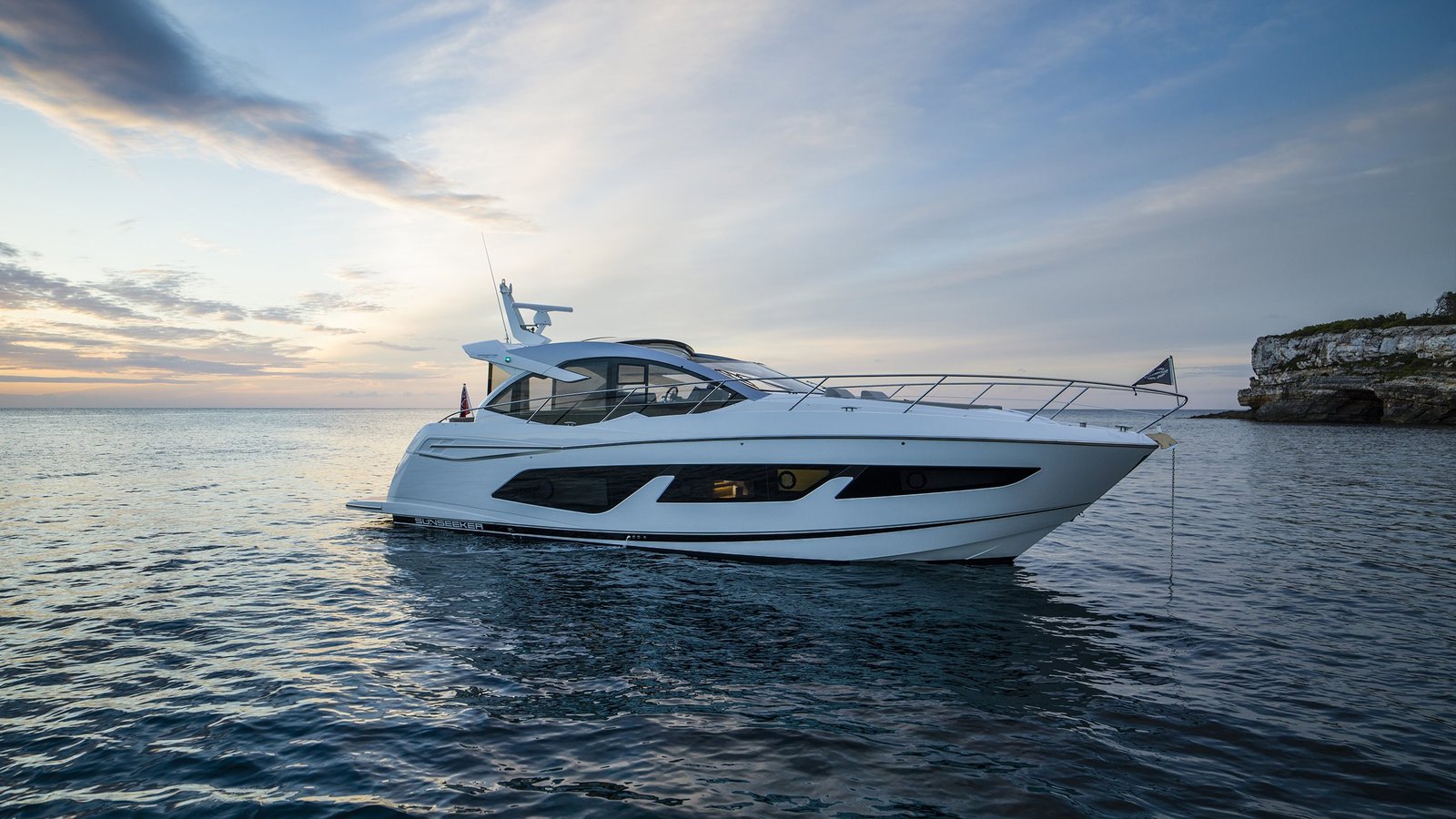
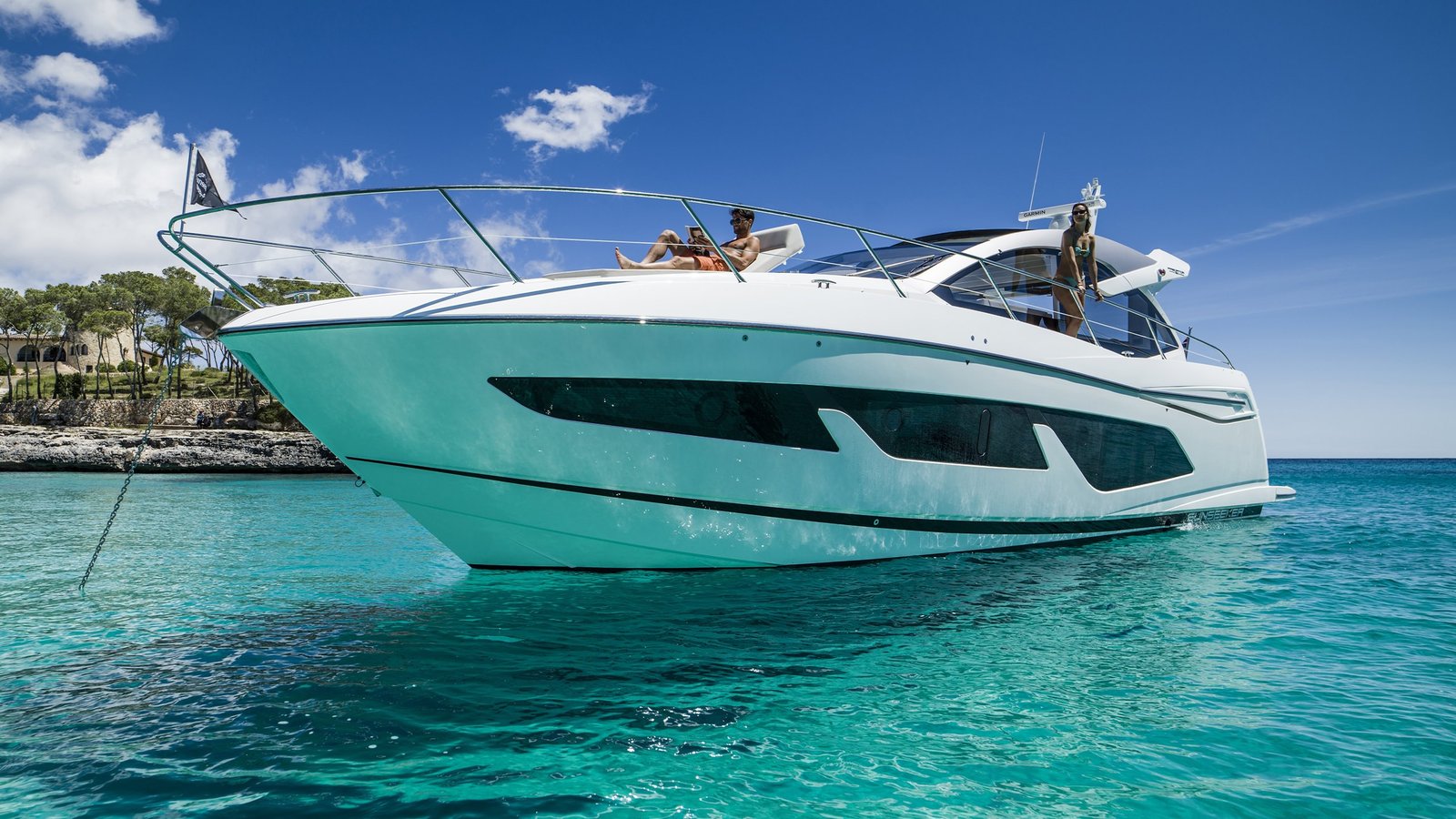
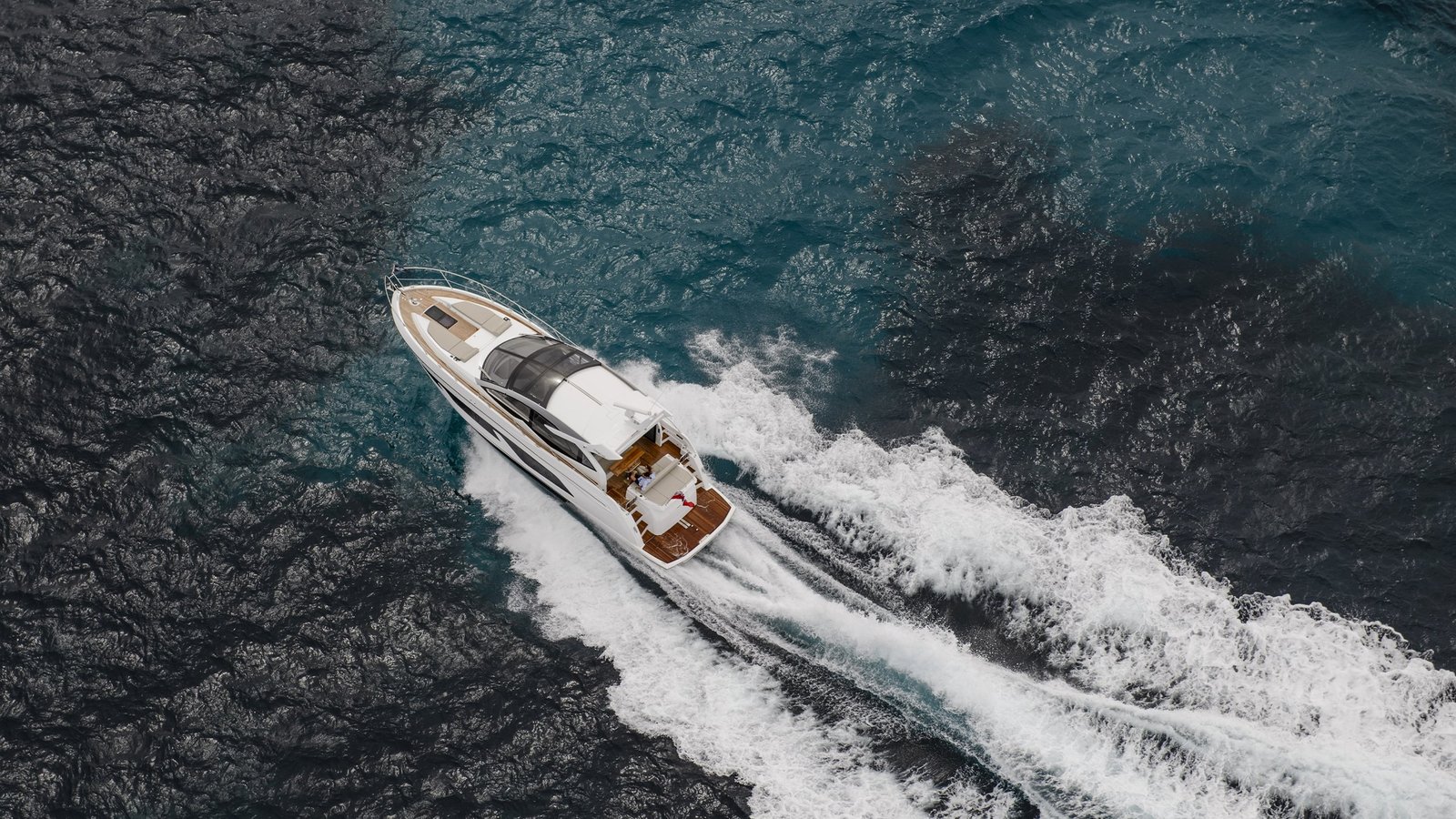
The Predator 50 was built around one idea: take out as much of the boundary between inside and outside as a 16 metre hull will allow. A fully opening hardtop roof and cockpit glazing that drops away turn the saloon into an extension of the cockpit, so the boat runs as an open sportsboat on a warm afternoon and closes up properly when the weather changes. Not many boats of this length manage both without giving up one of them.
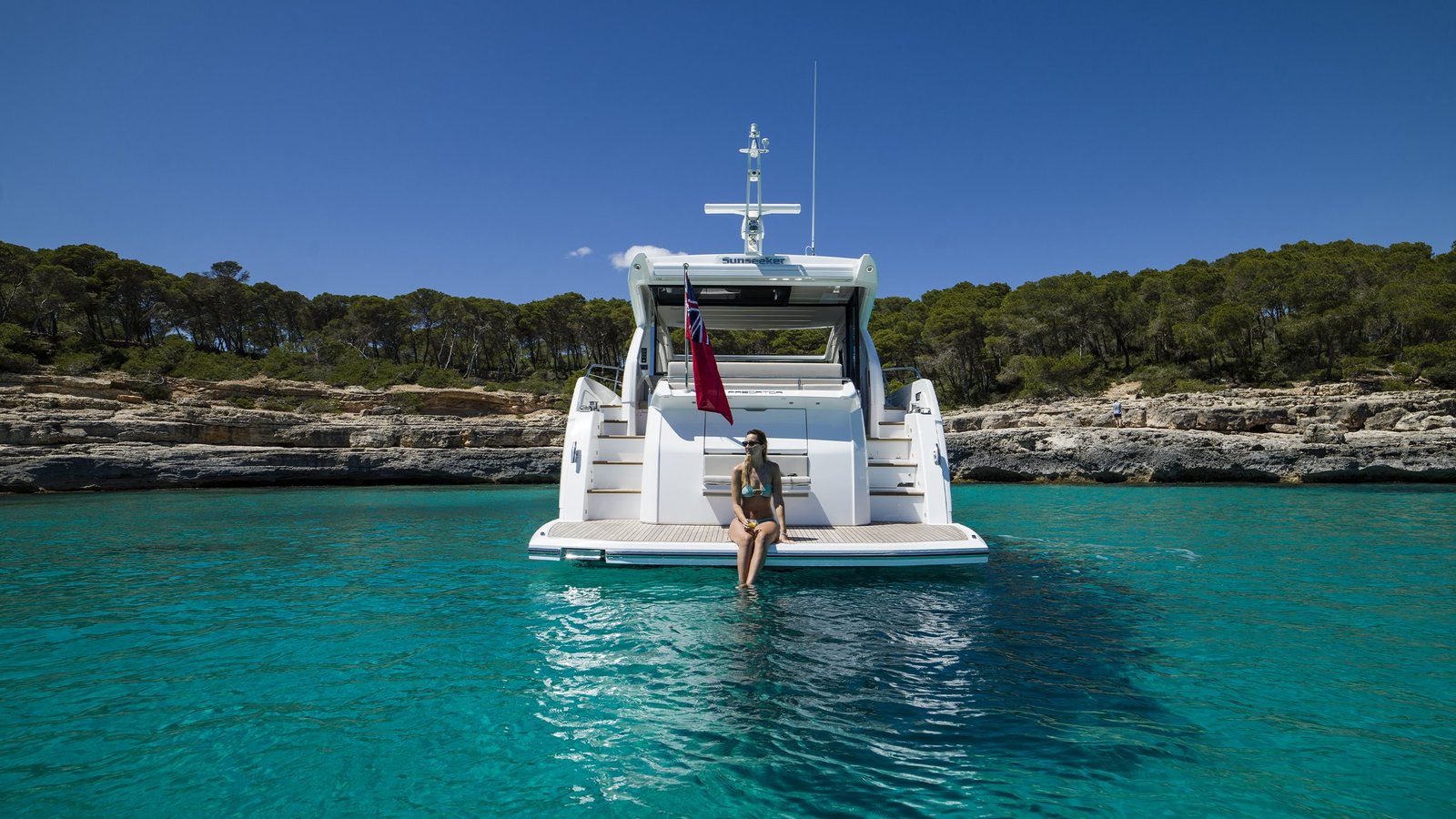
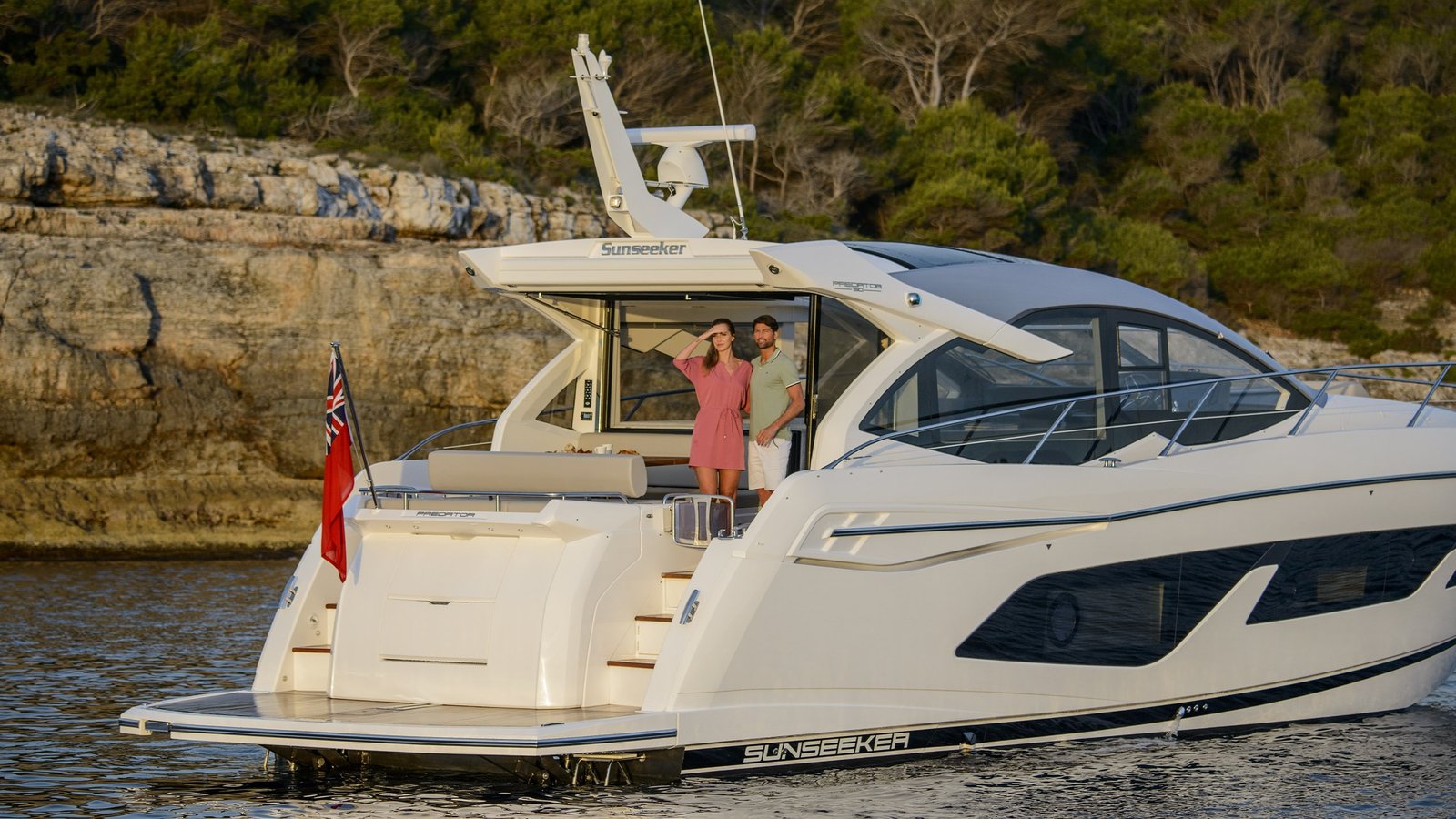
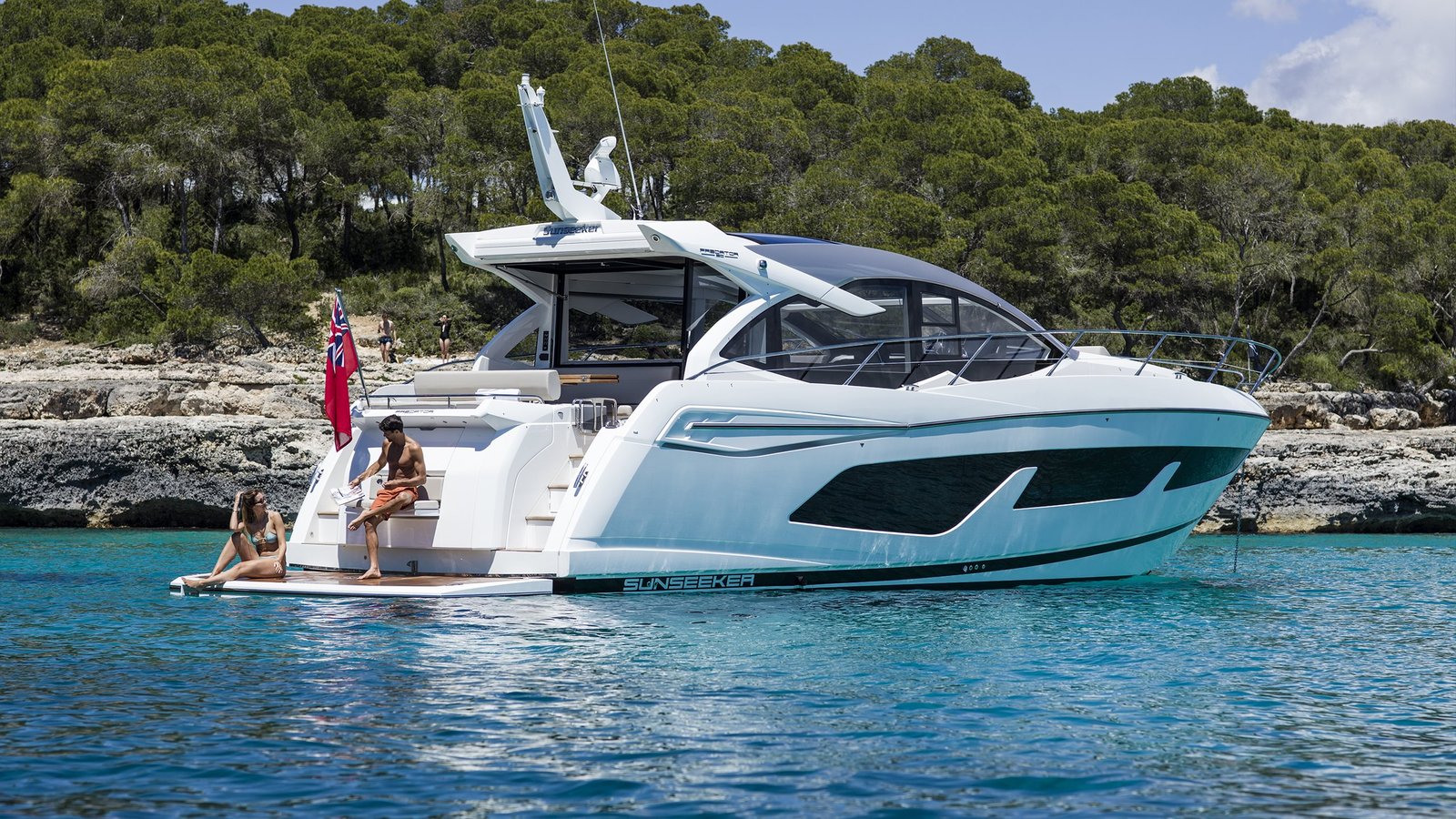
Aft, the transom carries the Sunseeker Beach Club arrangement: a barbecue, a fold-down bench and an overhead shower, with a hydraulic bathing platform that launches the tender straight out of the integrated garage. That one detail keeps the foredeck clear and the cockpit uncluttered, which is what makes the deck plan work.
Below, the accommodation takes up to six guests, lit by large hull windows that carry the sense of space down from the main deck.
The figures are 16.48 metres overall on a 4.48 metre beam, 19,000 kilograms at half load, 1,800 litres of fuel and a 1.33 metre draft that suits Mediterranean anchorages.
The model is no longer in production and supply on the brokerage market is thin. For a buyer who wants the convertible layout rather than a fixed coupe roof, there is little else doing the same job at this size.
Fresh water runs to 450 litres and the black water tank to 136 litres, capacities that match the way these boats are used: long days out, a night or two at anchor, then back to a serviced berth.
Length
16.5M
Beam
4.5M
Draft
1.3M
Day Guests
Sleeping
6
Cabin
Cruise Speed
Max Speed
Fuel
1800L
Engine
Naval
Sunseeker
Exterior
Sunseeker
Interior
Sunseeker
High Price Brokerage
€1,000,000
Low Price Brokerage
€785,000
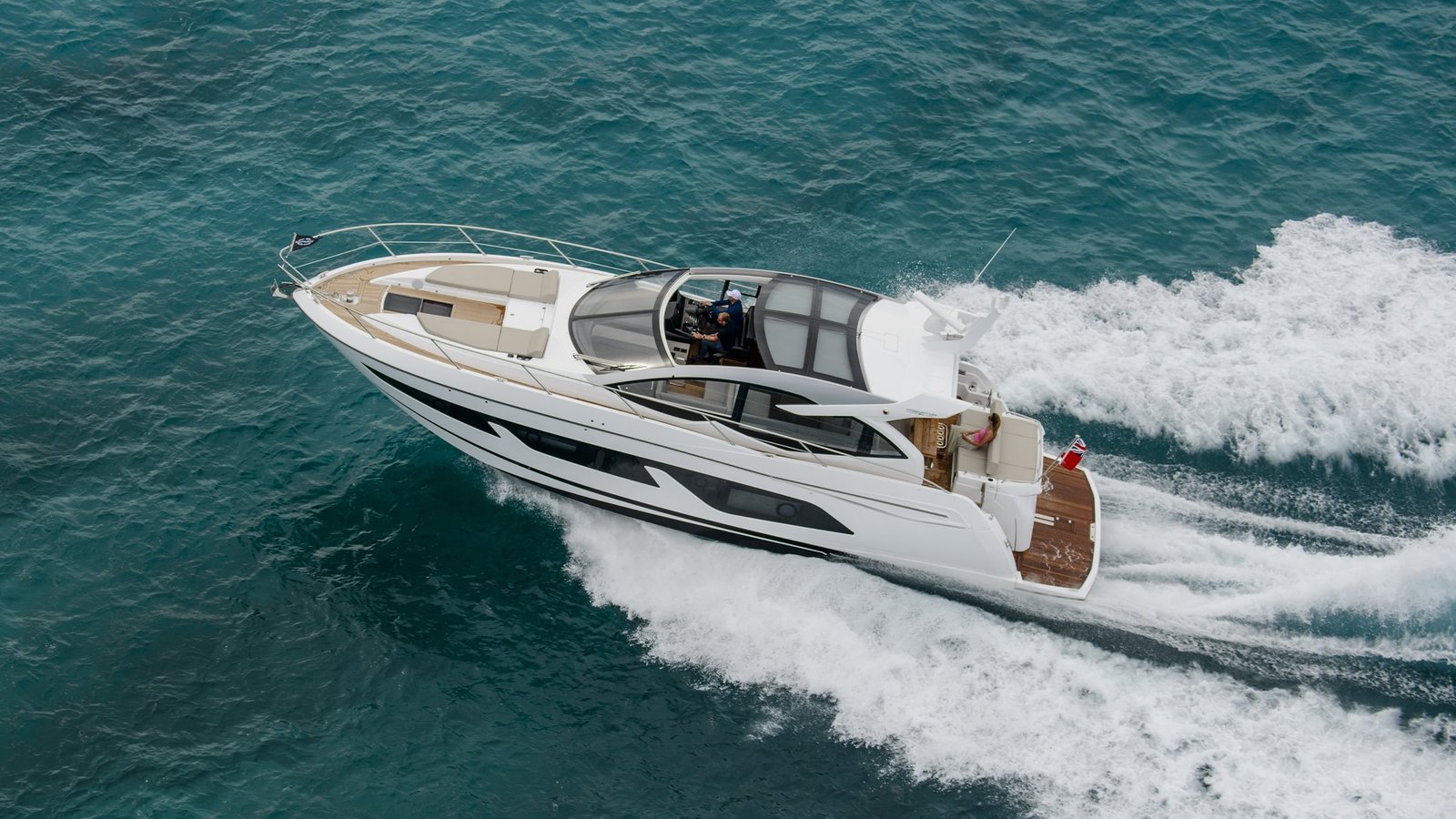
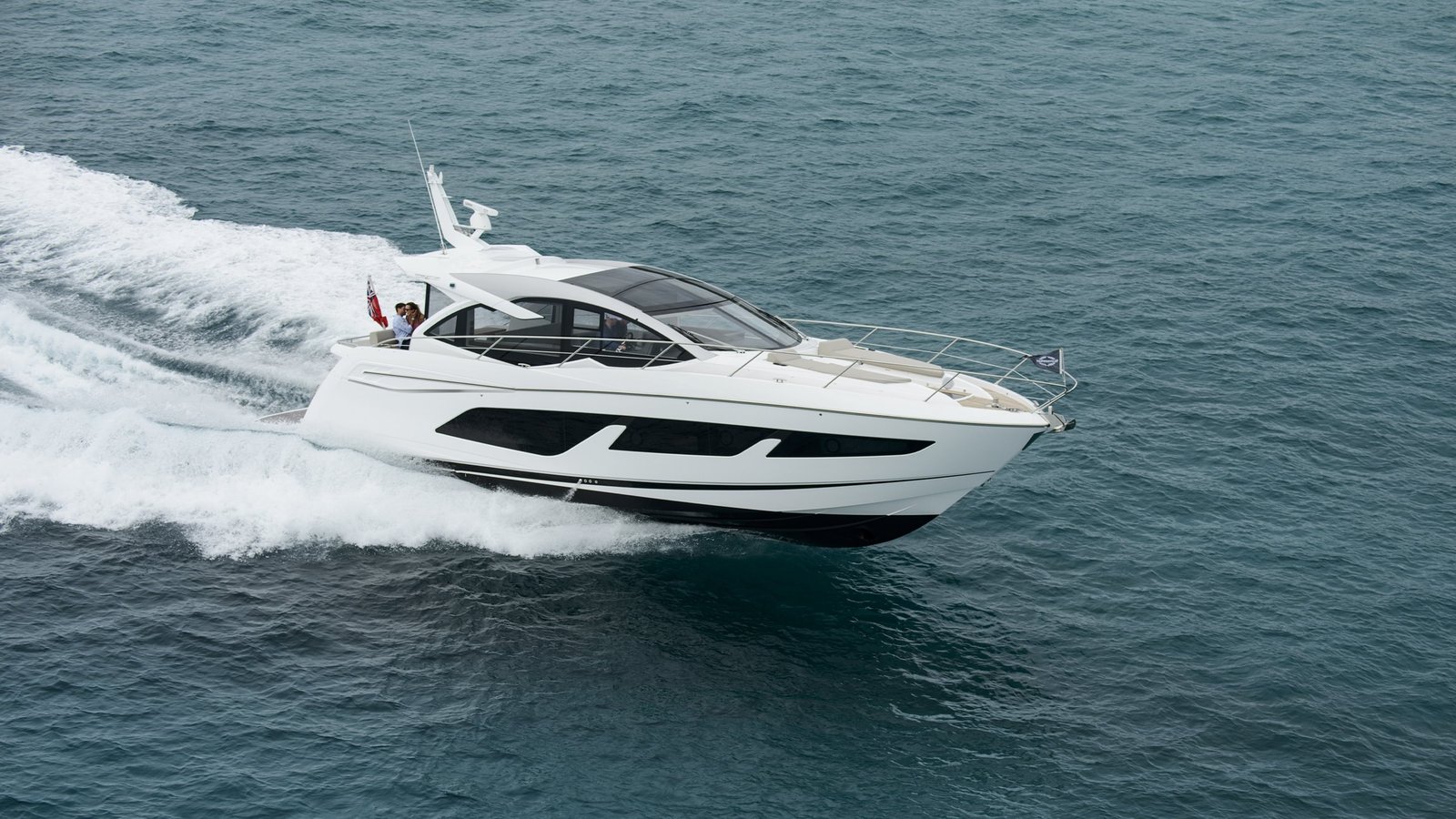
Thirty two knots on top, and a 20 knot cruise that barely raises its voice.
Twin 600 horsepower Volvo Penta engines drive the Predator 50 through conventional shaft drives rather than pods, a choice that frees up space ahead of the engine room for the full beam master cabin. An optional joystick ties the engines, rudders and bow thruster together for docking, while the steering itself runs through electric motors on each rudder with a mechanical backup. At cruise the cabin sits at around 70 decibels, quiet enough to hold a conversation without raising it. Fuel burn runs to about 167 litres an hour at cruise, giving a 172 nautical mile range from 1,800 litres of fuel, enough for a full day out and the return leg home.
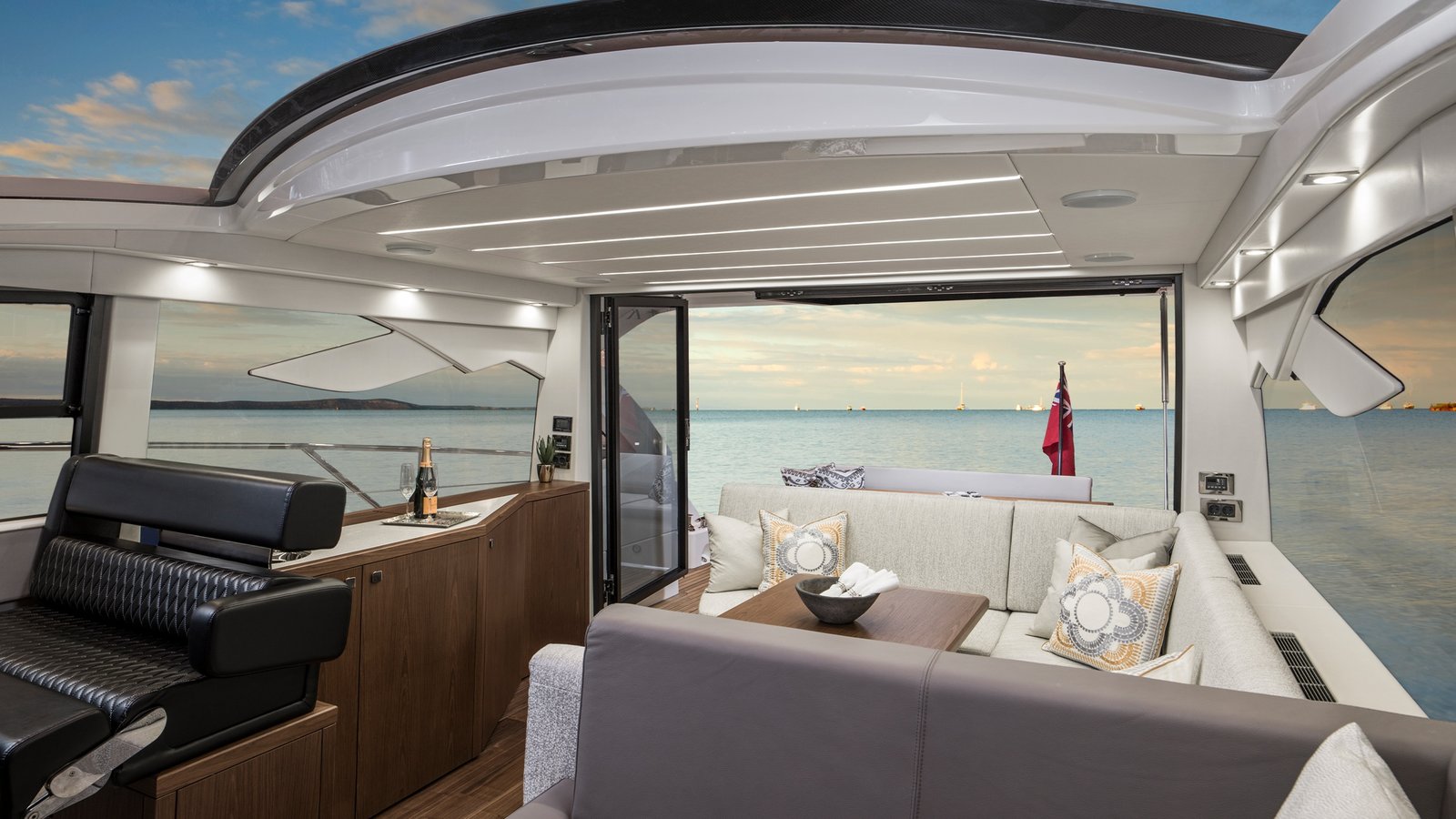
A carbon fibre roof that slides back far enough to turn the saloon into a cockpit extension.
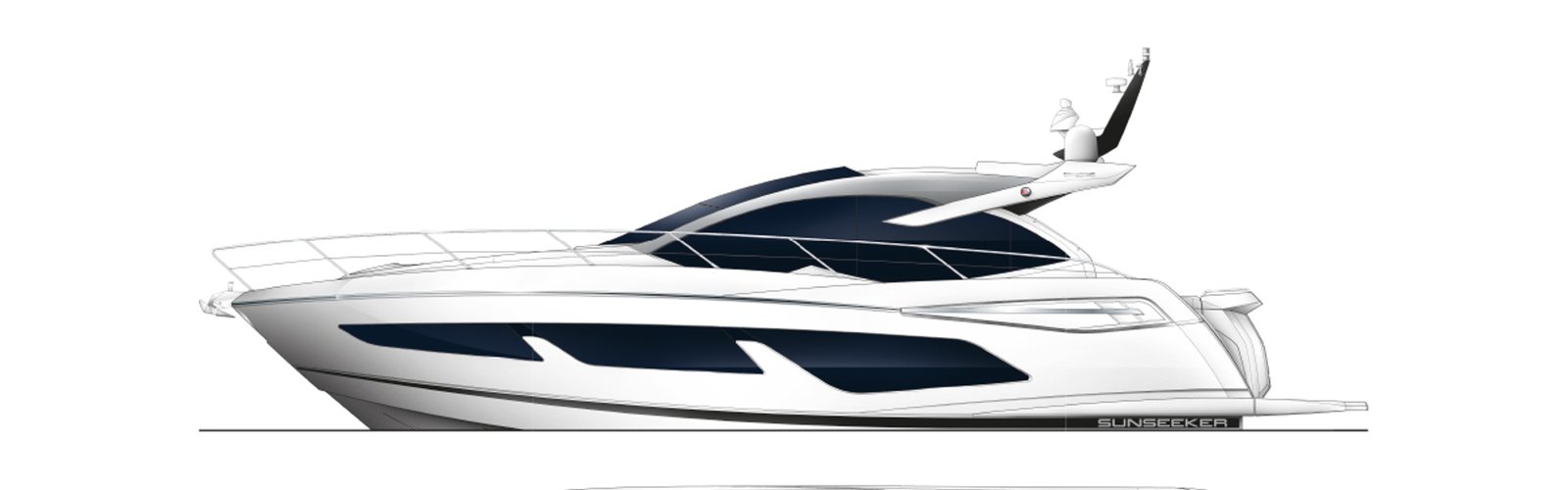
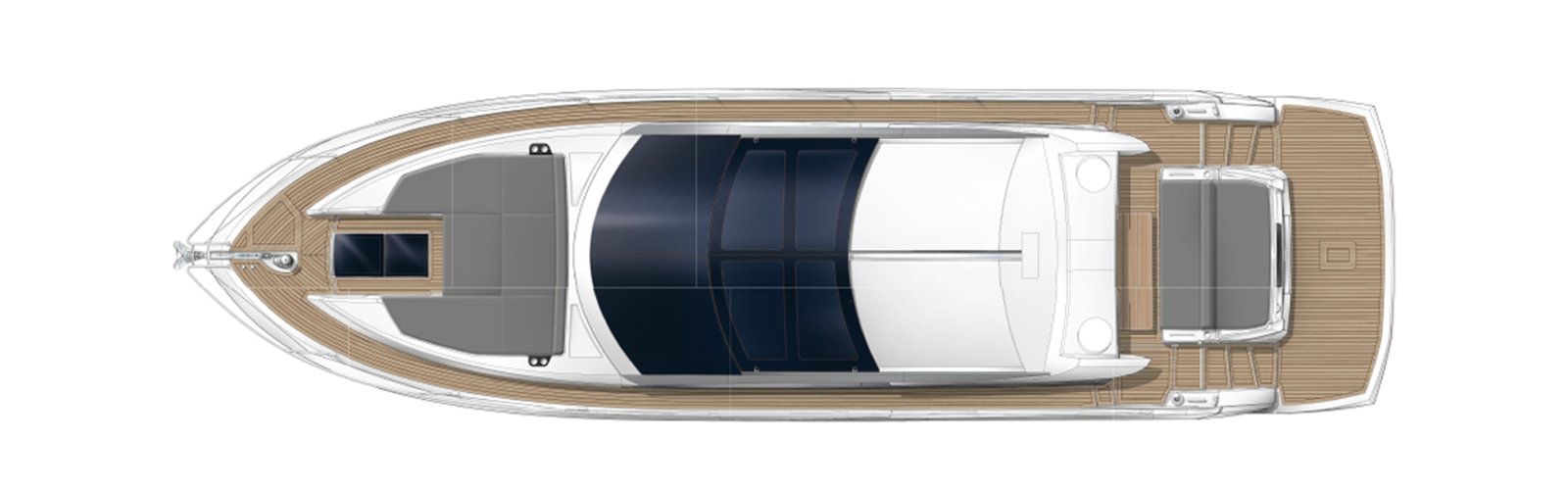
The hardtop’s sliding section, set with glass panels, is what separates the Predator 50 from the open sportsboats it competes against. Closed, it turns the deck saloon into a proper weather deck. Open, the boat reads as a sportsboat again, which is the trick the Predator name has always traded on. Large side windows carry that same openness down through the cabin level. In the cockpit, an aft facing seat and a split sunpad with a folding backrest adapt the space between lounging and seating, and the stern garage still swallows a Williams 325 tender, a size most 50 footers its age cannot manage.
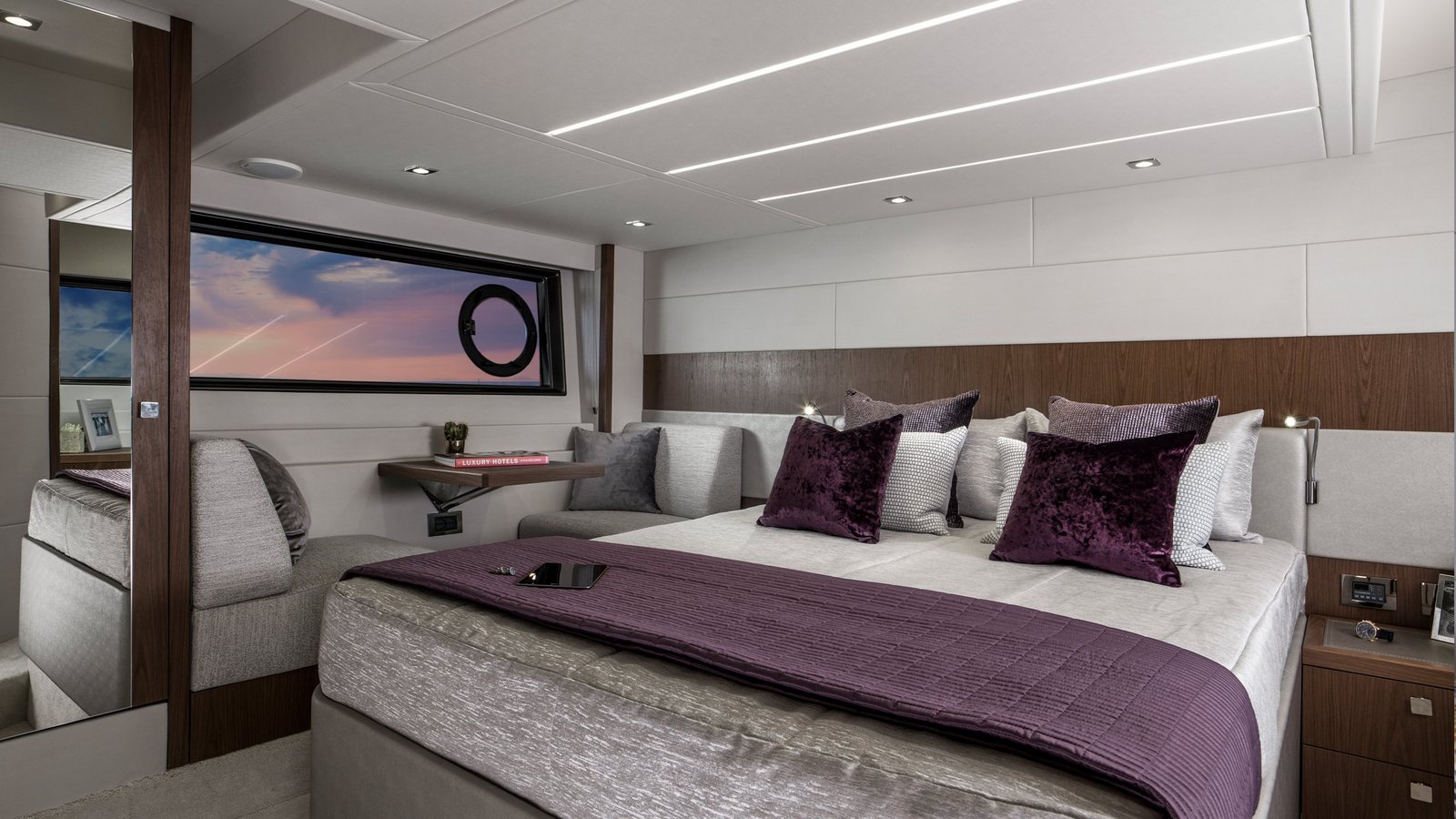
A full beam master cabin, positioned where a boat this size rarely finds room for one.
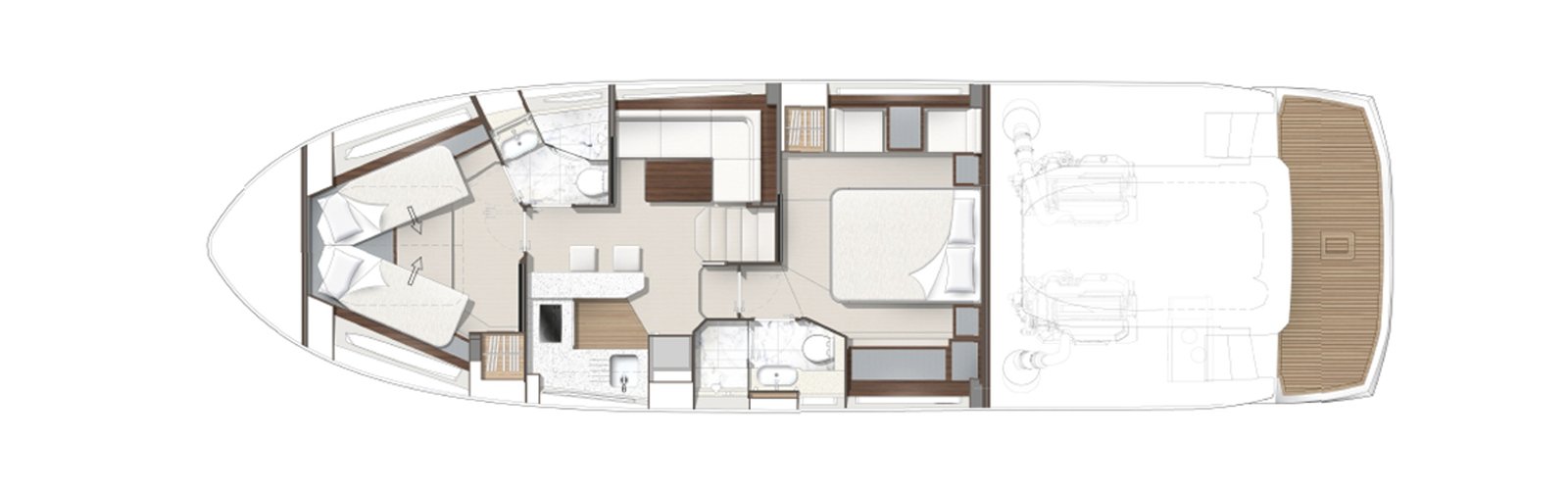
Placing the engines on shaft drives rather than pods frees the space ahead of them for an owner’s cabin that runs the full width of the hull, with full standing headroom throughout. Forward, the guest cabin uses scissor berths that convert from twins to a double, and an optional third cabin with bunks takes the sleeping count to six. Interior length matches the Predator 57, a model with more overall length to spare, which says something about how efficiently the layout uses the hull. Satin cherry is the standard finish, with silver oak or walnut offered as alternatives for an owner who wants a different mood below.
The saloon works as hard as the cockpit, which is not always true on a boat this size.
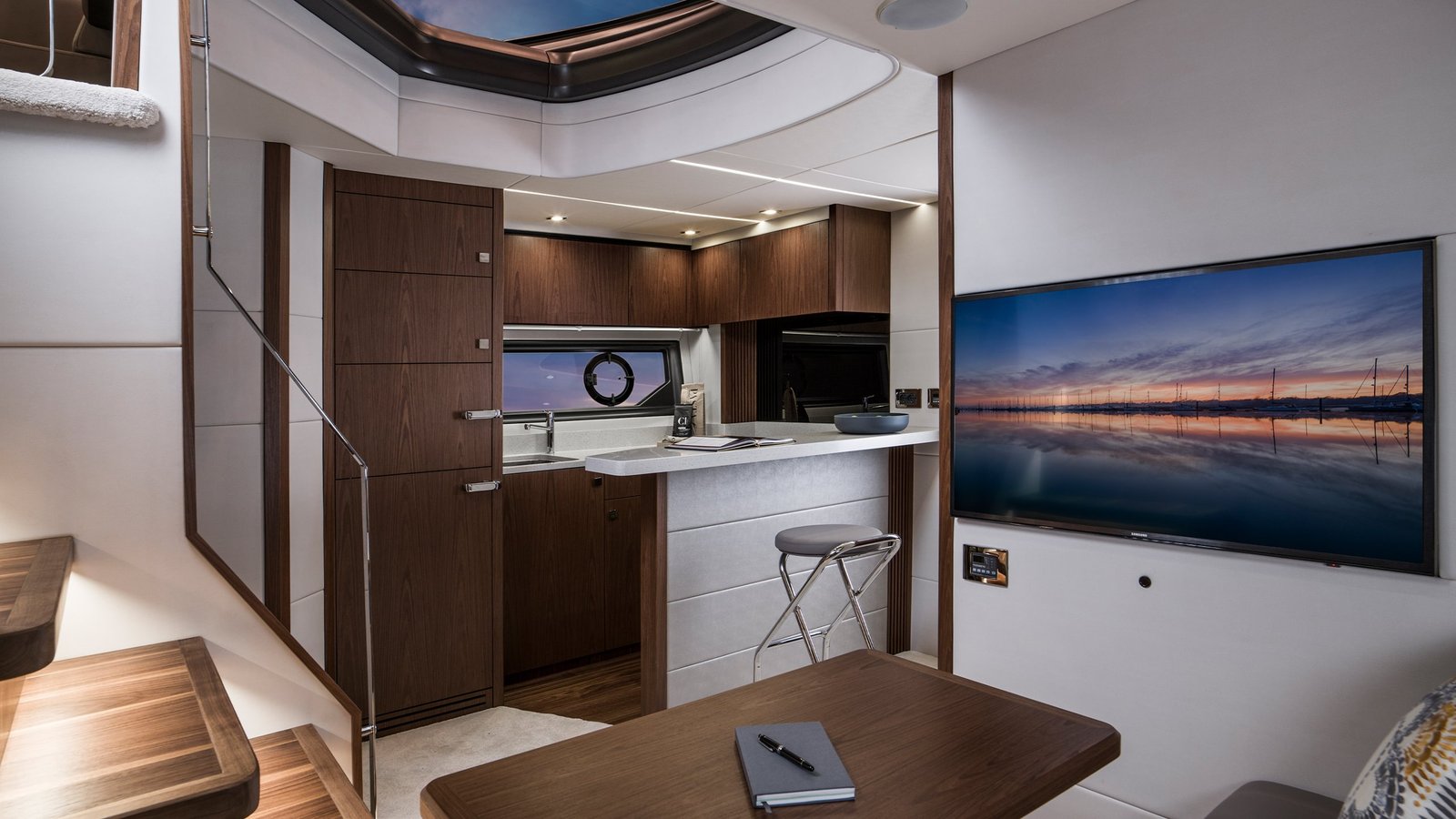
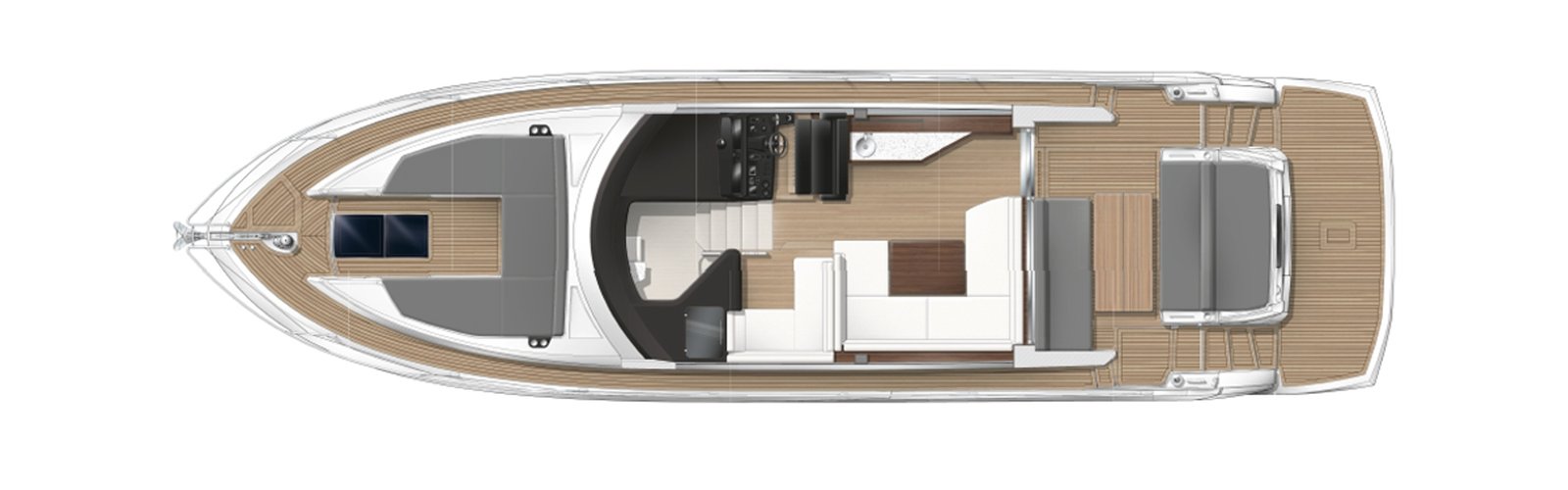
A C shaped dinette seats the group for meals, while an L shaped settee by the helm gives a second gathering point without competing with the driving position. The galley carries full headroom, a detail that matters more at sea than at the dock, and an optional breakfast bar extends it into the saloon for an owner who entertains more than they cook. Raised, the helm itself gives the whole crew a clear line of sight, so the person not driving still has the best seat rather than the worst one. It is a boat that keeps its social spaces working whether she is moving or moored.
A bigger, more composed boat than the sportscruiser she replaced, and priced to prove it.
The Predator 50 sits above her direct rivals, the Princess V50 and the Fairline Targa 48, in both interior volume and finish, a position Sunseeker has built the Predator name on for two decades. She carries an RCD Category B certification for 12 people, and 430 litres of fresh water alongside her 1,800 litre fuel tank supports genuine weekends away rather than day trips alone. Options add up quickly on a boat at this level, sprung mattresses among them, so a buyer should price a given example with its specification sheet in hand rather than the base figure. For an owner who wants a hardtop sportscruiser with real cabin space, she remains one of the more complete answers on the market.
Length
17.1M
Beam
4.9M
Draft
1.5M
Guests
–
Cabins
2
Cruise Speed
–
Max Speed
36Kt

Tell us what you would like to know, and our team will respond with clear details on availability, specification, pricing and next steps.