Rand / RAND Archipelago 32
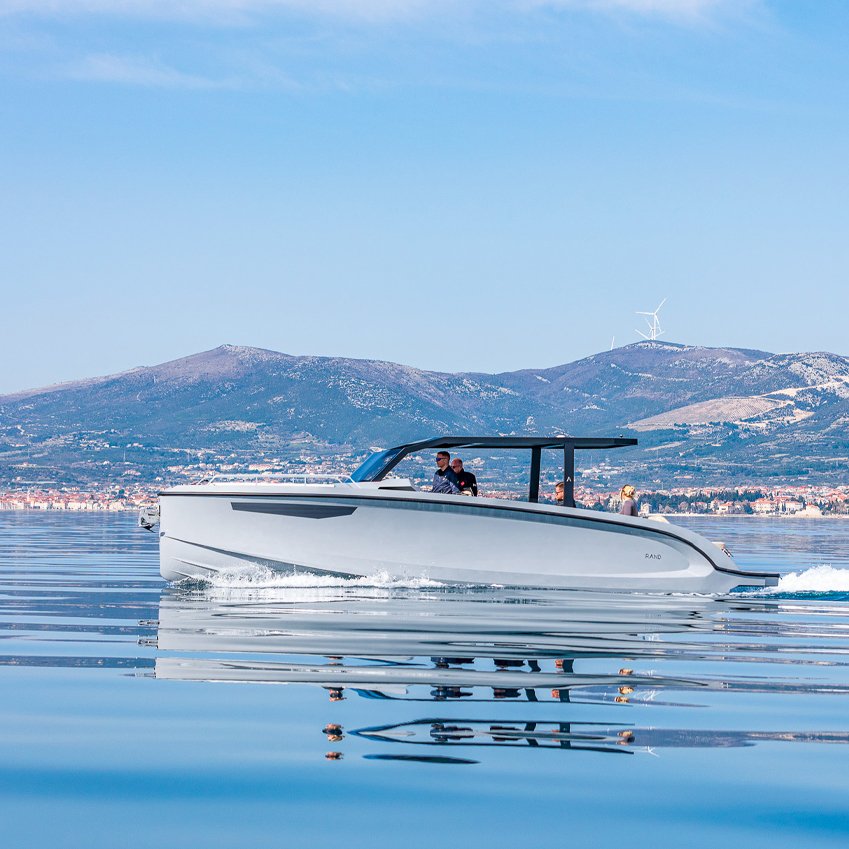
RAND builds in Copenhagen, and it shows. The Archipelago 32 carries the light structure, flat surfaces and restrained detailing of Danish design rather than the sculpted glass of the Mediterranean market. It grew out of the smaller Escape 30 and stretches to just under ten metres of hull.
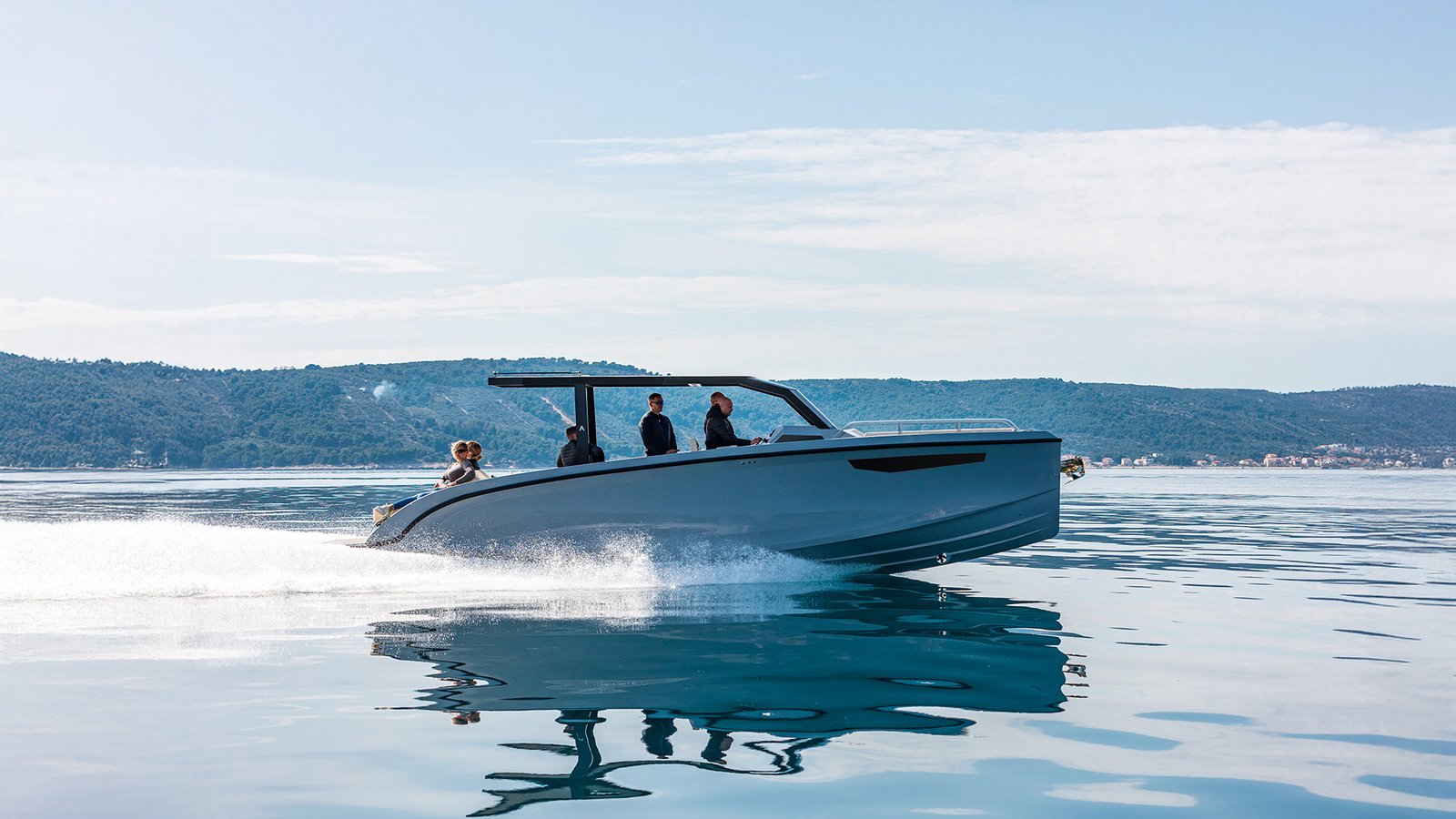
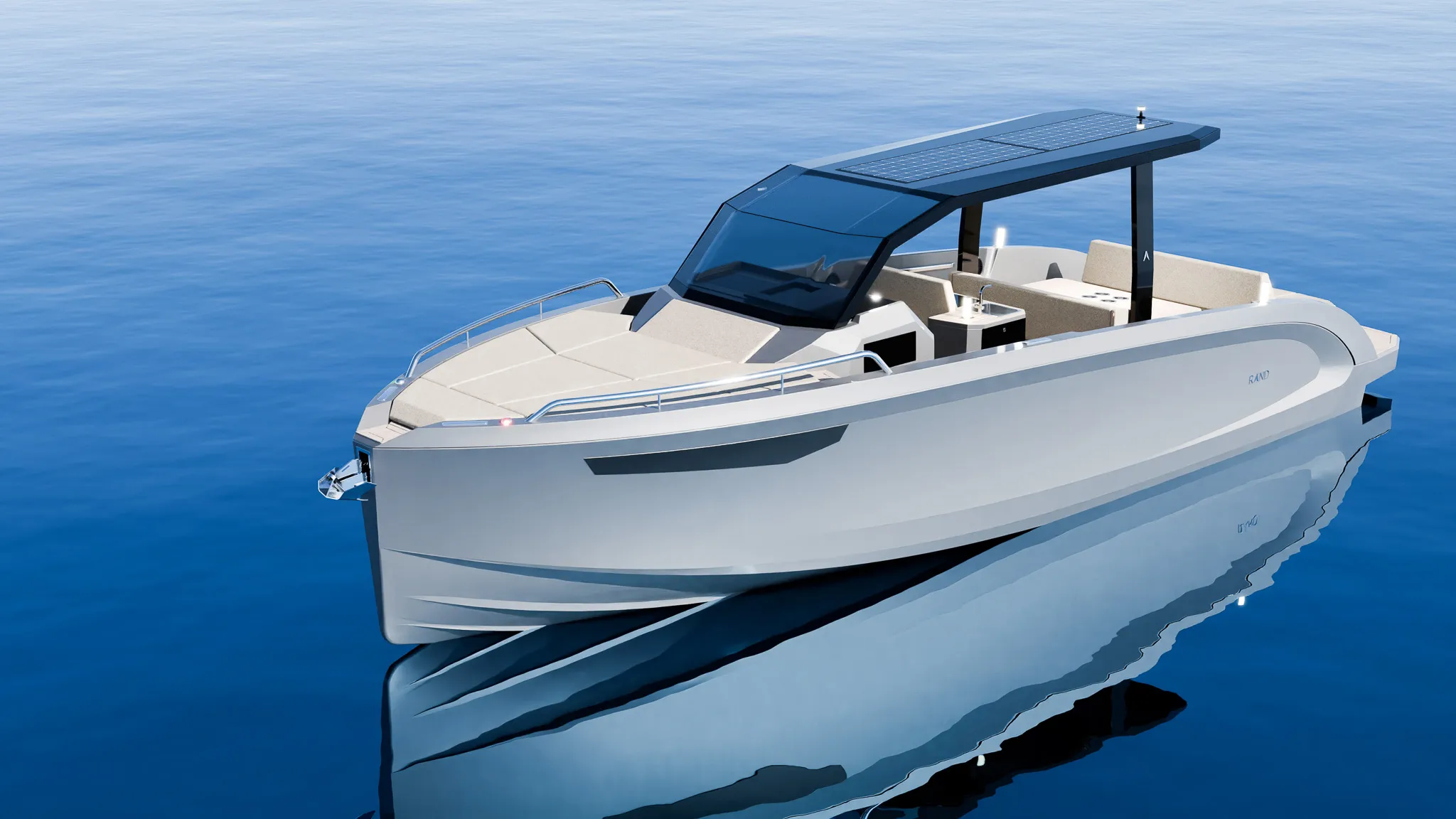
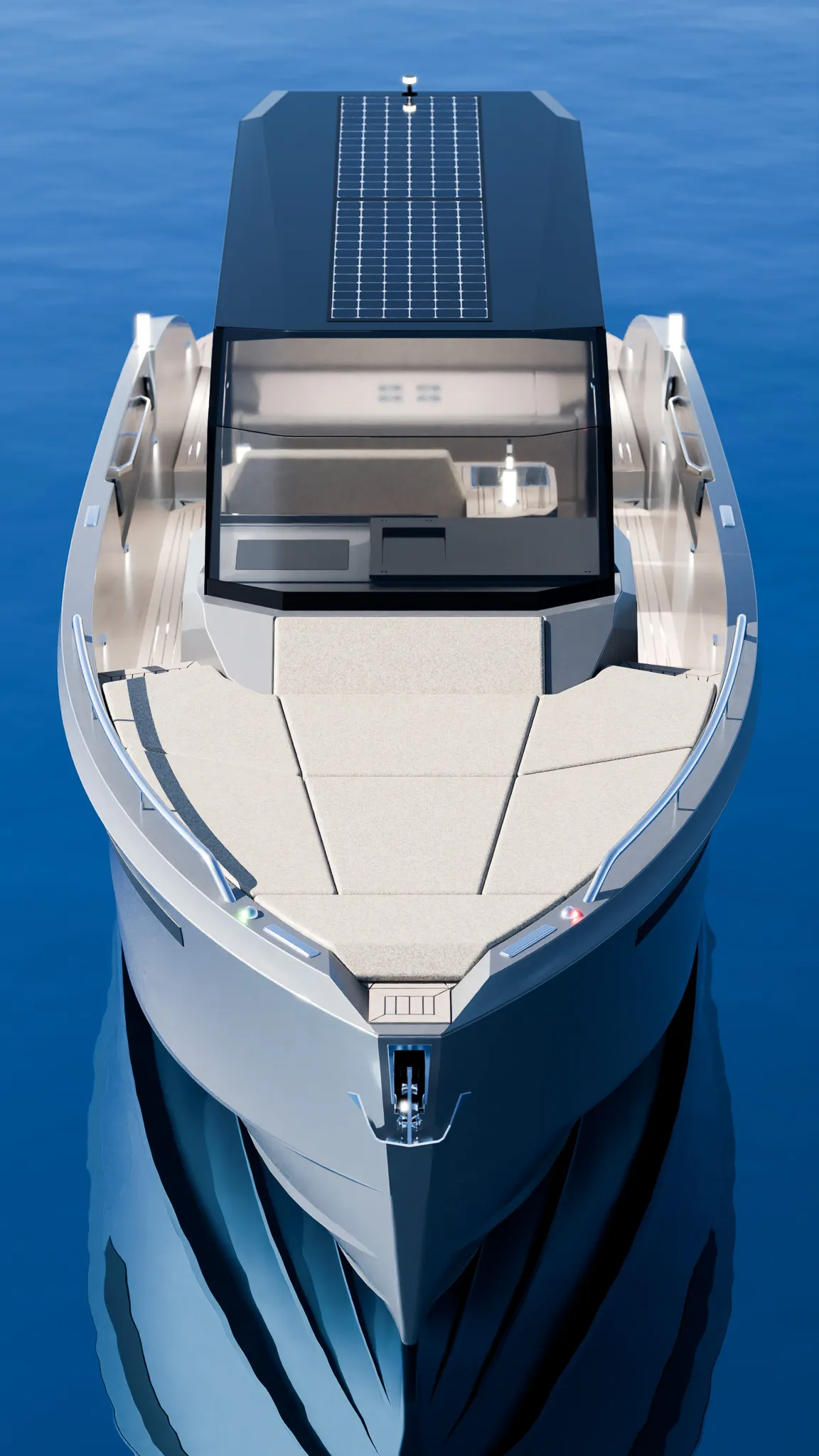
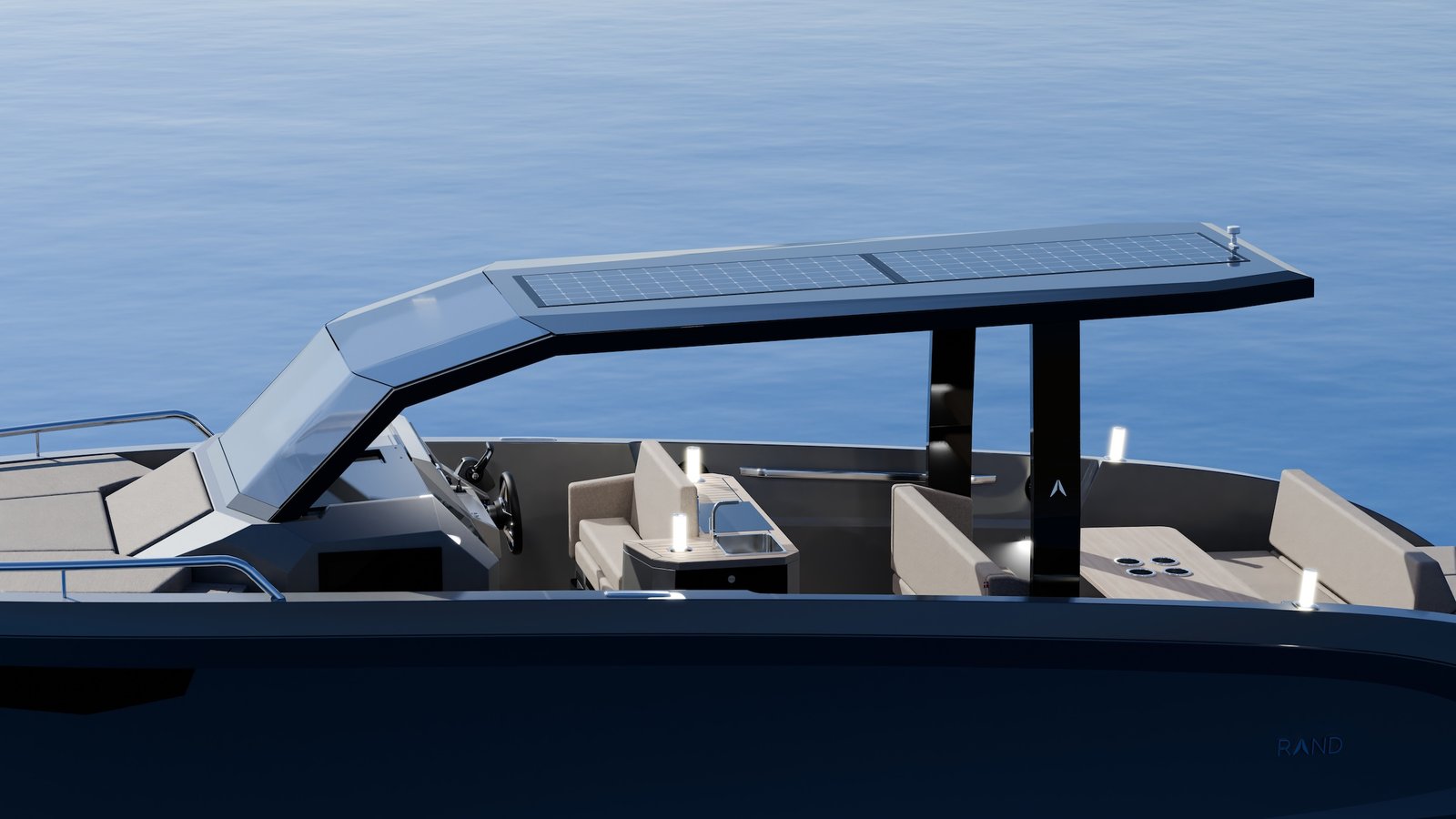
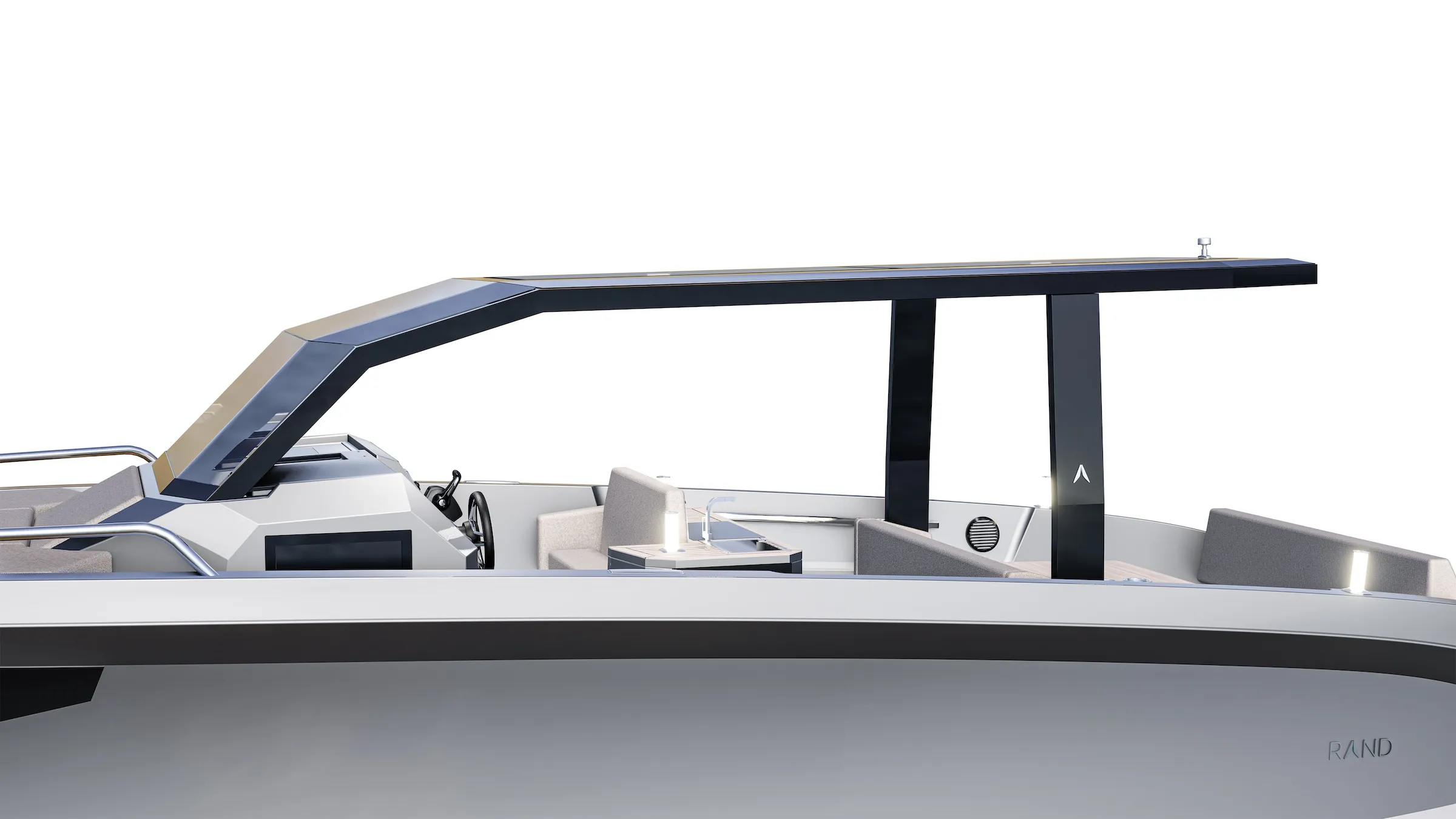
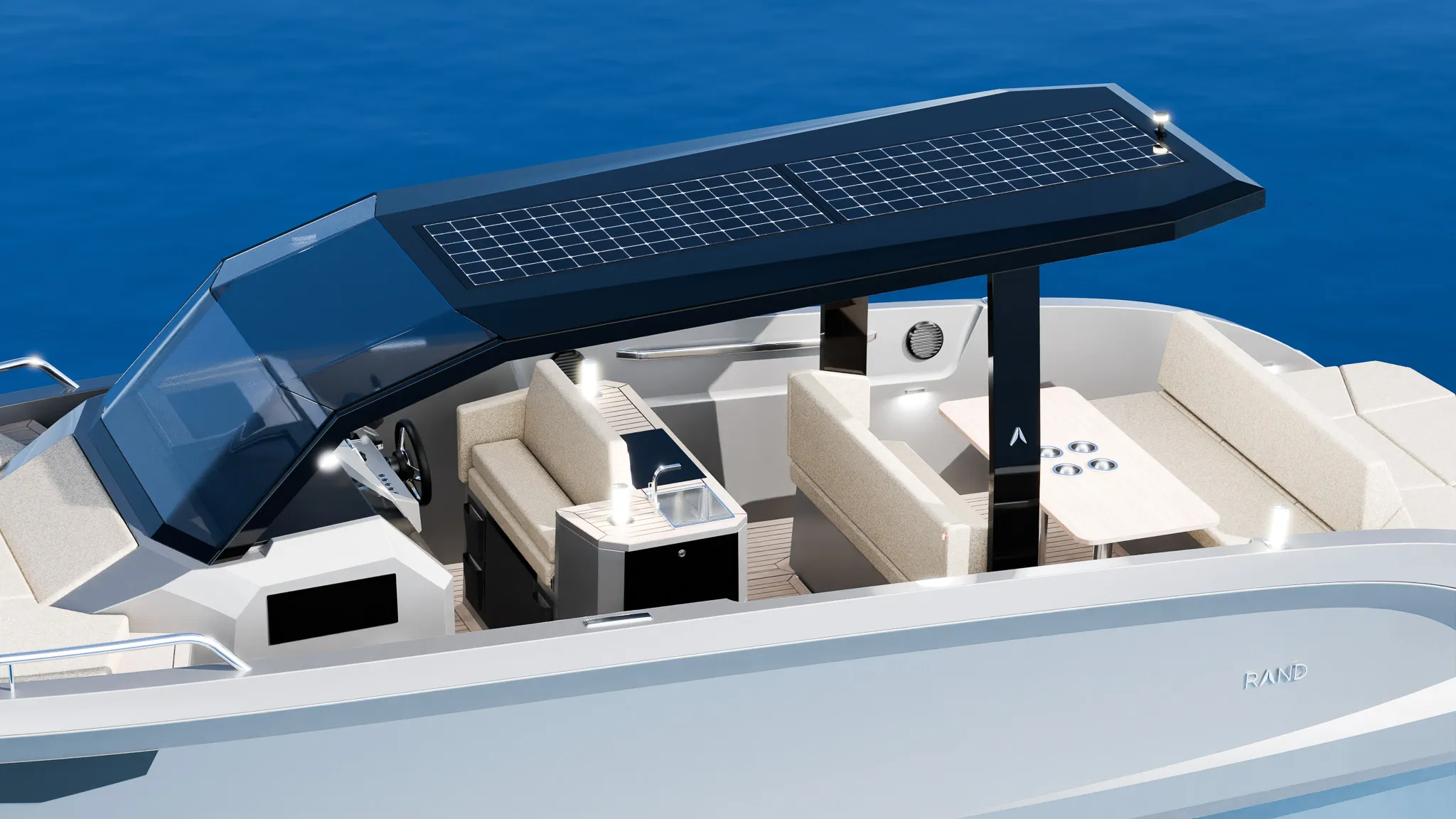
What separates it from the day boats around it is that the whole thing closes up. An ultralight aluminium T-top carries a built-in windscreen, and the helm and seating area can be fully enclosed, so a cold morning or a wet afternoon does not end the trip. Solar panels feed the systems, which lets the boat sit off-grid at anchor.
Propulsion is a real choice here. Two E-DRIVE electric packages offer 270 kW with a 130 kWh battery or 300 kW with 220 kWh, reaching 30 and 40 knots and covering 64 and 97 kilometres at eight knots. Petrol and diesel alternatives from Mercury and MerCruiser take the top speed to 45 knots.
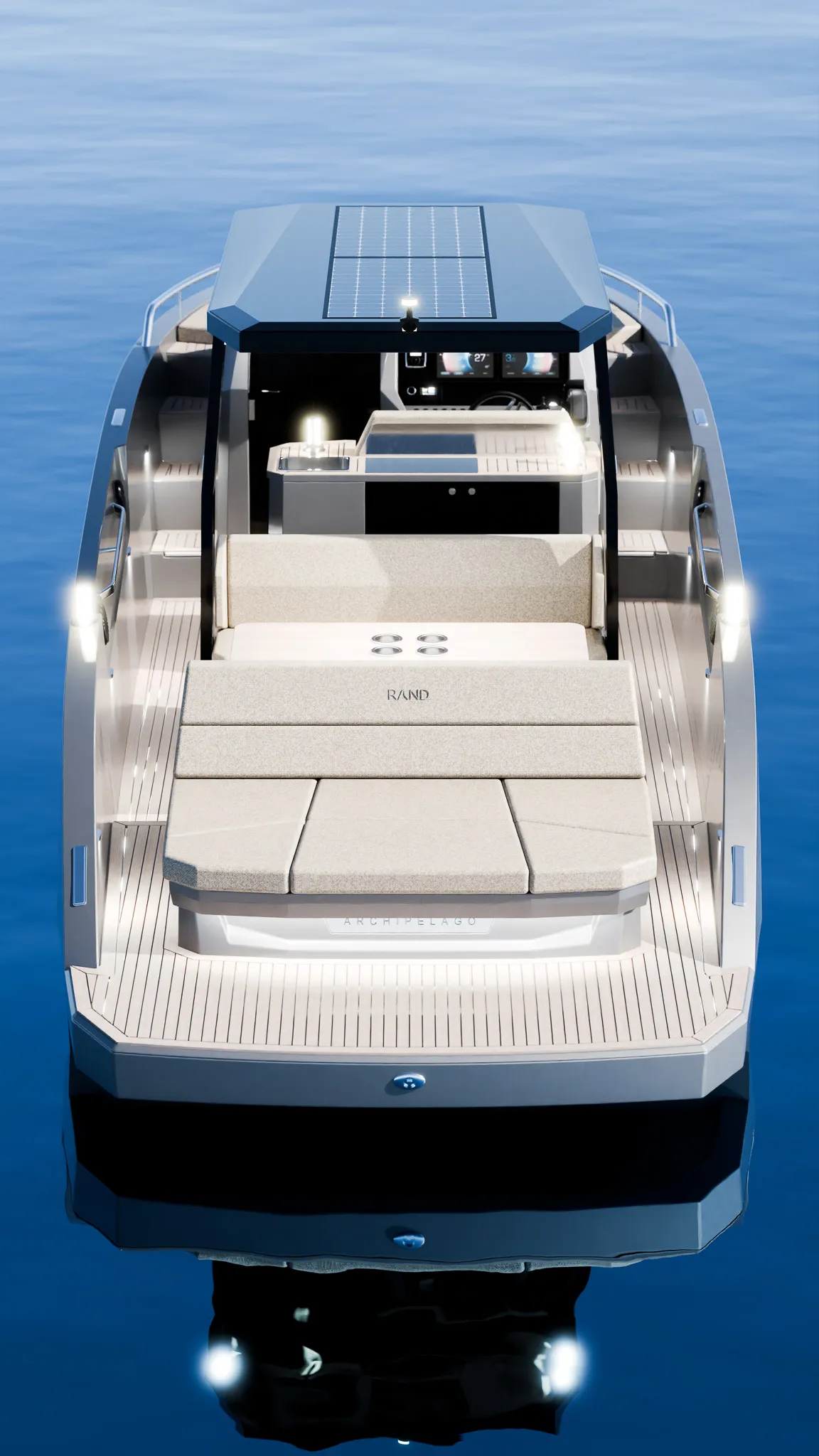
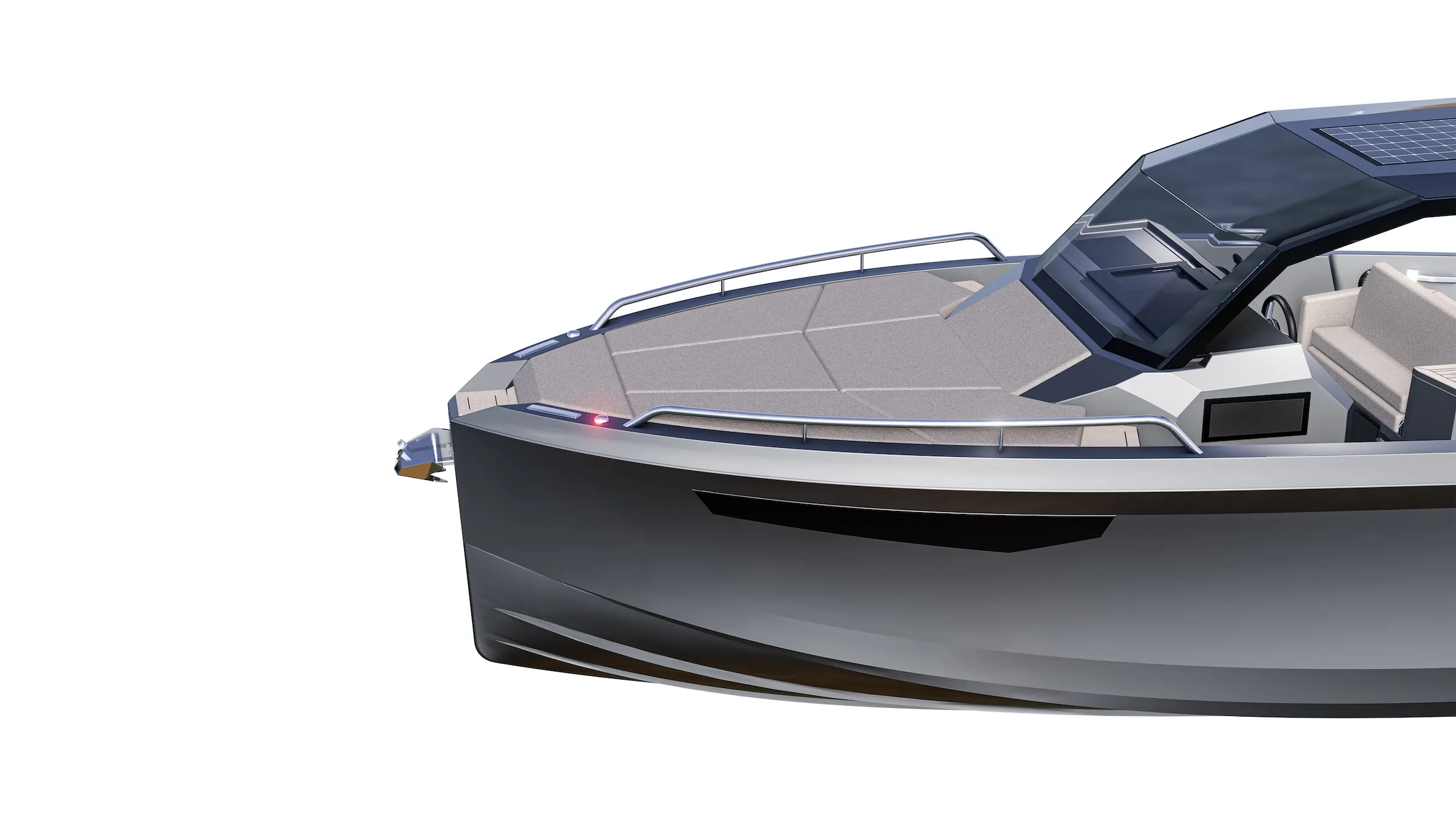
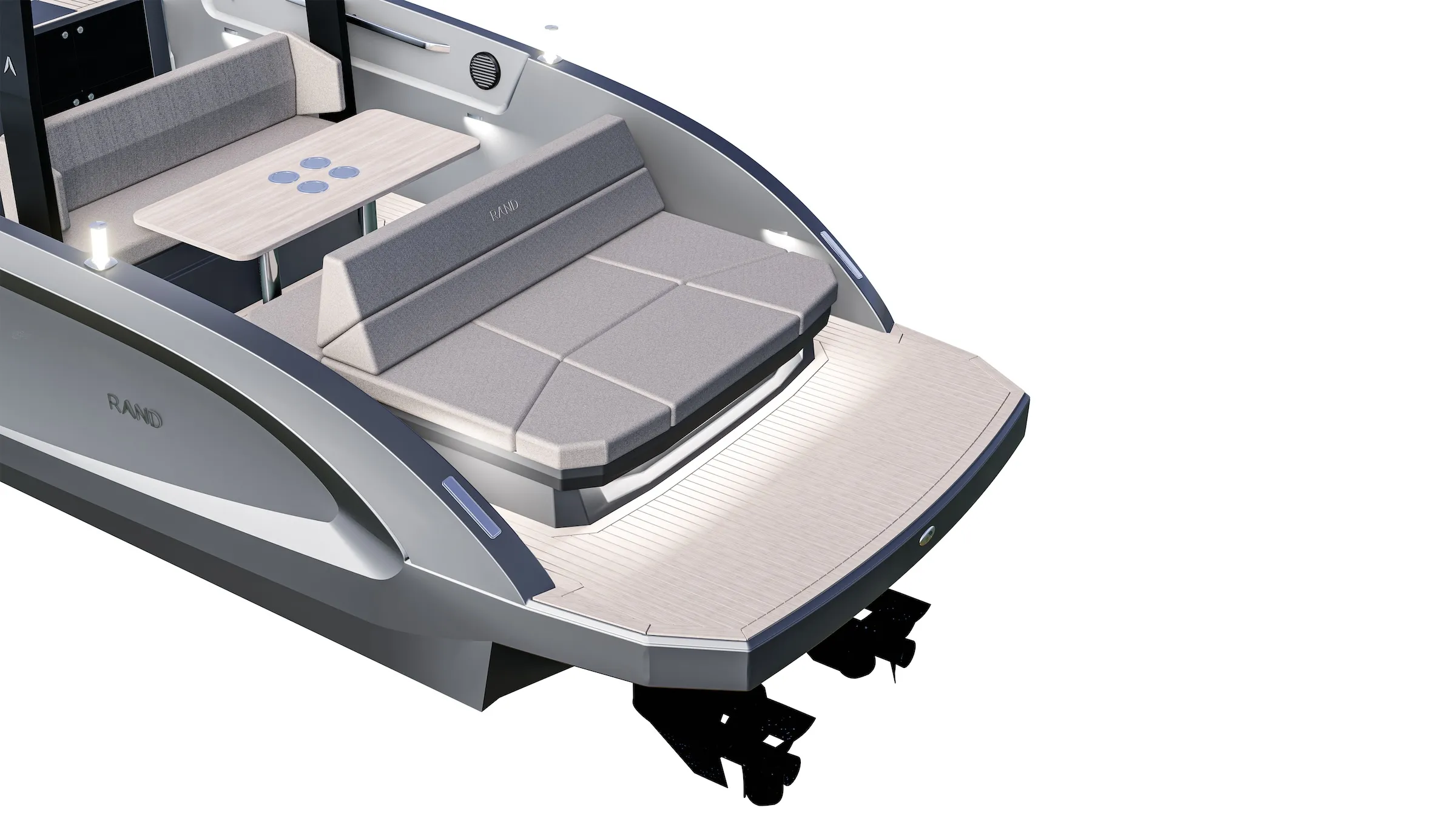
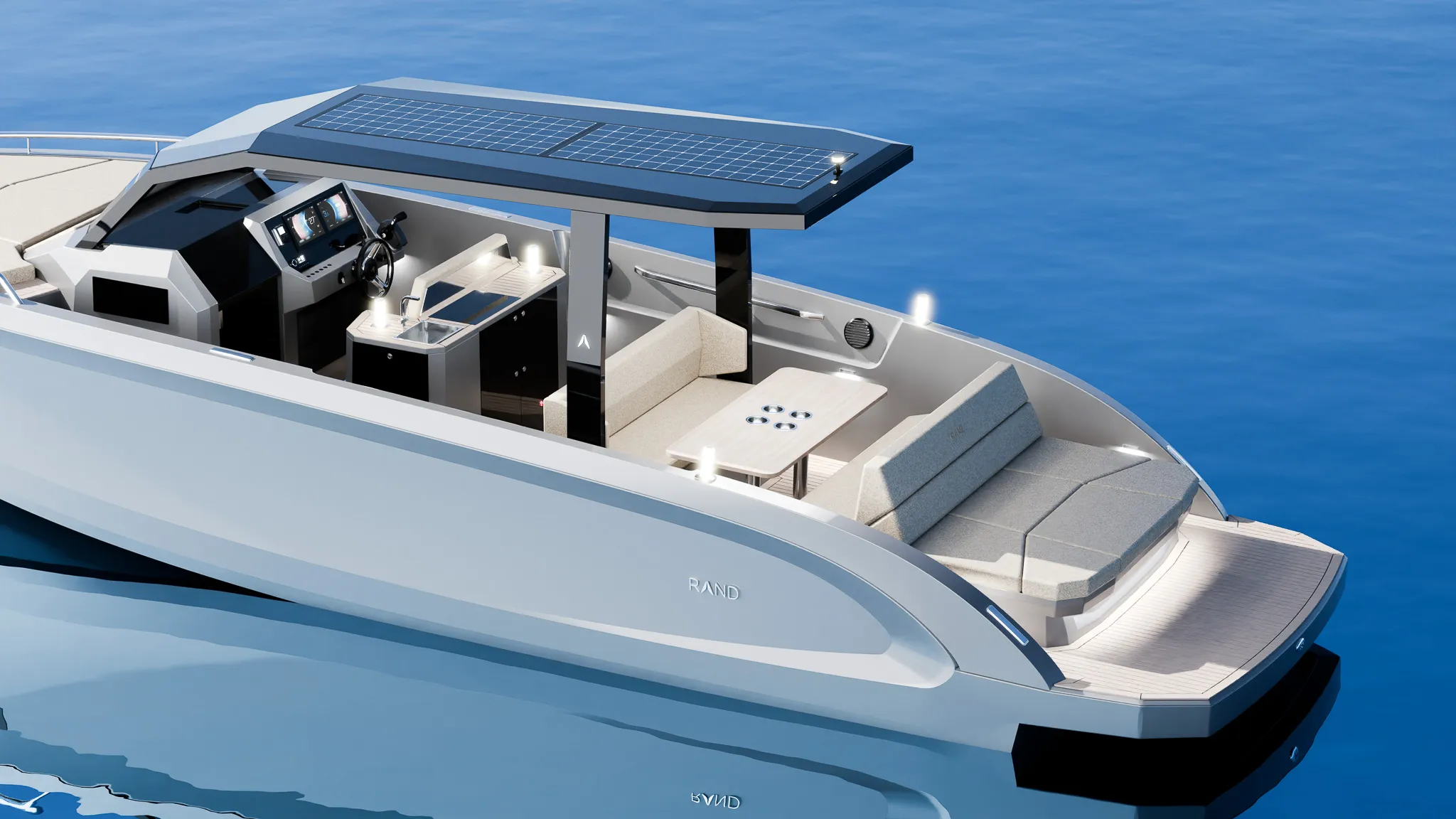
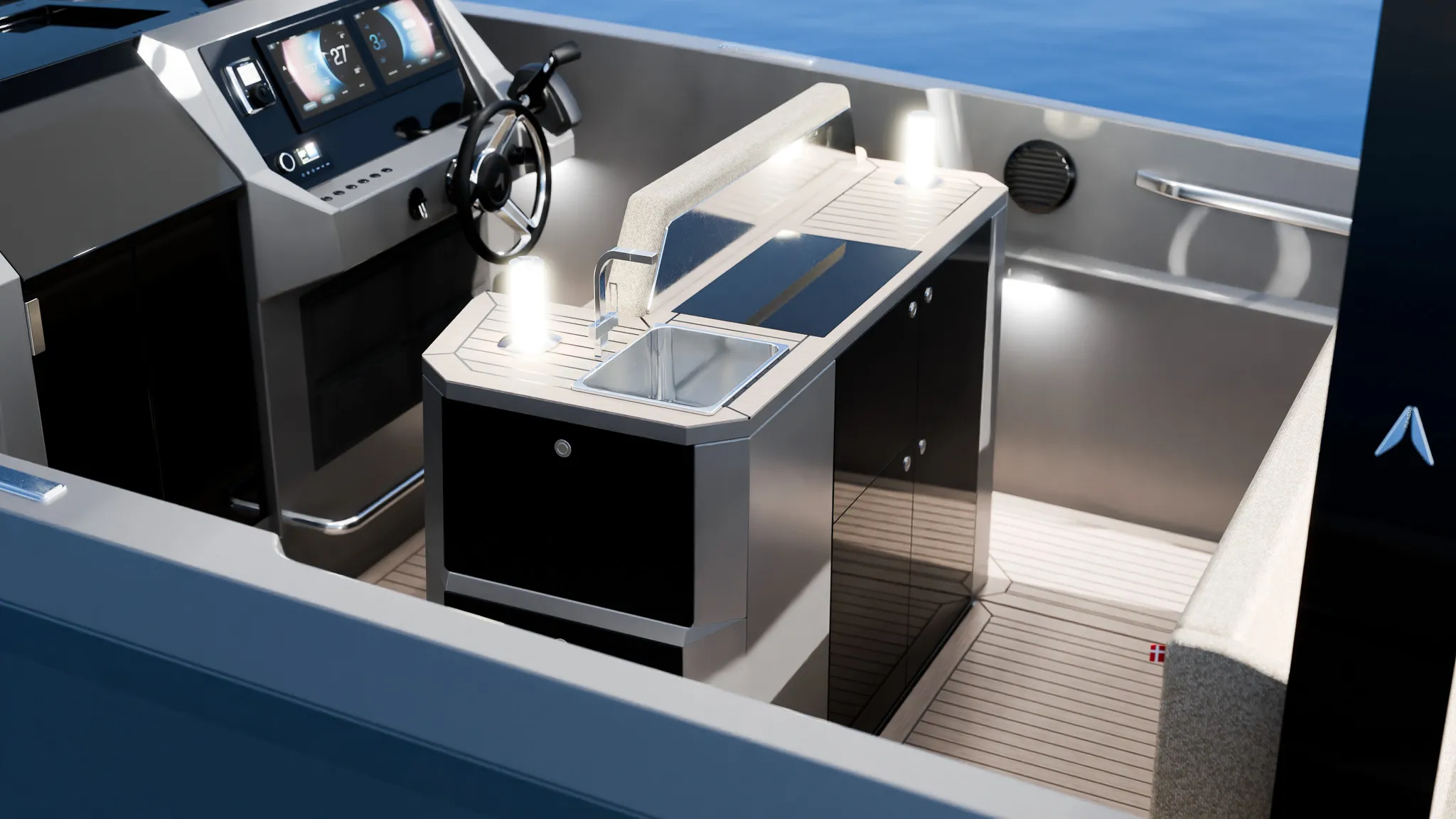
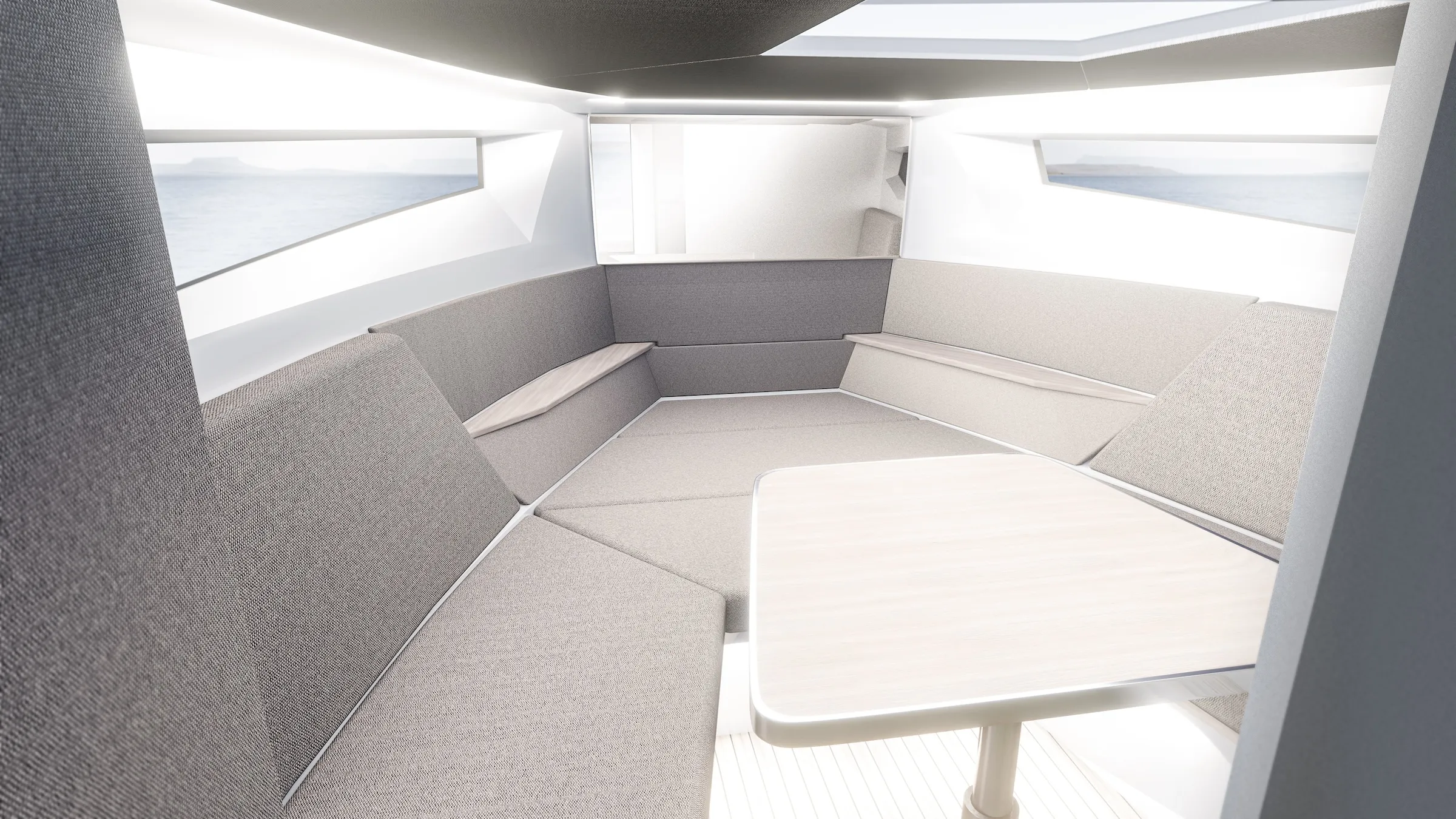
The layout works hard for 9.95 metres. A walk-around cockpit wraps a fitted galley and dining area under the hardtop, the bow carries a sun lounge two metres wide, and the swim platform runs the full beam. Below deck sits a cabin with panoramic windows whose table drops into a berth for three, plus a full-standing-height heads with a shower.
Twelve people aboard, a trailerable hull, and a price that starts well under three hundred thousand euros.
Length
10M
Beam
3M
Draft
0.5M
Day Guests
12
Sleeping
3
Cabin
1
Cruise Speed
Max Speed
45KT
Fuel
Range
35NM
Engine
E-Drive 270 kW electric
Option 1
E-Drive 300 kW electric
Option 2
2 x Mercury F250 outboard
New Starting From
€265,900
No yachts found matching your criteria.
She is built to close, not just to cruise.
An ultralight aluminium T-top carries a built-in windscreen, and the whole helm and seating area folds into a sealed, weatherproof cabin when conditions ask for it. That single feature separates her from the open day boats around her, which stop being usable the moment the rain starts. RAND’s design language is restrained rather than sculpted: flat surfaces, a straightforward sheer and a profile that reads more Scandinavian than Mediterranean, built around function rather than drama. At just under ten metres long and three metres in the beam, with a 0.5 metre draught, she stays light, shallow and manageable, exactly what a trailerable, go anywhere hull needs to be.
The cockpit wraps all the way round, and nothing in it is wasted.
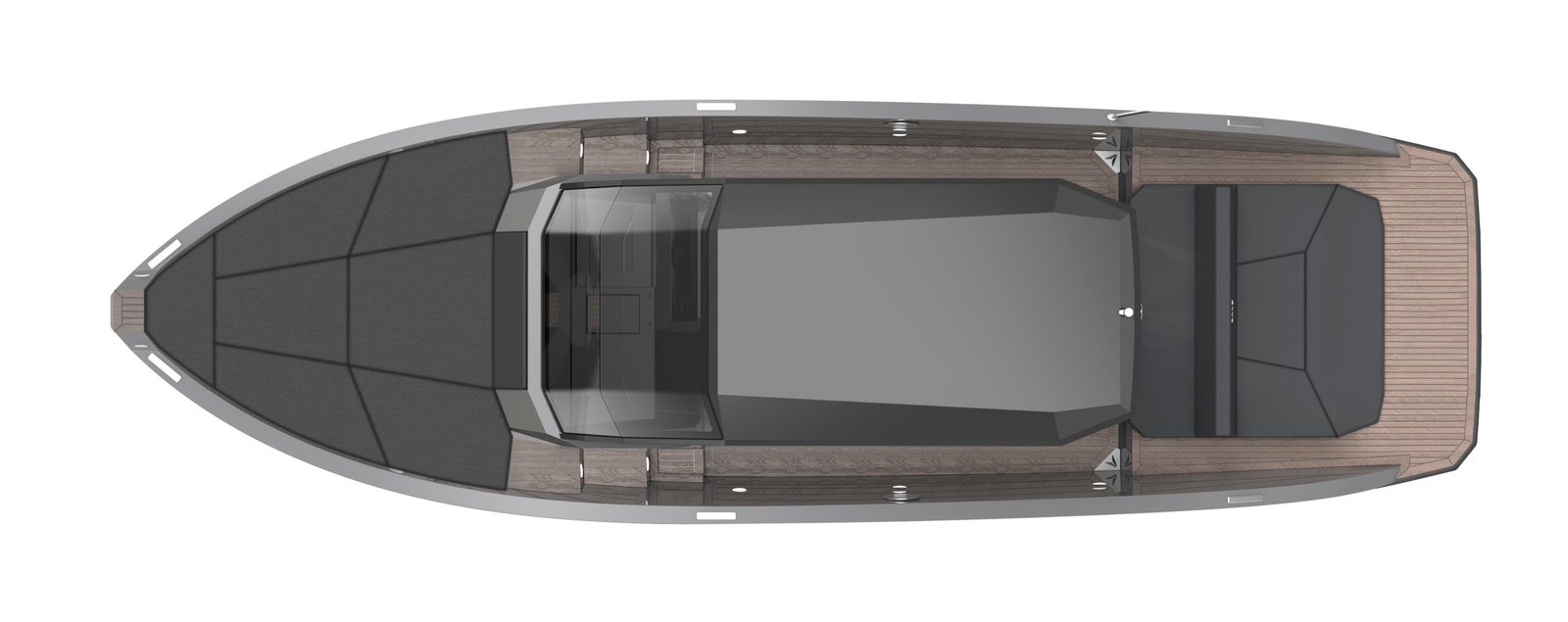
A walk around deck runs most of the length of the boat, framing a fitted galley and dining area sheltered under the hardtop. Forward, a sun lounge two metres wide turns the bow into genuine lounging space rather than a walkway nobody uses, and the swim platform runs the full beam aft, built for getting in and out of the water rather than just mooring alongside. Twelve guests can come aboard for the day, comfortably spread between the bow, the cockpit and the platform. It is a layout built around moving easily from sun to shade to water, and back again, without anyone standing in anyone else’s way.
One cabin, properly used, is enough to turn a day trip into a night aboard.
Below deck, panoramic windows bring real daylight into a single cabin built around a sofa lounge and a central table. Drop the table and it becomes a berth wide enough for three, a conversion simple enough to do without fuss between uses. A full standing height bathroom with its own shower sits alongside, a genuine amenity rather than a token head, and one that most boats this size leave out entirely. It is not a cruising interior in the conventional sense. It is a sensible, well lit place to sleep when the day runs long or the weather closes in, which fits a boat built around flexibility rather than long range cruising.
RAND, founded by two Danish brothers in 2013, builds green boating into the hull itself.
Solar panels feed the onboard systems directly, letting her sit at anchor off grid without running an engine to keep the lights and fridge alive. Propulsion is where the real engineering choice sits: two E-Drive electric packages, a 270kW unit paired with a 130kWh battery or a 300kW unit with 220kWh, reaching 30 and 40 knots respectively. Owners who want a conventional alternative can specify twin Mercury outboards instead, trading the quiet of electric drive for a familiar petrol installation and a higher 45 knot top end. Either way, the hull beneath is the same light, shallow draught platform, so the choice of propulsion changes the character of the boat far more than its capability.
Range here depends entirely on which motor an owner chooses, and both answers are honest.
The electric packages are built for efficient cruising rather than outright distance: at a steady eight knots, the smaller 270kW setup covers around 64 kilometres and the larger 300kW setup around 97, figures that suit a day on the water rather than a long passage. Fit the Mercury outboards instead and that changes entirely, with a top speed of 45 knots and a published range of some 35 nautical miles putting real distance back on the table when it is needed. Fuel and charging logistics aside, this is a boat that lets an owner choose between near silent, low maintenance cruising and straightforward outboard pace, depending on how she will actually be used. That choice, more than any single number, is what she is selling.

Tell us what you would like to know, and our team will respond with clear details on availability, specification, pricing and next steps.