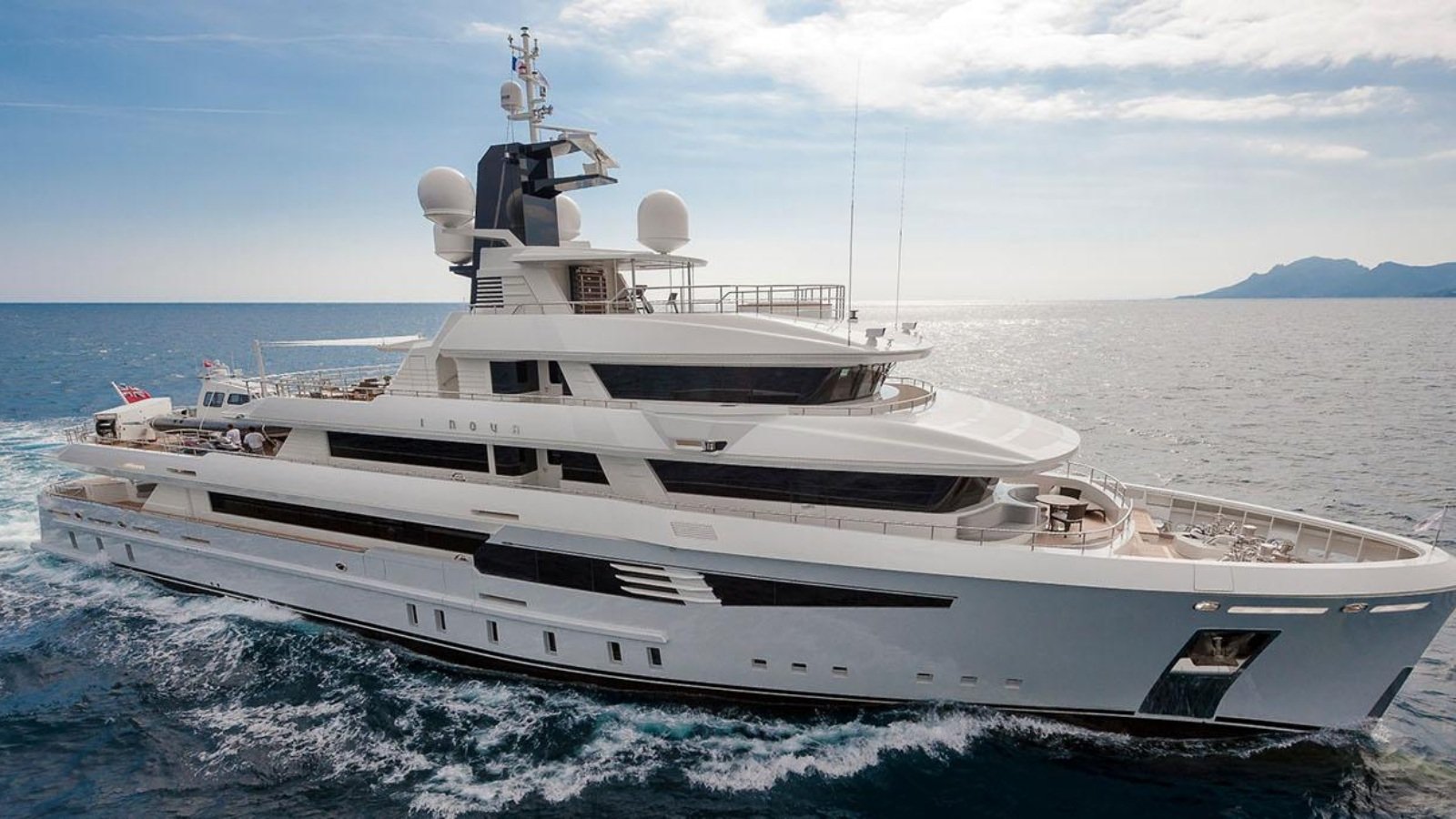
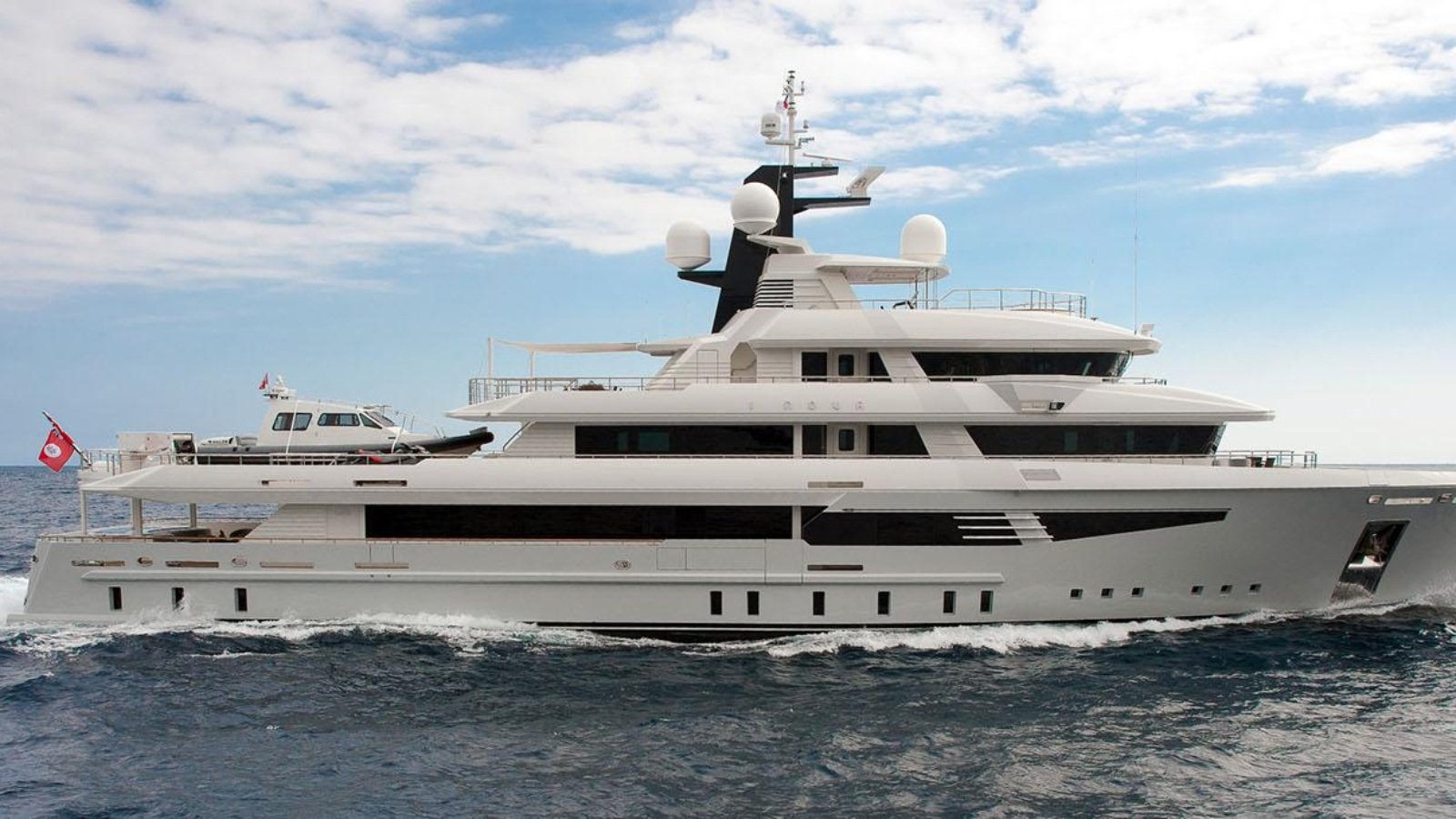
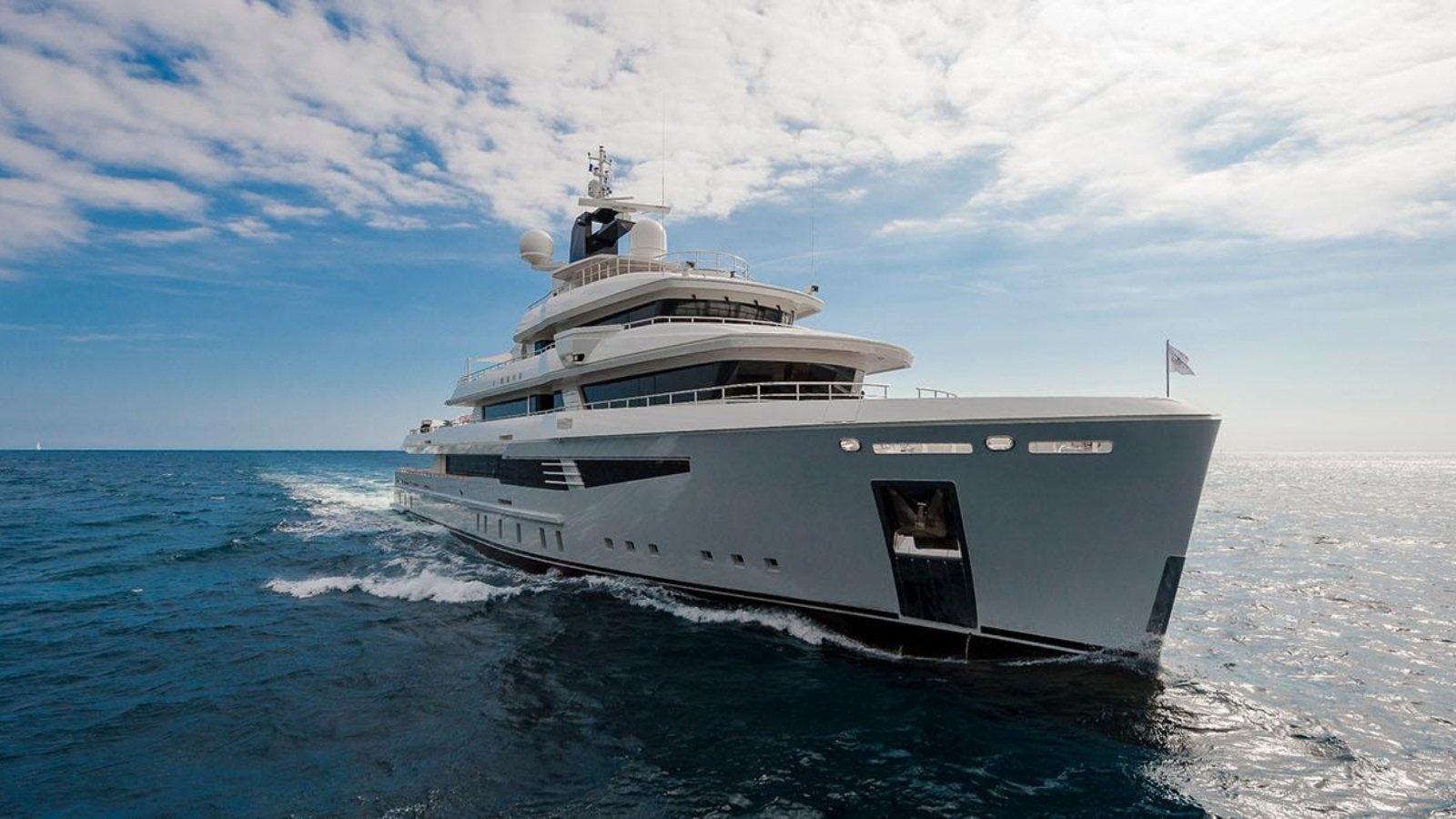
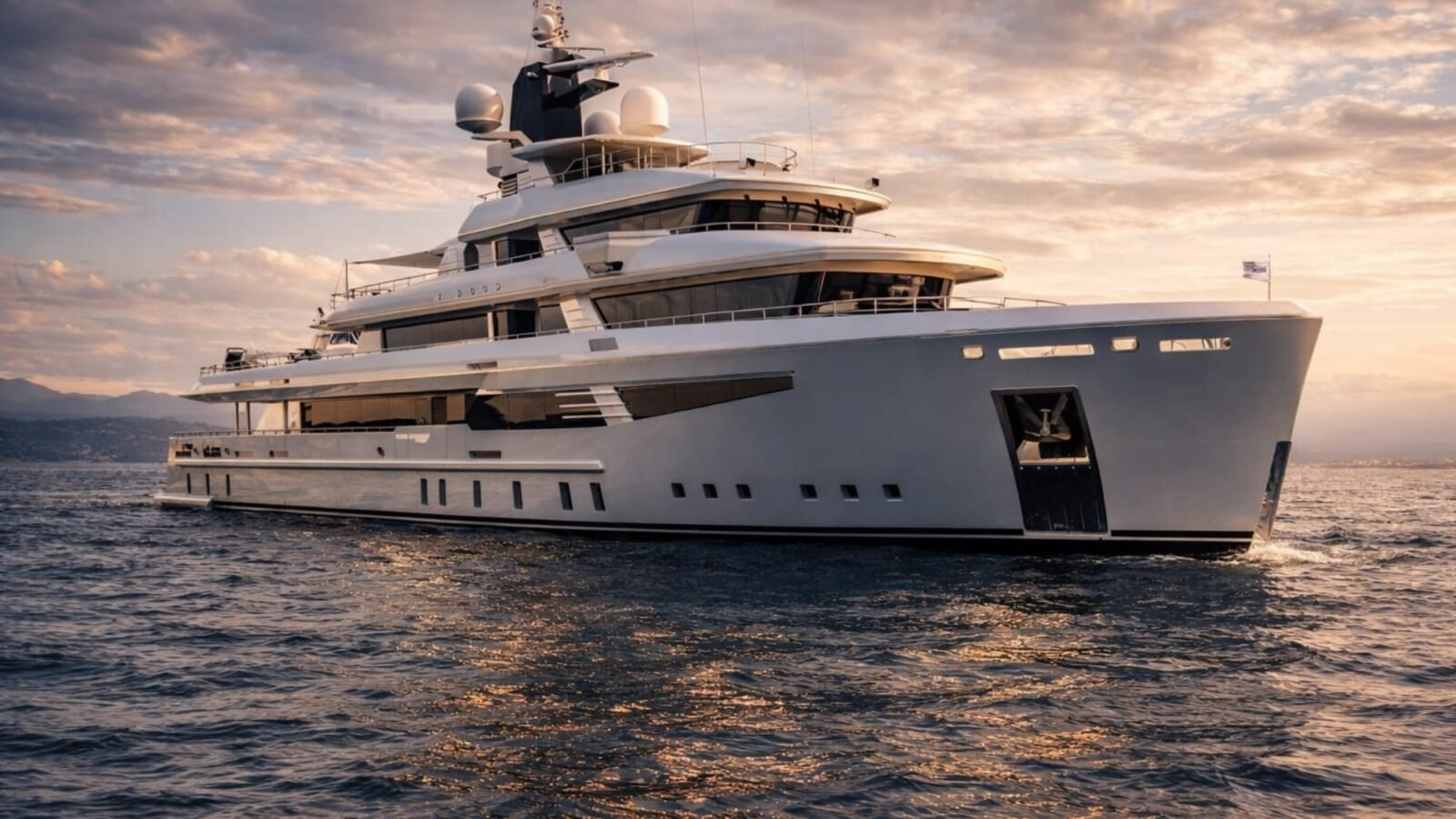
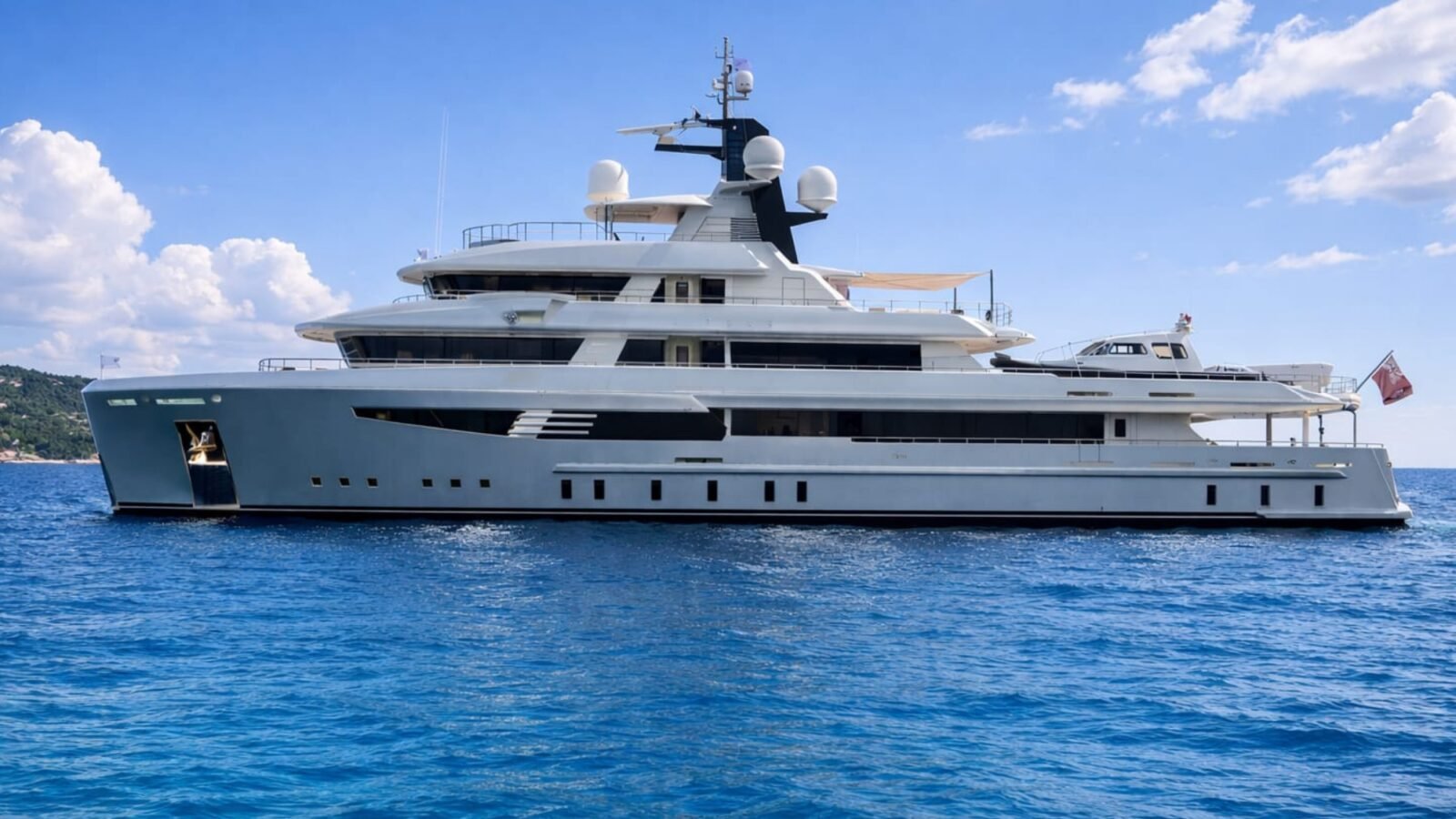
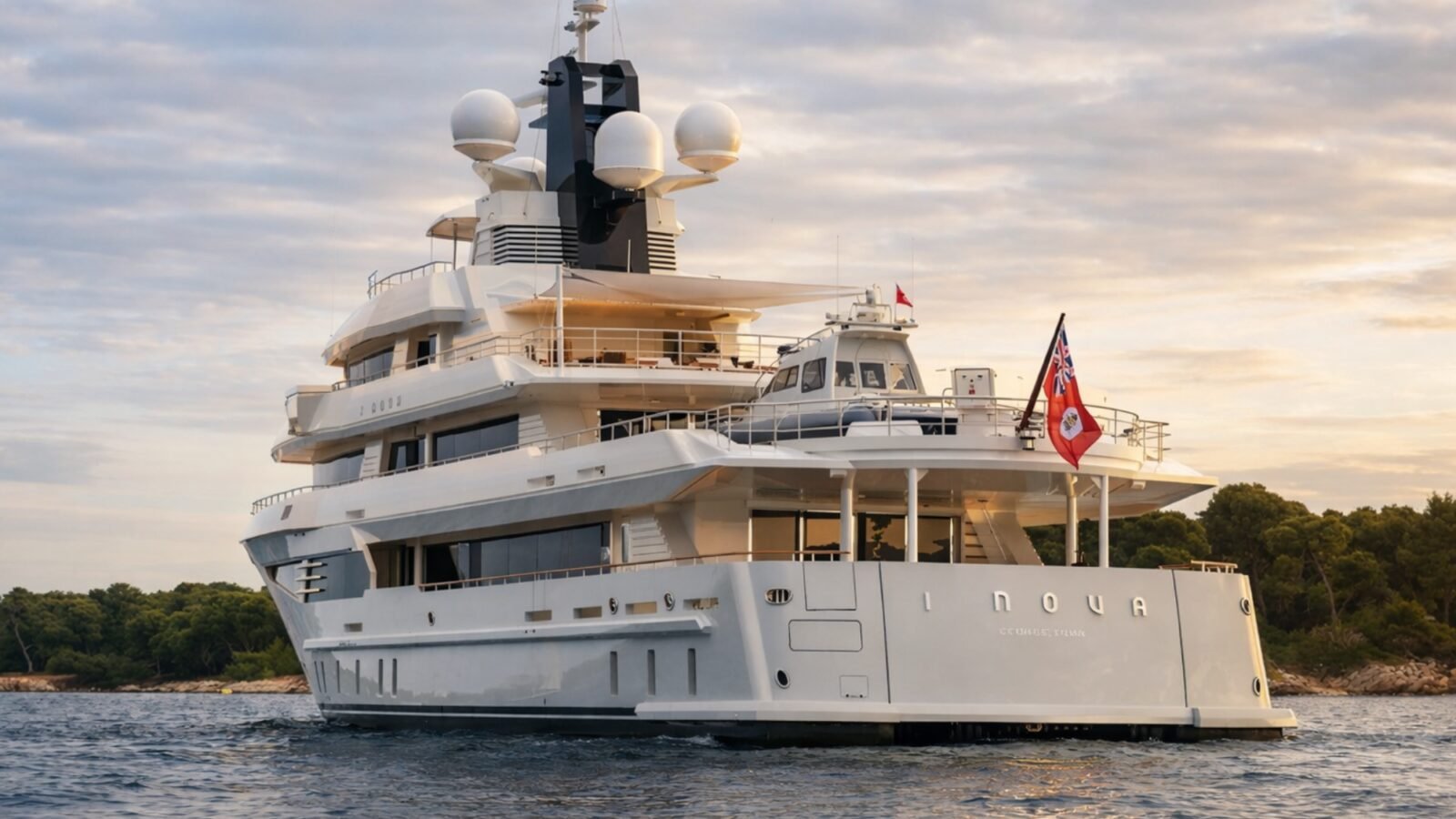
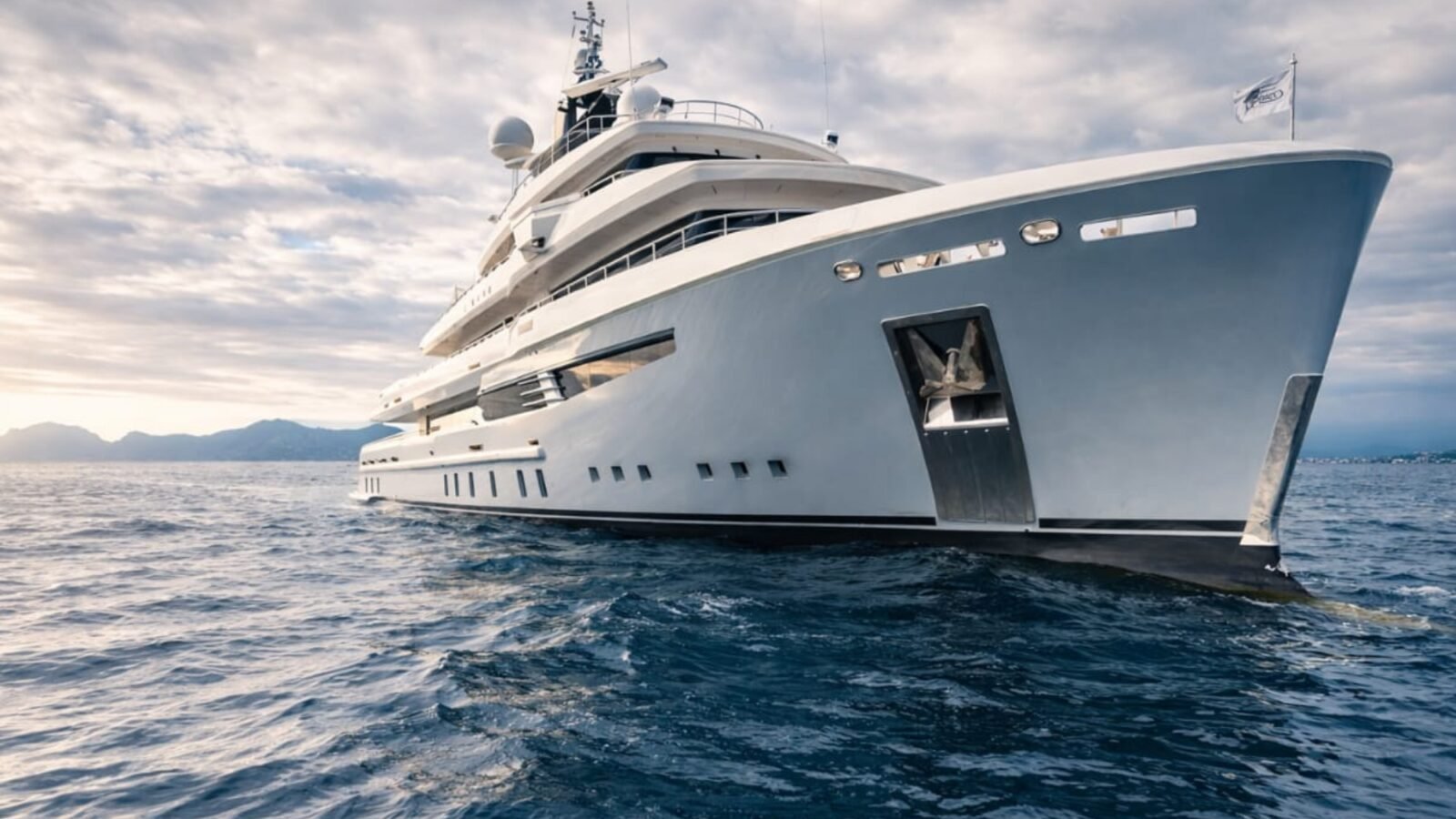
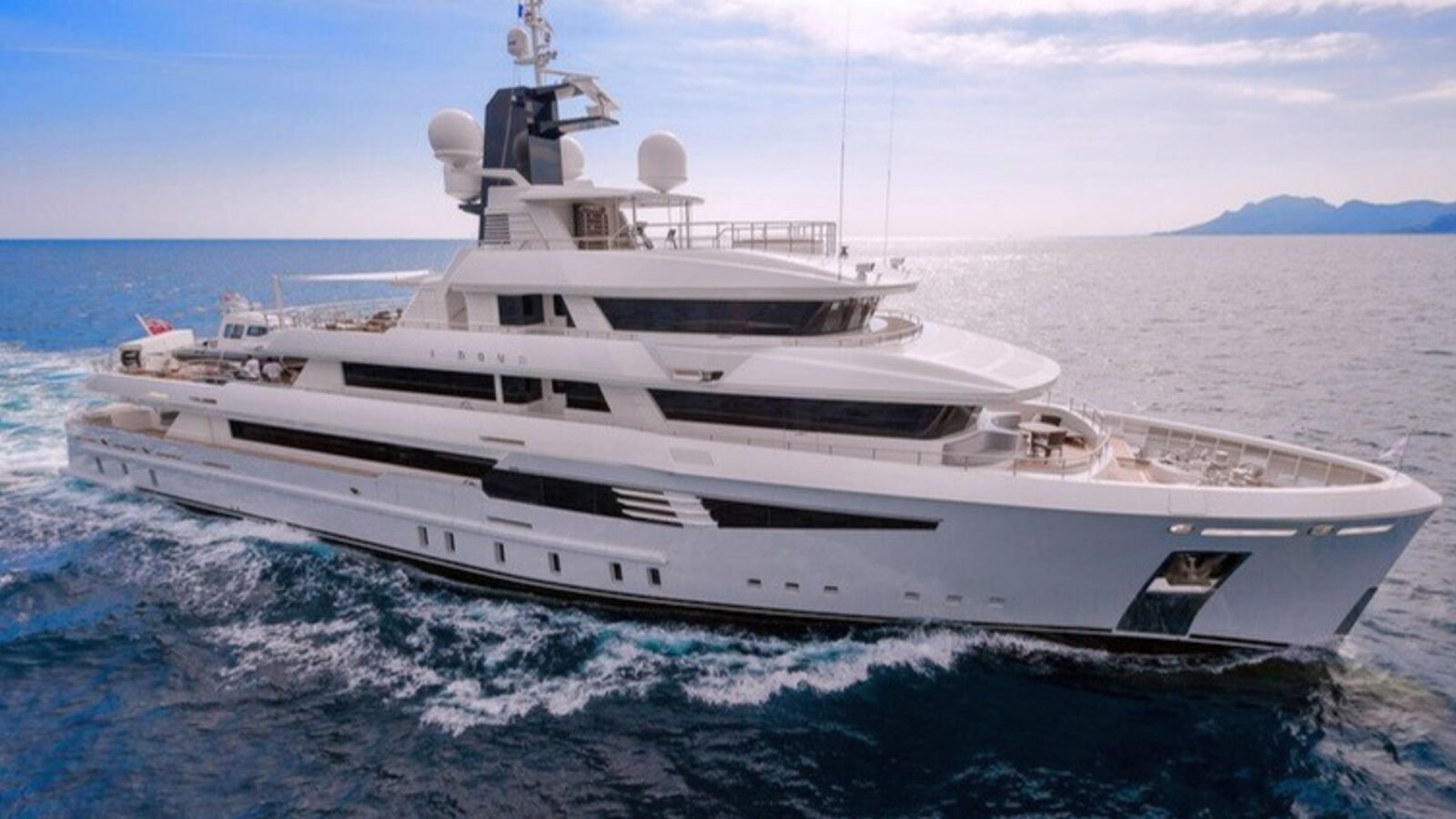
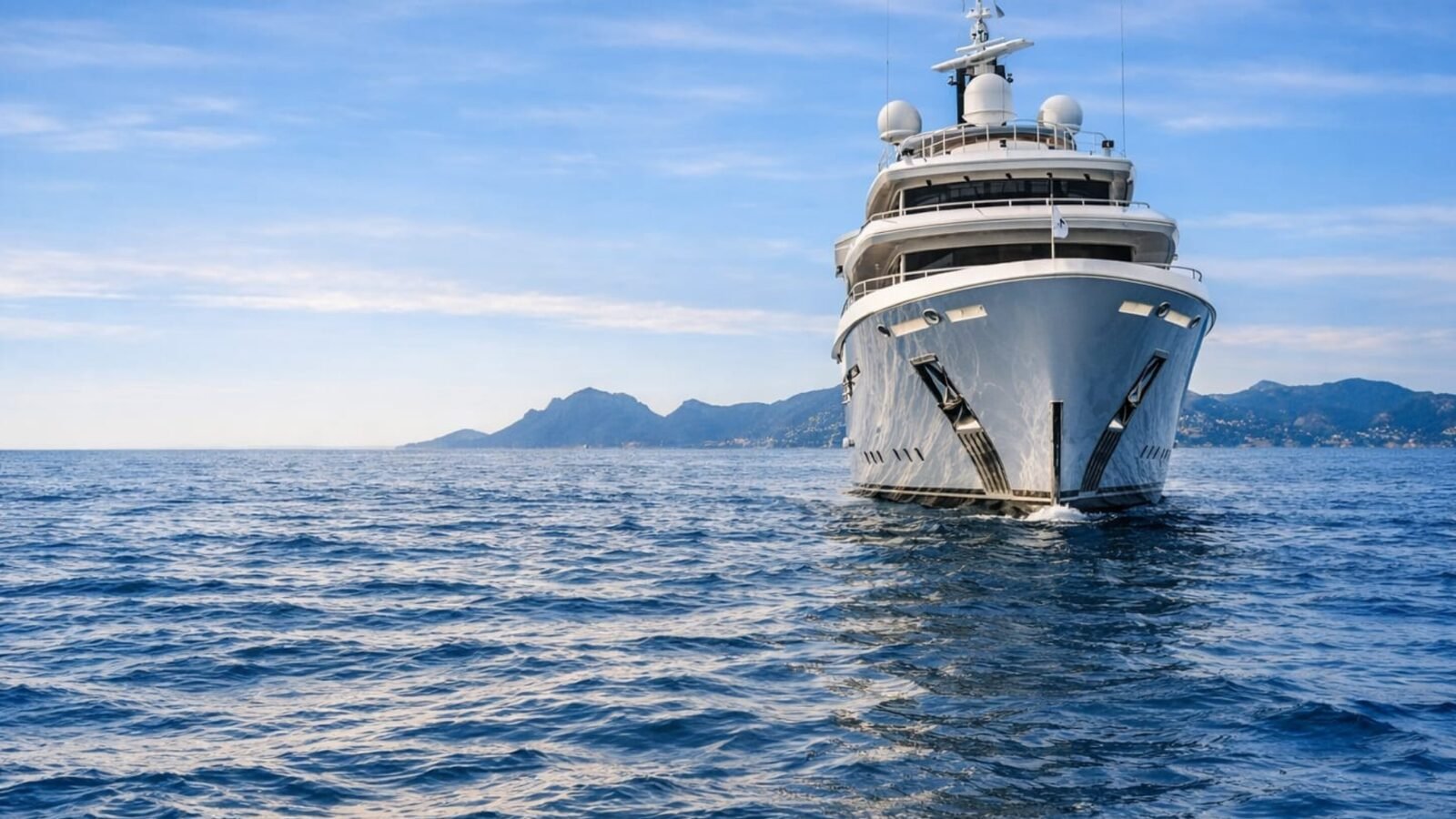
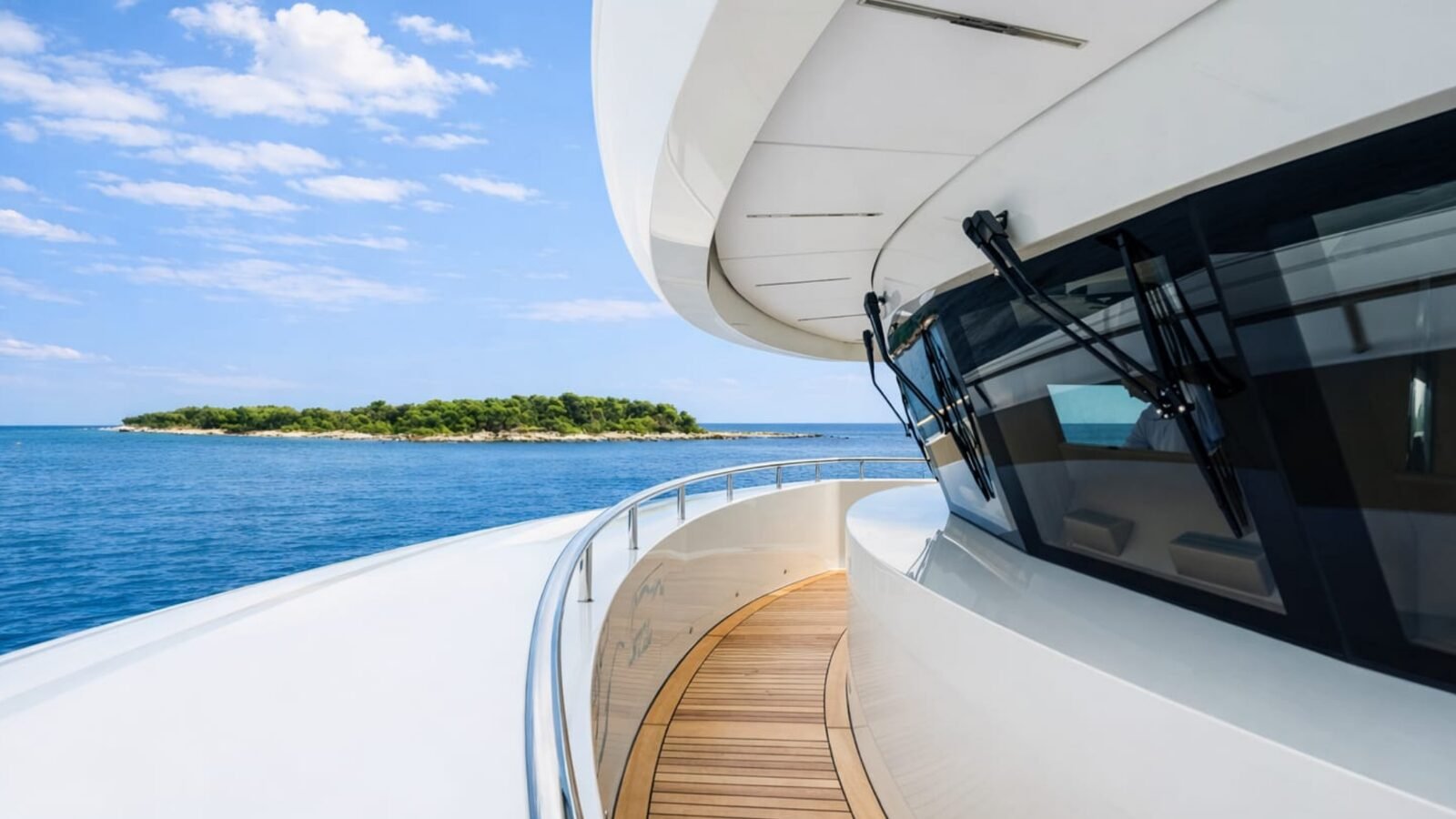
I NOVA carries 746 gross tons on 49.75 metres. That ratio is the entire argument for her. A conventional 50-metre yacht of her generation lands somewhere near 500 tons; she is roughly half again as voluminous on the same waterline, and every cubic metre of that difference went into the parts guests actually occupy.
Cosmo Explorer built her in steel in 2013 to a simple brief: an expedition hull with the range to leave and the volume to stay. She holds 5,500 nautical miles at 12.5 knots on two MTUs of 1,050 horsepower each – modest engines for her size, which is the point. Nothing about her is tuned for speed. Fifteen knots is the ceiling and she has no interest in it. What the hull buys instead is a motion at anchor and underway that a lighter yacht cannot reproduce at any price, and a fuel curve that makes a Greek summer a rounding error.
Twelve crew look after twelve guests. On most 50-metre yachts that ratio would be extravagant; on a ship with this much interior to run it is simply what the yacht requires.
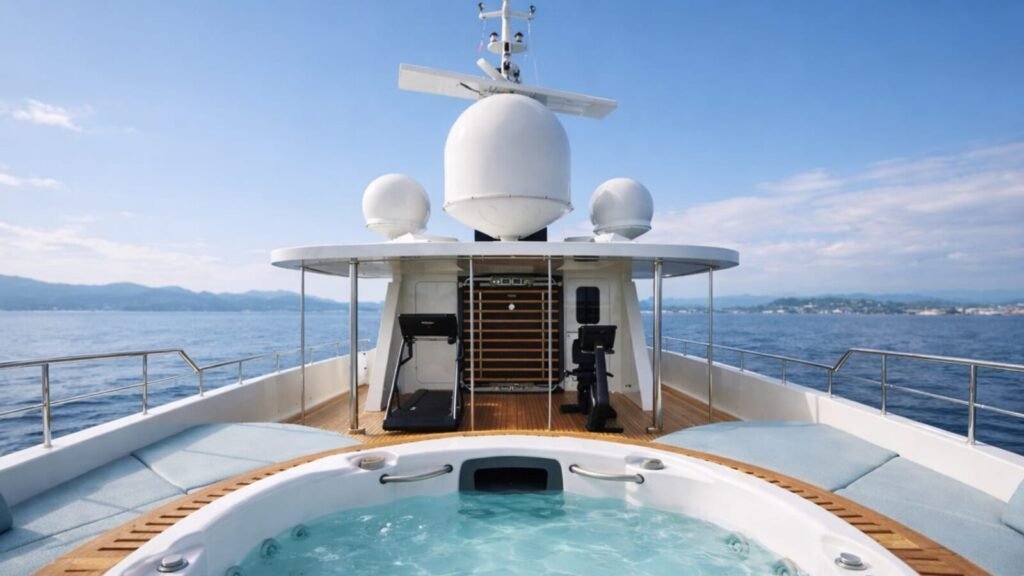
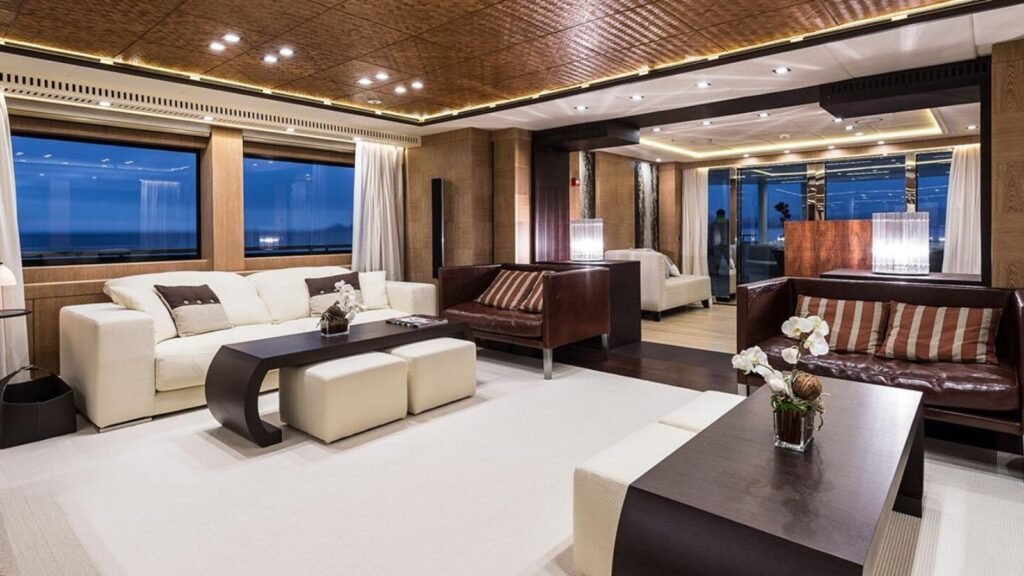
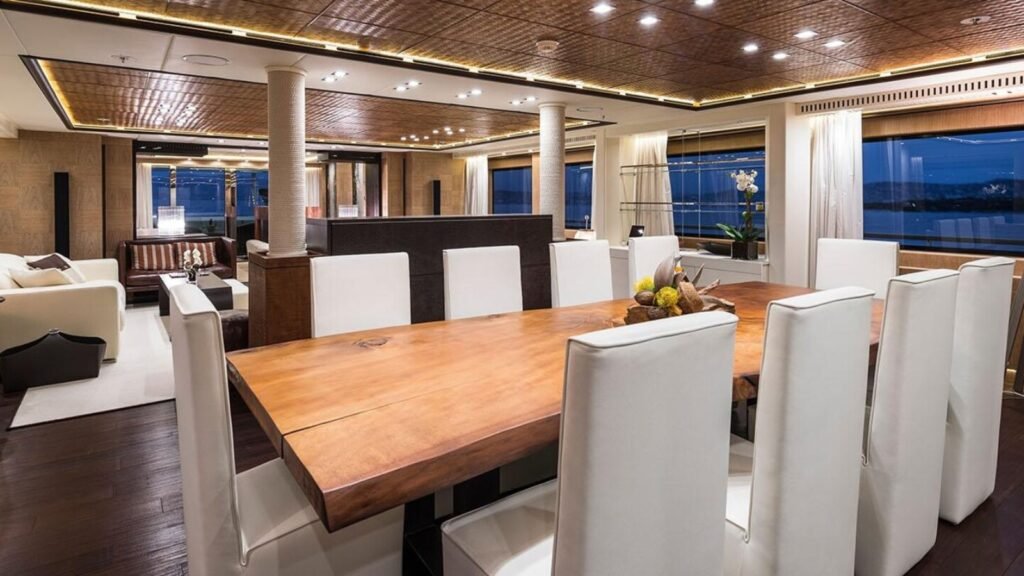
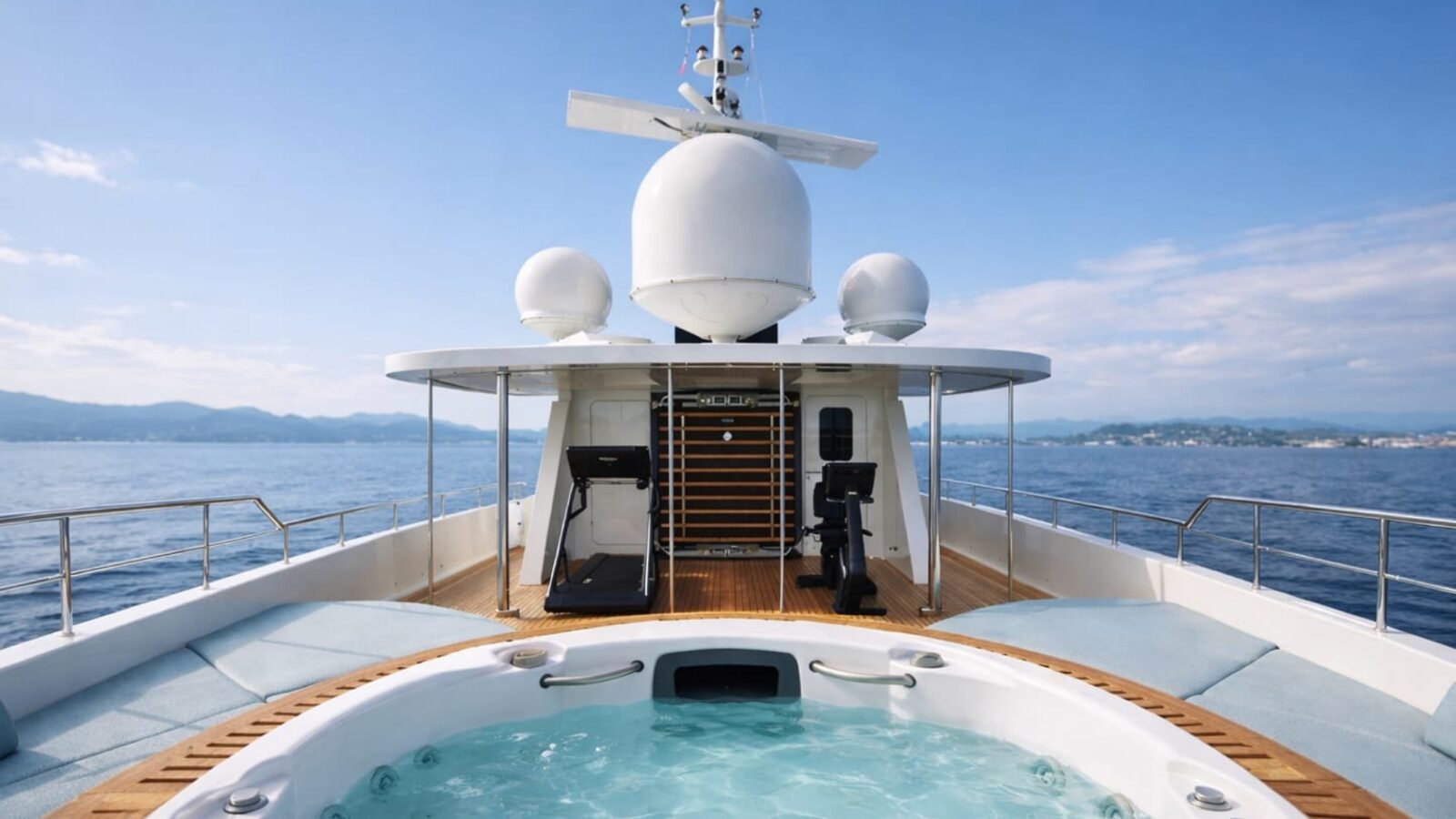
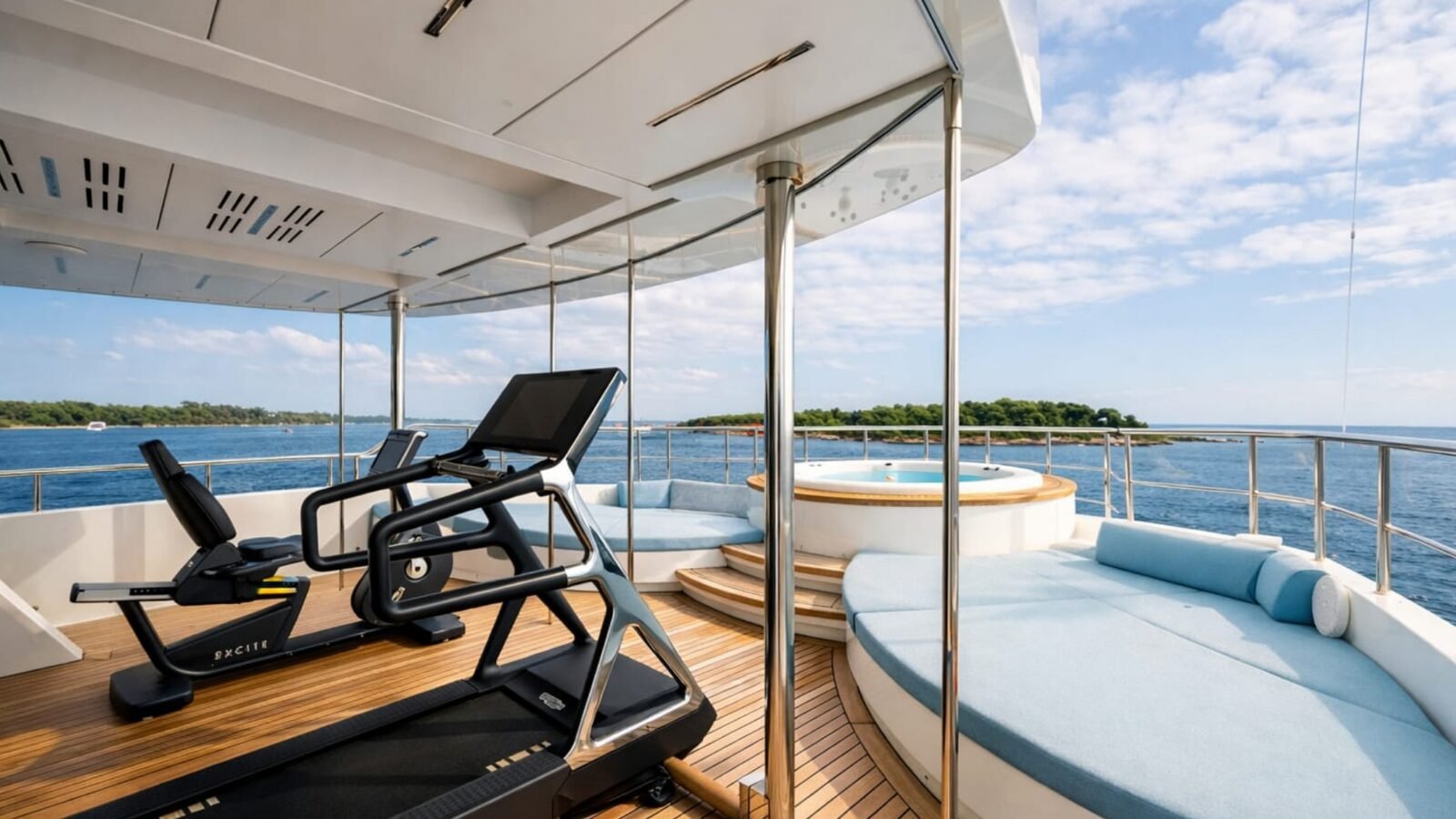
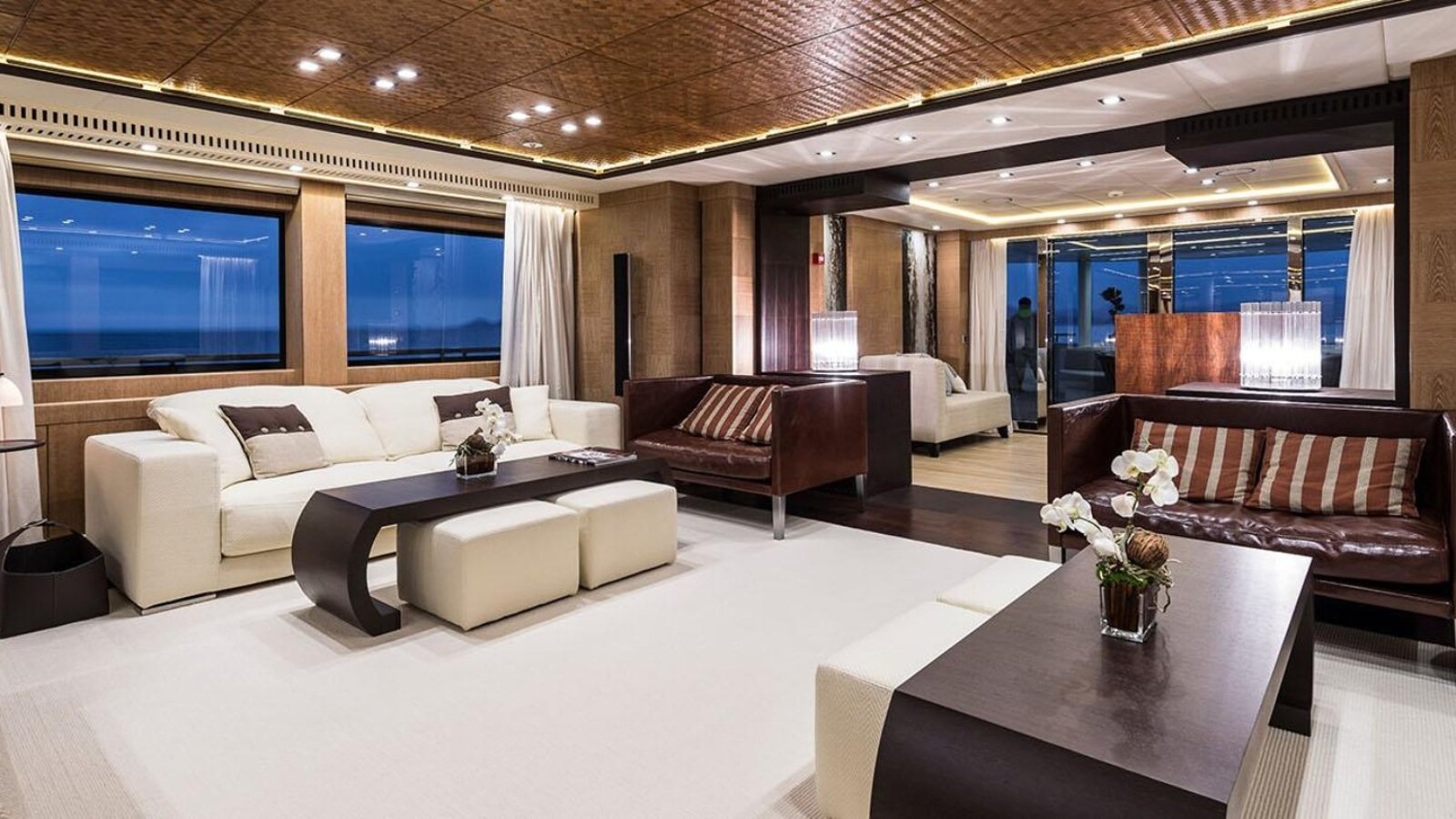
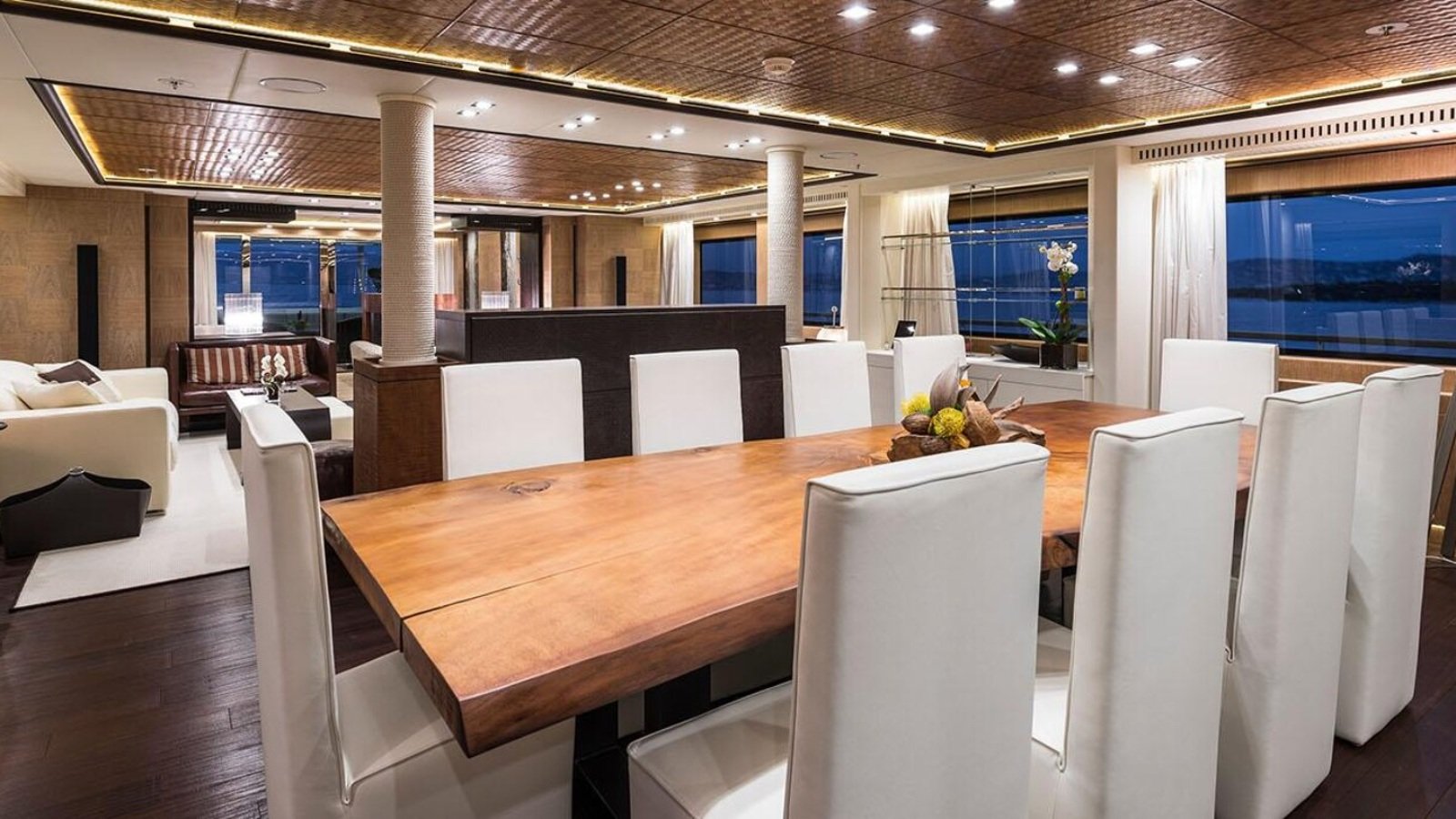
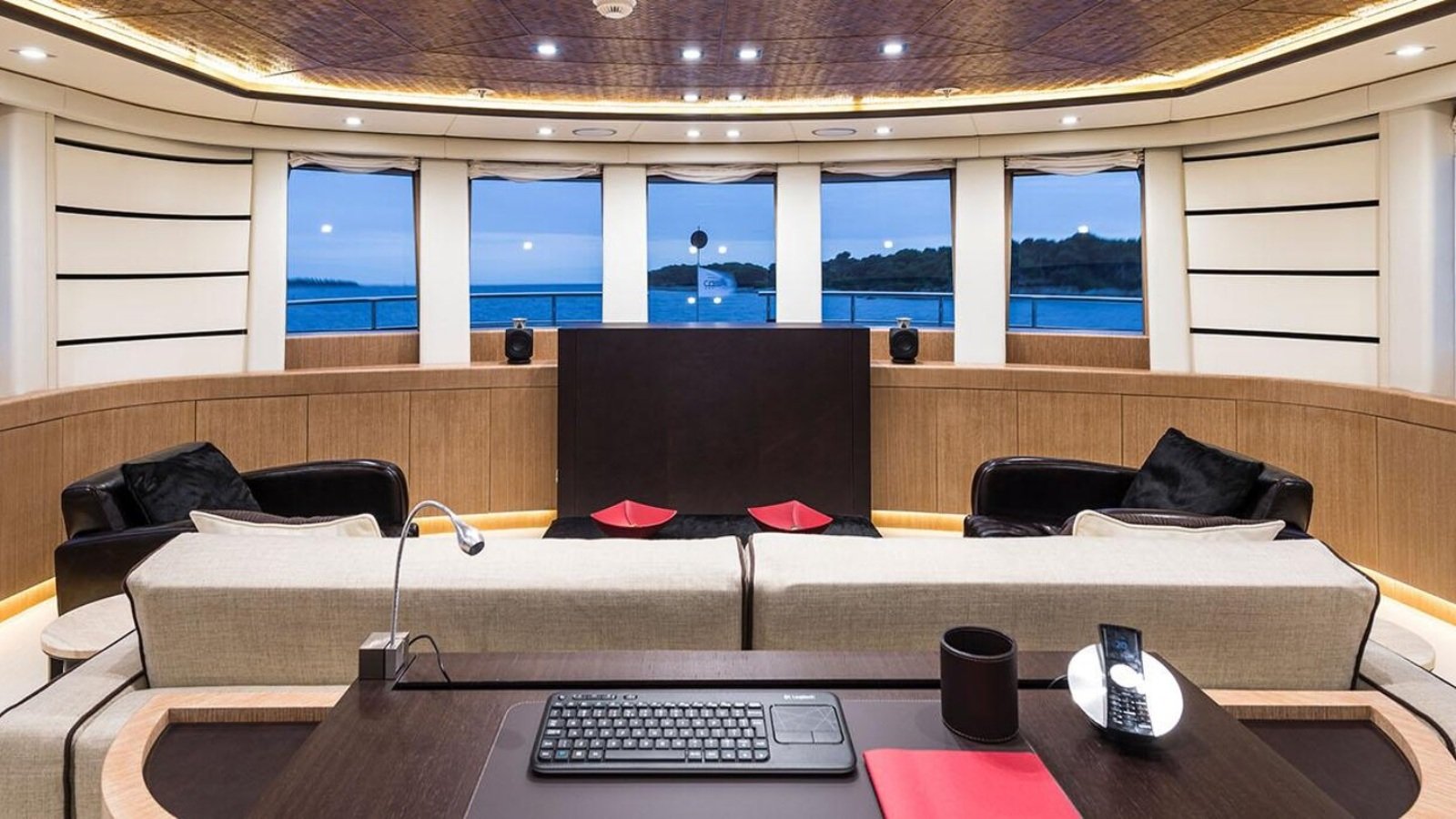
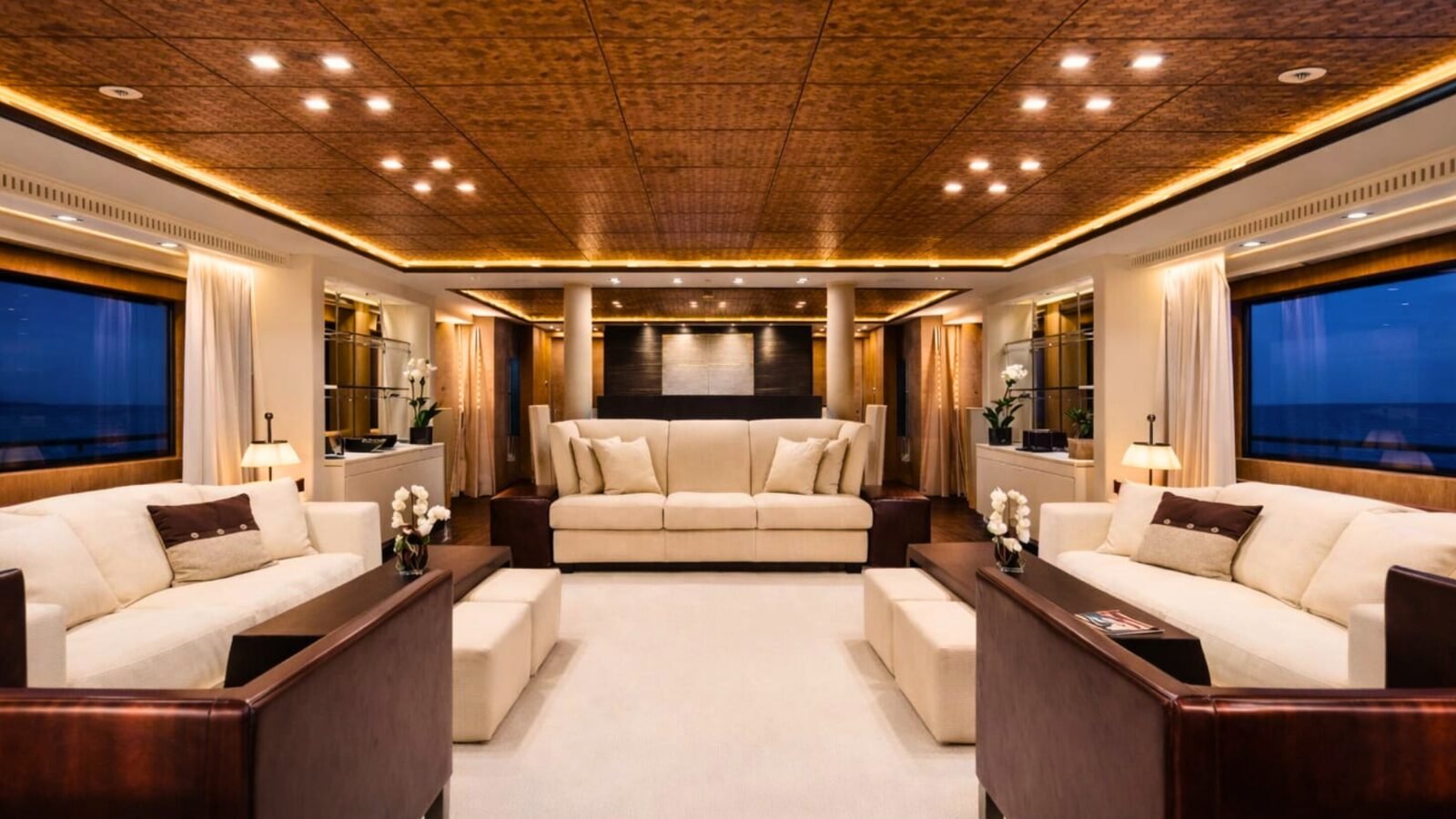
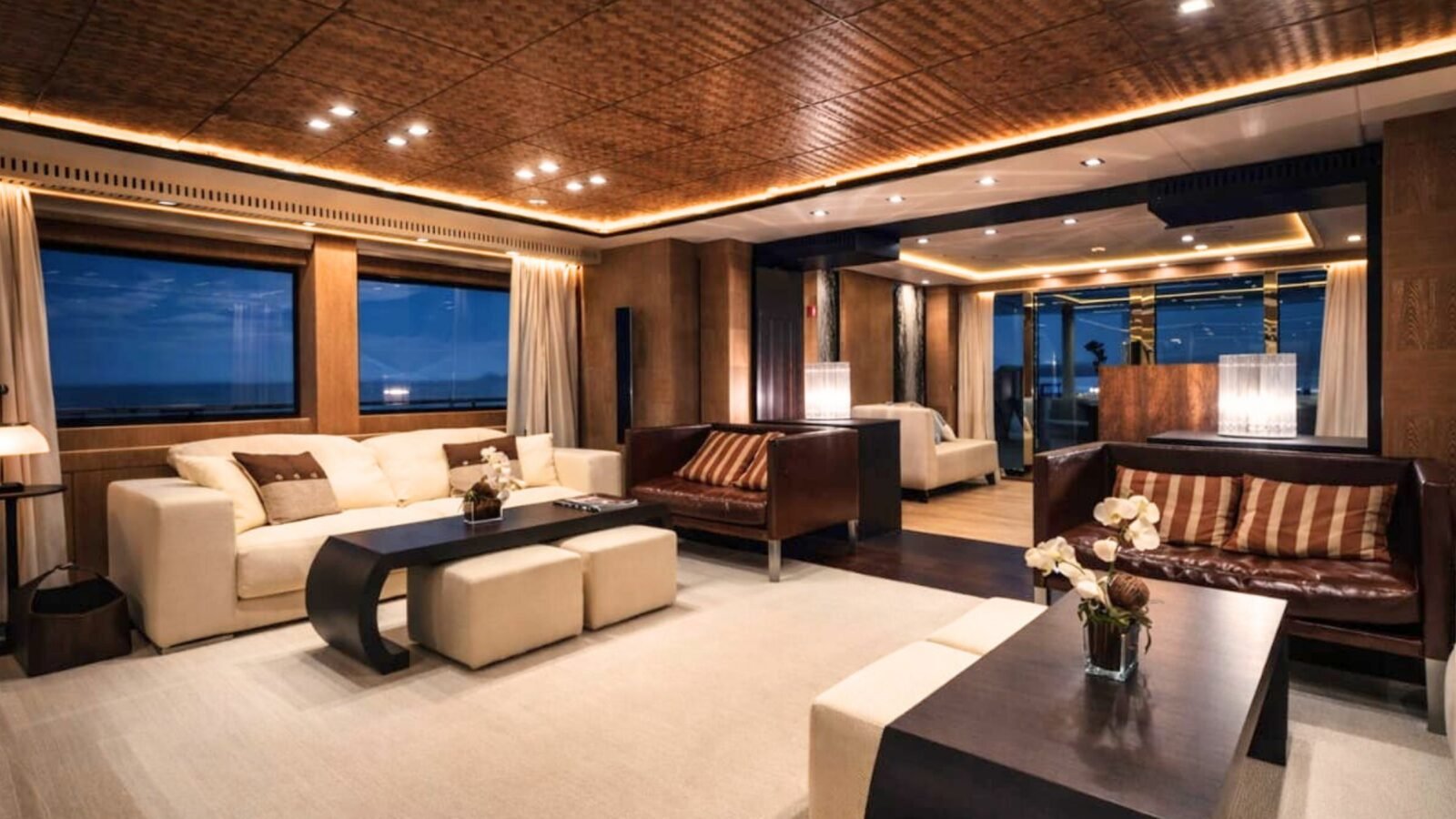
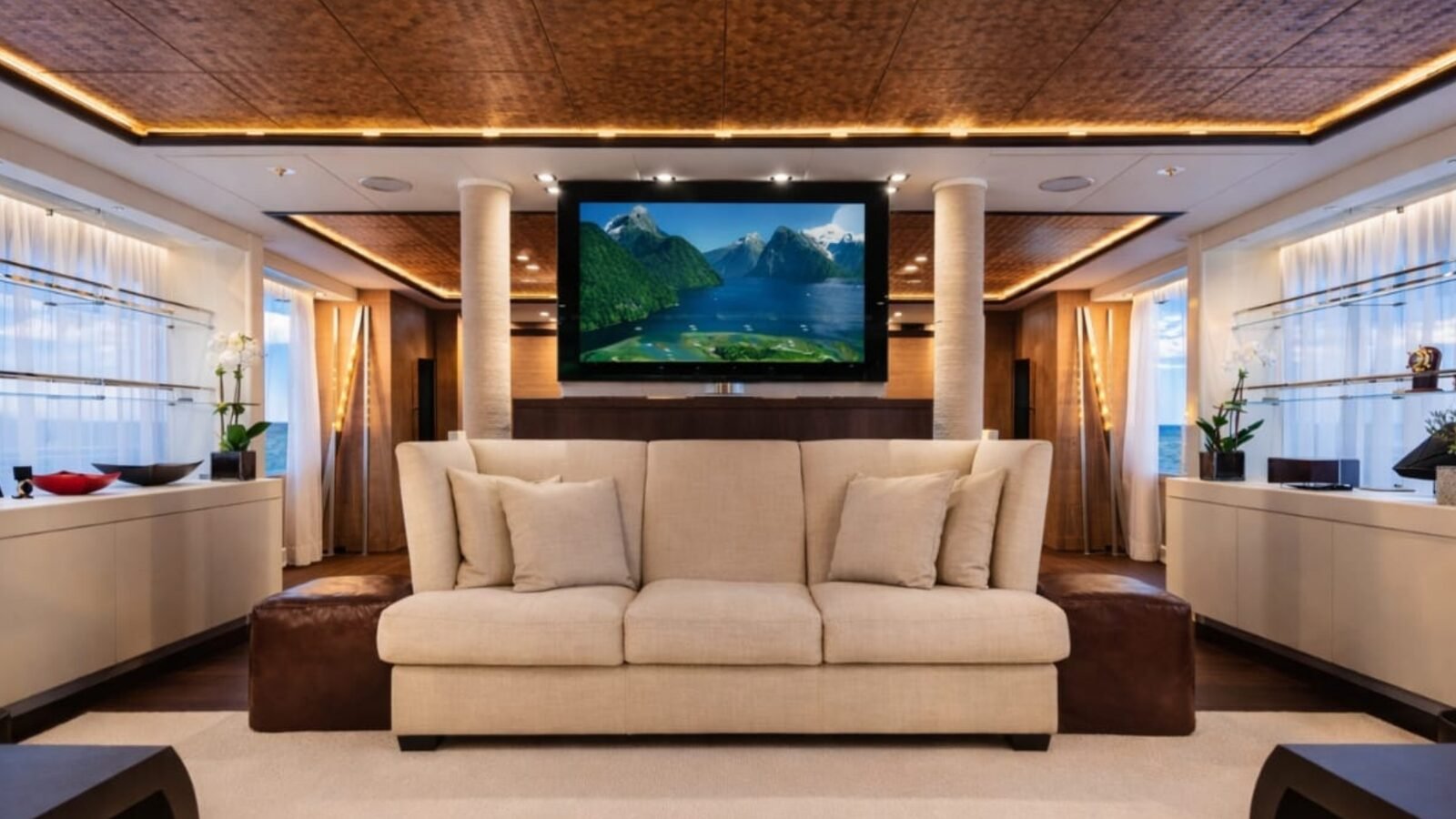
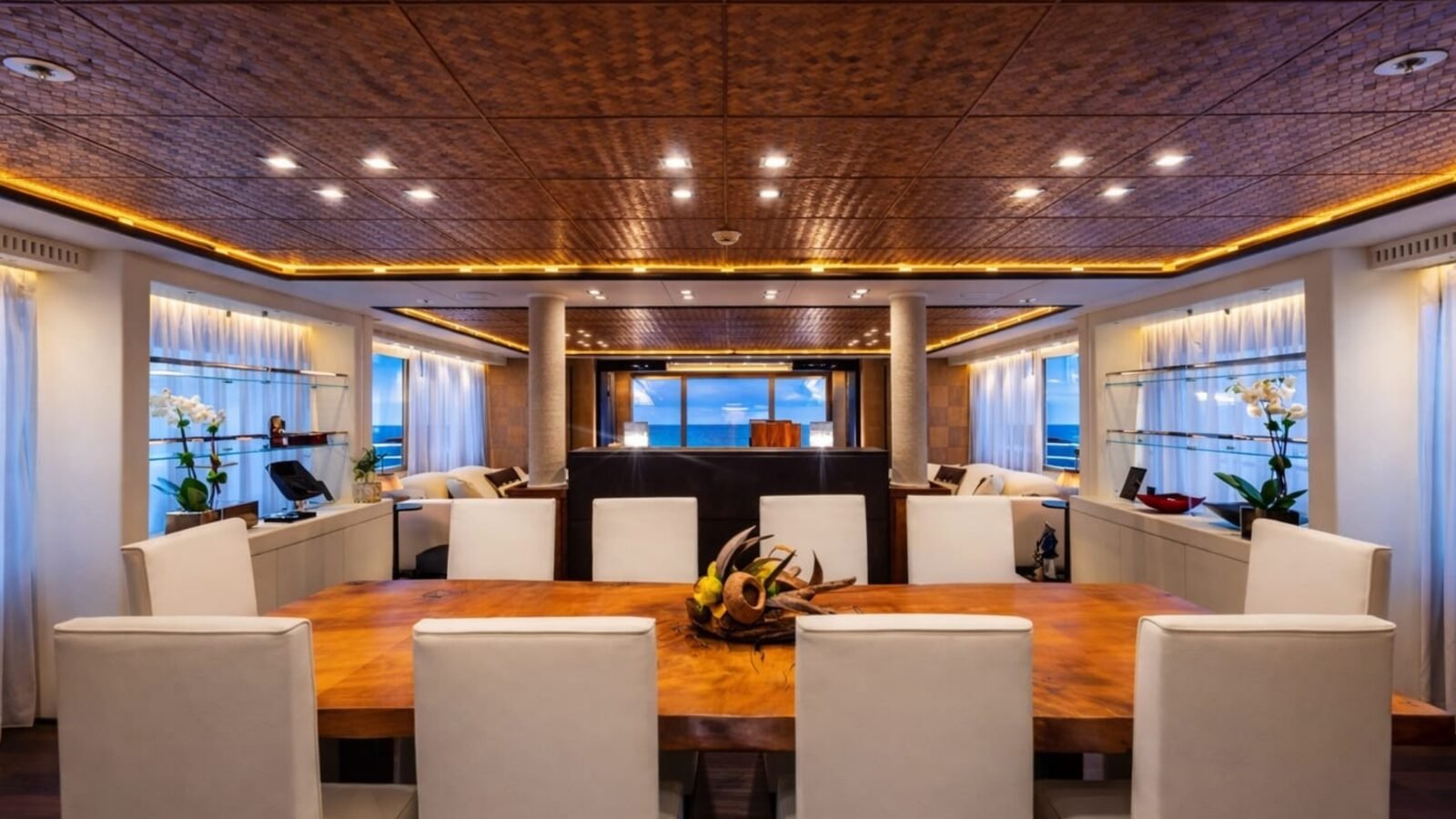
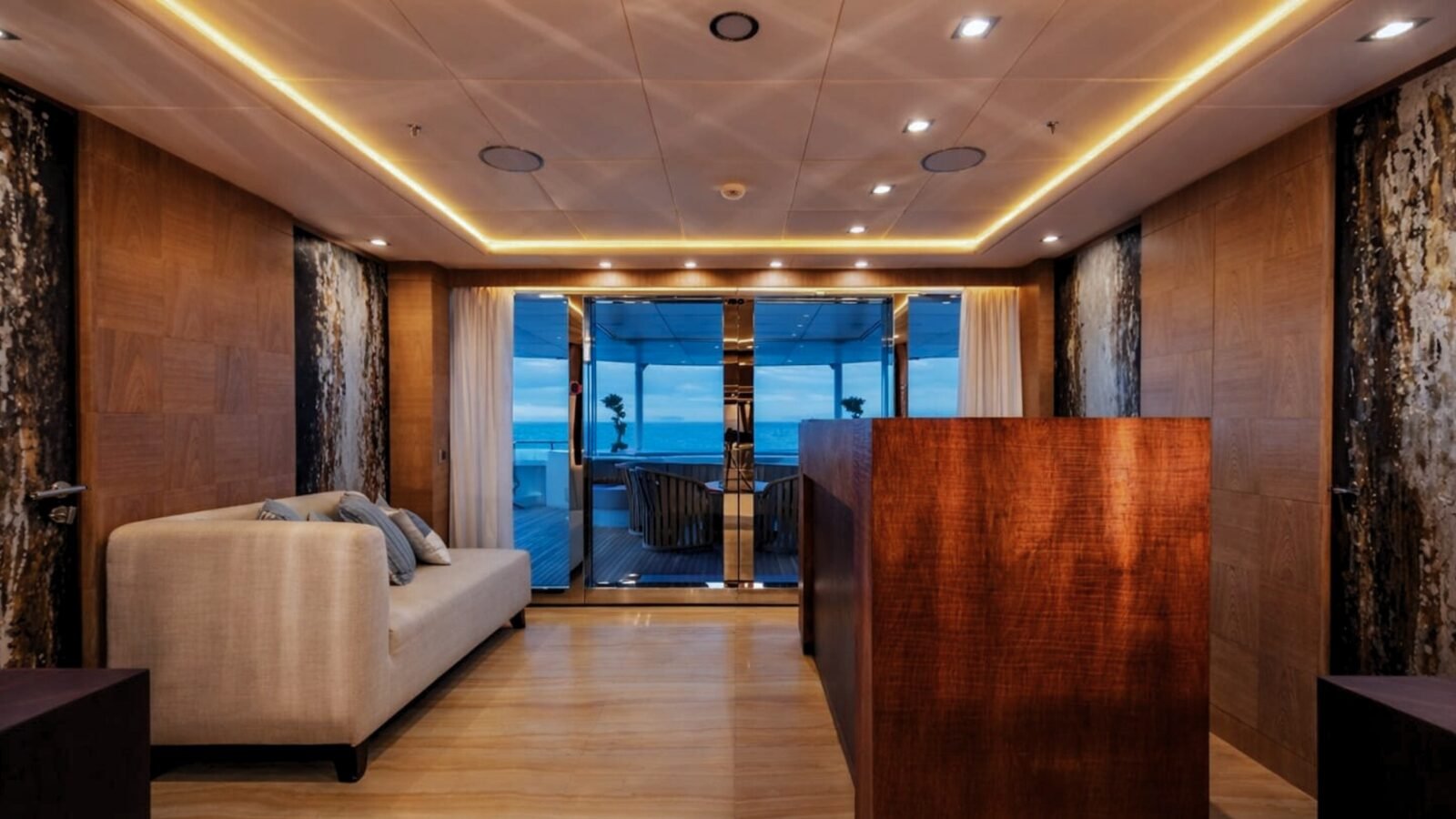
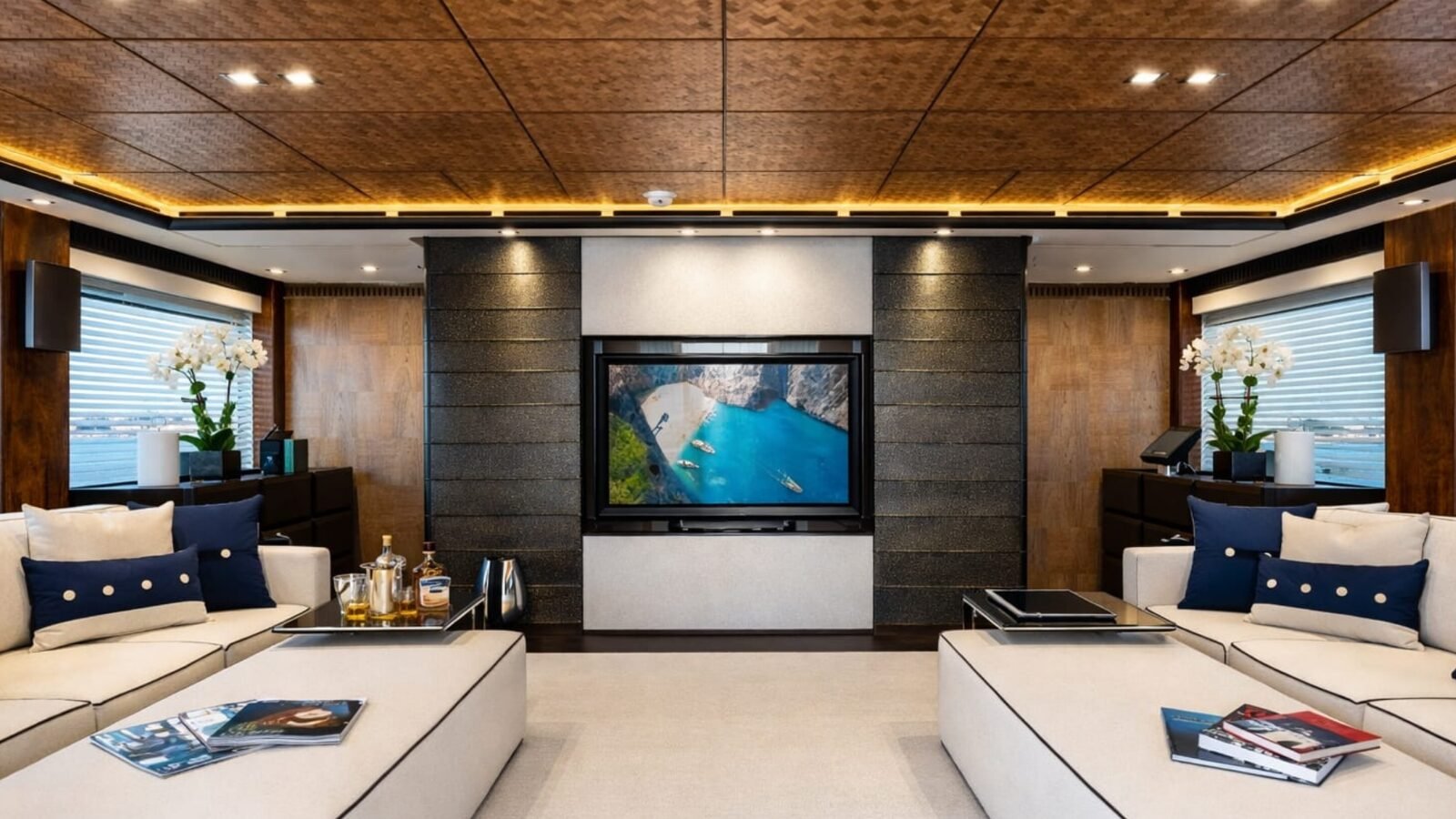
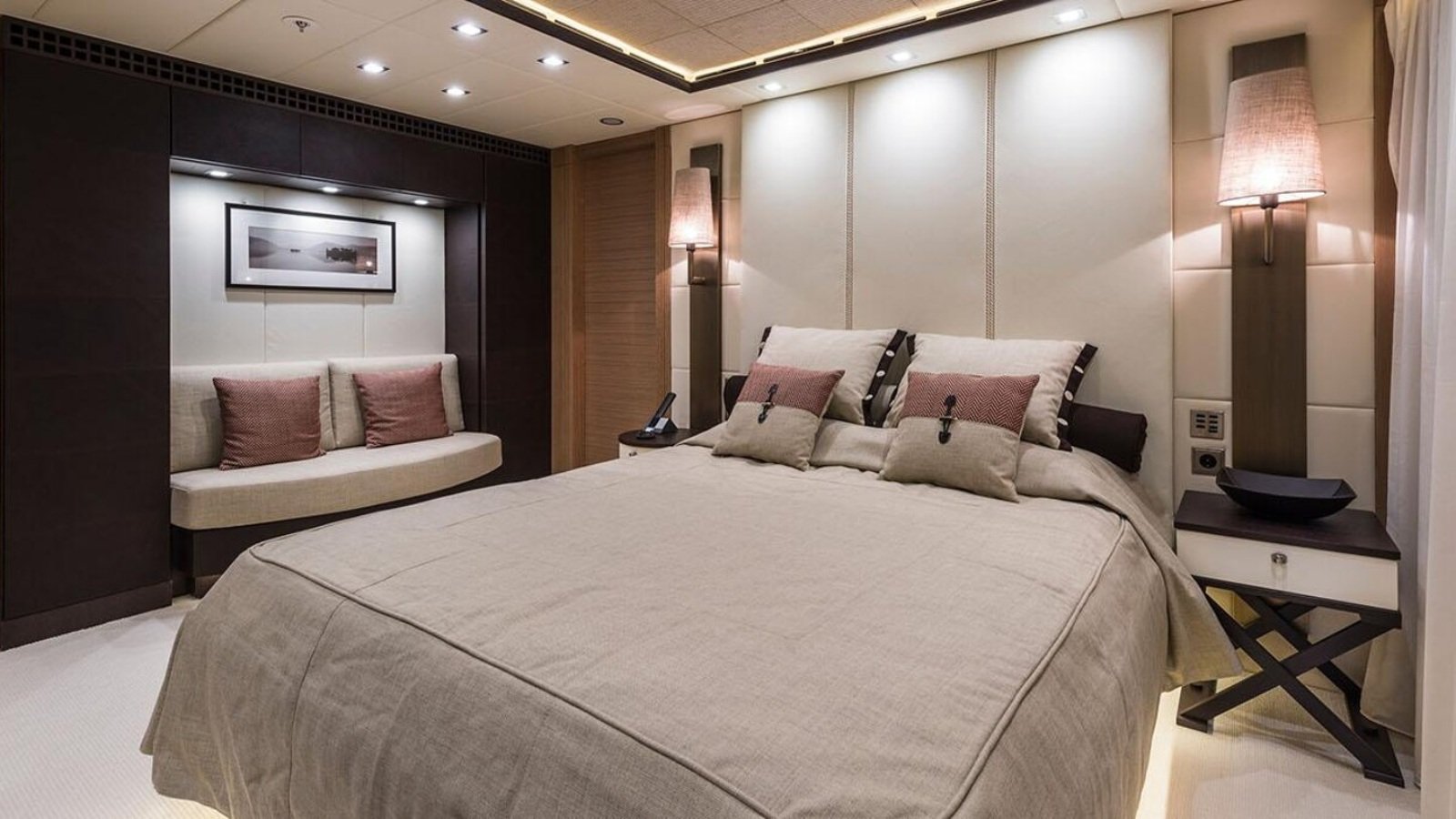
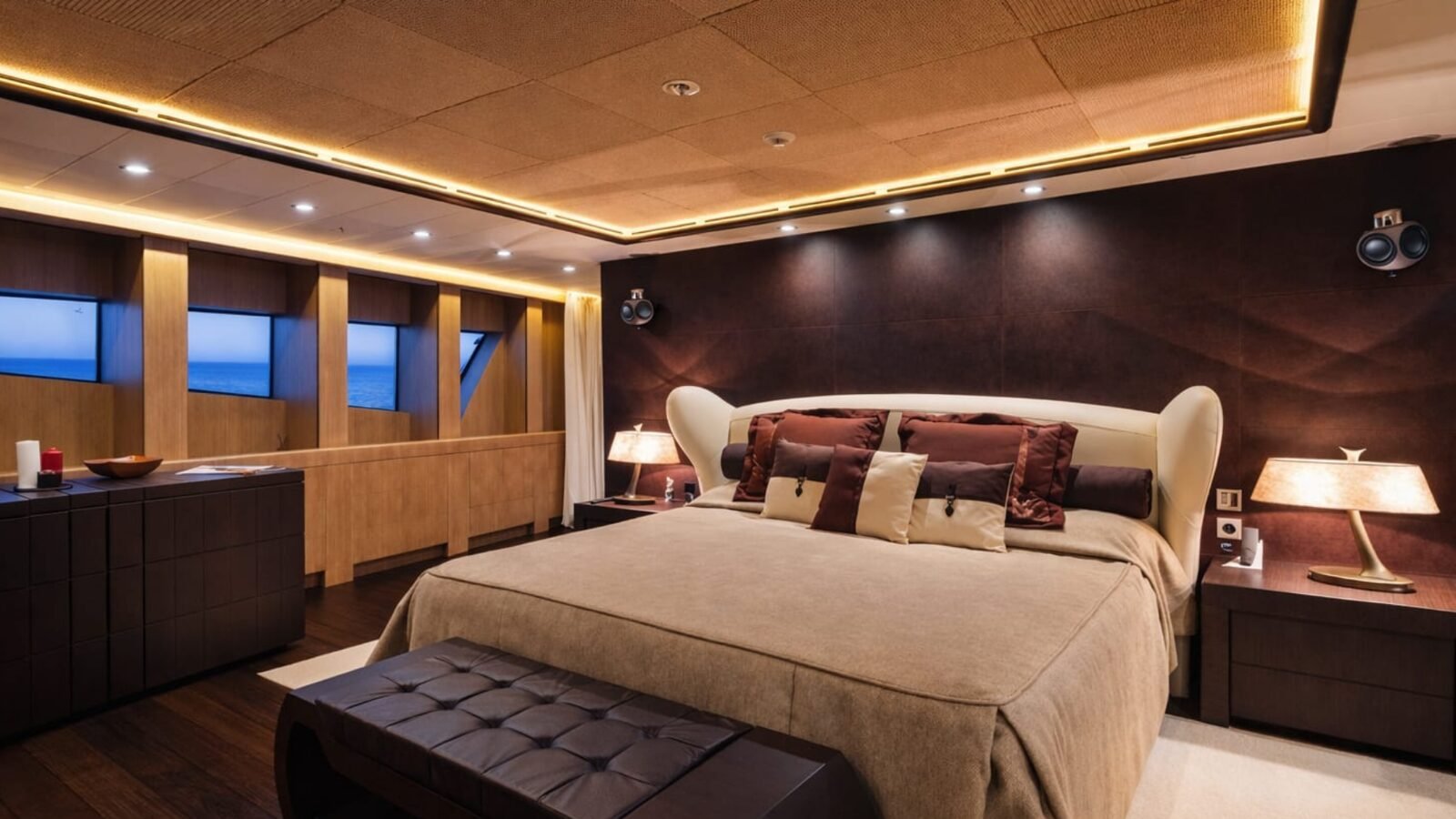
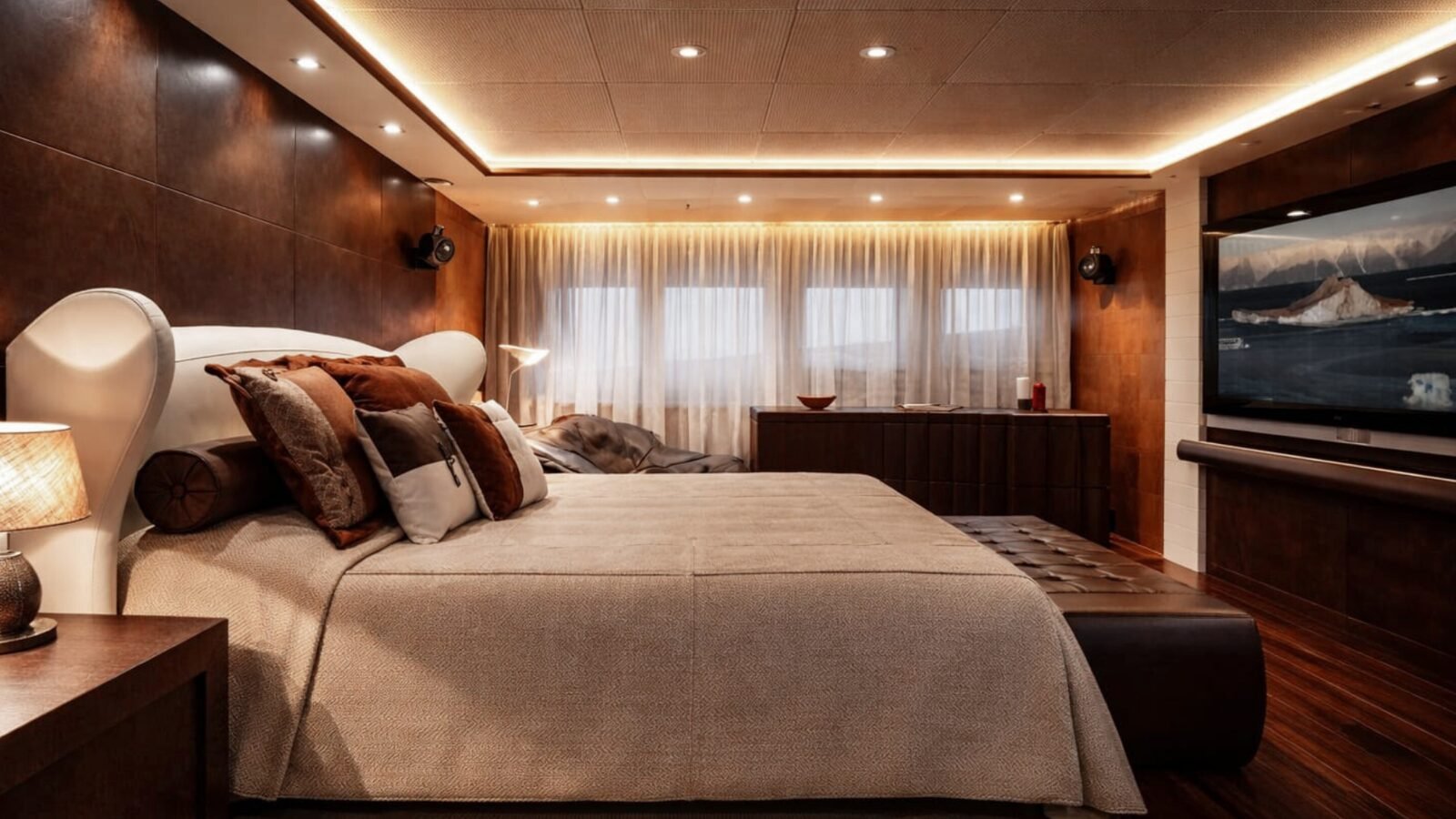
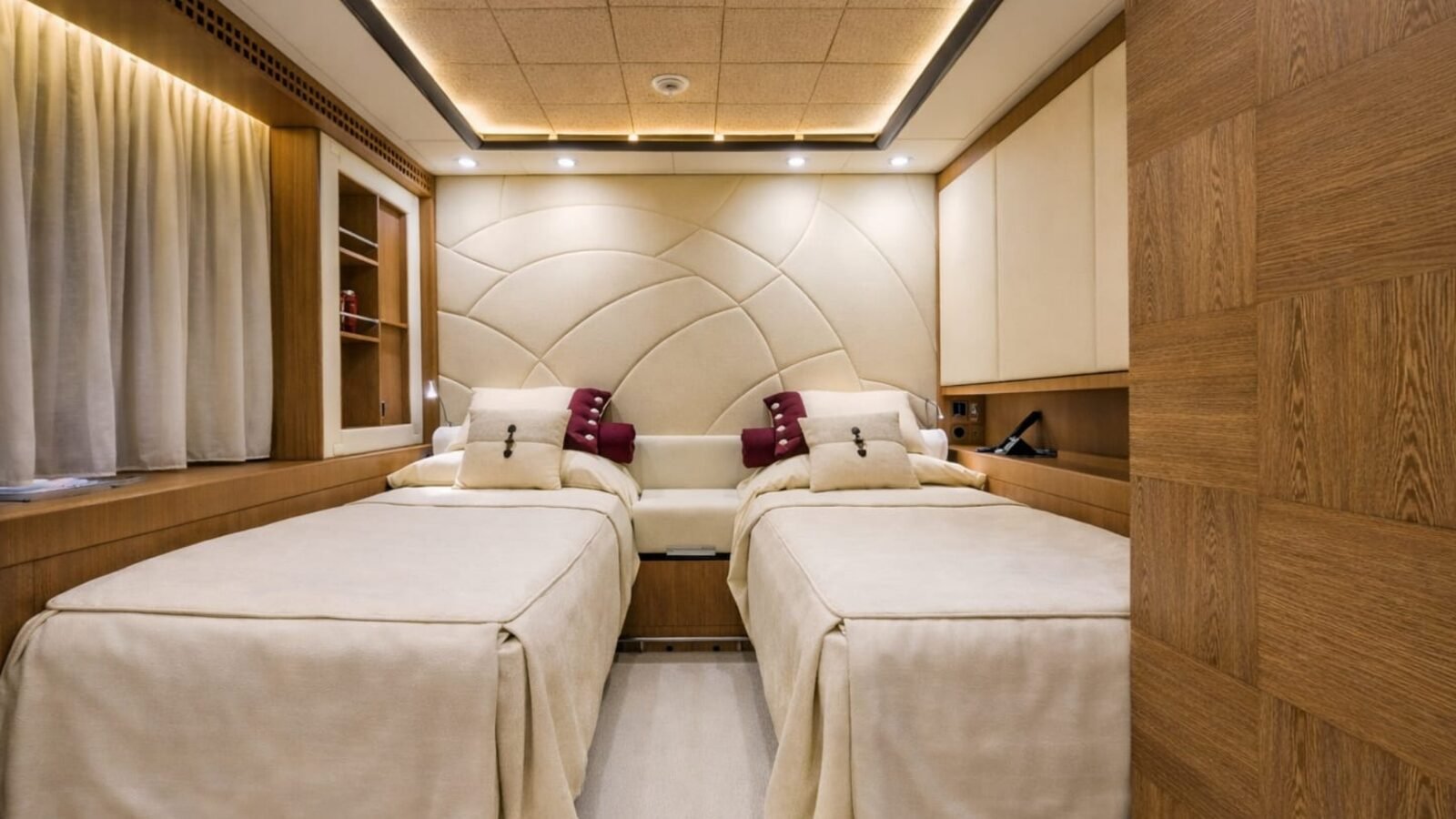
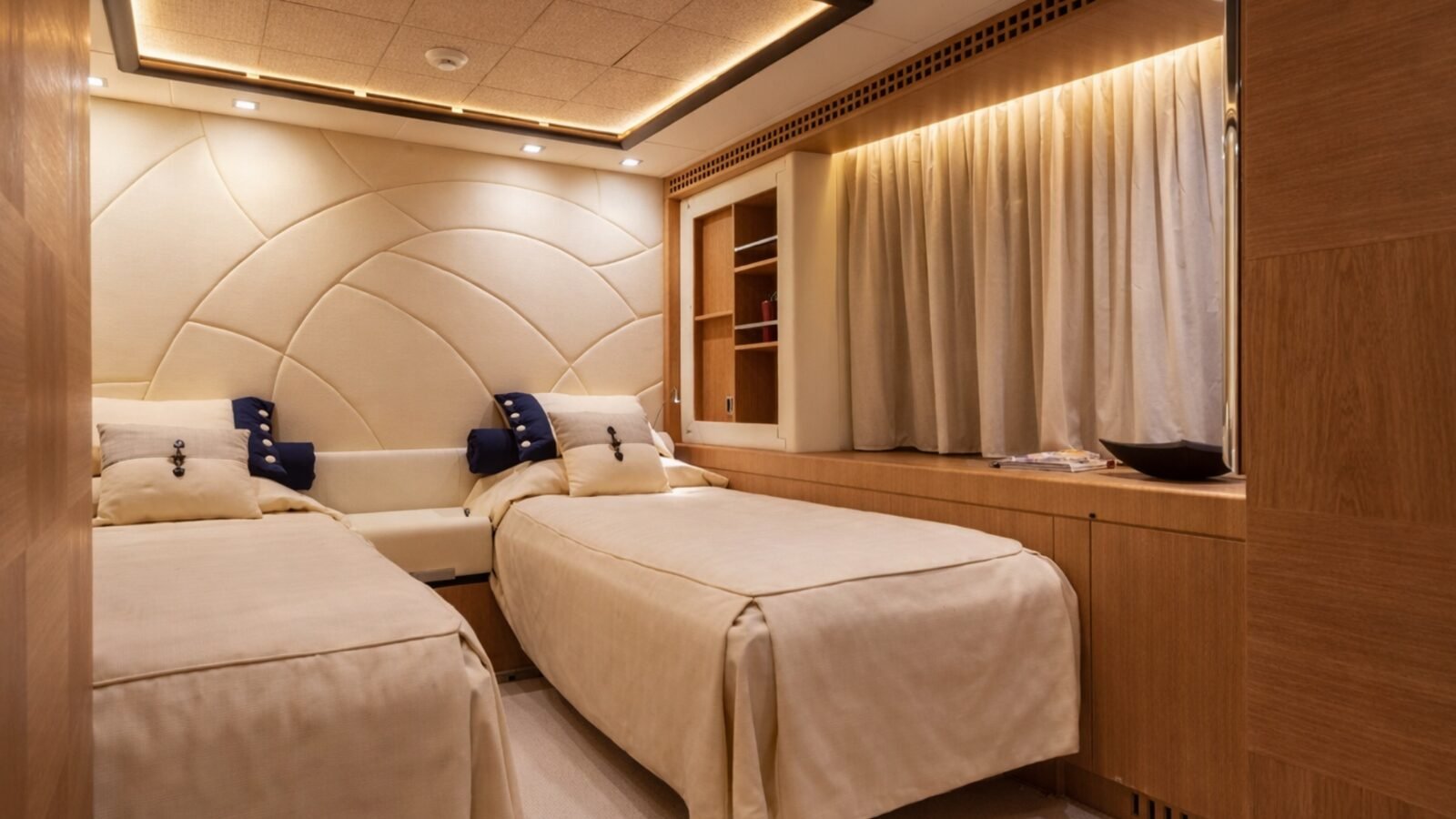
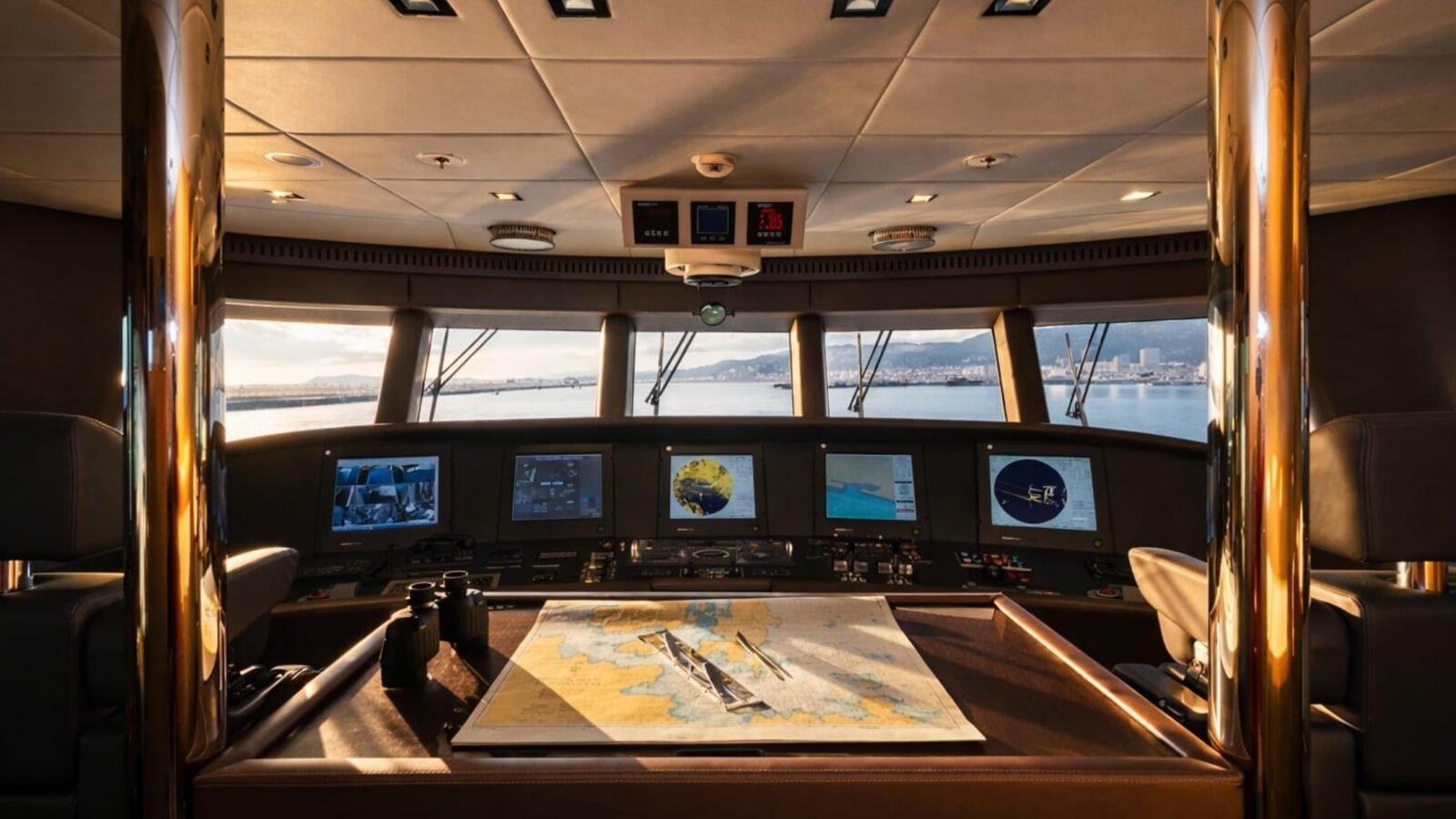
Inside she is warm rather than white – figured walnut and oak run across the bulkheads, ceilings are timber-battened, and the lighting is recessed and low. It is an unfashionable interior in the best sense: built when explorer yachts were still expected to feel like ships rather than hotels, and maintained rather than modernised. The main salon runs into a formal dining table on the same deck. Above, a skylounge glazed on three sides. There is a proper study, a wheelhouse that looks like a working bridge, and – the detail that gives her away – a dedicated gym with real equipment, positioned on deck where the view is.
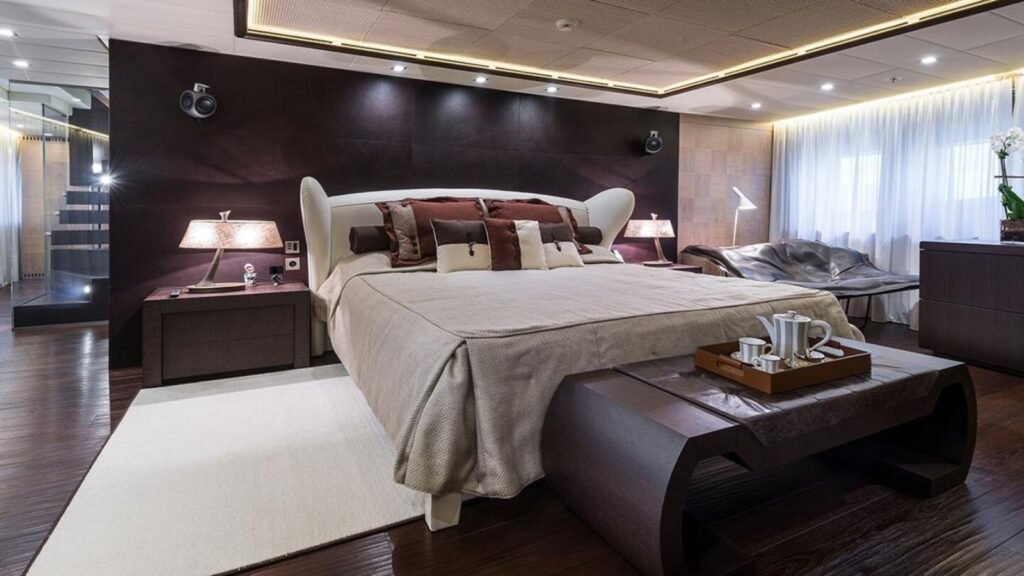
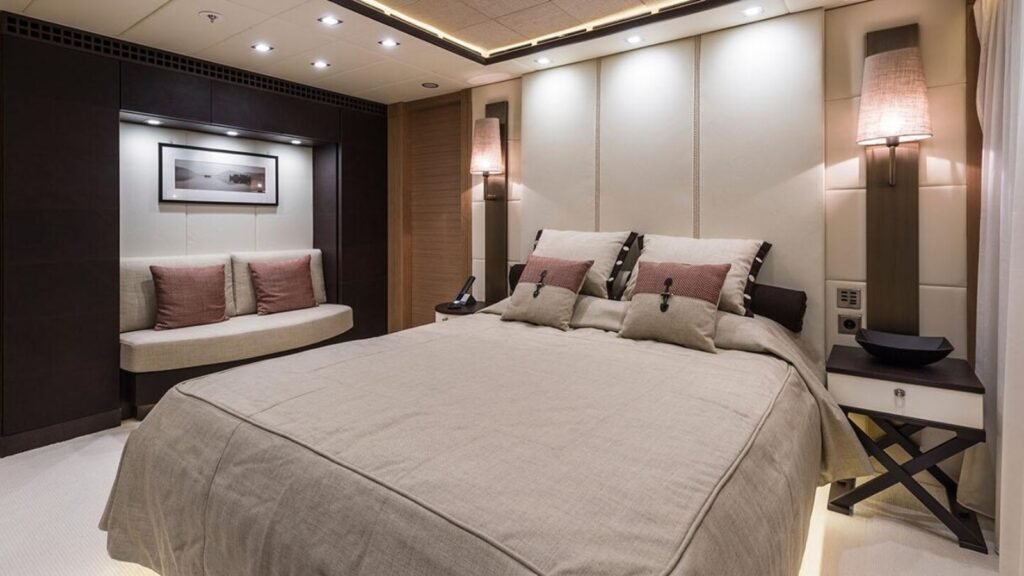
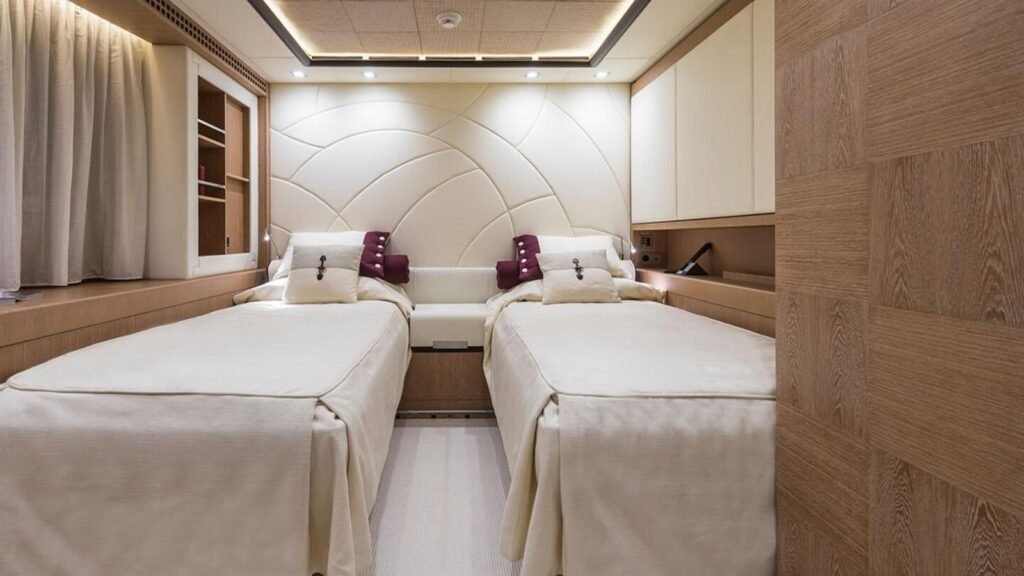
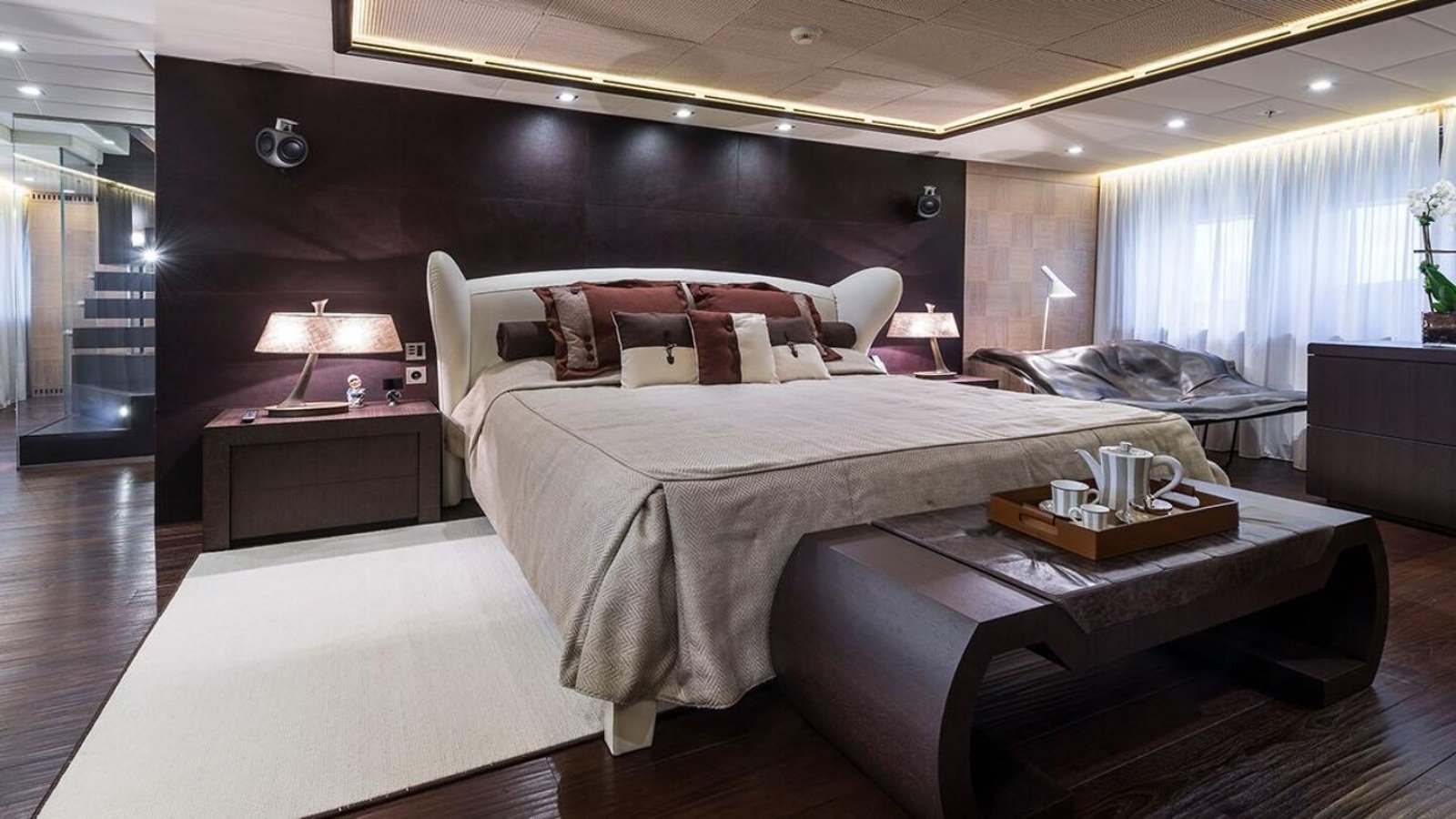
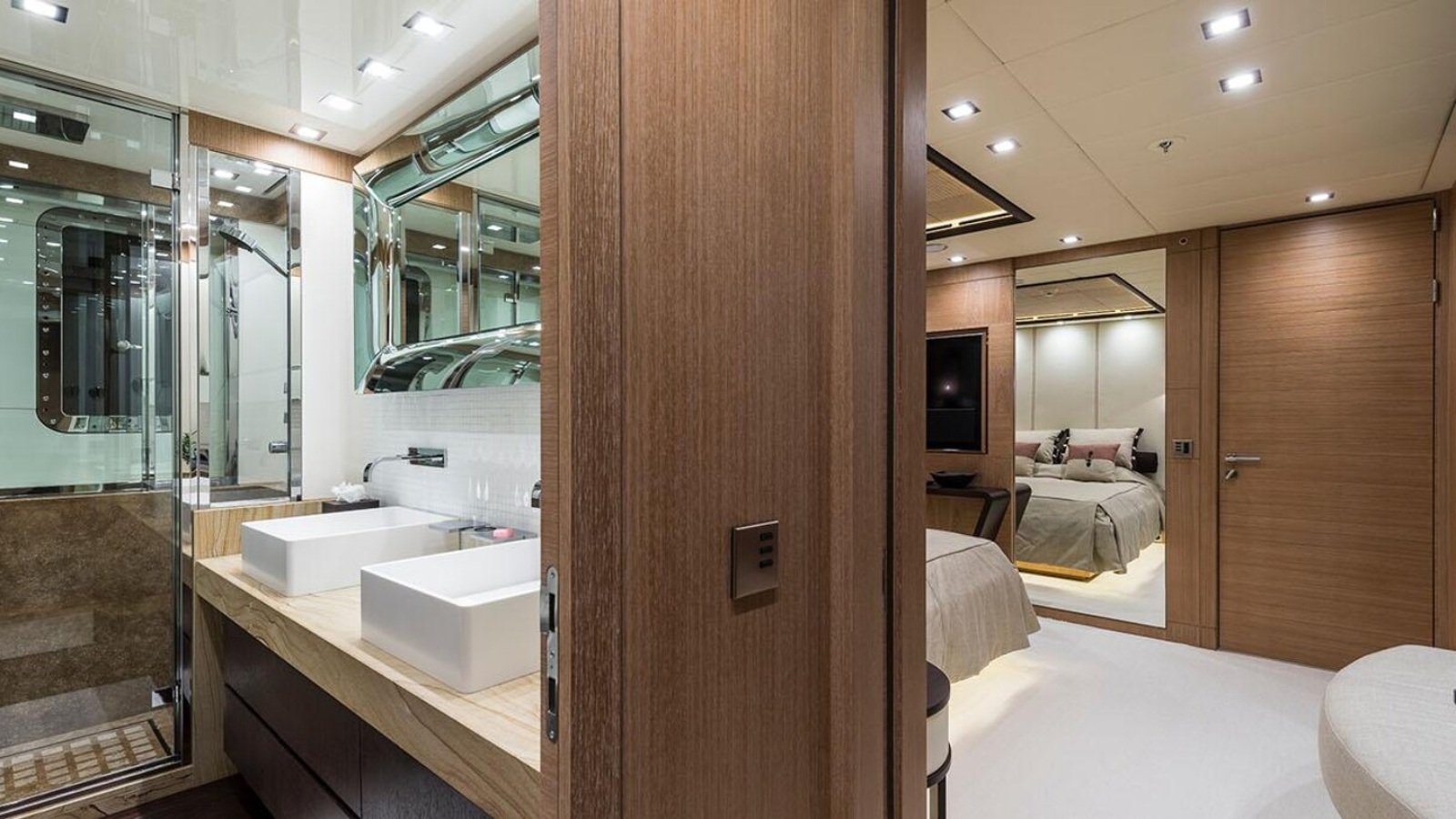
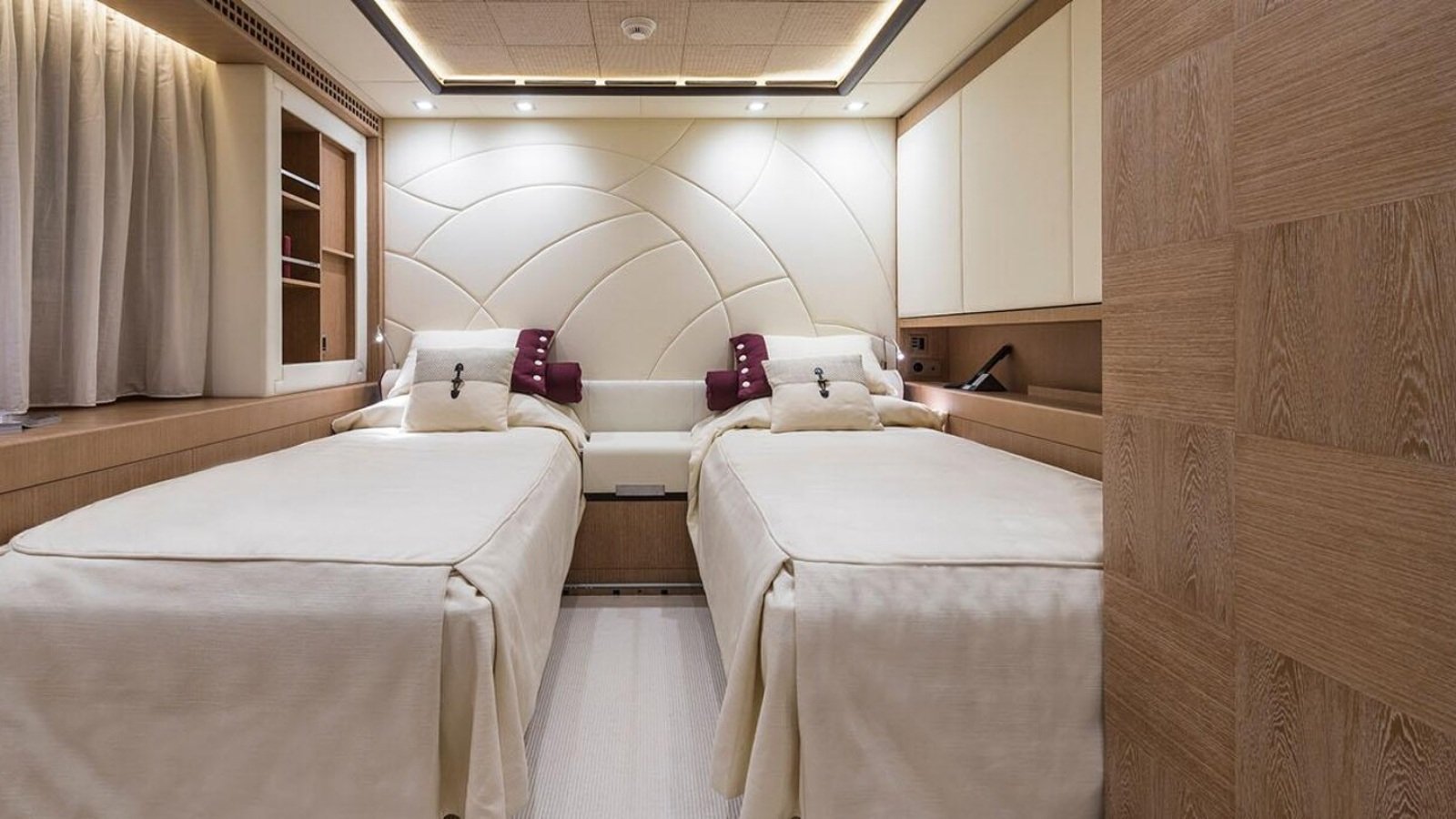
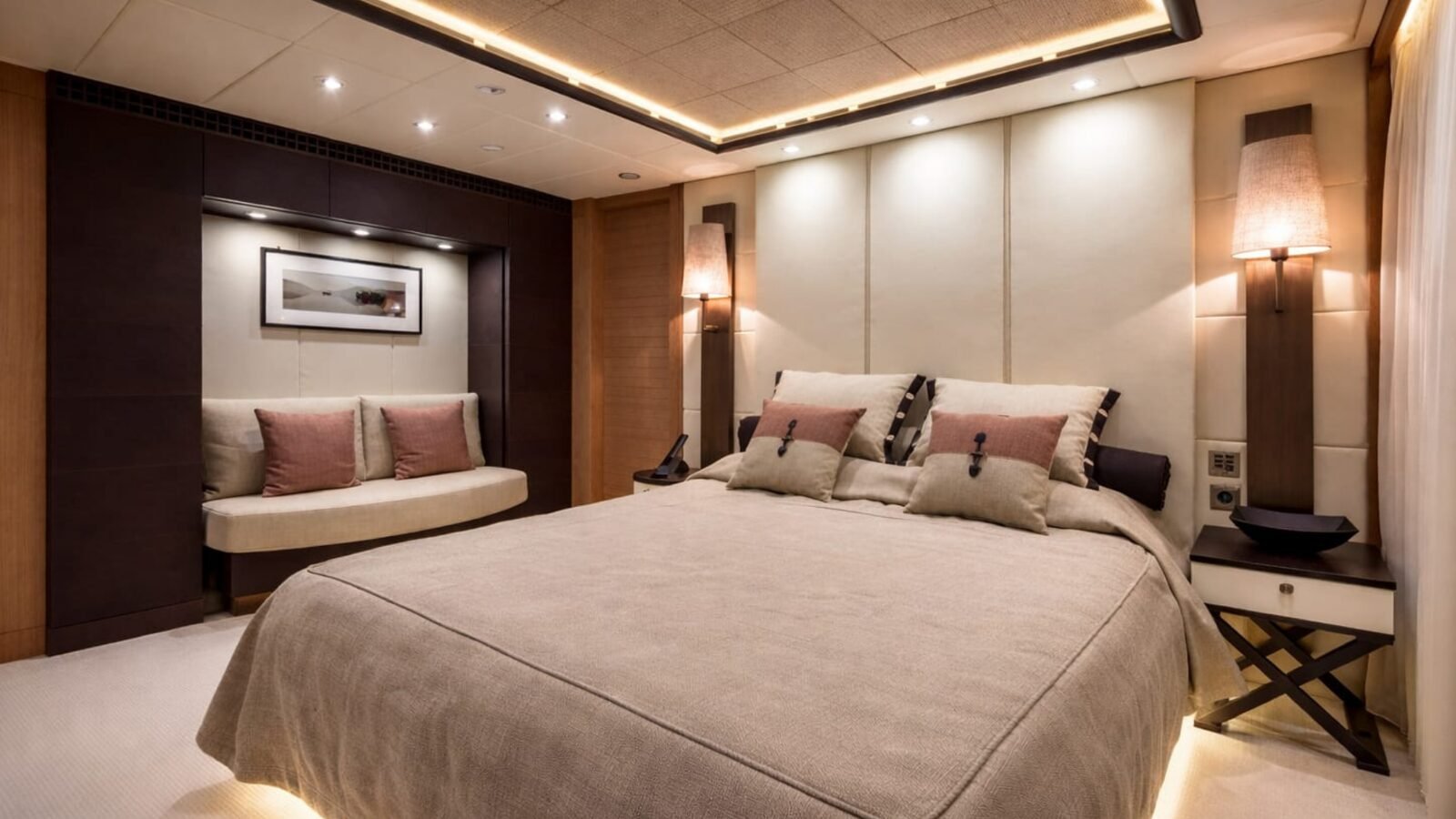
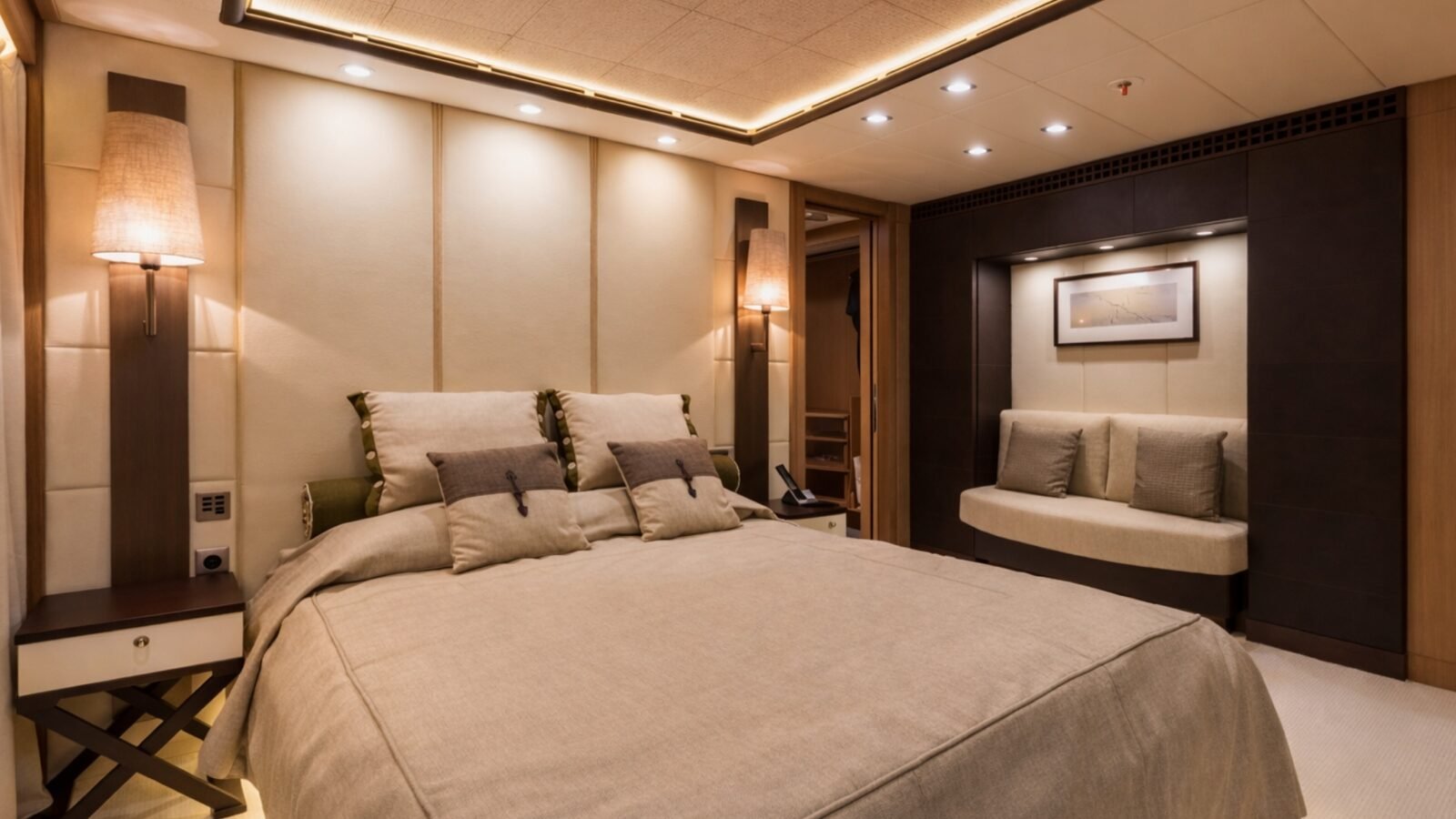
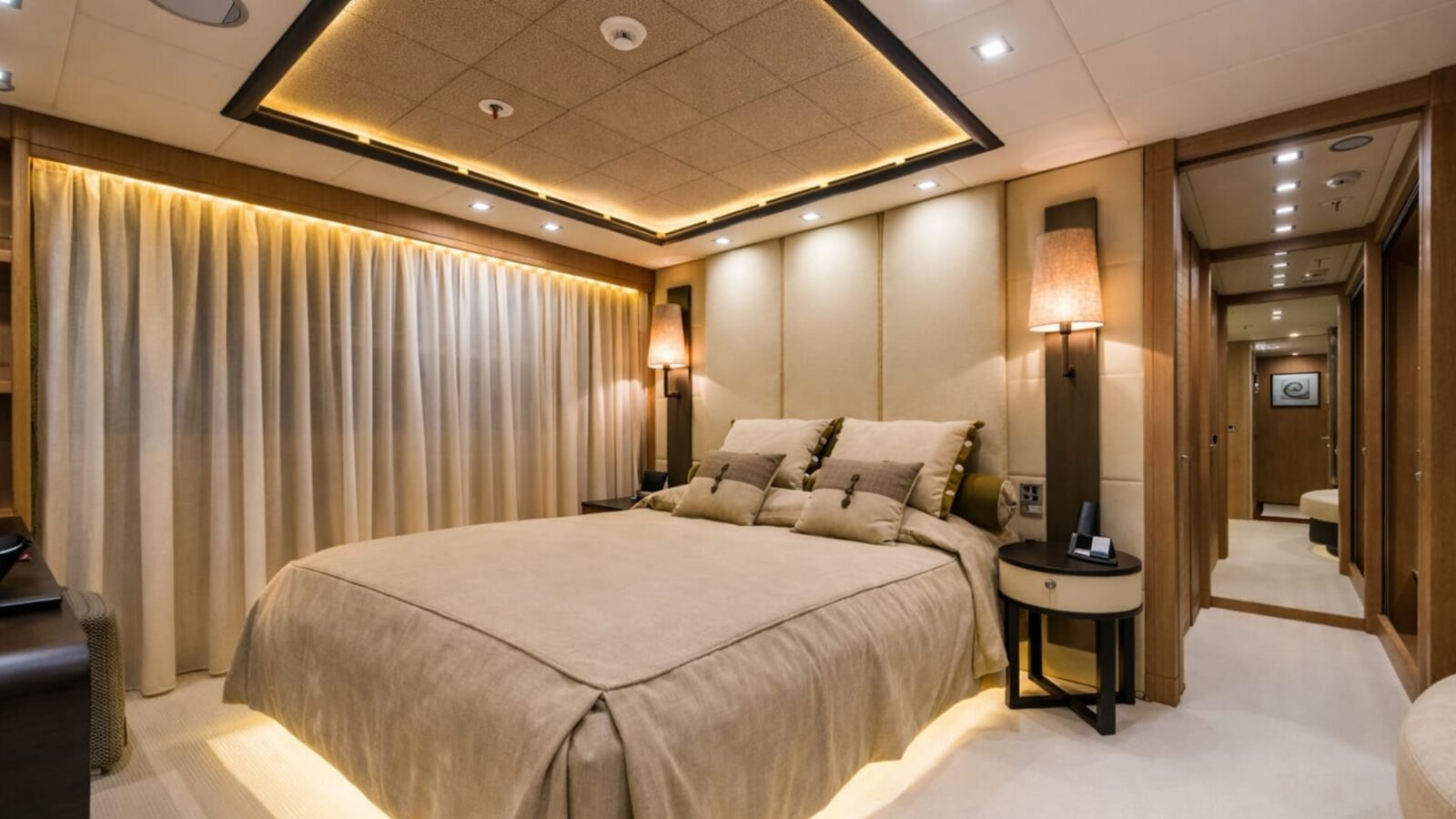
Six cabins sleep twelve. The master is enormous by the standards of her length, because the volume was there to spend. The rest follow below in the same walnut, each with a marble en-suite.
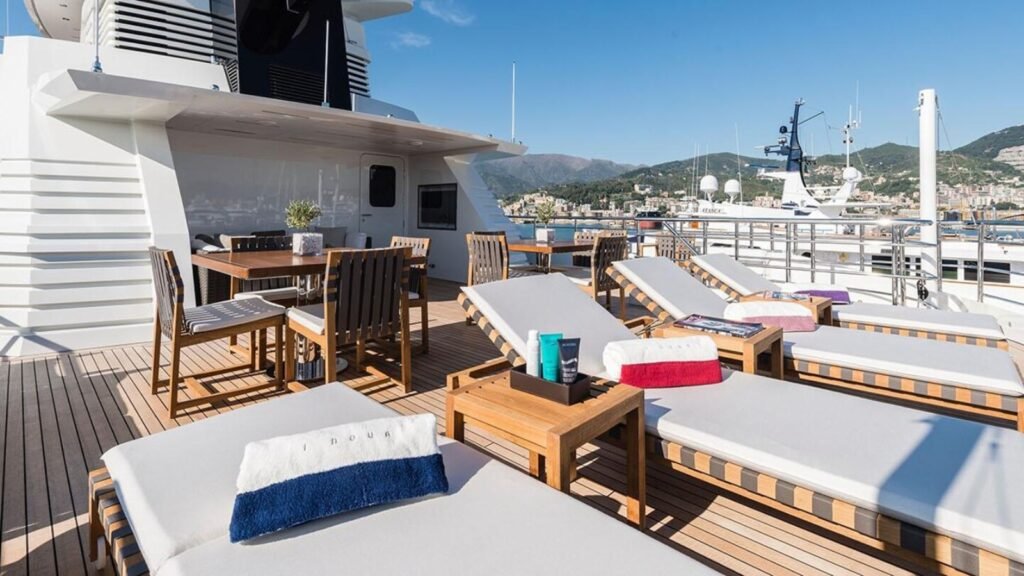
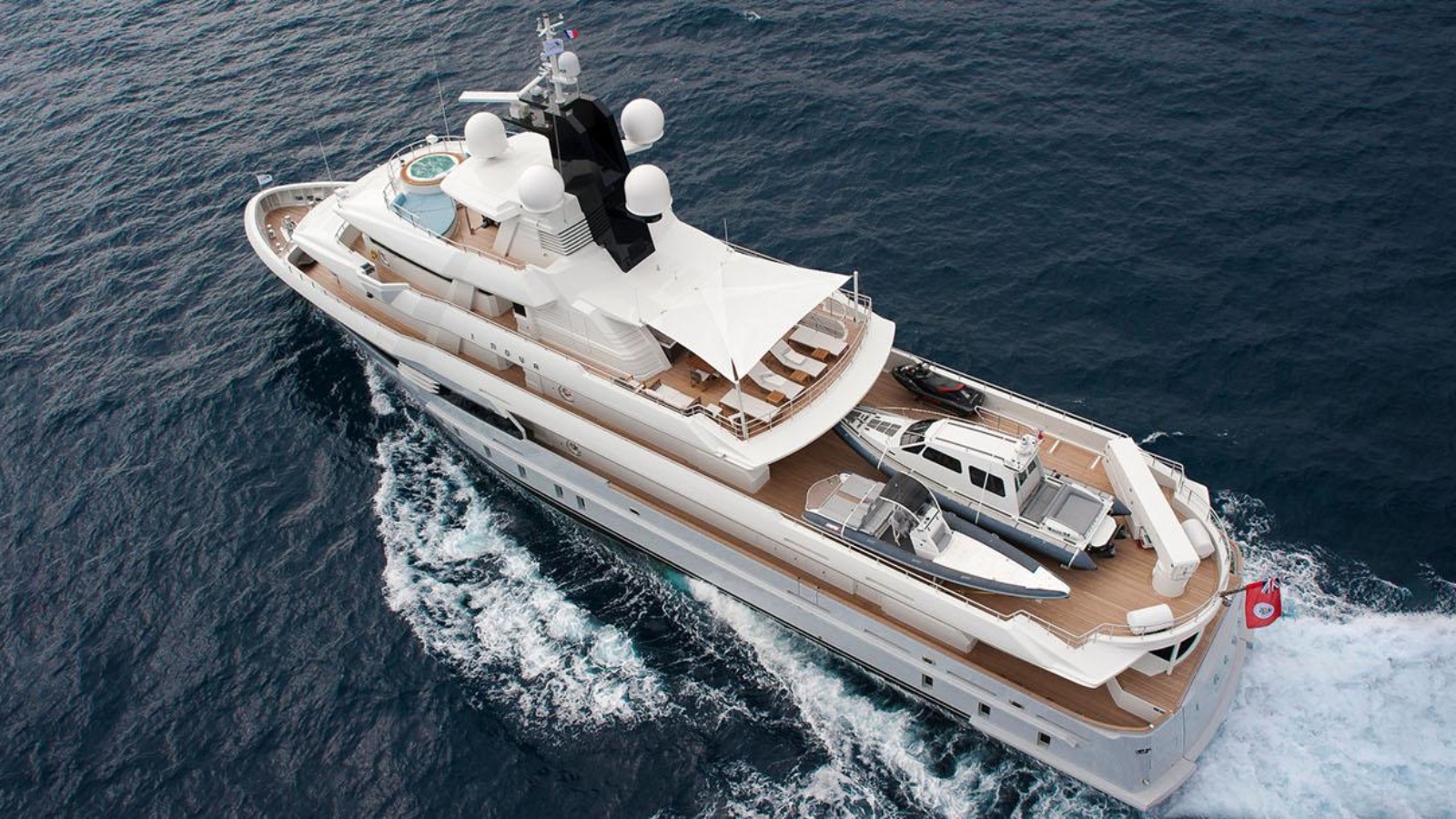
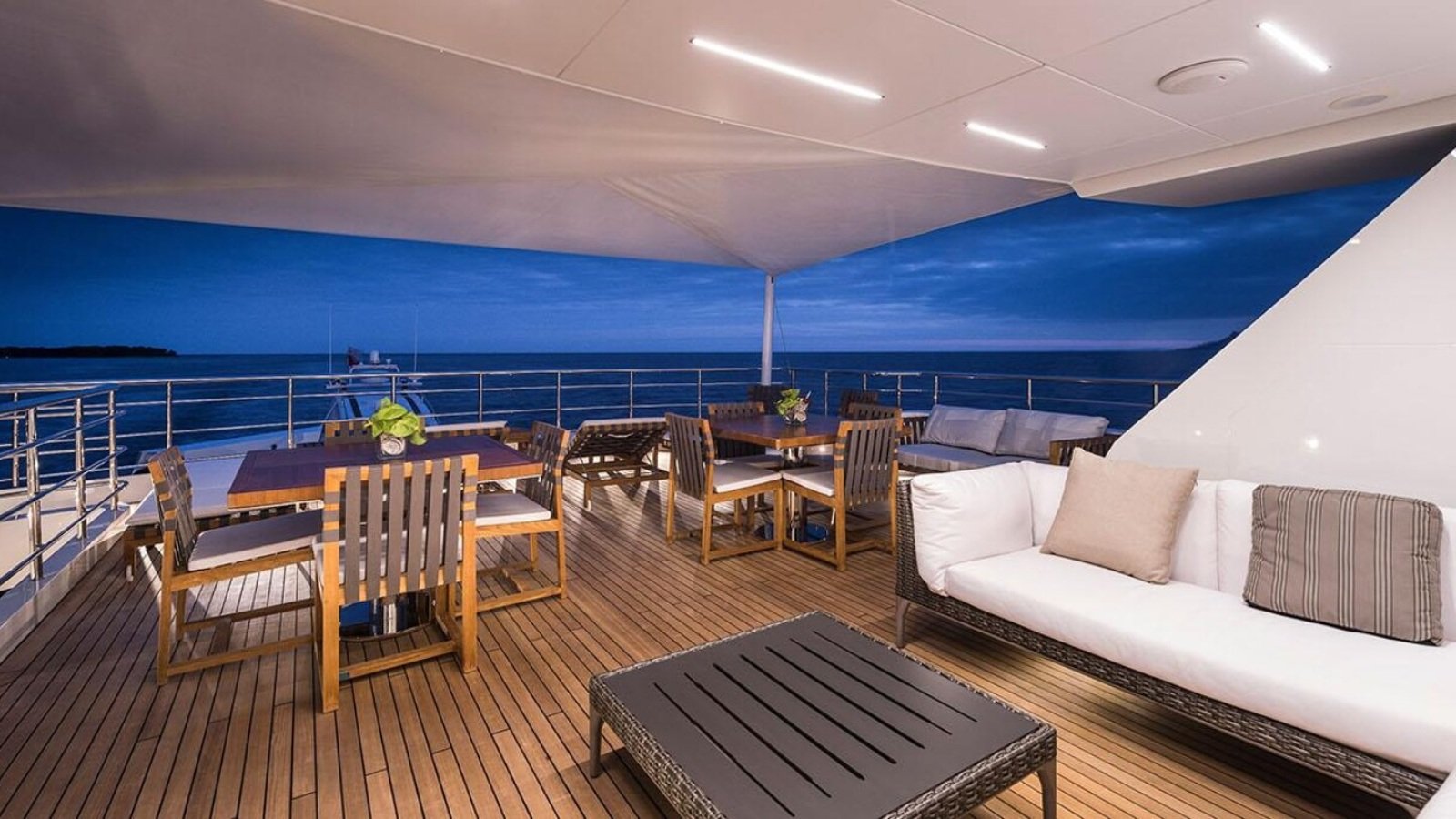
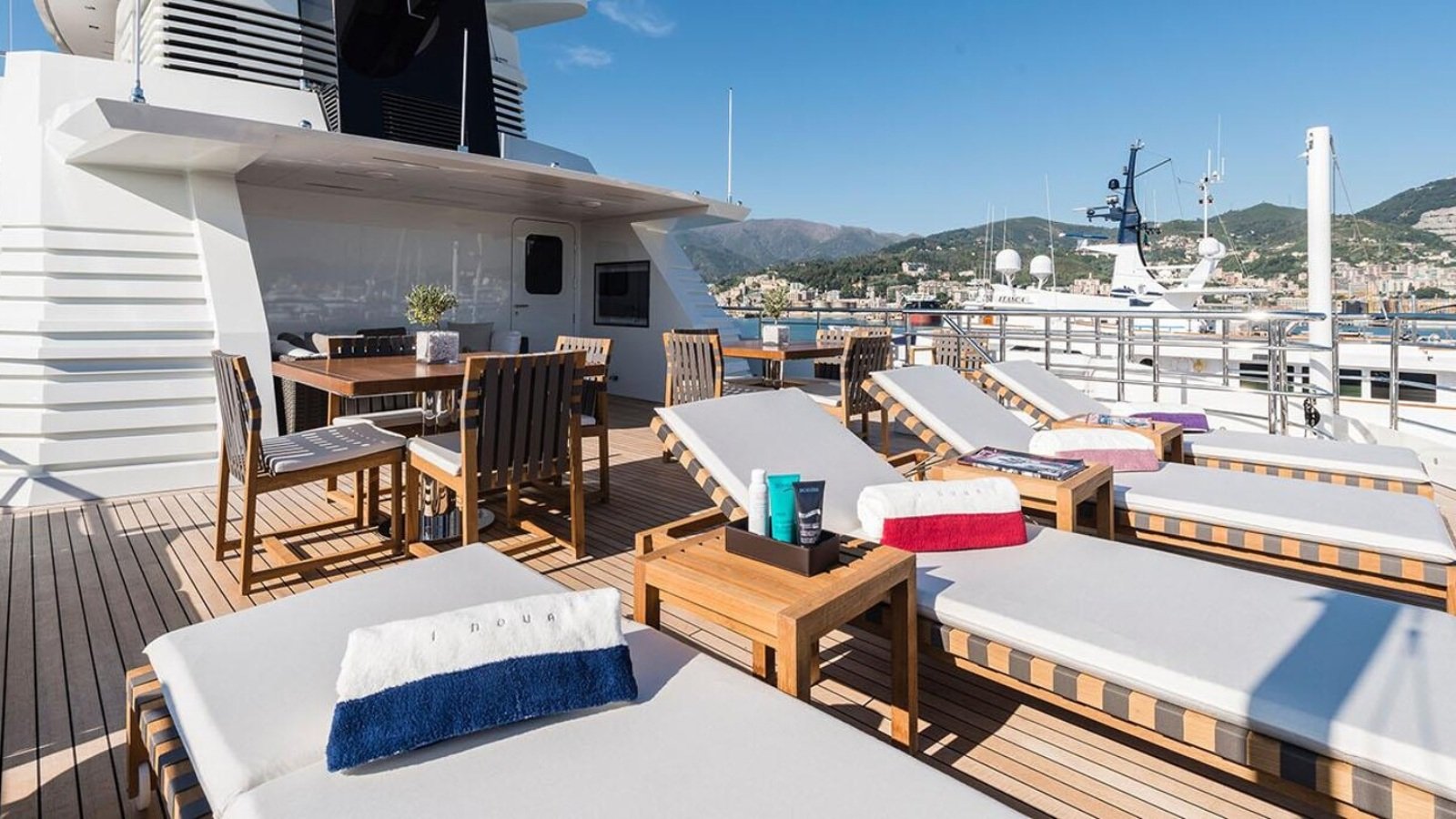
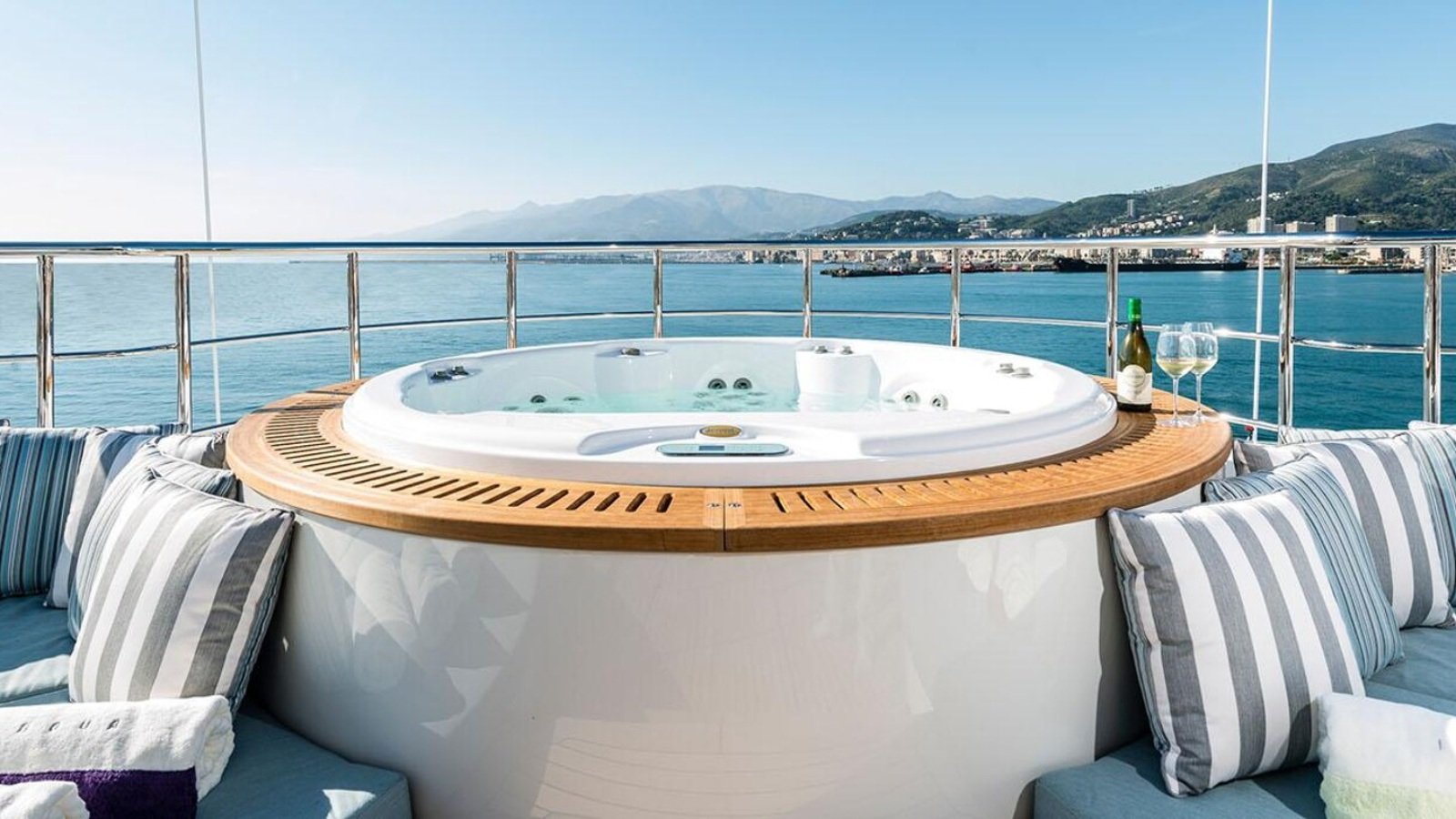
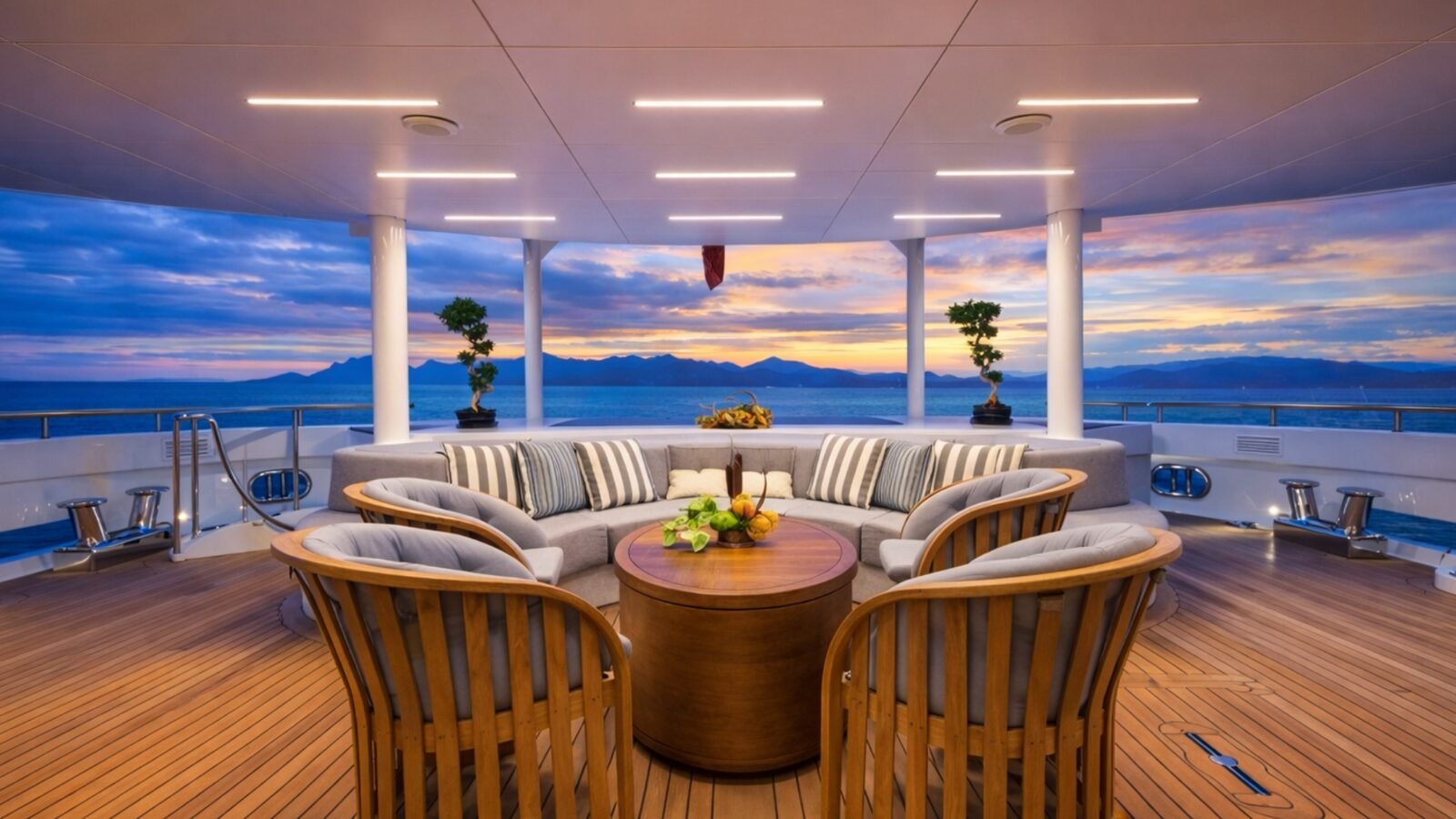
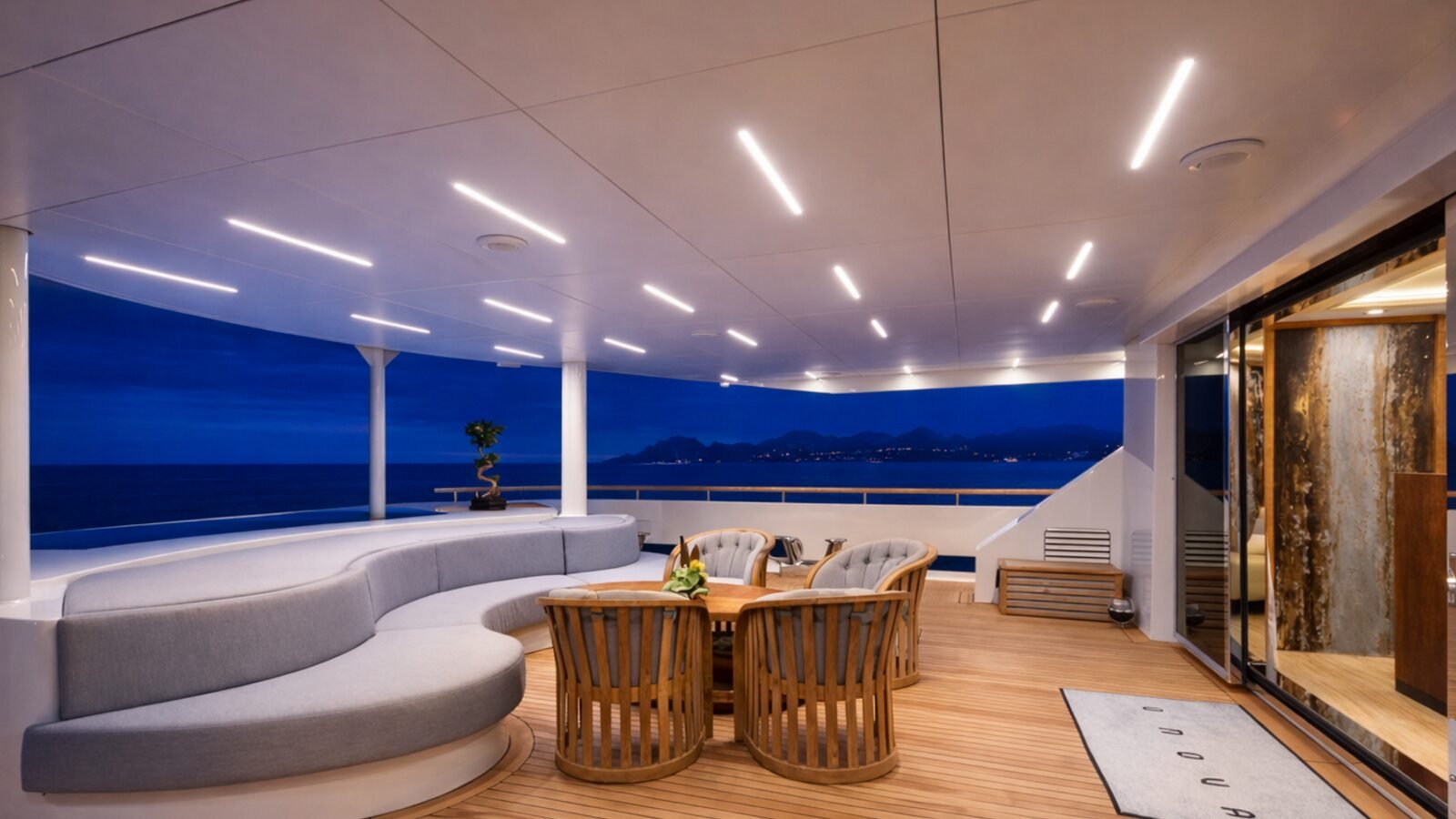
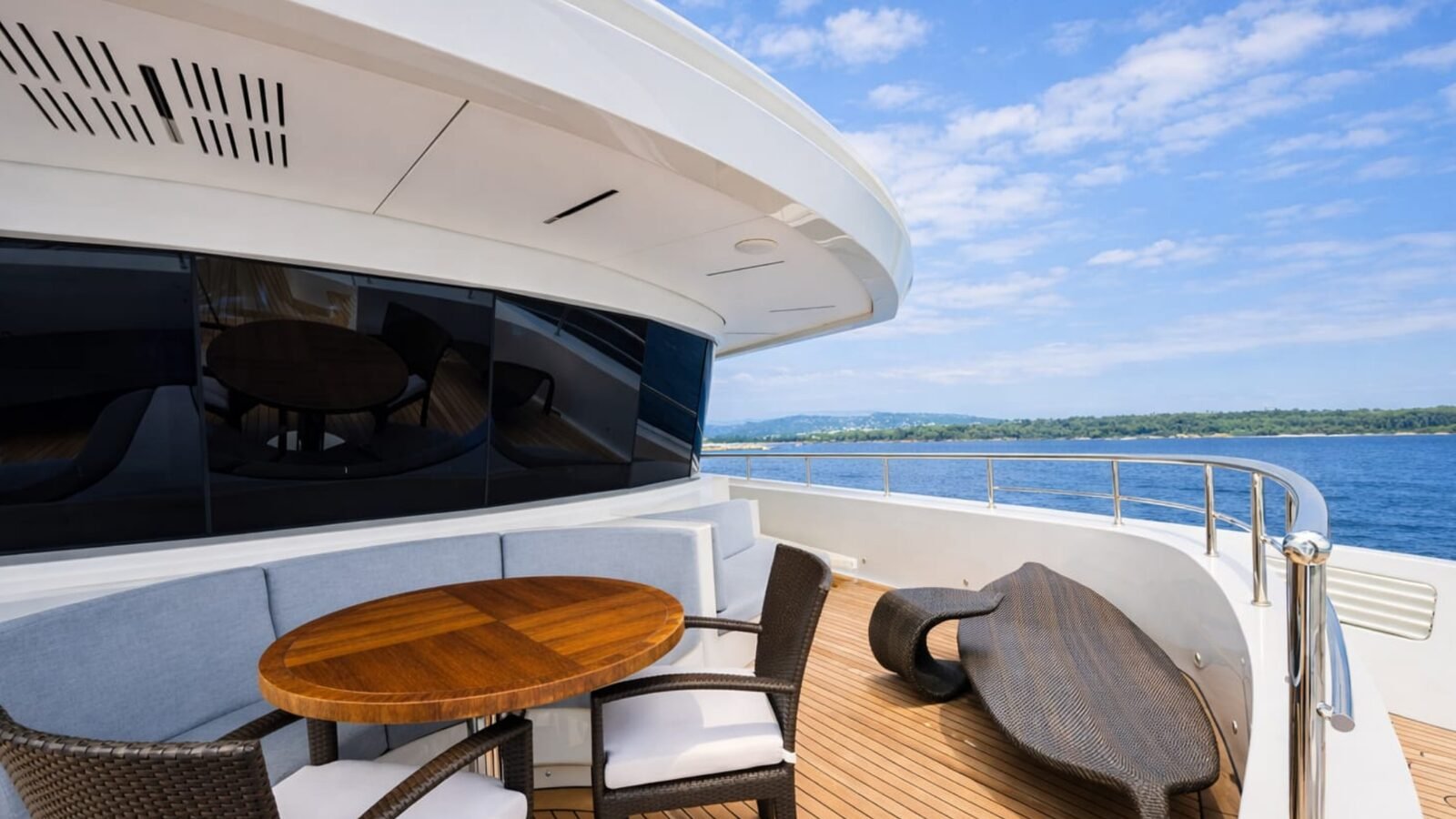
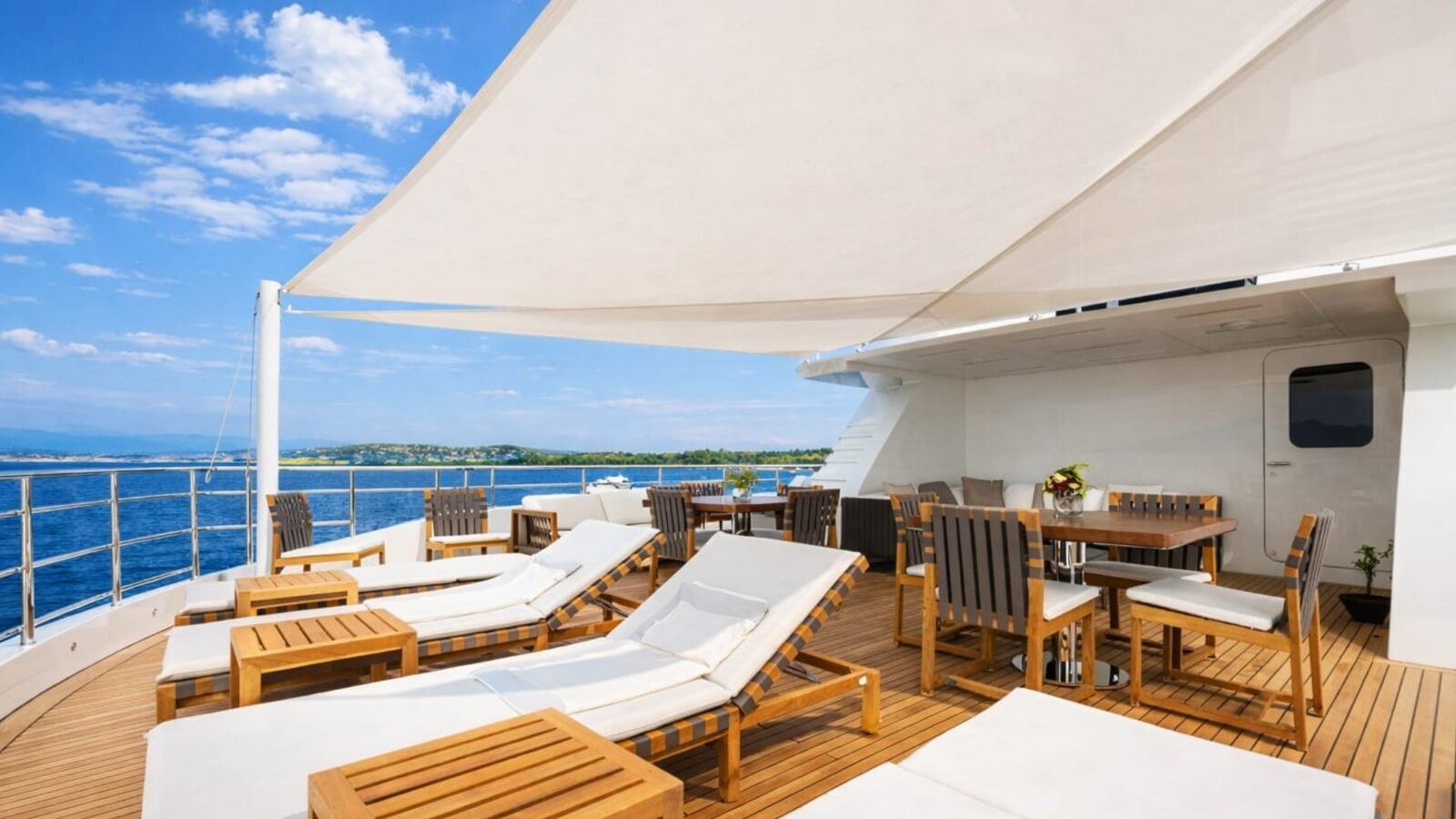
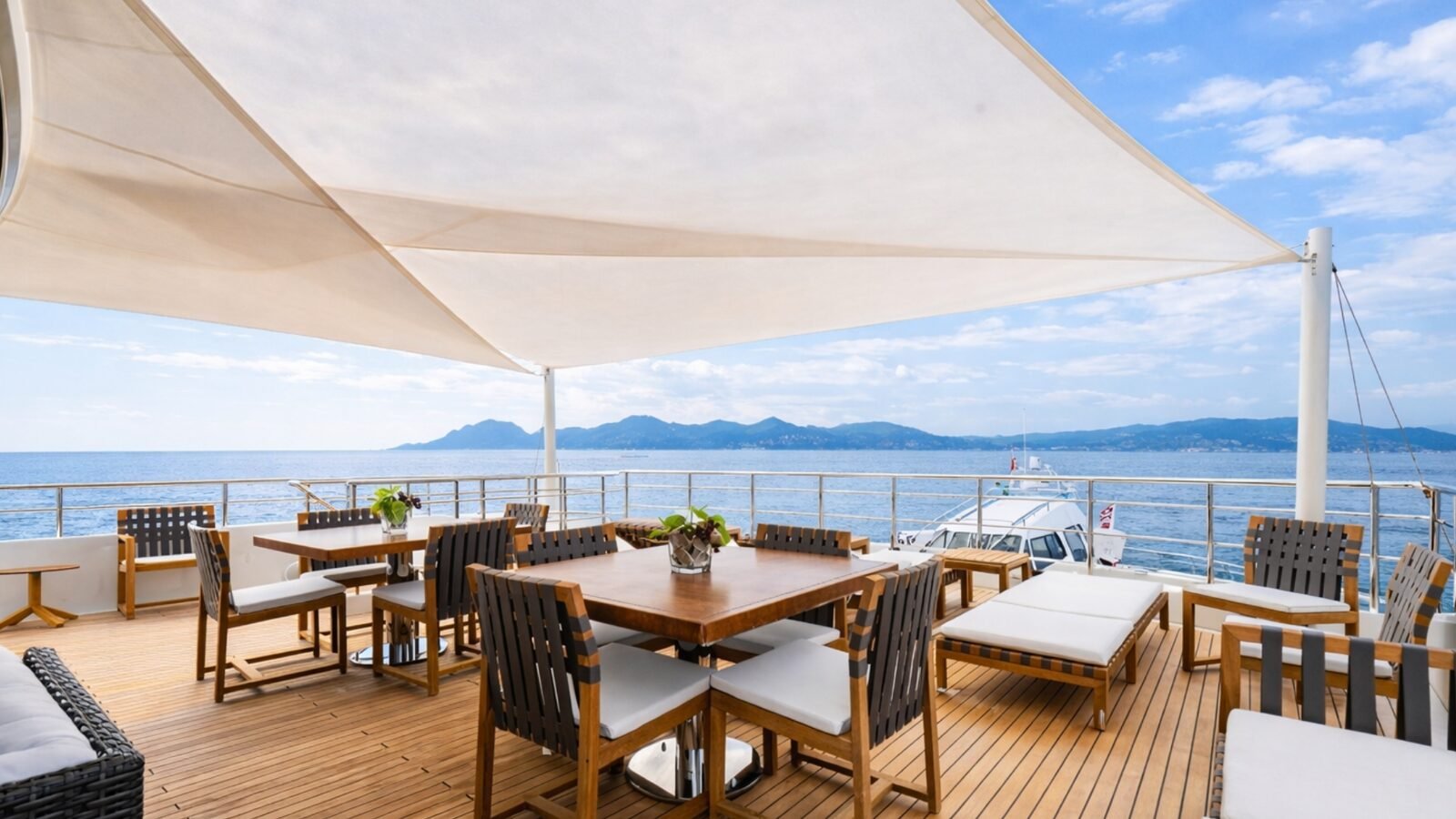
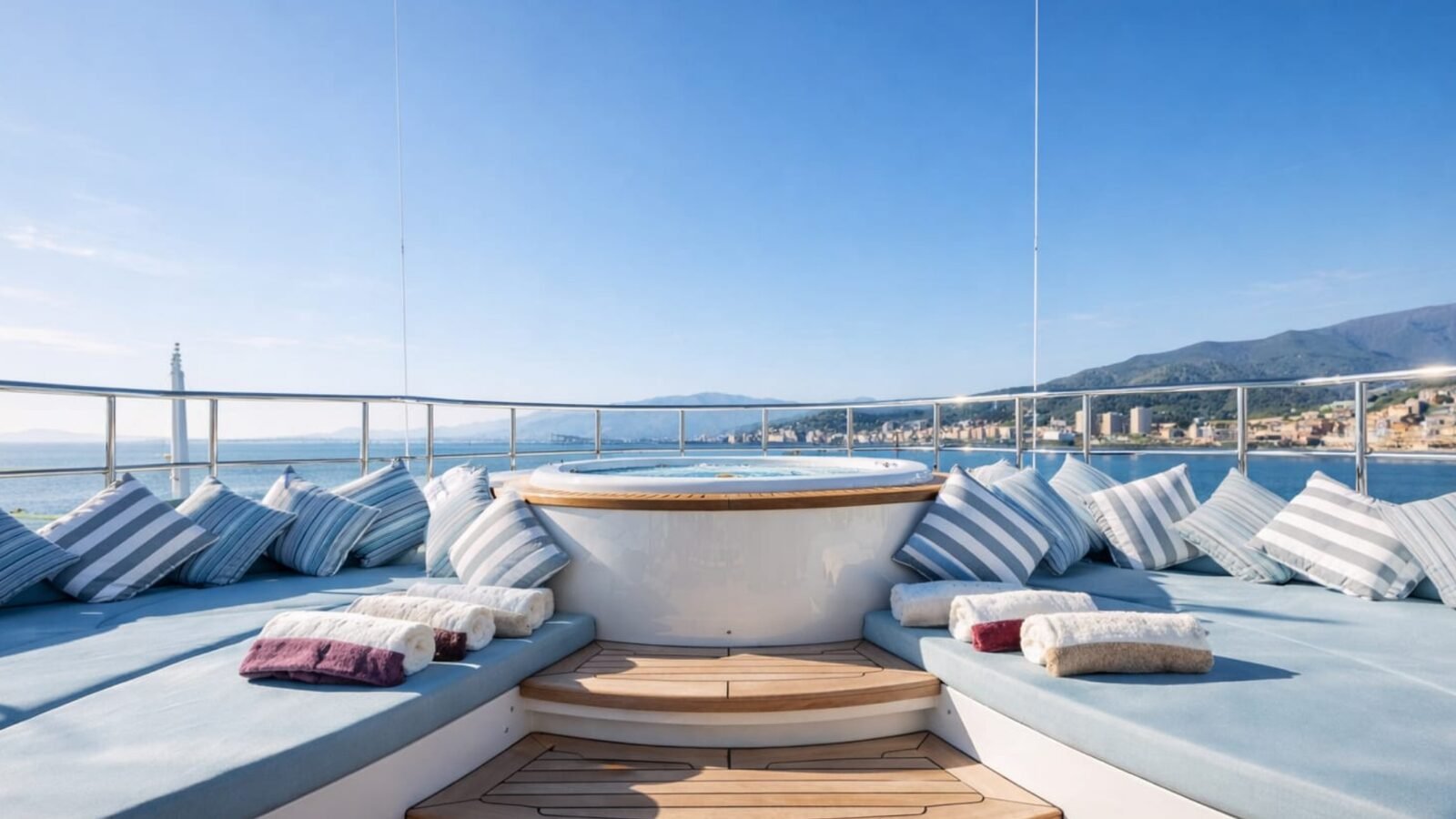
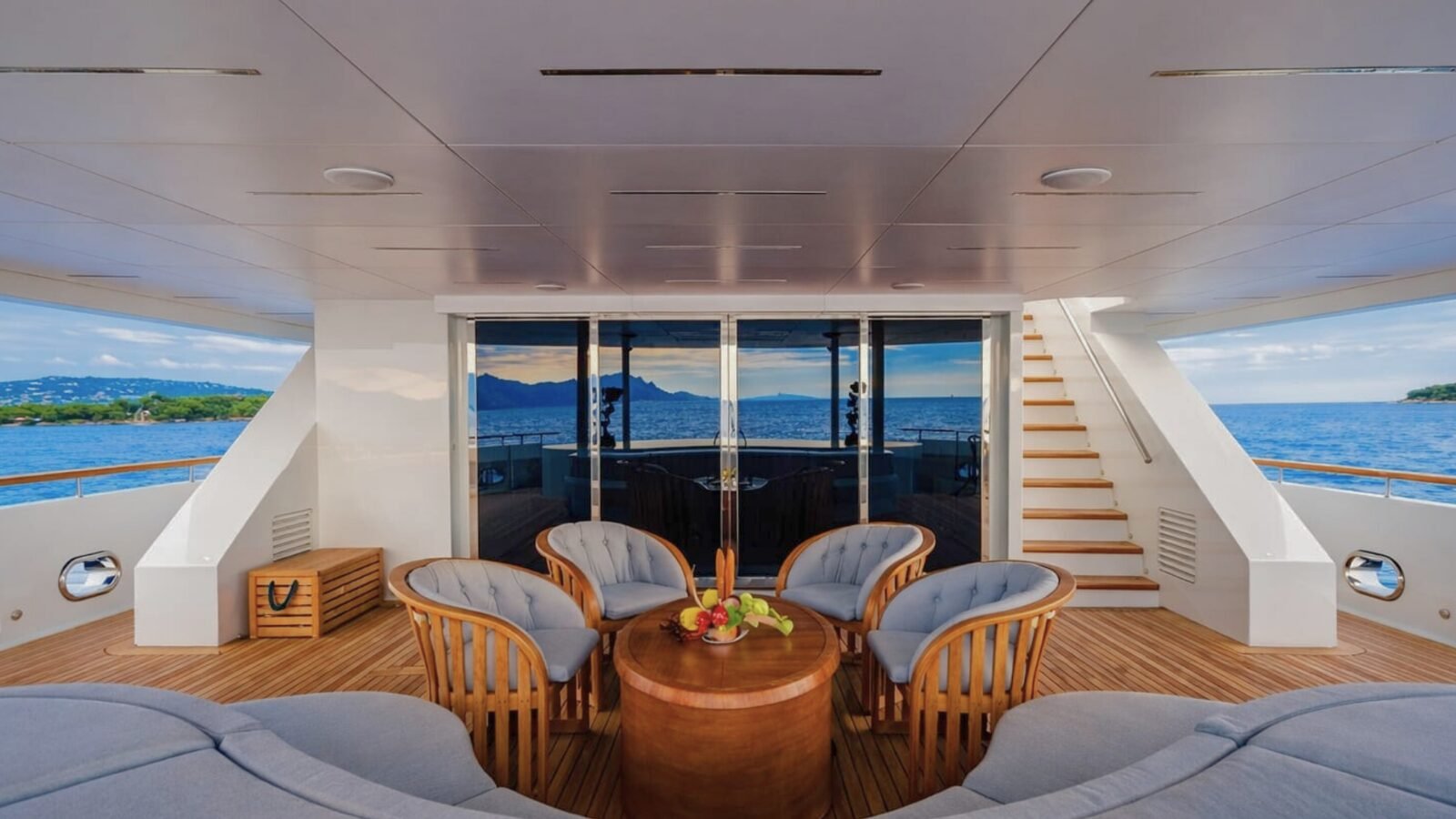
On deck the sundeck carries a jacuzzi set into teak with lounging wrapped around it, a shaded alfresco table forward of it, and enough square metres that twelve guests never stack up in one place. Her aft decks work at three levels.
The Aegean is an odd place to keep a boat with transatlantic legs, and that mismatch is worth sitting with. Greece rewards exactly two things: shallow enough draft to use the anchorages, and a hull that does not roll when the meltemi runs down the channel in the afternoon. I NOVA draws 3.5 metres and weighs what she weighs. The range she will never use in the Cyclades is simply the by-product of the displacement that makes her comfortable there – you cannot buy the second without the first, and most 50-metre yachts have bought neither.
She splits her year narrowly: Greece and Turkey from April to September, Greece again through the winter. She does not chase the season across a continent, and with 5,500 miles of range that is a choice rather than a limitation.
Weekly rates are 240,000 euros, low season and high alike – an unusually honest rate card.
I NOVA is a ship. If what you want is a fast yacht, she is emphatically the wrong answer. If what you want is the most interior volume and the steadiest platform available at fifty metres, there is very little else to consider.