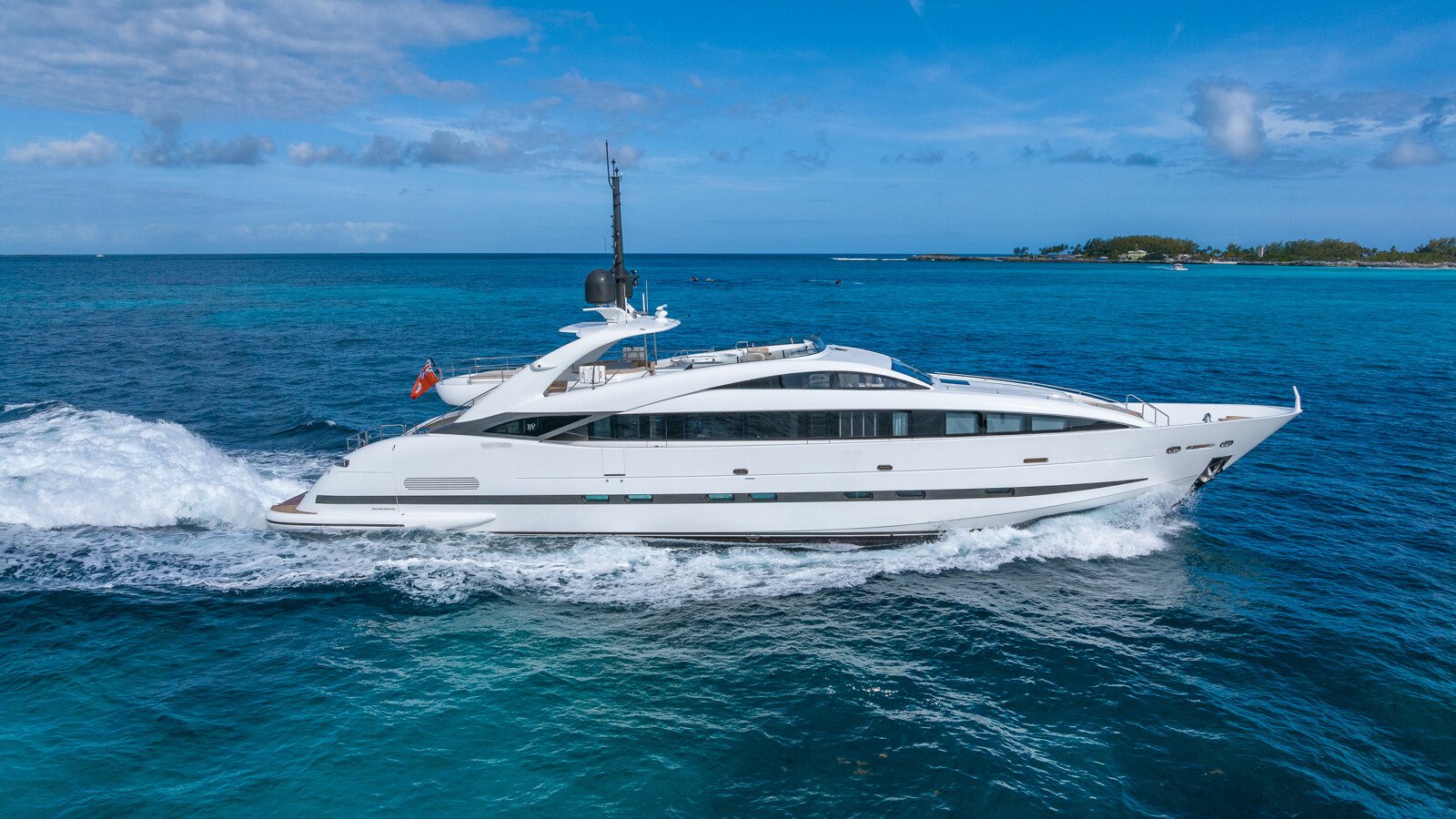
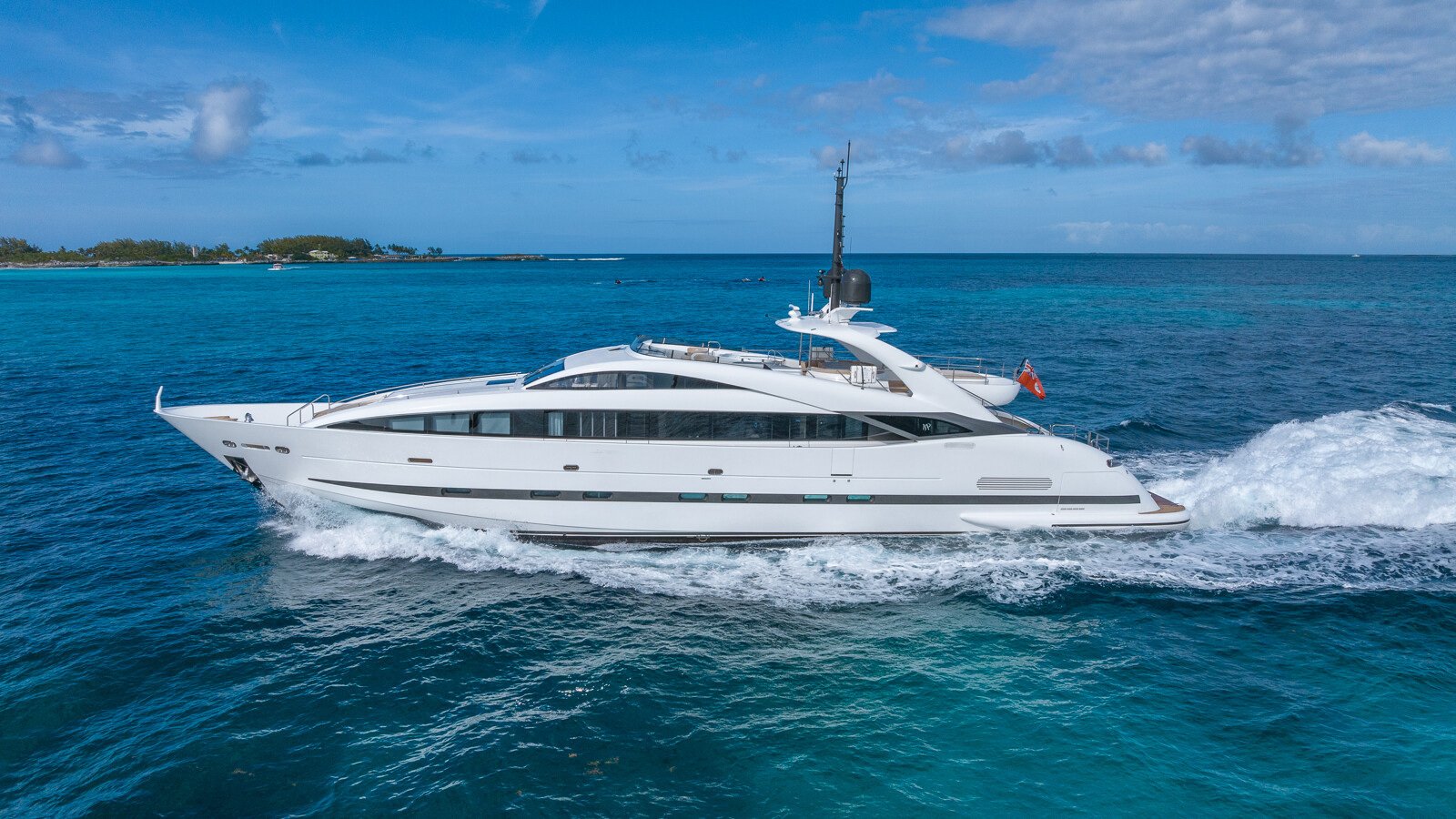
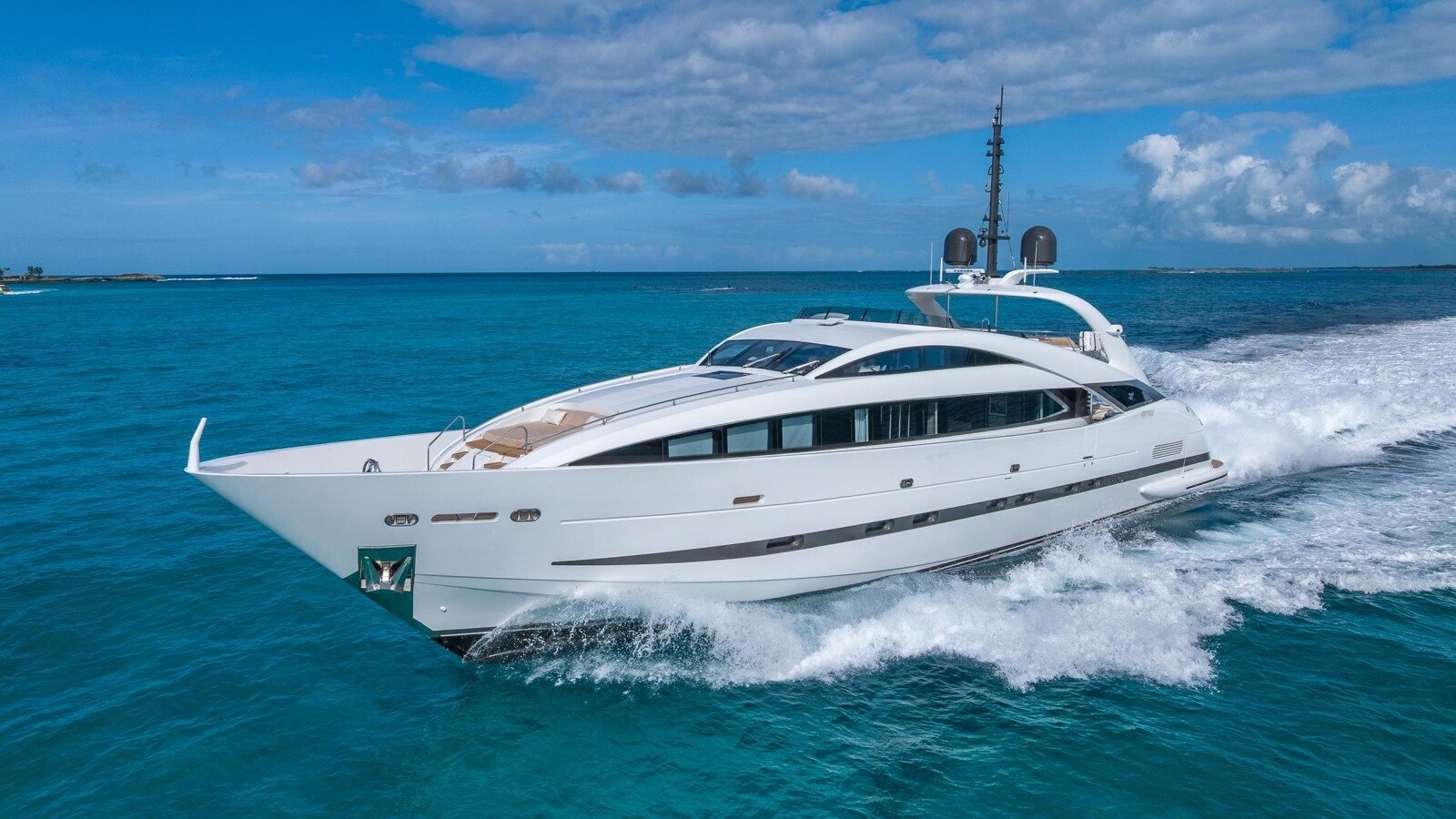
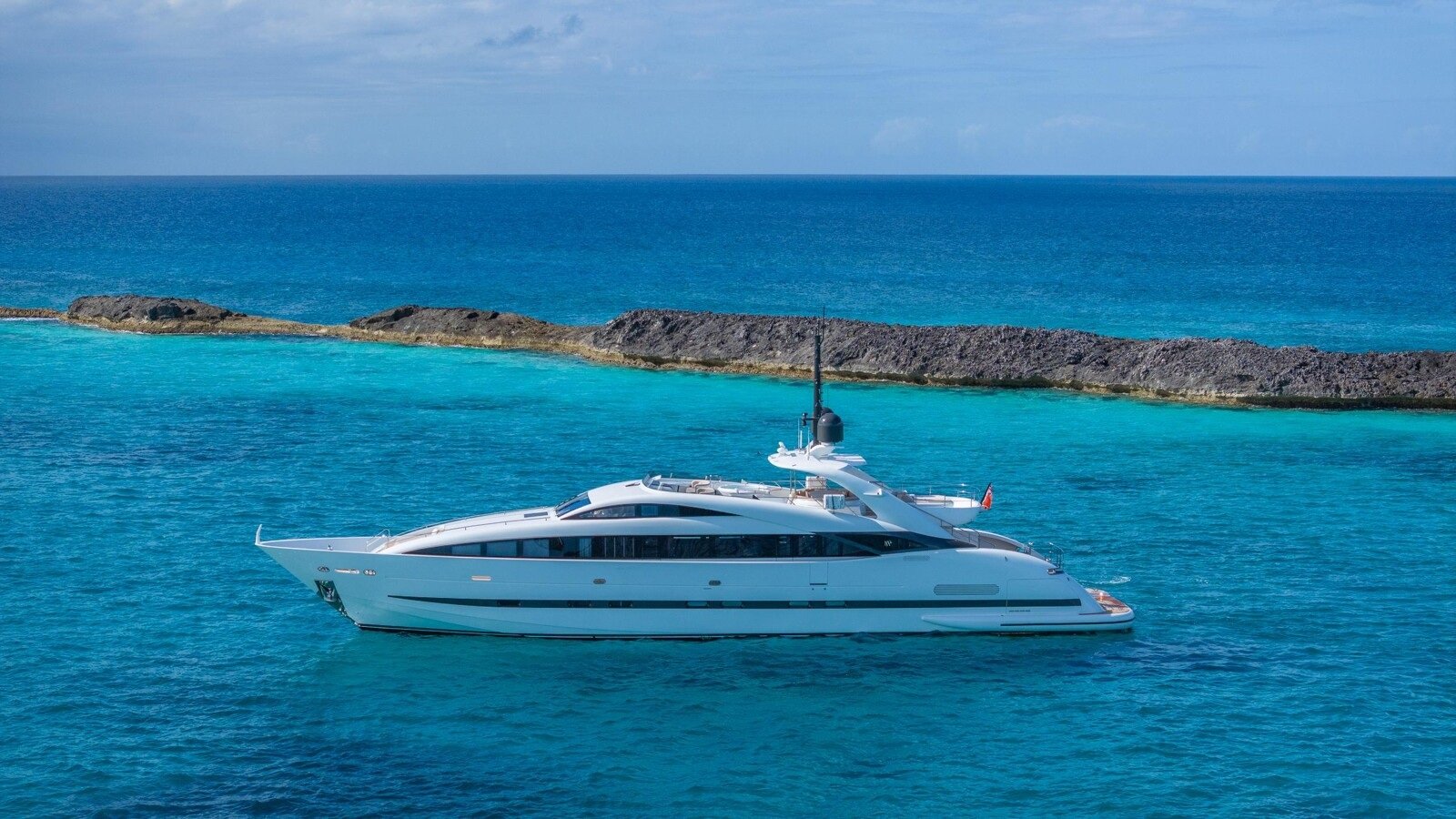
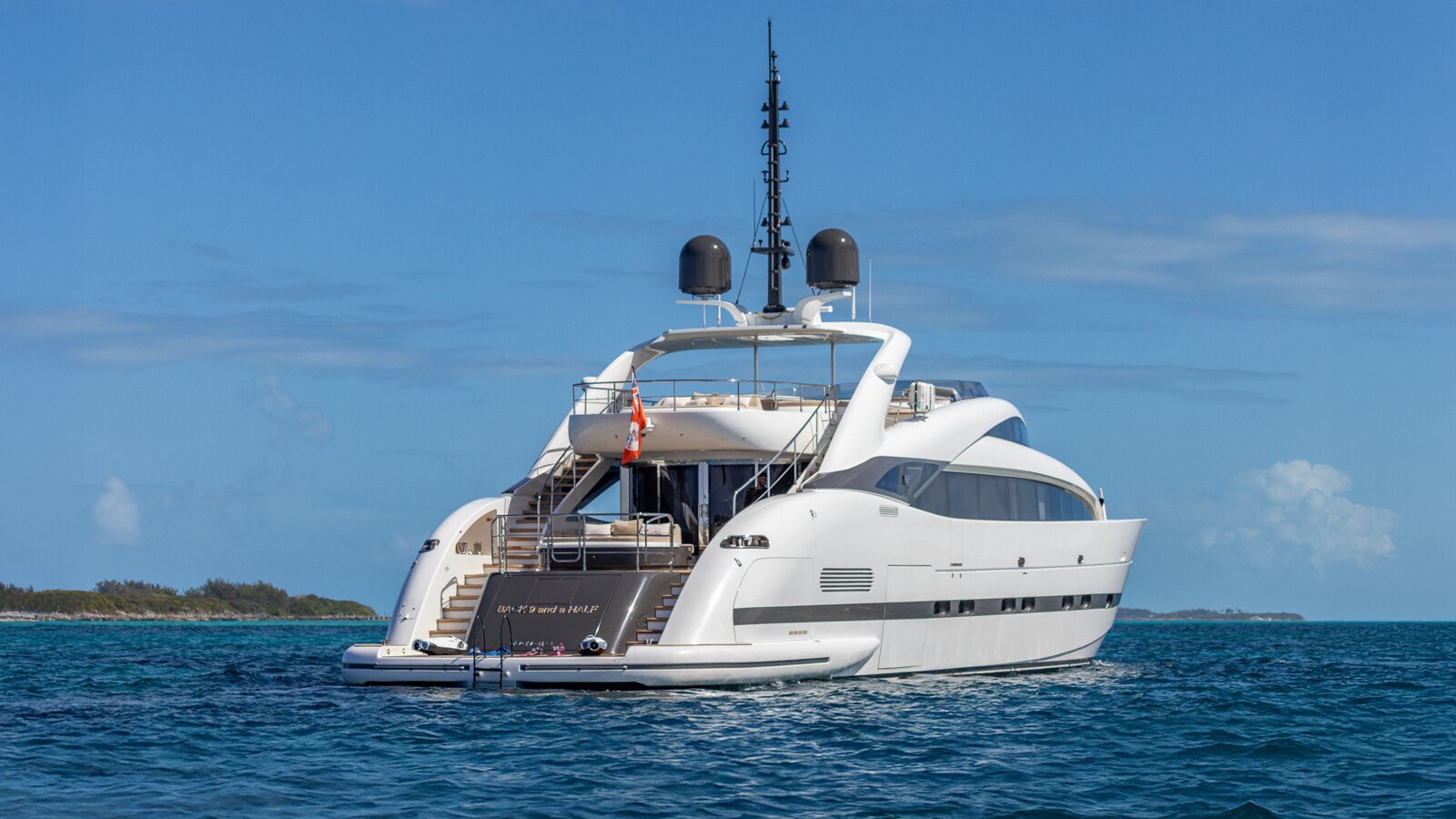
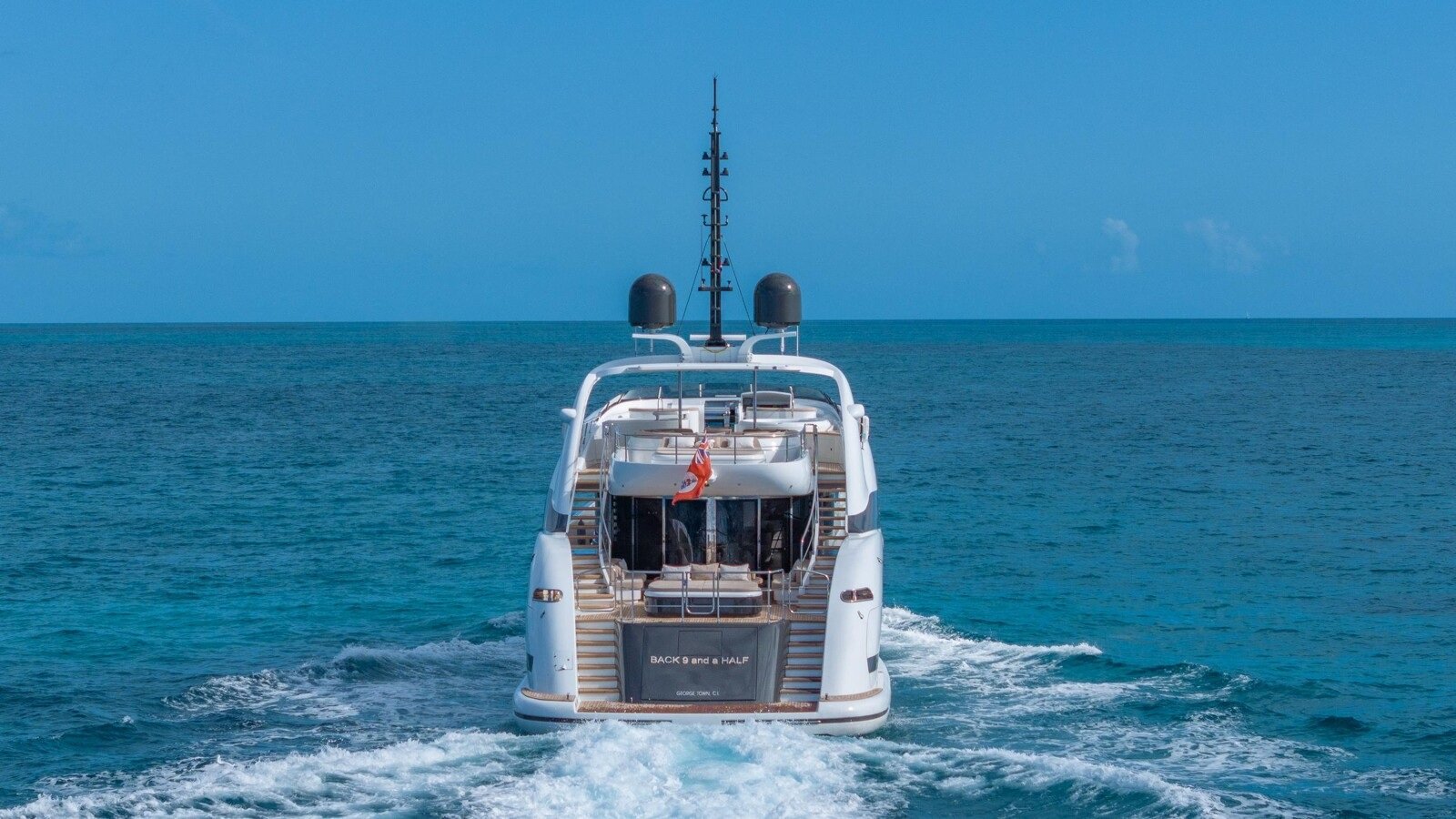
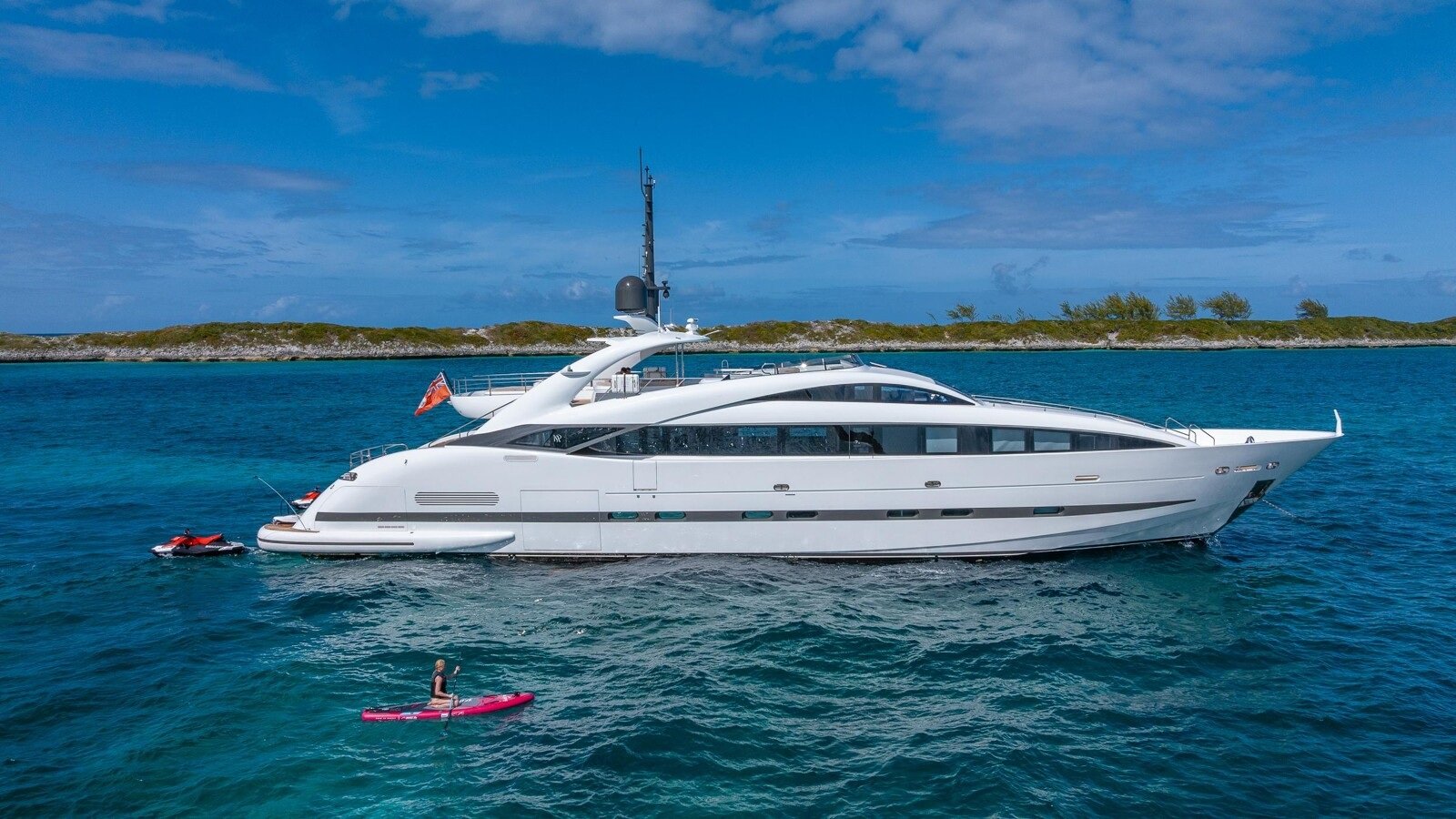
BACK 9 AND A HALF draws one and a half metres. She is 36.6 metres long. That ratio is close to absurd, and in the Bahamas it is the only number that matters.
Most yachts of her length draw two and a half to three metres, and that half-metre difference is the line between the anchorages everybody uses and the ones almost nobody can reach. The Exuma banks are shallow, the good sand is shallower, and a yacht that can float in five feet of water is not making a small improvement on the itinerary – she is opening a different set of places entirely. ISA built her to get in there and then leave again quickly.
Because she is also fast. Twenty-four knots cruising, thirty-one flat out, on a GRP hull weighing 244 gross tons. The trade is range: 600 nautical miles, which is nothing. She is not crossing anything. She is a day-boat sensibility applied at 36 metres, and in a cruising ground where every worthwhile stop is an hour apart that is exactly the right instrument.
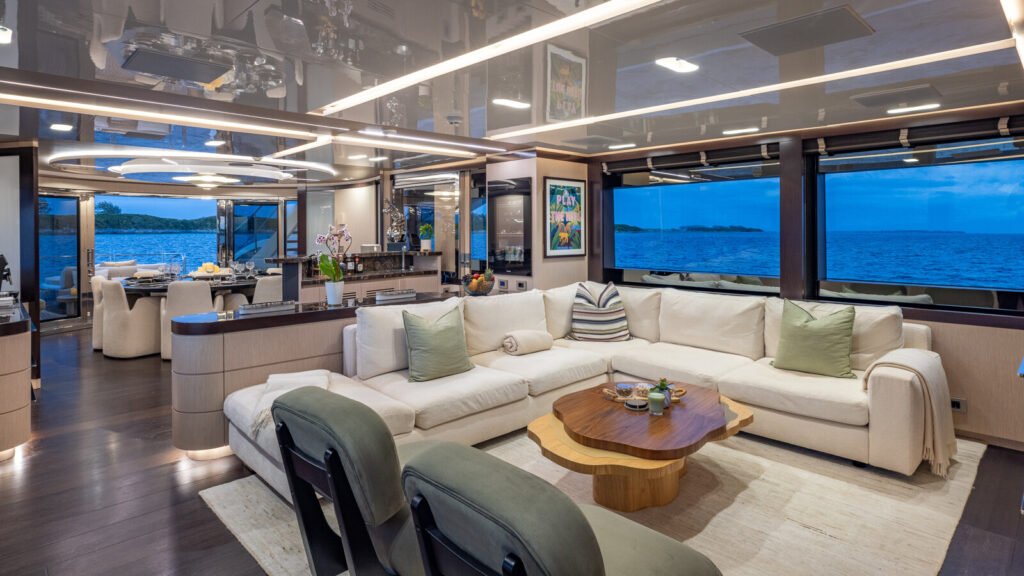
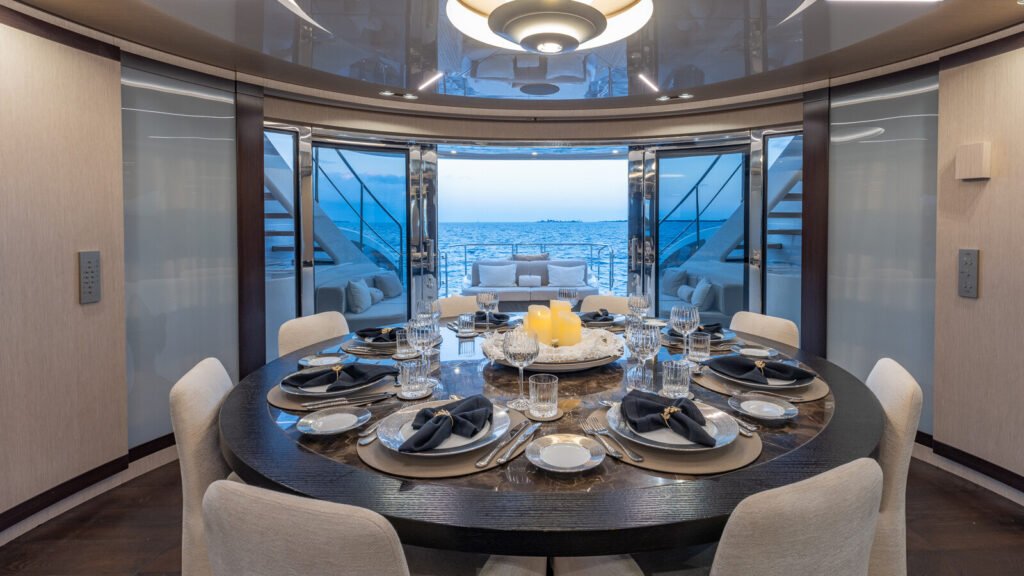
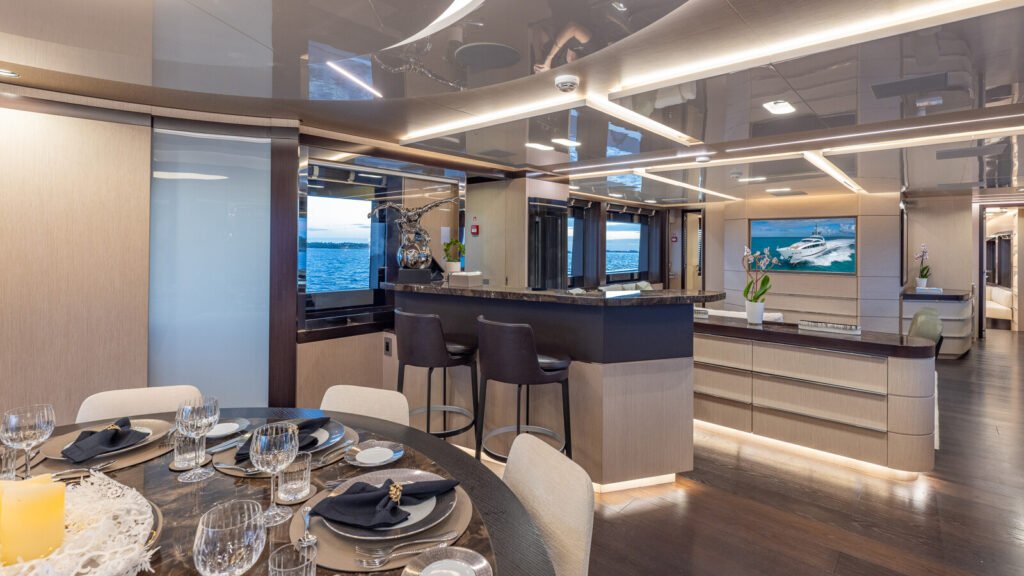
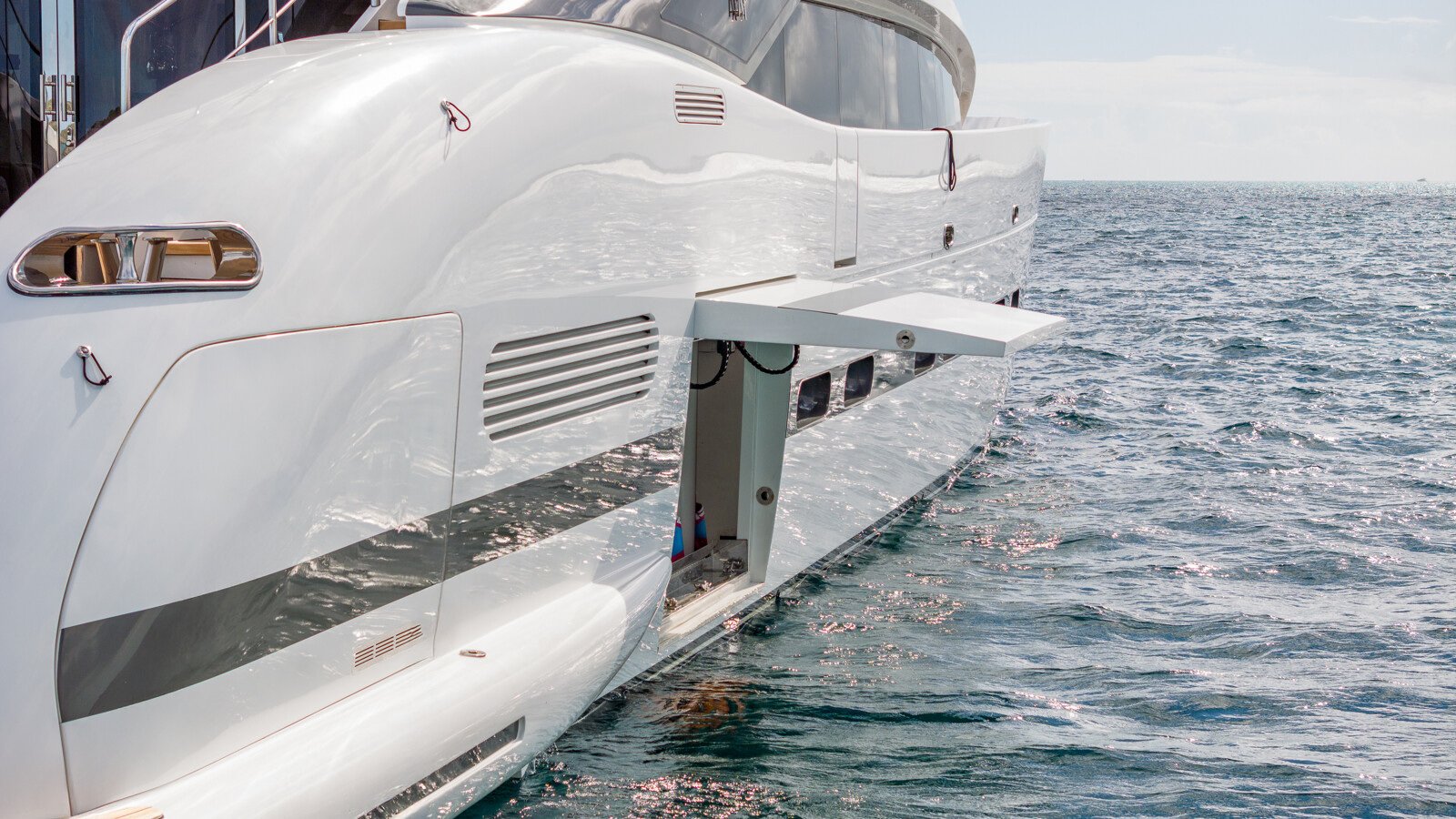
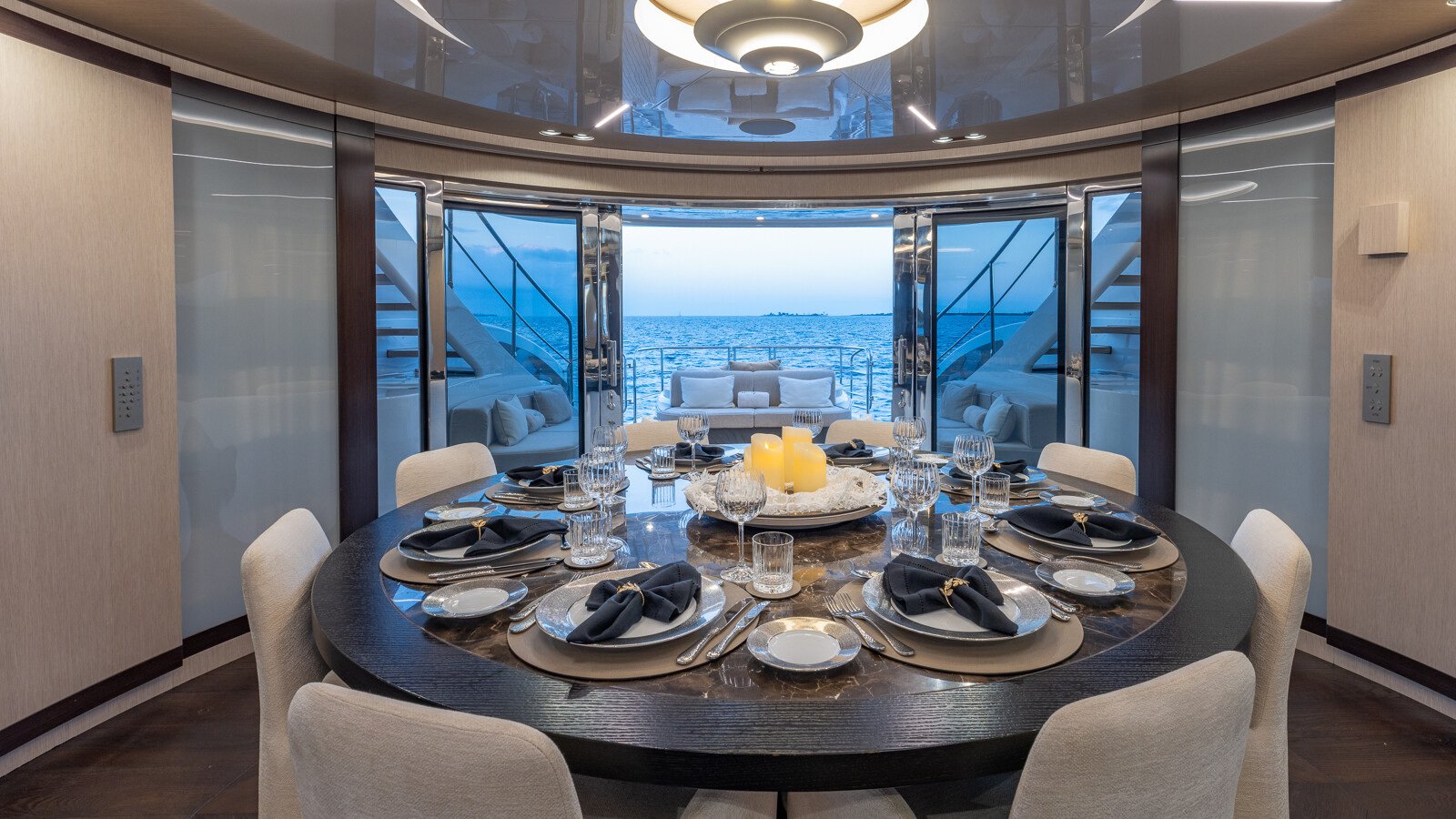
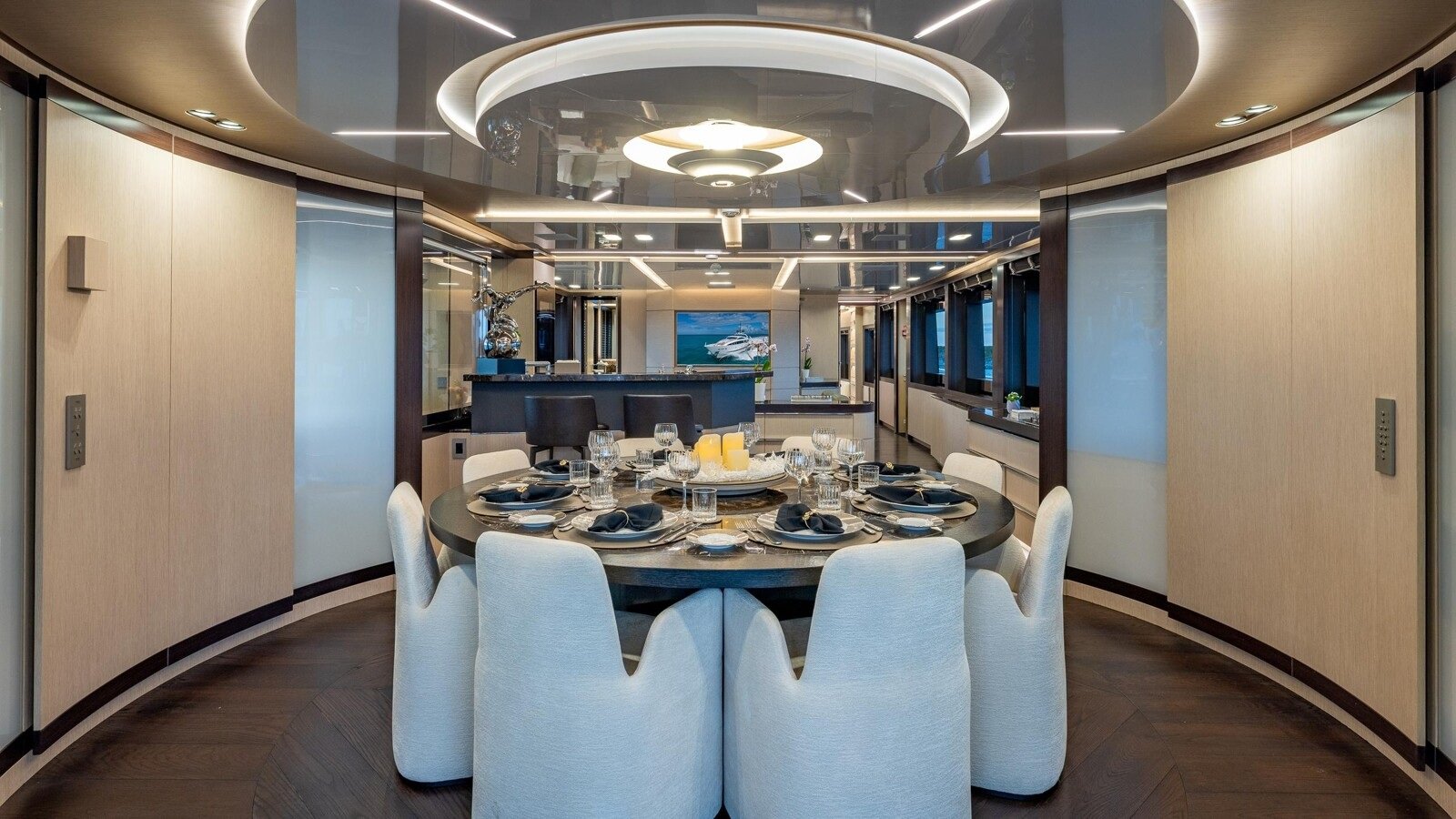
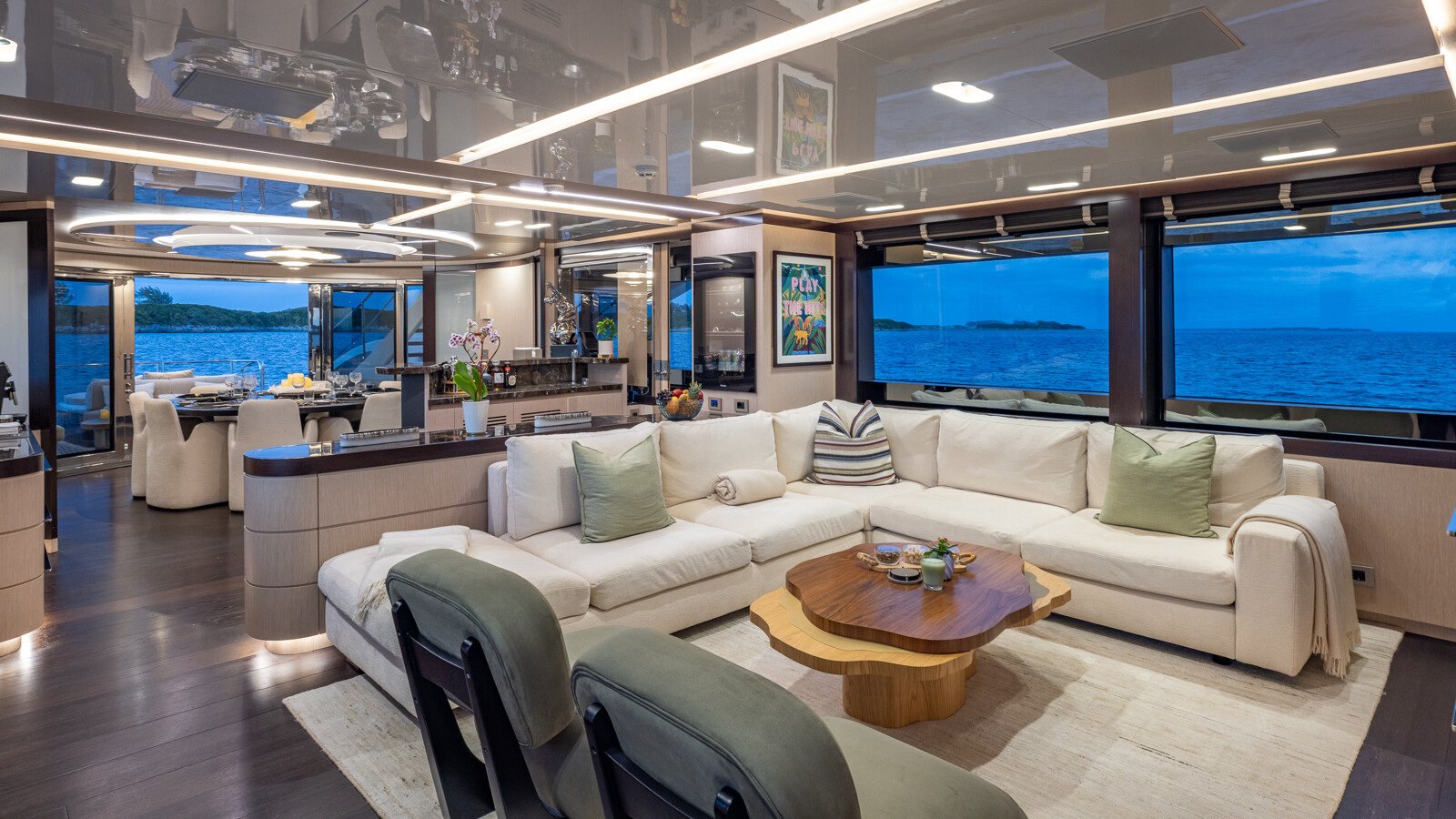
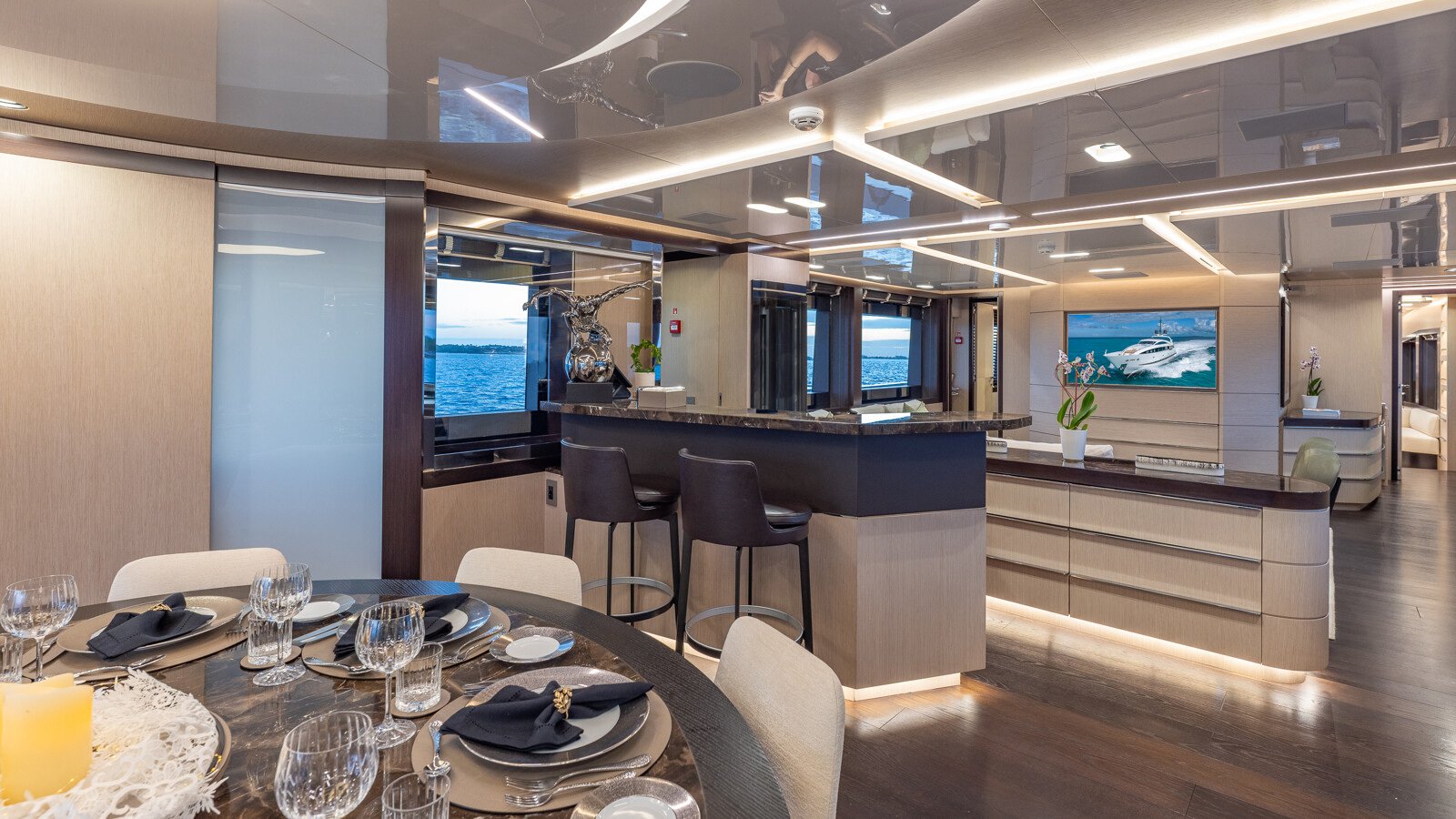
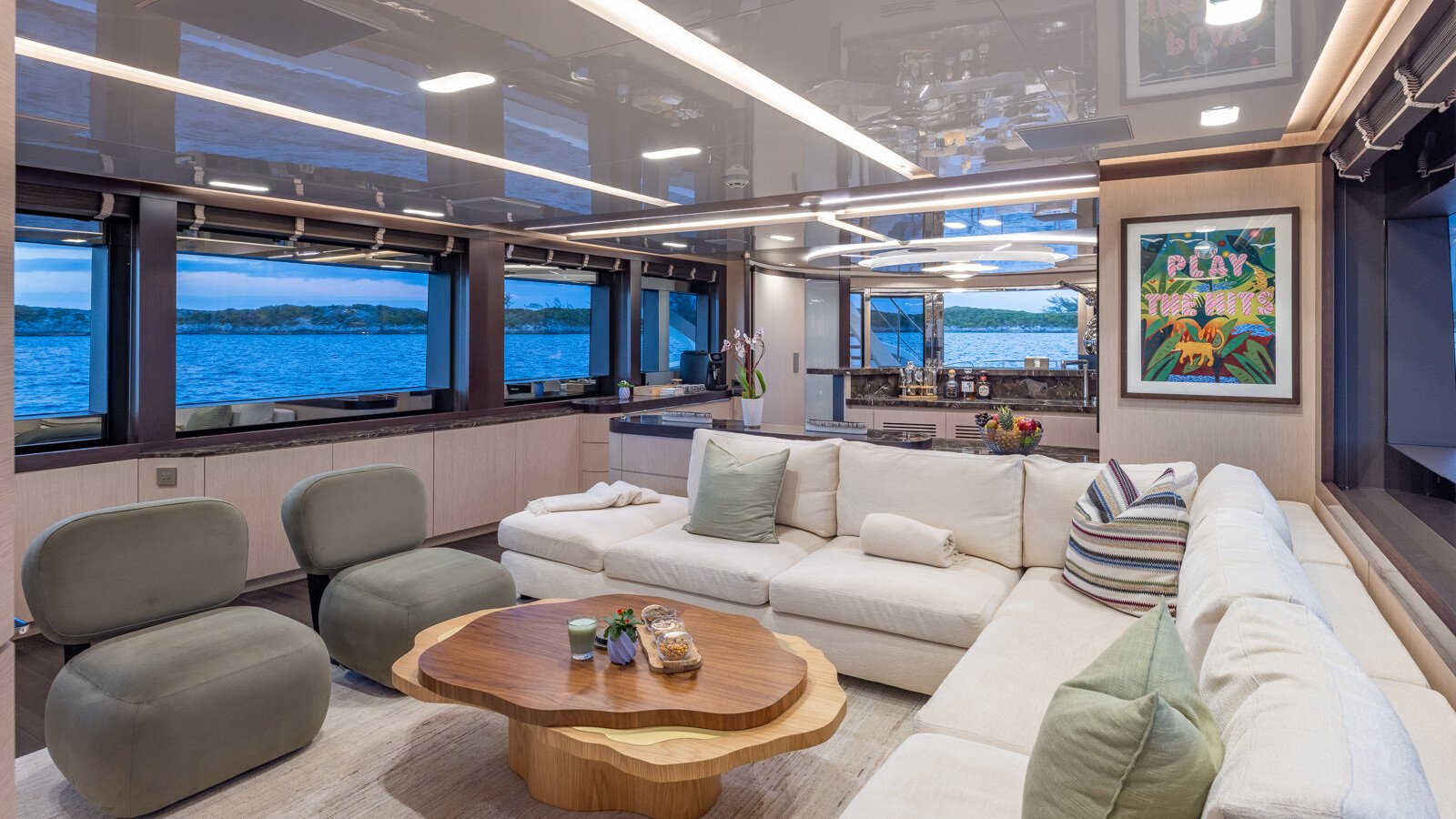
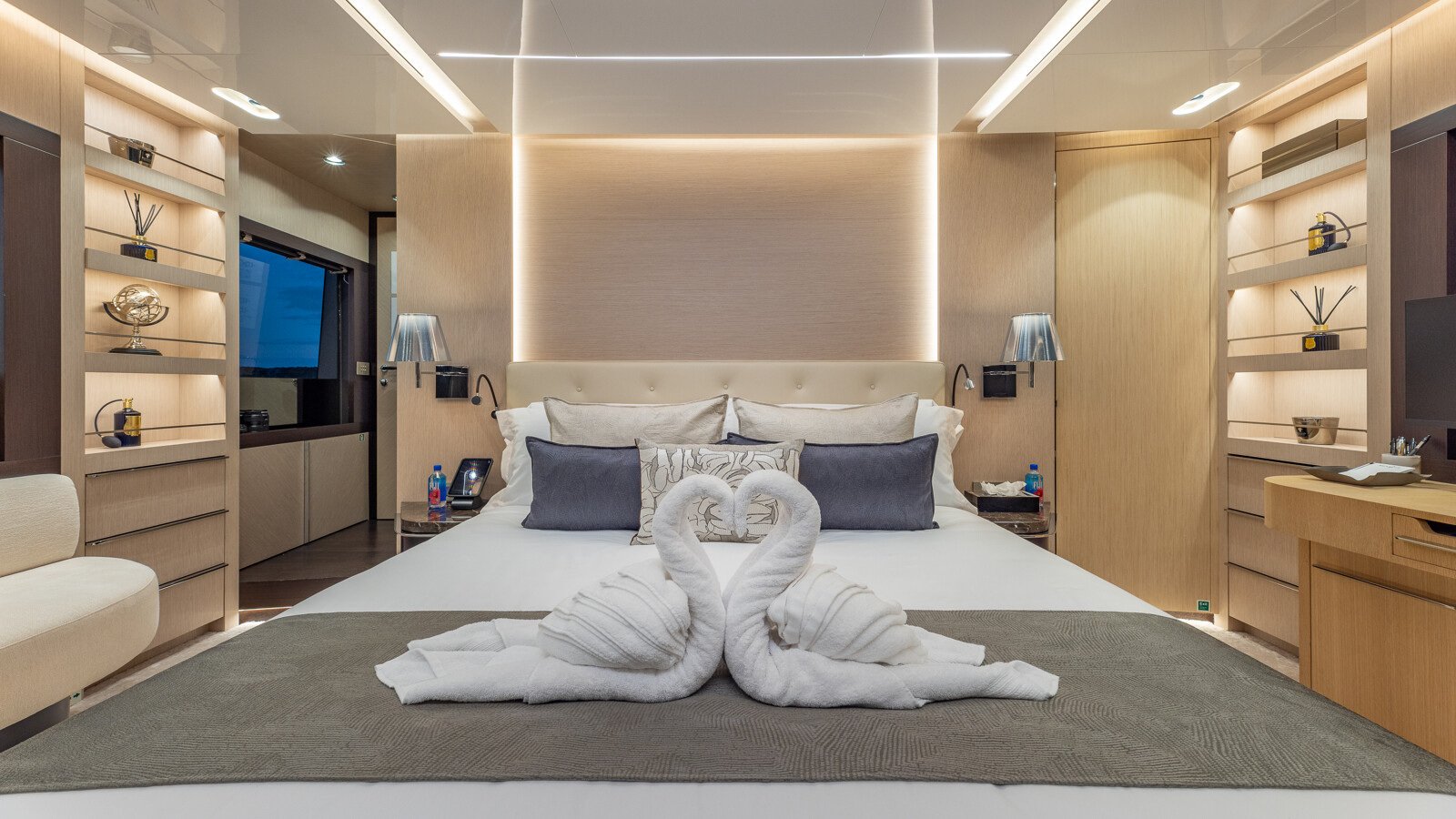
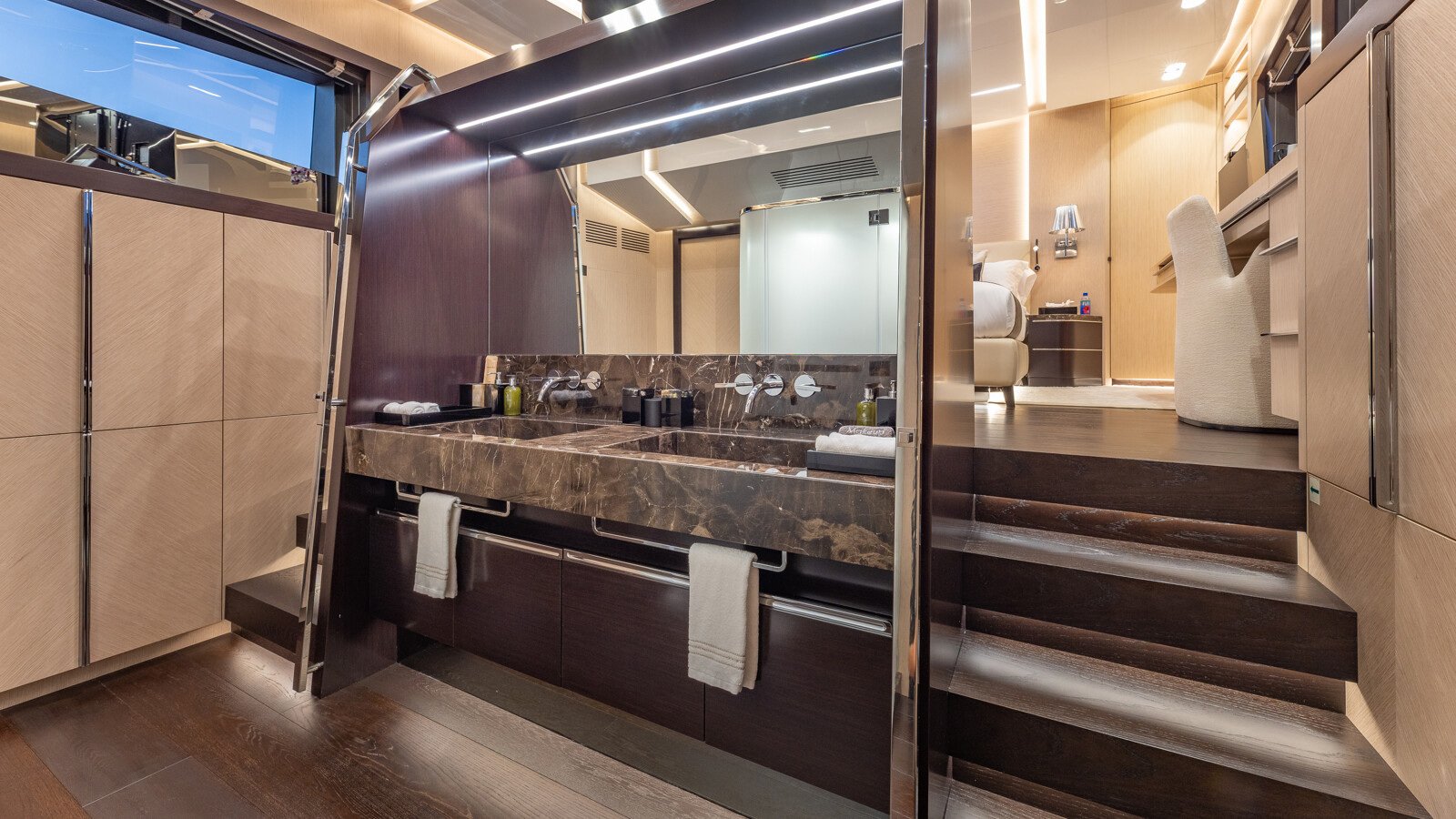
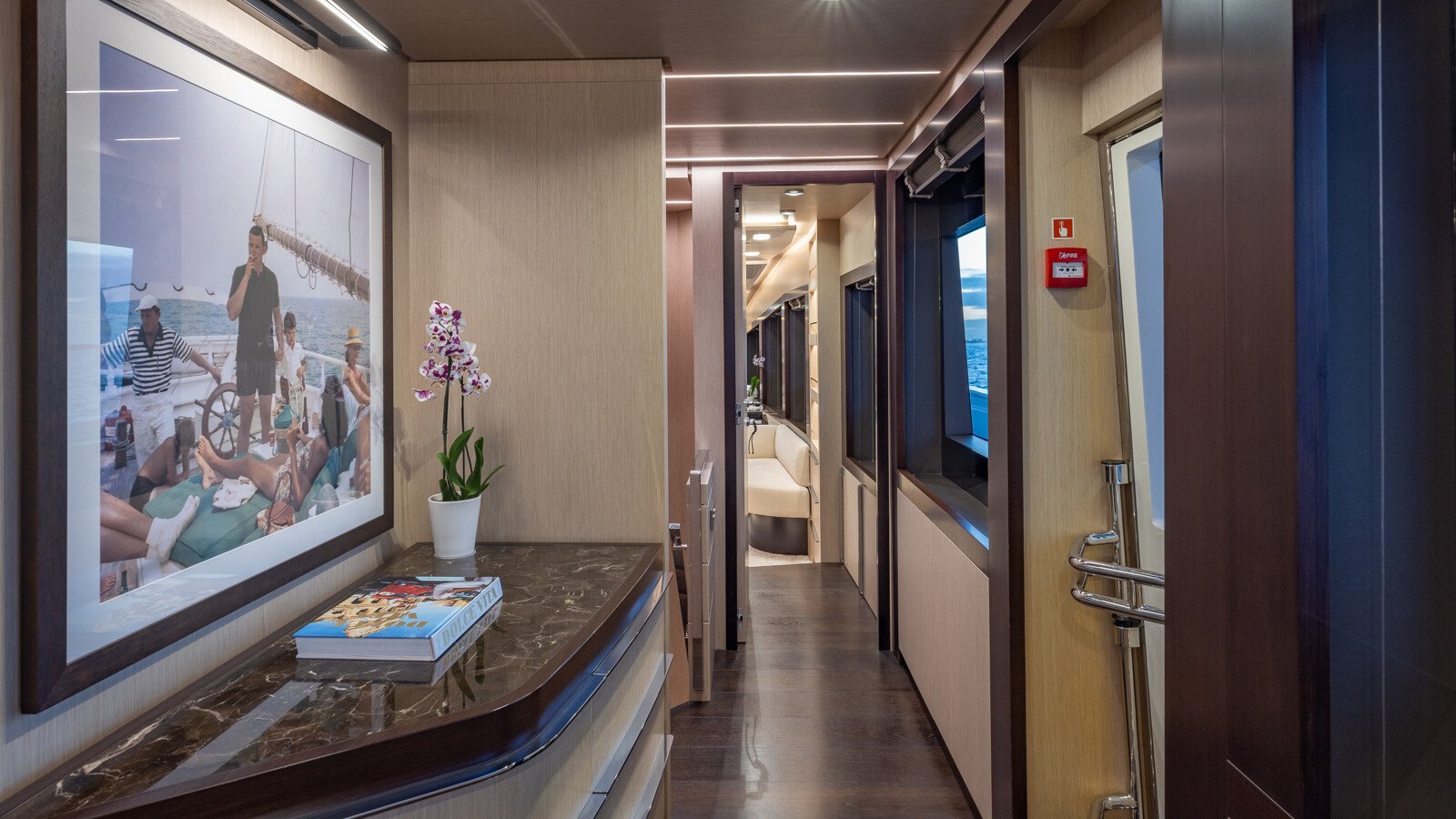
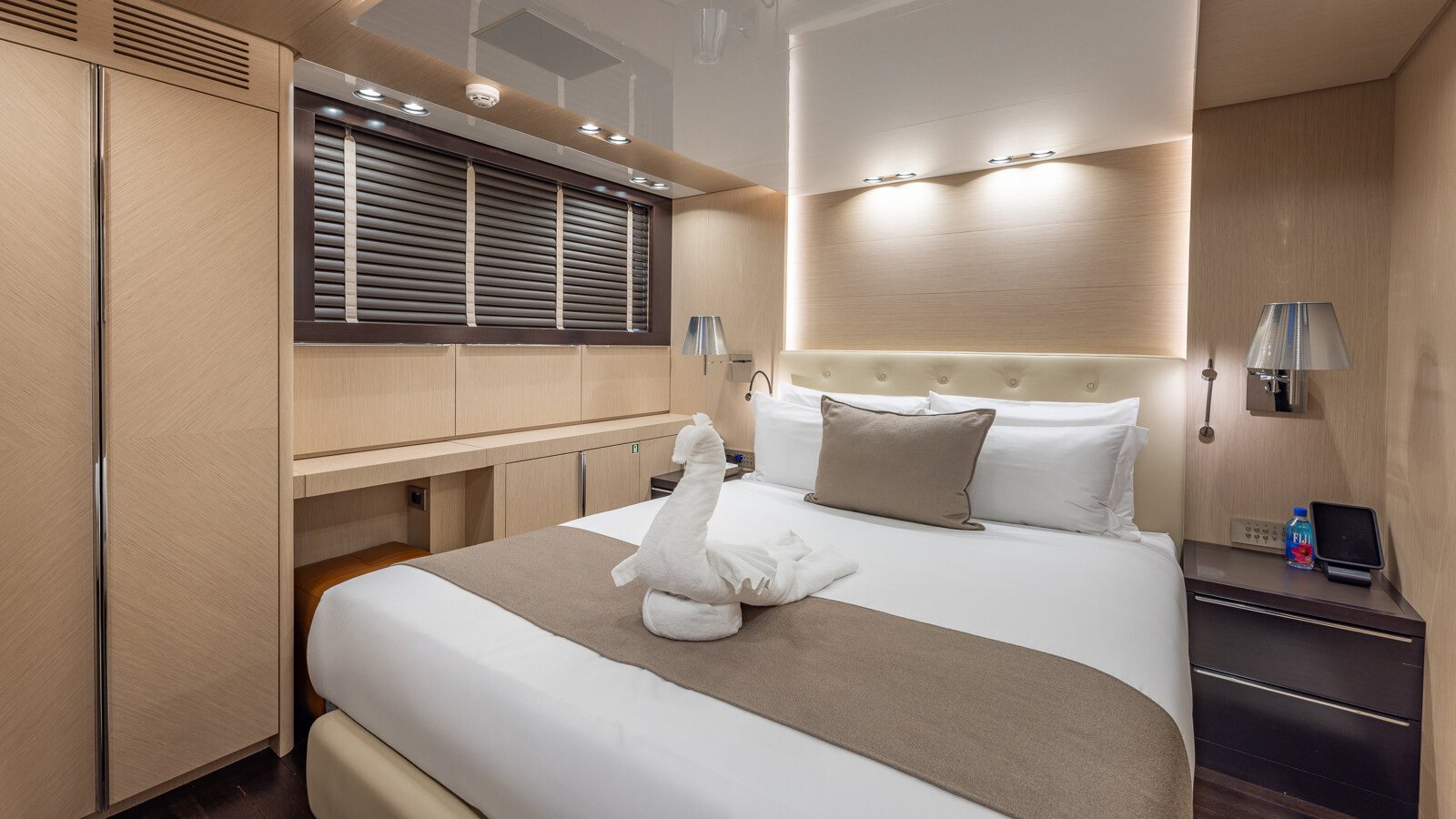
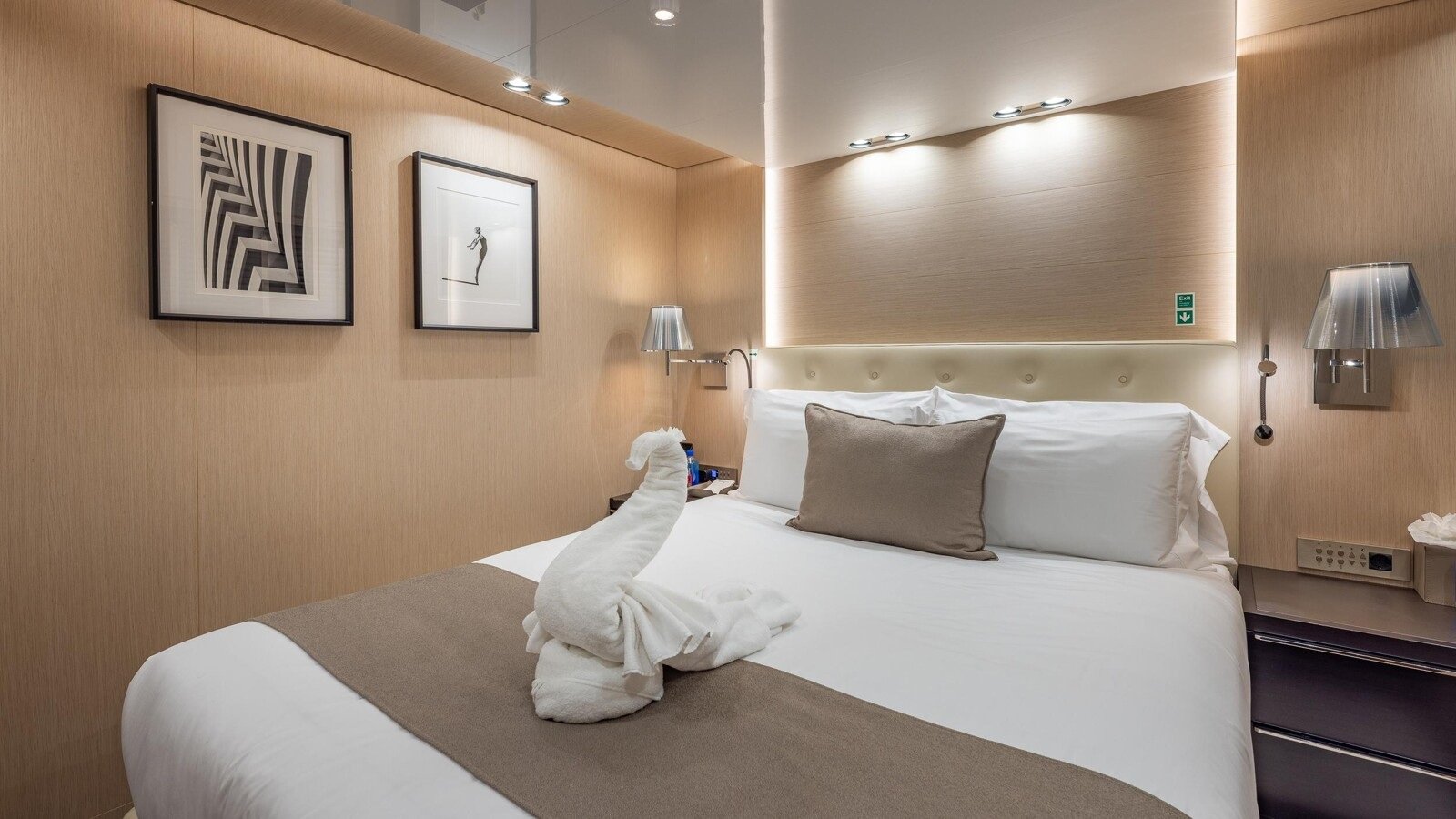
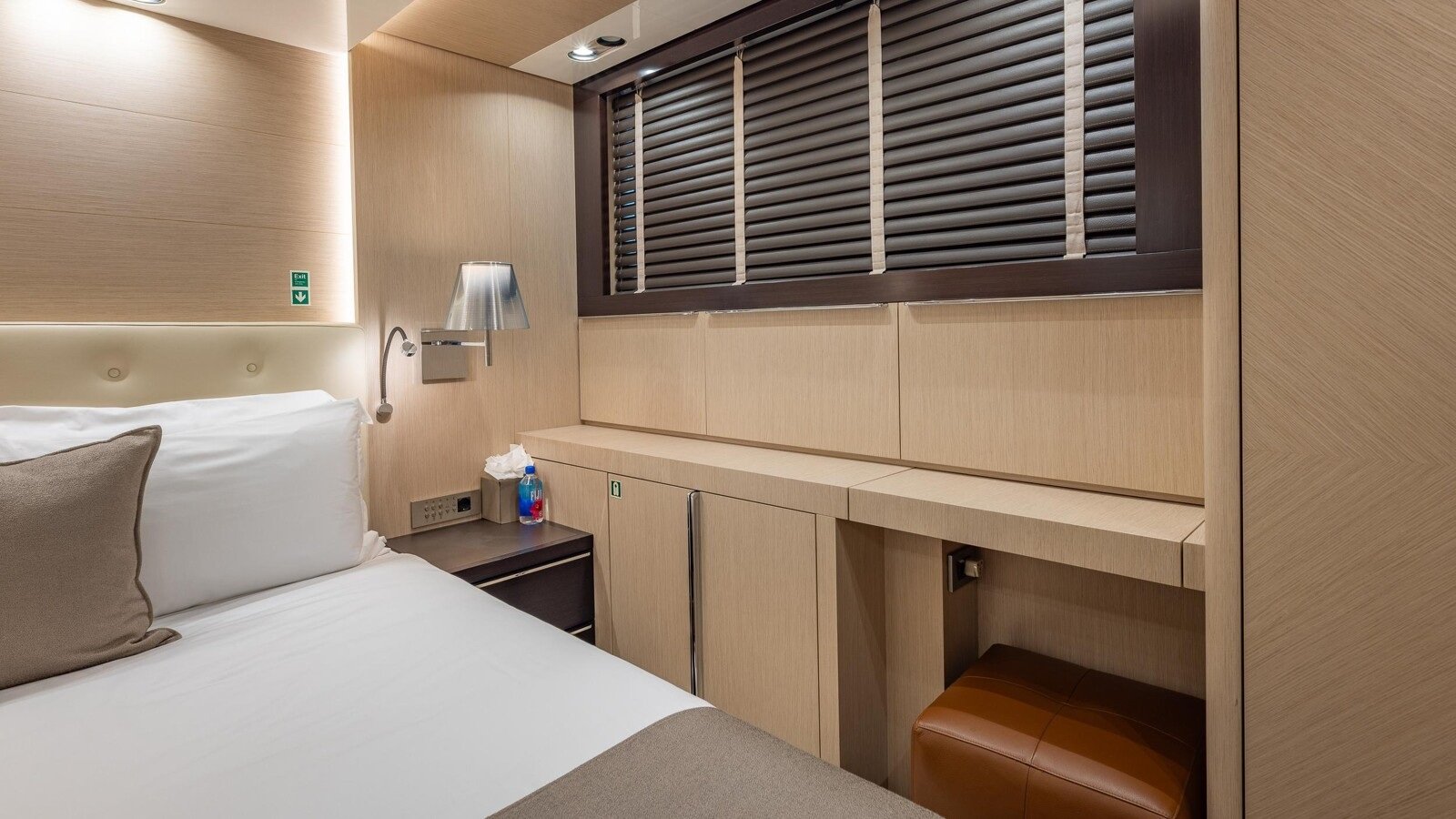
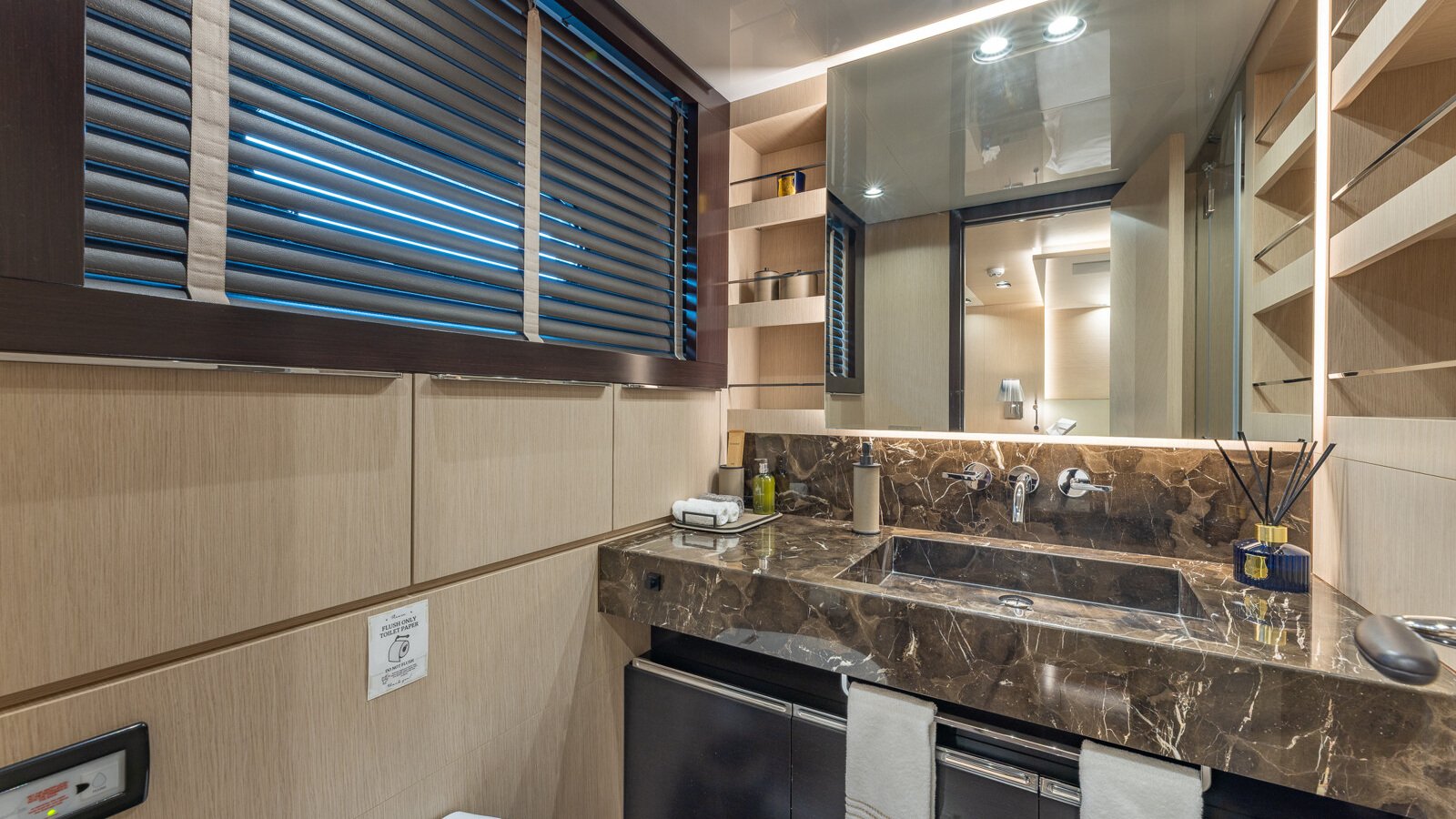
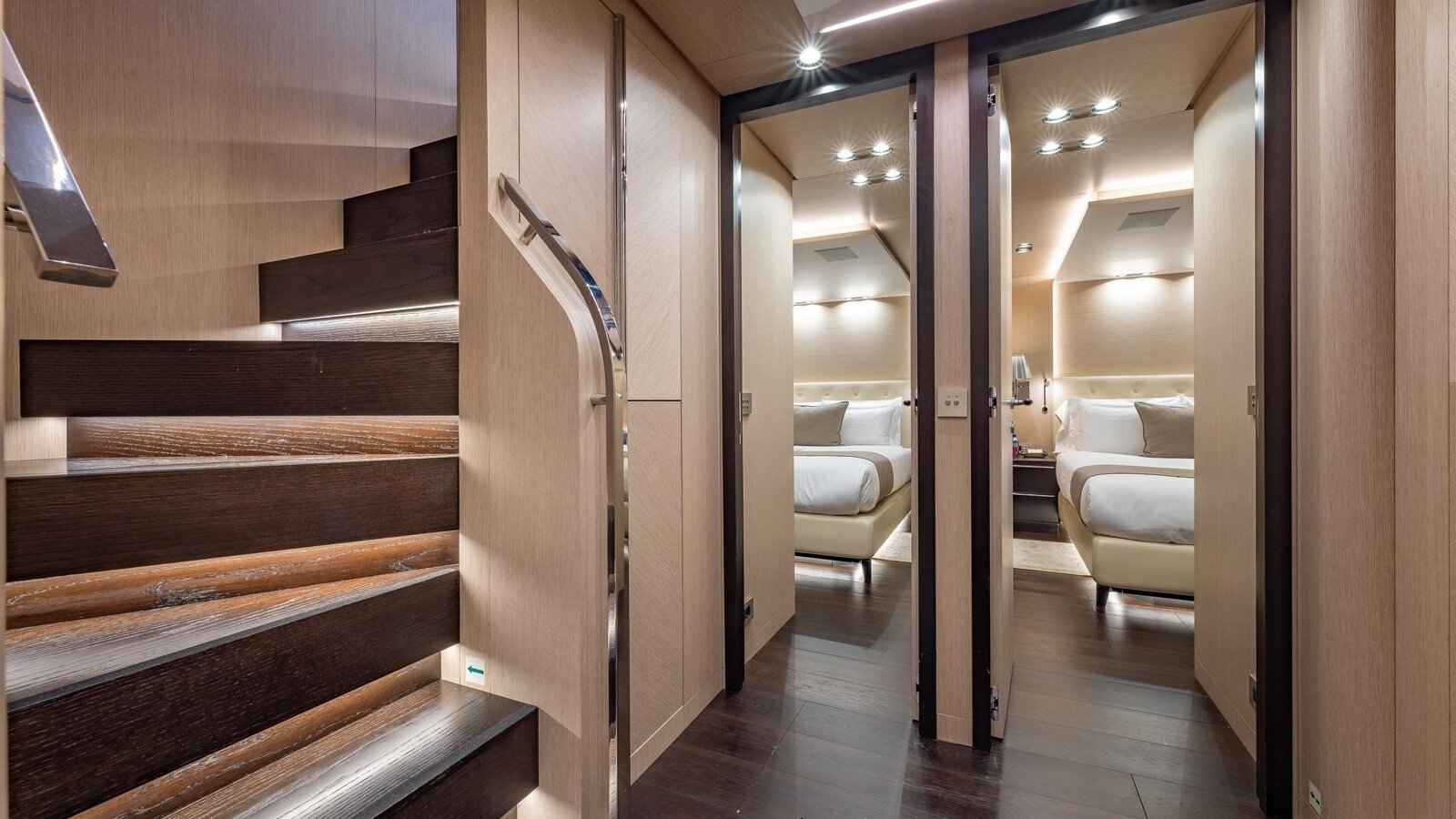
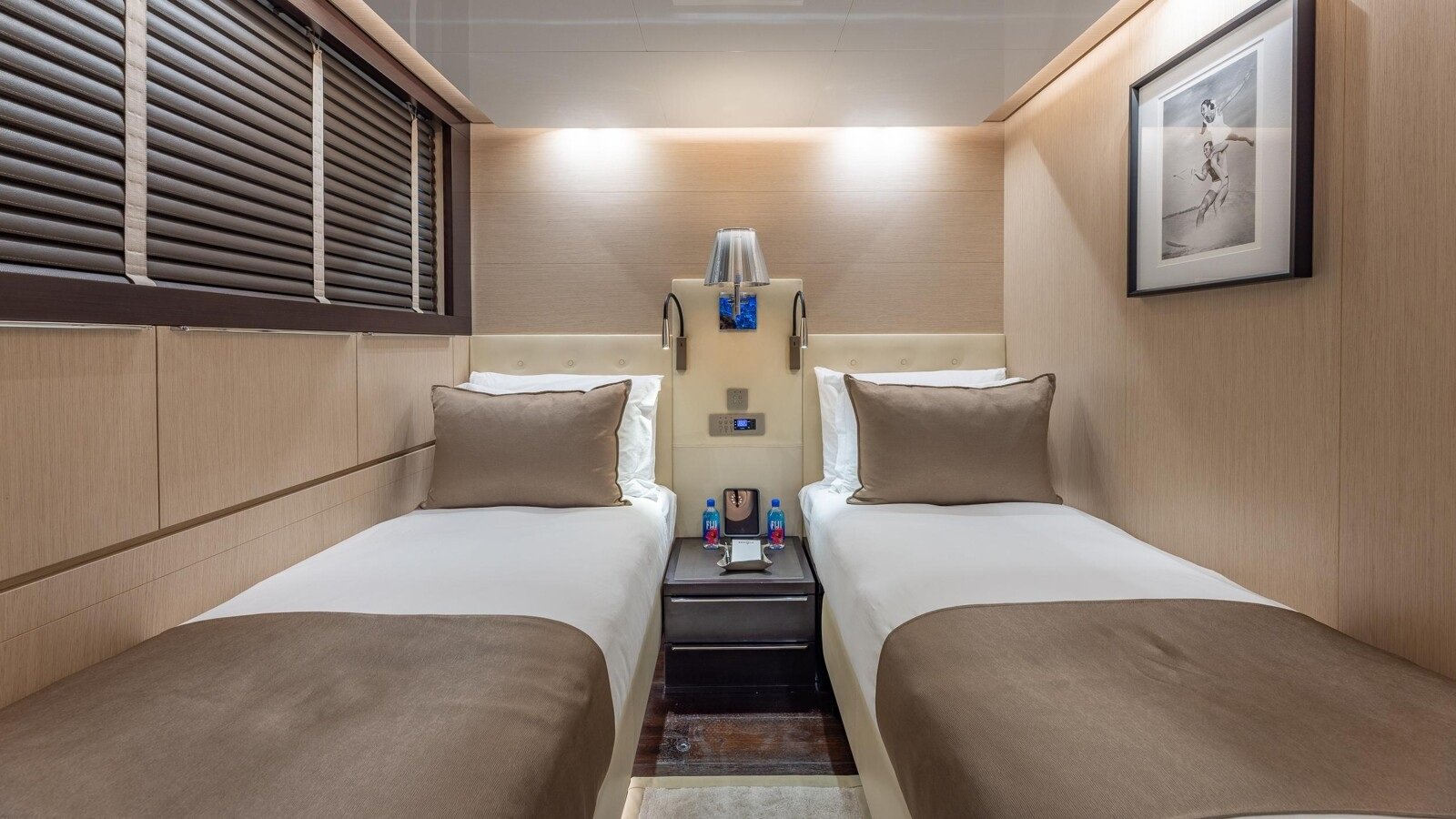
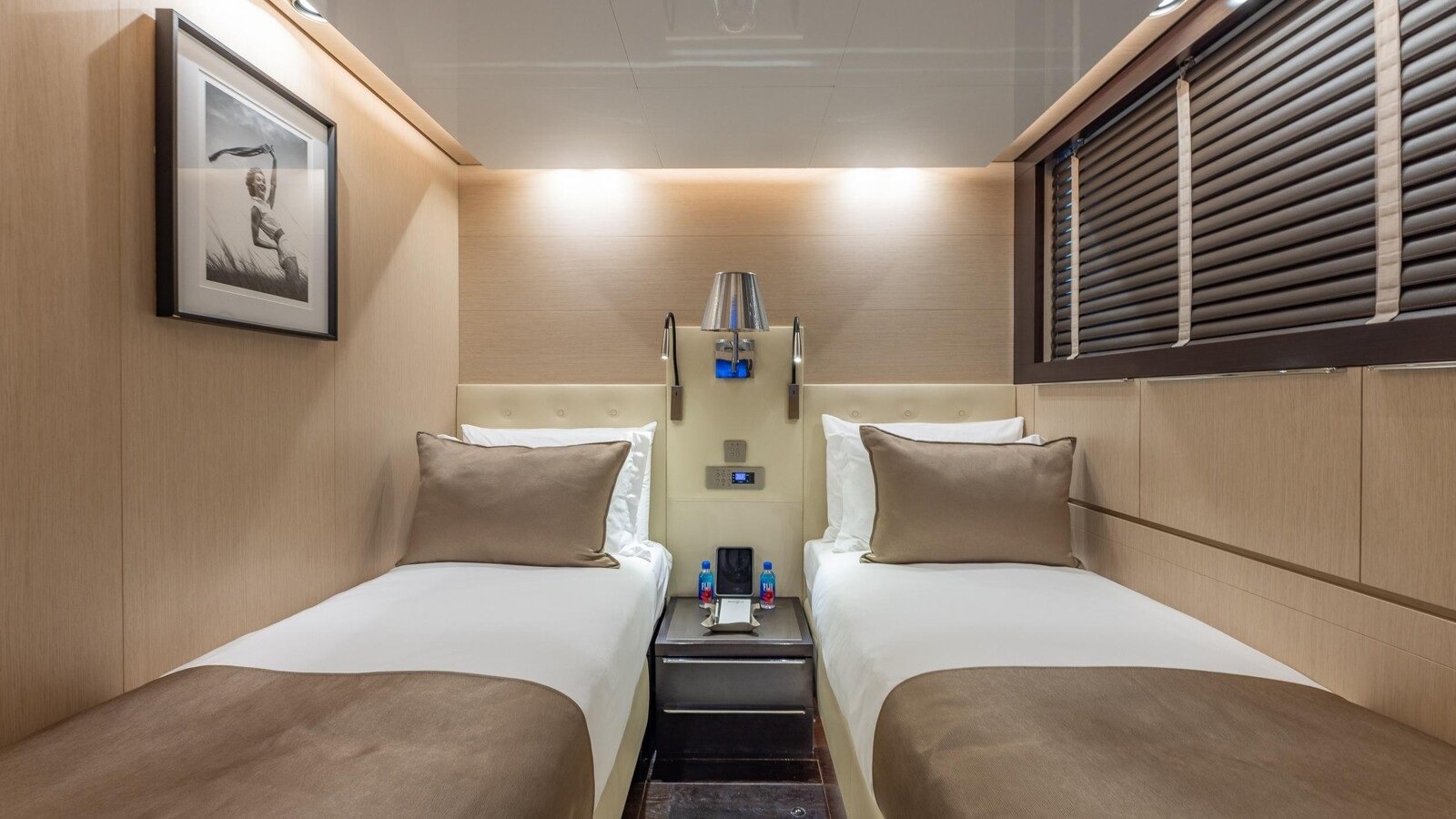
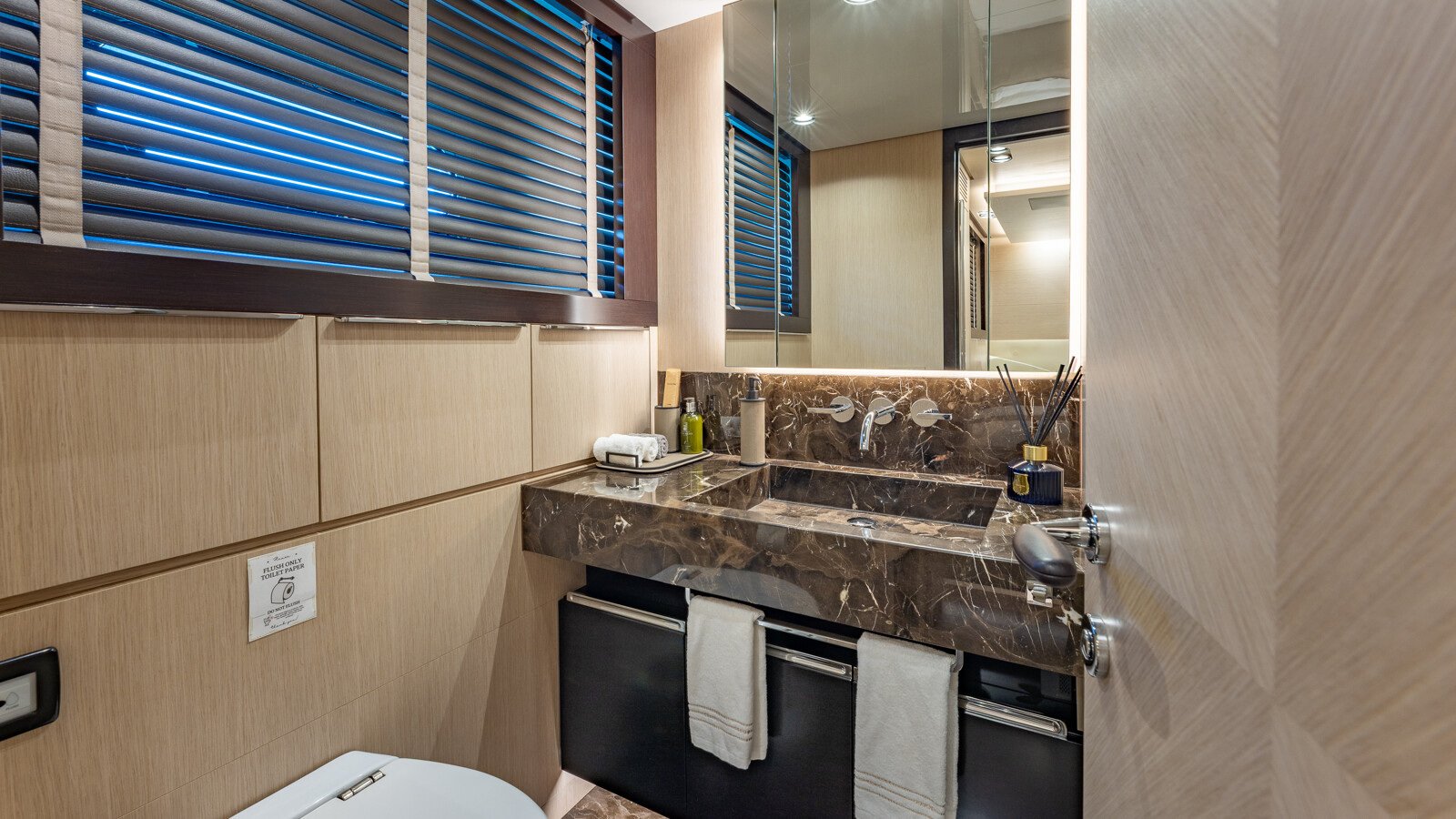
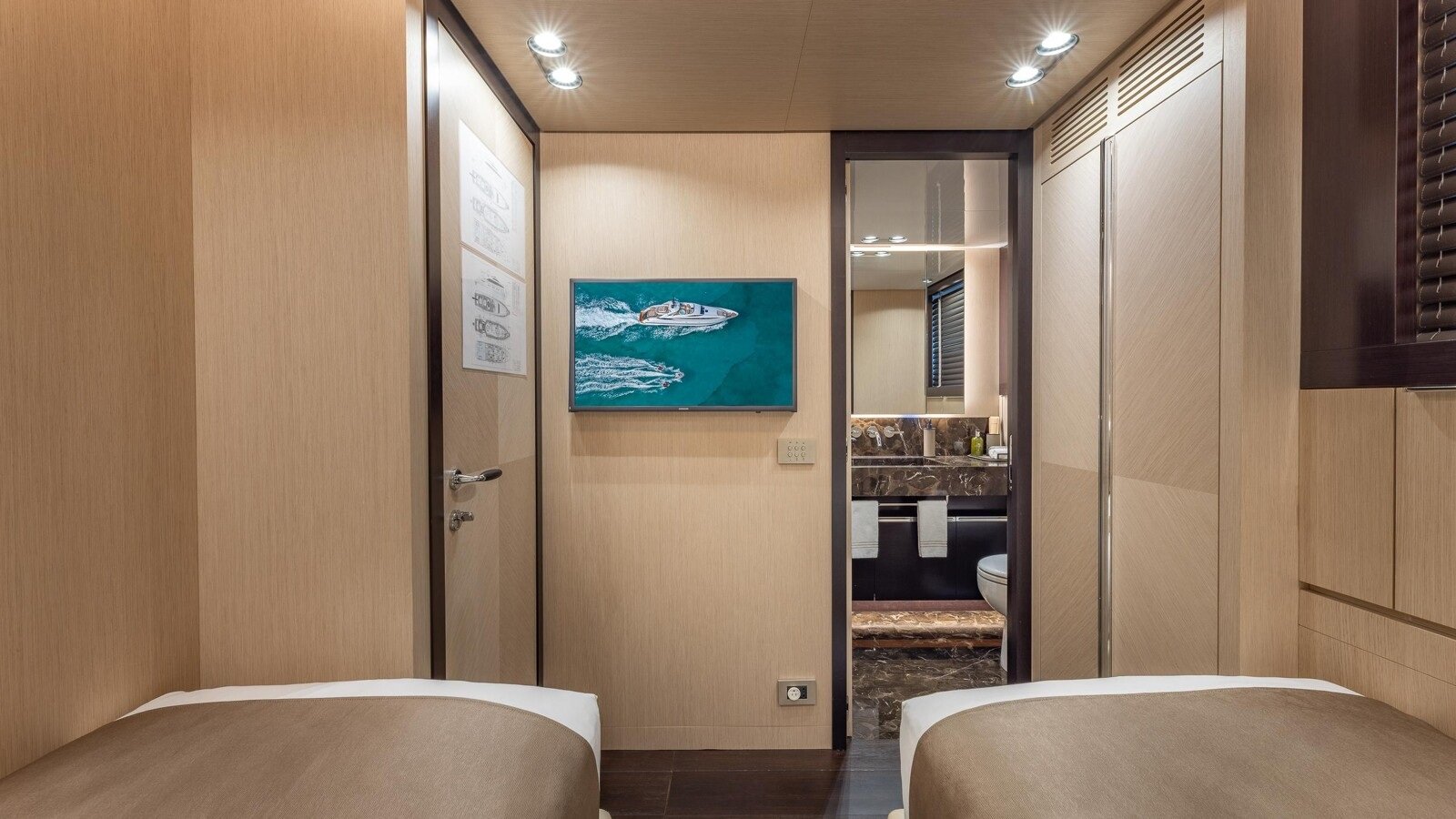
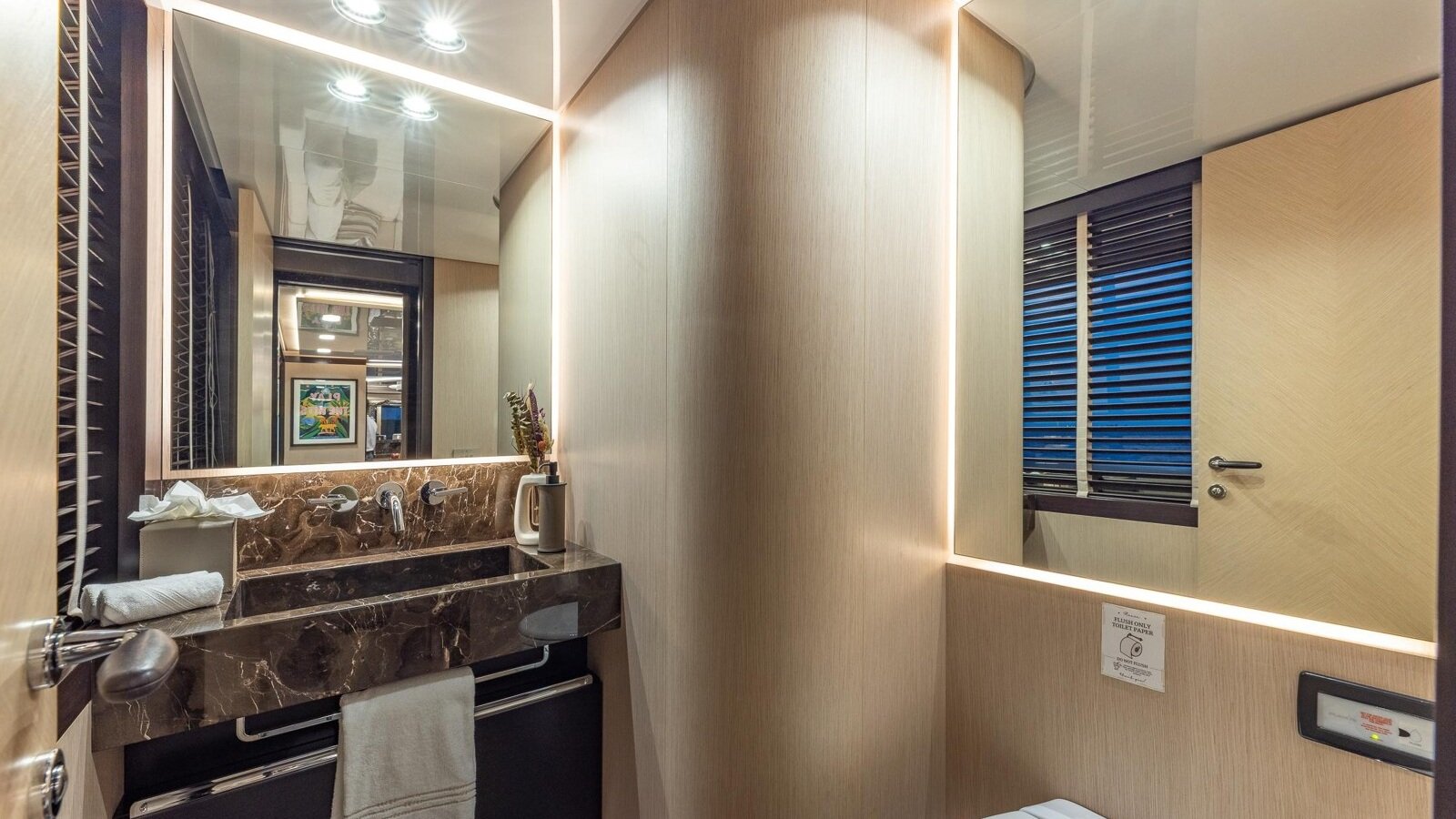
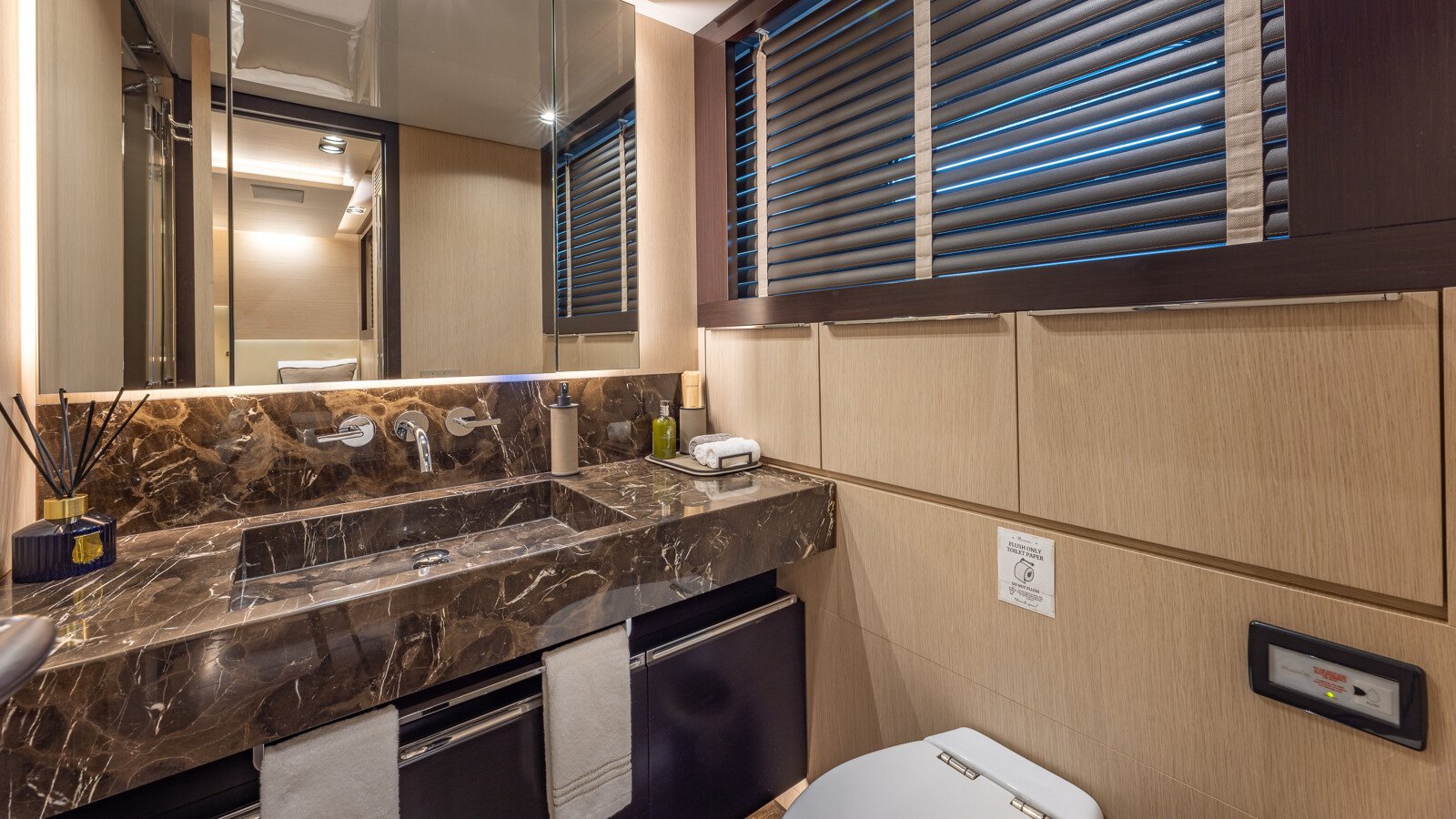
The 120 Sport layout follows the same logic. The main deck is glass on both sides with the salon, bar and formal dining running in a single sweep – no bulkheads breaking it up, because the yacht is meant to be lived in facing outward. The joinery is pale oak and bleached timber, the palette sand and ivory, and the whole interior is deliberately light. It looks like the water she works in.
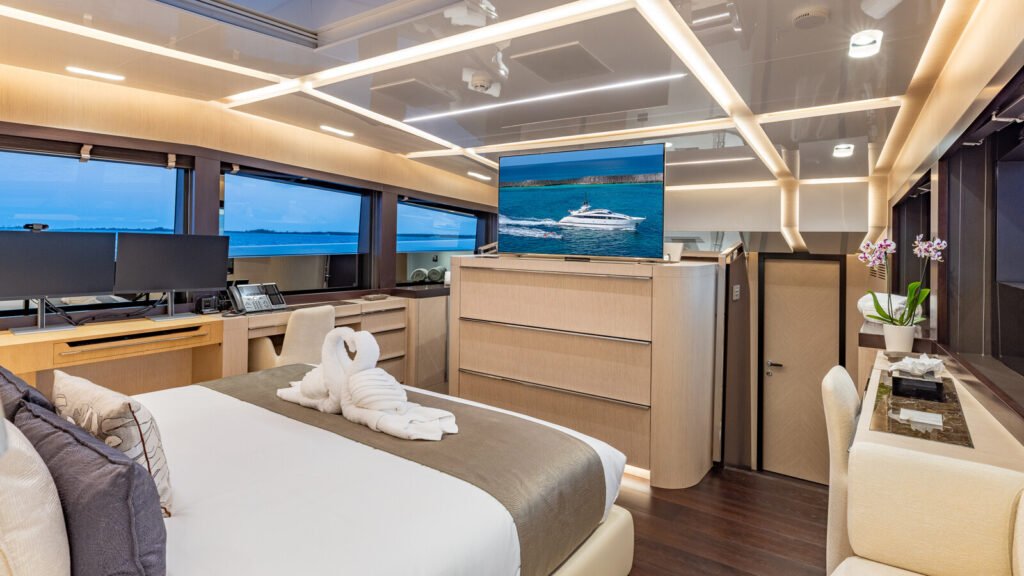
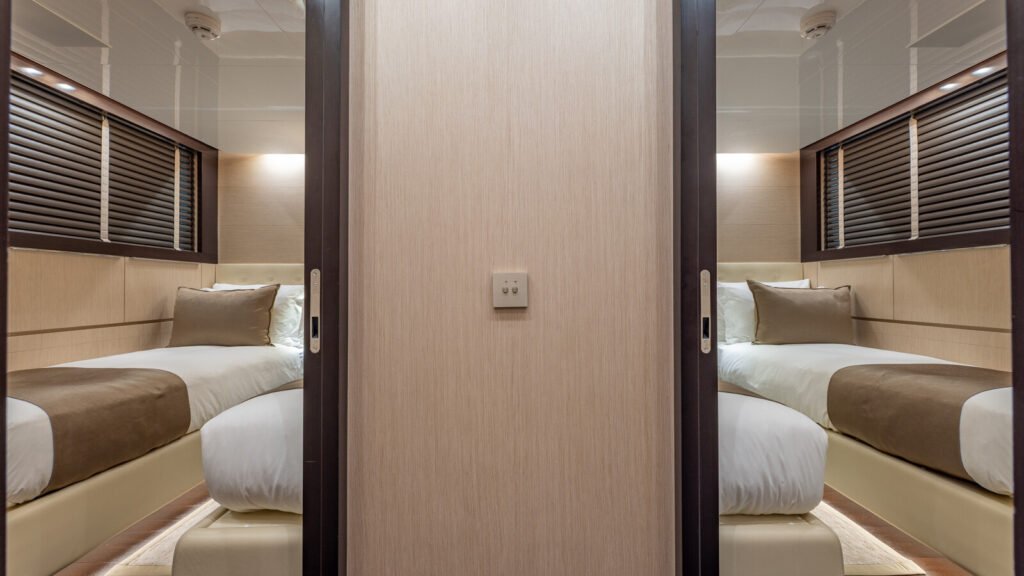
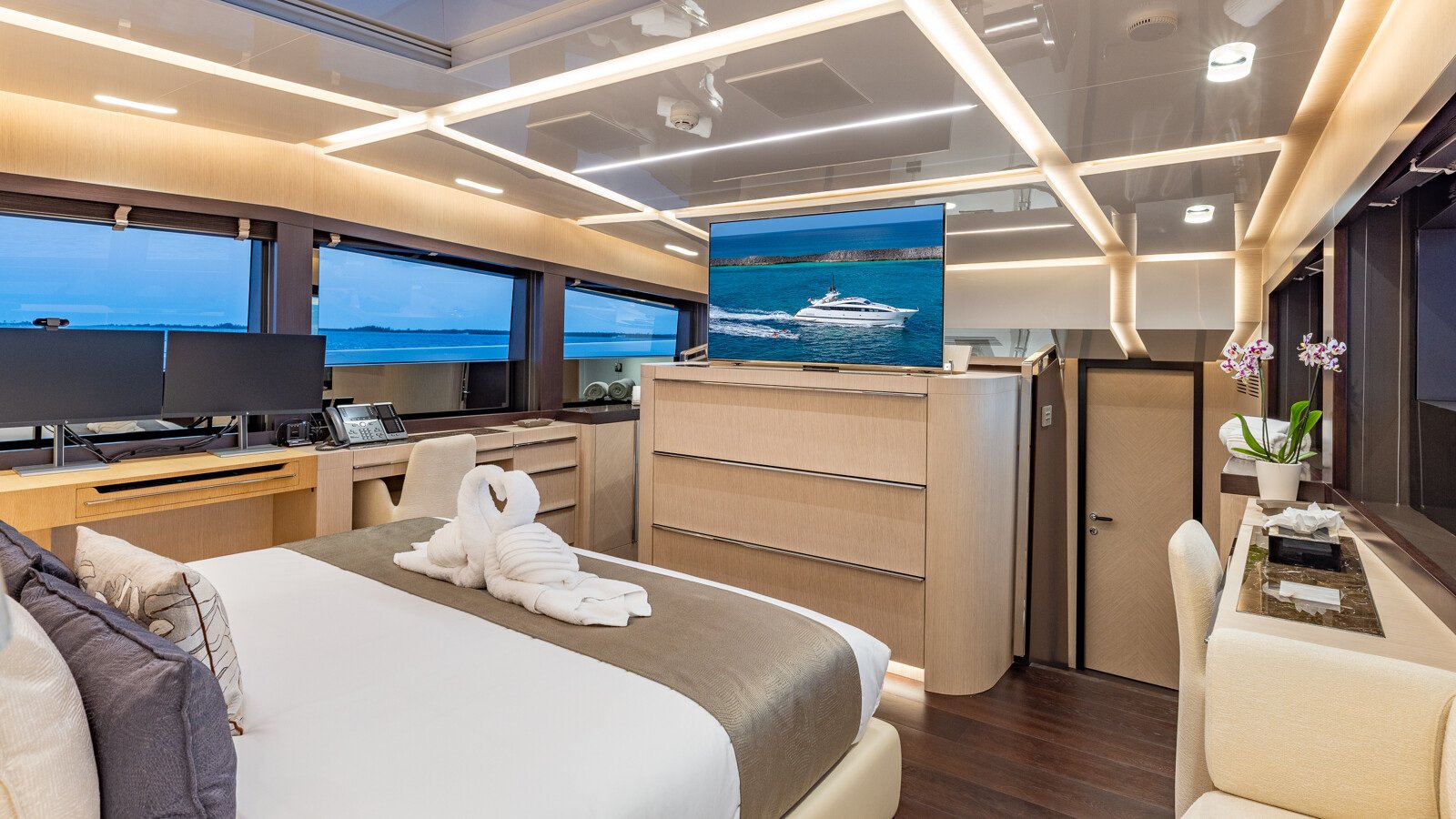
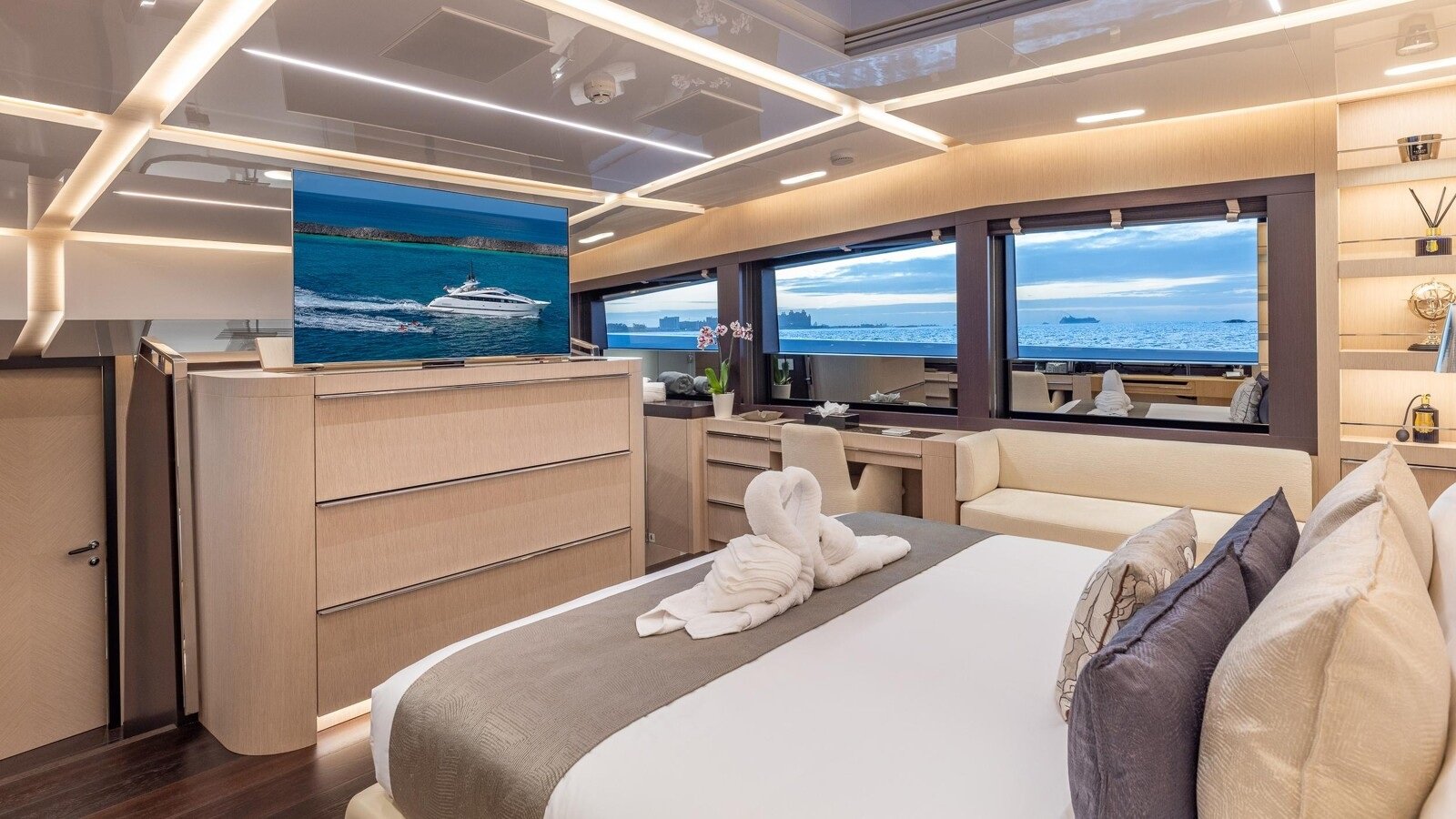
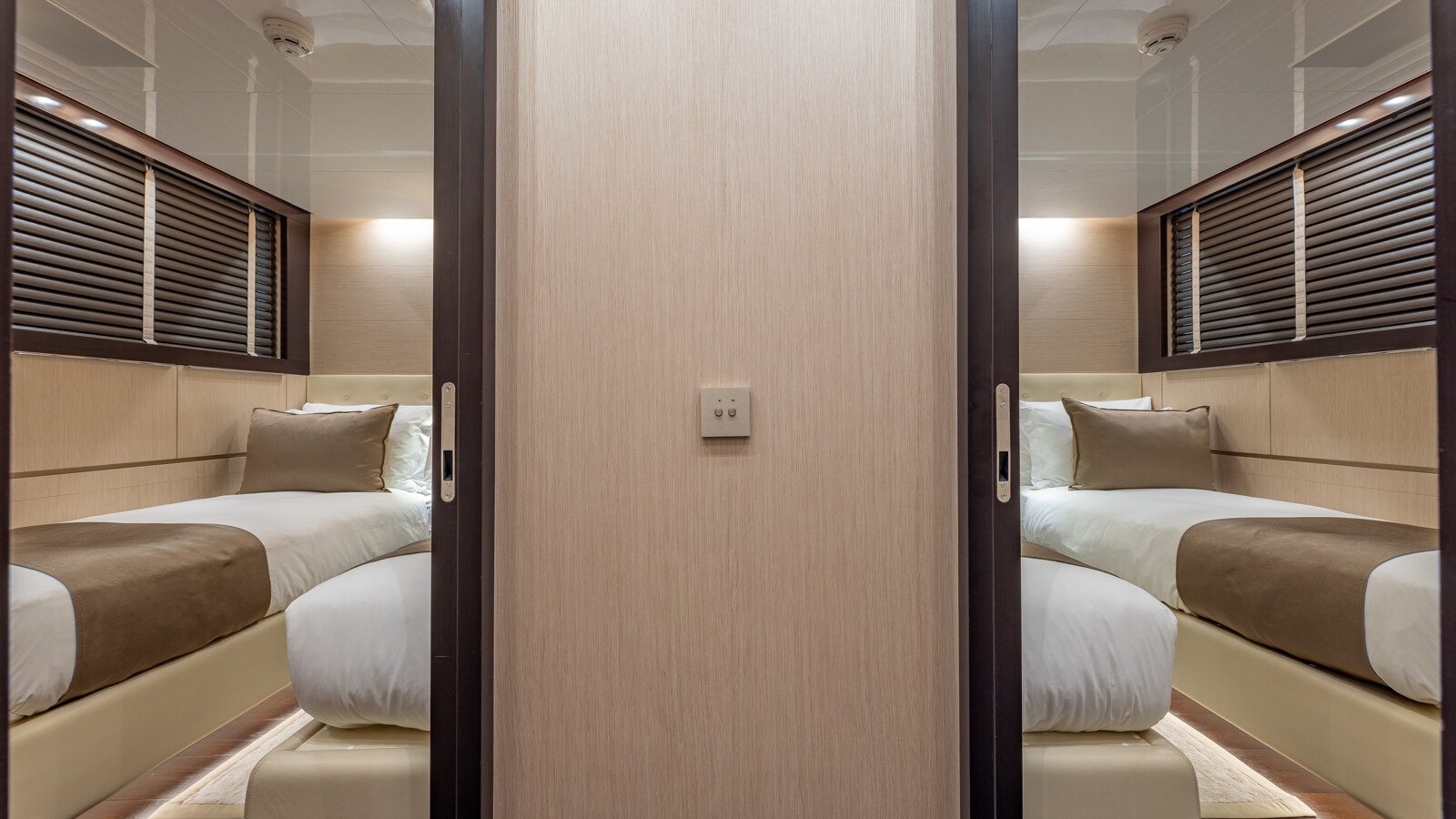
Five cabins sleep ten. The master runs full-beam with windows down both sides. Six crew.
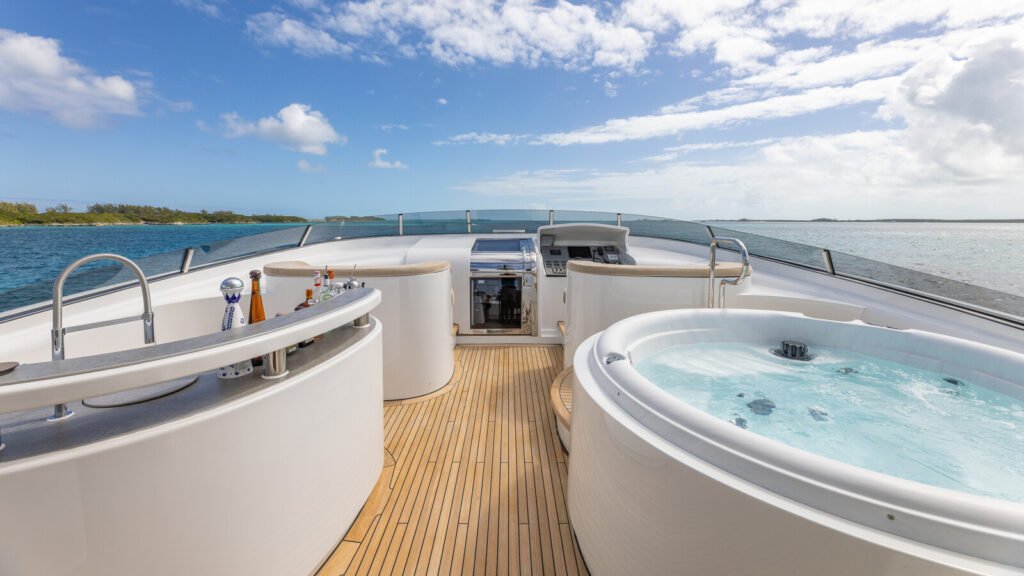
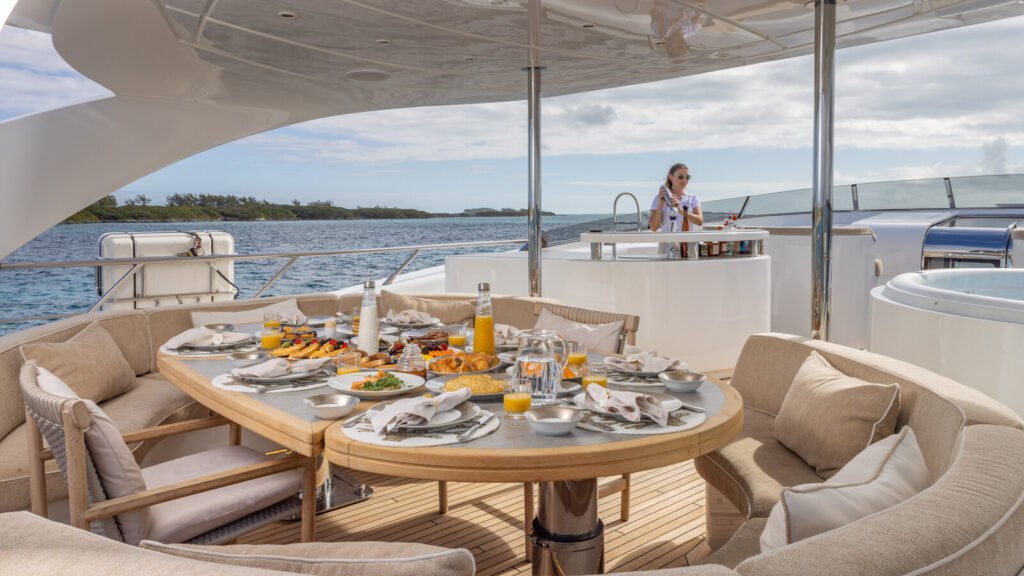
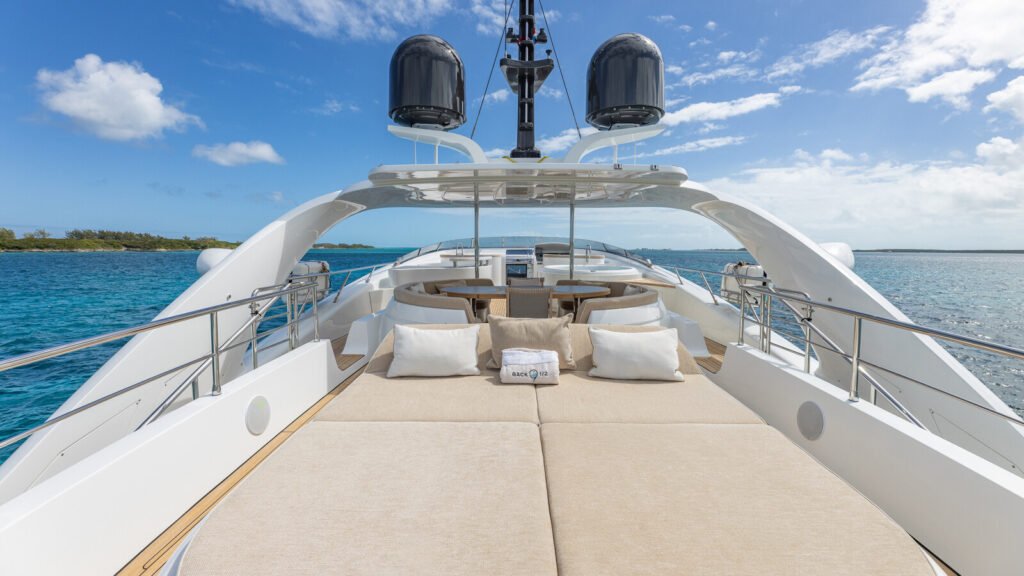
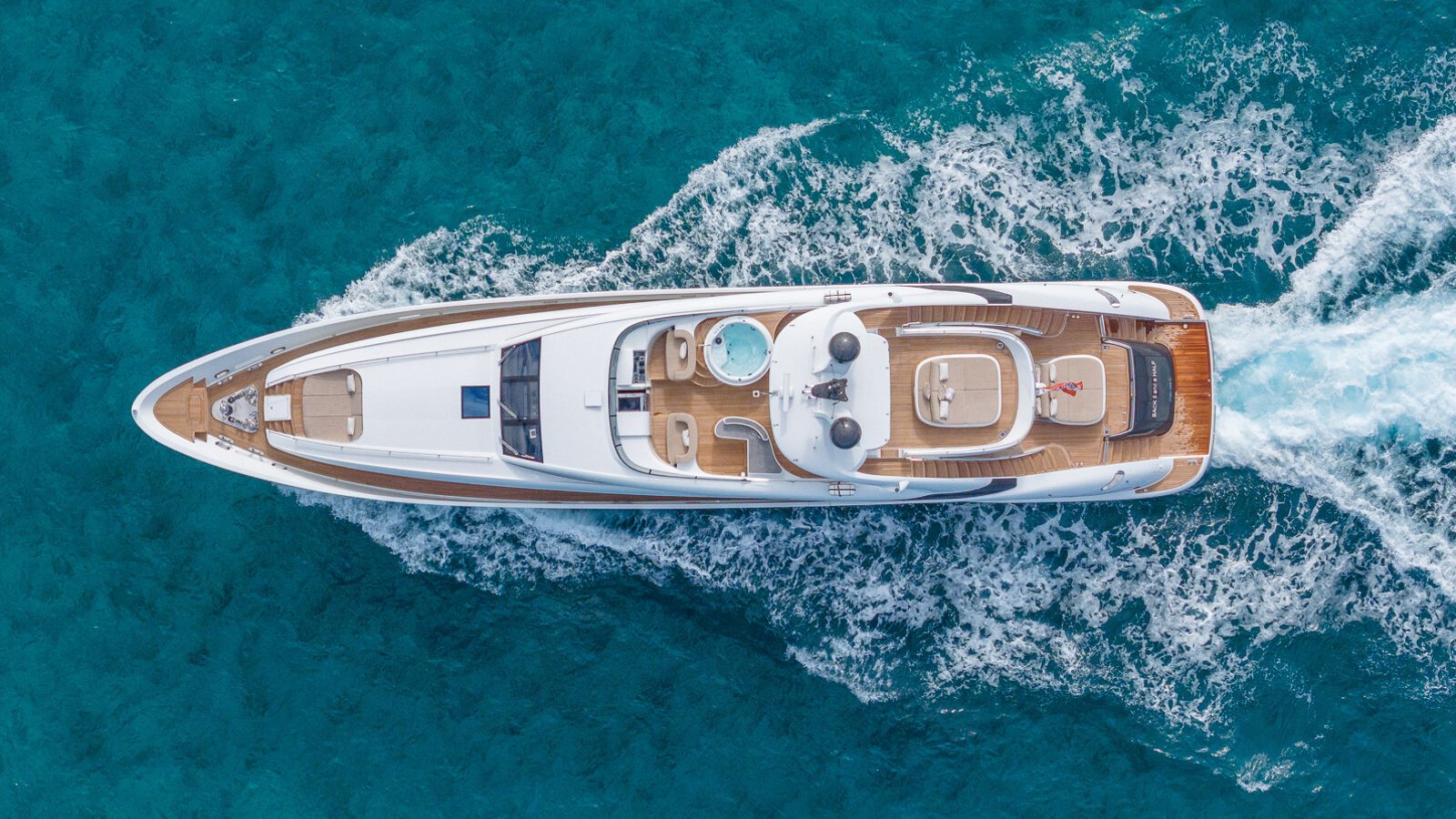
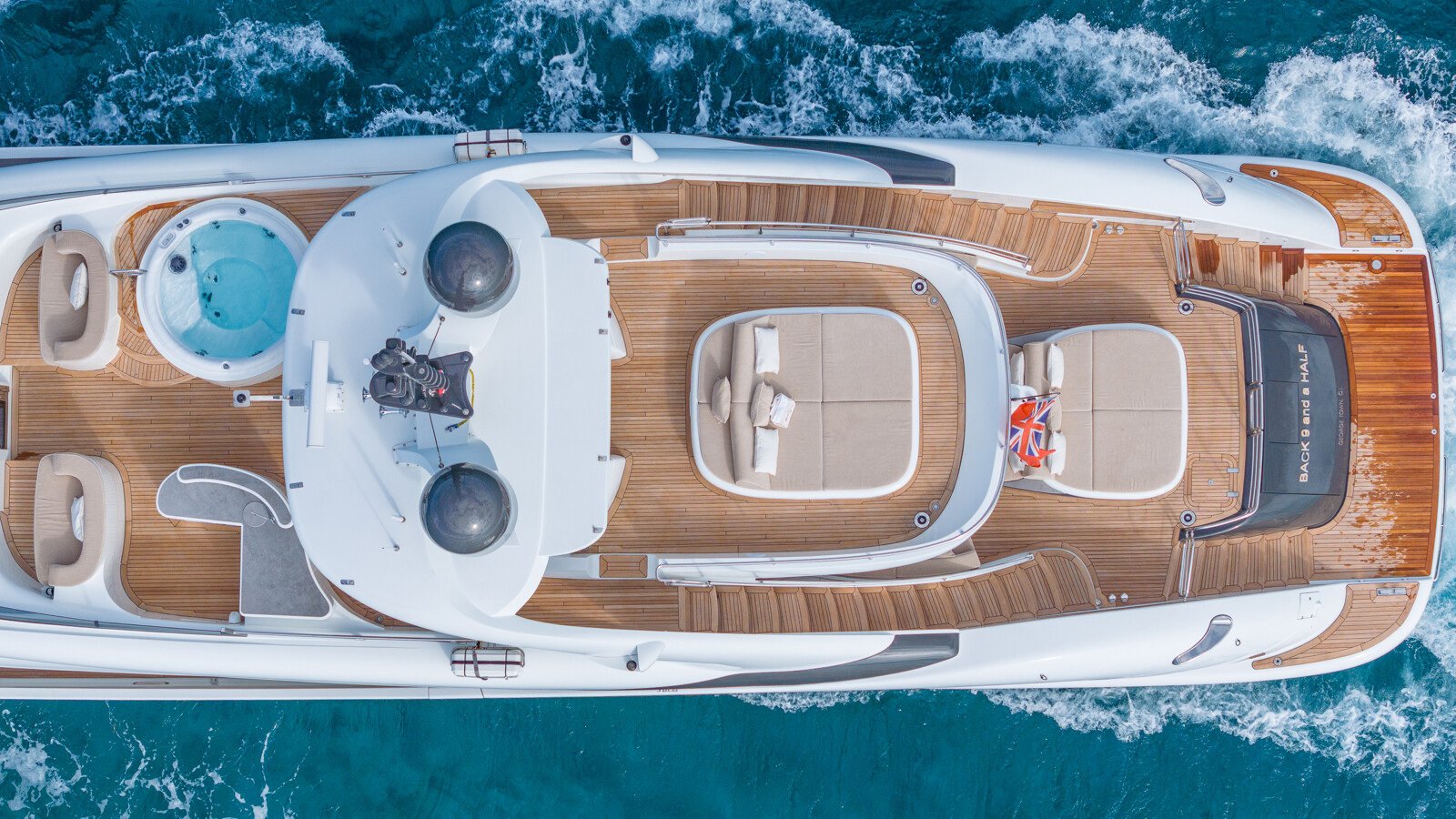
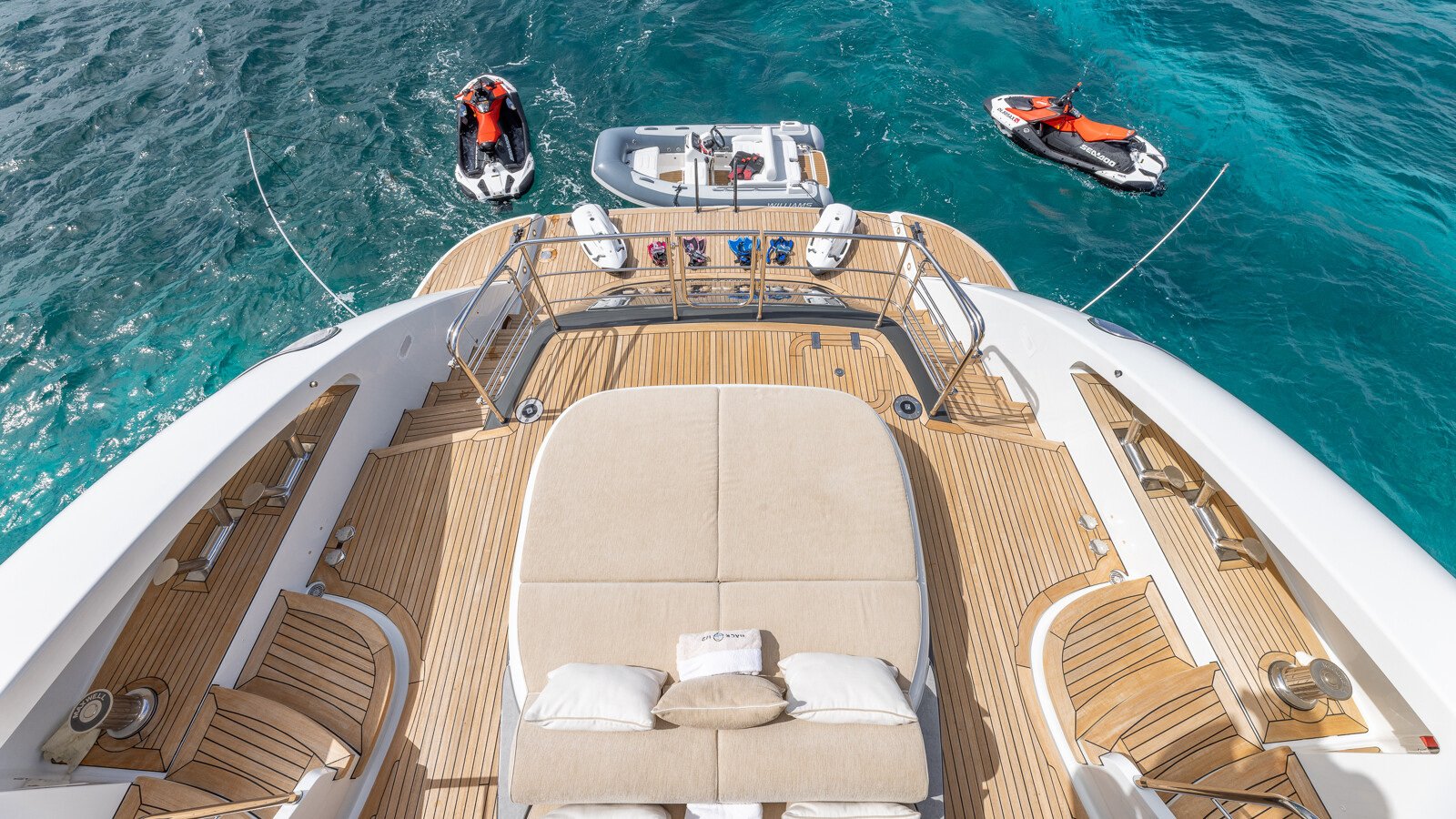
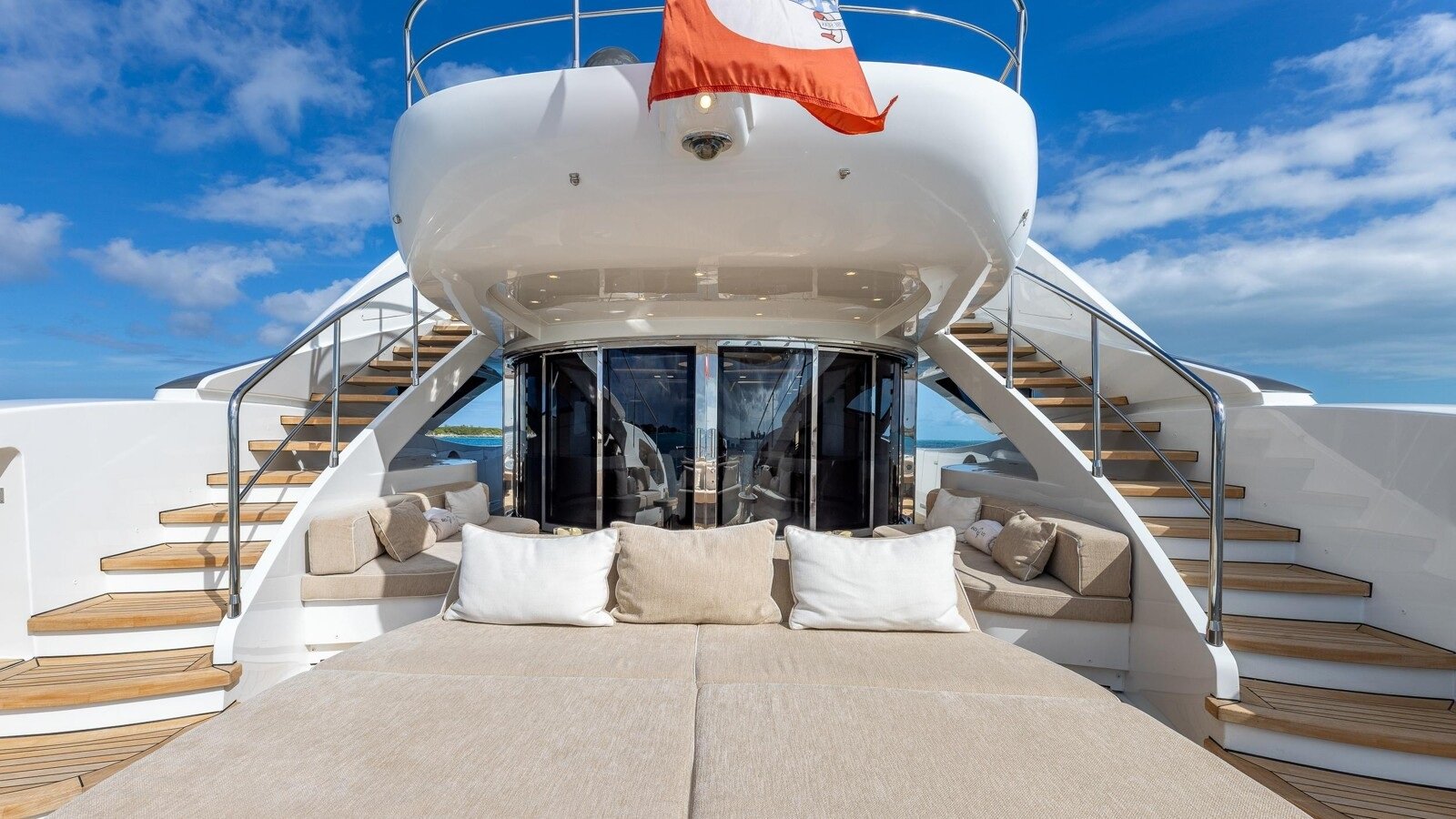
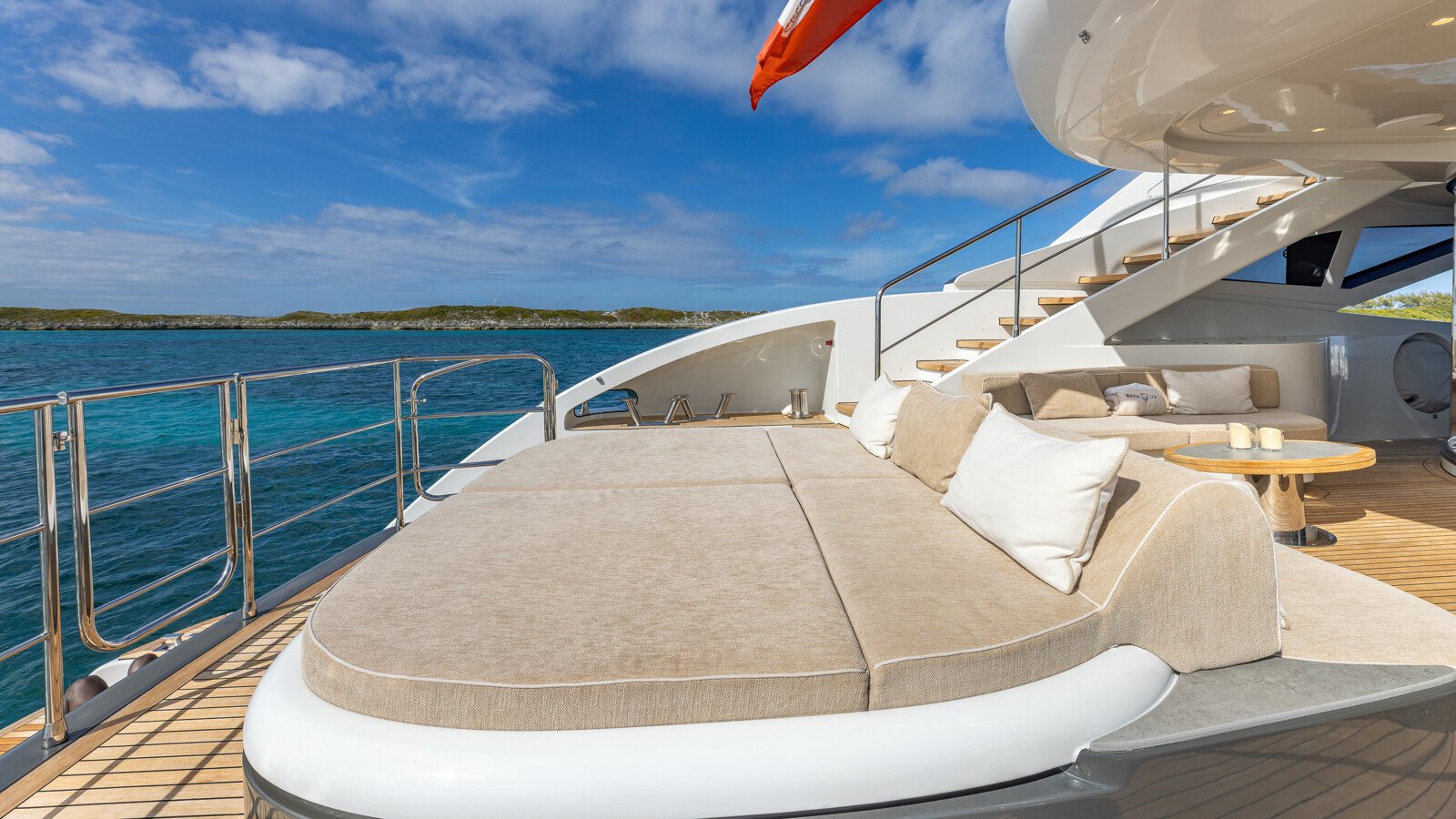
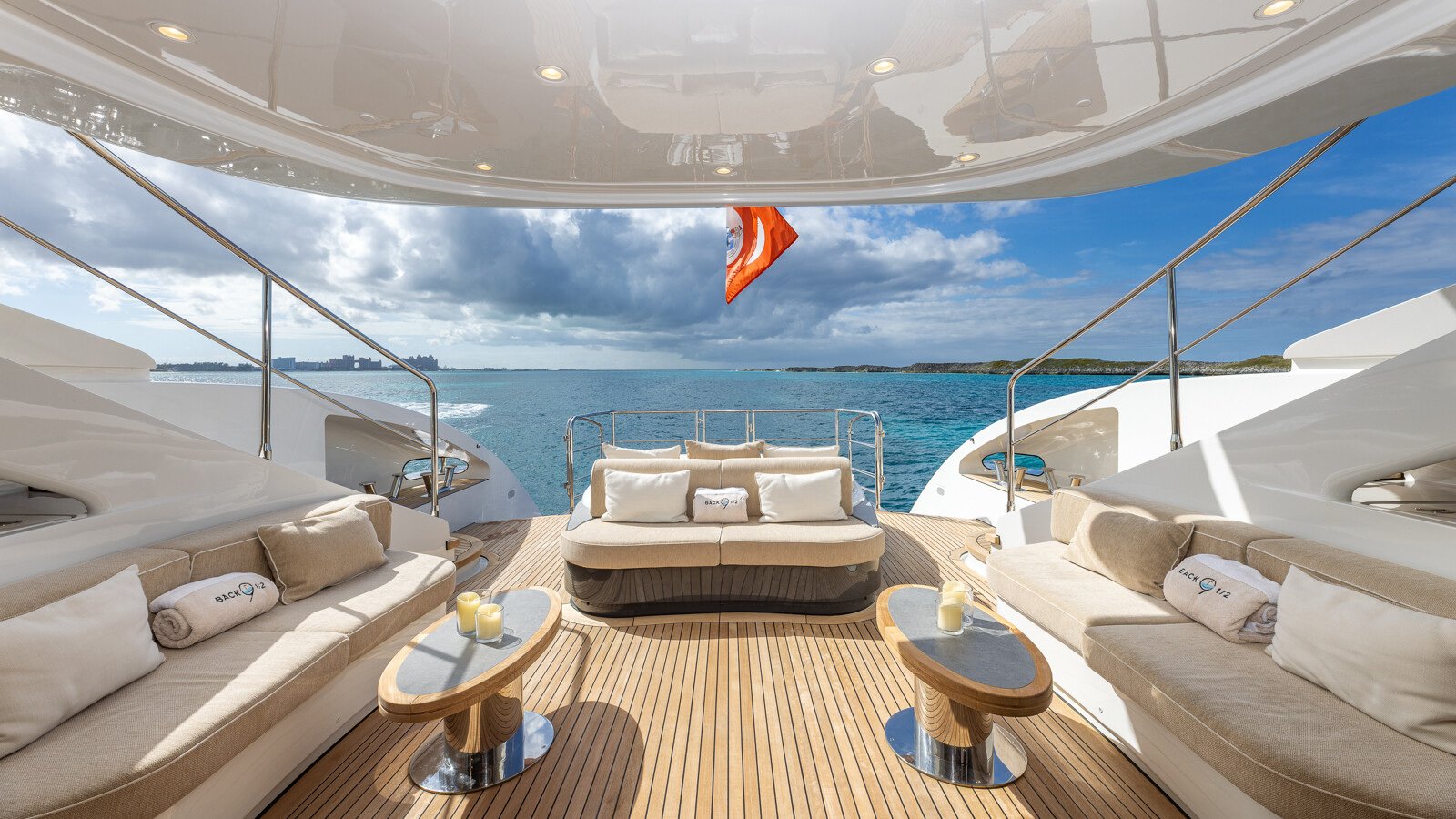
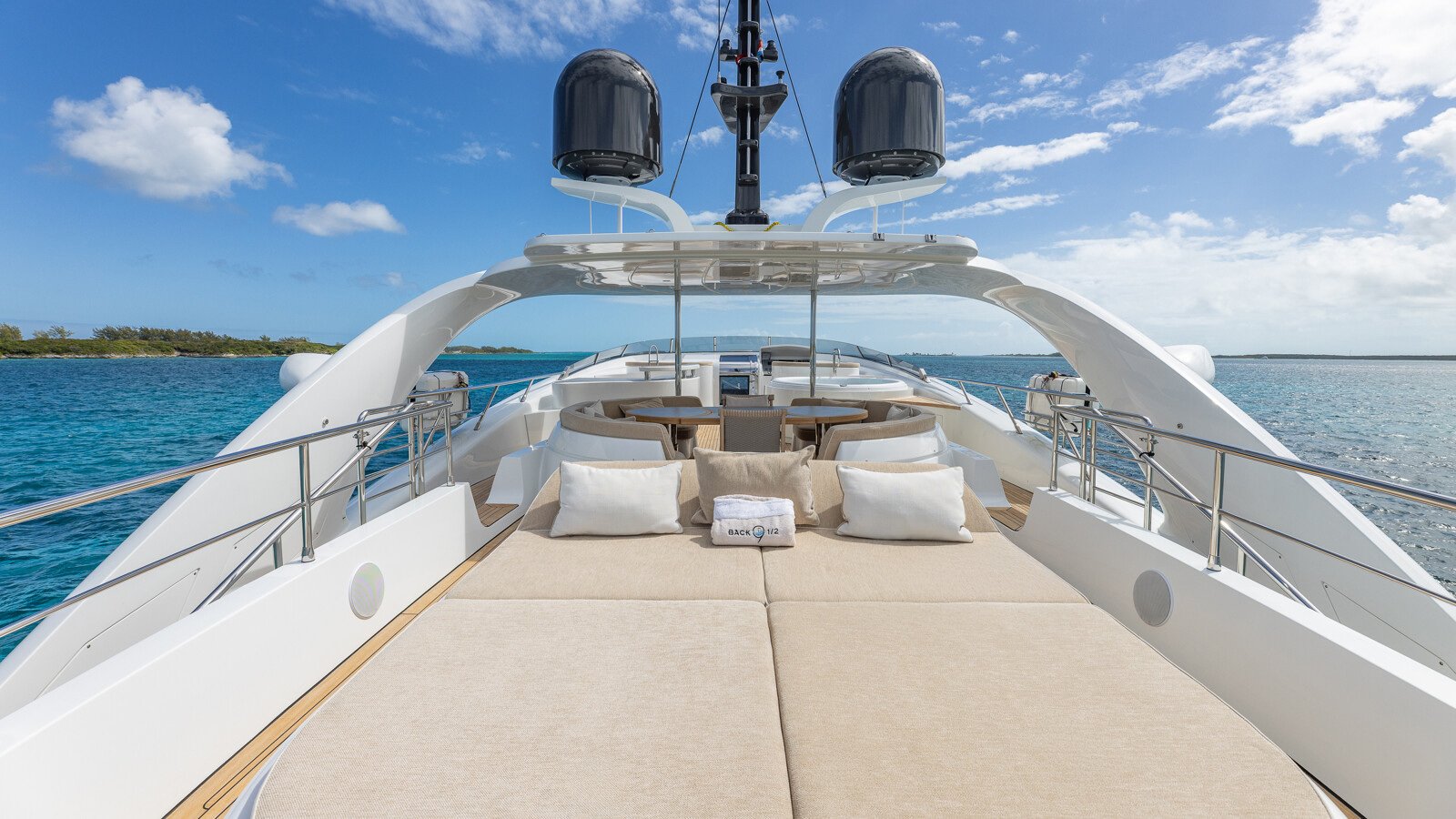
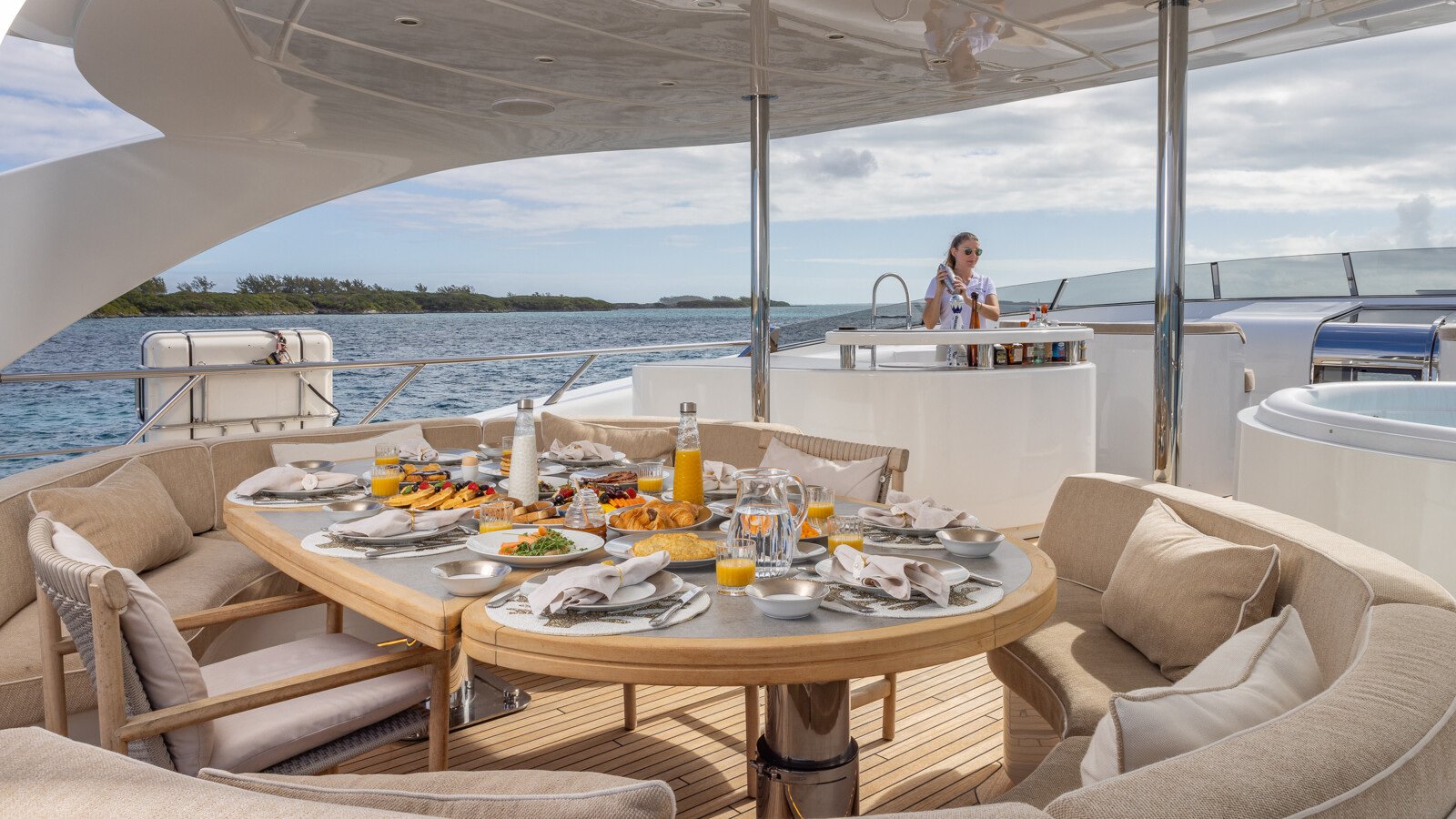
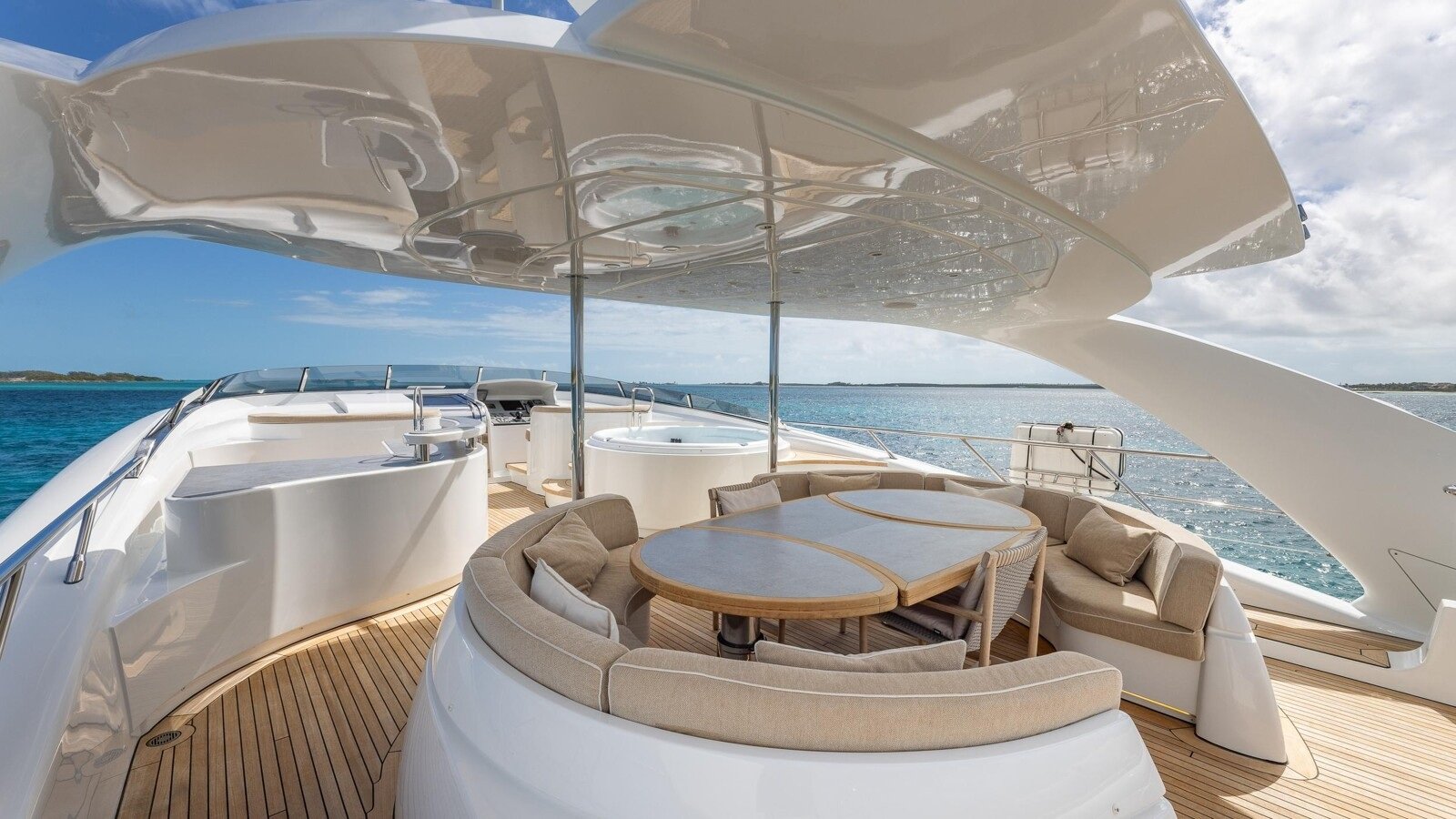
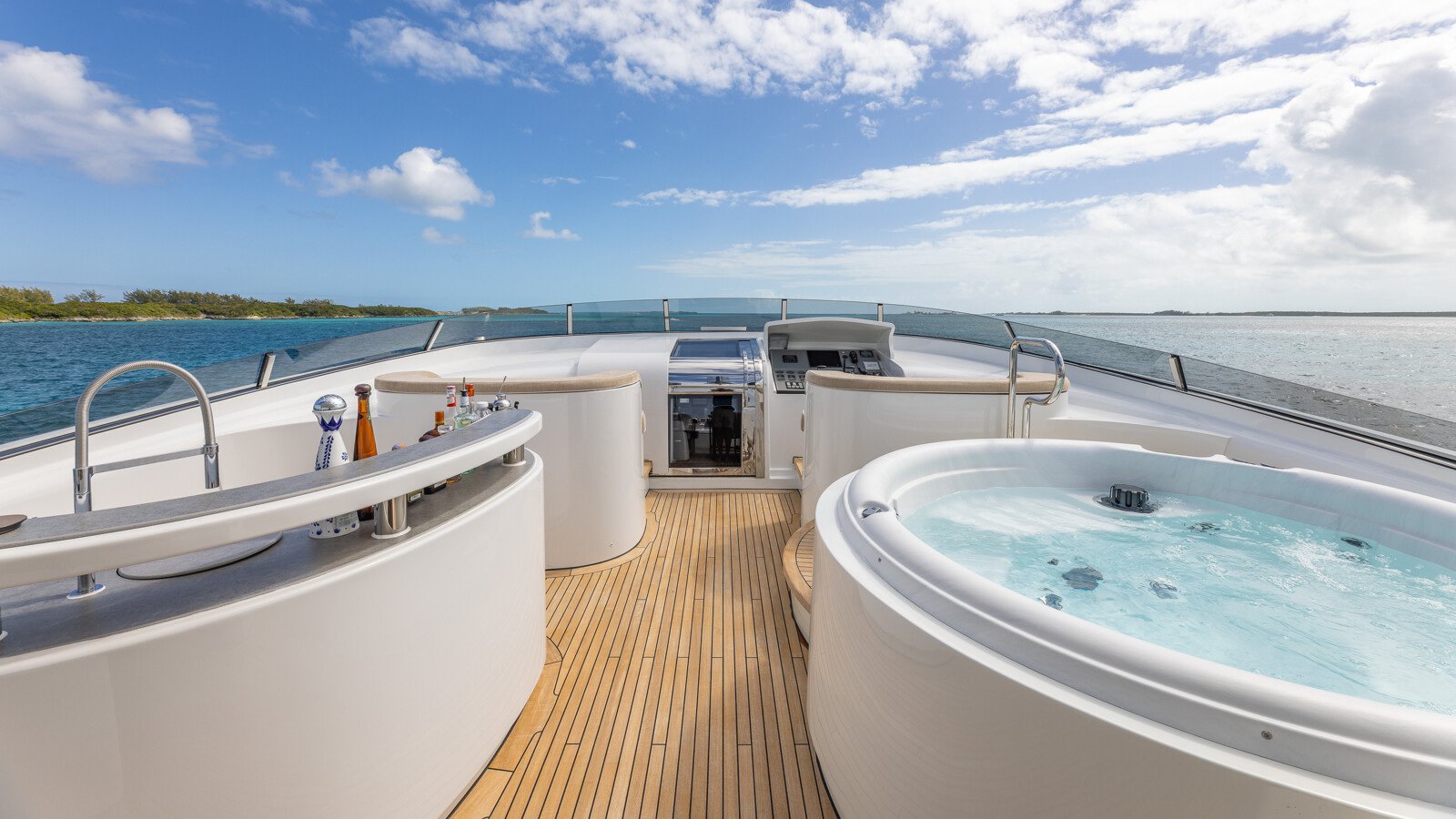
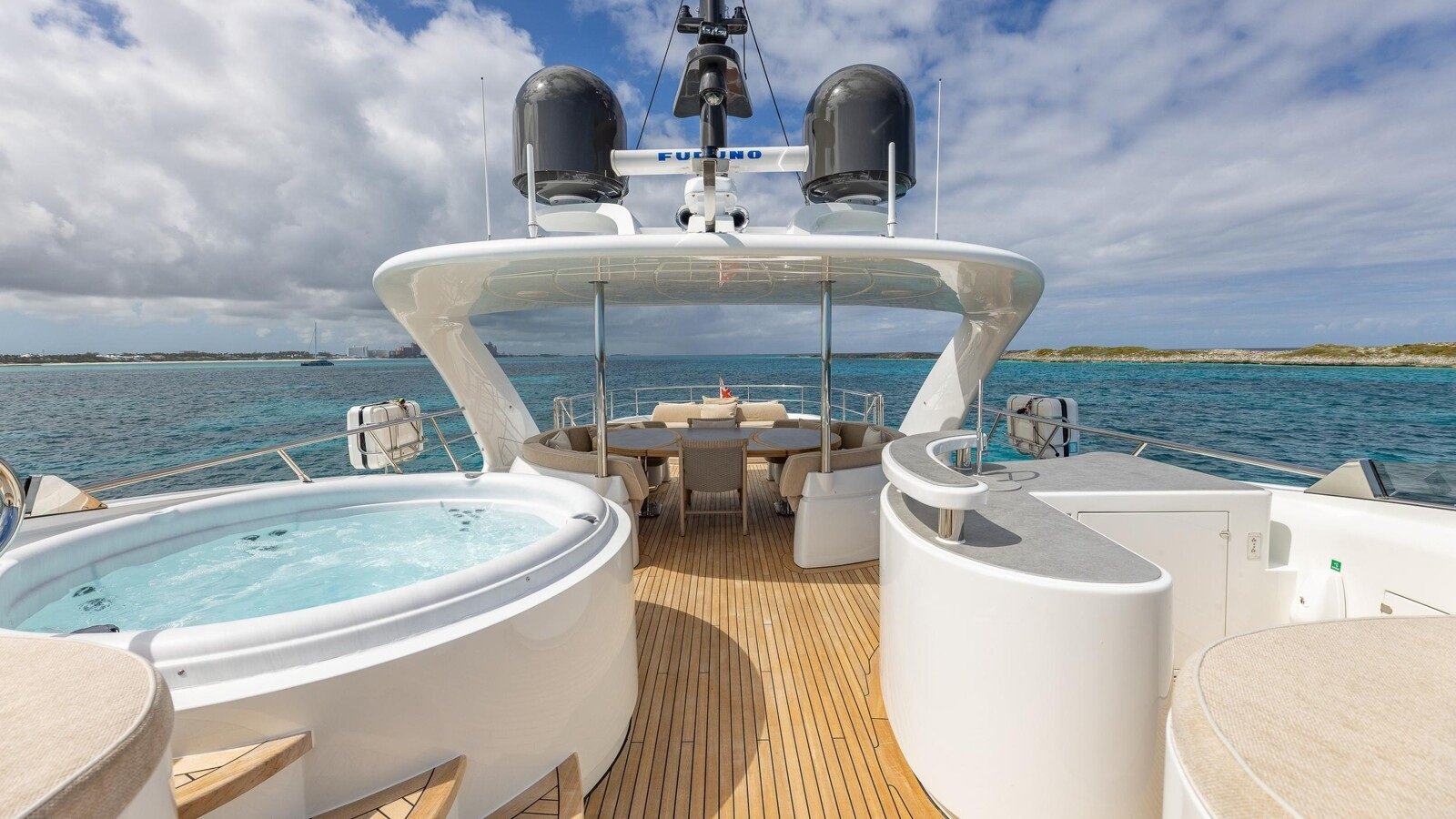
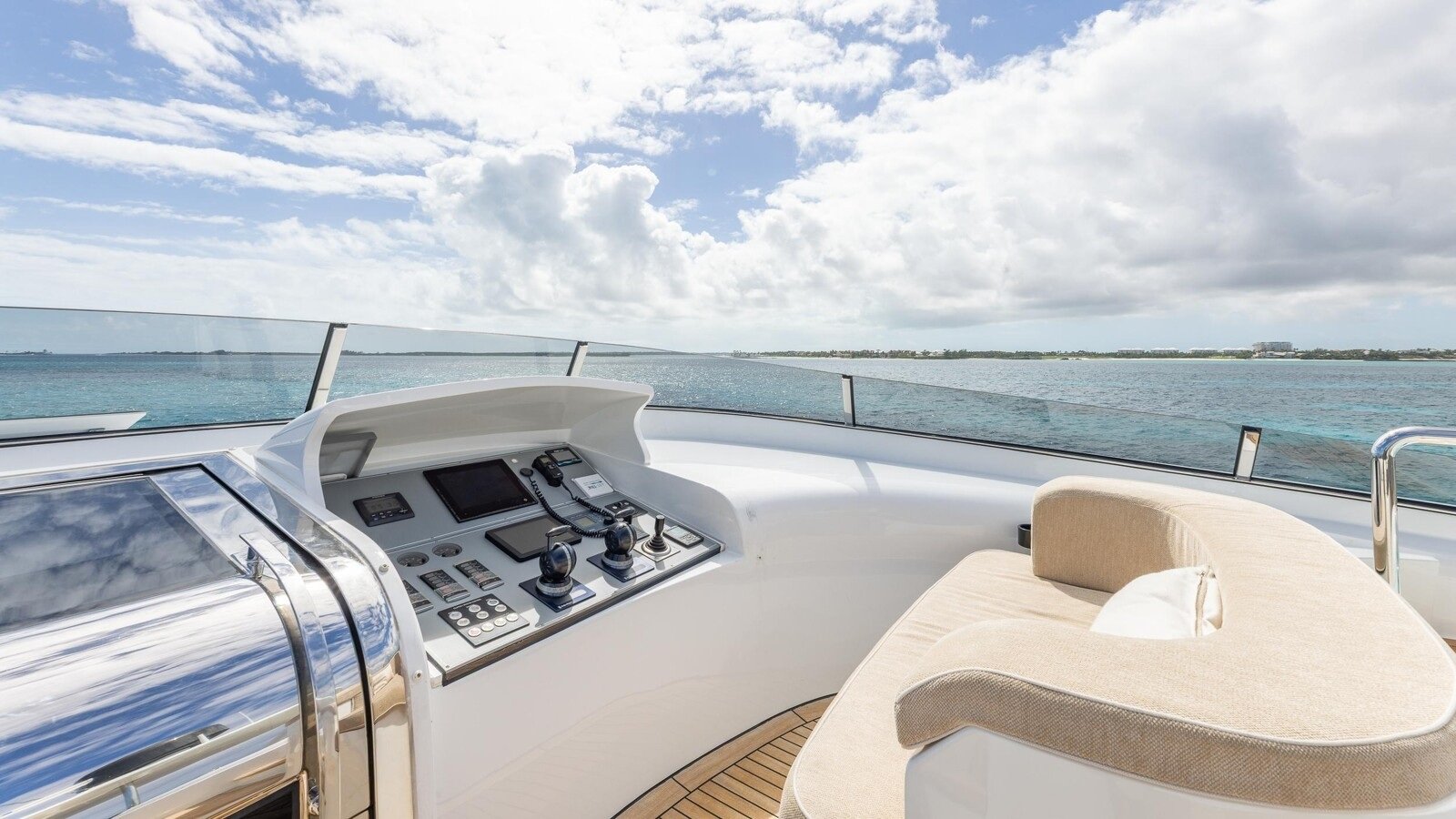
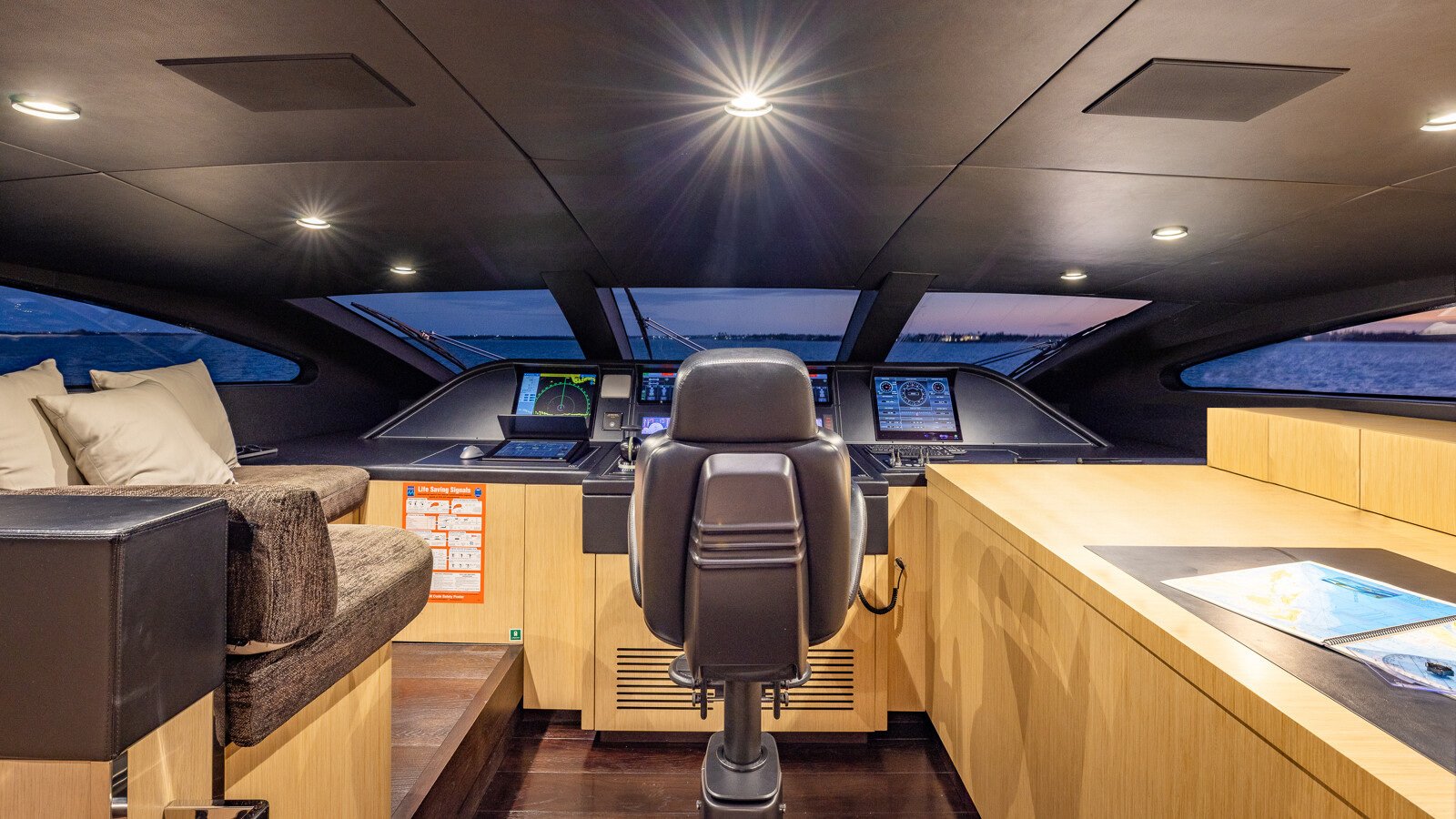
On deck she gives you a jacuzzi set into the teak with the upper helm alongside, sunpads on the foredeck, a shaded table aft that seats everybody, and a bow that opens right up. The sundeck is the best room aboard and she knows it.
ISA builds at Ancona and made its name on fast hulls before it made anything else, which is the lineage that explains her. The 120 Sport is not a displacement yacht that has been persuaded to hurry – it is a fast boat that happens to be 36 metres long, and every decision follows from that starting point rather than fighting it. The shallow draft is not a clever accommodation of the Bahamas; it is what you get when the hull is designed to plane and carries no ballast worth speaking of.
The 600-mile range is the bill for all of it, and it is worth being honest about. She is useless as an explorer and will never leave a coastline. But nothing about her is pretending otherwise, and a yacht that knows exactly what it is for is rarer than it should be.
She works the Bahamas and Florida through the winter and runs north to New England for the summer – a genuinely American itinerary, and one that suits a fast shallow boat far better than it would suit a displacement explorer.
Weekly rates start at 110,000 US dollars, which for a 36-metre with this performance is not a lot.
BACK 9 AND A HALF will not cross an ocean and has no interest in trying. What she will do is put ten people on sand that other 36-metre yachts have to look at from a mile offshore, then have them somewhere else for dinner. In the Bahamas, that is the whole game.