Fairline / Fairline Squadron 68
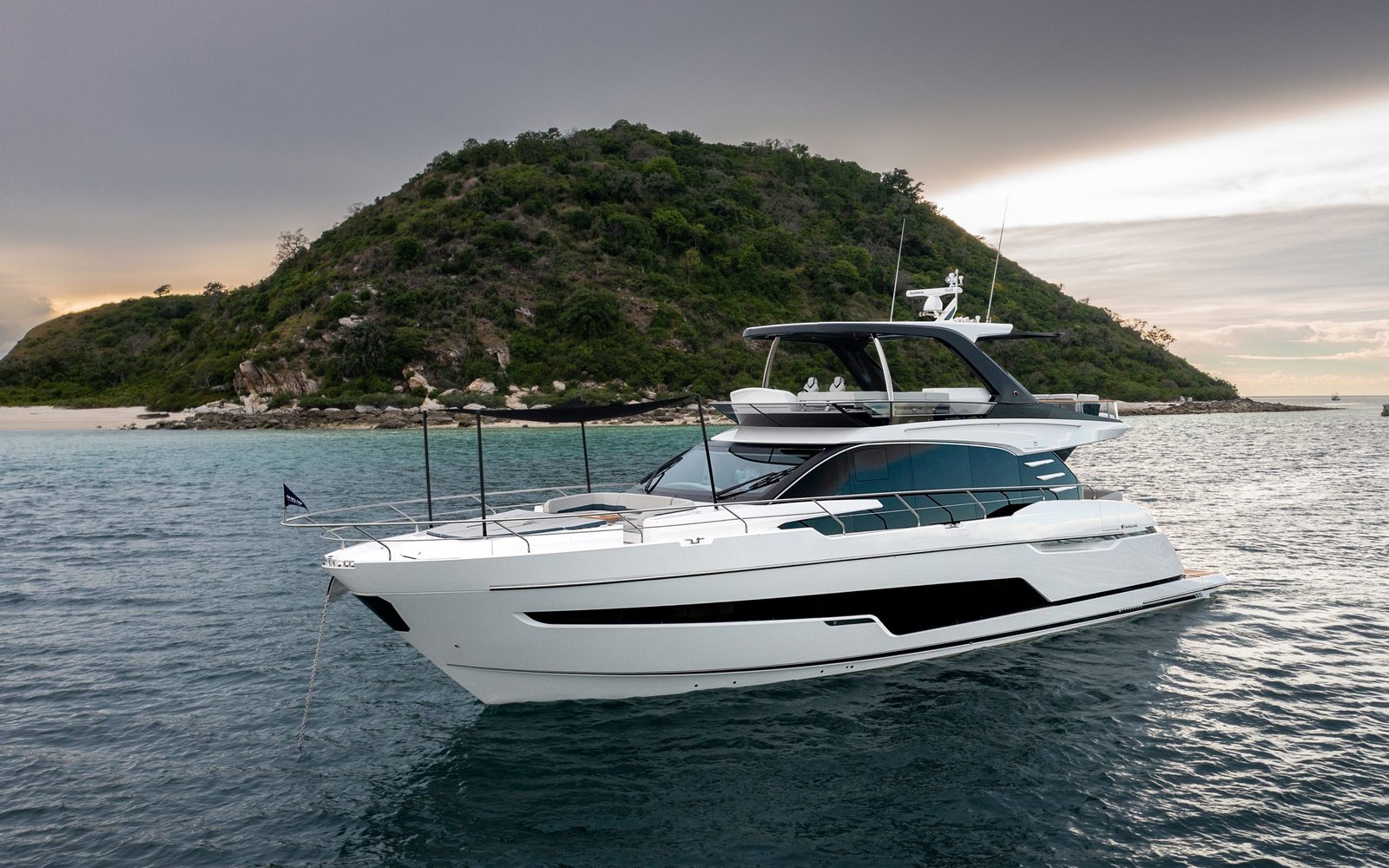
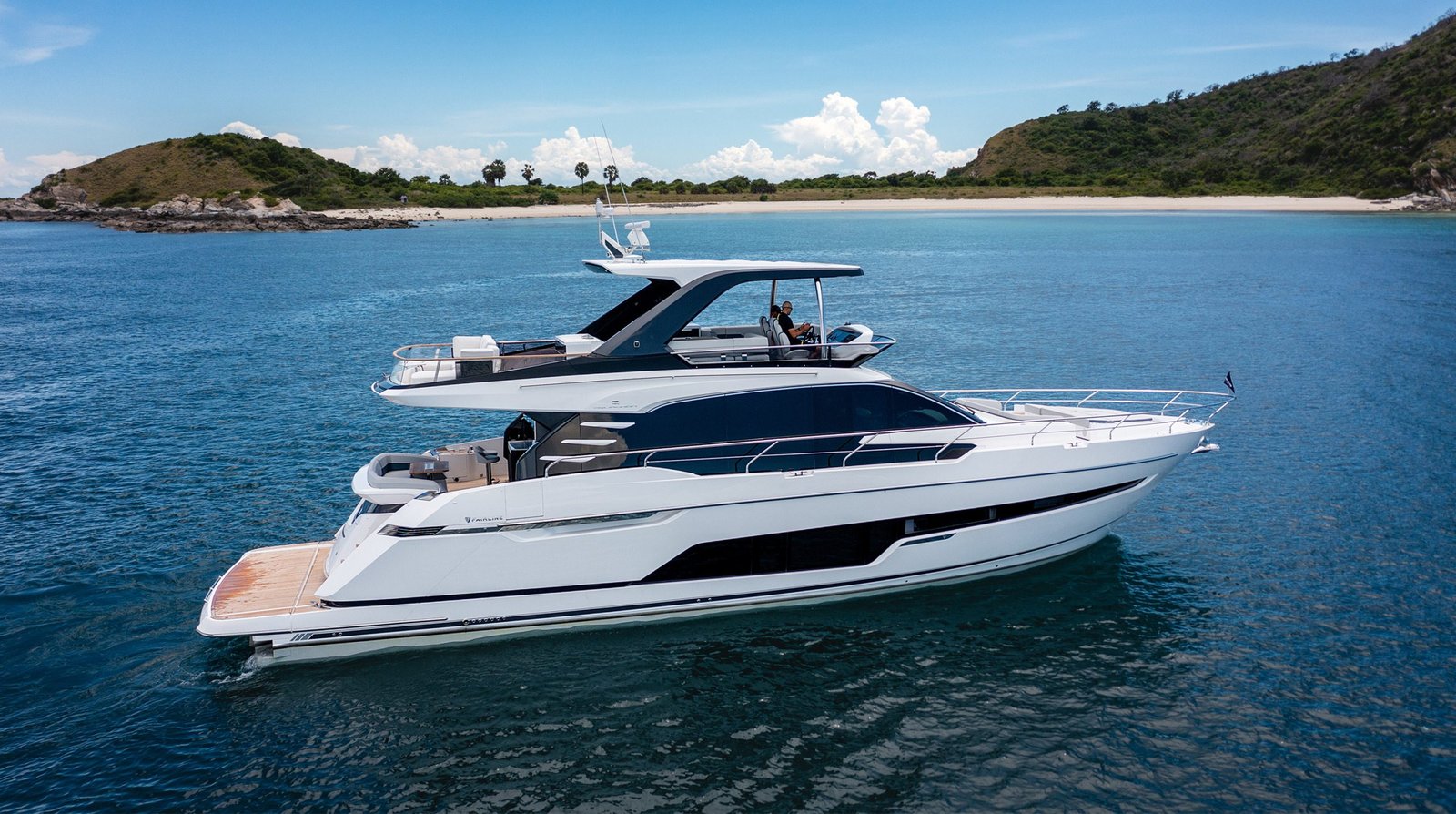
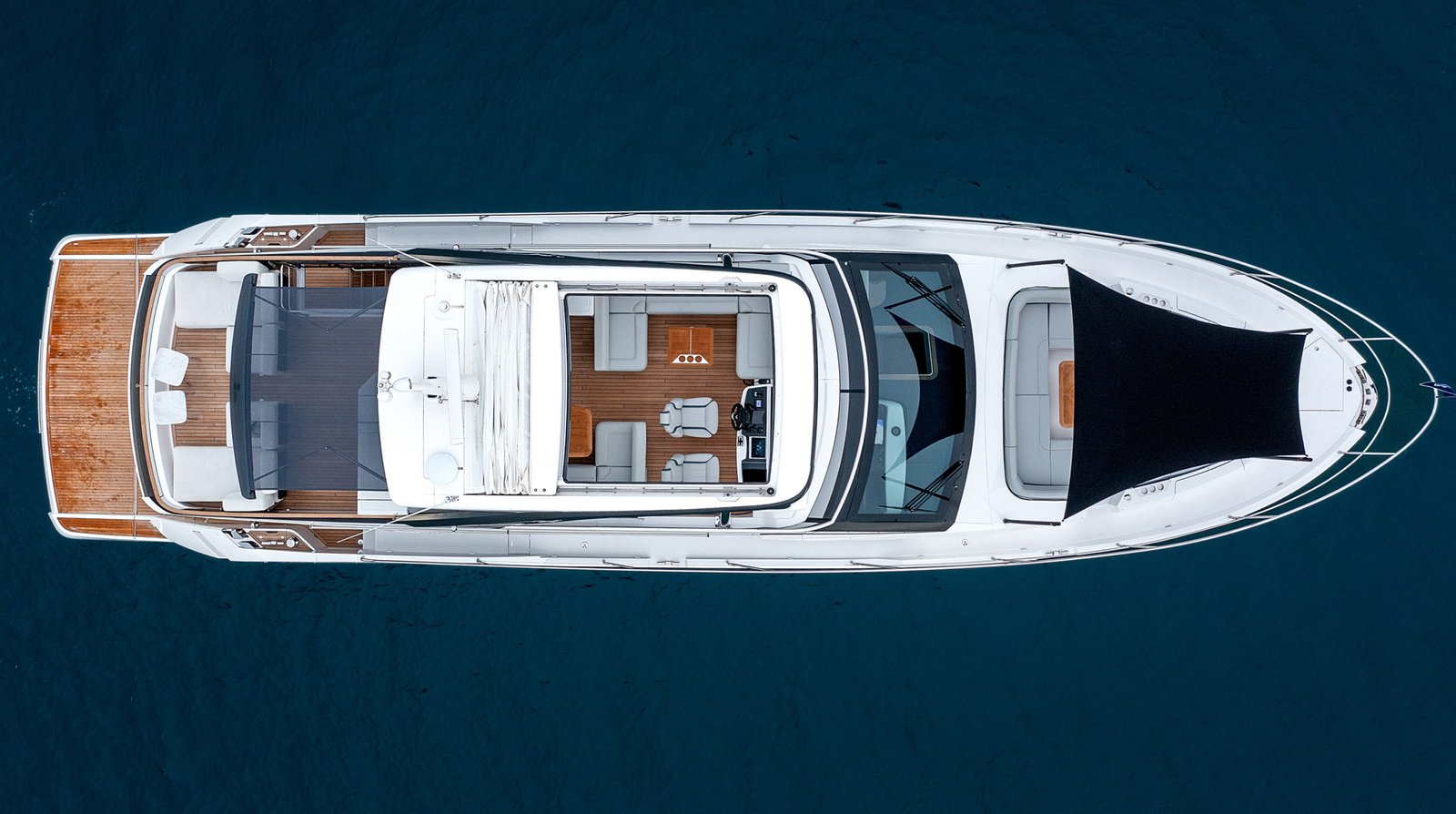
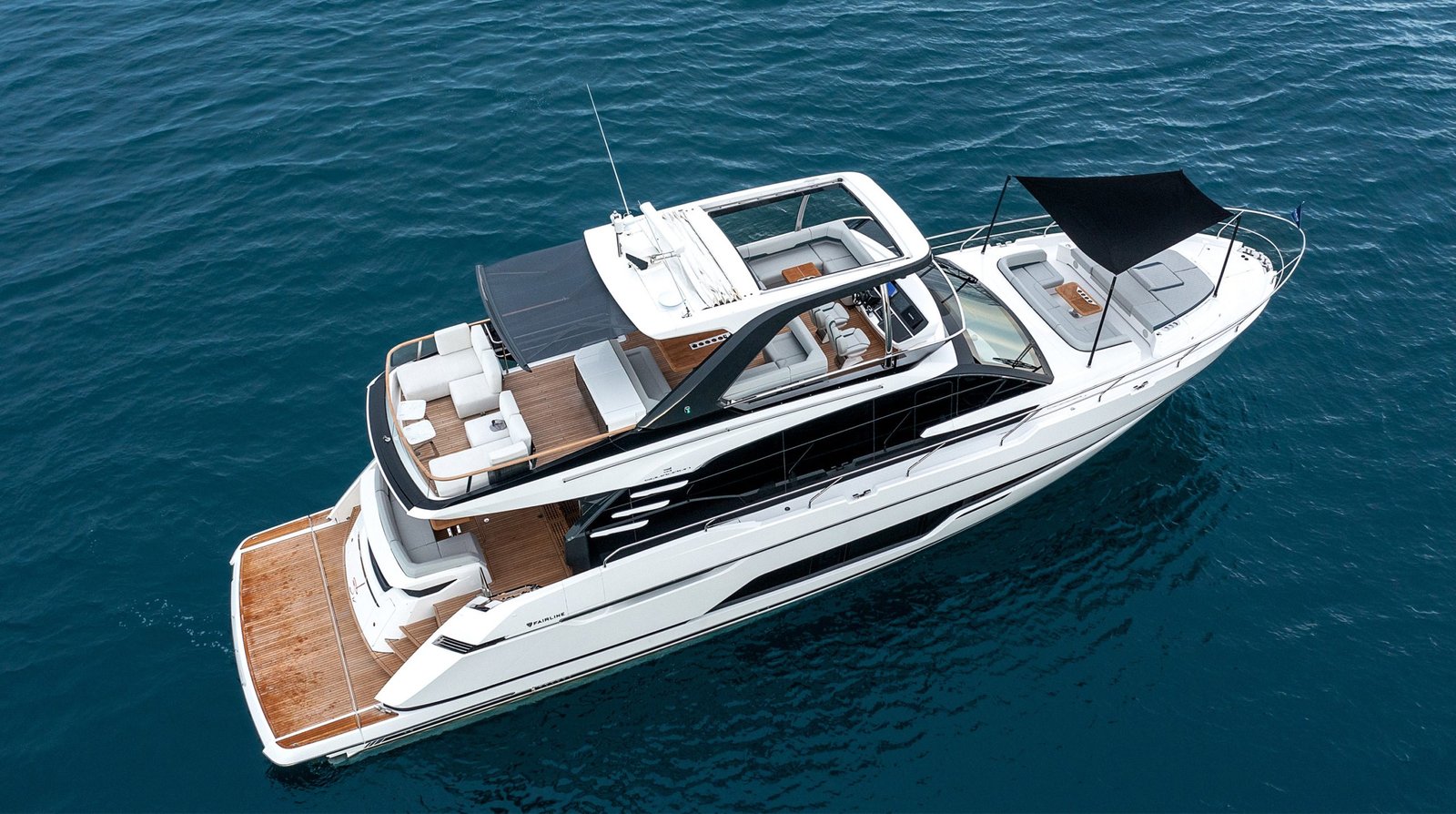
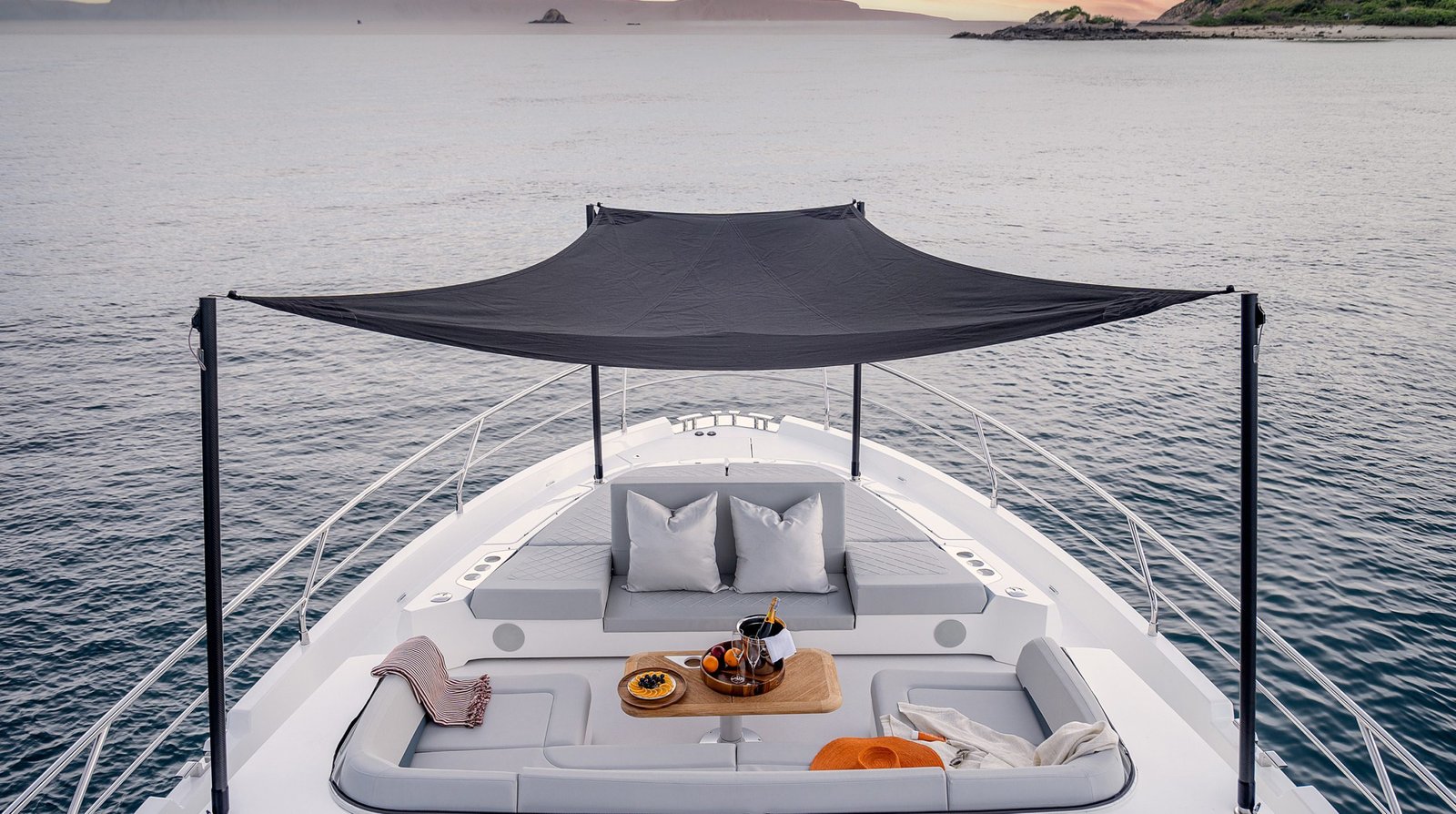
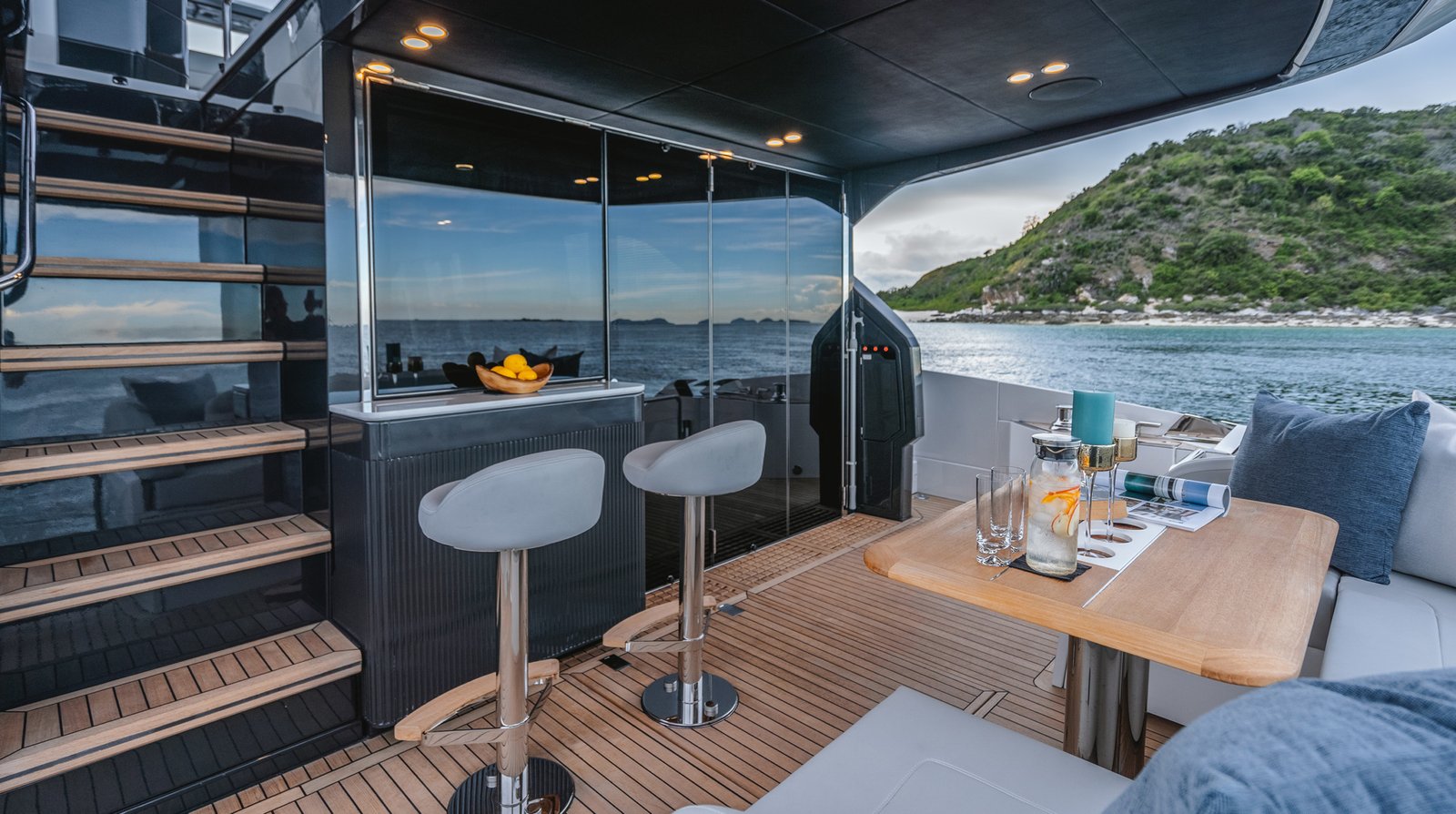
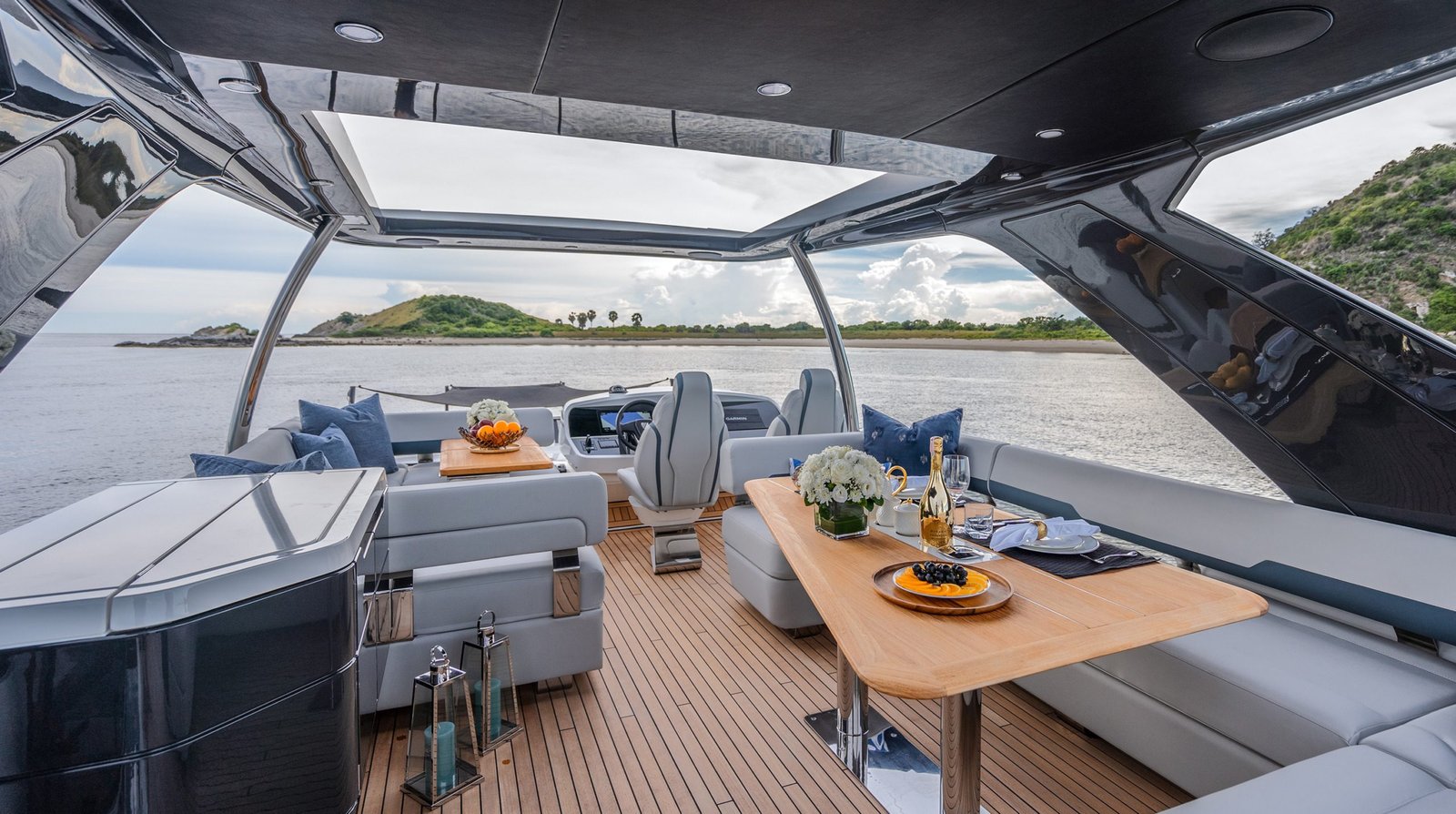
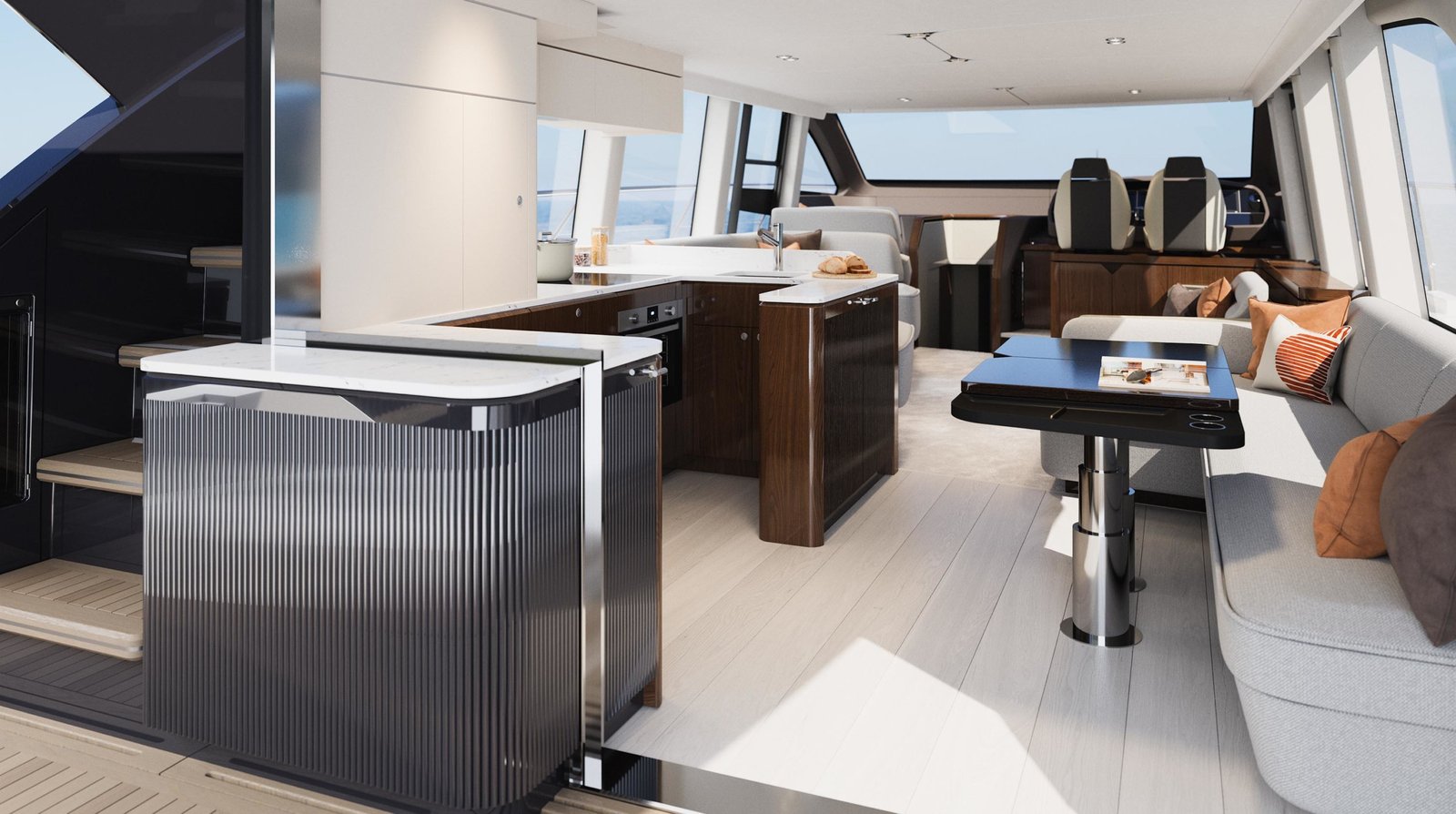
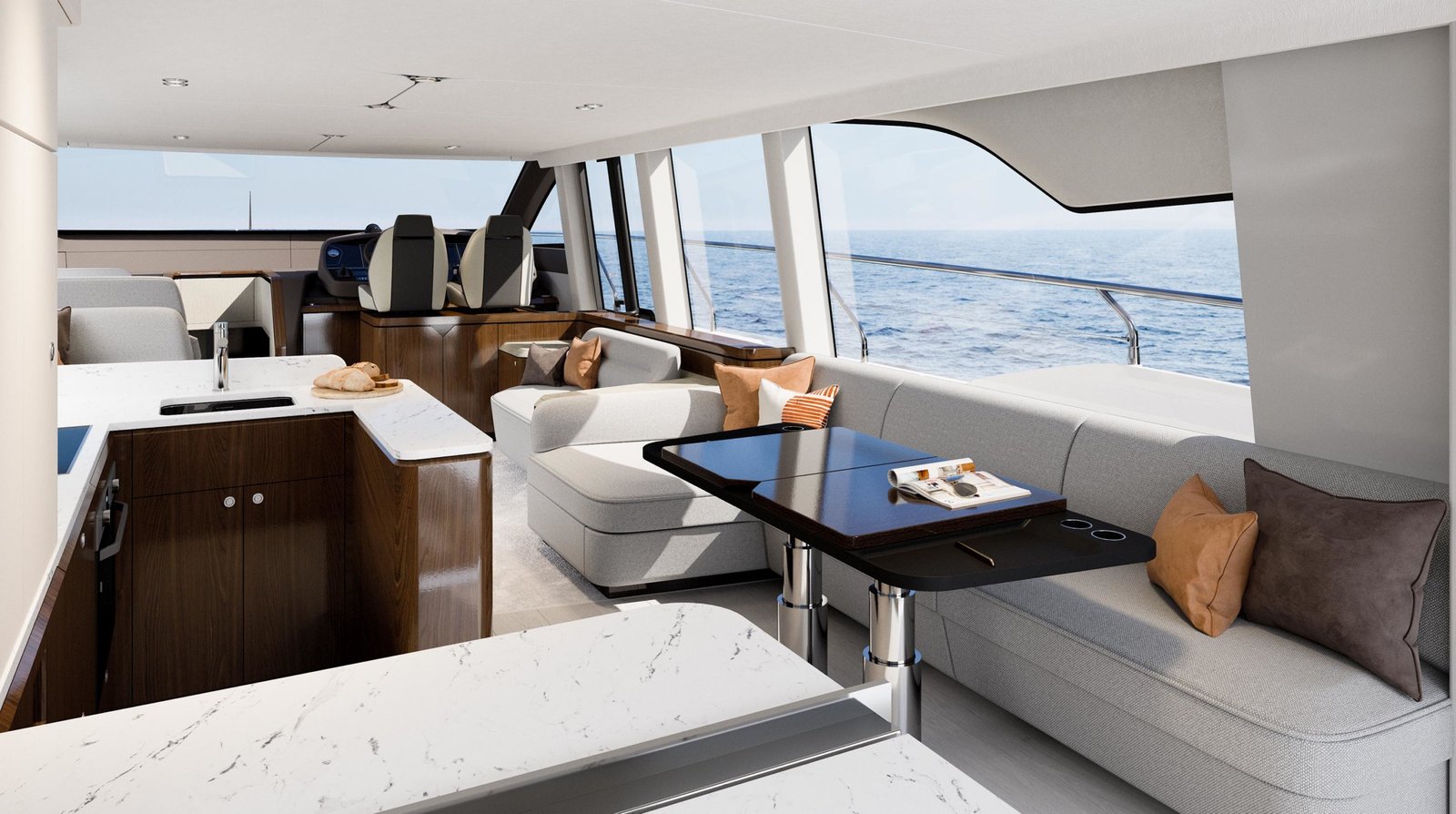
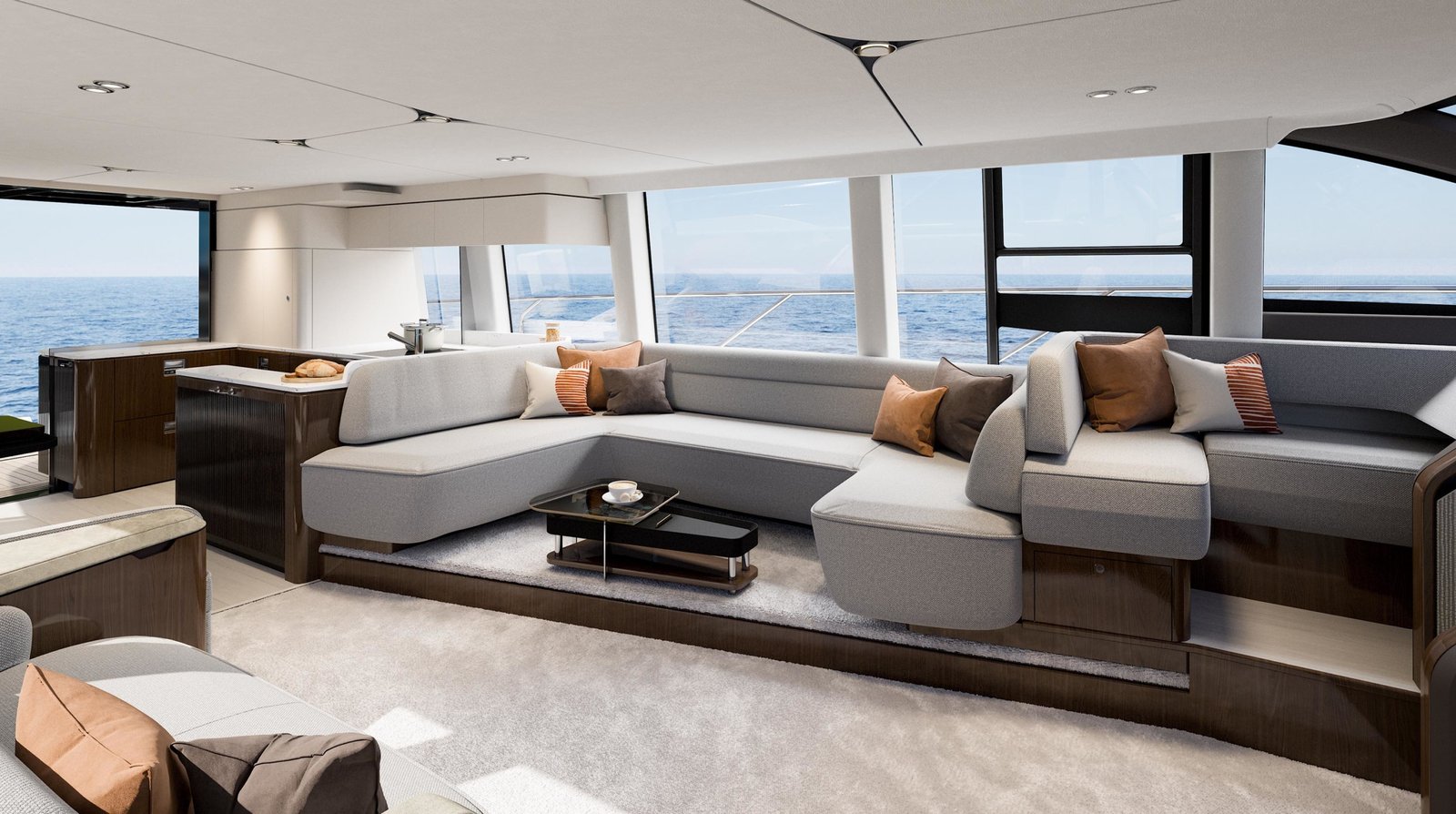
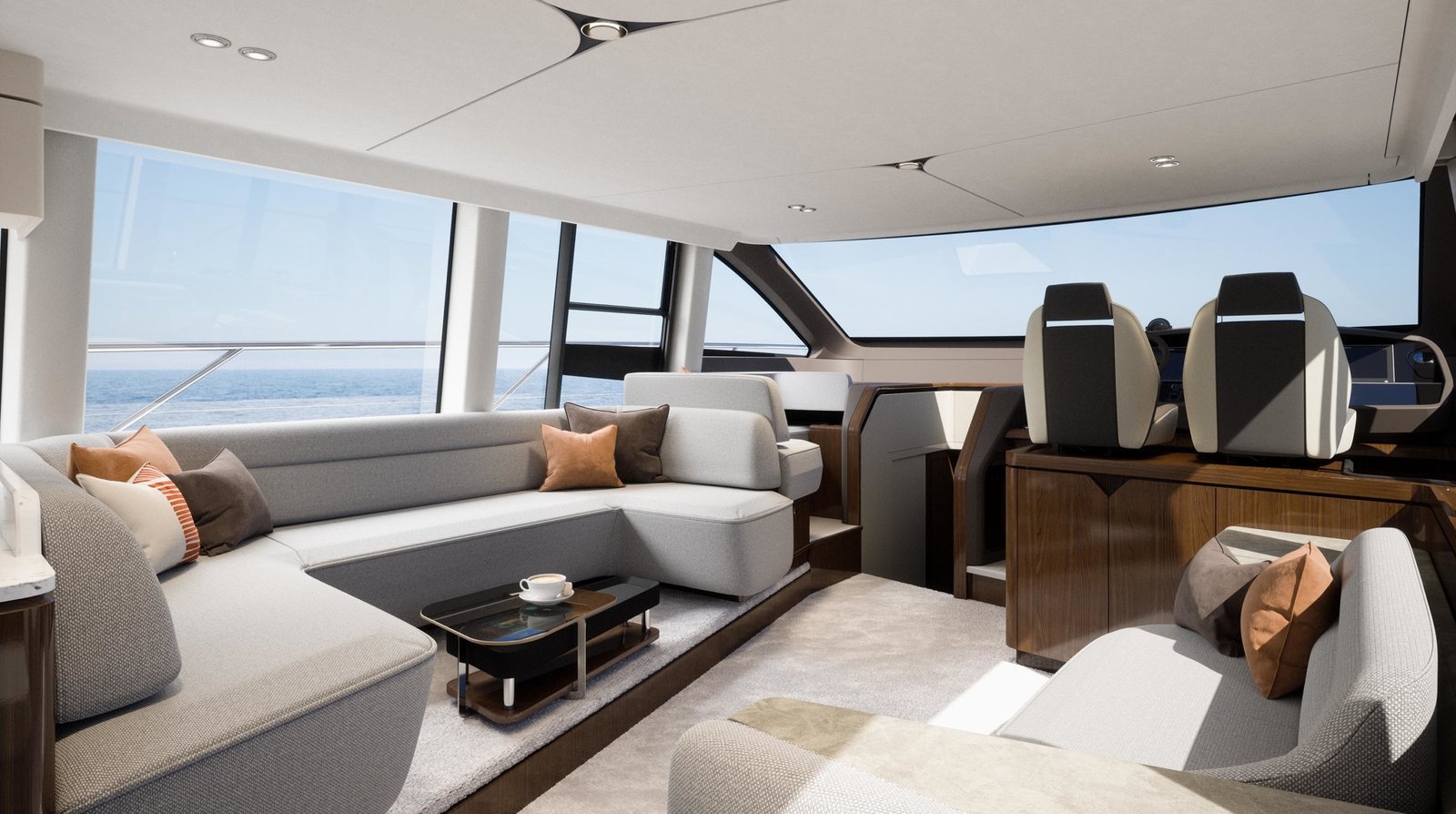
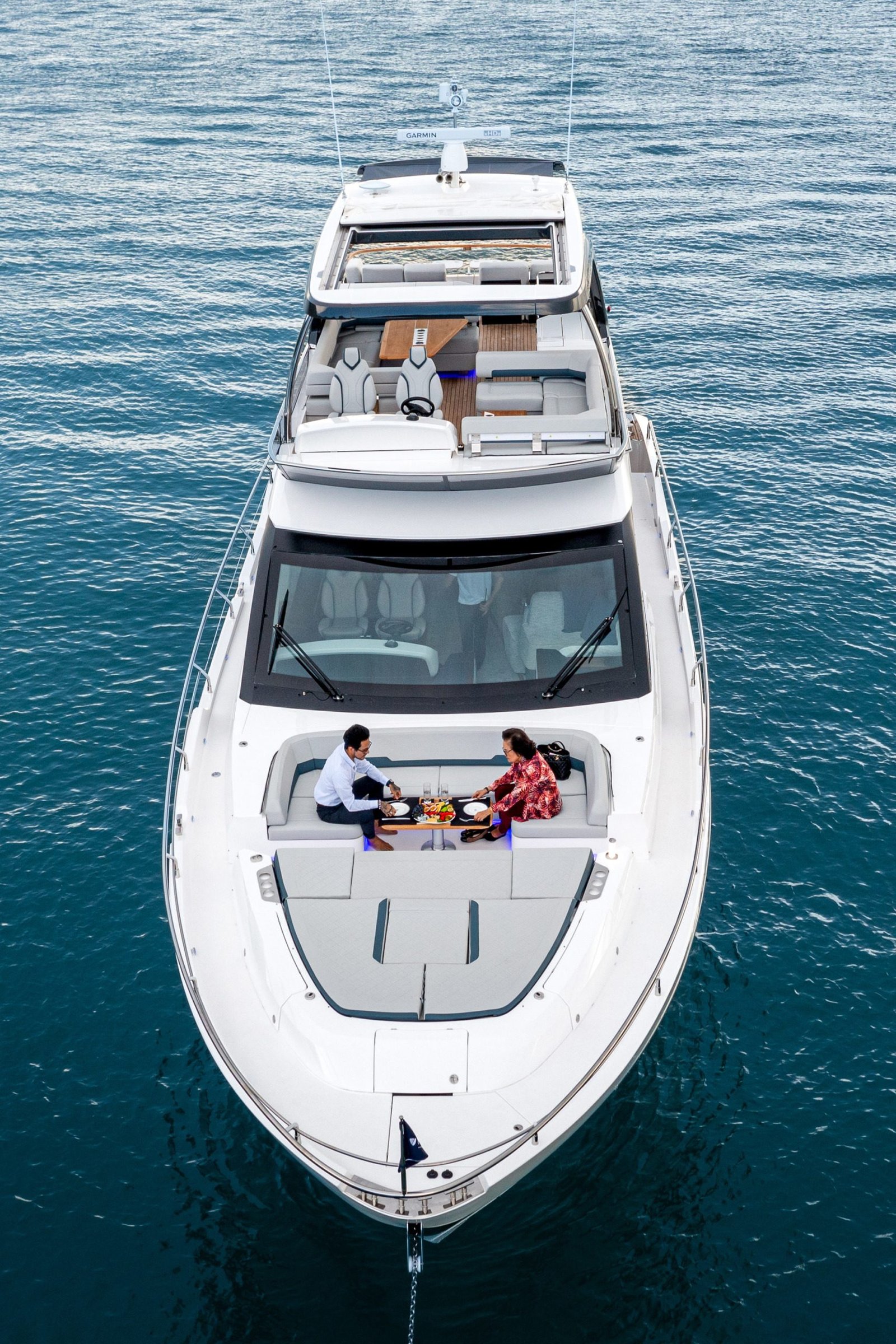
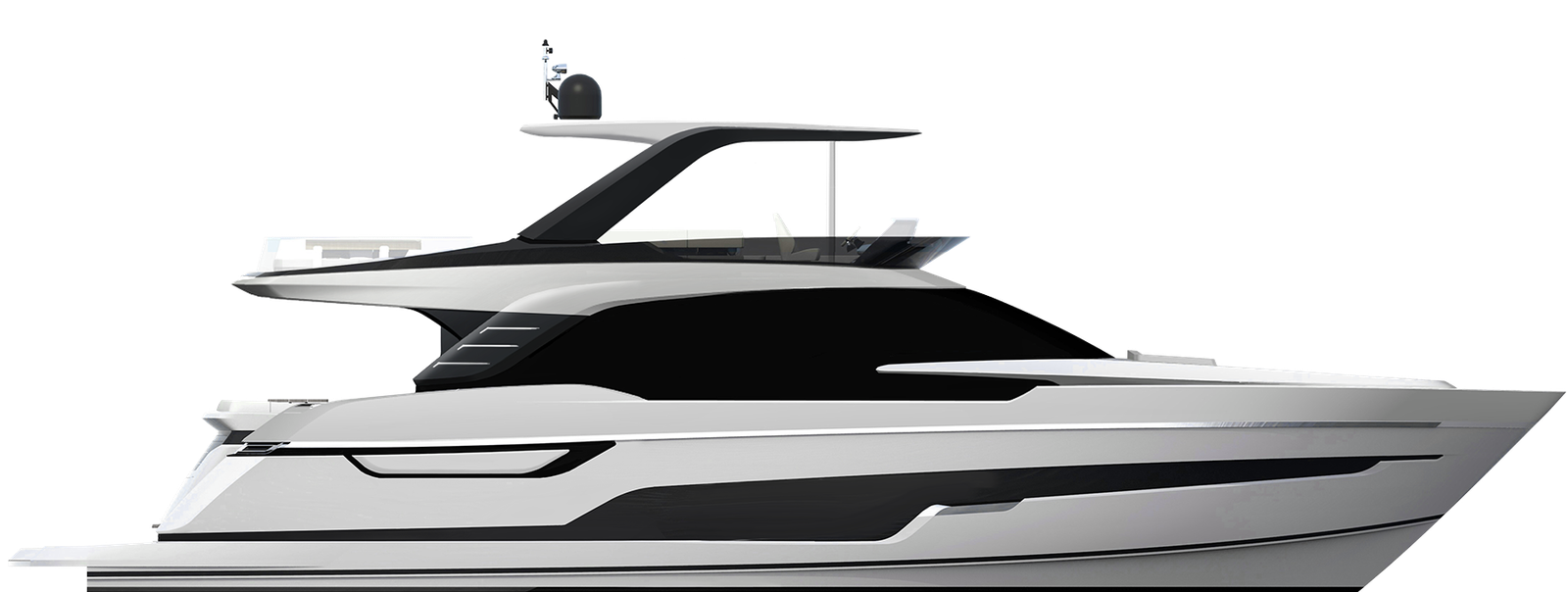
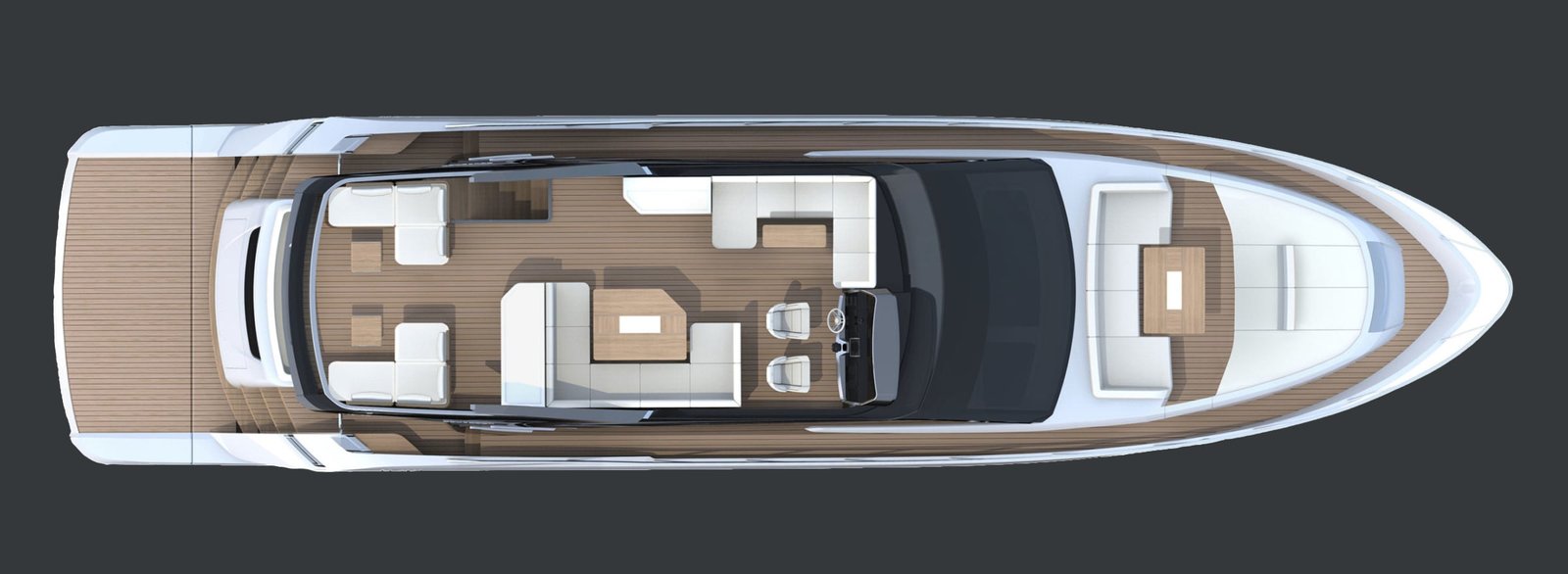
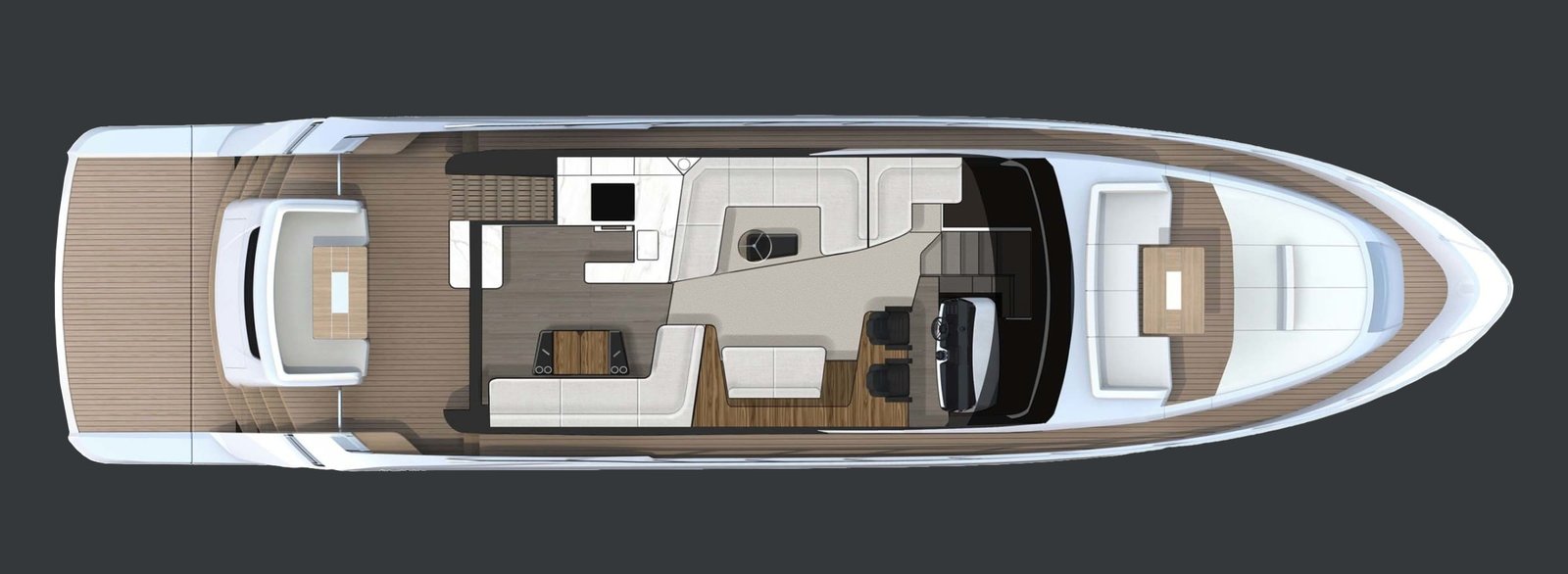
The Squadron 68 is the largest yacht Fairline builds, and the current generation makes the flybridge the centre of life on board rather than an afterthought above it. Three separate zones sit up there: triple sun loungers aft, a dining table amidships and forward seating ahead of the helm, so a group can spread out without anyone giving up a seat. Below, the saloon runs on a single level through to the galley, which keeps sightlines open from the aft doors to the windscreen.
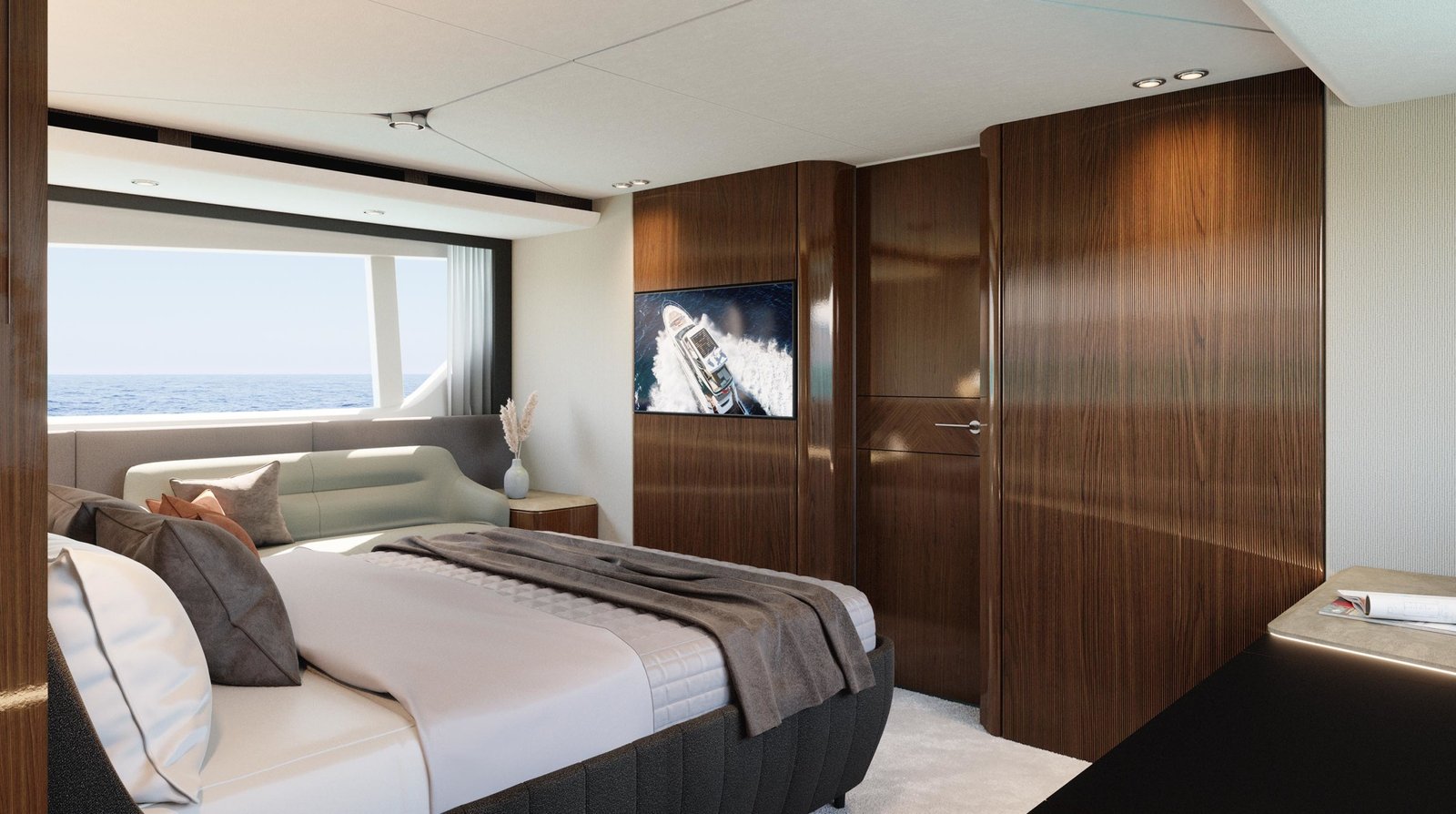
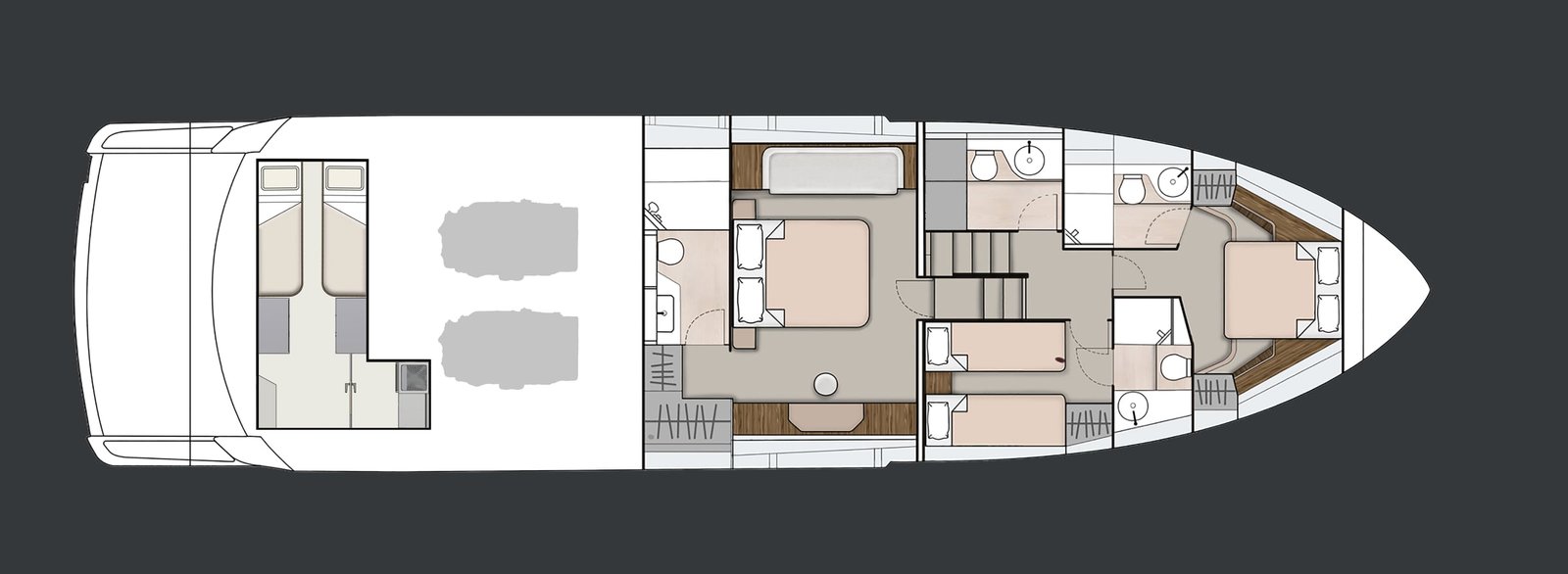
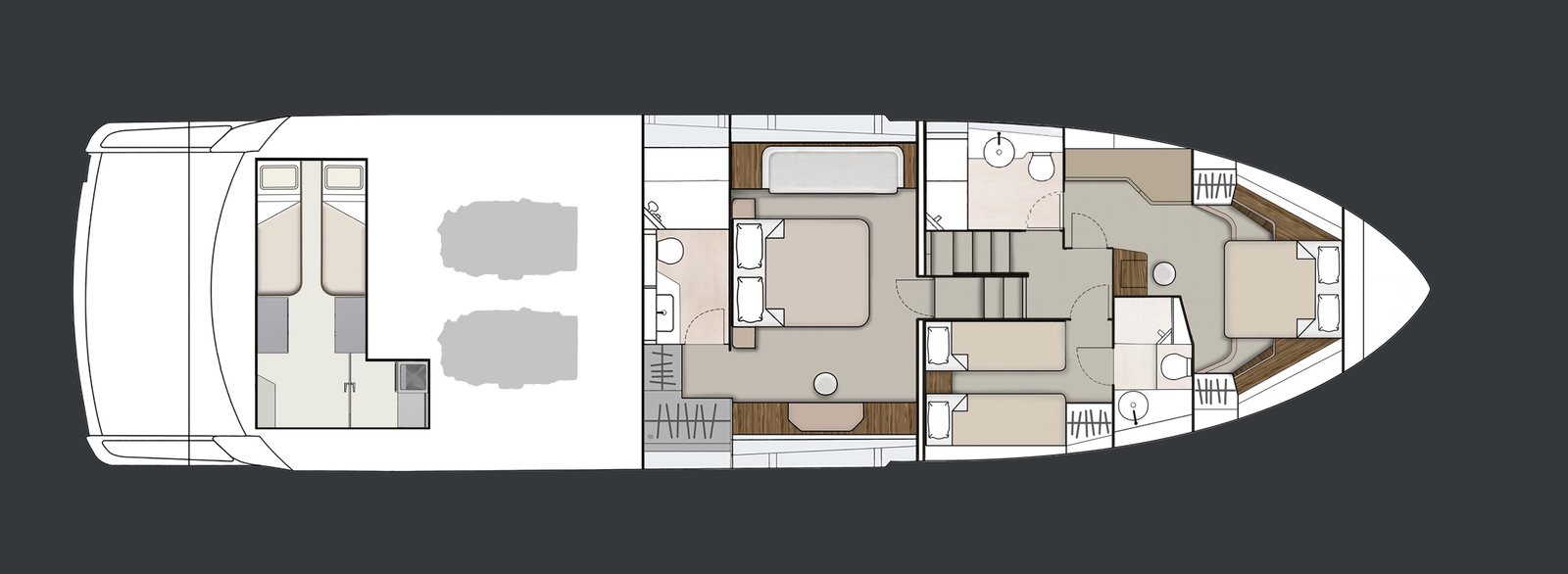
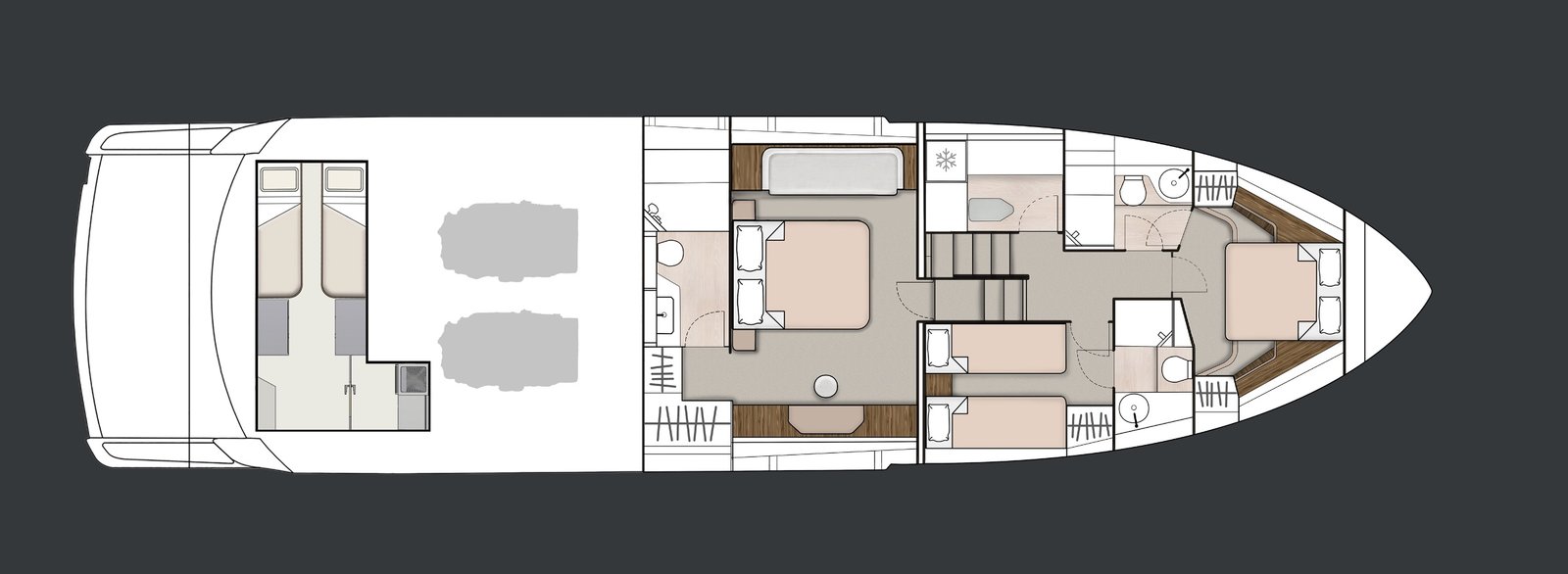
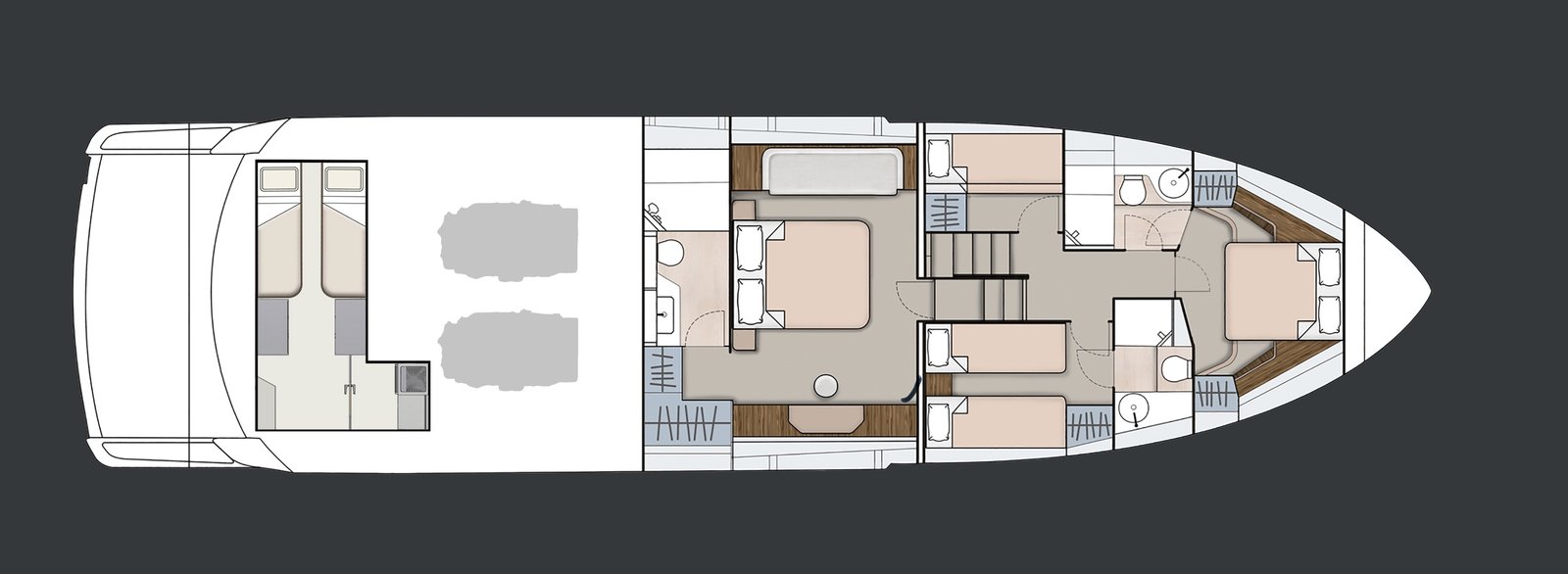
At 21.12 metres with a 5.23 metre beam, the hull carries its volume where buyers want it. Fairline publishes berths from six to ten across four lower-deck plans, from the standard three-cabin arrangement to a four-cabin version, with an extended VIP and a utility-room option in between. The full-beam owner suite sits amidships and takes light from hull windows on both sides.
Power is a pair of Caterpillar C18-1150 shaft drives making 2,300 hp for 31 knots, with C32-1622 engines available for a claimed 33. Shaft drive suits owners who plan long passages and value serviceability over marina agility, and the 4,177 litre fuel capacity supports that thinking.
Built by hand at Oundle in England, the Squadron 68 answers Italian flybridge rivals on volume while holding onto British build quality. Resale has been firm: boats from 2020 onward still ask well above two million euros.
Length
21.1M
Beam
5.2M
Draft
1.6M
Day Guests
16
Sleeping
6
Cabin
3
Cruise Speed
Max Speed
33KT
Fuel
4177L
Engine
2 x Caterpillar C18 1,150 HP
Option 1
2 x Caterpillar C32 1,622 HP
High Price Brokerage
€2,550,000
Low Price Brokerage
€2,250,000
No yachts found matching your criteria.
Alberto Mancini’s hand shows in how little this hull shouts about itself.
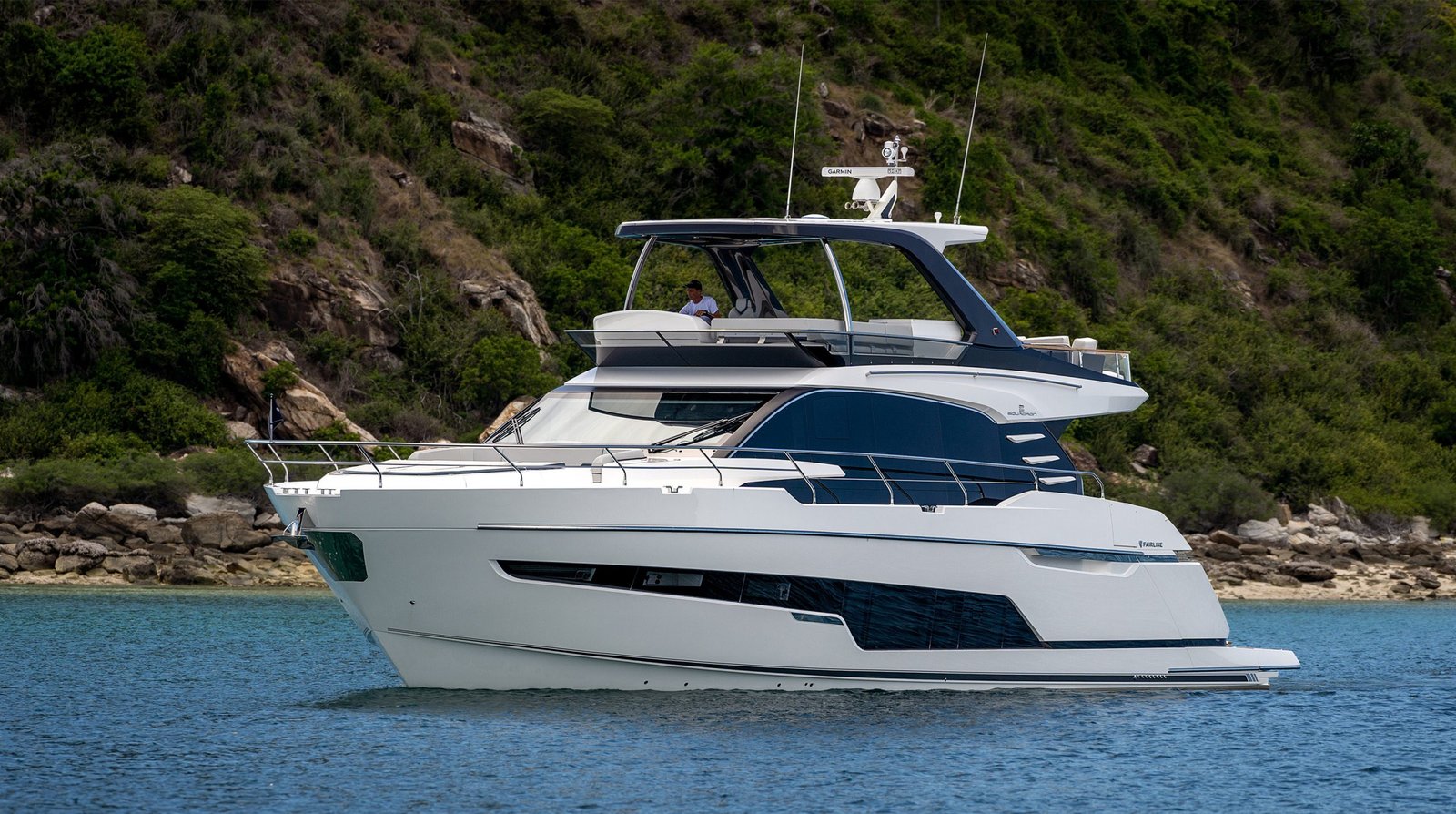
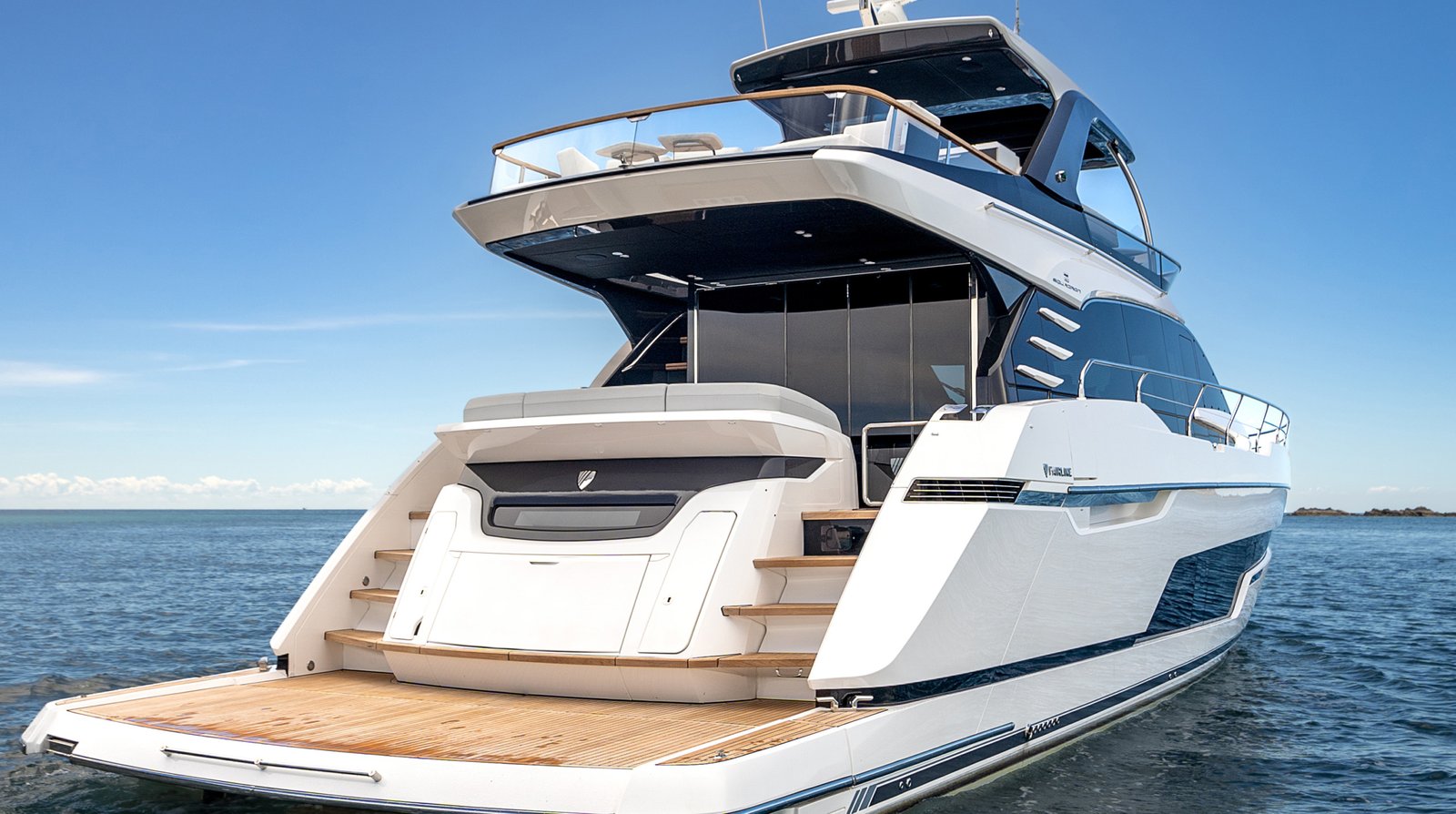
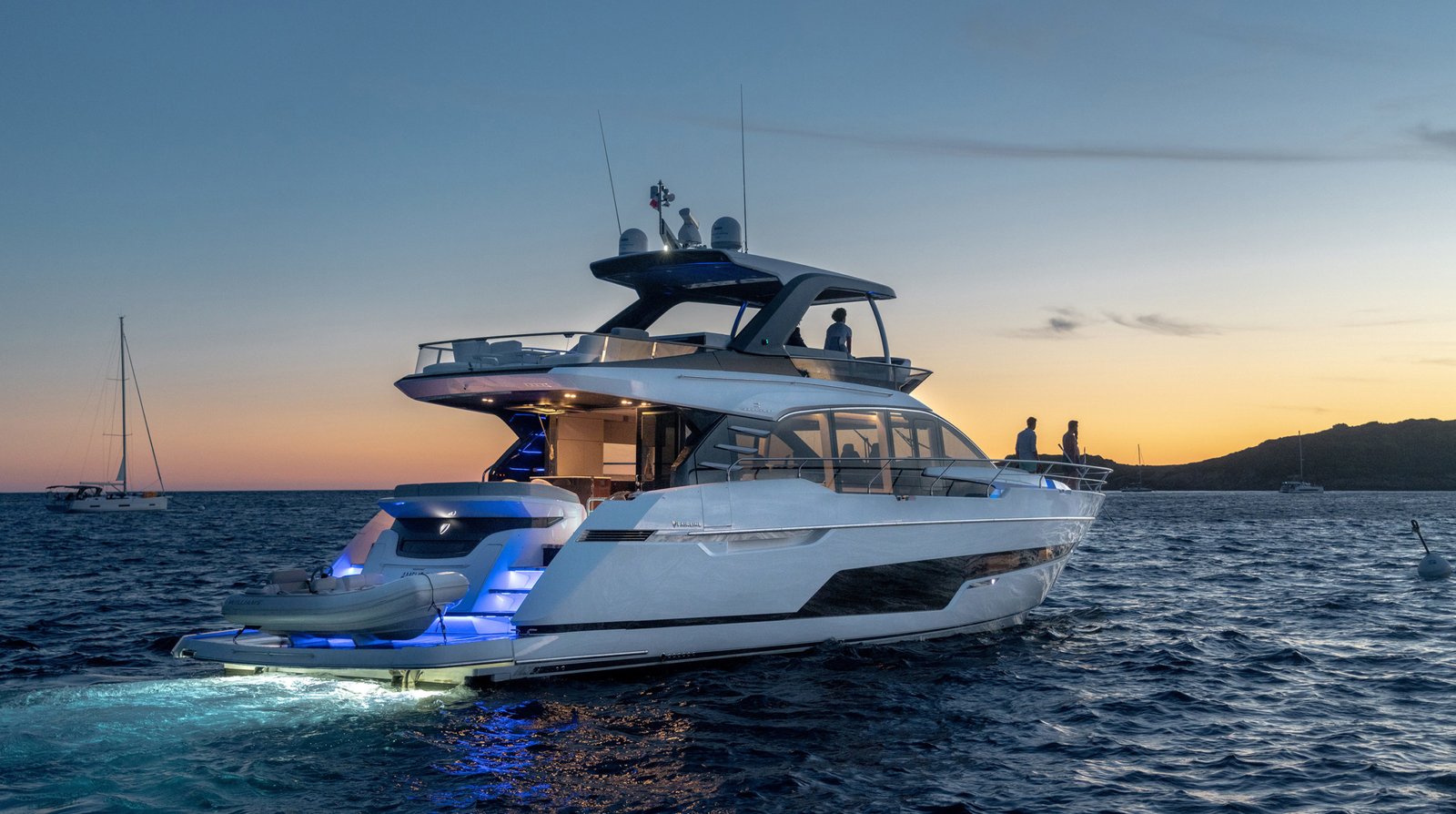
Mancini worked alongside Andrew Pope and Fairline’s in-house design team on her exterior, and the result favours glass over GRP wherever the structure allows. Dark vinyl trim along the windscreen, flybridge supports and hardtop struts cuts the visual weight of the upper deck, while GRP spears at the front of the saloon windows tie her back to earlier Squadrons. Gates across the bow walkway keep the coachroof line unbroken rather than serving any real safety purpose, and dropped bulwarks improve the view out from the saloon below. Even her stern quarter fairleads are sculpted rather than left as standard stainless fittings, a small detail that says a great deal about where Fairline spent its attention.
Shaft drives are not the fashionable choice, but they are the serviceable one.
Standard twin Caterpillar C18 engines at 1,150hp apiece deliver a combined 2,300hp and a cruising pace that settles comfortably around 31 knots, while the optional C32 pairing at 1,622hp each raises her claimed top speed to 33. Both options drive through conventional shafts rather than pods, a decision that favours owners planning long passages and genuine serviceability over marina agility. A Seakeeper gyro keeps her steady at anchor and underway alike, and her 4,177 litre fuel capacity, sized to match the engines rather than an afterthought, supports real range between fuel stops. She feels, underway, like a yacht built for distance rather than showground sprints.
The flybridge is where this yacht actually lives.
A new hardtop shelters a sloped social area that runs straight through to the transom, so the boundary between covered and open deck barely registers. Triple sun loungers sit aft, a dining table occupies the middle ground, and forward seating faces the helm, letting a full group spread out without anyone surrendering a seat. A wet bar with an optional ice maker and fridge serves both ends of the space, and twin helm seats with their own repeater screens mean the upper station works as a genuine second bridge rather than a fair weather perch. Down below, the saloon continues the theme on a single level through to the galley, keeping sightlines open from the aft doors to the windscreen.
Four lower deck plans mean this yacht can be built around how an owner actually lives.
The standard arrangement sleeps six across three ensuite cabins, with the full beam owner’s suite positioned amidships to take advantage of hull windows on both sides. Buyers wanting more can specify berths up to ten and a four cabin version with an extended VIP, while a utility room option sits between the two extremes for owners who need laundry and stowage more than another berth. The crew cabin, reached through a hidden door in the transom staircase, carries the same finish as the guest accommodation, so it doubles comfortably as extra space for two when it is not housing crew. It is a configuration built for flexibility rather than a fixed idea of who travels aboard.
4,177 litres of fuel is not a number Fairline arrived at casually.
Sized against the standard Caterpillar C18 engines, that capacity is built to support the long, steady passages shaft drive propulsion is suited for, rather than a quick dash between anchorages. At a 25 knot cruise she is estimated to cover 250 to 300 nautical miles before needing to refuel, distance that matters to an owner planning a genuine cruising season rather than day trips from a home marina. The shaft drive choice over pods reinforces the same philosophy: slightly less agile at the dock, considerably easier to maintain and repair wherever in the world she happens to be. For an owner thinking in weeks rather than weekends, that trade makes obvious sense.
Length
21.1M
Beam
5.2M
Draft
1.6M
Guests
6
Cabins
3
Cruise Speed
Max Speed
33Kt
Length
17.8M
Beam
5M
Draft
1.4M
Guests
6
Cabins
3
Cruise Speed
–
Max Speed
32Kt

Tell us what you would like to know, and our team will respond with clear details on availability, specification, pricing and next steps.