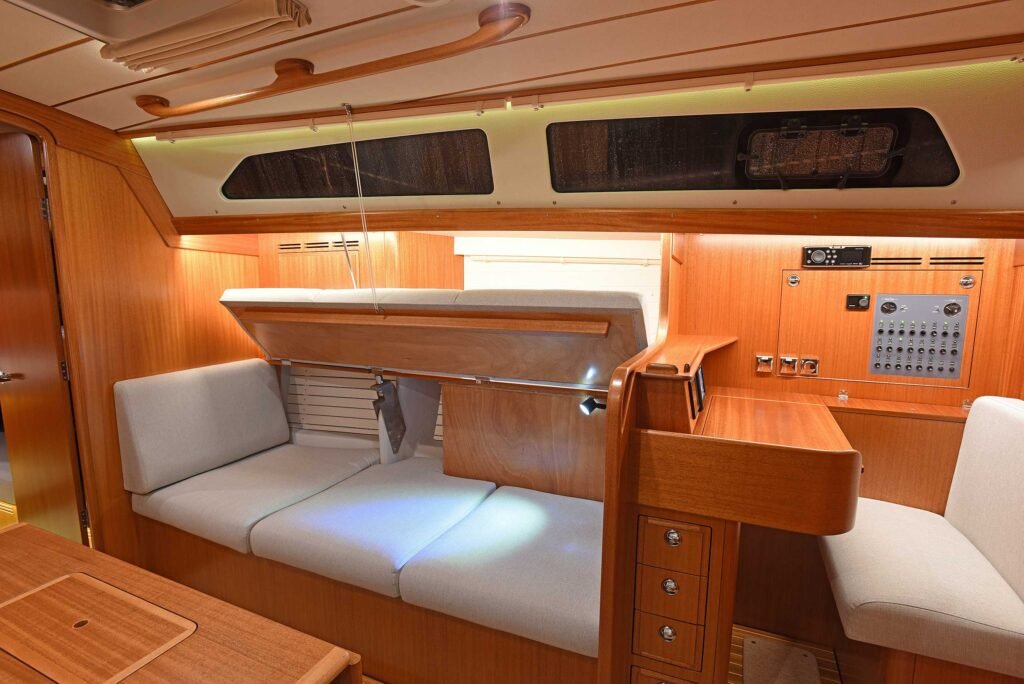
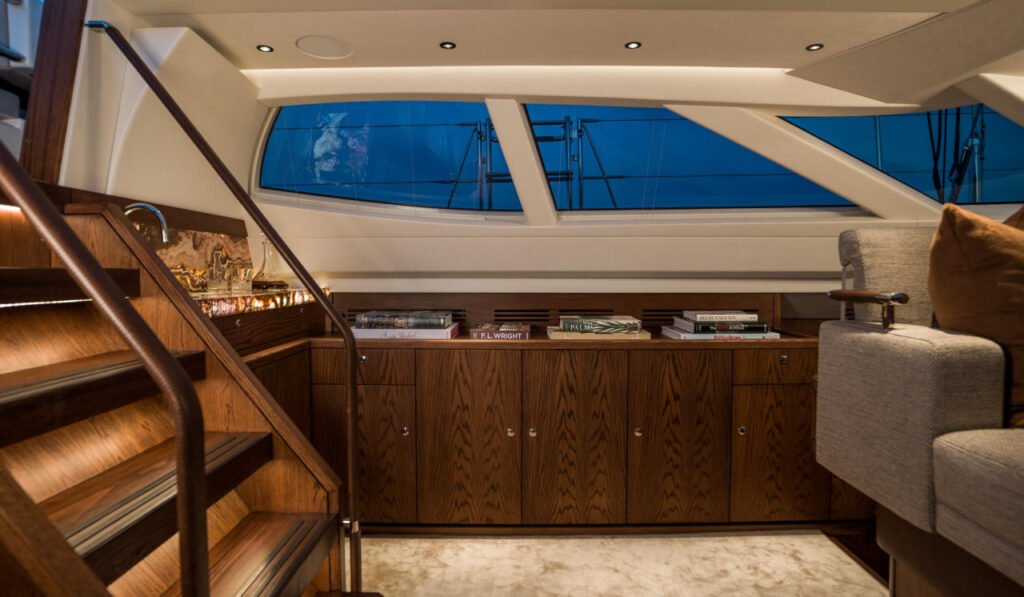
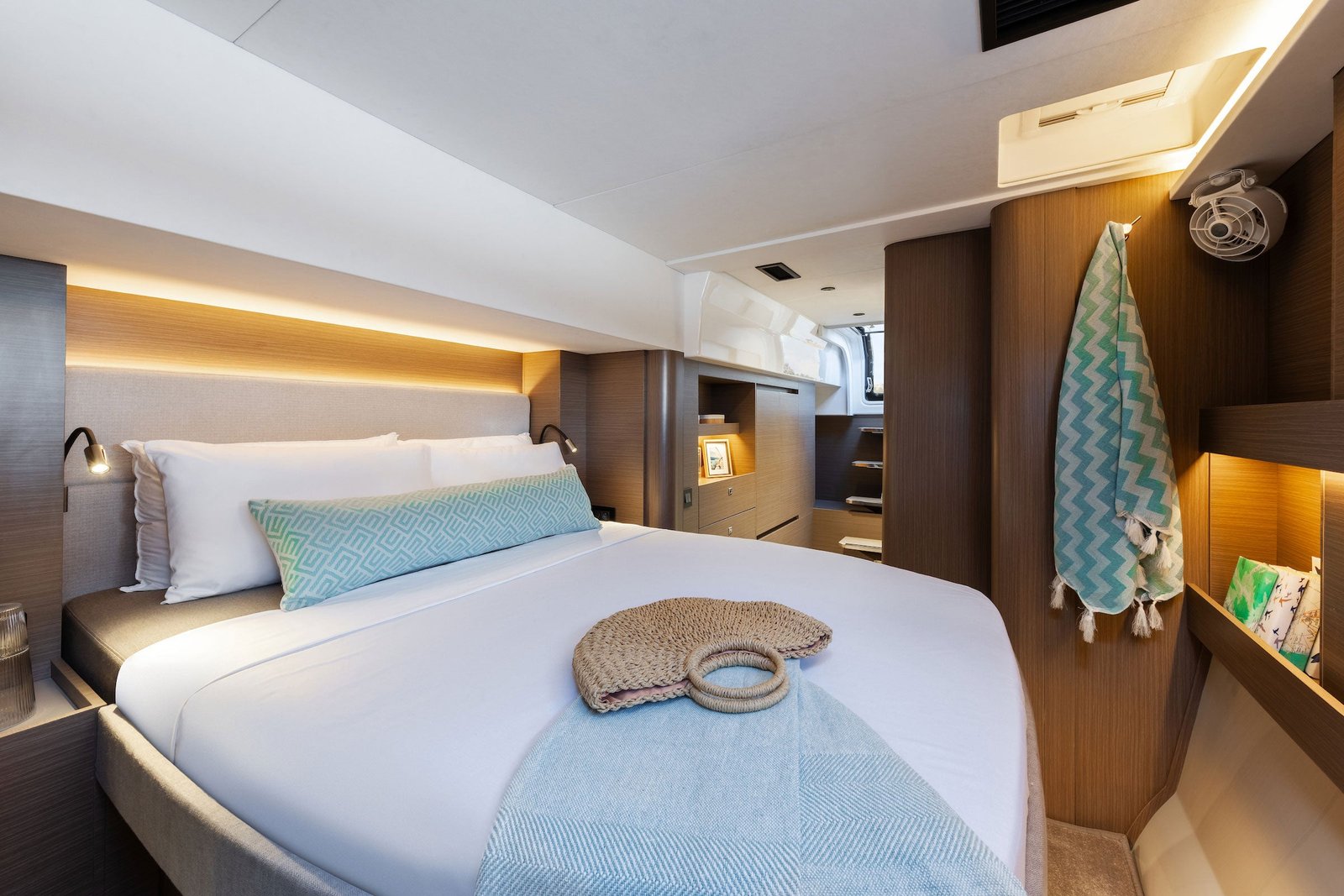
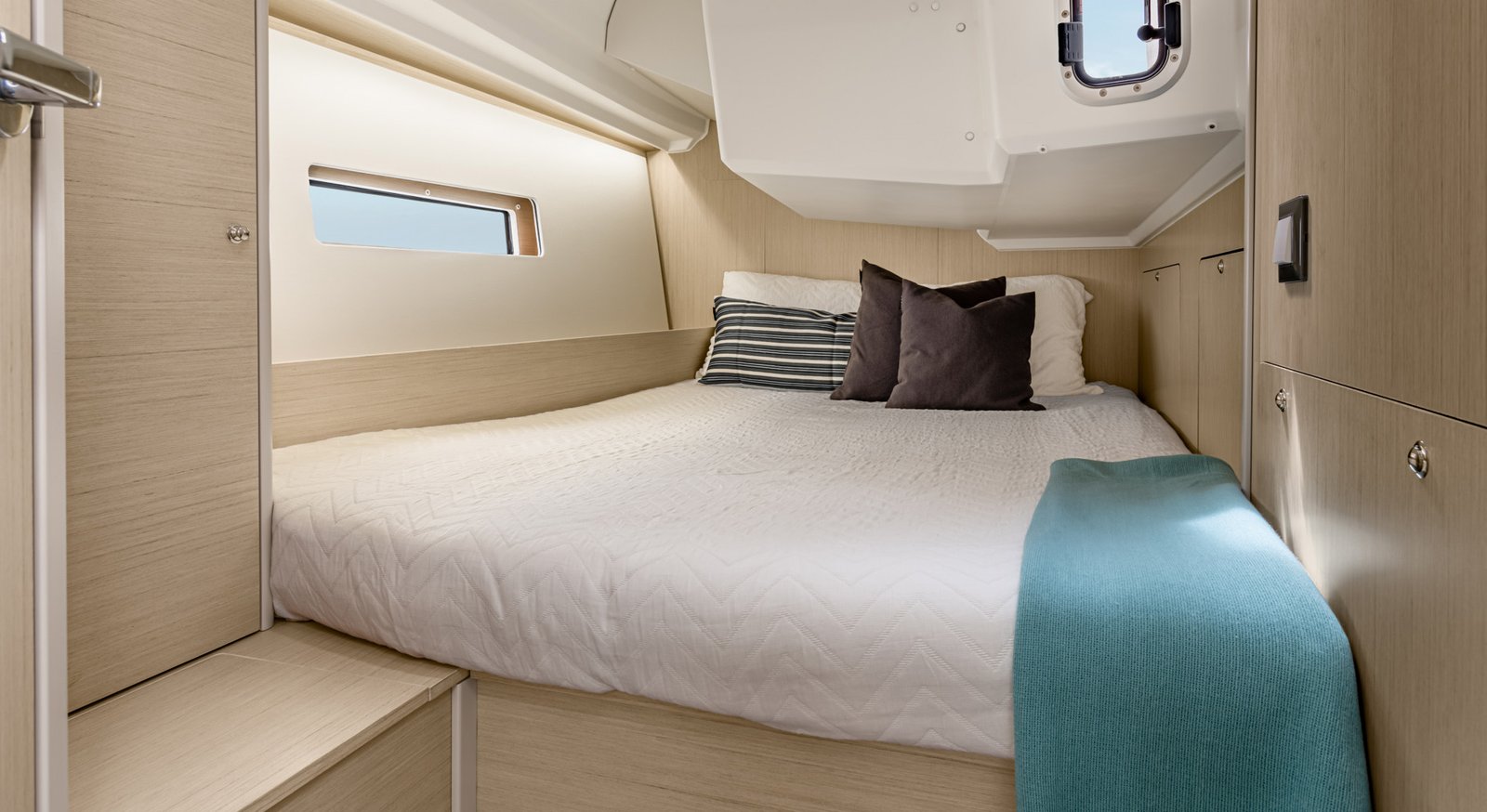
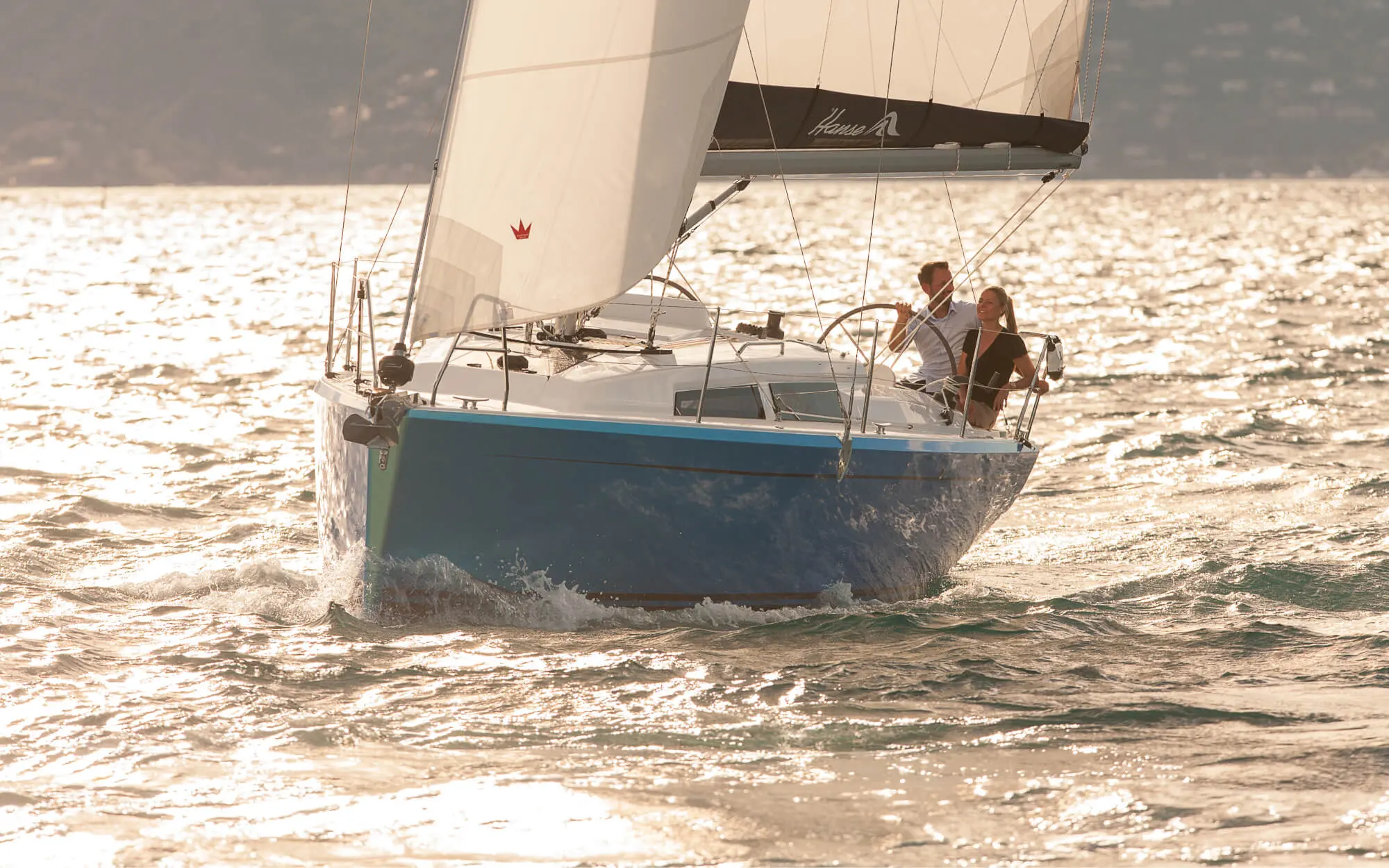
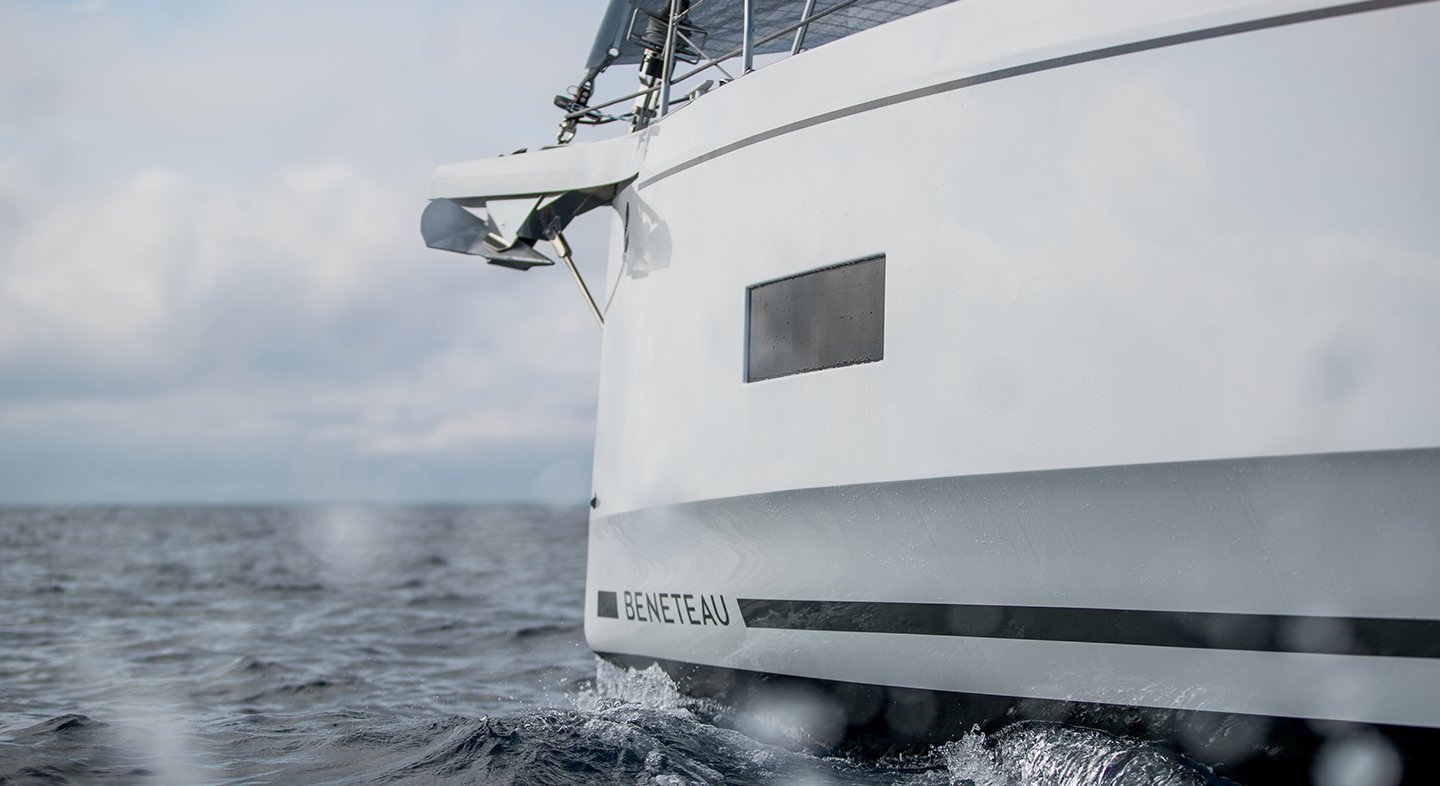
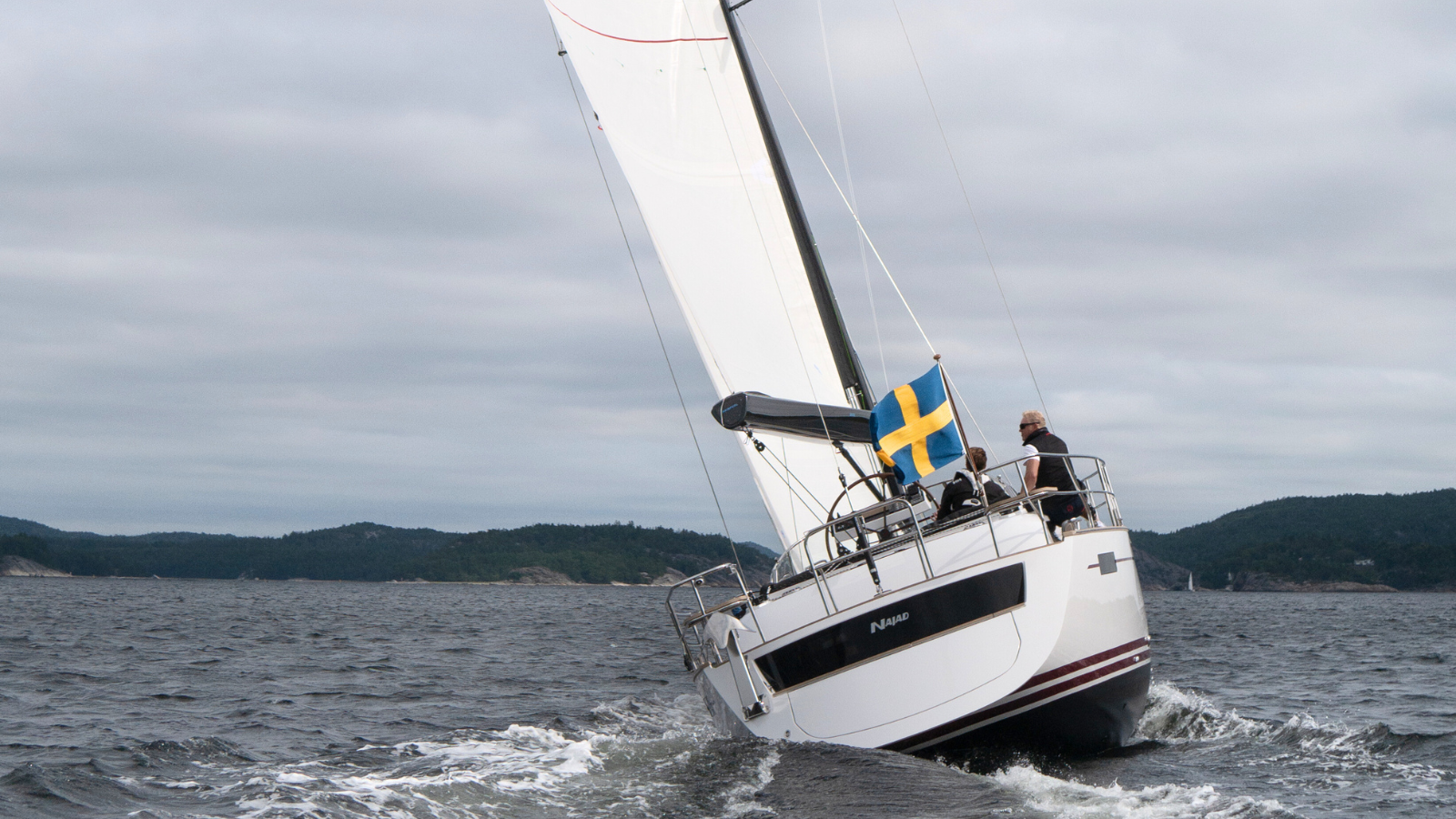
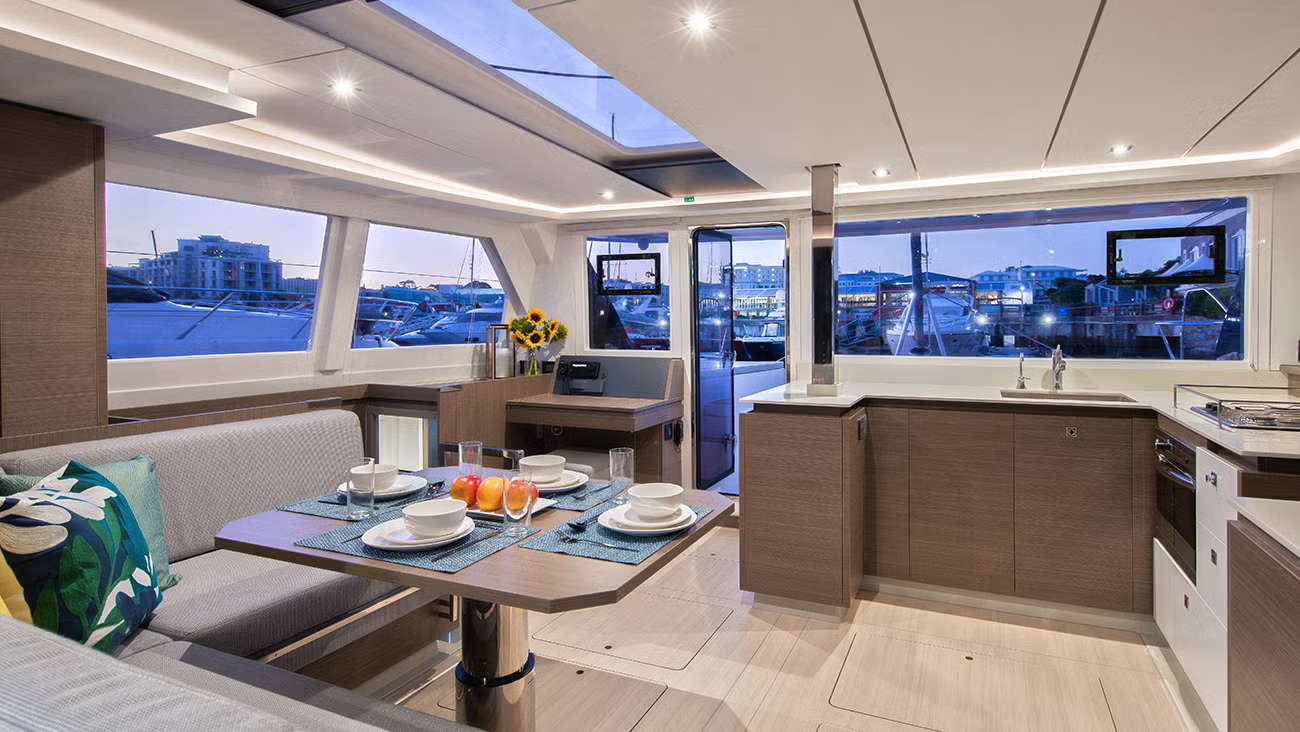
Glass reinforced plastic and a displacement hull form is the pairing behind the majority of serious cruising yachts built in the last fifty years, and the reasons are structural as much as economic. A displacement underbody carries thickness and weight without penalty, and GRP is at its best when it can be laid up generously. The Yacht Collection lists displacement GRP sailing yachts.
The combination is forgiving in the ways that matter offshore. A heavily laid GRP displacement hull tolerates a grounding, a hard berthing and decades of ultraviolet without structural consequence, and it does so while carrying tankage, stores and ground tackle that would sink a light hull onto its lines. Corrosion is not a concern, electrolysis is limited to the metal fittings, and repairs can be made competently in almost any yard in the world.
The variables worth studying are the laminate schedule, whether the topsides are cored, and the history of any work below the waterline. Osmotic blistering, wet core around deck fittings and poorly faired grounding repairs are the three faults that recur, and all three are detectable with percussion testing and a moisture meter. Survey should also cover the keel joint and floors, since a loaded displacement hull depends on them entirely. Browse the displacement GRP sailing yachts available and let our brokers help you read the survey properly.