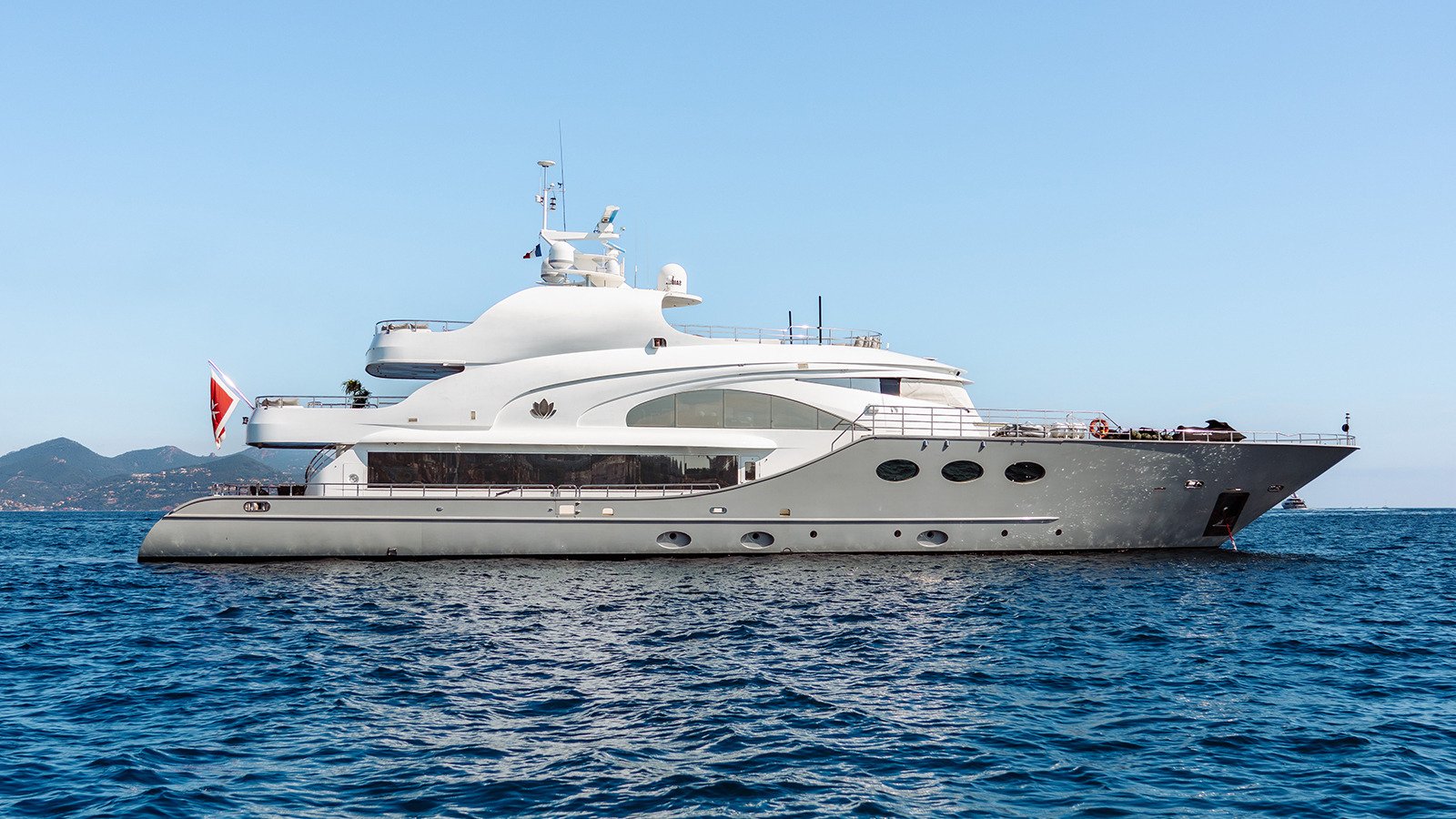
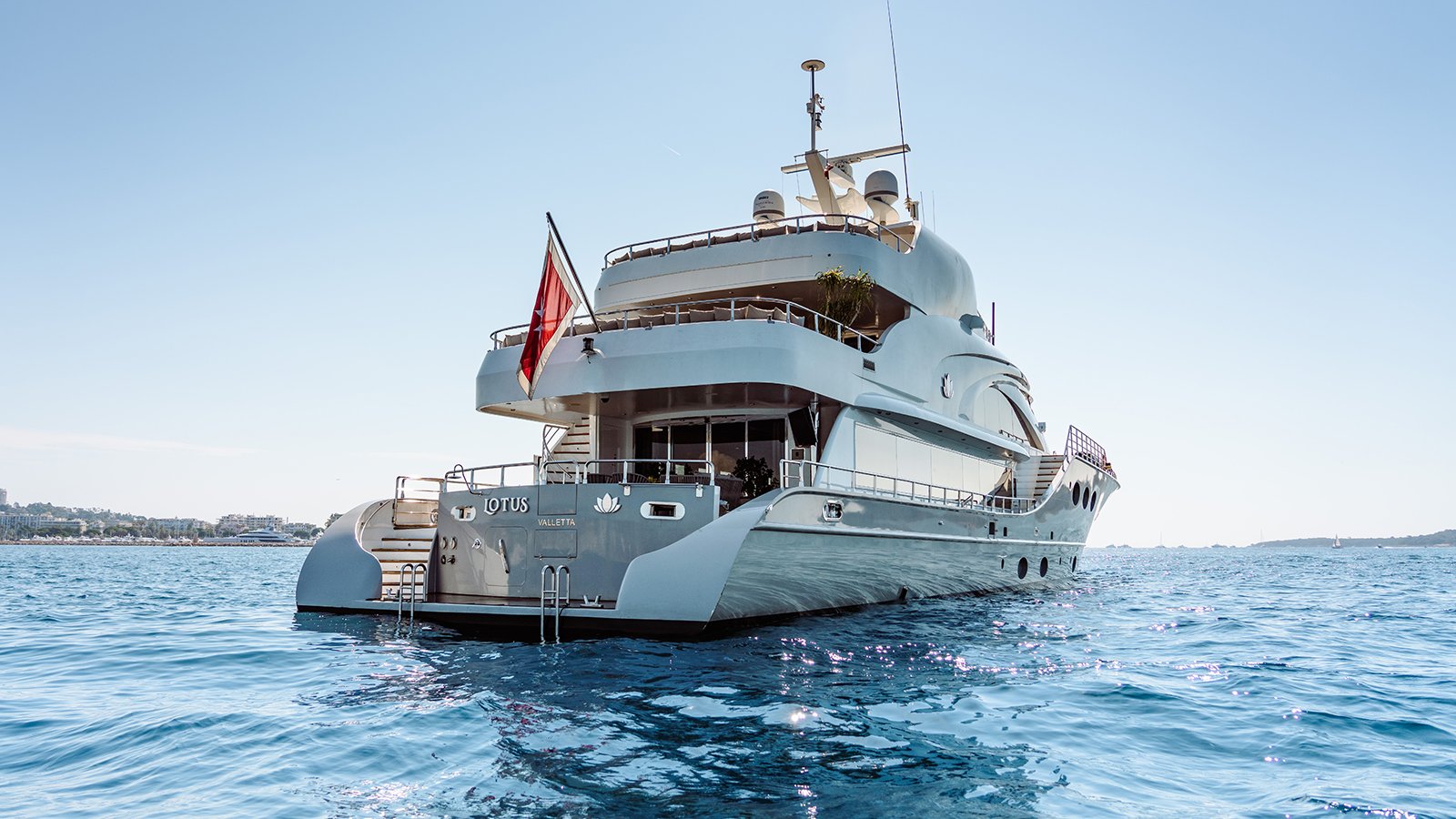
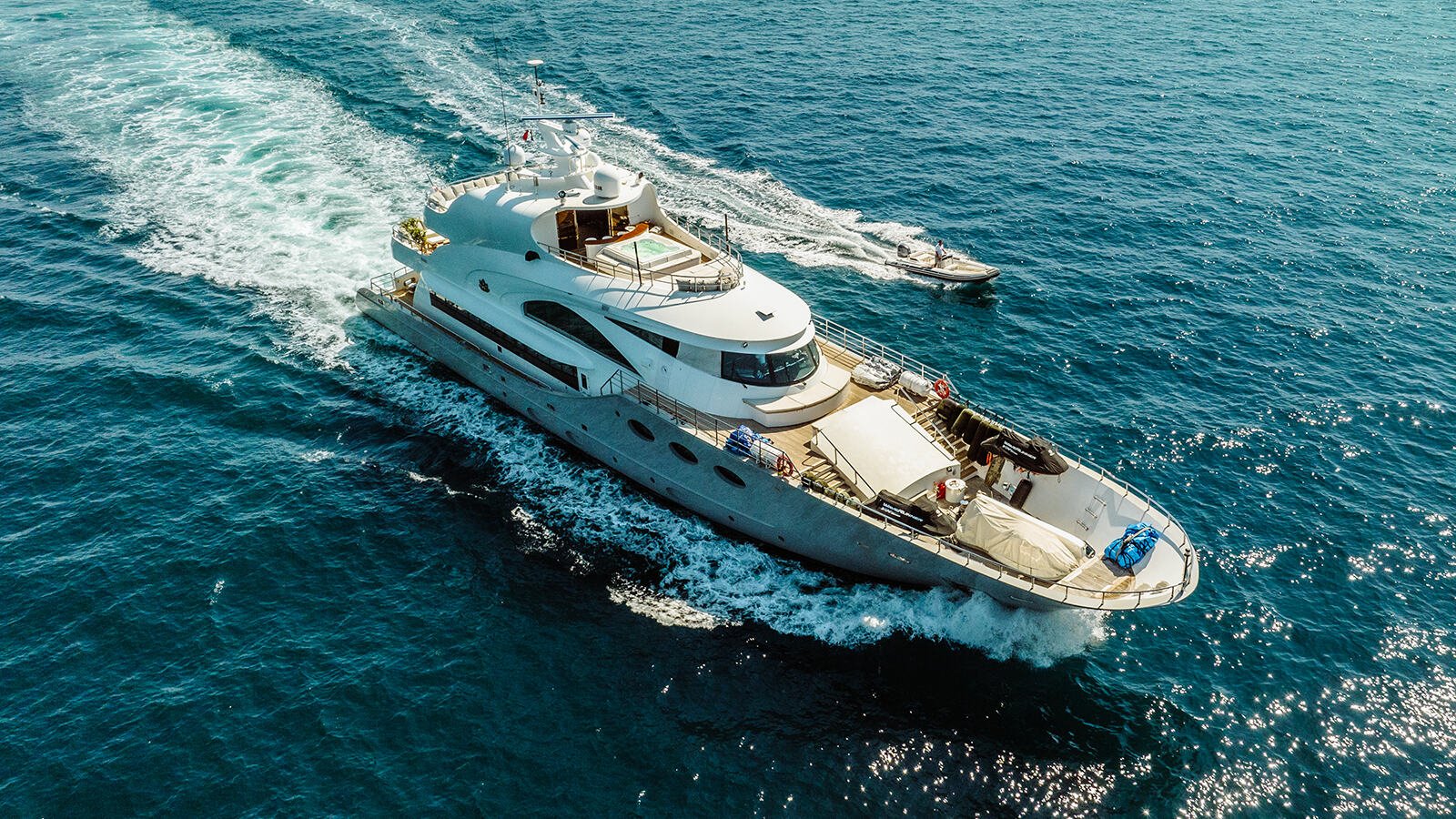
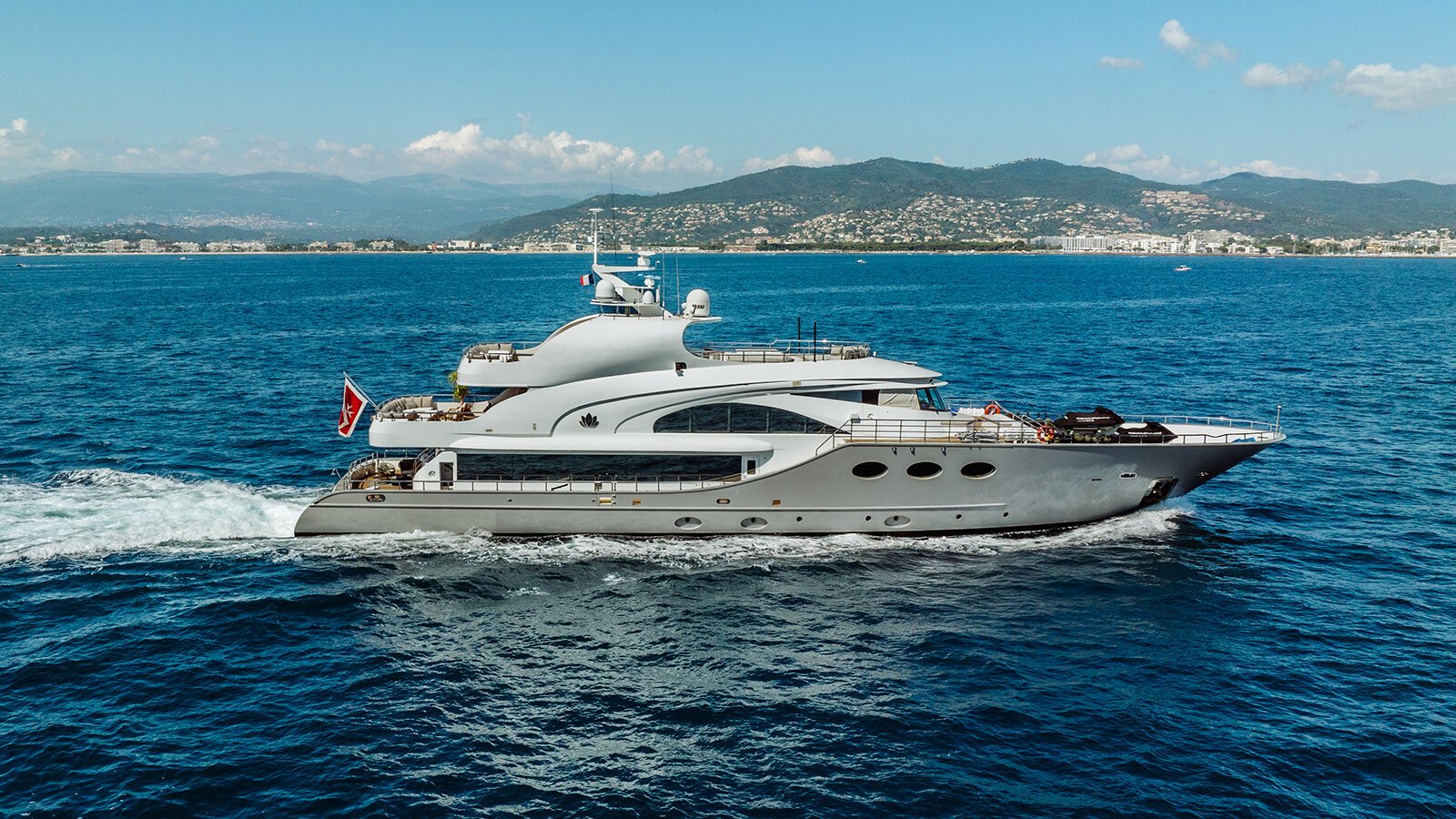
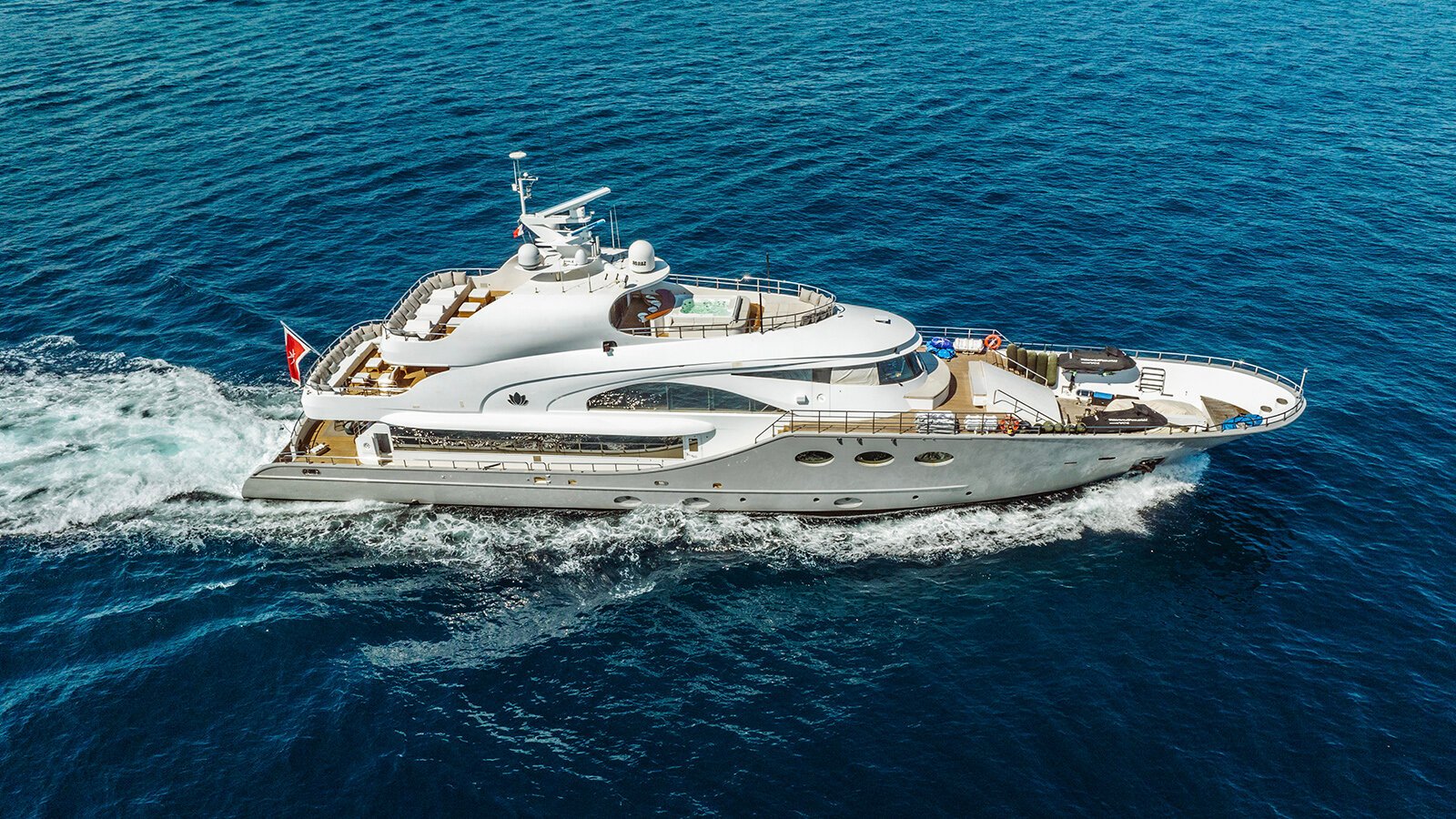
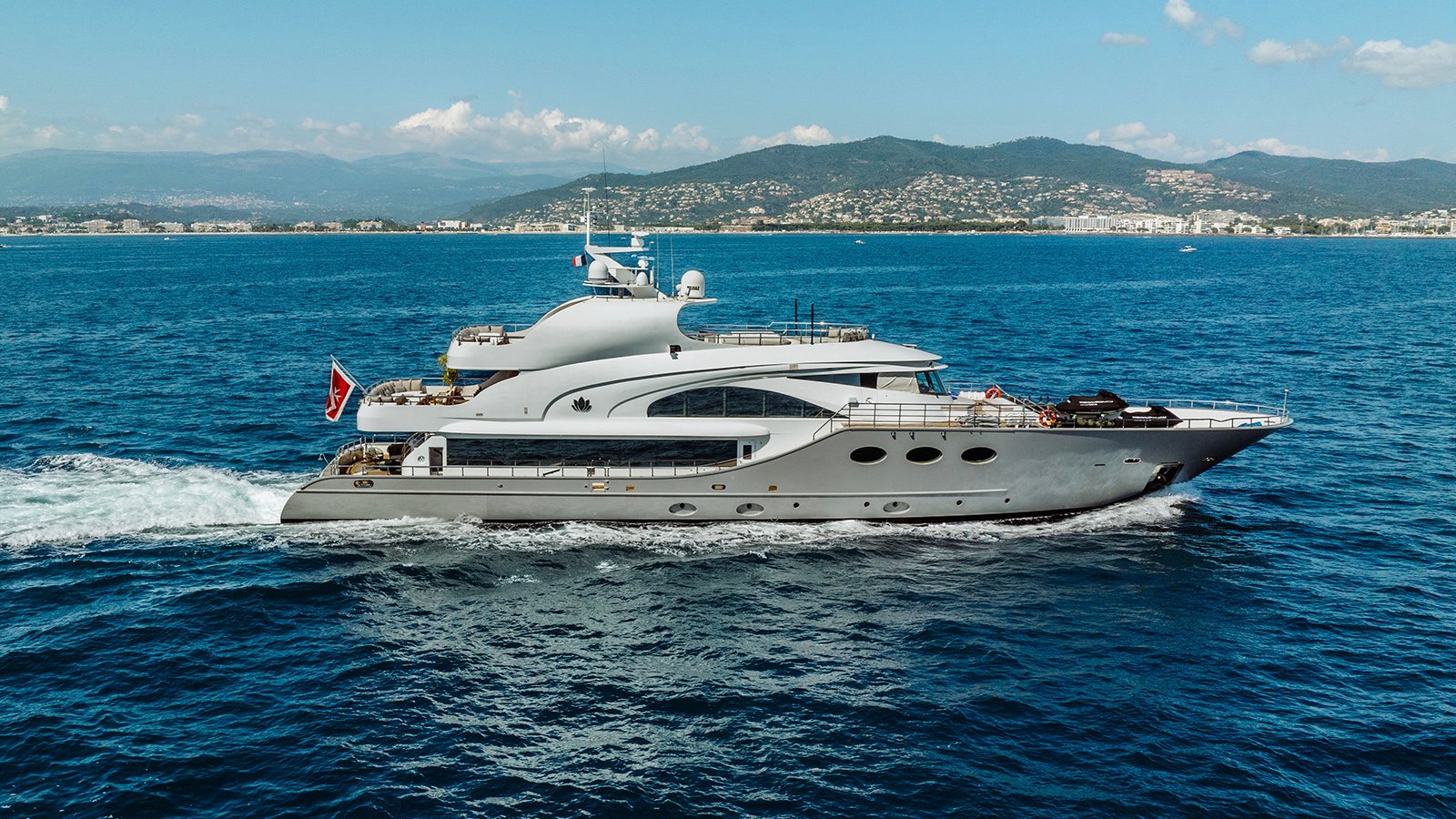
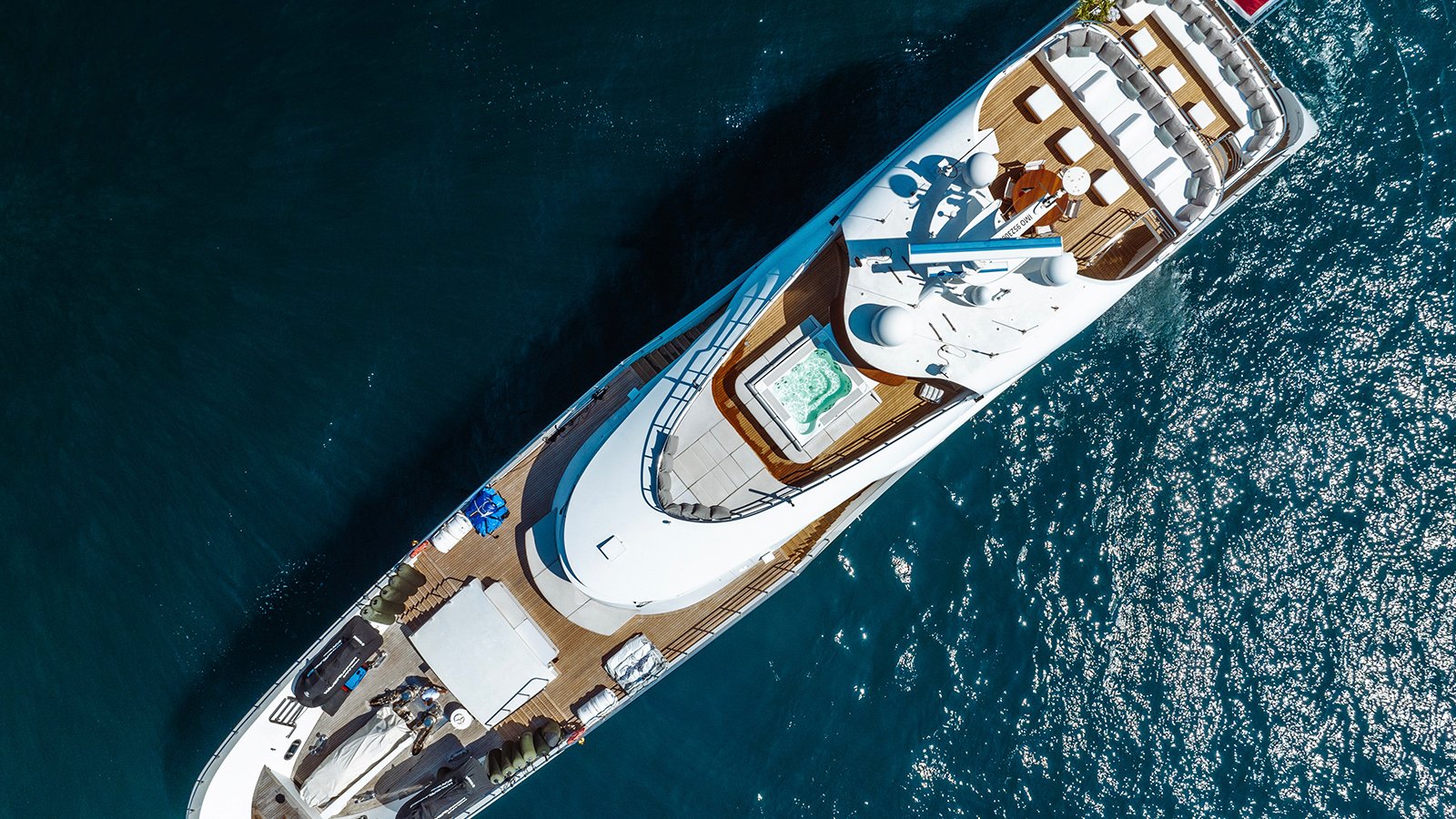
Lotus was built for the way families actually charter. Forty-five metres of steel launched by Miss Tor in 2006 and reworked since, she carries the volume of a much larger yacht across three decks, and almost all of it is given over to spaces guests can use at the same time without ever getting in each other’s way. That is rarer than it sounds at this size, and it is the reason she books repeat weeks.
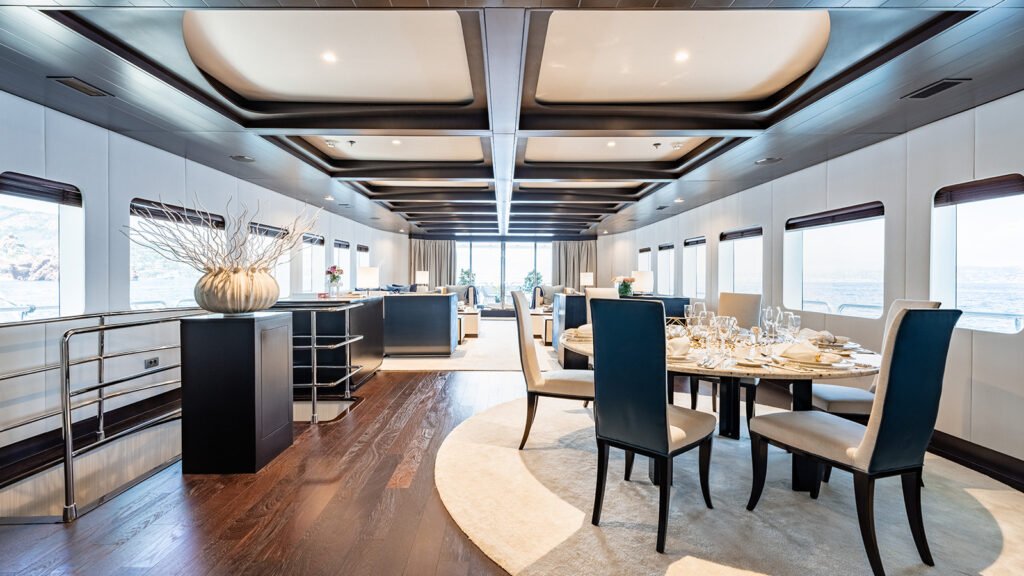
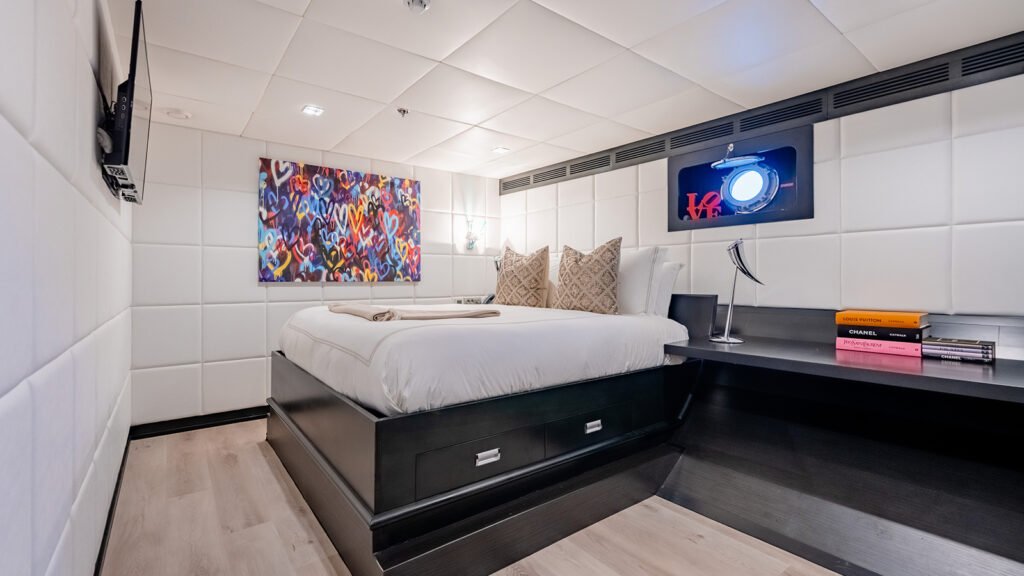
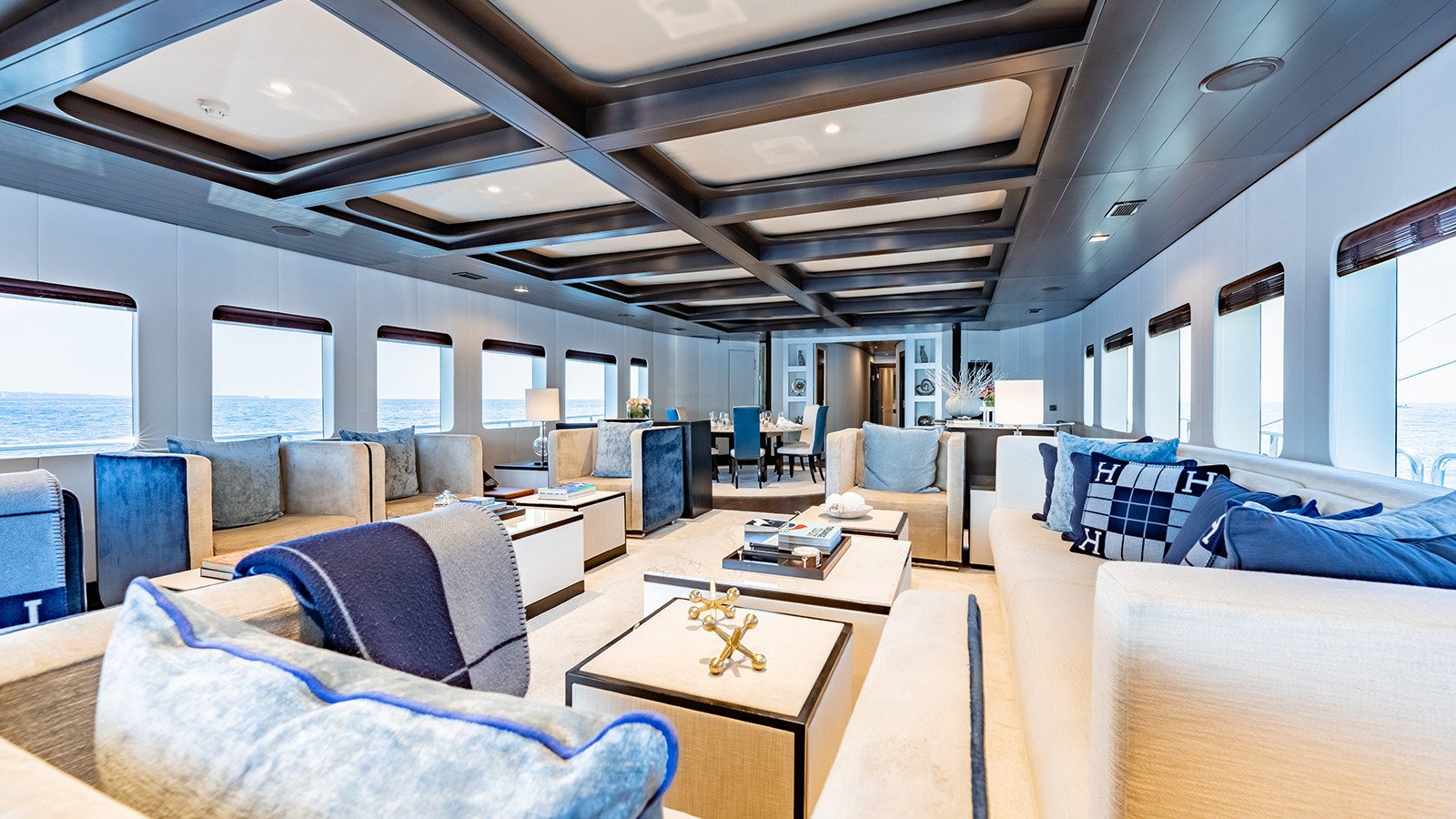
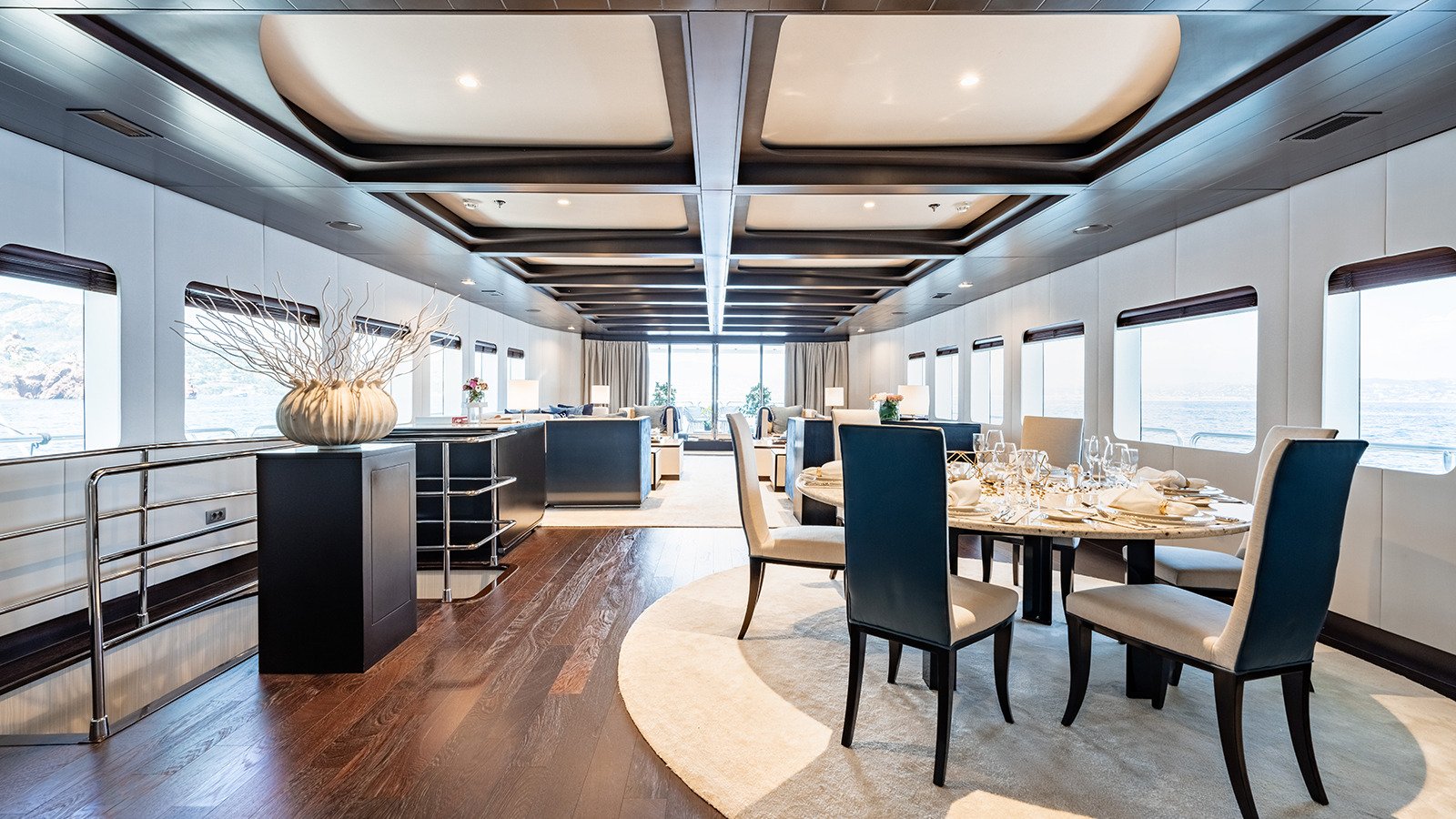
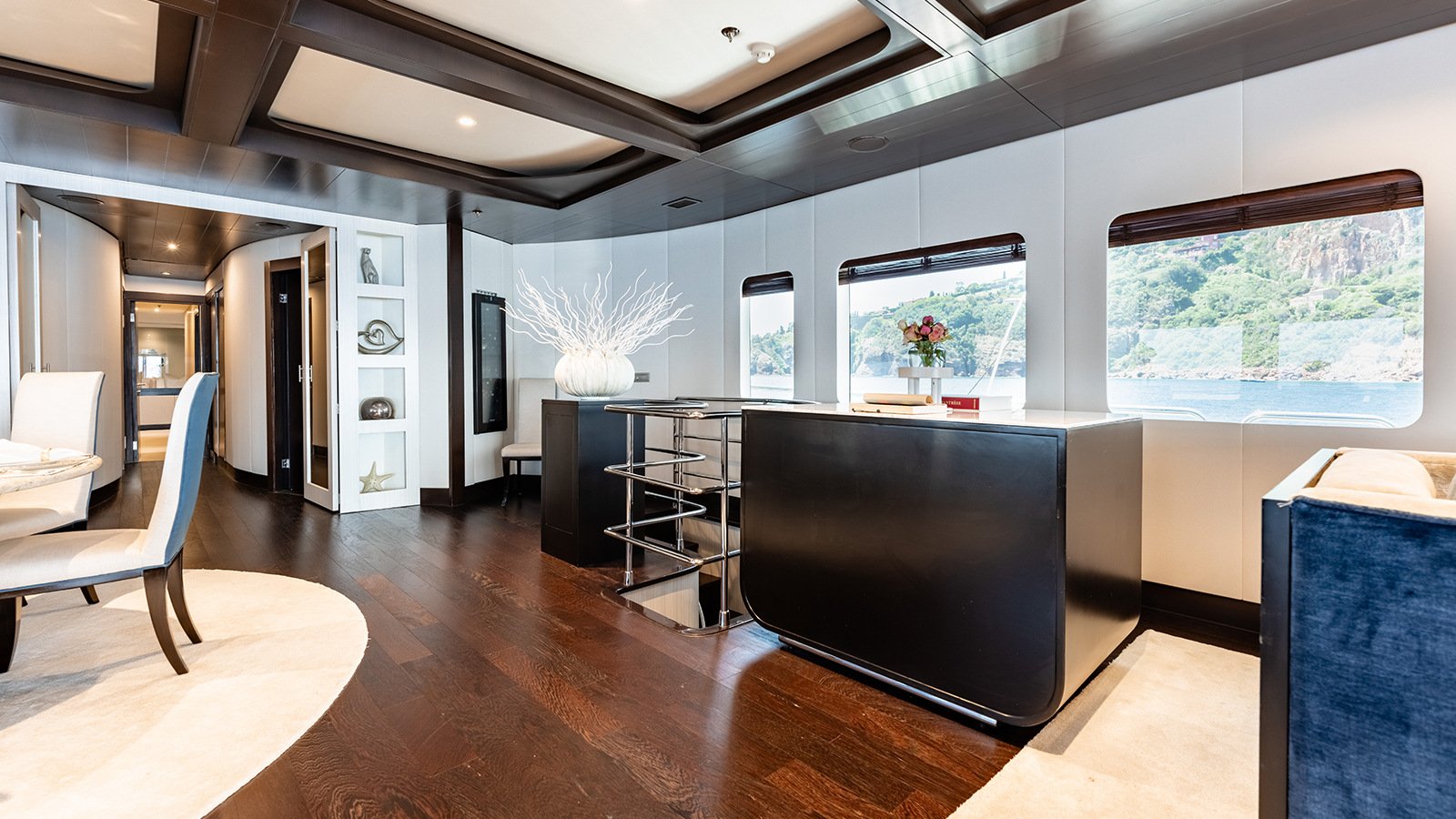
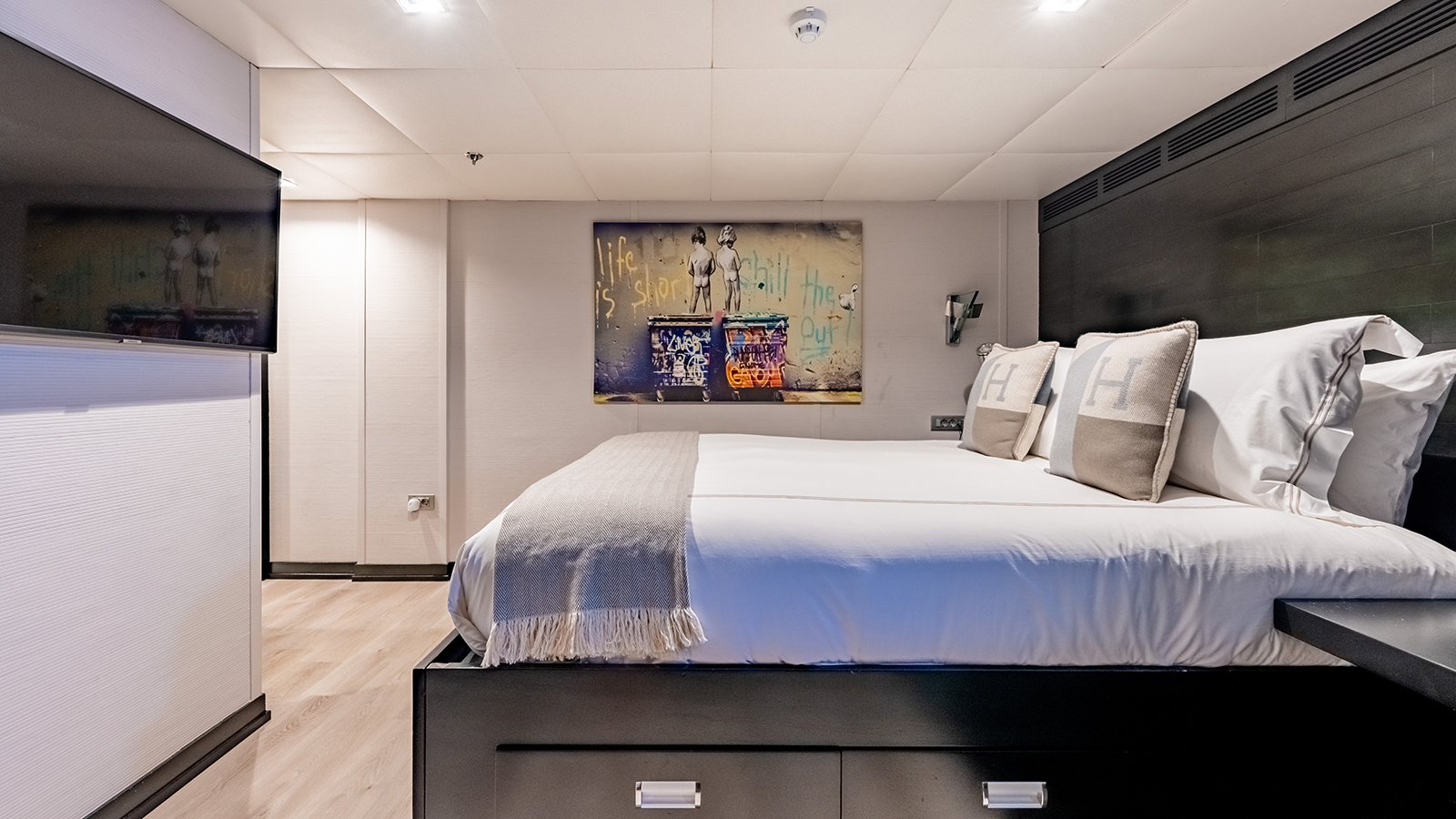
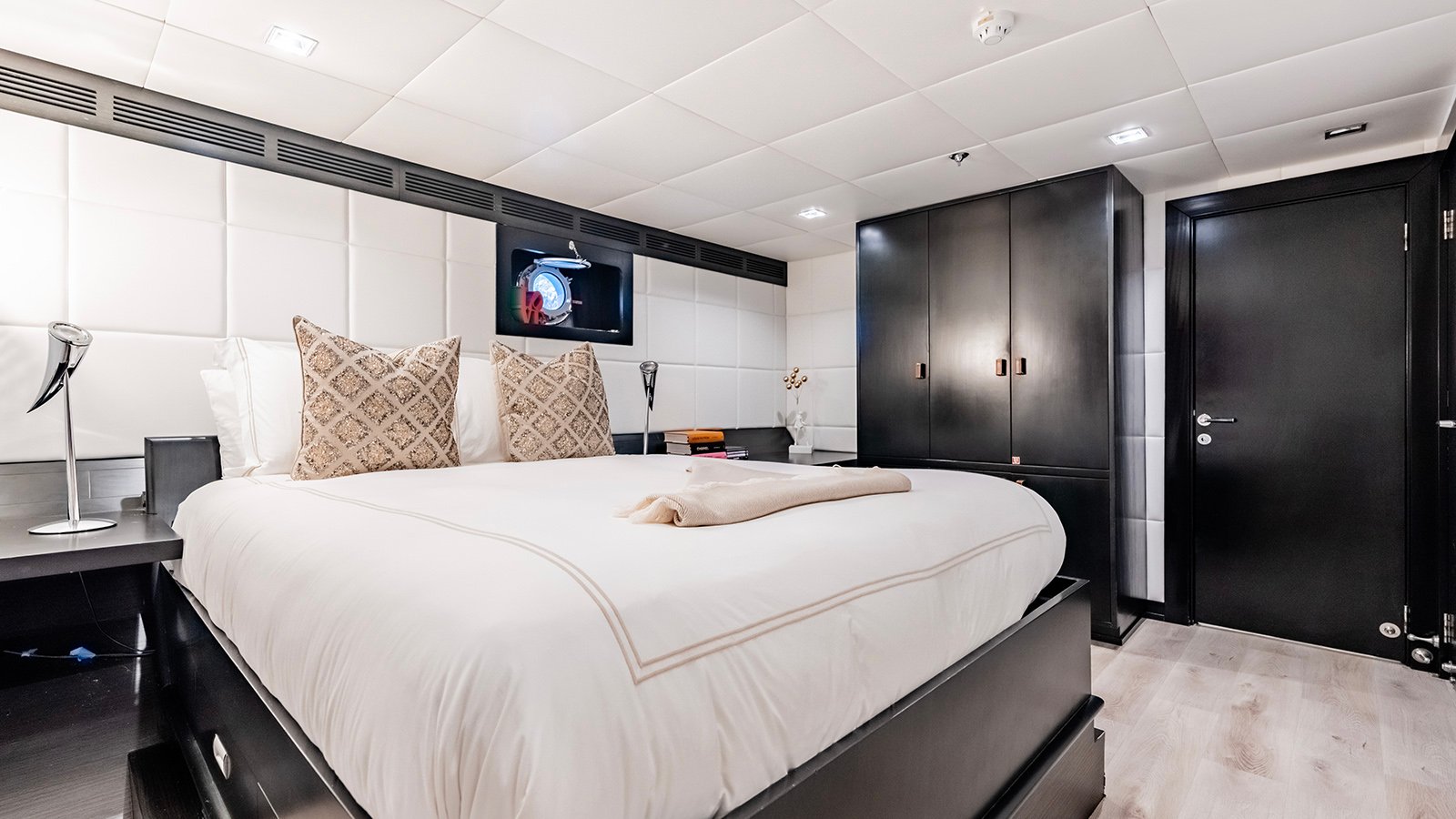
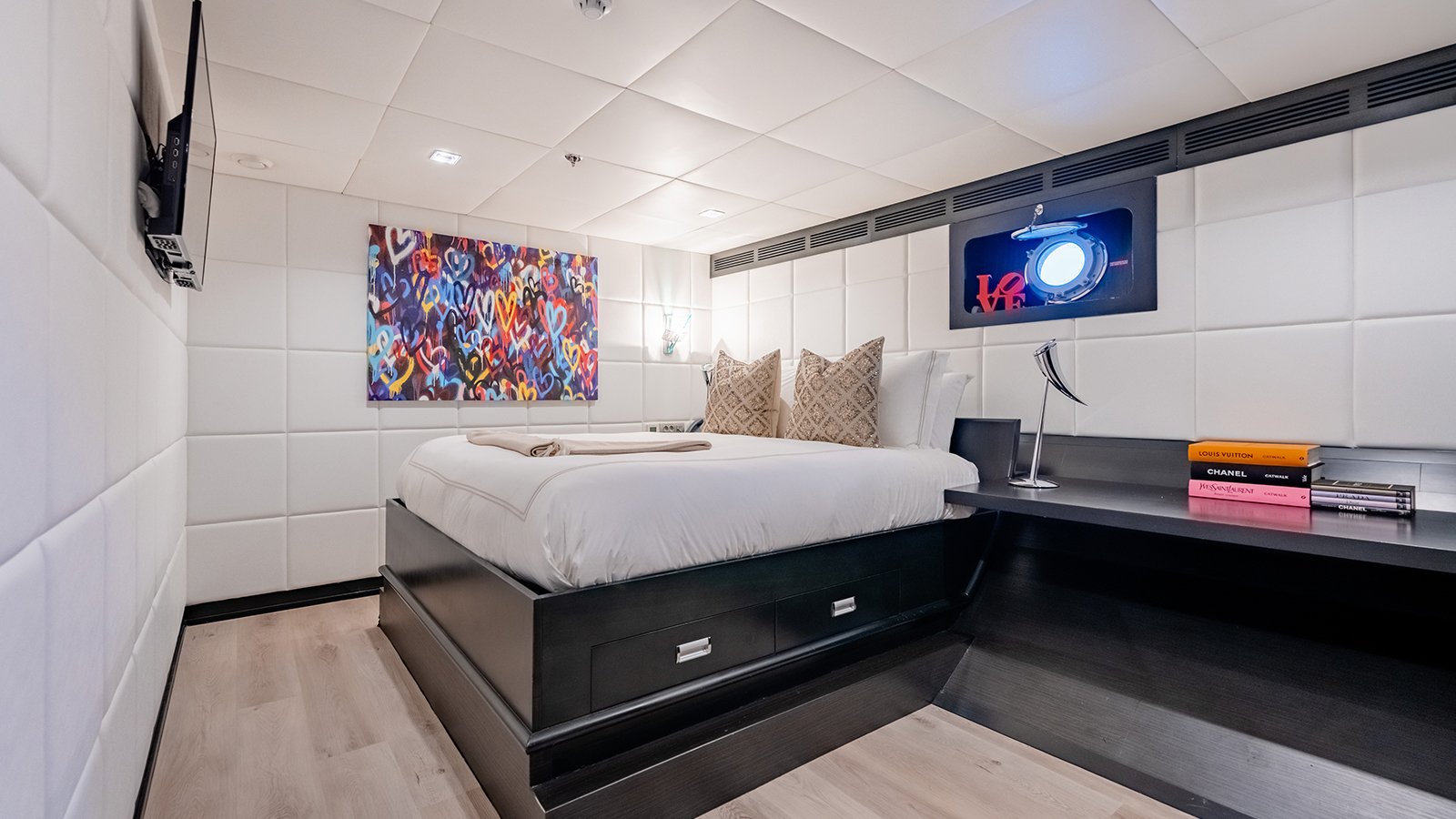
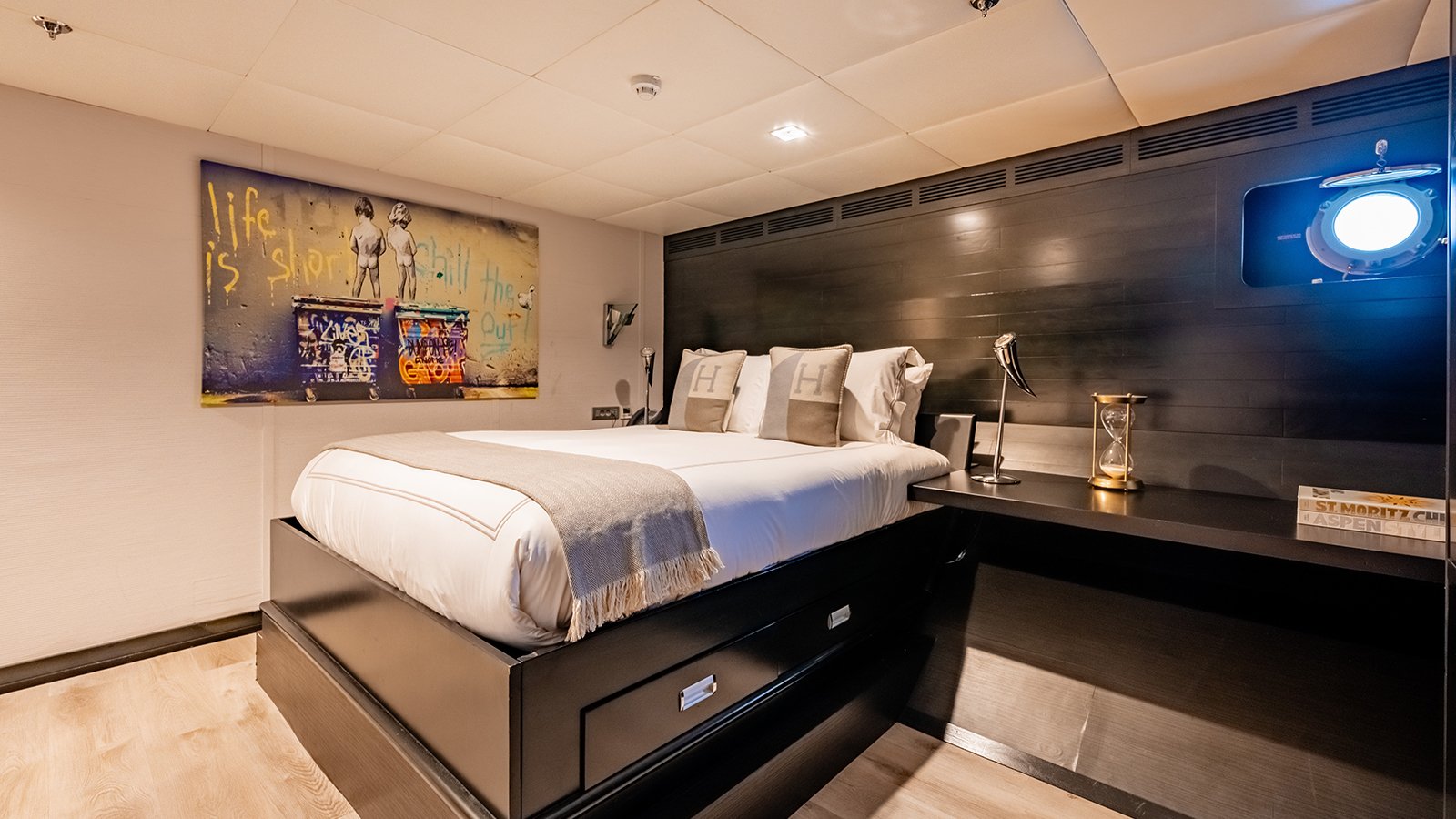
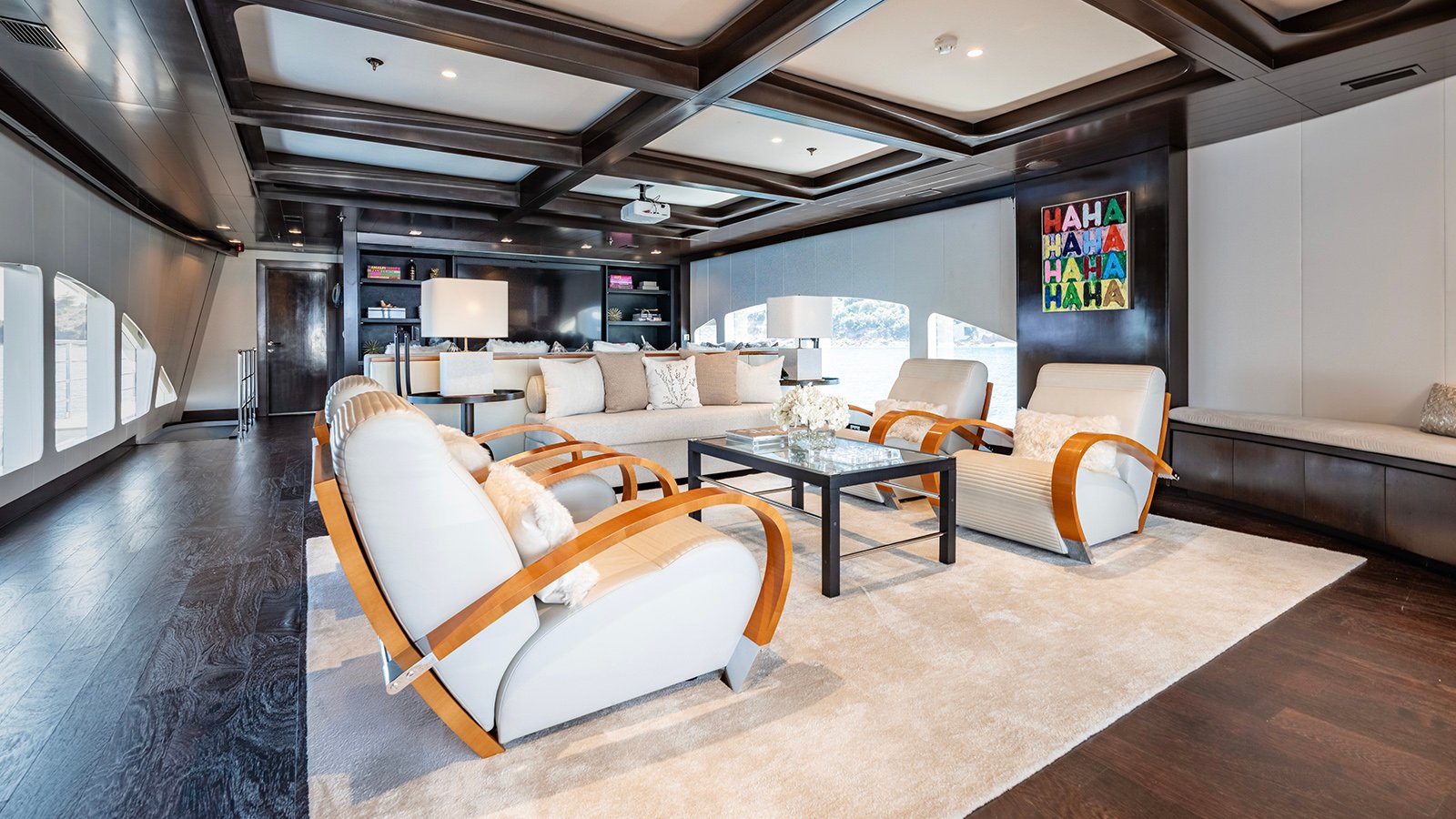
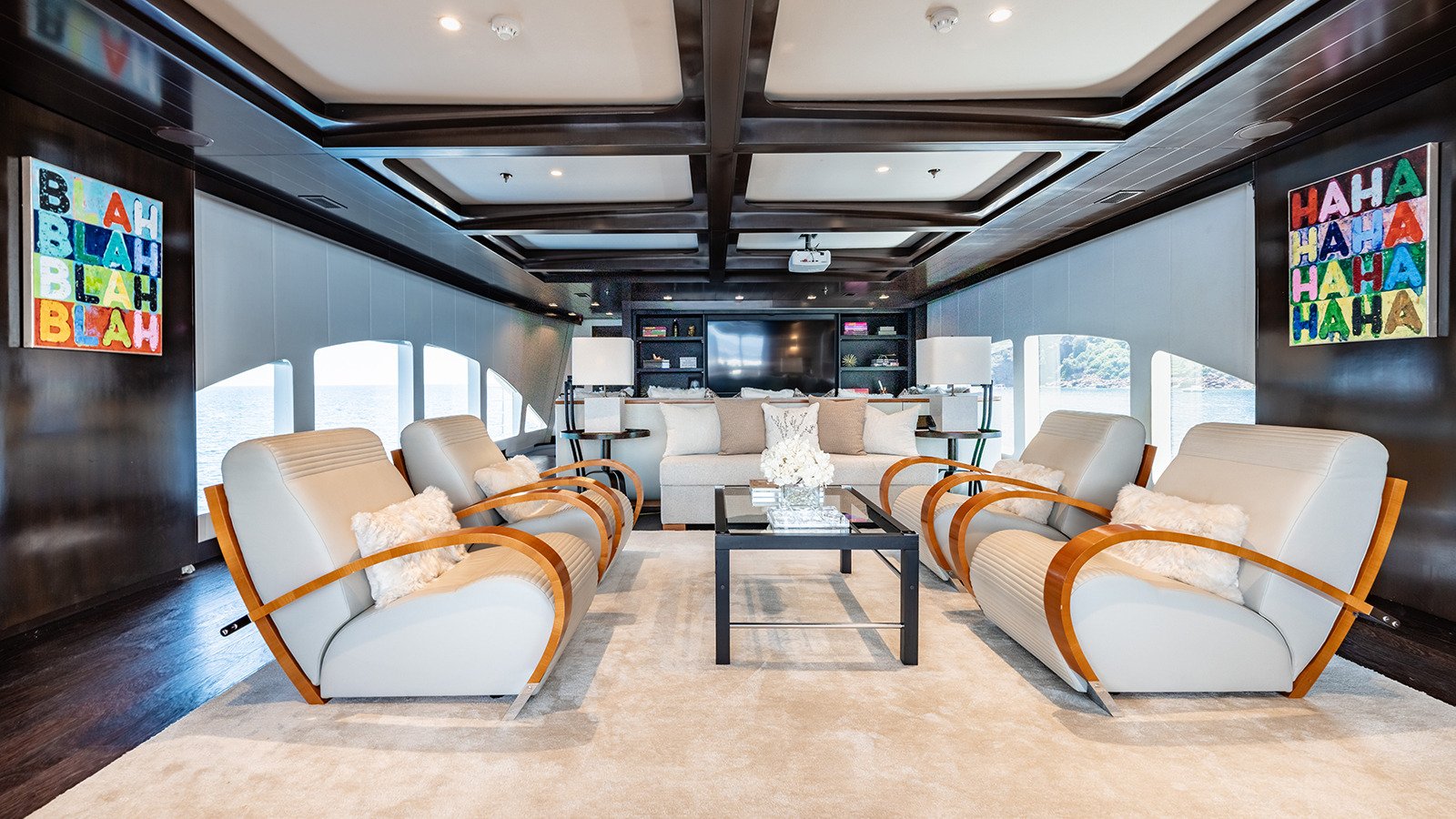
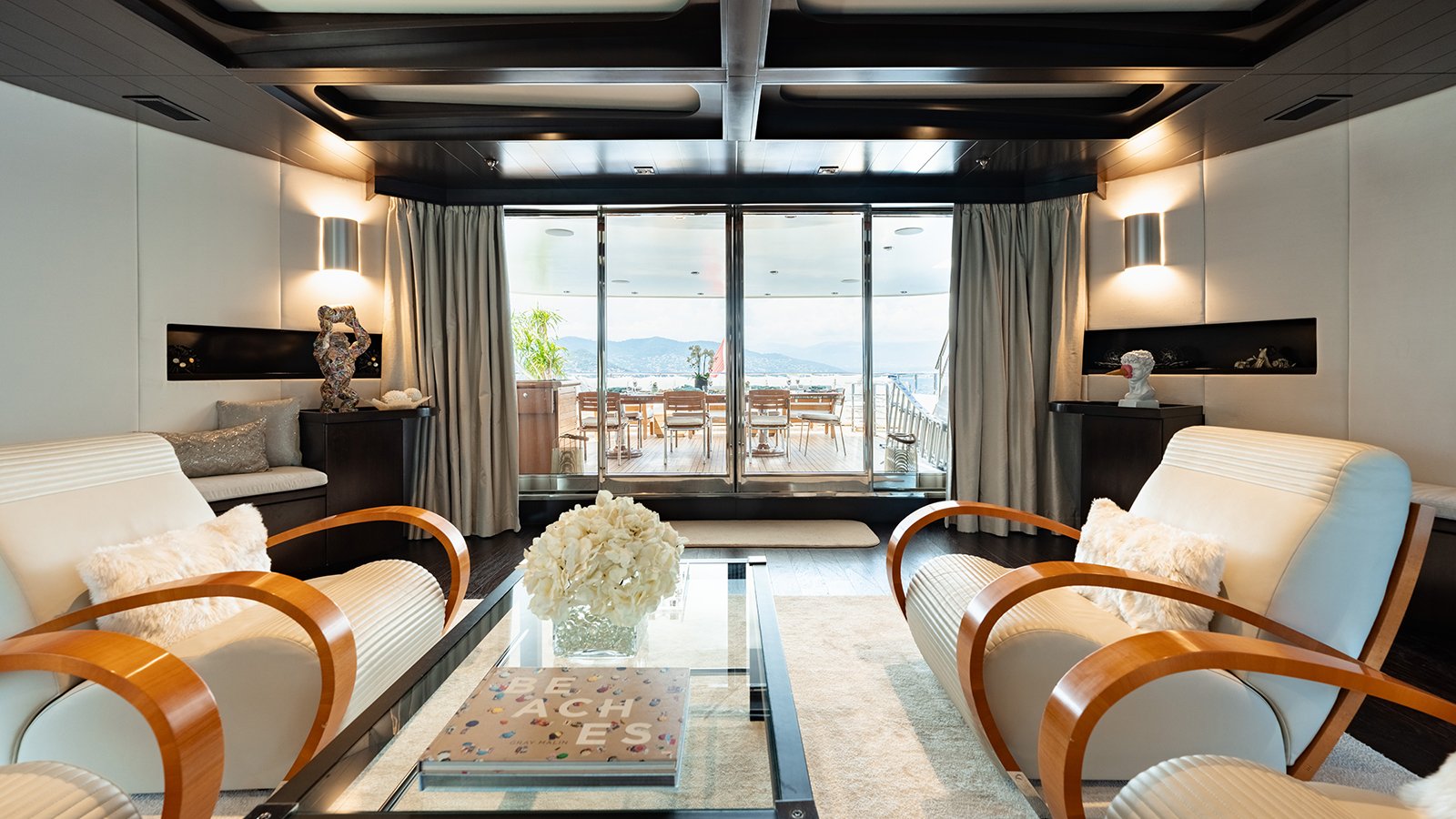
Mark Zeff shaped the interior, and his hand is obvious. Black lacquer joinery runs against soft white padded panelling, dark parquet meets pale carpet, and the art is deliberately loud: graffiti hearts over a guest berth, pop-art canvases in the lounges, a neon LOVE piece framing a porthole. It is a young, graphic scheme that has aged well because the architecture underneath it is restrained. Coffered ceilings in dark timber run the length of both principal rooms and hold the whole thing together.
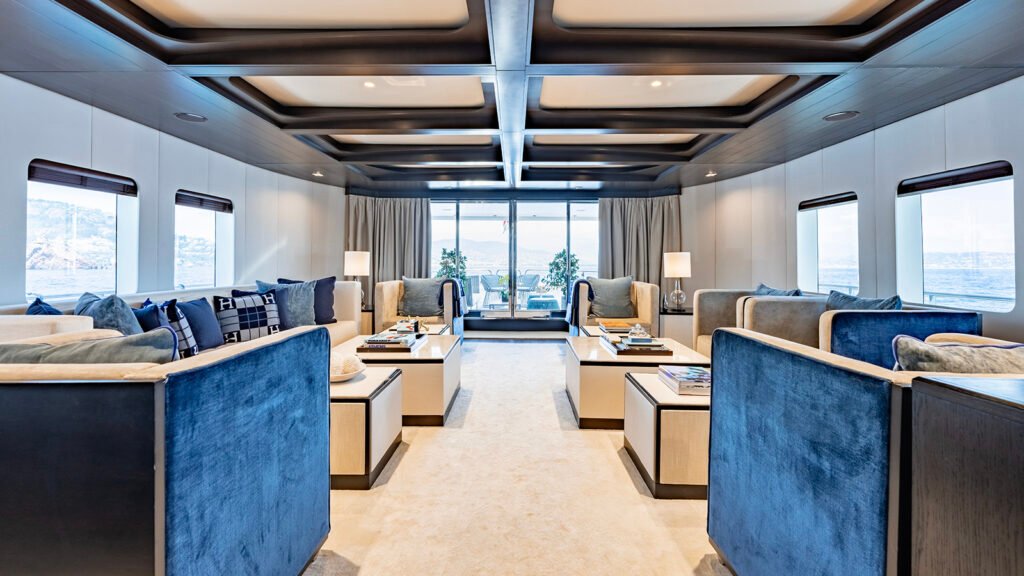
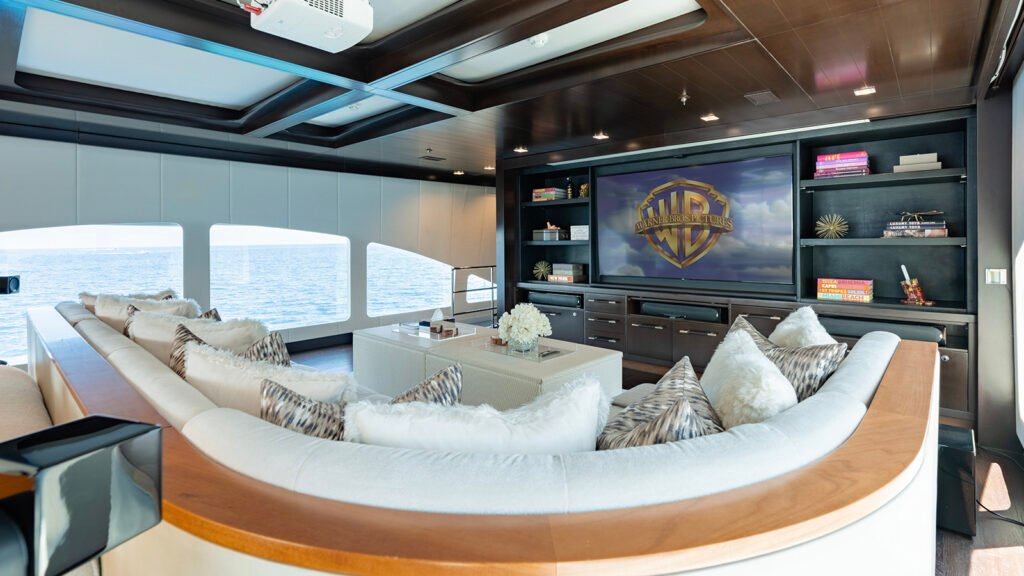
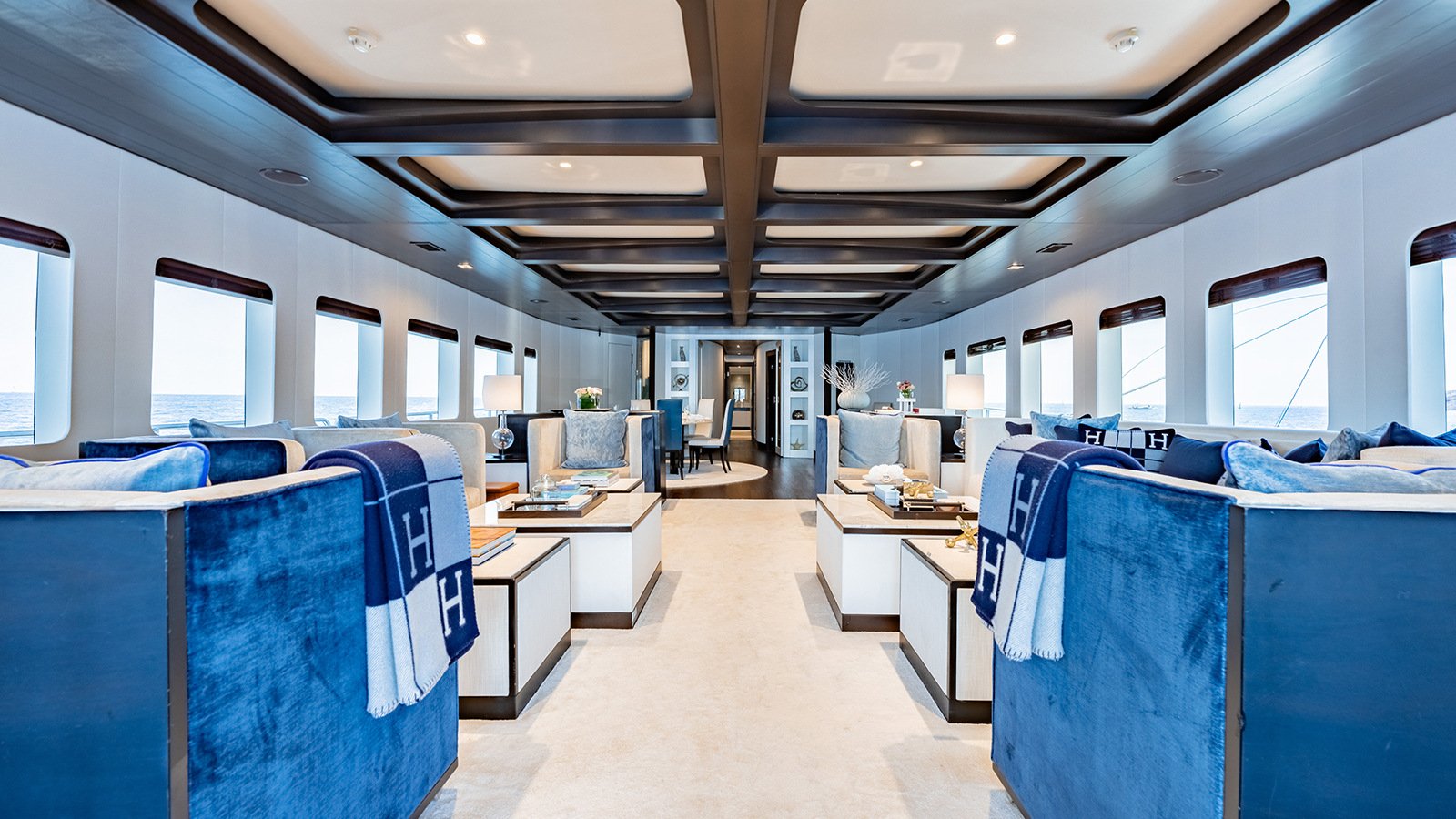
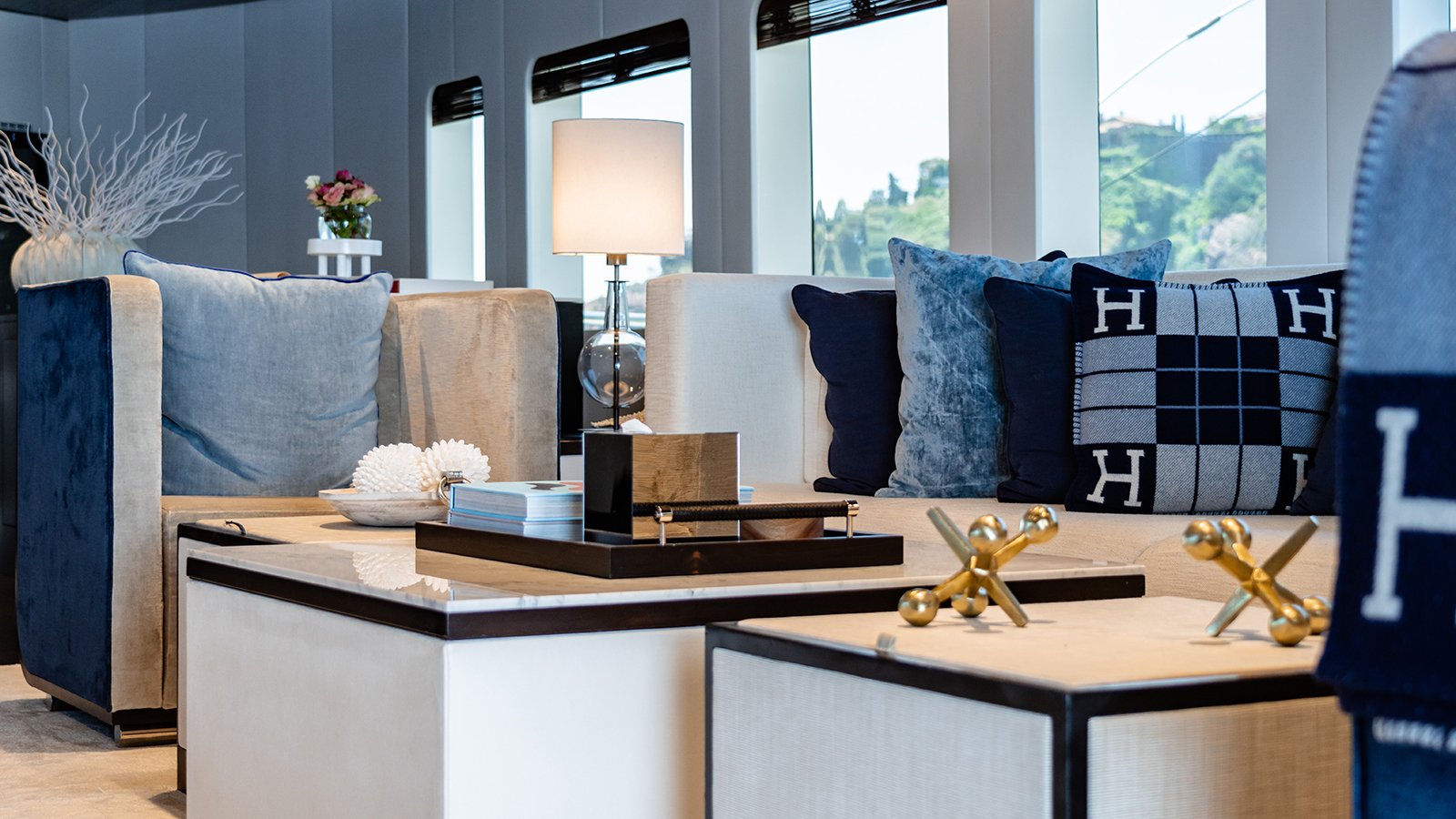
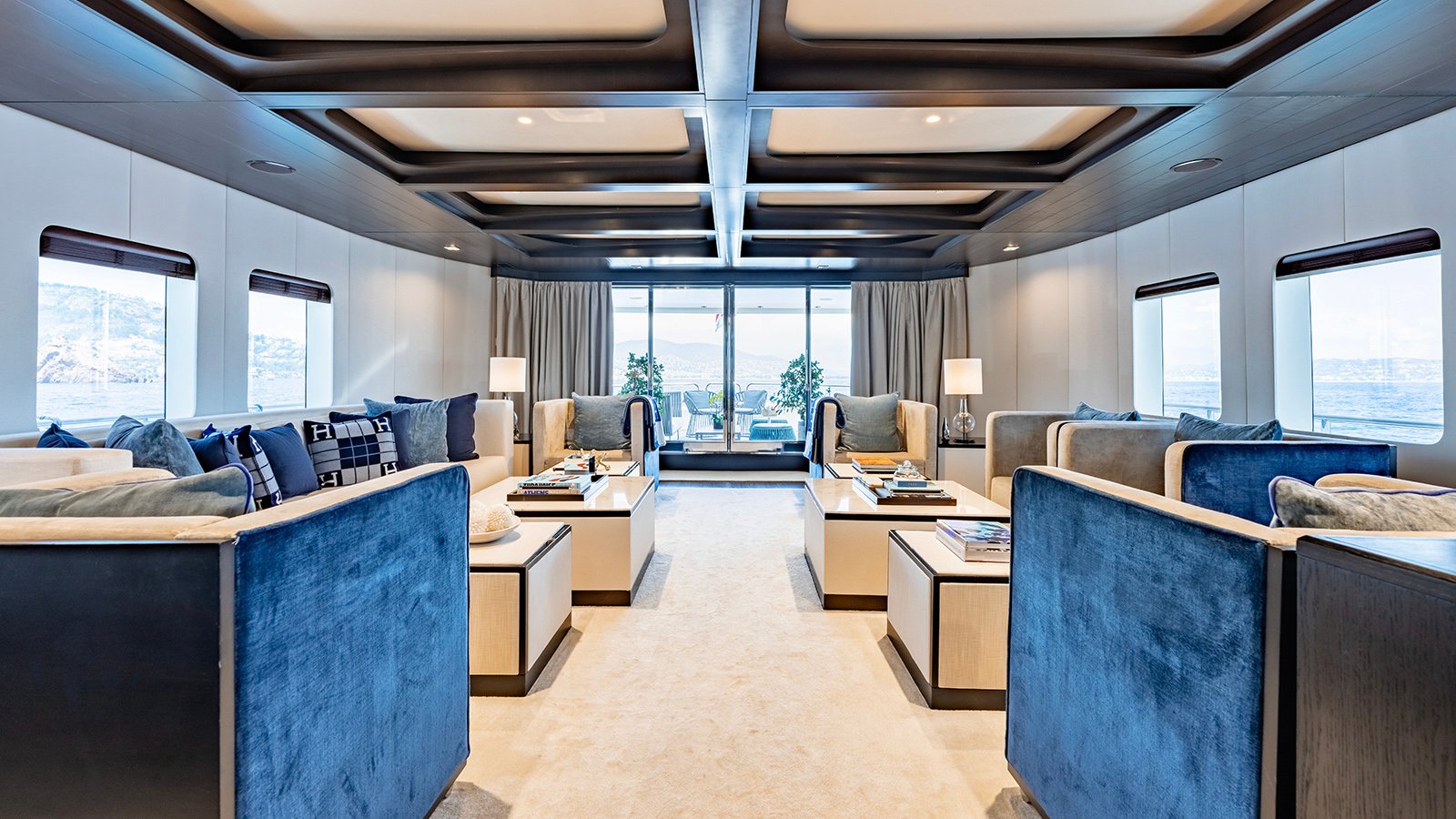
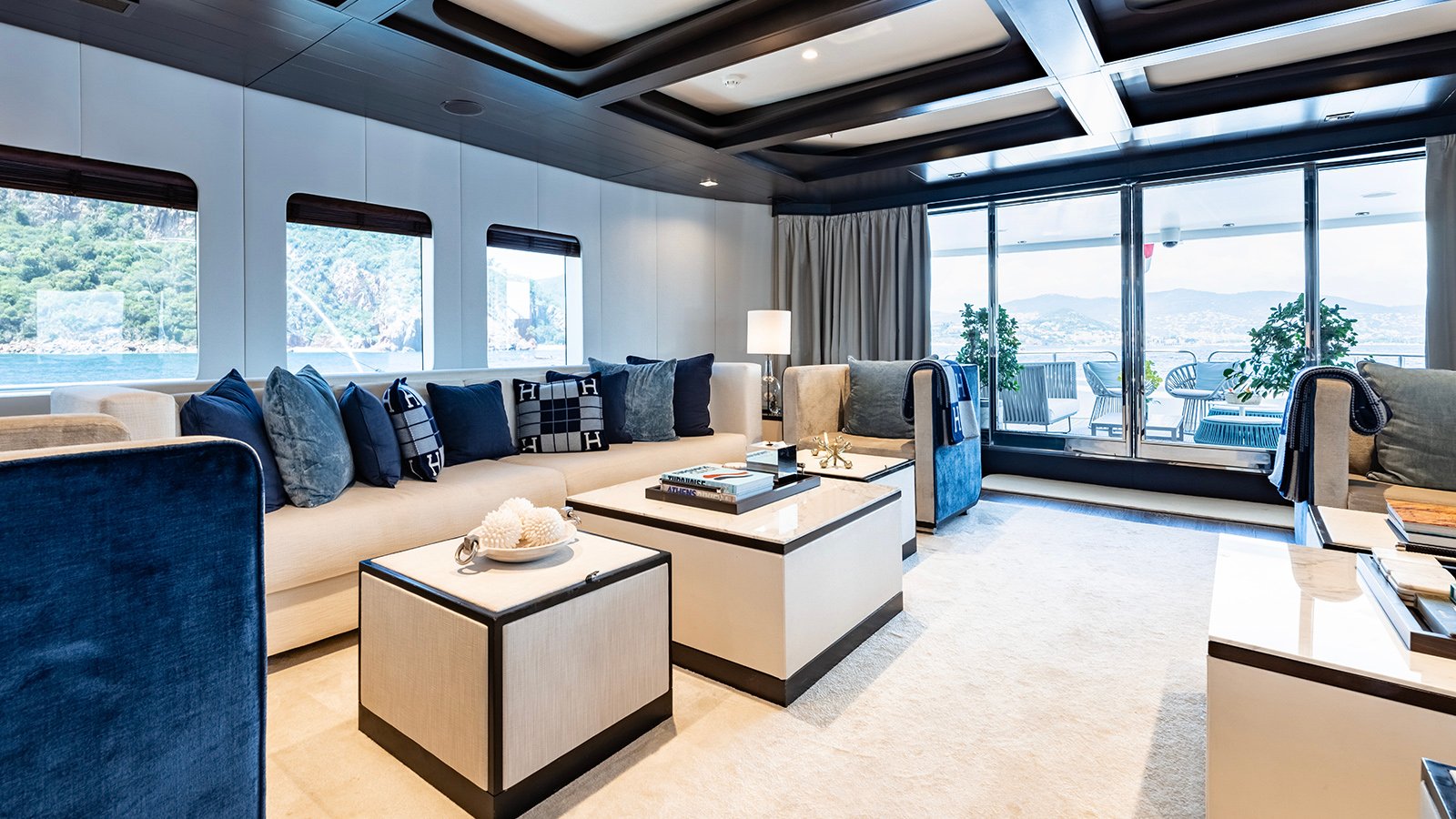
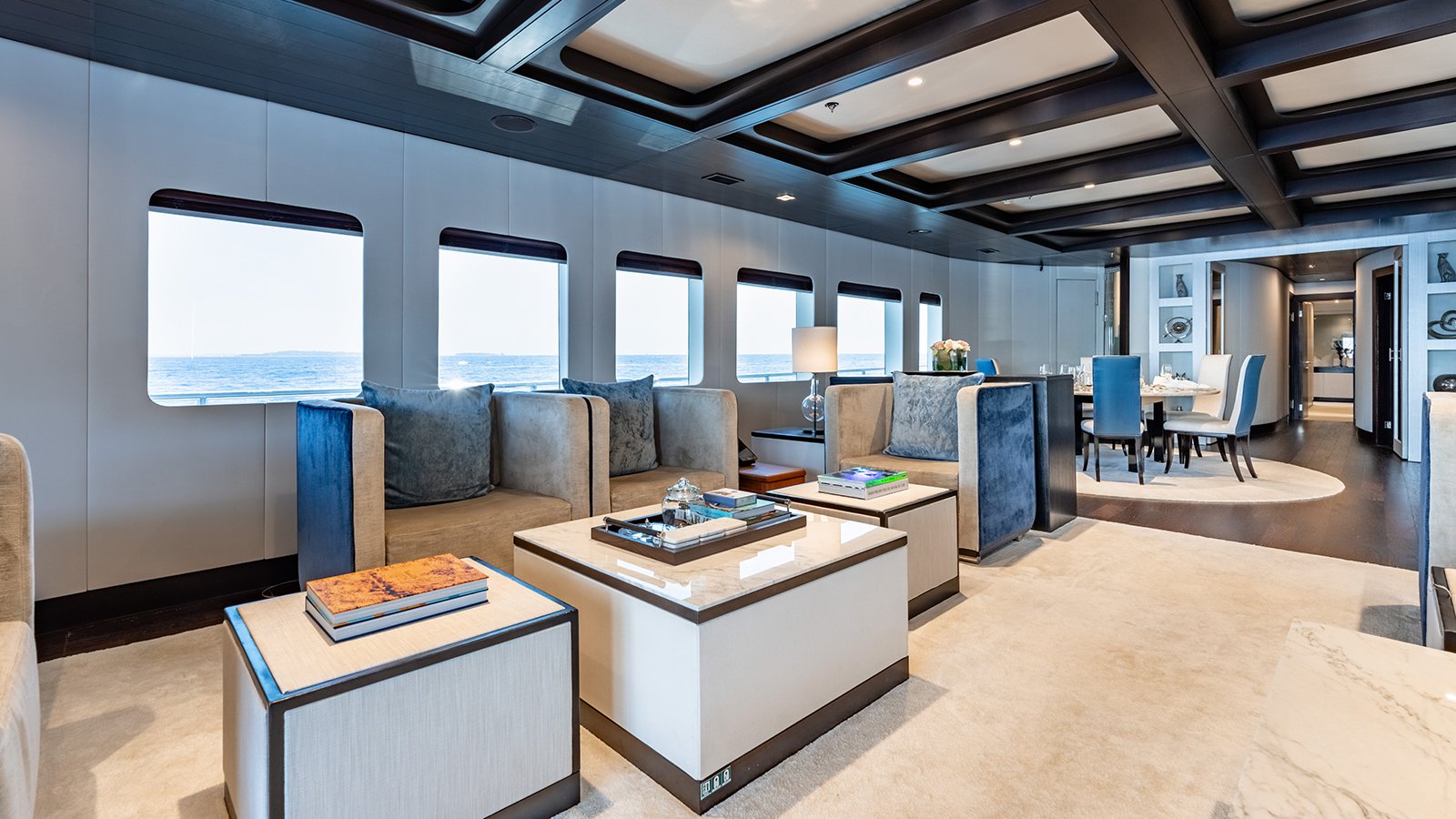
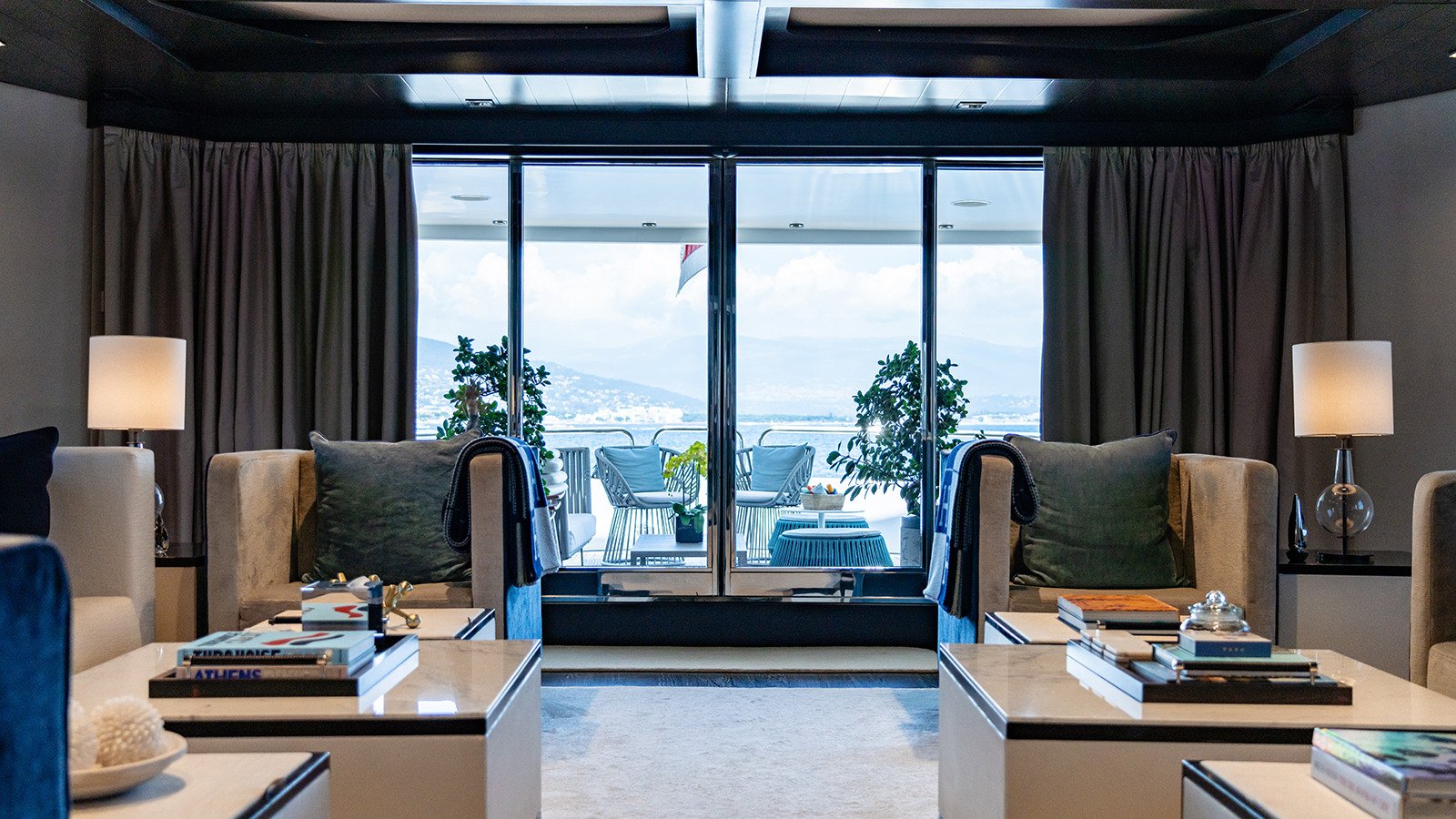
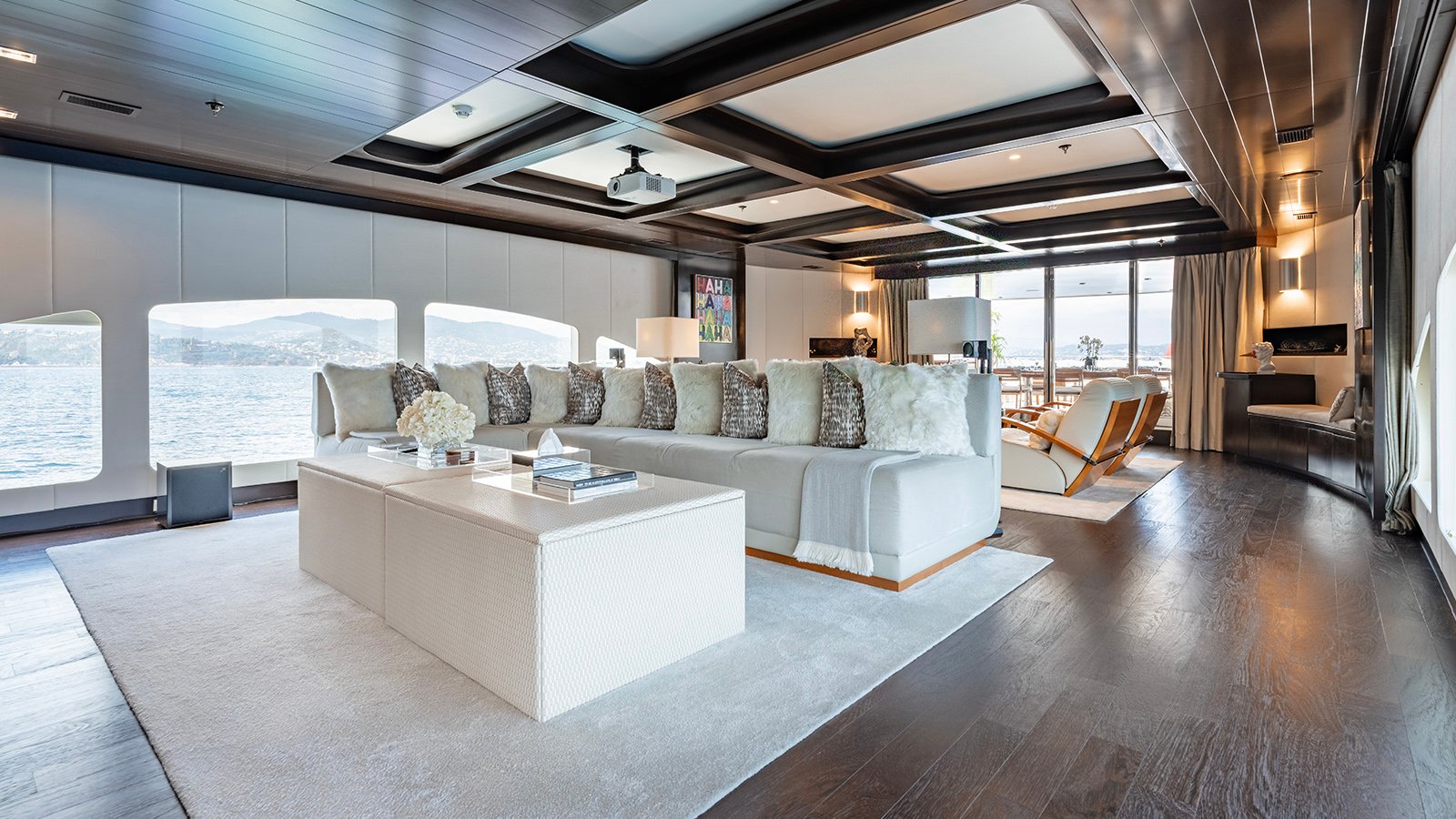
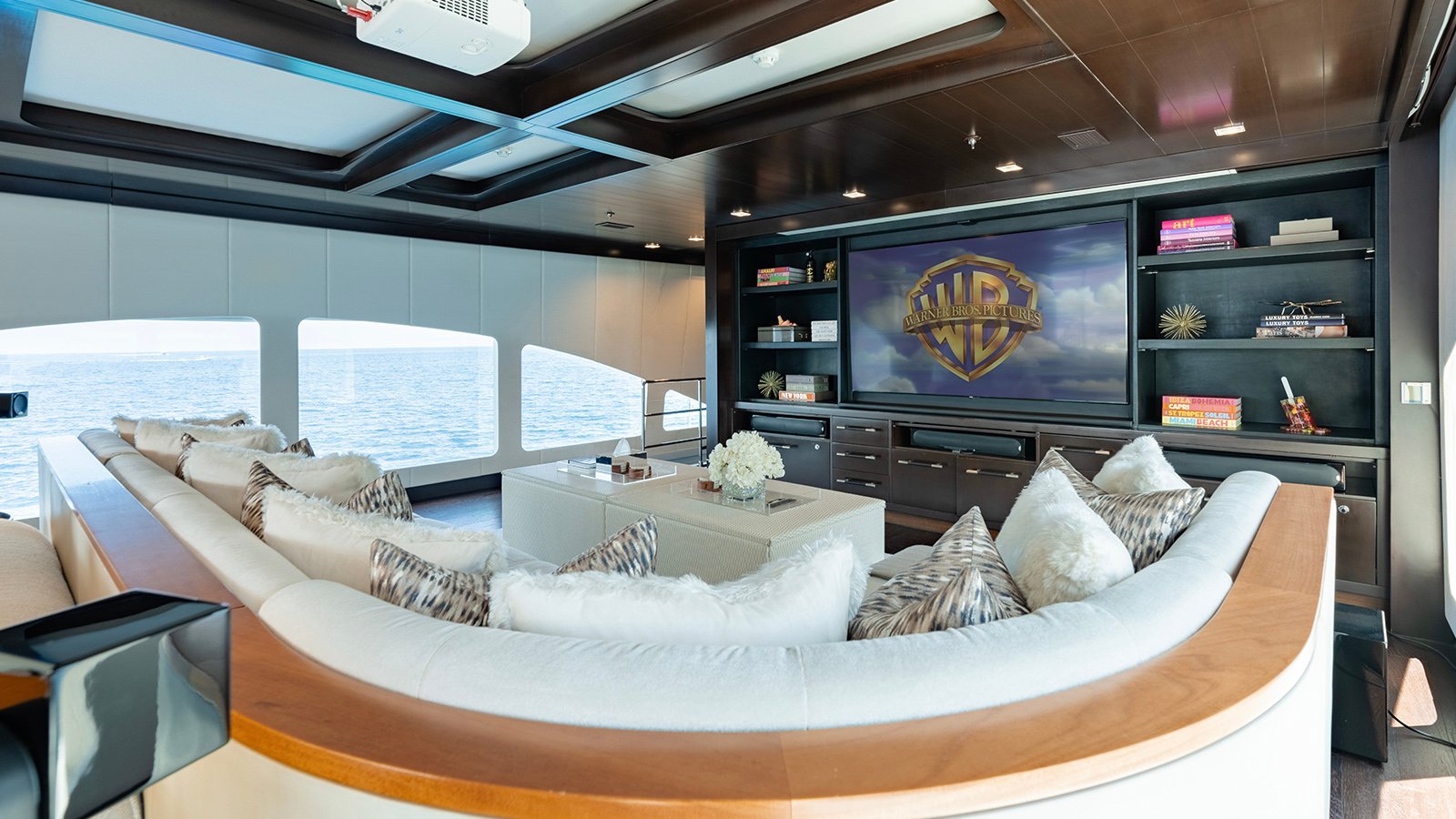
She has two full-size lounges rather than one, which is what makes her work for a group of twelve. The main salon runs between long window bands with deep sofas in indigo velvet, a low table at the centre and the formal dining table forward, seated beneath a sculptural centrepiece with the galley within easy reach. The second lounge is quieter and more cinematic: a curved sofa wrapped around a large screen, a projector overhead, shelves of art books either side and glass doors aft onto a shaded dining terrace. One room for the long lunch, another for the film after it.
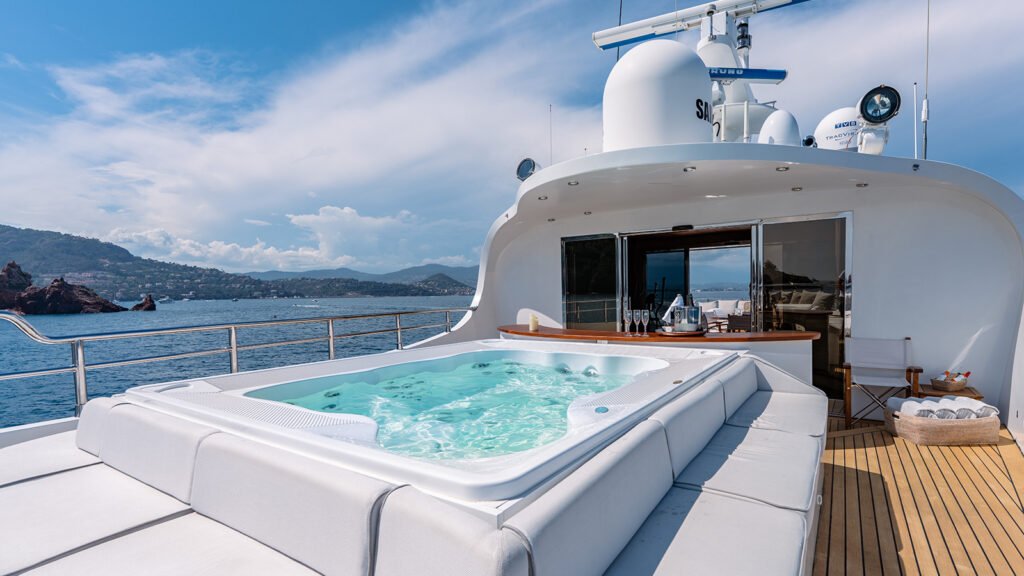
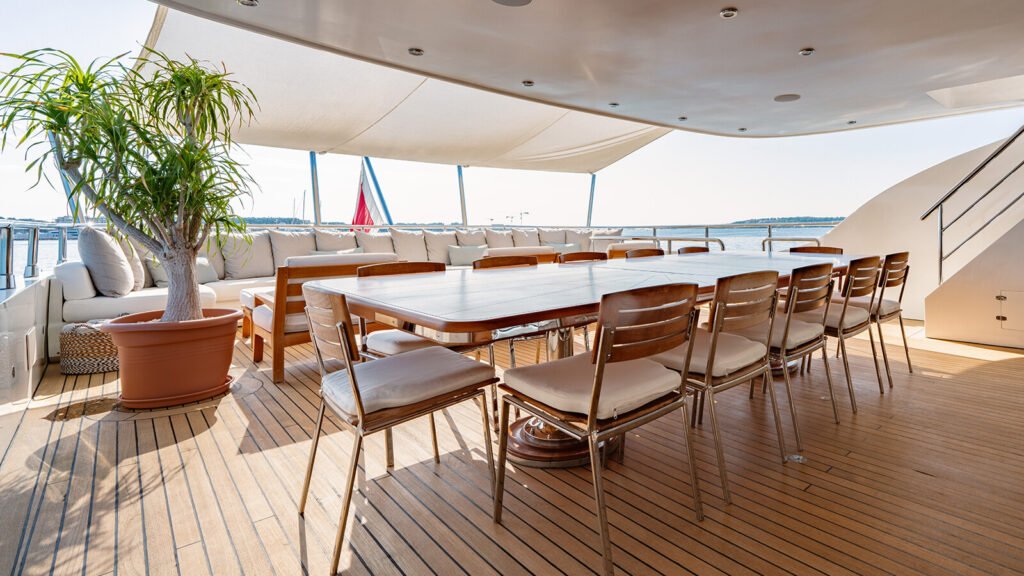
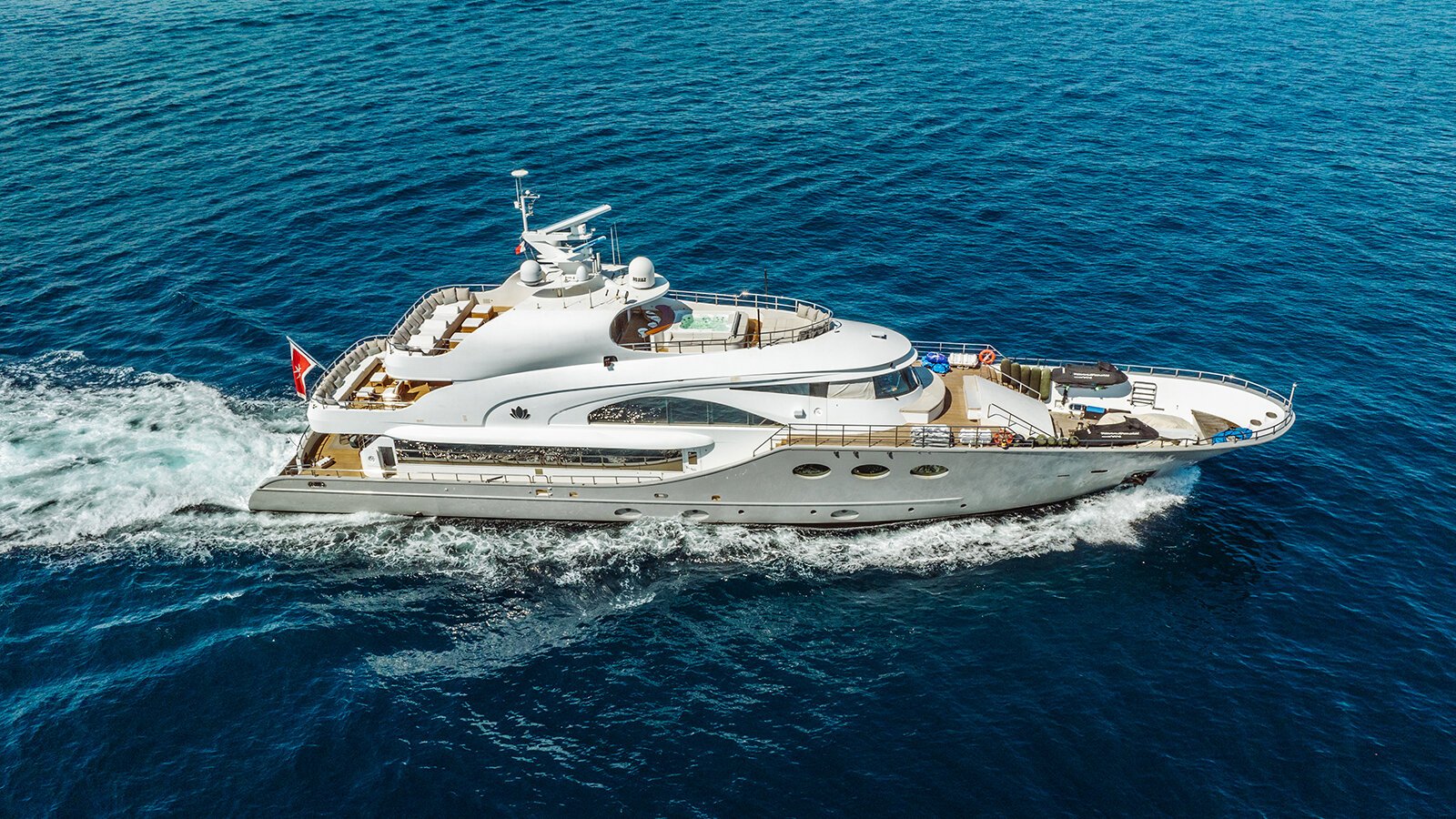
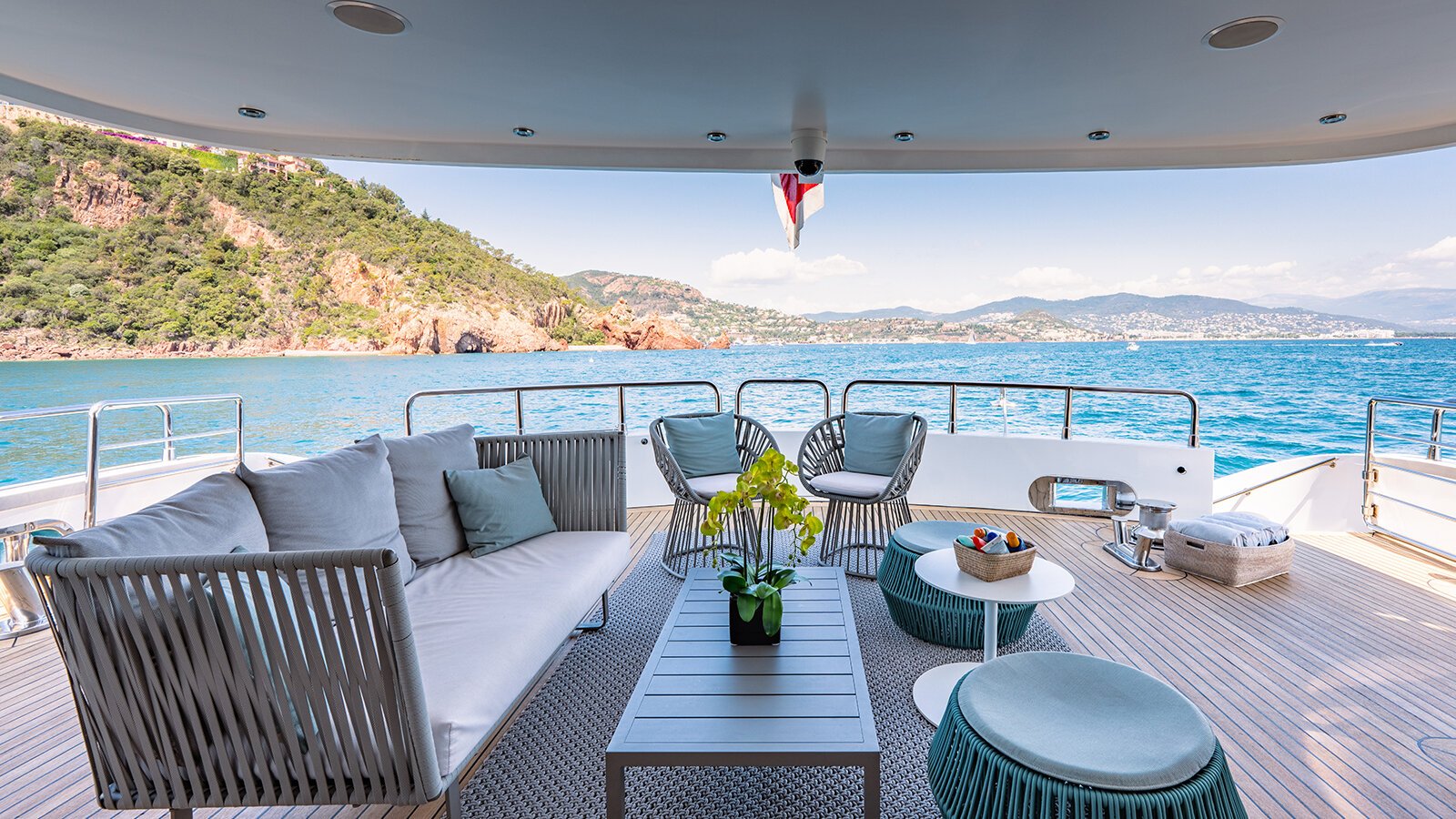
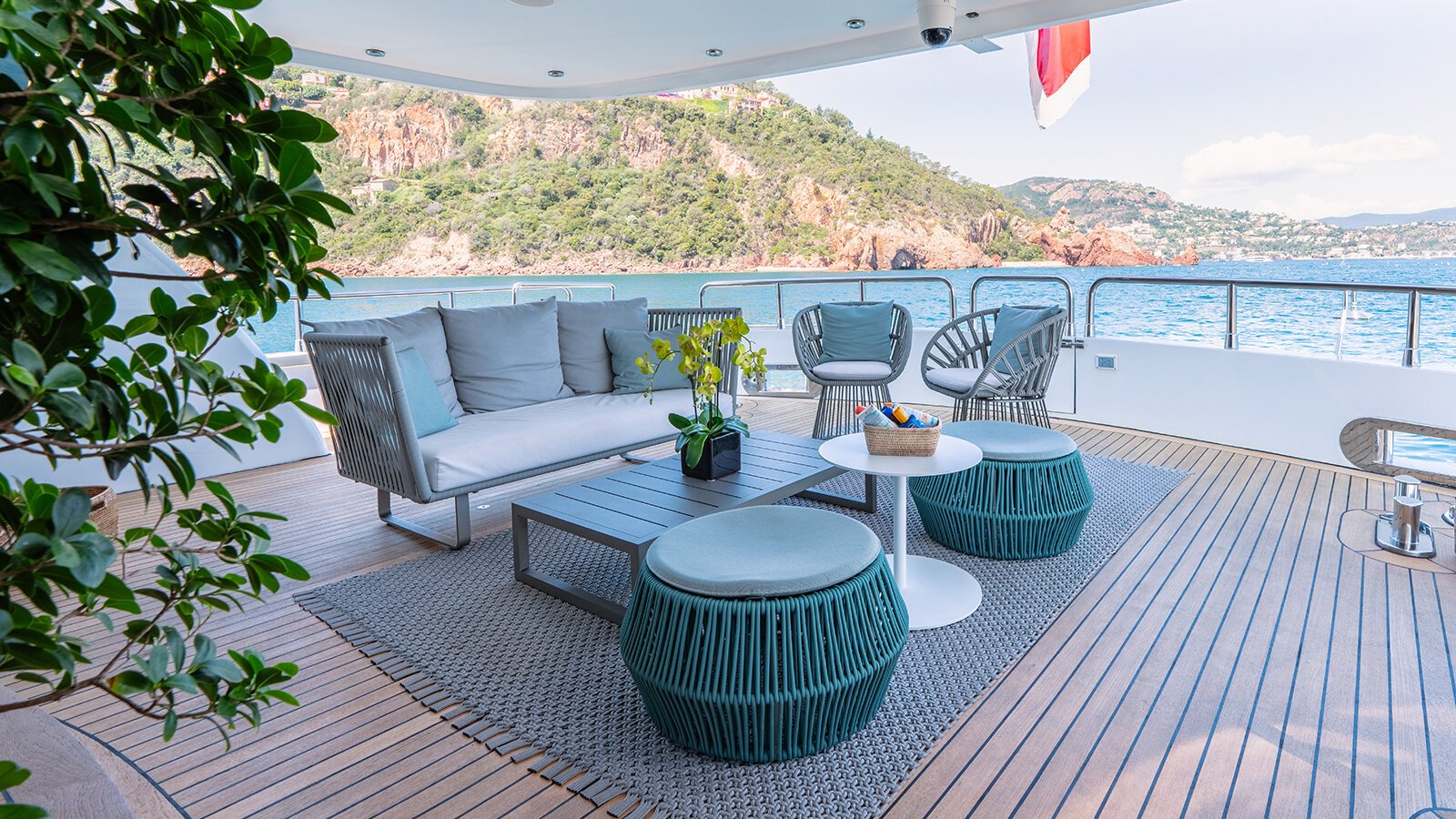
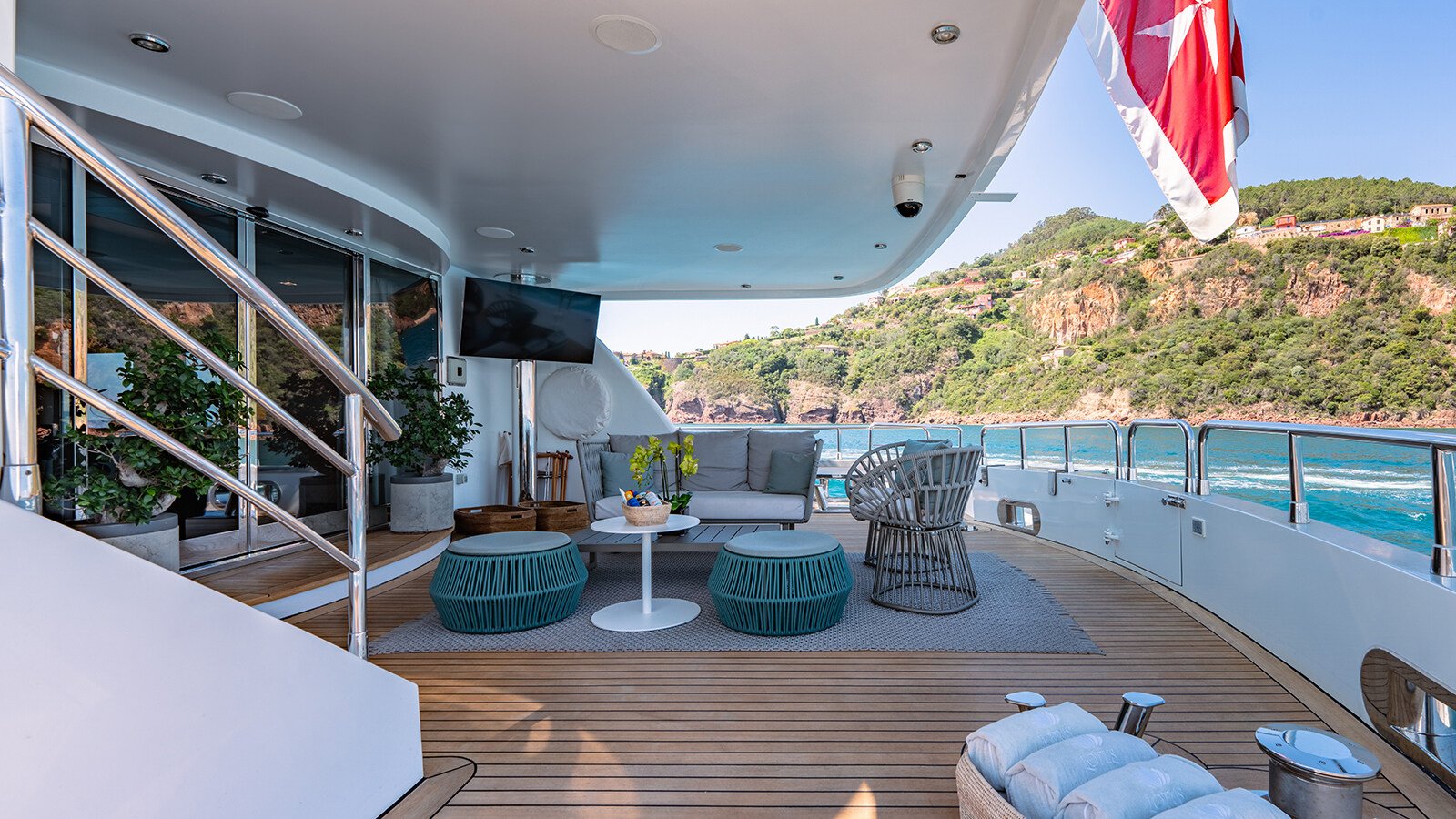
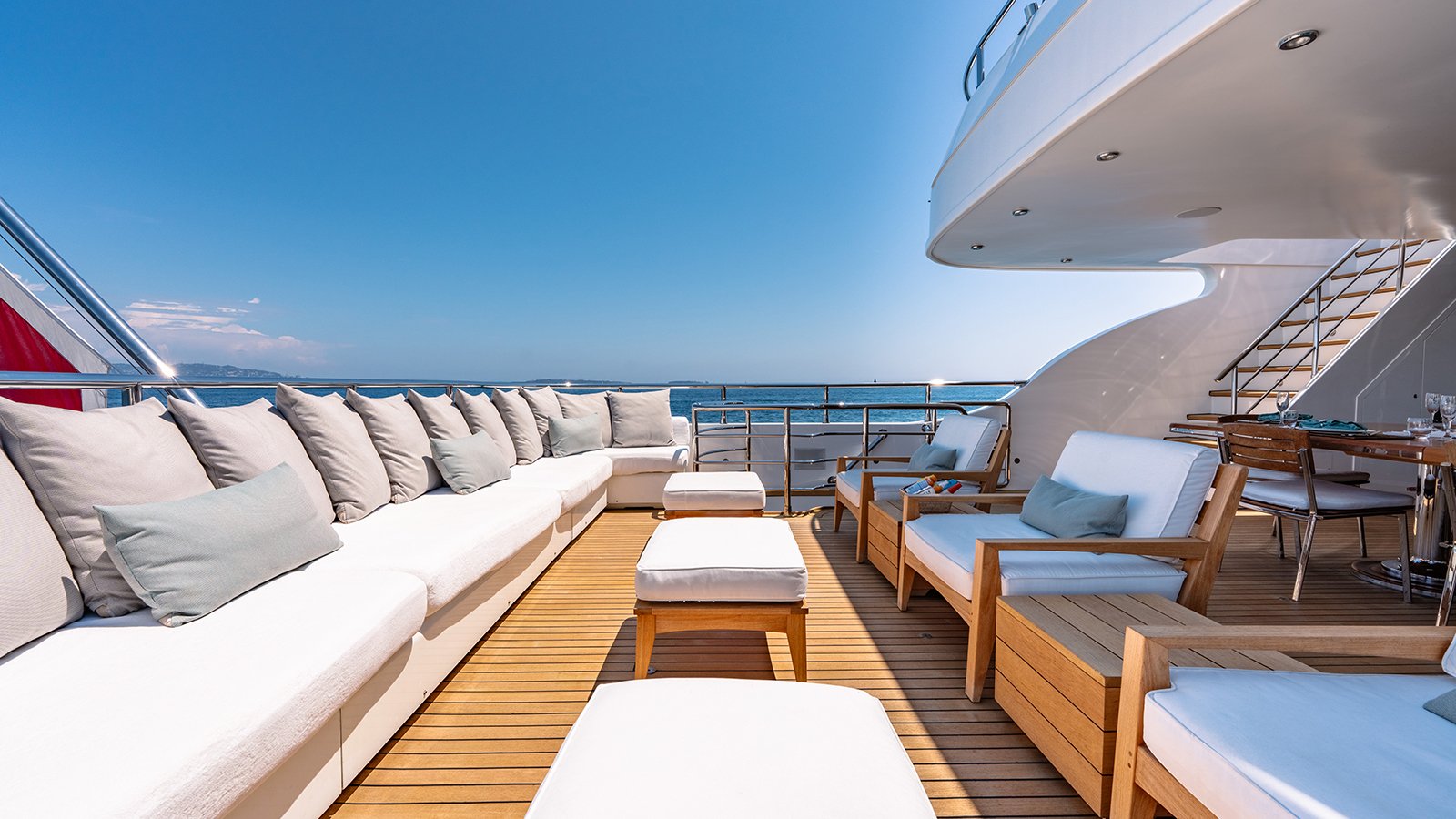
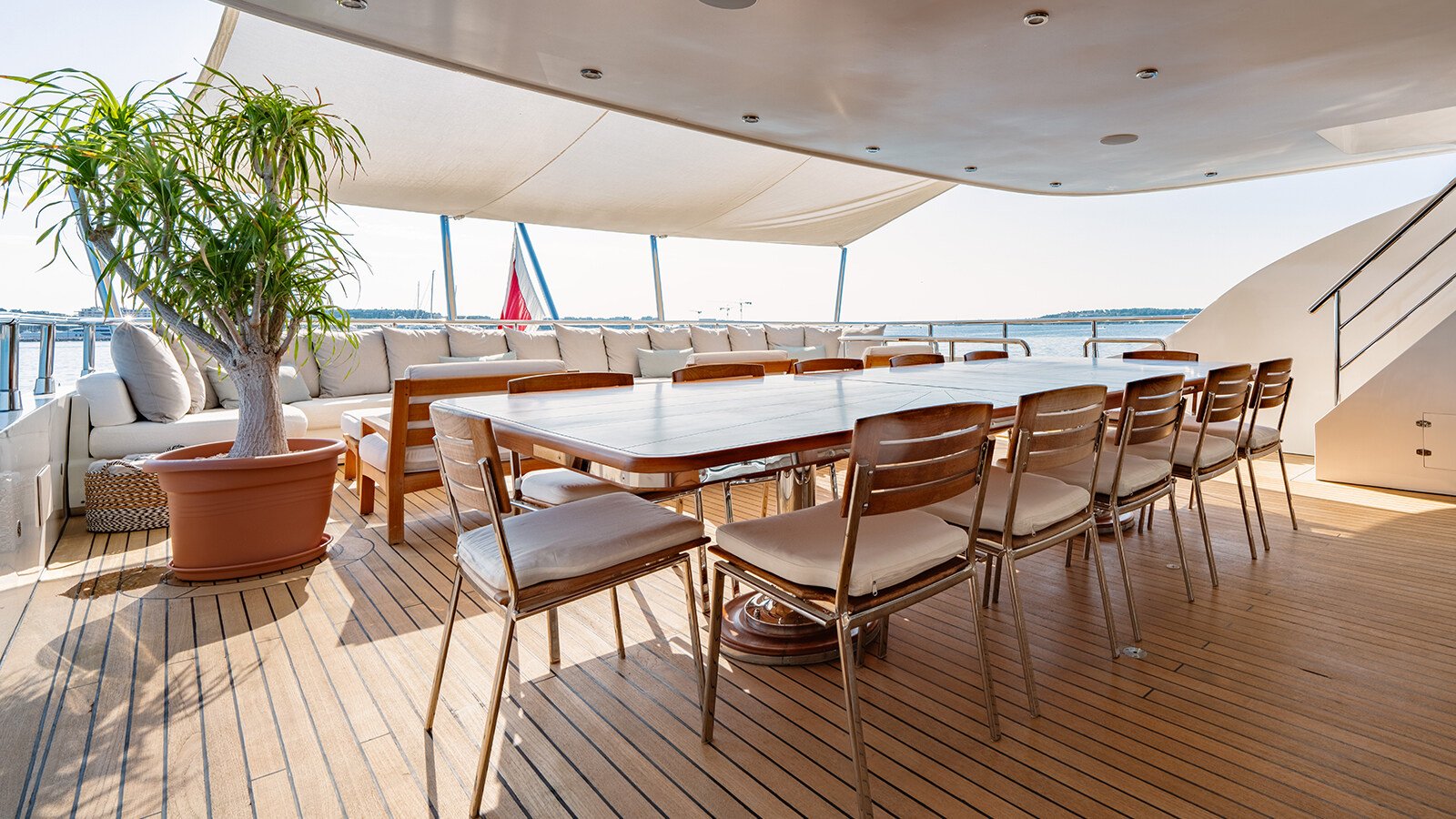
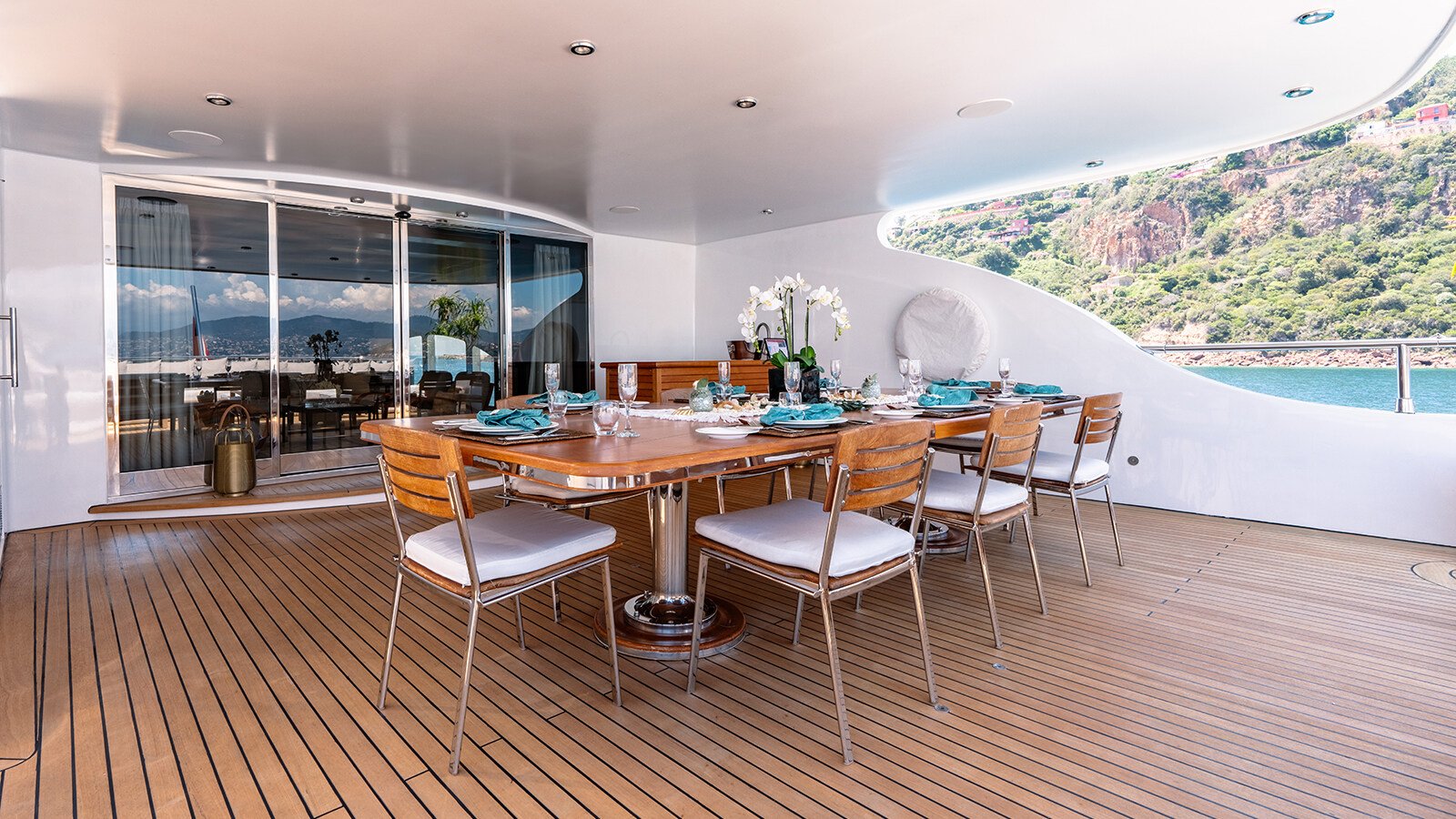
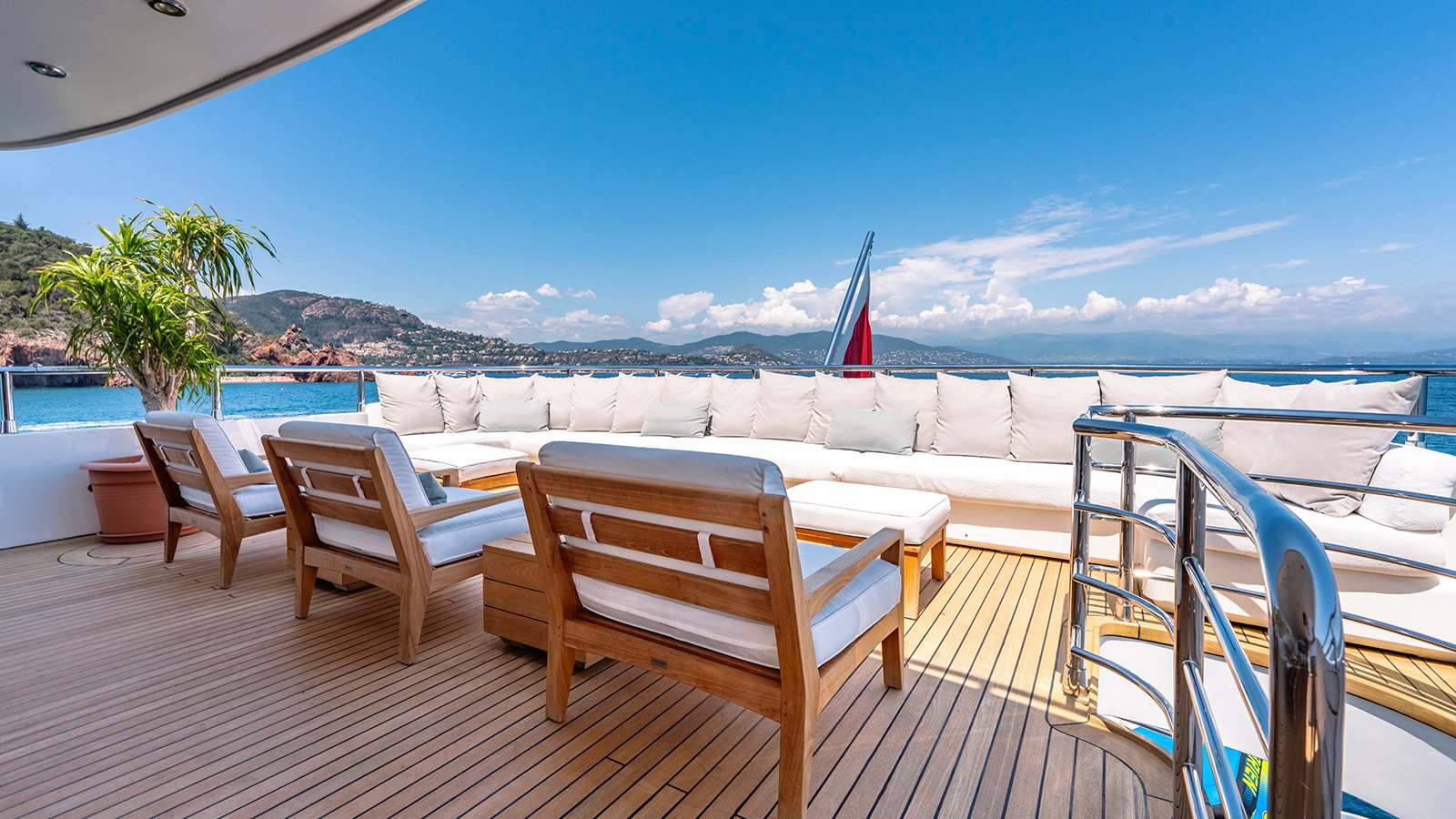
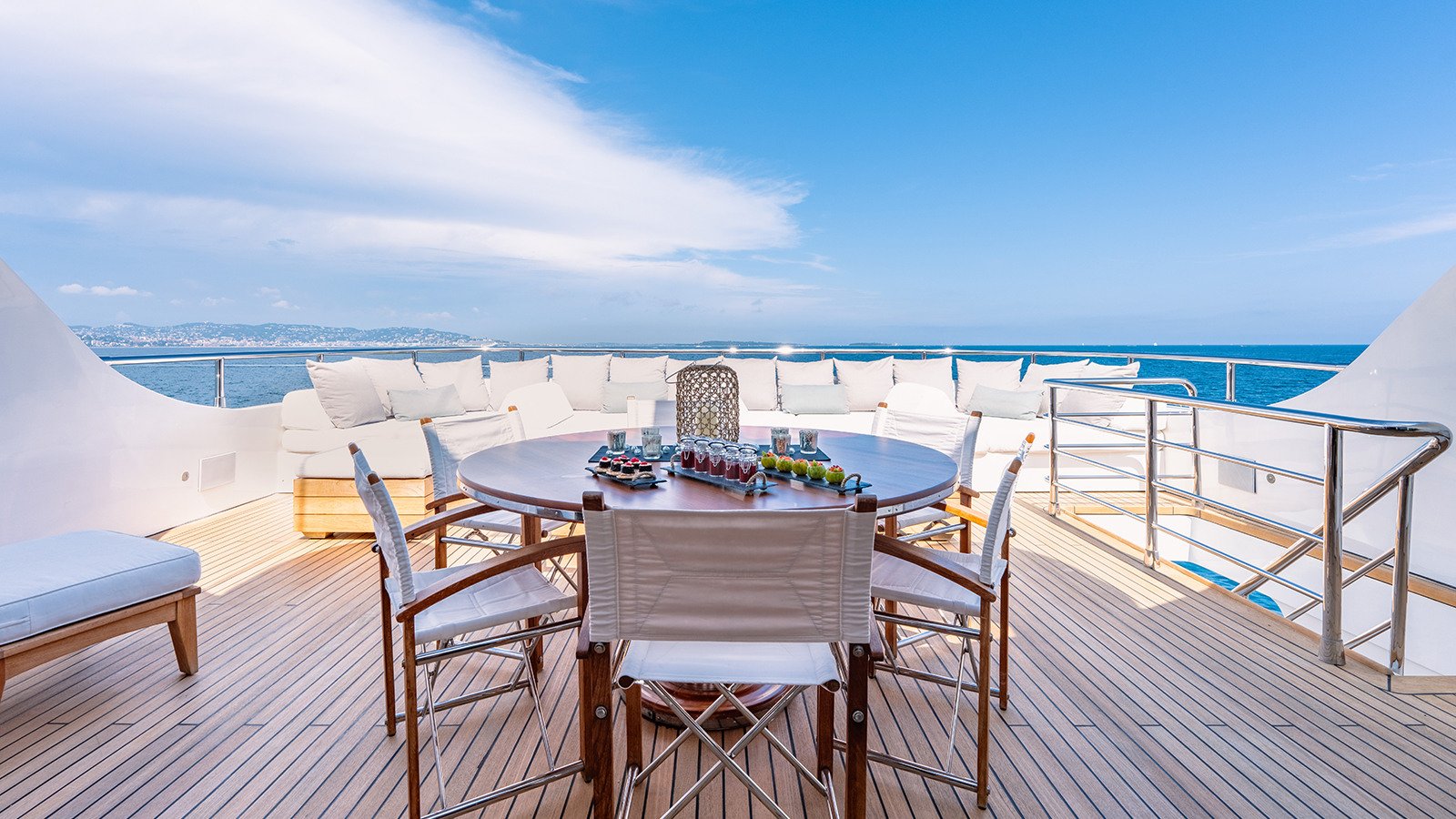
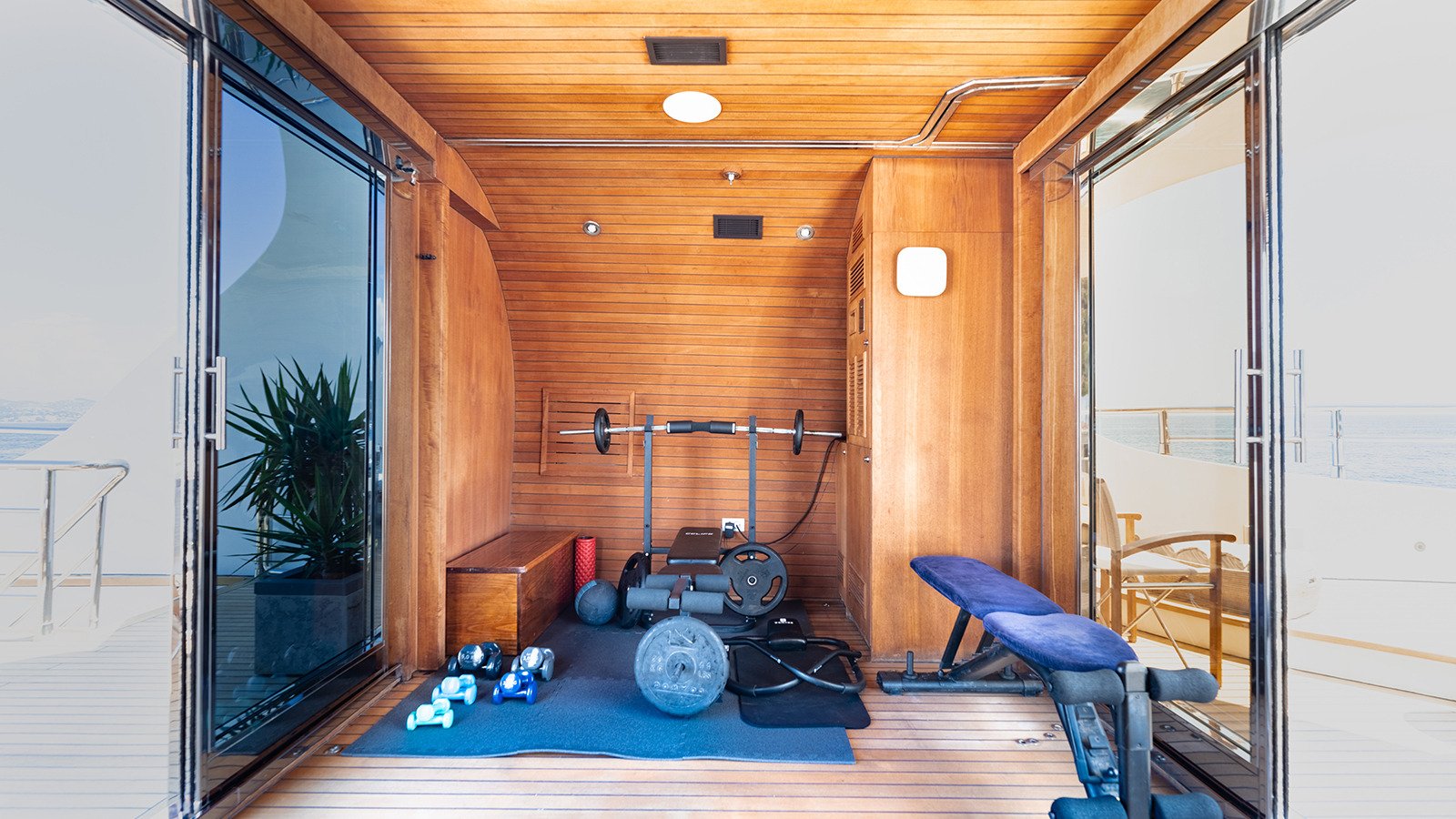
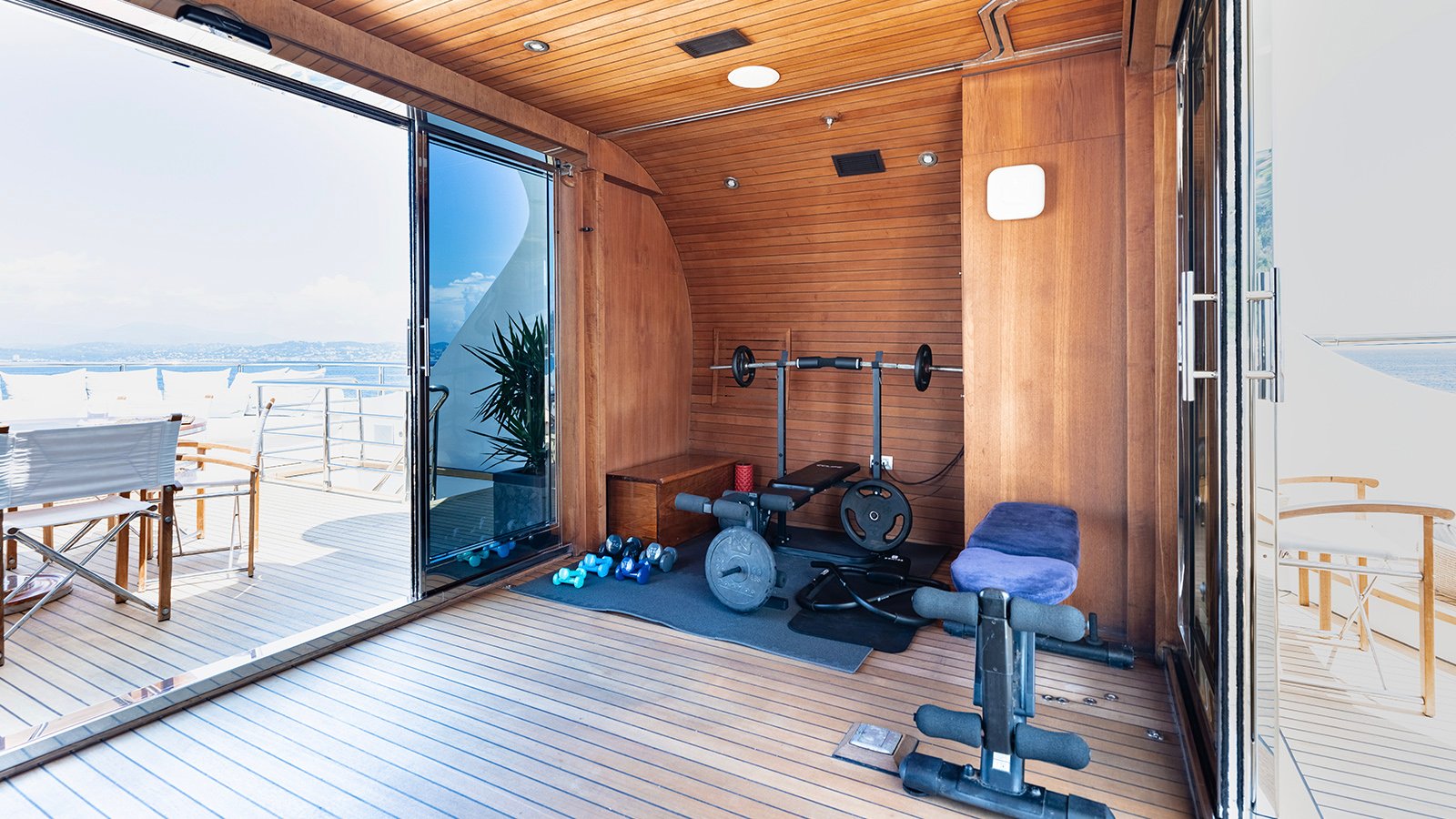
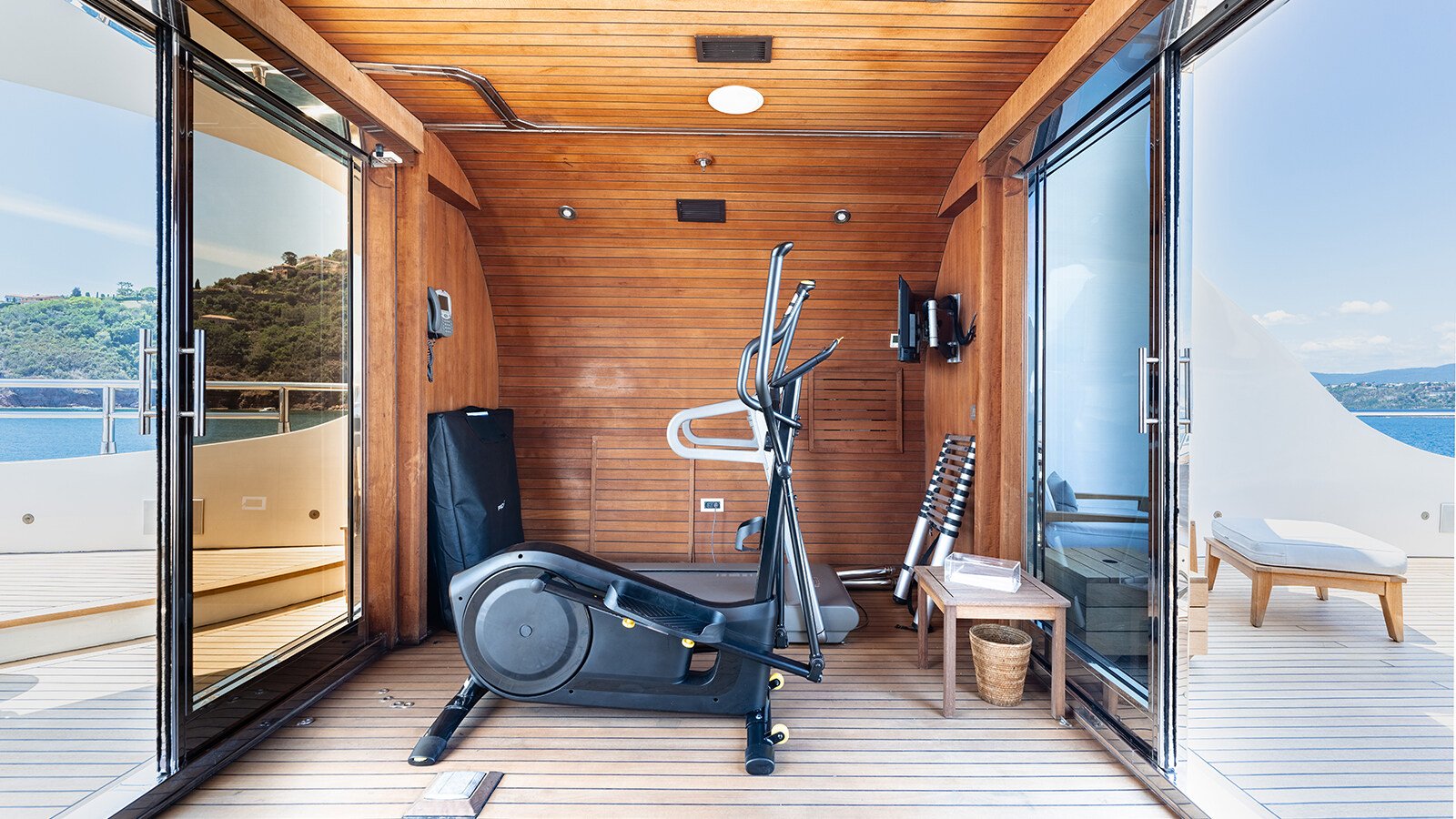
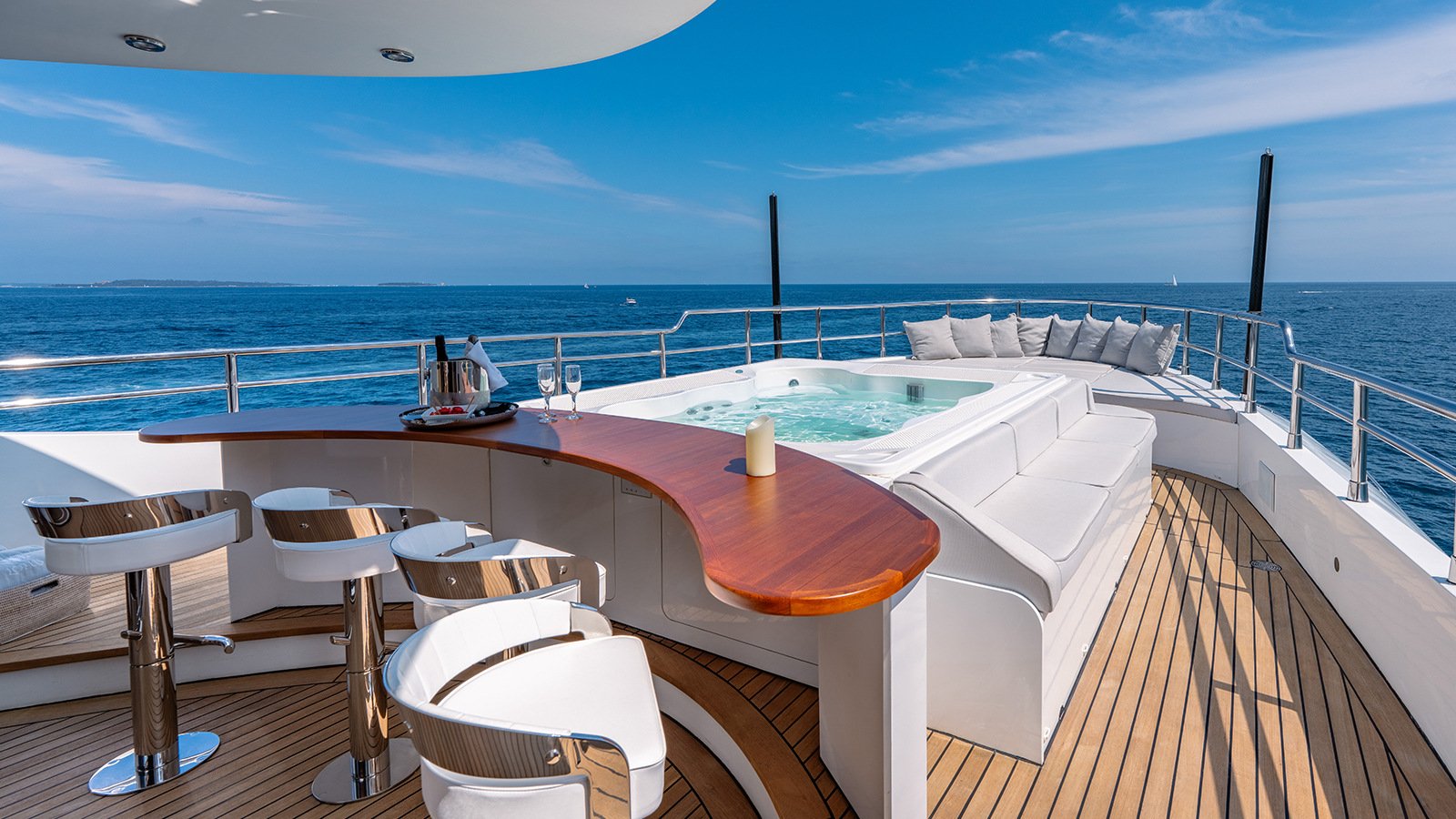
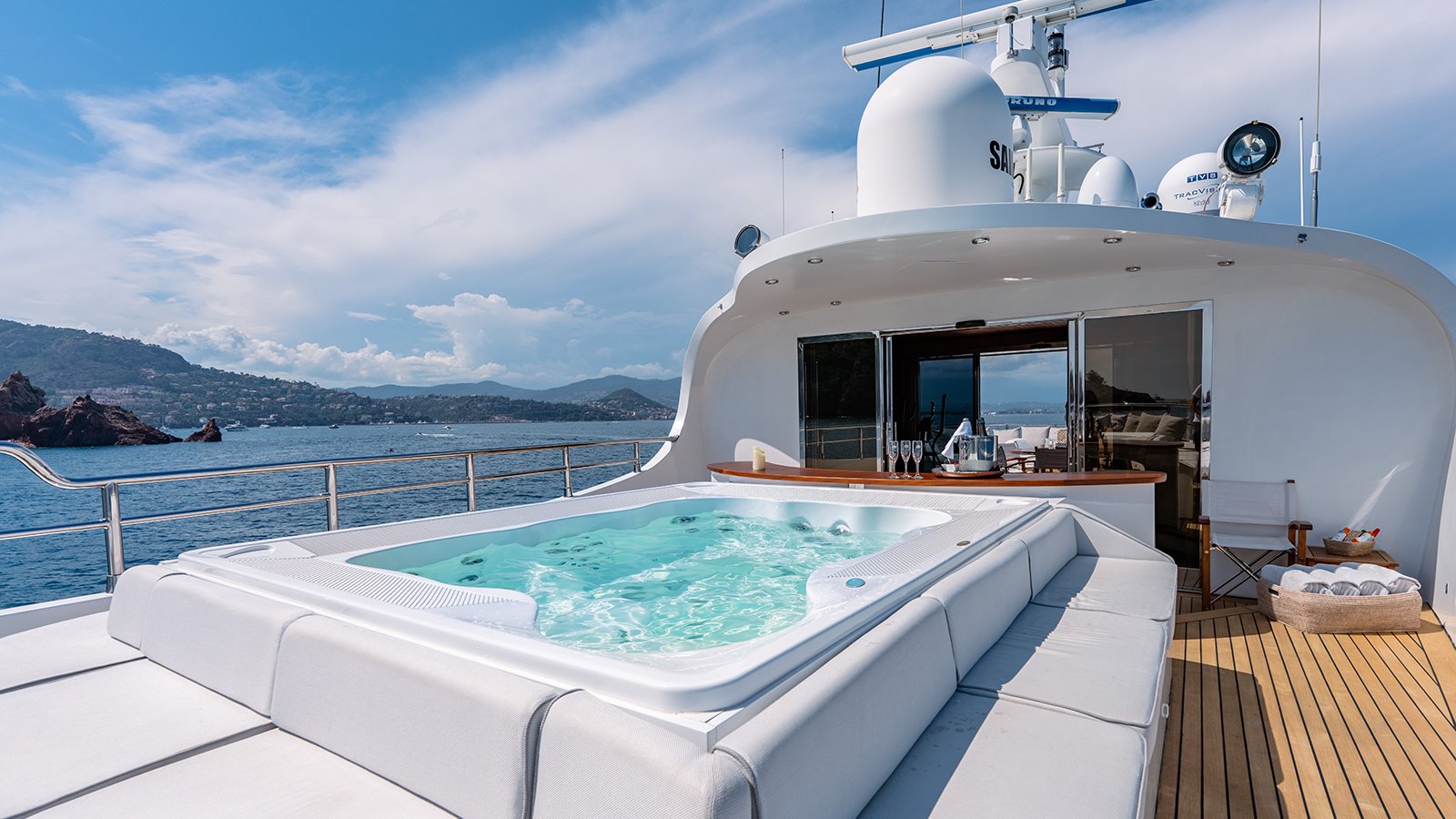
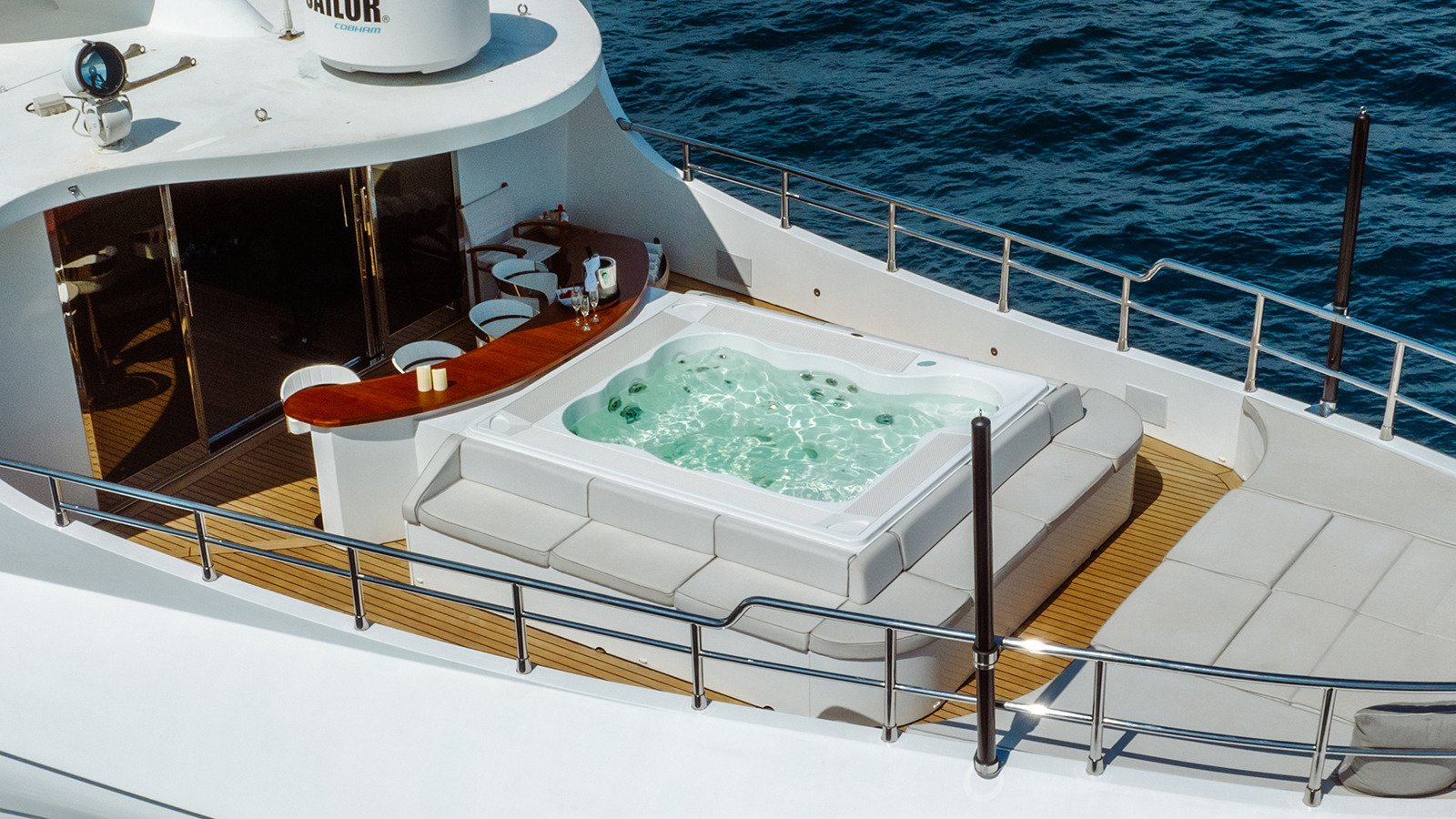
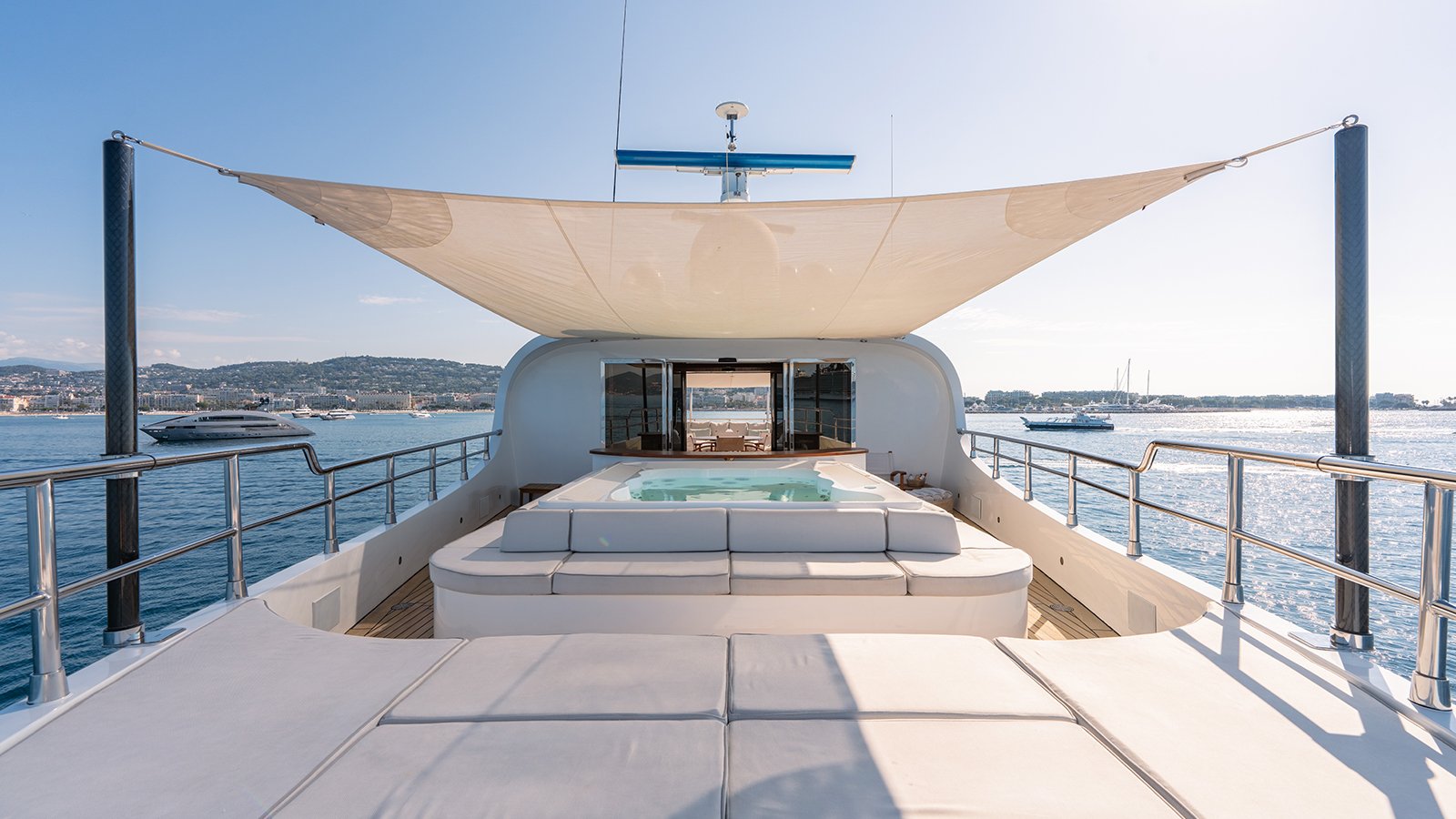
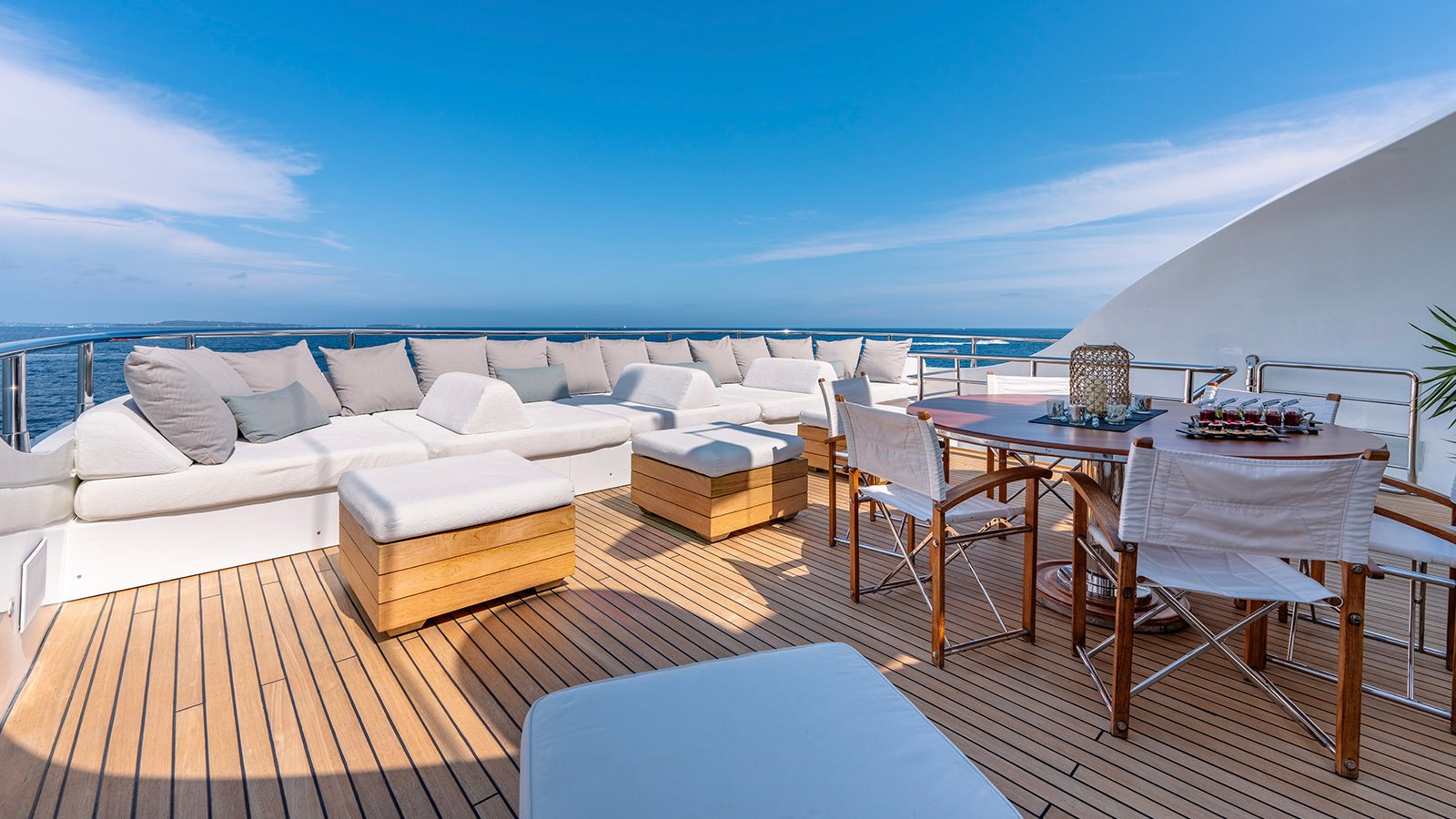
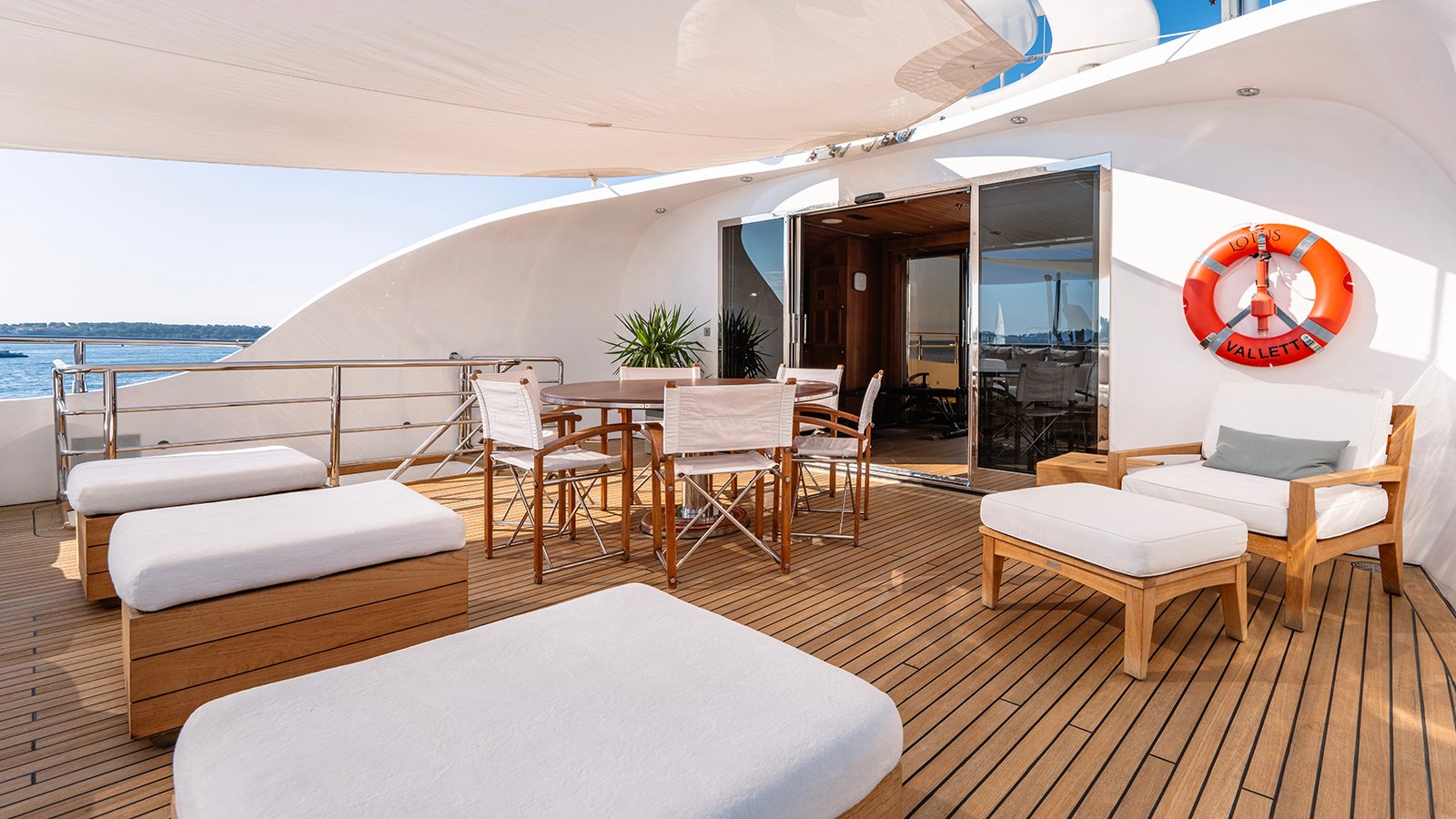
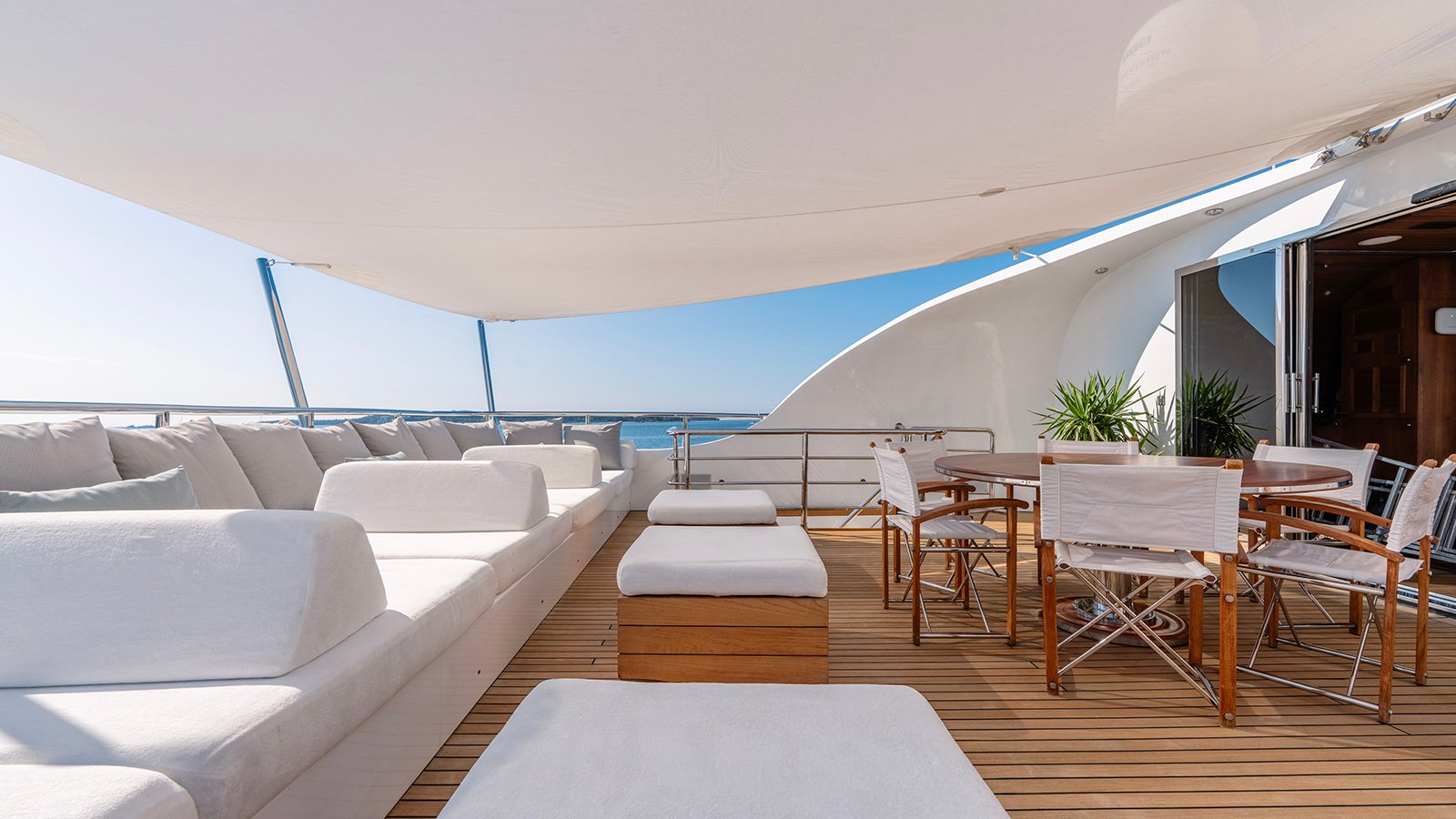
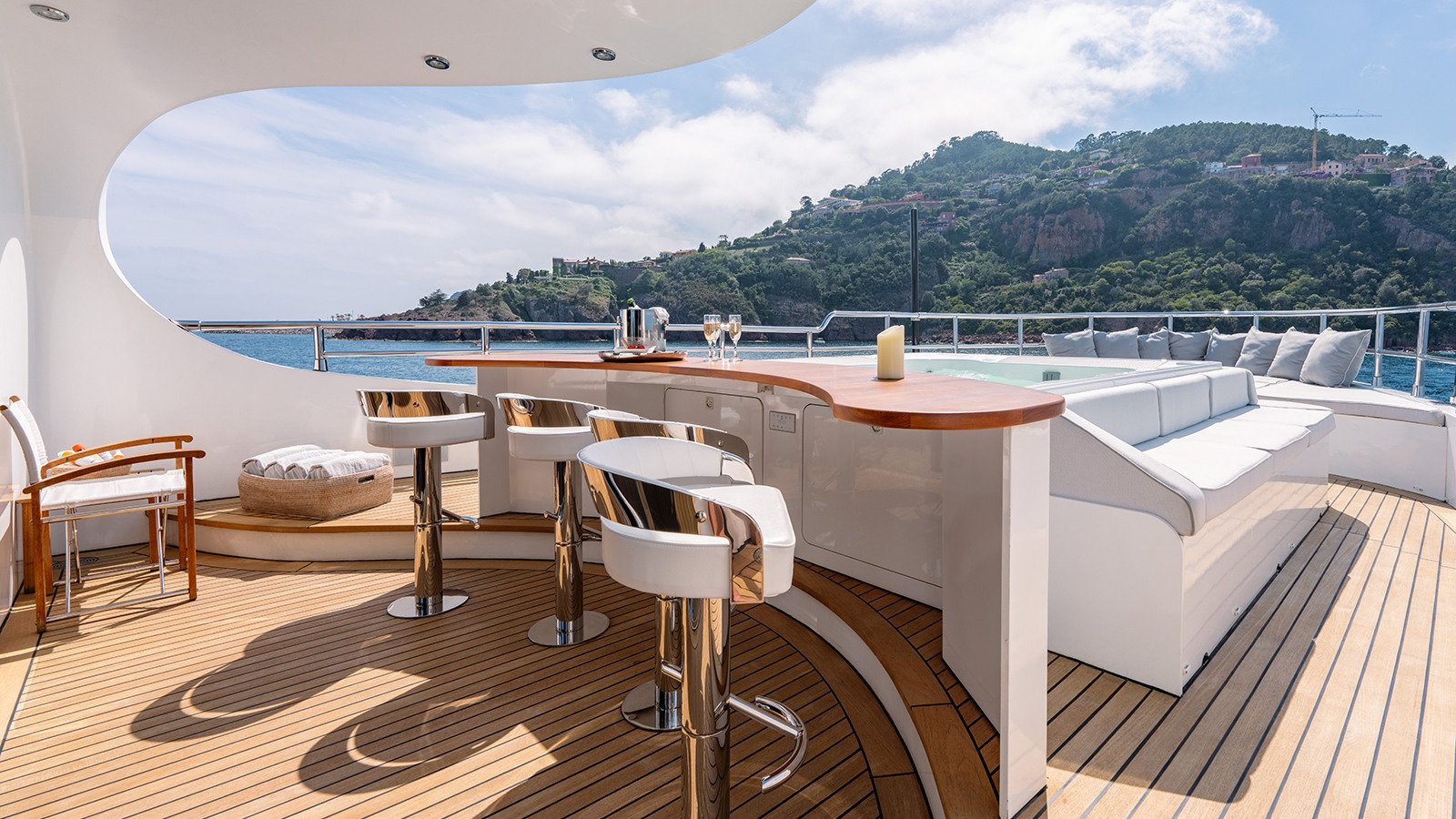
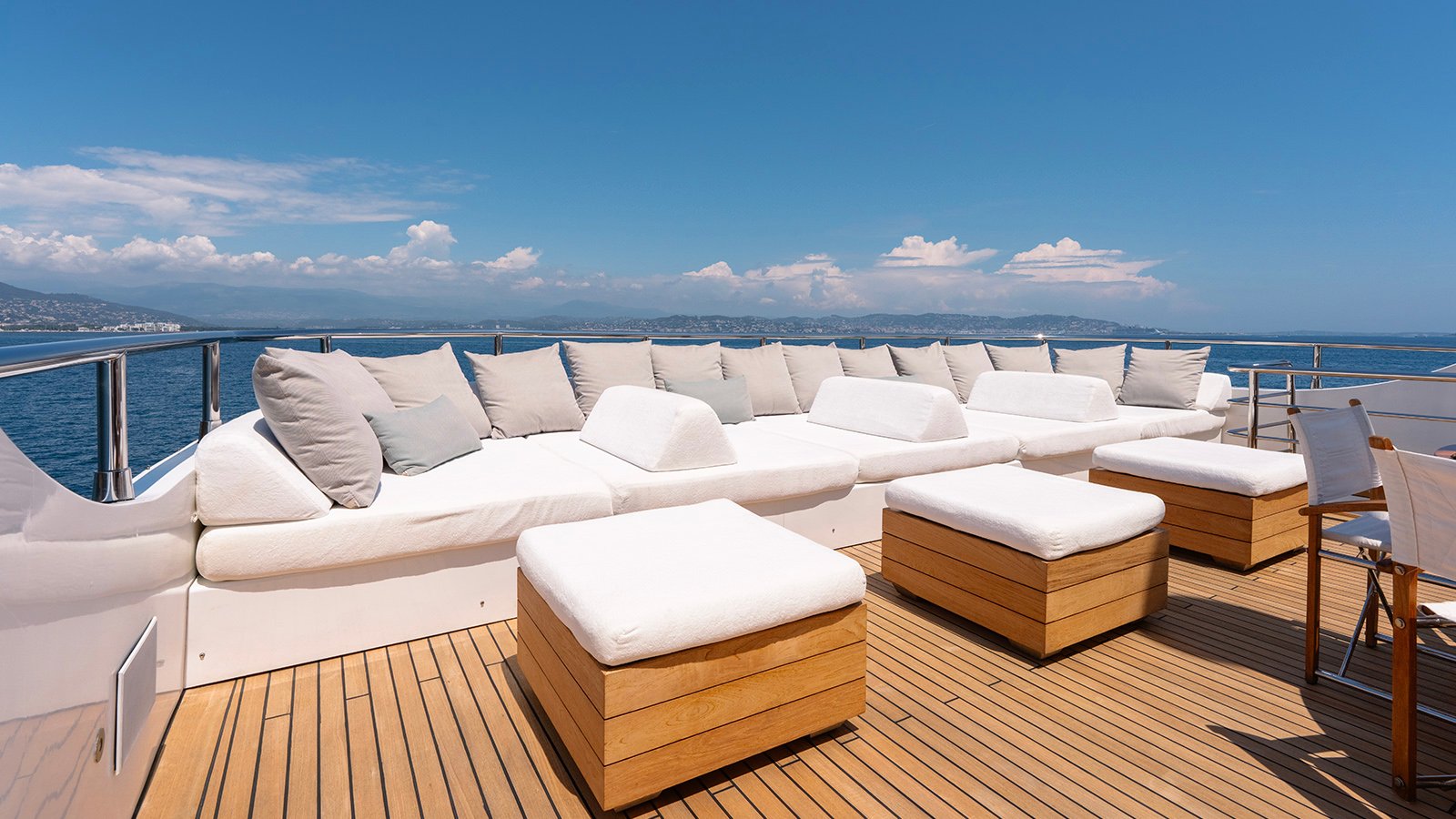
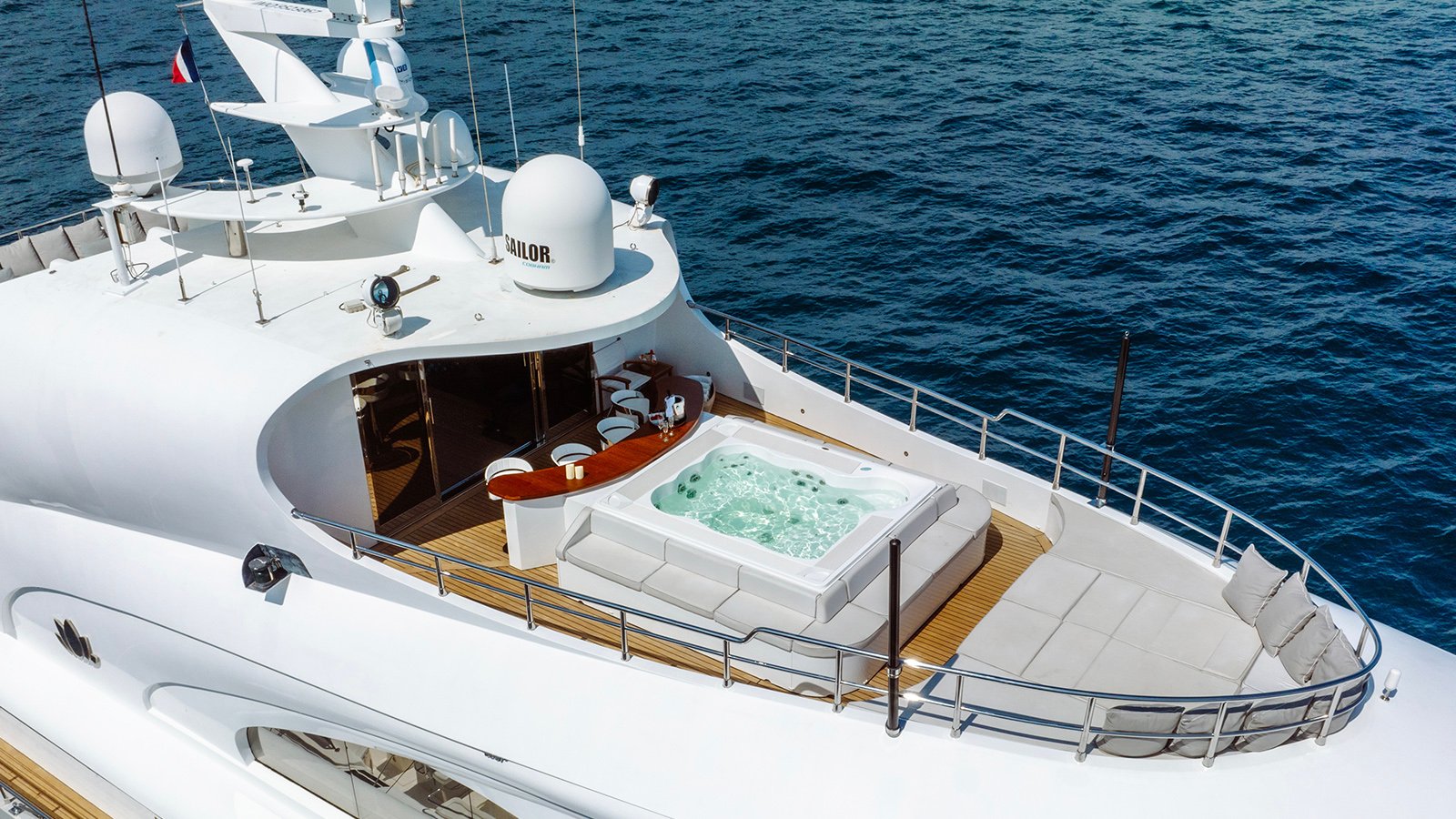
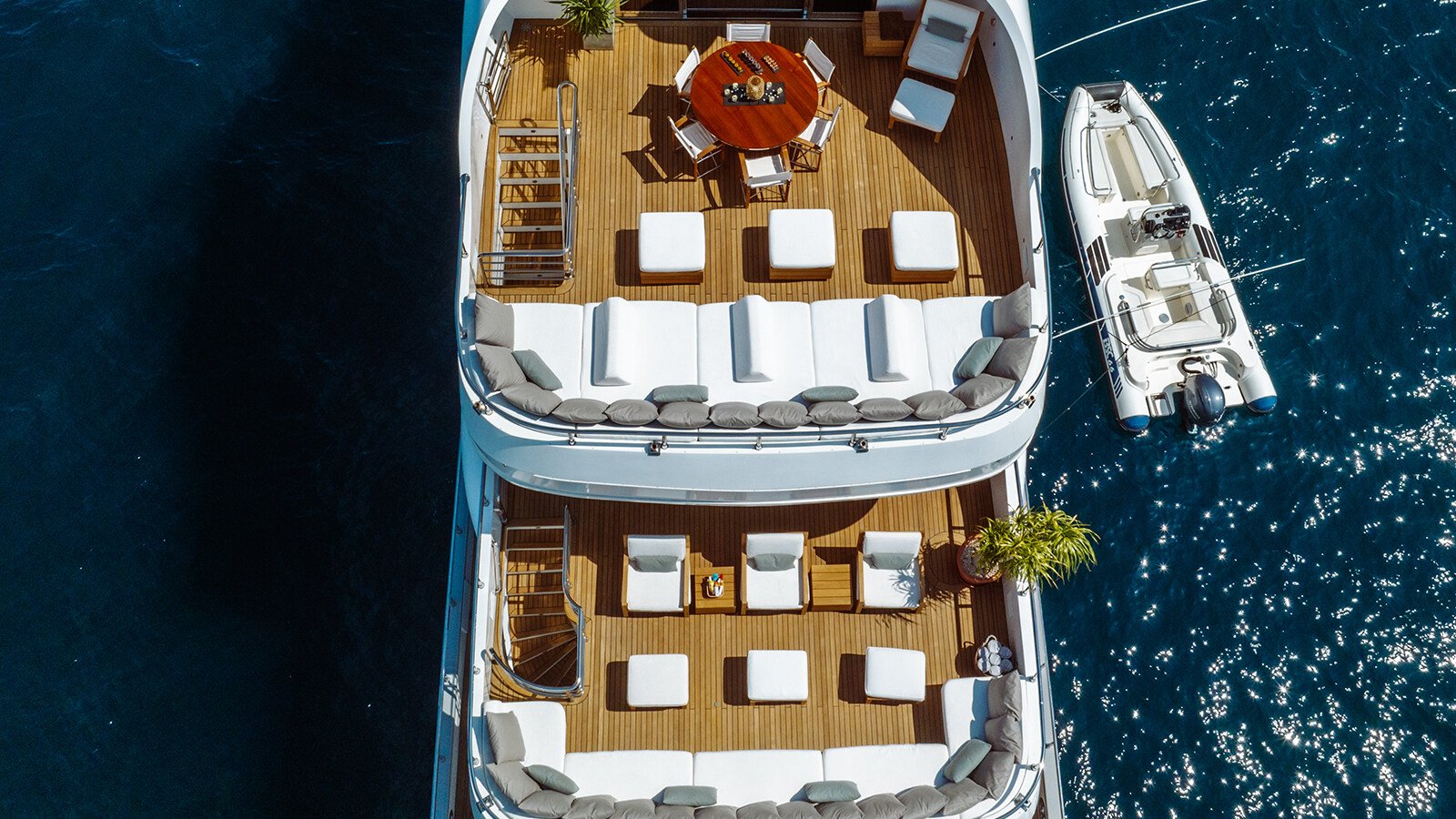
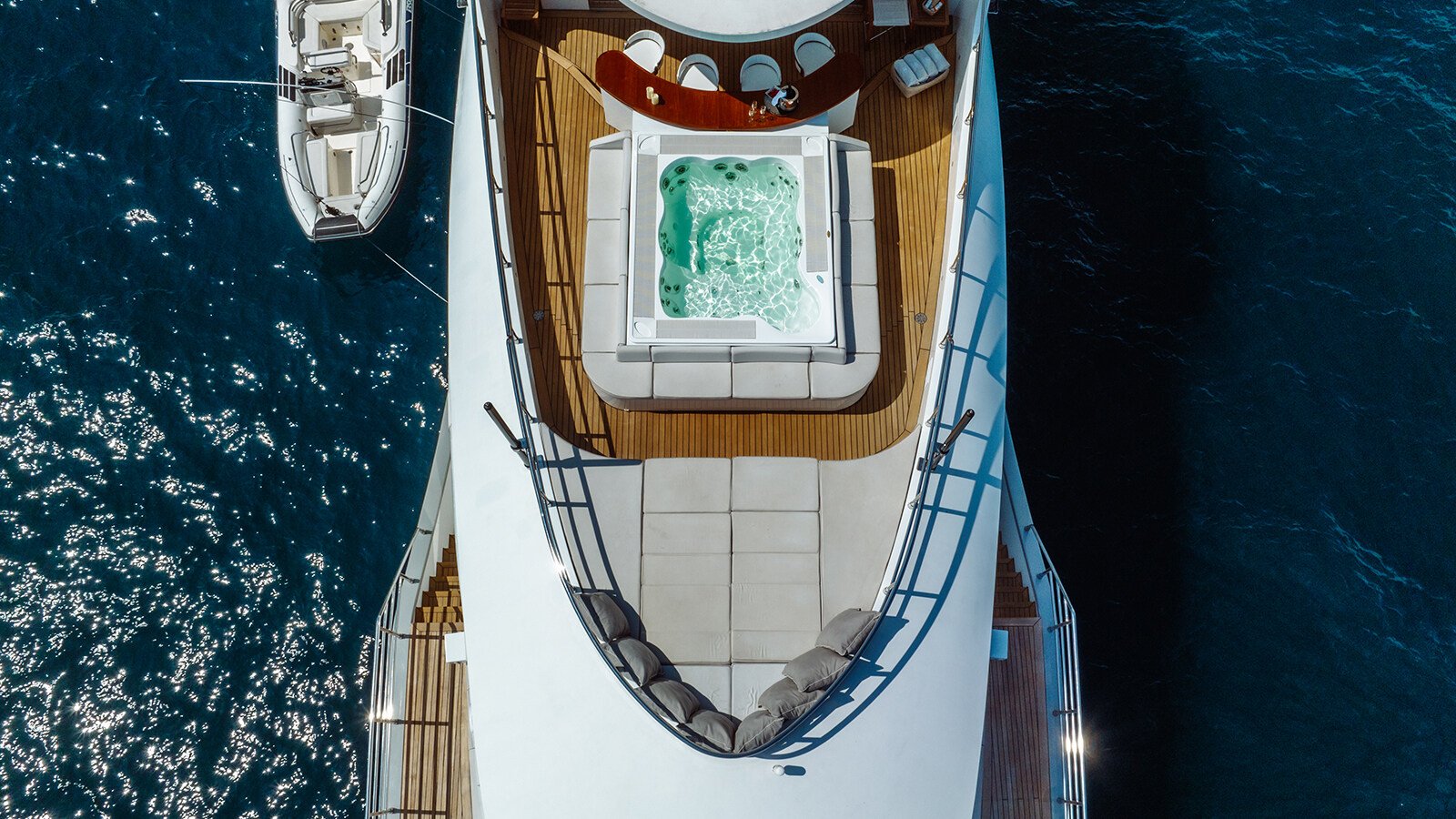
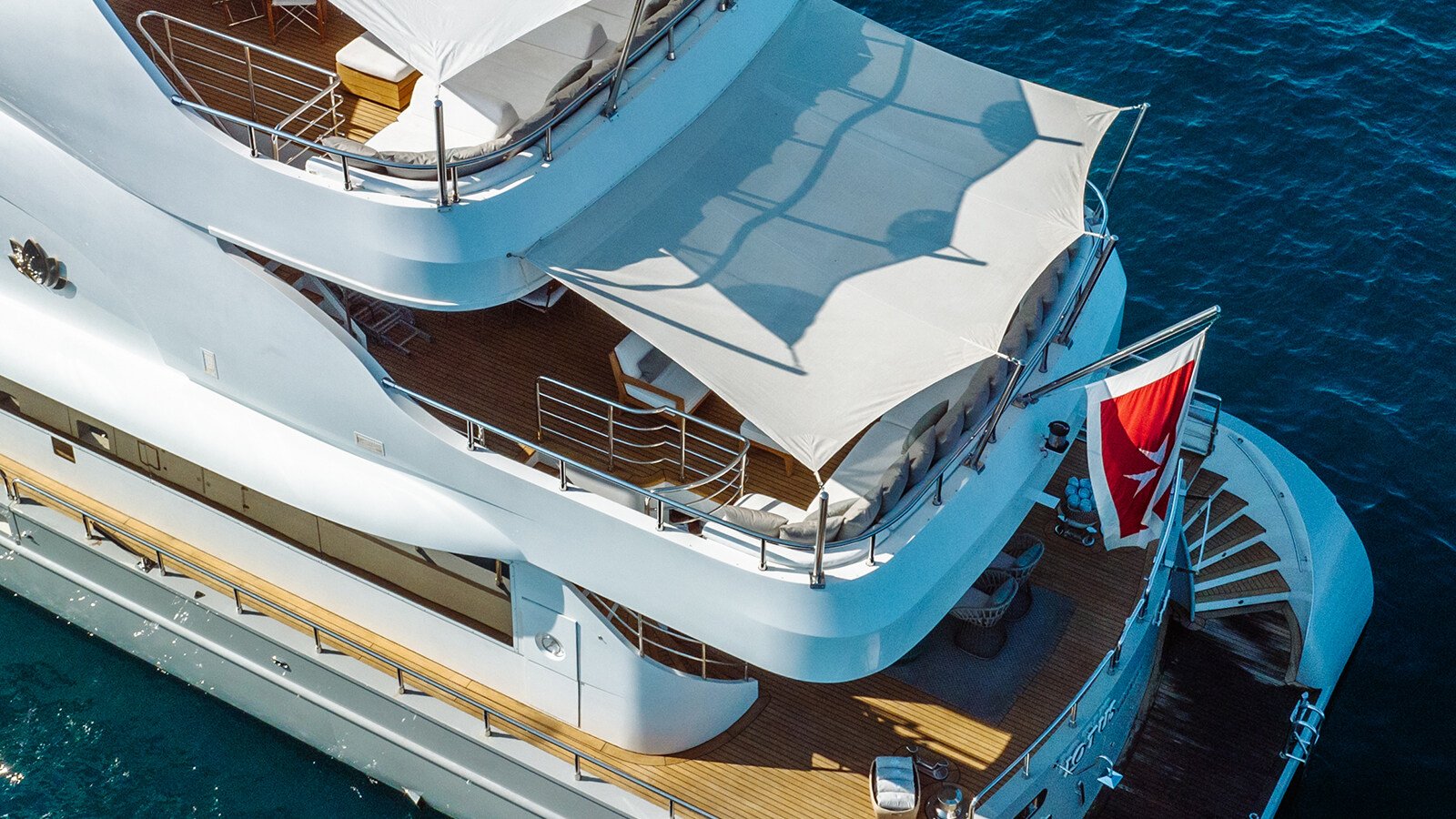
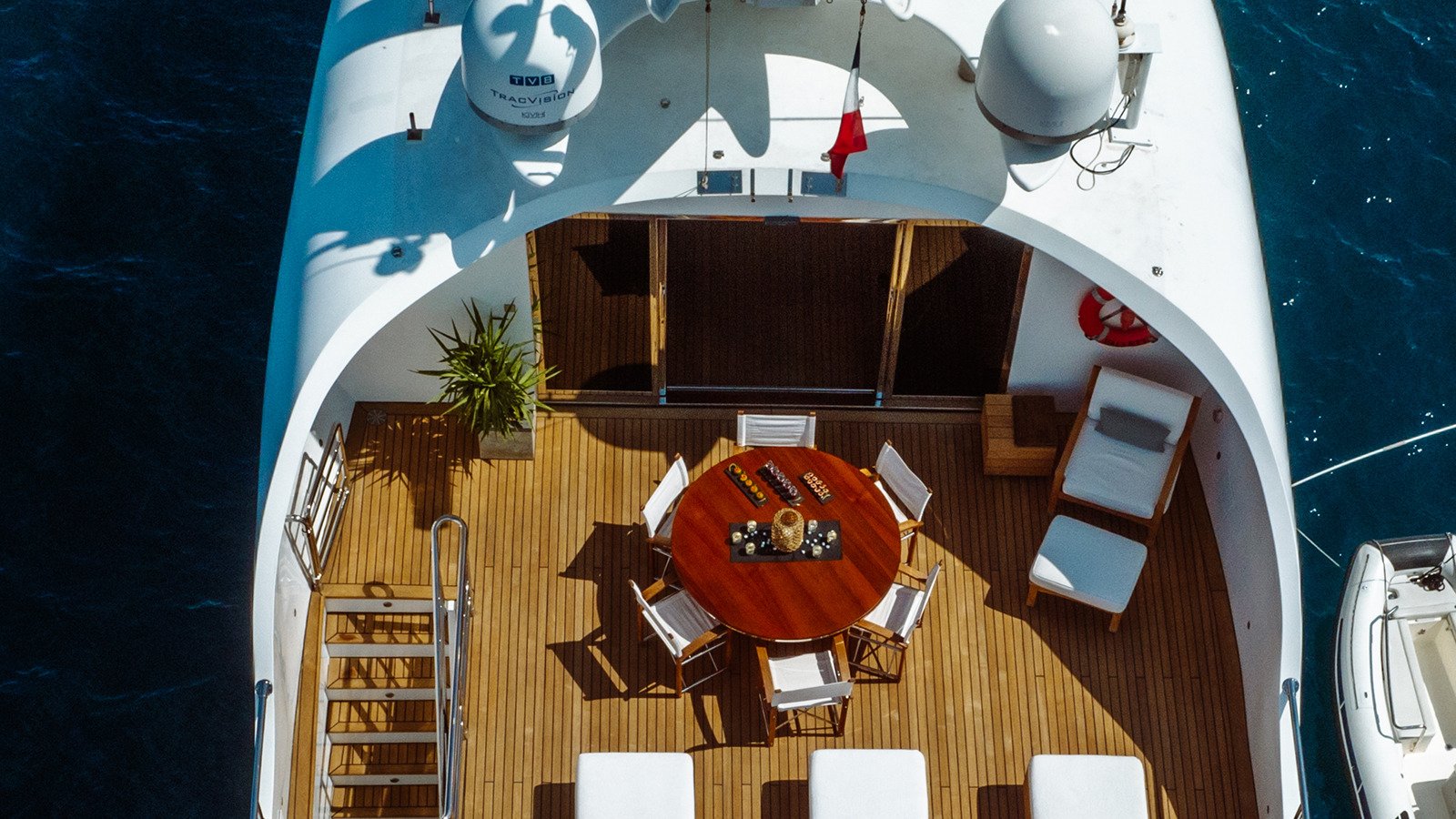
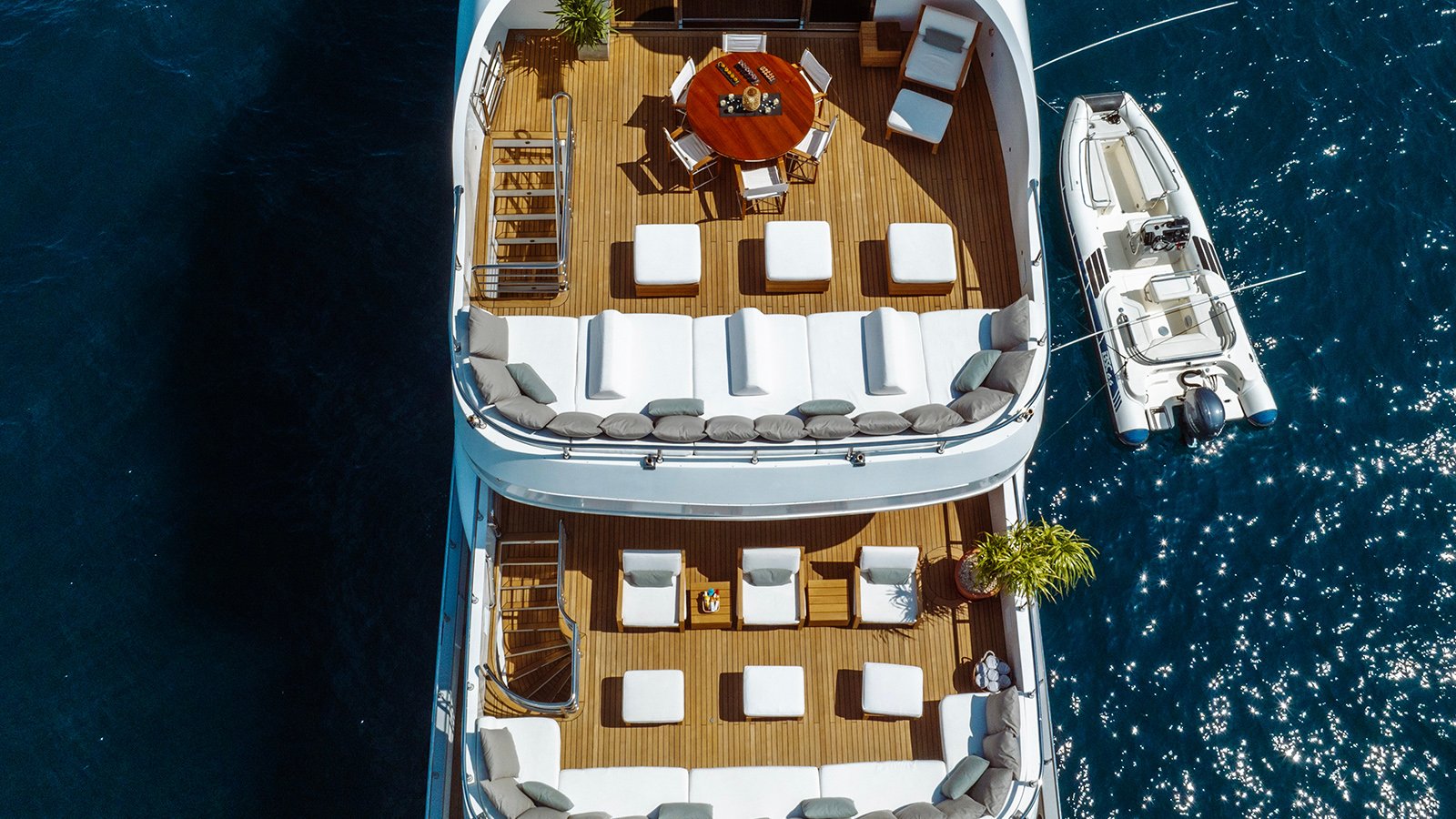
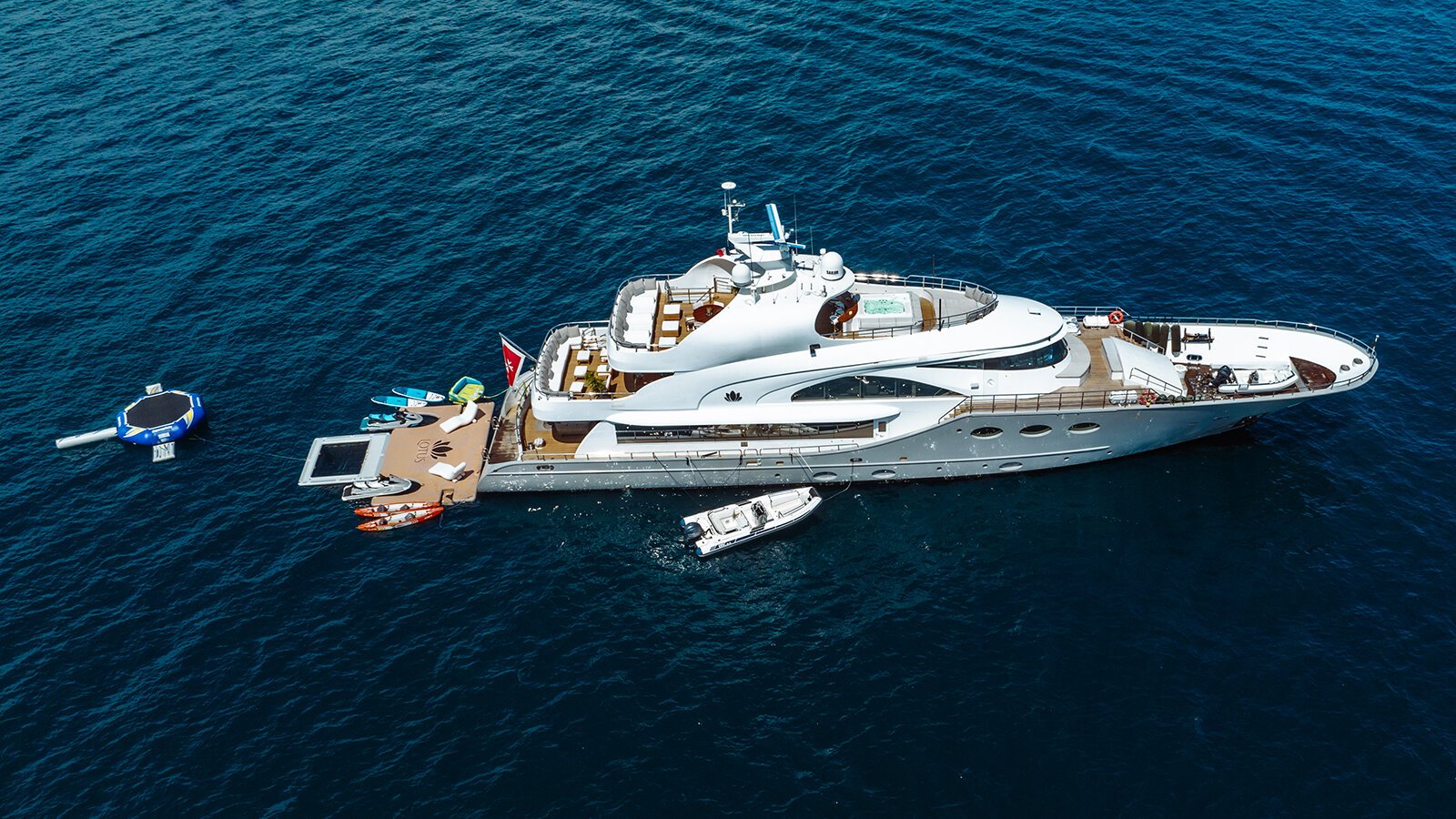
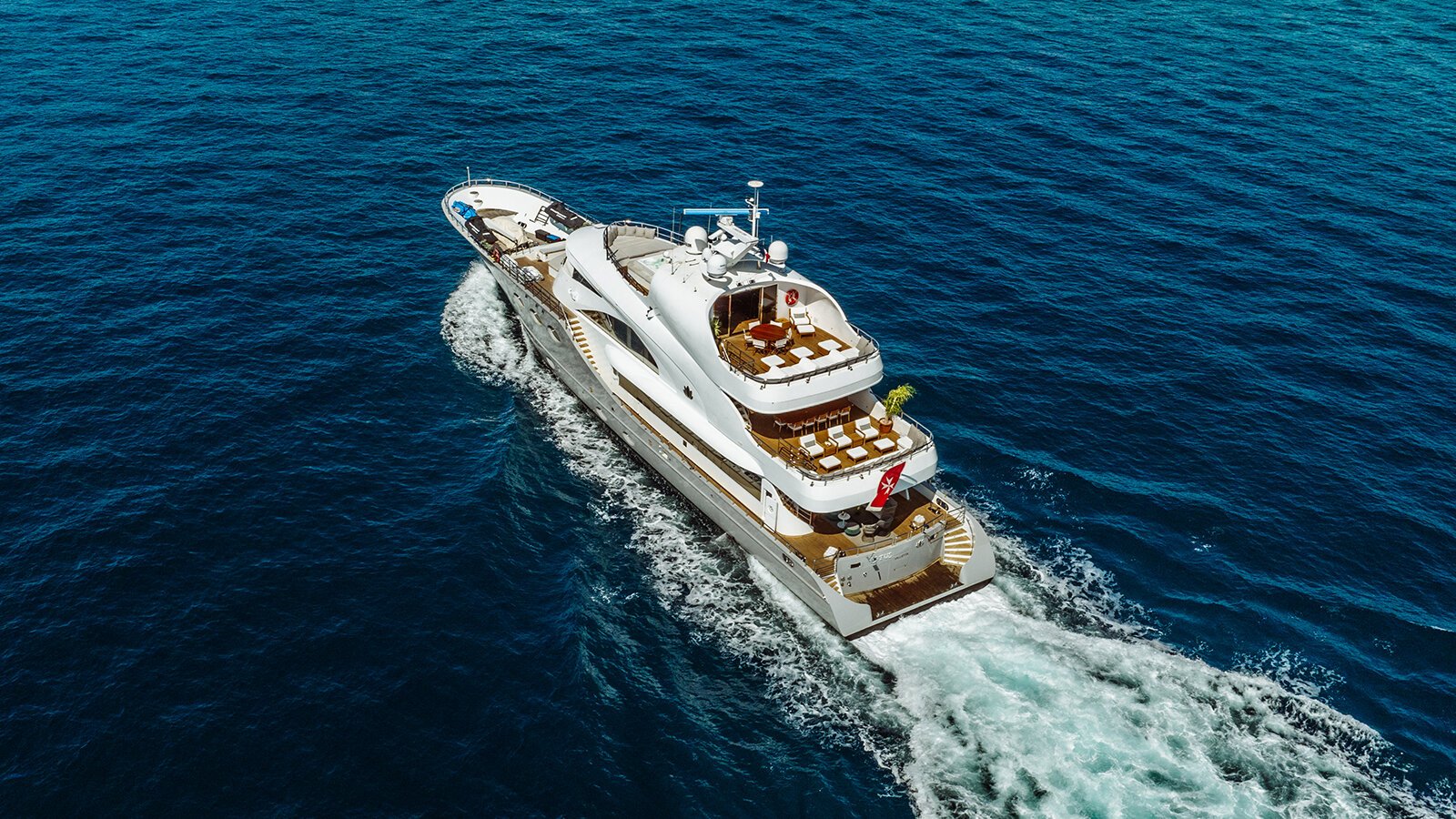
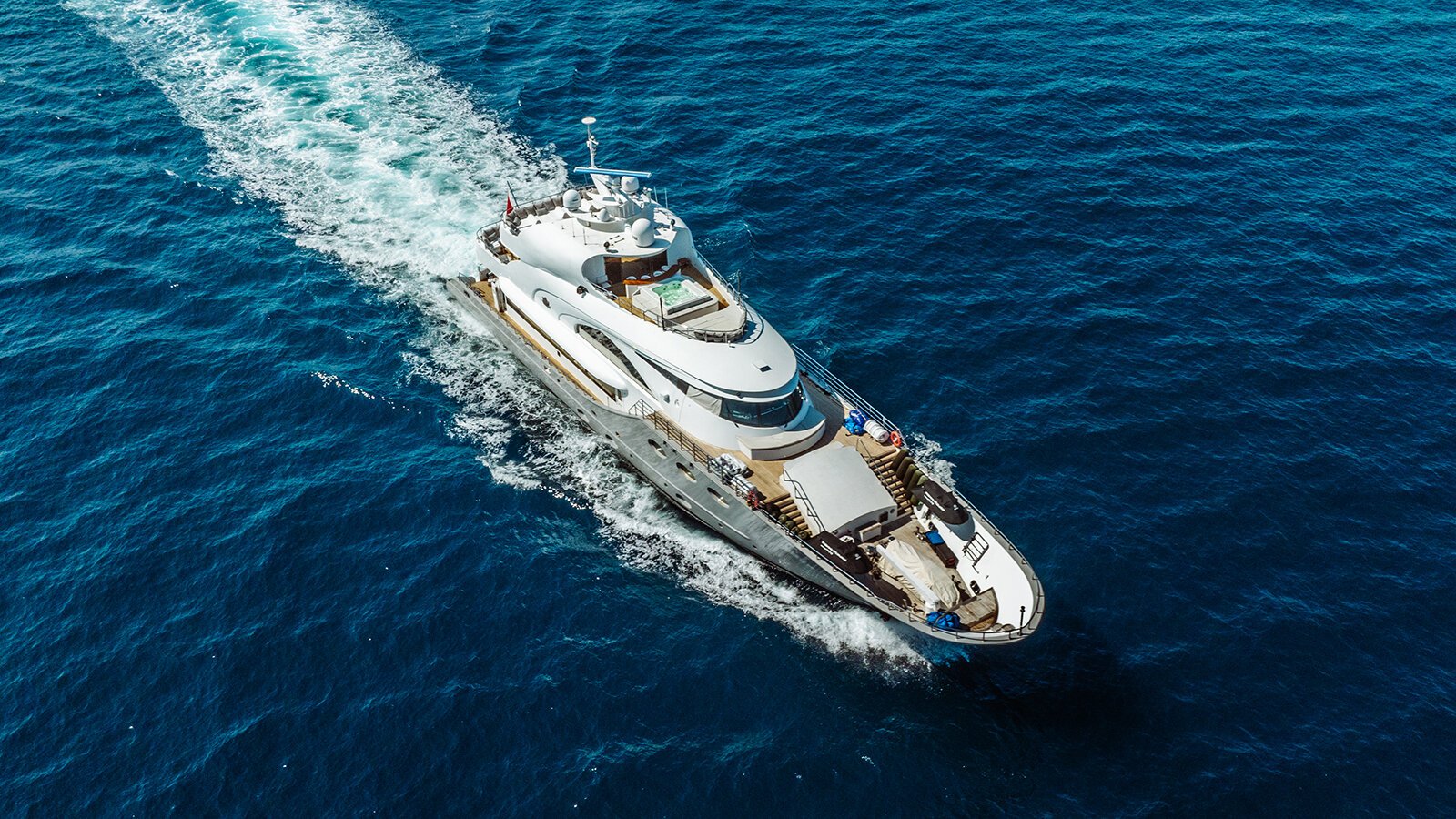
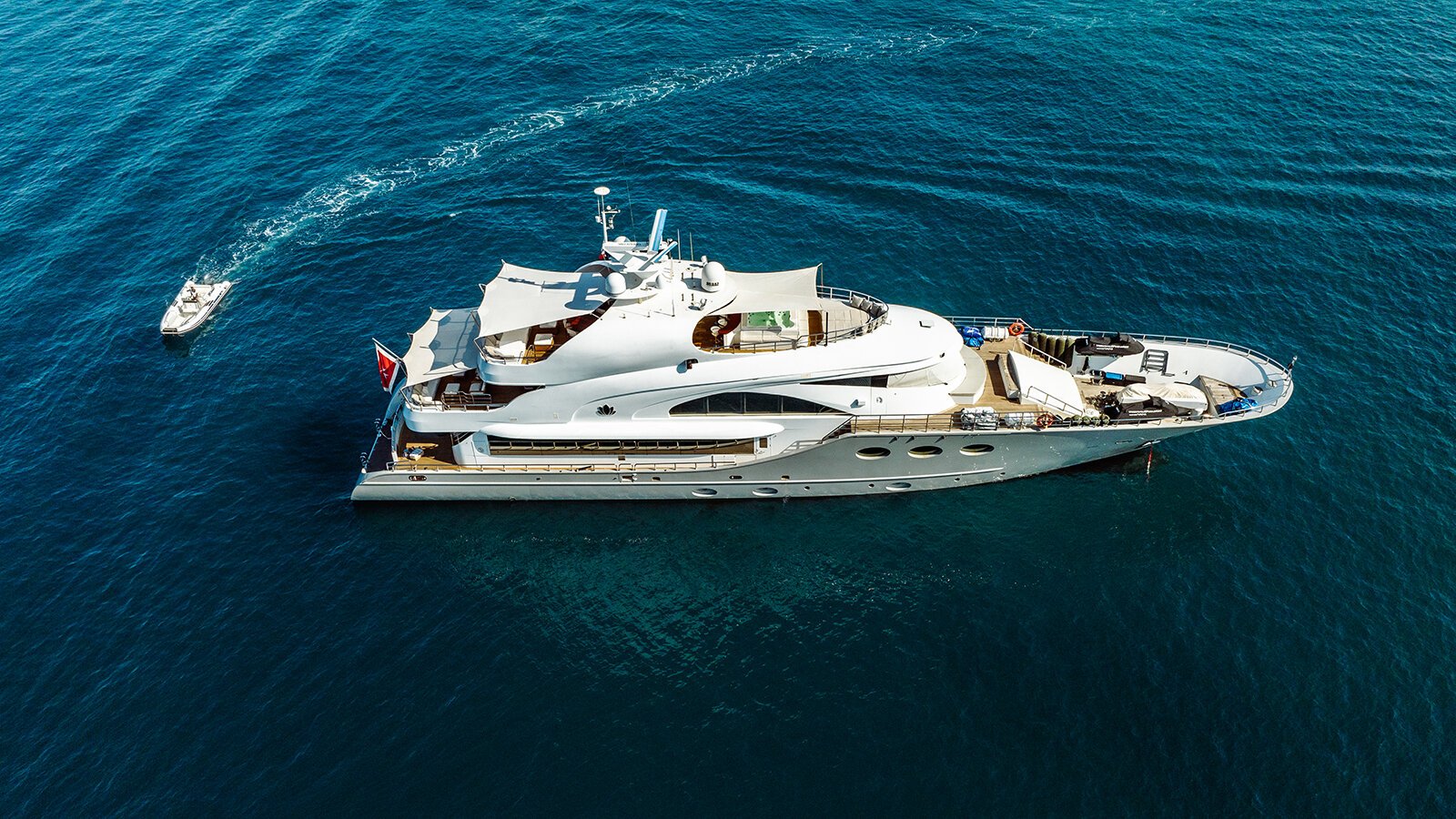
Outside, she is generous everywhere. The sundeck carries a jacuzzi set into the teak with a curved bar and stools alongside, a run of sun beds forward and a shaded seating group aft. A second dining table sits under an awning on the deck below, long enough for the full complement. Forward, a separate lounge deck sits above the bow. And a proper gymnasium, panelled in warm timber with sliding glass doors that open straight onto the deck, means training does not have to happen in a corridor.
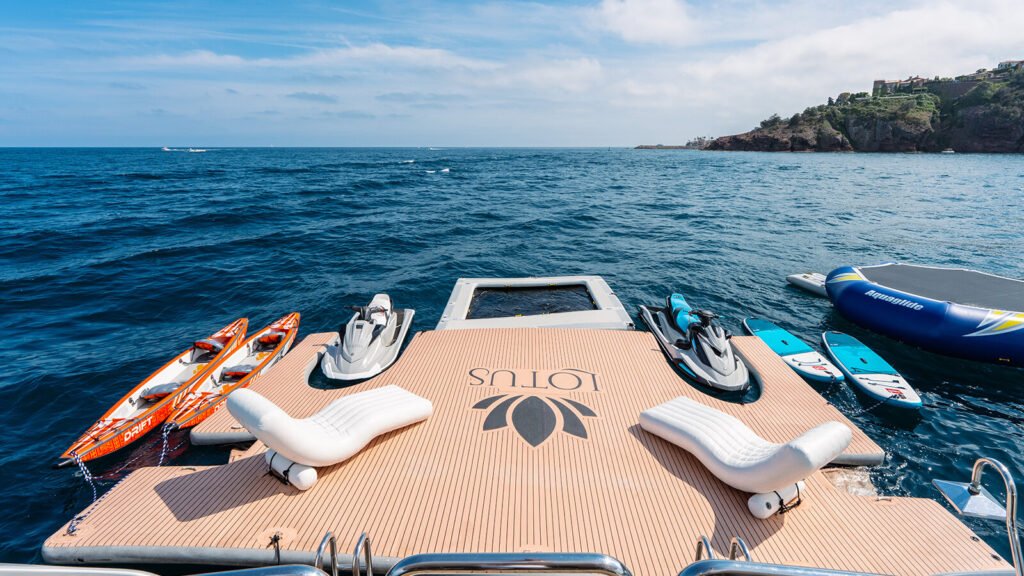
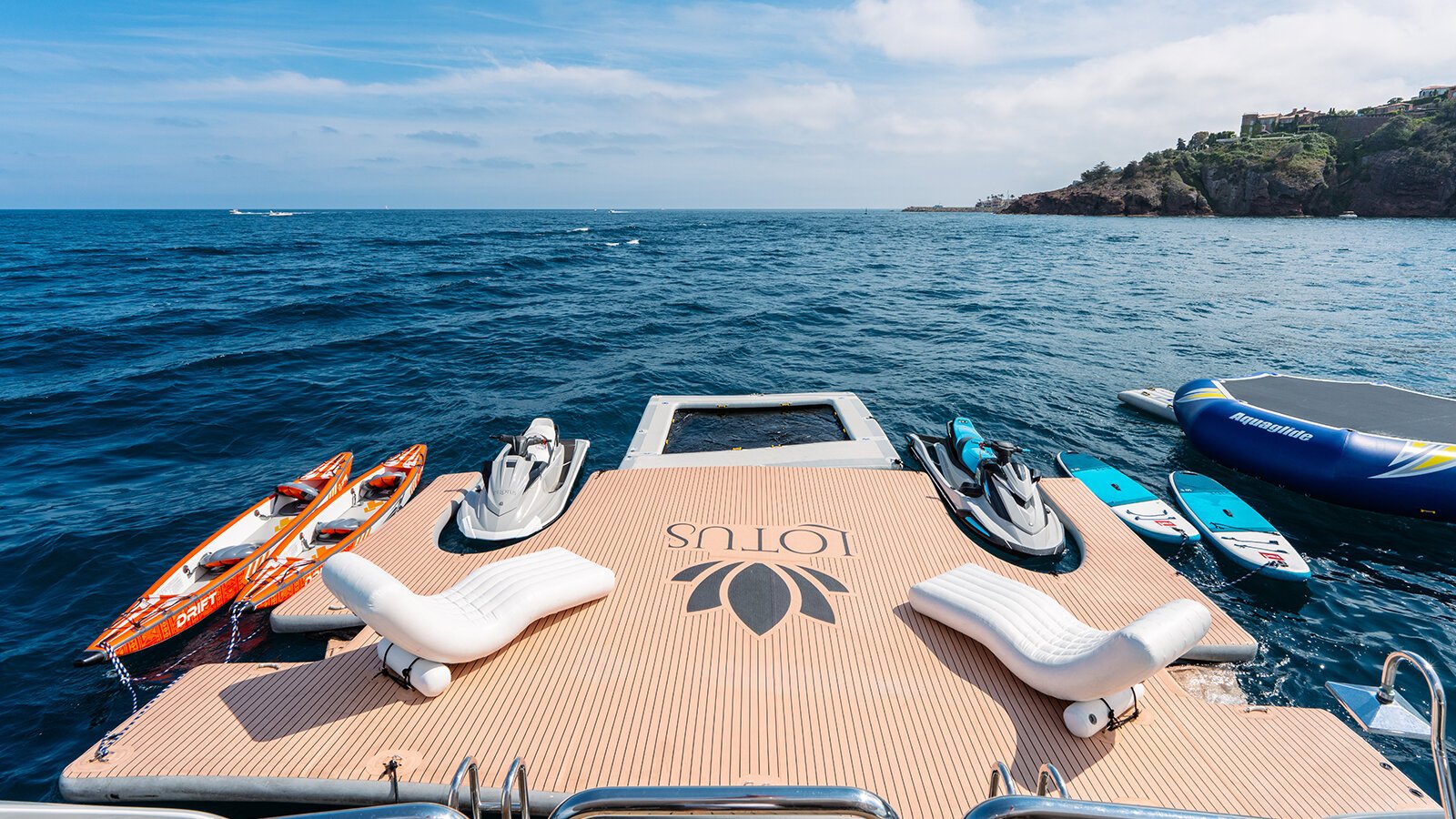
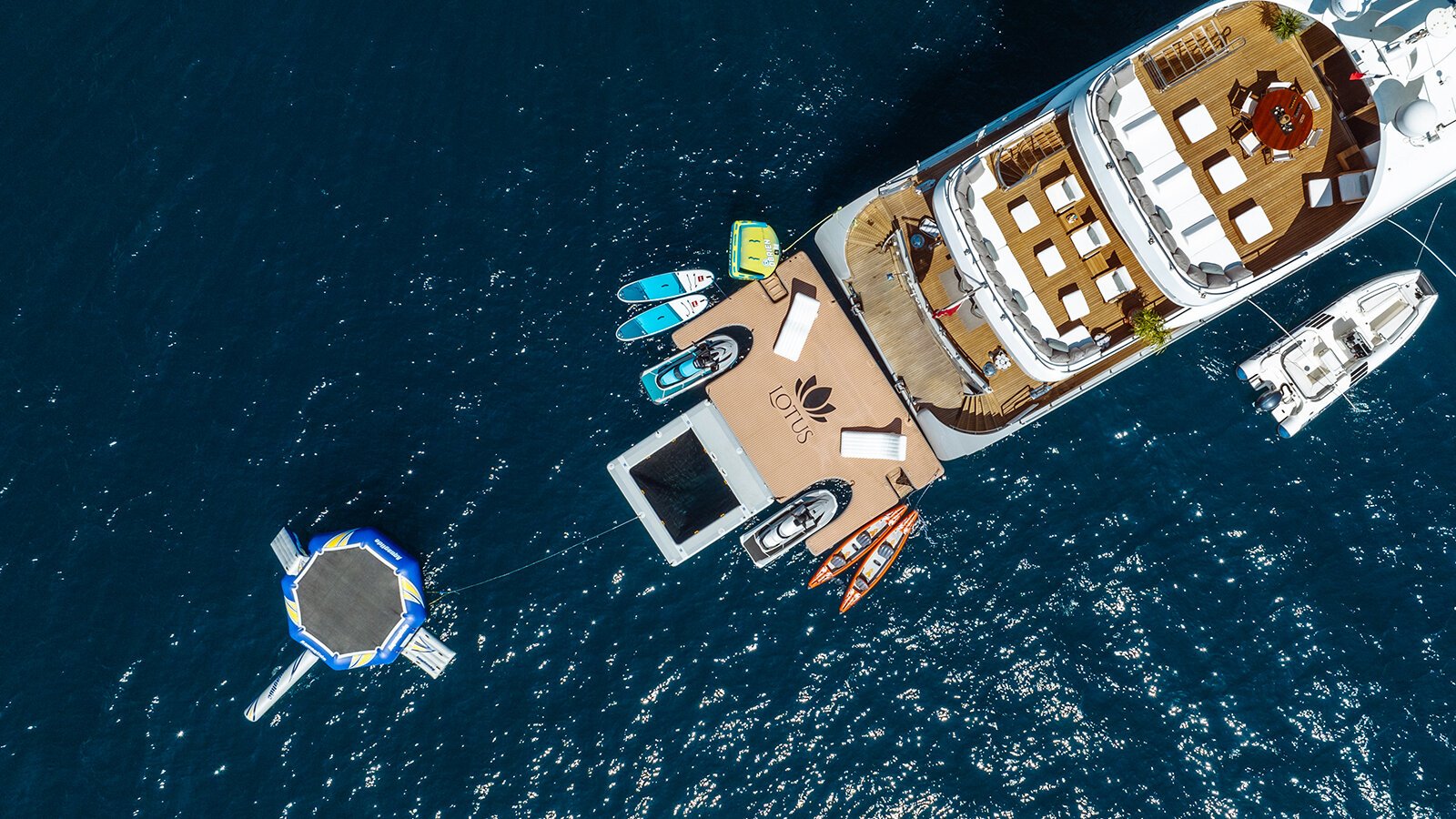
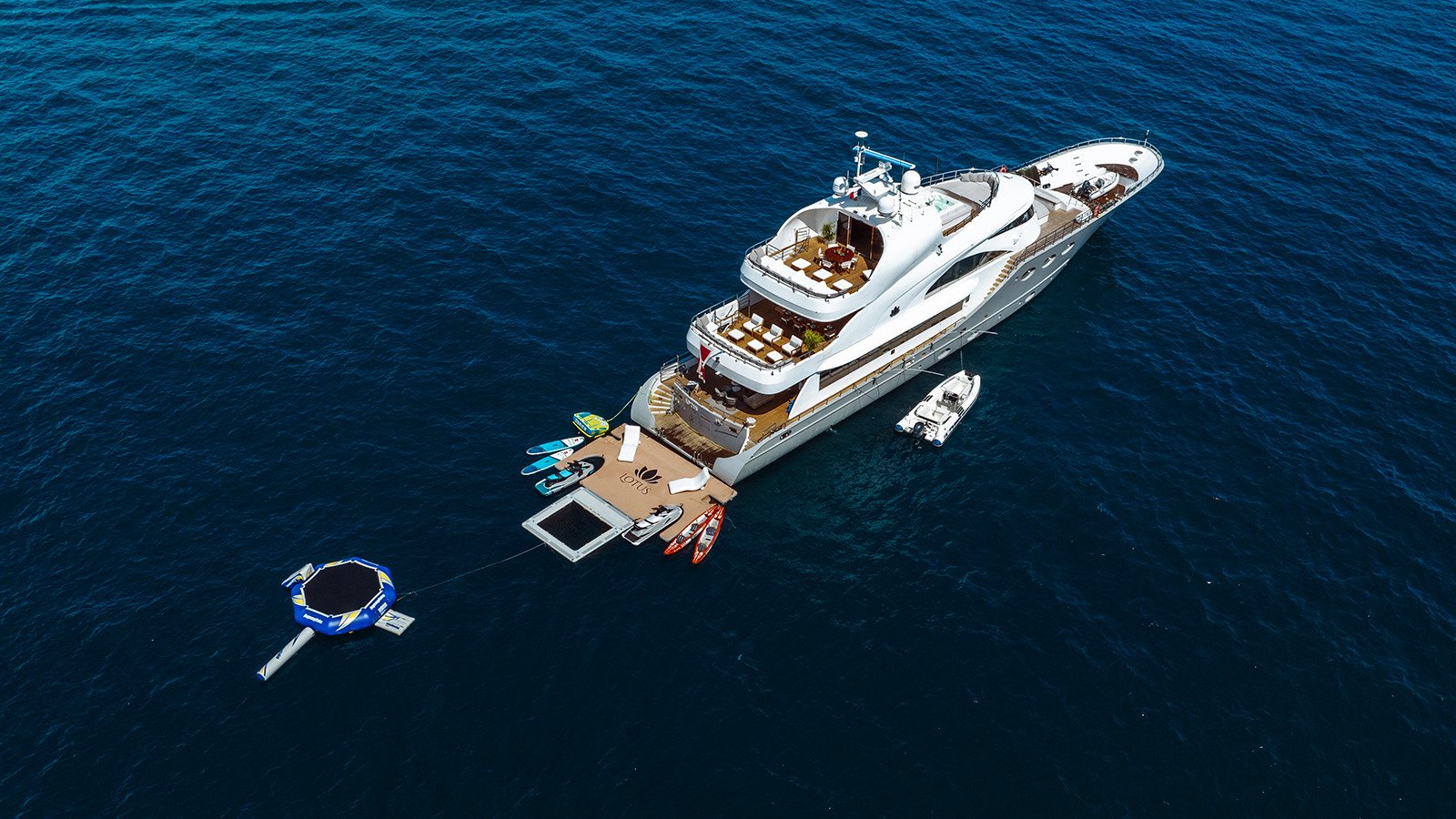
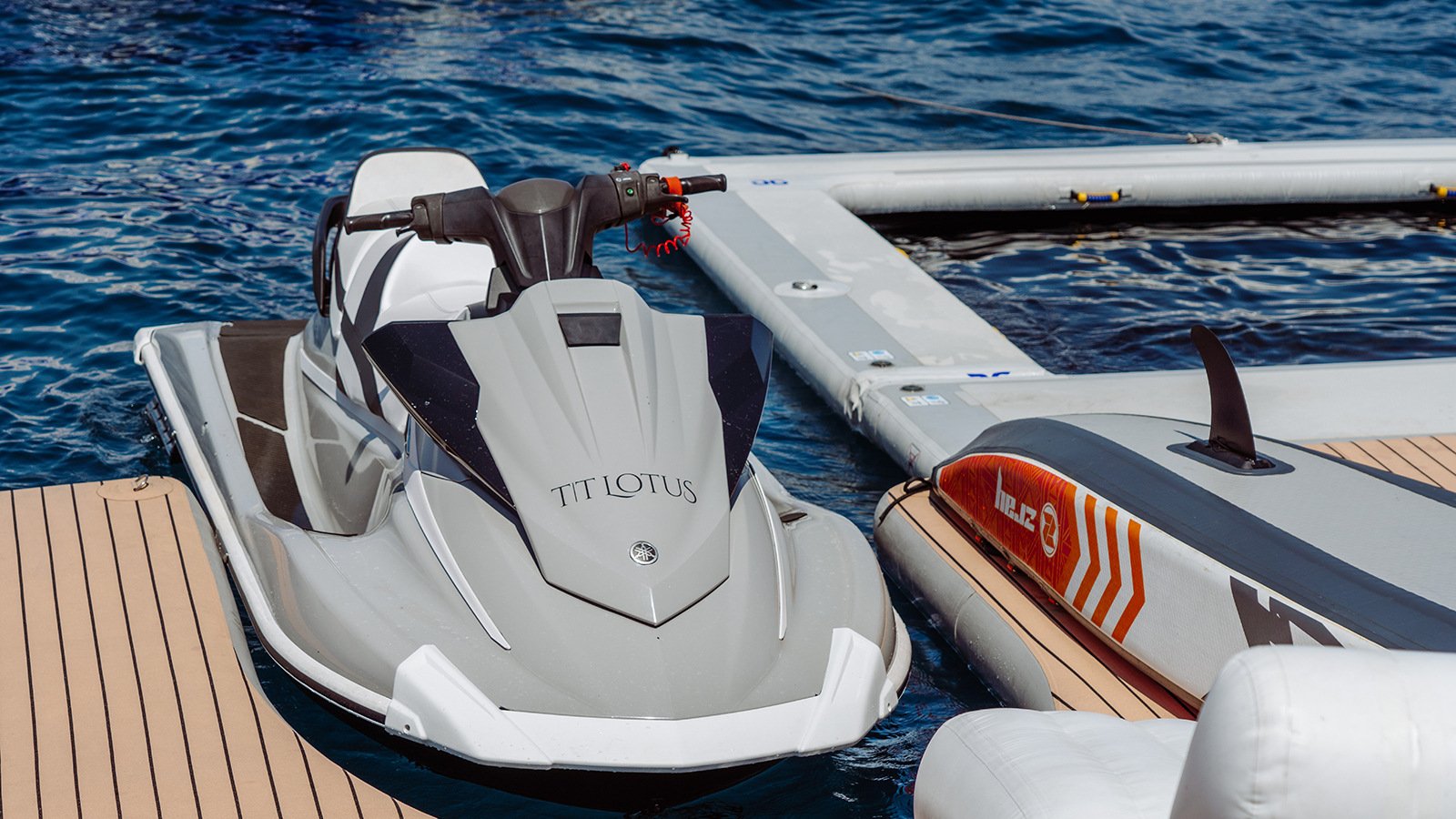
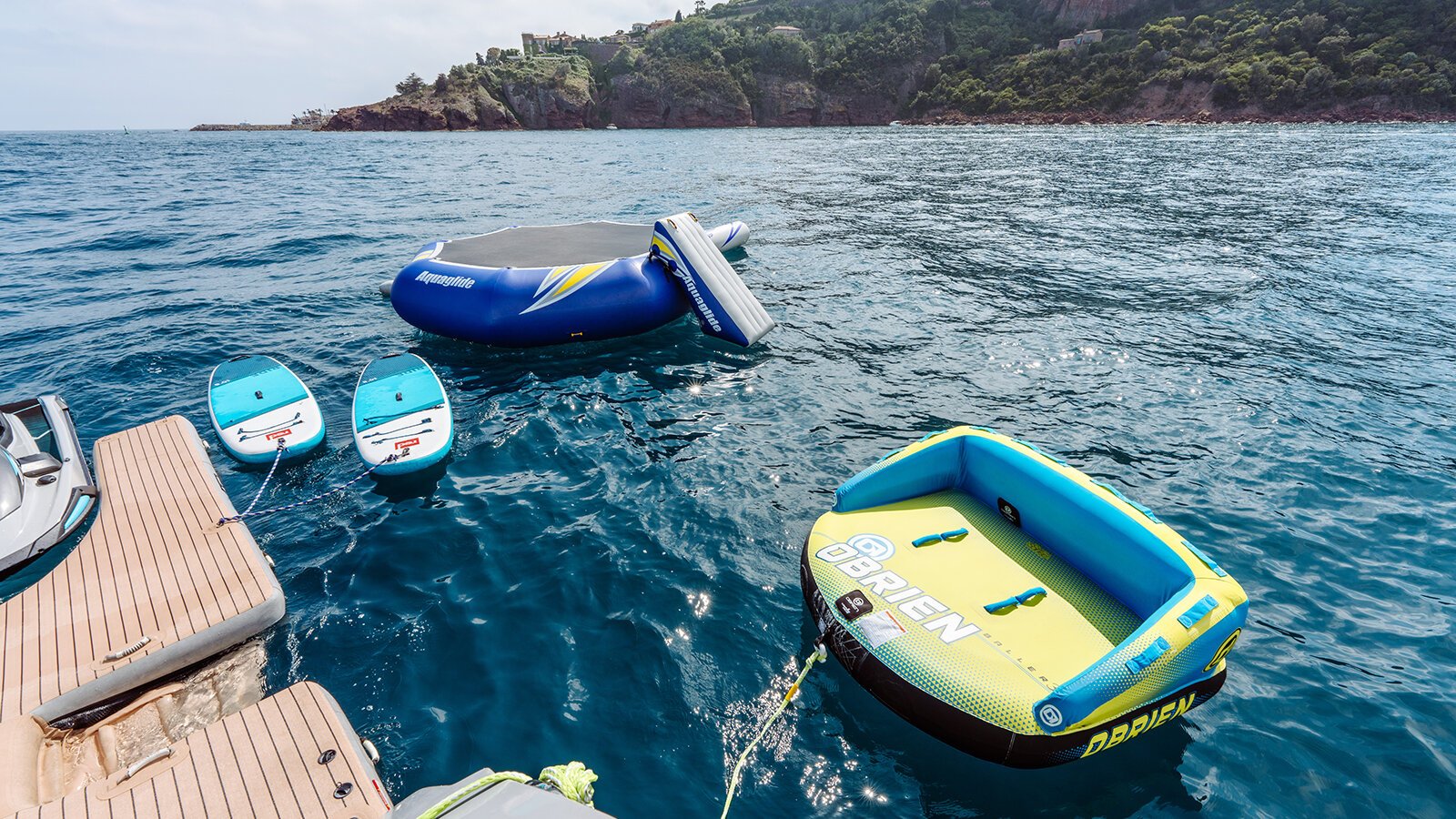
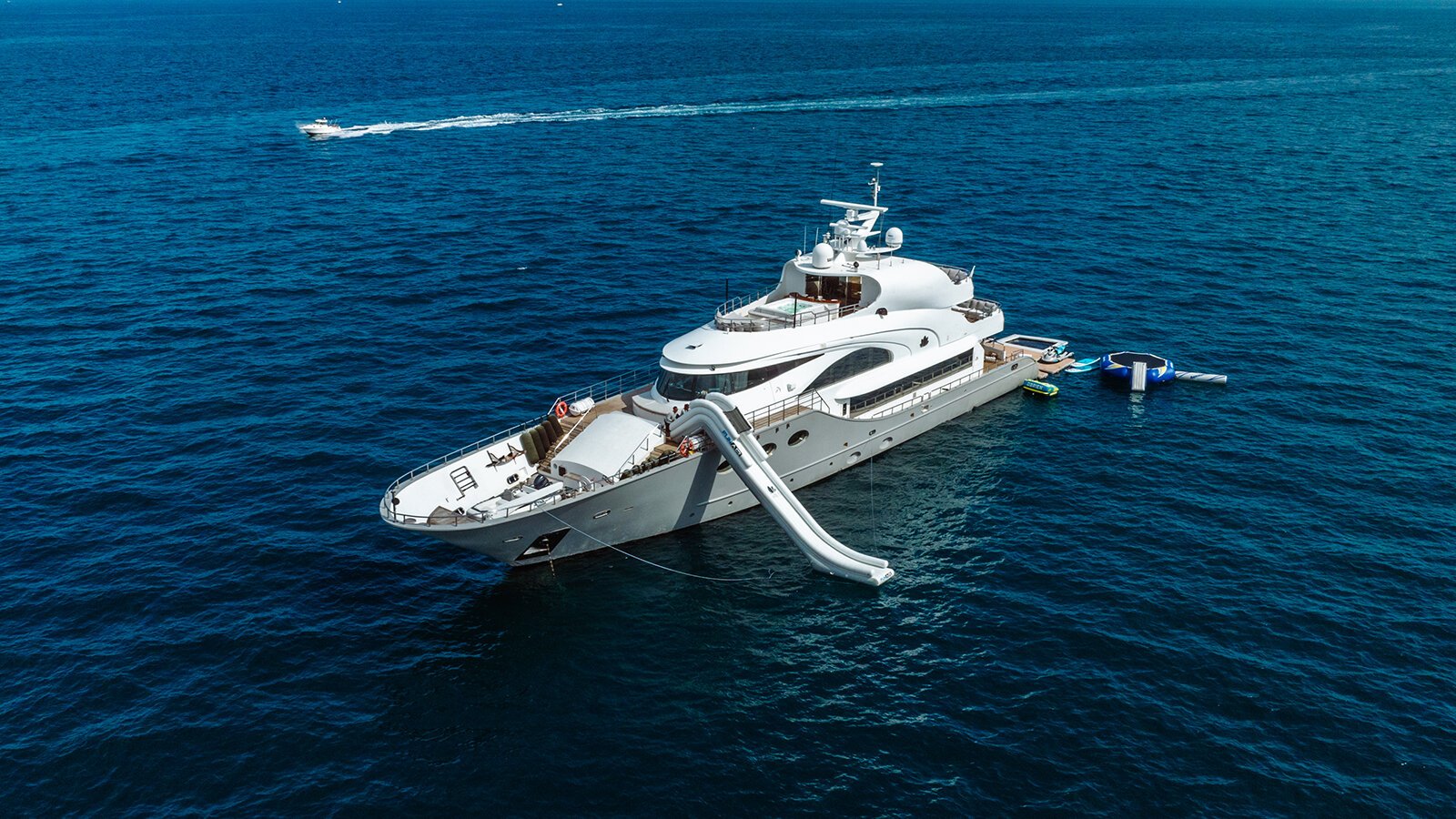
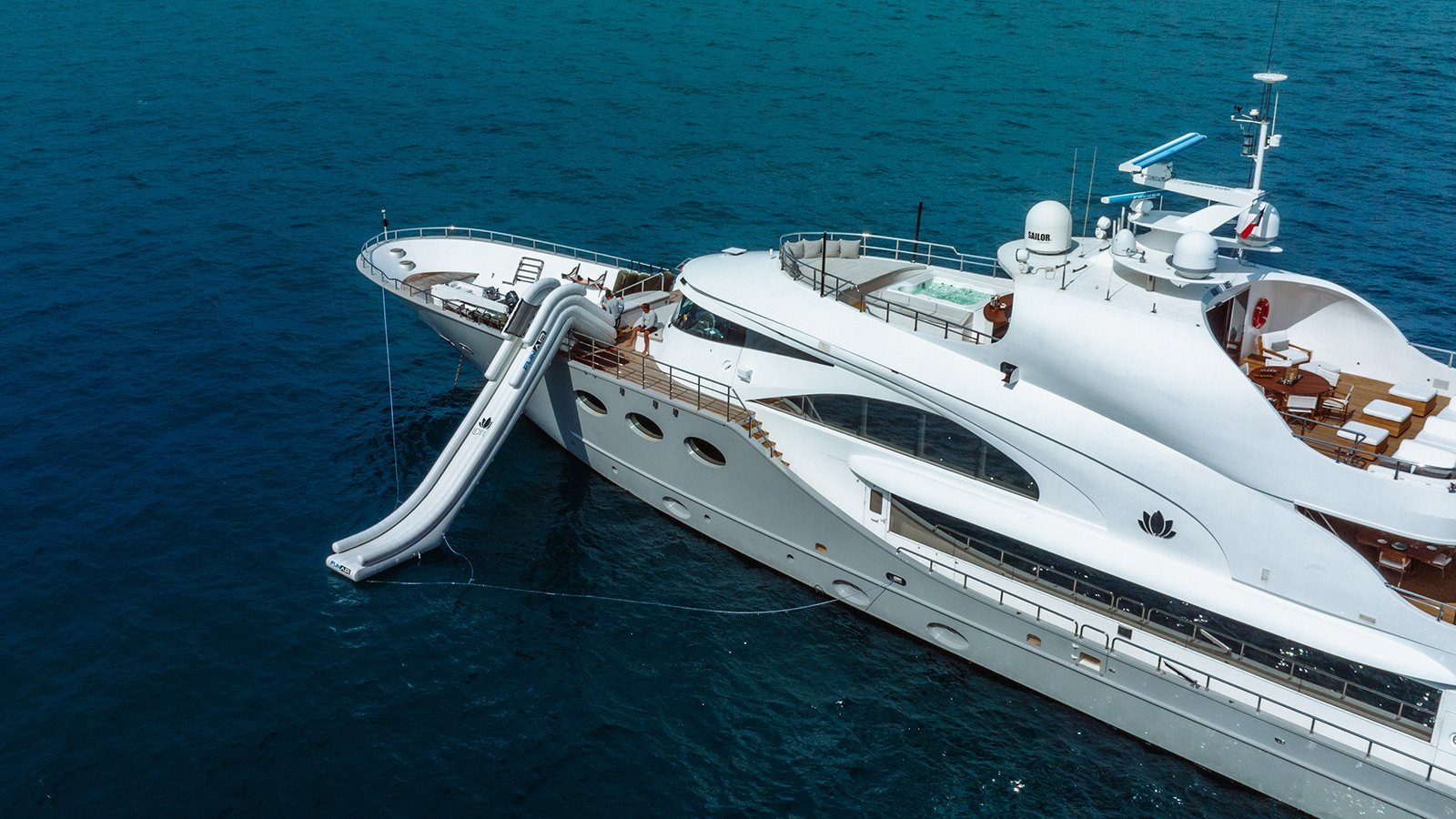
What guests remember is usually the water. Lotus carries a full-size inflatable beach club that deploys off the stern, a six-metre slide, a trampoline, two RIBs, two Yamaha waverunners, an e-foil, kayaks, paddleboards, wakeboards and a wide selection of towables for one to four riders. A crew of ten runs it, and the fishing kit on board is comprehensive rather than token.
Her cruising is West Mediterranean and she is most often found on the French Riviera, where the coastline suits her: short hops between anchorages, a shallow enough draft for the bays below the Esterel, and enough deck for a long day at anchor without anyone feeling crowded. At twelve knots she is not built for speed, and she does not pretend to be. She is built to sit somewhere beautiful for a week and make it feel like a house.
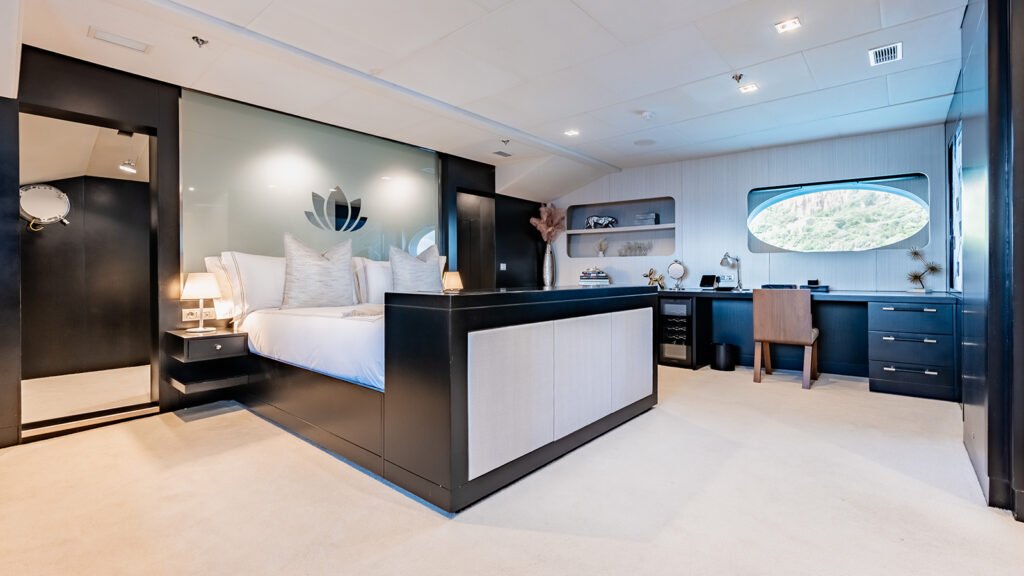
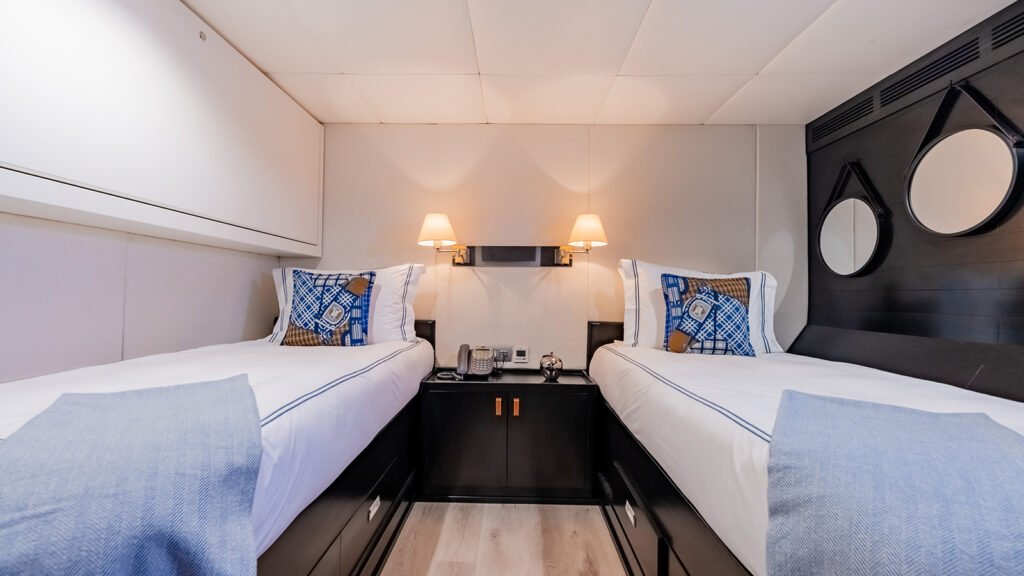
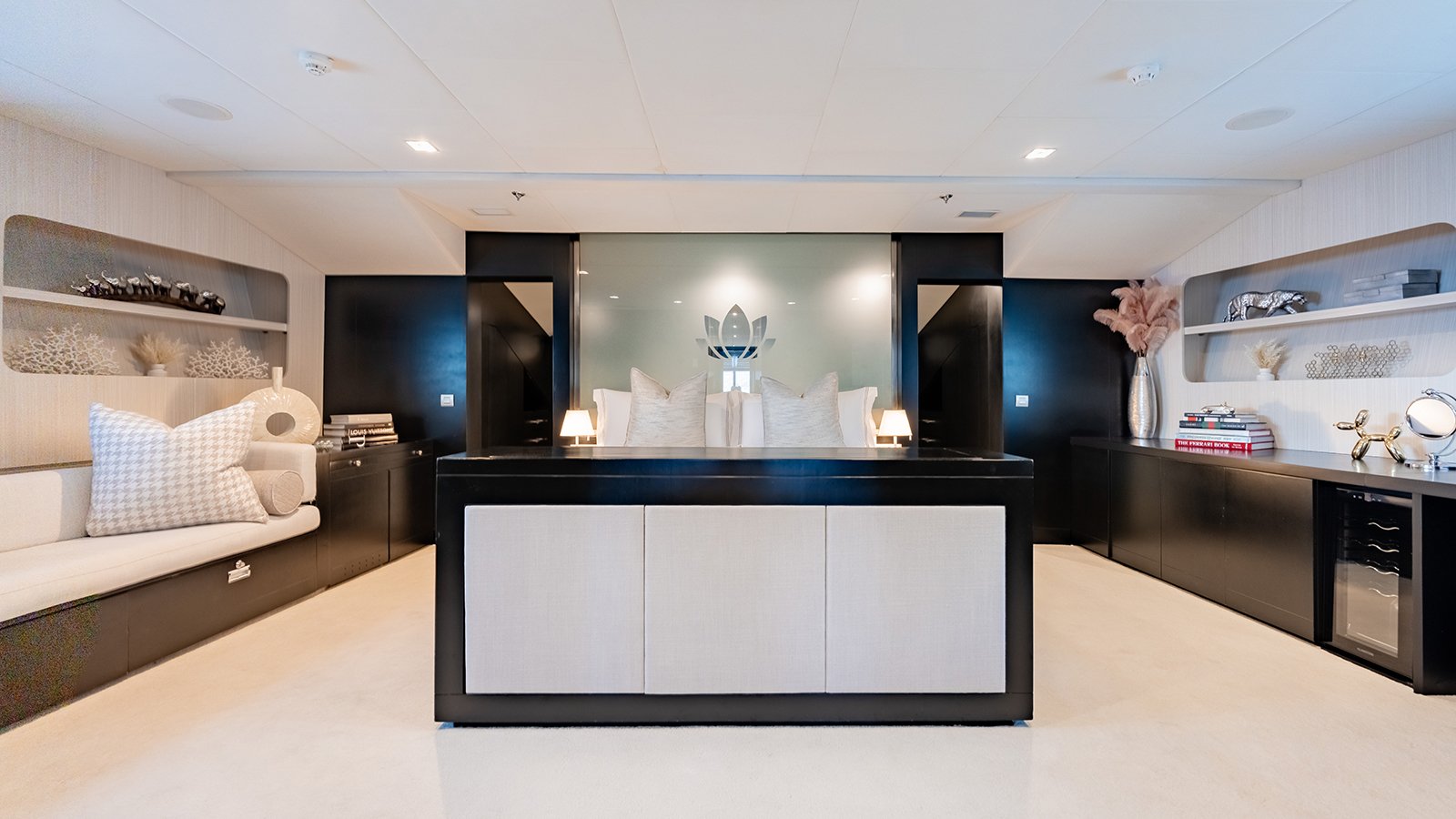
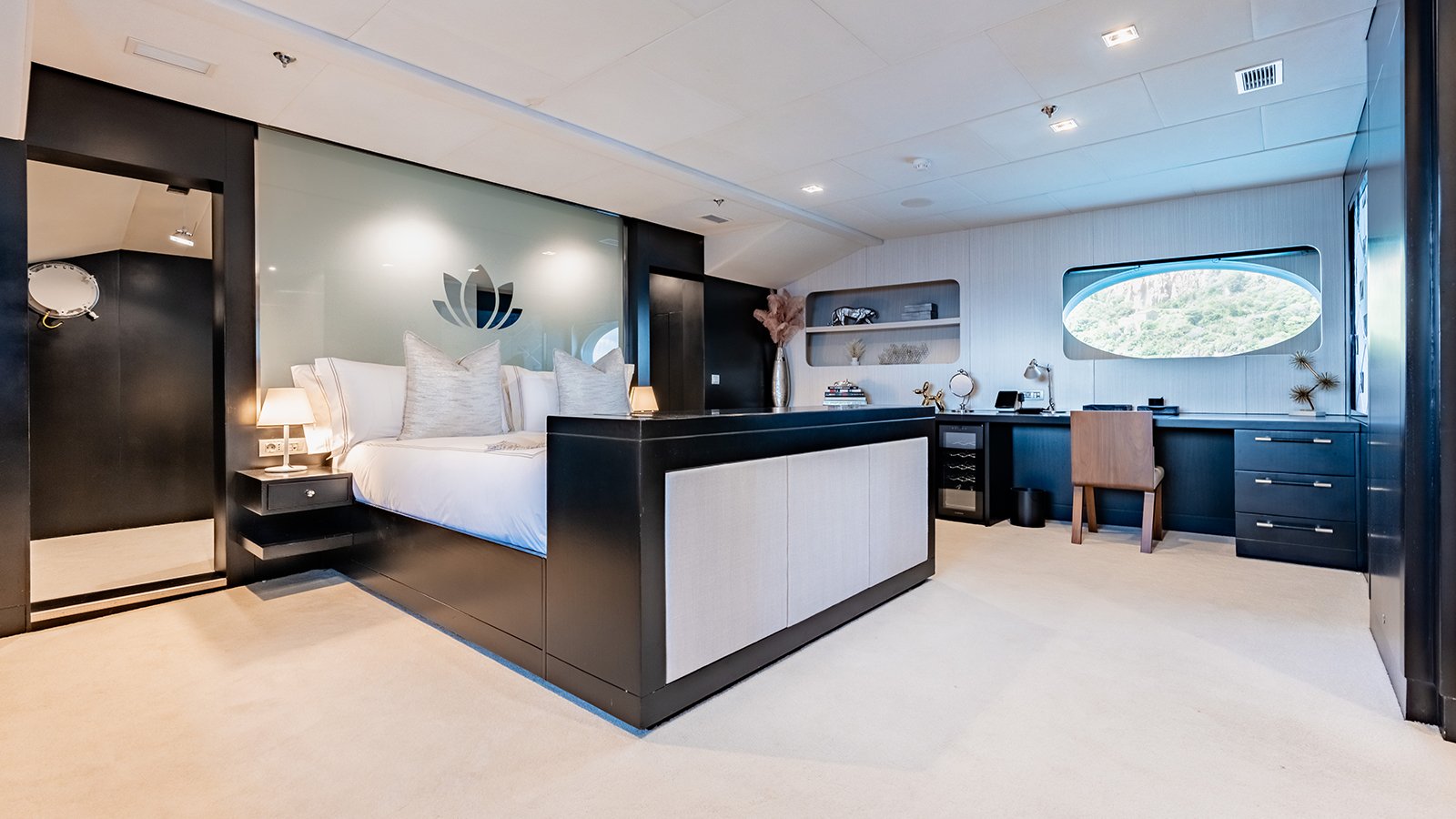
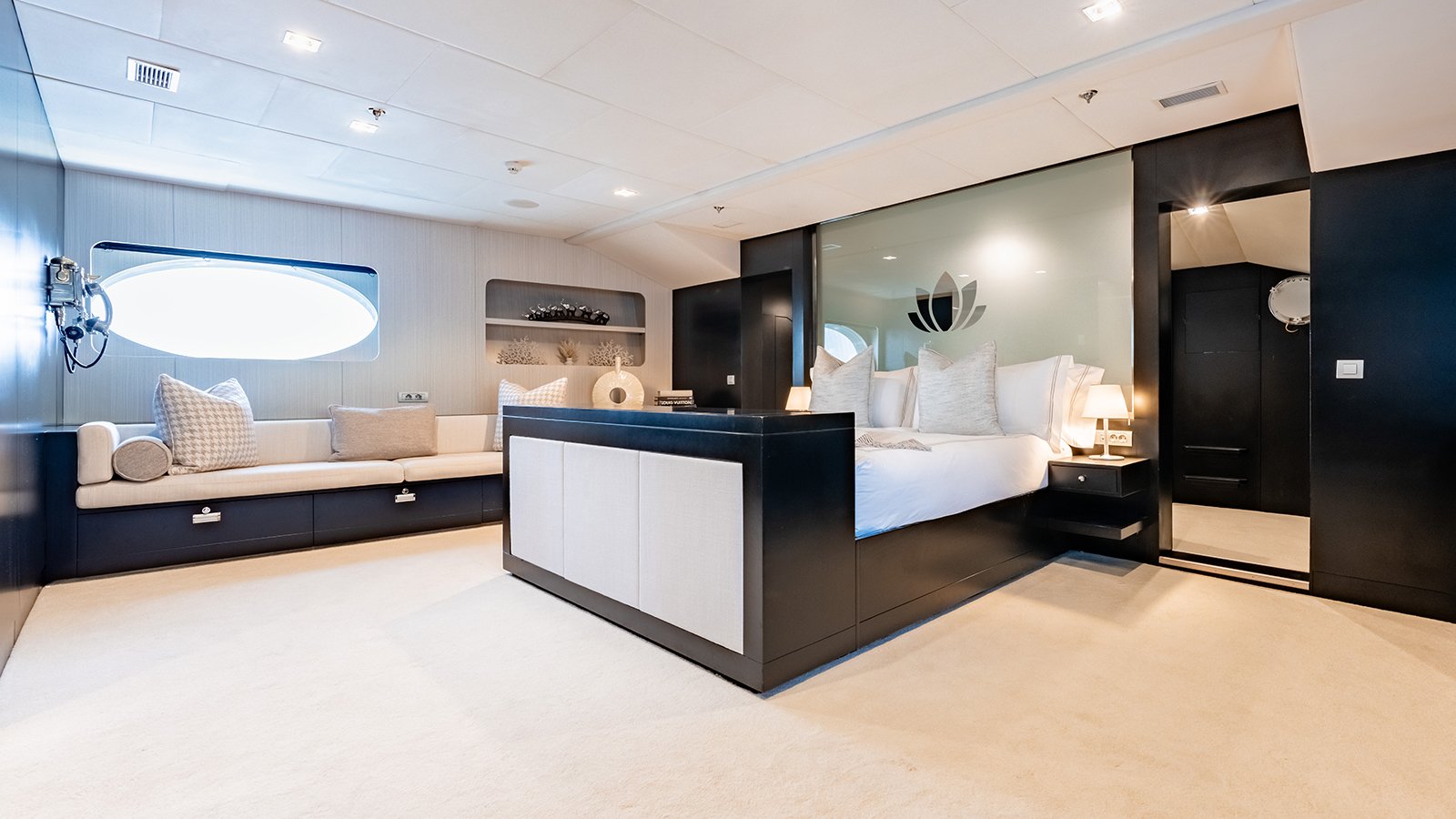
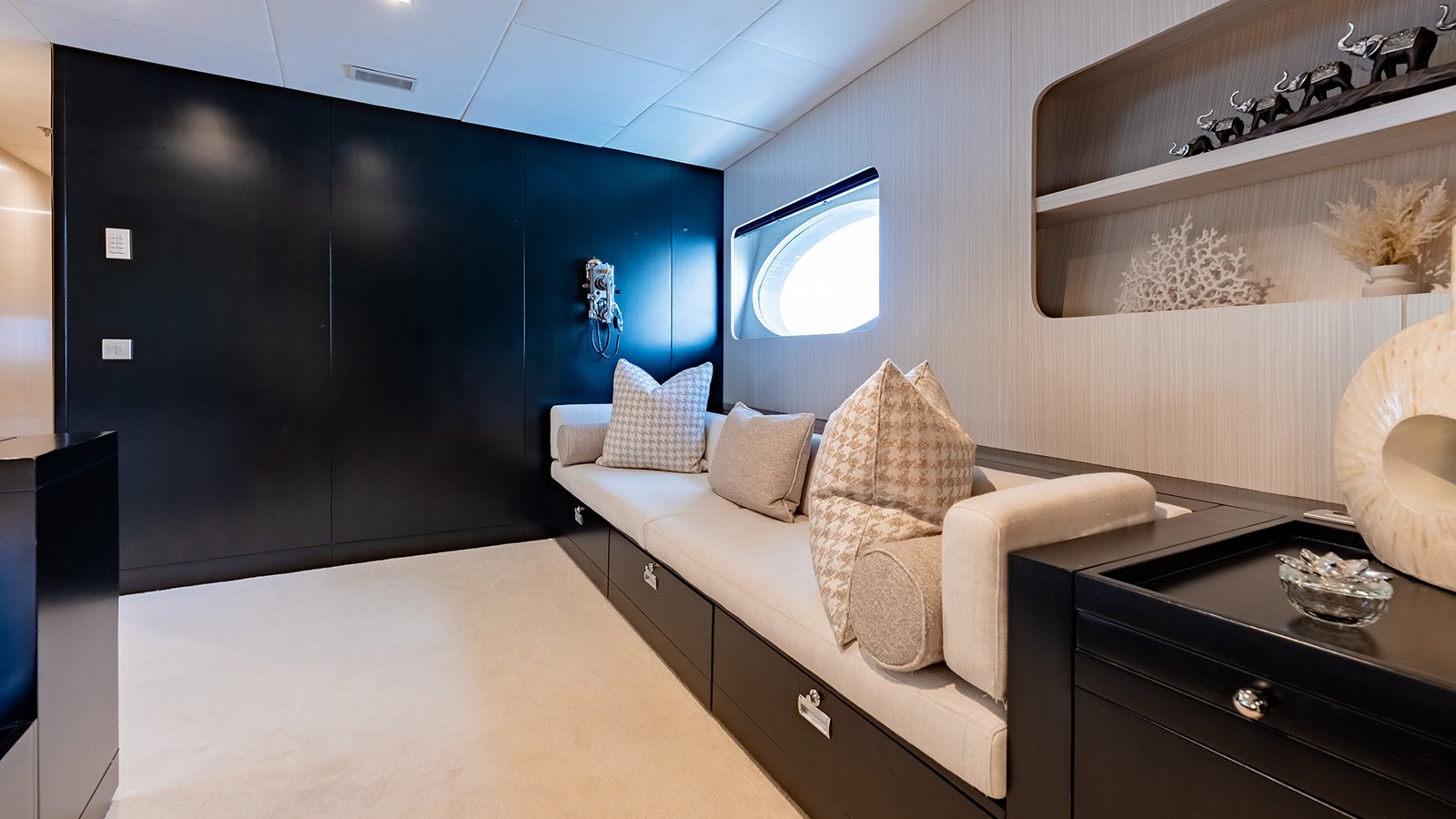
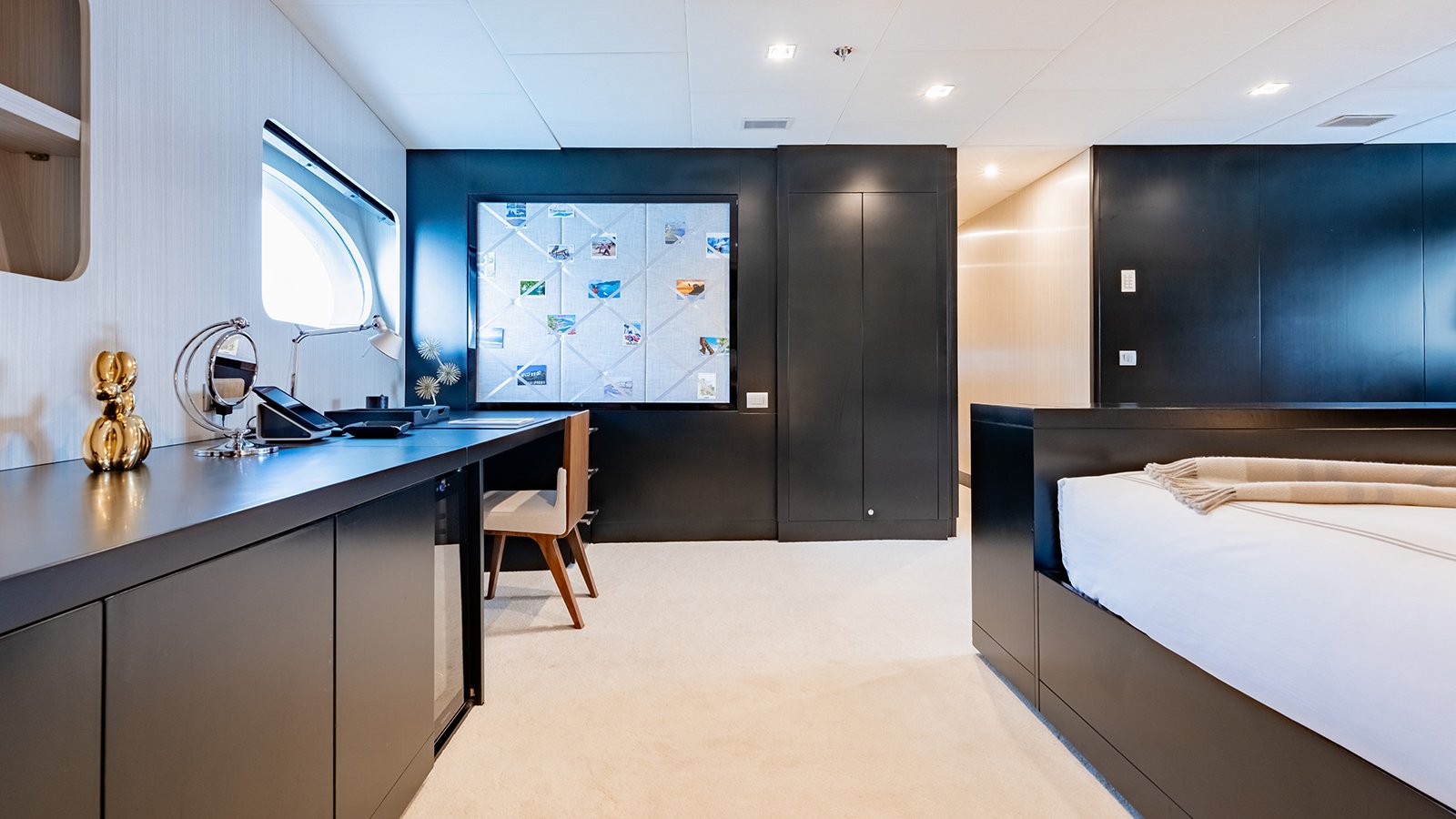
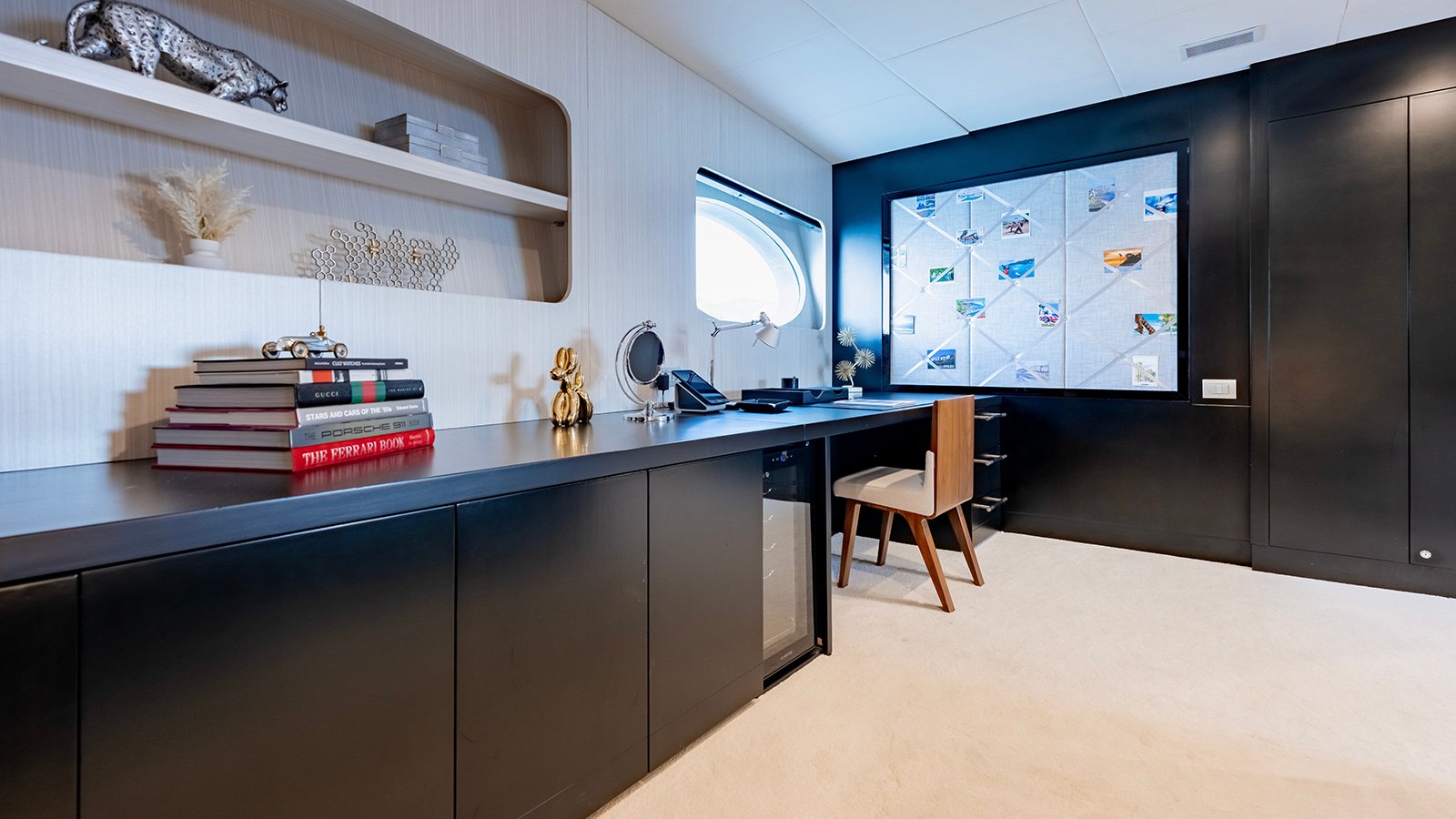
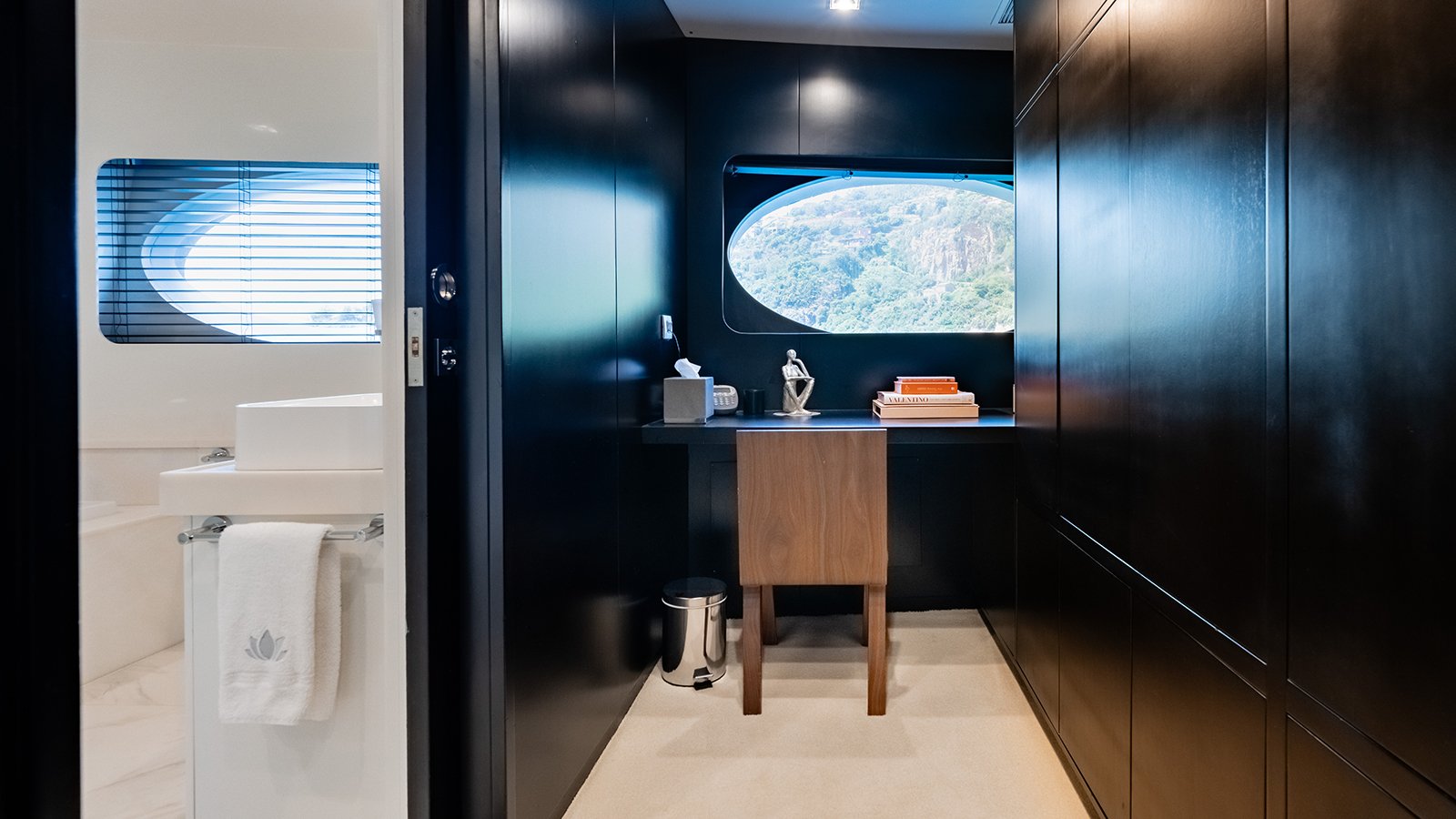
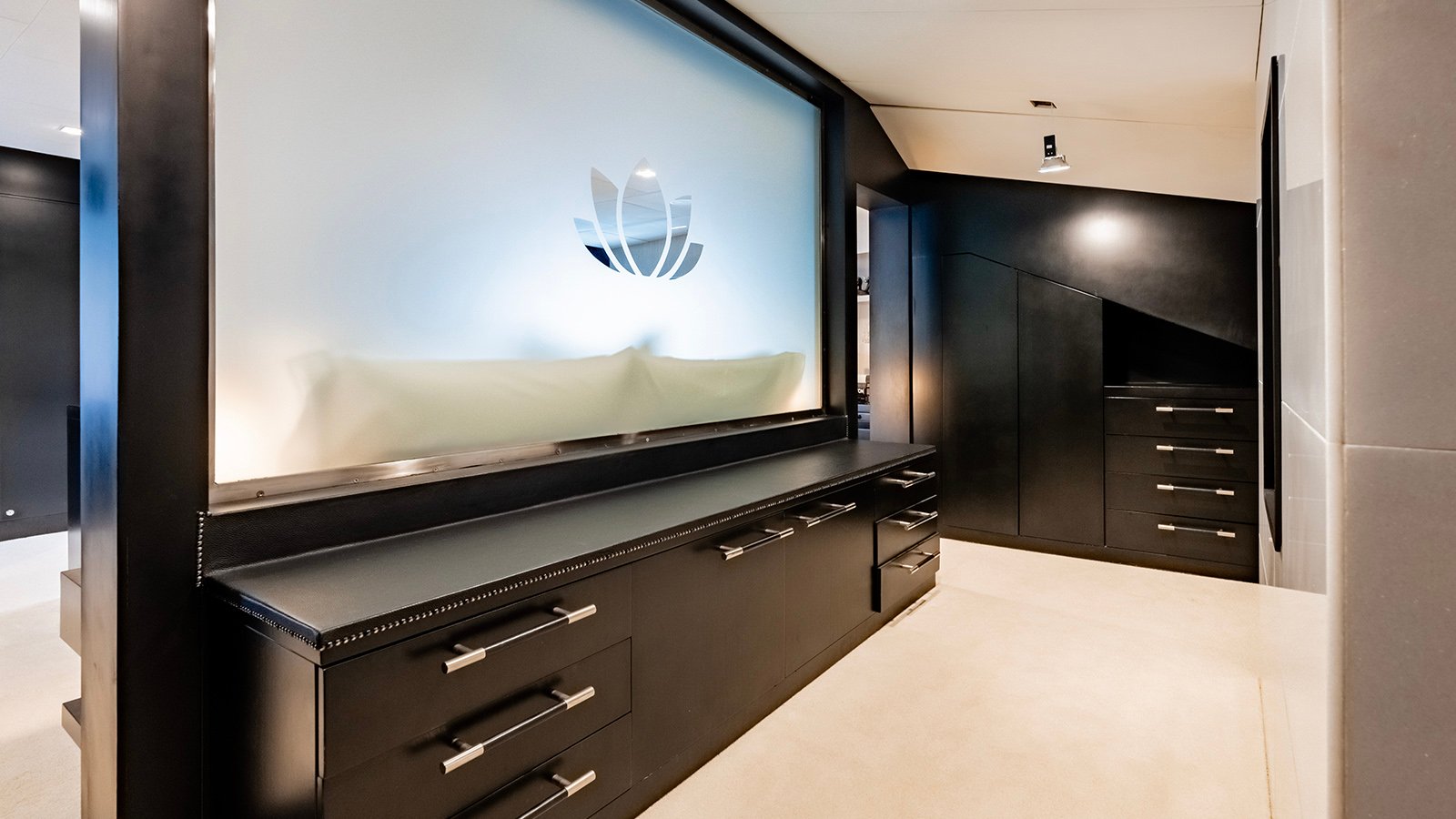
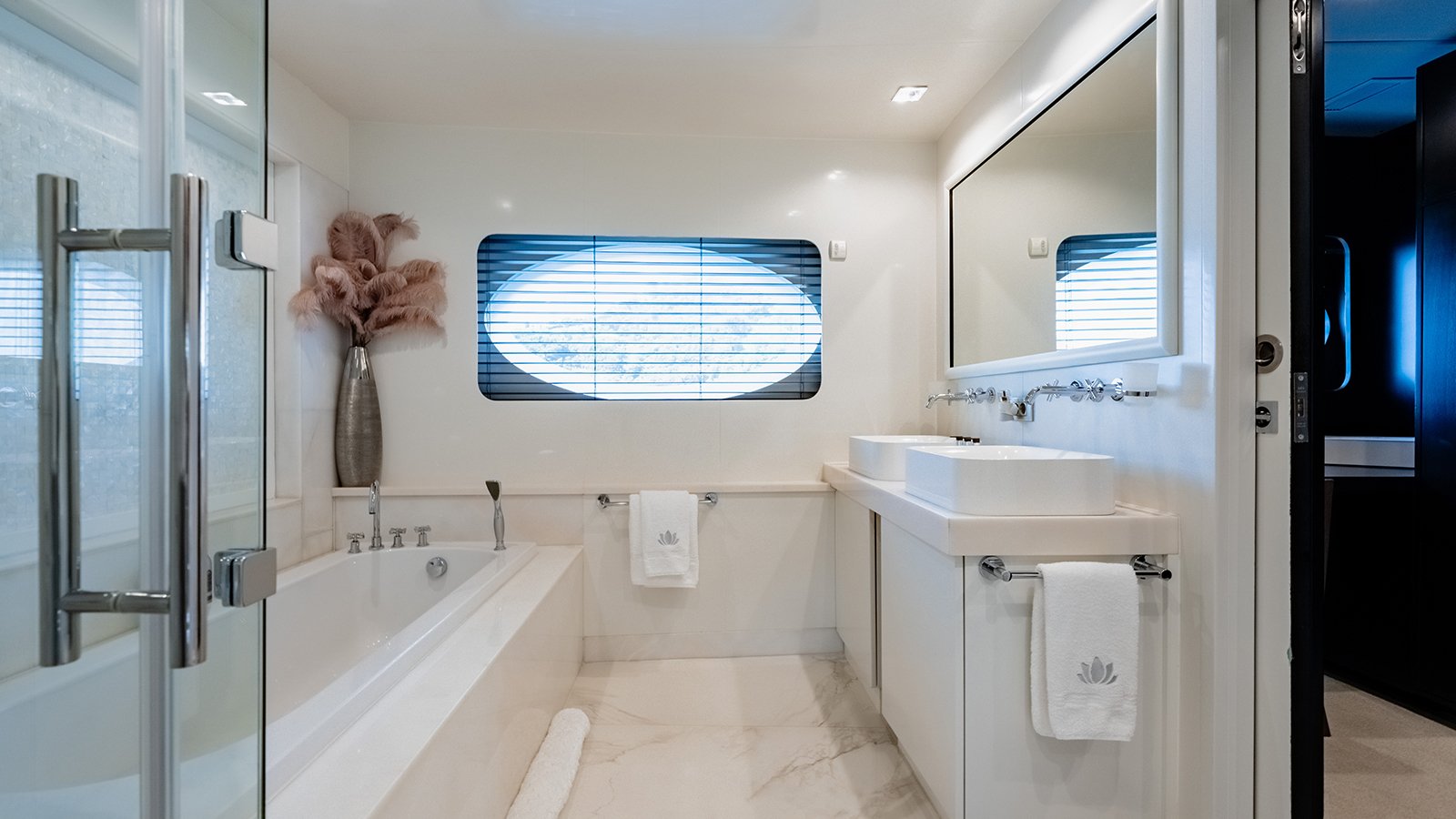
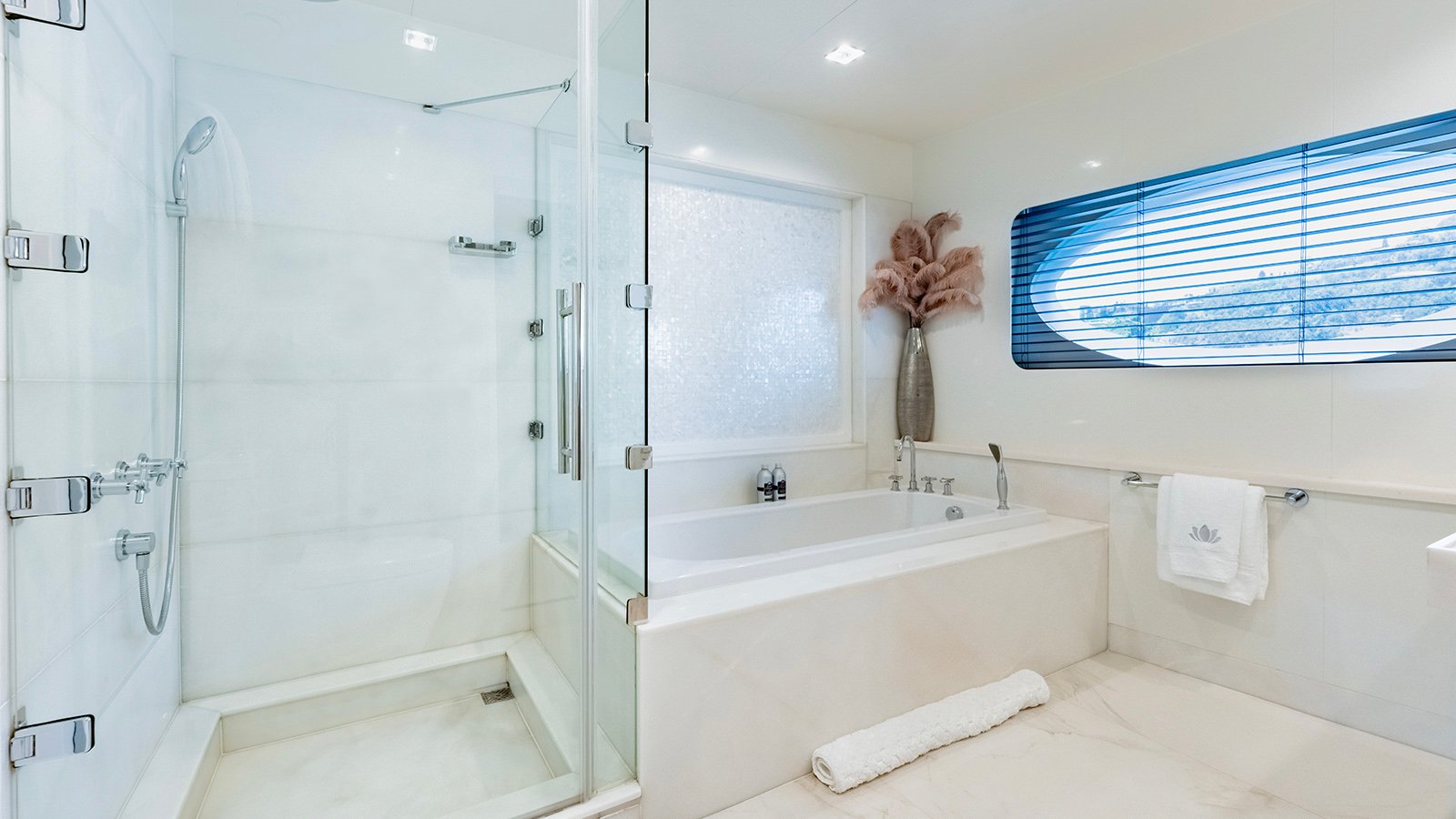
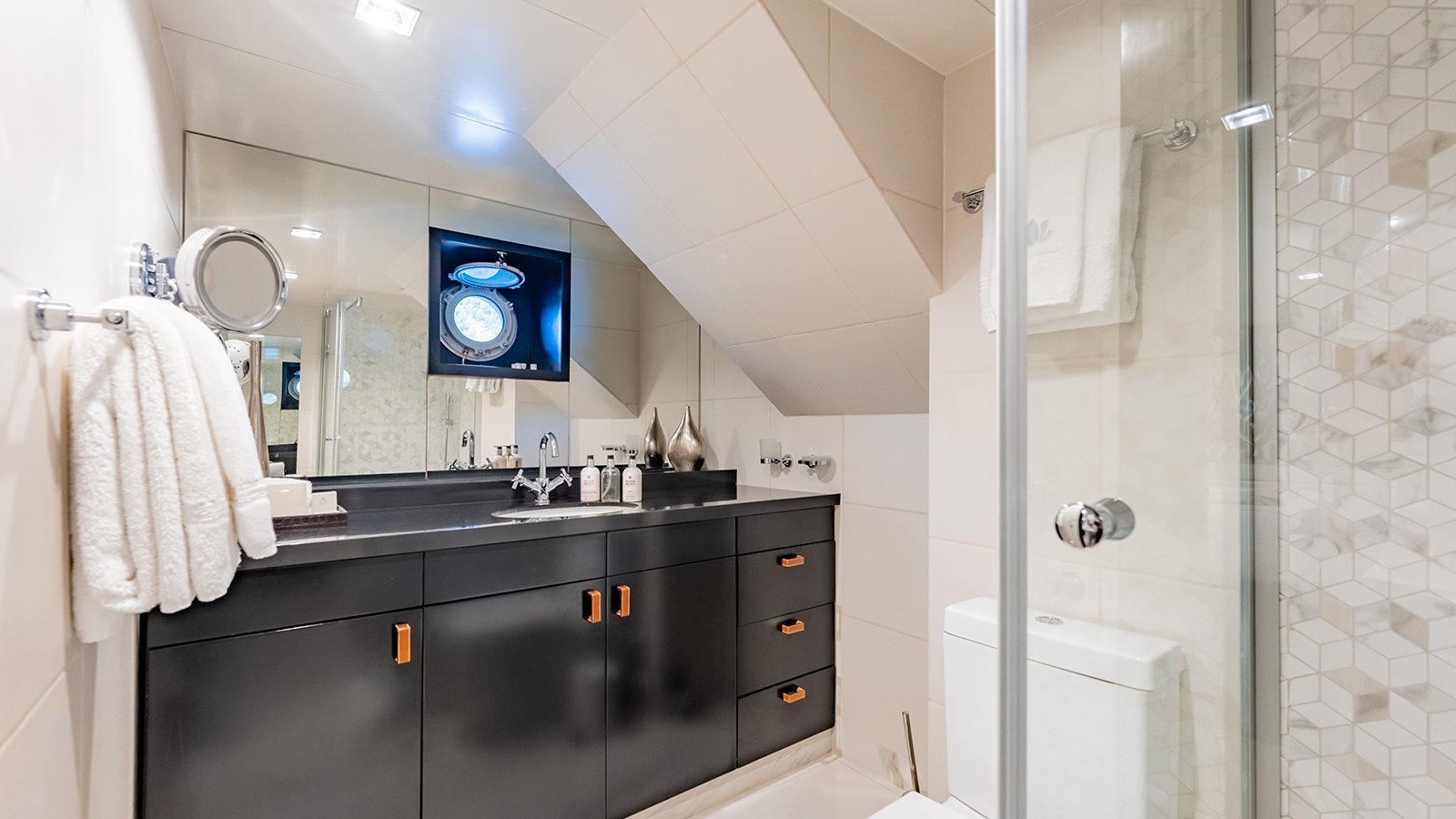
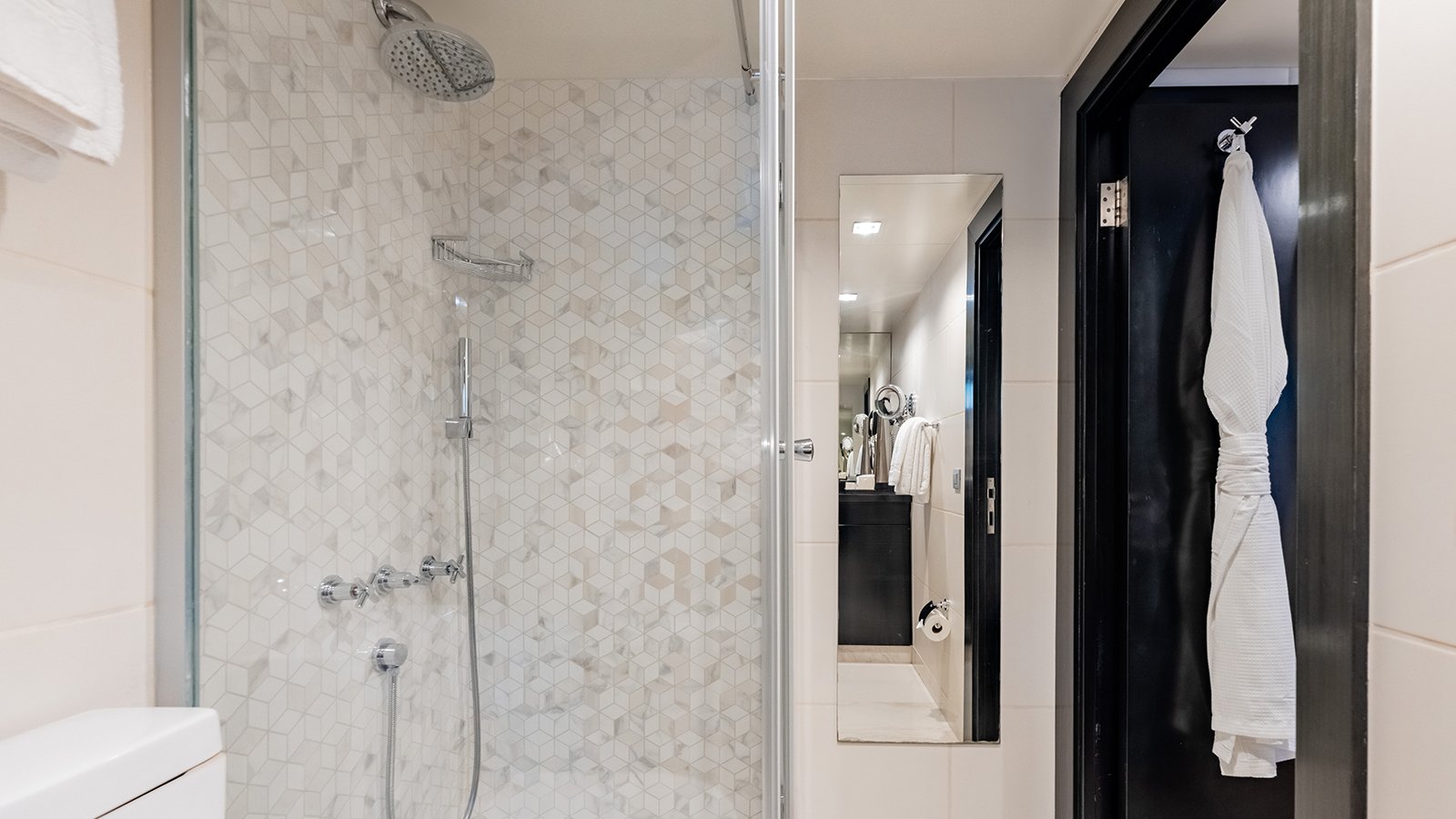
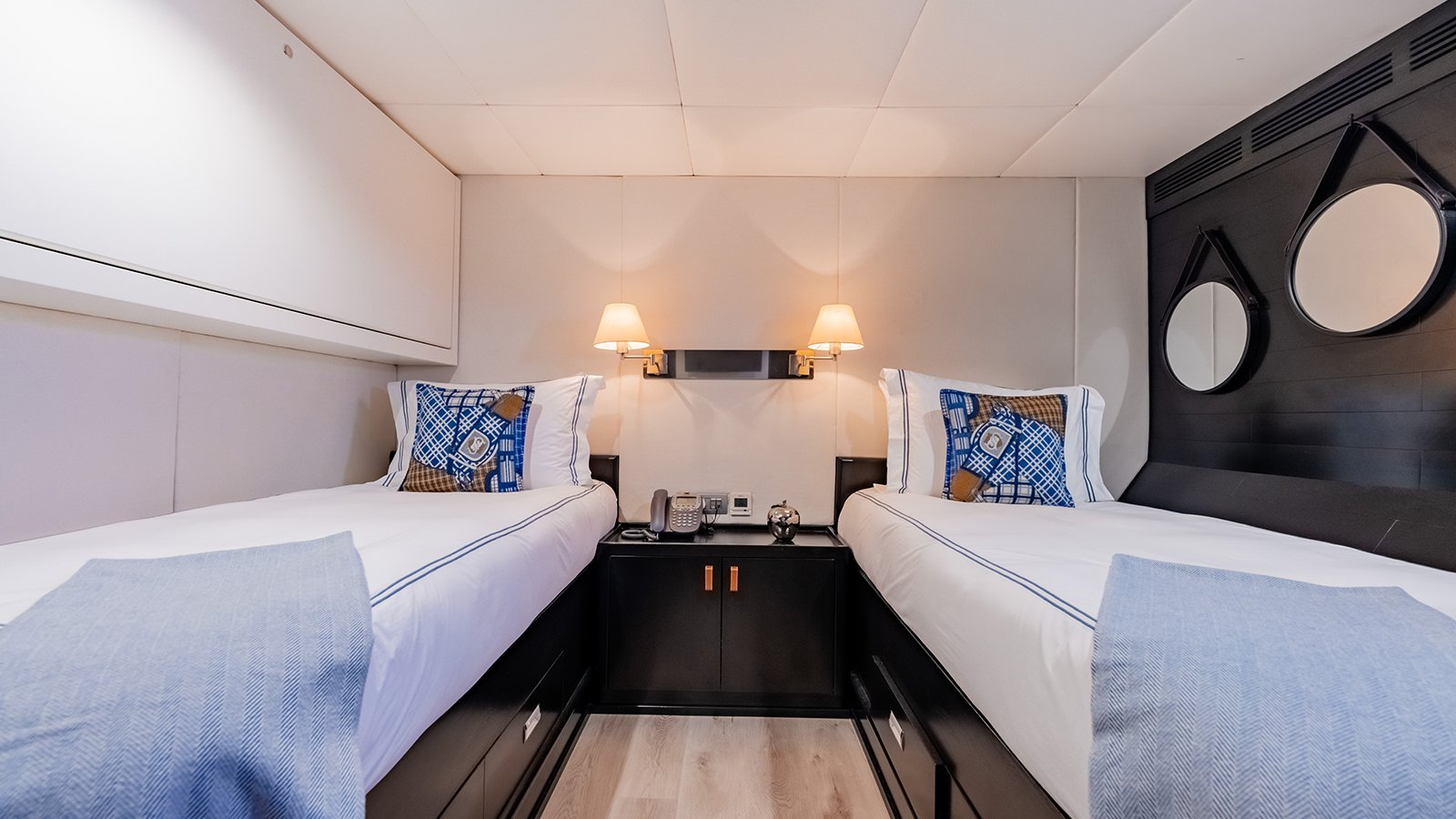
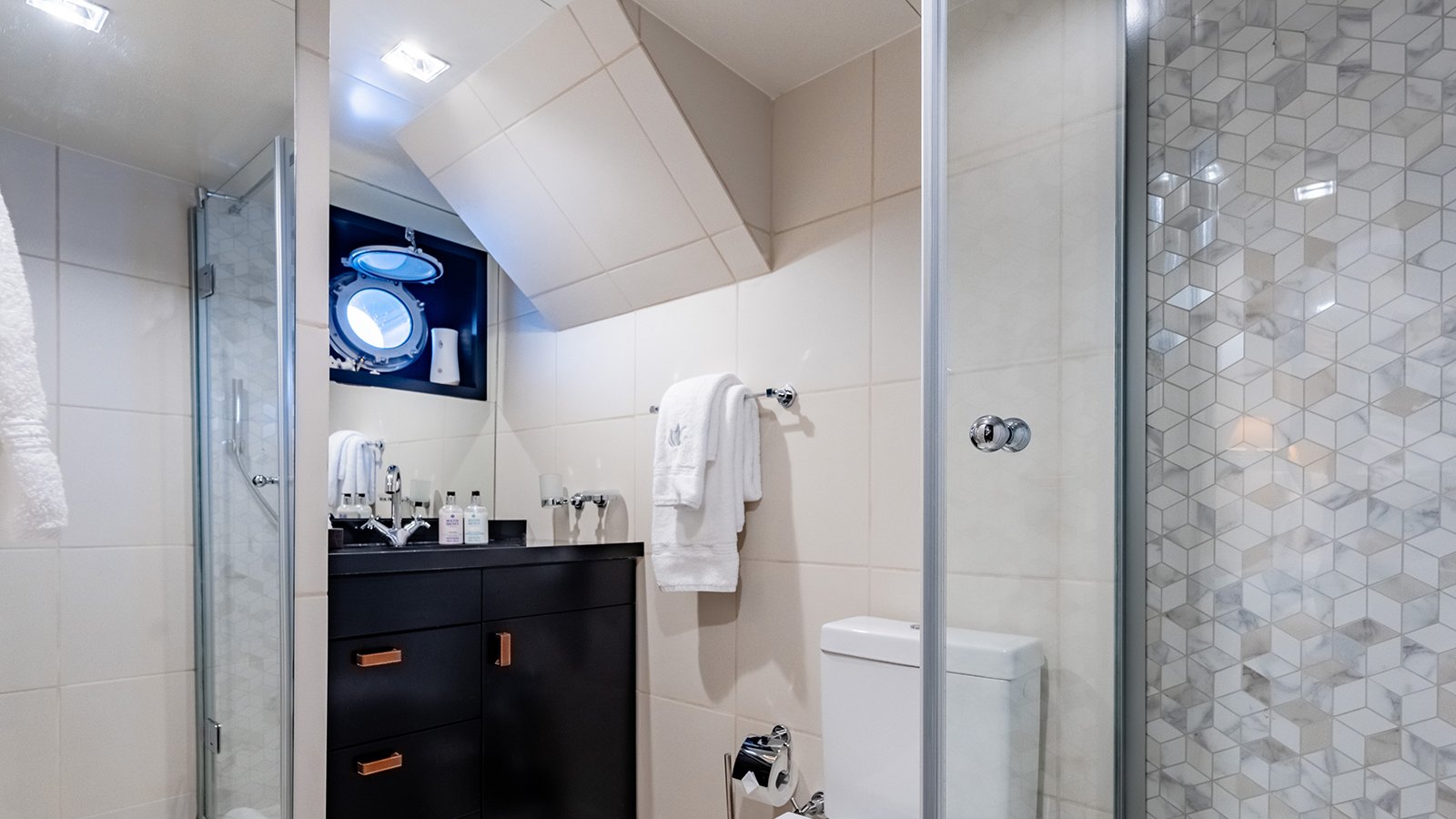
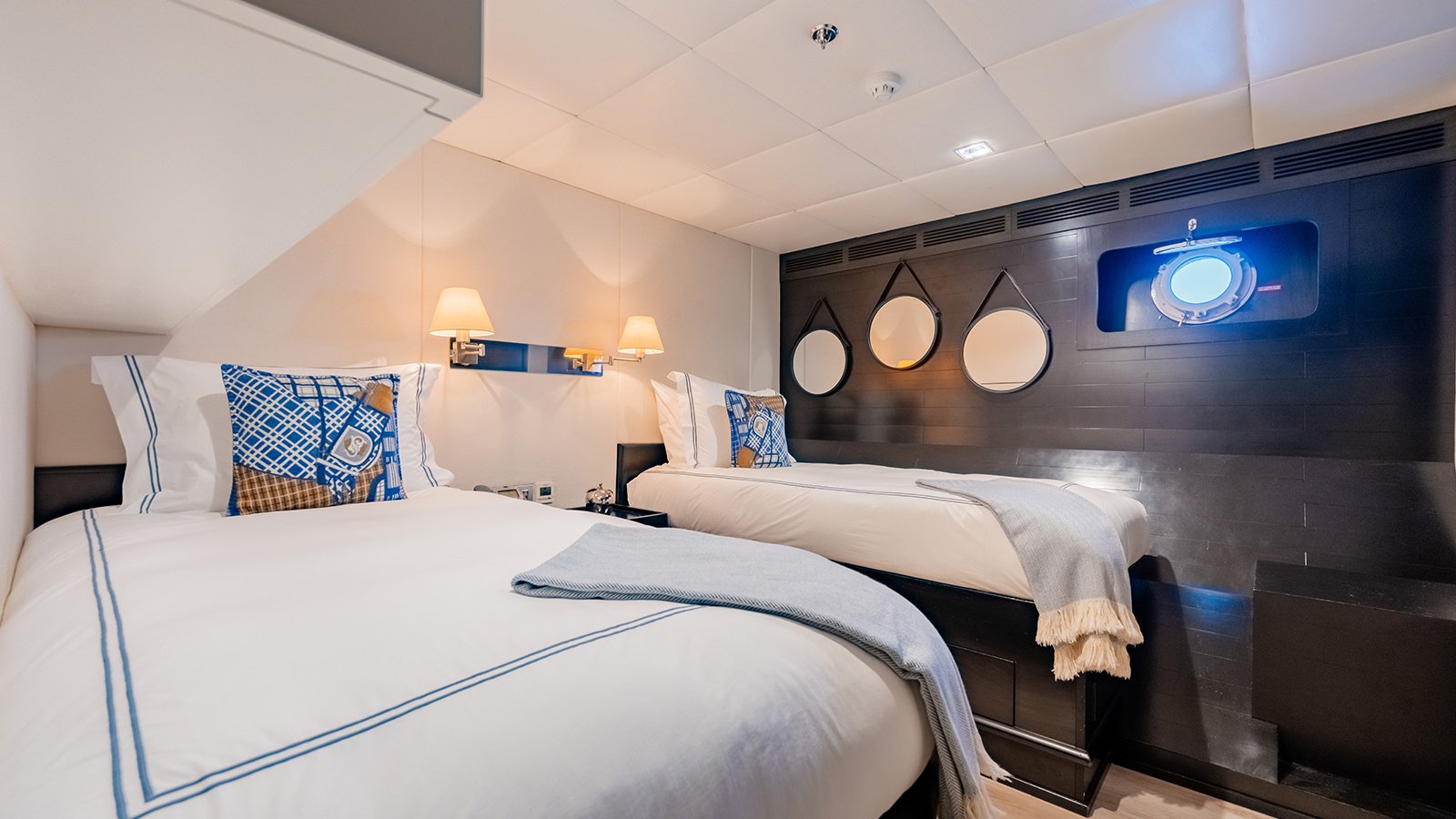
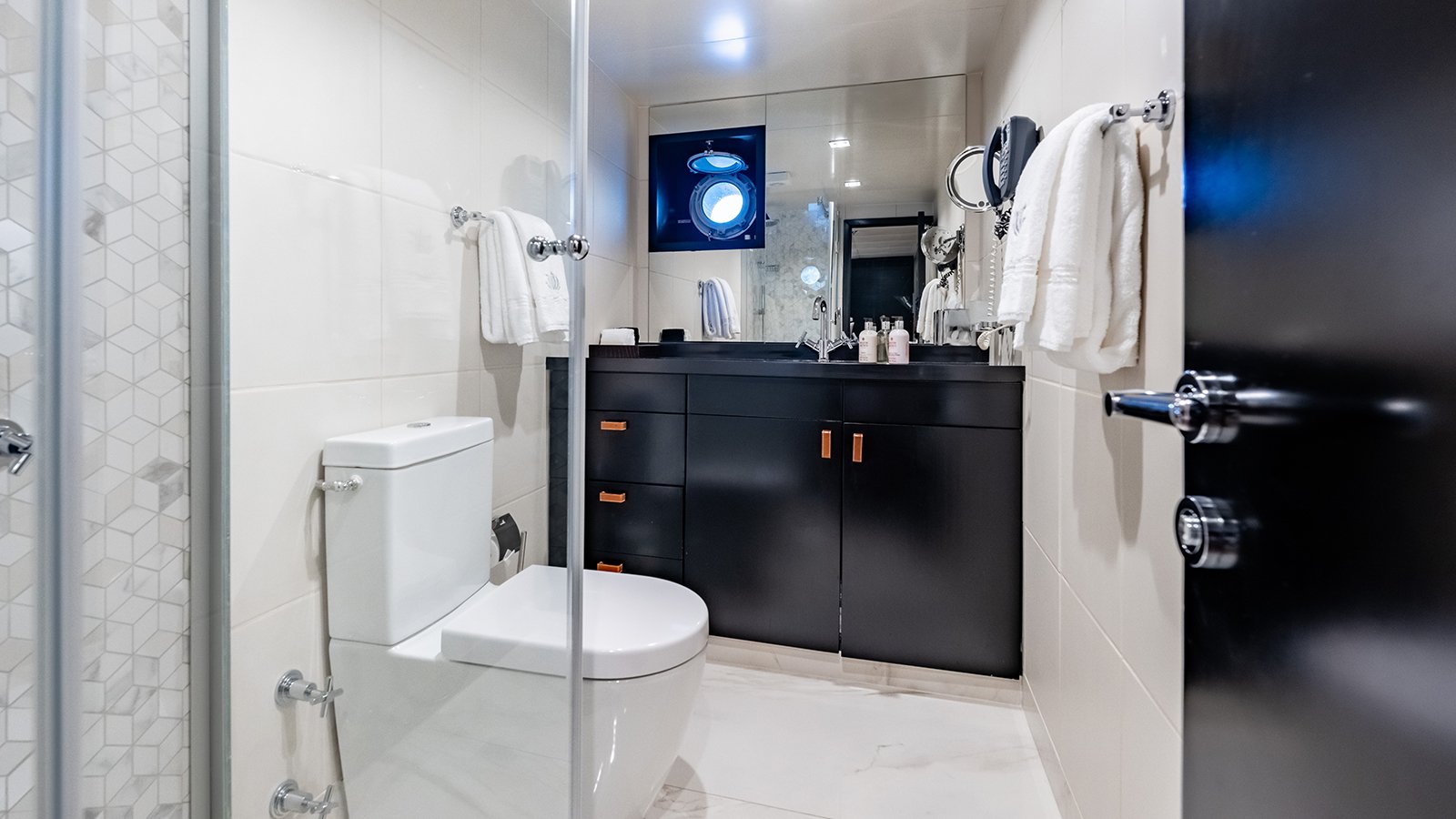
Accommodation is arranged across five cabins for twelve. The master runs full beam, finished in black lacquer against white padded panelling with a lotus motif set into the bulkhead, a marble bathroom with a full tub behind it and a writing desk along one side. Four further cabins sit below, each with its own bathroom, pale oak underfoot and a piece of contemporary art chosen for the room rather than ordered by the metre. One is configured as a twin for children or a travelling nanny, and the rest are doubles. It is a layout that suits one large family or two travelling together, which is precisely the market she serves.