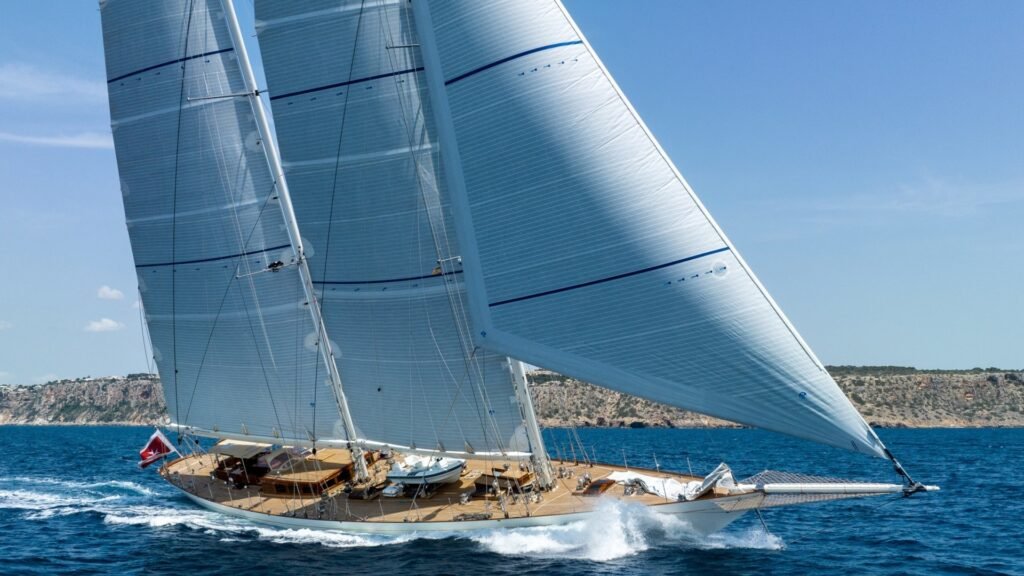
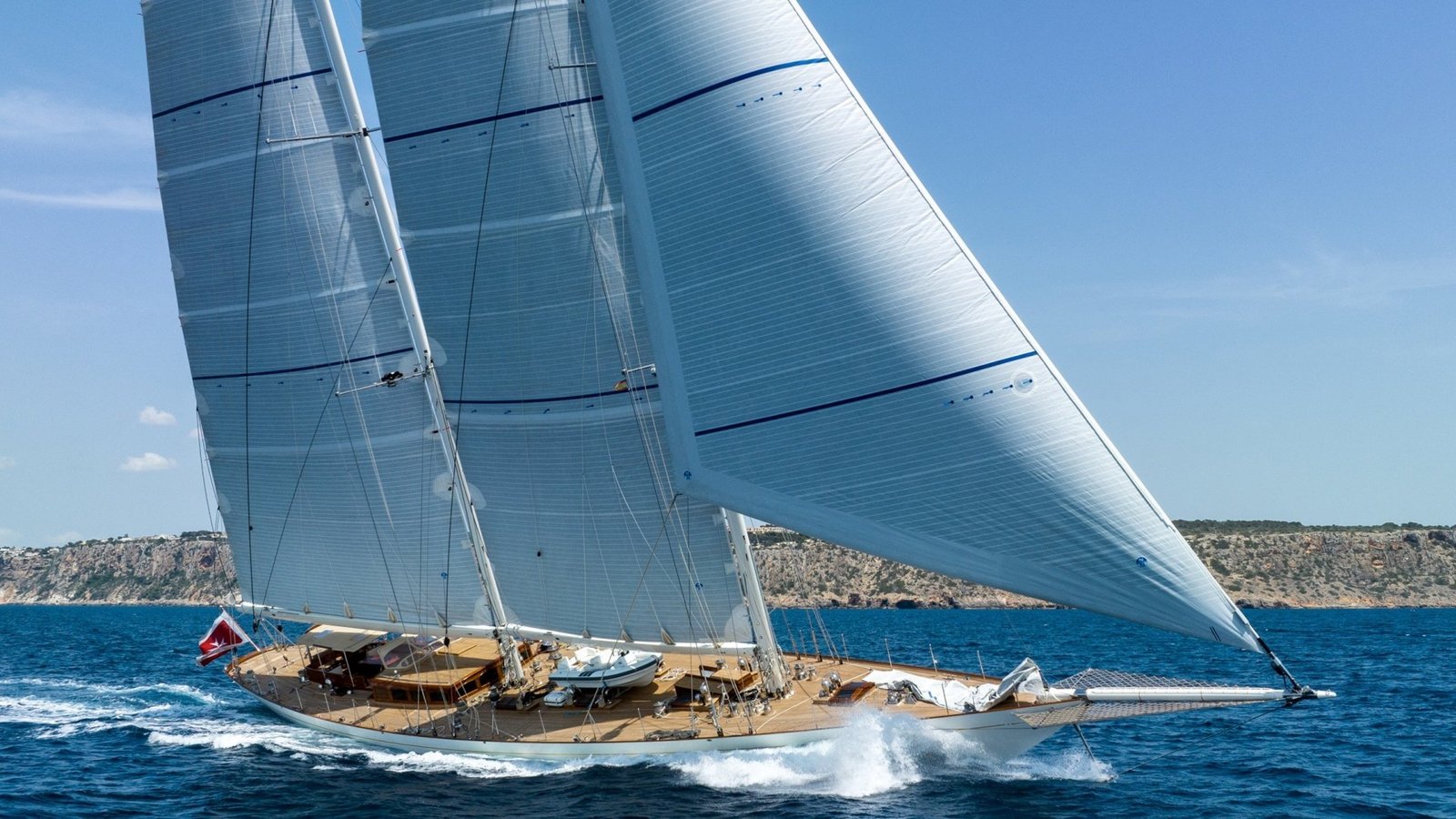
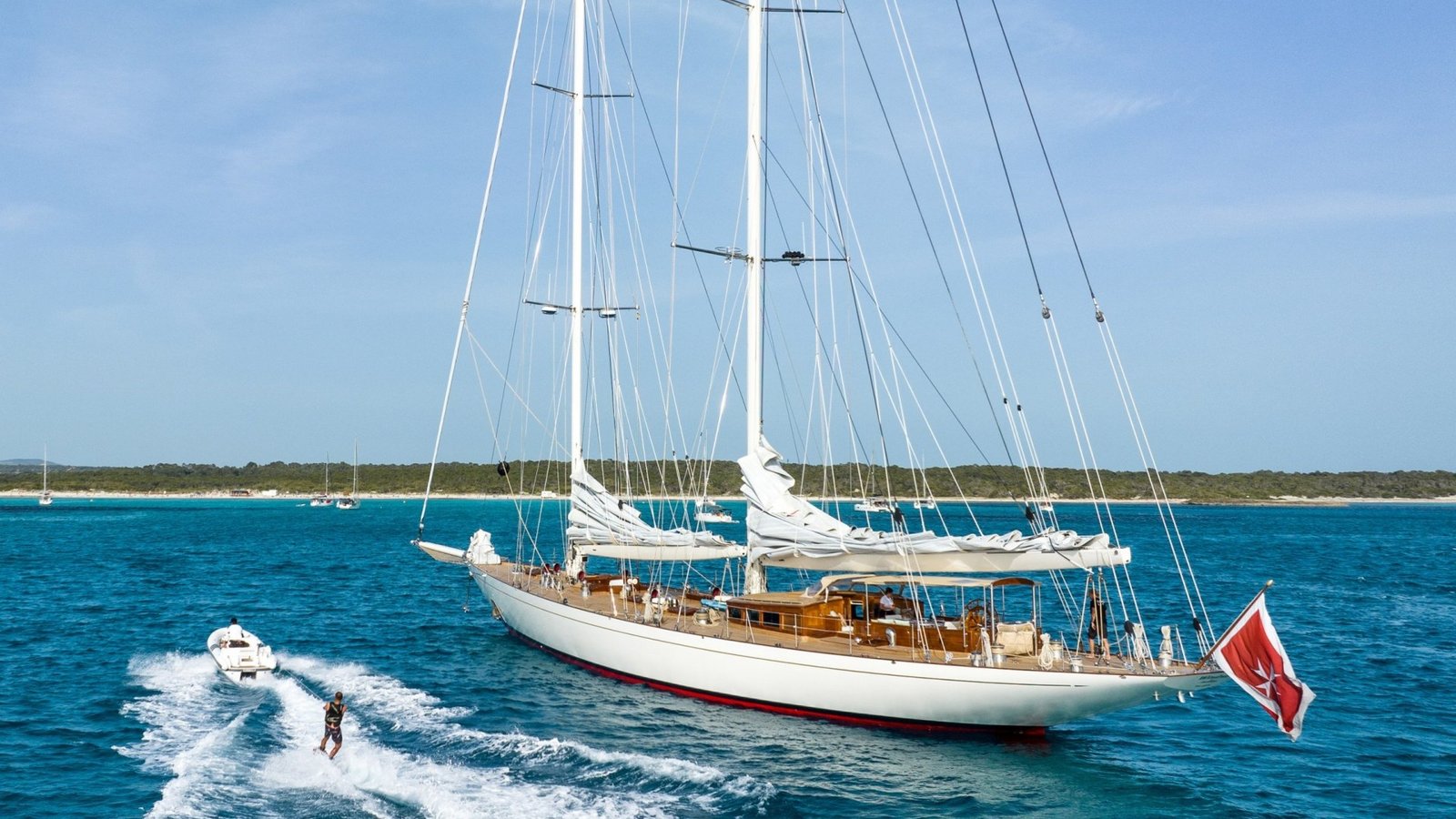
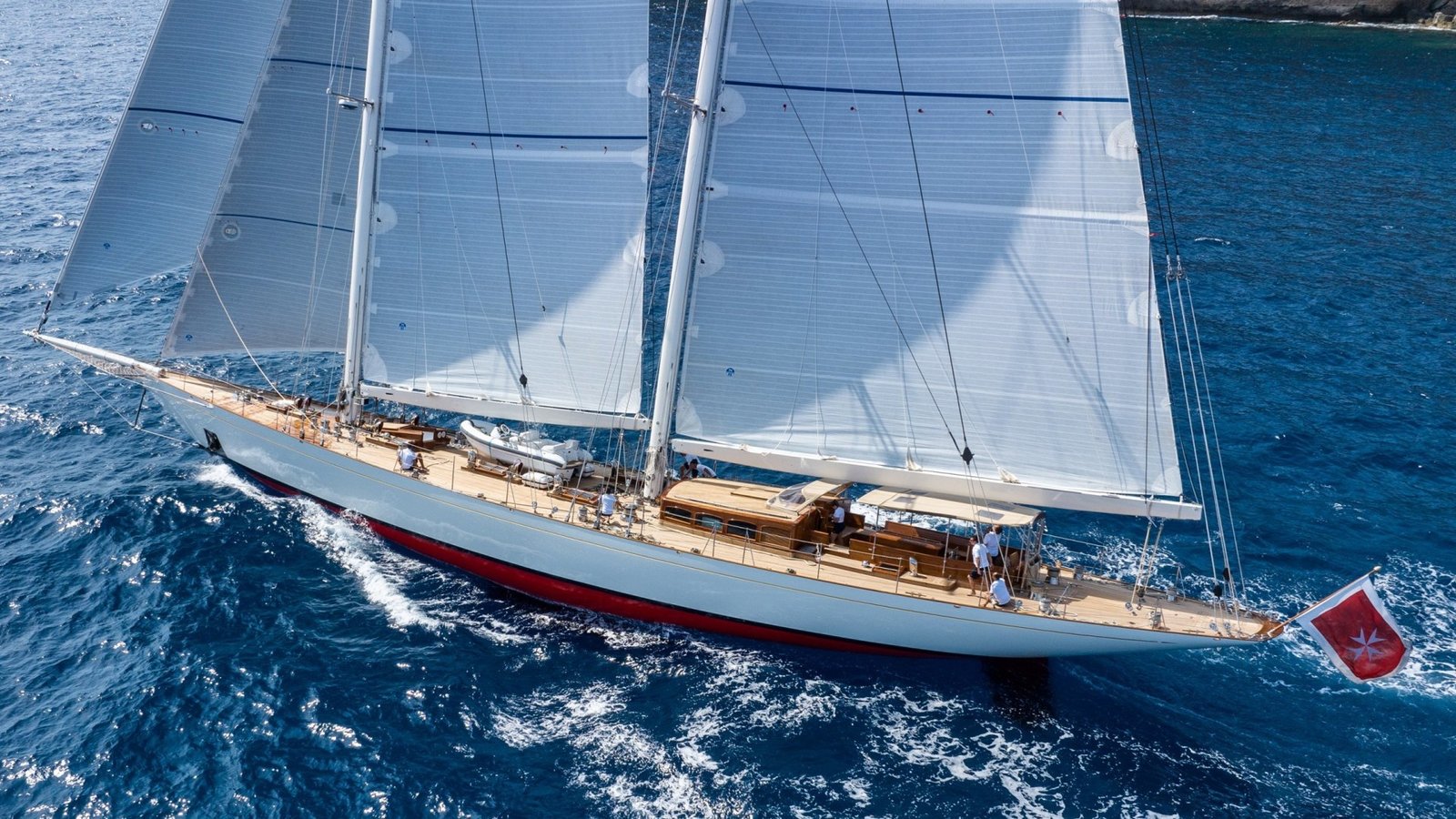
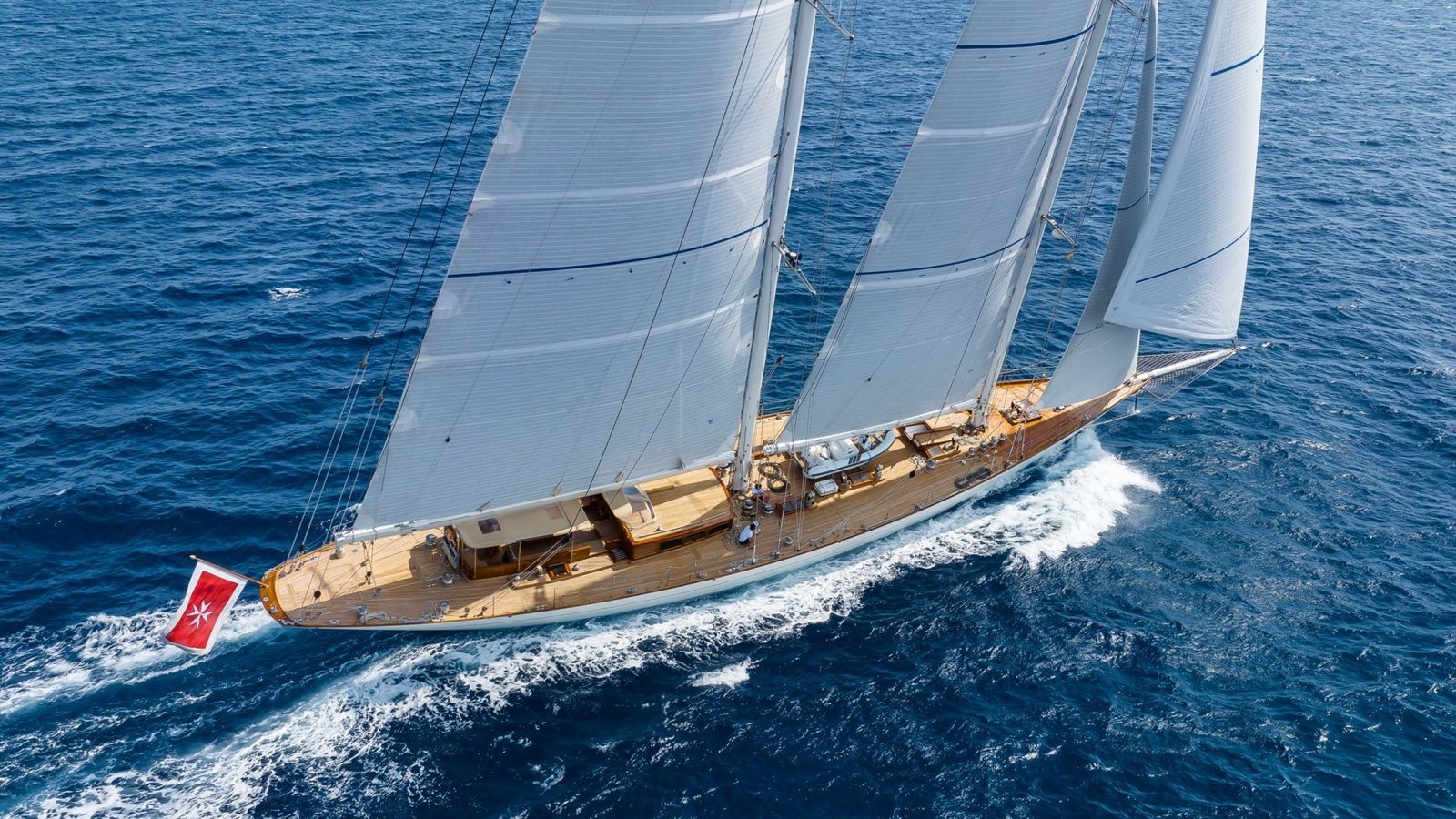
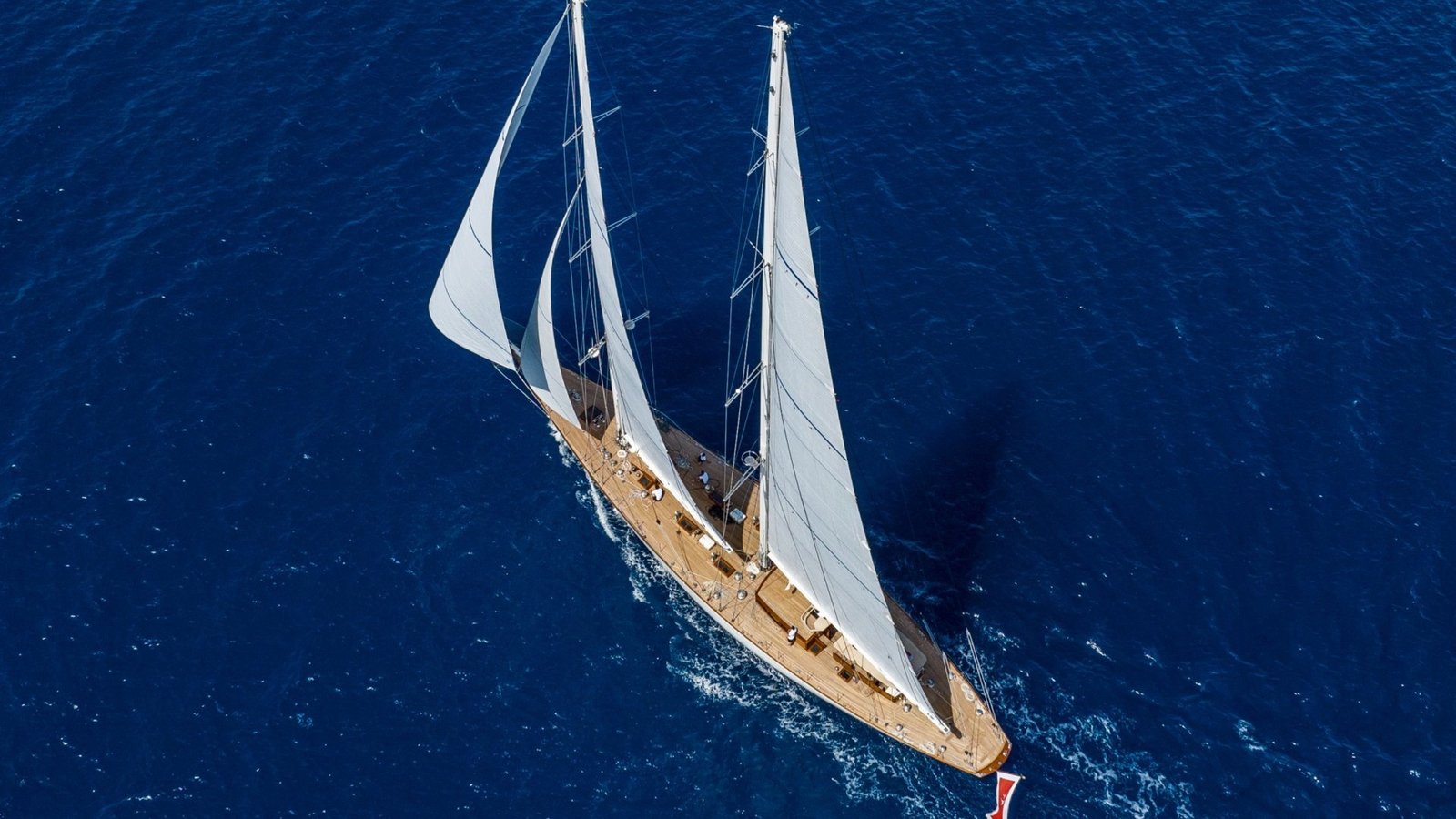
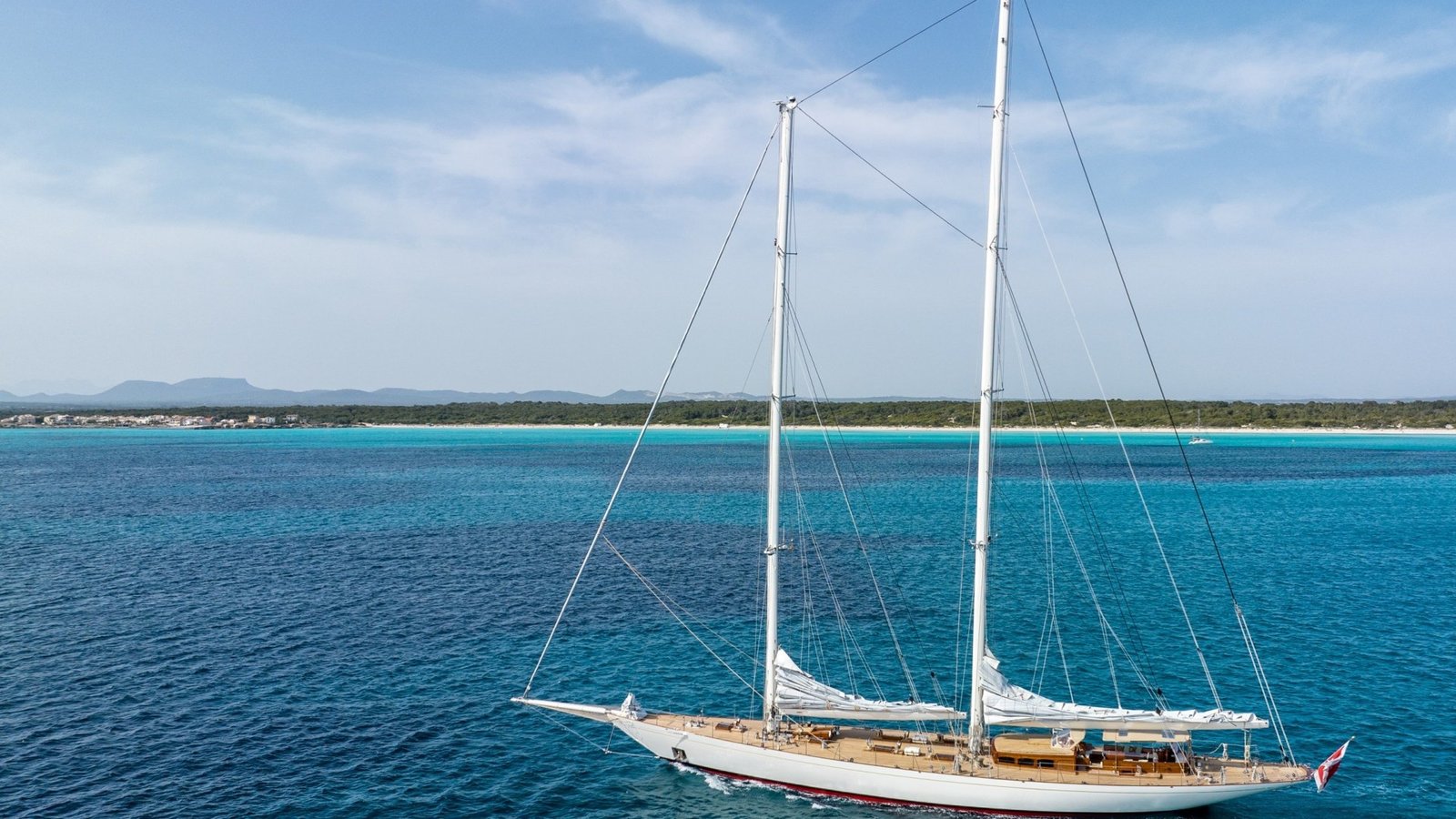
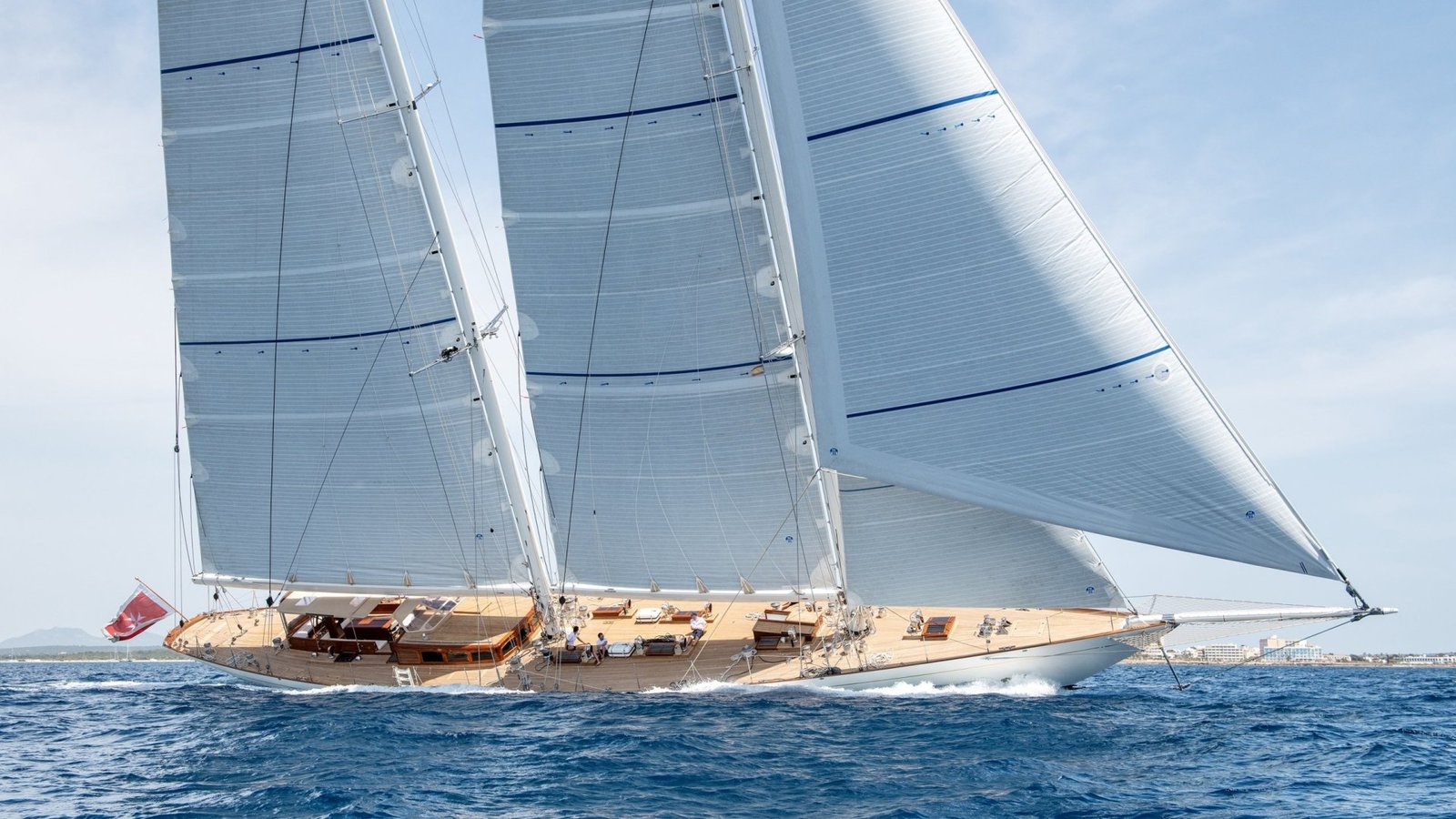
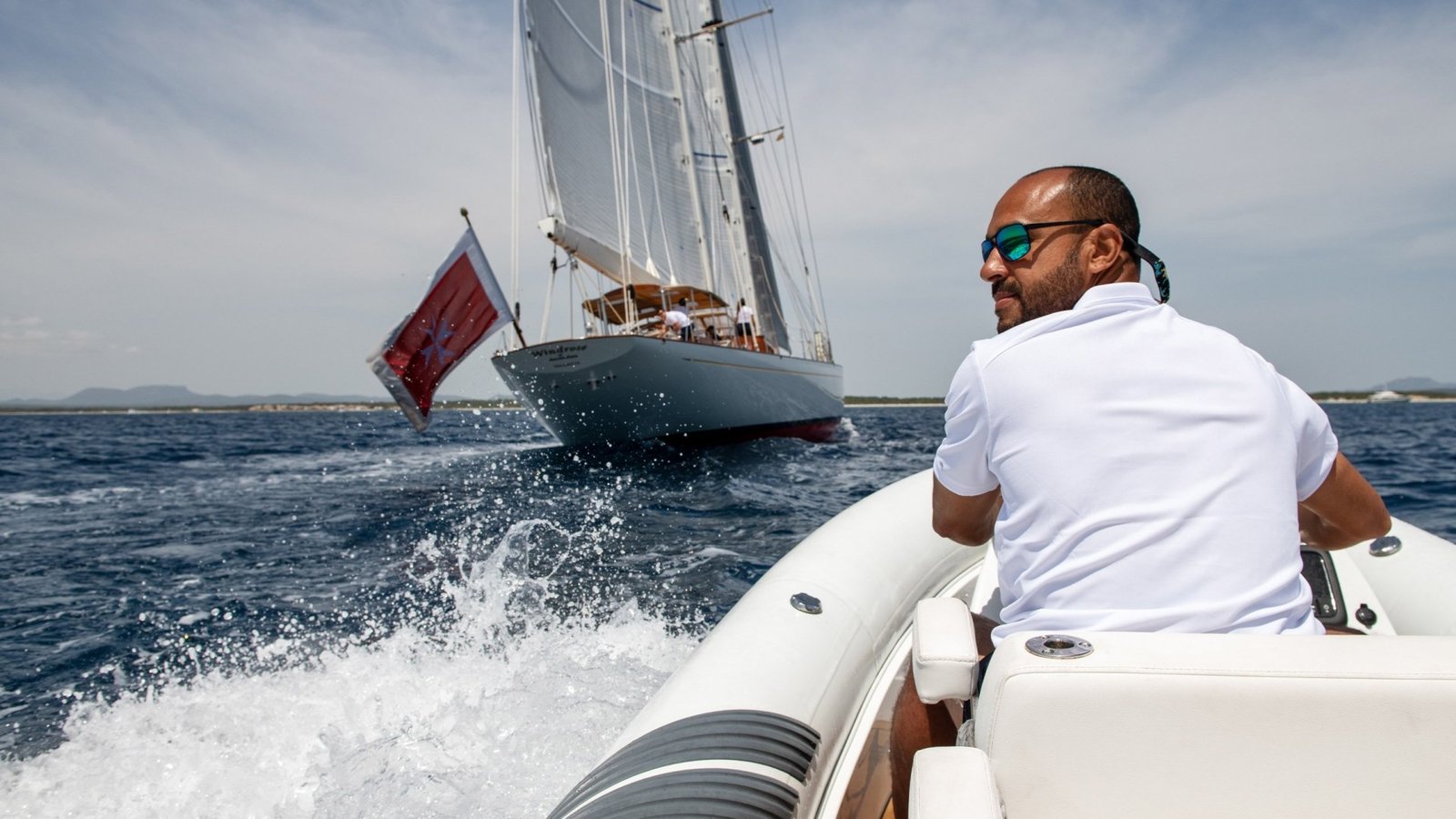
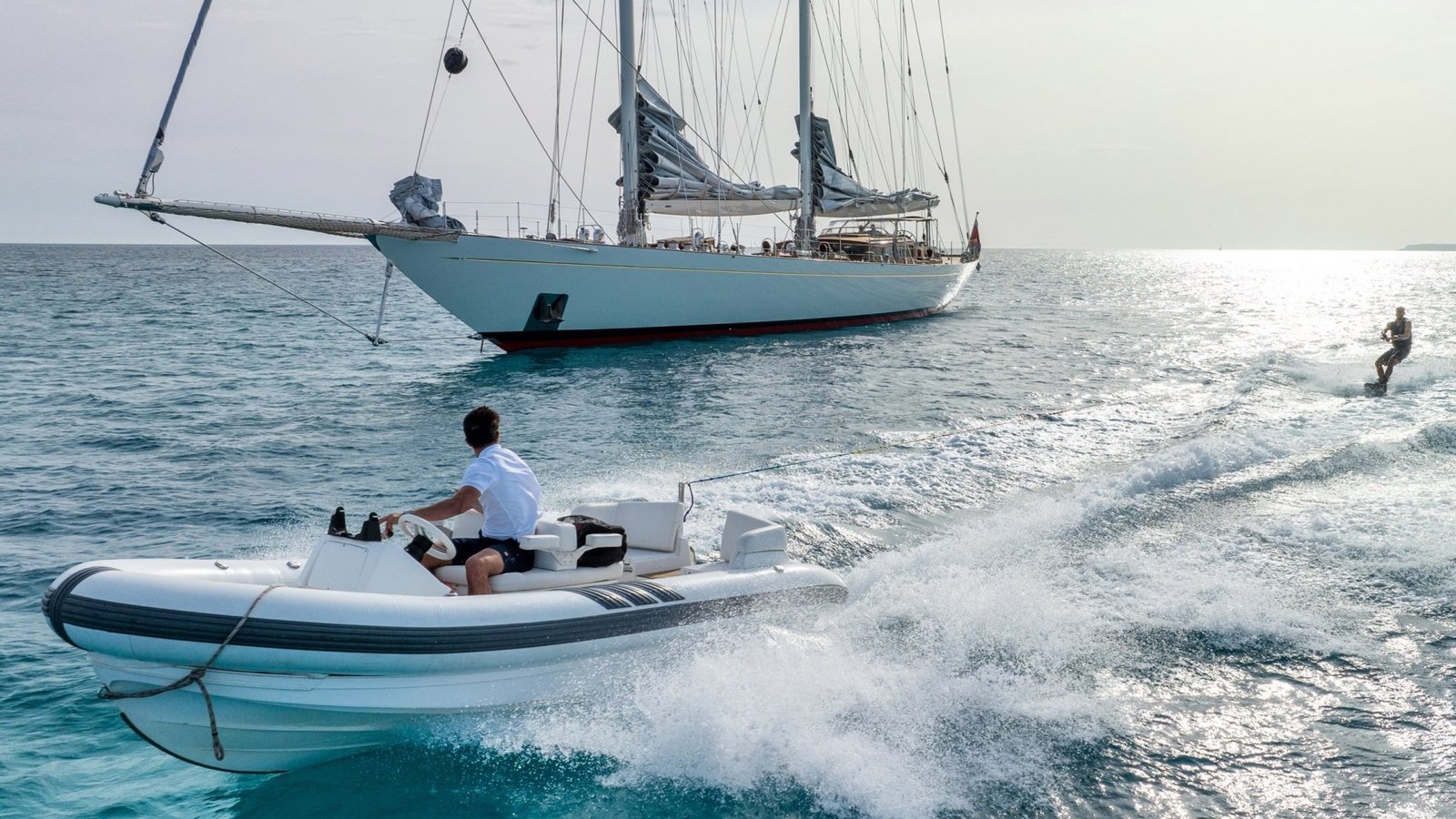
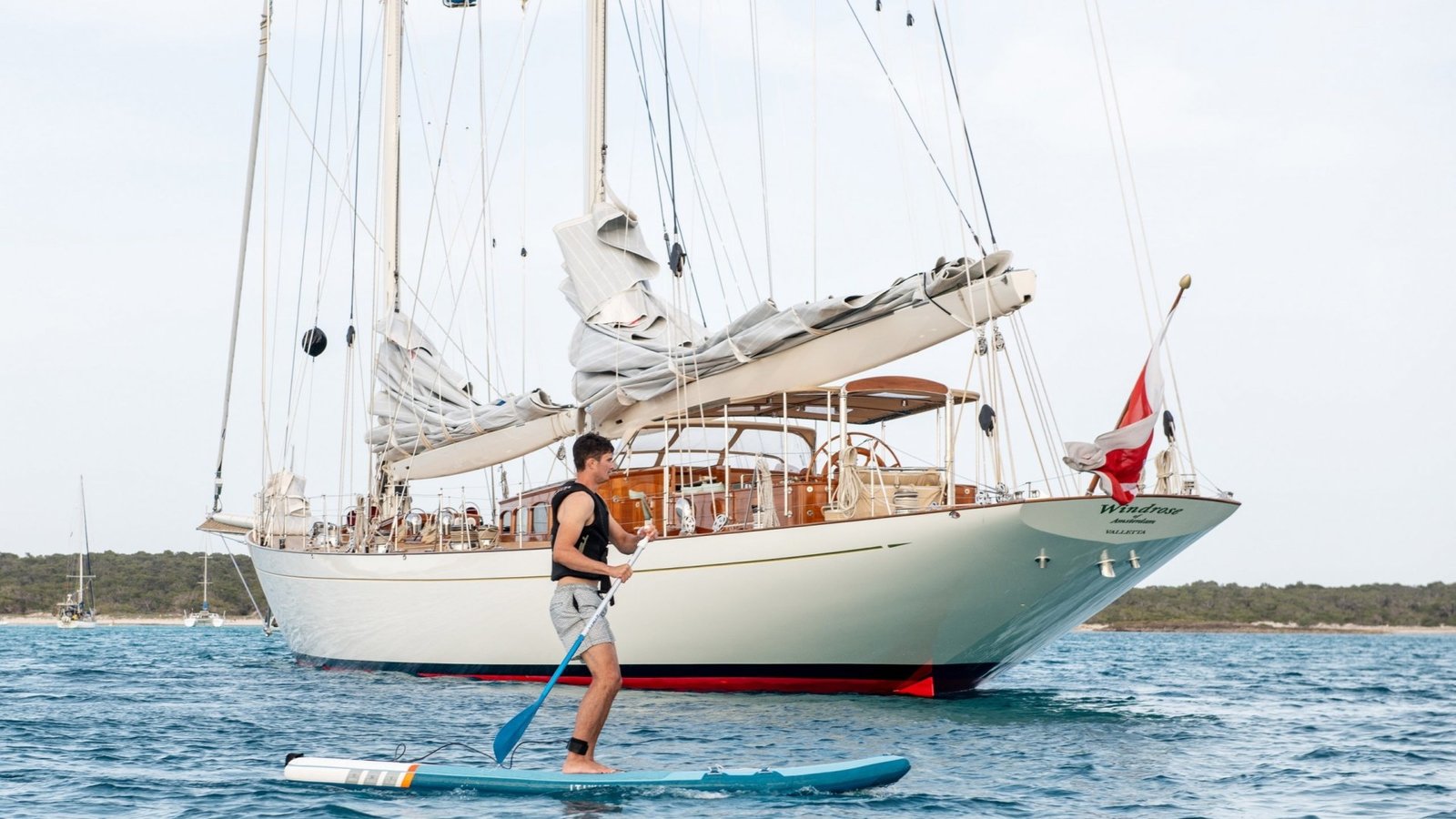
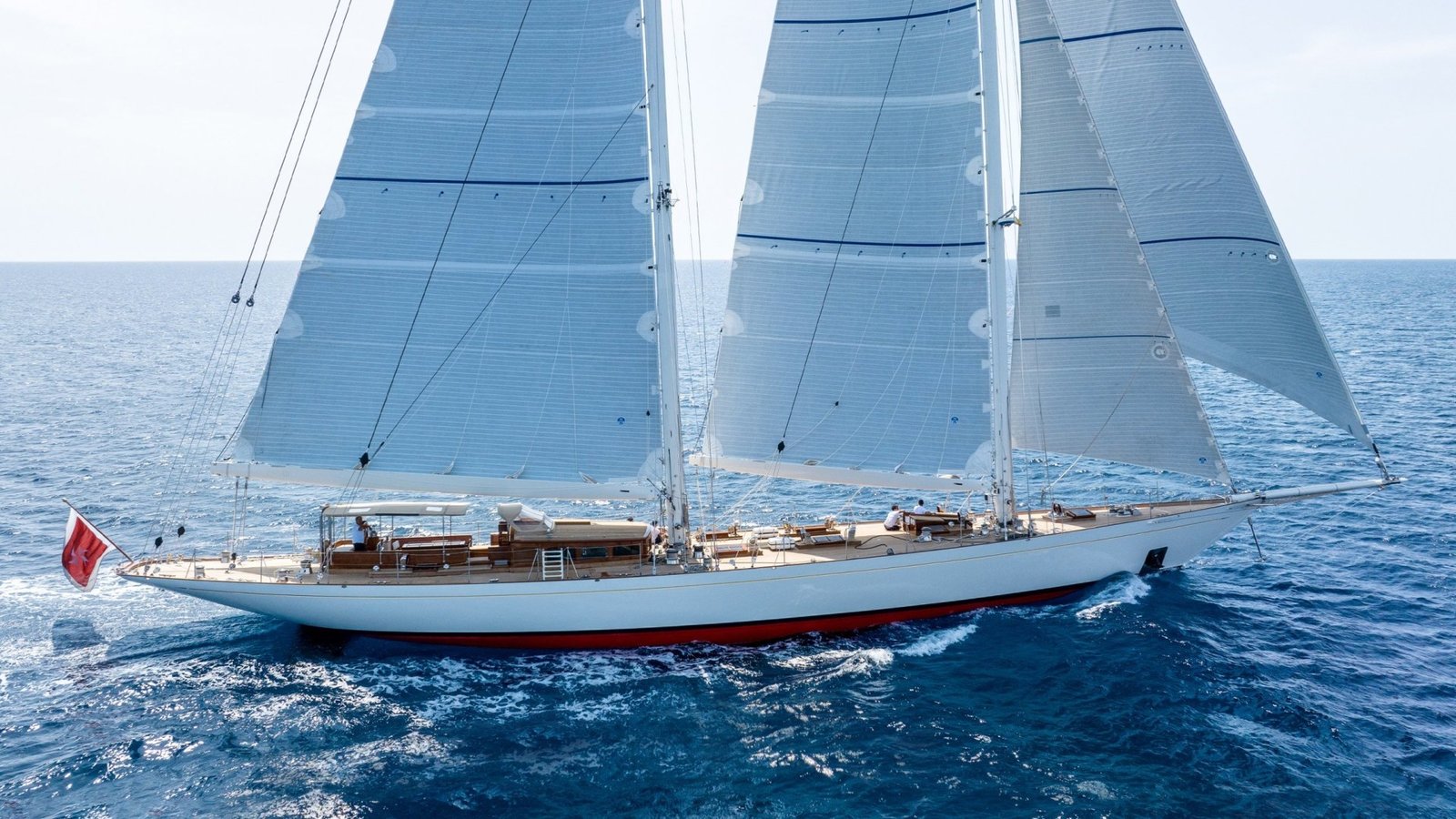
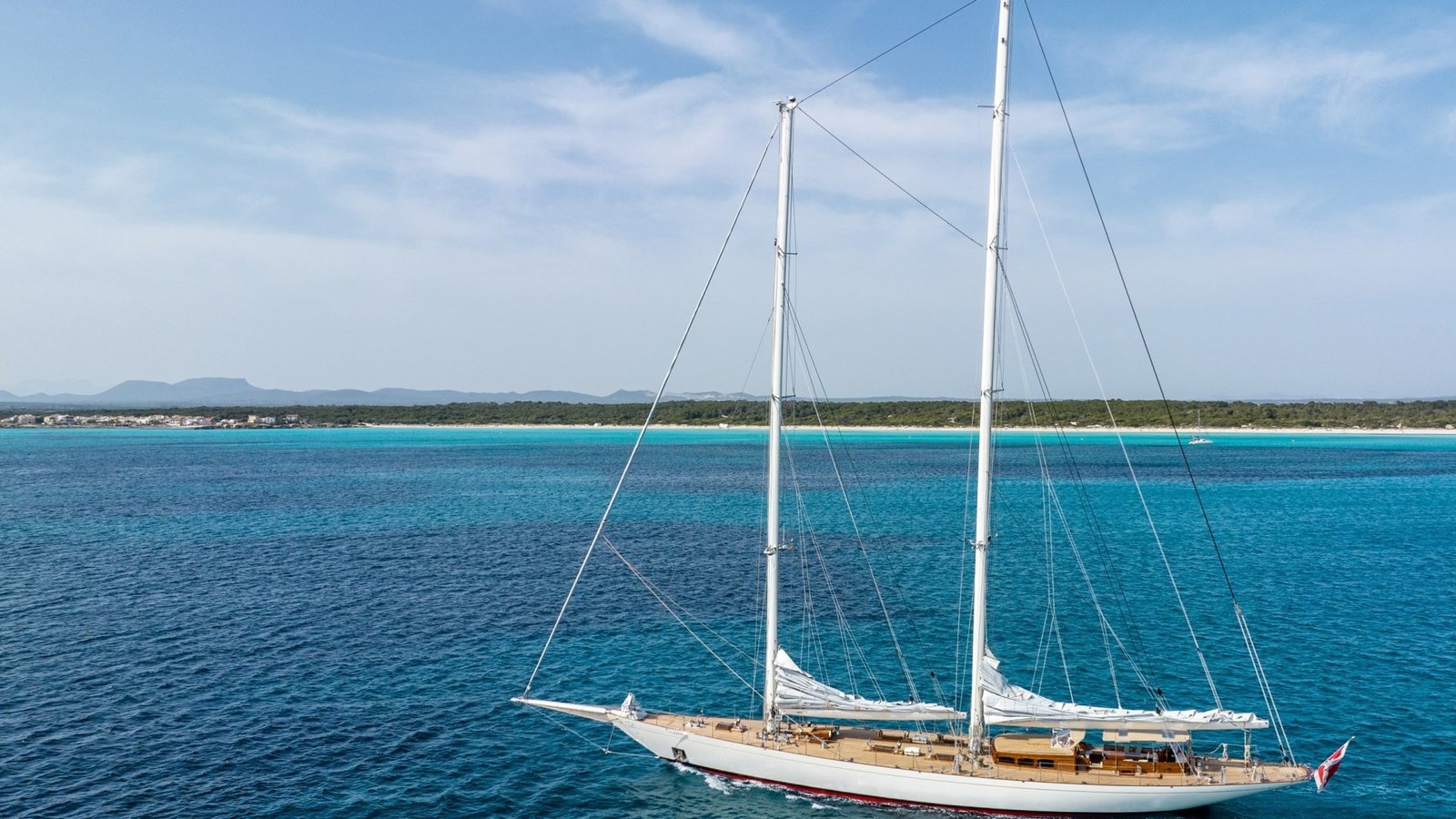
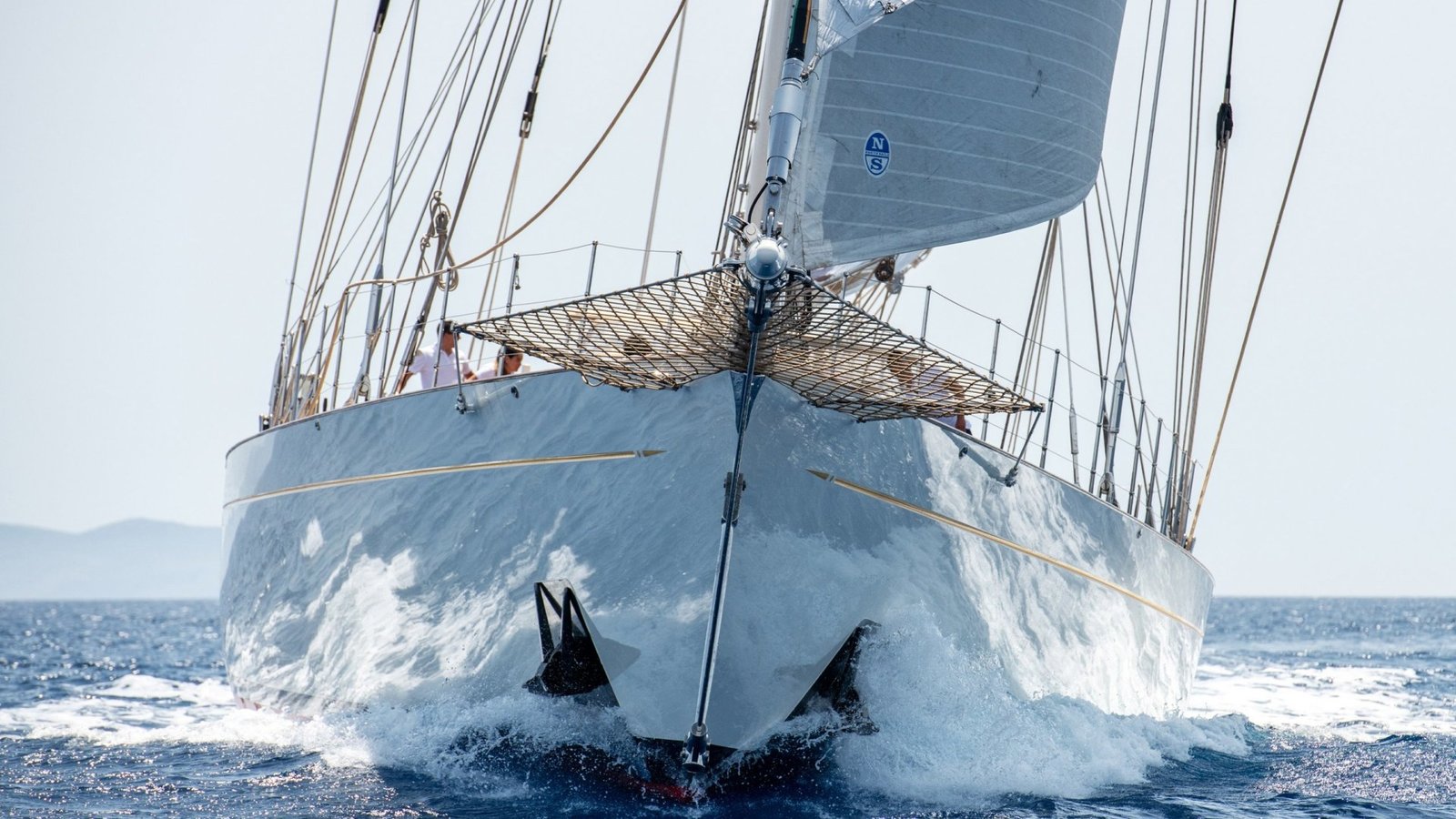
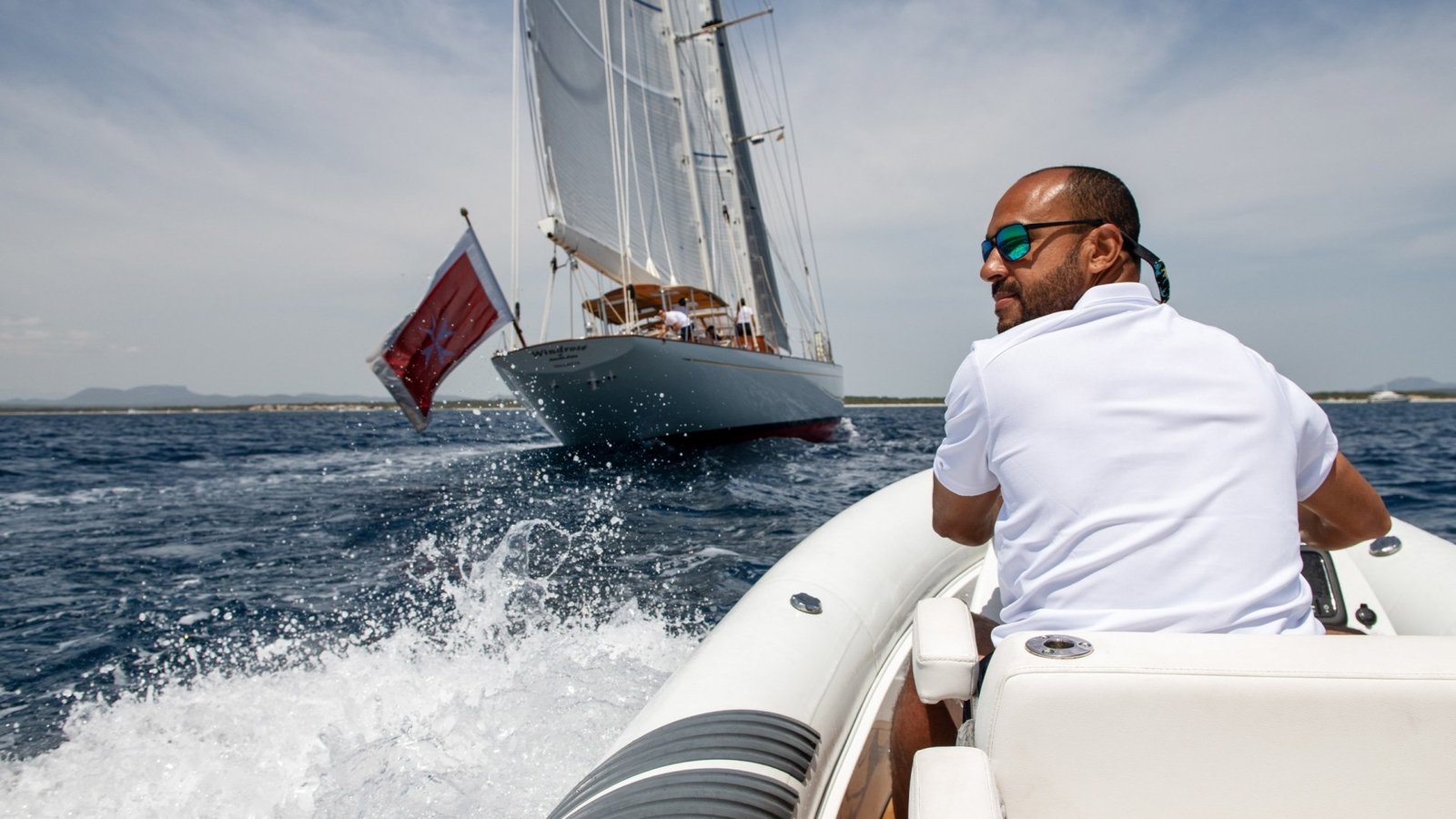
Windrose of Amsterdam is a classic schooner with a competitive streak she has never bothered to hide. Dykstra Naval Architects drew her in the spirit of the great turn-of-the-century schooners, Holland Jachtbouw built her in aluminium in 2002, and within months of launching she took the transatlantic crossing record. She took it again in 2005. Very few yachts look this traditional and sail this hard.
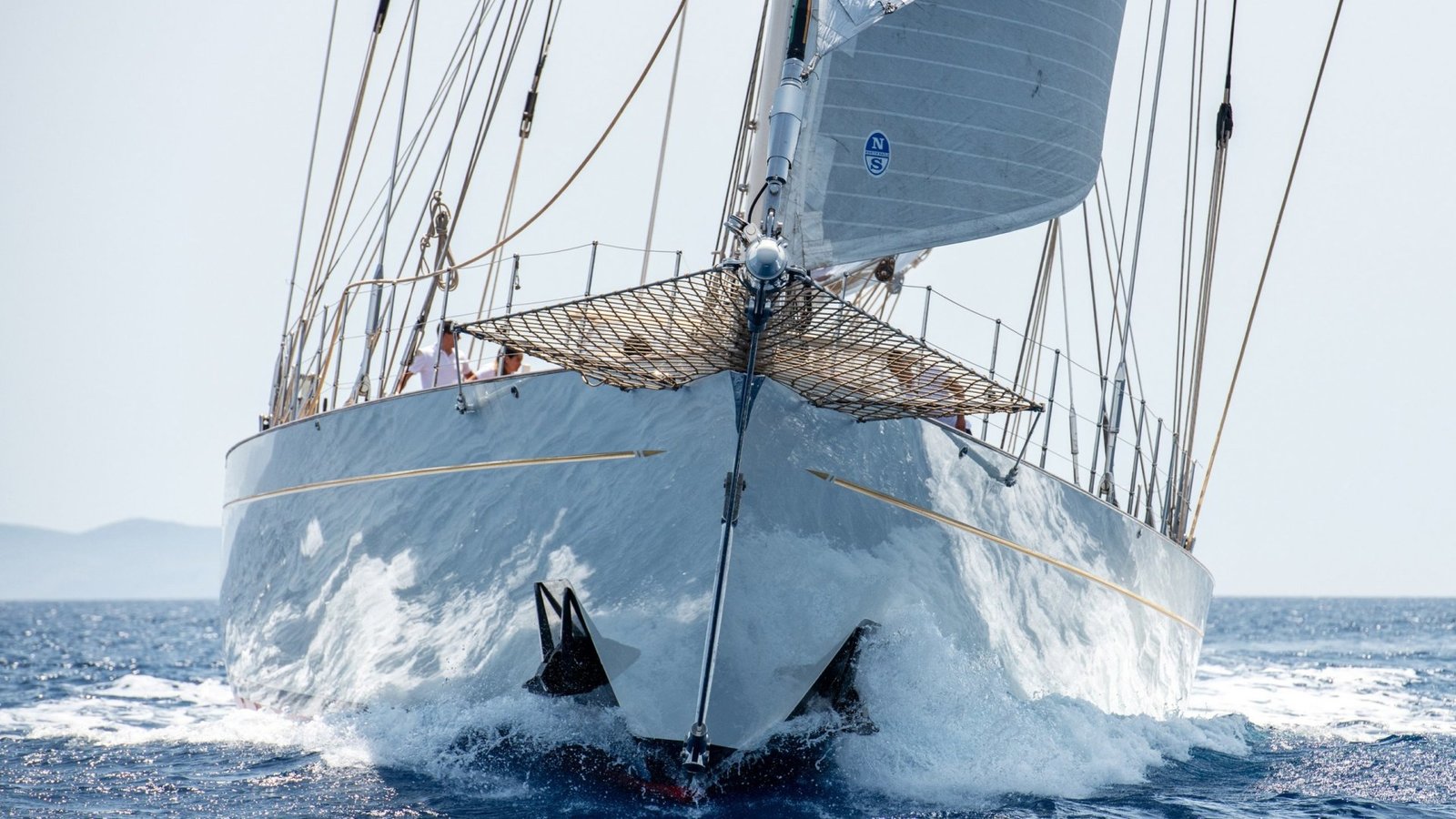
The rig is the reason. Two masts carrying a schooner plan on a 46-metre hull give her enormous sail area for her displacement, and at 139 gross tonnes she is light for her length — the opposite of the modern approach, where volume comes first and performance is what is left over. Under sail she is quick and she is quiet. Under power she makes 10 knots and holds it, with 2,800 miles of range at nine.
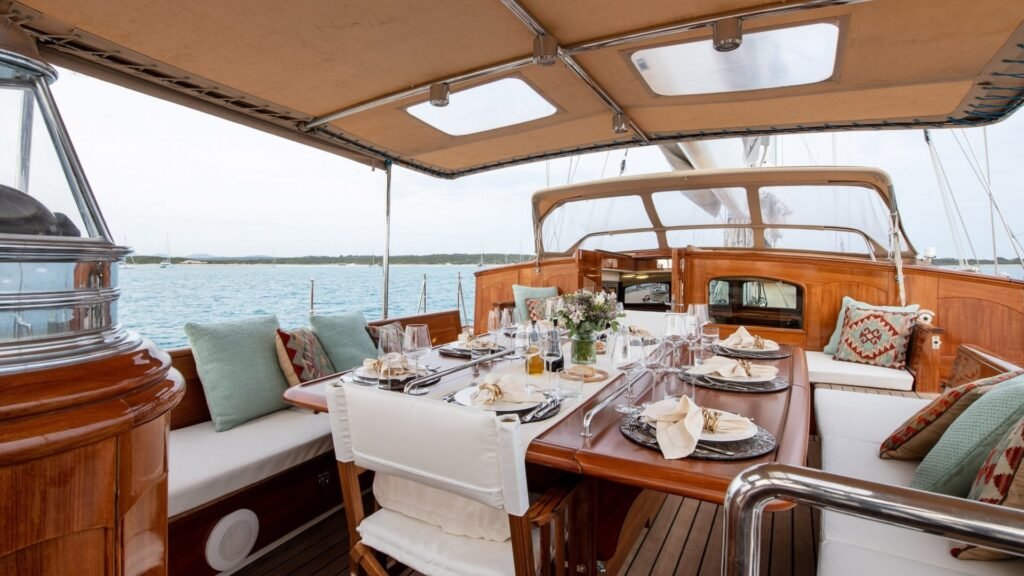
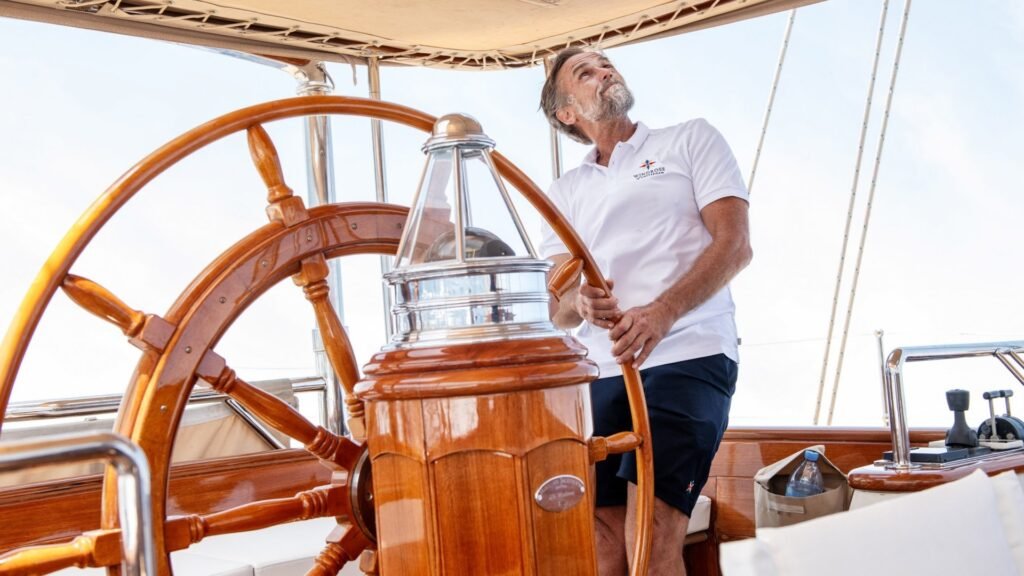
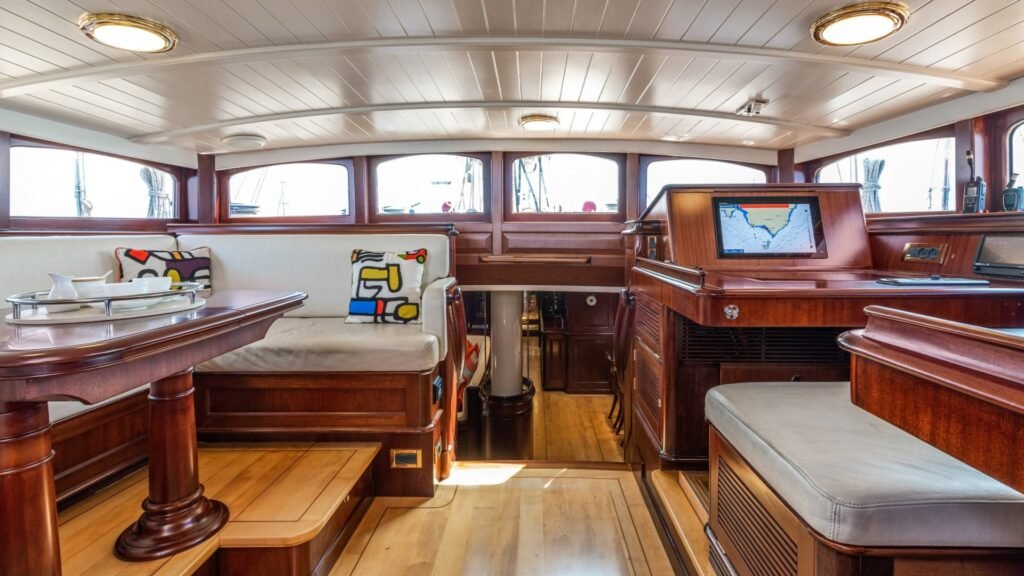
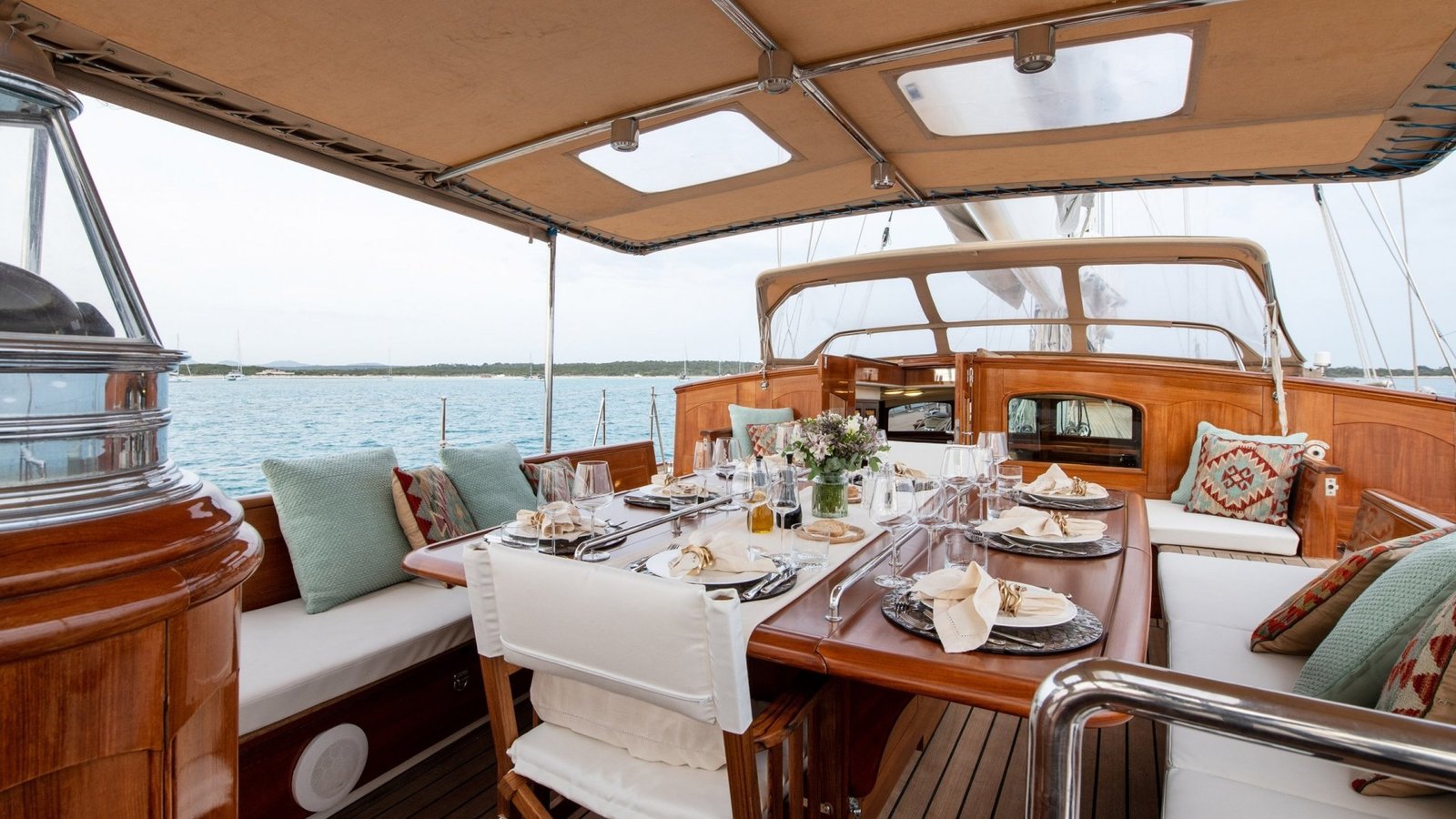
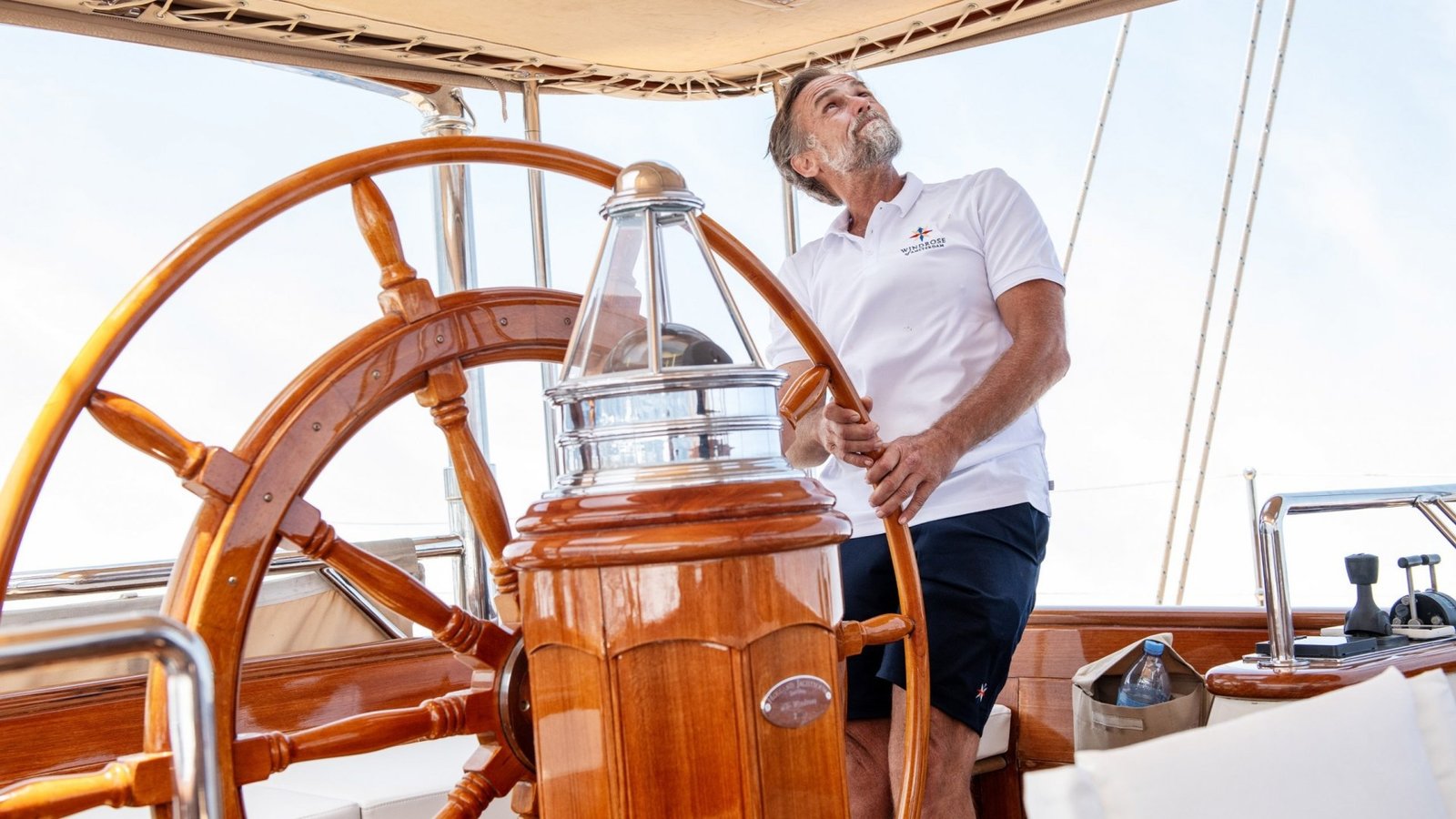
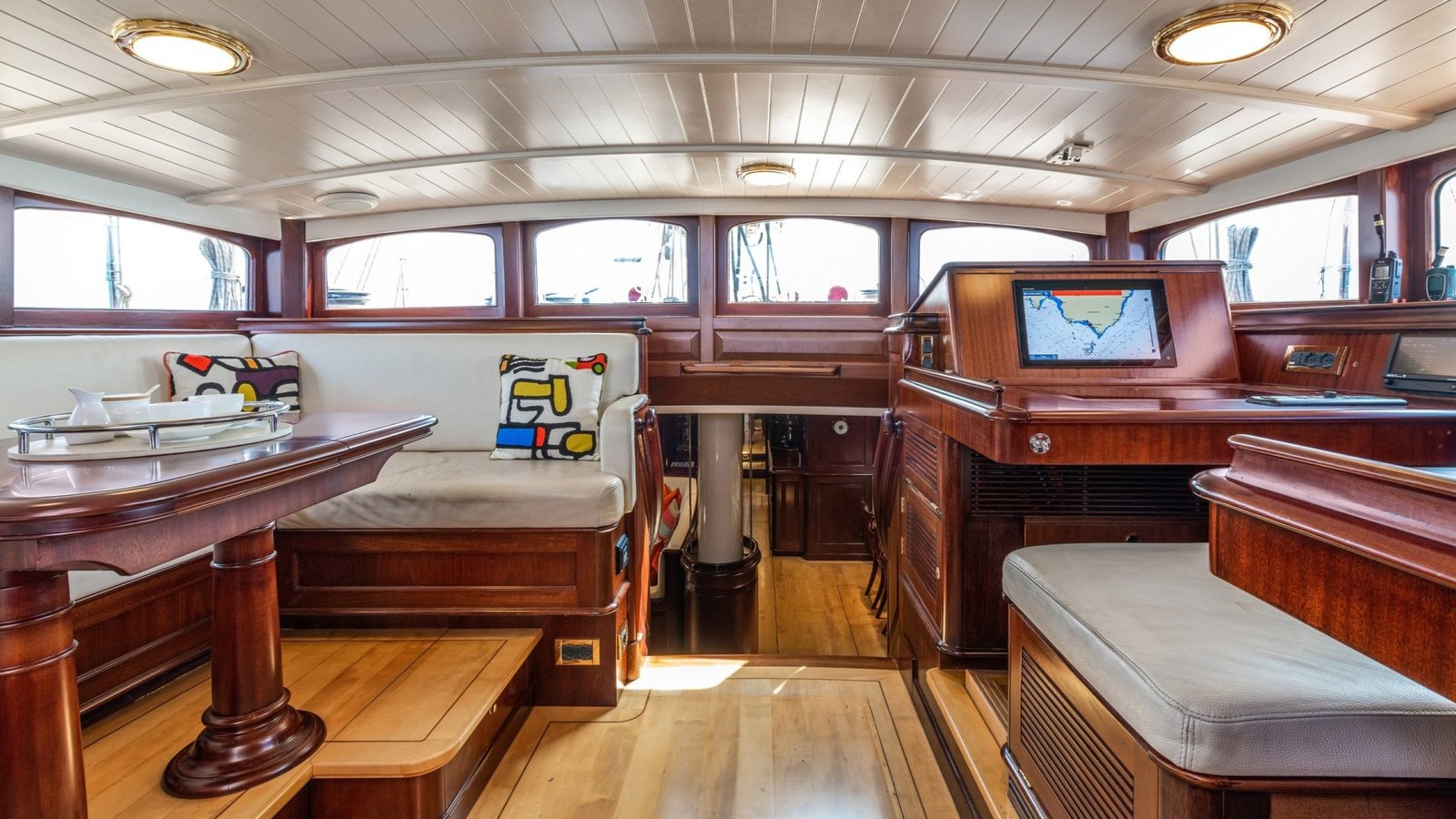
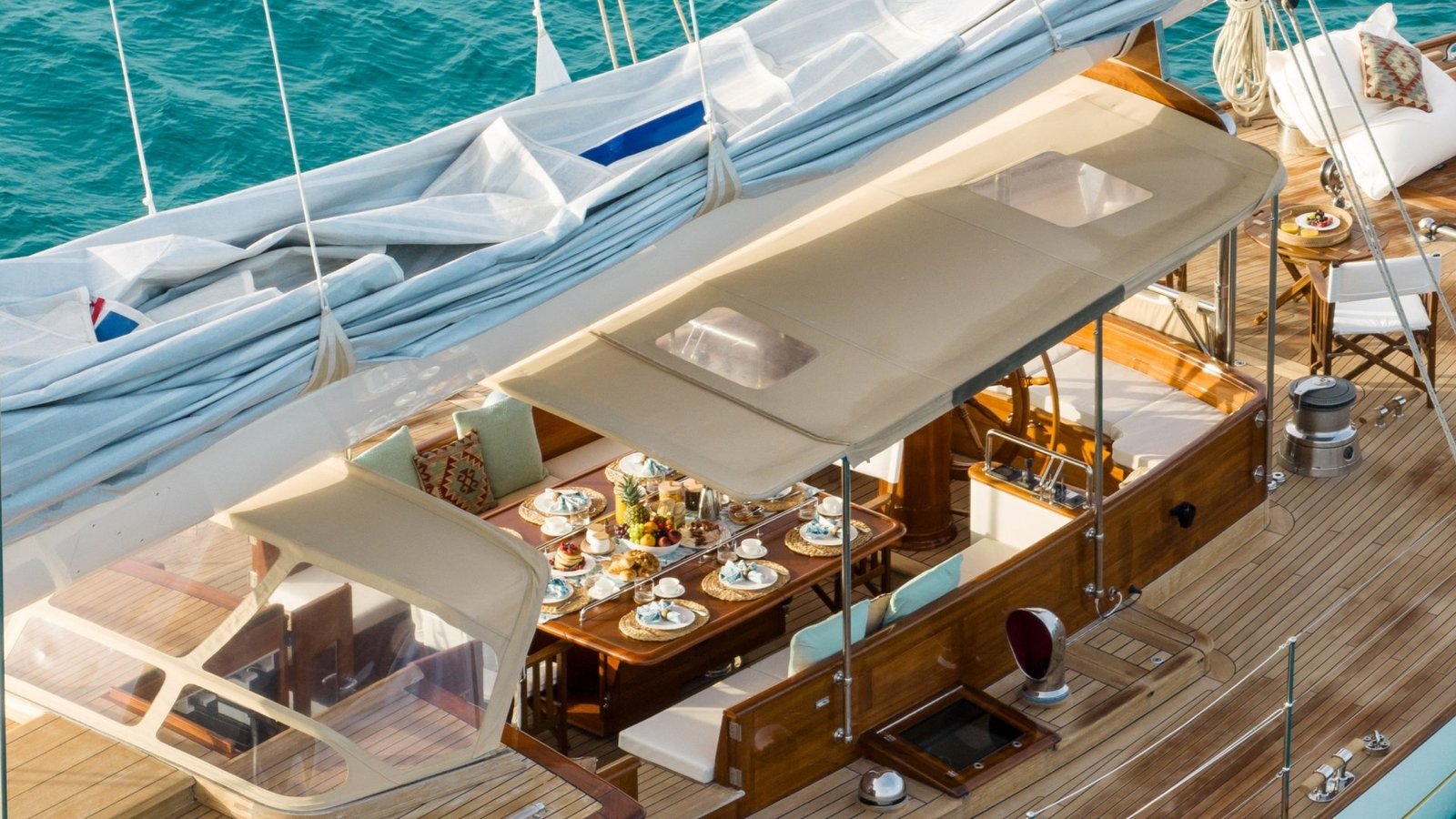
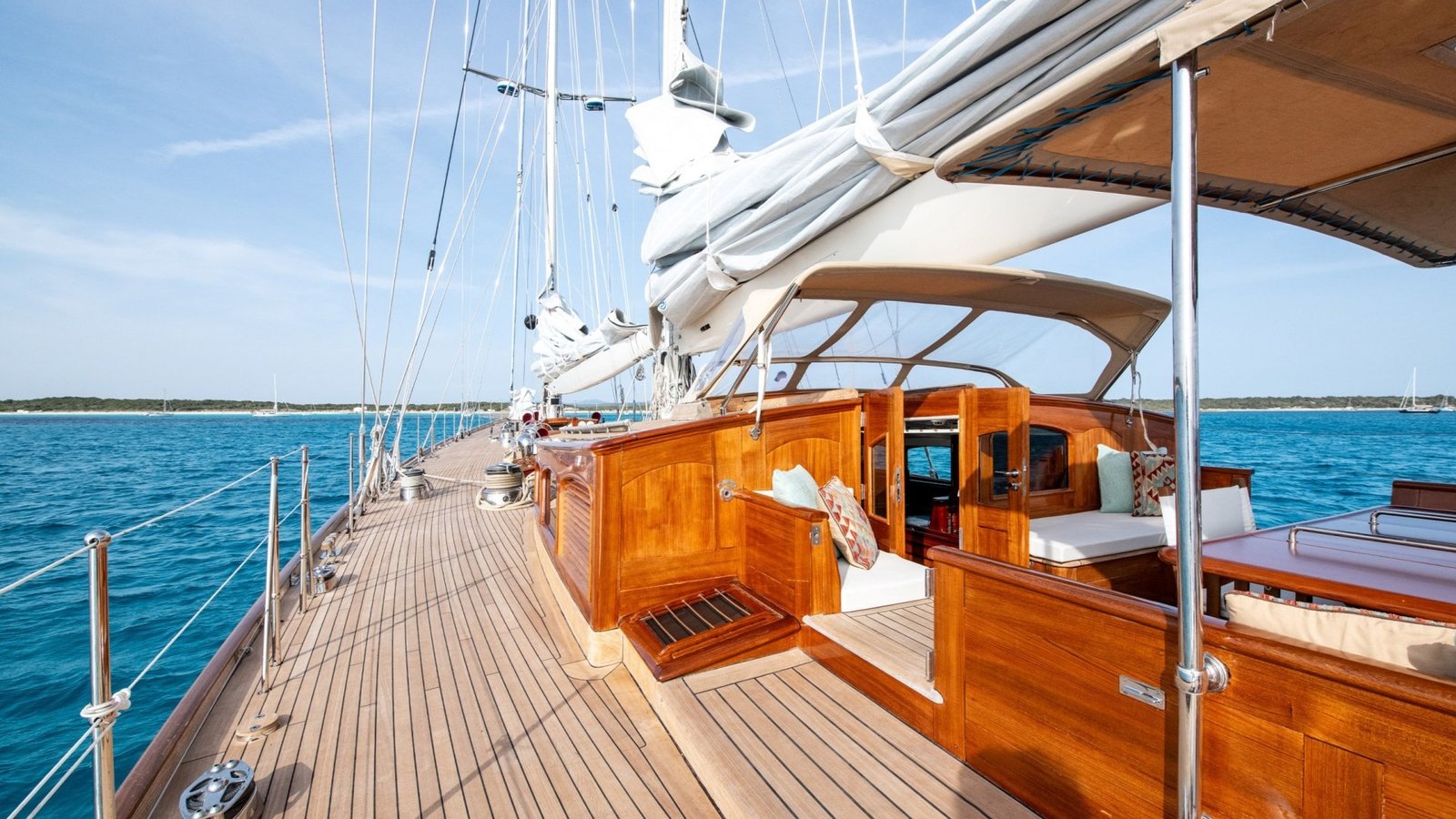
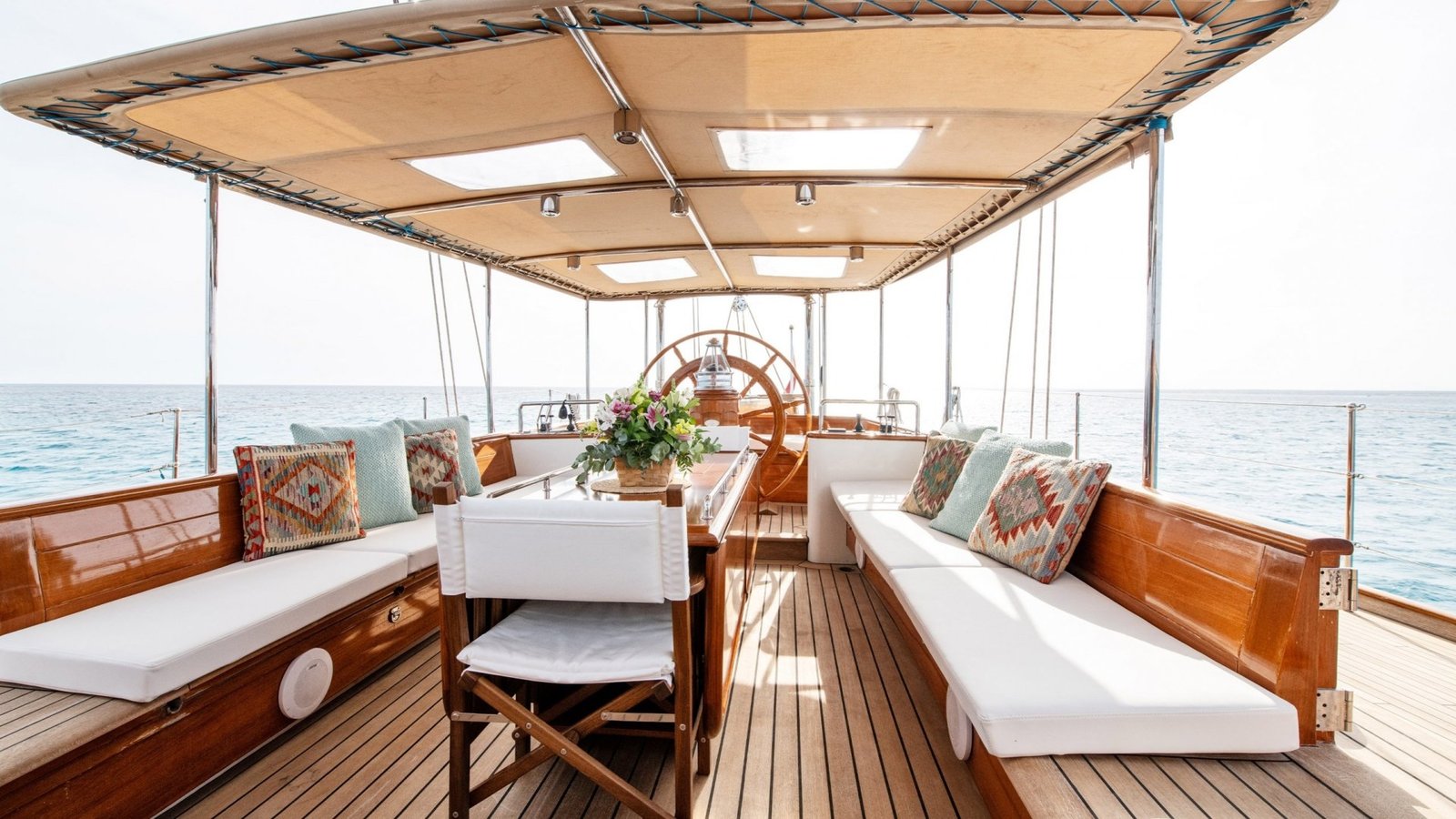
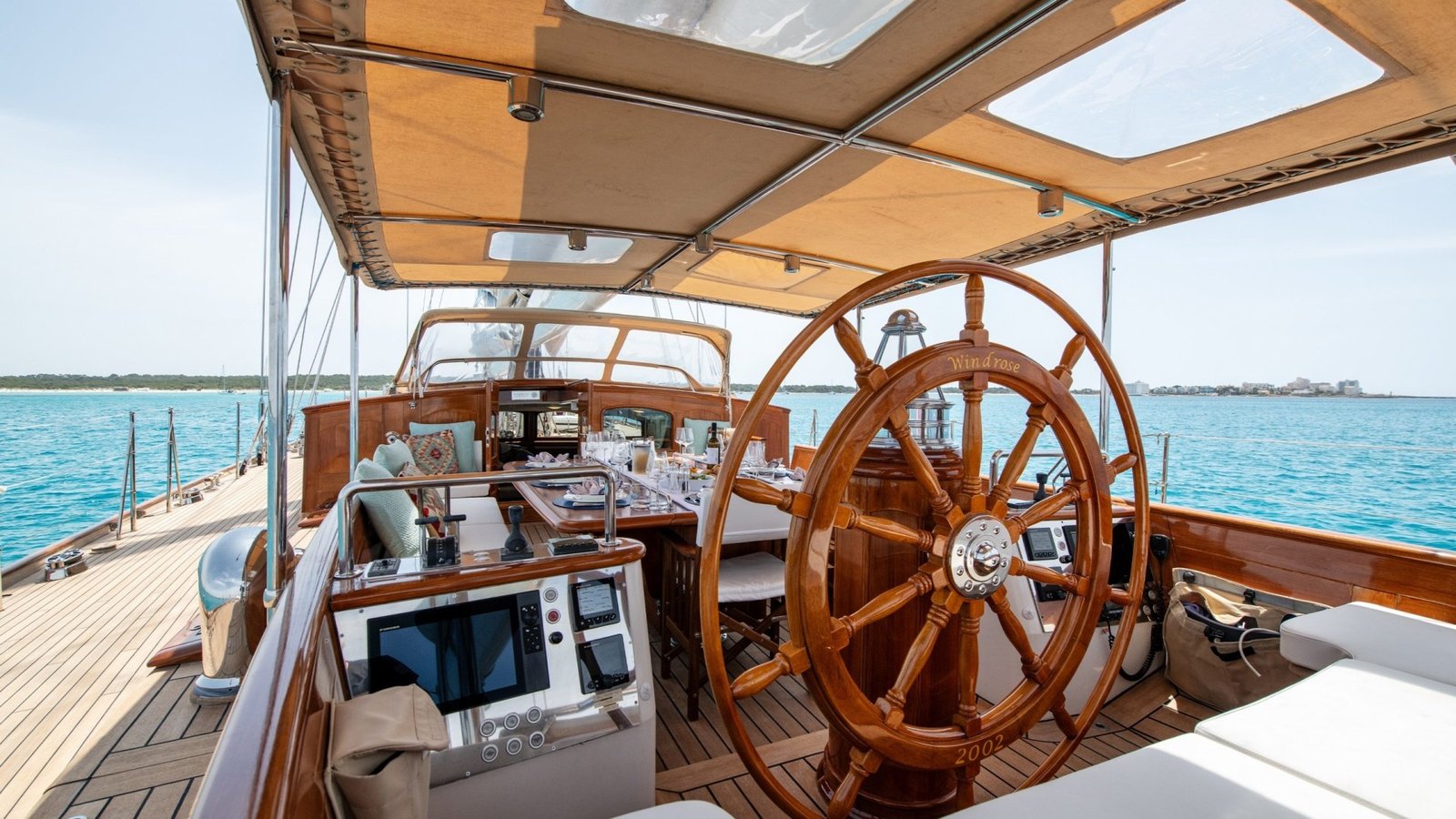
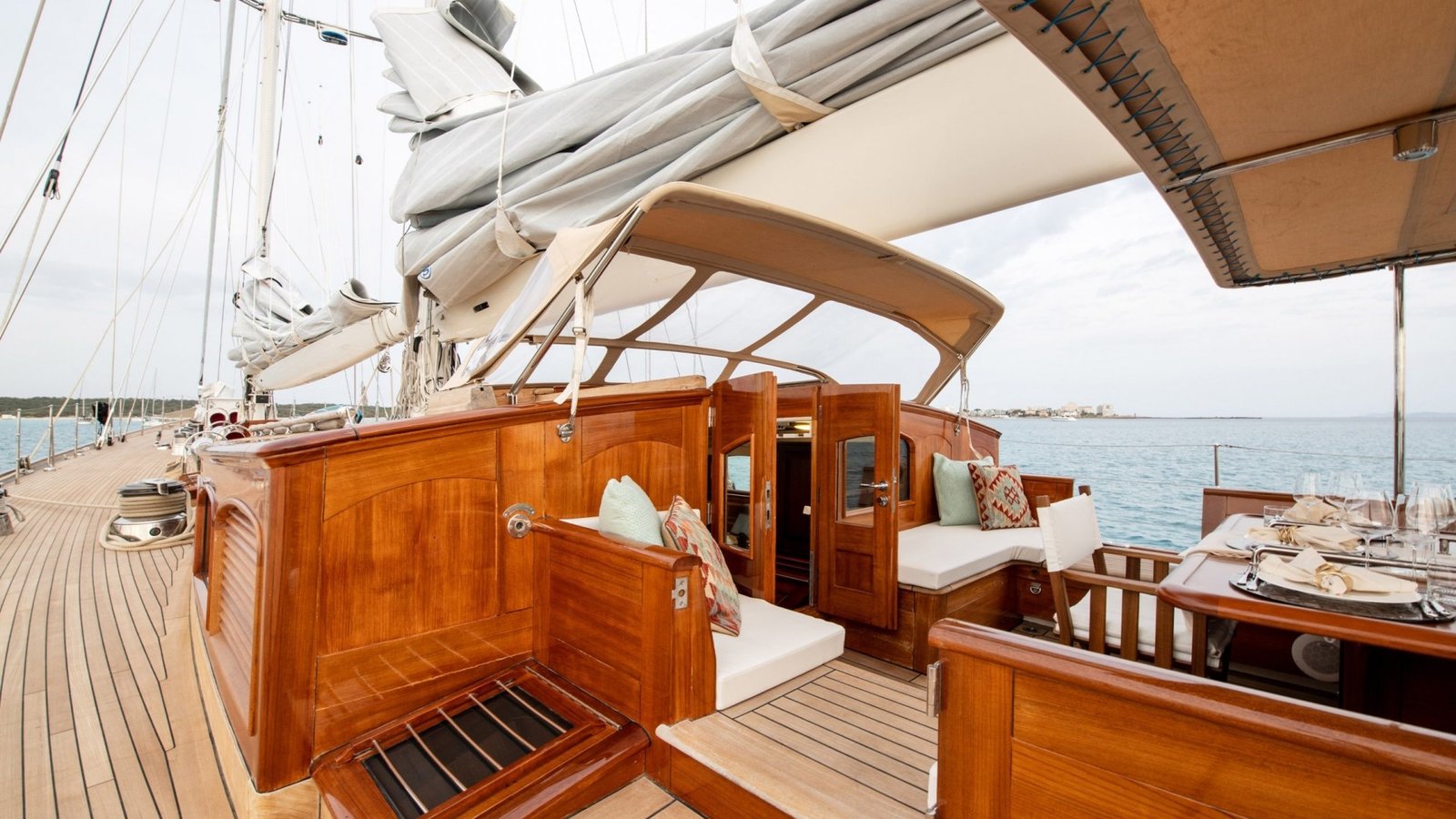
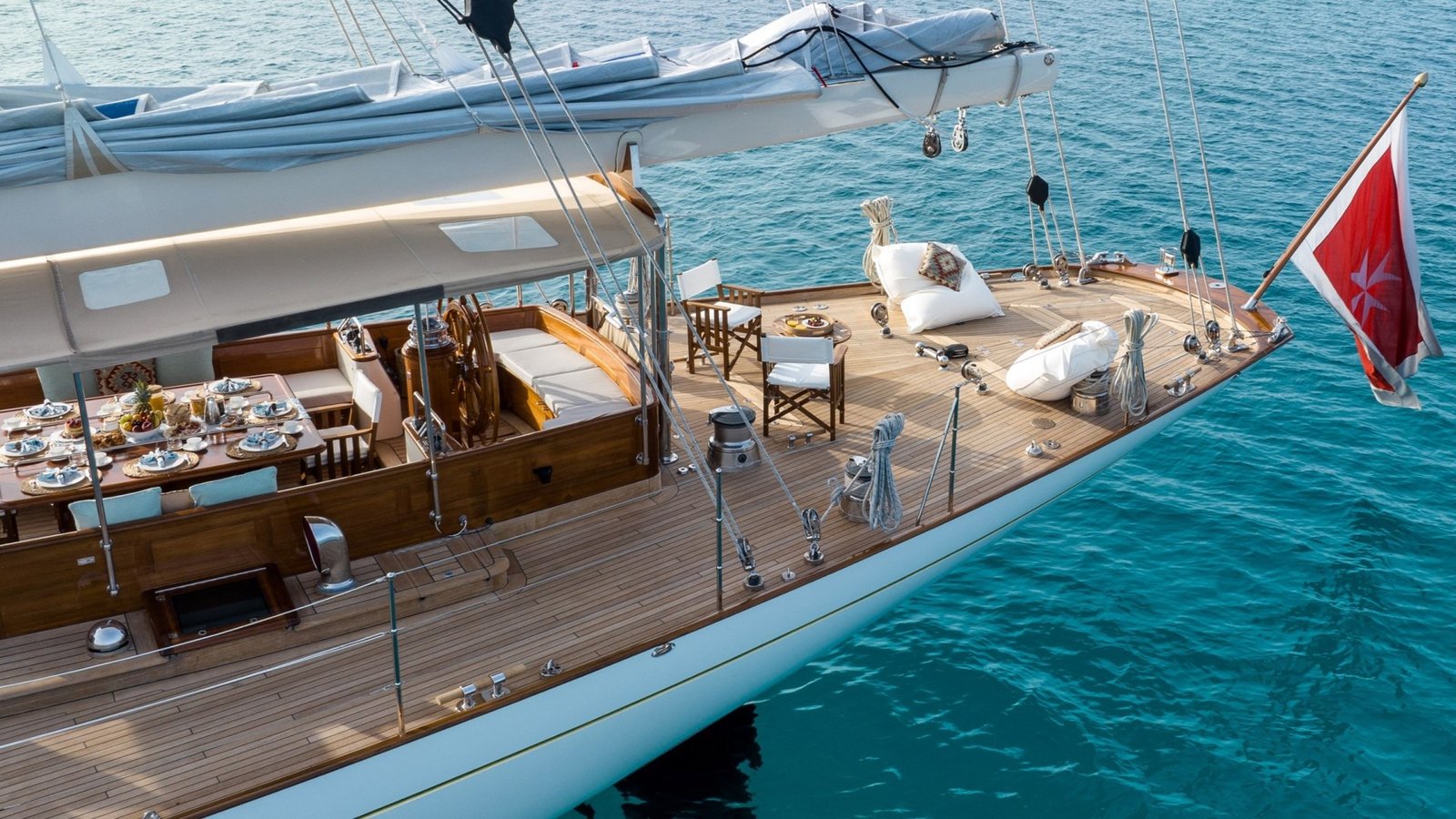
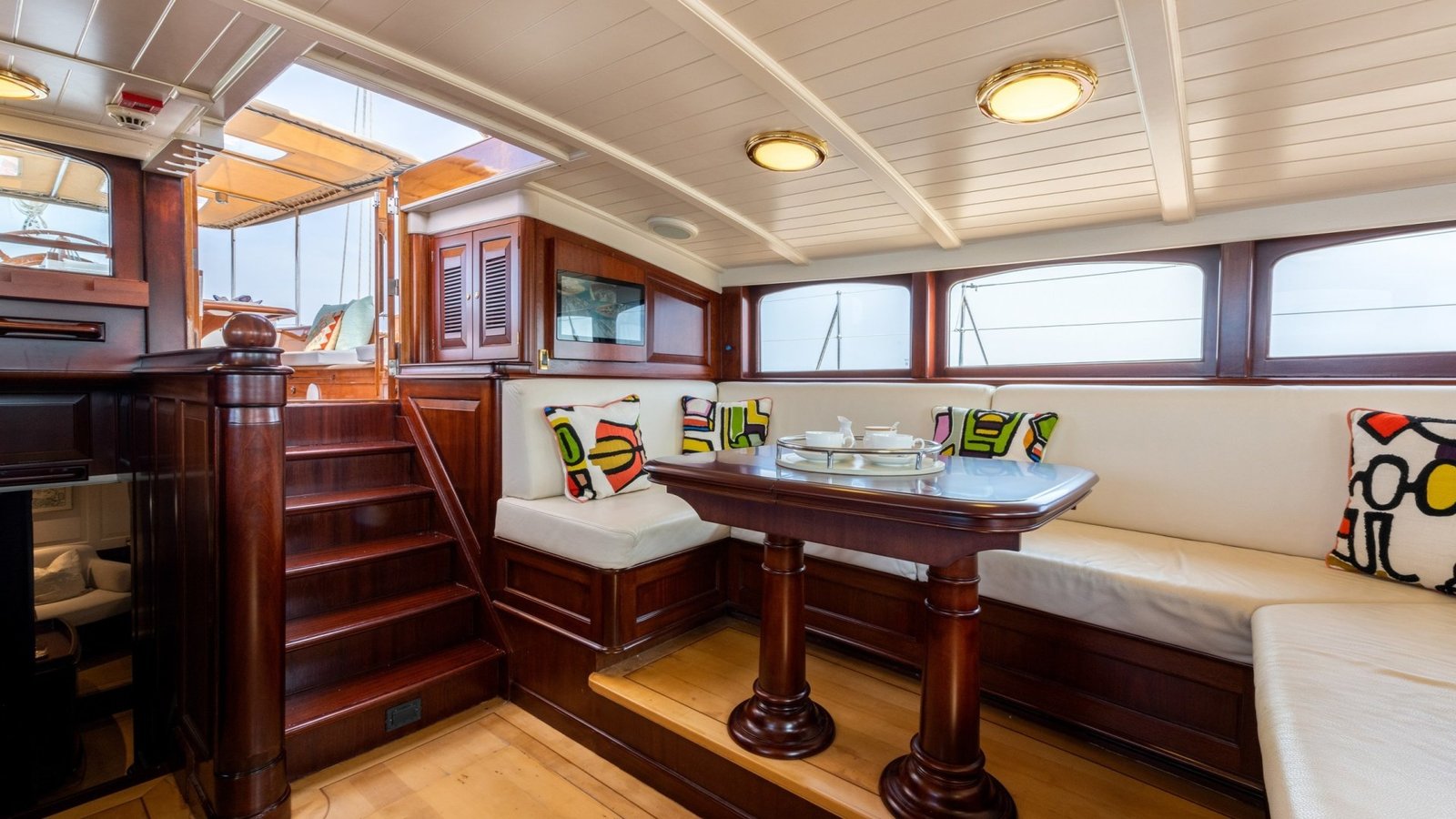
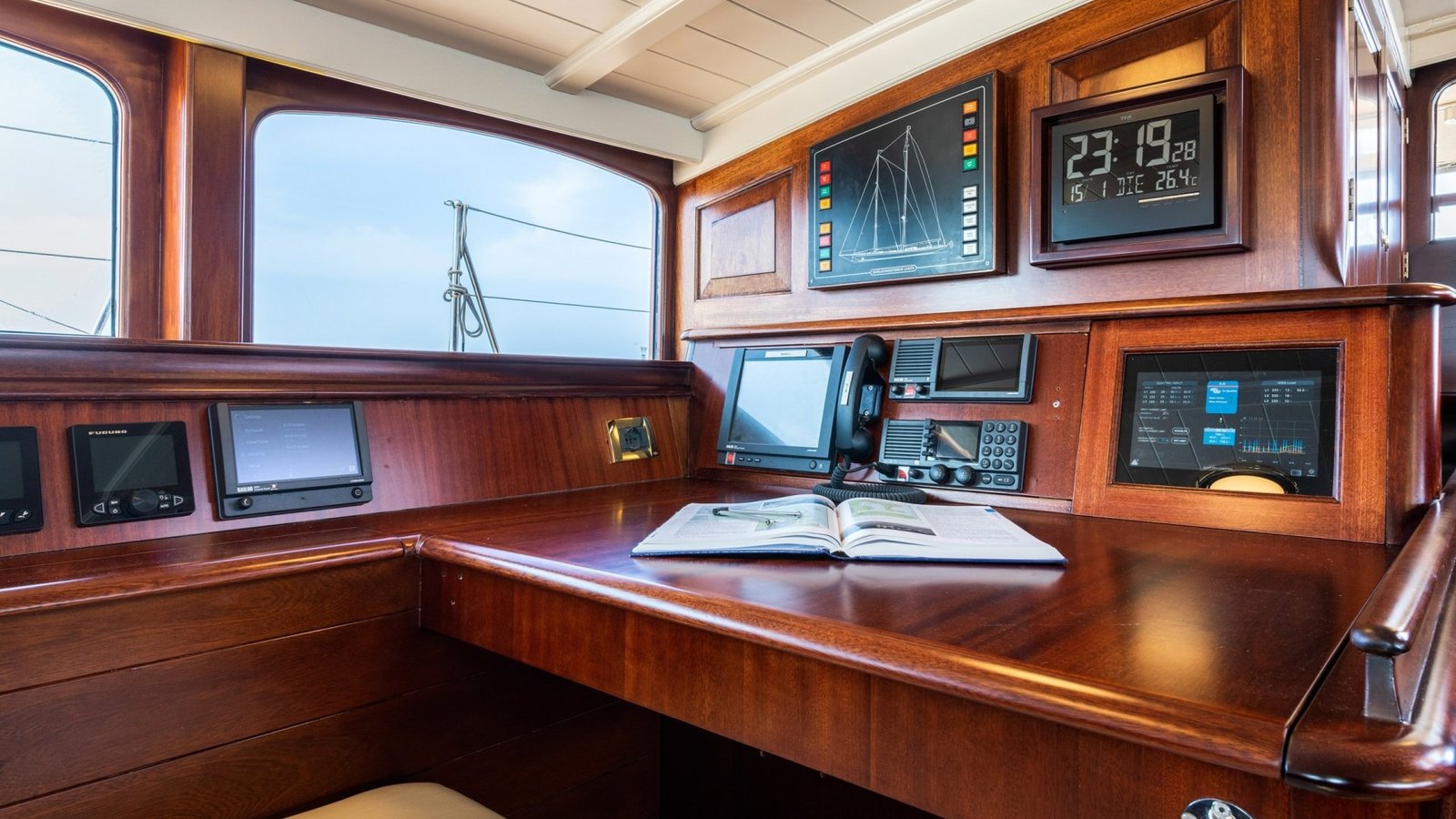
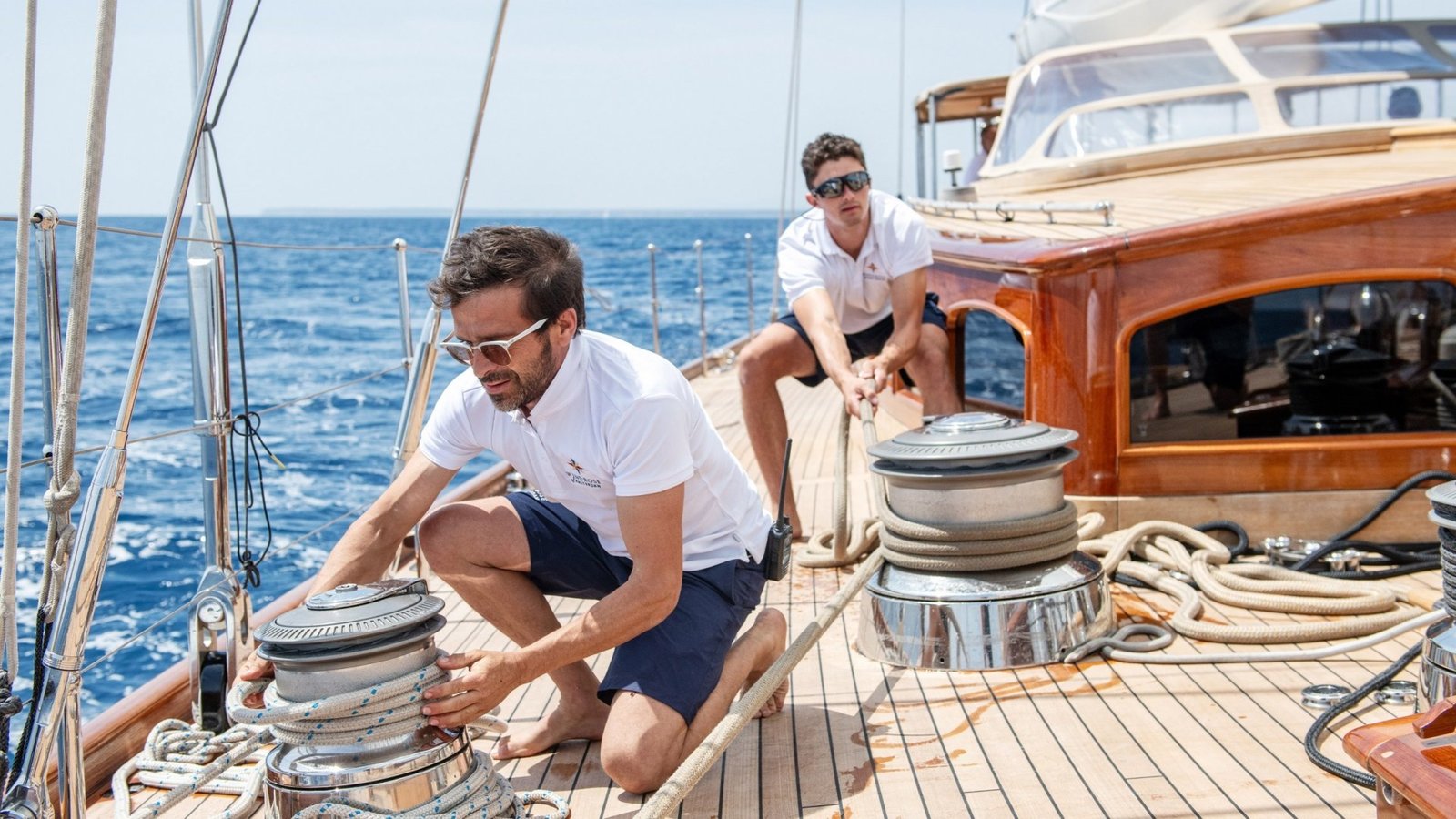
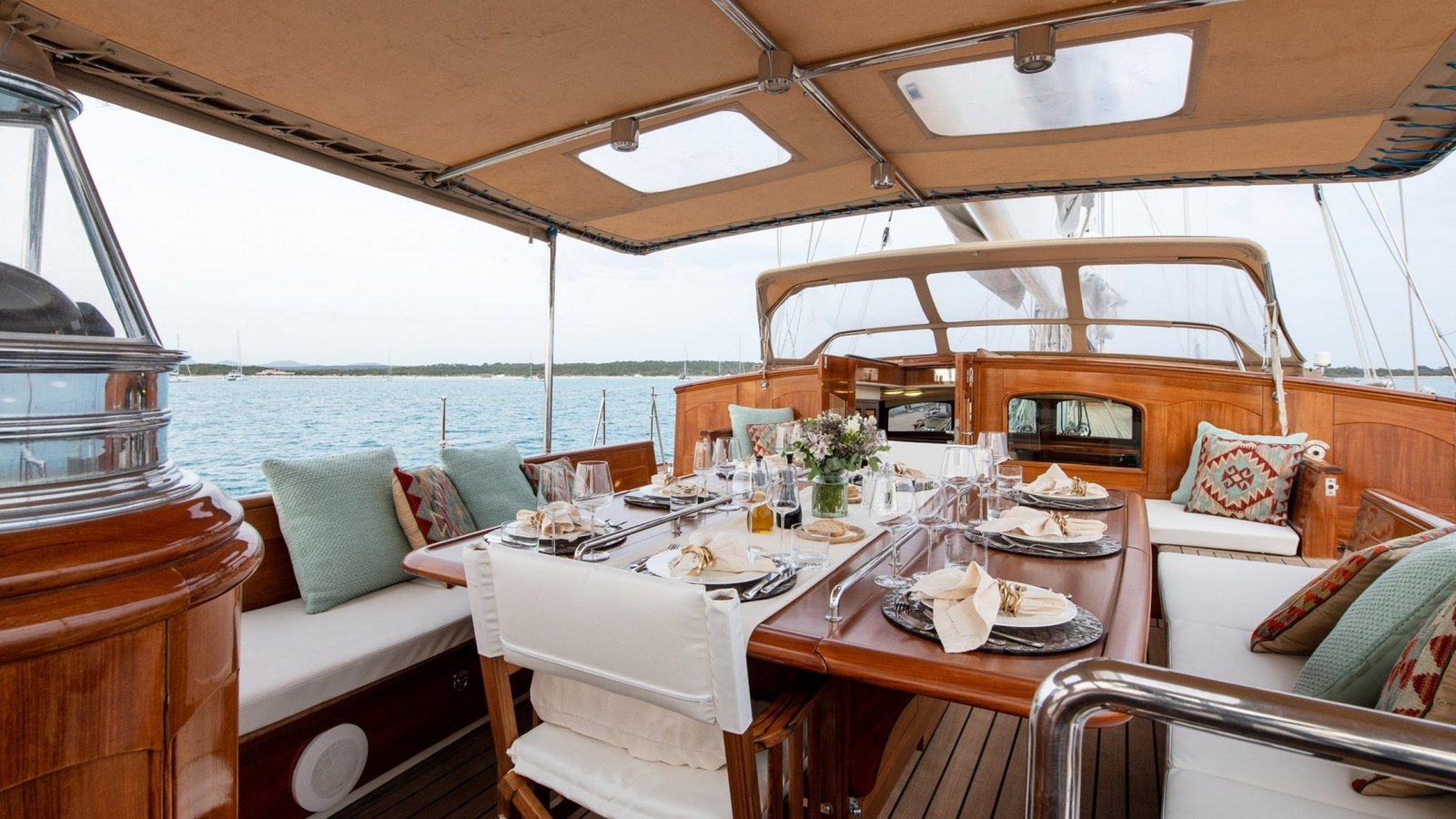
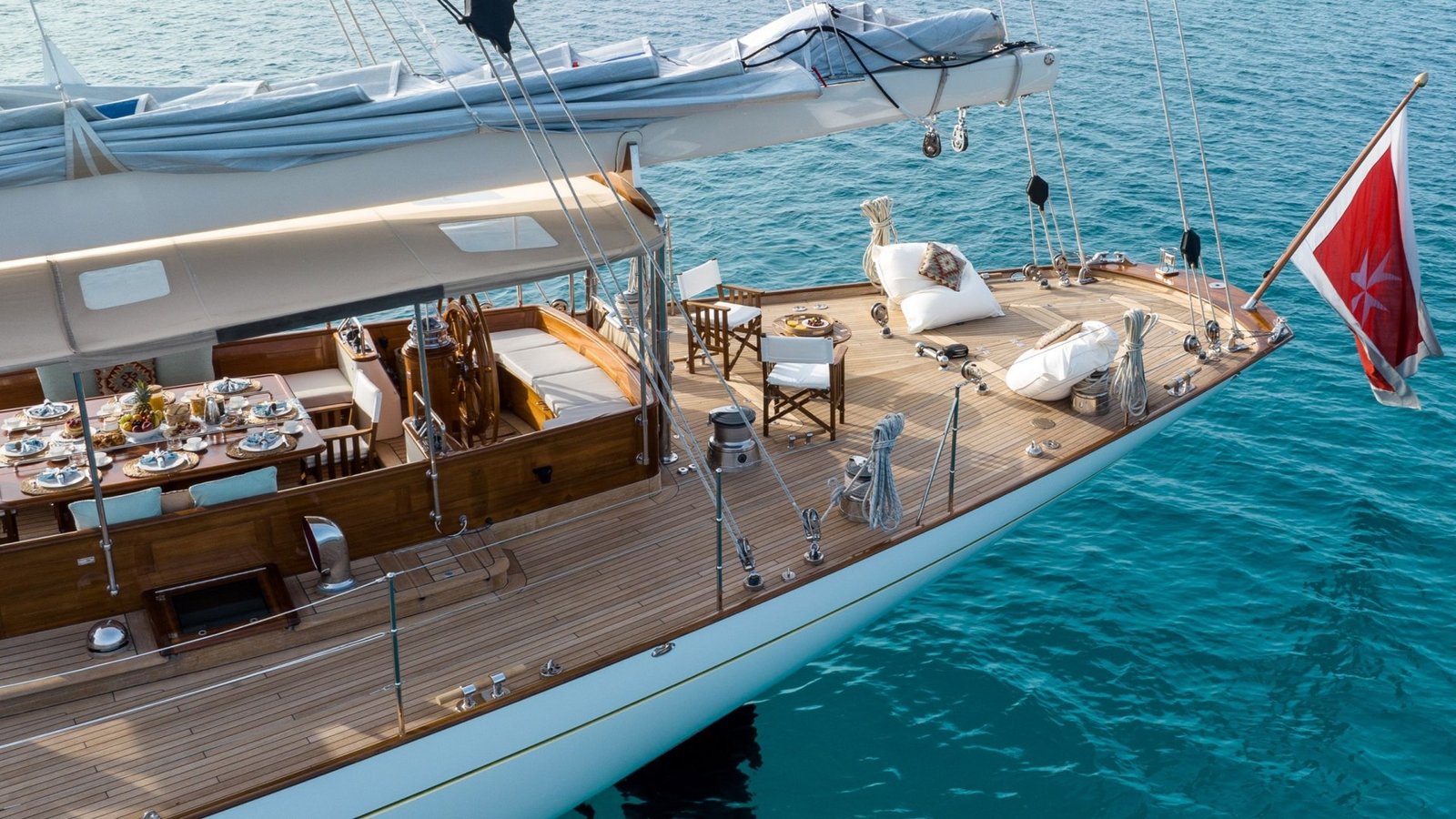
Life aboard is arranged around the deck. A permanent awning covers the after deck, where a long varnished table sits between settees and most meals are taken; forward of it, the raised deckhouse holds a second varnished table, windows at eye level and the navigation station a step away. Ahead of that stands a full-size wooden wheel, and the captain sails her from it. Guests who want to take a turn on the helm are encouraged to, which is not something every 46-metre yacht can say.
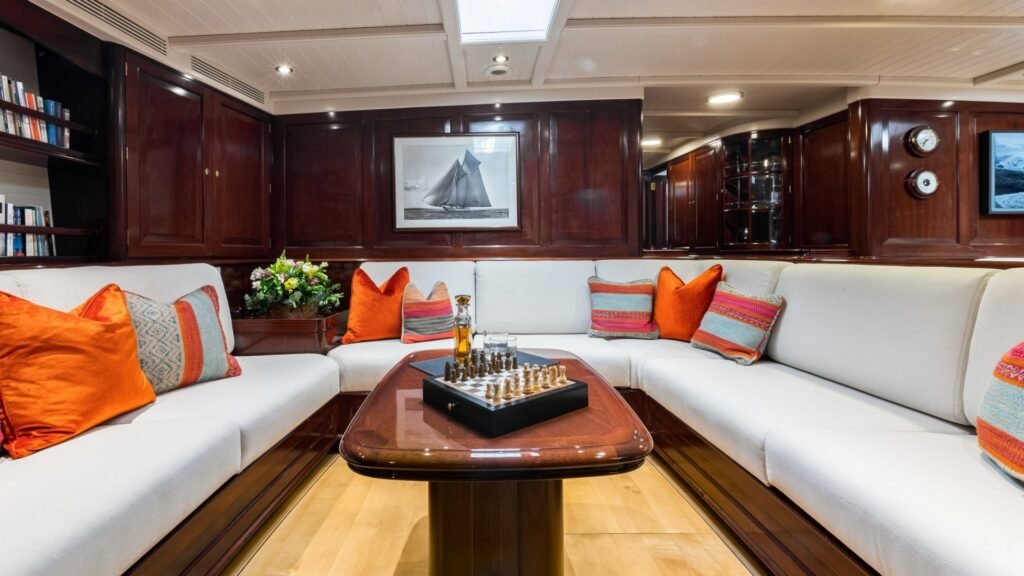
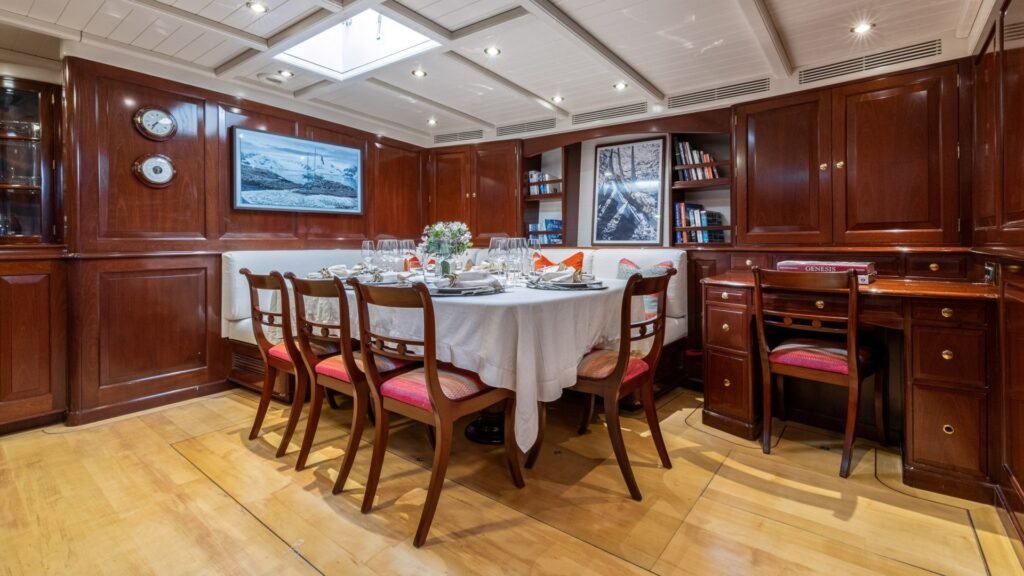
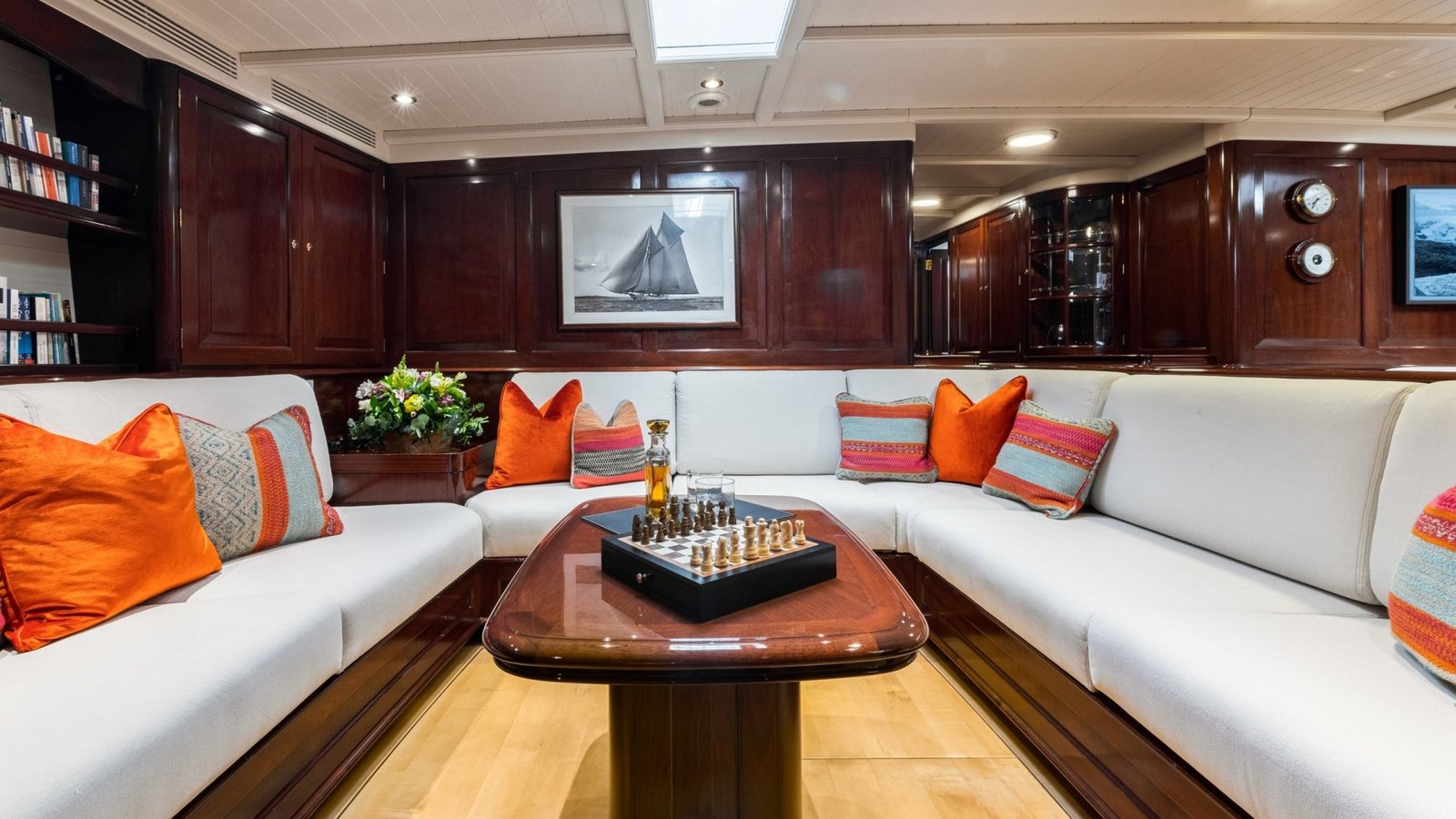
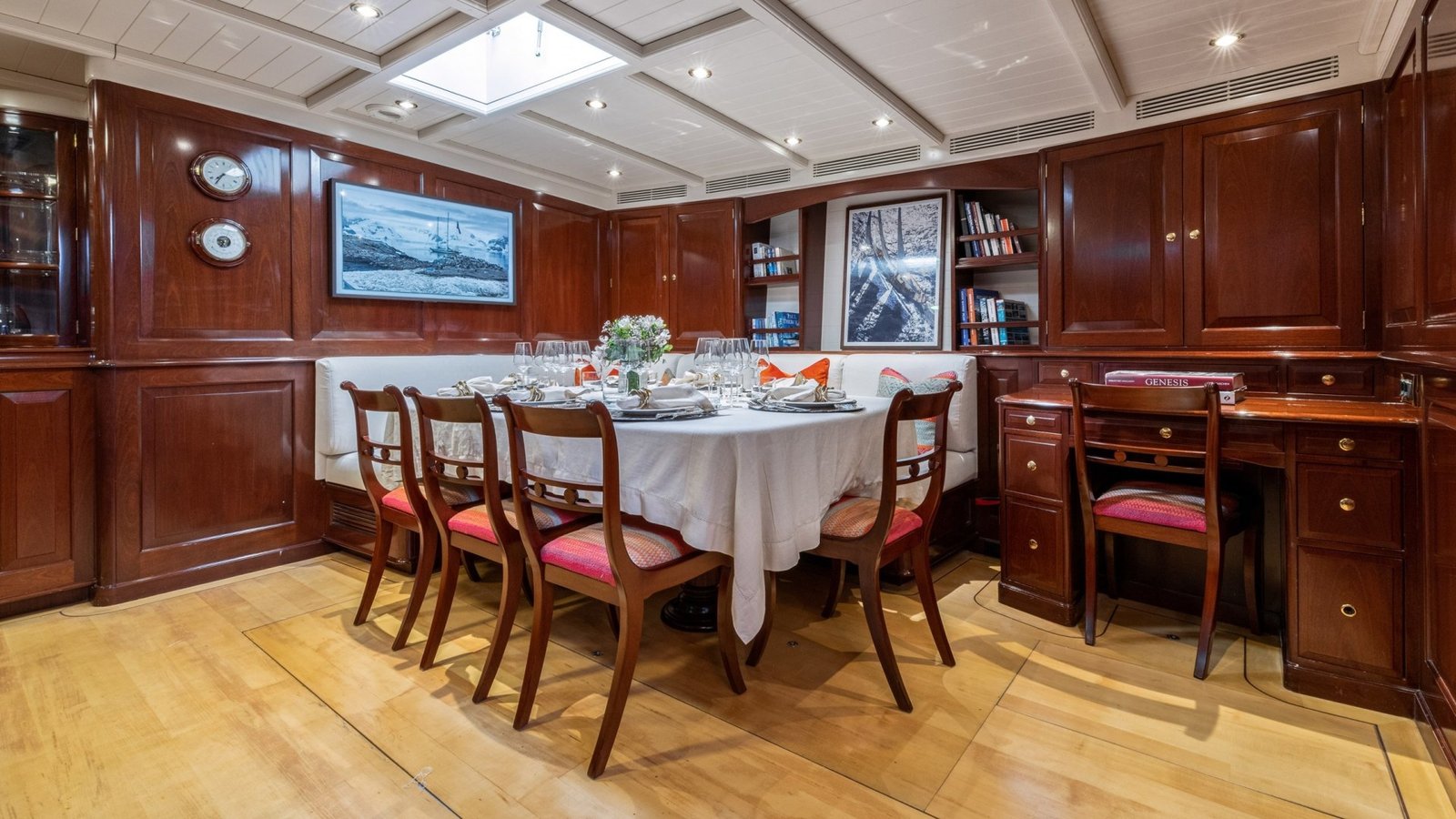
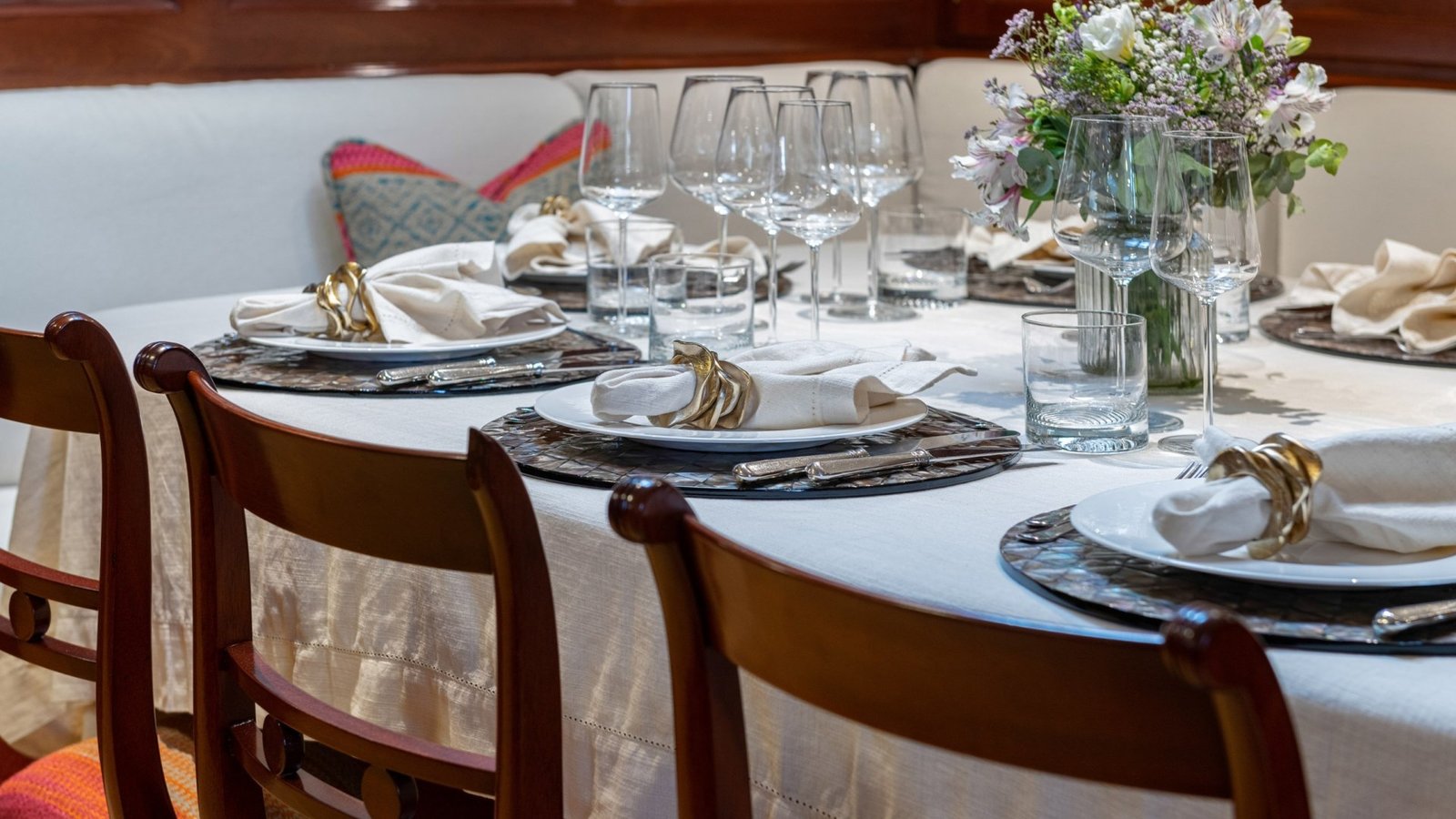
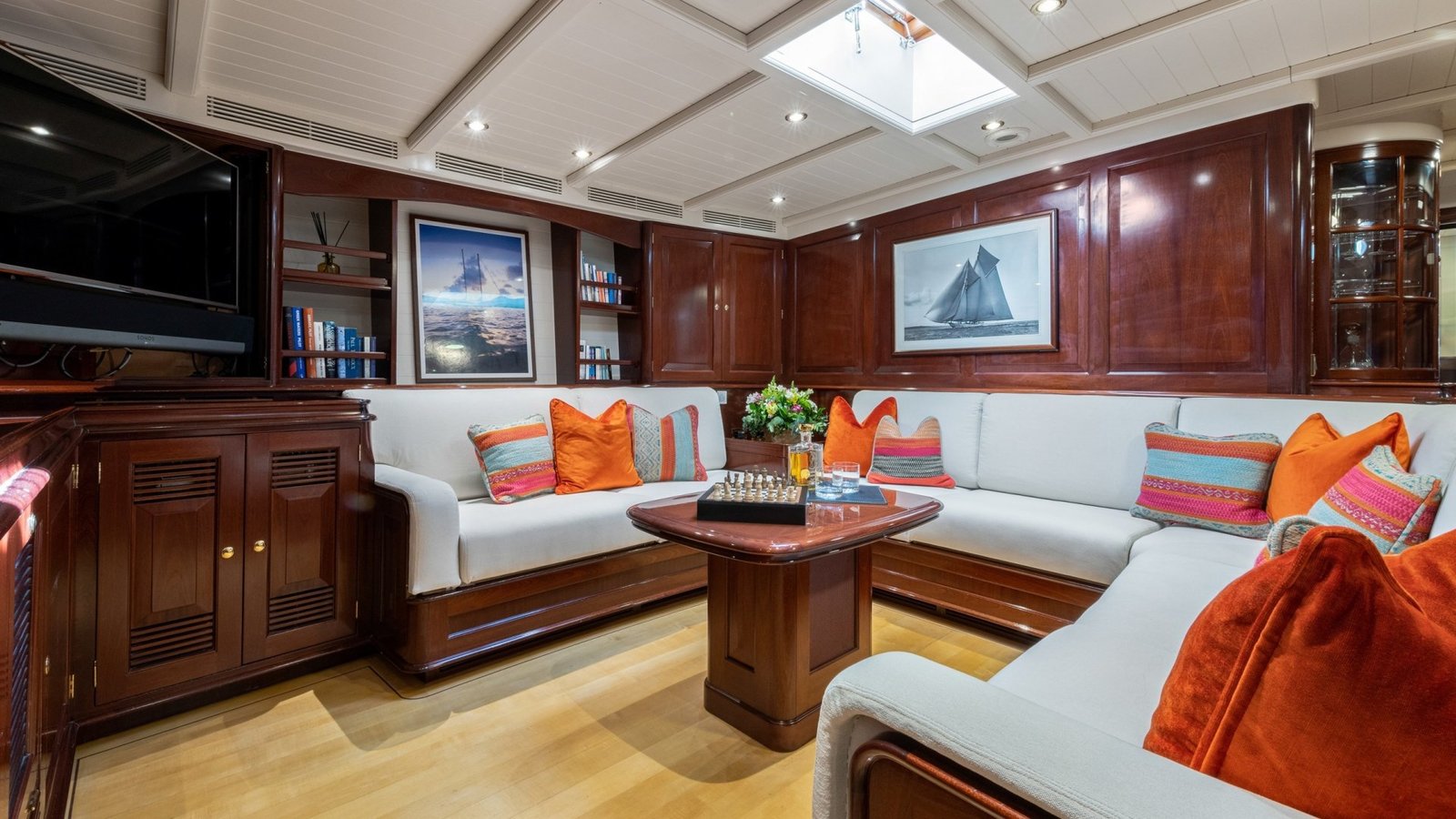
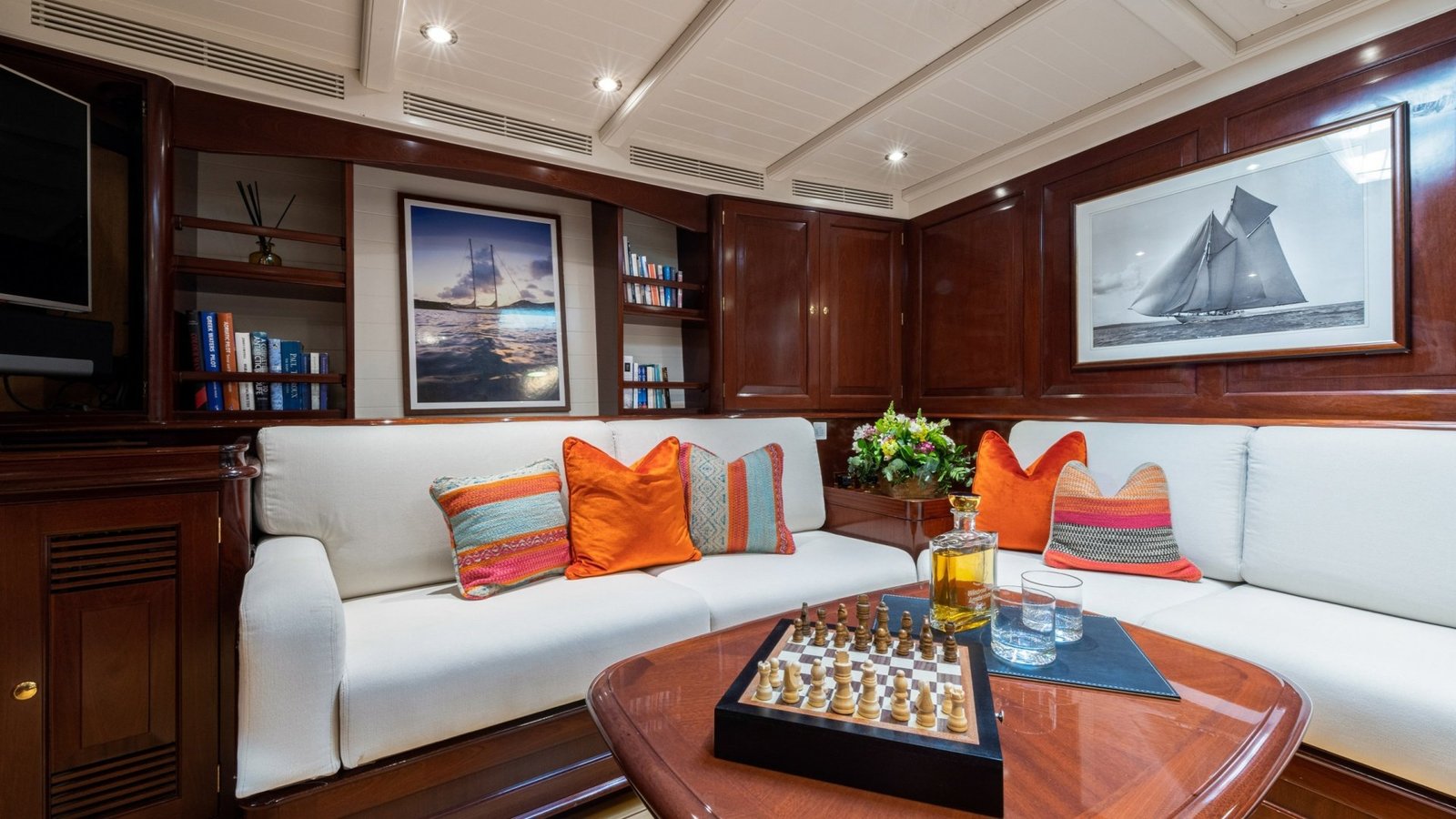
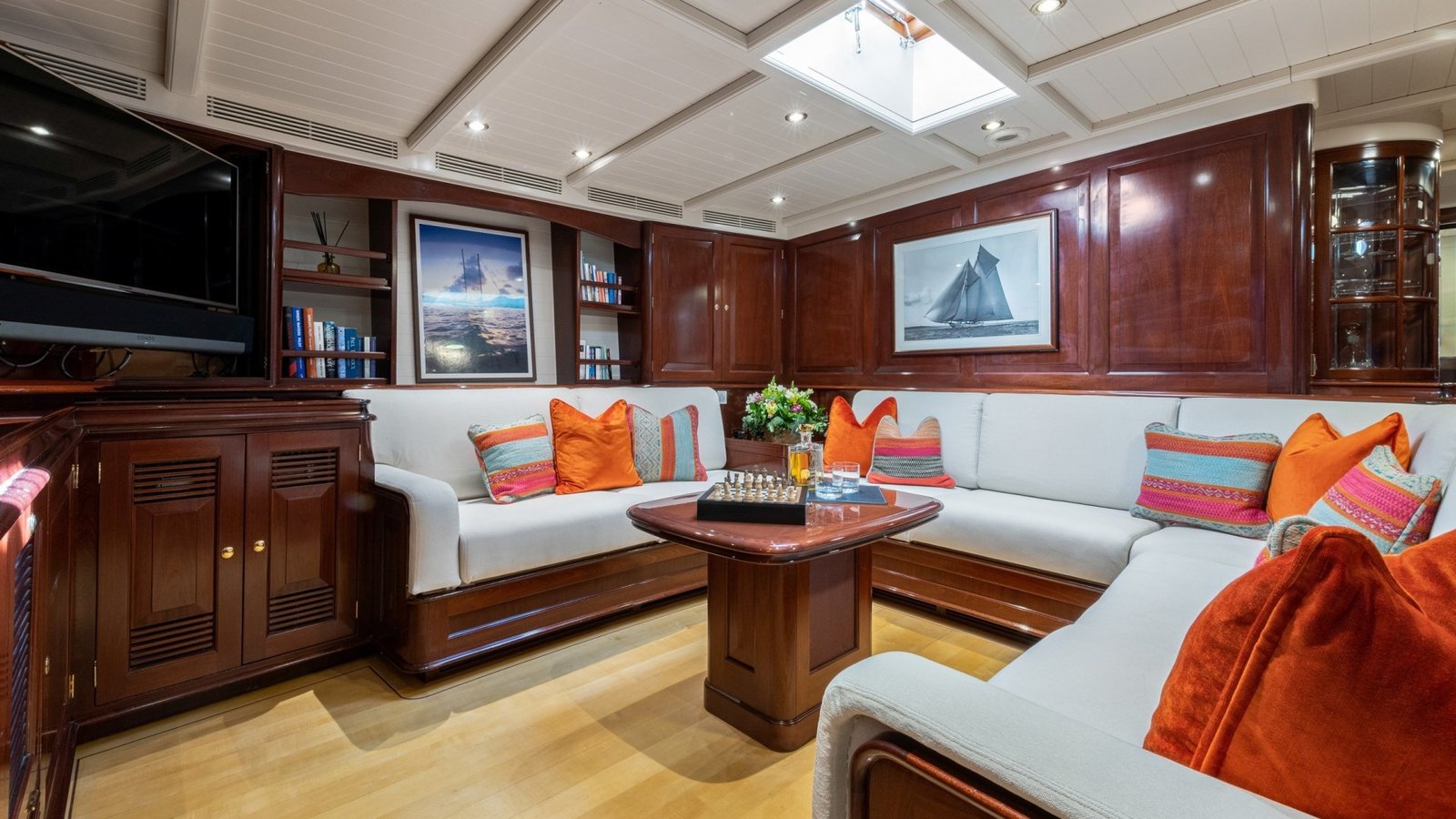
Below, the interior is mahogany and cream and entirely convincing. The main saloon takes a horseshoe of white settees around a low table with a chess set on it, framed by marine paintings and full bookshelves. A separate dining saloon forward holds a round table under linen, with a writing desk built into the joinery. Giving up that much space to a dedicated dining room on a yacht this size is a deliberate choice, and it pays off every evening.
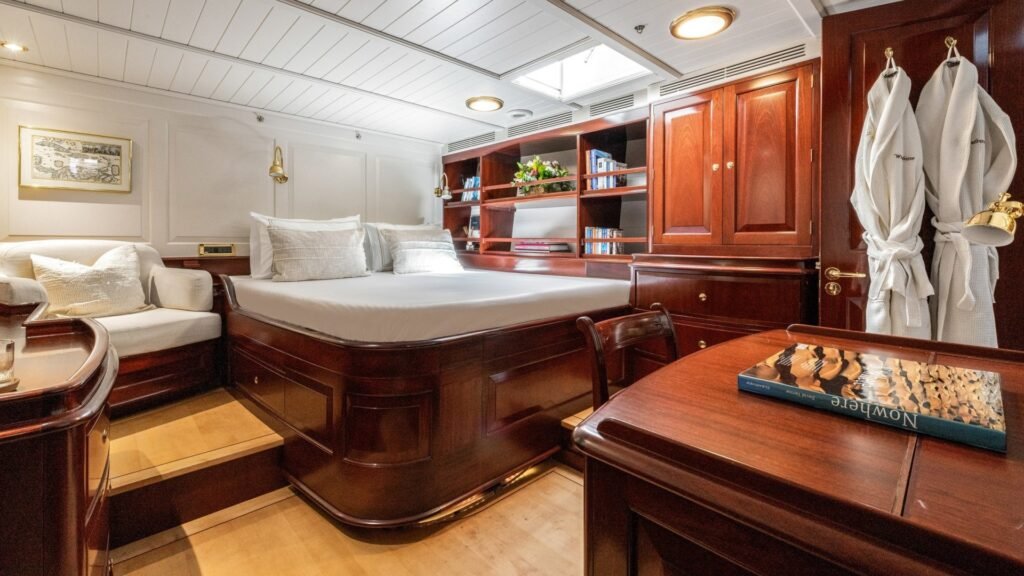
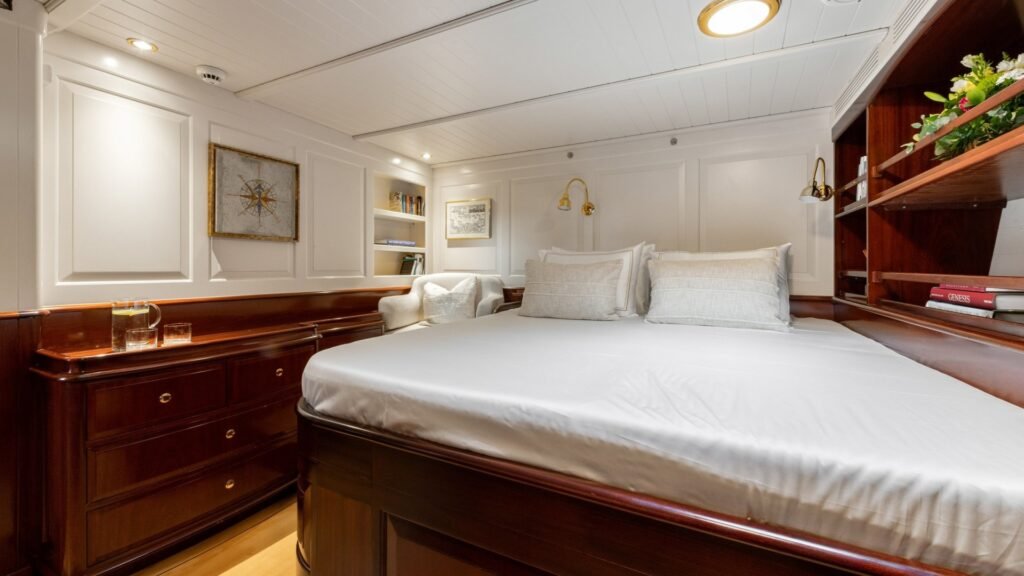
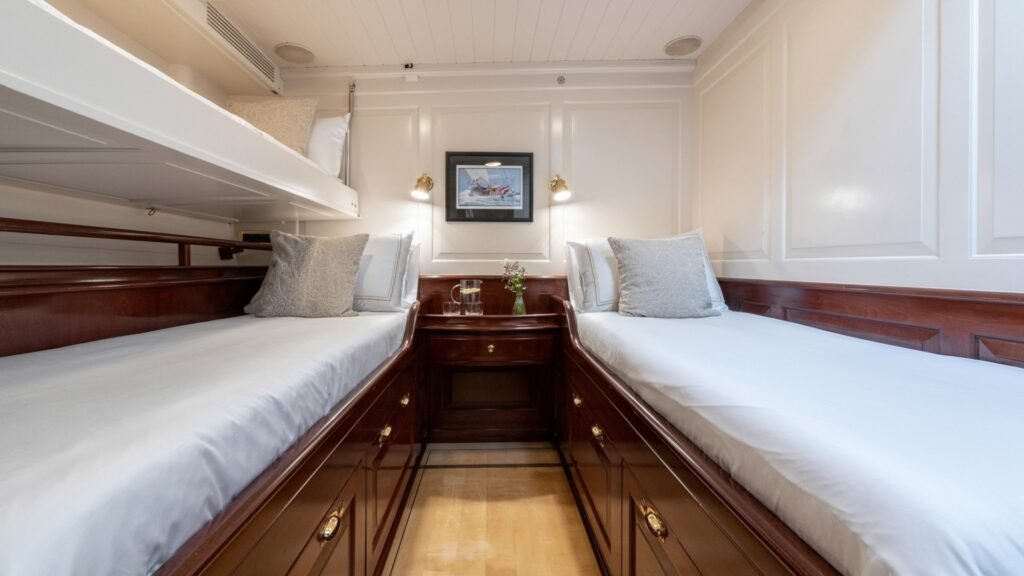
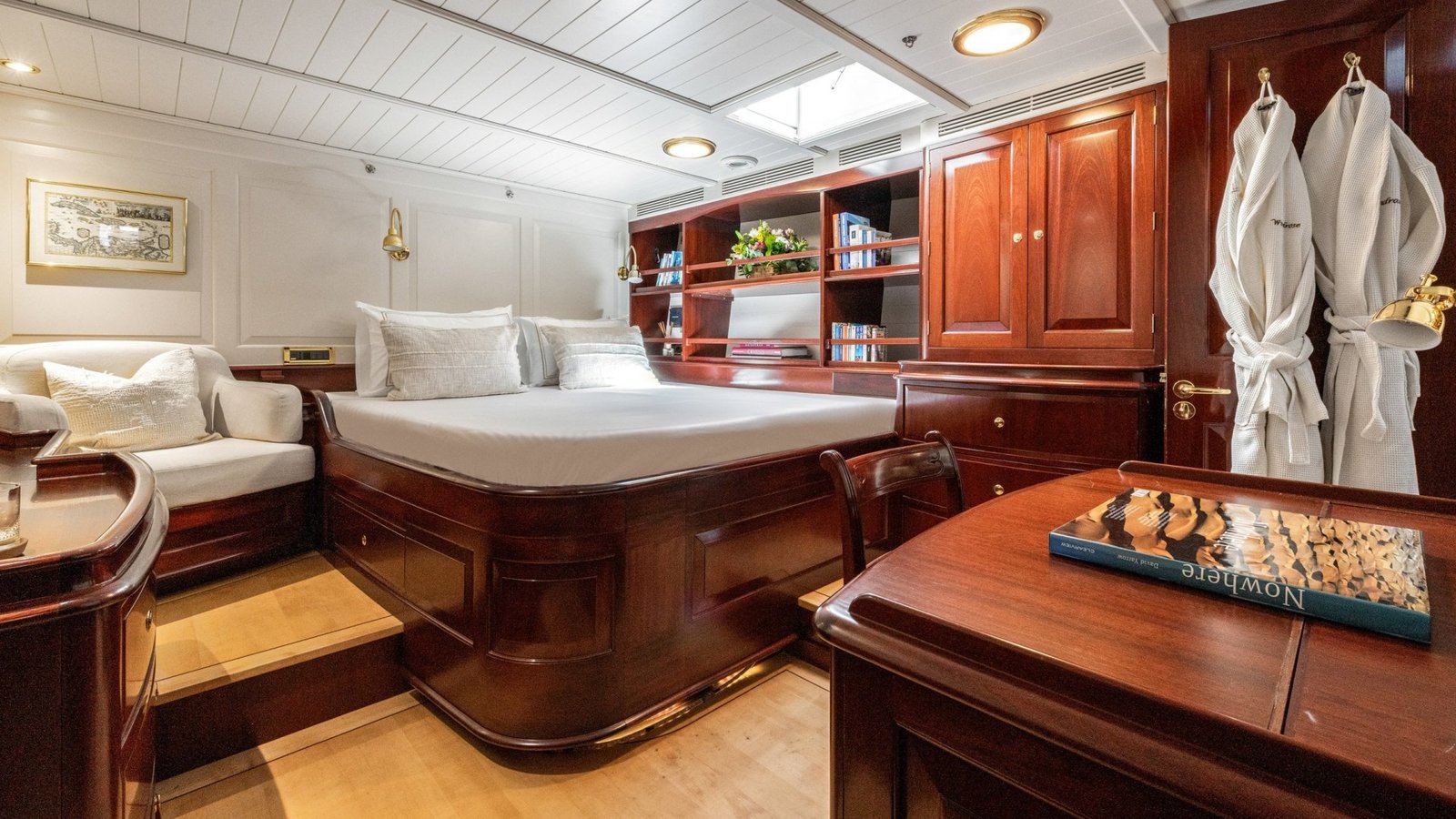
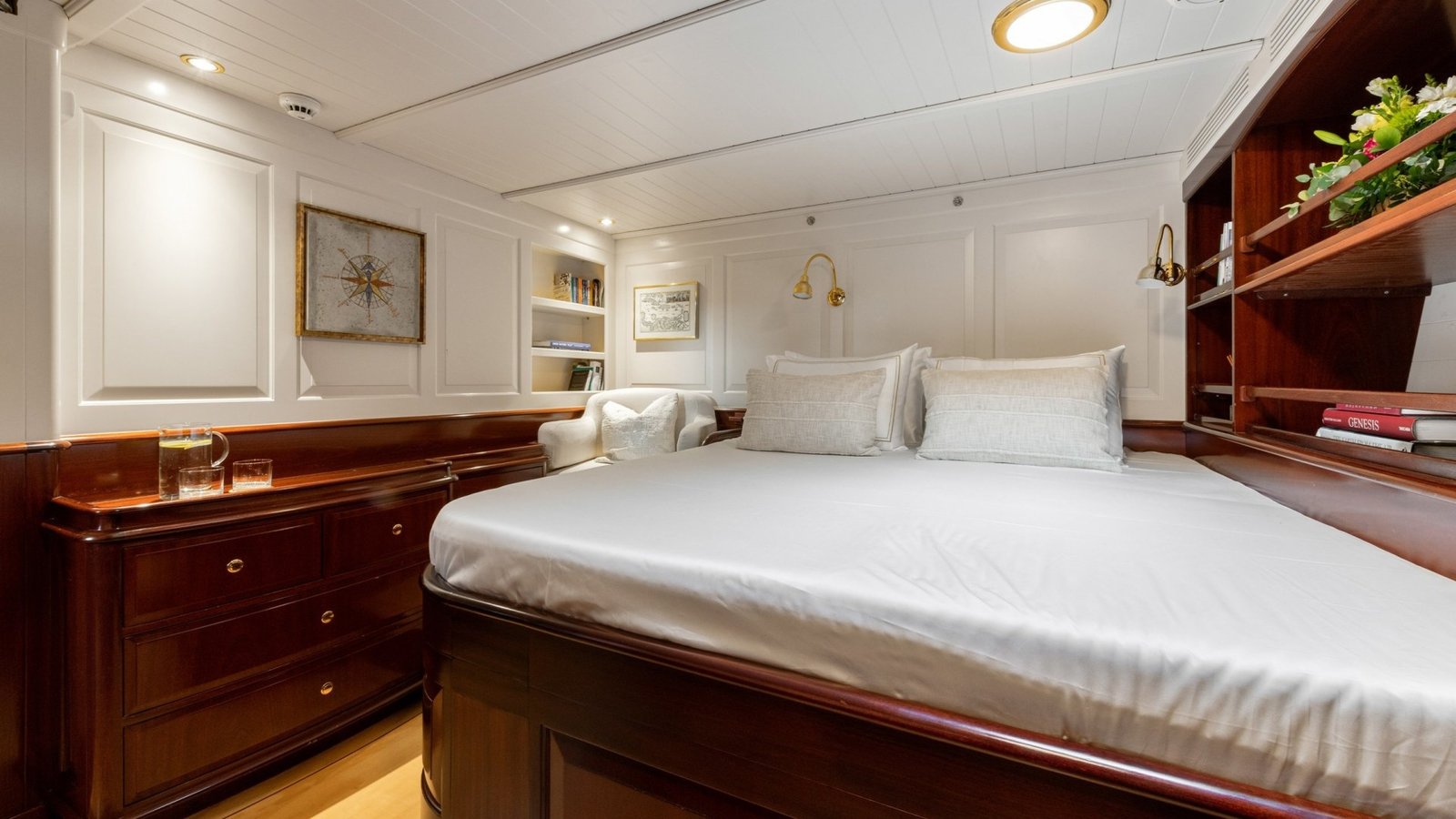
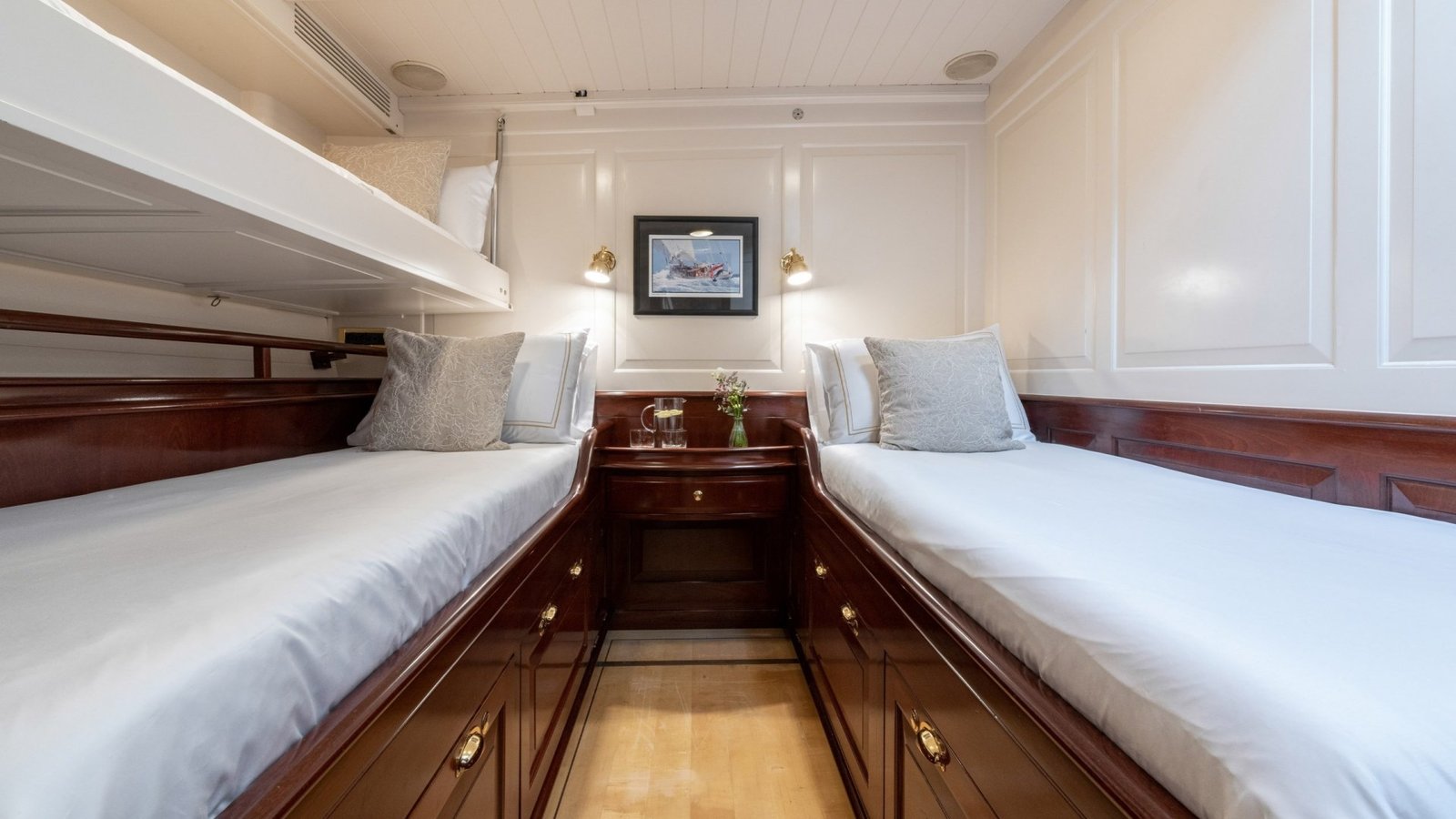
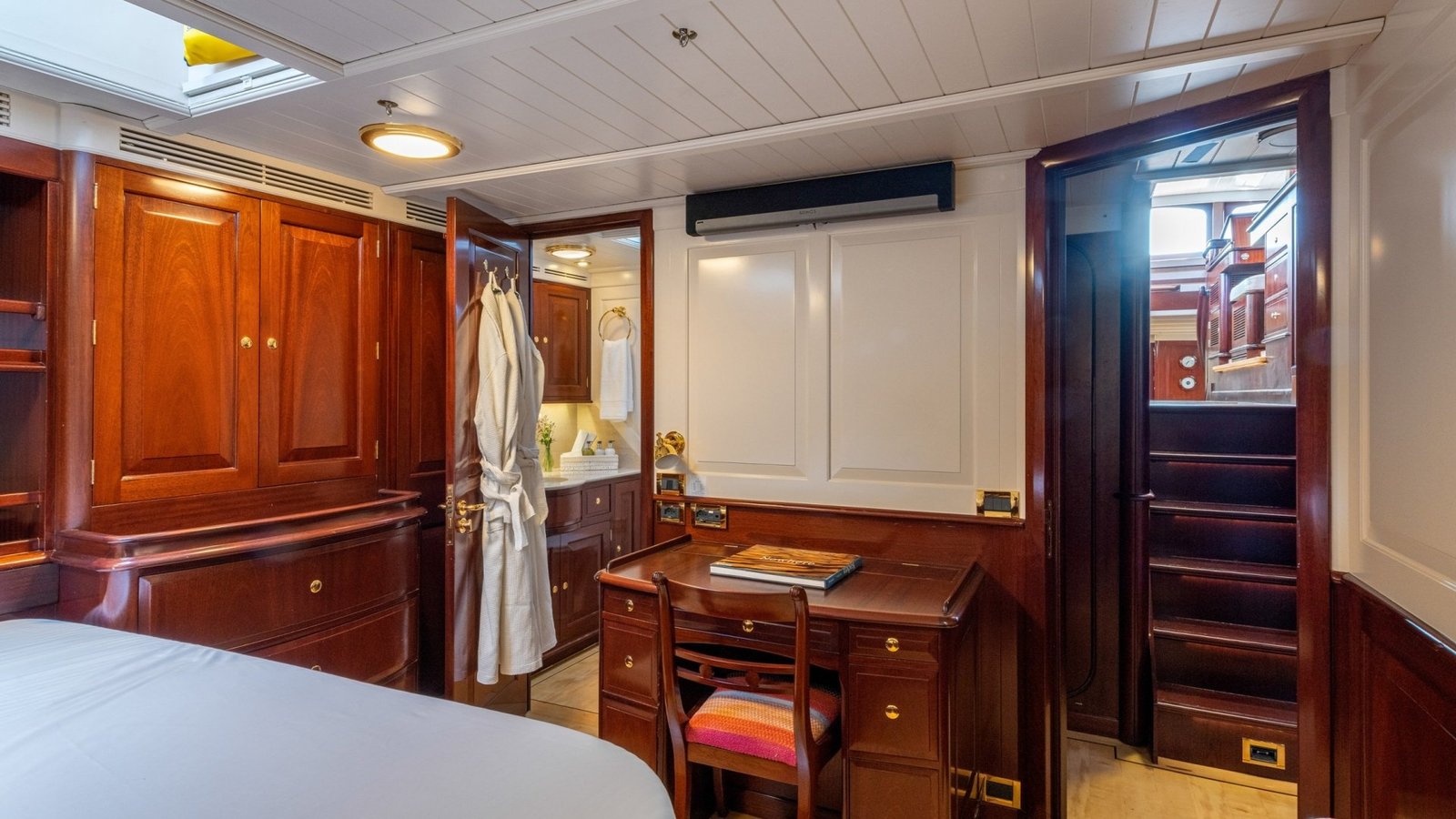
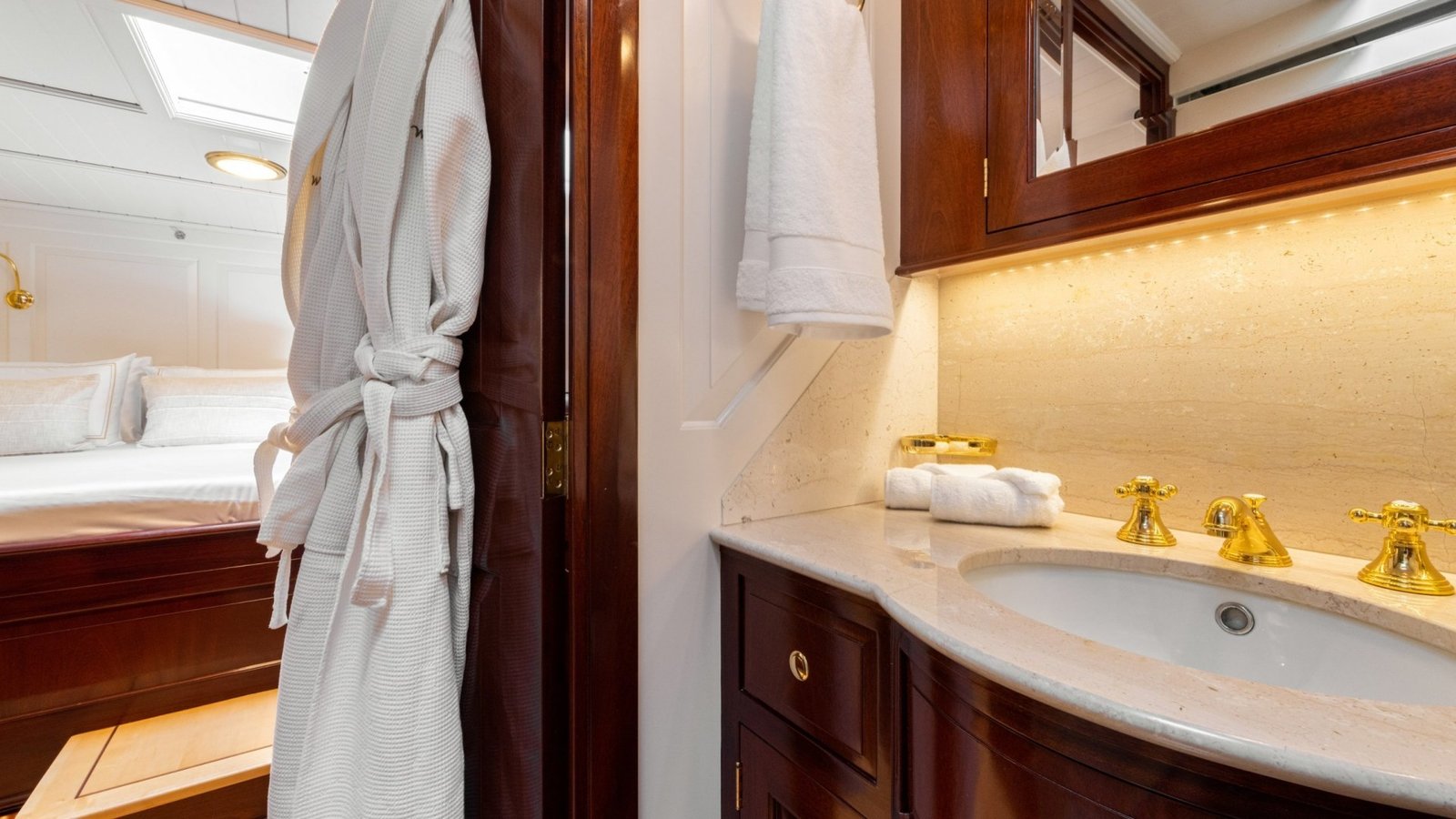
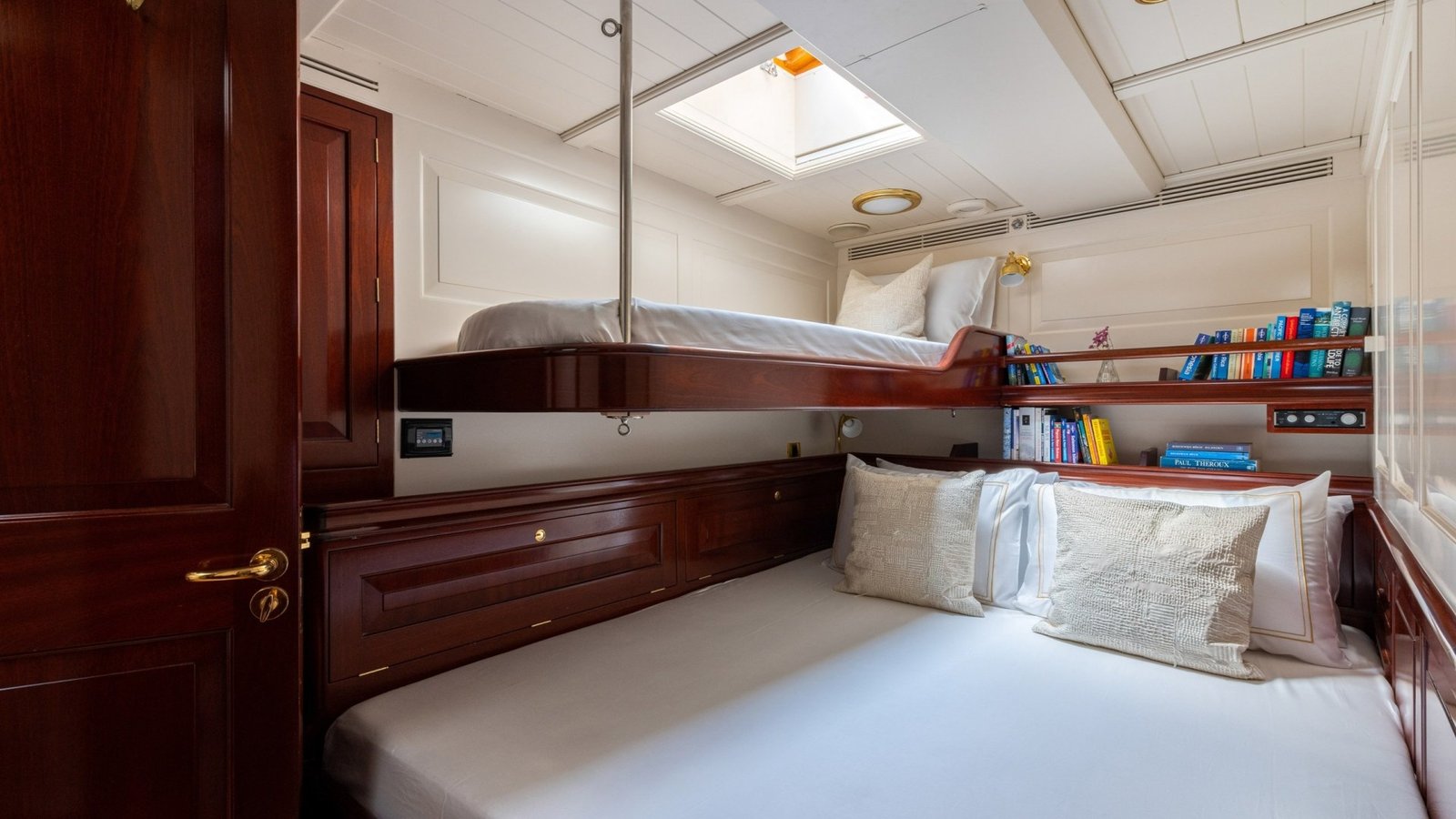
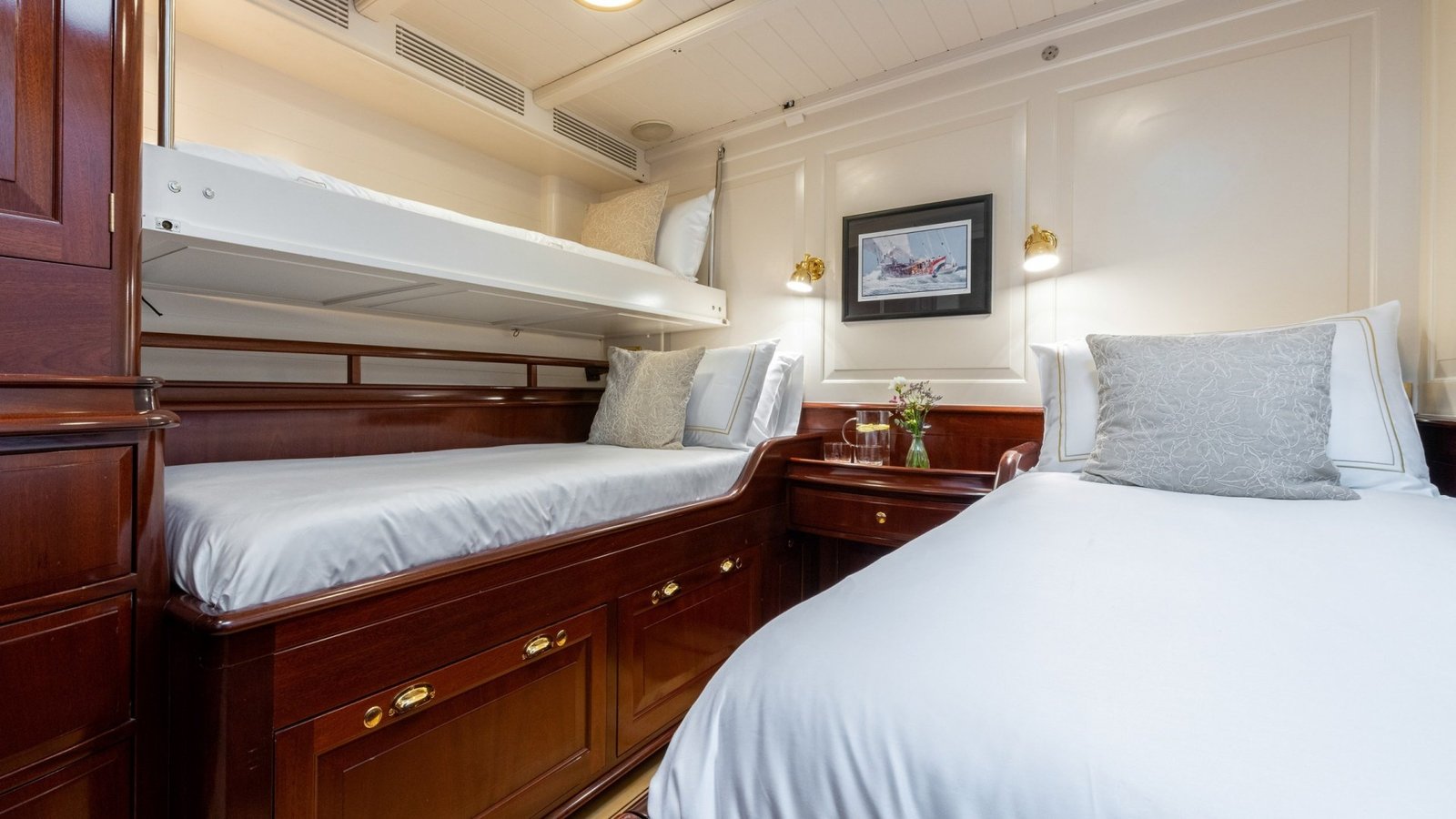
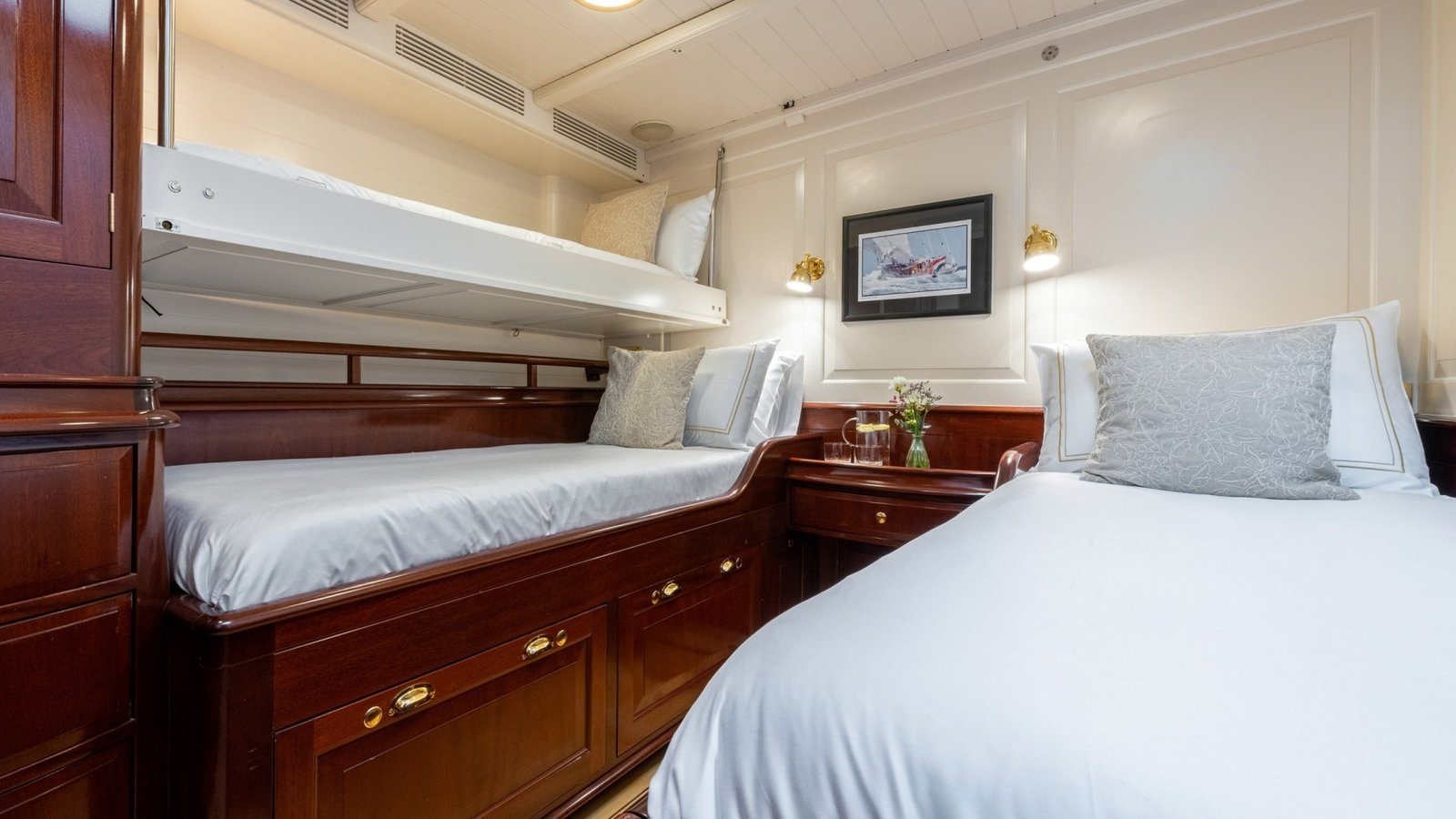
Ten guests are carried in four cabins. The master sits under a deck skylight with a wide berth in curved mahogany and shelves running the bulkhead; guest doubles carry framed compass roses and brass reading lights; the twin takes two full-length singles with a Pullman above. A crew of seven runs her, and on a yacht where the sailing is the attraction that ratio means the boat gets sailed properly rather than motored between lunch stops.
She works the Mediterranean in summer — east and west, with the Balearics and the Tyrrhenian both within easy reach — and crosses to the Caribbean and Bahamas for the winter. It is the classic schooner circuit, run by a yacht that has done the crossing faster than almost anyone. For a charter party who want a boat with a record and a library rather than a beach club and a lift, she is a rare proposition, and at EUR 115,000 a week she is priced well below what her pedigree suggests.
It helps that she is easy to be aboard. The awning stays up, the deckhouse stays dry, and a crew of seven are used to running her hard through the day and putting a proper dinner on the table under the awning at night. Nothing about her demands ceremony. She is a fast, beautifully built classic schooner with a record book behind her, and the real pleasure of a week aboard is that she has never once stopped behaving like one.