Bluegame / BGF45
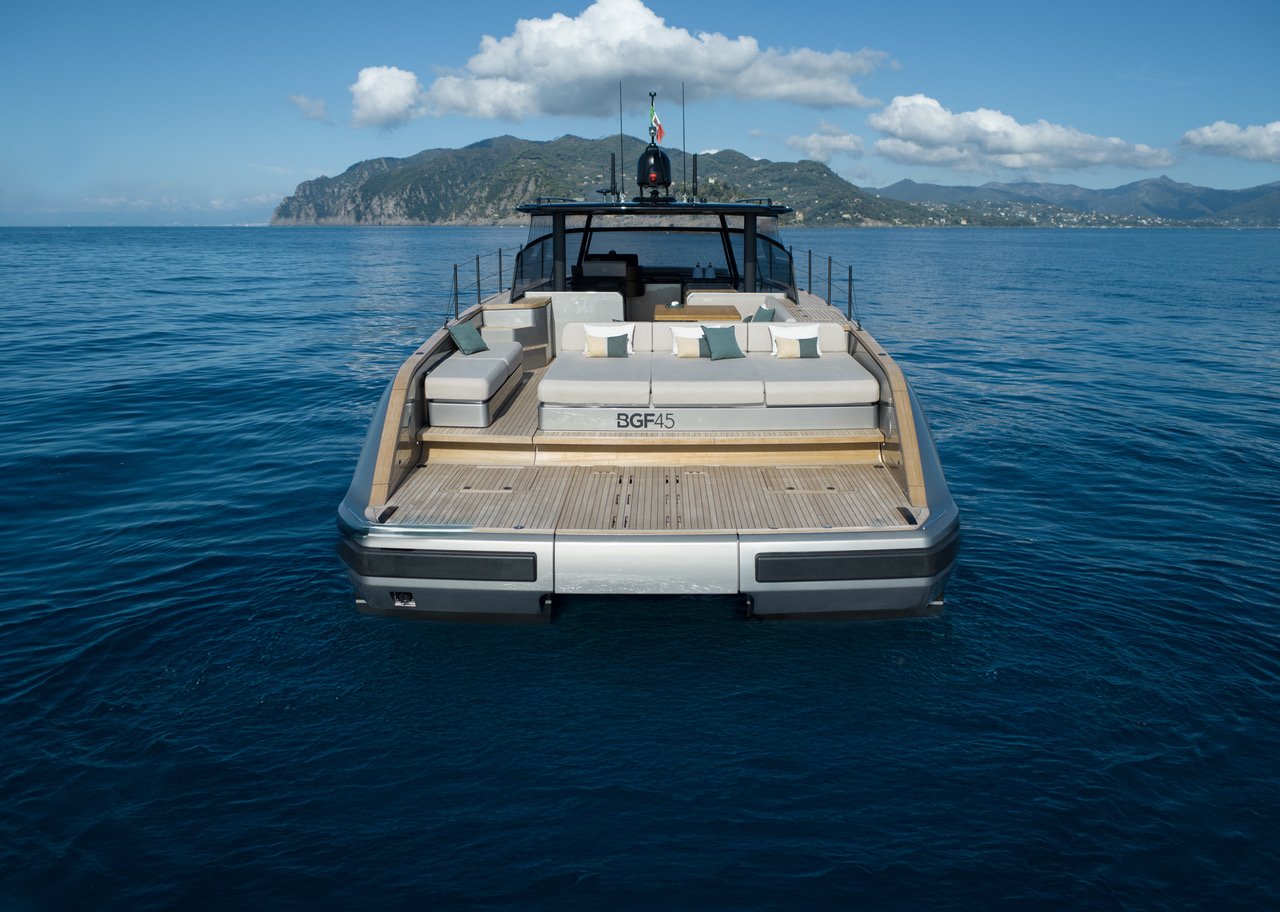
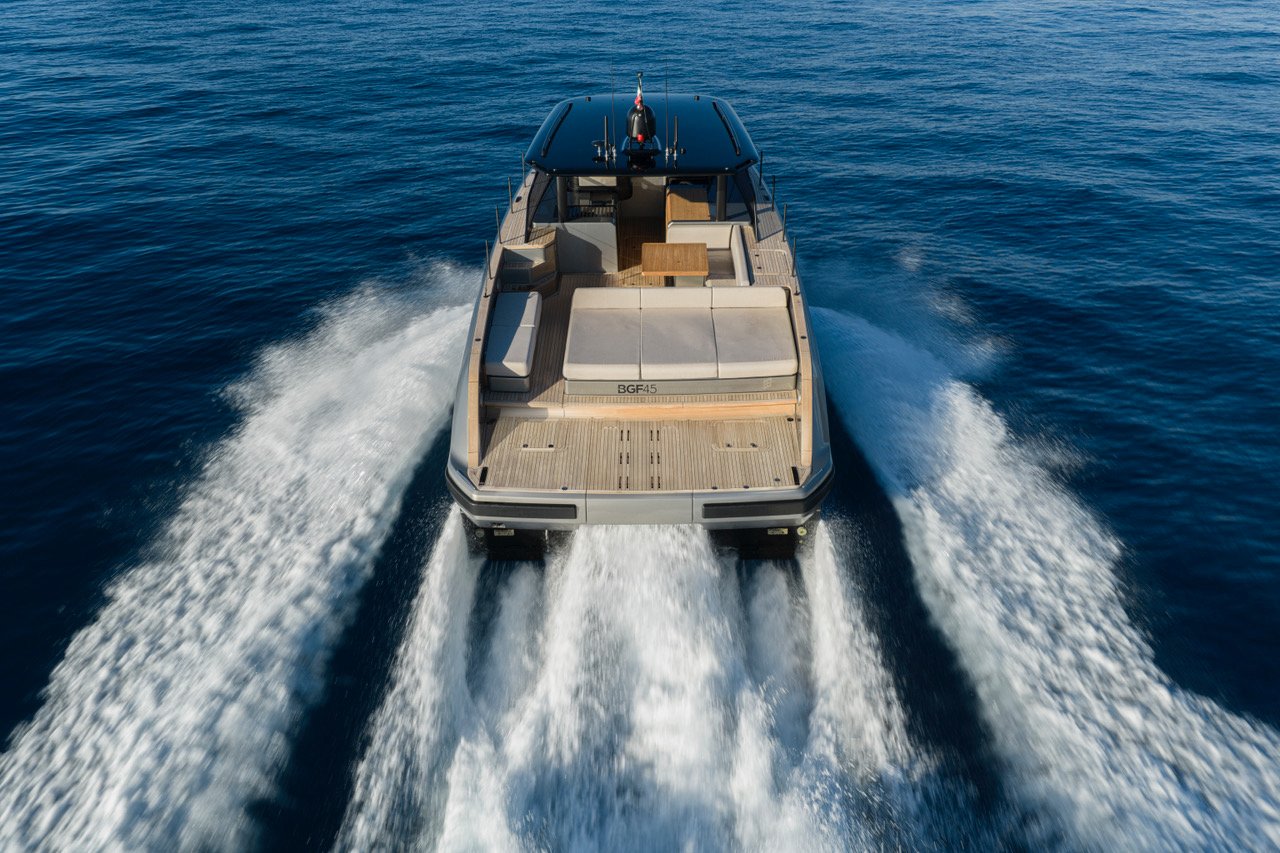
The BGF45 carries hardware logic straight from the America’s Cup. Bluegame built the hydrogen chase boats that ran the 2024 regatta, and the foil-assisted platform between this catamaran’s twin hulls is the commercial answer to that programme. The foil lifts part of the displacement clear of the water at speed, cutting drag and trimming fuel burn by up to 30 percent while the boat holds 28 knots without the slamming a monohull would deliver in the same sea.
For a buyer, the appeal is what the beam buys. At 5.12 metres across a 14.15-metre hull, the BGF45 opens deck space no 45-foot monohull can match: a sundeck forward, a beach area aft that sits close to the water, and an interior that takes two cabins plus a third versatile space rather than the single owner suite typical at this size. Draft stops at 1.15 metres, so shallow anchorages stay open.
Power comes from twin Volvo Penta IPS600 D6 units, 320 kW each, joystick controlled and easy to berth short-handed. Displacement is 17 tonnes at full load, fuel 1,400 litres, top speed 35 knots.
Luca Santella took the concept, Caponnetto Hueber worked the hulls with Bluegame, and Zuccon International Project handled the design language. The result is a day boat with genuine range, aimed at owners who want catamaran volume without the boxy proportions the format usually brings.
Length
14.2M
Beam
5.1M
Draft
1.2M
Day Guests
14
Sleeping
Cabin
3
Cruise Speed
28KT
Max Speed
35KT
Fuel
1400L
Engine
2 x Volvo Penta IPS 600 D6, 320 kW each
Naval
Bluegame and Caponnetto Hueber
Exterior
Santella / Zuccon
Interior
Santella / Zuccon
No yachts found matching your criteria.
She does not simply go fast. She changes shape to do it.
A fixed lateral foil sits between the hulls and begins lifting part of the displacement clear of the water from around 18 knots, trimming drag and smoothing the ride noticeably above 20. Twin Volvo Penta IPS600 D6 units, 320kW each, give her a cruising speed of 28 knots and a top end of 35, while interceptors on the transoms manage trim through the turns. Fuel capacity of 1,400 litres supports a range of around 320 nautical miles at a fast cruise near 30 knots, useful range for a yacht built around day running and short coastal passages rather than ocean crossings.
Her proportions come from a chase boat, not a showroom.
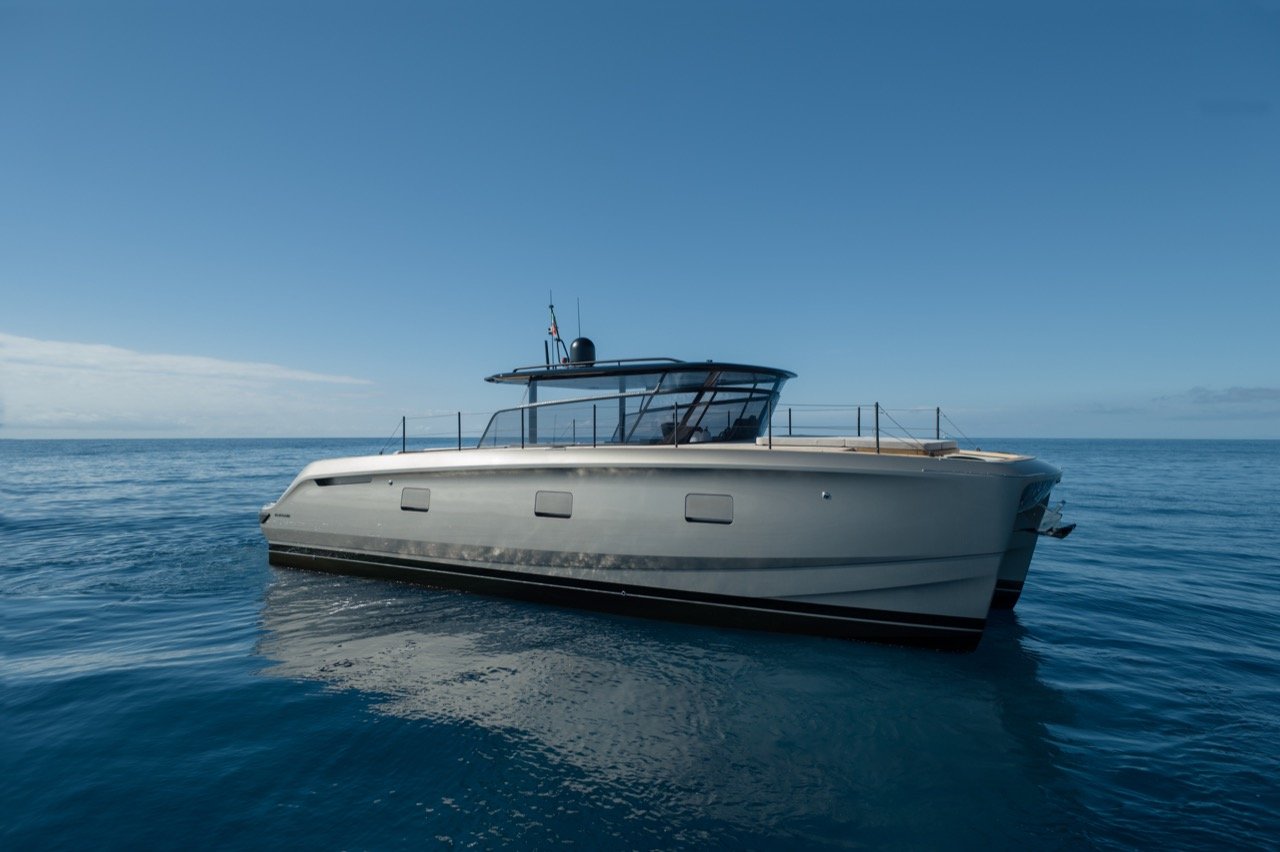
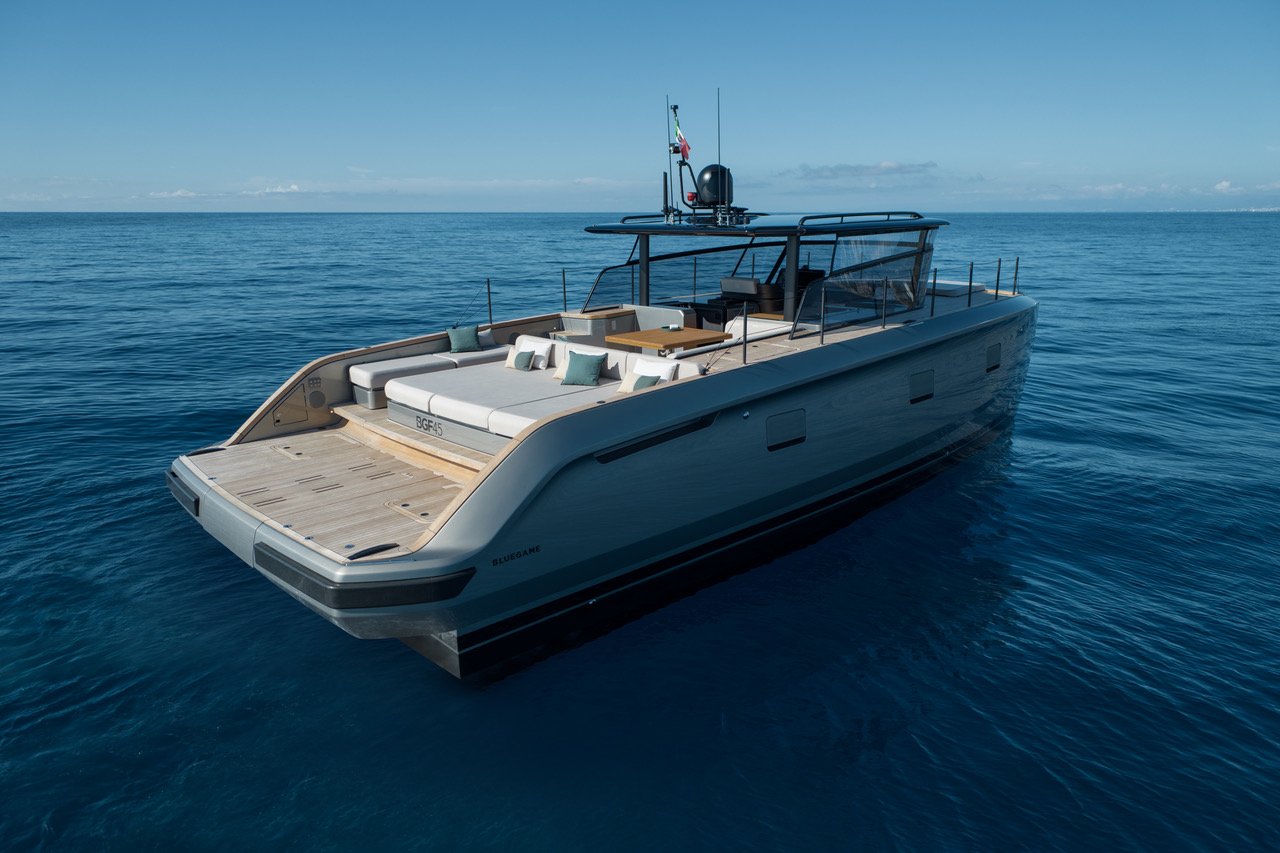
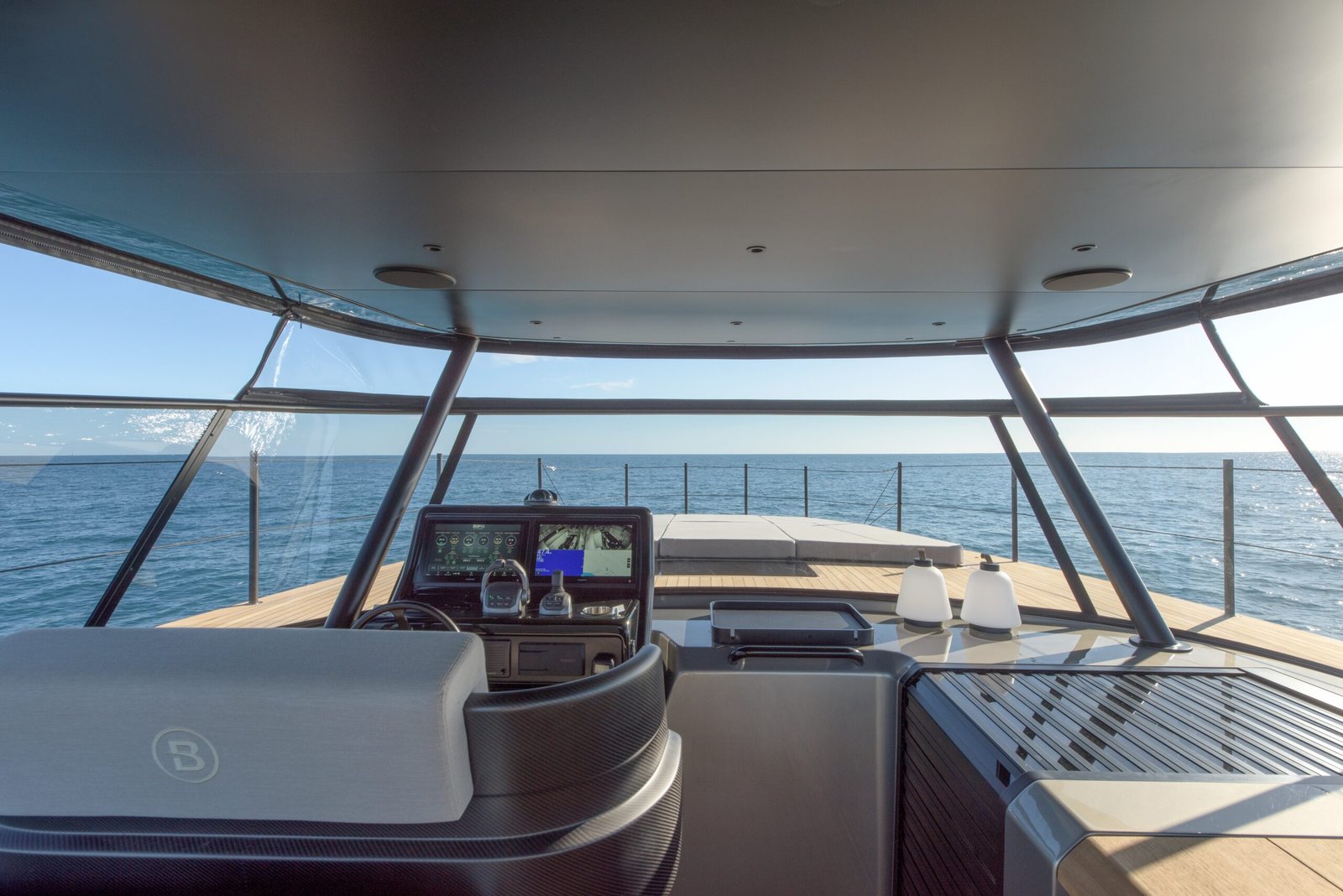
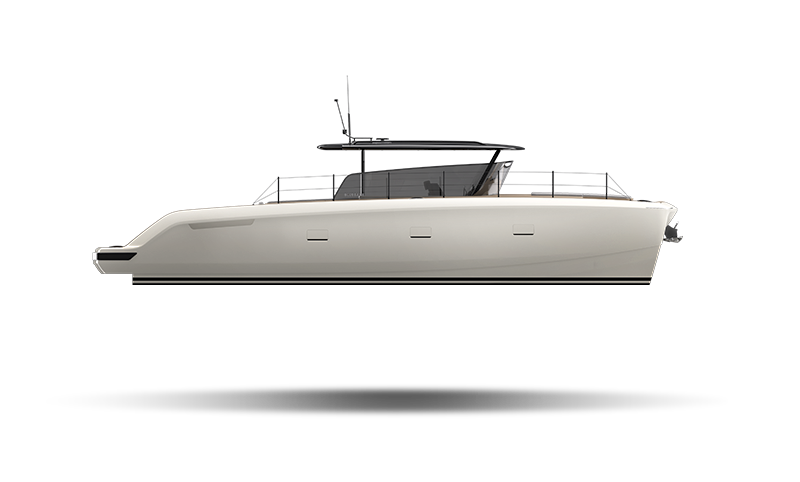
A near plumb bow, a high foredeck and a wraparound windshield give the BGF45 a purposeful stance, and her length to beam ratio is wider than almost any sailing catamaran, which is where the extra deck space comes from. A carbon fibre hardtop shades the open cockpit, and a single helm seat to port keeps the driving position simple and direct. Zuccon International Project shaped the lines, working from a concept Bluegame’s own team first proved on the water.
Three cabins fit into a hull most 45 footers spend on engines alone.
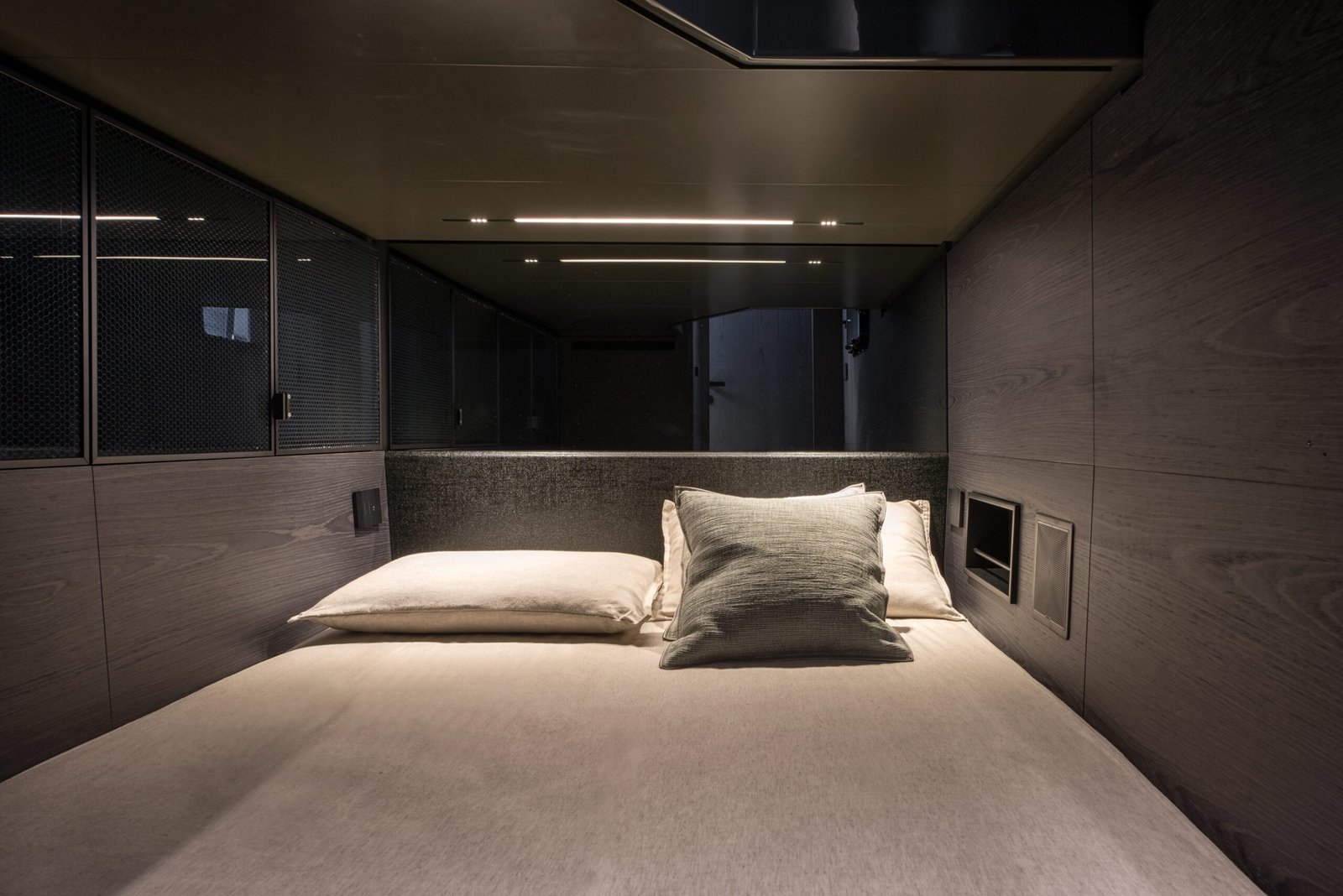
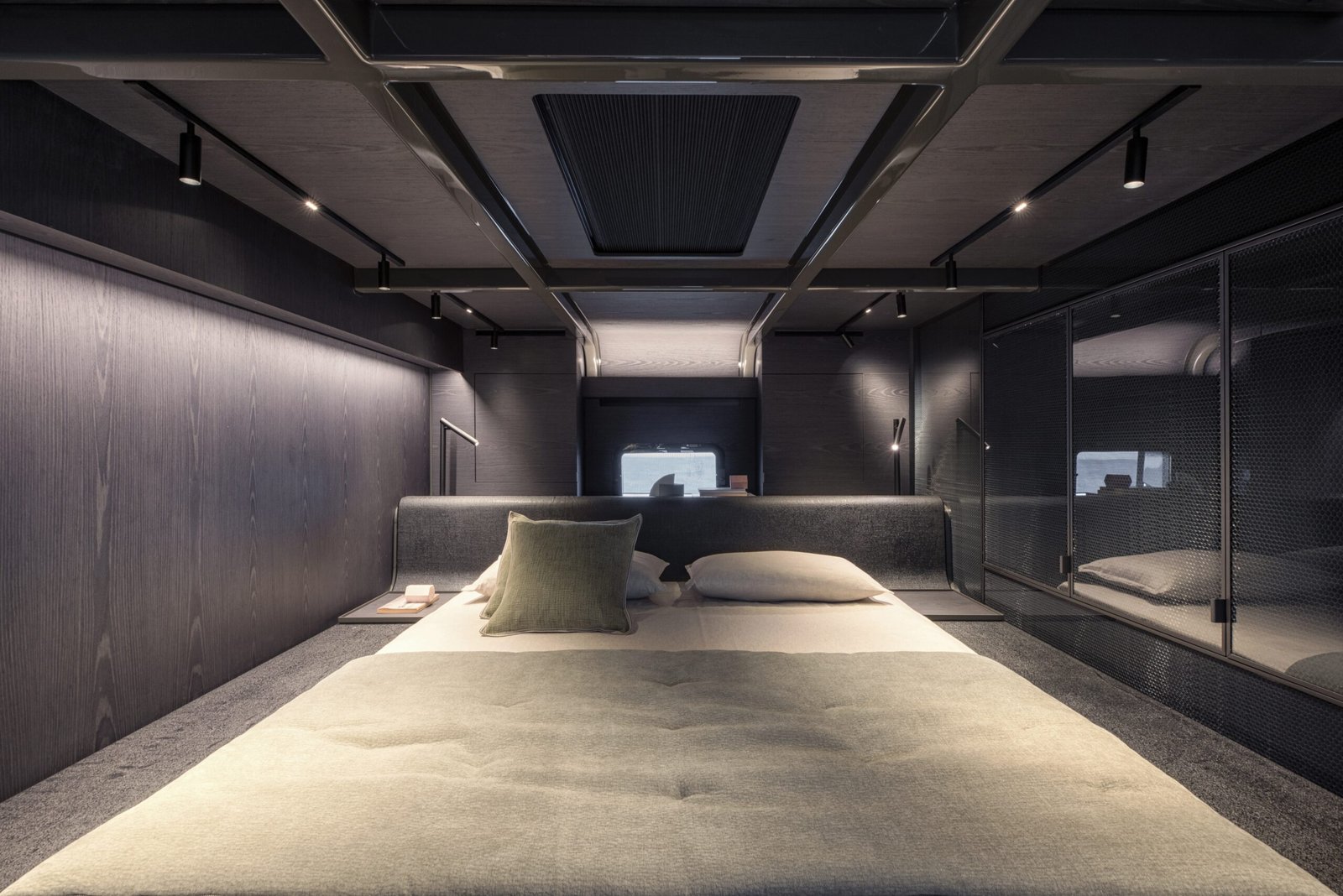
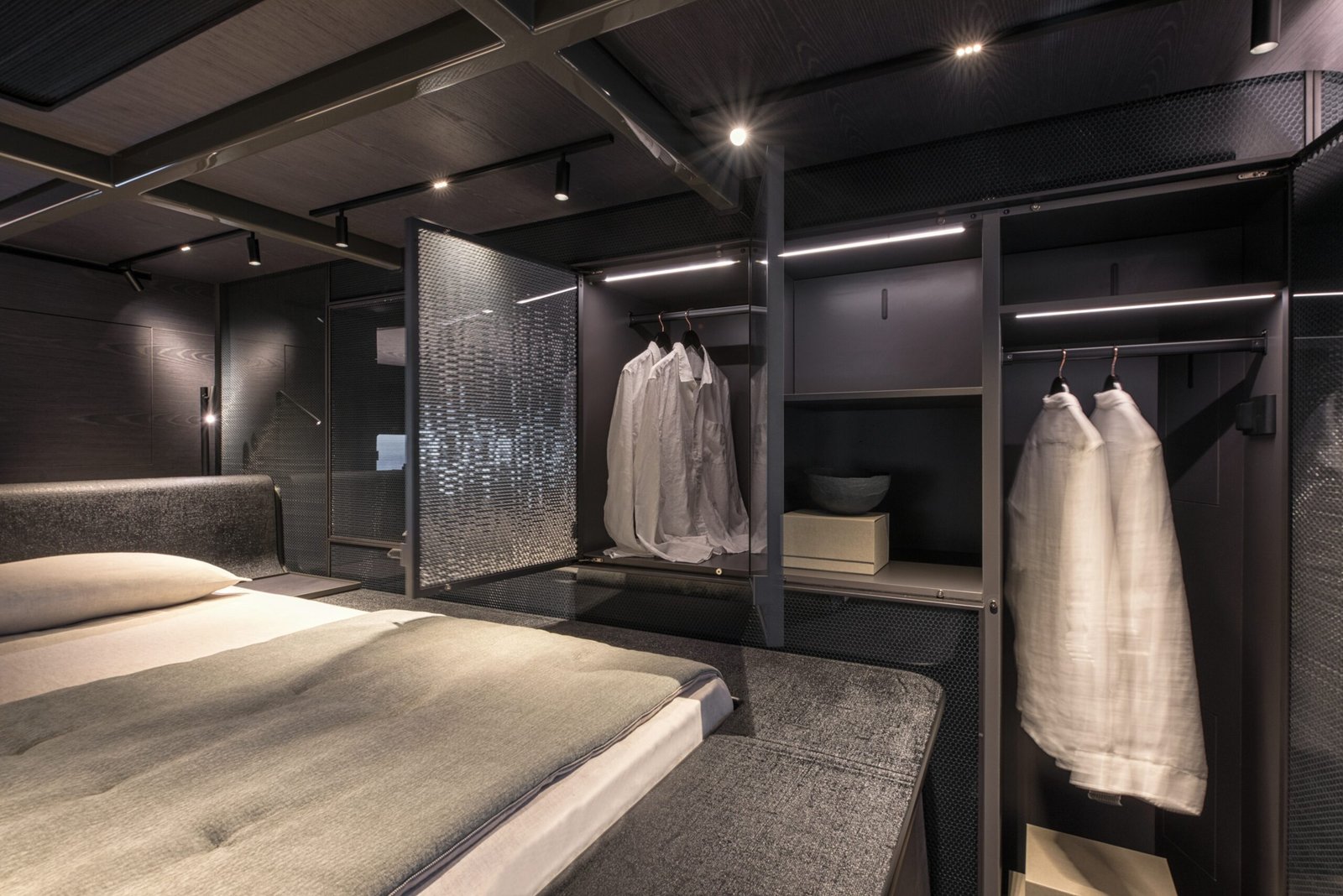
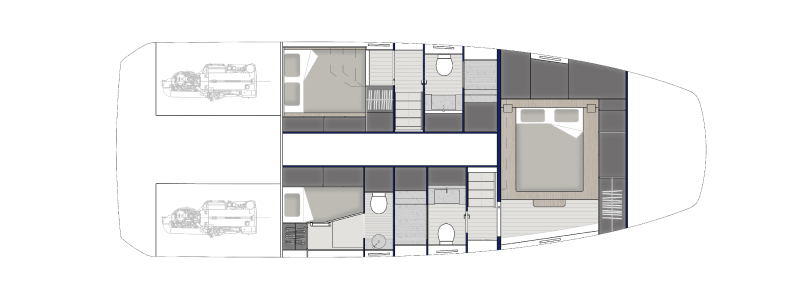
The owner’s cabin sits forward, a transverse double reached by stairs beside the helm, between the foredeck and the bridge deck. A second cabin aft takes a forward facing double, and a third, smaller cabin to starboard is reached through a hatch beneath the cockpit cushion, suited to a child or crew. Day capacity runs to 14 guests, so the boat works as hard for an afternoon on the water as it does for a night aboard.
Life on board happens close to the water, not above it.
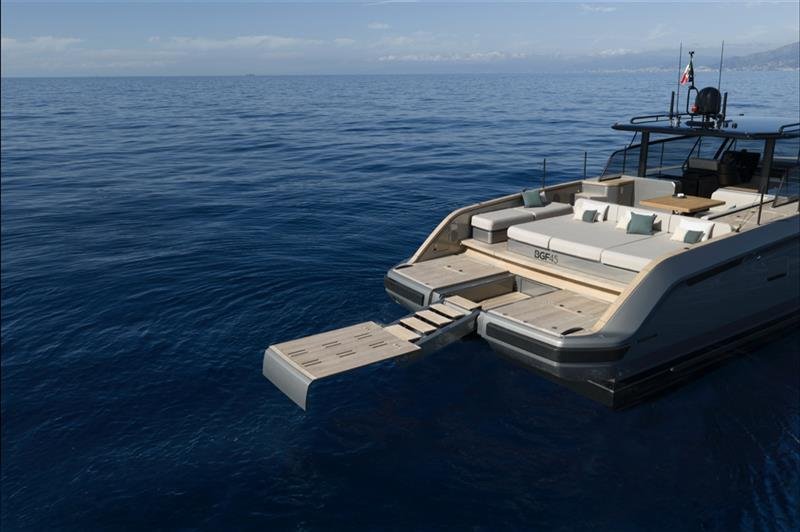
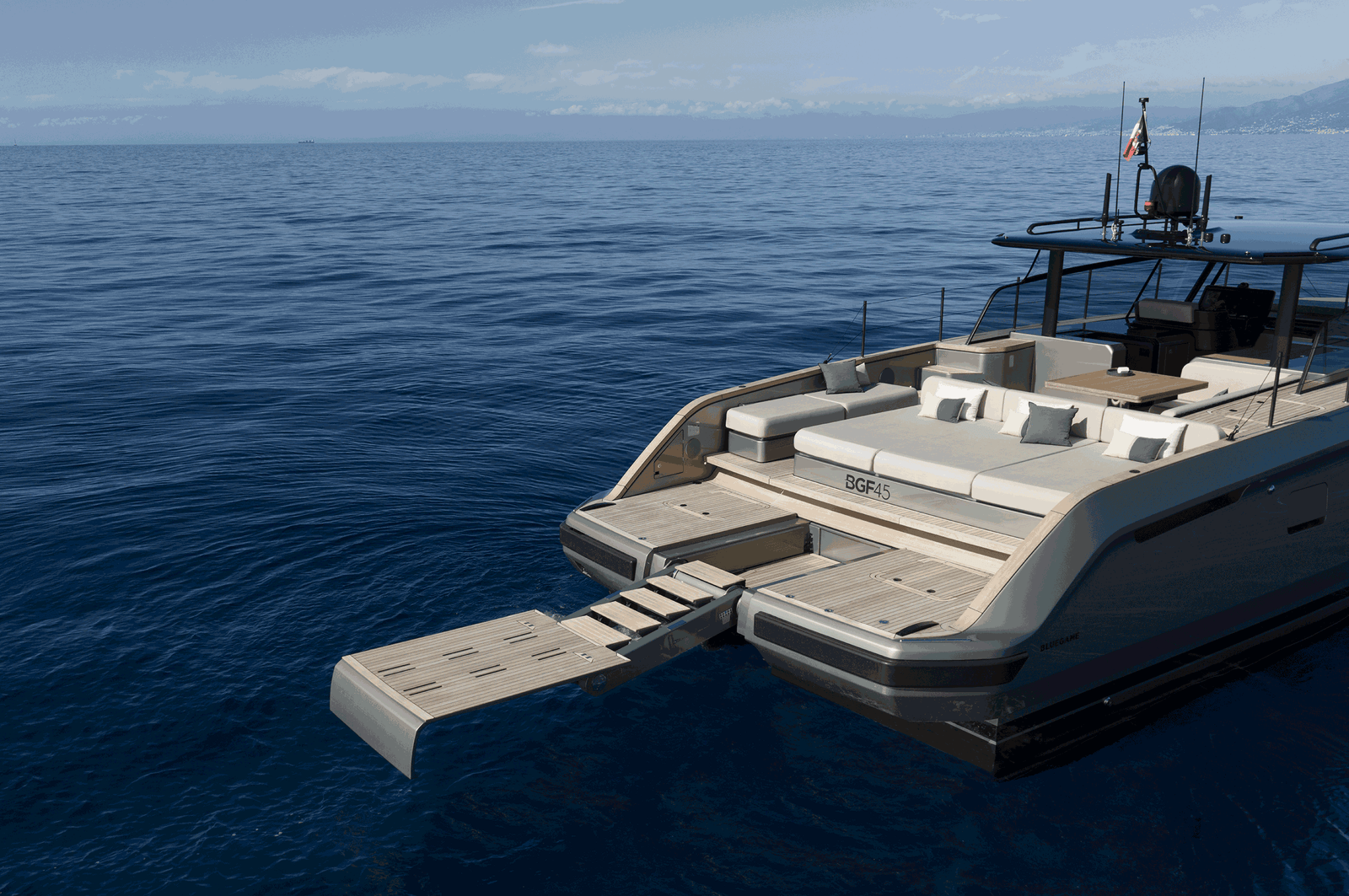
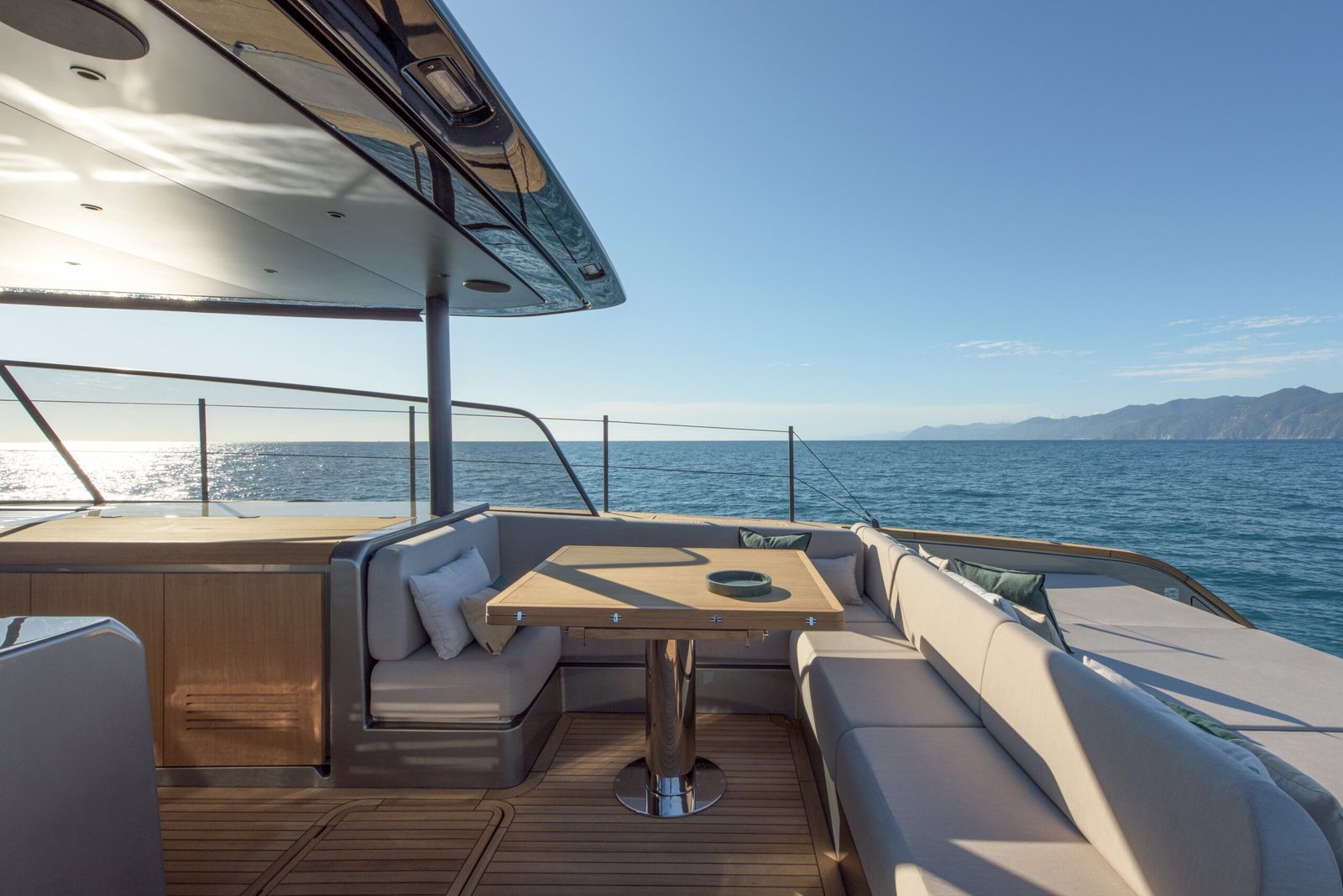
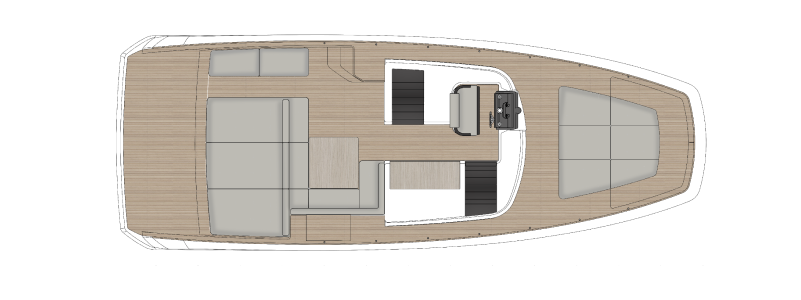
A nearly full beam swim platform folds out to extend the swimming and relaxing area well beyond the hull. Aft and to starboard, a sun pad, dinette and wet bar give the cockpit a clear social centre, while a second sun pad forward and bow well seating open up the foredeck for guests who want to be away from the helm. The open cockpit layout keeps sightlines long from bow to stern, and headroom under the hardtop stays generous for a boat built around speed.
Bluegame built hydrogen foiling chase boats for two America’s Cup syndicates before this hull existed. That is the pedigree she carries.
Caponnetto Hueber handled naval architecture alongside Bluegame’s own team, with Zuccon International Project responsible for the exterior and interior design under concept lead Luca Santella. Full load displacement is 17 tonnes, built on a 14.2 metre length and 1.2 metre draught that keeps shallow anchorages within reach. For an owner who already knows what a foiling hull feels like, or wants to, the BGF45 is a considered next step rather than a novelty.

Tell us what you would like to know, and our team will respond with clear details on availability, specification, pricing and next steps.