CNB / CNB 78
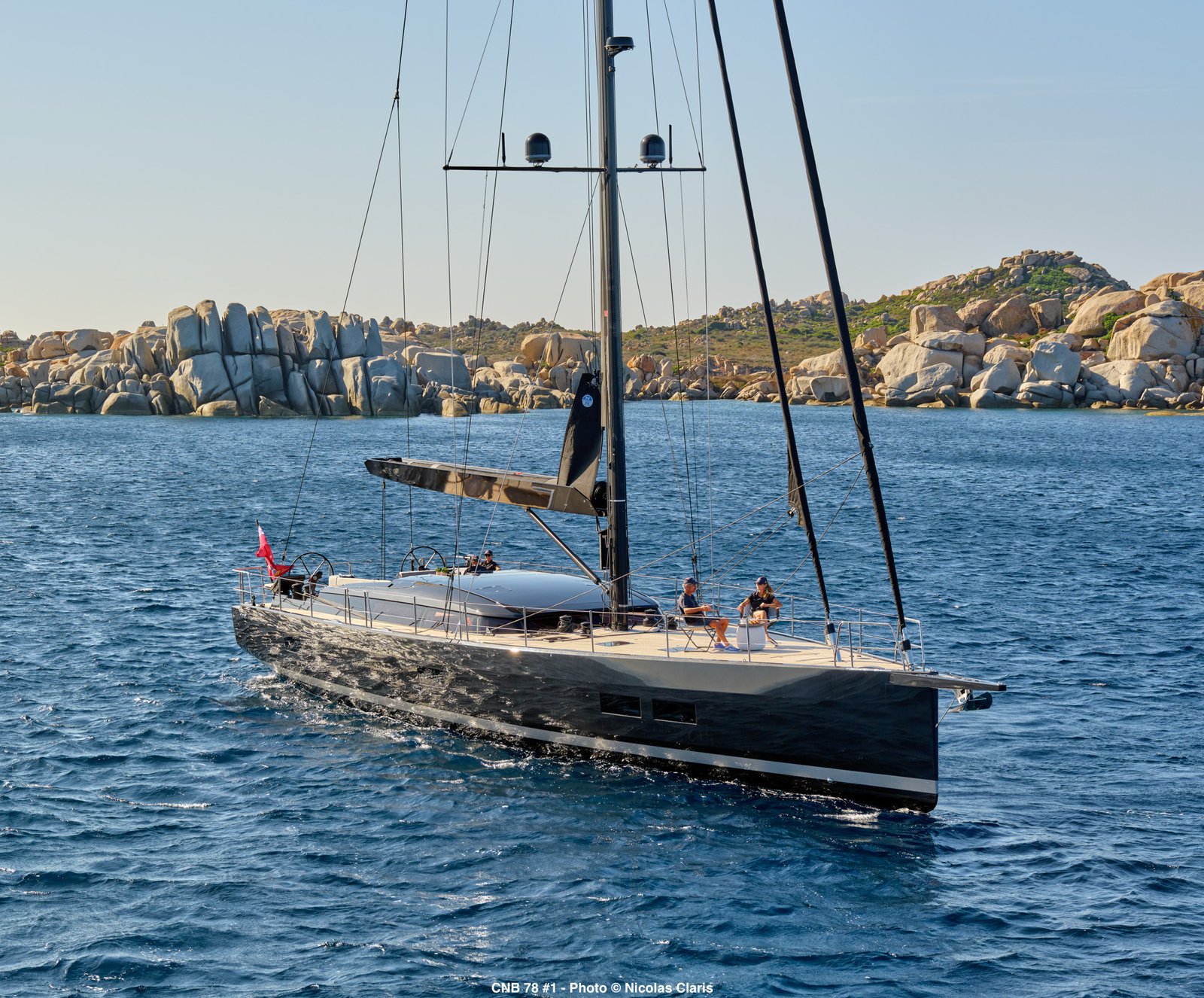
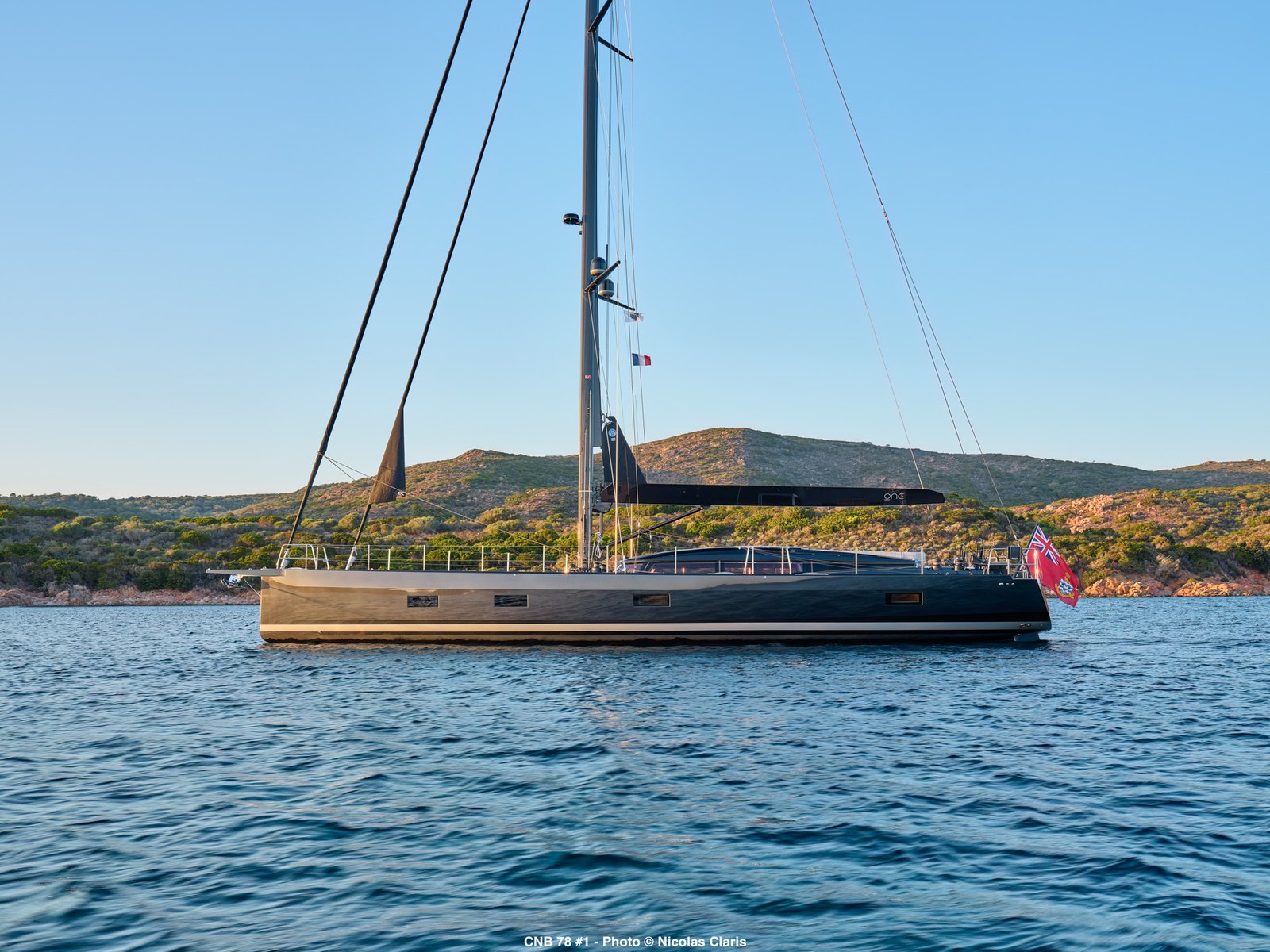
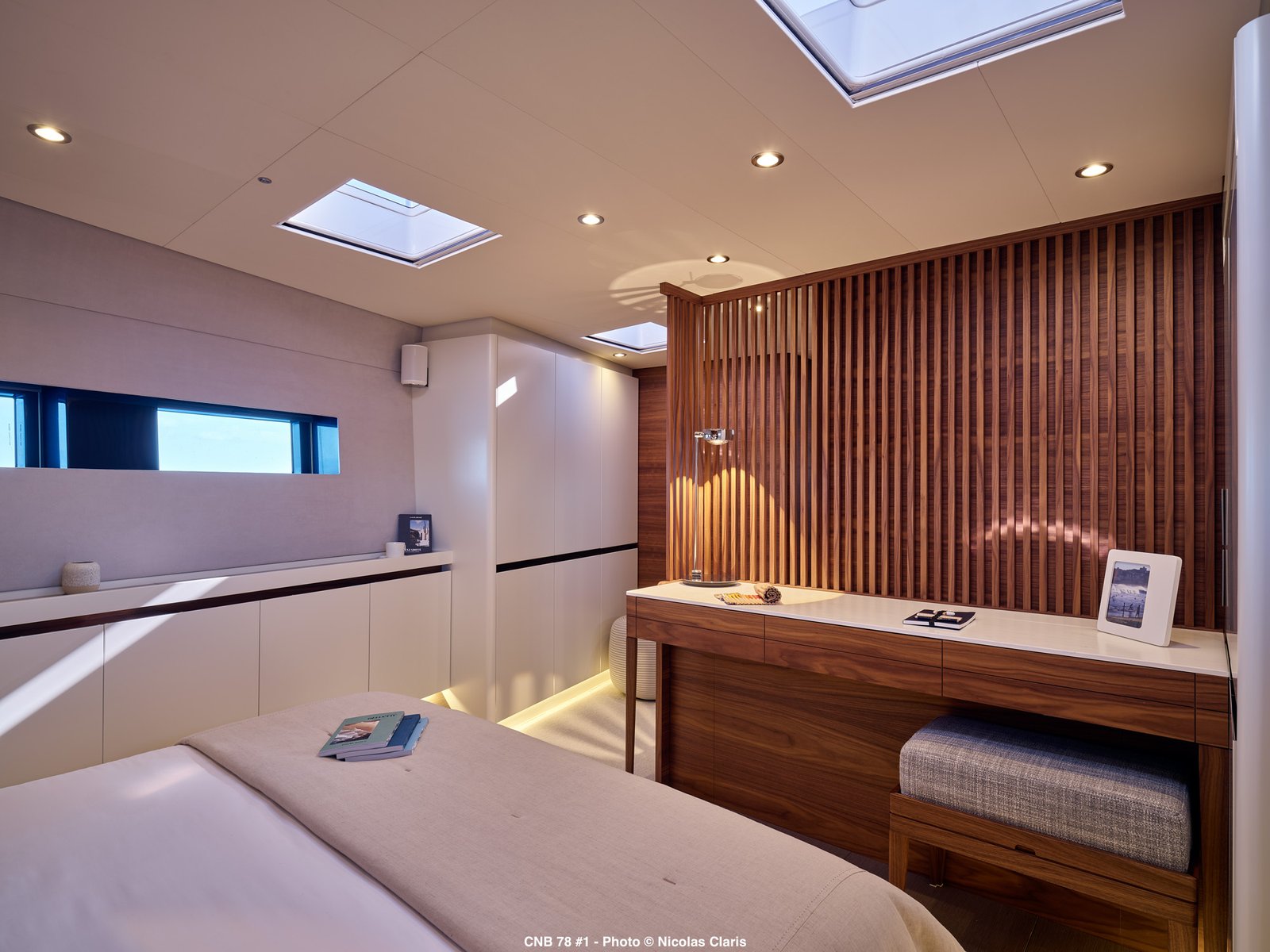
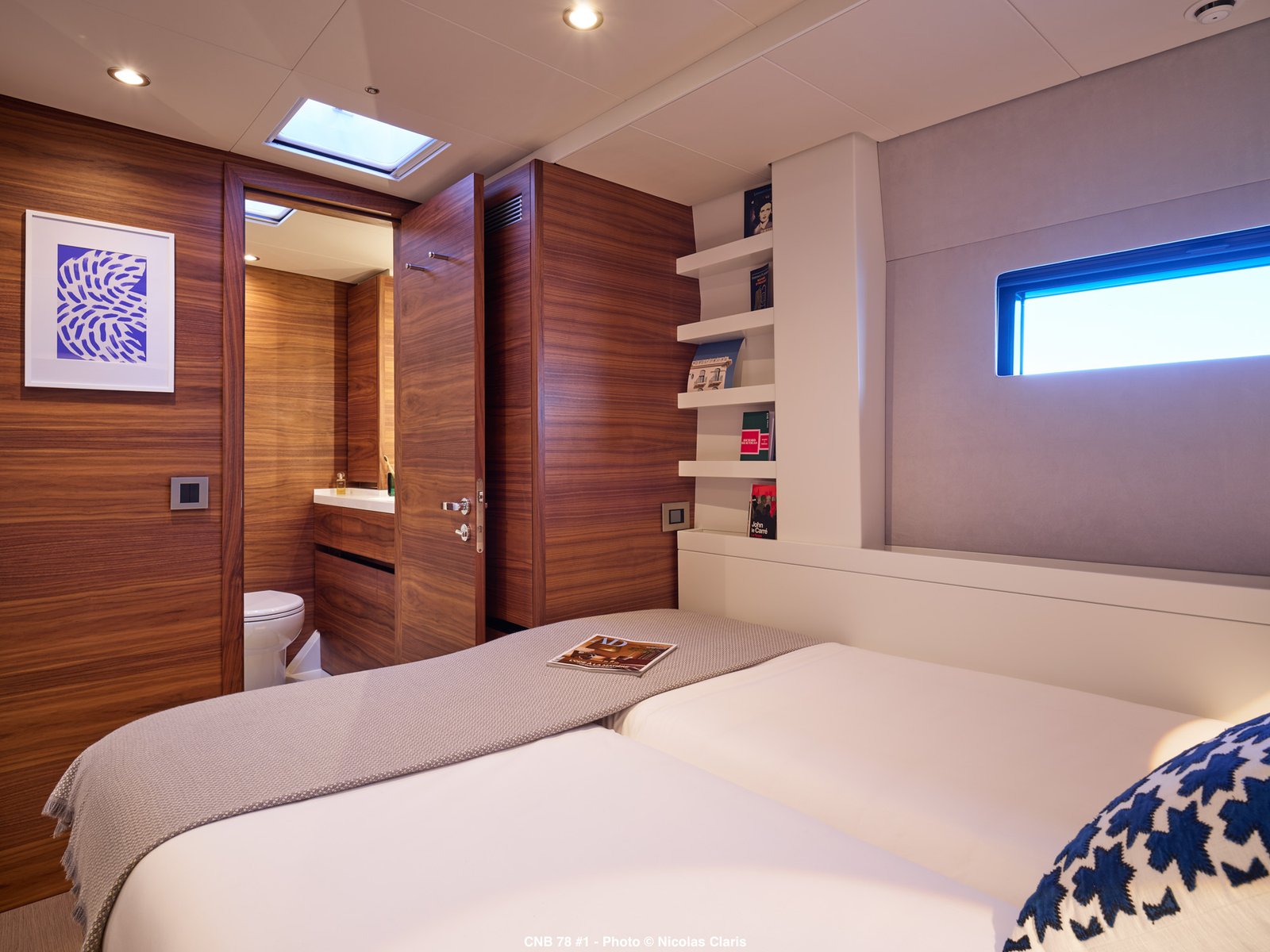
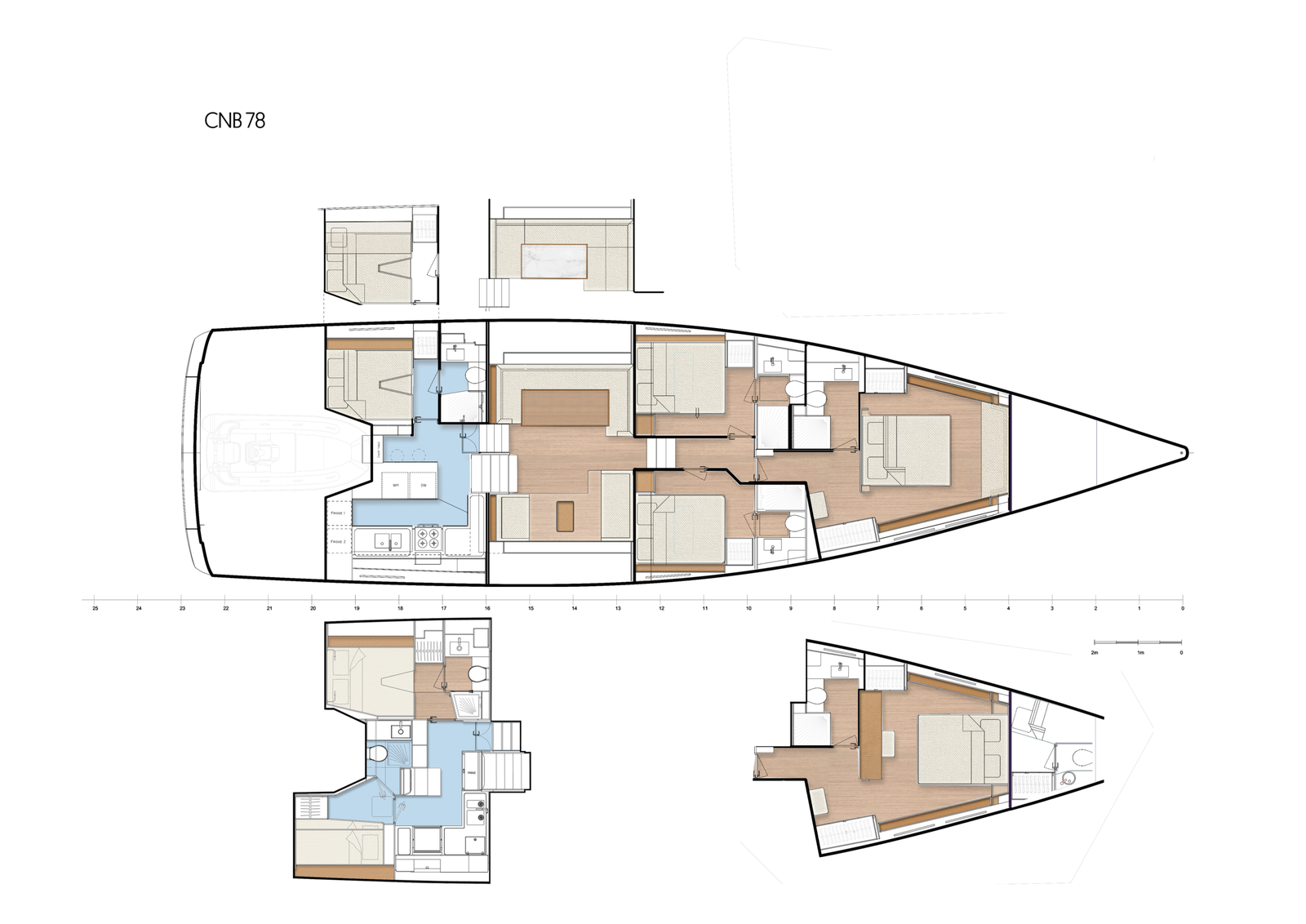
The CNB 78 redefines offshore cruising with crew, offering a 24-metre sailing yacht that pairs genuine passage-making capability with the kind of interior space usually reserved for yachts a size class above. Philippe Briand designed the hull to stay under 24 metres on the waterline, a threshold that opens access to more marinas, anchorages and coastal harbours than a longer boat could reach. The moderate 47,900-kilogram displacement and a 12,600-kilogram bulb keel produce a form that is both stable in a seaway and responsive under sail, handling well in conditions ranging from light Mediterranean zephyrs to North Atlantic weather systems. On deck, the cockpit layout puts all primary sail controls within reach of the twin helms, allowing a small permanent crew to manage canvas, trim and navigation without leaving the steering area. The Volvo D4 auxiliary provides dependable motoring at harbour speeds, while the 2,500-litre fuel tank and 1,500-litre water capacity support extended offshore legs between provisioning stops. Below deck, Piaton Yacht Design created interiors that balance warmth and practicality across four cabins. The owner suite sits forward with direct access to a private heads compartment, while two guest doubles and a crew cabin share the aft section of the hull. Natural light enters through hull ports and flush deck hatches, giving the saloon and dining area an open feel that transcends the boat beam. CNB builds each 78 under the Solaris Group framework, using vacuum-infused composite construction and a structured commissioning process that covers everything from rigging tensioning to electronics integration.
Length
23.9M
Beam
6.1M
Draft
3.5M
Day Guests
8
Sleeping
8
Cabin
4
Crew
1
Cruise Speed
Max Speed
Fuel
2500L
Engine
Volvo D4 175 HP
Naval
Philippe Briand
Interior
Piaton Yacht Design
New Starting From
€4,100,000
No yachts found matching your criteria.
Her lines favour distance over display.
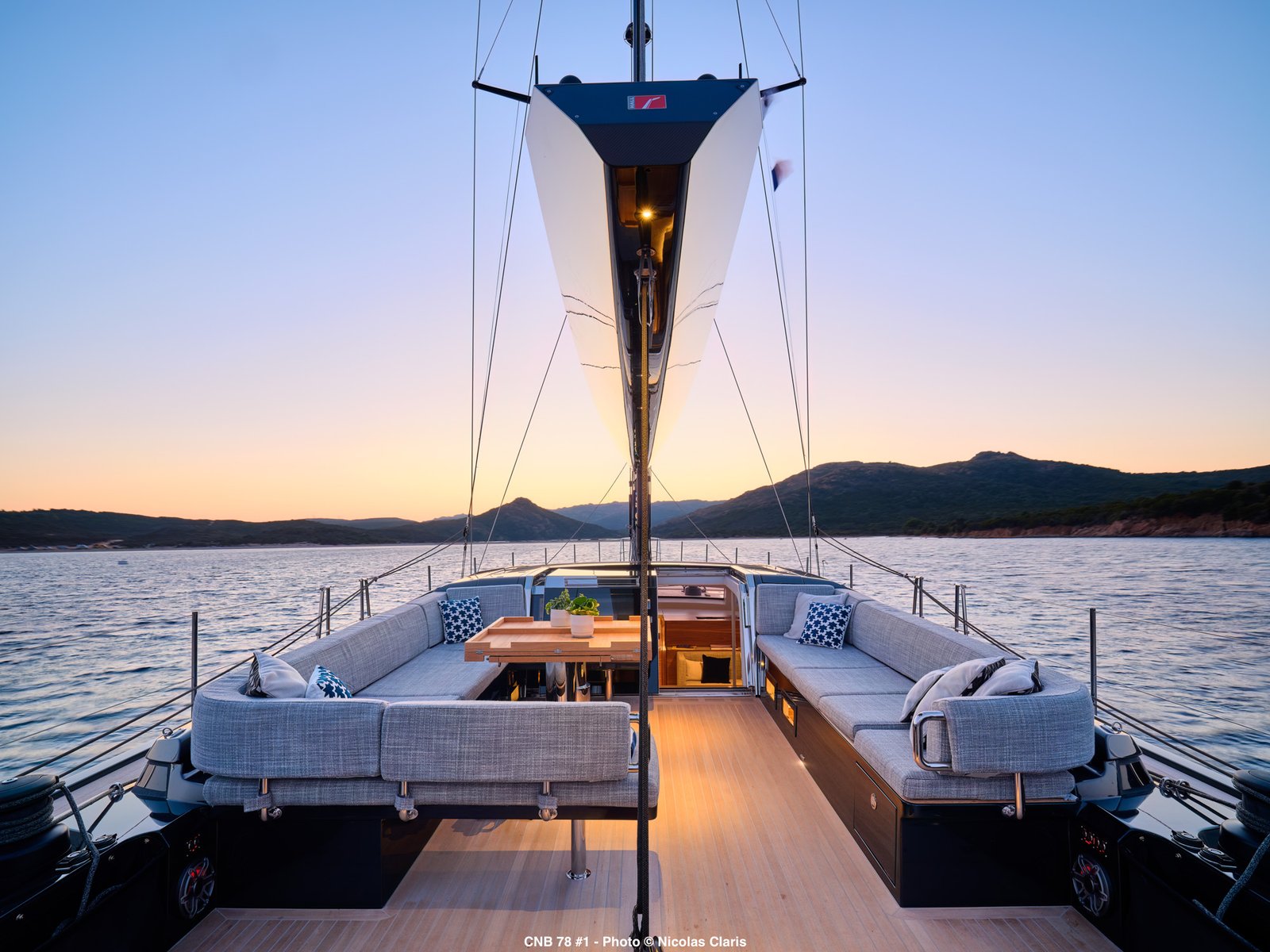
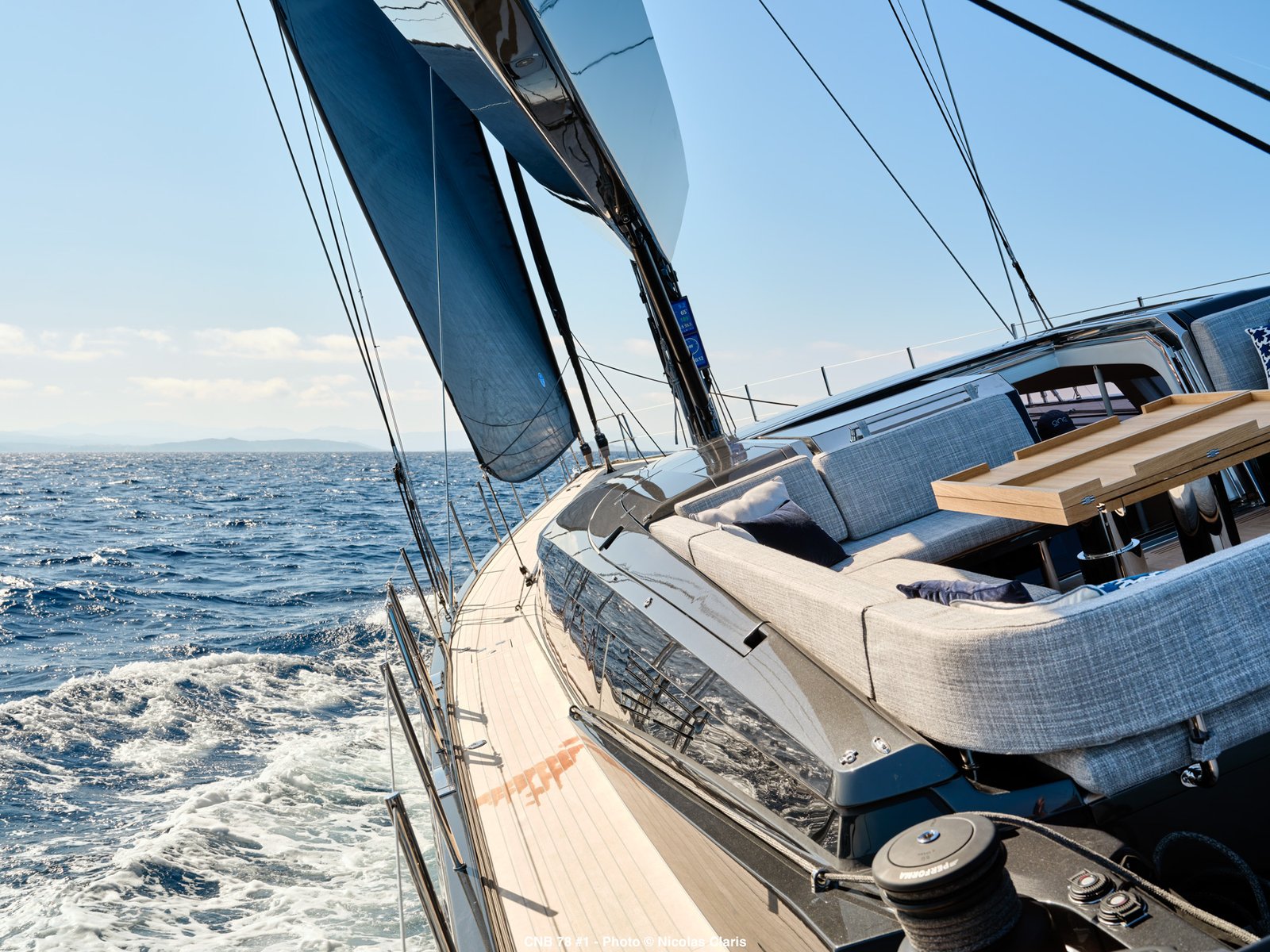
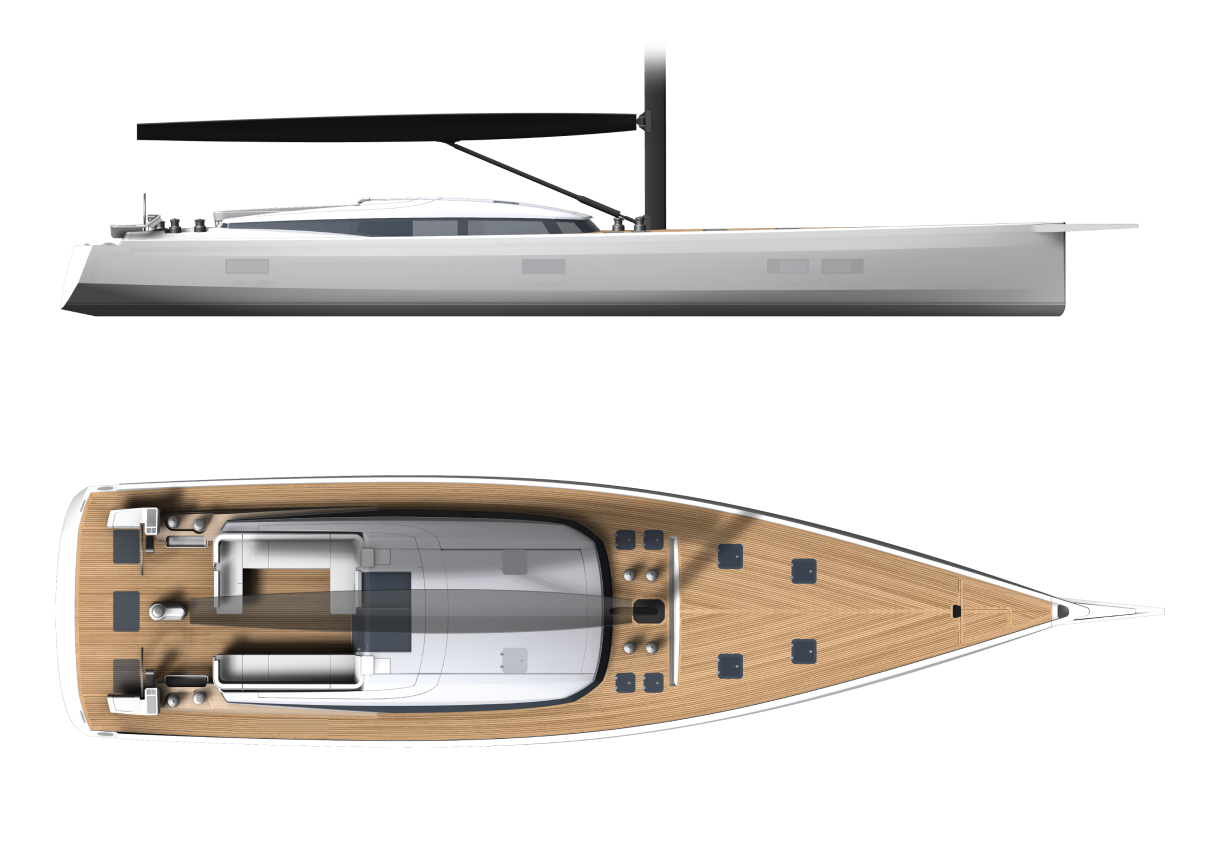
The hull carries upper and lower chines and sits slightly wider than her predecessor, particularly aft, opening up extra volume below without adding visual bulk. A gentle ramp has replaced the usual step onto the side decks, a small change that makes a material difference when moving forward in a seaway. Aft, a tender garage sized for a five metre tender uses an integrated roller system for launch and recovery, and a hinged sprayhood can close over the whole cockpit when the weather turns. An optional winter package fully encloses the aft helm, extending her season into cooler latitudes without sacrificing the open feel she offers in summer trim.
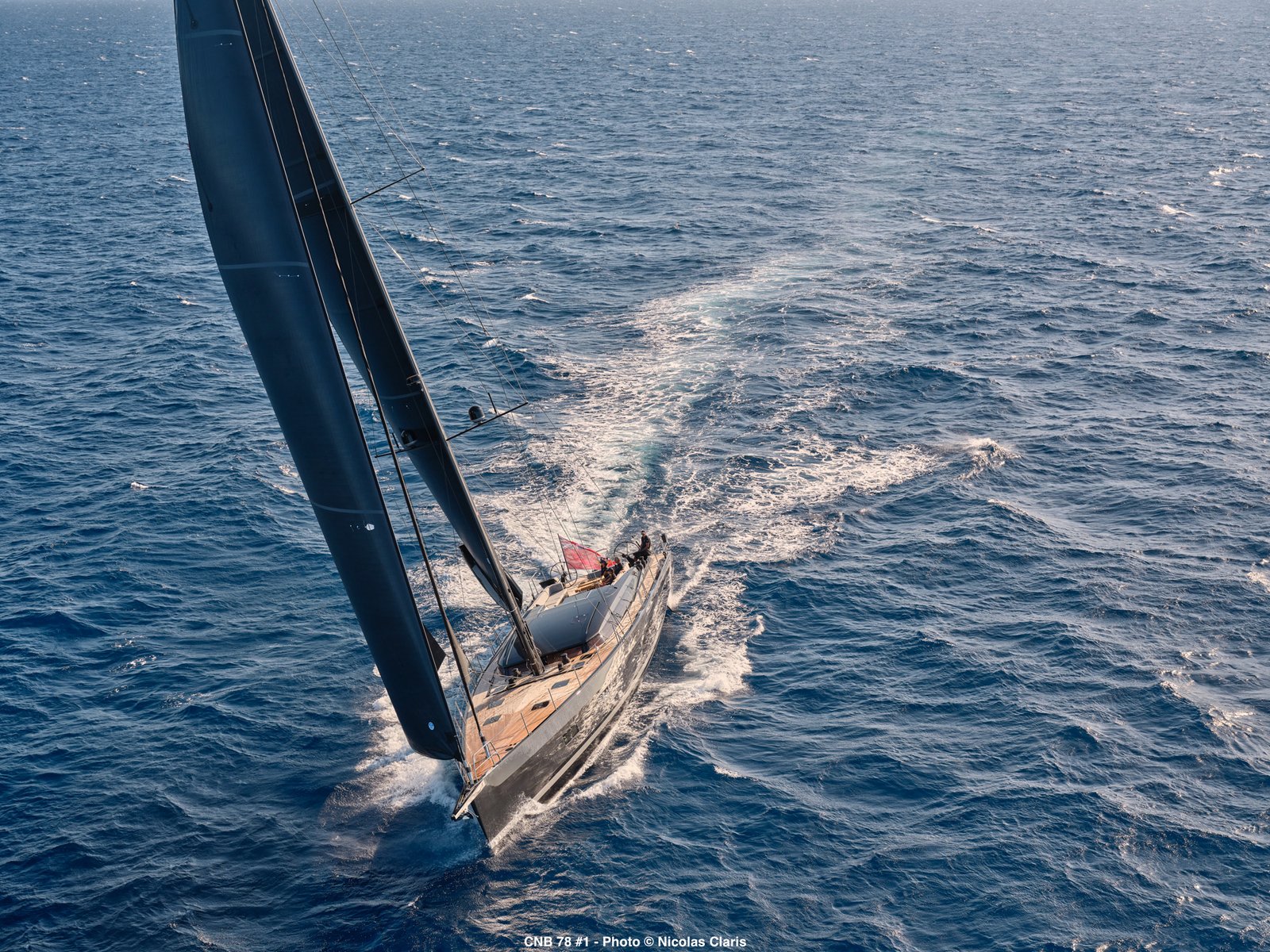
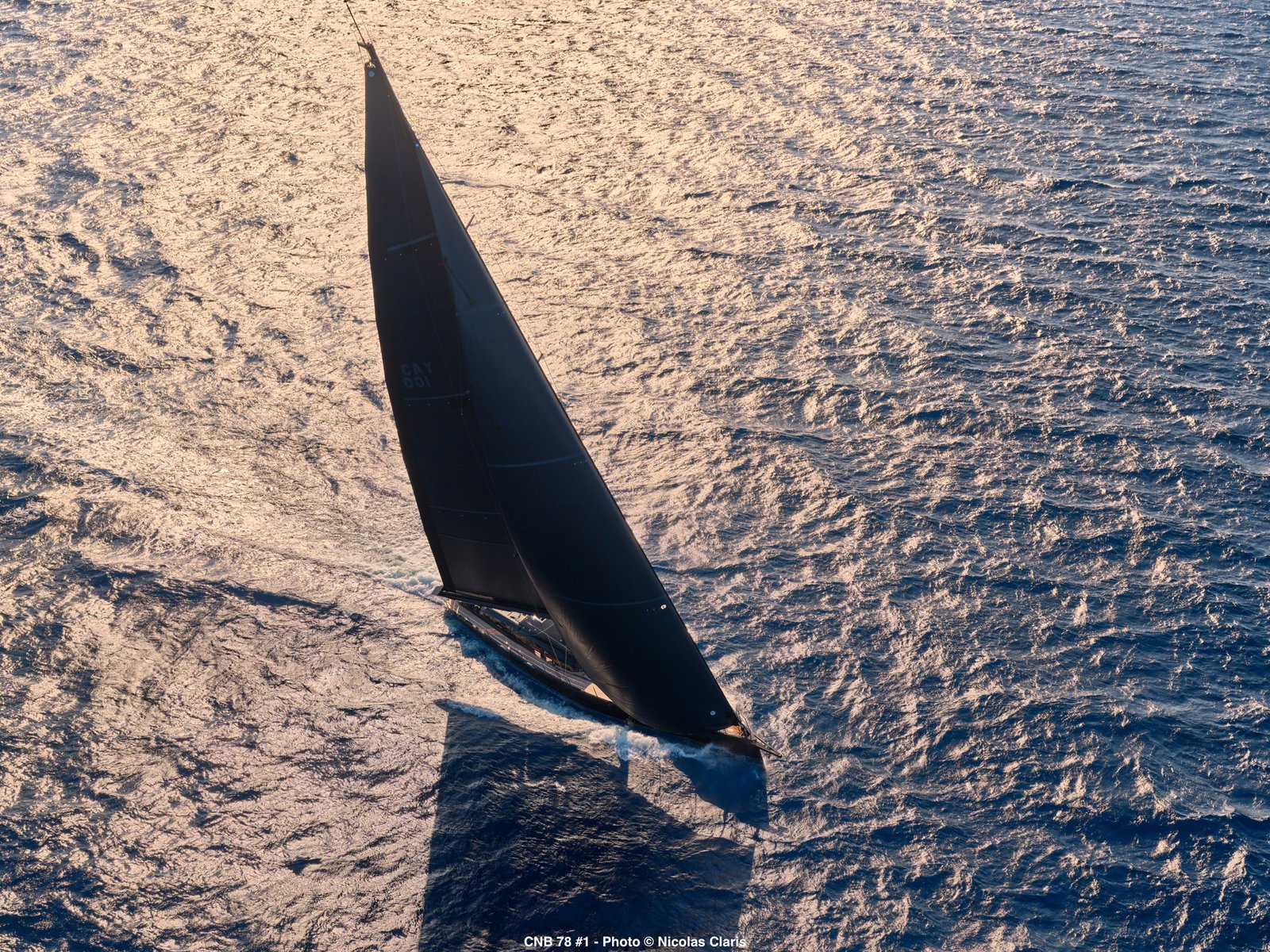
She points higher than her size suggests.
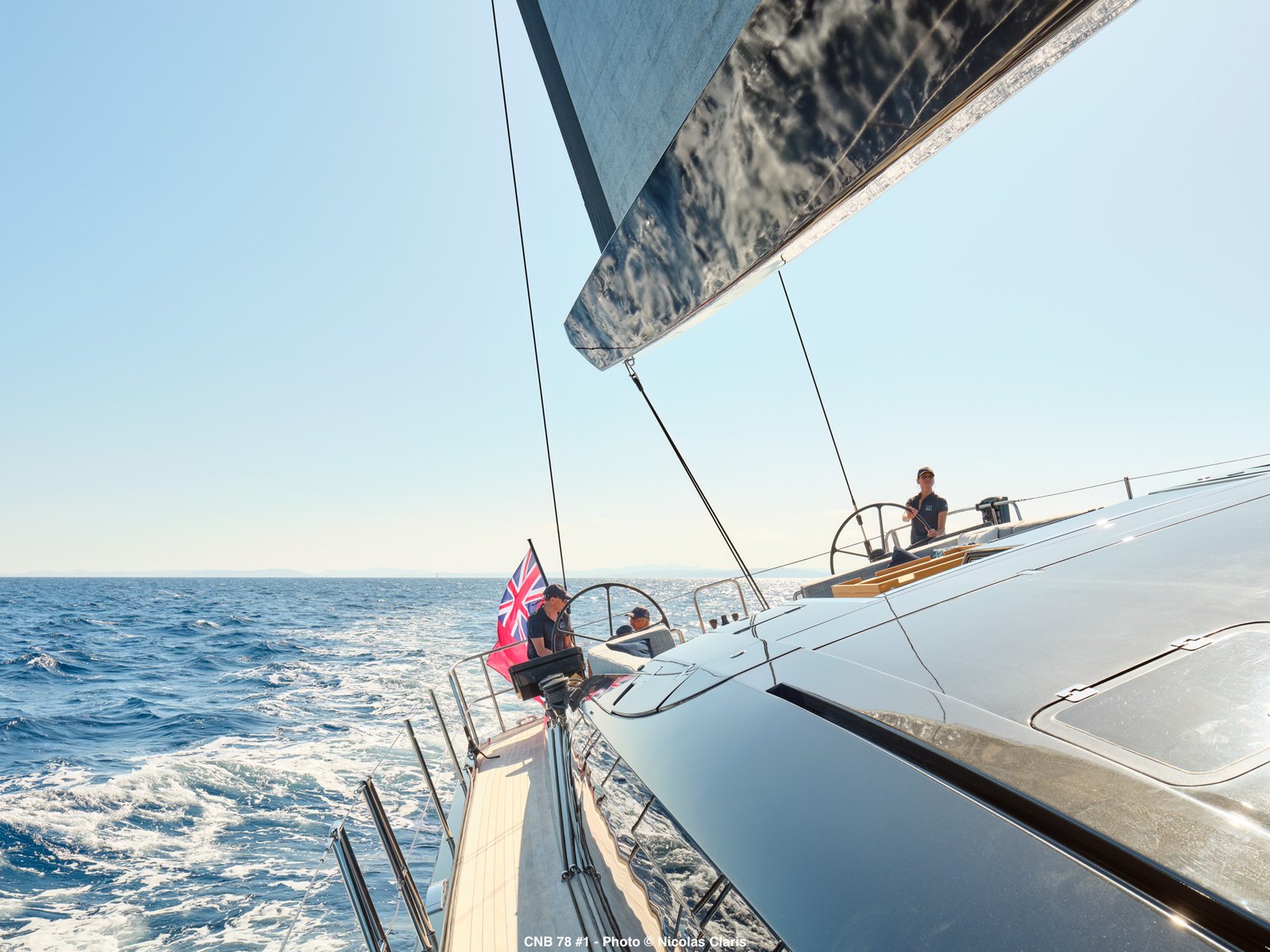
Under sail in a moderate breeze, she holds 40 to 43 degrees to the apparent wind upwind, and settles into 9.5 to 10 knots upwind and reaching once true wind builds past 10 knots, in flat water with full sail set. Twin rudders keep her light and precise on the helm, and twin pedestals put sail and engine controls within reach from either side of the cockpit. The standard rig carries an aluminium mast with a stack pack, slab reefed mainsail, genoa and staysail on push button, cockpit controlled furlers, while a longer performance rig with in mast or V boom furling is available for owners who want to press harder offshore. Two powered winches a side handle the headsail sheets, keeping sail changes within the reach of a small crew.
Below decks she feels settled rather than staged.
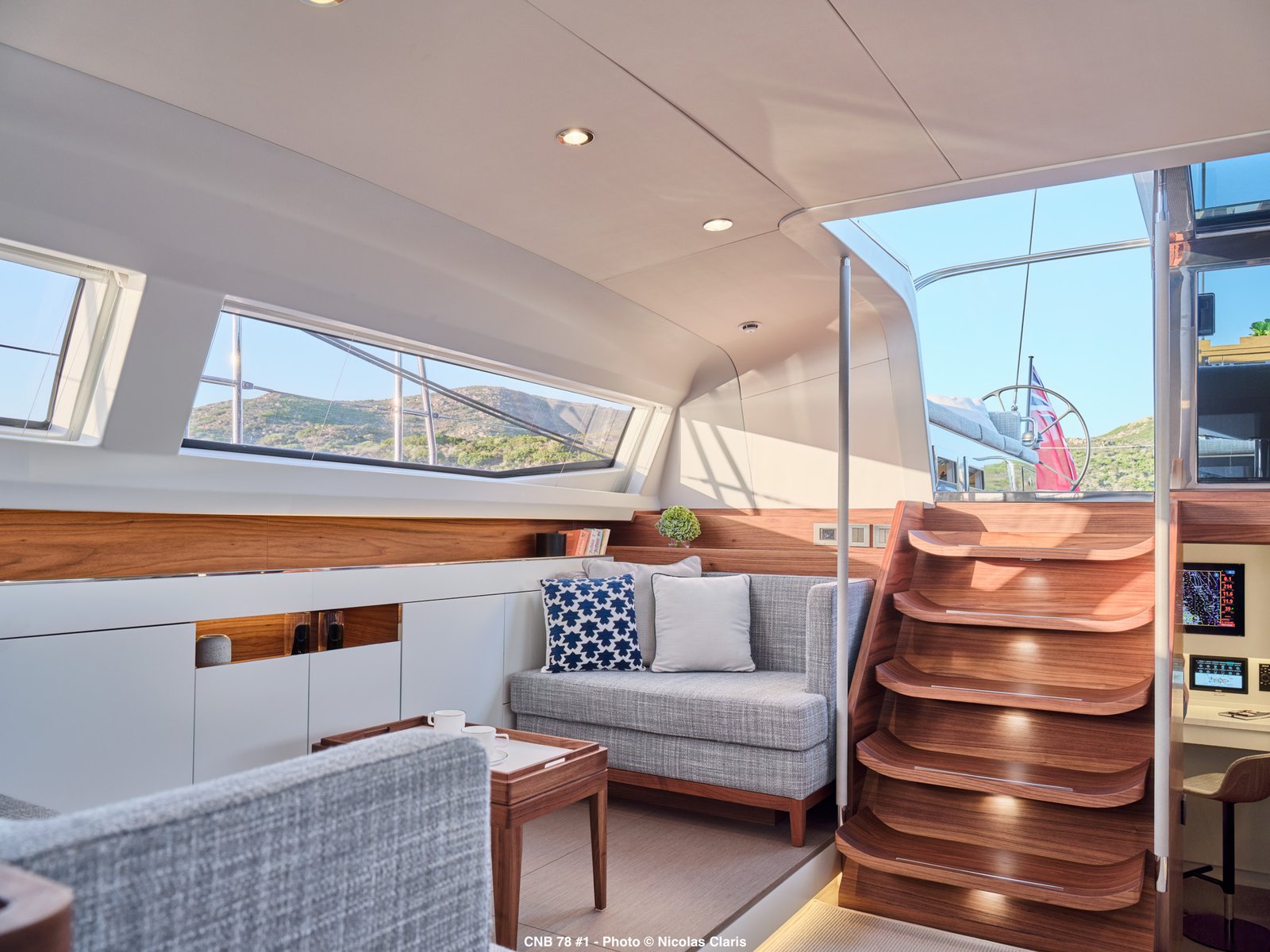
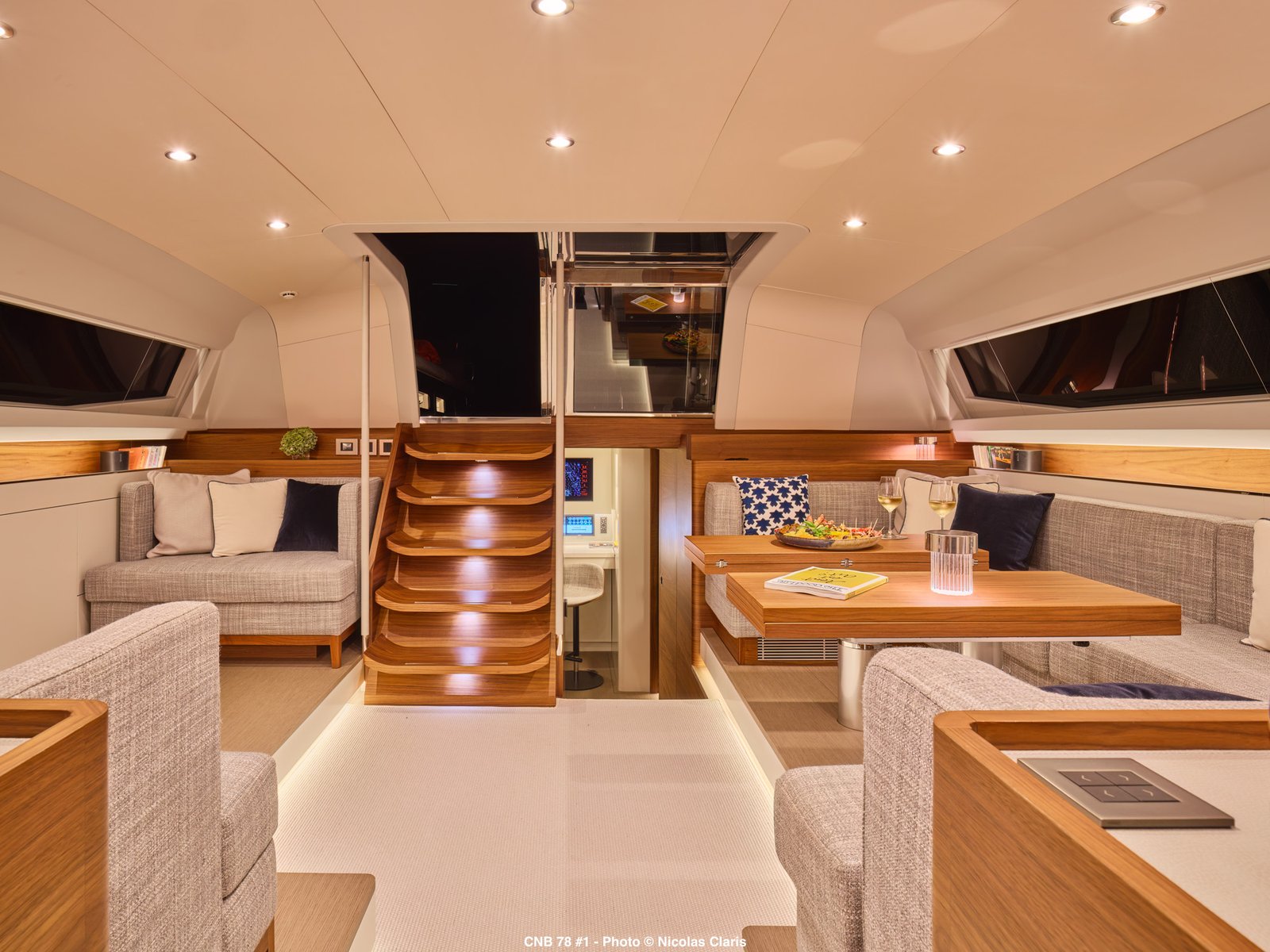
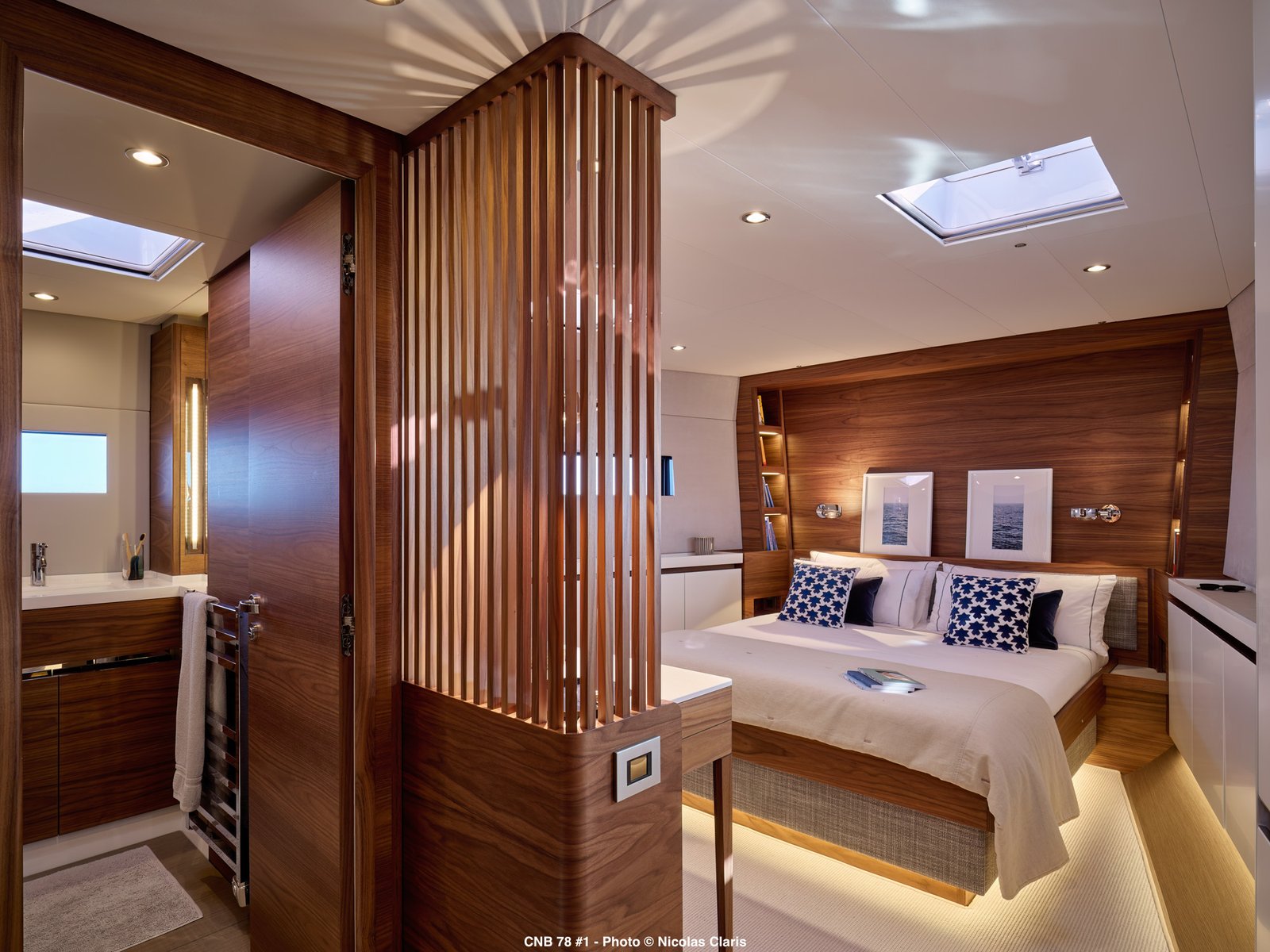
Four cabins sleep eight guests, led by a forward owner’s suite finished as a full stateroom with generous wardrobe space, most buyers specifying a central berth with the headboard forward. Two further guest doubles sit aft of the saloon, with crew quarters tucked beside the galley and kept entirely separate from guest areas. The saloon itself is dedicated guest space. The traditional chart table has given way to a drinks and seating area to starboard, and twin tables lower to form coffee tables or a daybed. Natural light reaches deep into the hull through hull ports and flush deck hatches, and buyers can specify walnut, teak, natural oak or brushed oak joinery throughout.
The cockpit is built around the guest, not the crew.
A large guest cockpit sits apart from the sailing systems entirely, so trimming and winching never intrude on time spent at anchor or on passage. The mainsheet runs to a raised central cockpit winch, with an optional granny bar for added security underway, while twin helm stations give clear sightlines forward on either tack. Wide, unobstructed side decks and the lowered ramp access make moving about the yacht simple even when she is heeled, and the hinged sprayhood offers real shelter on a cold passage without closing off the cockpit entirely in fair weather.
She is built to a standard that matches her ambition.
CNB builds the 78 under the Solaris Group framework in Italy, using vacuum infused composite construction and a structured commissioning process covering everything from rig tensioning to electronics integration. She measures 23.9 metres (78.5 feet) in hull length, with a 6.1 metre beam and a 3.5 metre draught, on a lightship displacement of 47,900 kilograms including a 12,600 kilogram keel. A Volvo D4 175hp auxiliary handles motoring and battery charging, backed by 2,500 litres of fuel and 1,500 litres of fresh water for extended offshore legs between provisioning stops. For an owner moving up from a smaller bluewater cruiser, she represents a considered, well proven next step.

Tell us what you would like to know, and our team will respond with clear details on availability, specification, pricing and next steps.