Oyster / Oyster C60
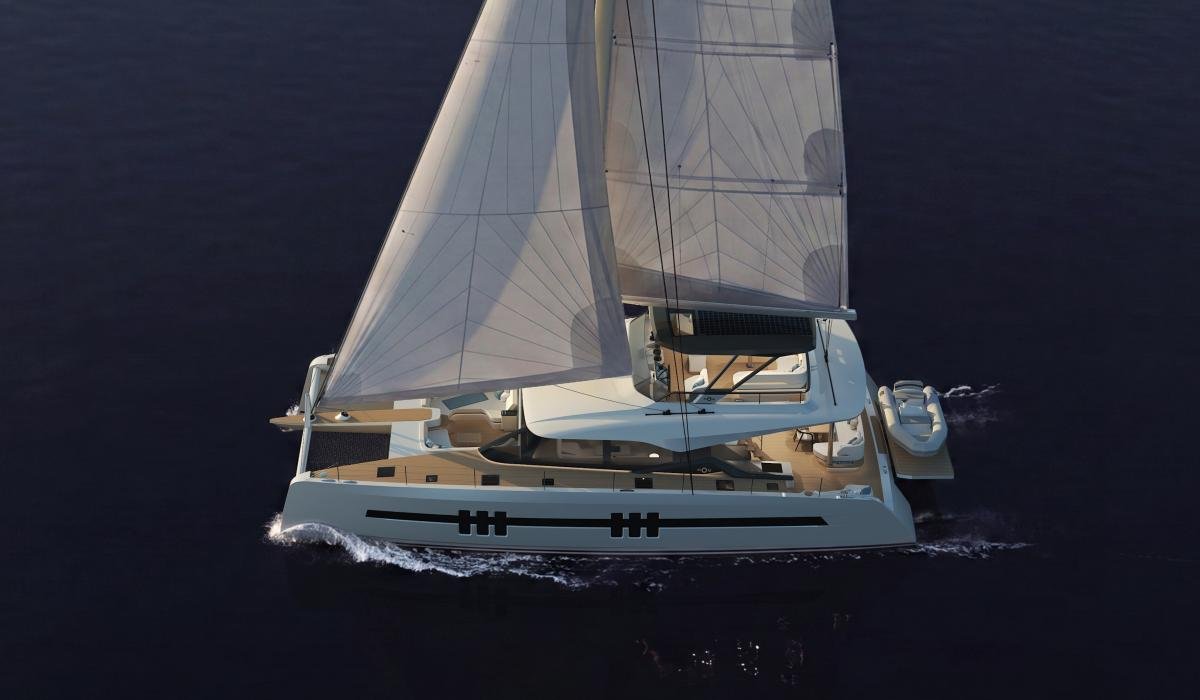
The Oyster C60 marks a turning point for a yard known for bluewater monohulls: its first sailing catamaran, drawn with Berret-Racoupeau and built on more than fifty years of offshore pedigree. At 19.42 metres with a 9.35 metre beam, she answers owners who want multihull volume and stability without giving up the sea-keeping Oyster buyers expect on a long passage.
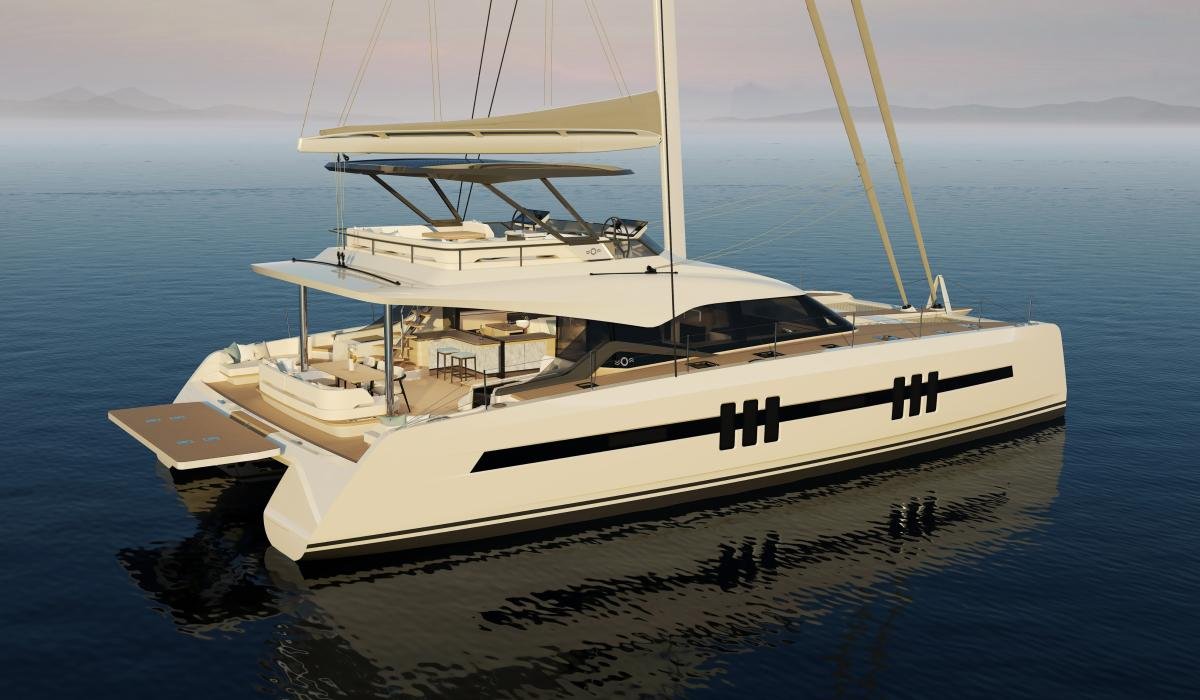
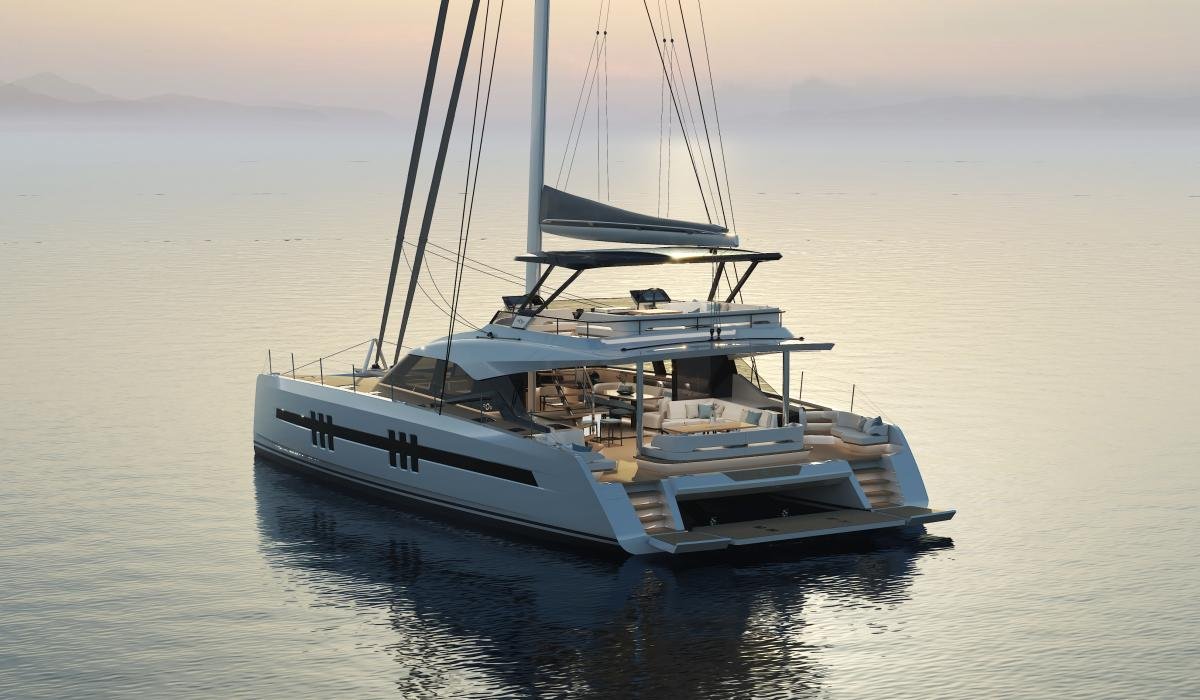
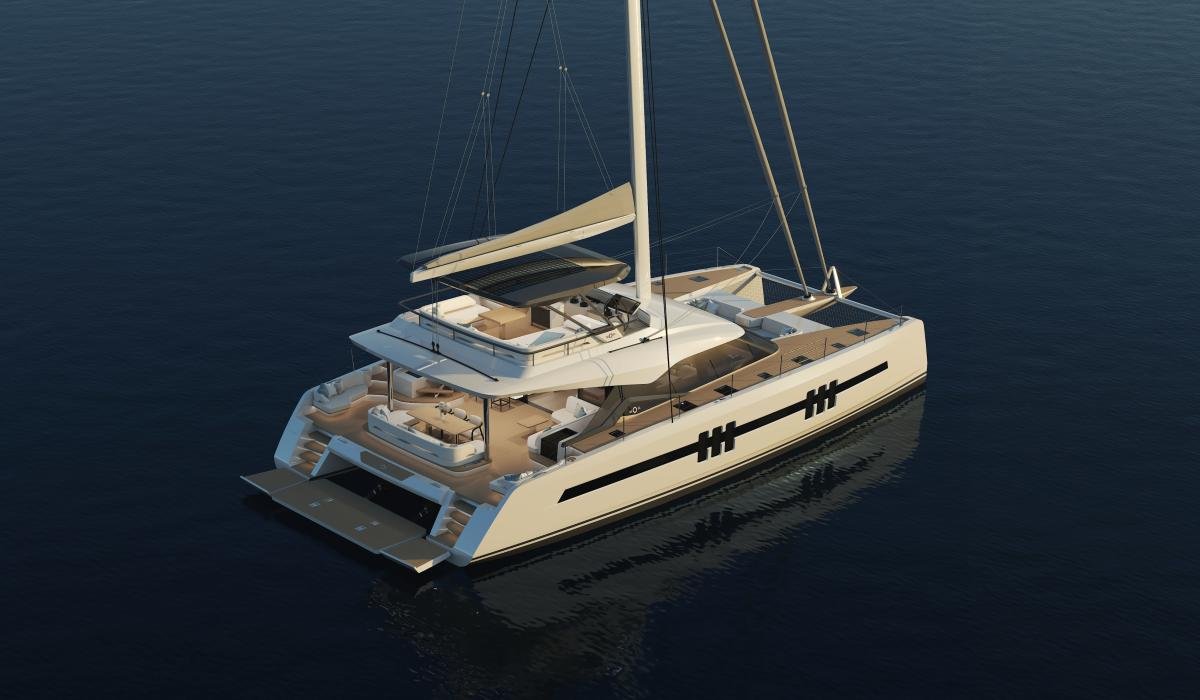
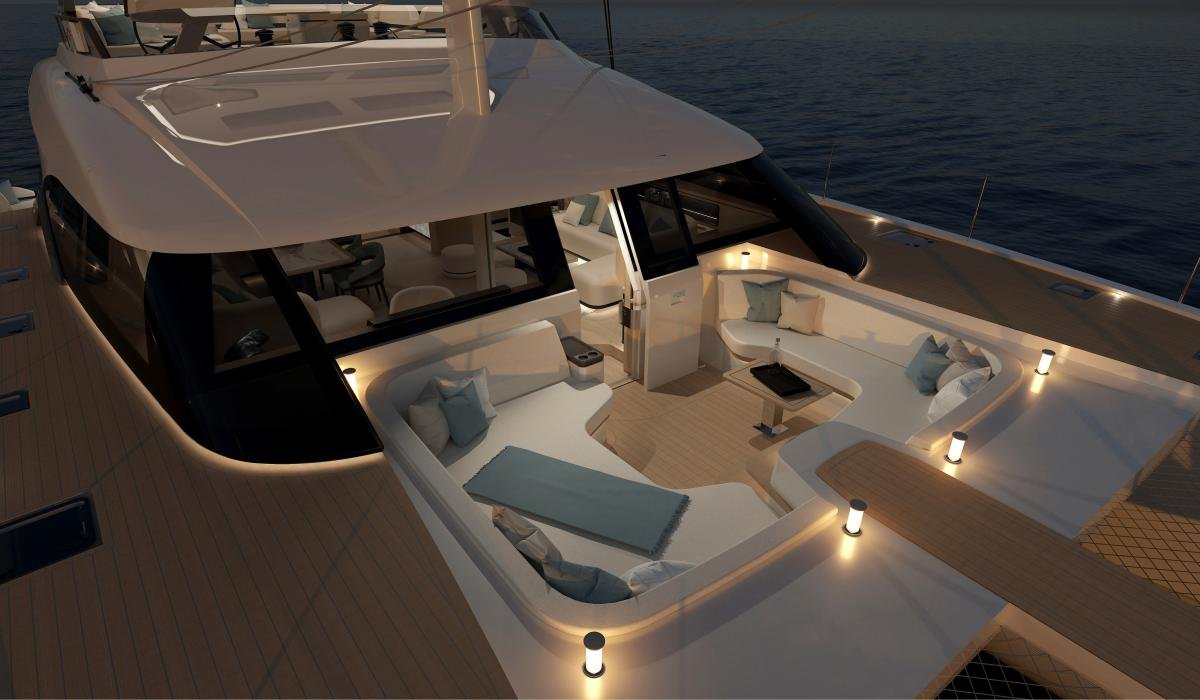
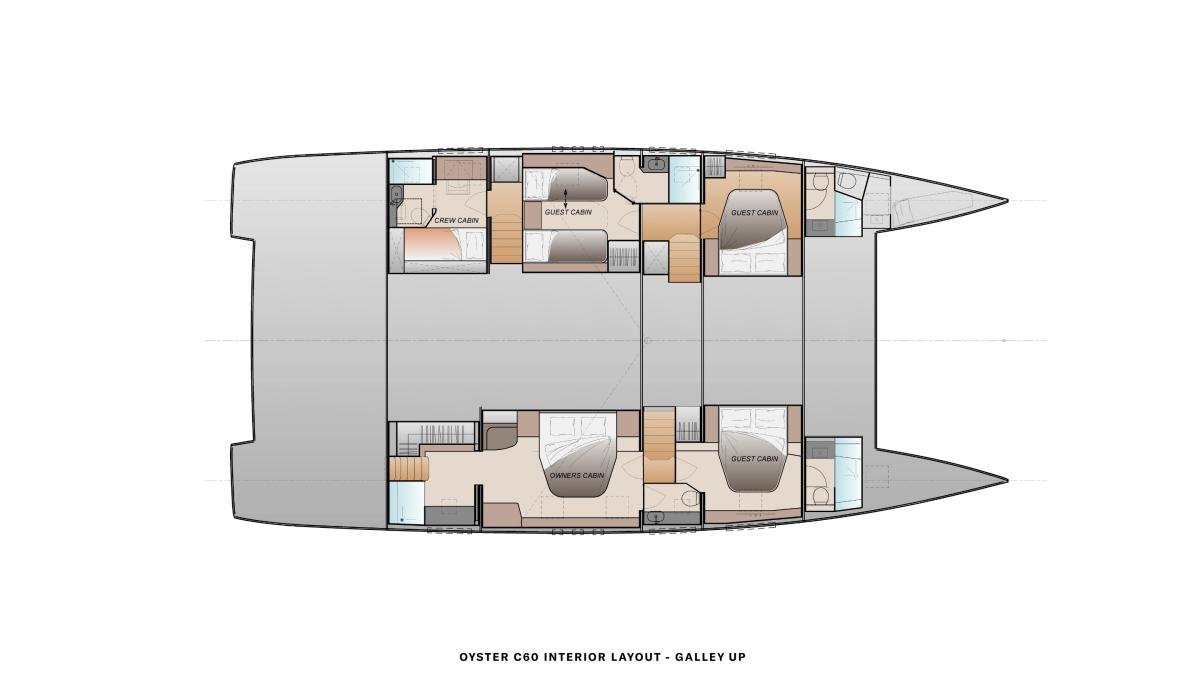
The layout puts roughly 110 square metres of social space across a single level. Twin fold-down bathing platforms and a central tenderlift open the stern into a beach club, while wide doors fold the aft deck and saloon into one room around a shared bar. A recessed forward lounge gives a quieter outdoor retreat. The owner suite sits apart from three en-suite guest cabins, with separate crew quarters and circulation.
Offshore intent shows in the detail: up to a metre of bridgedeck clearance, high freeboard, a low-profile superstructure, fixed keels protecting the shafts and rudders, and watertight forward bulkheads. Large fuel and water tanks, generous battery and solar capacity and real provision storage support time well away from a marina.
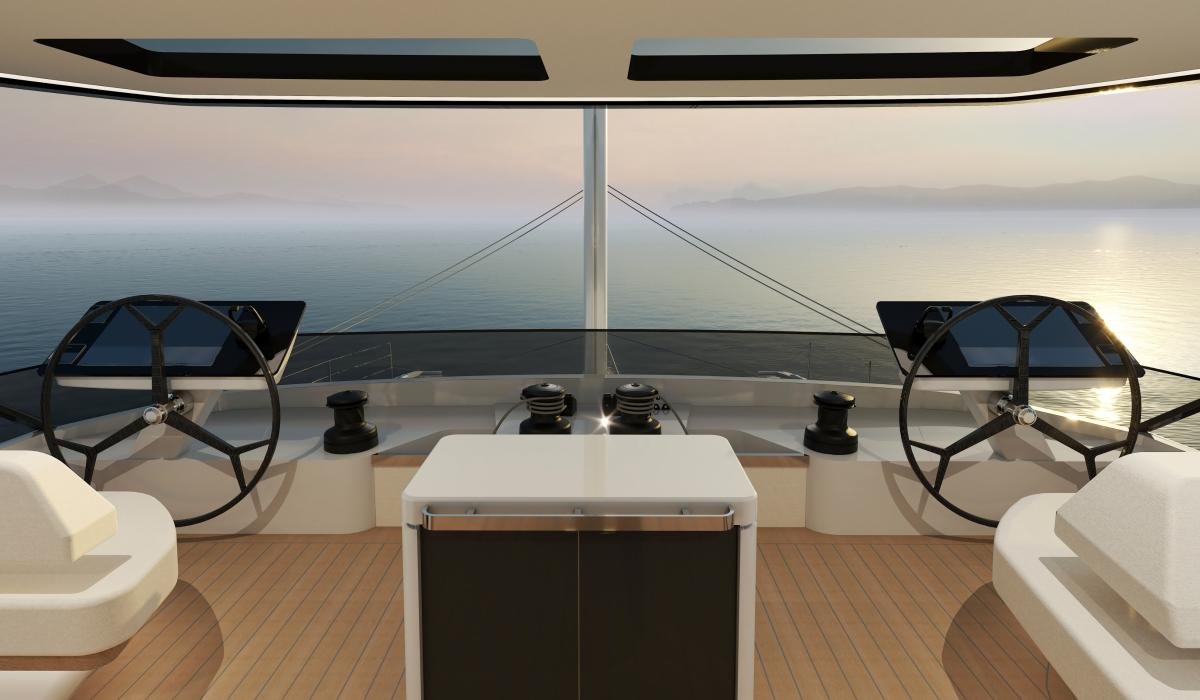
Under sail she carries 234 square metres upwind from a mainsail and headsail, worked from twin helms with centralised controls. For a buyer weighing a luxury catamaran against a monohull of similar length, the C60 brings Oyster build quality and its global service network to a new platform.
Length
19.42M
Beam
9.35M
Draft
1.7M
Day Guests
6
Sleeping
6
Cabin
3
Crew
1
Cruise Speed
Max Speed
Fuel
1200L
Engine
2 x 110 hp
Naval
Berret-Racoupeau Yacht Design
Exterior
Berret-Racoupeau (Olivier Racoupeau)
Interior
Berret-Racoupeau
New Starting From
€2,200,000




No yachts found matching your criteria.
She carries 234 square metres of upwind sail from a 122 square metre mainsail and a 112 square metre genoa, enough canvas to keep a 30-tonne cruising cat moving in light air without reaching for the engines. The multihull form sails upright, which removes the sustained heel of a monohull and makes long watches and life below markedly easier. Twin helms and centralised sail controls let a couple or a short-handed crew manage her, and the sailplan is set up for shorthanded handling rather than a full racing crew. Twin 110 horsepower diesels drive fixed-shaft propulsion, with the keels positioned to shield shafts and rudders from grounding damage. A shallow 1.70 metre draft opens anchorages that a deep-keeled monohull of the same length cannot reach, which matters on the kind of itinerary this boat is built for.
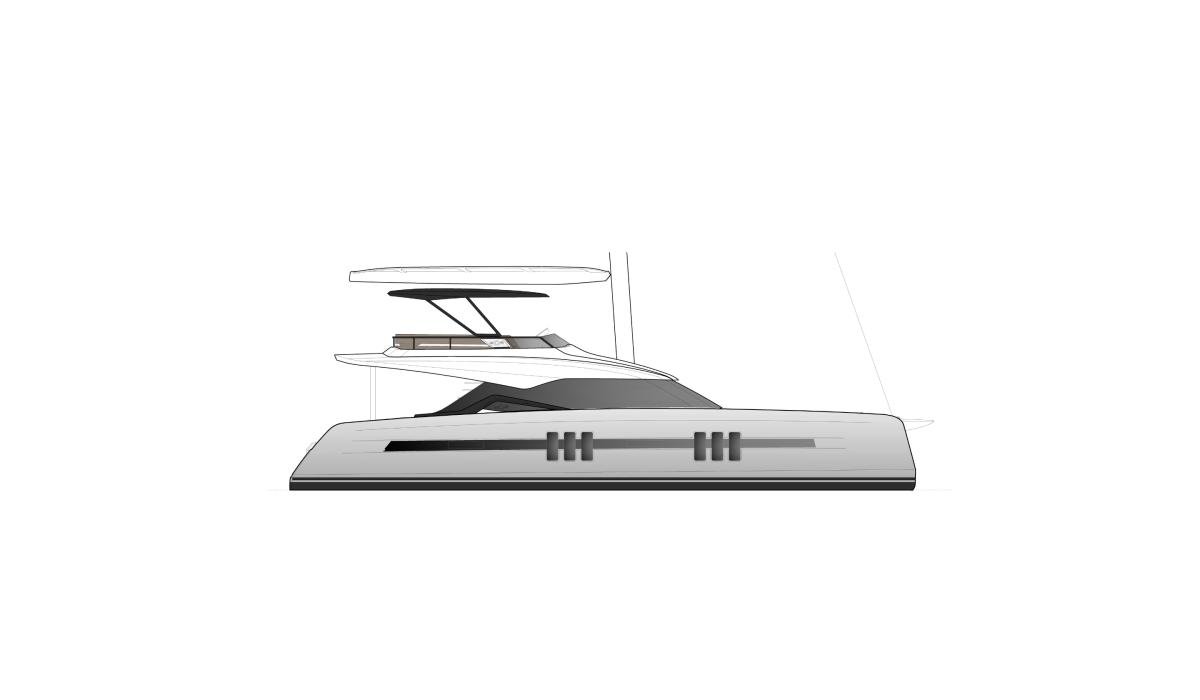
The C60 reads as an Oyster first and a catamaran second. A low-profile superstructure, continuous dark saloon glass and triple seascape windows carry the brand visual language onto a wider platform, and a new inverted-V feature gives the hull its own identity. High freeboard and up to a metre of bridgedeck clearance are not styling choices but offshore ones, keeping the underwing clear of wave slam on passage. The stern is the social centrepiece: twin fold-down bathing platforms flank a central tenderlift that doubles as a beach club, so the tender stows without cluttering the deck. Open foredeck trampolines and a recessed forward lounge add outdoor zones at both ends. A hydraulic passerelle extends from the aft deck to the dock and retracts fully out of sight, a detail that signals the engineering underneath the finish.
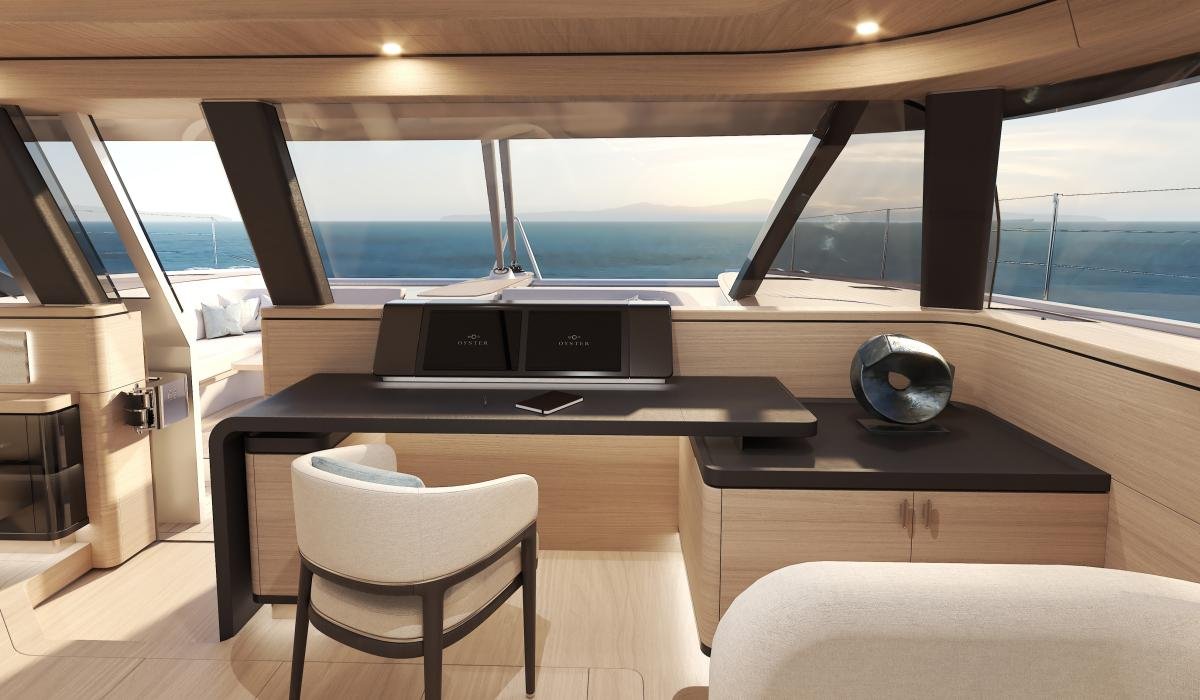
Accommodation is arranged around separation and light. The owner suite is set apart from the guest and crew areas, with triple seascape windows and direct access to the aft deck, so the owner effectively has a private quarter of the boat. Three further guest cabins are each en-suite, and crew accommodation has its own circulation so service never crosses the owner path. The saloon runs across a single level with the aft deck, wrapped in glass that keeps the sightlines open and the interior bright. Oyster joinery and finishing carry over intact; the materials and craftsmanship are the yard standard rather than a lighter production specification. For a long trip with family and a small crew aboard, the layout holds up better than the symmetrical four-cabin charter plans most catamarans of this size default to.
About 110 square metres of social space is the headline, and the C60 uses it to blur the line between inside and out. Wide opening doors fold the aft deck and saloon into one entertaining room, with a shared bar serving both sides and reversible seating that faces the saloon or the water depending on the mood. The recessed forward lounge gives a second, quieter gathering point away from the cockpit, useful at anchor when the aft deck is in use as a beach club. The flow between helm stations, saloon, galley and the stern platforms is deliberately uninterrupted, so a full complement of guests never feels funnelled through a single companionway. It is a layout built for people who actually live aboard for weeks at a time rather than for weekend marina entertaining.
The C60 will be built in France, with price, delivery and final yard still being confirmed at launch, so early buyers are specifying from close to a clean sheet. The autonomy package is the practical heart of the ownership case: 1,200 litres of fuel with a 600 litre reserve, 1,000 litres of water, substantial battery storage and solar capacity, and real provision stowage, all sized for time away from shore power. Watertight forward bulkheads and the shaft-protecting keels speak to Oyster offshore-first engineering, and the yacht is covered by the yard warranty, global service network and the owner-support programme that Oyster buyers factor into residual value. As the first hull of a new line from an established builder, she carries both the appeal and the caveats of an early-series yacht, and she should be assessed on specification and build slot rather than on a settled resale market.

Tell us what you would like to know, and our team will respond with clear details on availability, specification, pricing and next steps.