Windelo / Windelo 55 Sport
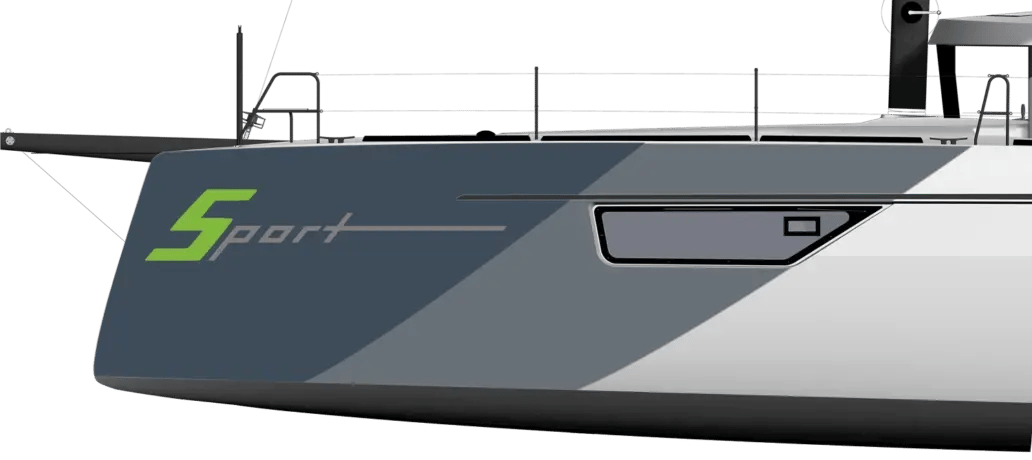
The Windelo 55 Sport is the performance-oriented variant of the Windelo 54, featuring a lengthened waterline of 16.54 metres, a lighter displacement of 12.3 tonnes, and the same comprehensive carbon fibre upgrades found across the Windelo Sport range. The builder claims approximately 10 percent greater performance compared to the standard 54.nnCarbon rudders, daggerboards, structural bulkheads, and mast combine with Kevlar rigging and 3D membrane sails to create a sailing catamaran that balances cruising comfort with genuine performance. The mast height of 22.8 metres carries a 106 m2 mainsail, 48 m2 solent, 160 m2 code 3, and a 220 m2 gennaker for impressive power across all wind angles.nnThe 33 cm waterline extension over the standard 54 optimises hull speed and wave-piercing ability, while the weight reduction enhances acceleration and upwind angles. Despite these performance enhancements, the Windelo 55 Sport retains the eco-conscious basalt and recycled PET/PVC construction and hybrid electric propulsion that define the brand.nnAvailable for online configuration and order, the 55 Sport targets experienced catamaran sailors who want measurable performance gains without sacrificing the environmental credentials and cruising amenities of the Windelo platform.
Length
16.54M
Beam
Draft
Day Guests
Sleeping
Cabin
Cruise Speed
Max Speed
Fuel
Engine
2x 20 kW electric/hybrid
Naval
Barreau & Neuman
New Starting From
€1,975,000
No yachts found matching your criteria.
In barely a whisper of wind, she still finds a way to move.
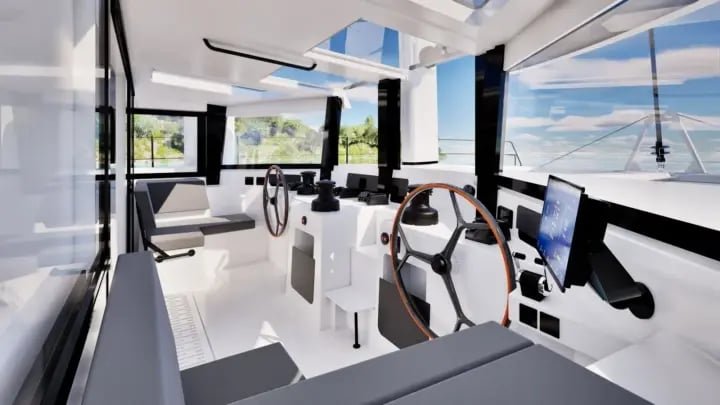
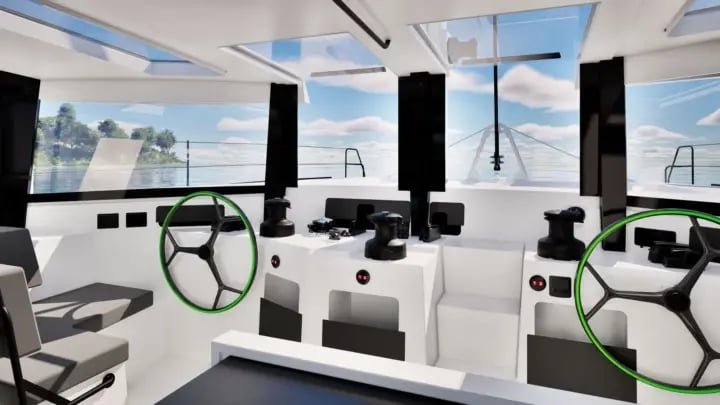
On trial off the French coast in true wind of around 8 knots, she held close to 6 knots hard on the wind under the solent, tracking straight without the autopilot once trimmed. Bearing away to 90 degrees with the code 3 set, boat speed climbed to 8 knots. When the thermal breeze faded below 7 knots, the crew switched to the code 0 and still touched just over 6 knots, practically matching the wind itself. The carbon tiller reads as precise rather than heavy, a rare trait on a catamaran of this size, and the forward helm station at the foot of the mast gives a clear view down both hulls while sail changes stay within easy reach.
The bows give the biggest clue to what she is for.
A 17 degree negative rake replaces the plumb stems of the standard 54, a wavepiercer shape intended to cut through swell rather than ride over it. The waterline runs 33 centimetres longer than her sister, stretching a 7.95 metre beam without adding bulk, while twin daggerboards drop to a 2.95 metre draught when fully extended, retracting to 1.25 metres for shallow water. The carbon mast stands a full metre taller at close to 23 metres and carries a larger wardrobe of sails: a 106 square metre main, a 48 square metre solent, a 160 square metre code 3 and a 220 square metre gennaker.
Every kilogram removed had to earn its place back in speed.
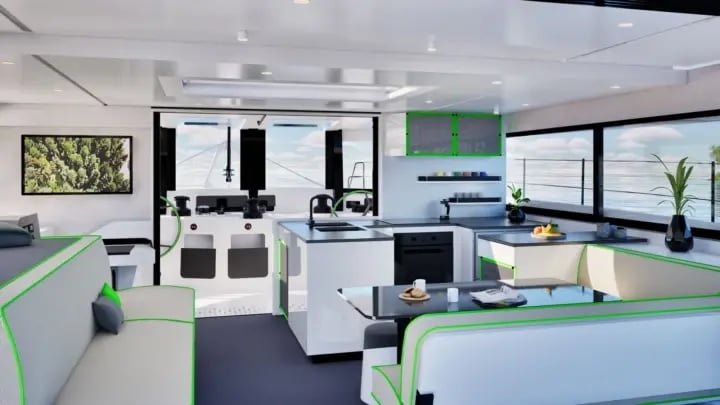
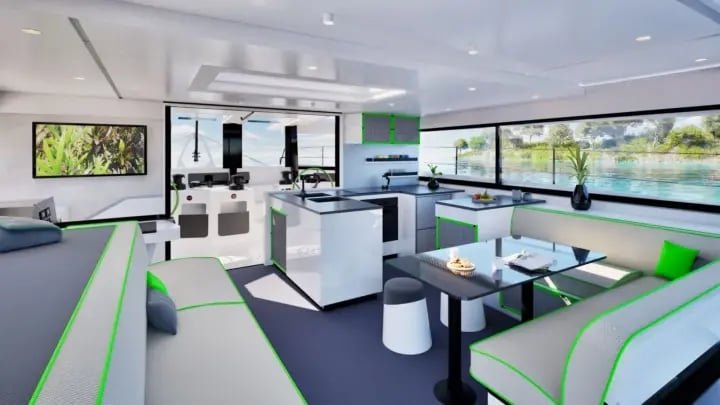
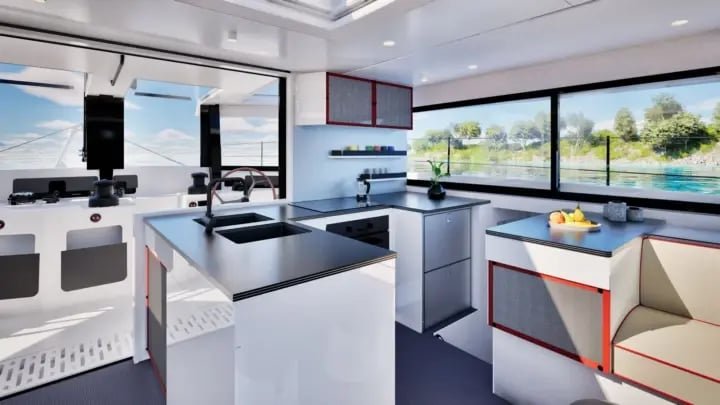
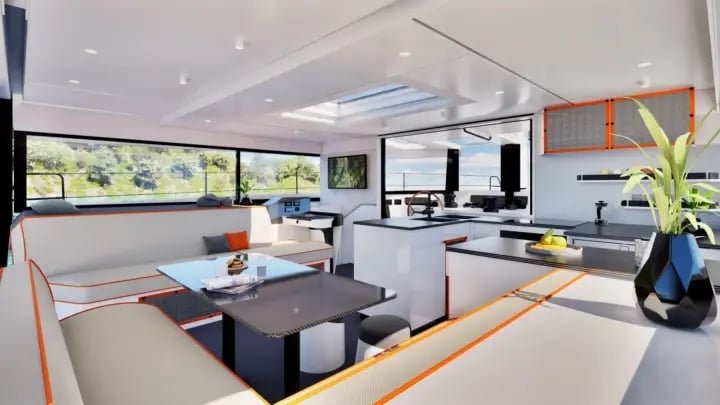
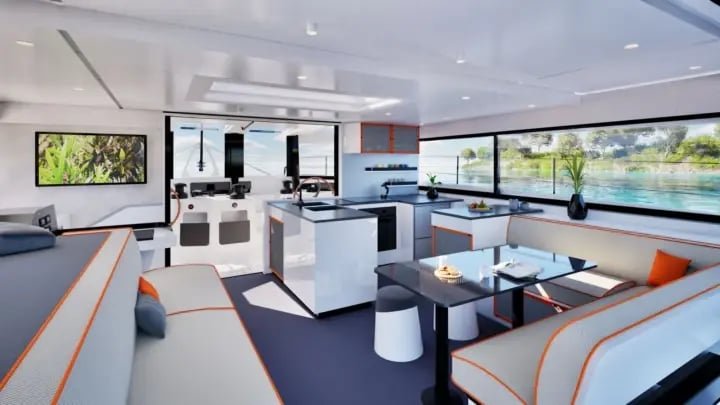
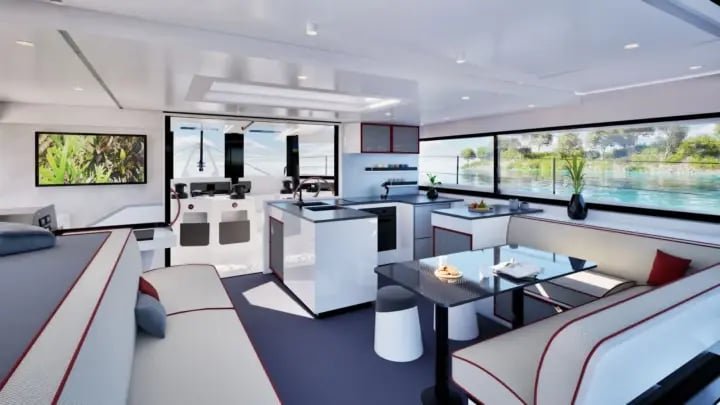
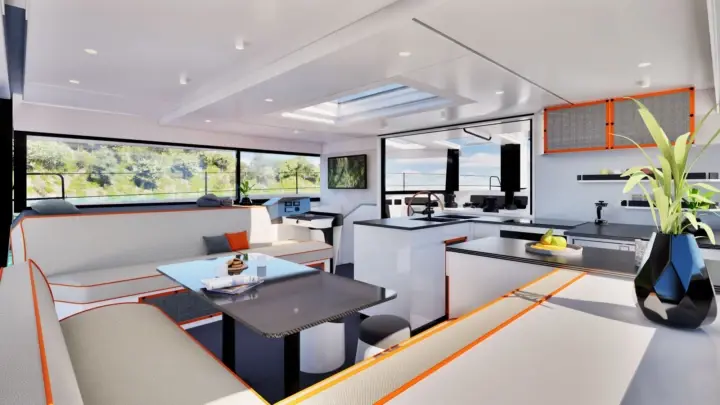
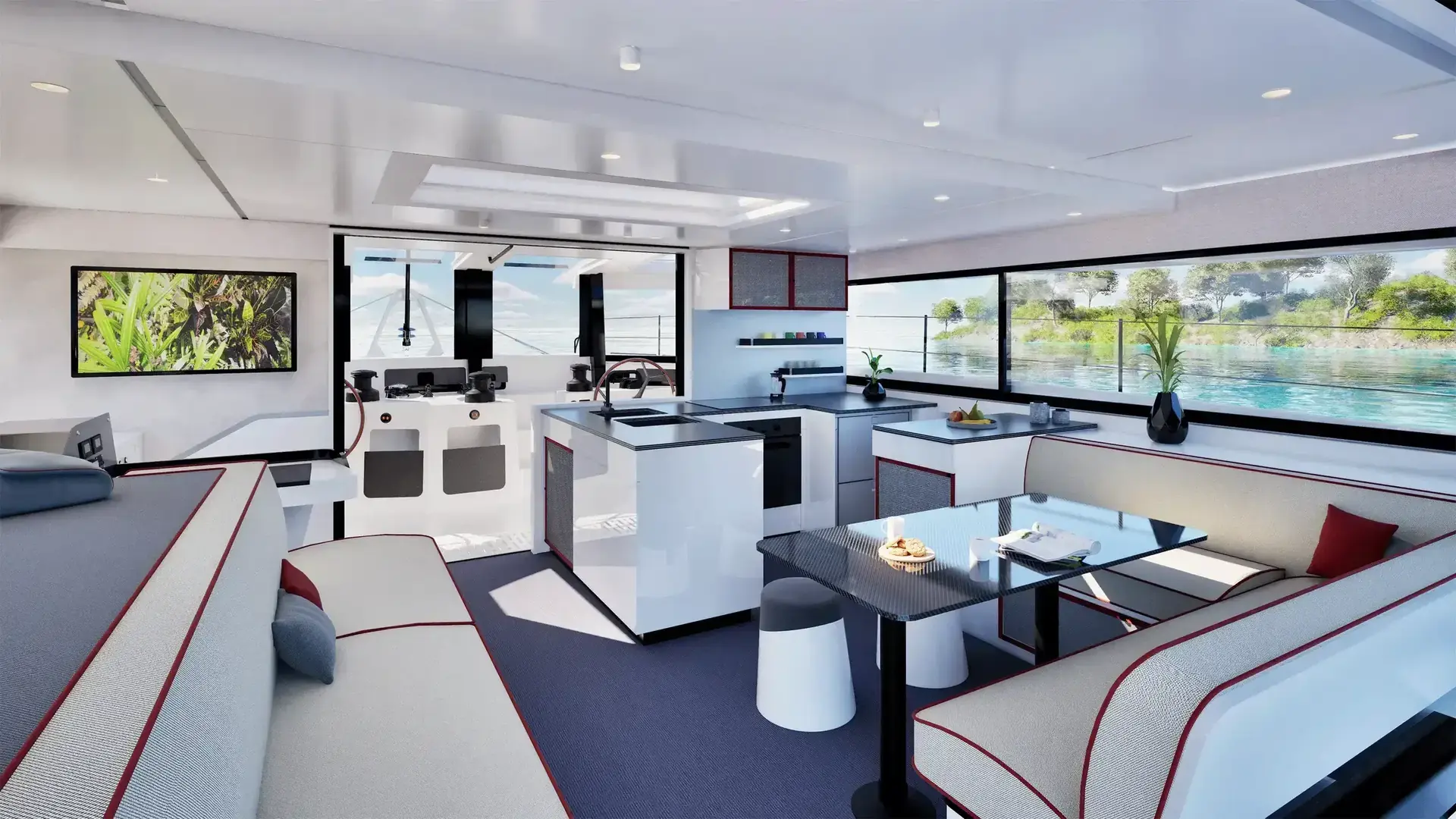
Carbon fibre runs through the structural bulkheads, the beams that join the hulls, the daggerboards and the rudder blades, all set in polyester rather than epoxy resin to keep both weight and cost in check. The daggerboards themselves reach 65 centimetres deeper than the standard 54’s, and the rudders are new, compensated designs built for feel rather than just function. Even the interior gave something up: cabinet doors give way to curtains to save weight. The result is a light displacement of 12.3 tonnes, around 500 kilograms less than the boat she is built from, despite her longer hulls and taller rig.
She can cover real distance without burning a drop of diesel.
Twin 20 kilowatt electric motors draw from a 53.8 kilowatt hour battery bank, topped up by 6,000 watts of solar capacity and hydrogeneration under sail. On battery power alone she cruises at 5 knots for around ten hours from a 70 percent charge, or runs flat out at 8.5 knots for closer to two. An optional 18 kilowatt generator extends that to as much as 1,000 nautical miles, and tankage of 500 litres of diesel, 400 litres of fresh water and 200 litres of black water supports genuine time away from a marina. It is a drivetrain built around the Windelo philosophy: silent running first, diesel kept in reserve.
A nomination for European Yacht of the Year 2027 is a serious vote of confidence for a boat built on a smaller yard’s own platform.
Christophe Barreau and Frederic Neuman, the naval architects behind the whole Windelo range, drew the hull and appendages, and the Sport treatment keeps her basalt fibre and recycled PET foam construction intact rather than trading sustainability for speed. She carries the same hybrid electric drivetrain as her siblings, just lighter and better rigged. For an owner already drawn to the Windelo idea of sailing with a smaller footprint, the 55 Sport offers a genuine step up in pace without asking them to give up what made the standard 54 appealing in the first place.

Tell us what you would like to know, and our team will respond with clear details on availability, specification, pricing and next steps.