X-Yachts / X-Yachts Xc 47
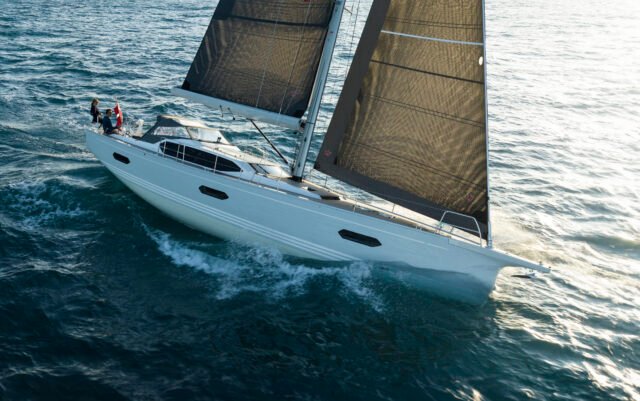
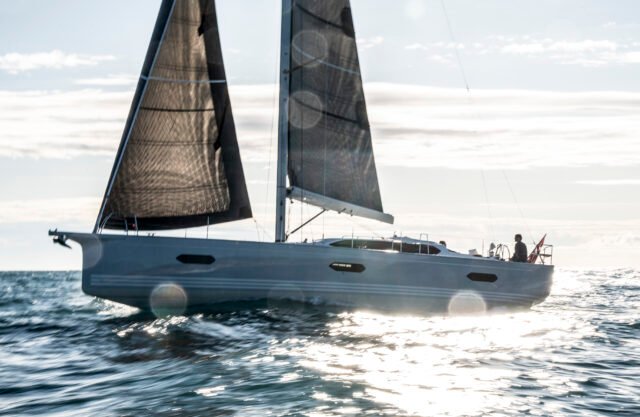
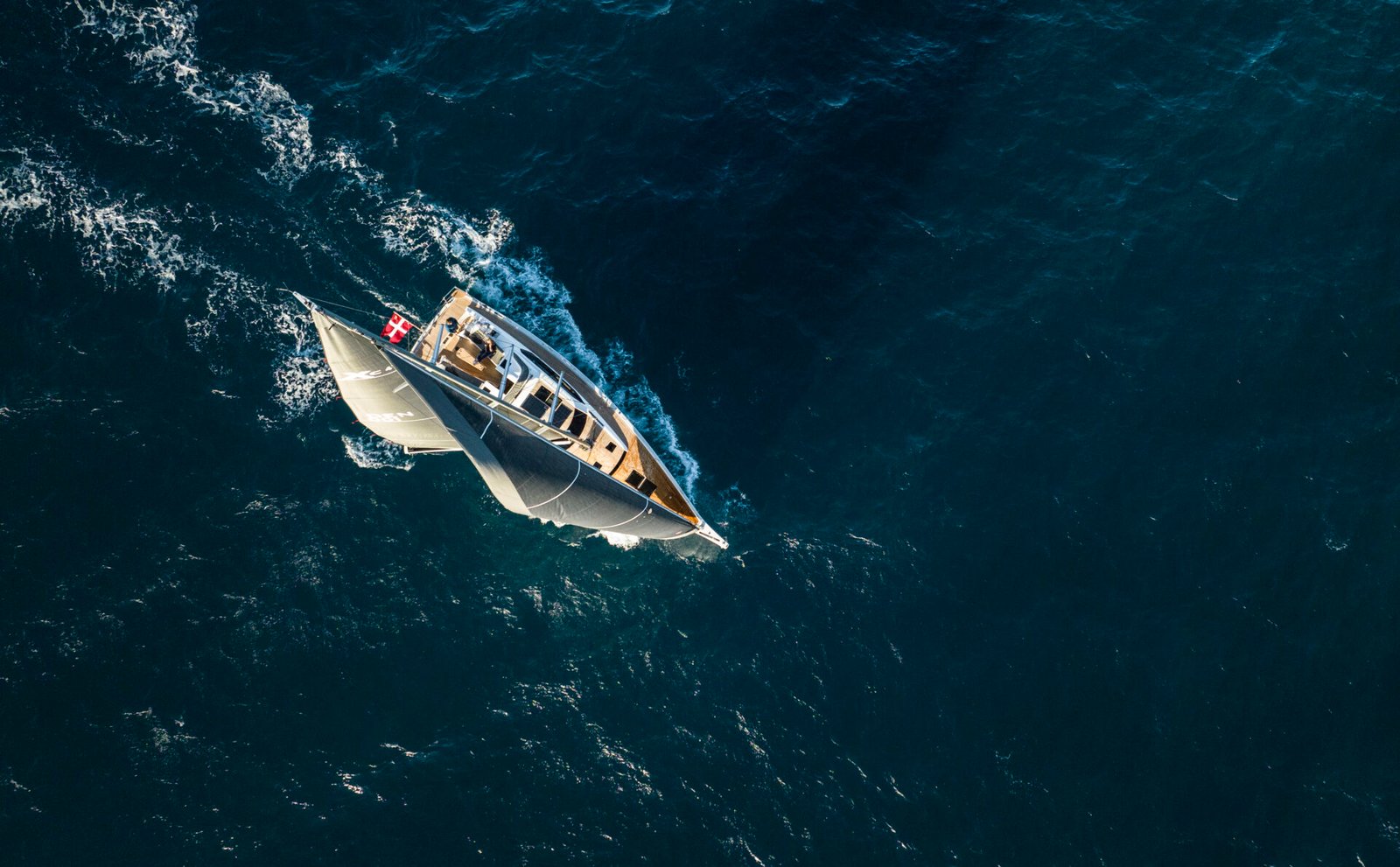
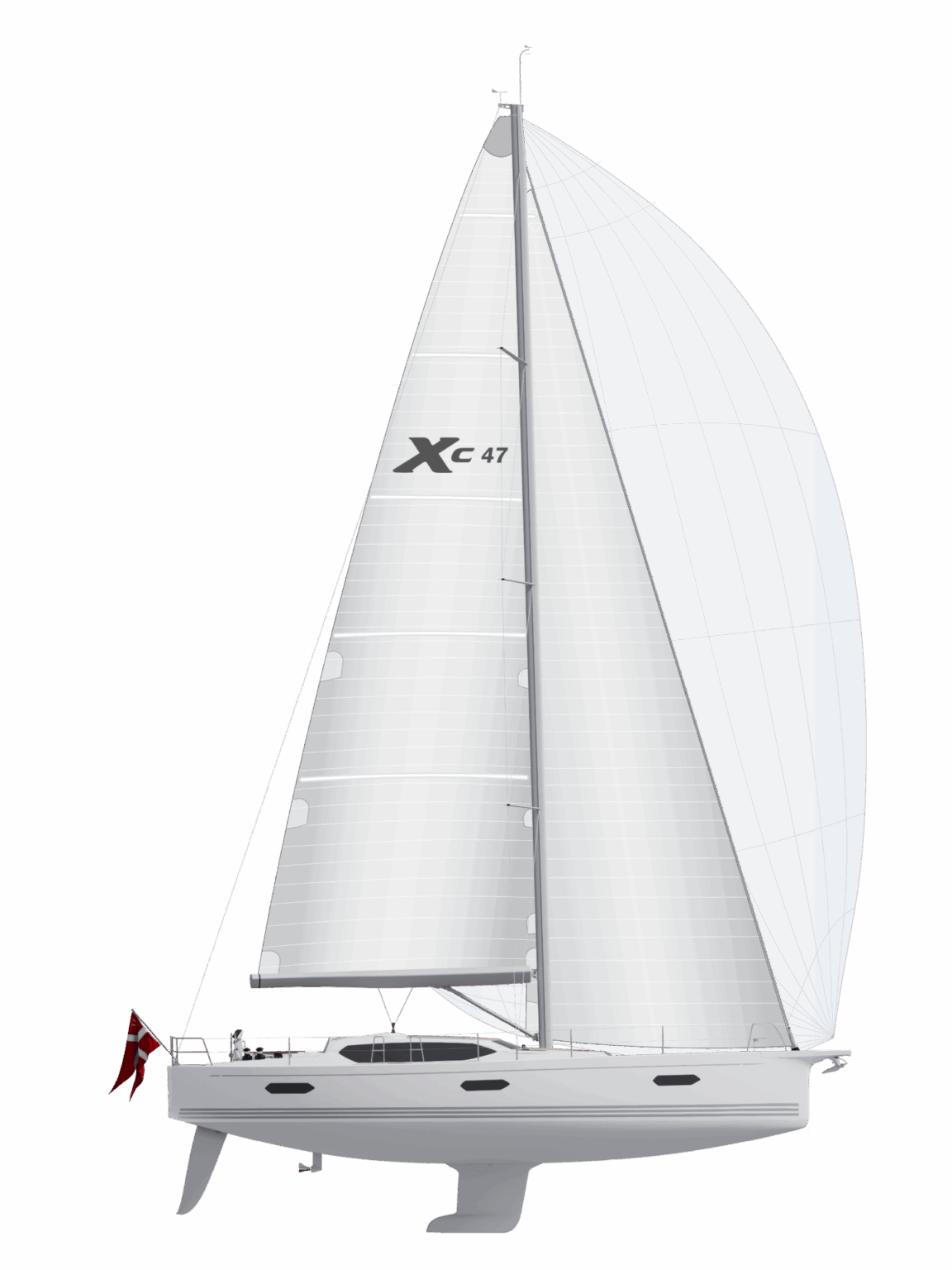
The X-Yachts Xc 47 is the sole representative of the XCruising range, a 47-foot blue-water cruiser designed for long-distance sailing in comfort. Nominated for the 2024 European Yacht of the Year, she combines X-Yachts sailing DNA with generous cruising amenities. A 500-litre fuel capacity and 640-litre water tank support extended passages. Shallow and standard draft options are available.
Length
14.37M
Beam
4.56M
Draft
2.3M
Day Guests
Sleeping
6
Cabin
3
Cruise Speed
Max Speed
Fuel
500L
Engine
Diesel 59 kW / 80 hp
Naval
X-Yachts Design
New Starting From
€600,000
No yachts found matching your criteria.
She needs very little wind to feel settled, and rewards plenty more without drama.
Close hauled in 7 to 10 knots of true wind, she holds 6 to 6.5 knots with only light weather helm. Crack off onto a reach at around 140 degrees true wind angle in 12 to 13 knots and a top down furling gennaker lifts her to 8.6 knots. Push into 17 to 18 knots true, gusting to 20, and the same sail carries her to 8 or 9.5 knots. Given a following swell and the gennaker set between 125 and 135 degrees, she has surfed to a recorded 11.5 knots. Tacking through roughly 85 degrees in 8 to 9 knots true returns 7 to 7.2 knots, proof that her deep, rockered hull keeps finding speed even as the breeze fades.
Interior volume was the brief, and it shows the moment you step below.
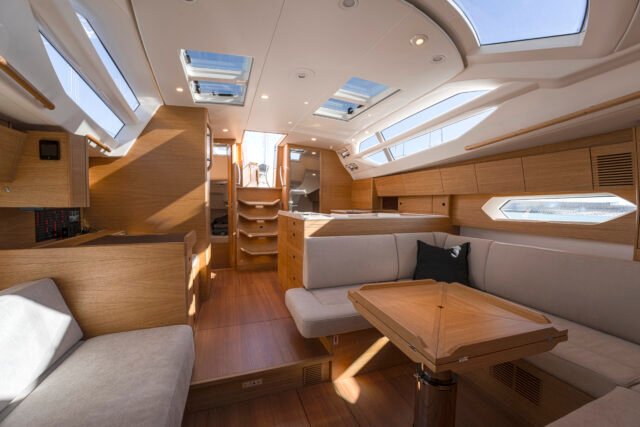
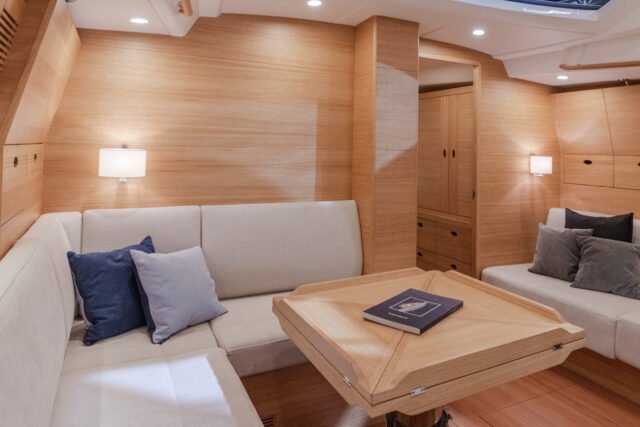
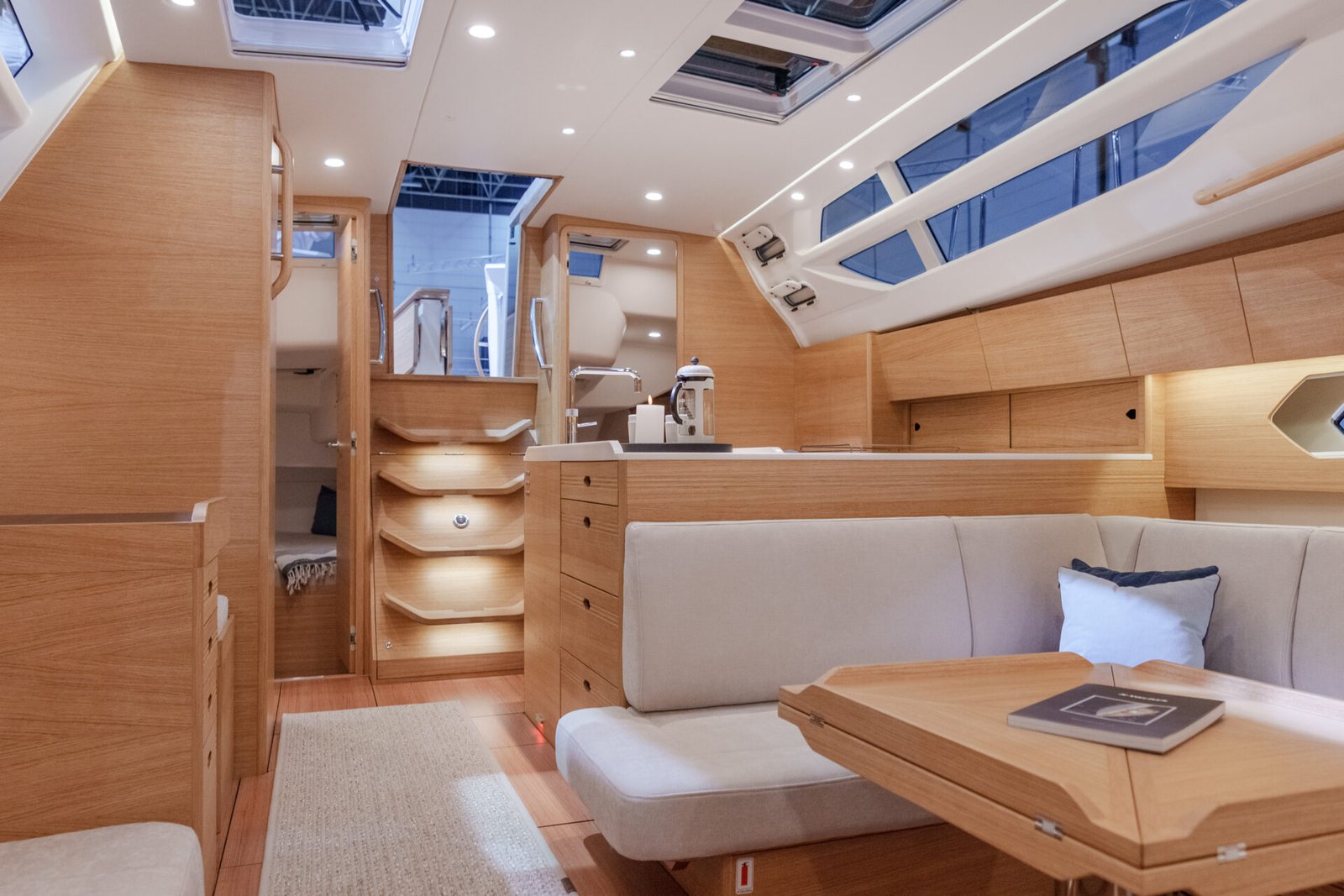
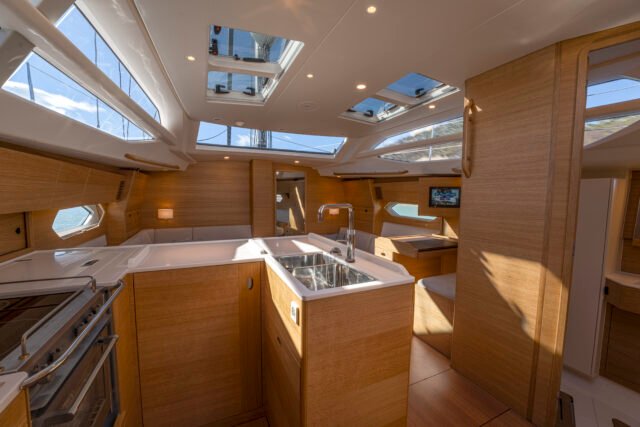
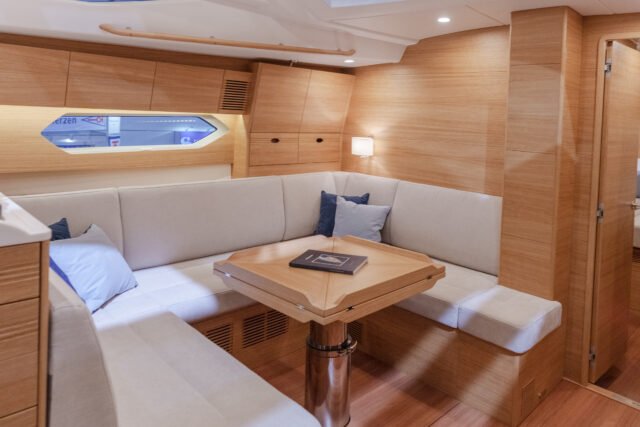
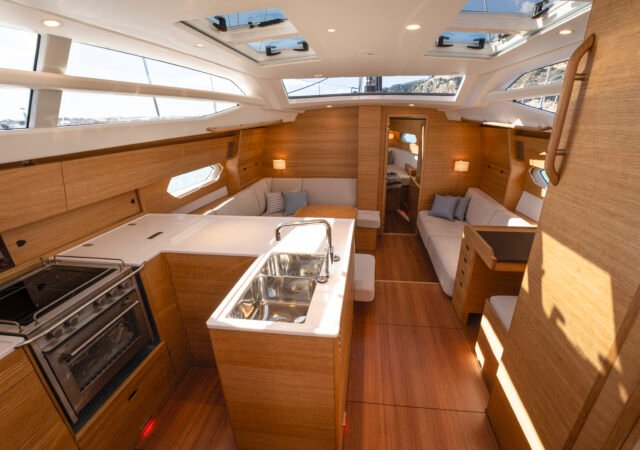
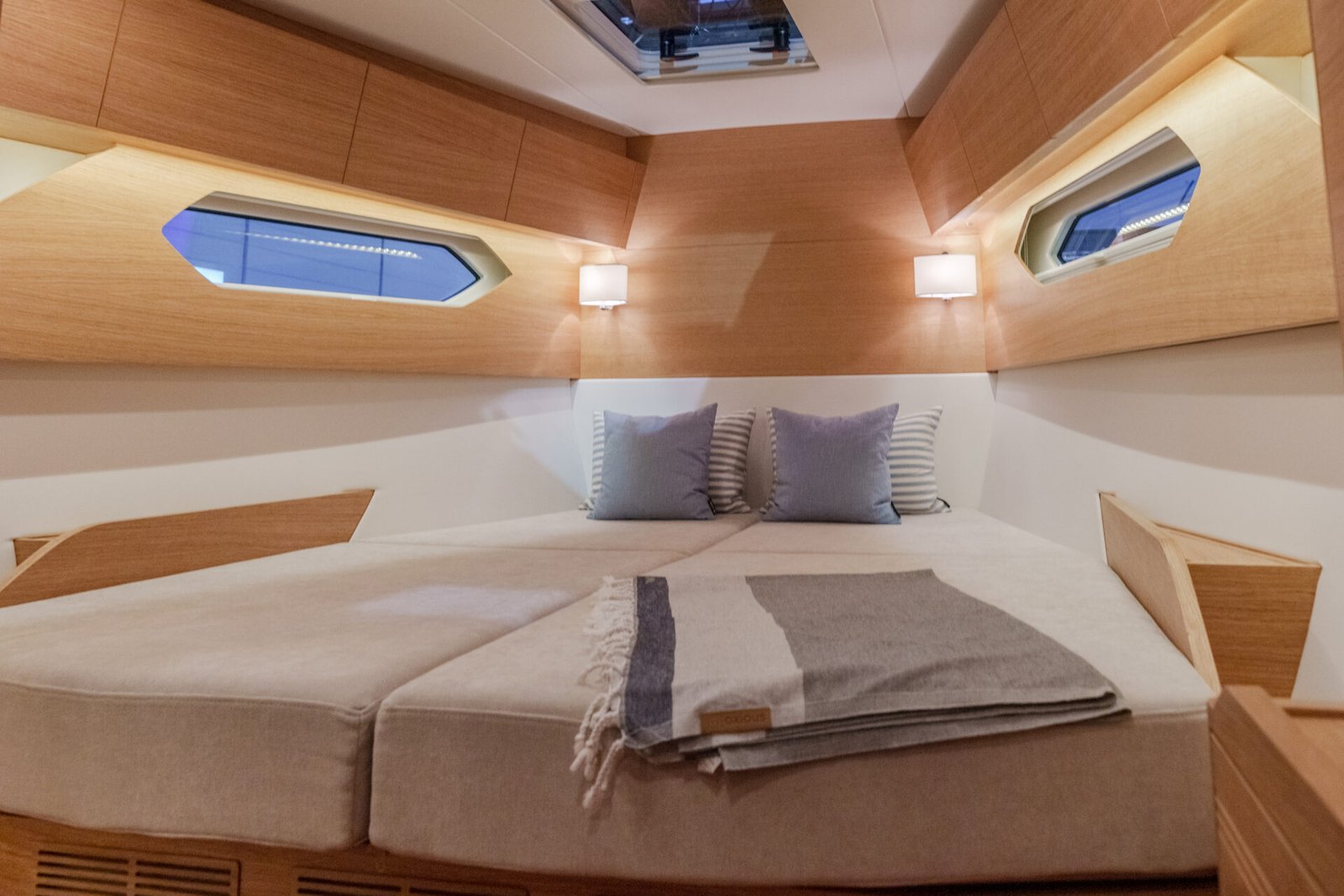
Her accommodation matches the larger Xc50 for space and beats her own discontinued predecessor, the Xc45, by 21 per cent, a gain owed to a deep canoe body with generous rocker rather than extra length. A hexagonal motif, repeated through the superstructure, the hull windows and the cabinetry, gives the interior a consistent identity rather than a catalogue of separate choices. X-Yachts built a full scale mock up of the interior and heeled it 20 degrees each way during development, refining handholds and fiddle rails before a single hull was laid up. The result below is calm rather than busy: tall windows, a raised cockpit floor that lifts the saloon’s sightlines, and joinery that favours function over flourish.
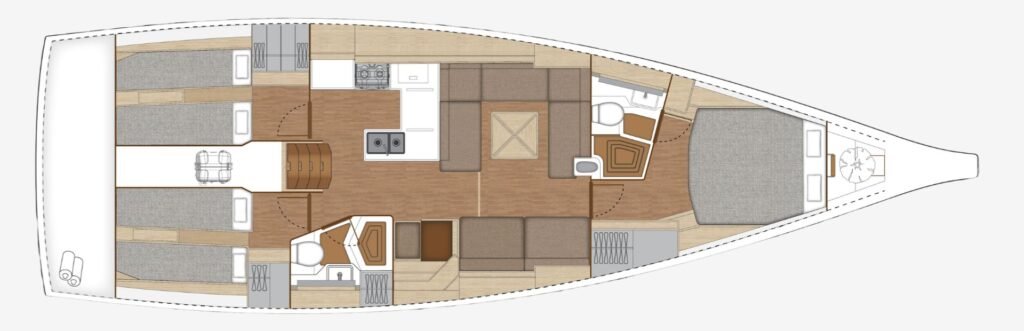
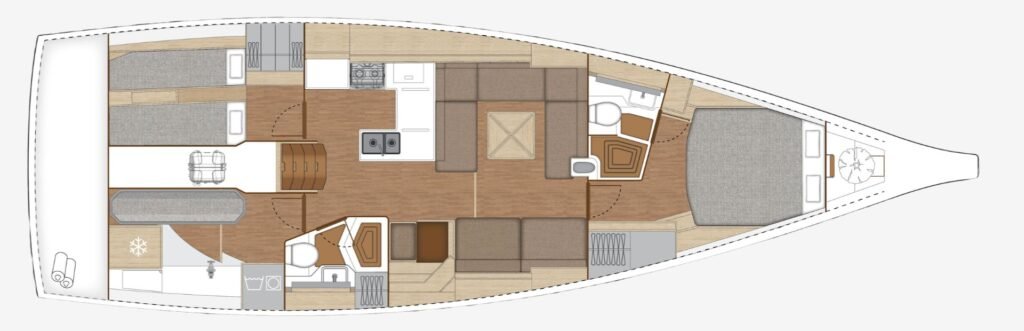
Three cabins and six berths, arranged so a long passage never feels cramped.
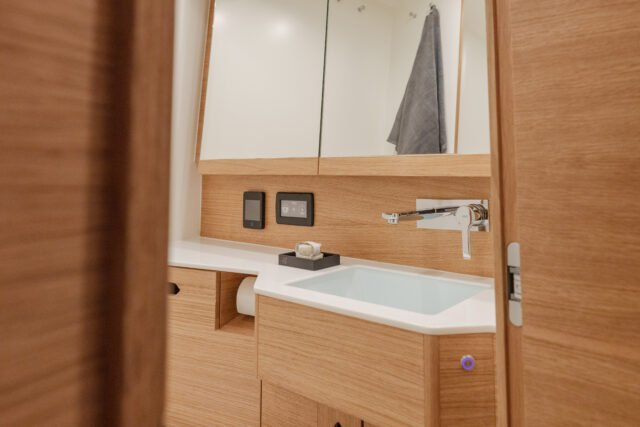
Two guest cabins sit aft of the saloon, with berths that split to suit a couple or a pair of singles, alongside the owner’s accommodation forward. Two heads compartments, each with a mirrored cabinet, keep mornings efficient when the boat is full. Owners who prefer fewer guests can specify a two cabin layout instead, converting one aft quarter into a utility space with up to 300 litres of additional refrigeration, a meaningful upgrade for anyone provisioning for weeks rather than days. Ventilation is considered throughout: opening overhead hatches, a forward facing hatch above the bow berth, and covered vents serving the heads and galley keep air moving at anchor as well as underway.
Five hundred litres of diesel is only half the story on the Xc47.
Her standard 59kW, 80hp saildrive is matched to 500 litres of fuel and 640 litres of water, enough for genuine point to point passages without relying on a marina. An optional hybrid system goes further: a 25kW Oceanvolt Servoprop drawing on a 46.8kWh battery pack, backed by an 11kW generator that can extend range well beyond what diesel alone would offer. That drivetrain has already won a leading marine industry innovation award, recognition that reflects genuine engineering rather than marketing. Under sail, the same system regenerates power, drawing around 500 watts back into the batteries at a boat speed of 8.5 knots, turning every passage partly into a charging cycle.
She is the first X-Yacht to come entirely from the yard’s own design team, and it shows in the detail.
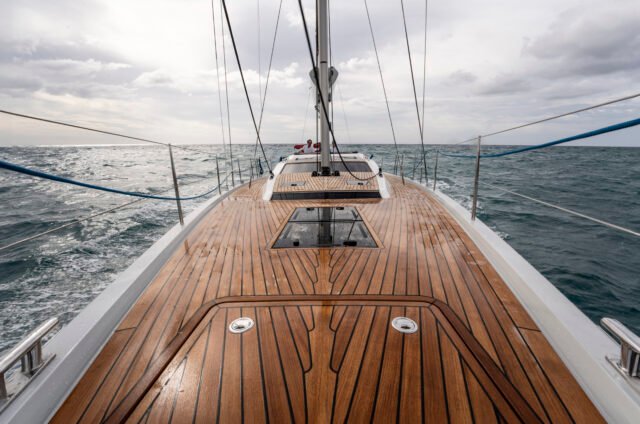
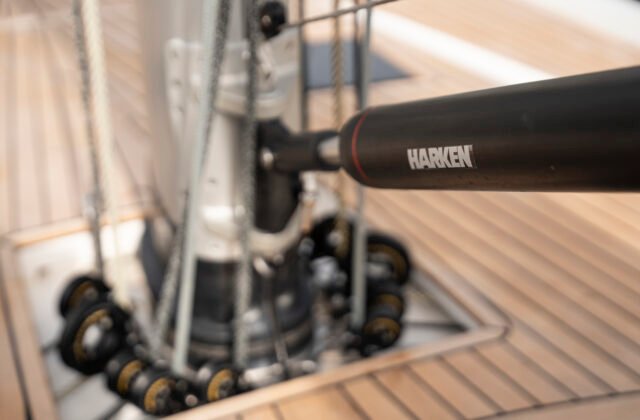
Led by Thomas Mielec, that team built a hull to a displacement of 14,900 kilograms from a vacuum infused, post cured foam core sandwich in E-glass and epoxy, with carbon reinforcement through the structural members and the coachroof, where it carries the loads from the mainsheet traveller. A galvanised steel frame spreads the keel and rig loads through the structure. On deck, a central hydraulic backstay can be worked from either tack, paired Harken winches sit on each coaming, and halyards are run aft through stainless steel conduits to cut friction at the mast. X-Yachts says she can carry full main with the wind well aft of the beam in true winds up to 25 knots, a figure that speaks to how much confidence went into this first independent design.
Tell us what you would like to know, and our team will respond with clear details on availability, specification, pricing and next steps.