YYachts / YYachts Y7
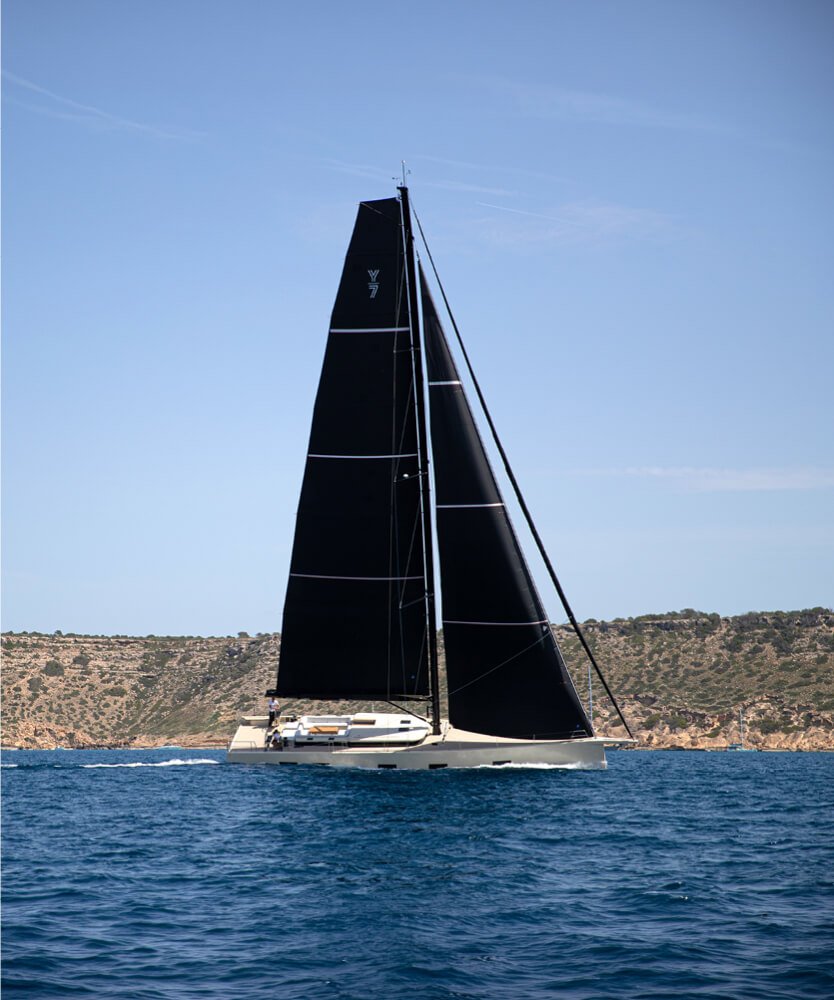
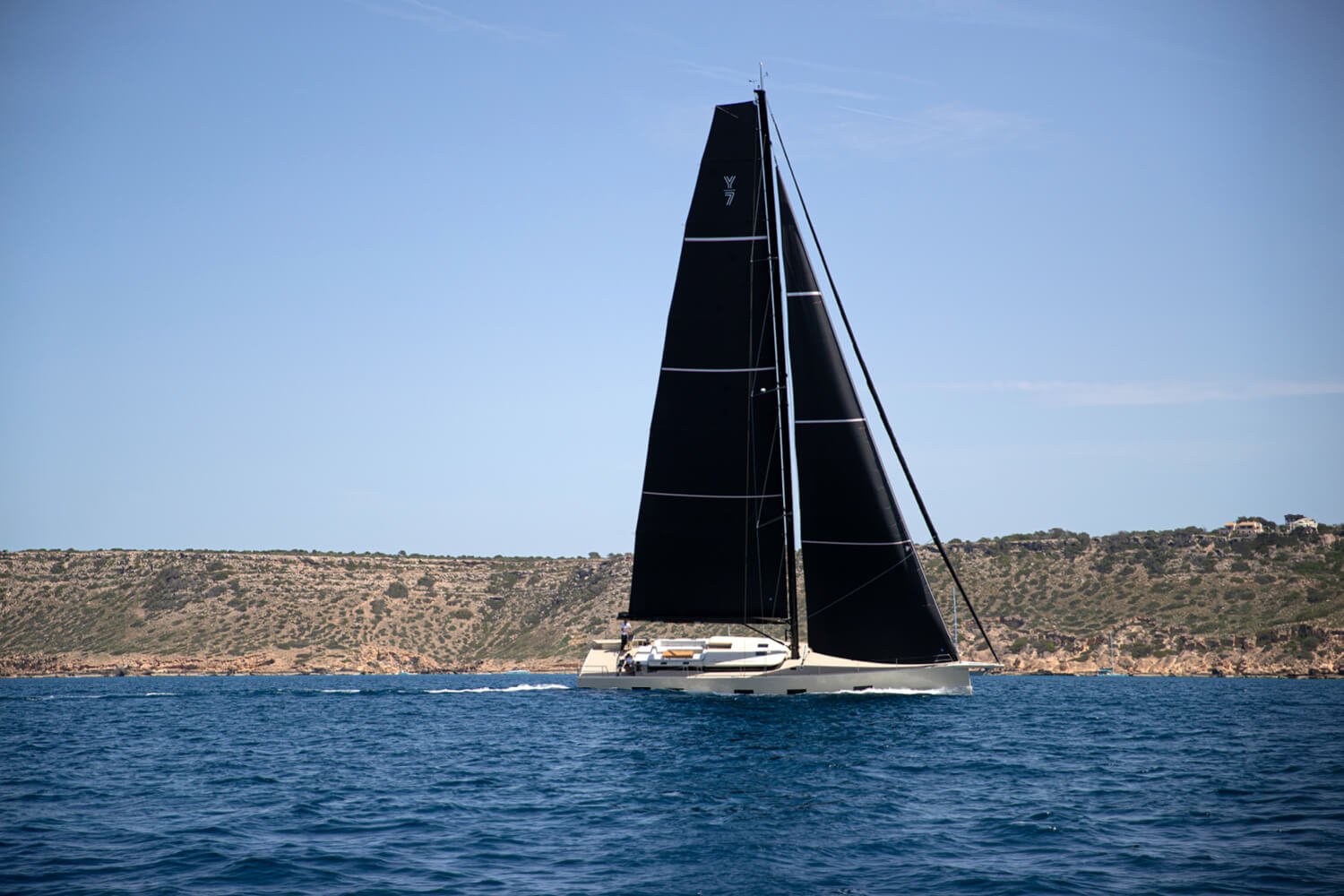
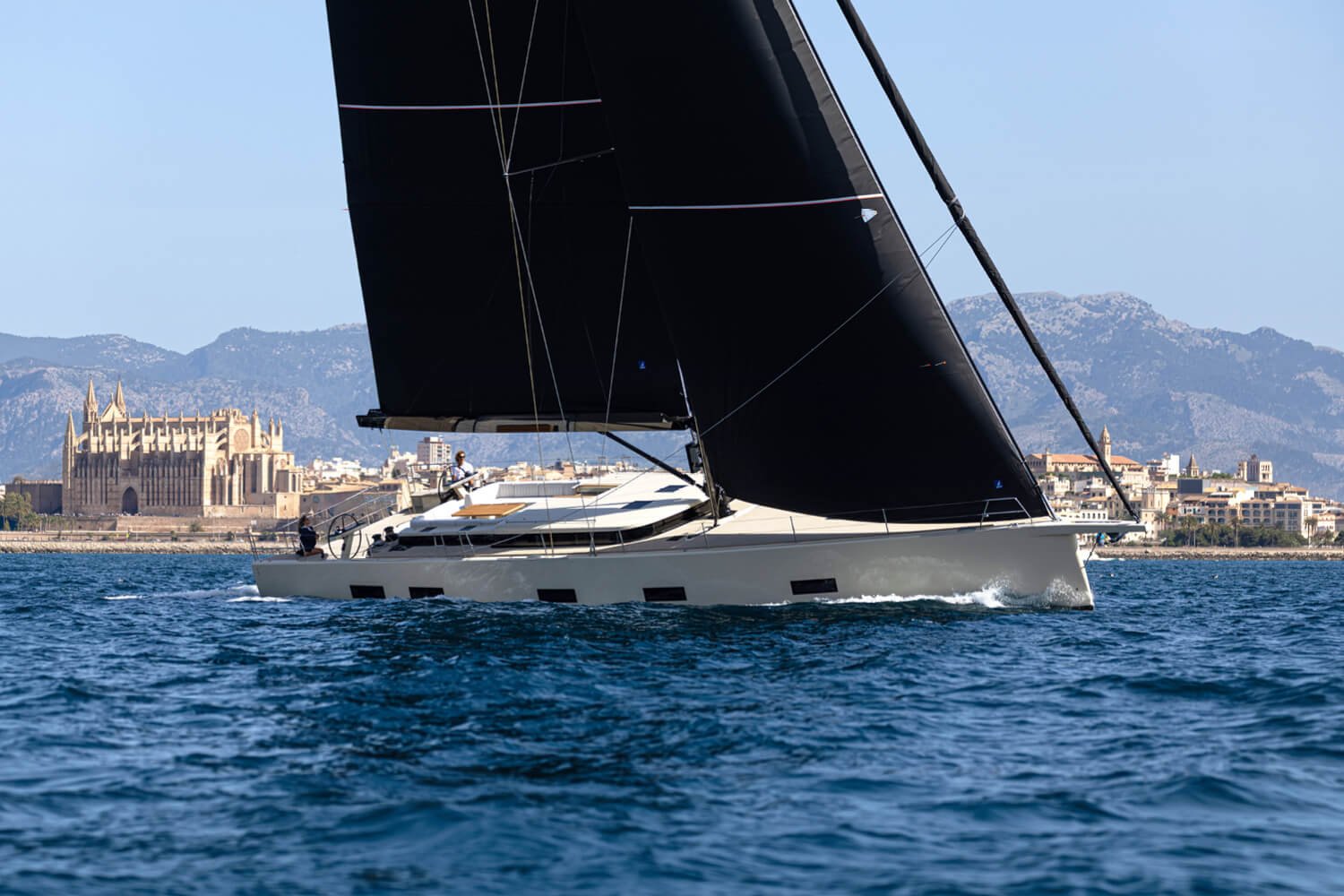
The YYachts Y7 is the brand’s most successful model with over 20 units delivered, a 72-foot carbon sailing yacht redesigned as a New Generation model. Naval architecture by judel/vrolijk with David Thulstrup interiors. At 31.8 tonnes, she carries 180 square metres of mainsail. Telescopic and shallow draft options suit varied cruising grounds. CE Category A ocean certified.
Length
21.99M
Beam
6.1M
Draft
3.5M
Day Guests
Sleeping
6
Cabin
3
Cruise Speed
Max Speed
Fuel
Engine
Yanmar 4LV150 (110 kW)
Naval
judel/vrolijk & co
Interior
David Thulstrup
New Starting From
€4,500,000
High Price Brokerage
€3,000,000
Low Price Brokerage
€2,200,000
No yachts found matching your criteria.
Light air is where this hull is most honest.
In a bare four to five knots at the masthead, gusting seven to eight, she still built steadily through five, six and seven knots of boat speed, matching the wind rather than sitting below it. Downwind is where she changes character entirely. Reaching across open water in a sustained 25 to 28 knots from astern, under nothing more than a self-tacking jib and a single-reefed mainsail, she held 20.7 knots through the water and averaged around 17 knots for three to four hours without a let-up. Twin rudders hold the line through that kind of load, their steering refined with a modified push-rod system after early boats felt stiff on the helm. It is performance that holds up well past the first gust.
Thirty percent more rigidity does not happen by accident.
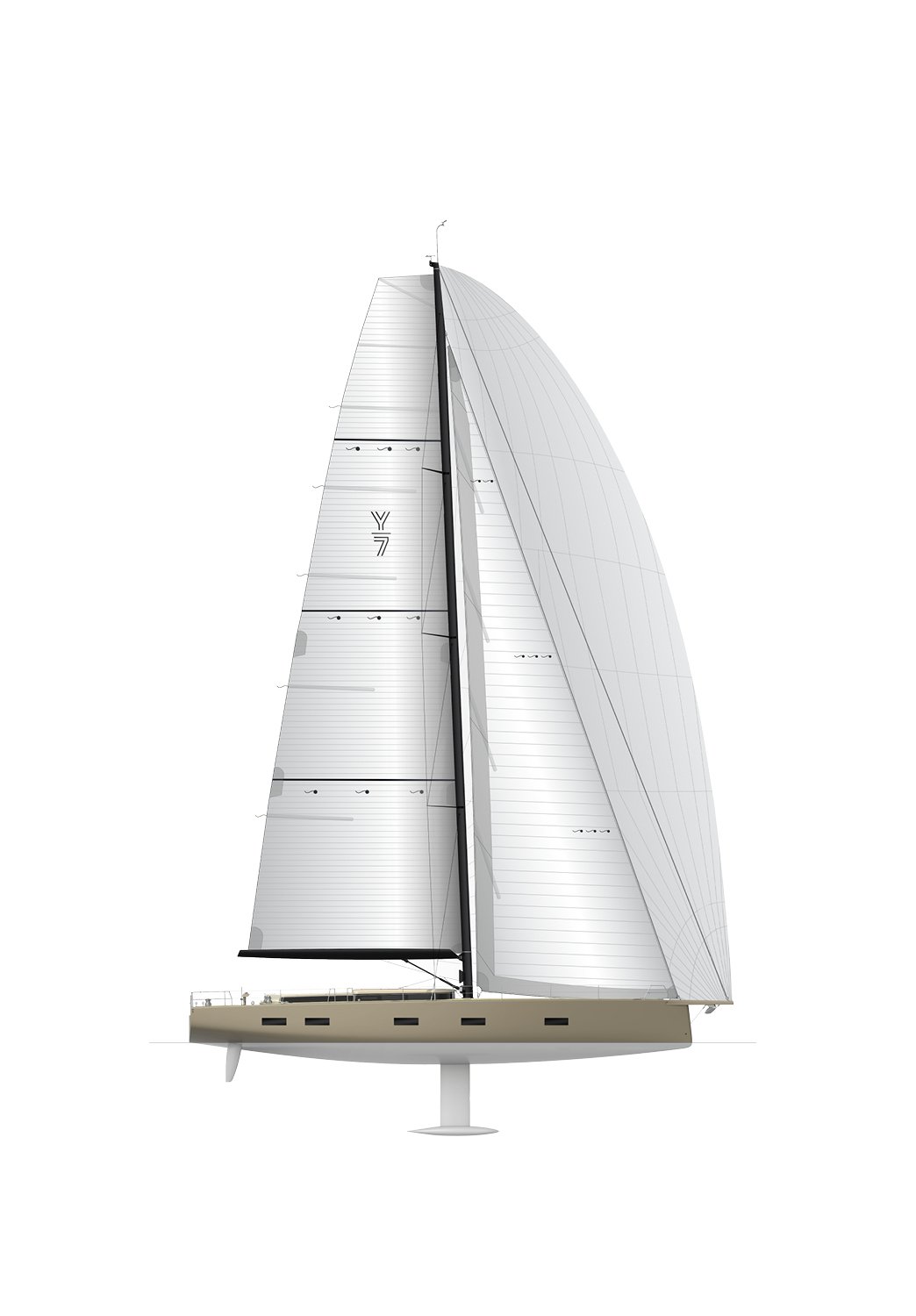
Judel/vrolijk’s engineers, Matthias Bröker and Jan Kuhnert among them, reworked the structure of this New Generation Y7 to lift stiffness by 30 percent over the original and improve the ratio of righting moment to heeling moment by 25 percent, which in practical terms raises the wind speed at which she needs her first reef. An eight-stay rig with wide, heavily swept spreaders supports a square-top mainsail on a mast approaching 35 metres, while a slightly negative deck rake and a wider, flatter transom tighten up the hull shape. Below decks, a service tunnel running from the bow carries the washing machine and much of the electrical system, keeping routine maintenance out of guest spaces entirely.
Everything on deck has a reason to be where it is.
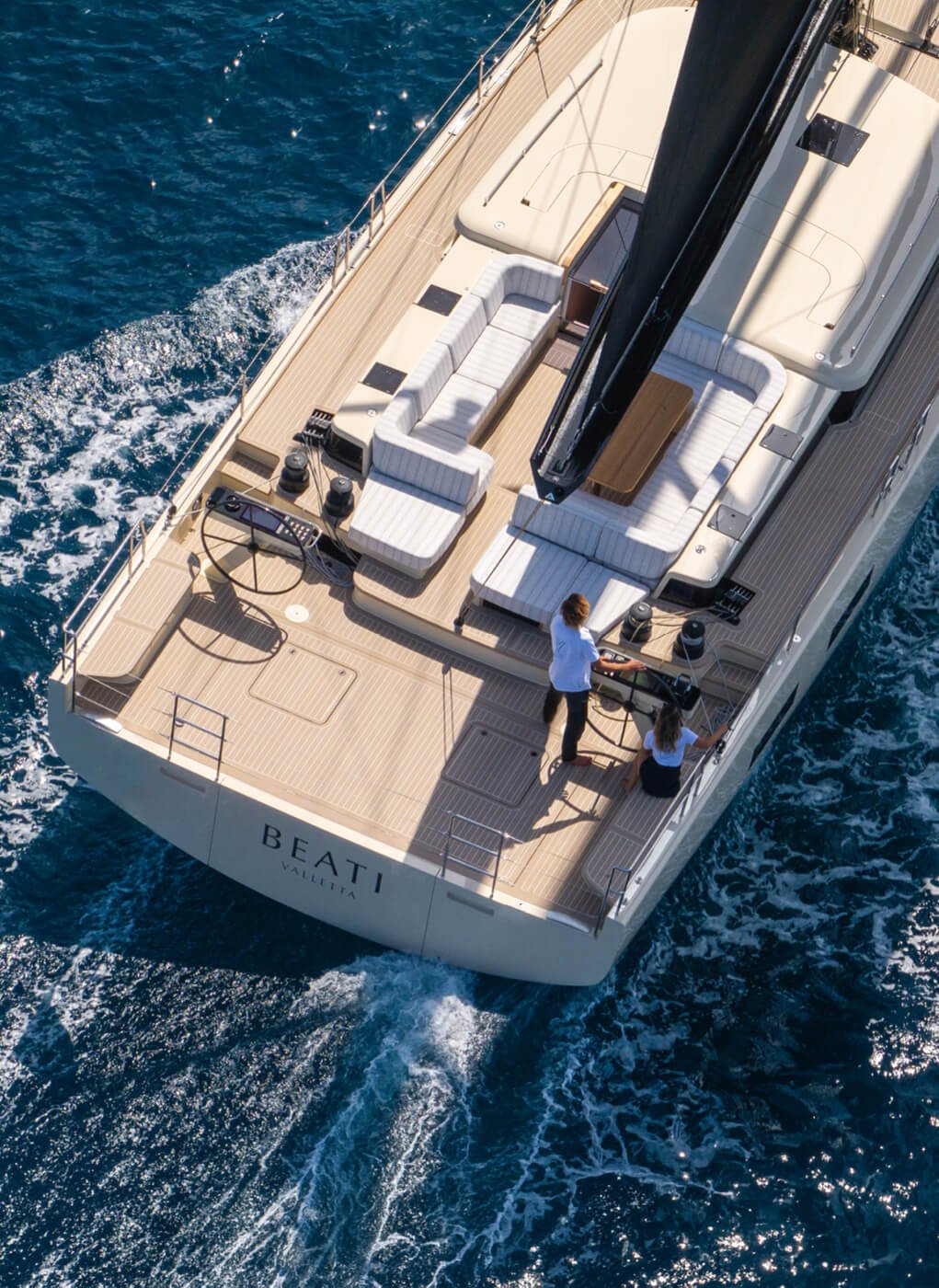
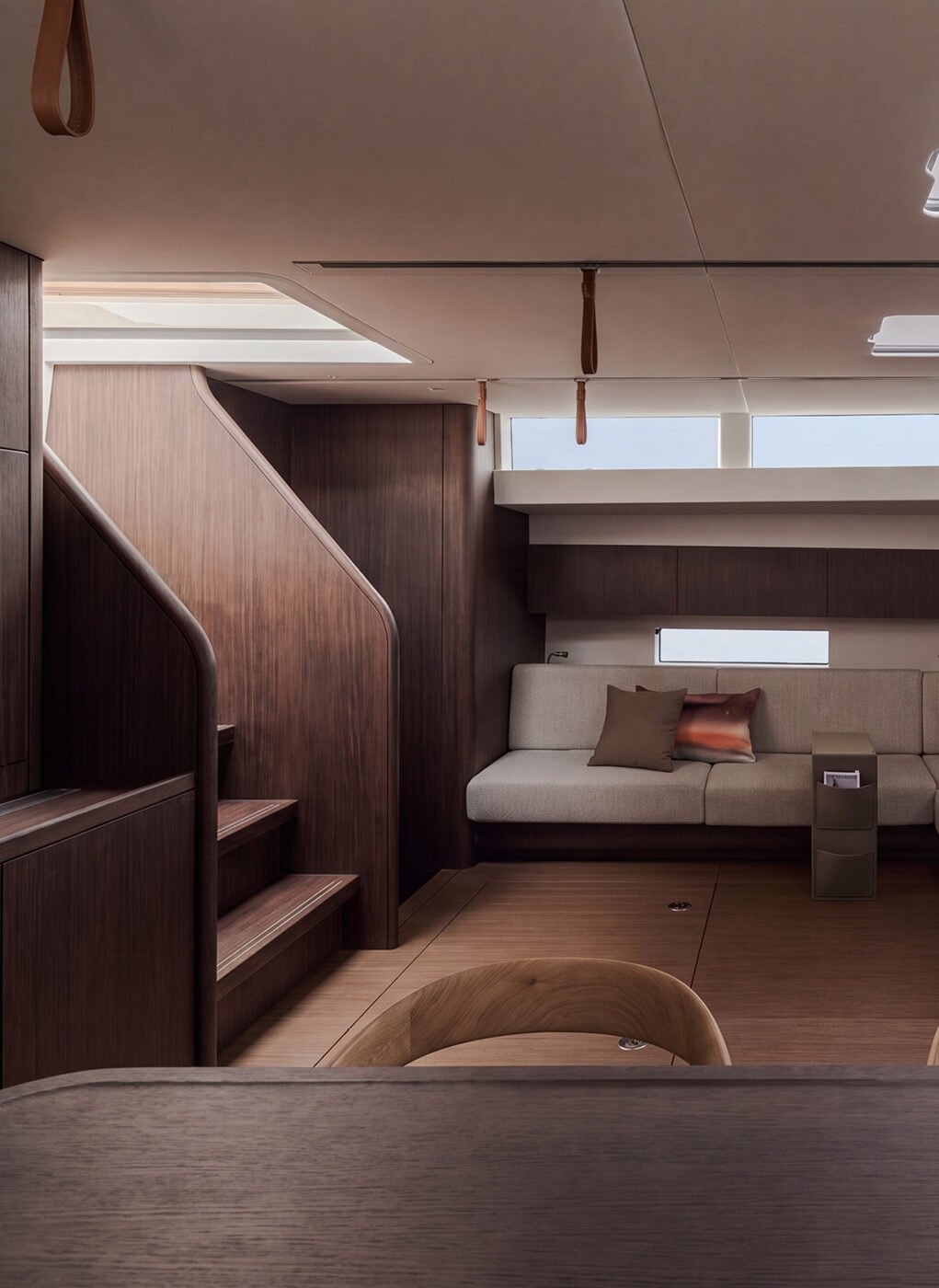
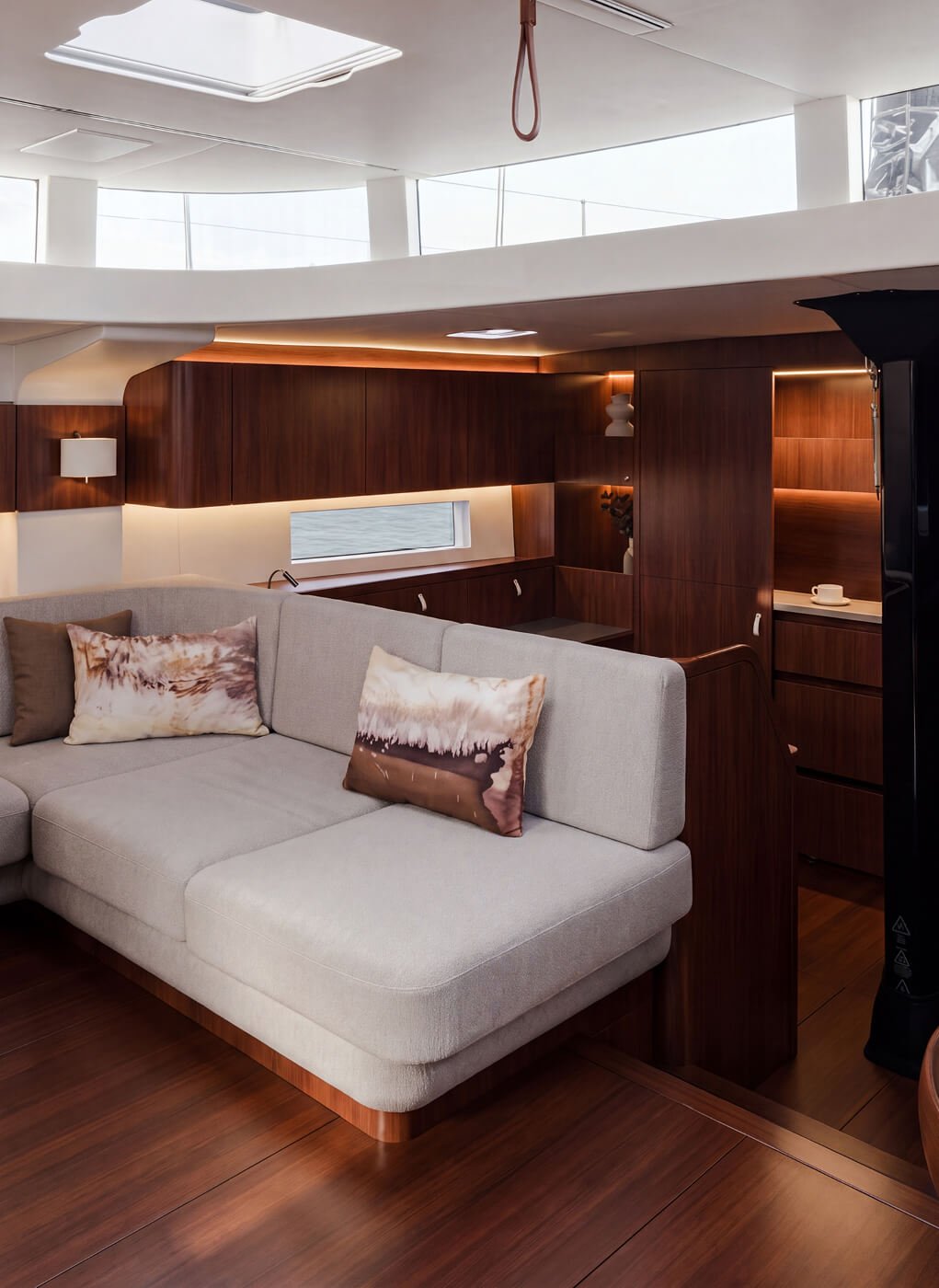
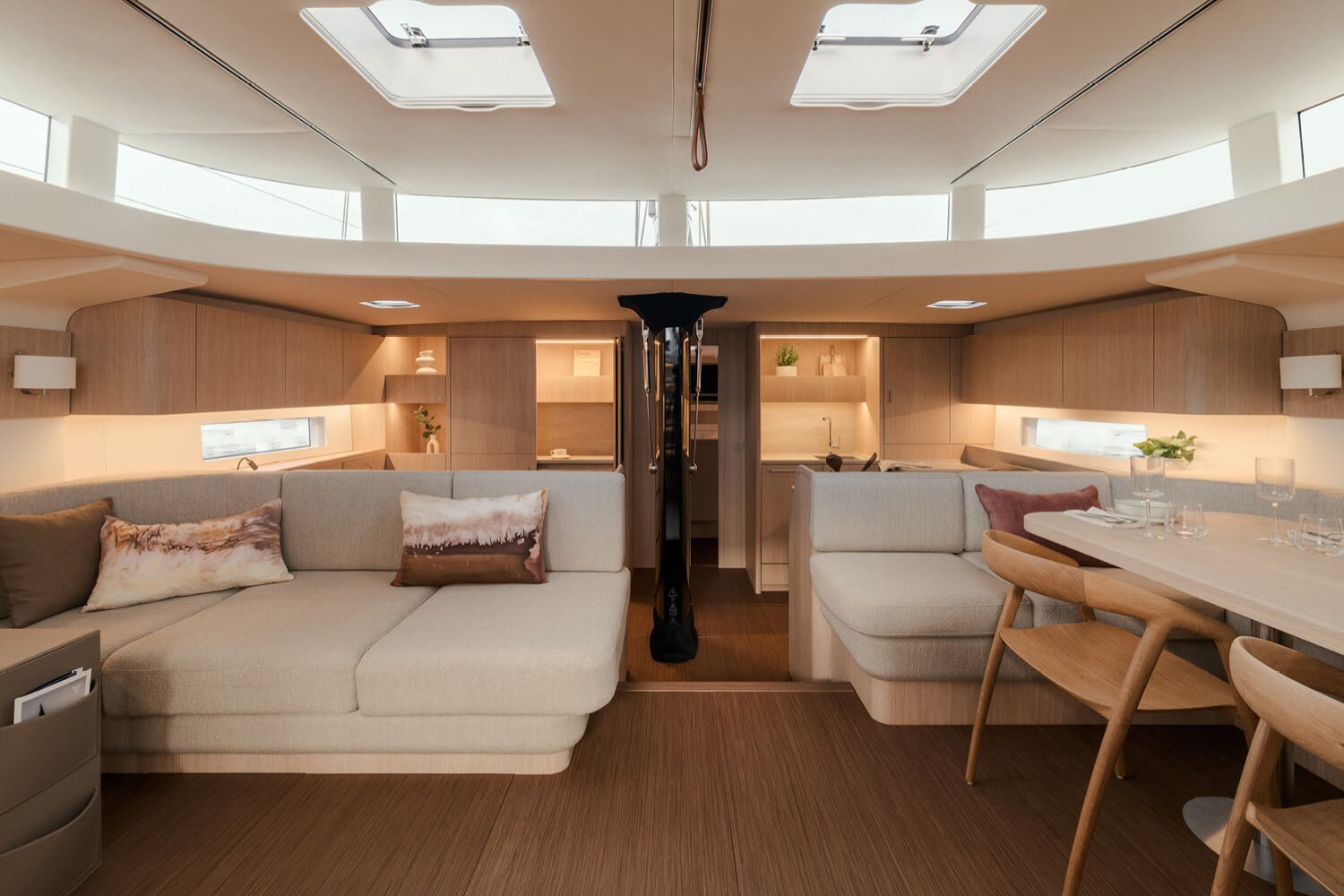
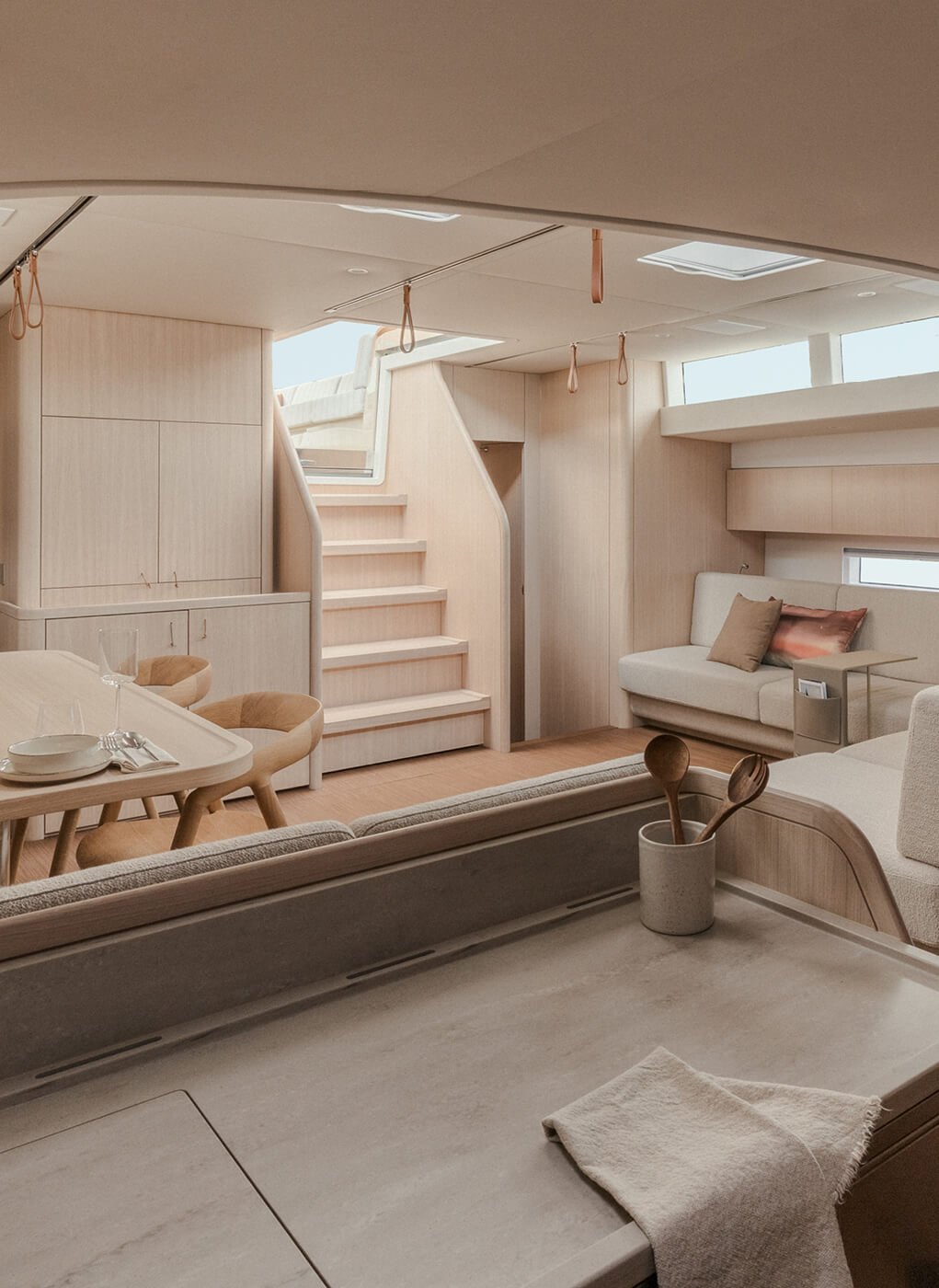
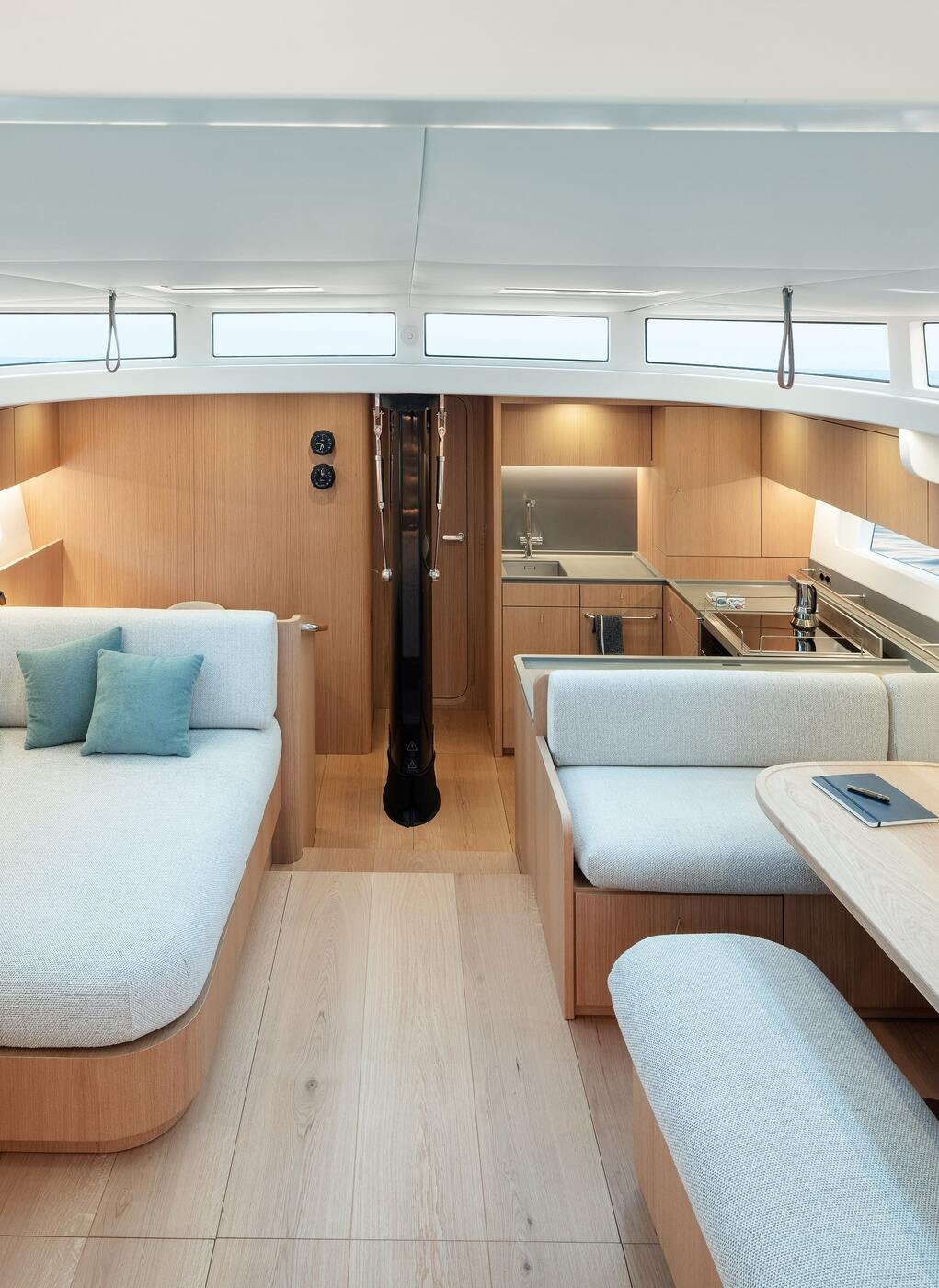
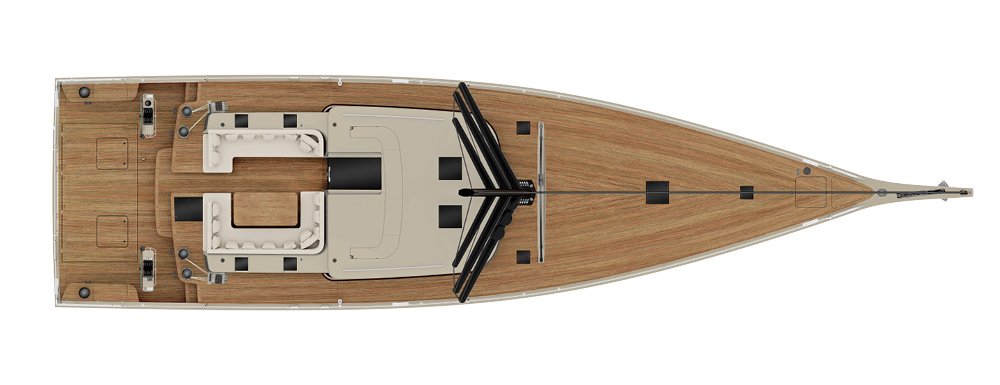
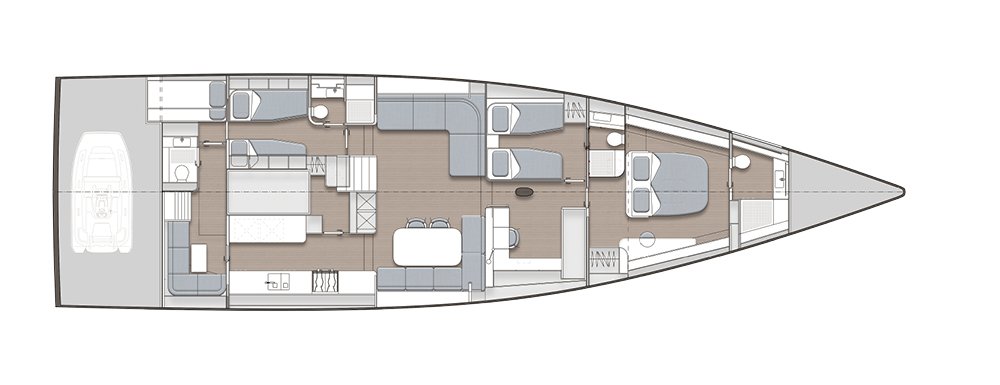
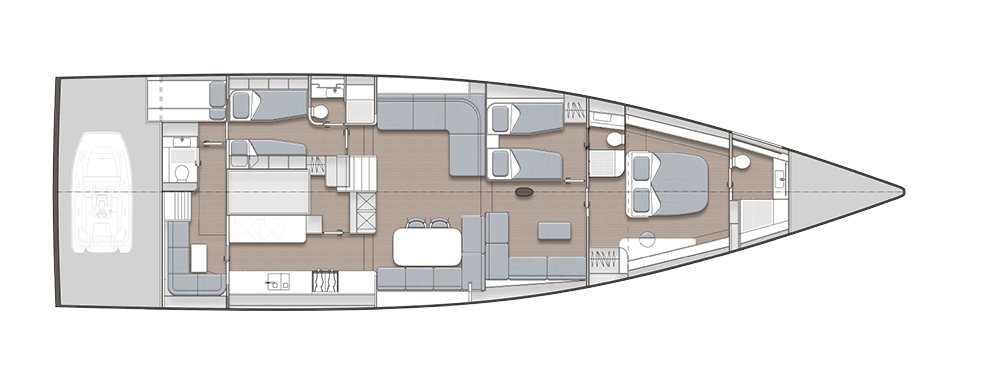
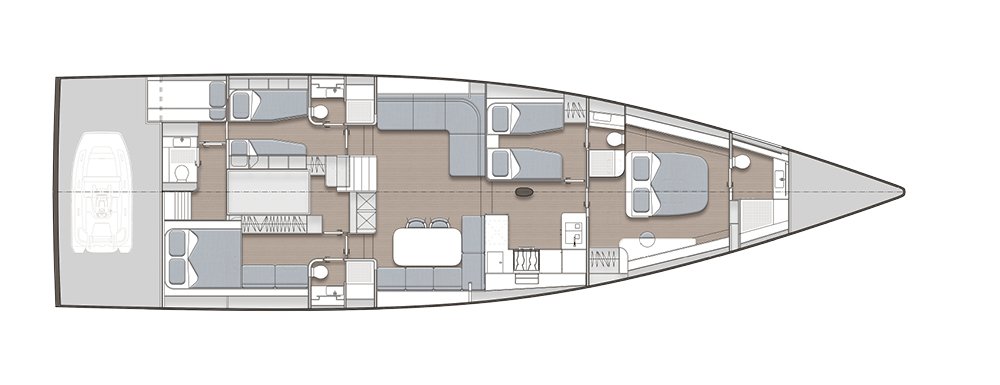
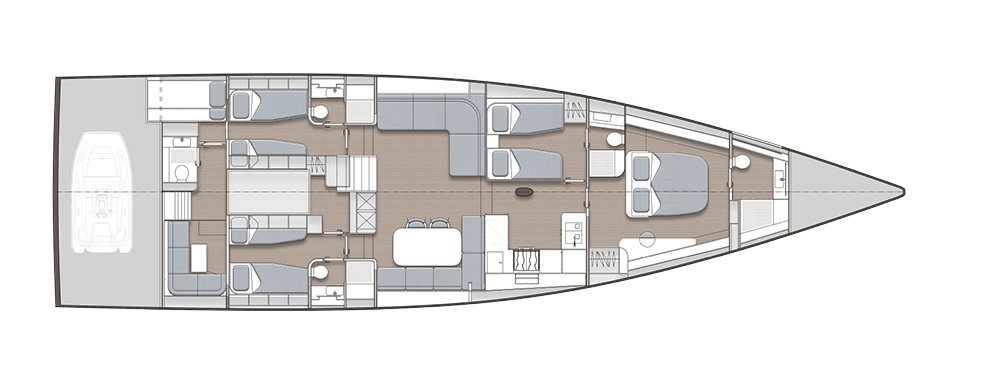
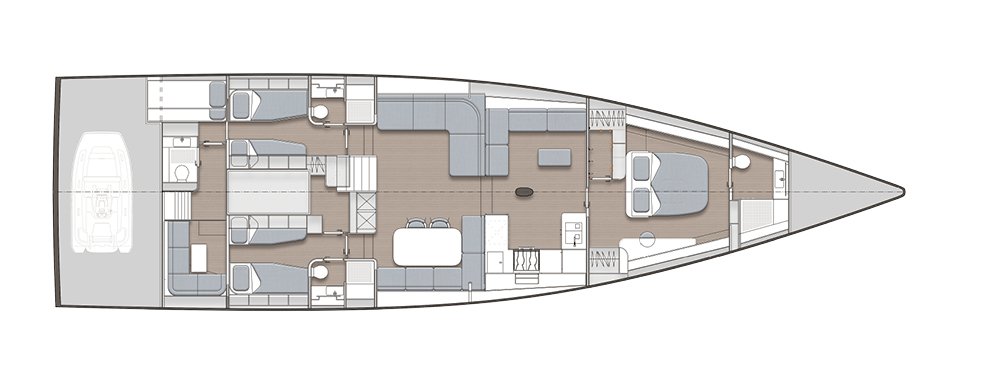
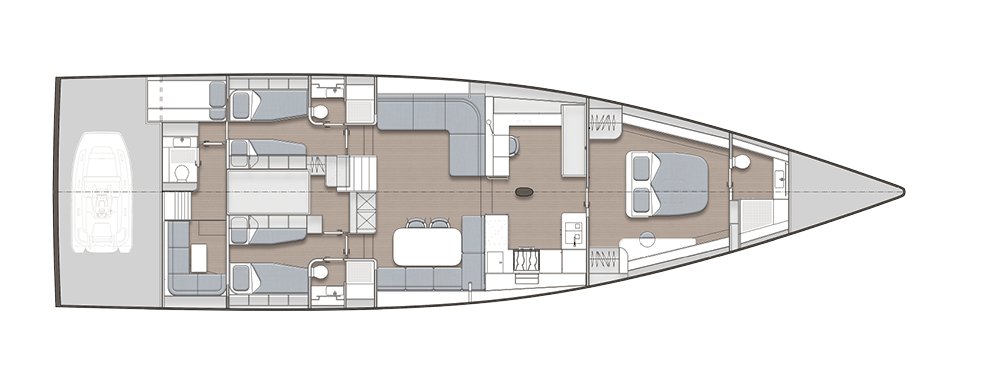
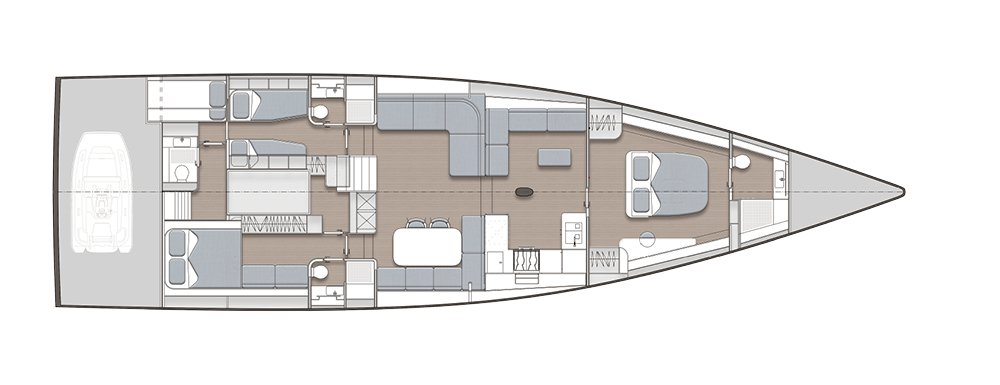
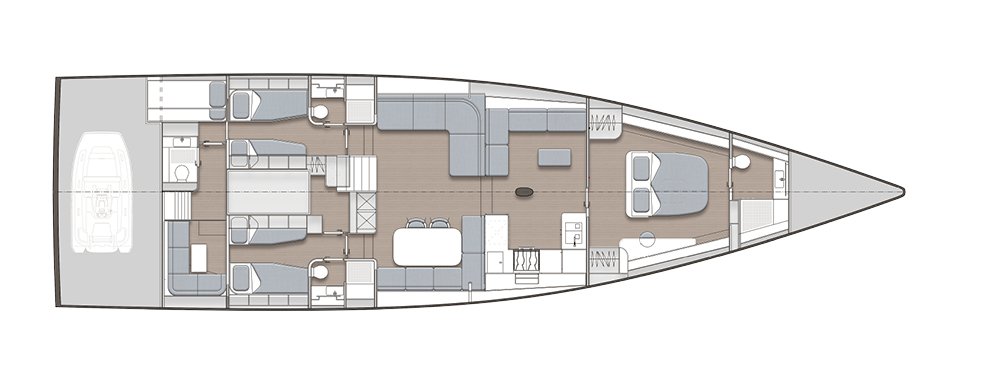
Steering columns, electric winches, halyard stoppers and line lockers sit aft, with the winches themselves raised onto platforms further amidships for a clearer, drier deck. The companionway to the saloon is offset to port, which keeps the guest cockpit free of the crew’s working traffic. Below, three basic accommodation layouts, each with five variations across four interior styles, give an owner close to three dozen ways to arrange the boat. The standard plan places a U-shaped galley to starboard against a convertible lounge to port that can become an office or a fourth cabin, forward of an owner’s suite built around an off-centre double berth reachable from three sides.
Thirty centimetres more beam, and she still looks lean.
Internal volume rises by roughly 20 percent over the original Y7 despite that extra width, a gain the designers absorbed into a more compact hull shape rather than a bulkier silhouette. The rig carries 180 square metres of mainsail and a 126 square metre self-tacking jib as standard, with a 147 square metre genoa, a 320 square metre Code Zero and a 500 square metre gennaker available for lighter conditions, giving a sail area ratio of 5.5. Eight stays and heavily swept spreaders support a square-top mainsail with a flared head, and the eye runs clean from the sheered bow to a flatter, wider transom that carries the hull’s beam right aft.
She is built to keep going long after the breeze picks up.
A Yanmar 4LV150 saildrive, rated at 110kW, backs up the rig for windless stretches and marina work, drawing on an 850 litre fuel tank matched by 850 litres of fresh water, enough for genuine multi-day passages without a marina stop. The choice between a 3.50 metre standard draught and a 2.85 metre shoal keel extends that autonomy to shallower cruising grounds that would otherwise be off limits. The passage that saw her hold 17 knots for three to four hours under working sail is itself a kind of range statement: this is a yacht built to cover real distance quickly, not simply to look fast at anchor.

Tell us what you would like to know, and our team will respond with clear details on availability, specification, pricing and next steps.