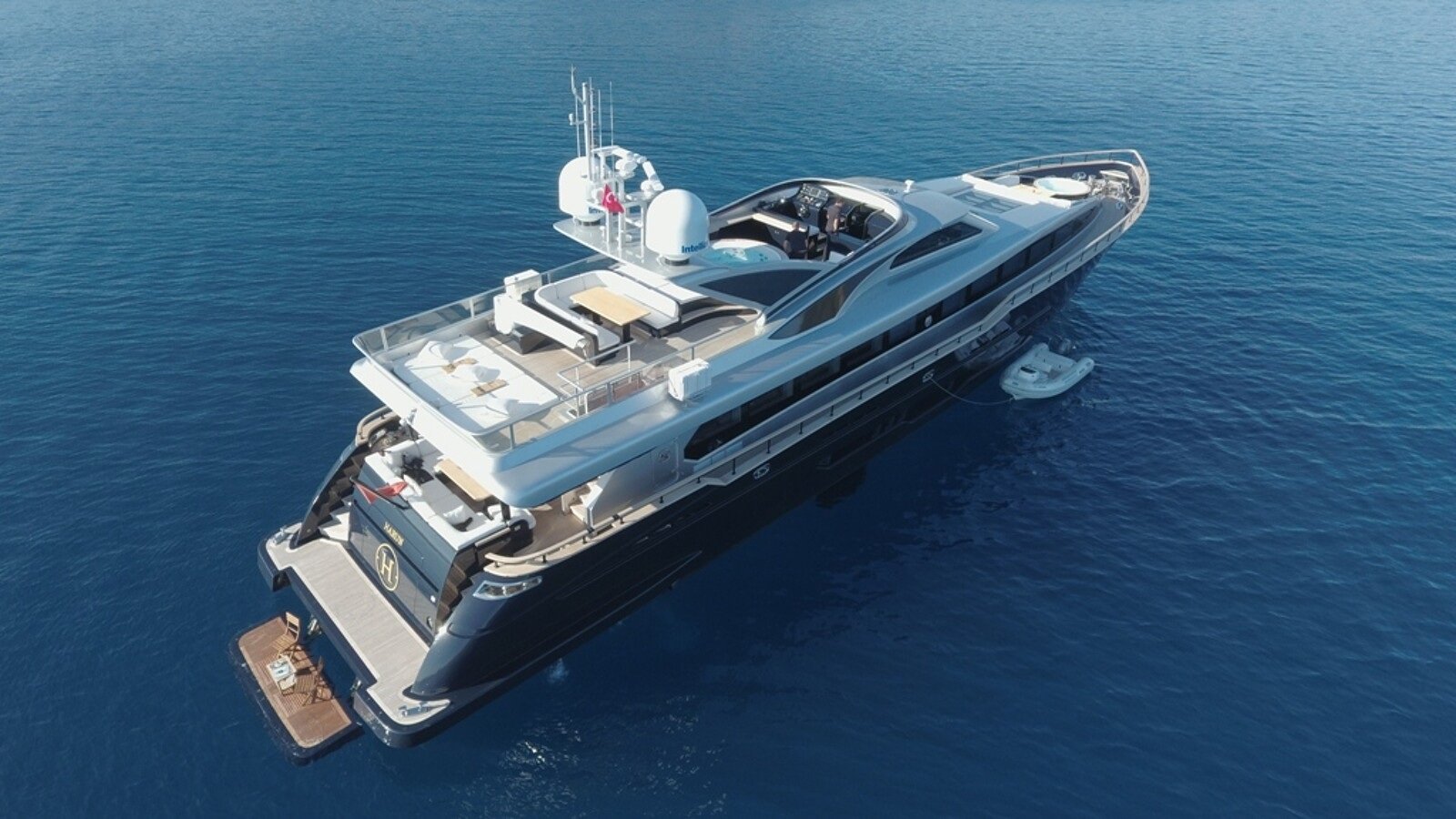
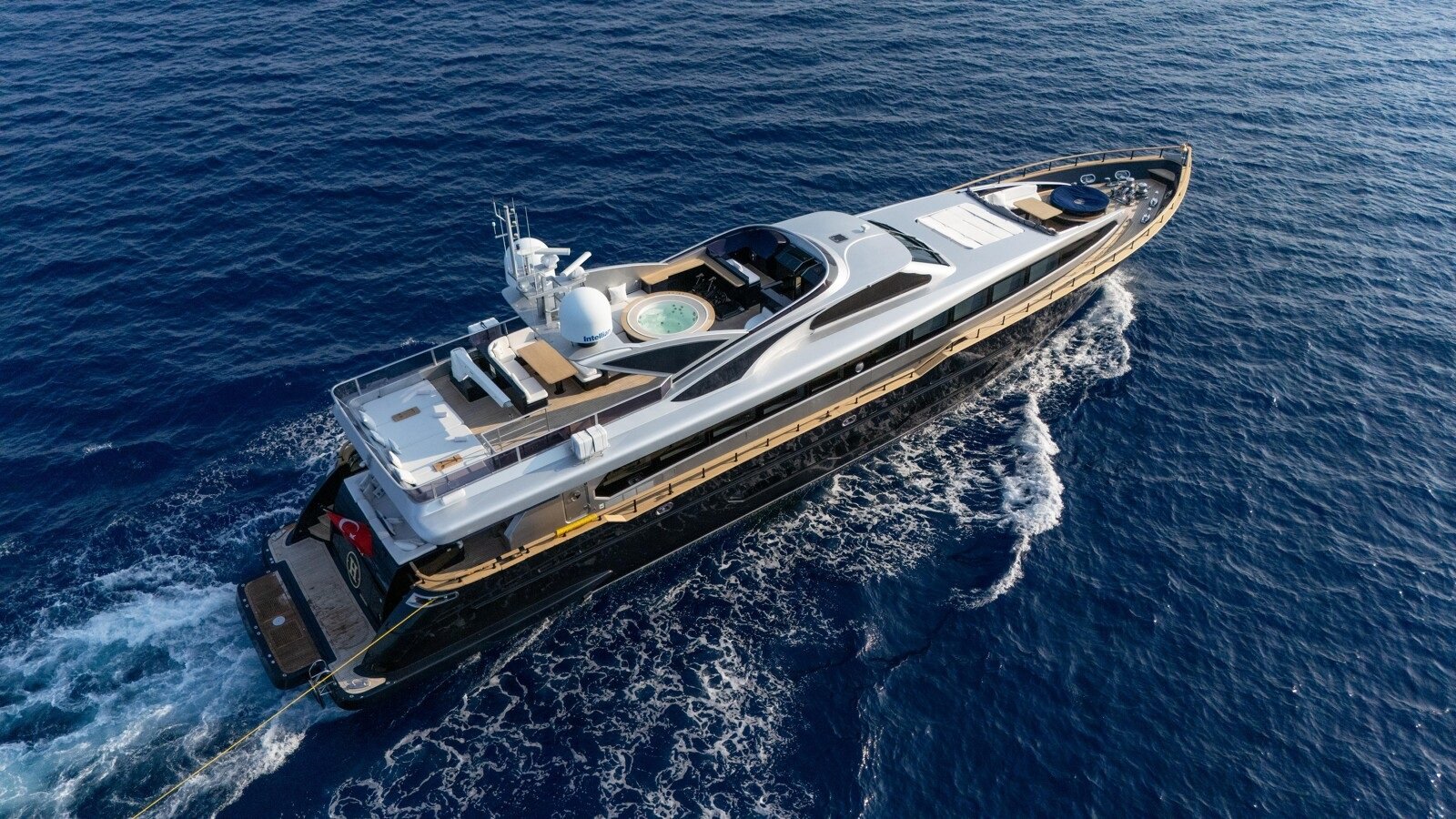
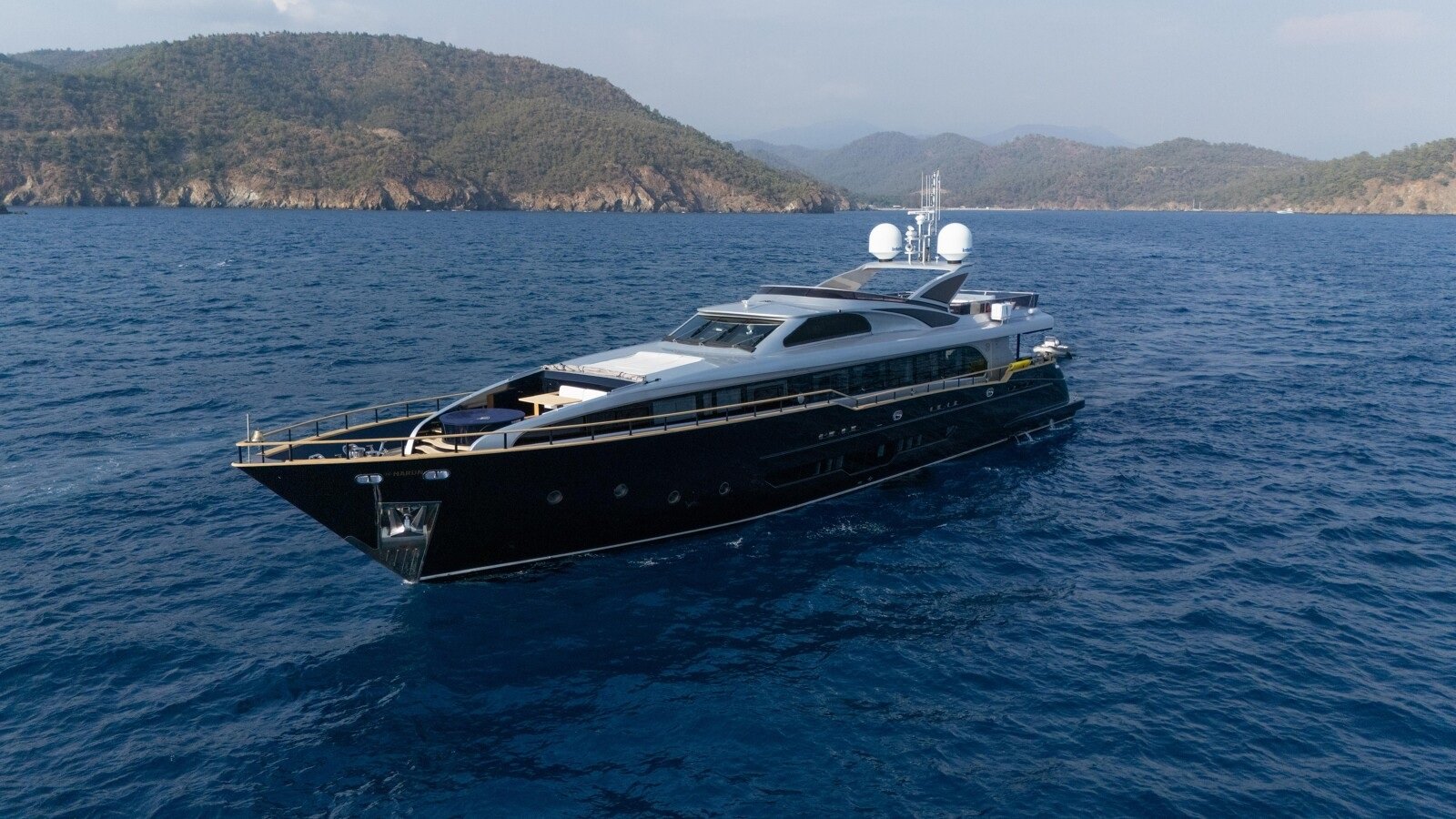
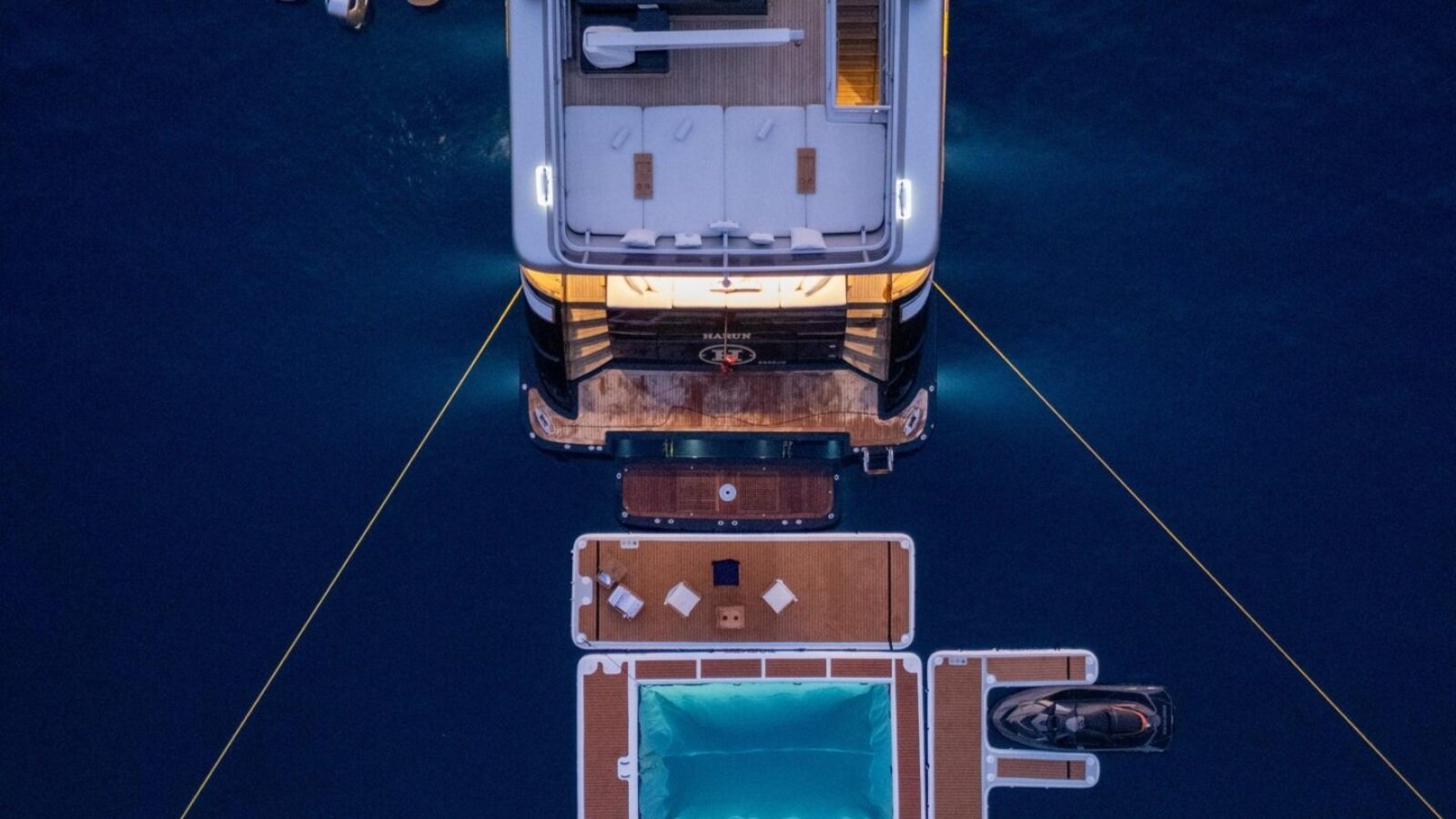
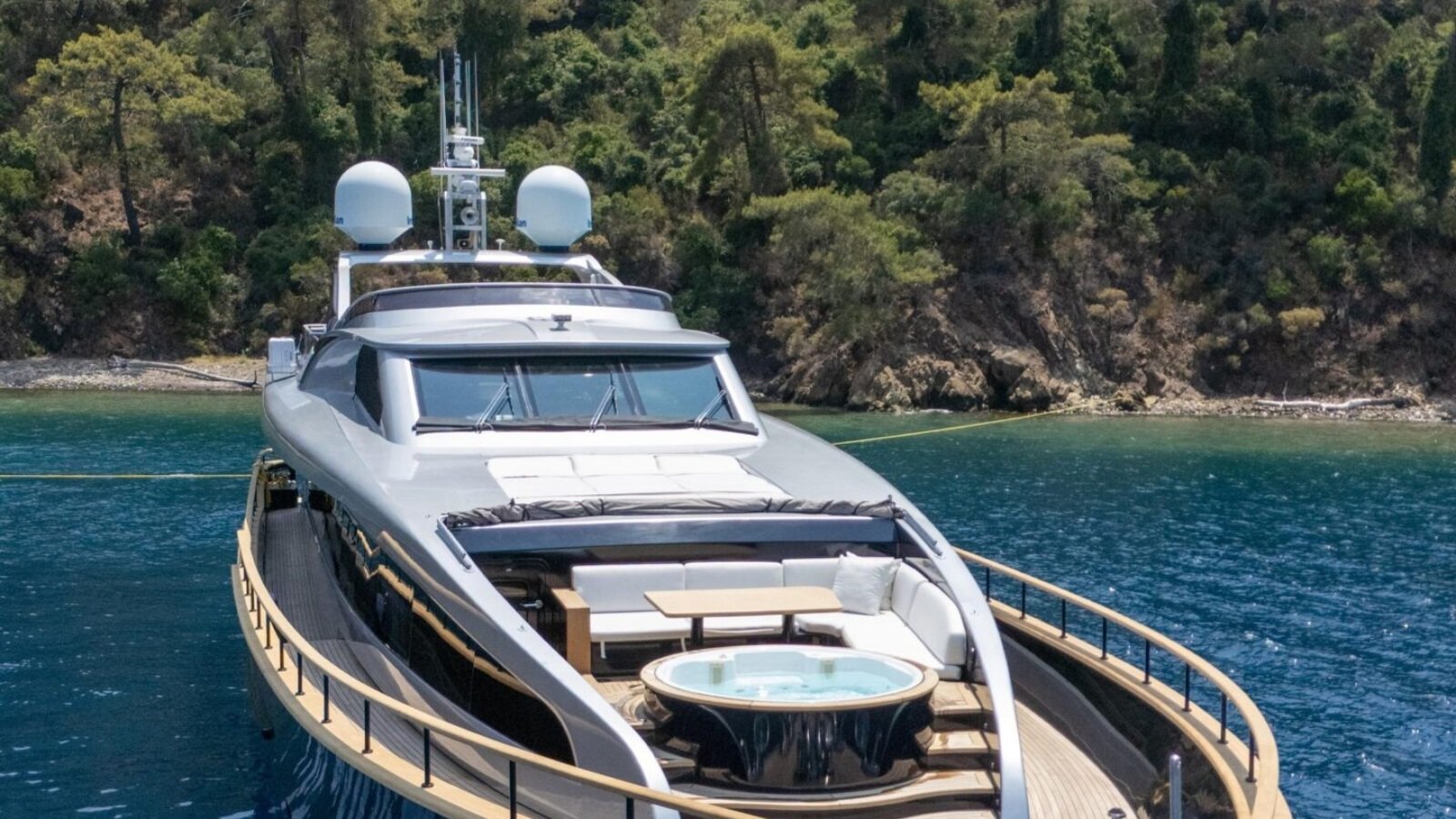
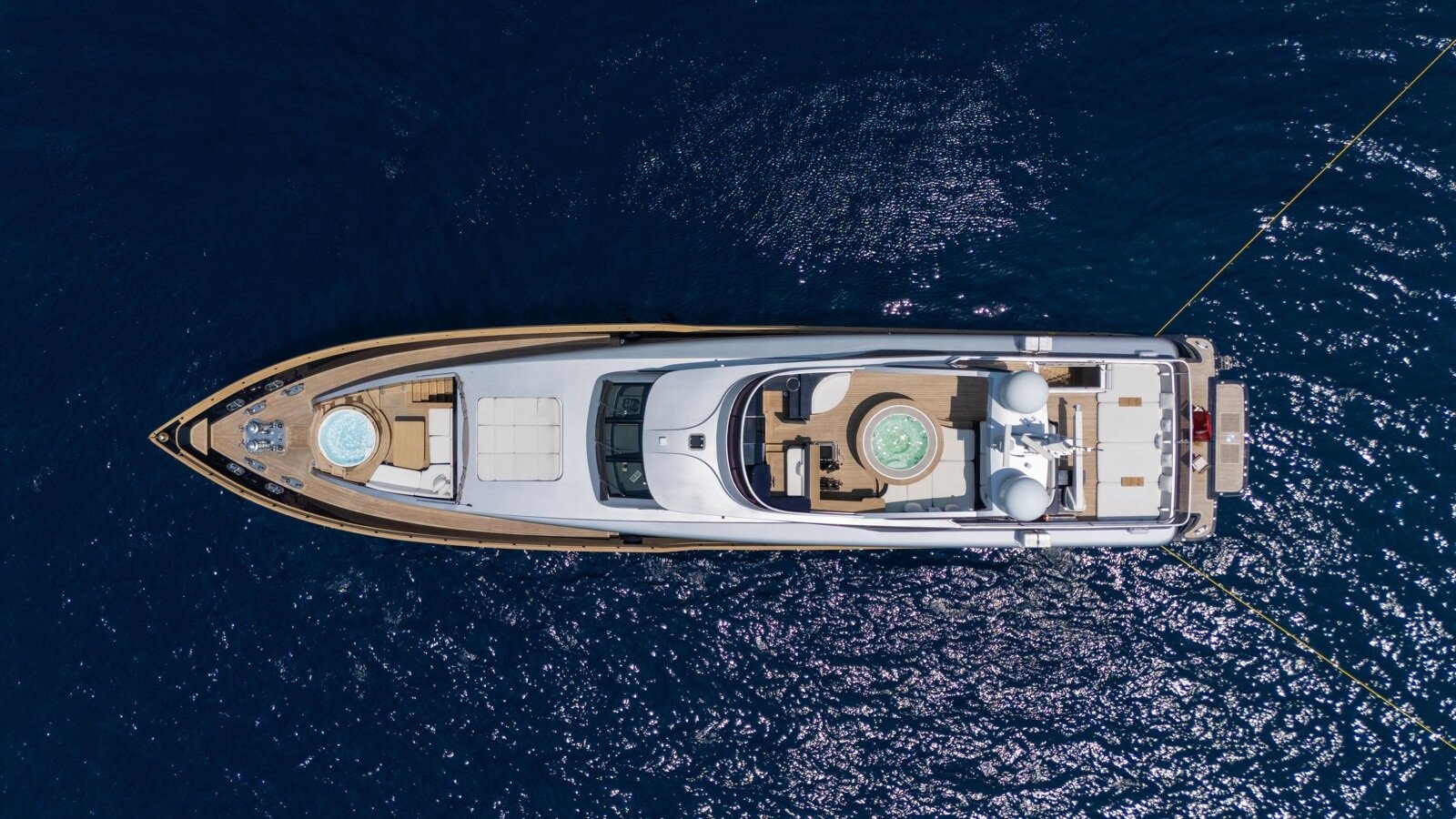
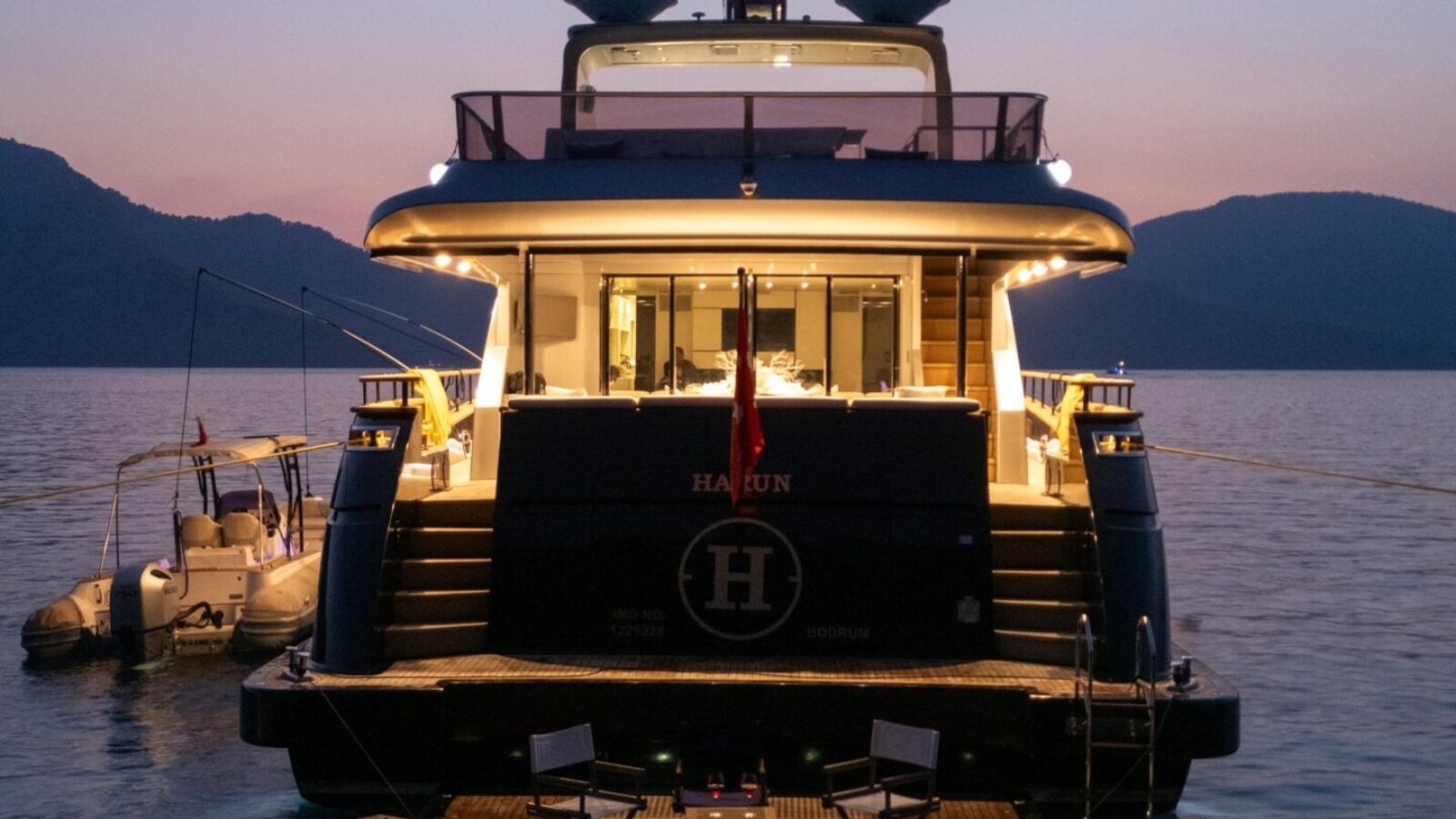
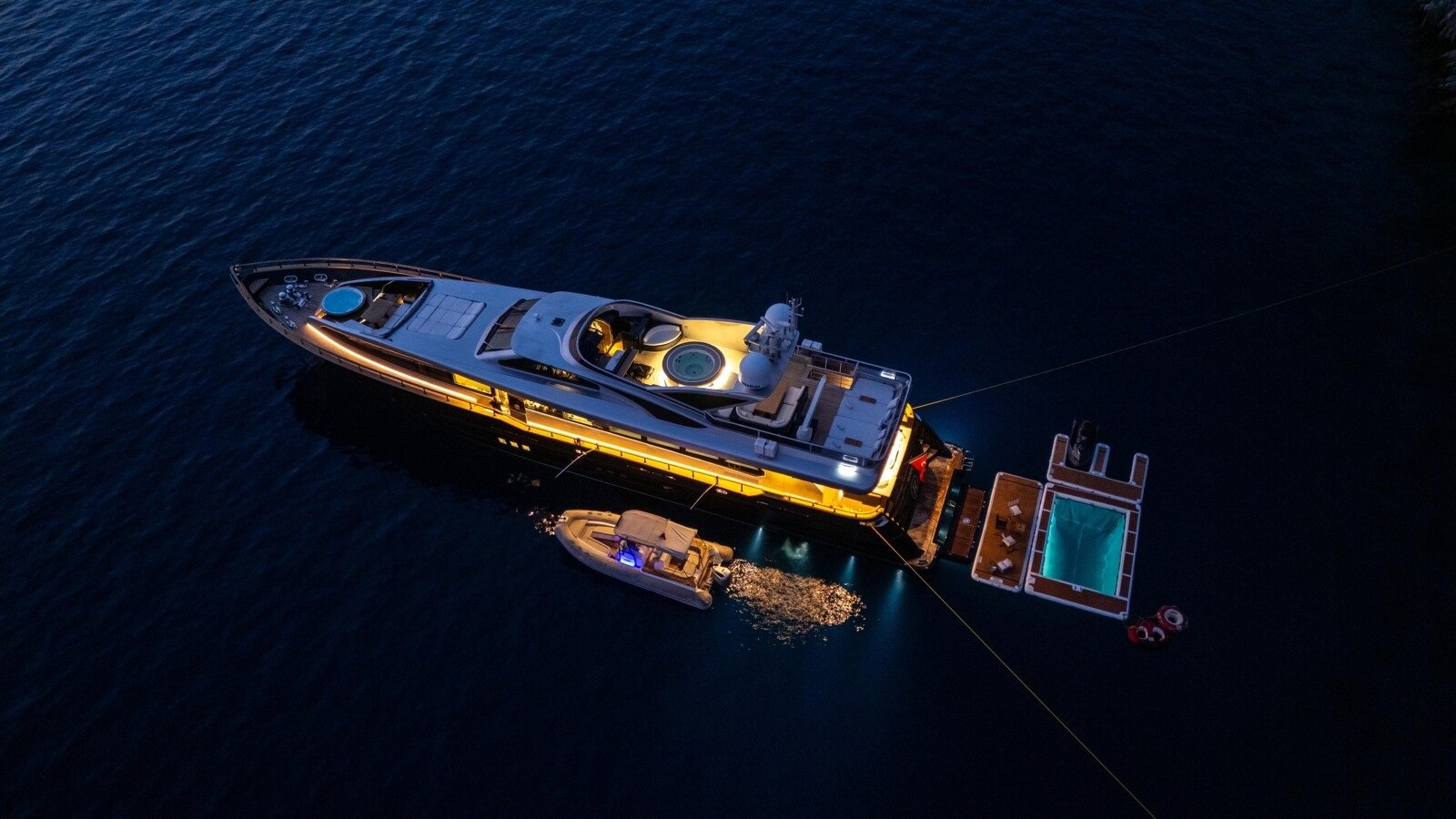
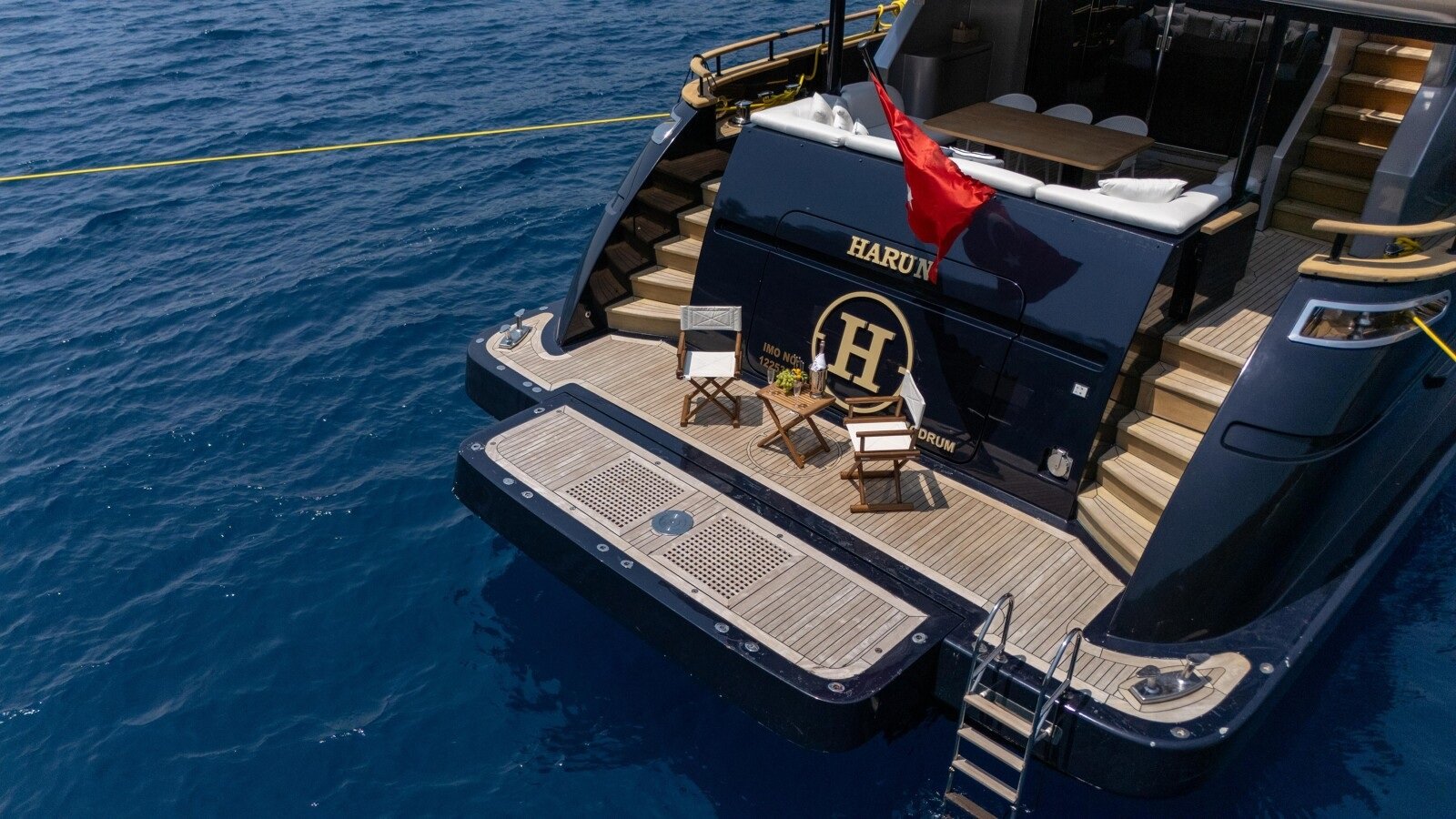
HARUN has a wooden hull. Look at her and you will not believe it – she is a low black wedge with a raked bow and a superstructure that could have come out of Viareggio last year. Underneath the paint is timber, laid up by hand in Turkey, and that combination barely exists anywhere else at 37 metres.
Huzur Yat built her in 2015. Turkish yards never abandoned wood the way northern Europe did; they kept the craft alive through the gulet trade and then applied it to shapes nobody associates with it. The result is a hull that is quieter than steel, warmer than aluminium, and drawn without a single concession to the material. Nothing about her says traditional. Everything about her was made the traditional way.
She is not fast and does not care. Ten knots cruising, twelve and a half flat out, 254 gross tons, 1,200 miles of range. What she does carry is a 1.65-metre draft – shallower than almost anything her length – which along the Turkish coast is the specification that decides your week. The bays around Gocek and Fethiye are steep-sided and shallow at the head, and the best of them are simply unavailable to a yacht drawing three metres. She goes in.
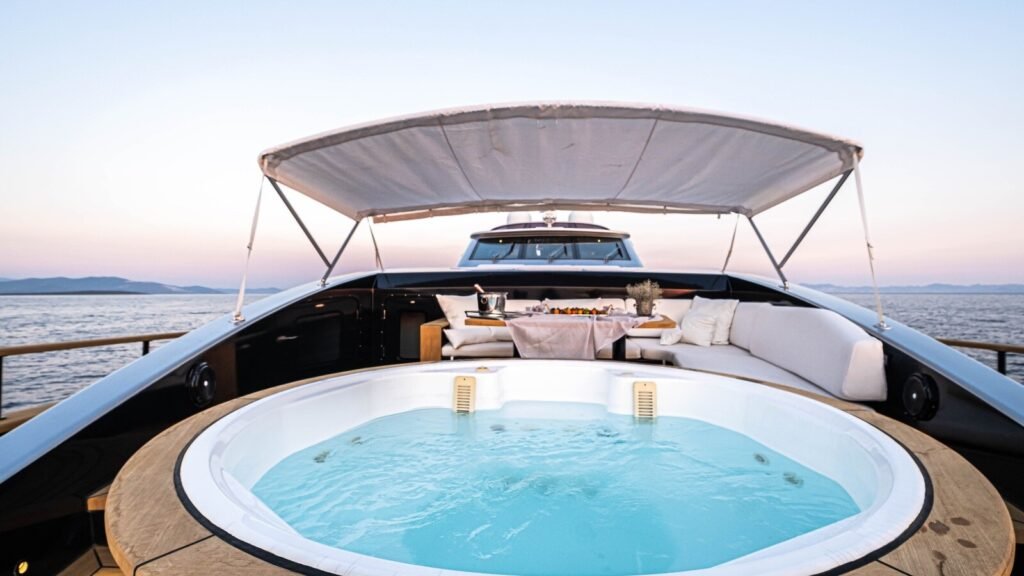
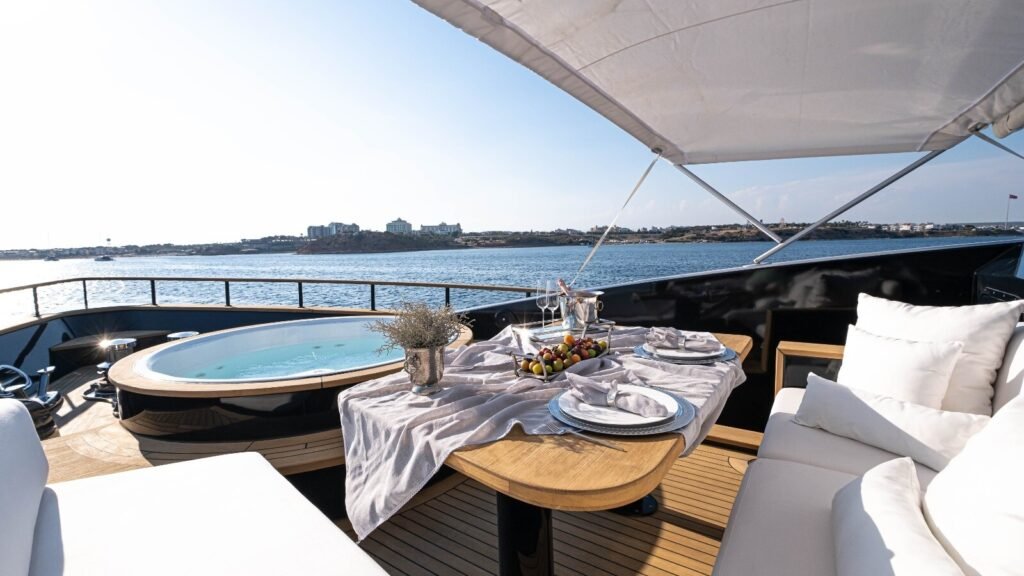
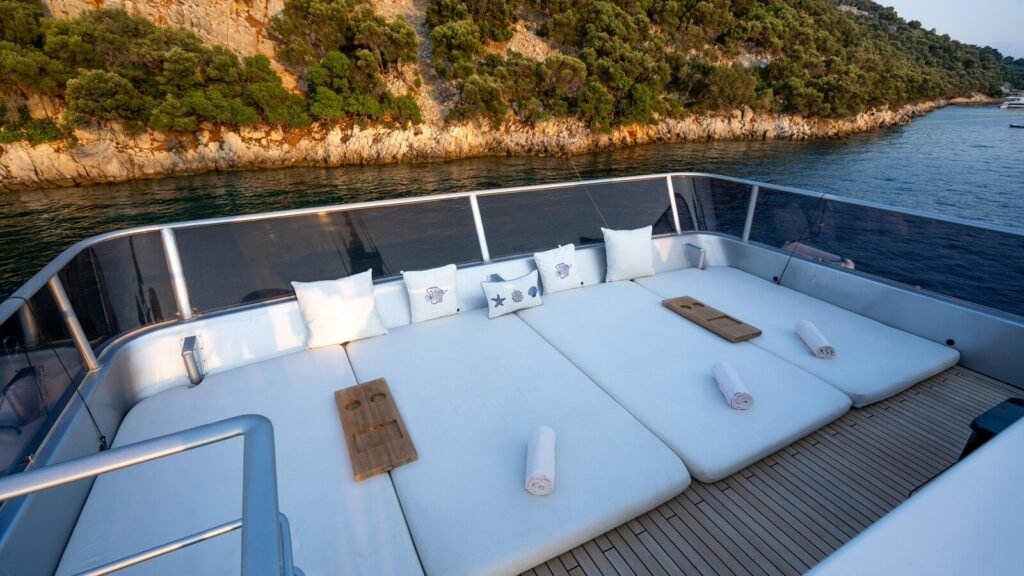
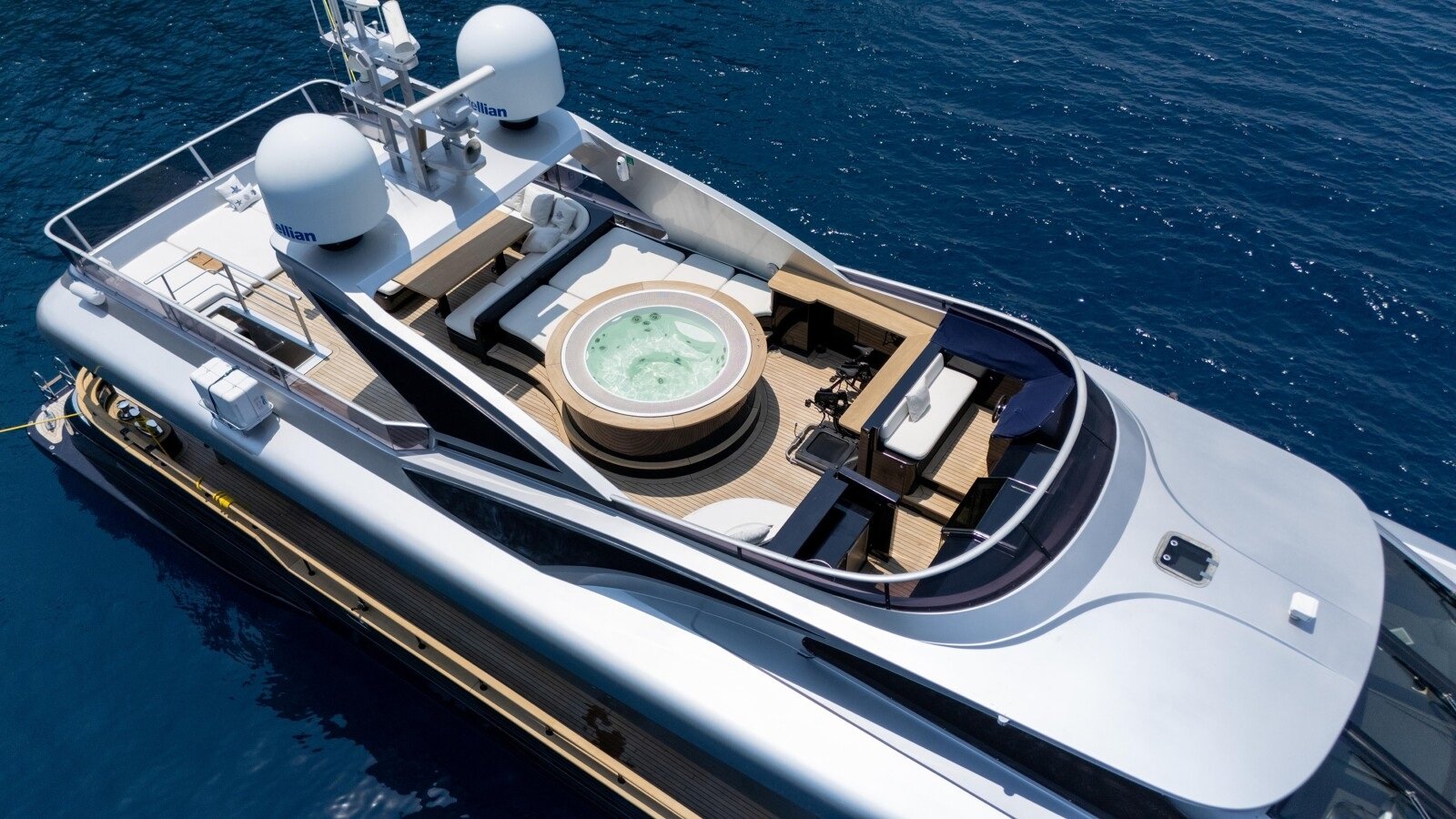
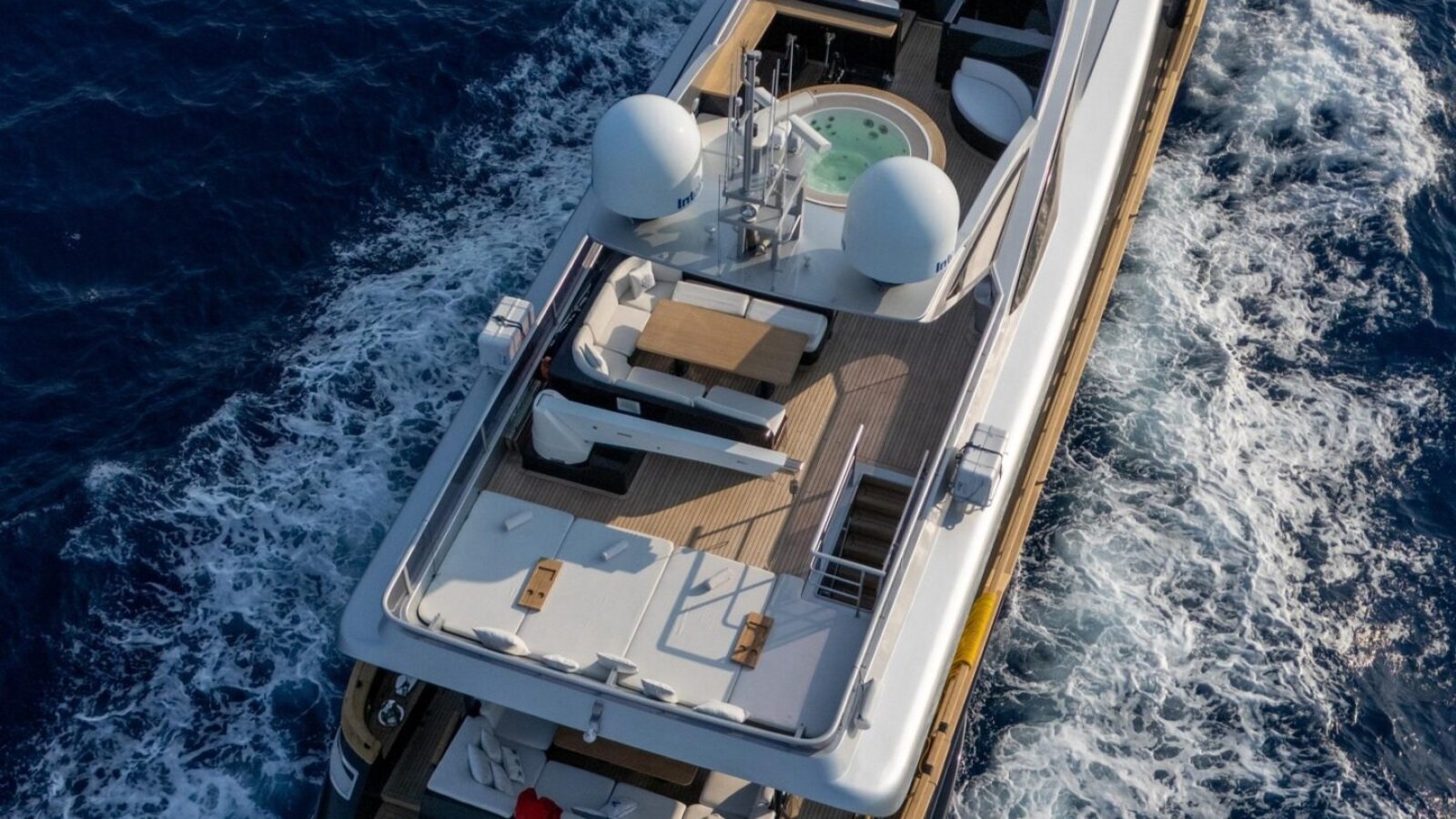
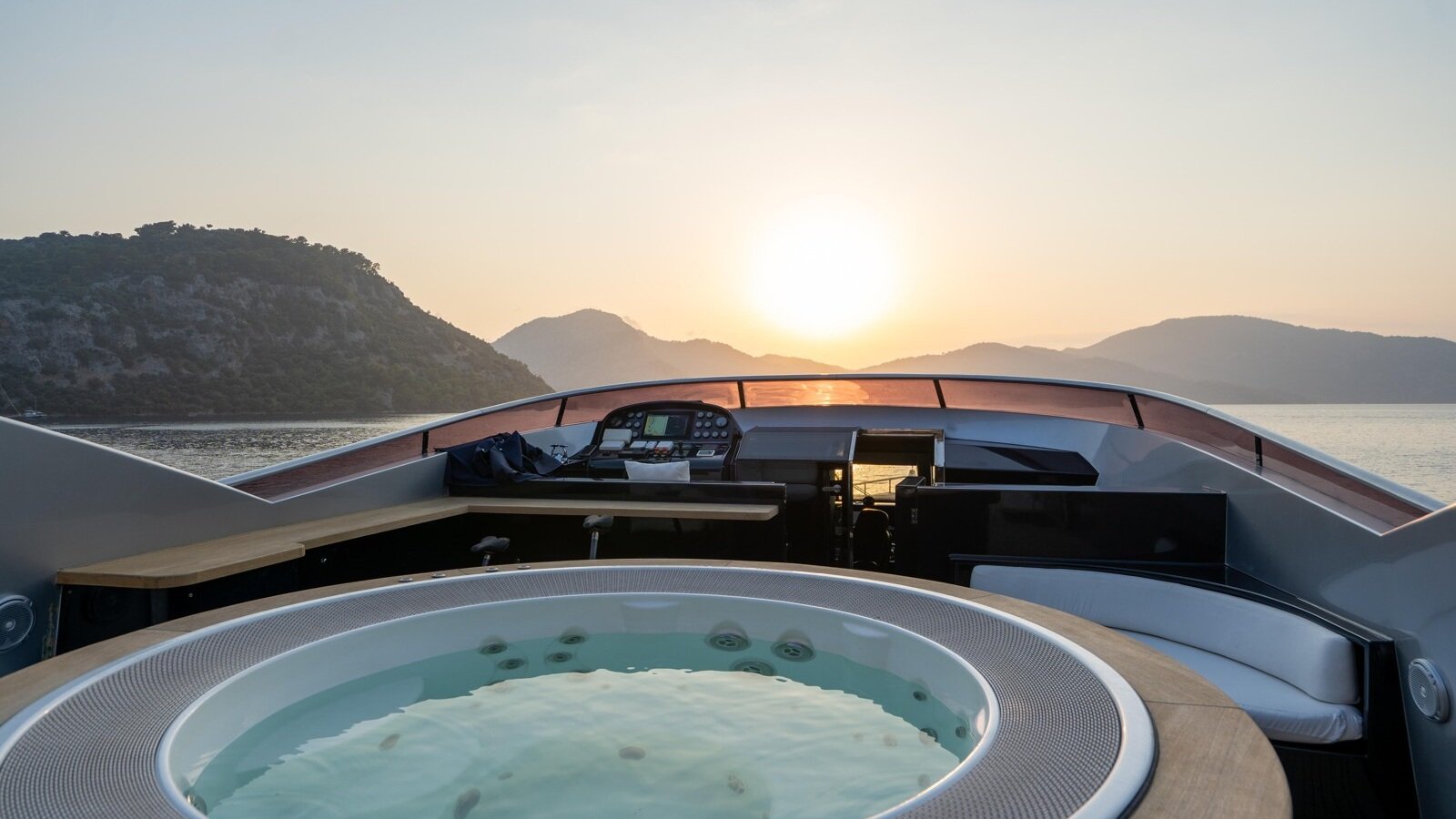
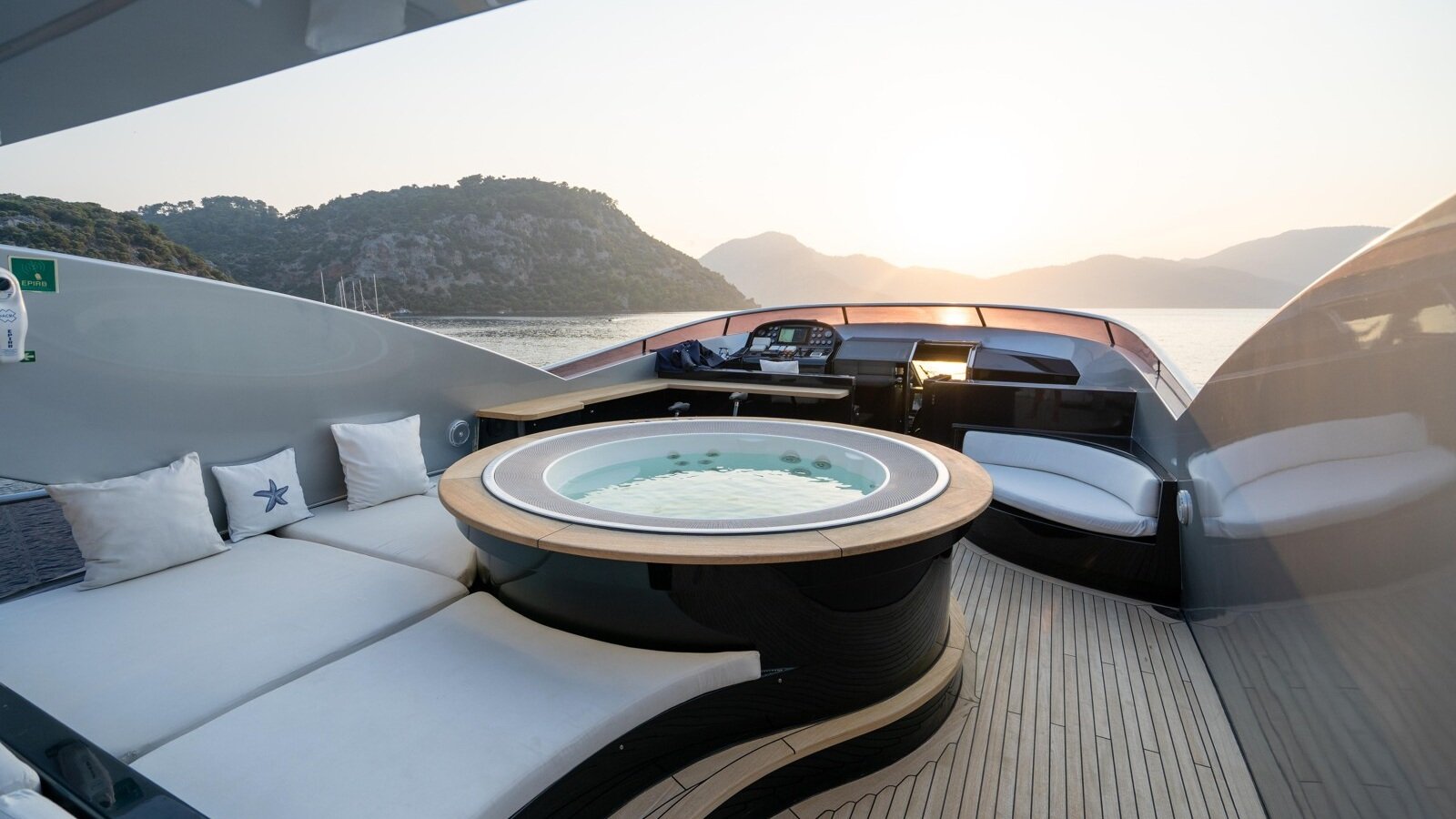
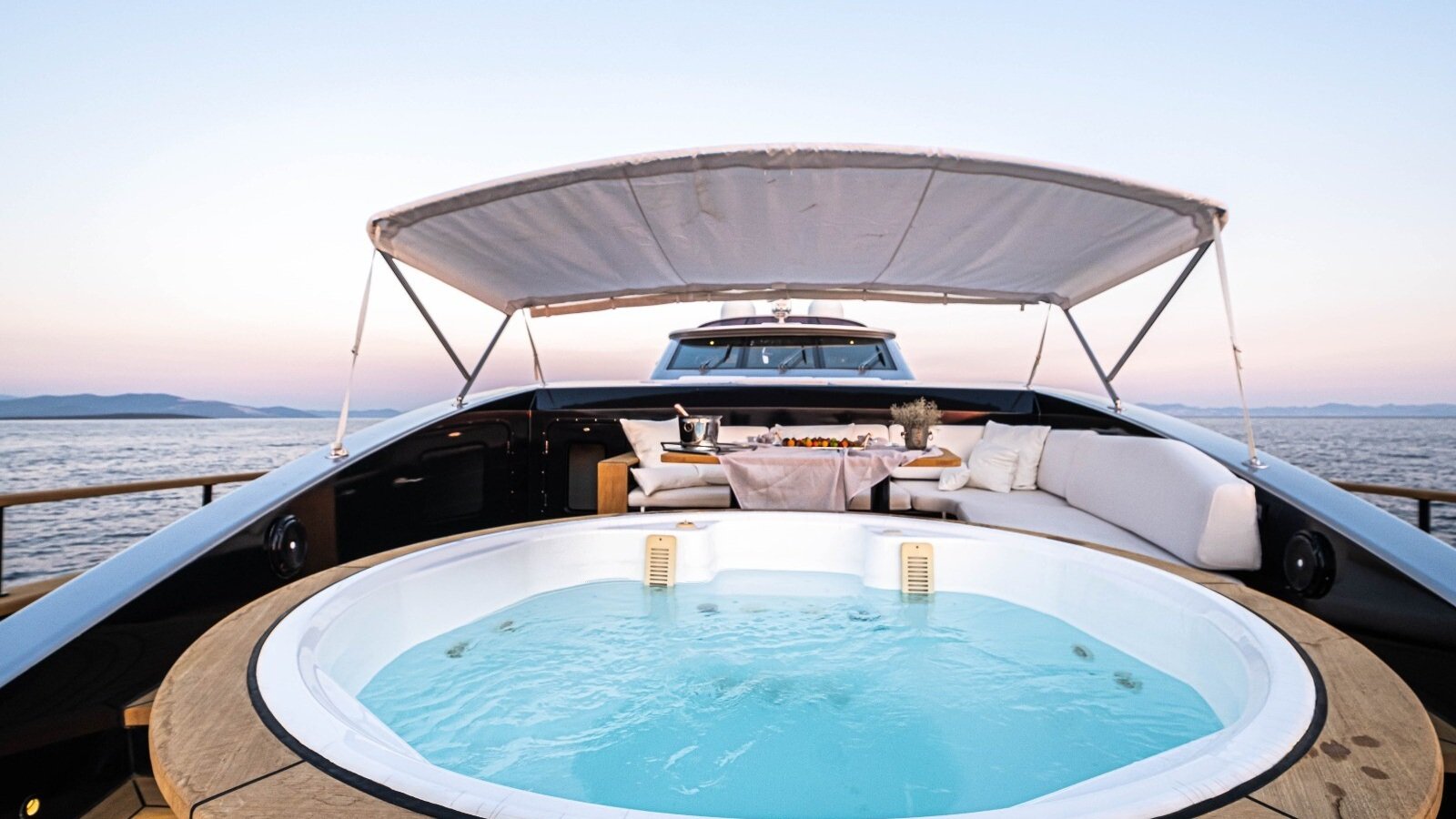
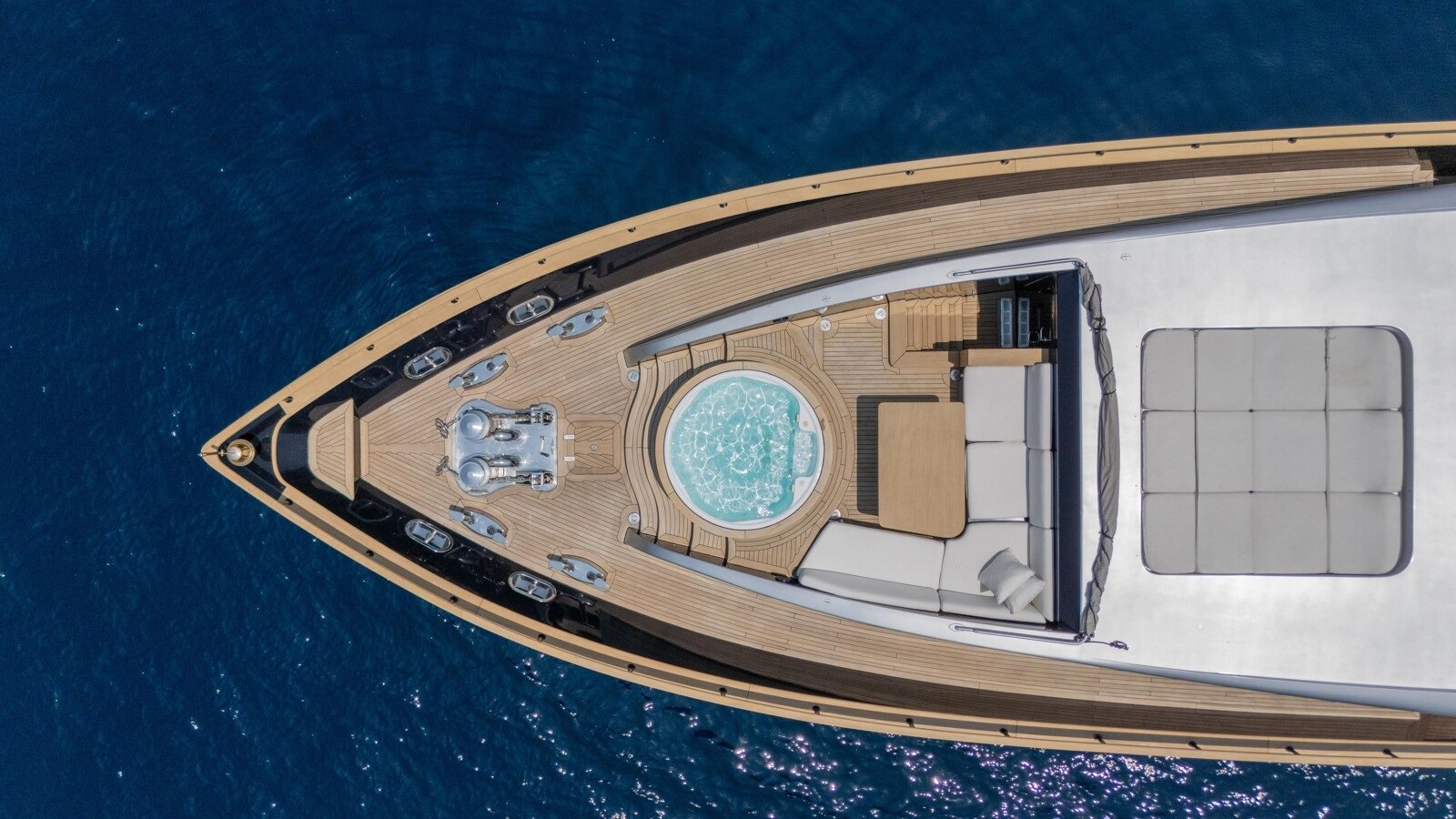
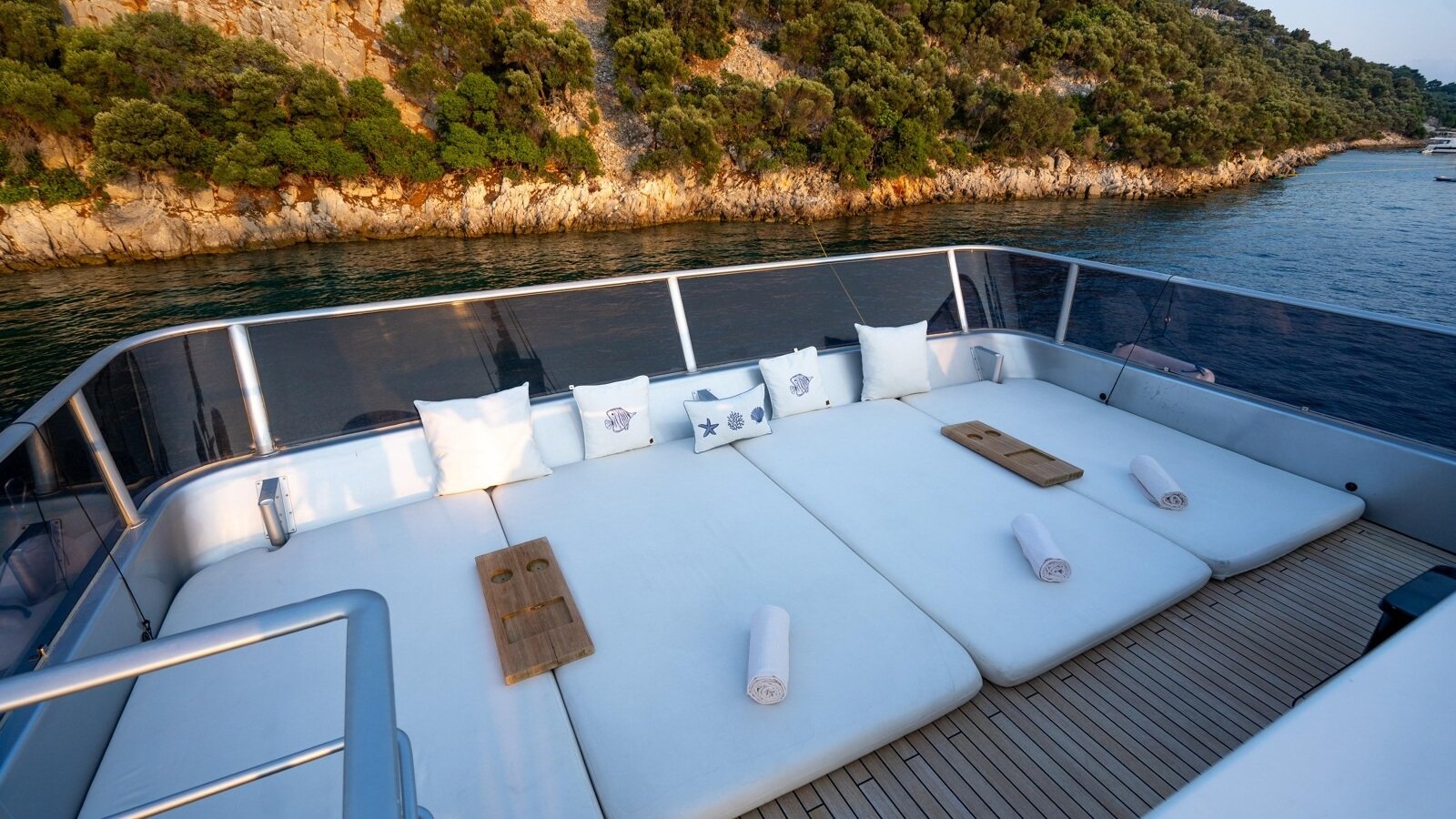
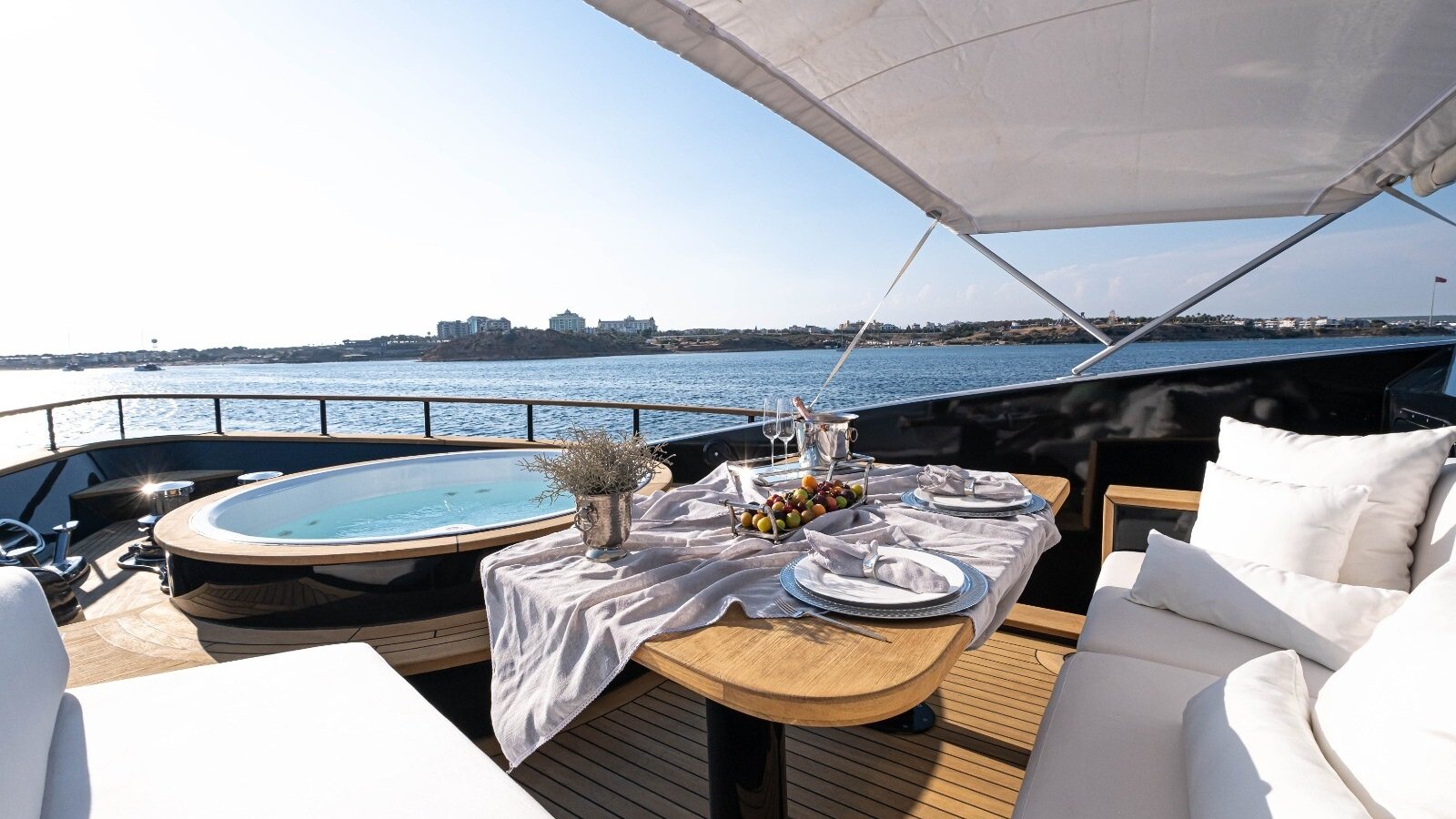
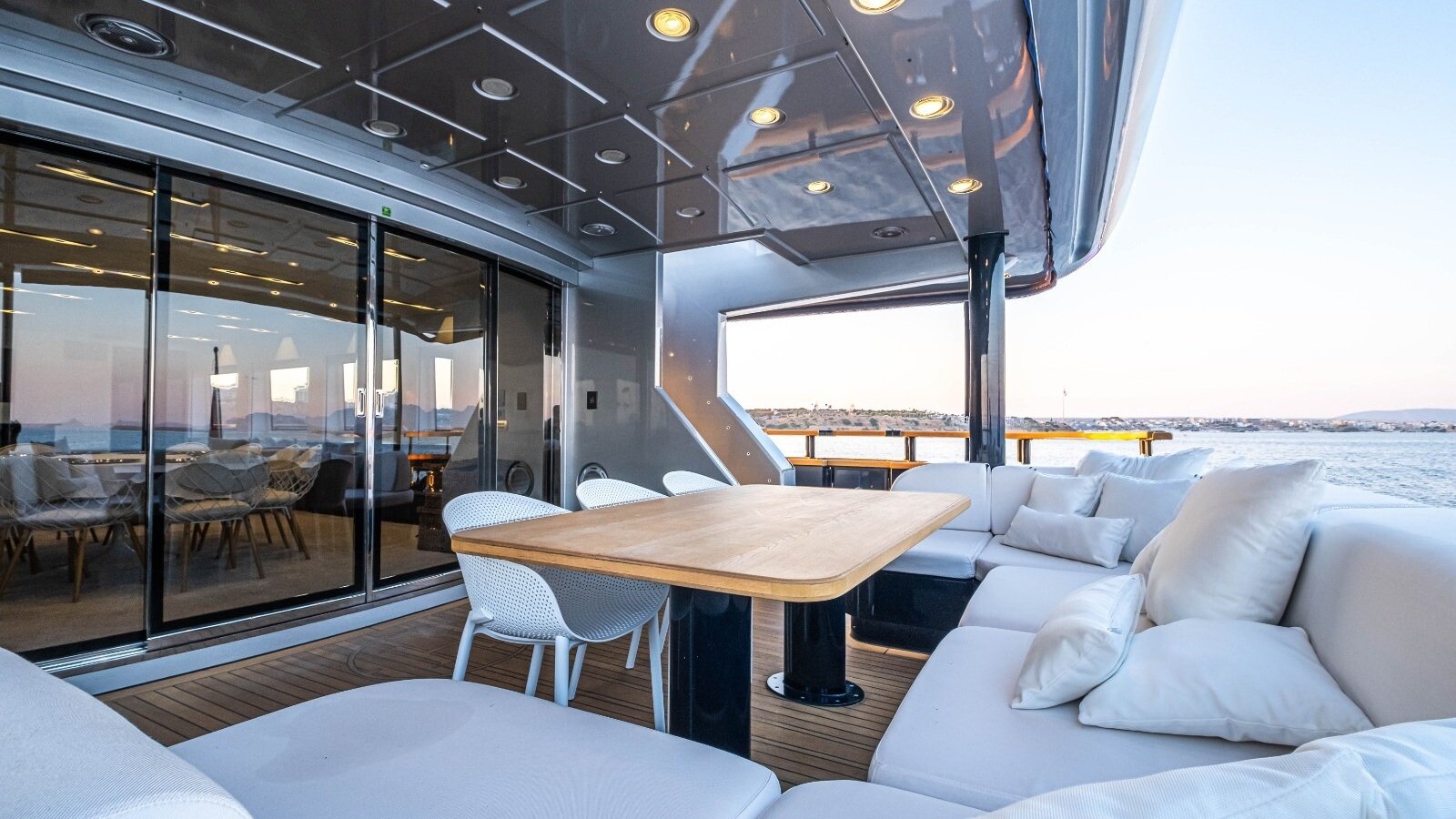
Her sundeck is the centre of gravity: a circular jacuzzi set into teak with loungers wrapped around it, a bimini overhead, and open water on every side. Forward, sunpads. Aft, a shaded table for ten. The decks are broad because a wooden hull at this length has beam to spare.
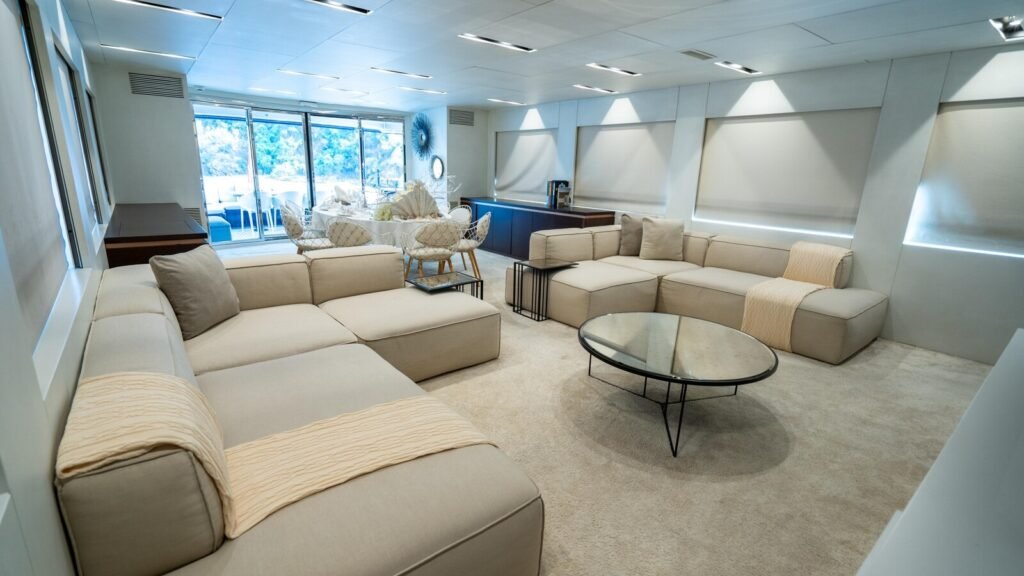
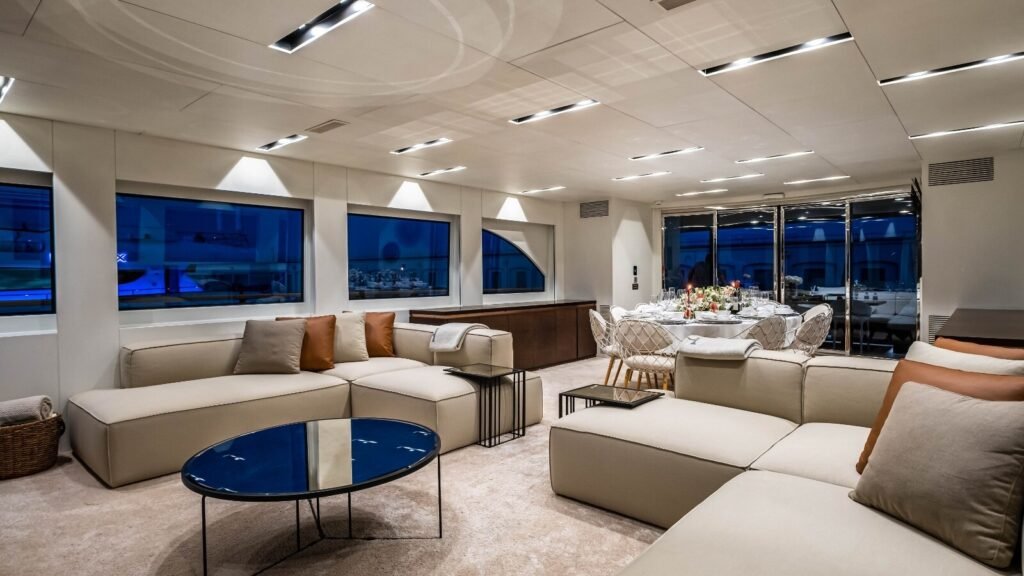
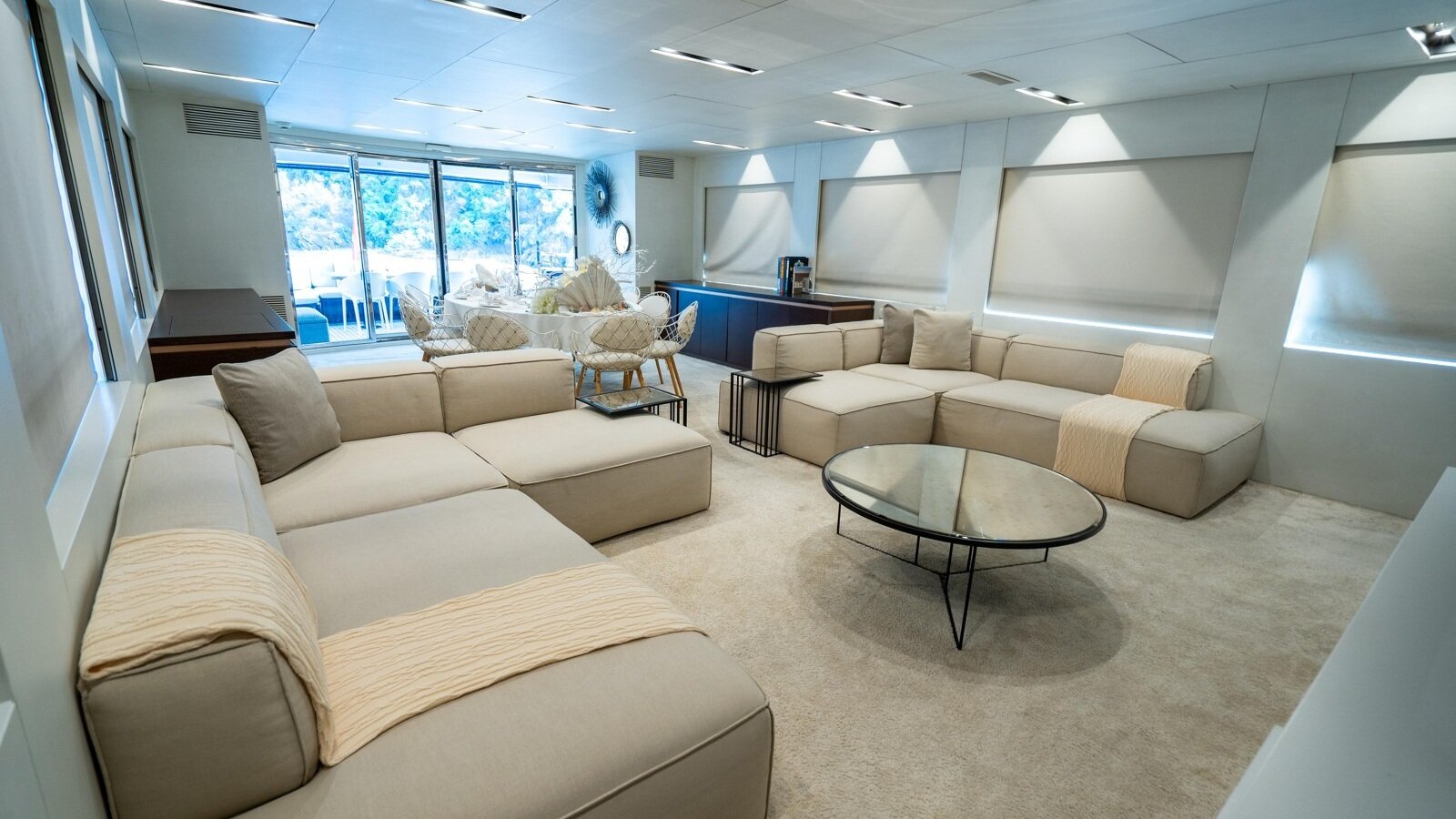
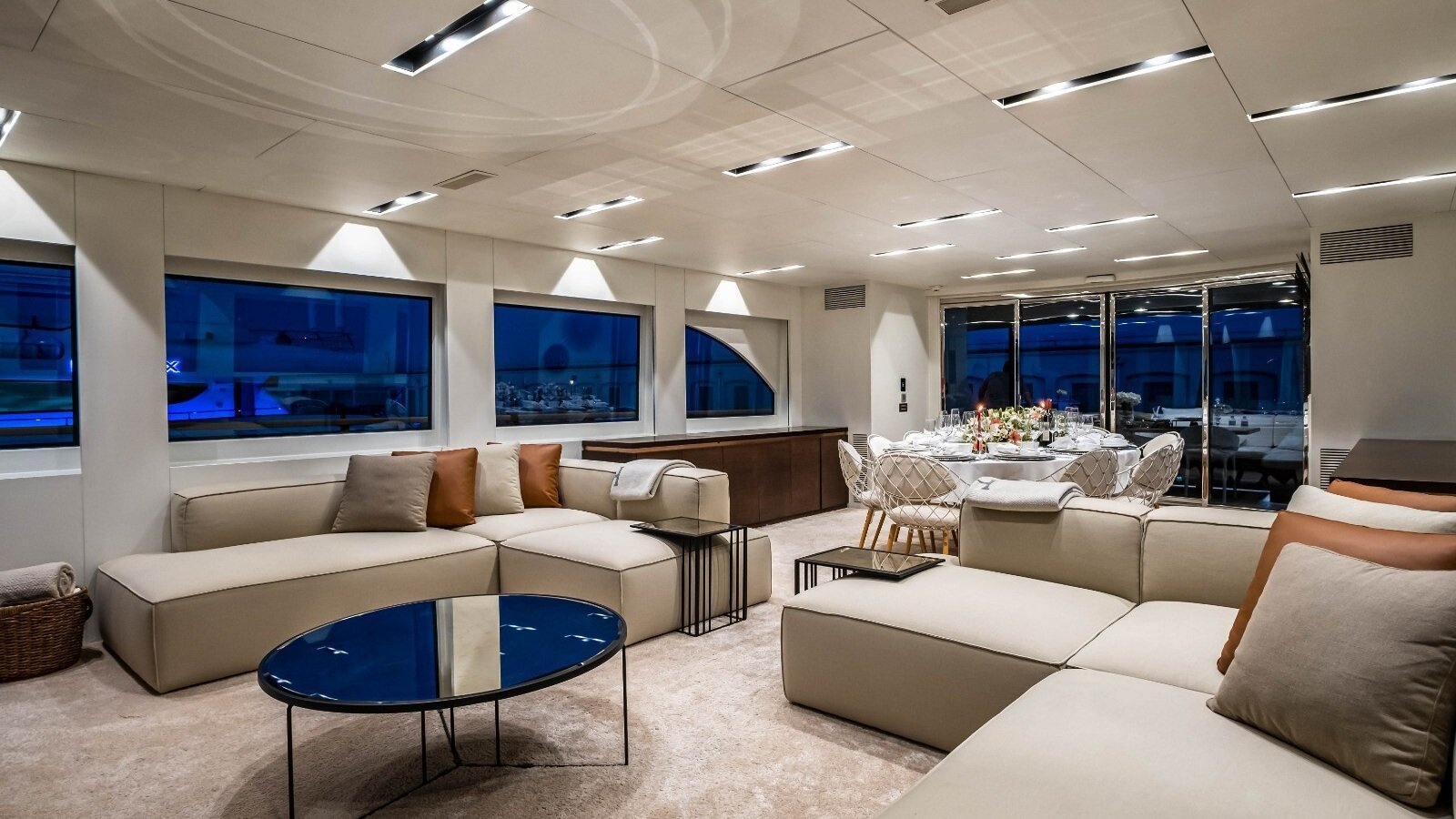
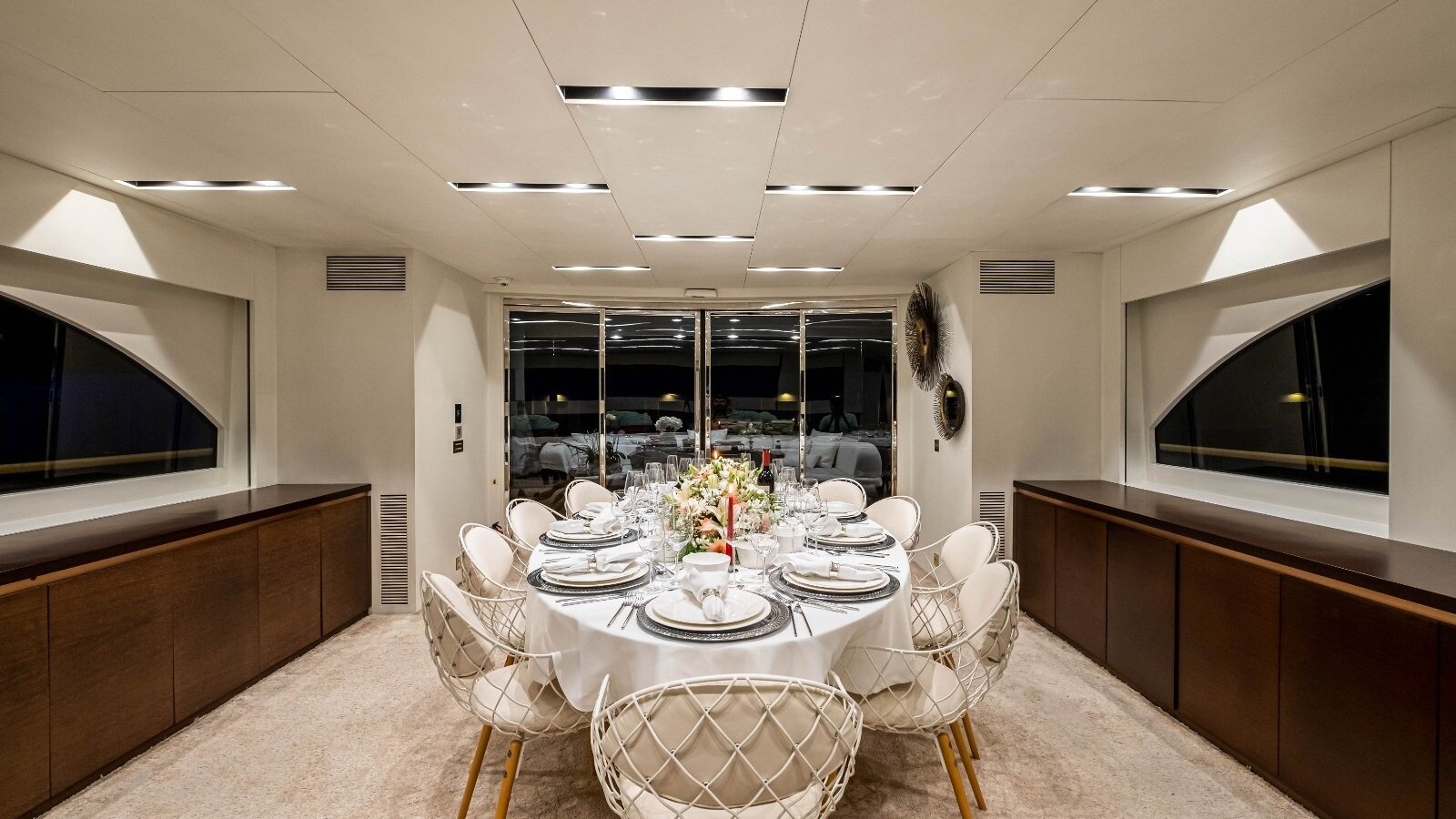
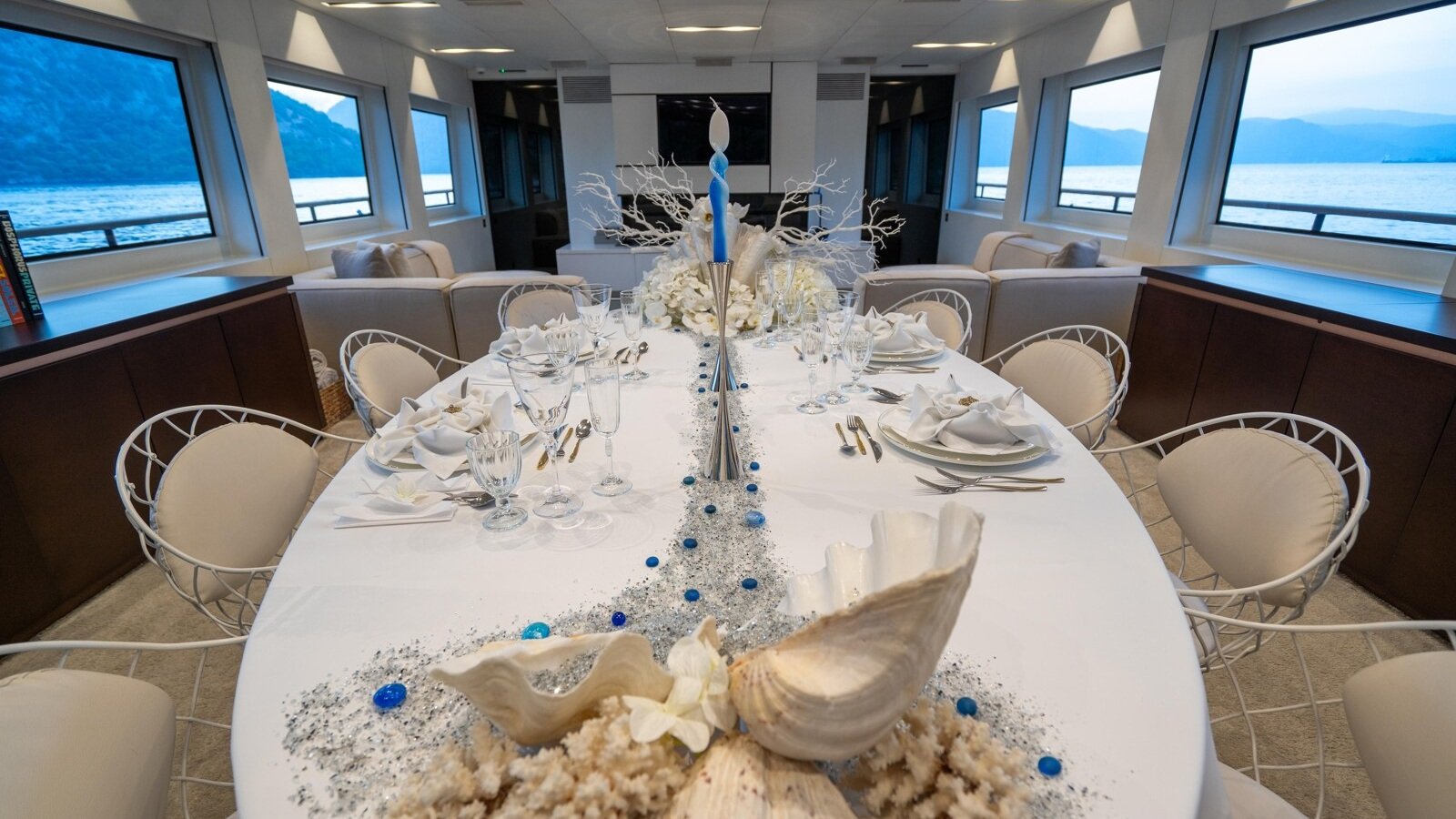
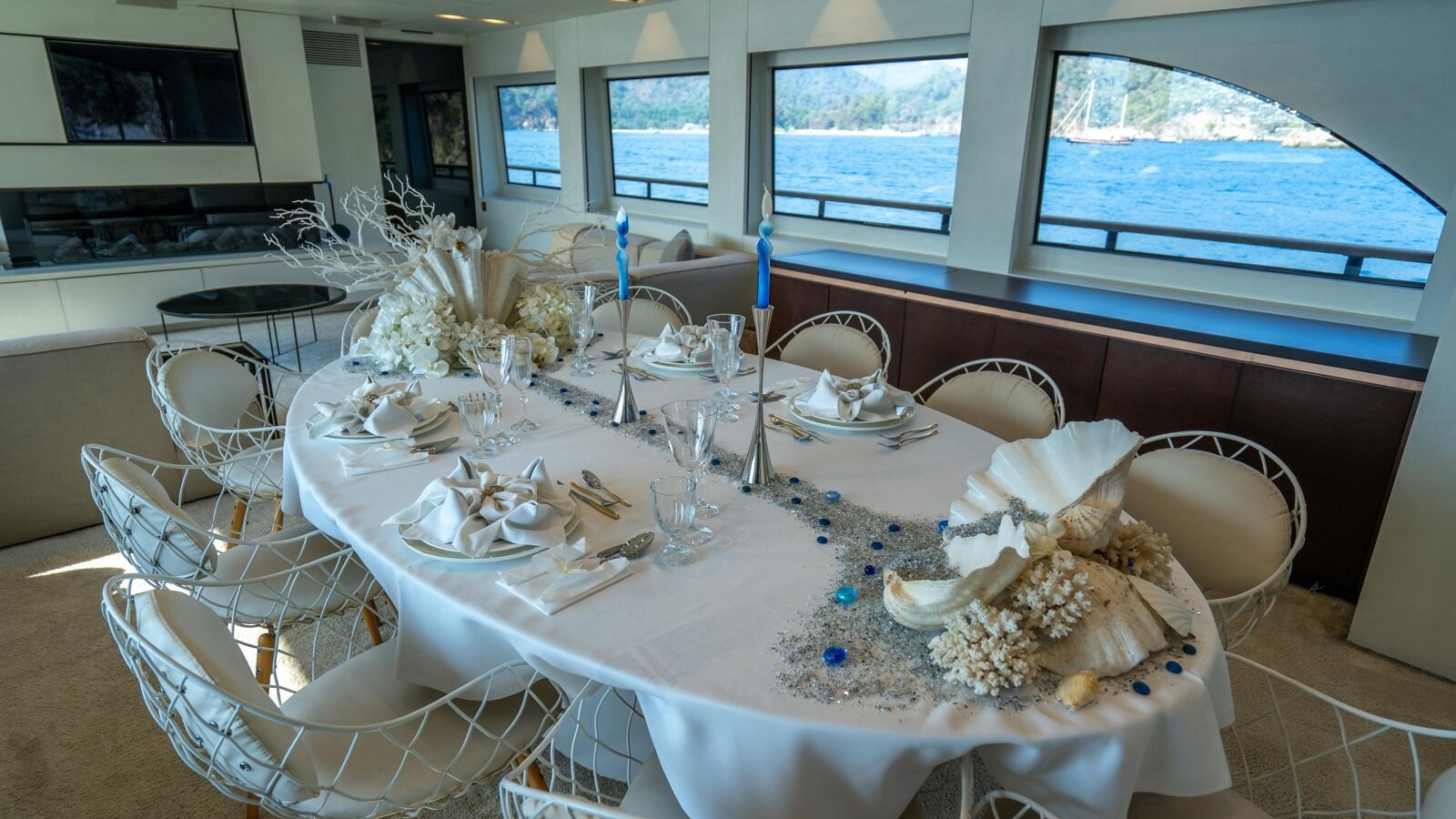
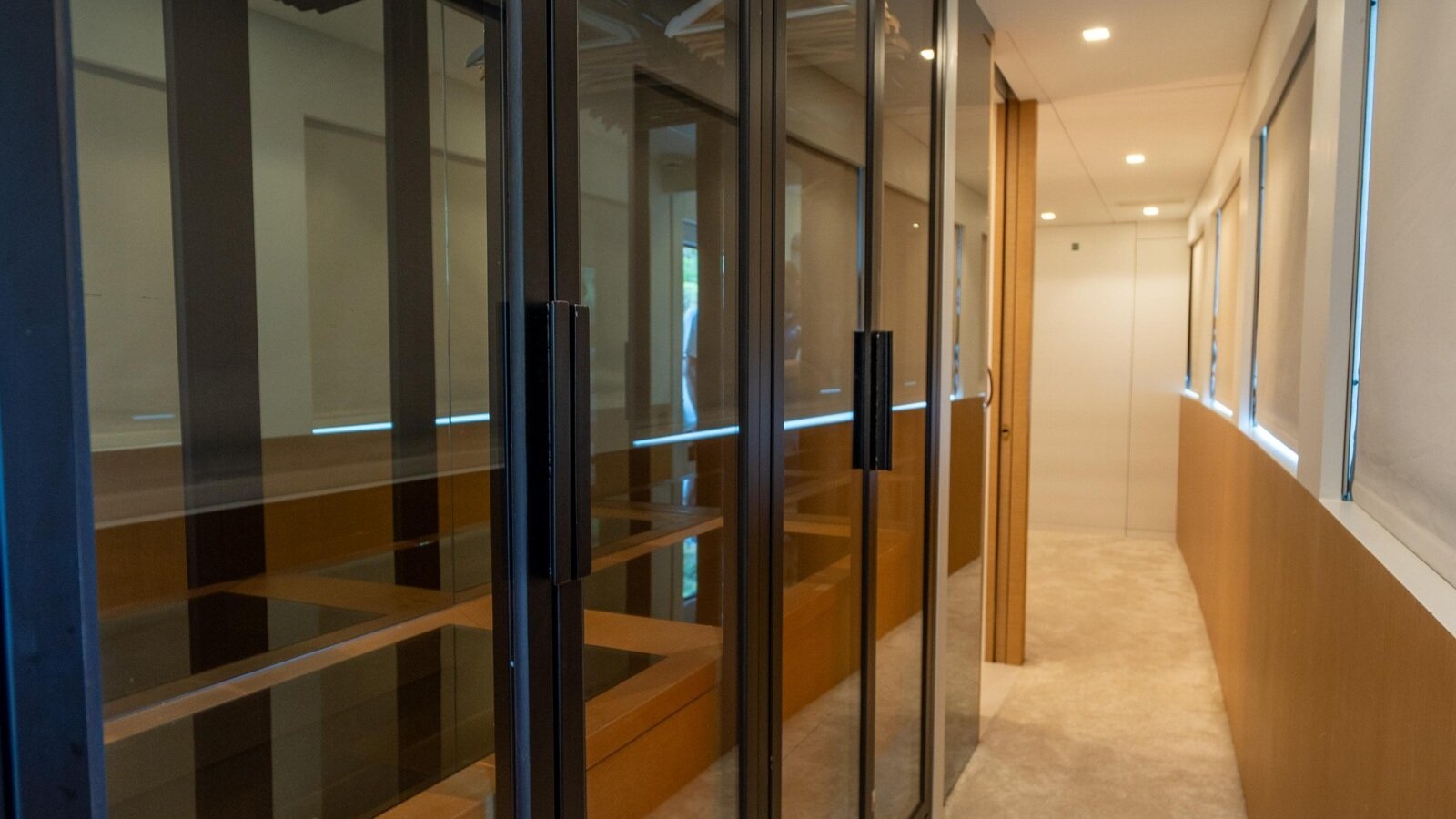
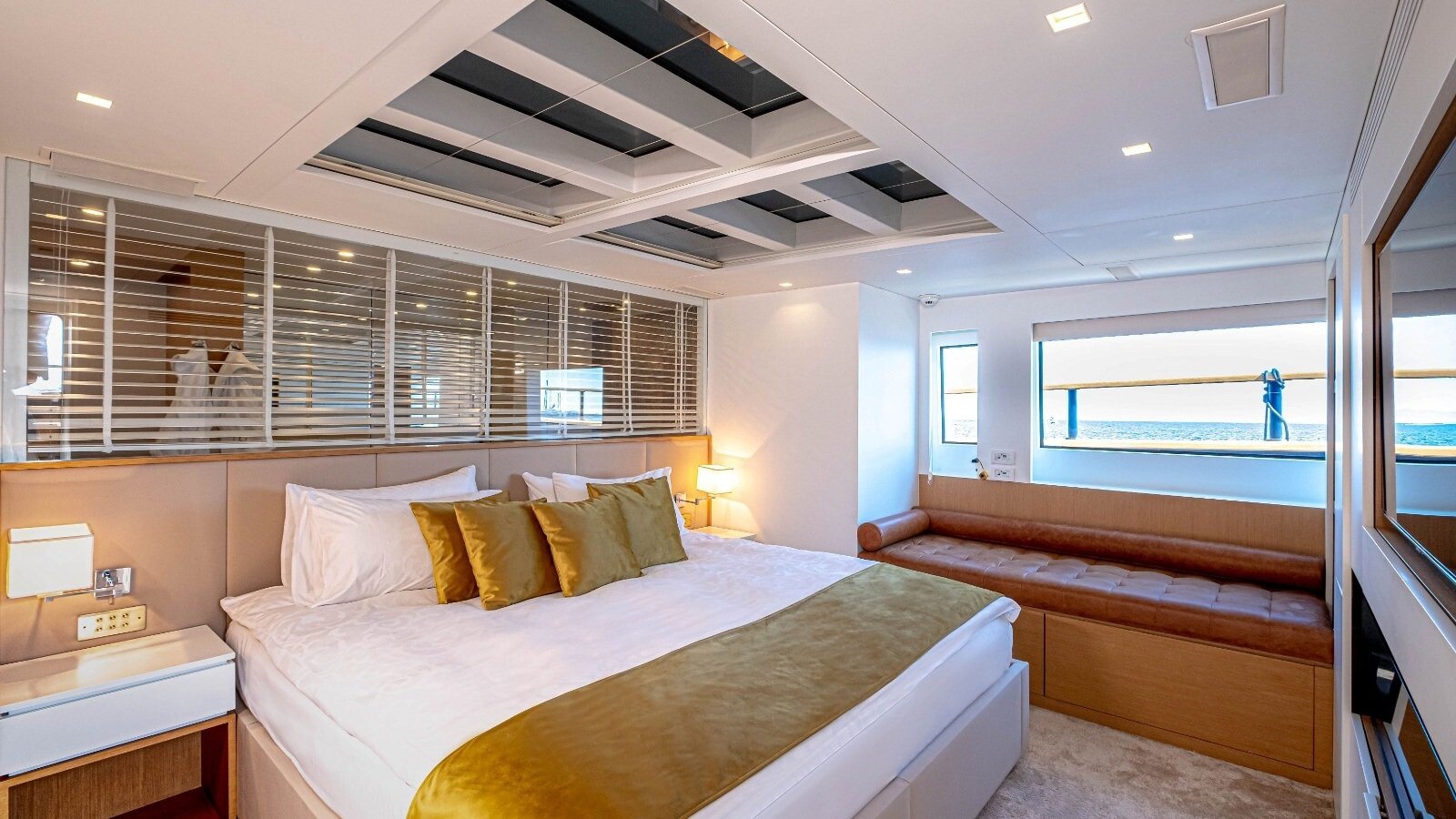
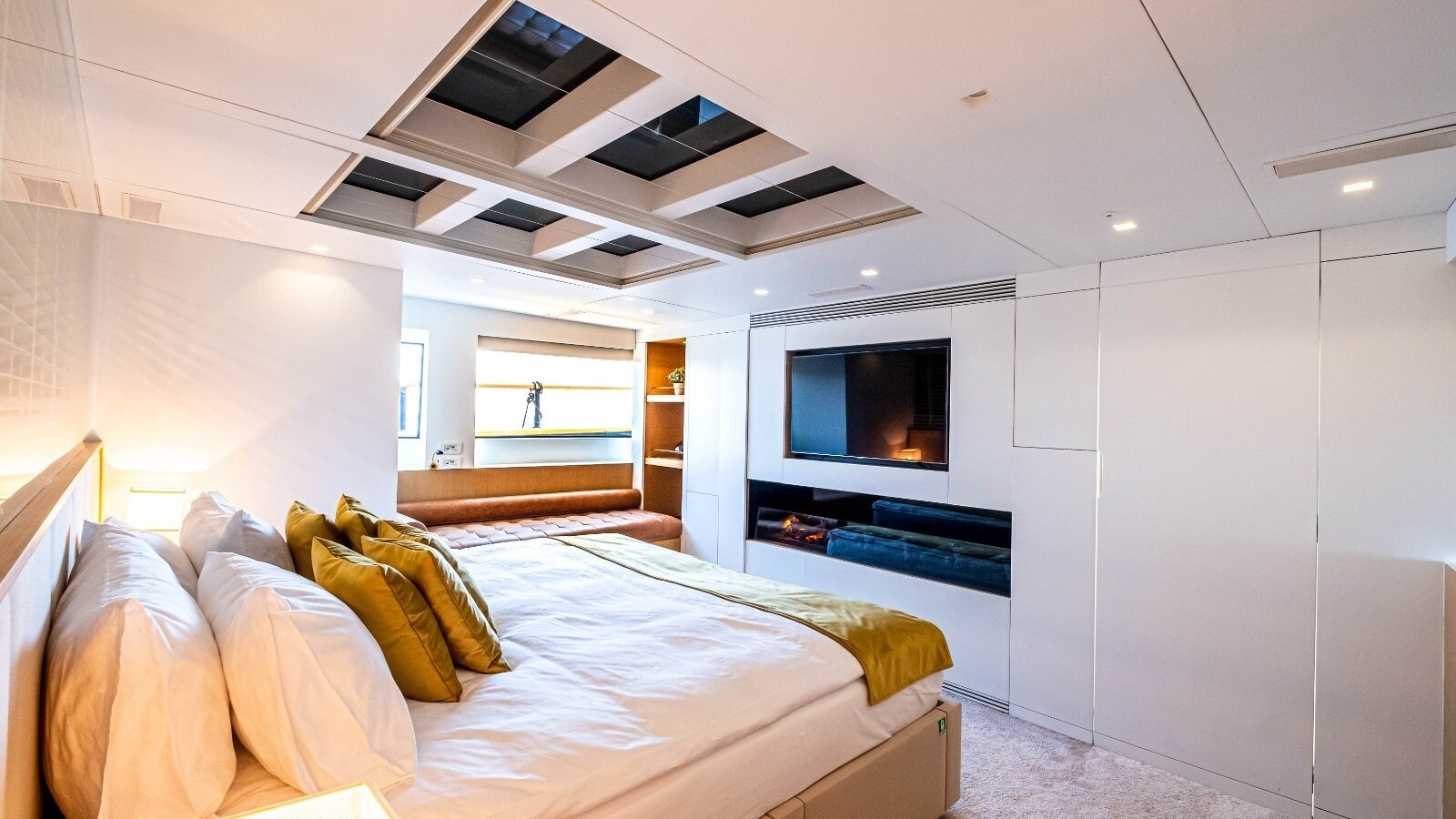
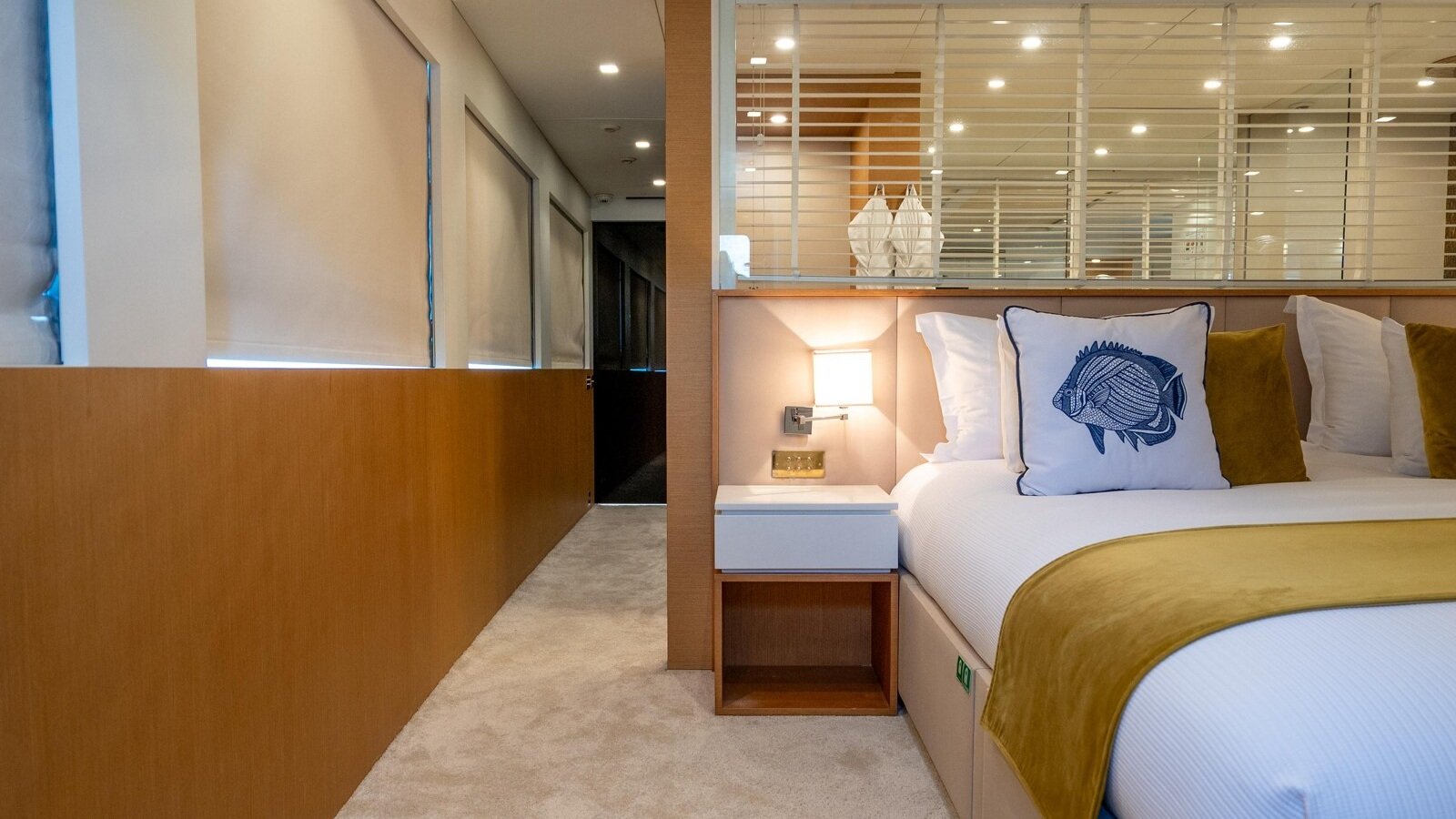
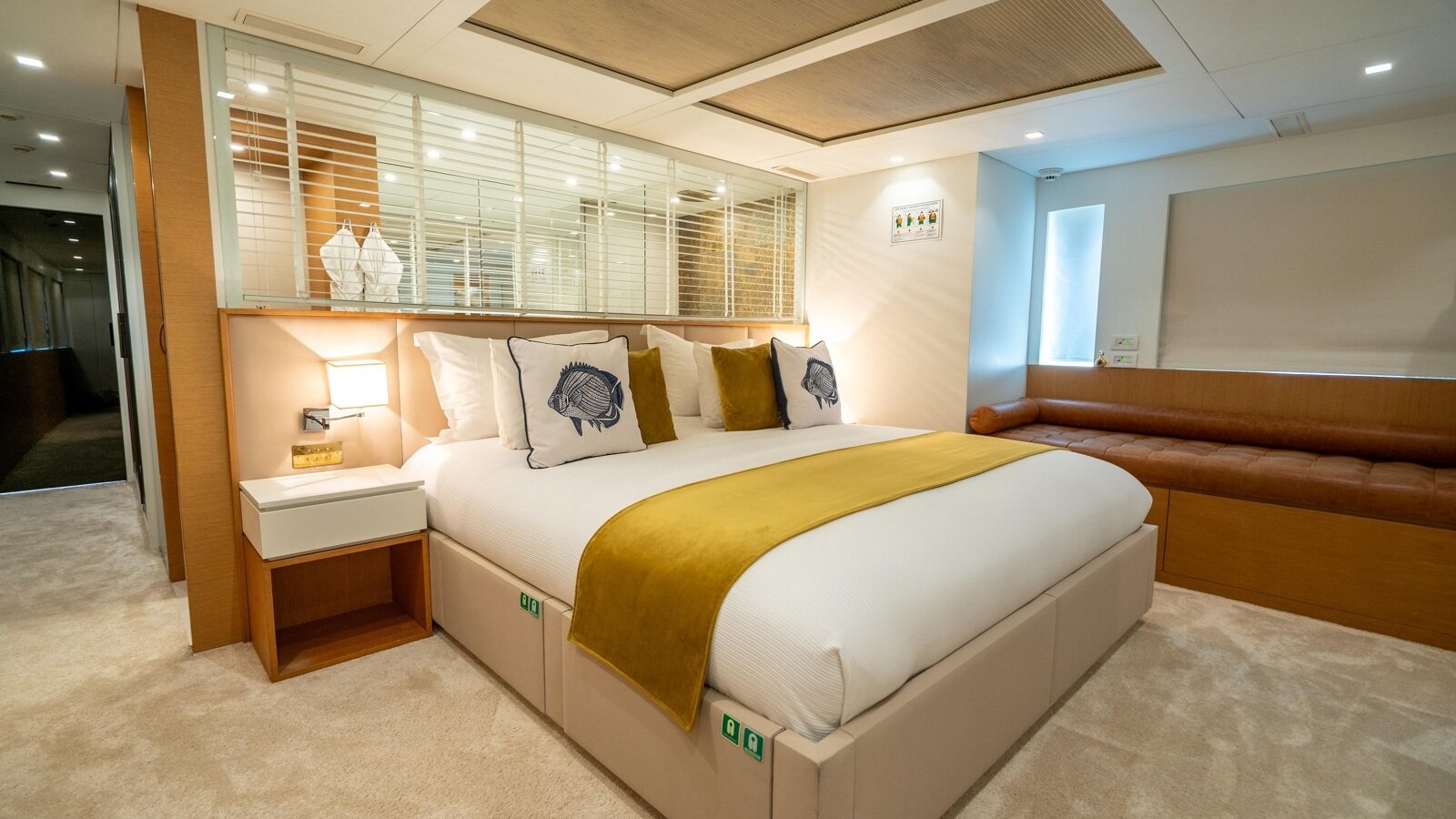
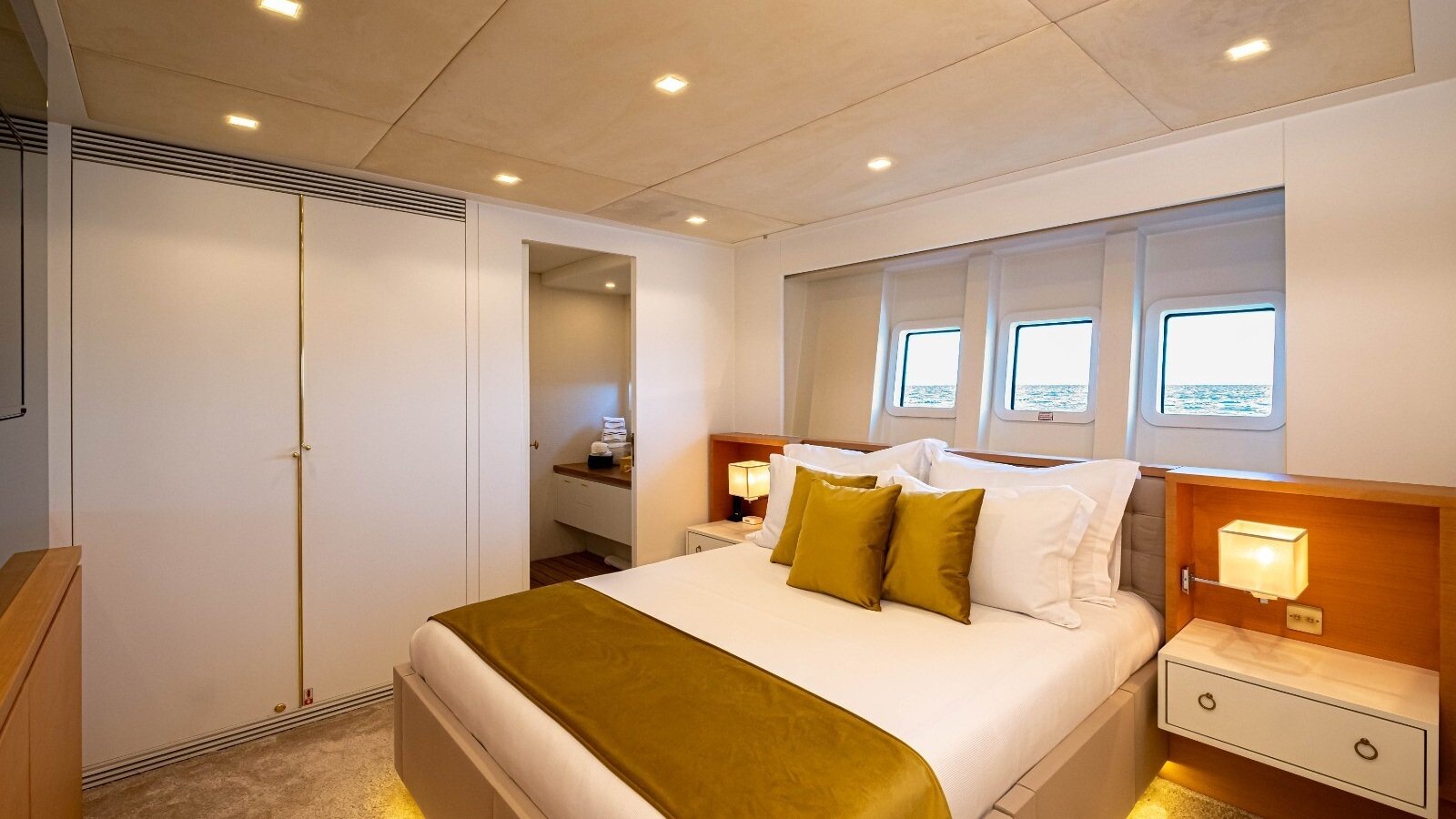
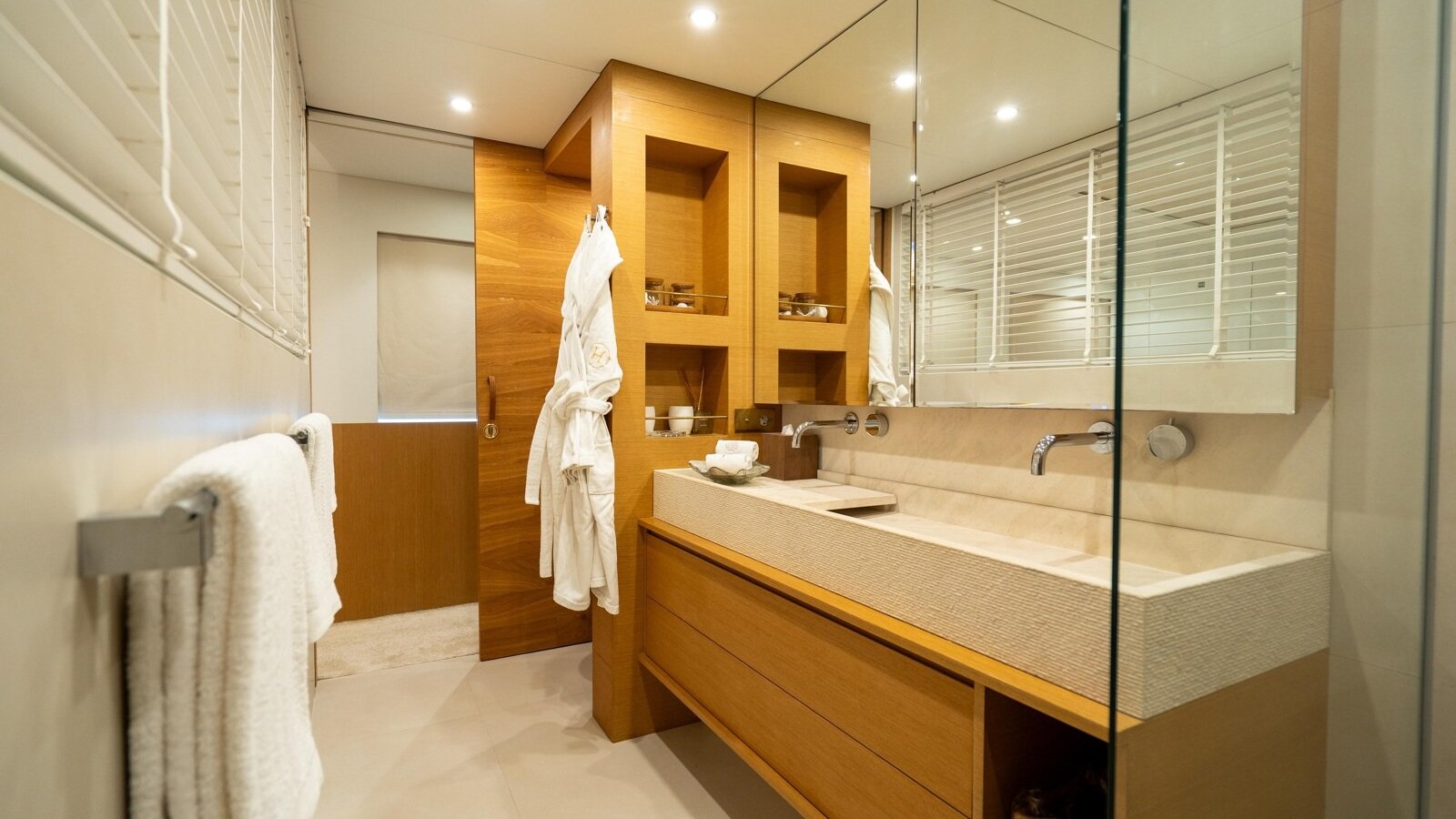
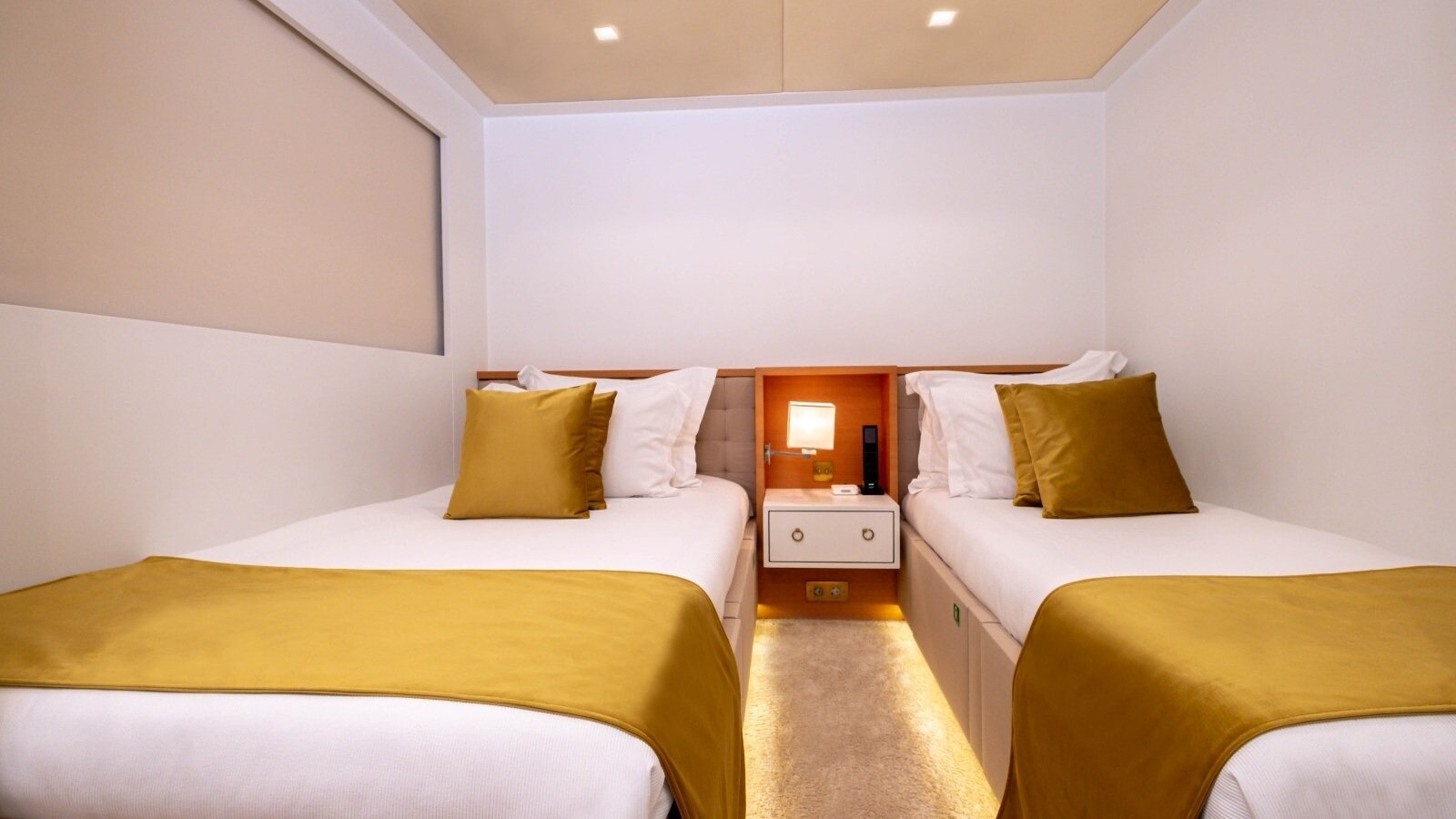
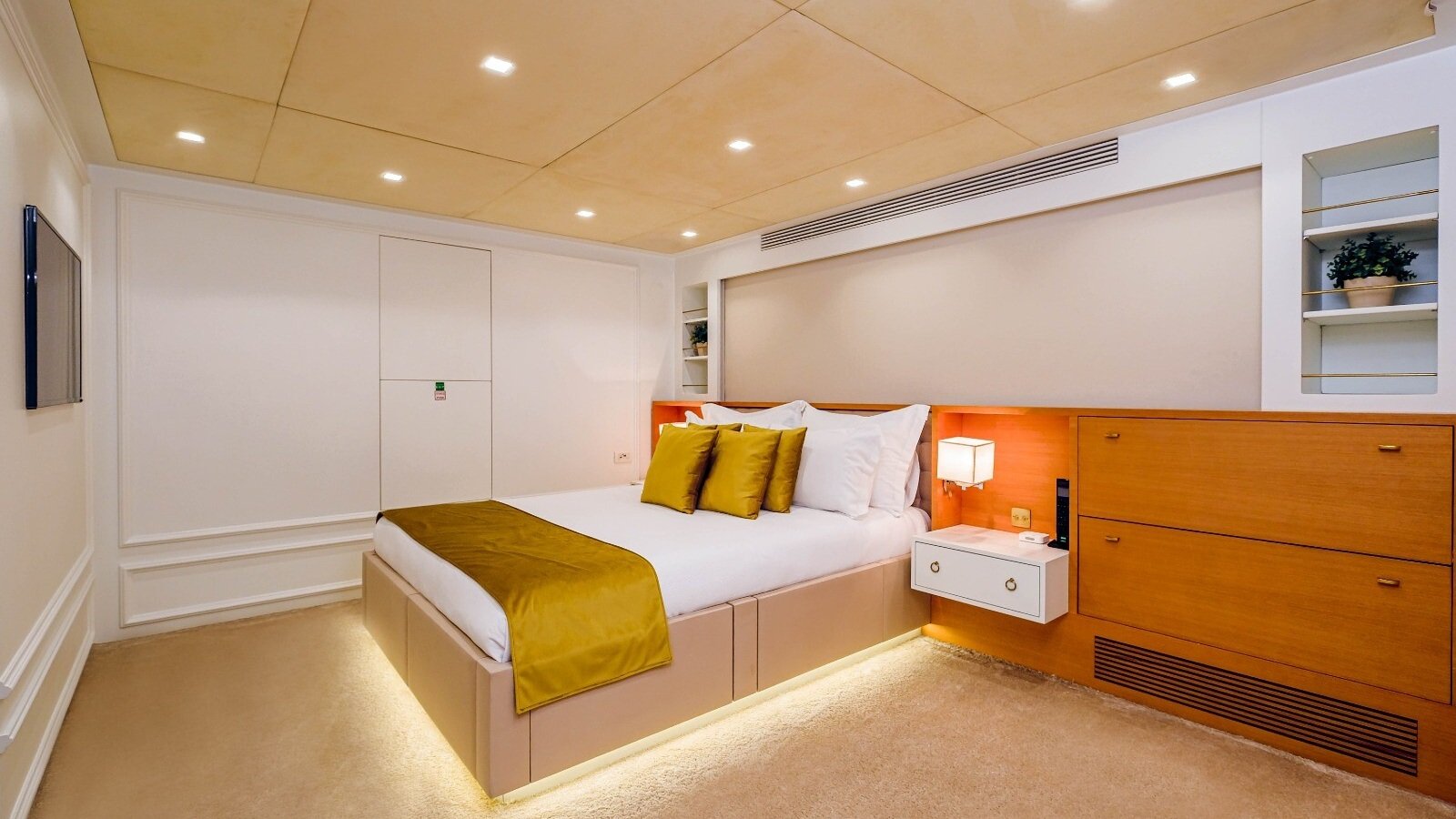
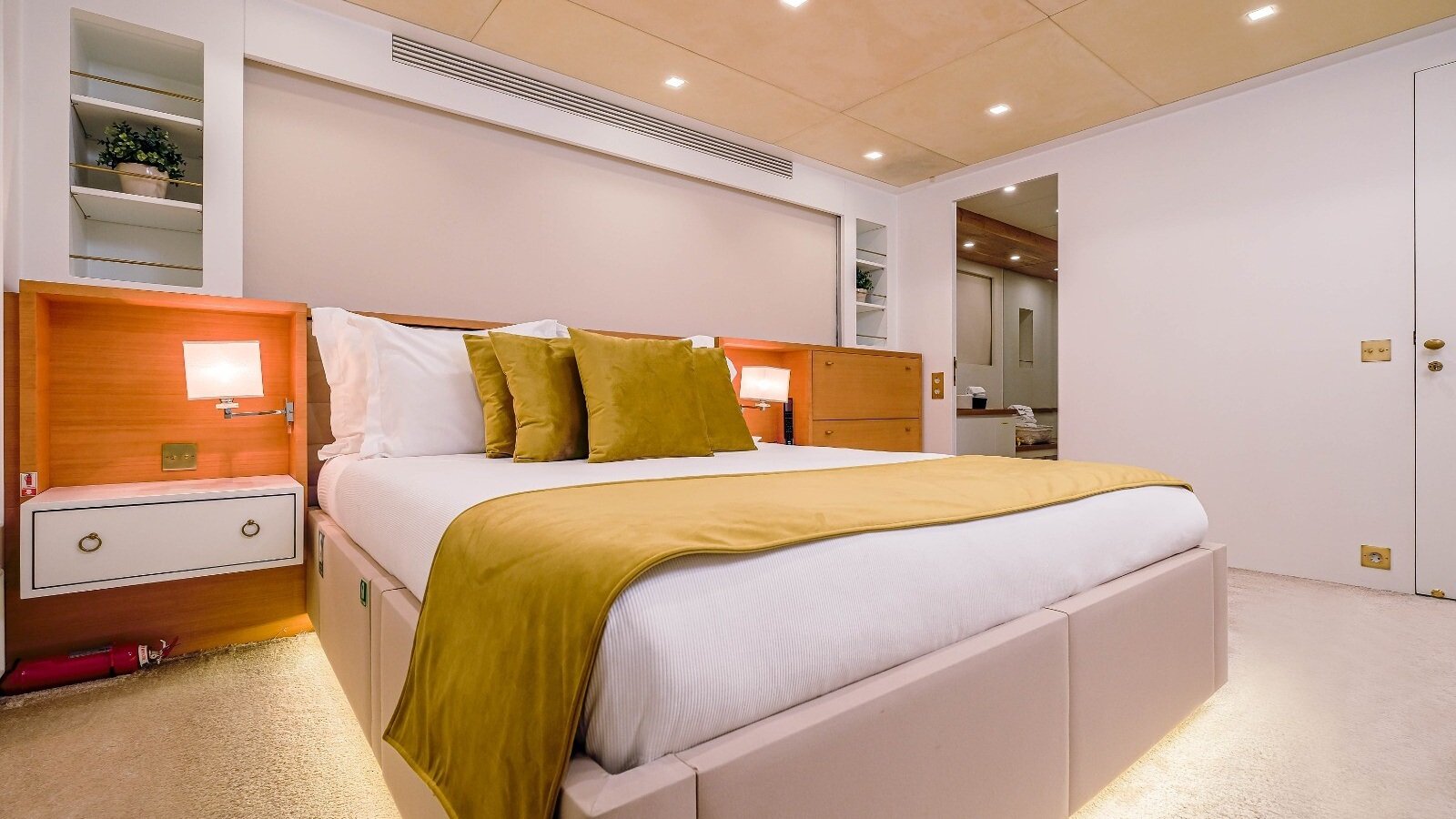
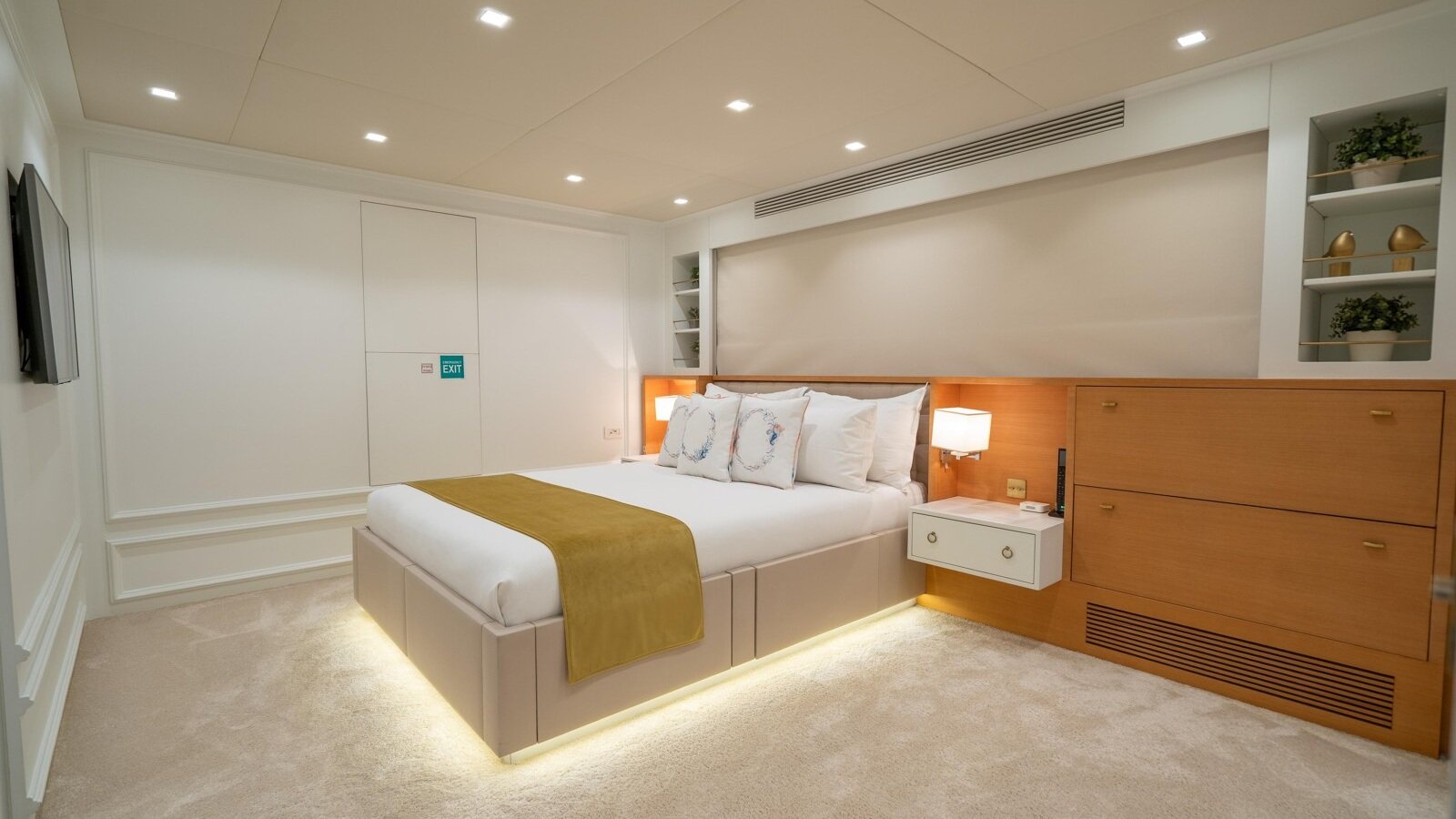
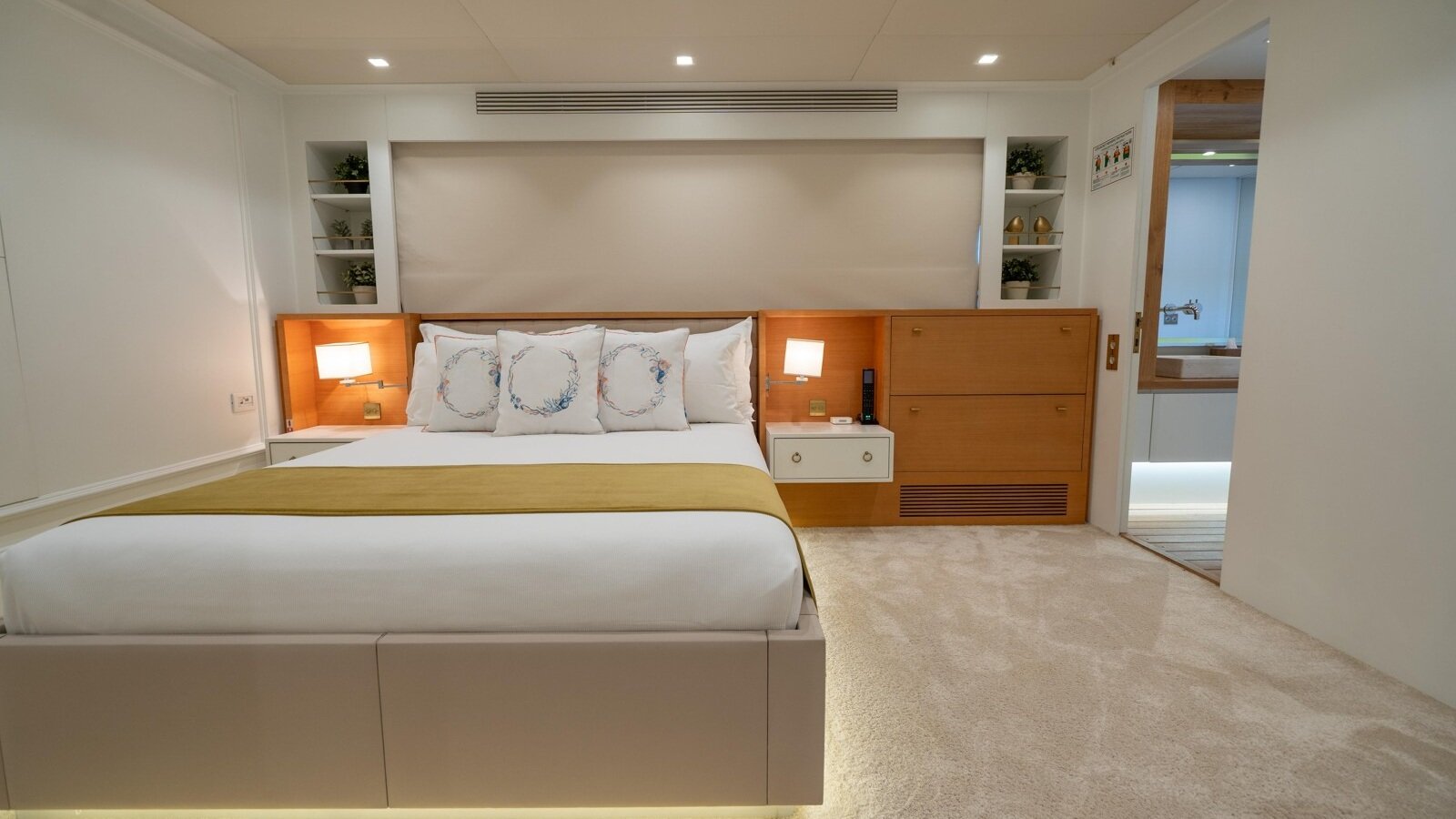
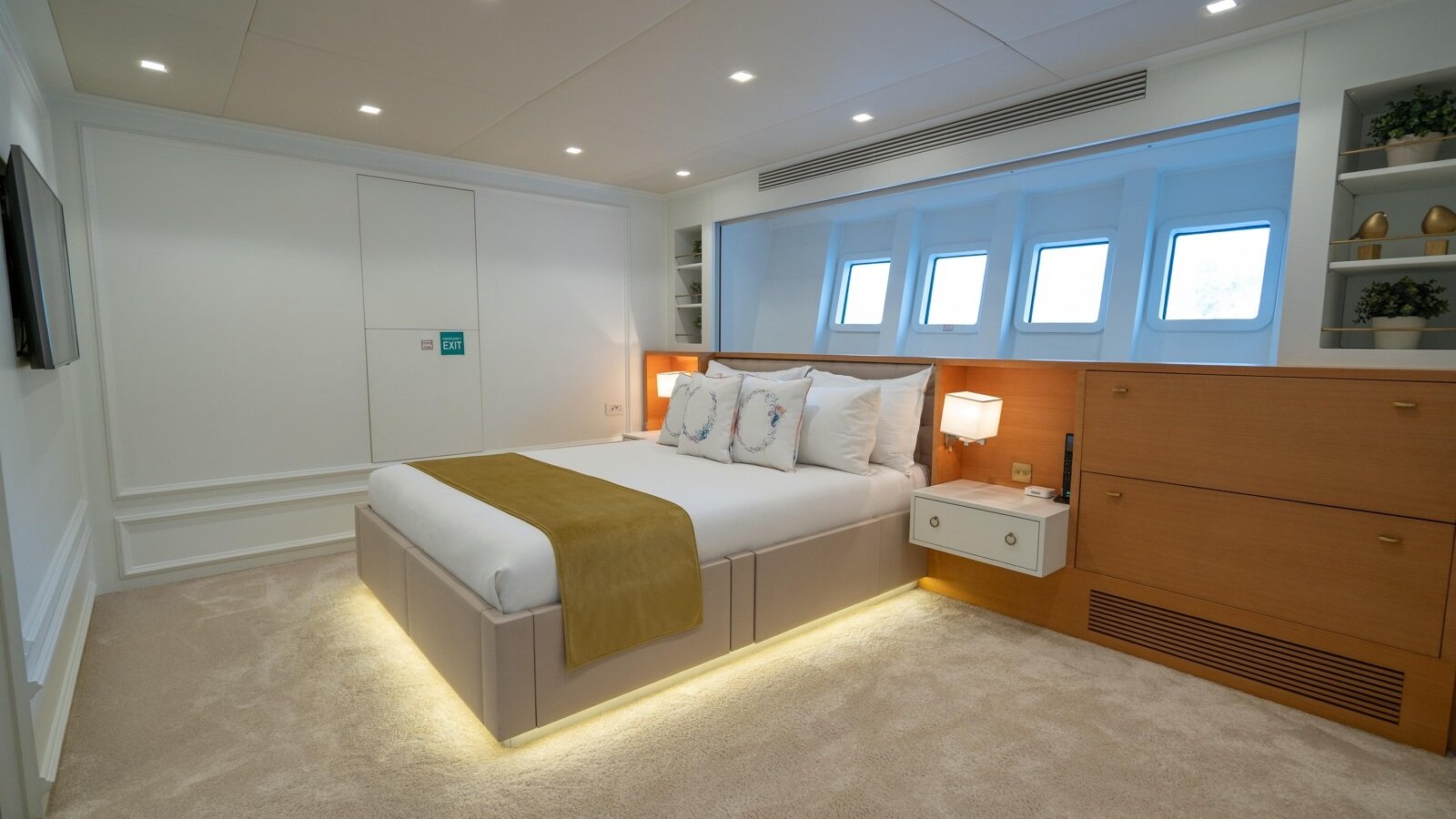
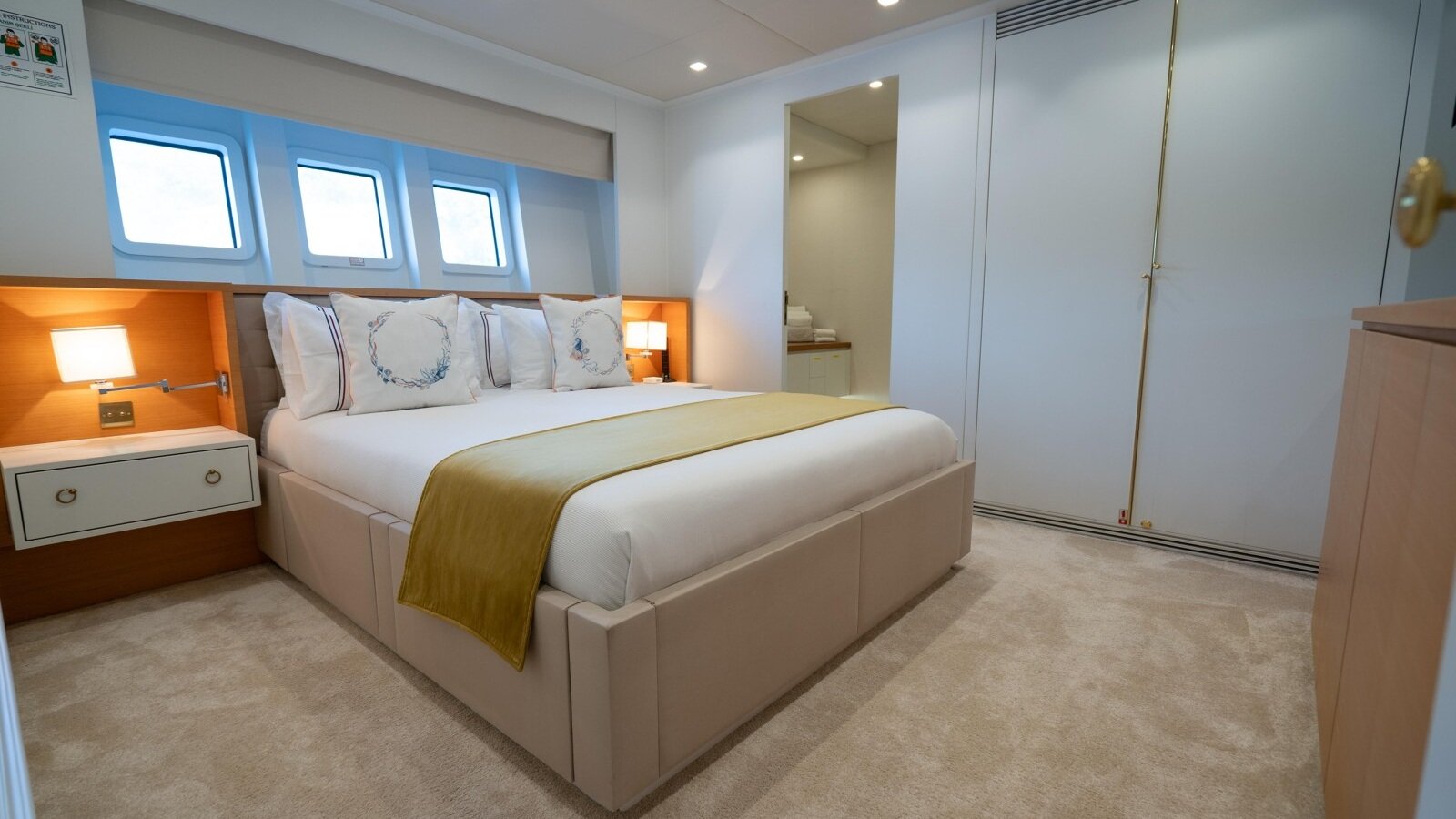
Inside she is bright and contemporary – pale oak, white lacquer, ochre and mustard accents, glazing along the whole main deck. The salon runs into a formal dining table. It is a lighter, more Aegean room than the dark Italian orthodoxy, and it suits where she works.
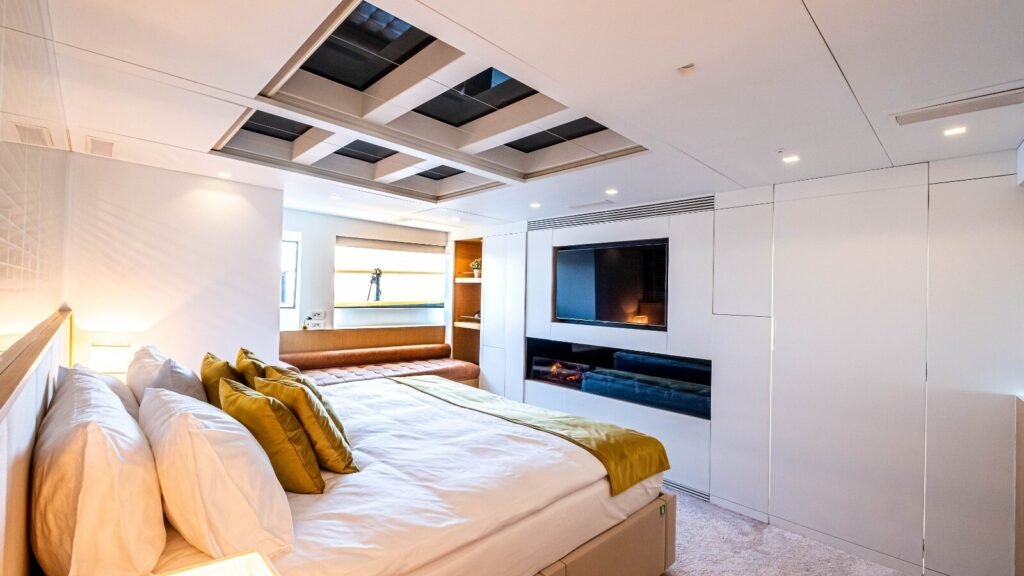
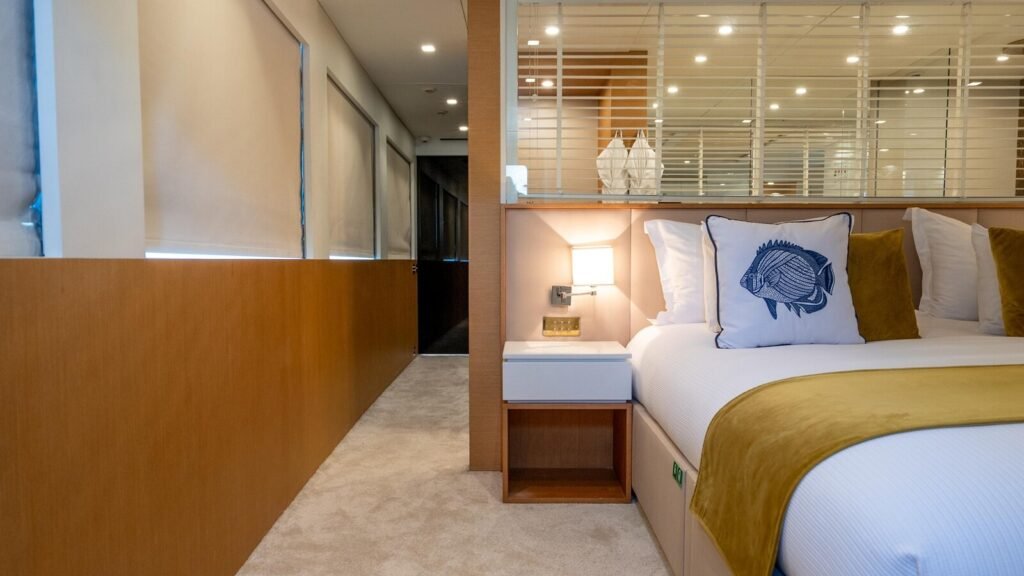
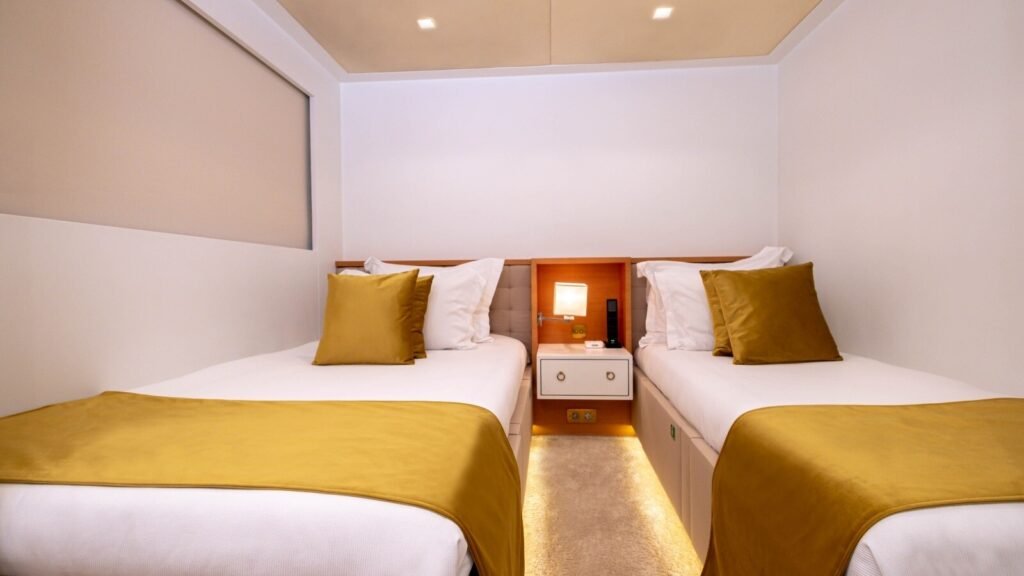
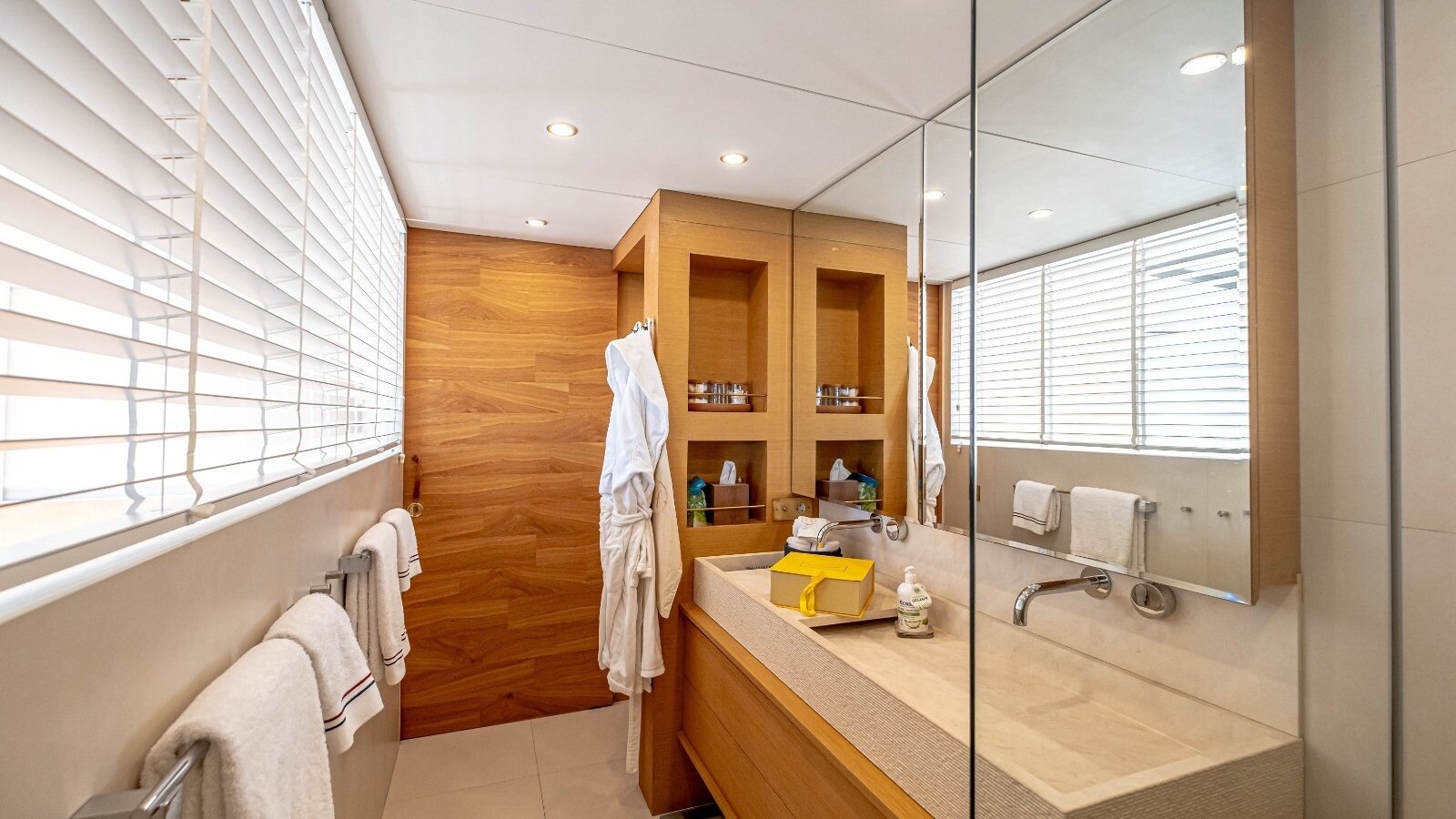
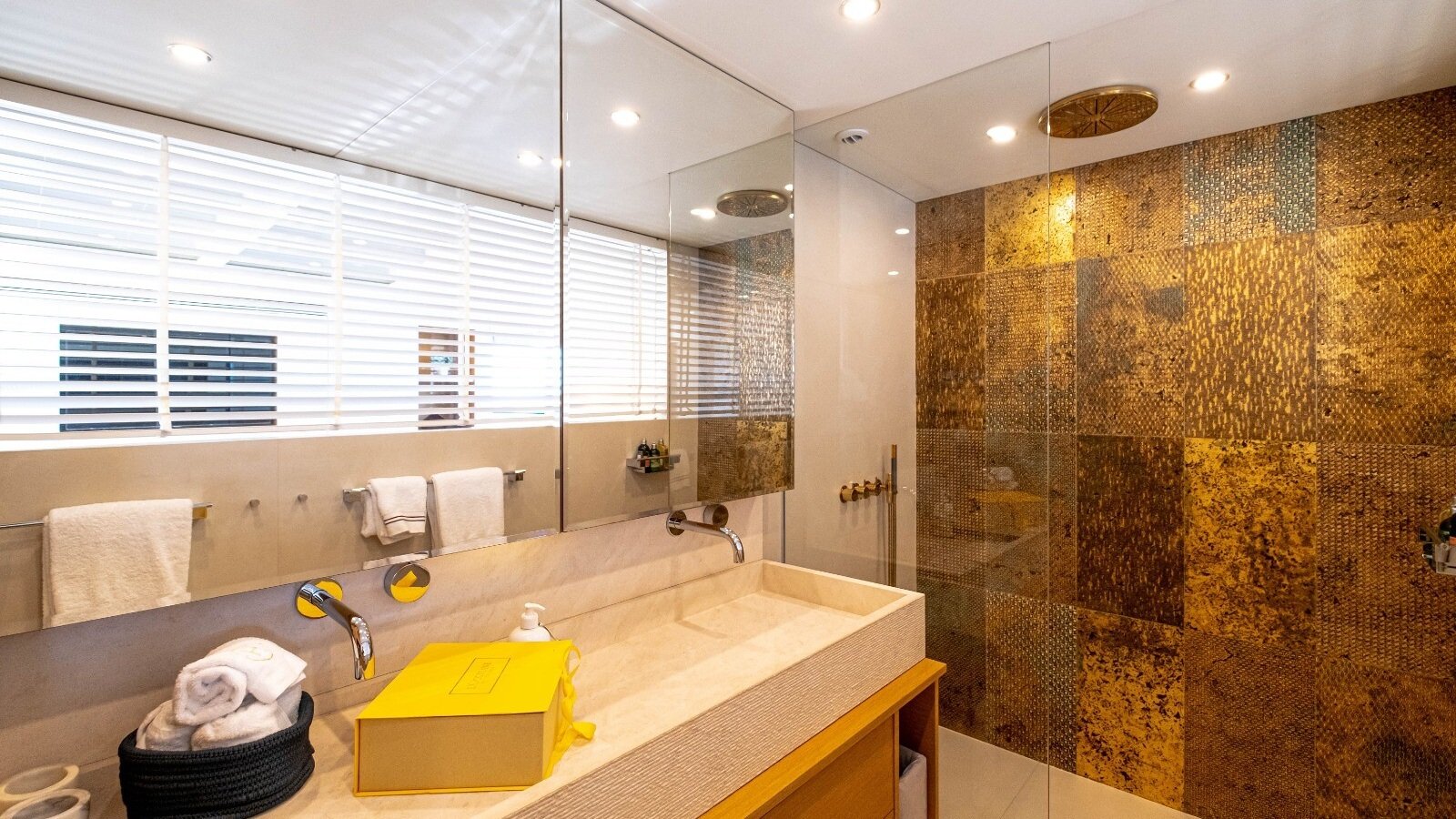
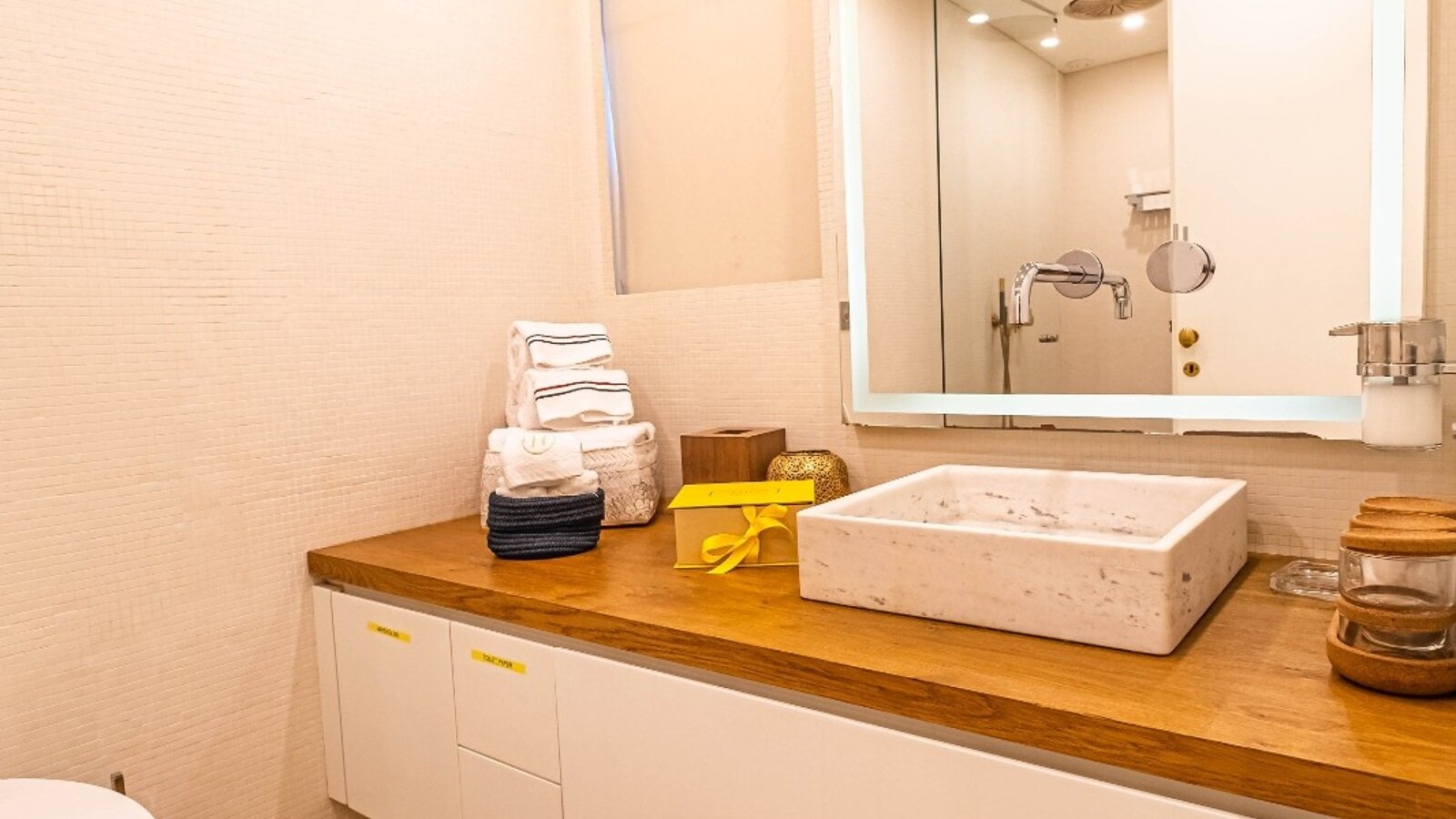
Five cabins sleep ten, each in the same oak with its own en-suite, most with hull windows at eye level from the bed. Six crew, and the food is the thing her guests report back on – Fraser’s gallery devotes four frames to the plating alone, which tells you where this yacht puts its effort.
It is worth being clear about what a wooden hull means at this size, because the word carries associations that do not apply. This is not a gulet and not a restoration. It is cold-moulded construction – laminated timber, epoxy-saturated, engineered rather than carpentered – and the yards around Bodrum have been refining it for decades while the rest of the industry moved to GRP because GRP is cheaper to tool. Wood is not the compromise here. It is the reason she is quiet, and it is why a 37-metre yacht weighs 254 tons instead of 400.
The honest counterpoint: timber needs looking after in a way steel does not, and a wooden hull carries a resale question that no amount of craft removes. For a charter guest none of that matters. For an owner it would.
She works Turkey and the wider Mediterranean from April to September at 95,000 euros, rising to 105,000 out of season.
HARUN is the least likely yacht in this batch: a hand-built timber hull pretending to be a modern production boat, drawing less than most tenders, run by six people who cook seriously. Nothing else at 37 metres is doing any of that, let alone all of it.