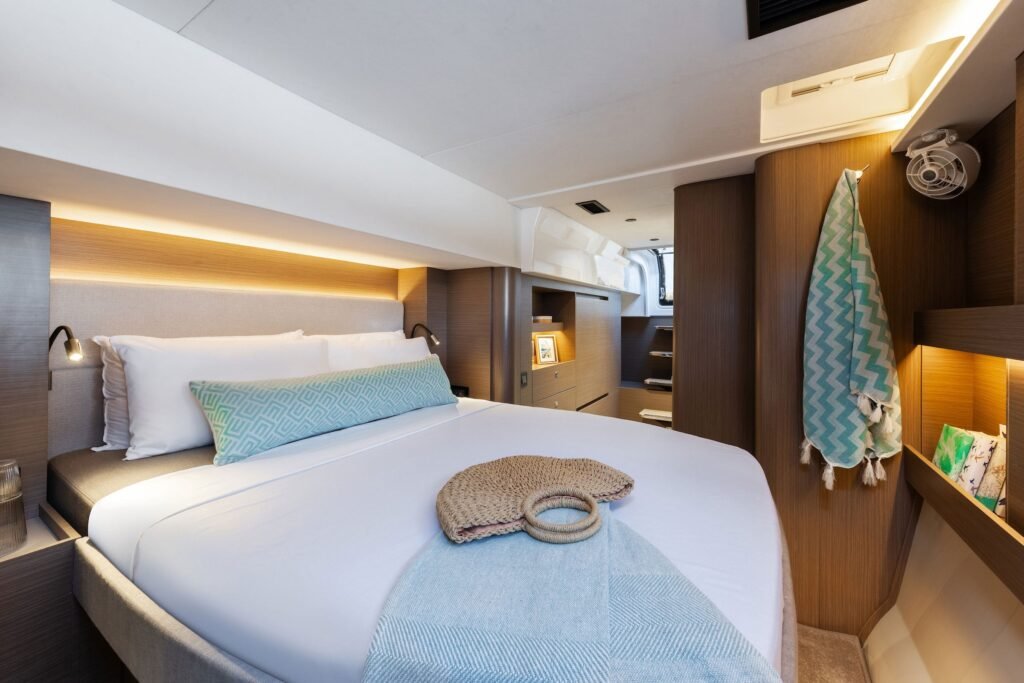
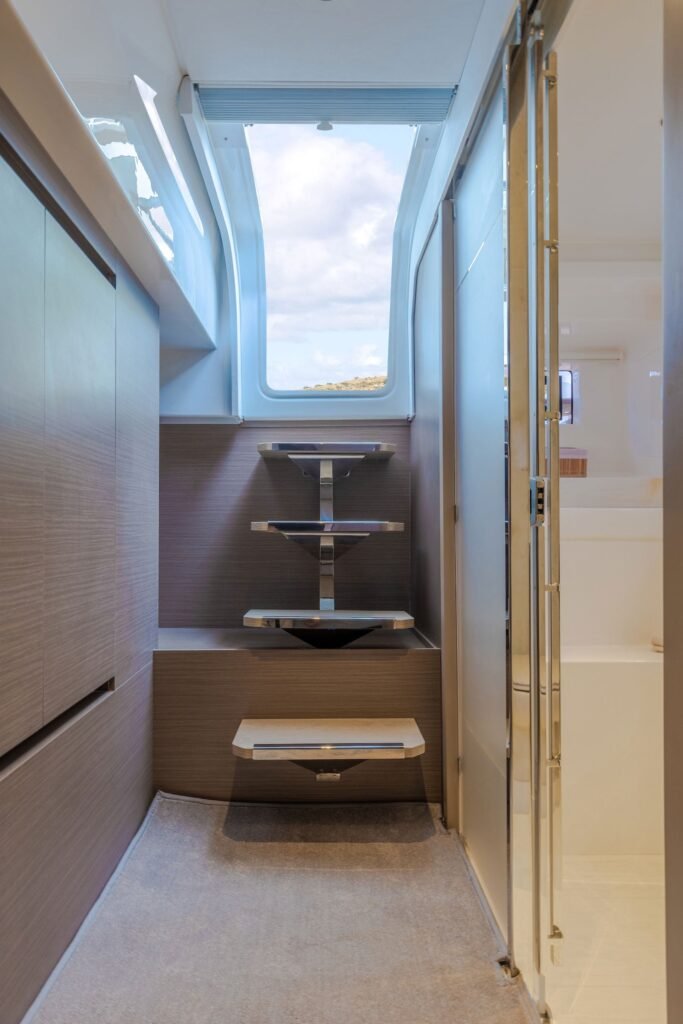
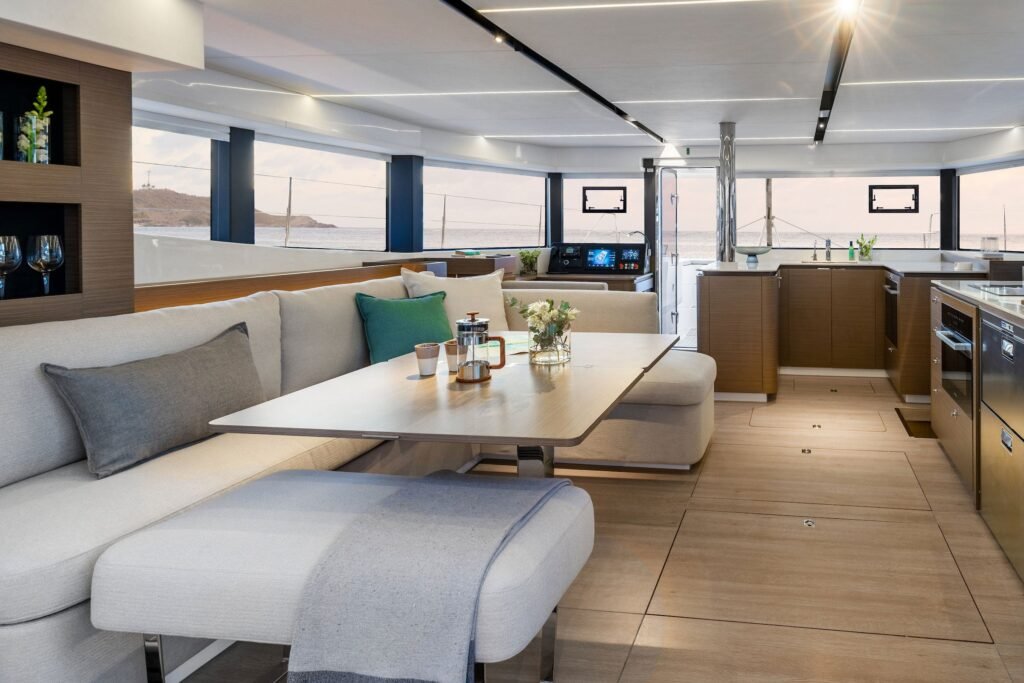
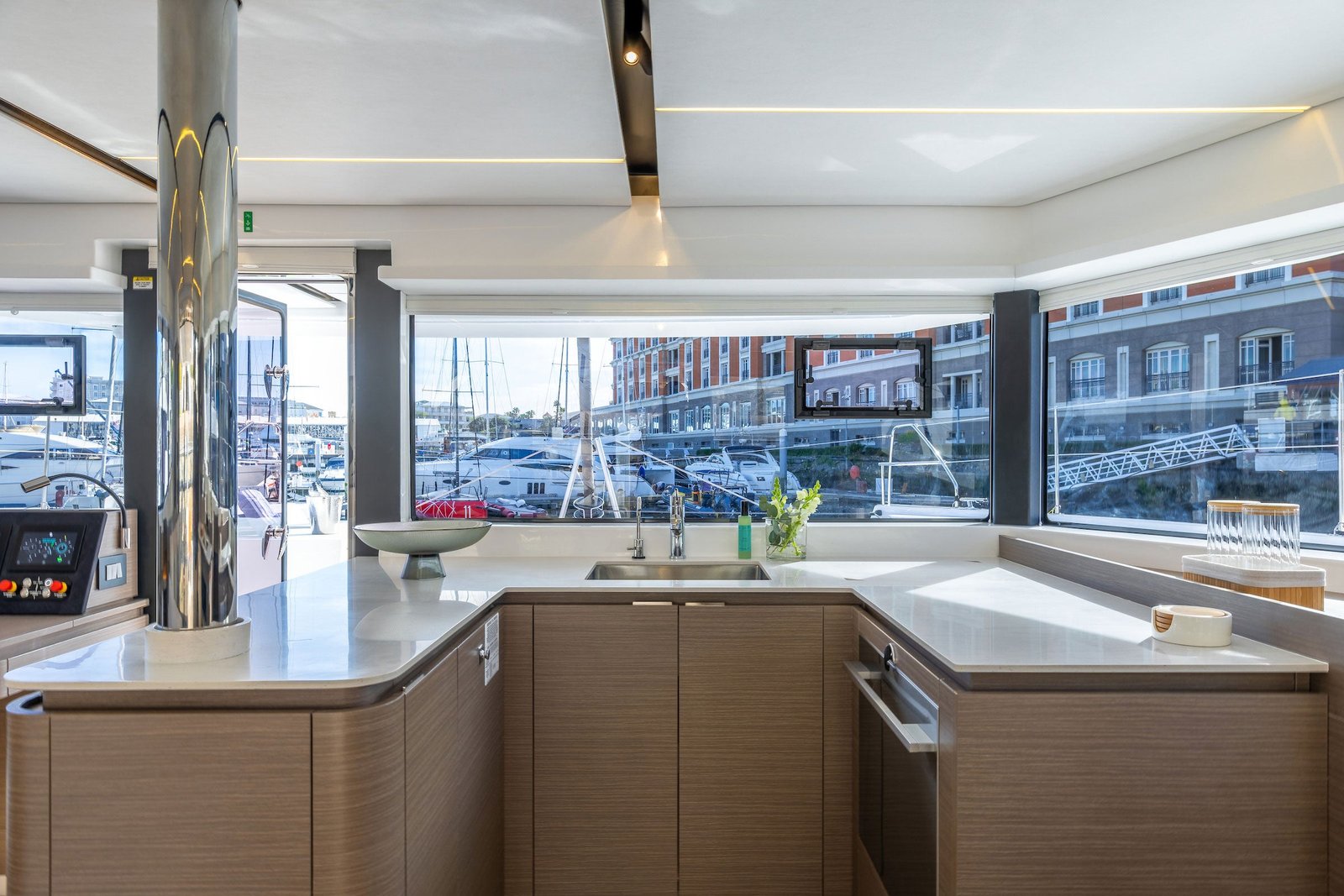
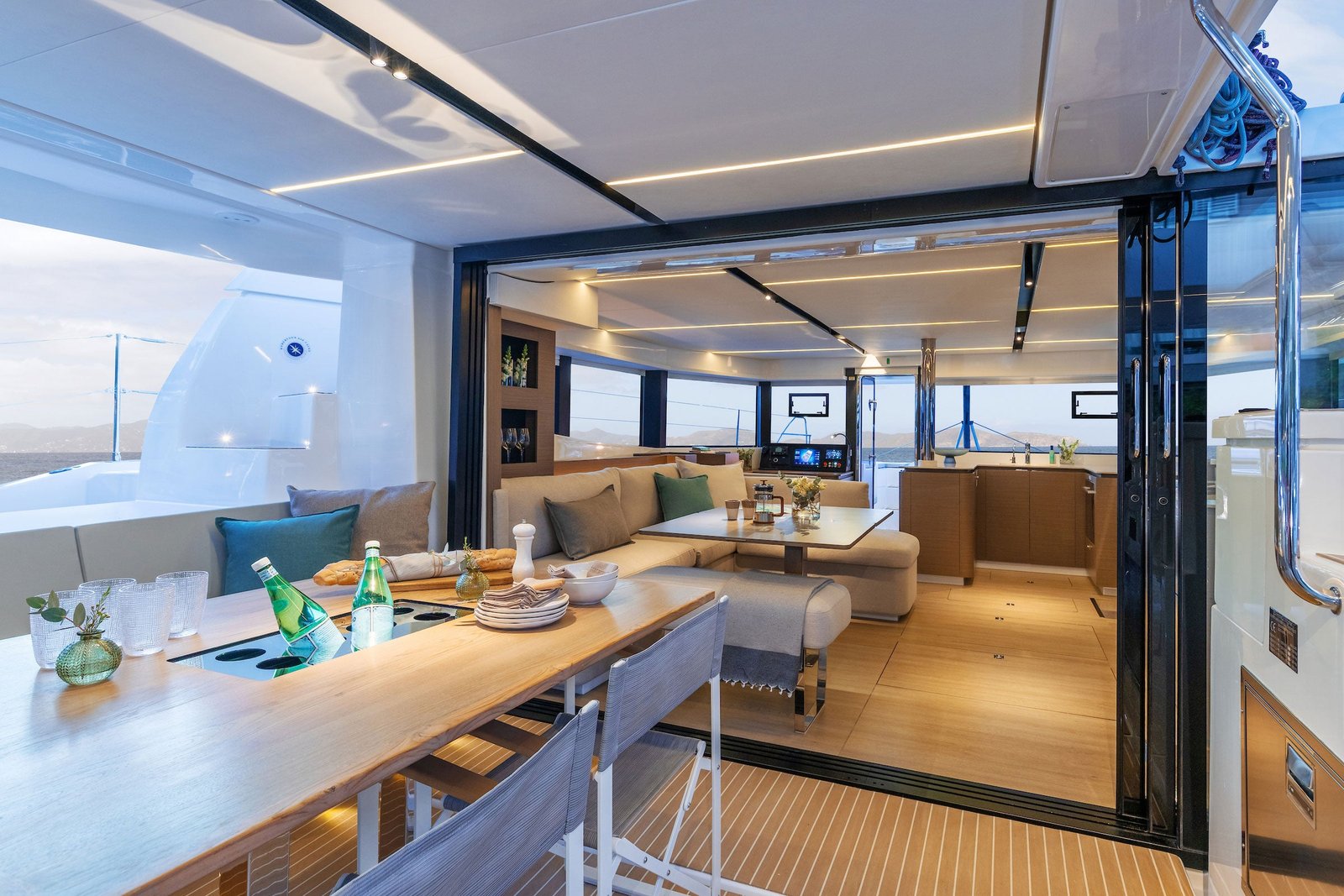
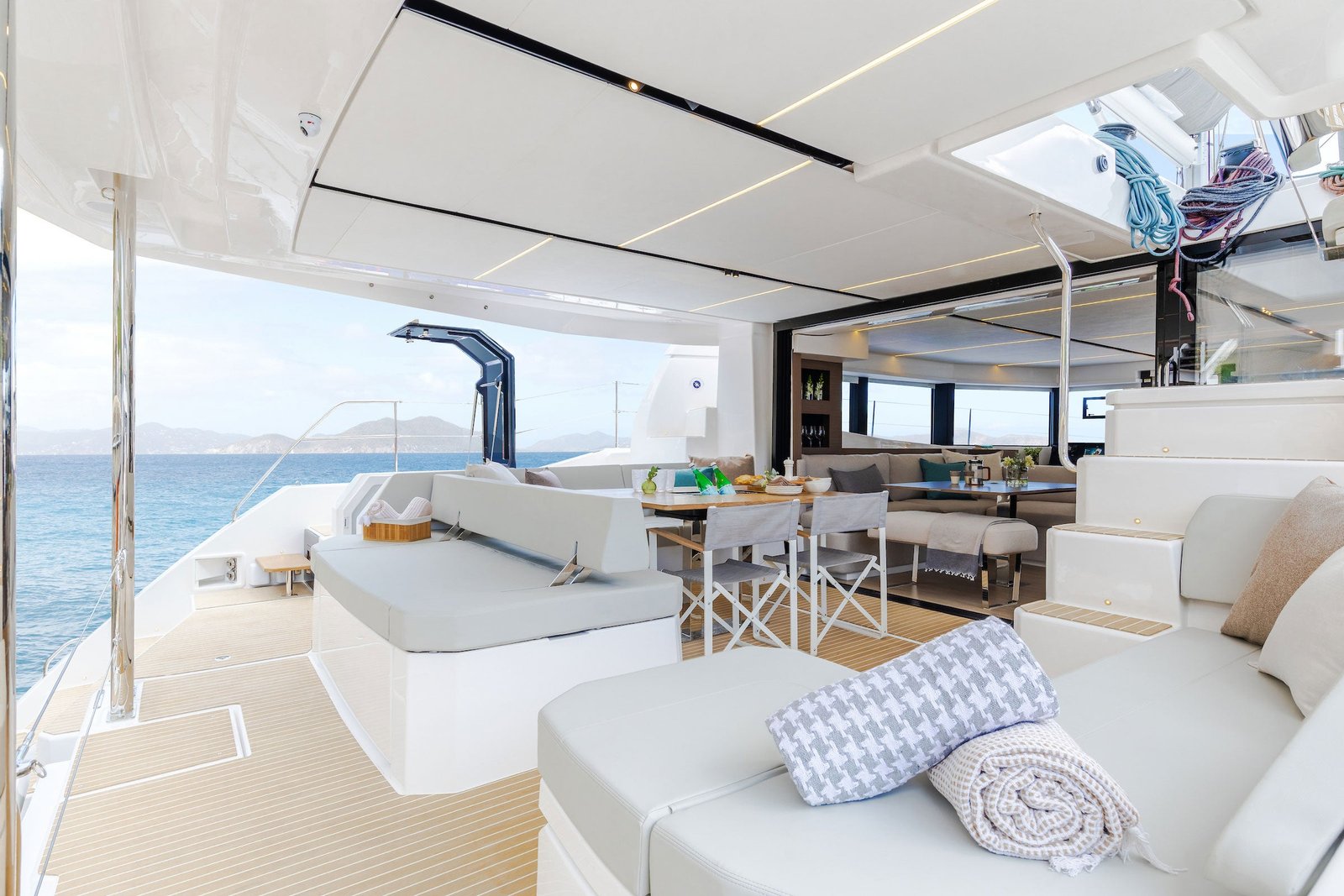
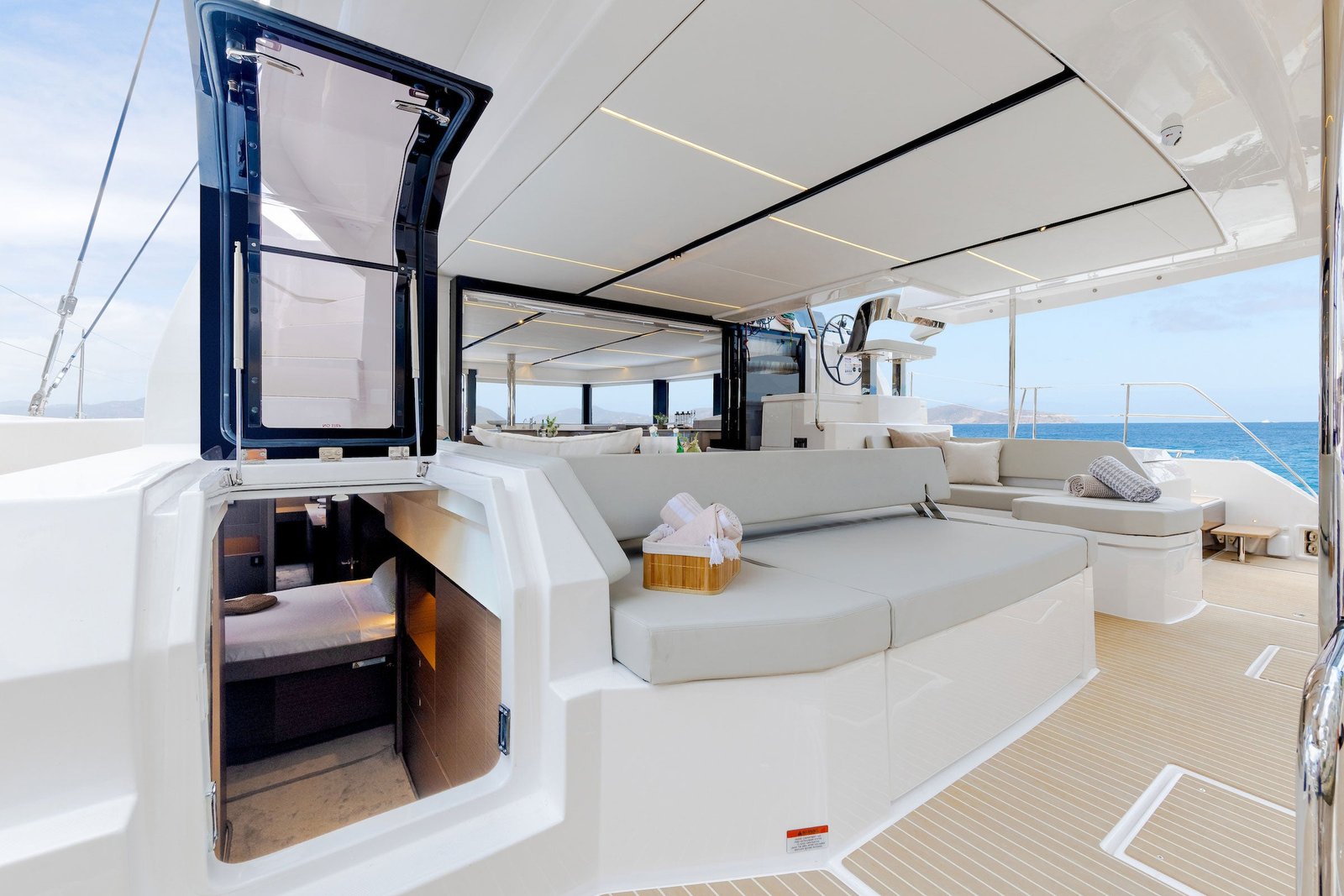
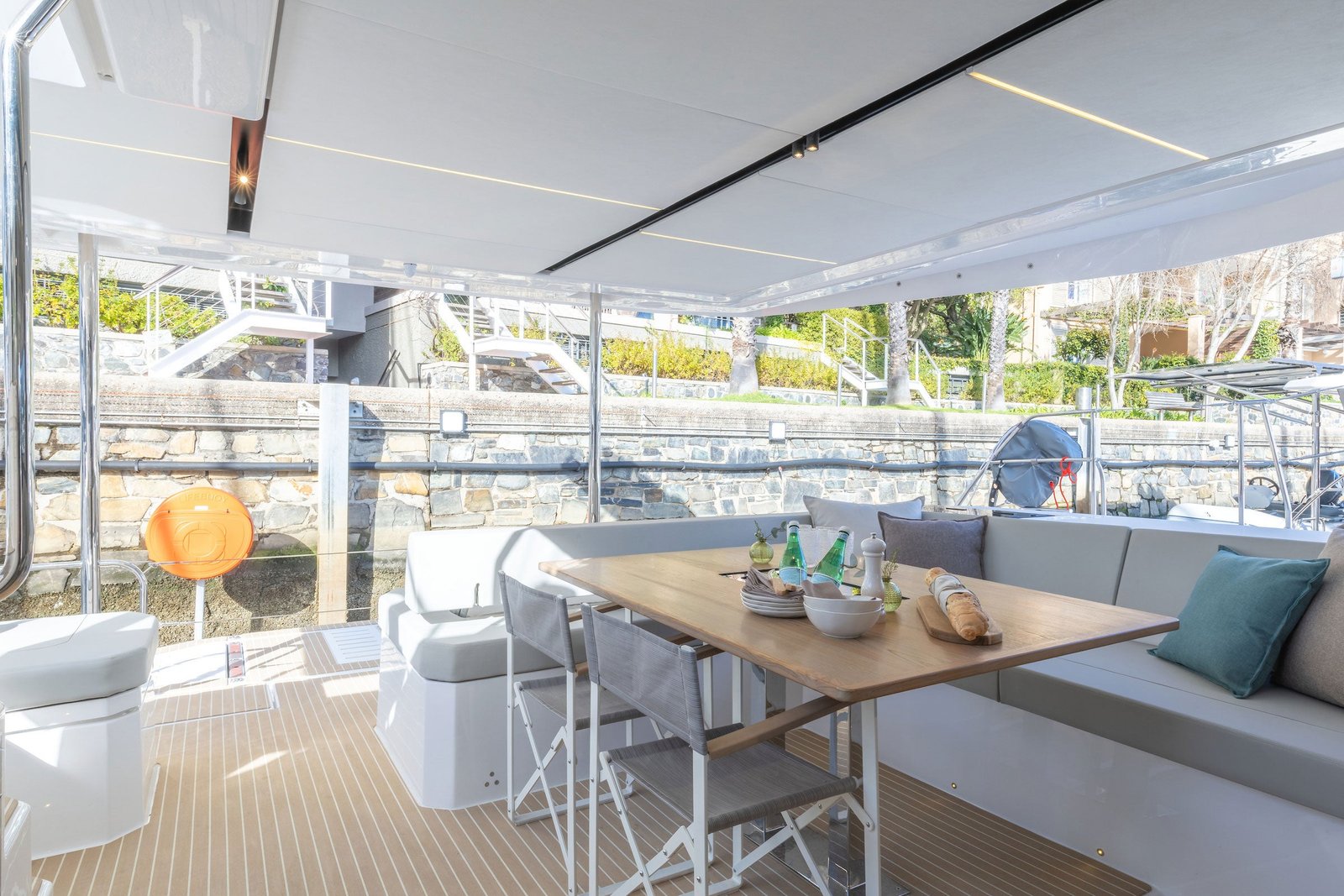
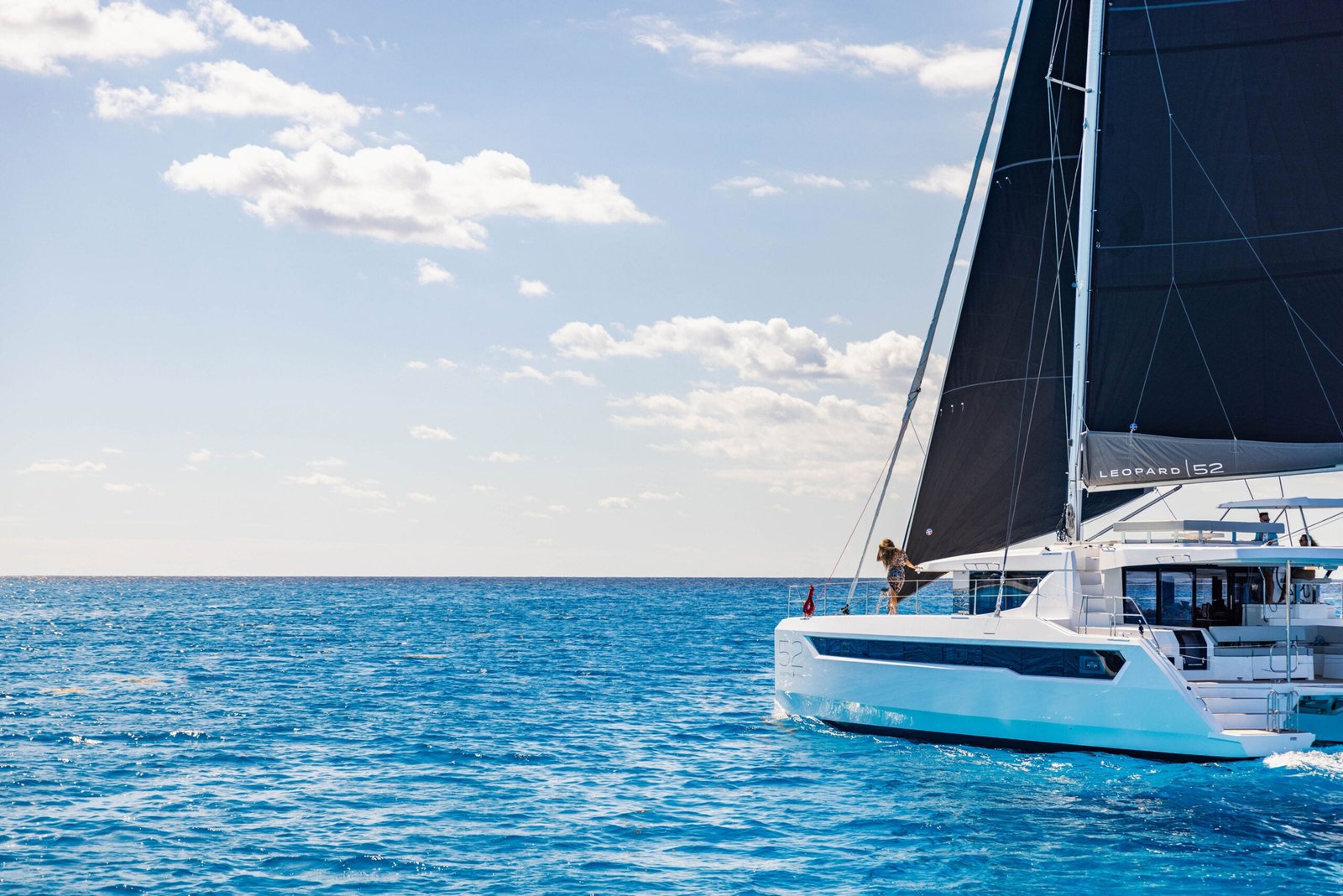
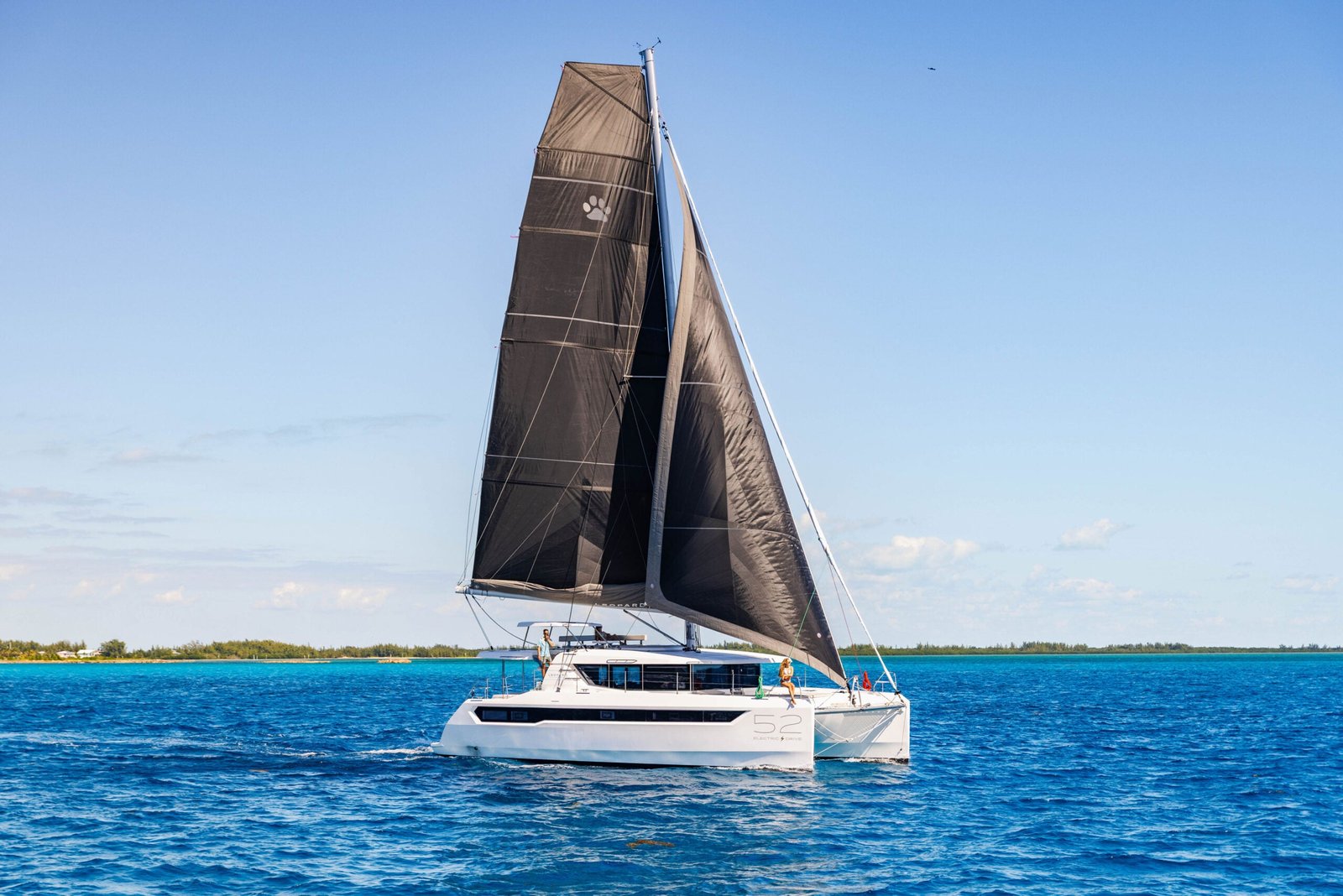
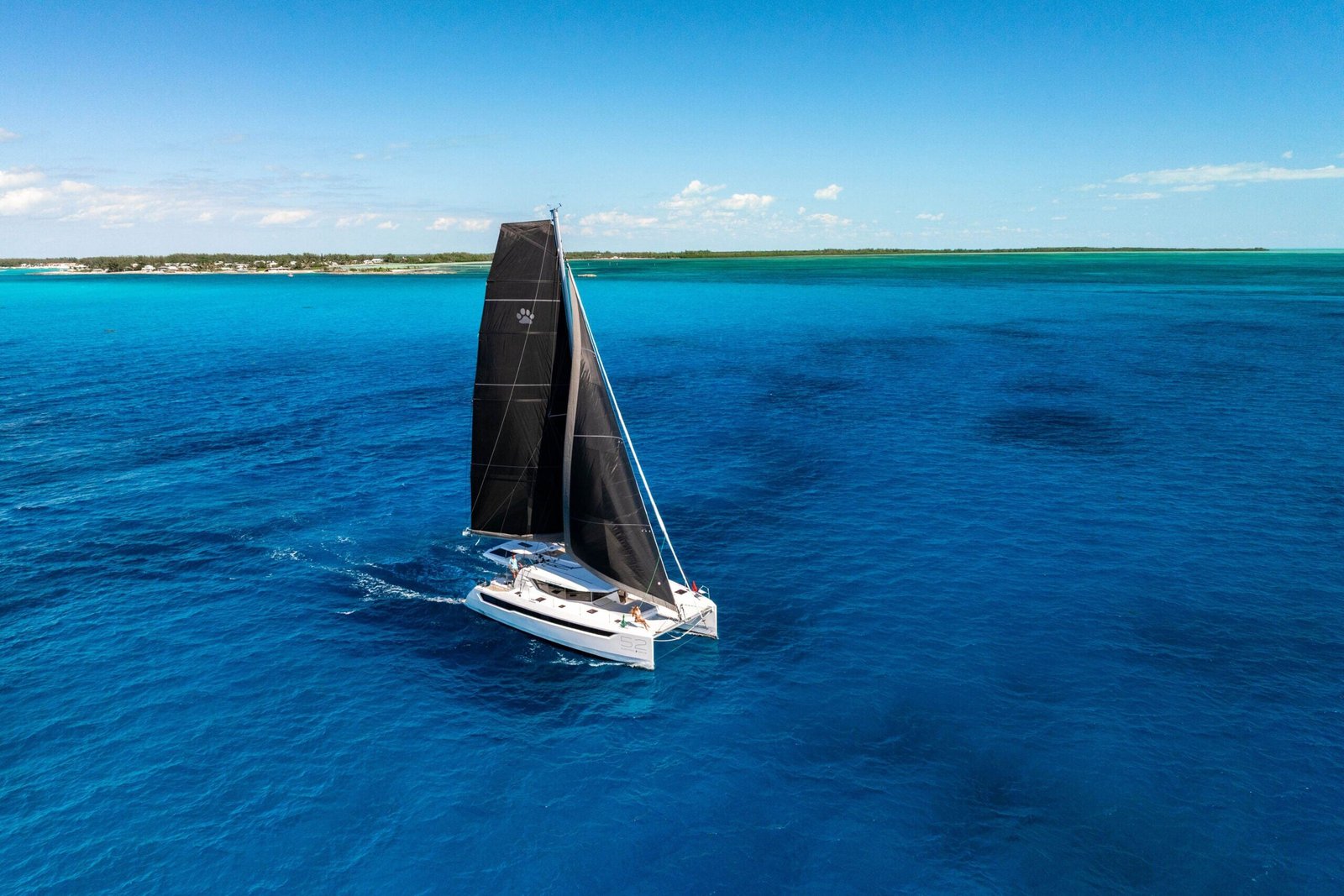
The cruising catamaran has moved from curiosity to default in a single generation, and the reasons are practical rather than fashionable. Two hulls carrying a bridgedeck give level decks under sail, shallow draught, cabins with genuine separation and a living space that feels closer to a house than a boat. The Yacht Collection lists sailing catamarans across the cruising and charter market.
The advantages compound at anchor as much as under way. There is no heel, so guests who do not sail stay comfortable and lunch stays on the table. Shallow draught opens Caribbean, Bahamian and Aegean anchorages that keelboats pass by. Cabins sit in separate hulls, acoustically isolated in a way no single hull achieves, and the deck area is closer to a terrace than a cockpit.
The engineering is more demanding than on a monohull. Two hulls joined by a bridgedeck experience racking loads a single hull never sees, so forebeams are heavily engineered, bulkheads bond to hull and deck to close the structure, and bridgedeck clearance is set to limit slamming. Weight discipline matters, because a heavily loaded catamaran loses the performance and draught that made it attractive. The costs are real too, since beam attracts premium berthing everywhere and two engines double the servicing. Use a multihull surveyor and inspect the cross structure properly. Browse the sailing catamarans available and speak to our brokers.