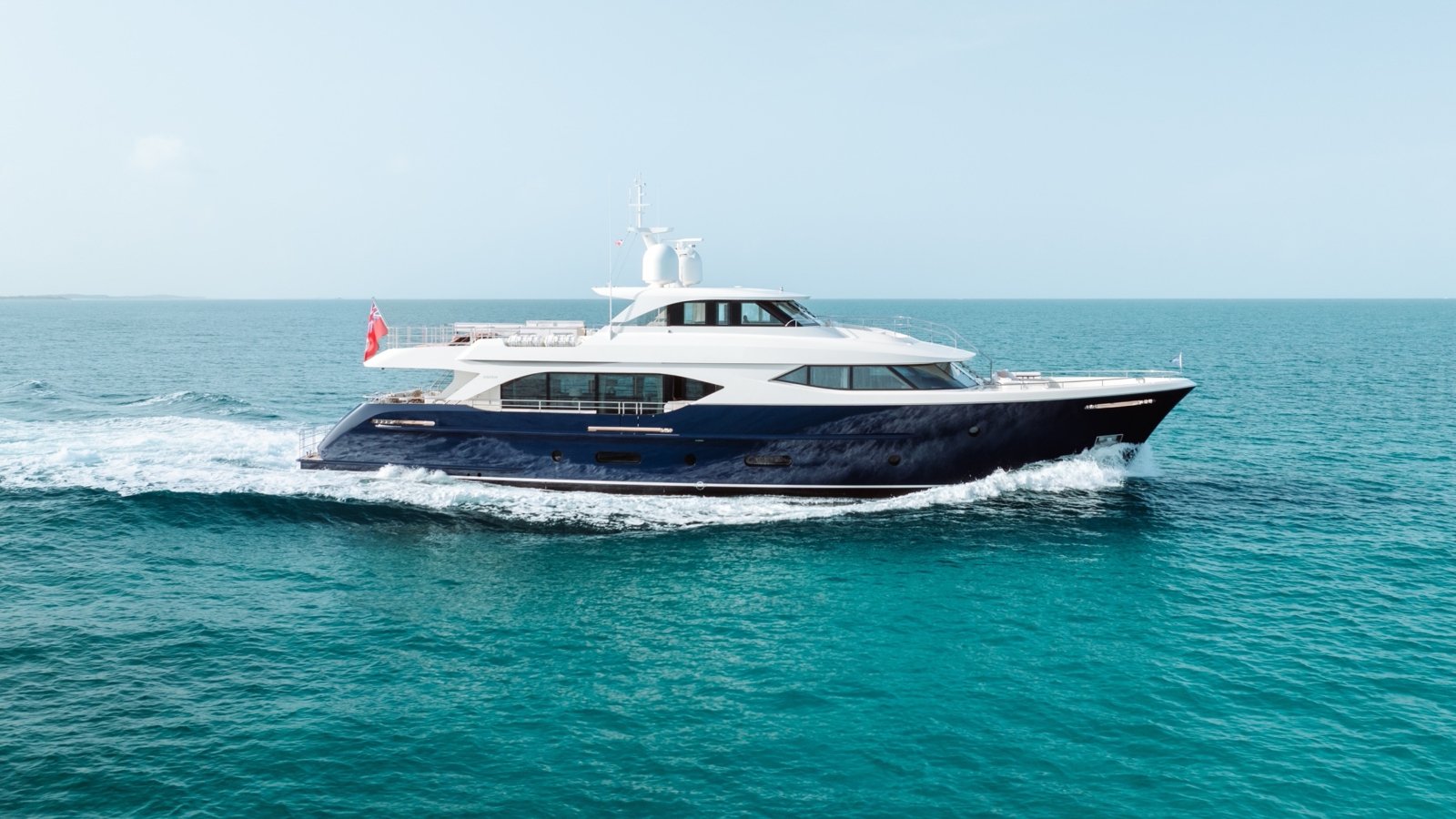
Moonen built its name on compact steel displacement yachts that carry themselves like far larger ships. MIDNIGHT SAGA is the first hull of the 110 Mustique series, and she makes that argument better than any brochure could. Thirty-four metres, five cabins, a shallow draft, and a 3,300-mile range at nine knots: this is a yacht designed to go somewhere and stay there.
The draft is the detail that shapes a charter aboard her. Where deeper-hulled yachts of similar volume have to hold off and send guests in by tender, MIDNIGHT SAGA works her way into shallow anchorages and sits close to the beach. Her delivery season in the Bahamas showed exactly what that buys – Exuma sandbars, quiet cuts, water clear enough to read the anchor chain. The same logic applies in the Mediterranean, where the difference between a good anchorage and a merely acceptable one is often a metre of water.
Rene van der Velden drew the exterior and it reads as restrained rather than showy: a long, low sheer, a dark navy hull that reduces the visual mass of the superstructure, and deck spaces that flow into one another instead of competing. Diana Yacht Design handled the naval architecture, and the hull runs at a genuine displacement gait – 13.4 knots flat out, ten in comfort, and very little fuss at either.
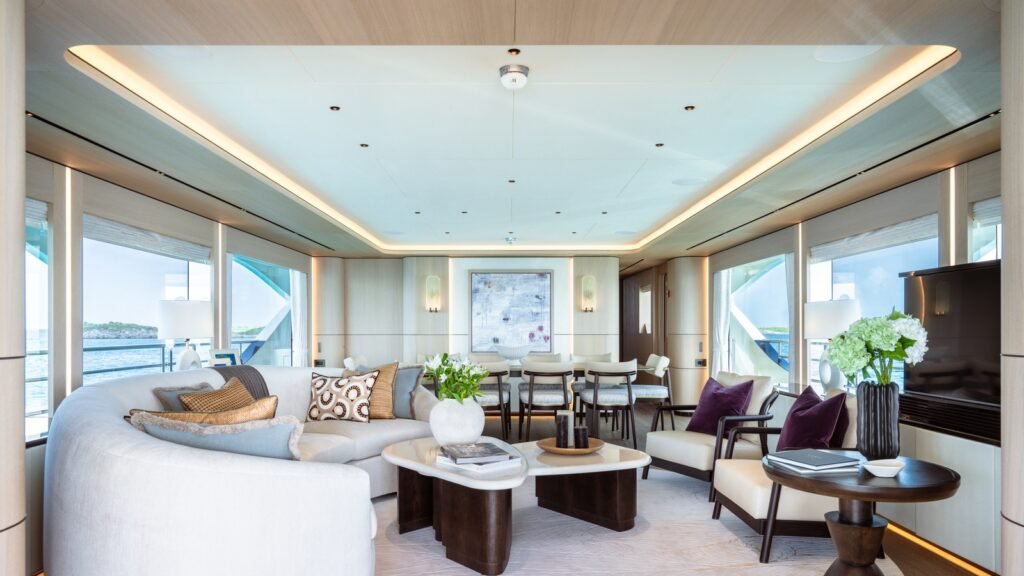
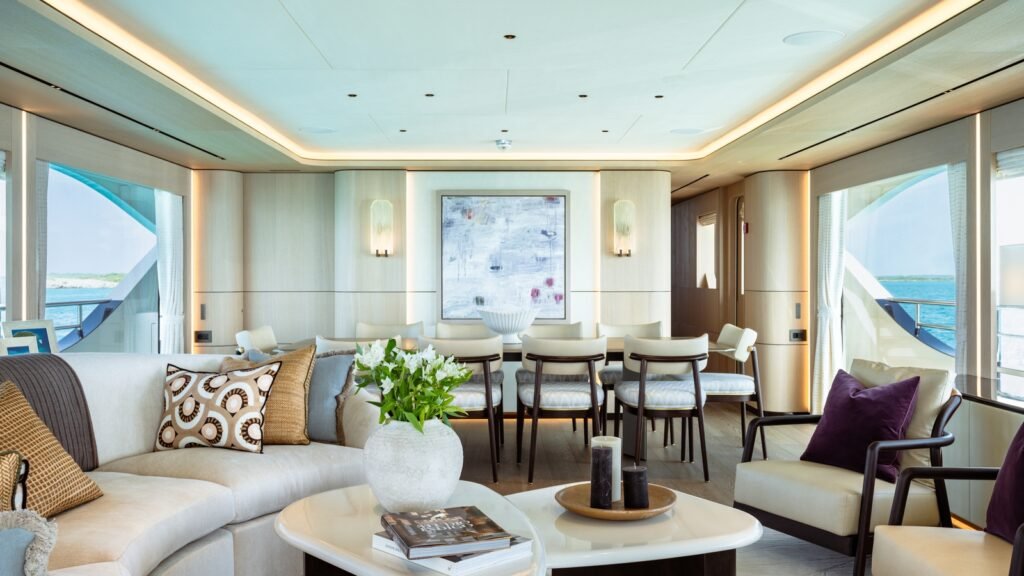
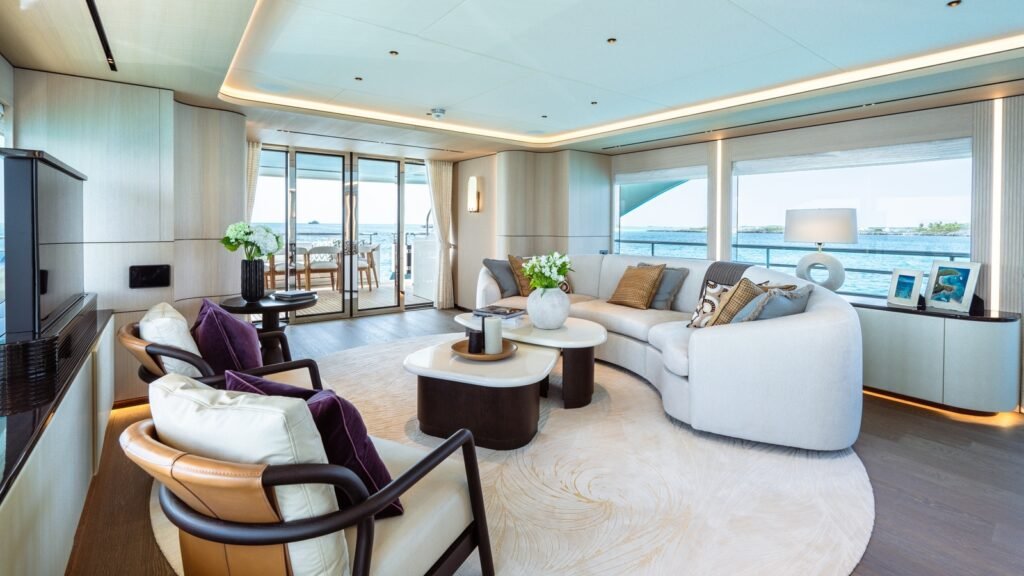
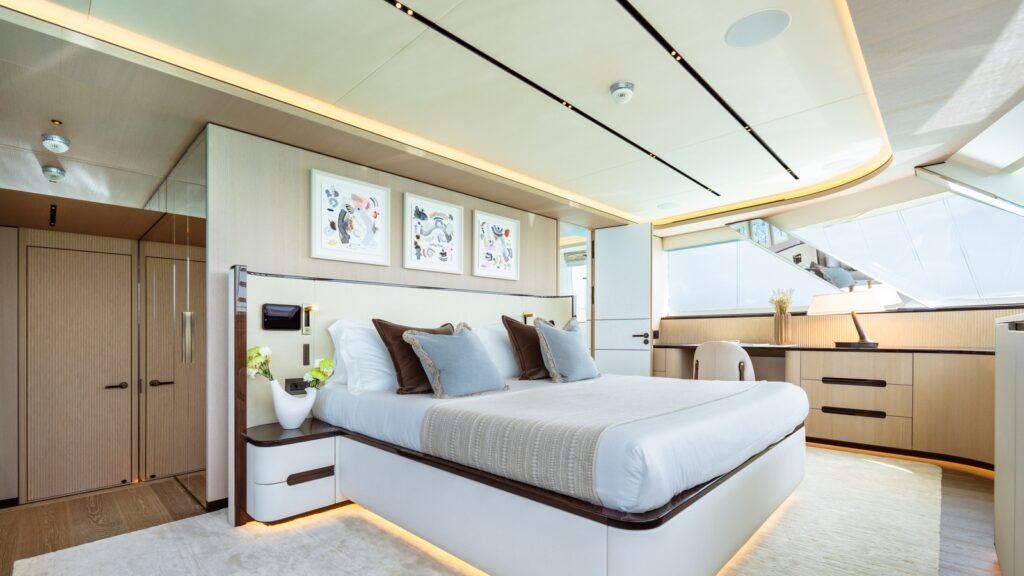
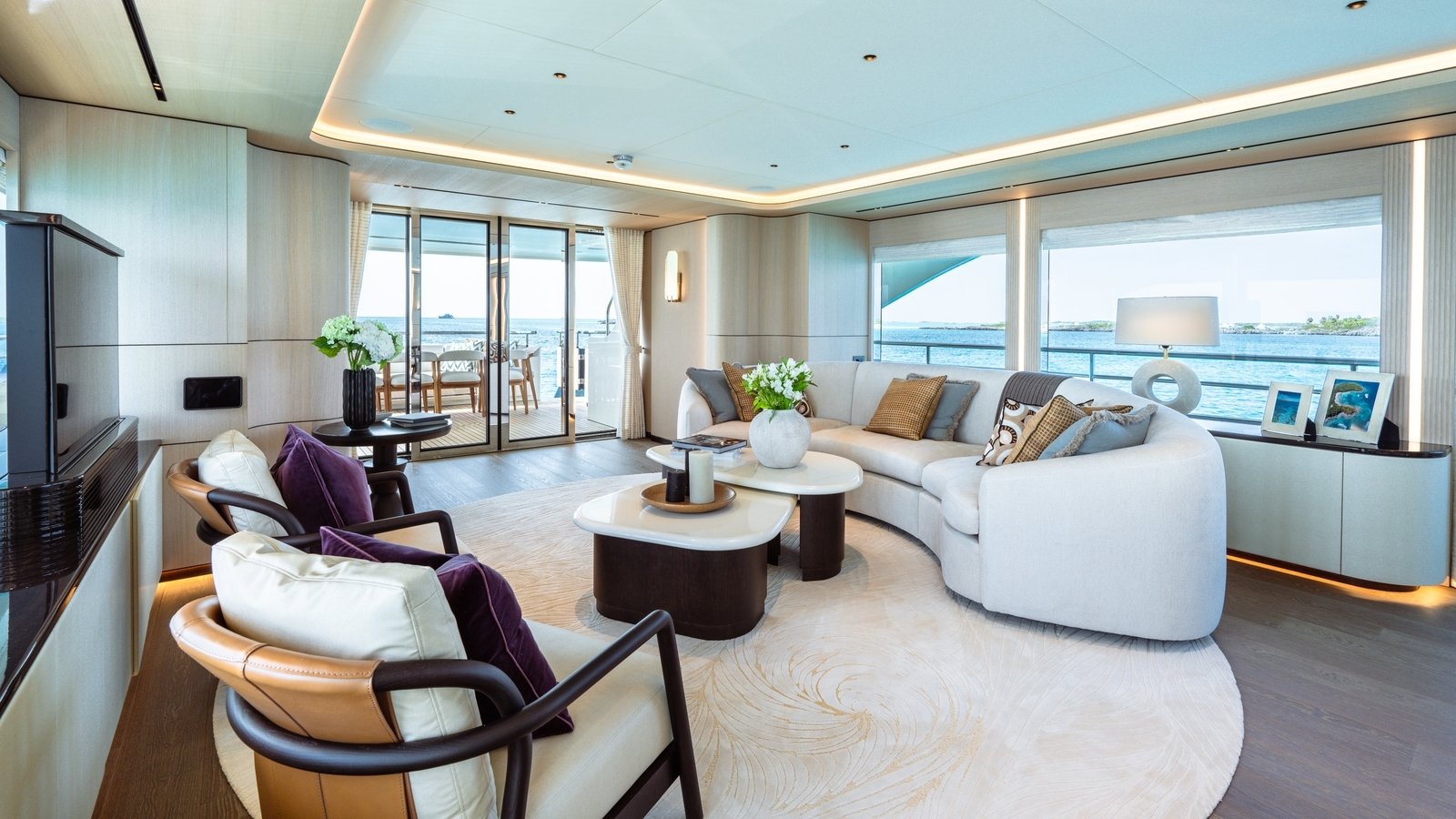
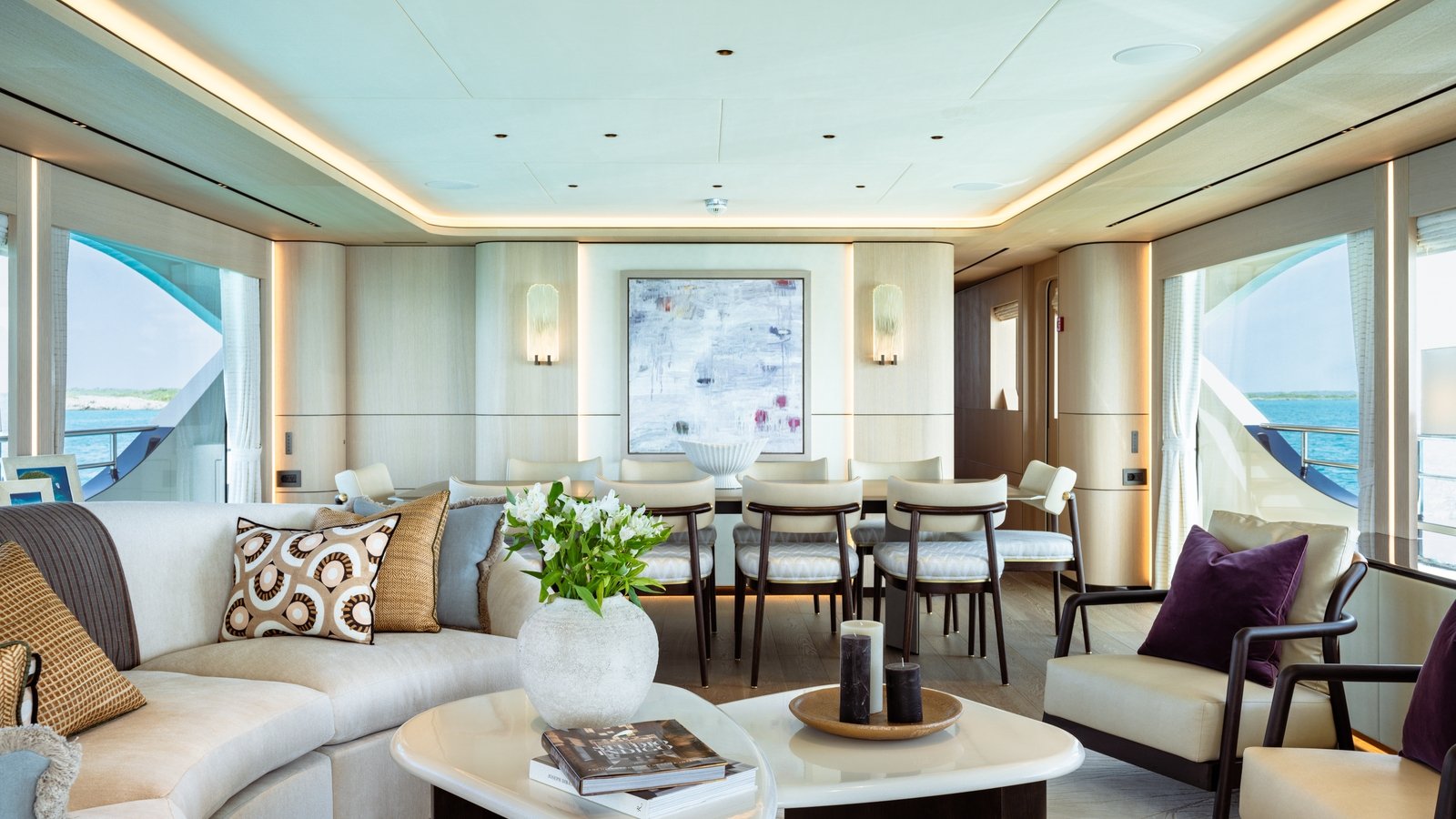
Studio Indigo shaped the interior, and the guiding idea is light. Pale oak, cream upholstery and a shallow warm-gold cove running the length of the ceilings keep the main deck feeling open even with the blinds down. The main-deck volume runs as one continuous space – lounge forward of the aft doors, dining set within the same room rather than partitioned off – which suits a family charter far better than a formal separation would. There is no second interior saloon, and she does not need one: the bridge deck above carries a sheltered bar, a dining table and loungers that do the same job in the open air.
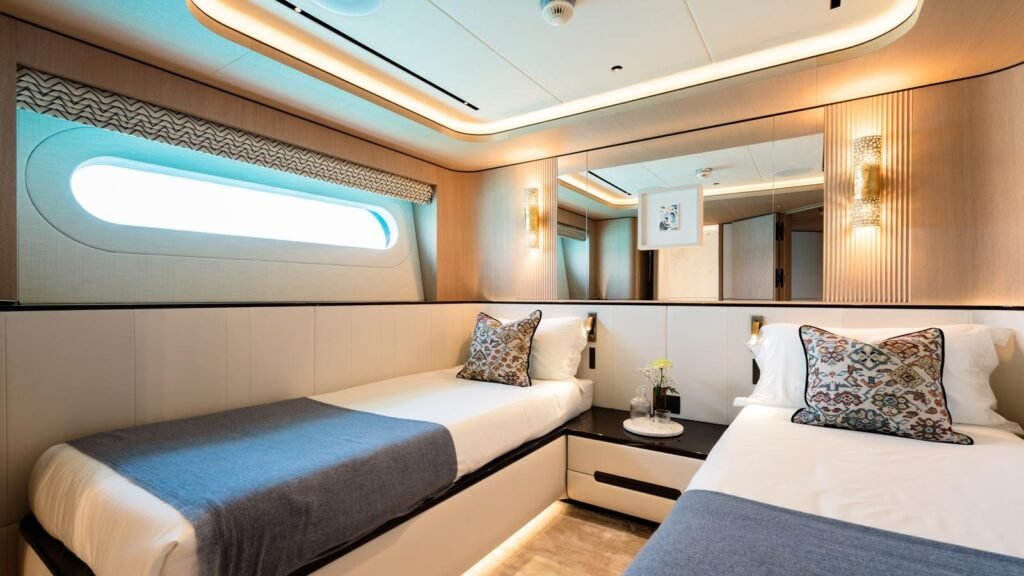
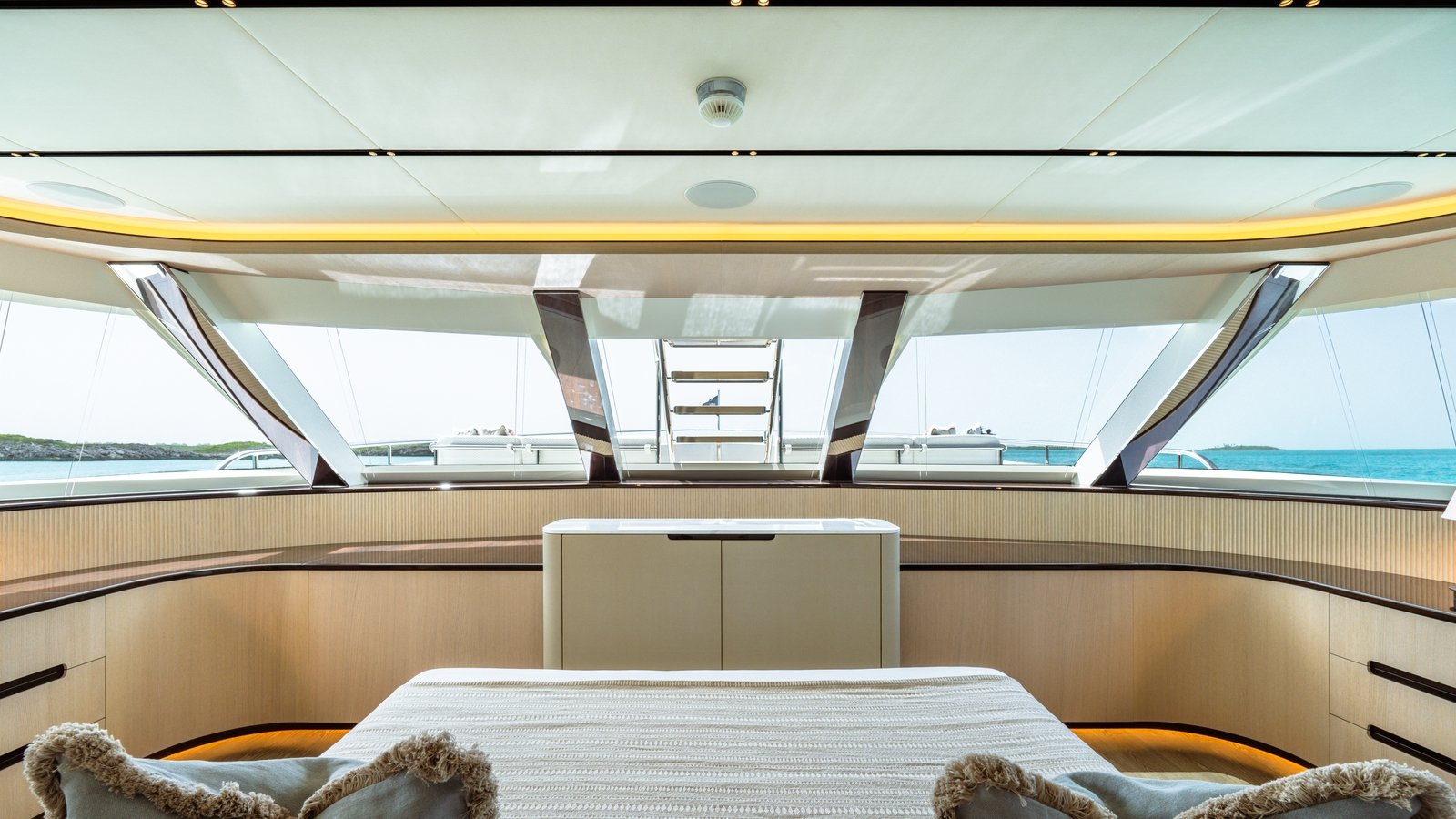
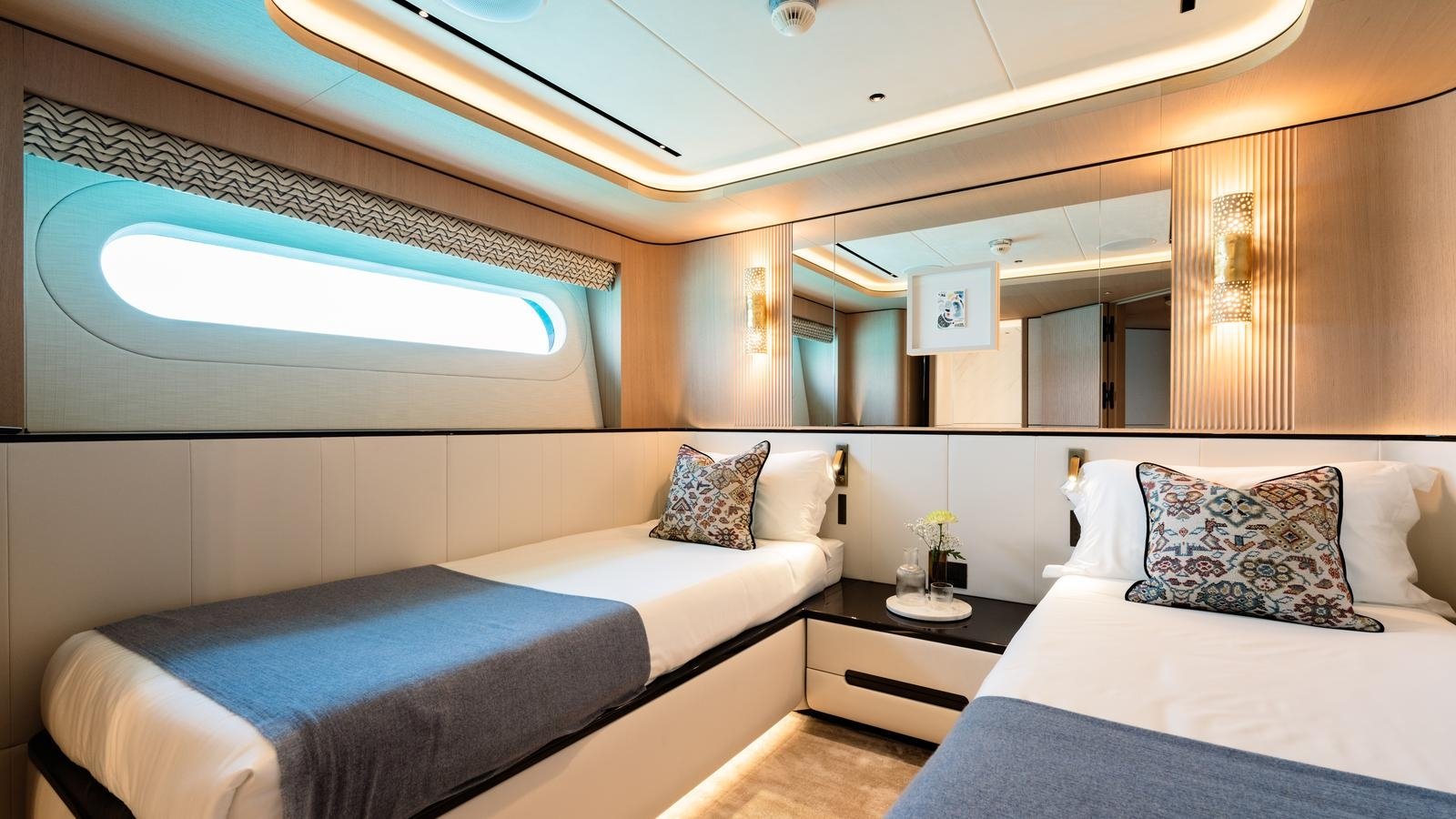
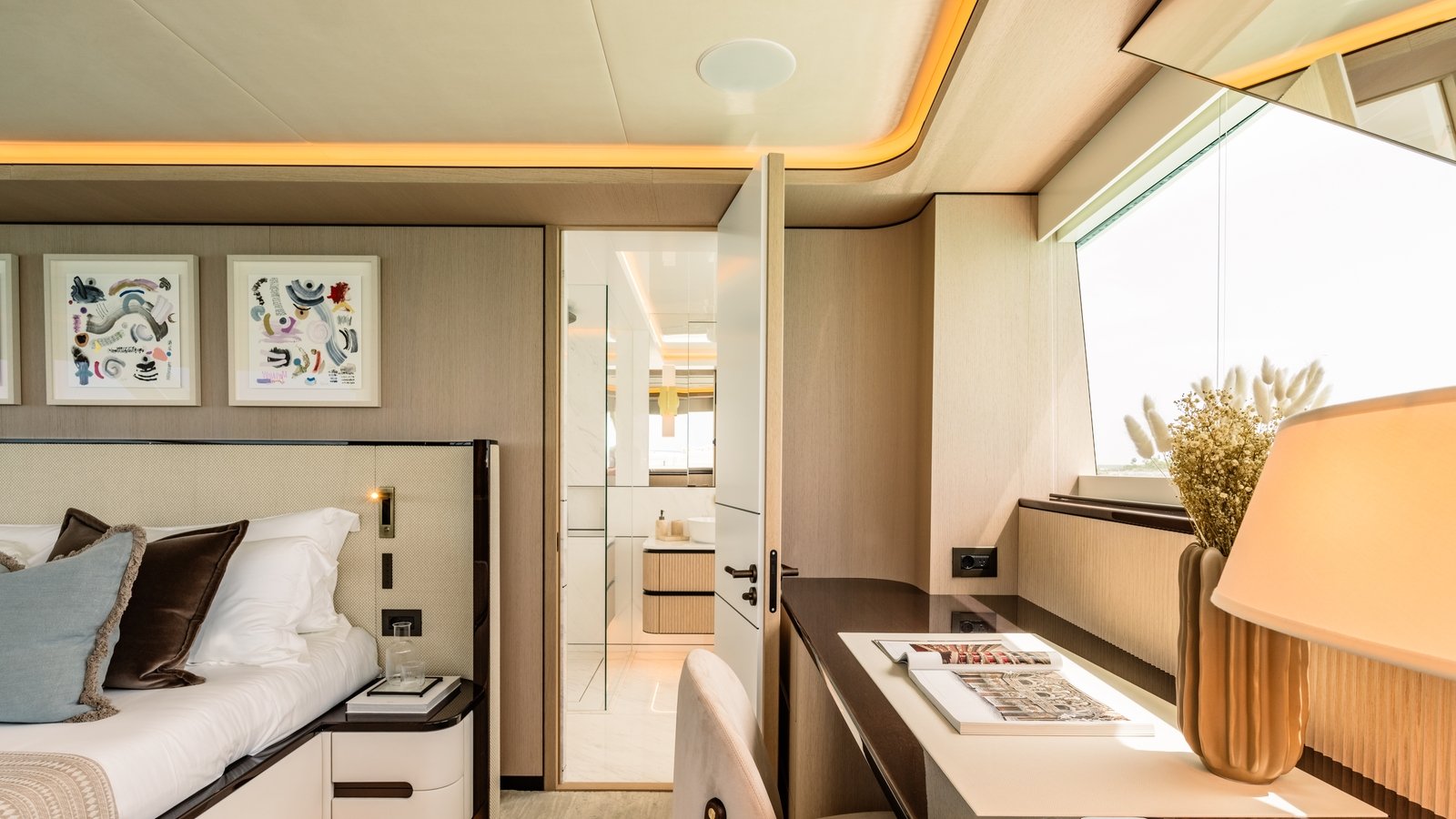
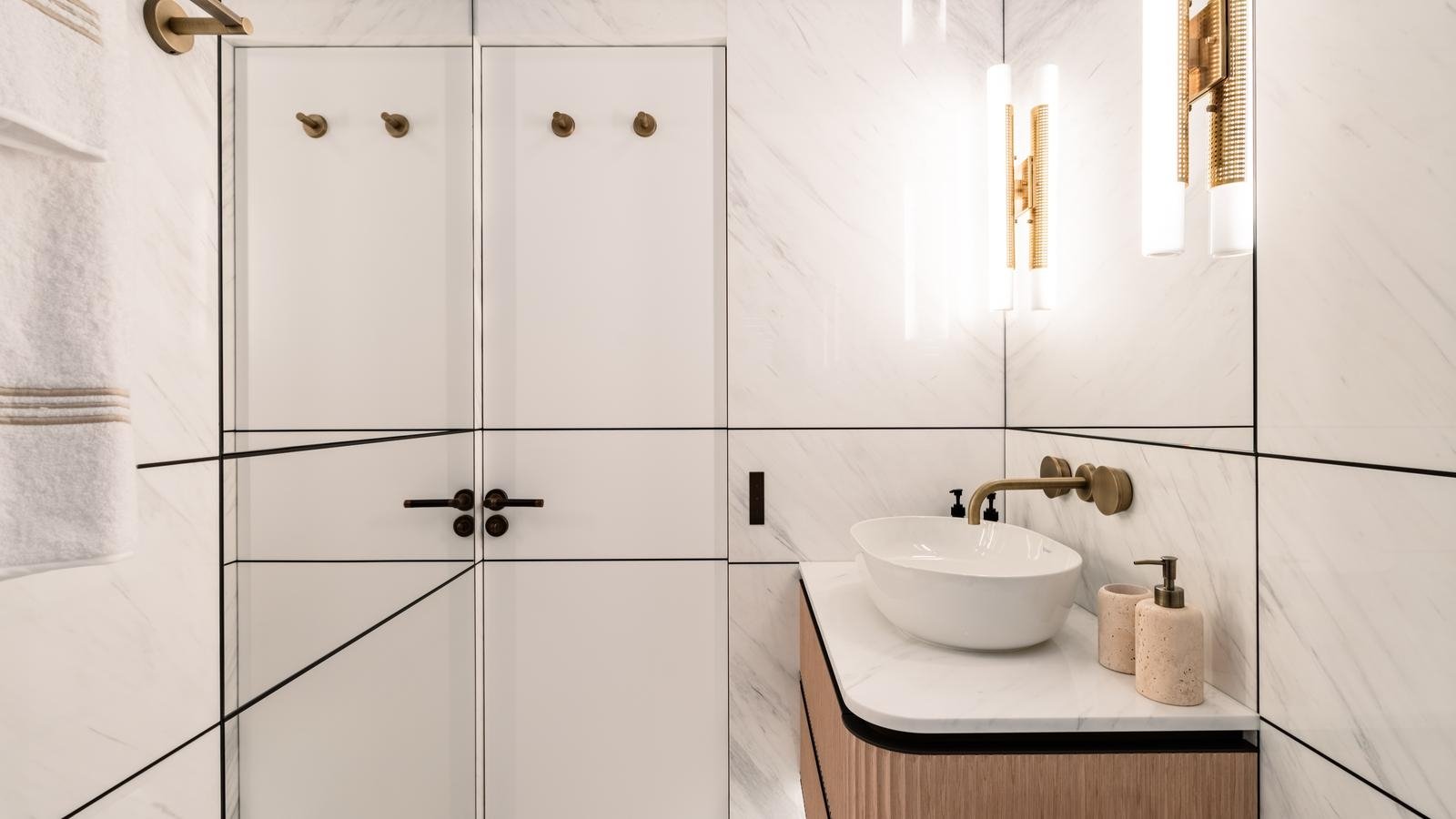
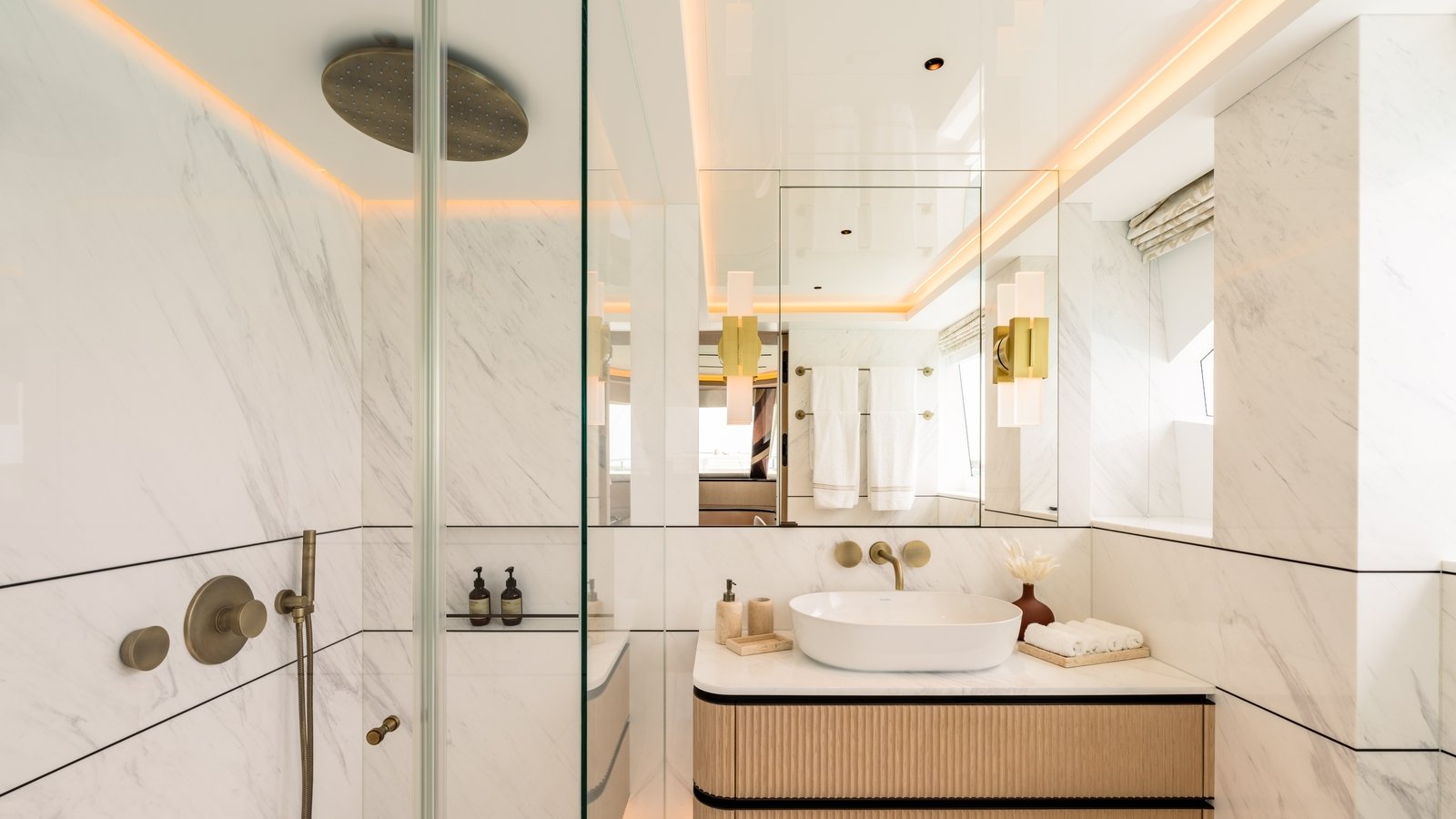
Accommodation is where the 110 Mustique departs from the usual 34-metre layout. Five cabins for ten guests is generous at this length, and the owner’s suite carries close to 180 degrees of glazing – a room that reads as a corner of the sea rather than a cabin with windows. The guest cabins sit on the lower deck with full-height wardrobes and marble bathrooms, and the twin converts, which matters on a yacht that has been fitted out with families in mind. Safety railings run the aft deck and swim platform, an unglamorous detail that parents notice first.
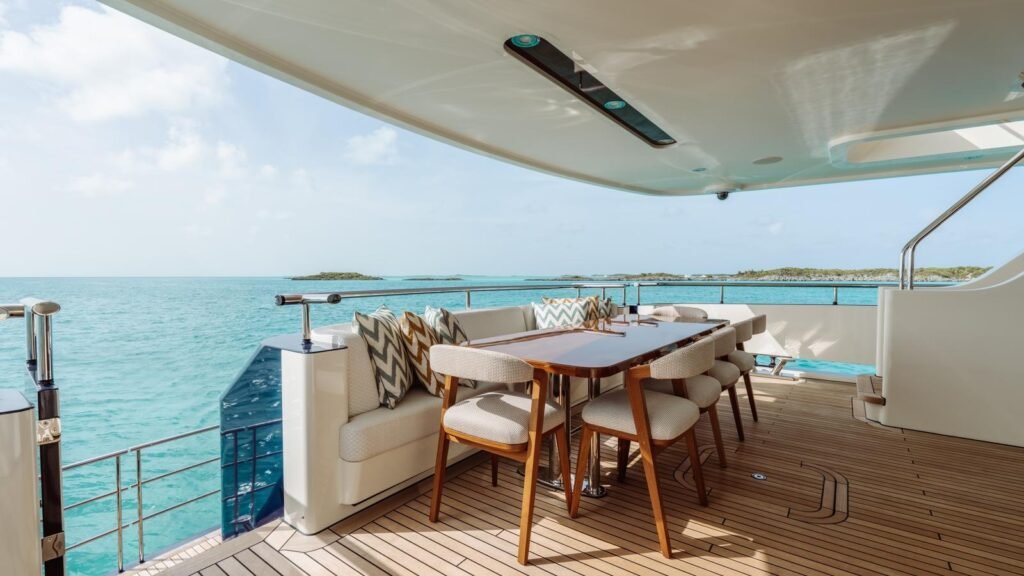
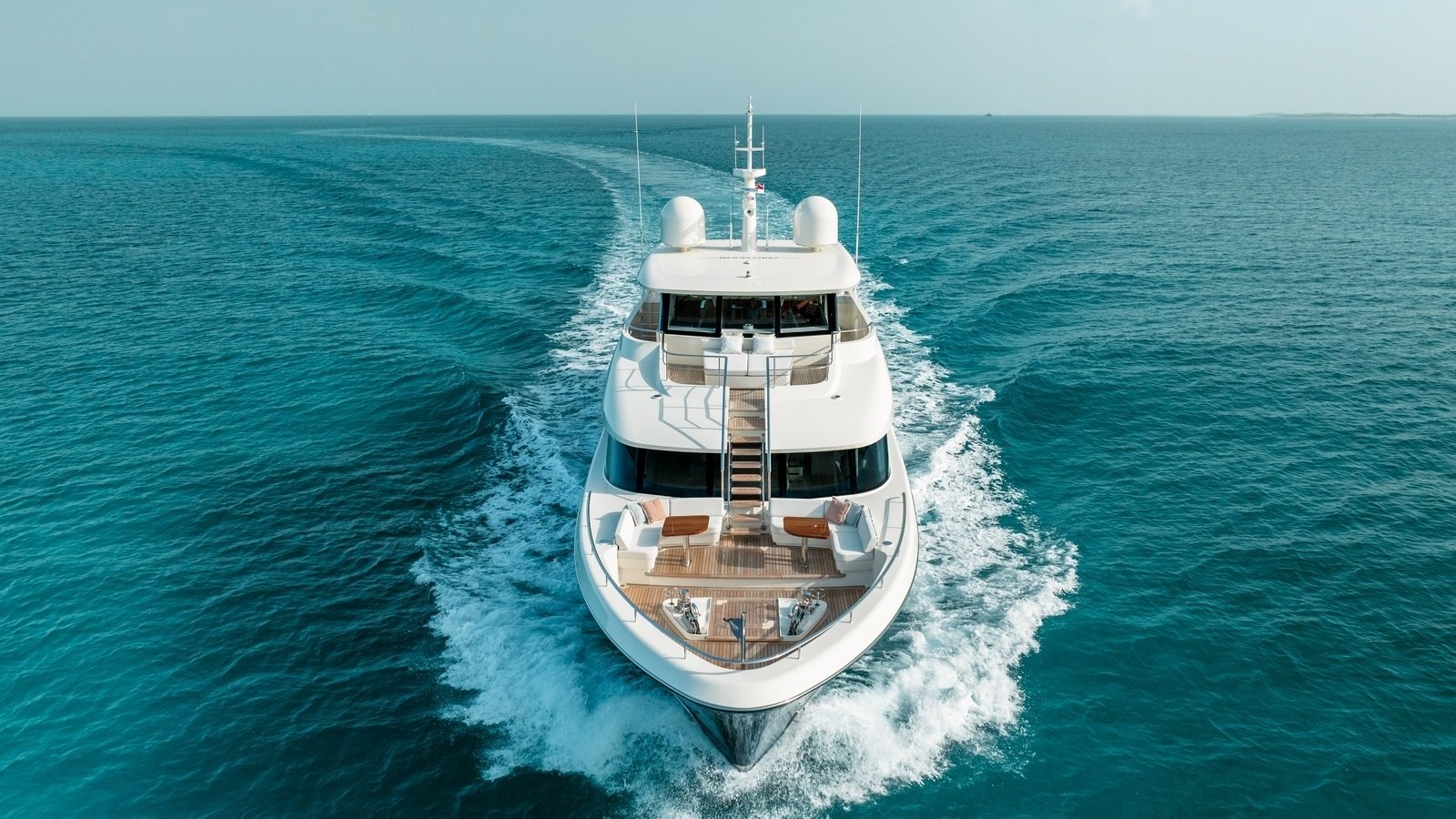
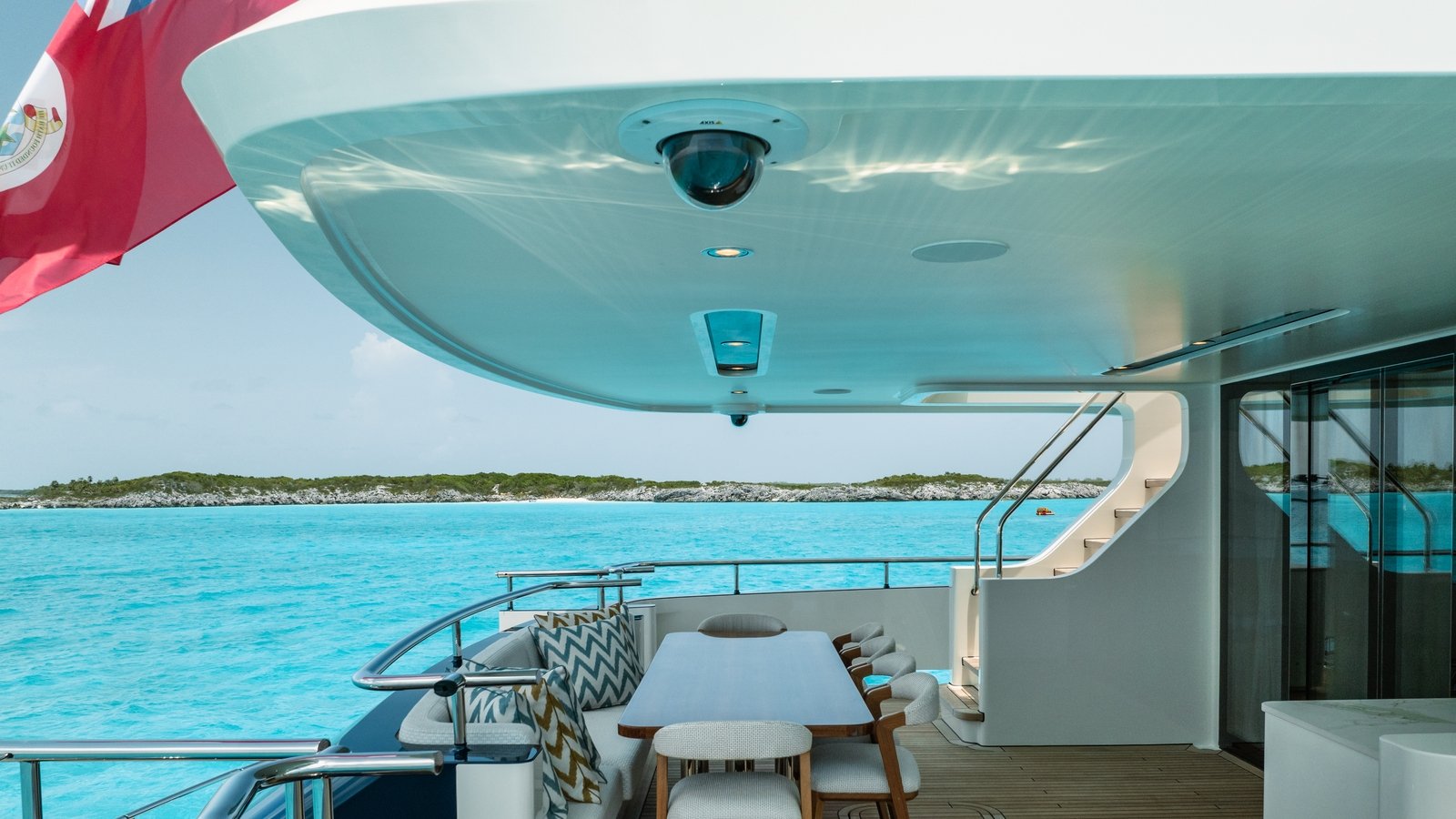
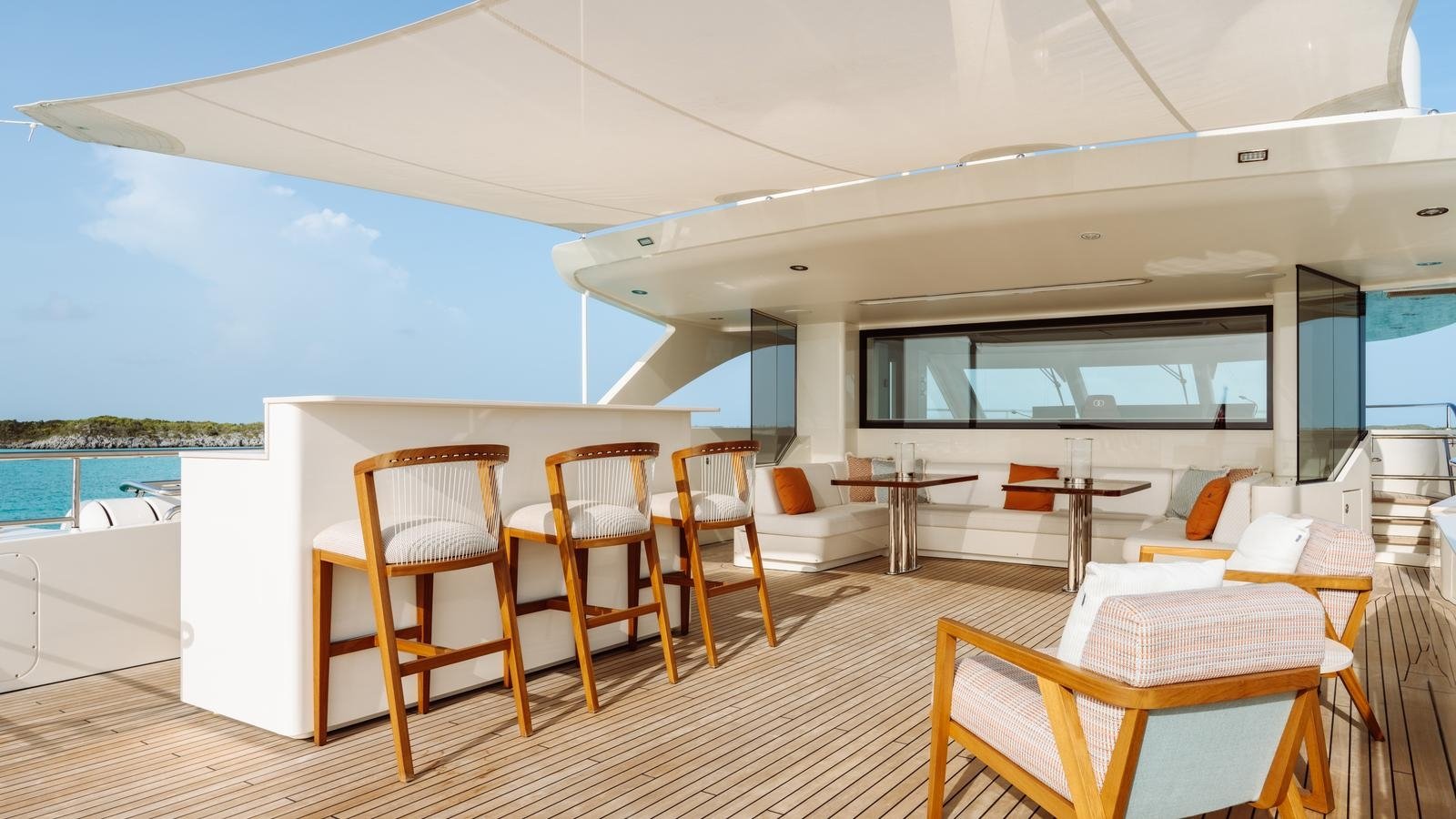
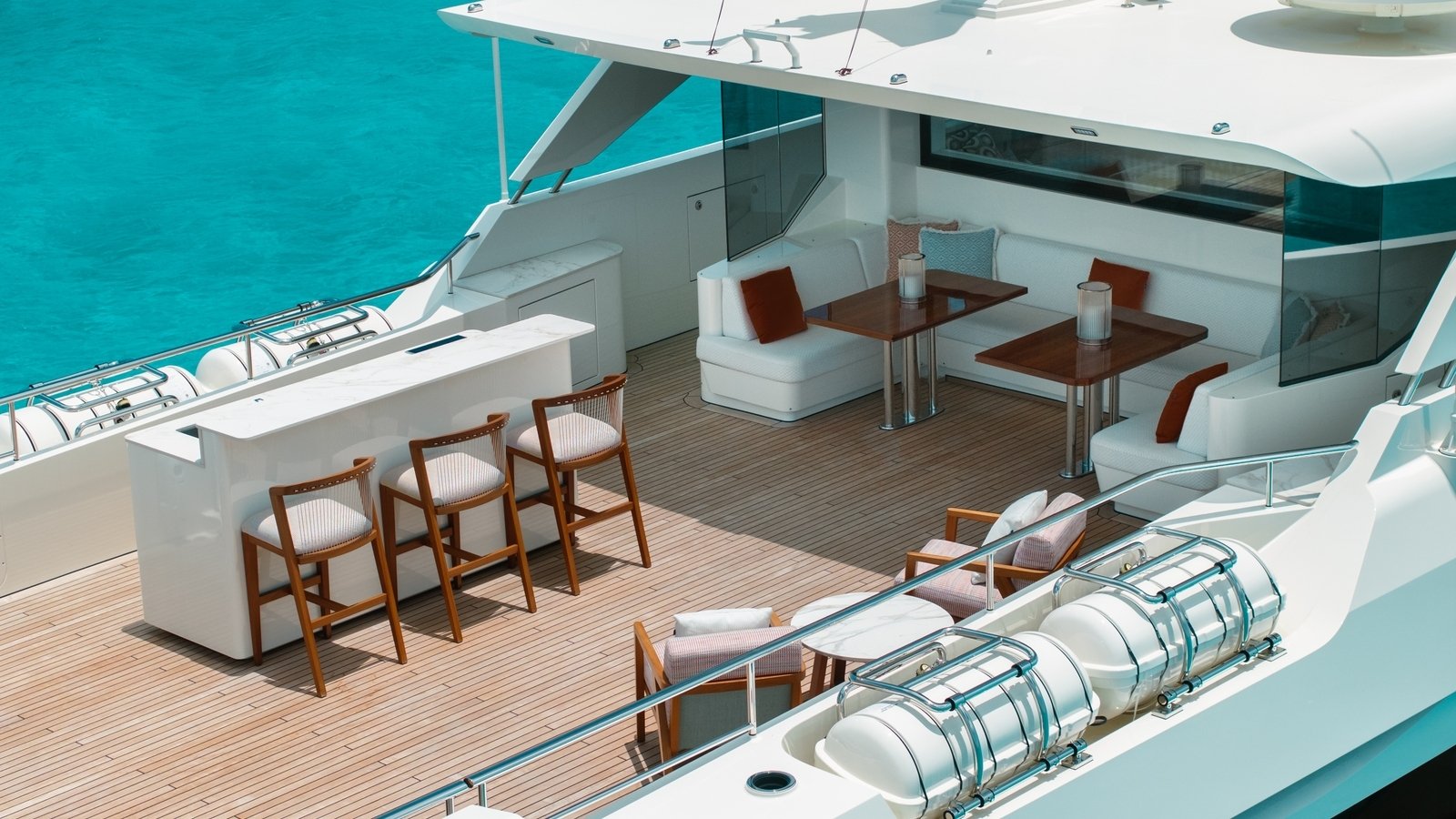
Outside, the sequence is well judged. The aft deck seats ten under shade at a table that stays set through the day. The bridge deck holds a bar with stools, a second dining table and loungers along the rail. The sundeck is given over to sunpads and a marble-topped bar, and the foredeck – often an afterthought – has a proper seating group and a sunpad forward of the mast.
The toy inventory is new and unusually complete: a 5.5-metre Williams jet tender, two SeaBobs, a Fliteboard, a wakefoil, paddleboards, an inflatable kayak, towables sized for adults and children alike, scuba equipment for four and a pair of electric scooters for shoreside. Five crew run her, and the layout gives them room to work without crossing guest space.