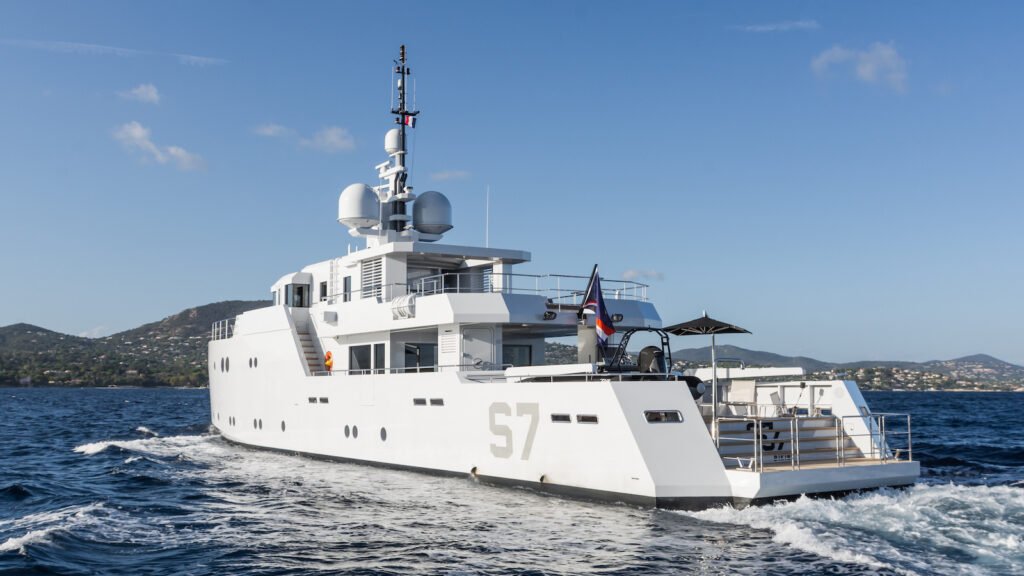
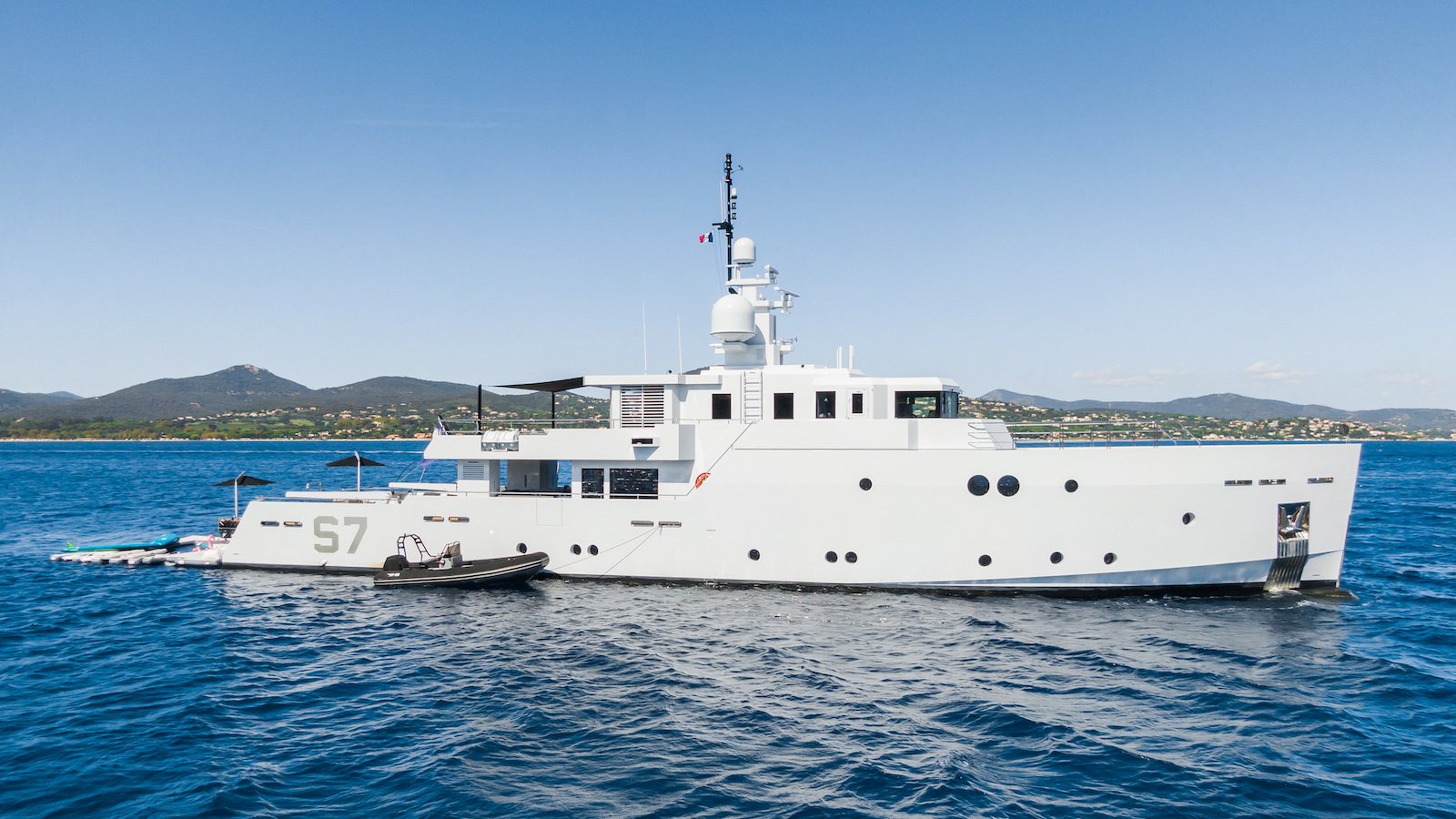
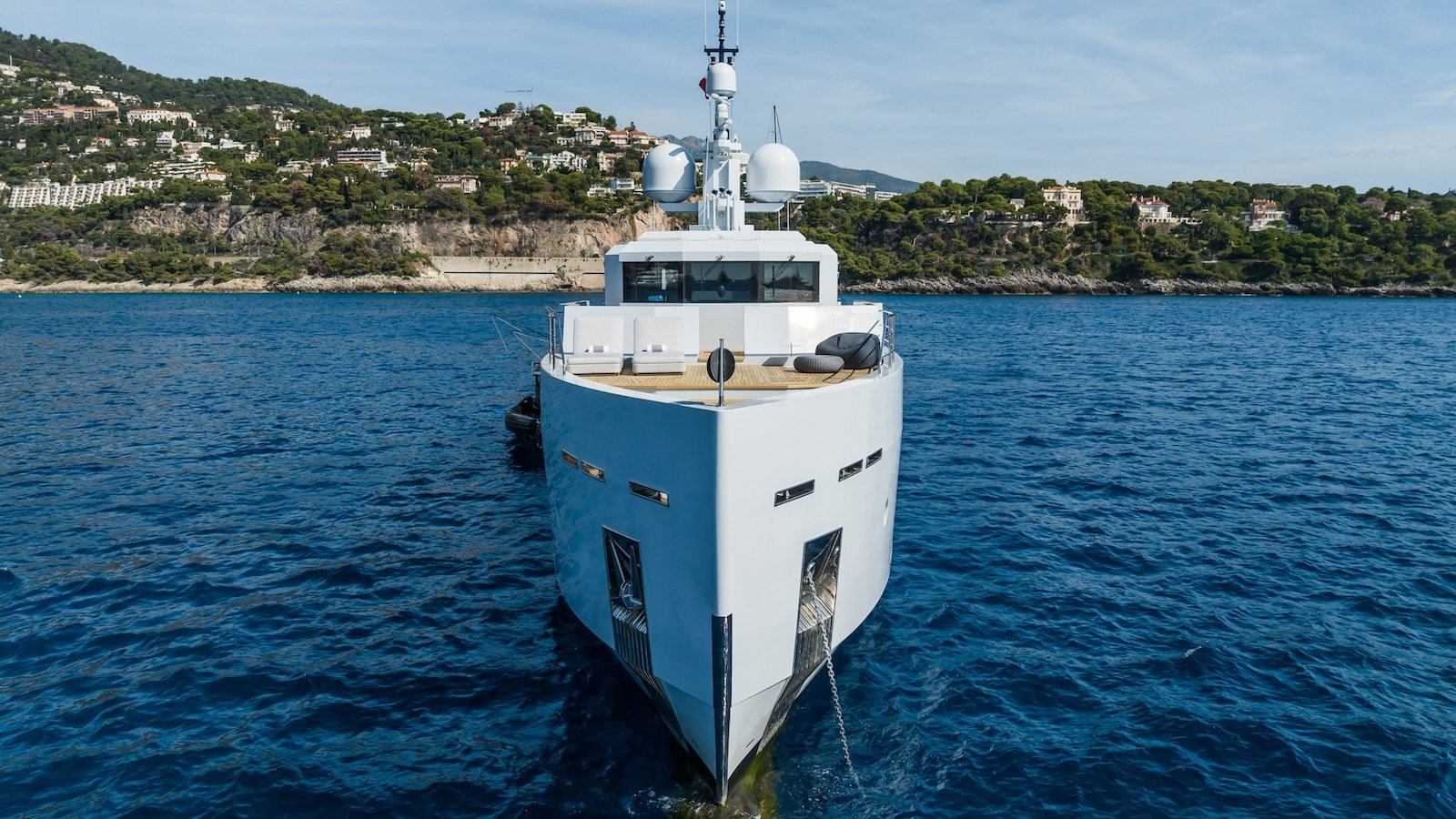
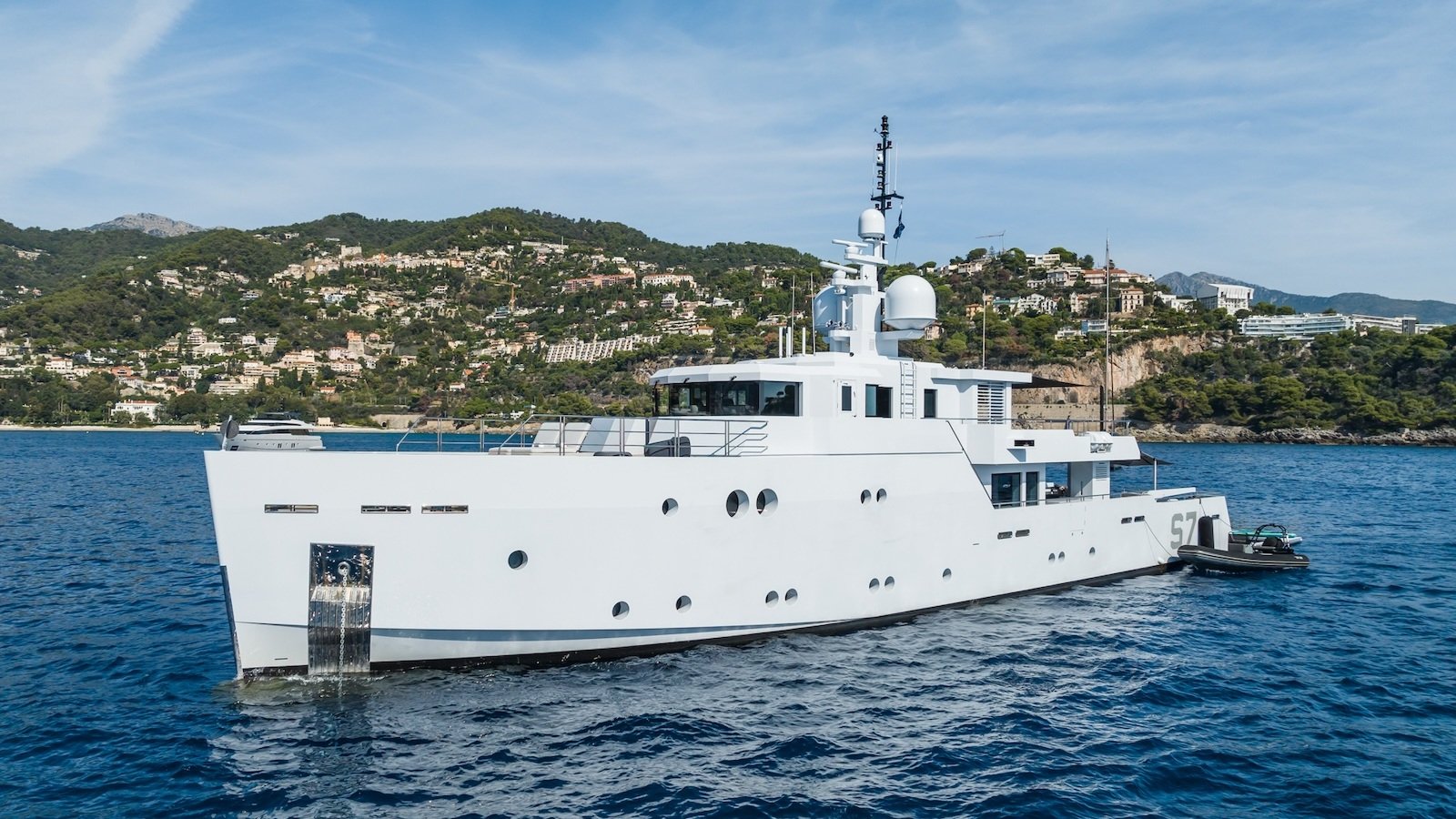
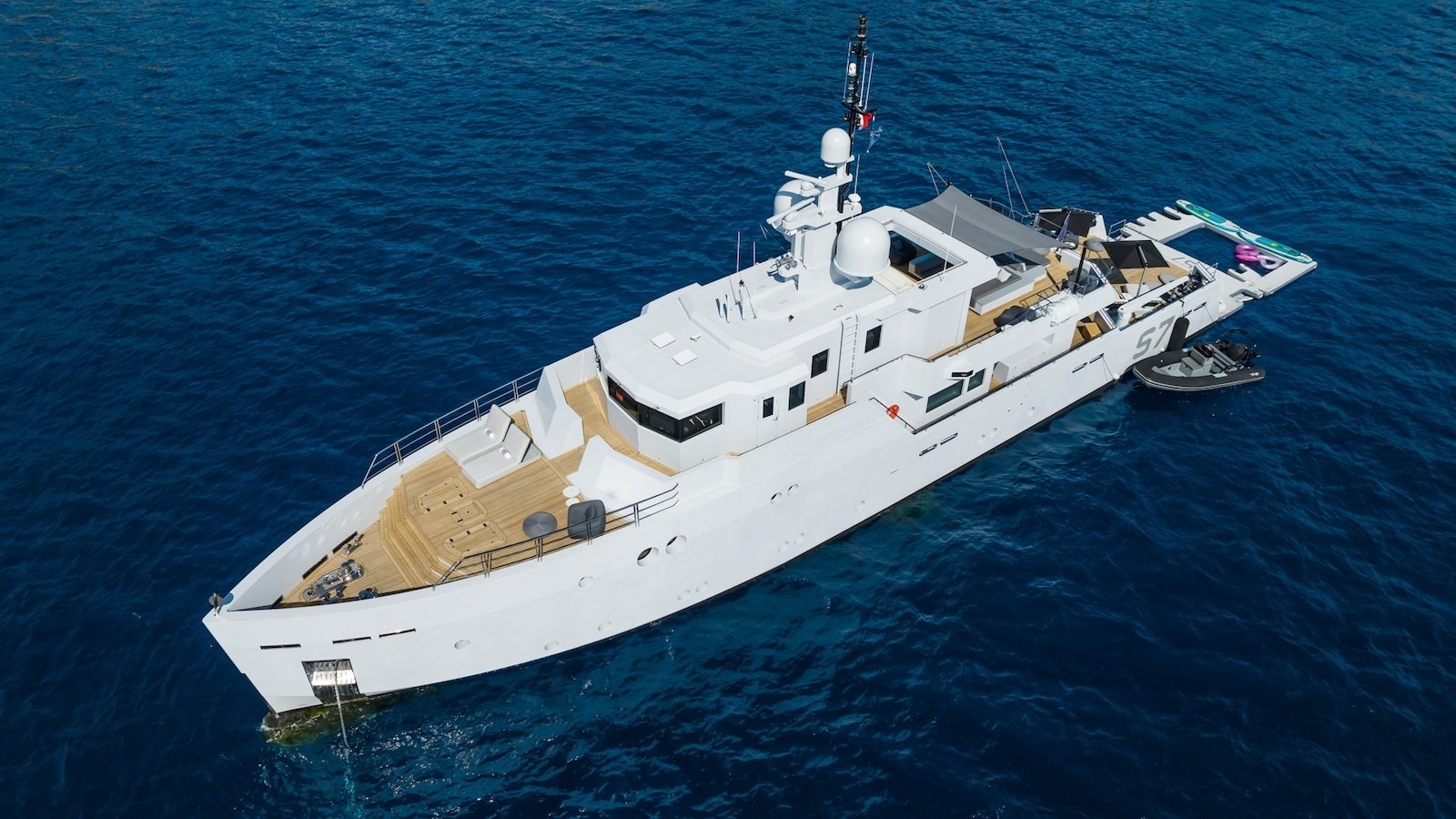
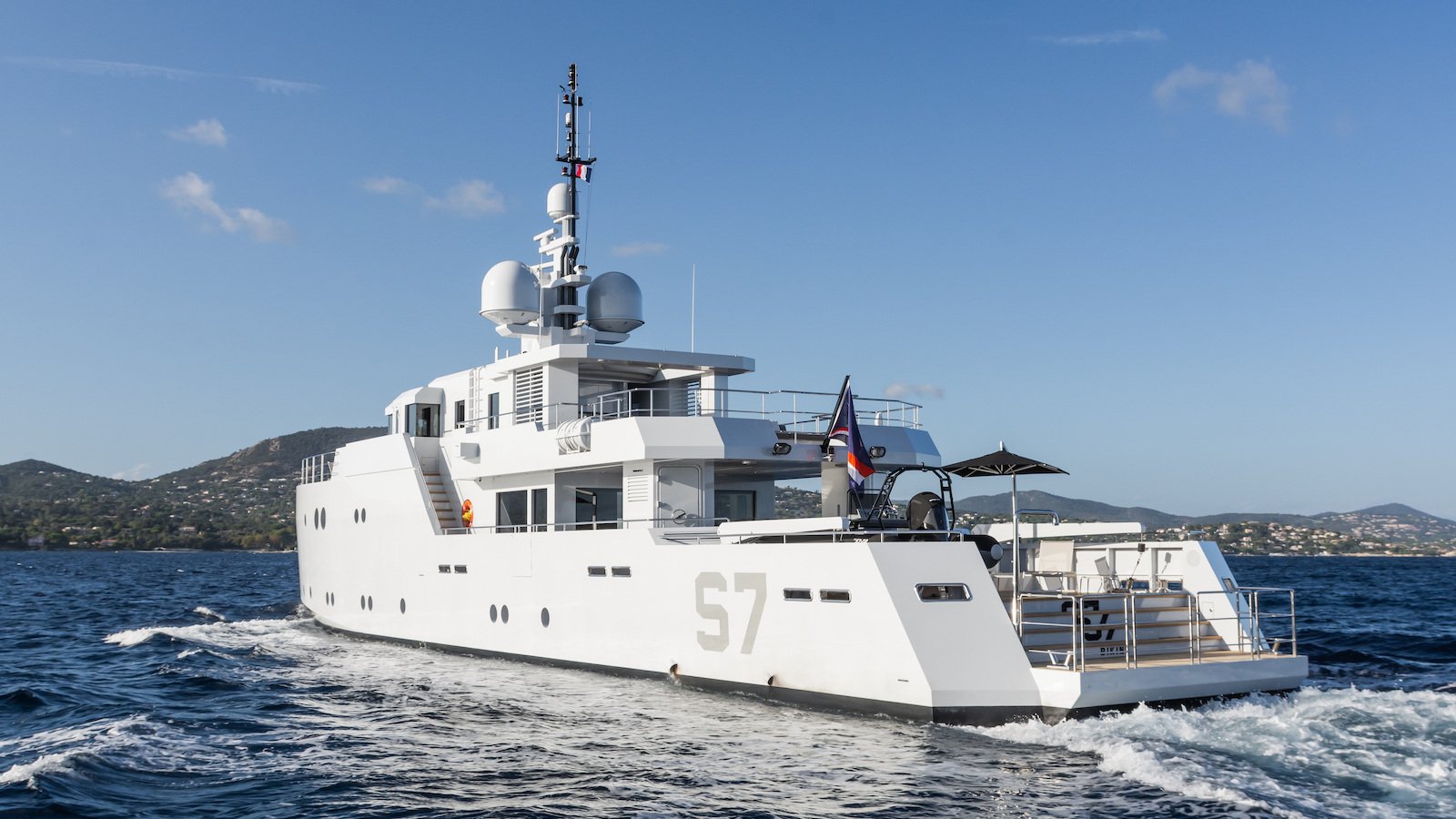
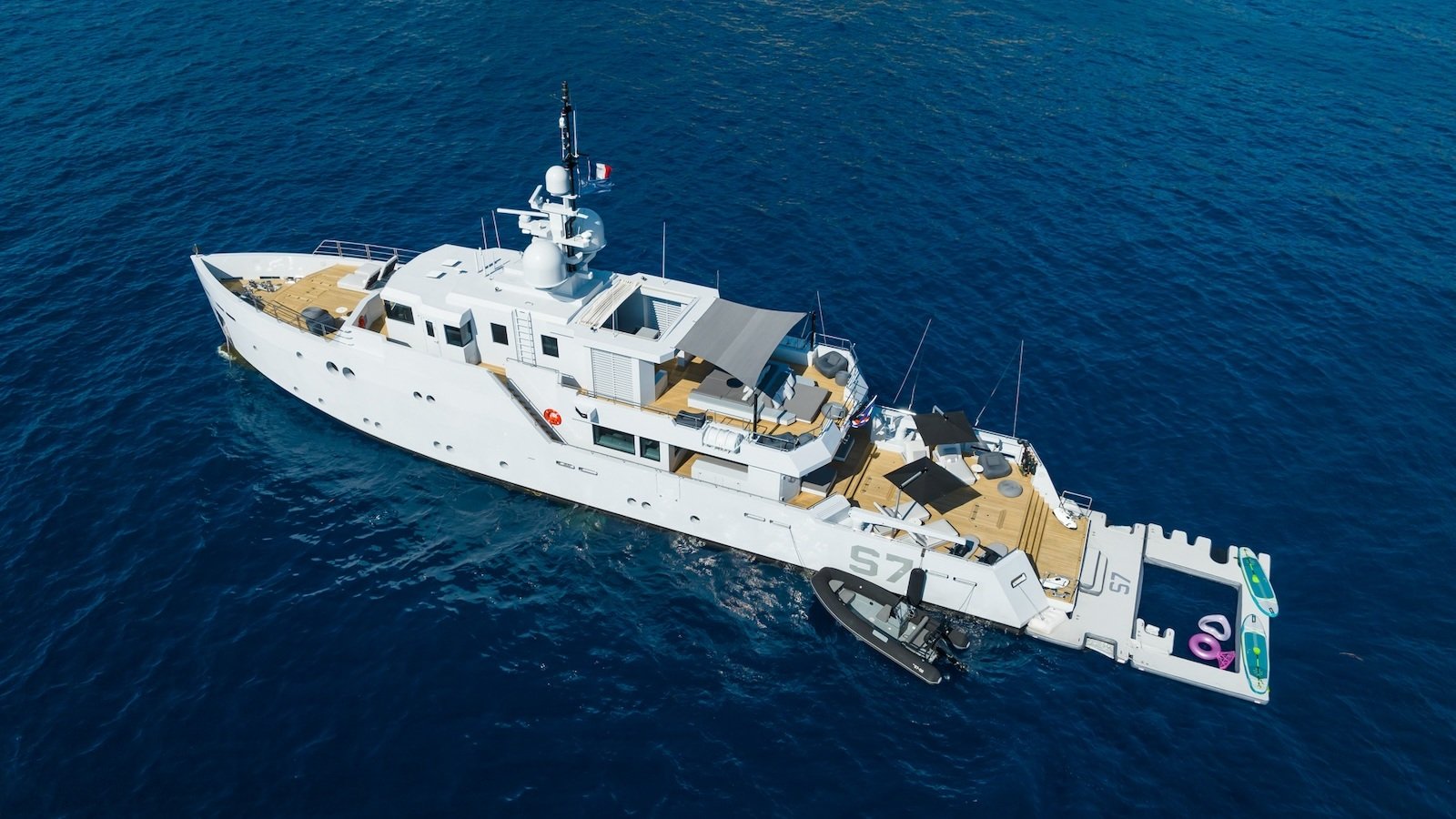
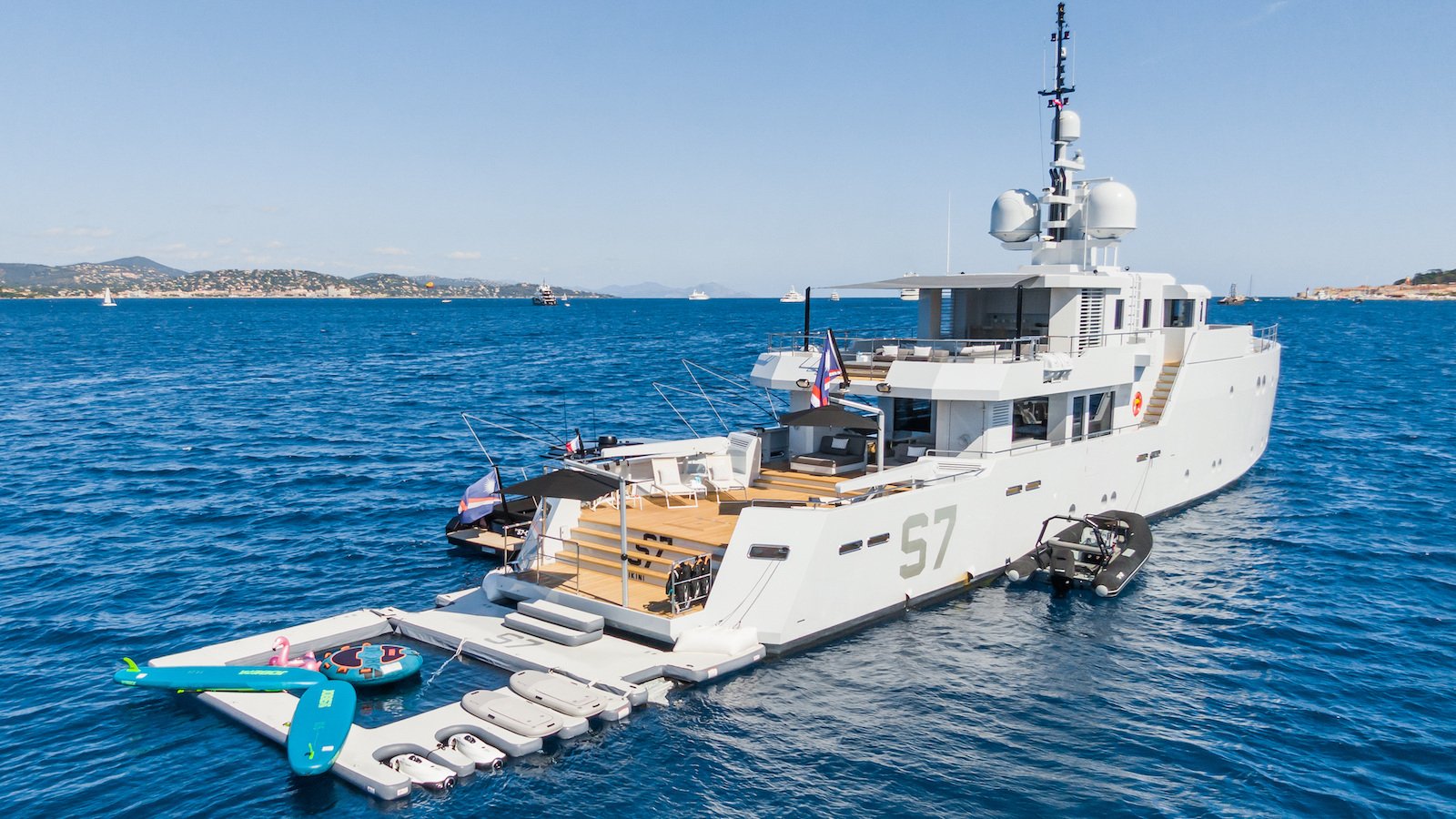
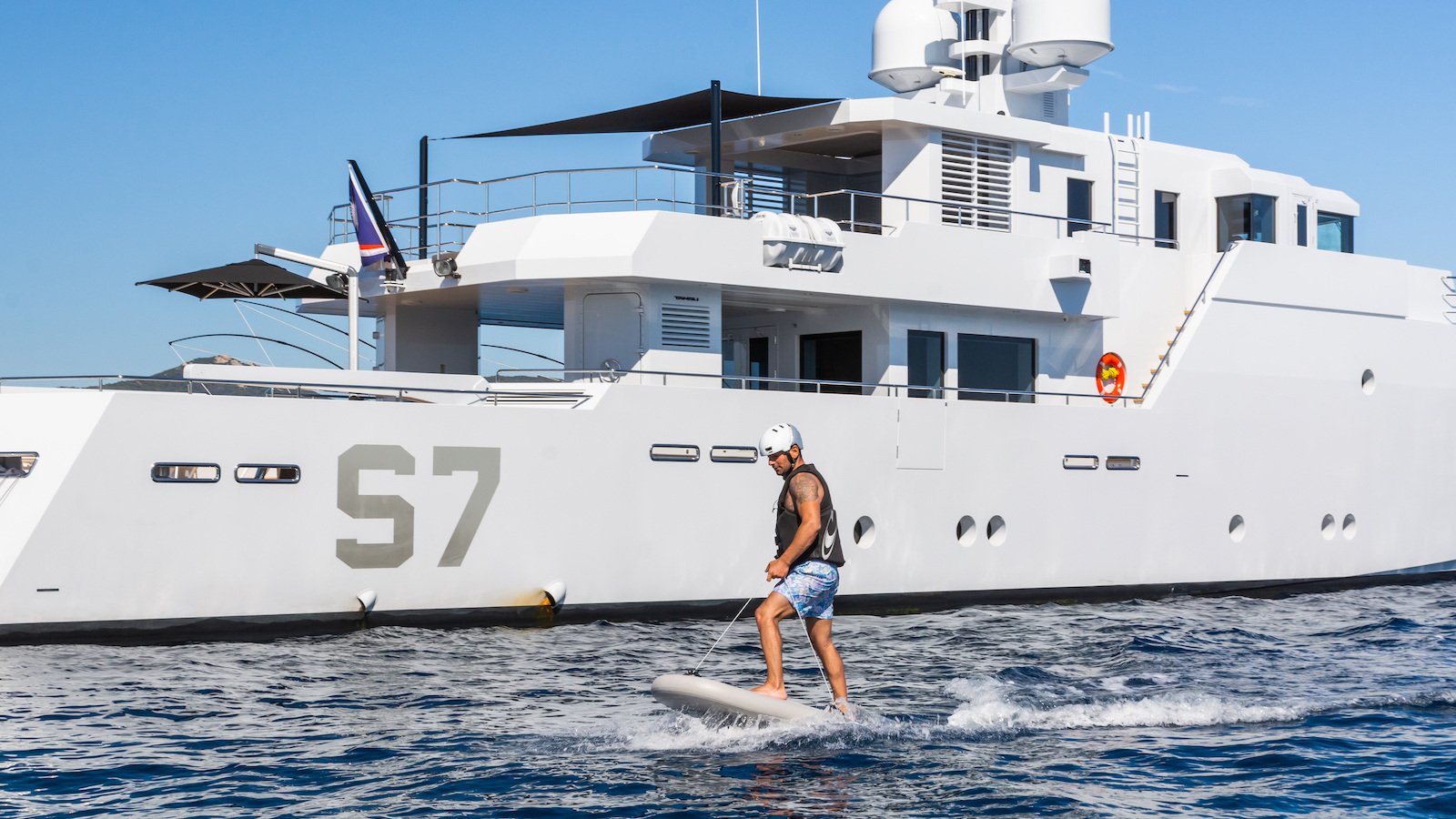
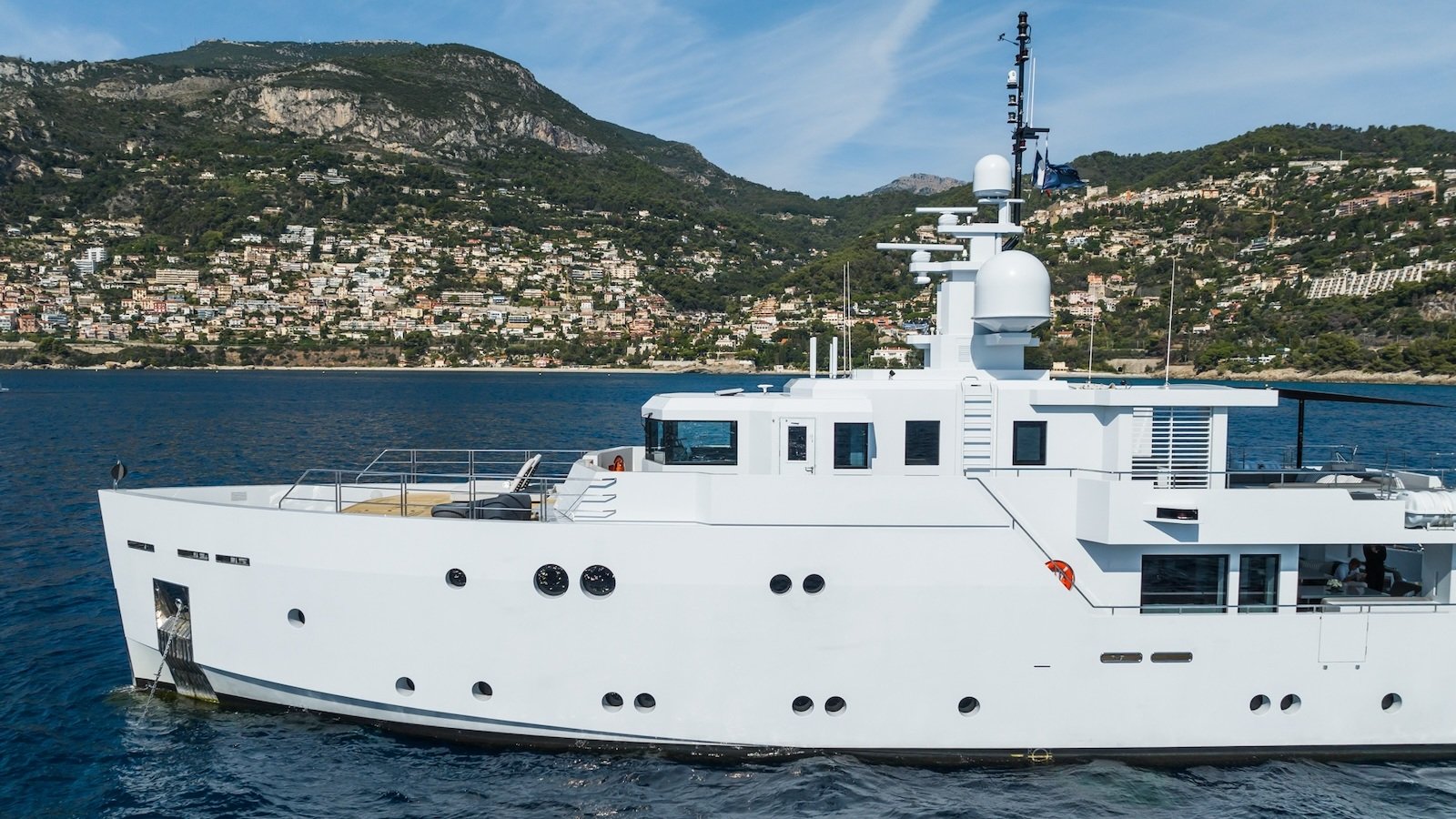
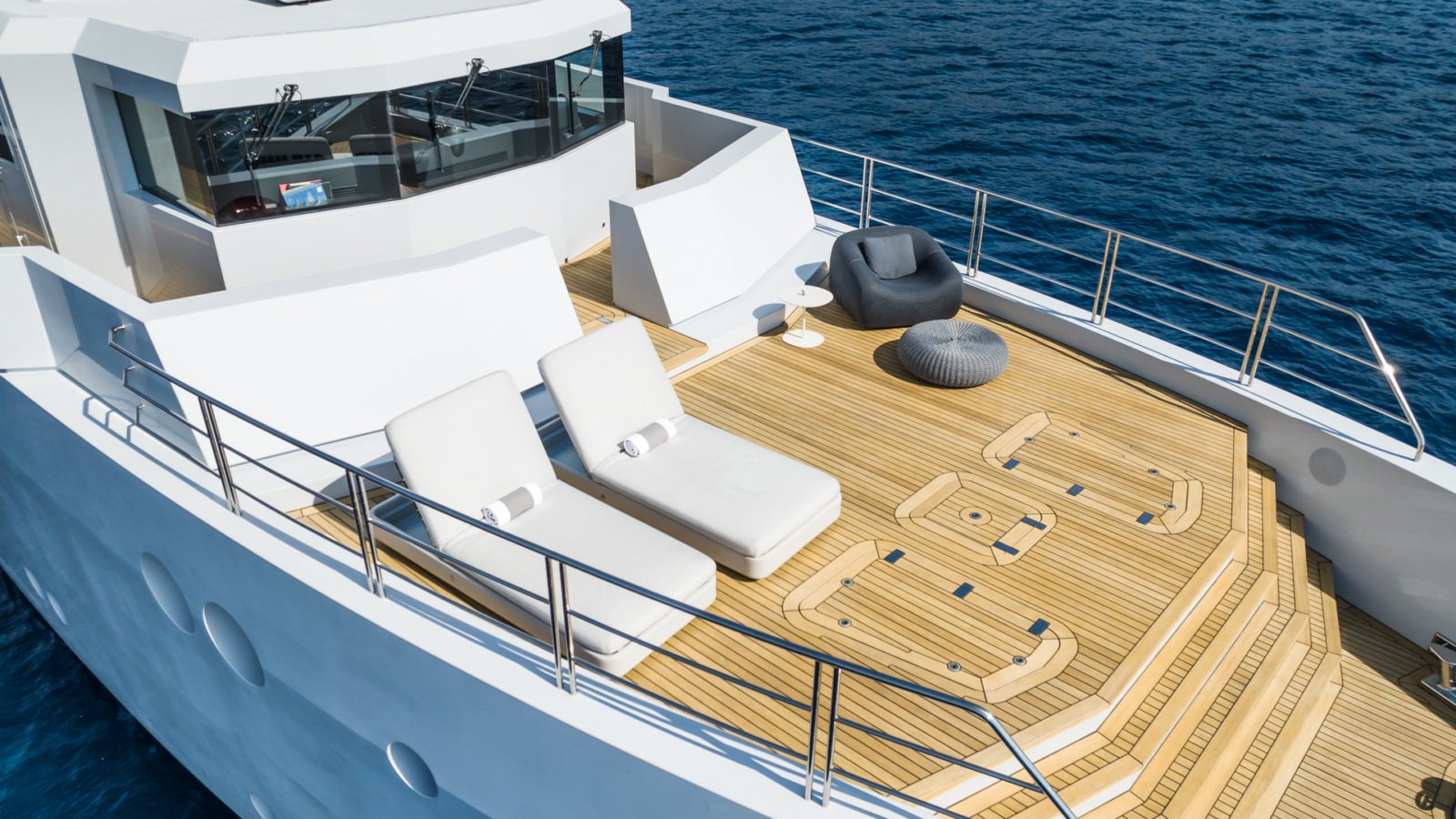
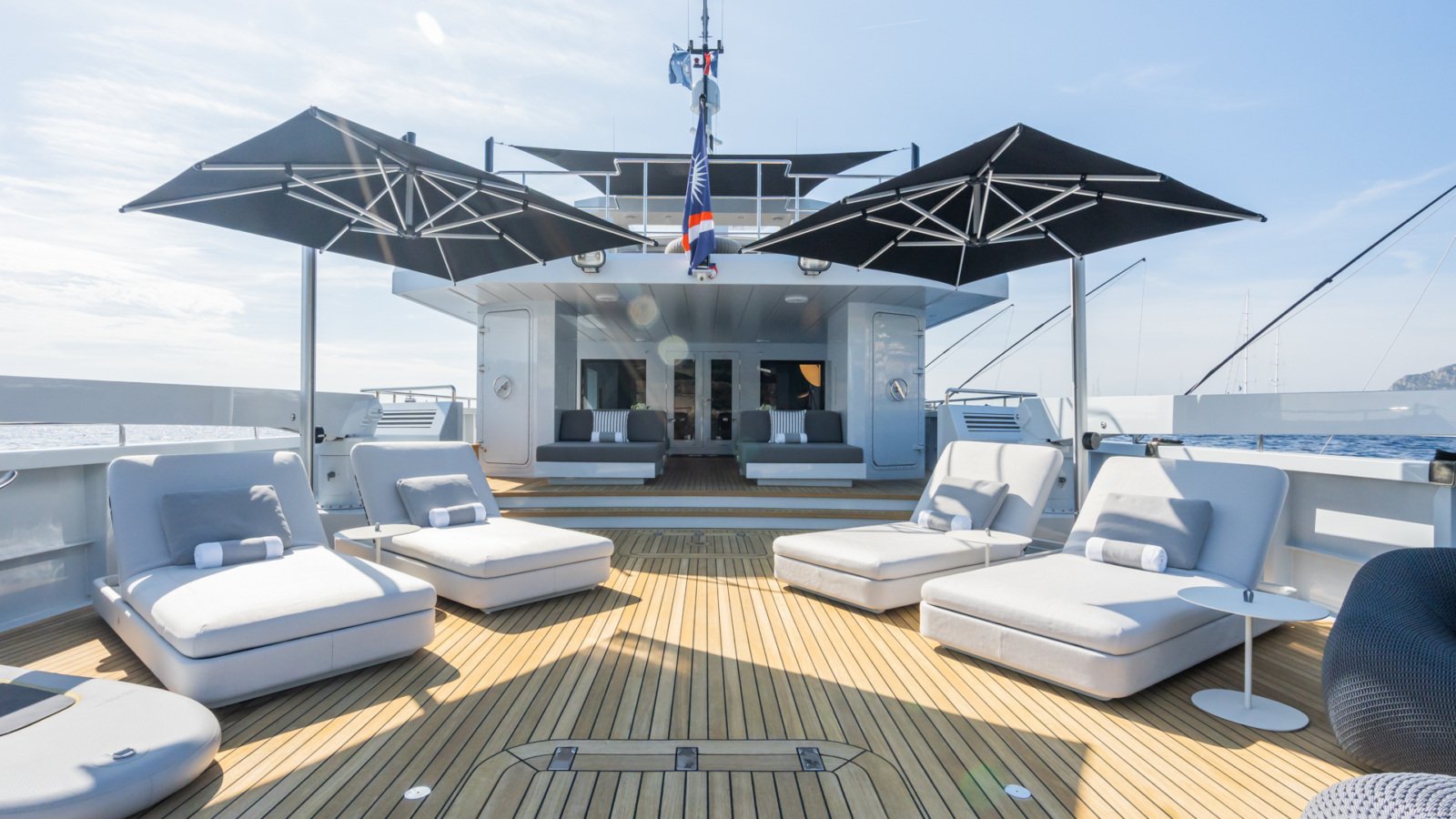
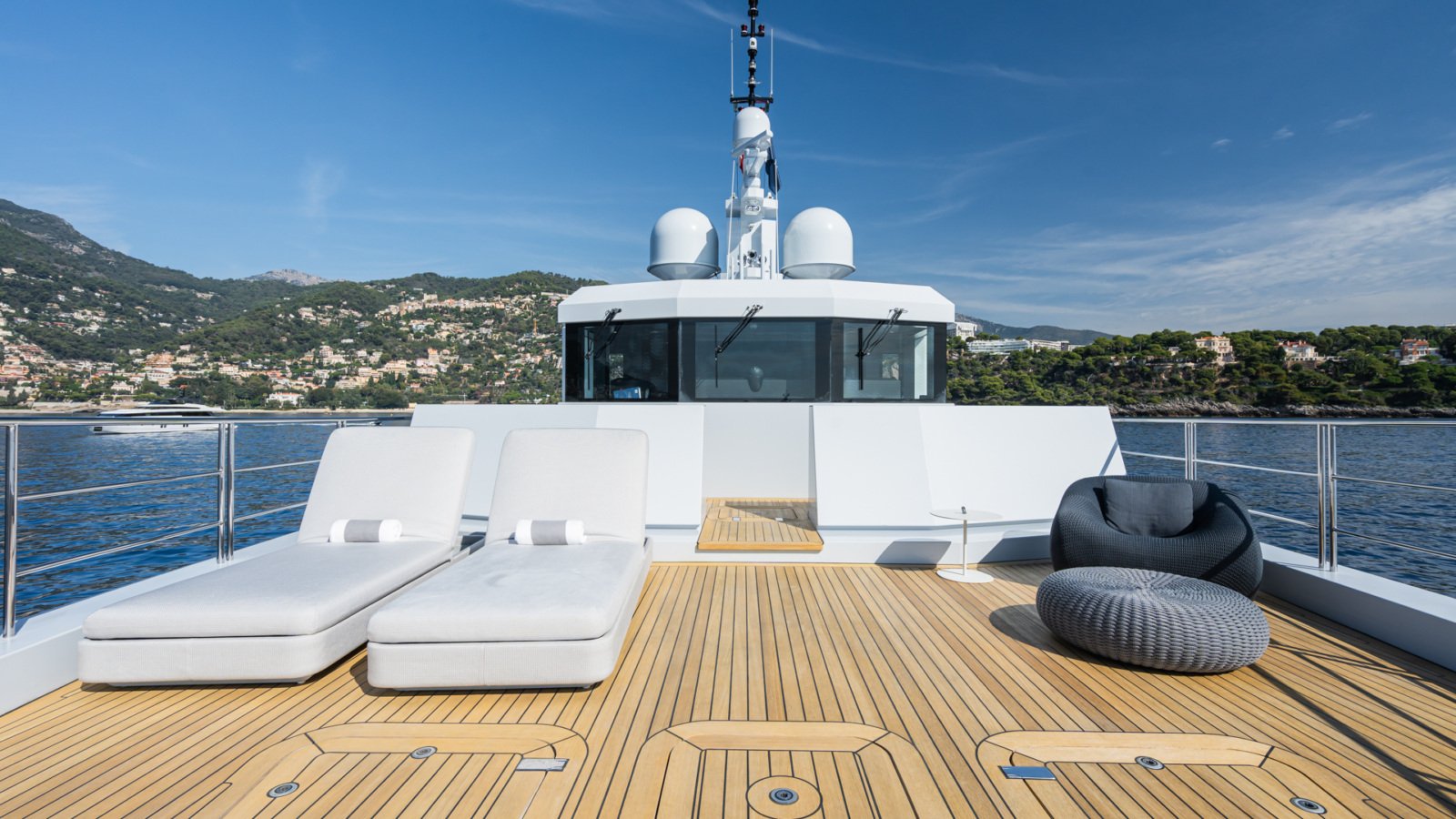
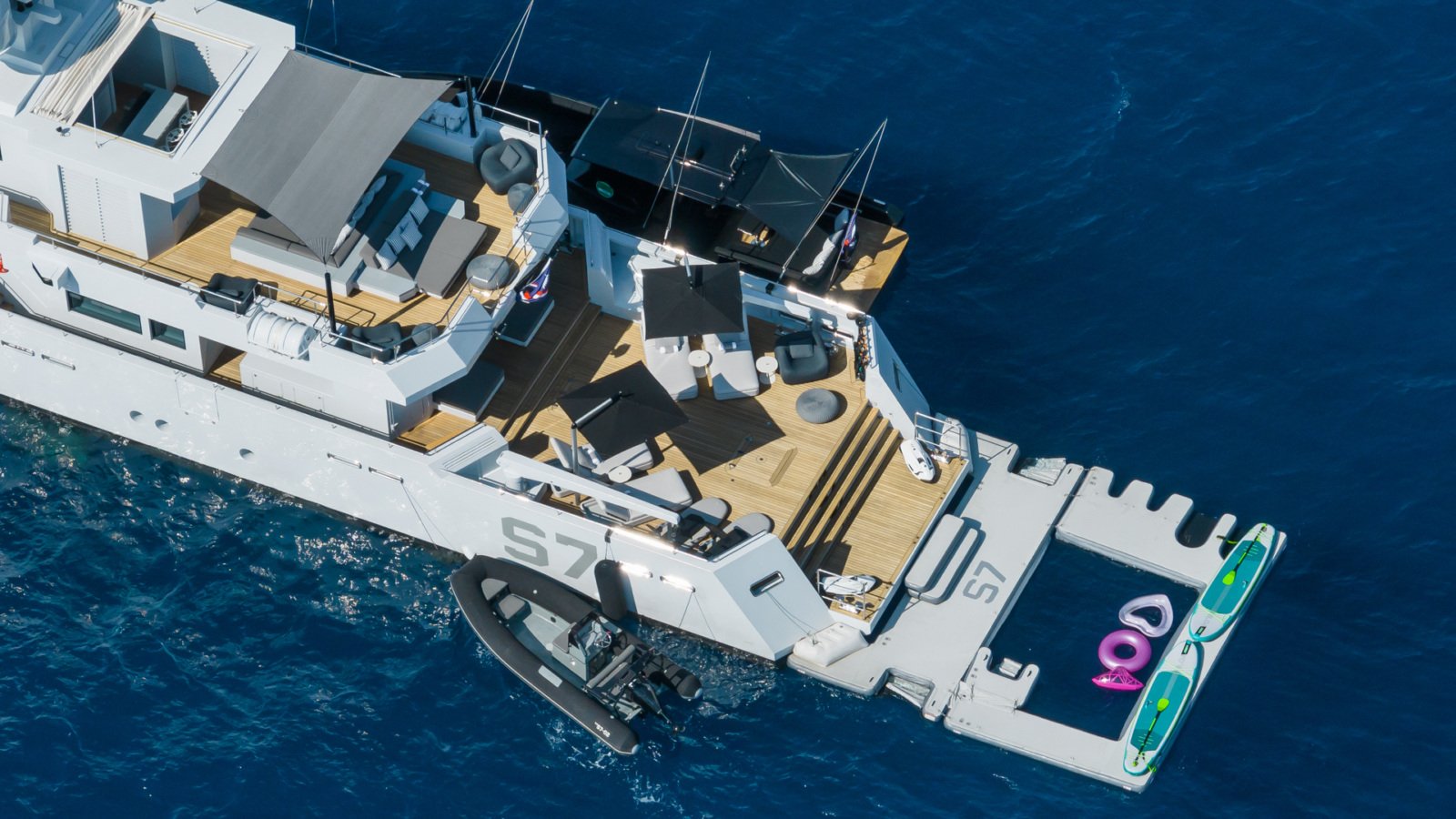
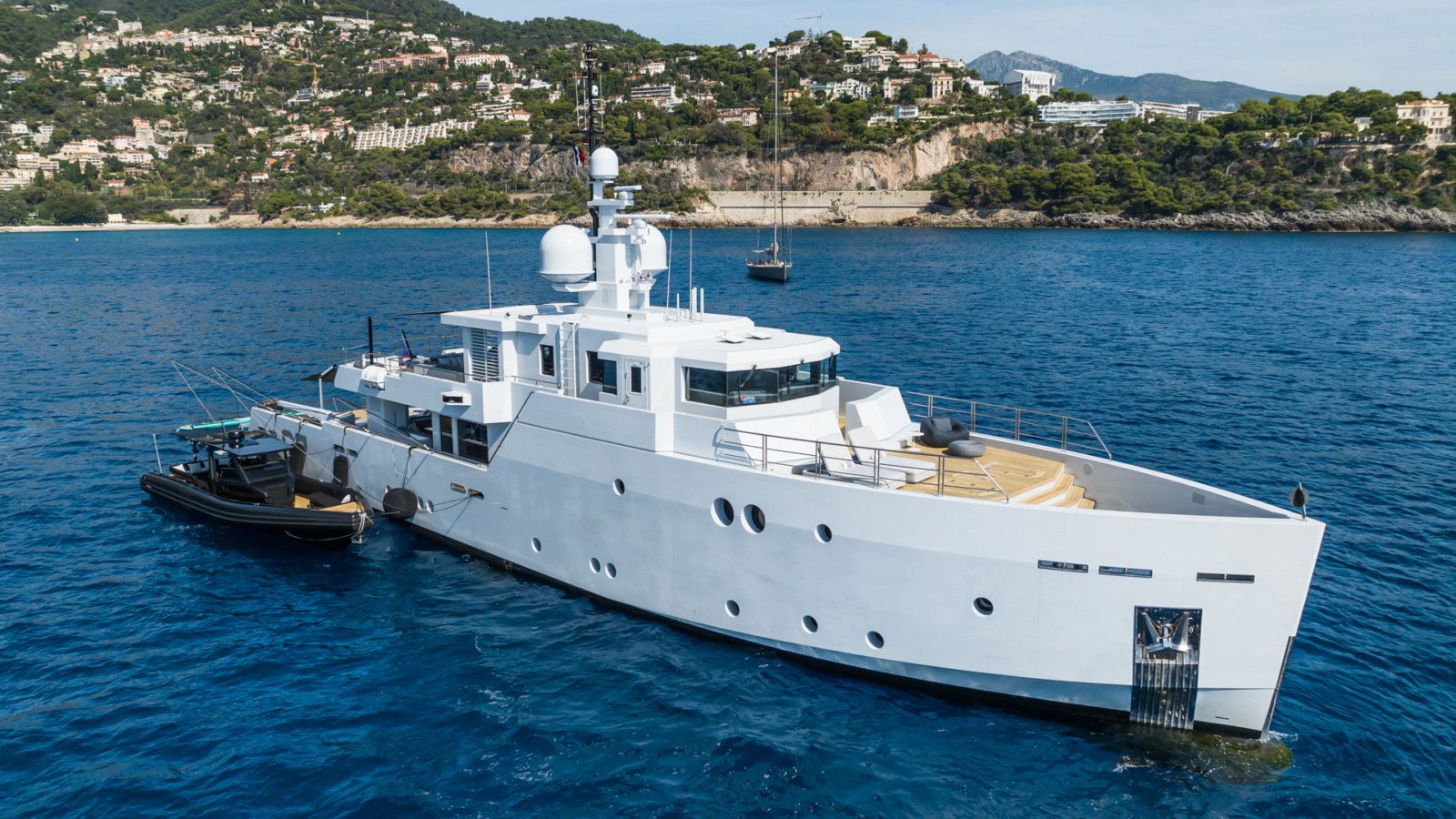
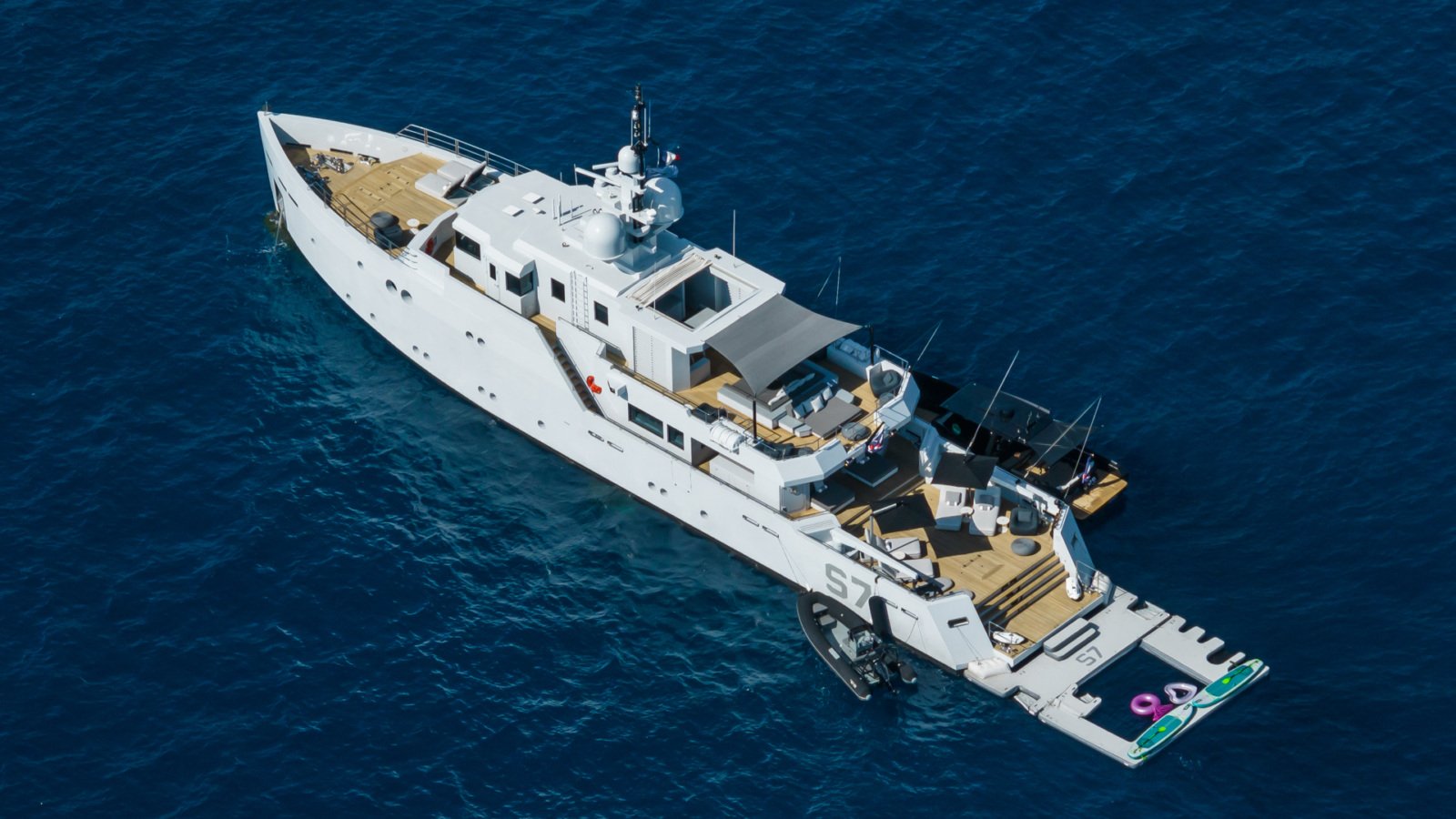
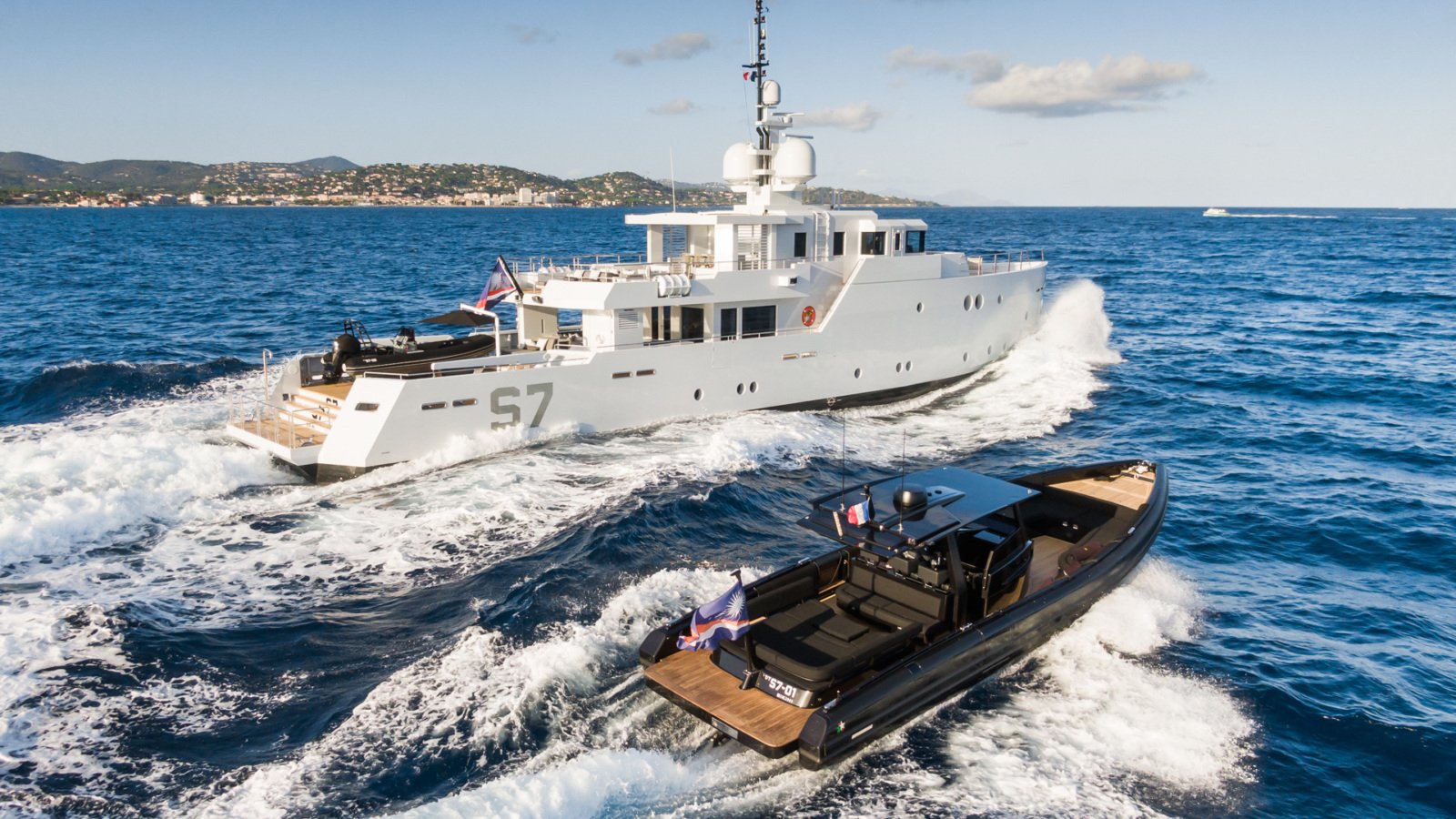
S7 looks like a working ship and charters like a private island. Tansu delivered her in 2016 with a steel hull, an aluminium superstructure and a deliberately austere profile – vertical bow, minimal superstructure, her name in plain grey capitals on the topsides. She won three design awards for it. What the awards do not convey is how much deck that severity buys: strip away the tiered wedding-cake decks of a conventional 39-metre and you are left with acres of flat, usable teak.
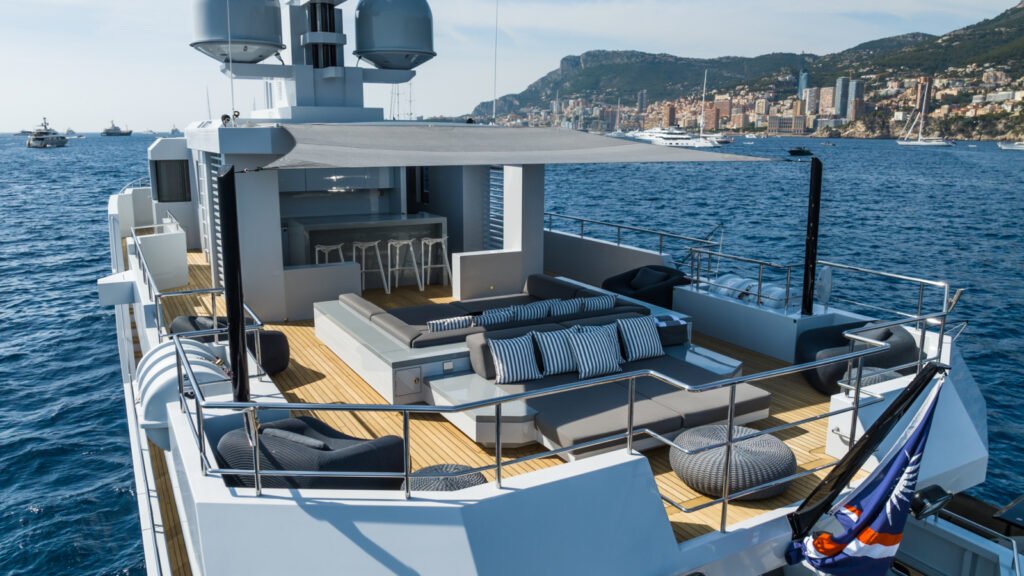
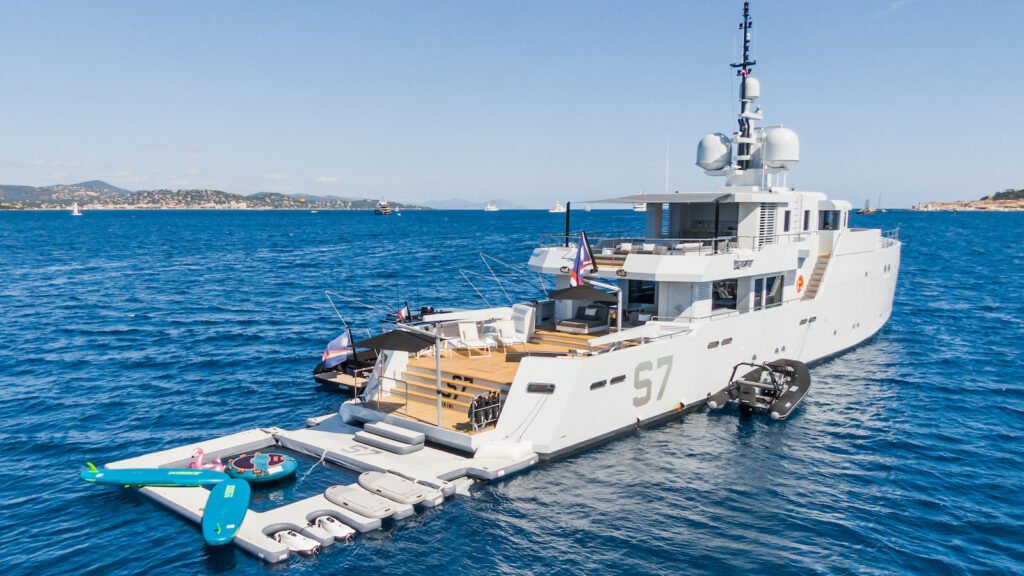
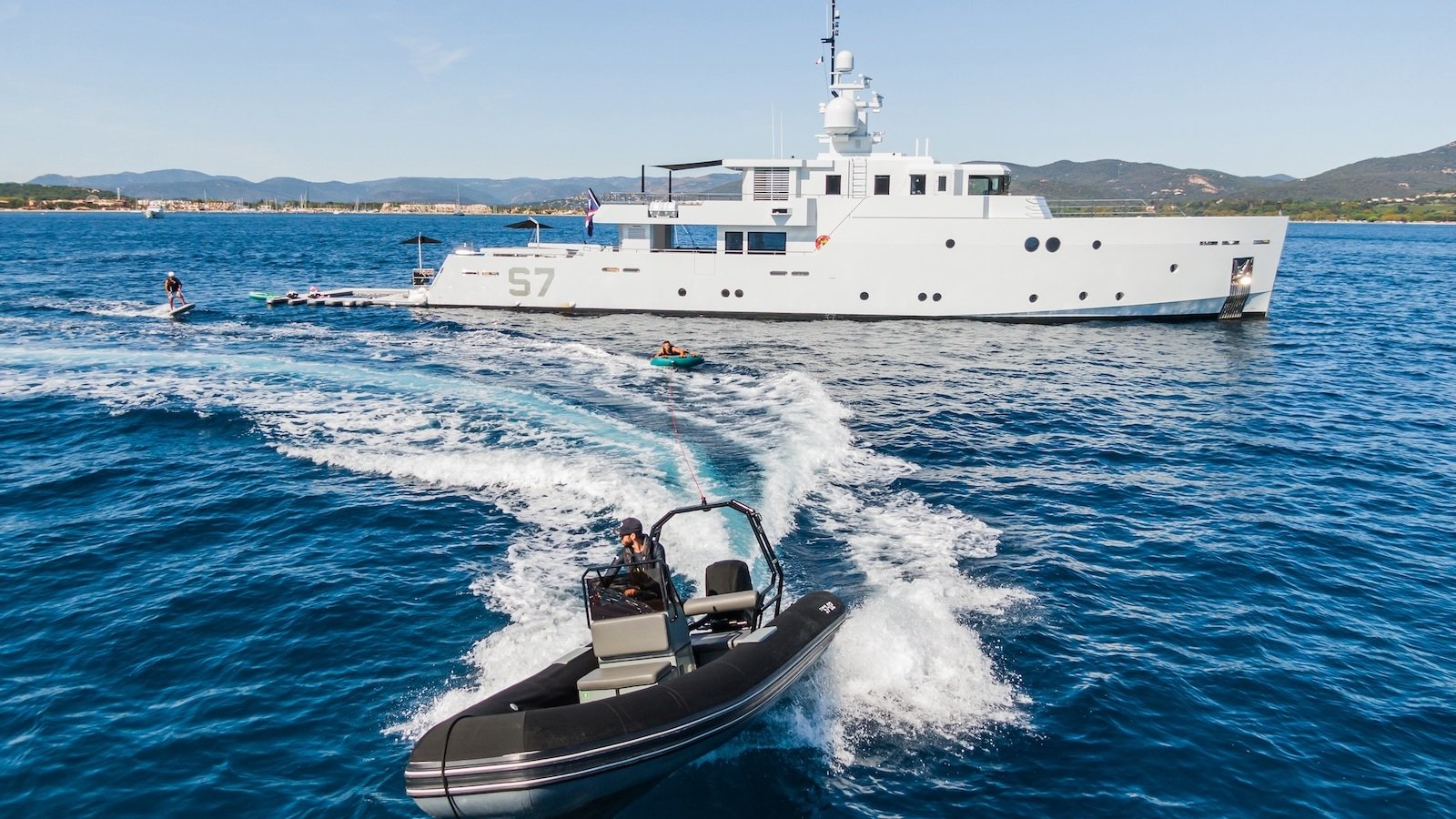
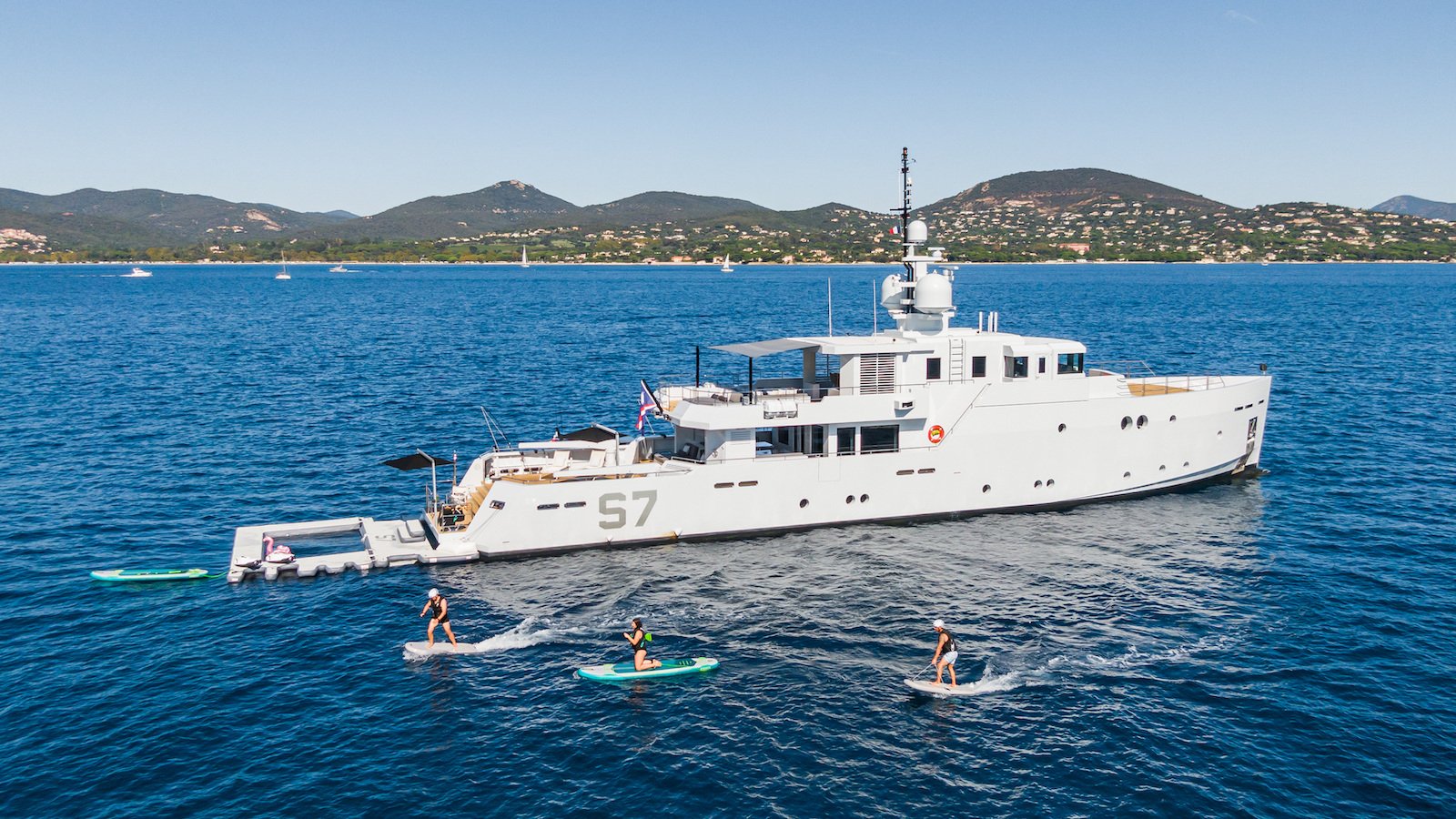
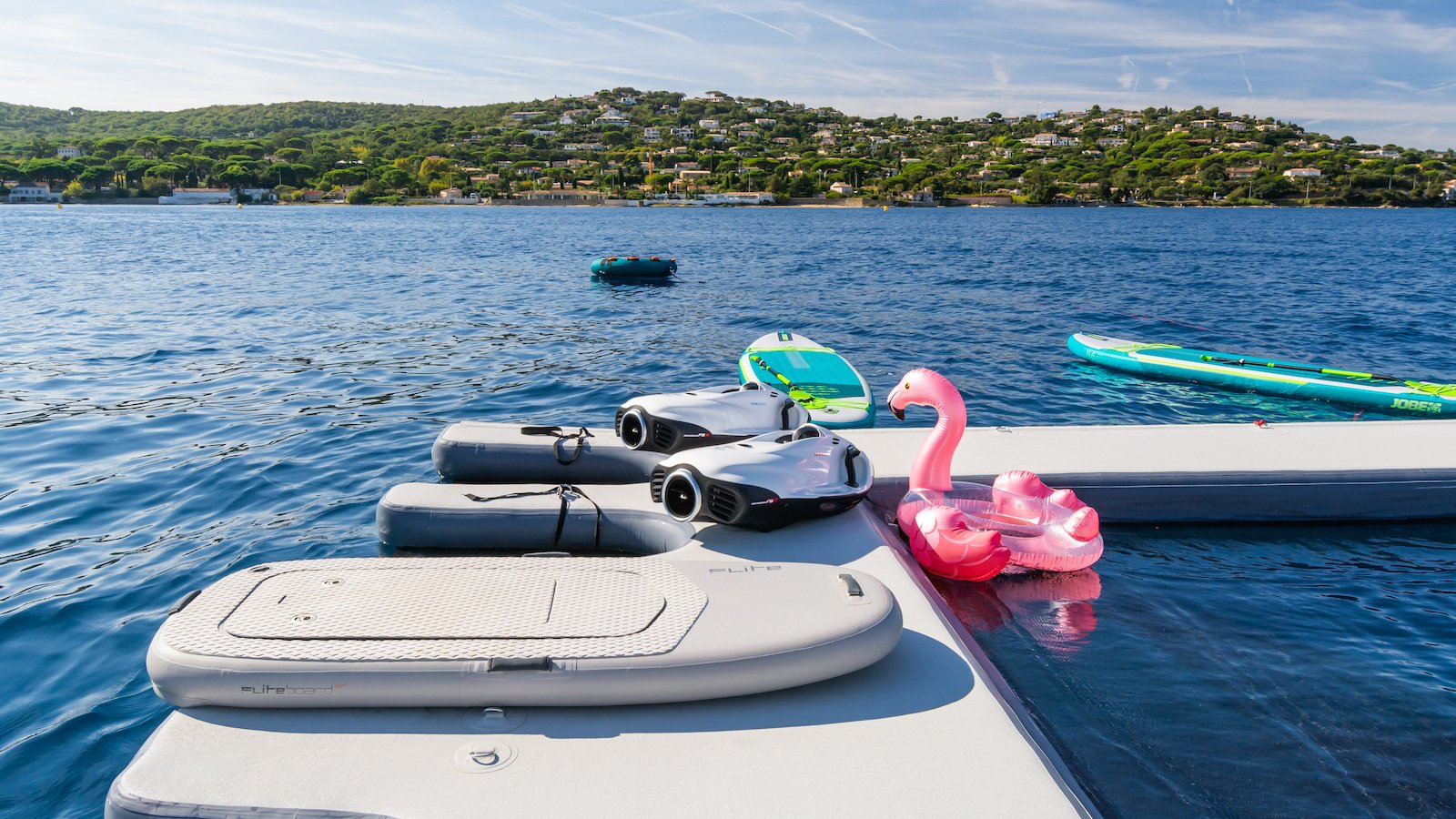
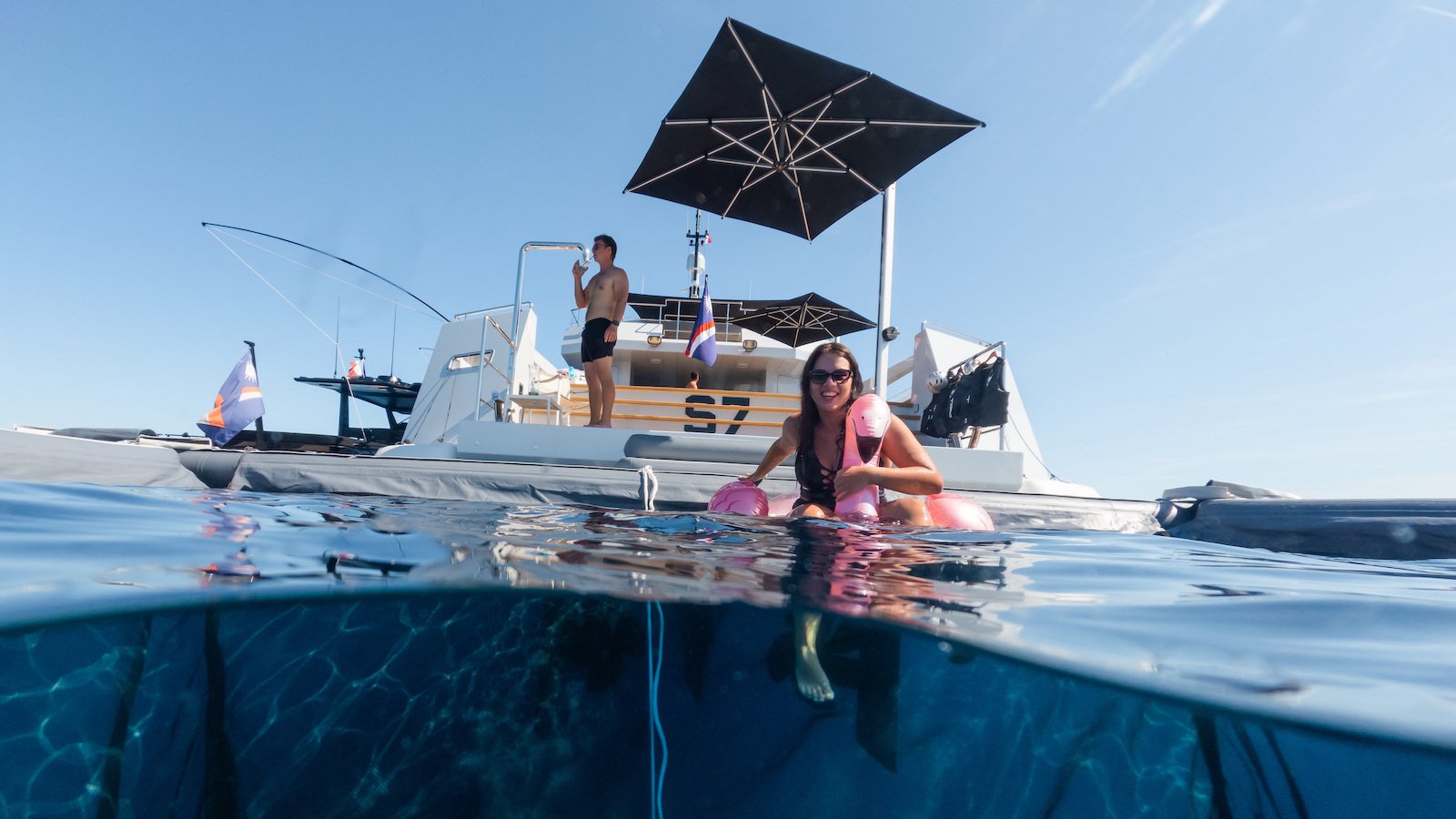
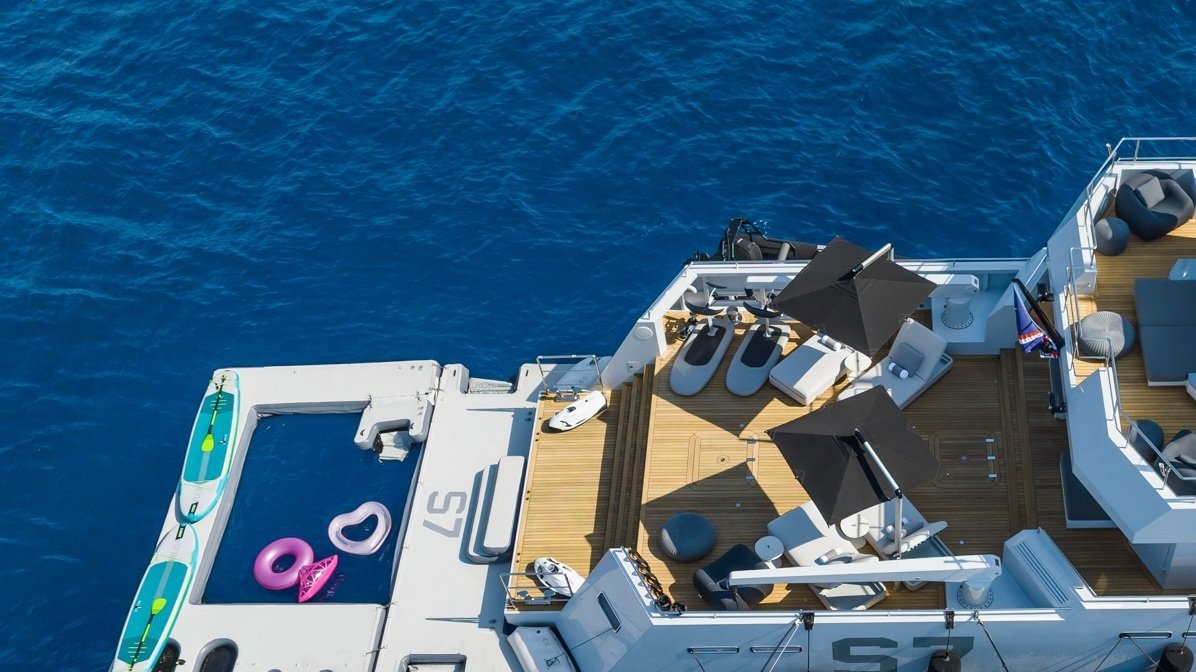
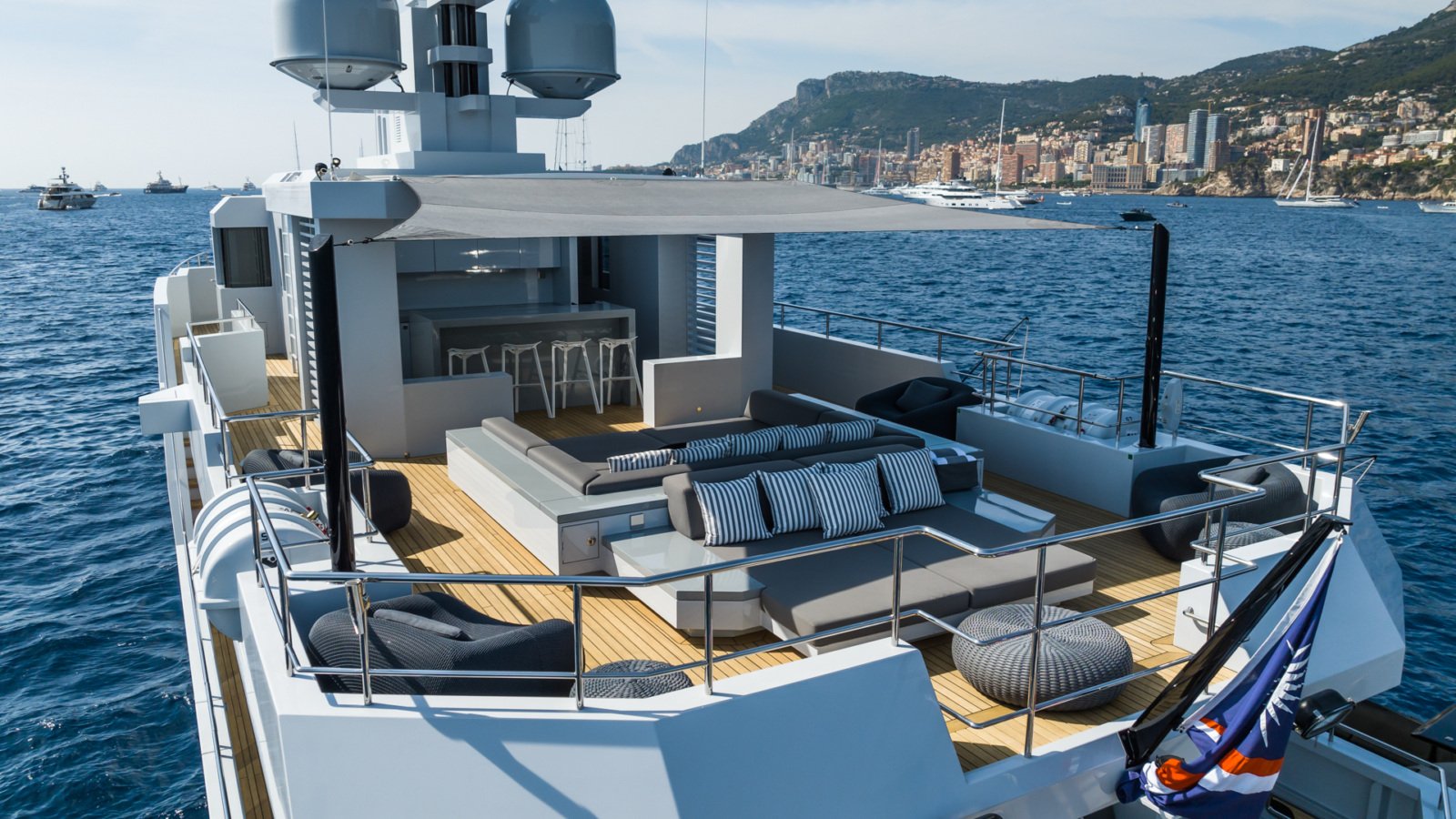
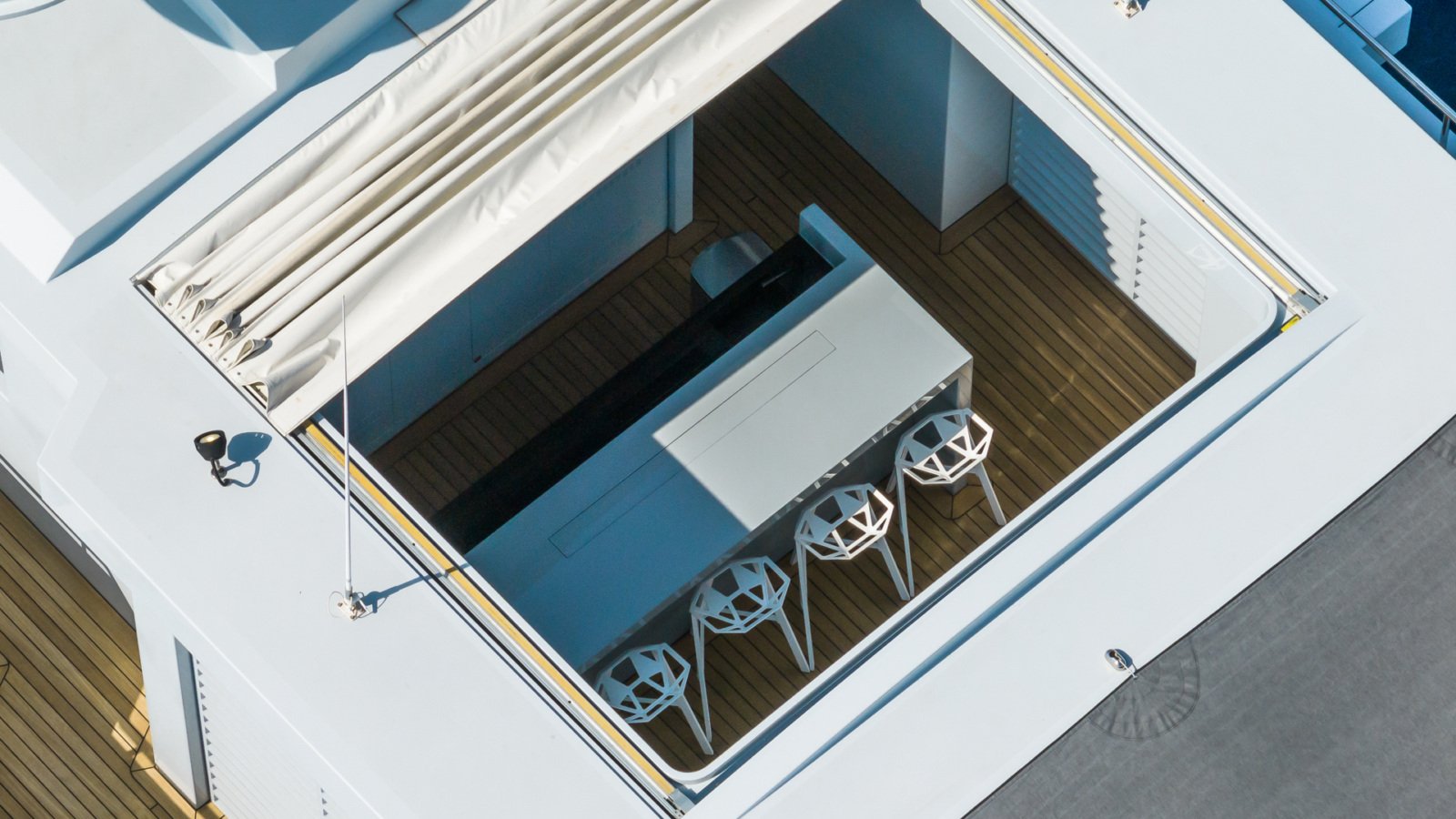
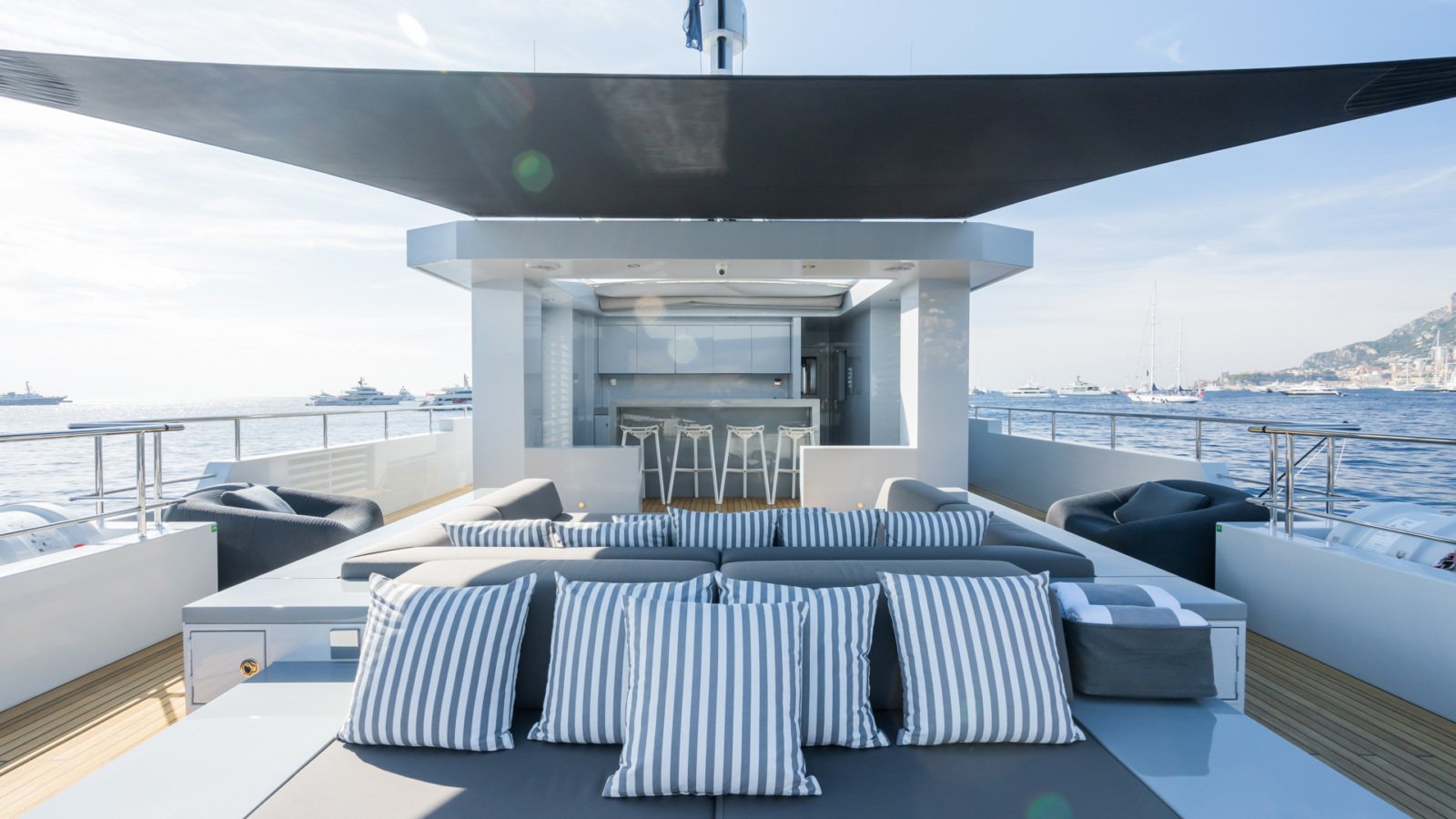
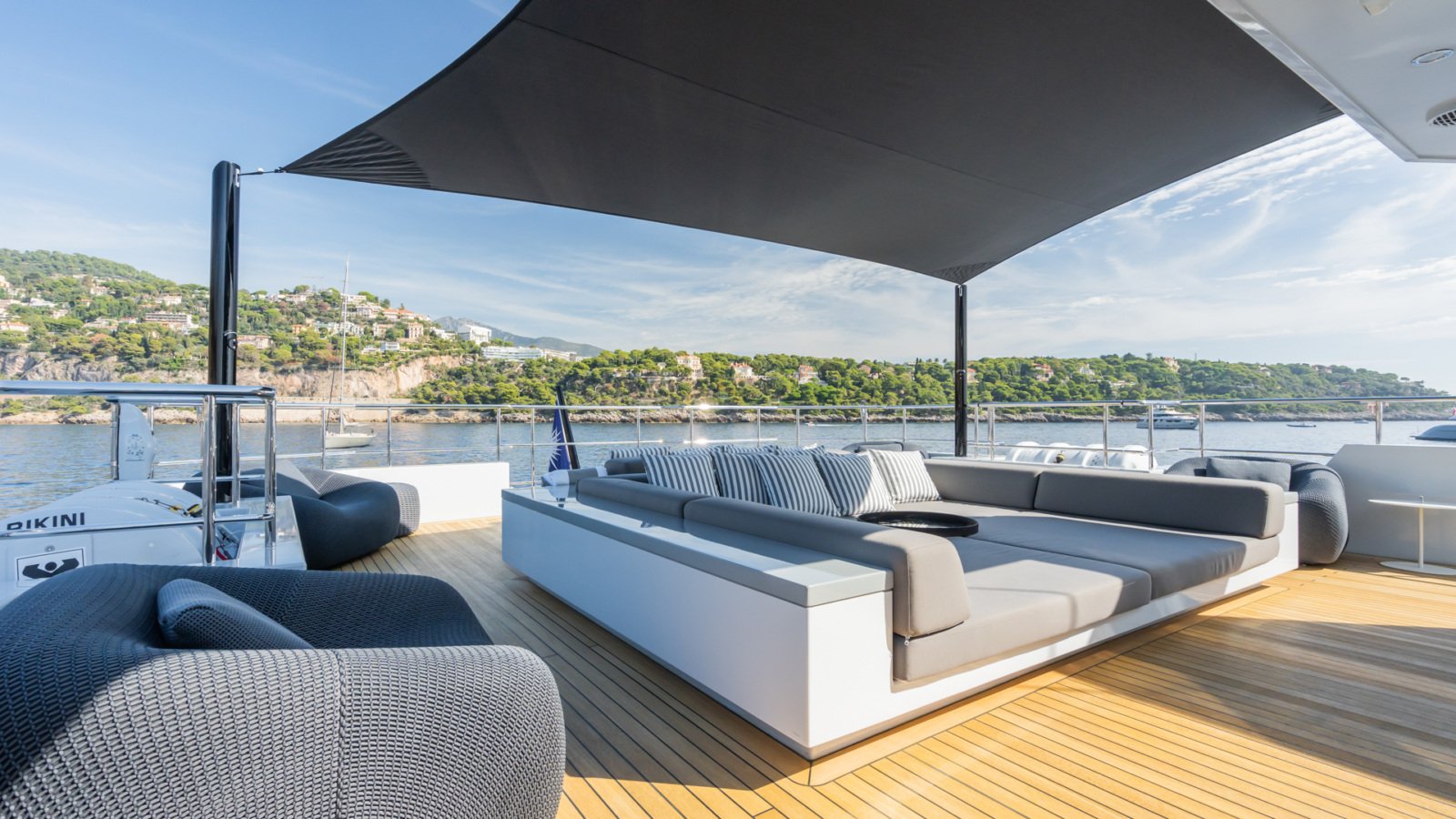
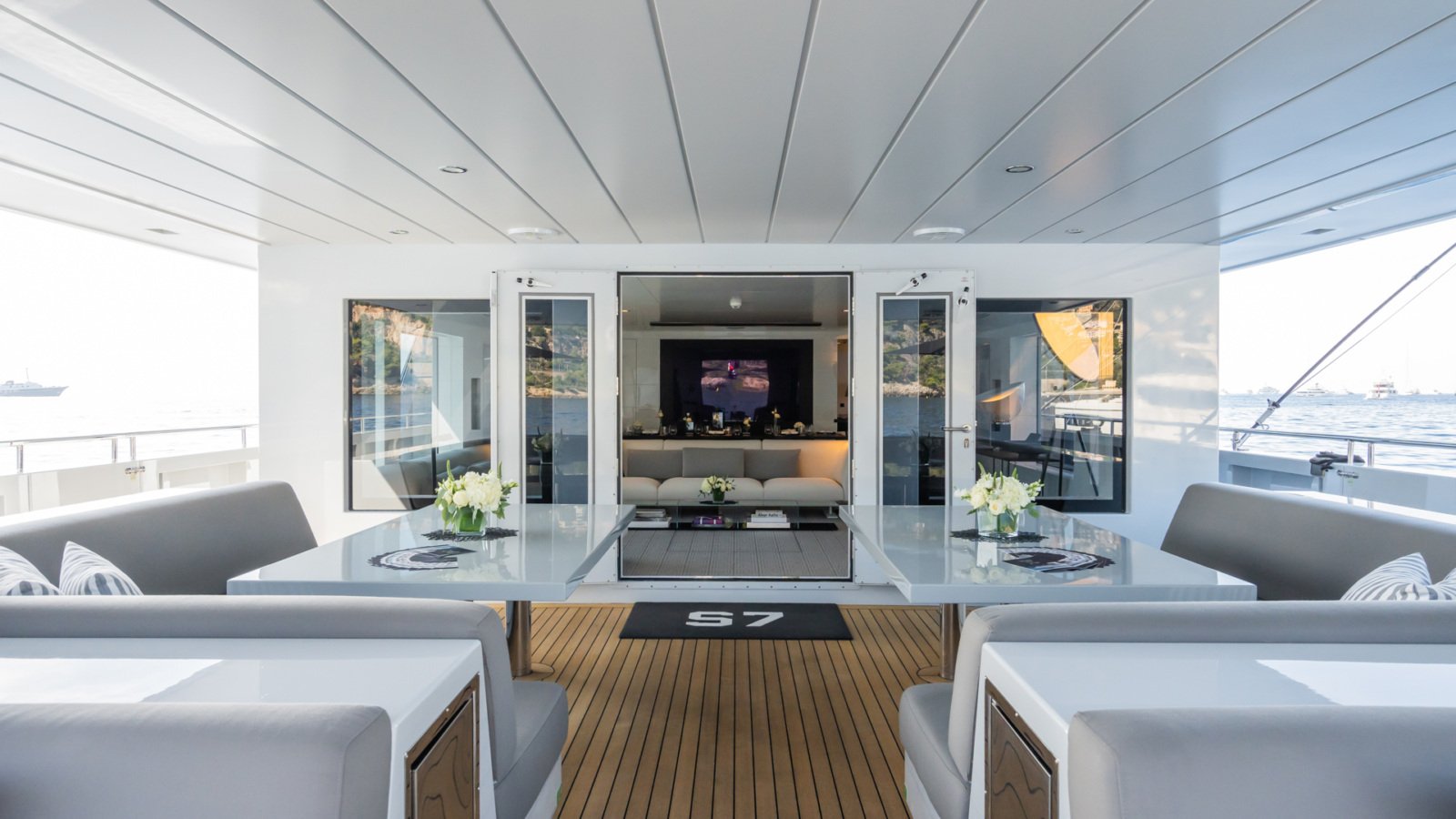
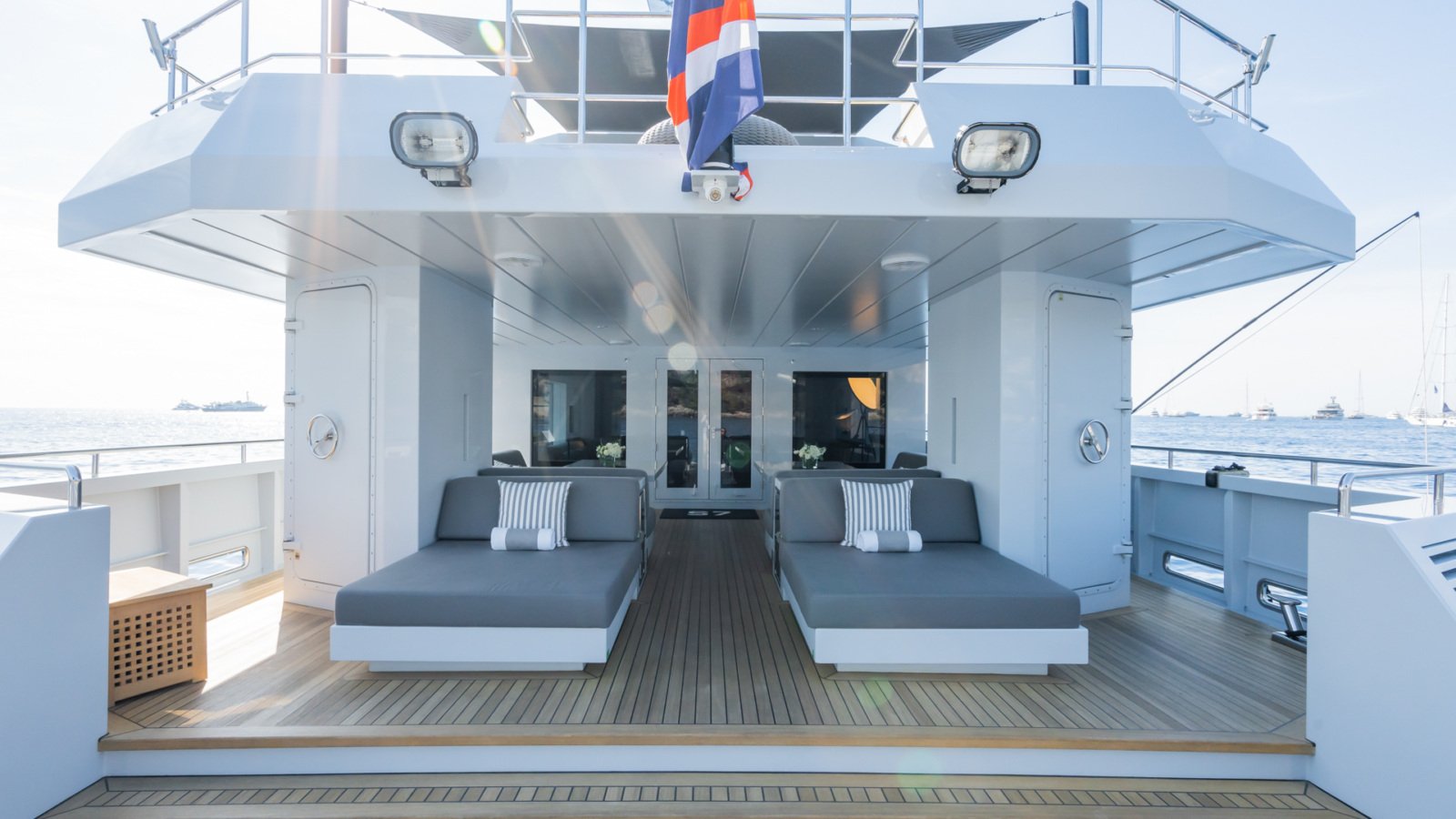
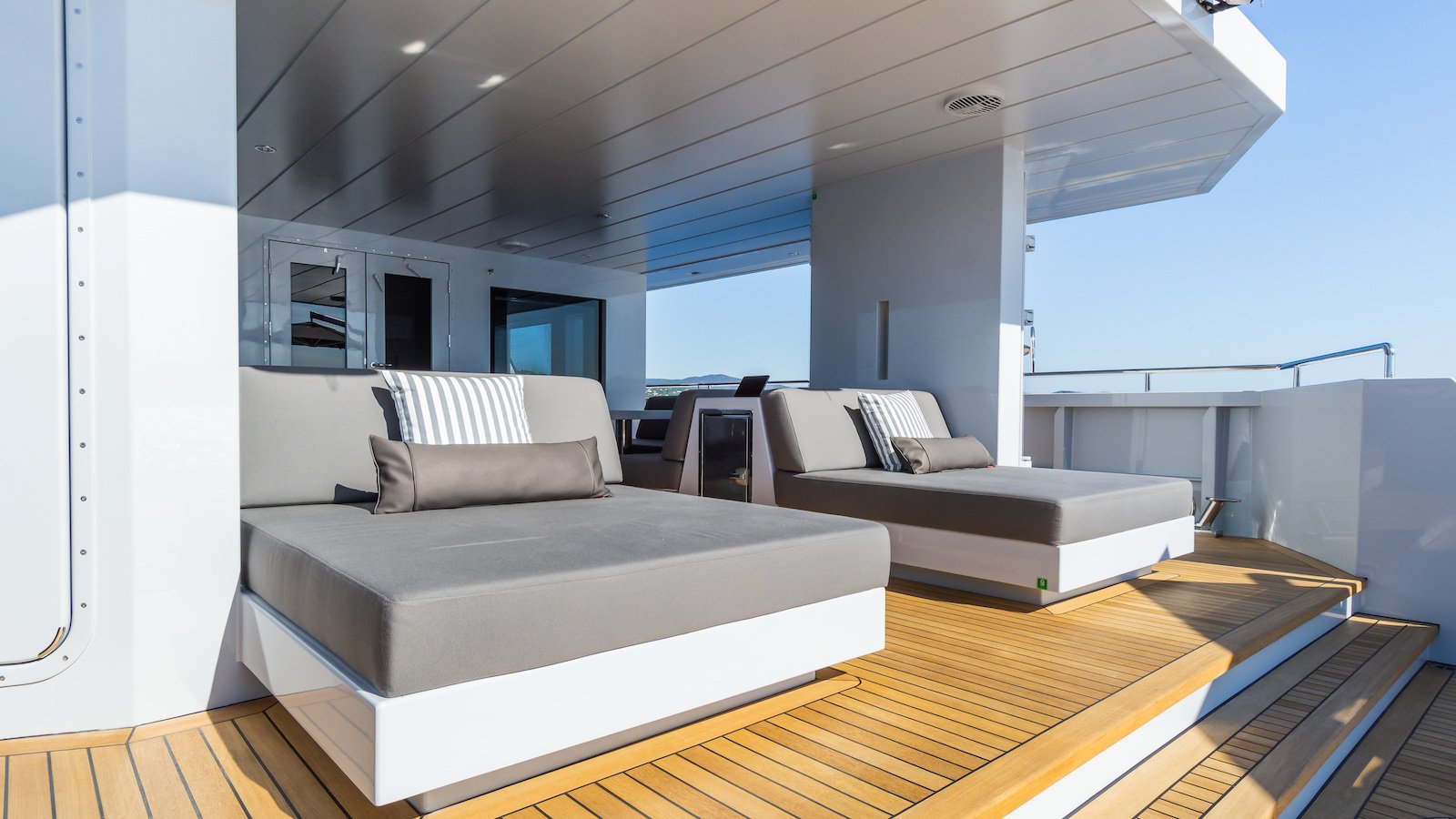
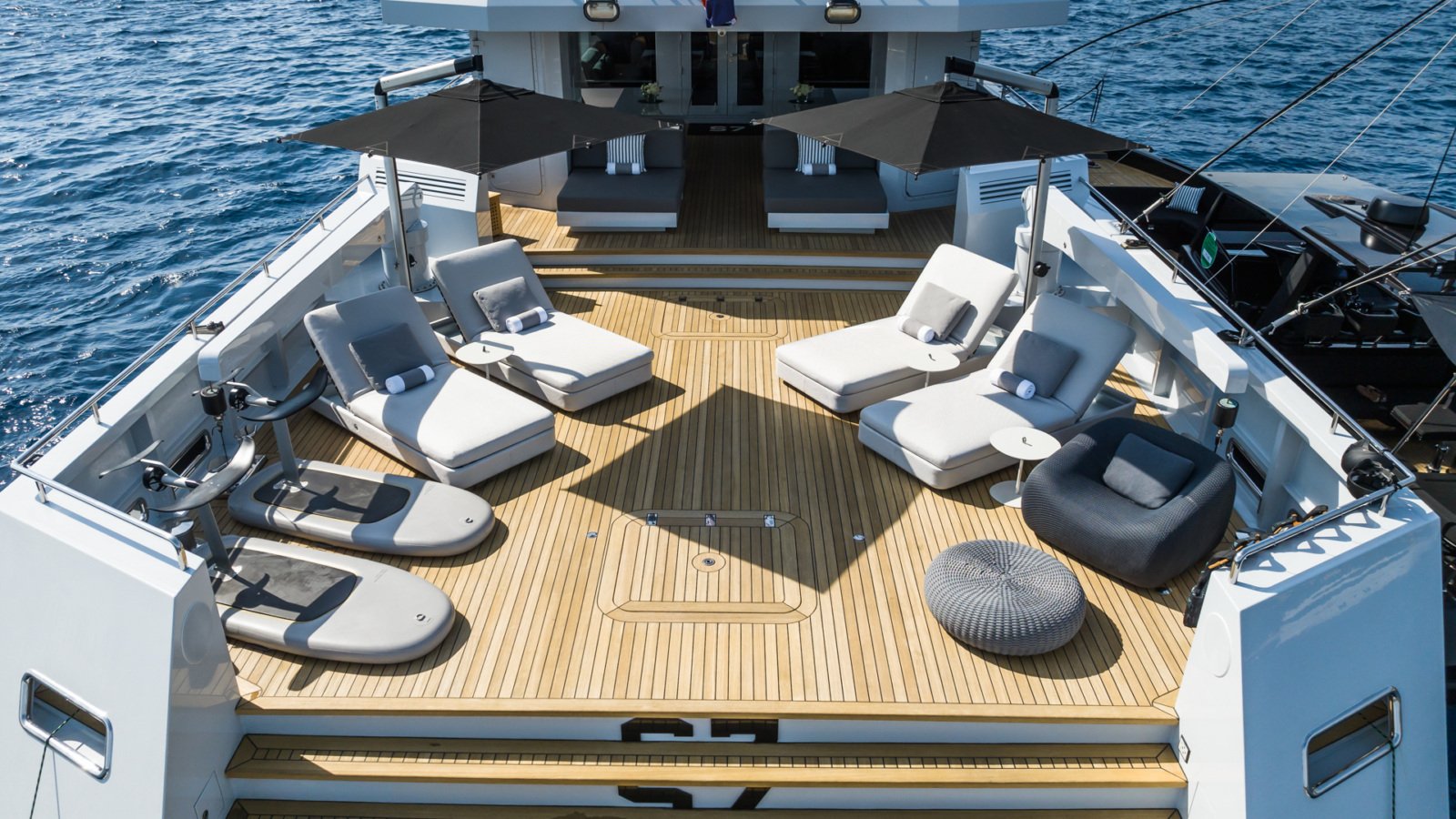
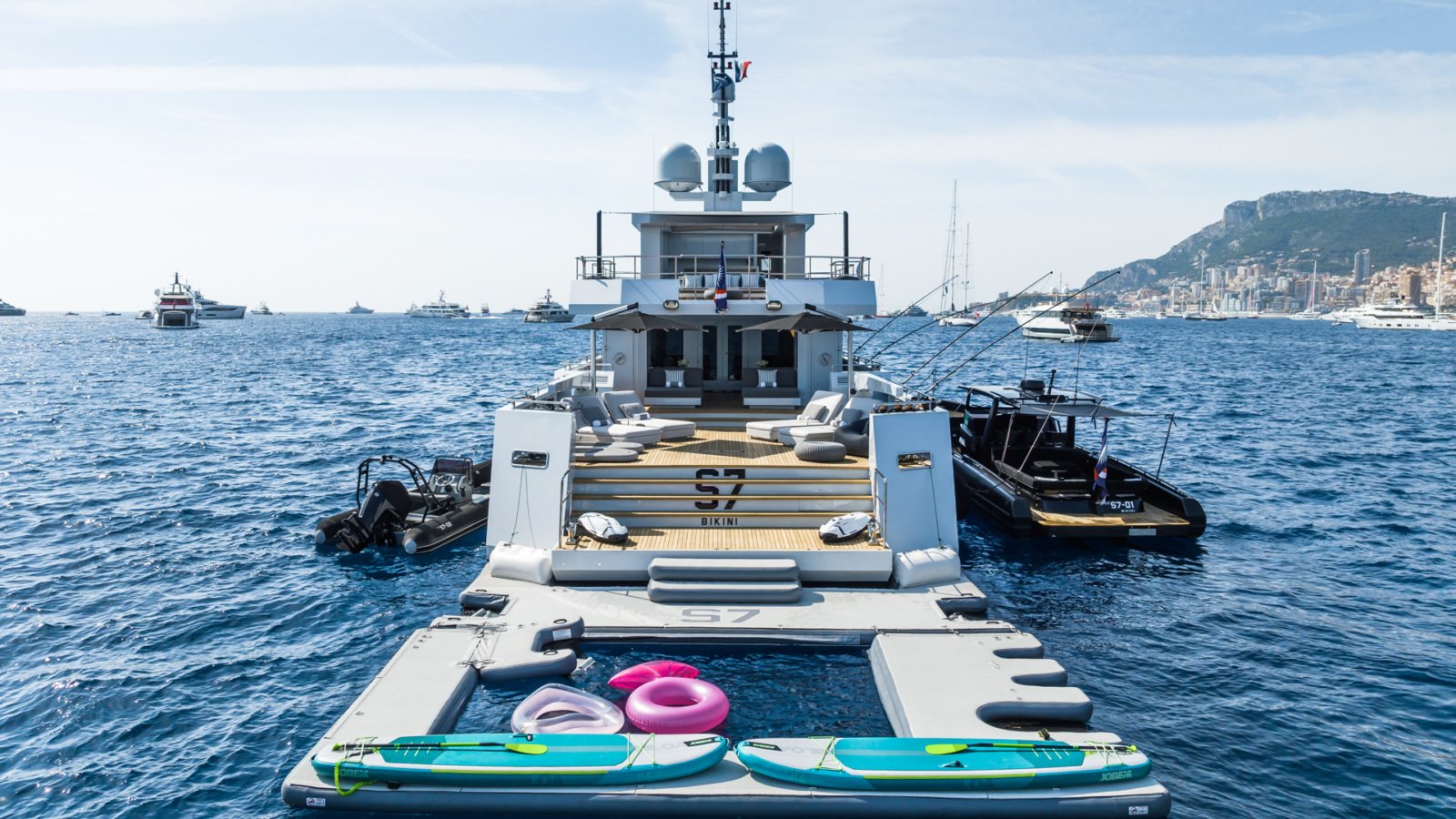
That is the argument for her. The sundeck runs almost the full beam under a hardtop, with a bar and stools at one end and long striped banquettes at the other. A second shaded lounge sits under a black sail shade with the coast on three sides. The aft deck carries twin sunpads facing astern. And the stern itself folds open into a swim platform and floating dock arrangement that puts guests, toys and water at the same level – flamingo inflatables, paddleboards, jet skis and a slide, all deployed off one continuous teak surface.
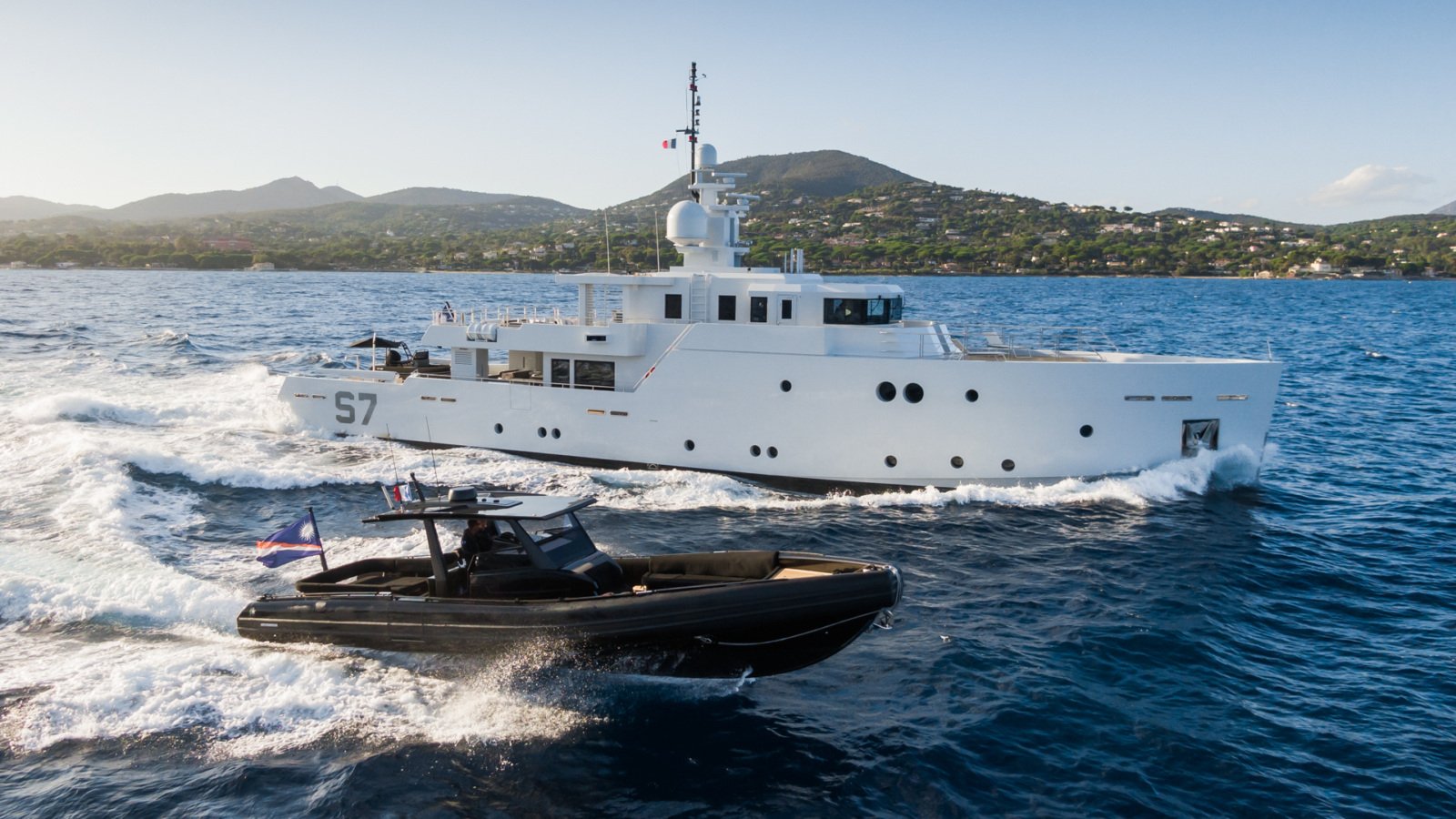
Her tender programme is a step beyond the norm. A 12-metre Novamarine chase boat is included in the charter, which means guests can leave the mothership at anchor and take a serious offshore boat forty miles to lunch and back. Her crew of eight includes experienced kitesurfing instructors who teach beginners and coach advanced riders, an offering that most yachts of this size subcontract or simply do not have.
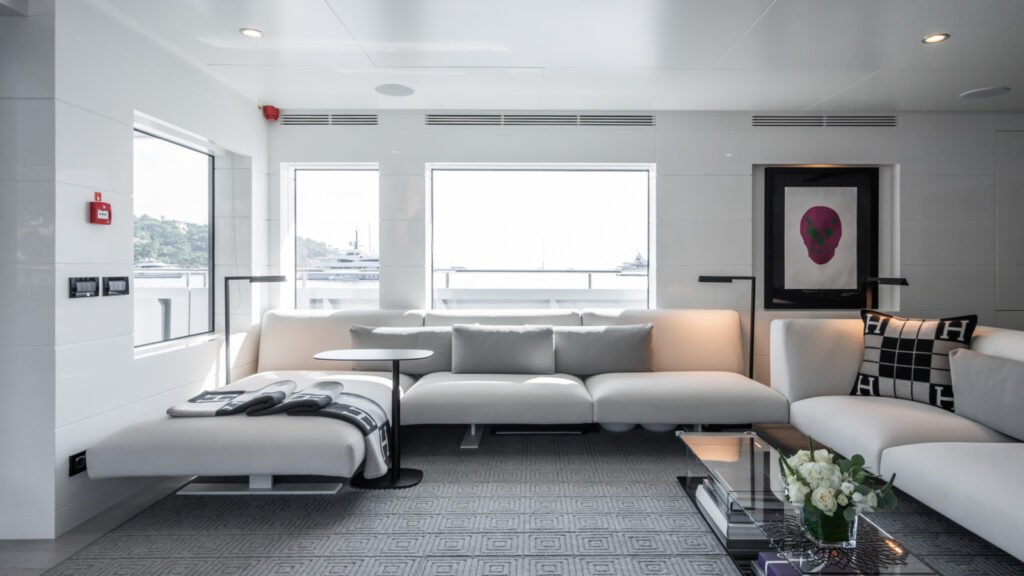
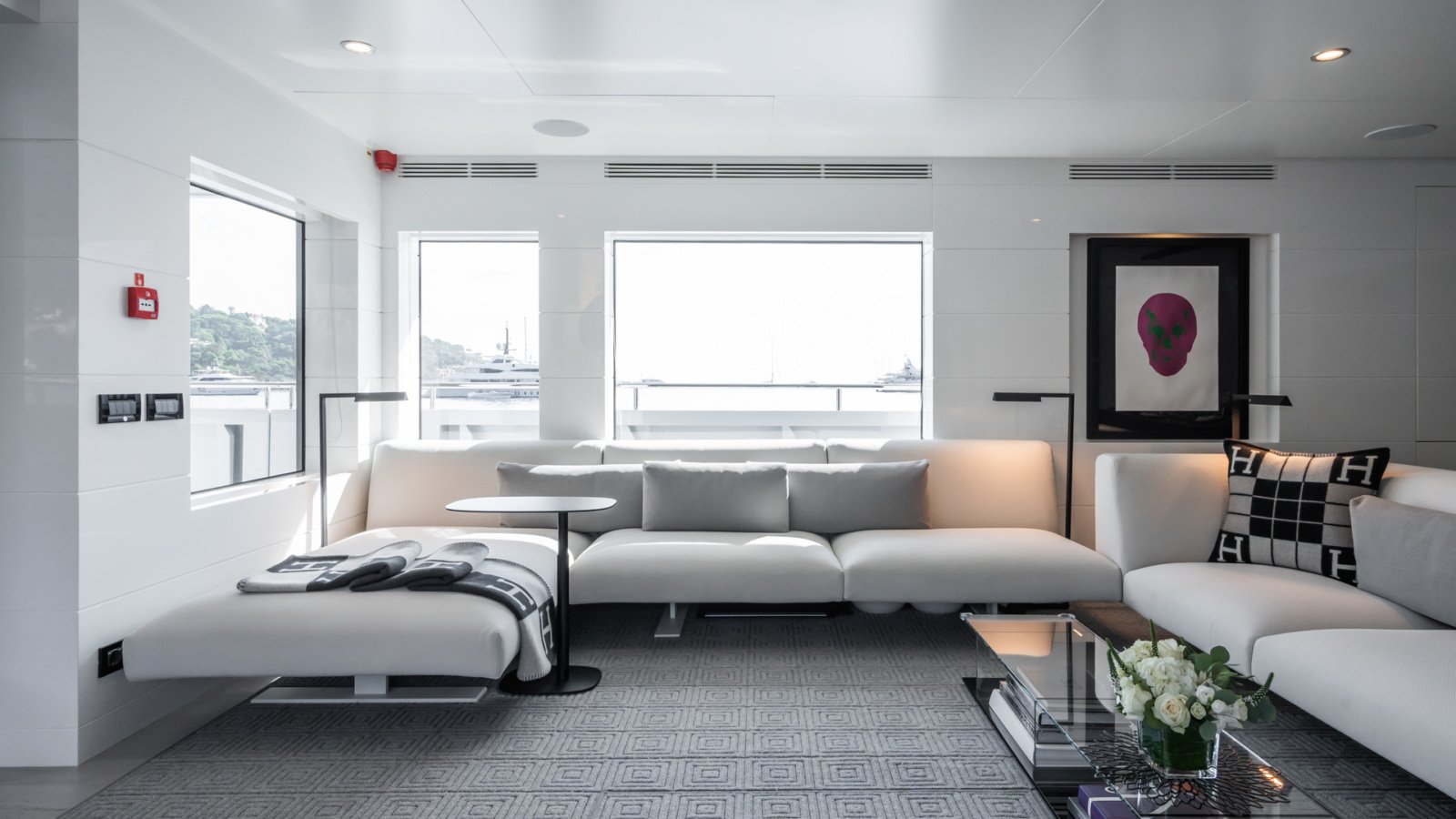
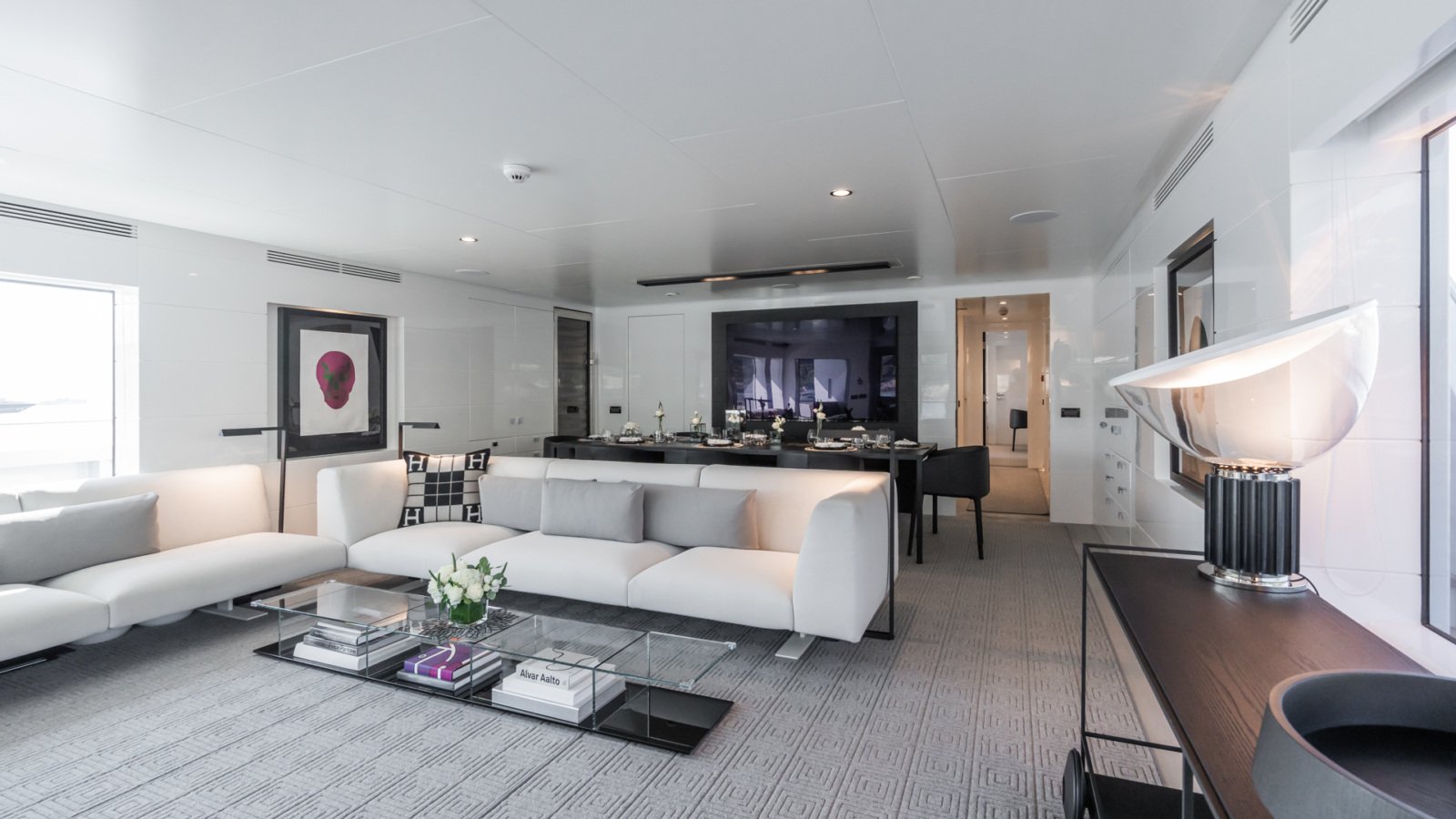
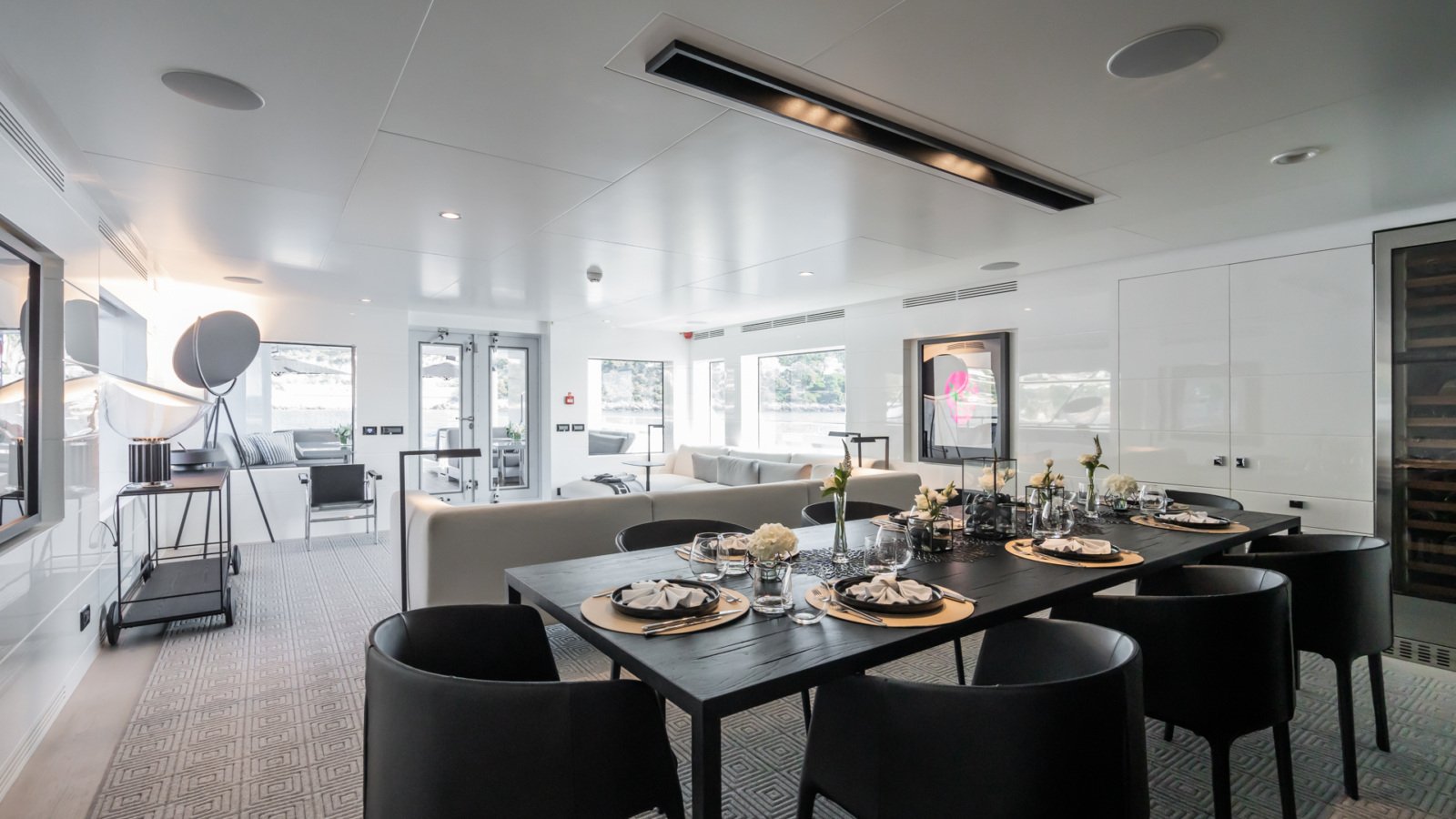
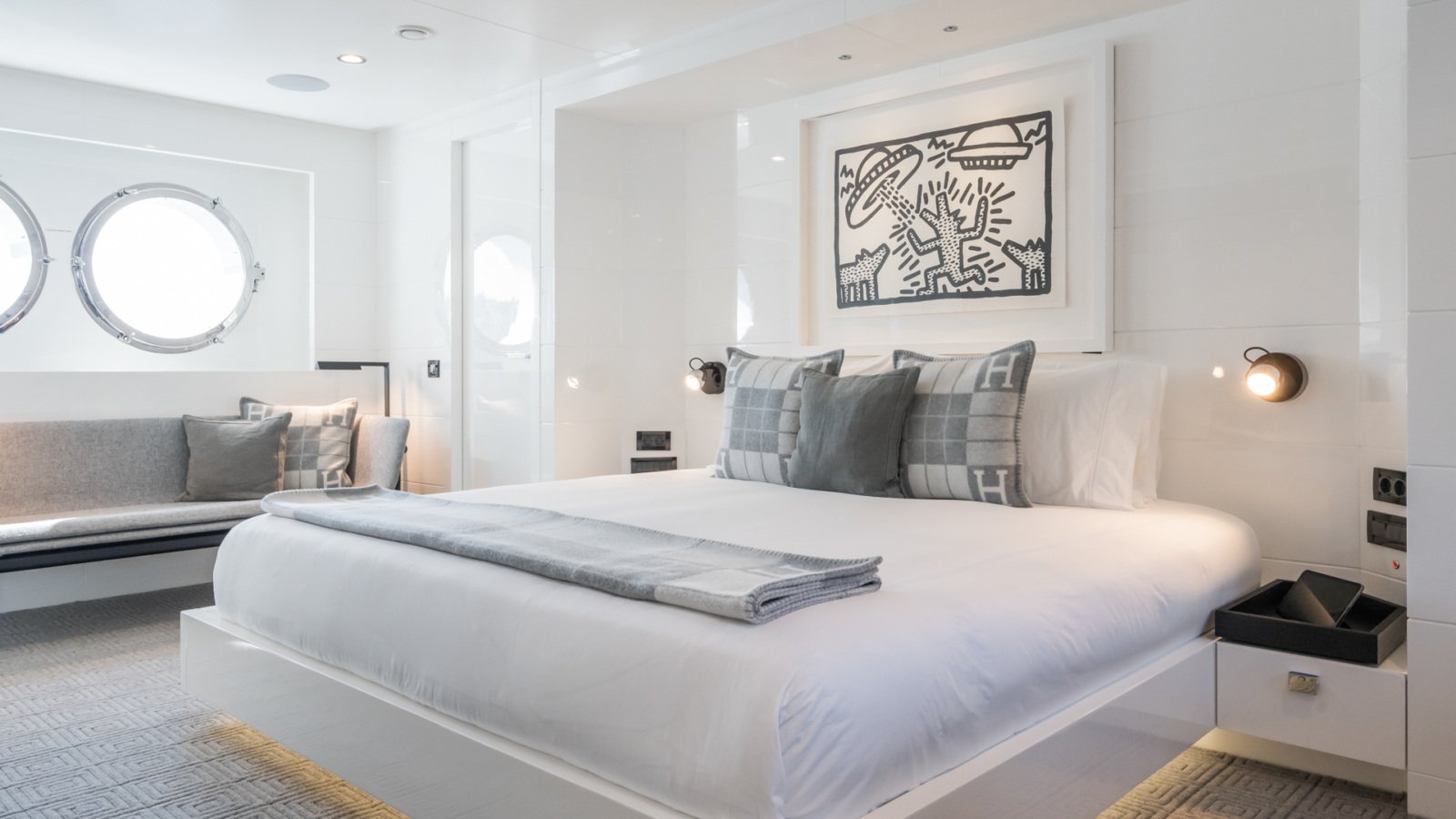
Inside, the design flips from industrial to gallery-white. The main deck is one long open volume, lacquered white throughout, floored in pale grey and hung with graphic prints – a magenta skull, a Keith Haring study. A white sectional and a chaise fill the aft third; forward, a black dining table with black tub chairs sits in the same space with a glazed wine store beside it. It is a considered, restrained room, more Milan apartment than yacht saloon, and the light in it is exceptional.
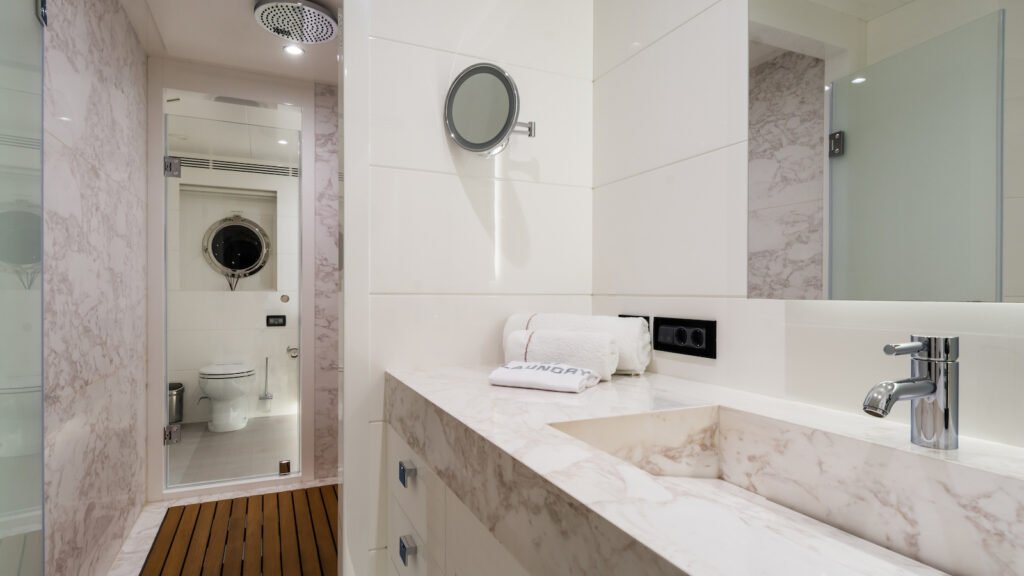
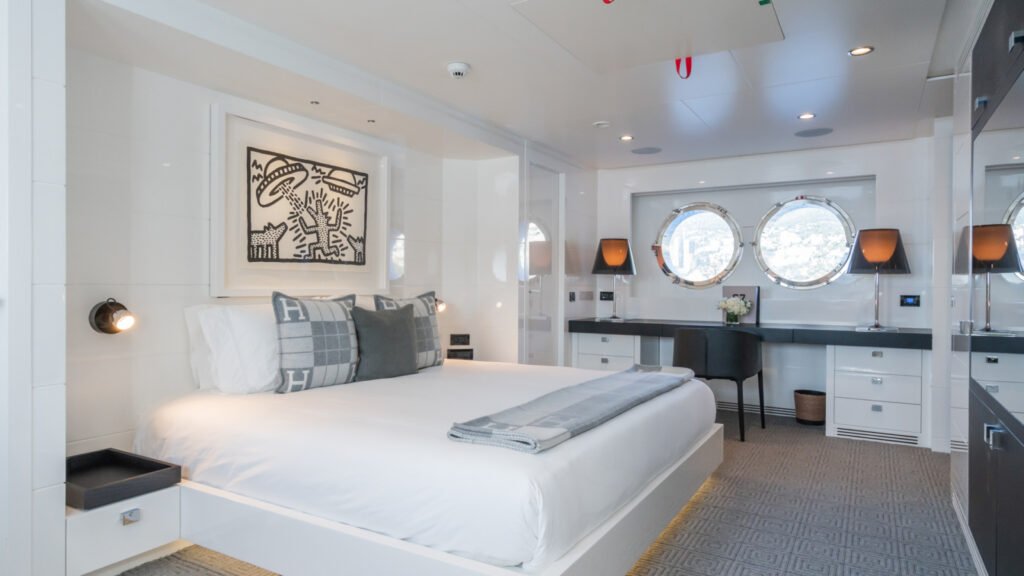
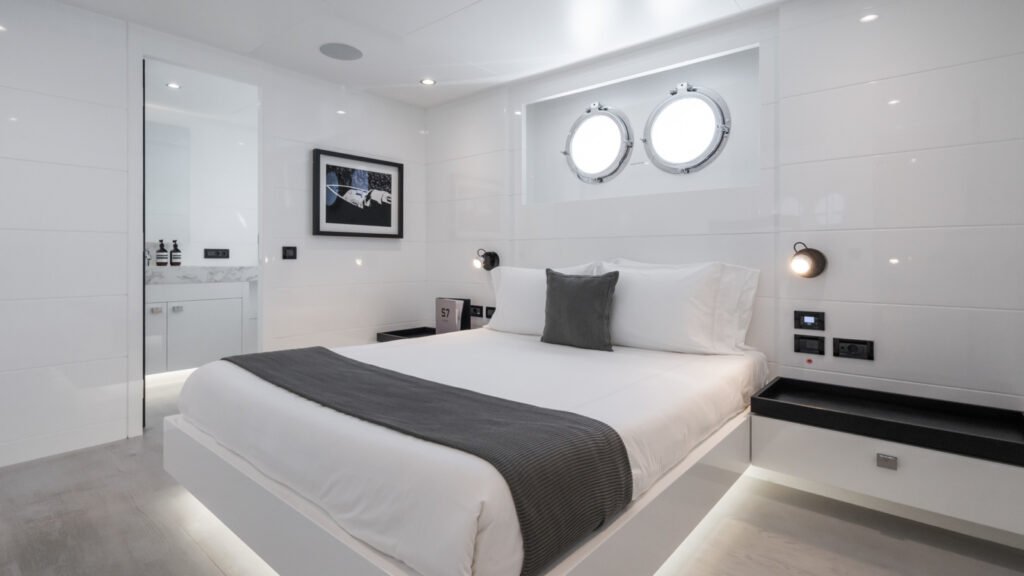
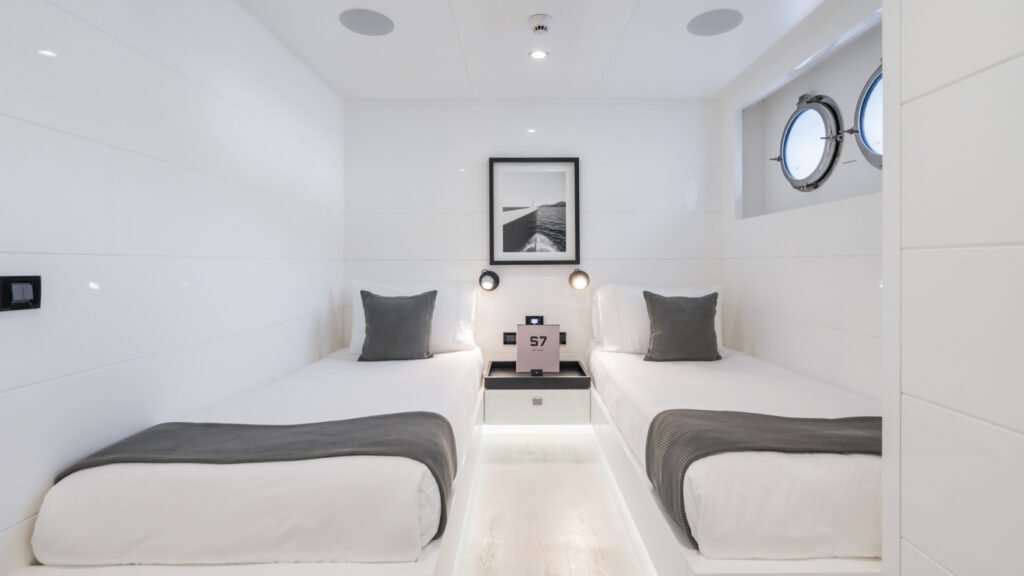
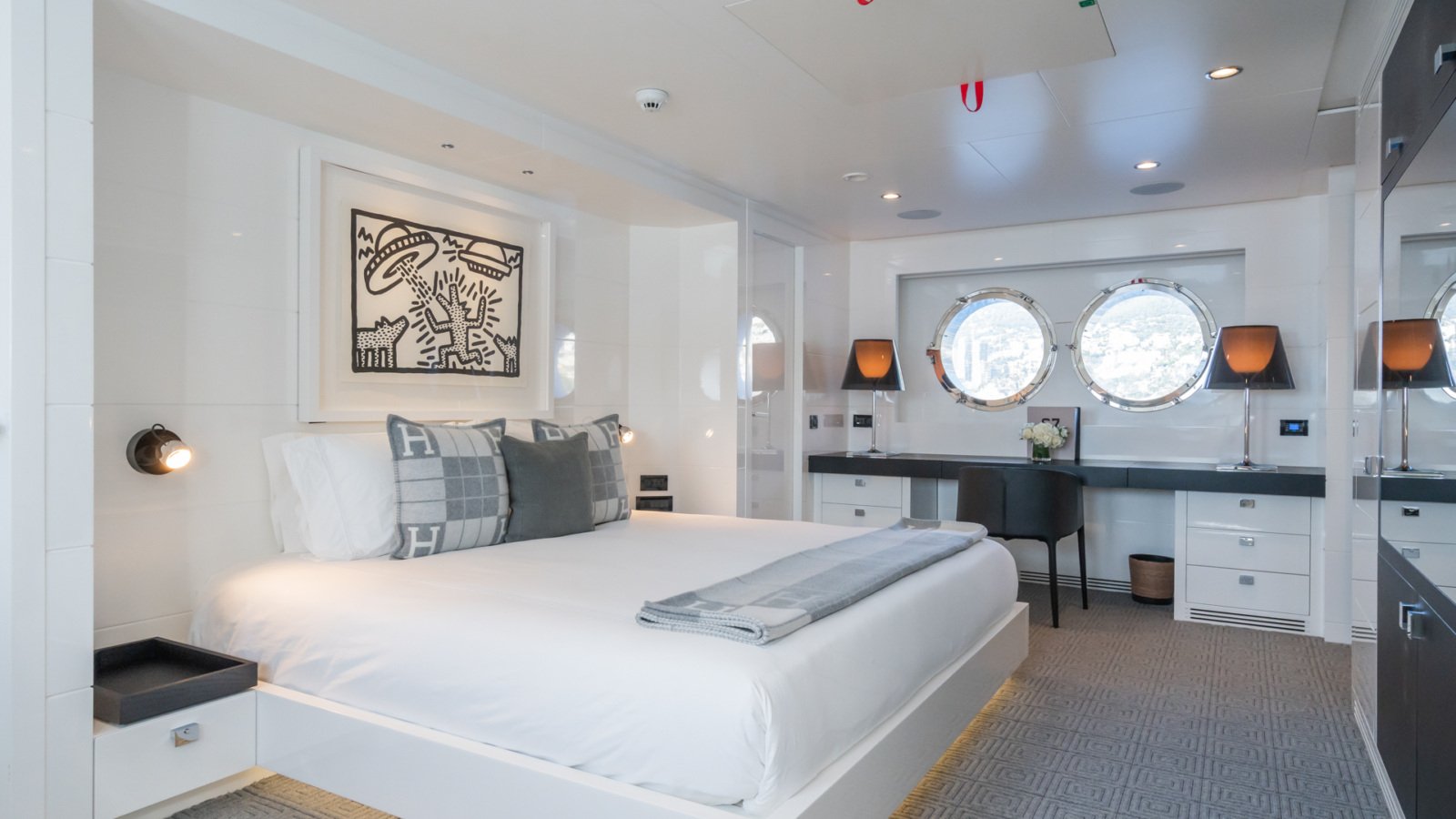
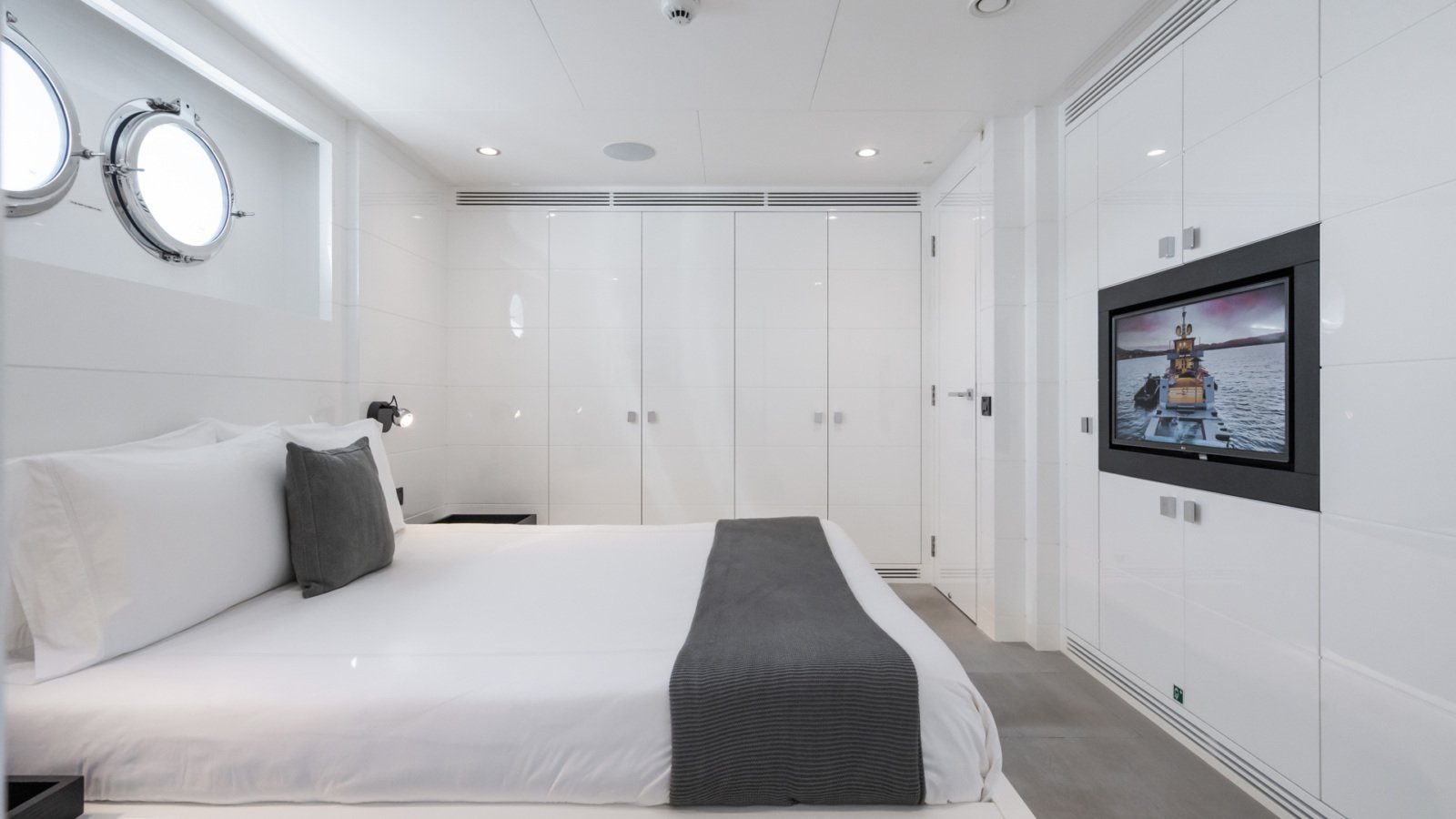
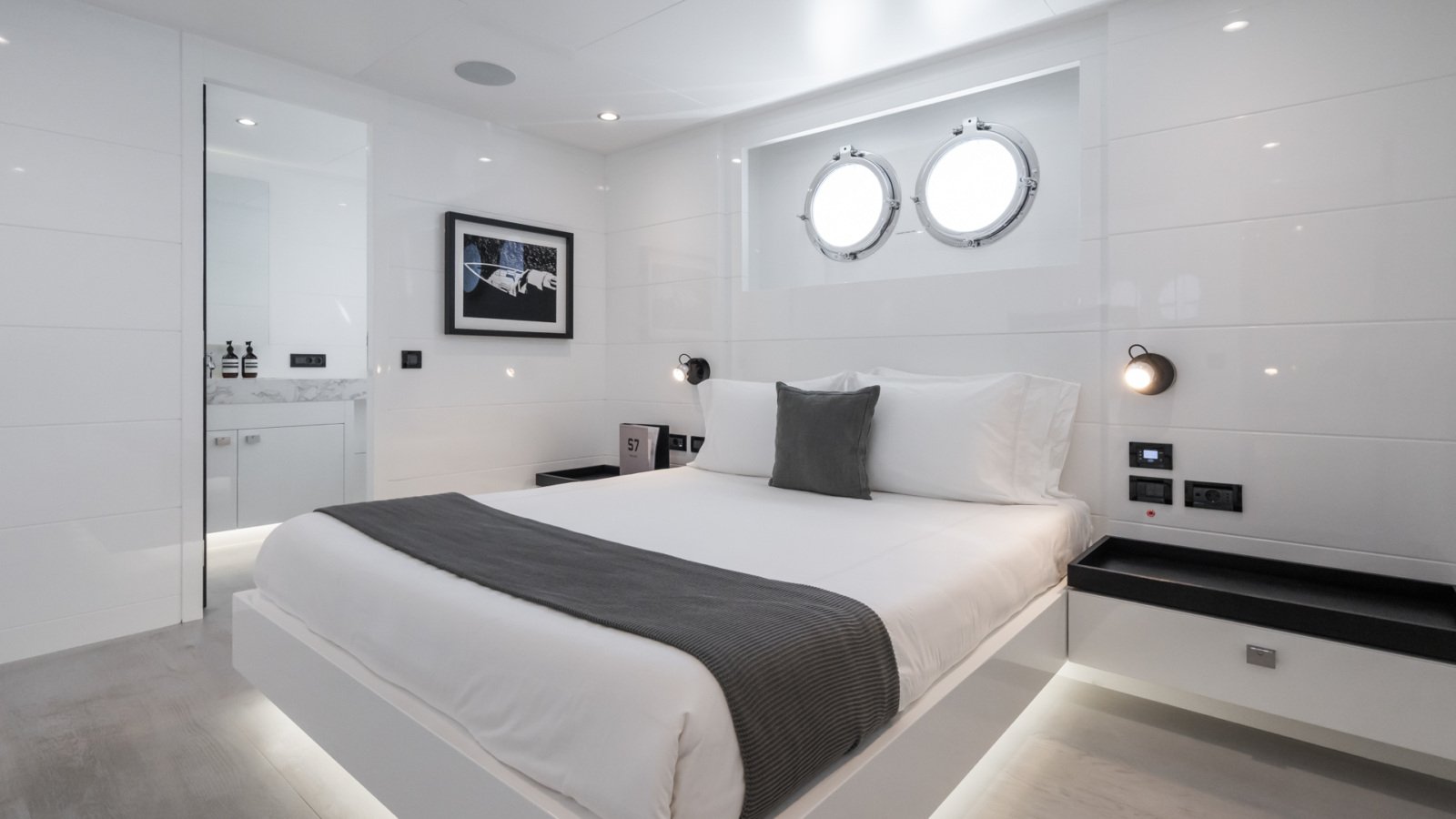
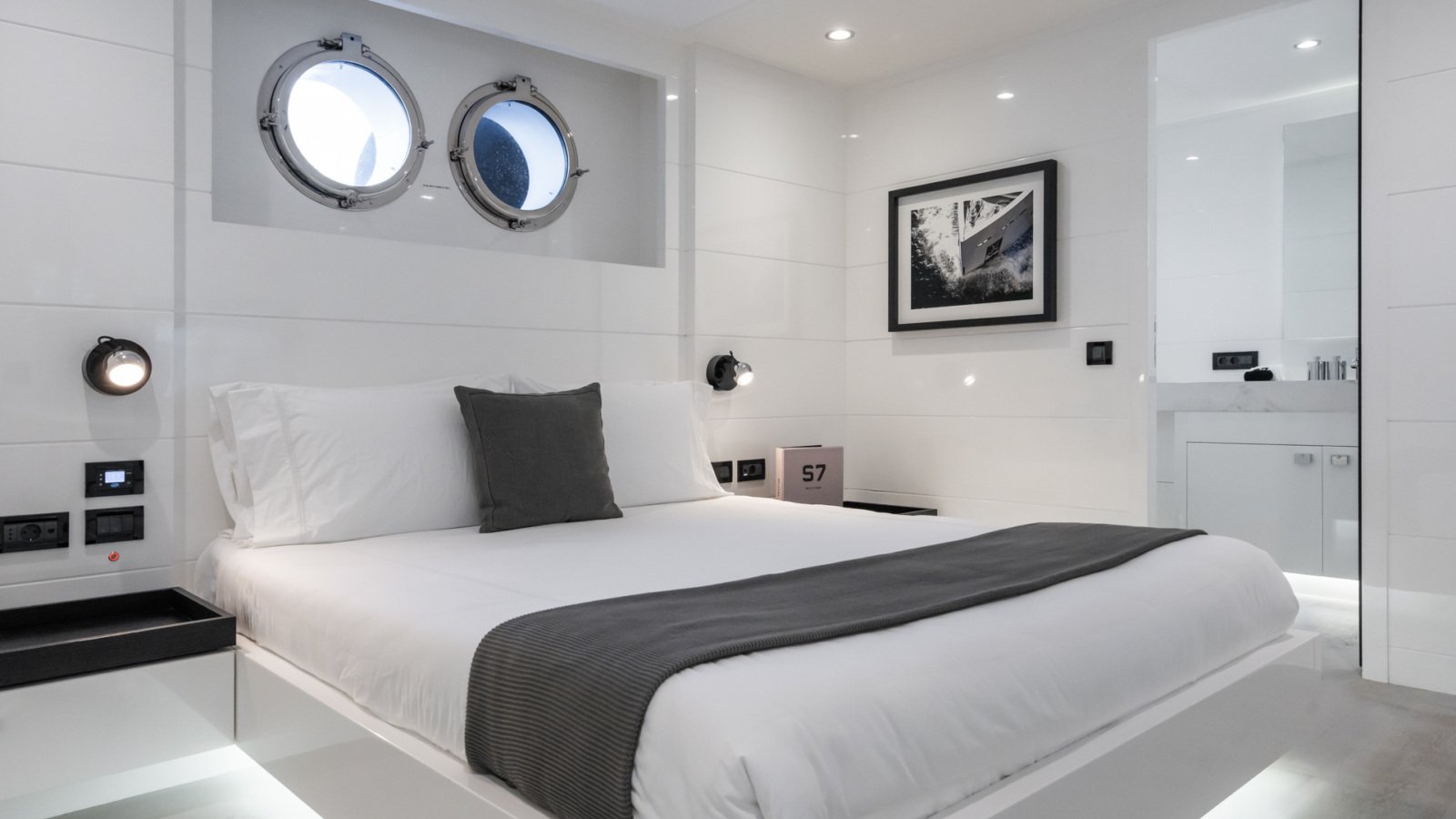
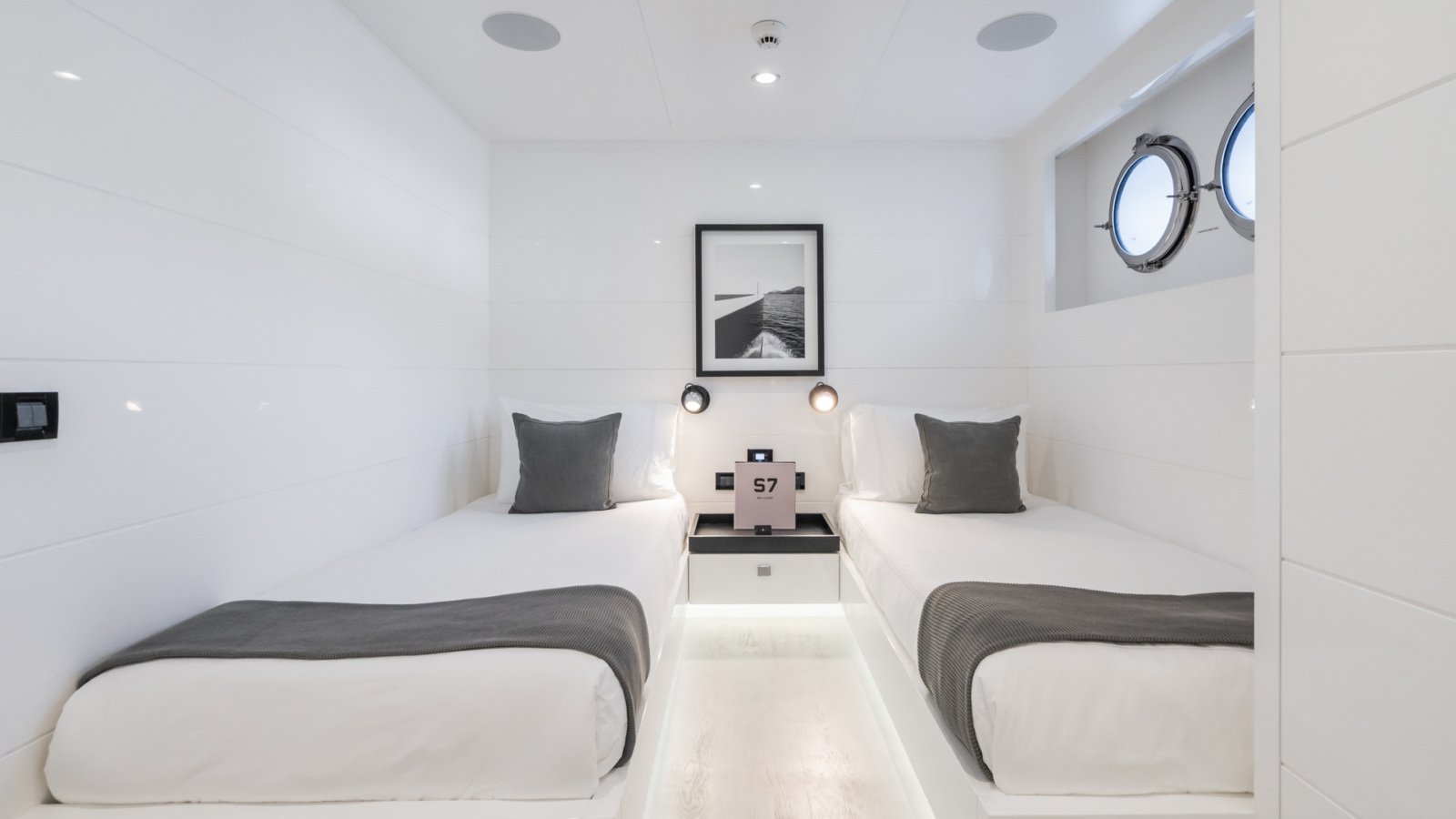
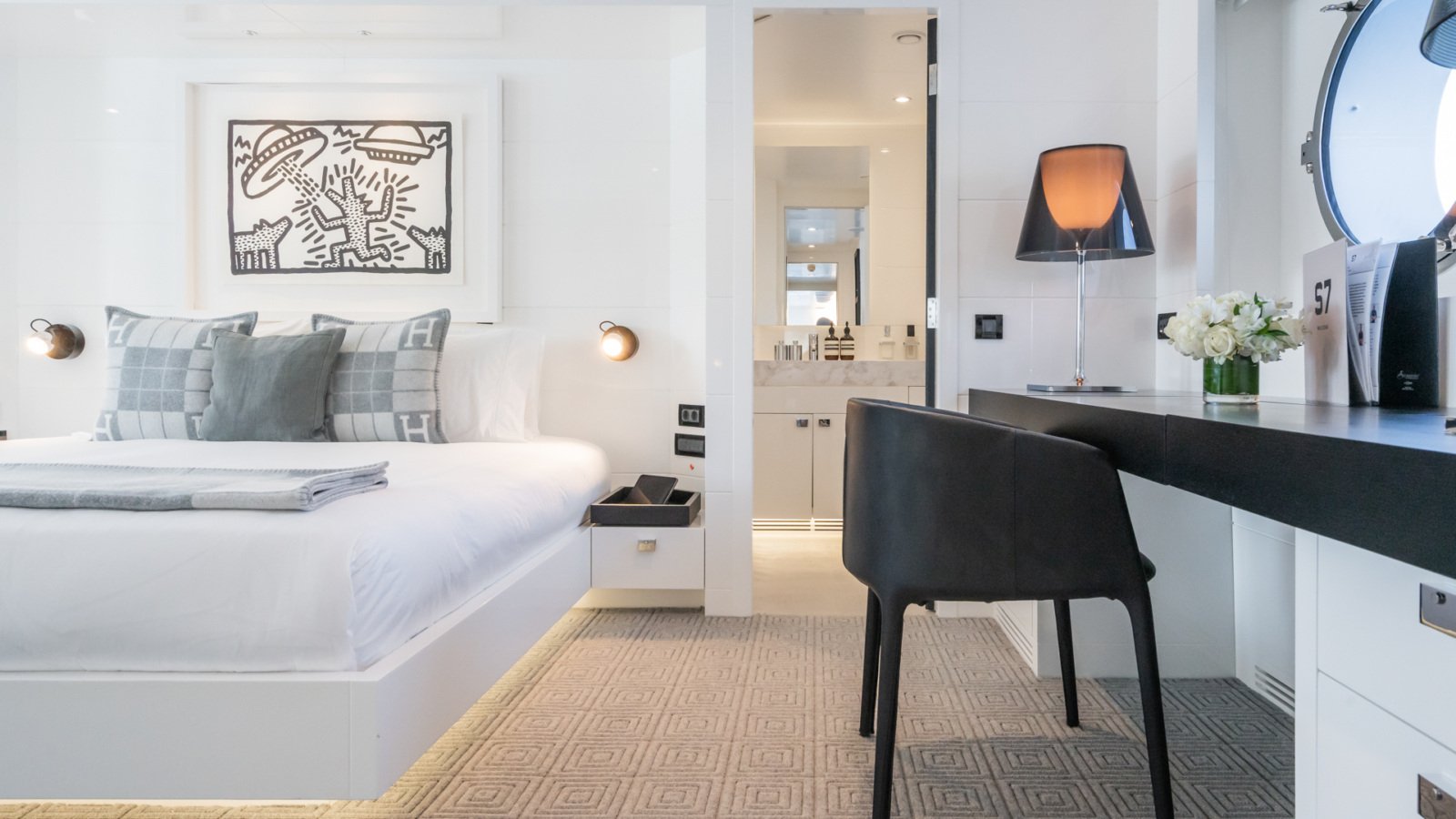
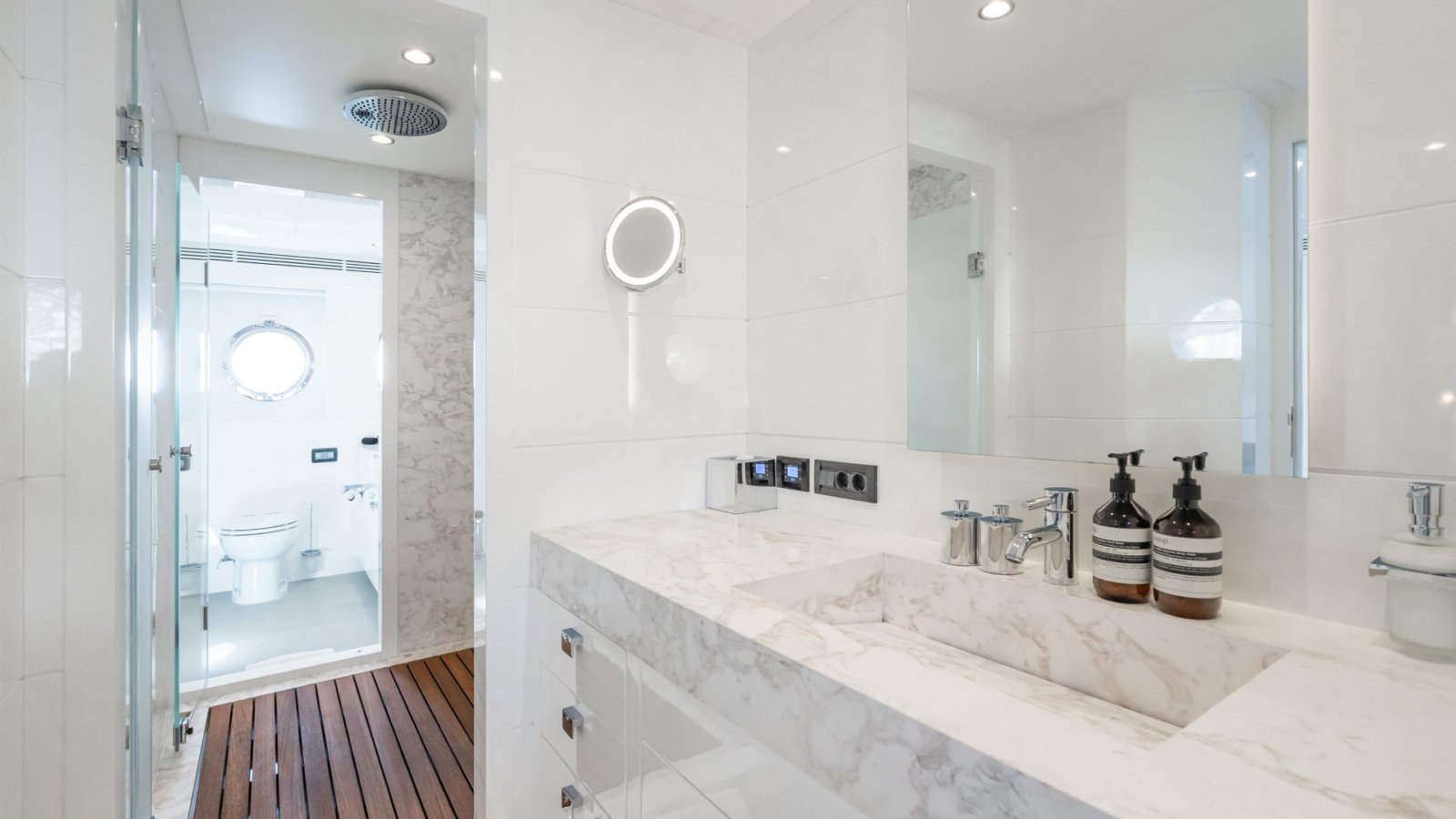
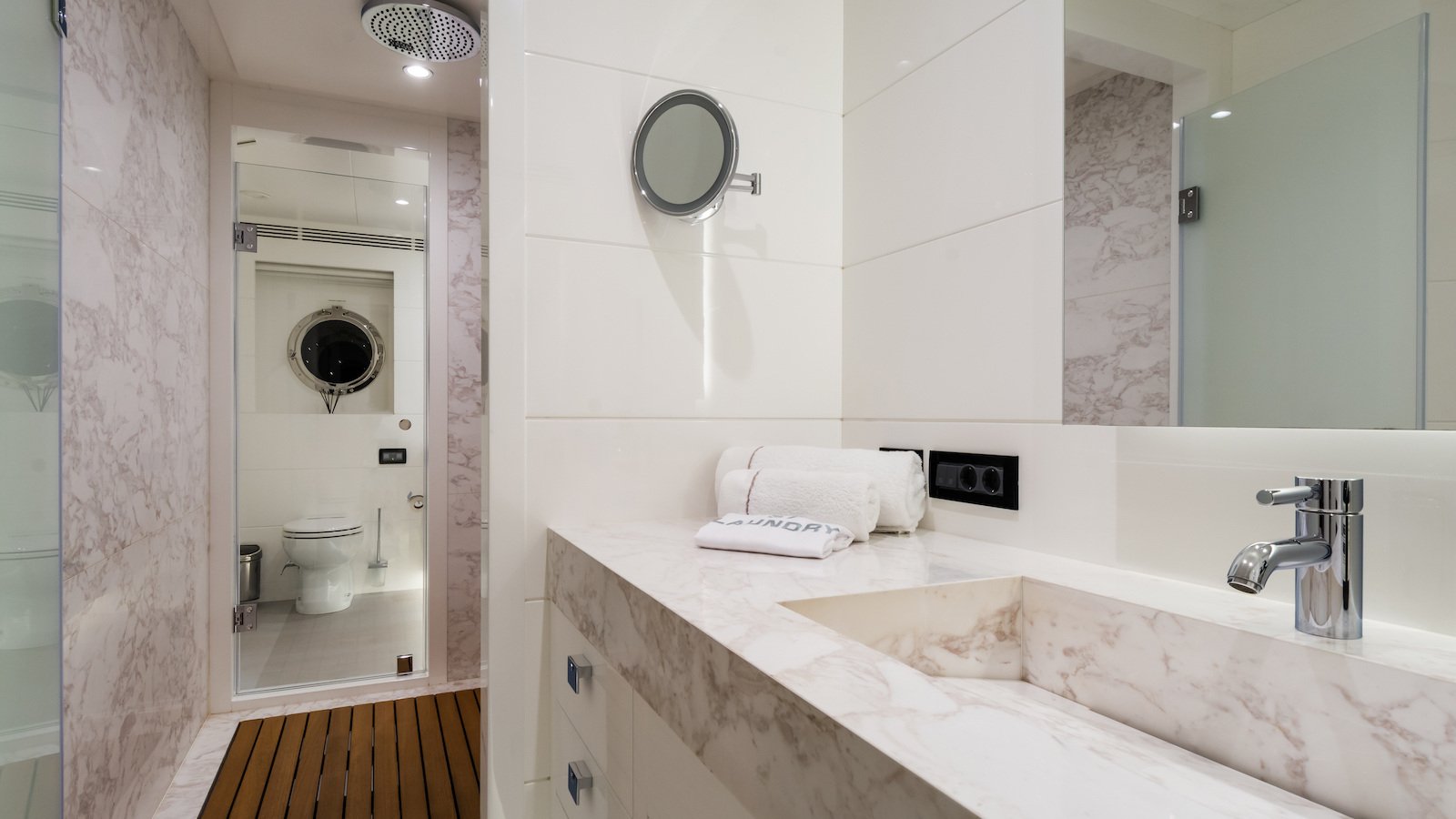
Accommodation runs to five cabins for twelve guests. The master occupies most of the beam with the Haring print over the bed, twin portholes at eye level, a long black desk under them with orange shaded lamps, and a private office alongside the ensuite. Four guest cabins – two doubles and two twins, one twin convertible, plus Pullman berths – continue the same white lacquer and grey runners, each with framed photography and its own marble bathroom. The joinery is precise and the storage is deep, both of which matter on the longer passages an explorer is built for.
She cruises at 10 knots and reaches 16, with 3,500 nautical miles of range from twin Caterpillars. The steel hull and the displacement form mean she is comfortable in weather that would send a planing hull looking for shelter. Her season splits between Cannes in summer and the Caribbean and Bahamas in winter – a genuine transatlantic programme rather than a Mediterranean boat with ambitions.
Refitted in 2023 and consistently well kept, S7 remains one of the more interesting propositions under 40 metres: an explorer with the deck space of something longer and the interior of something newer.