Cayman / Cayman S580 Project
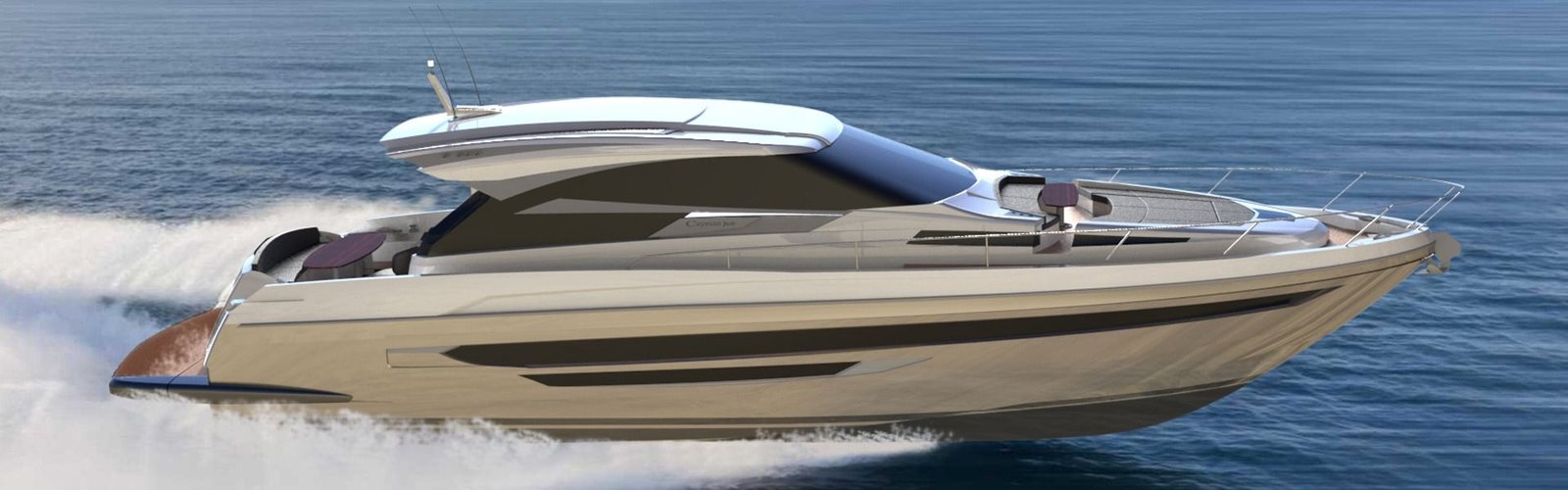
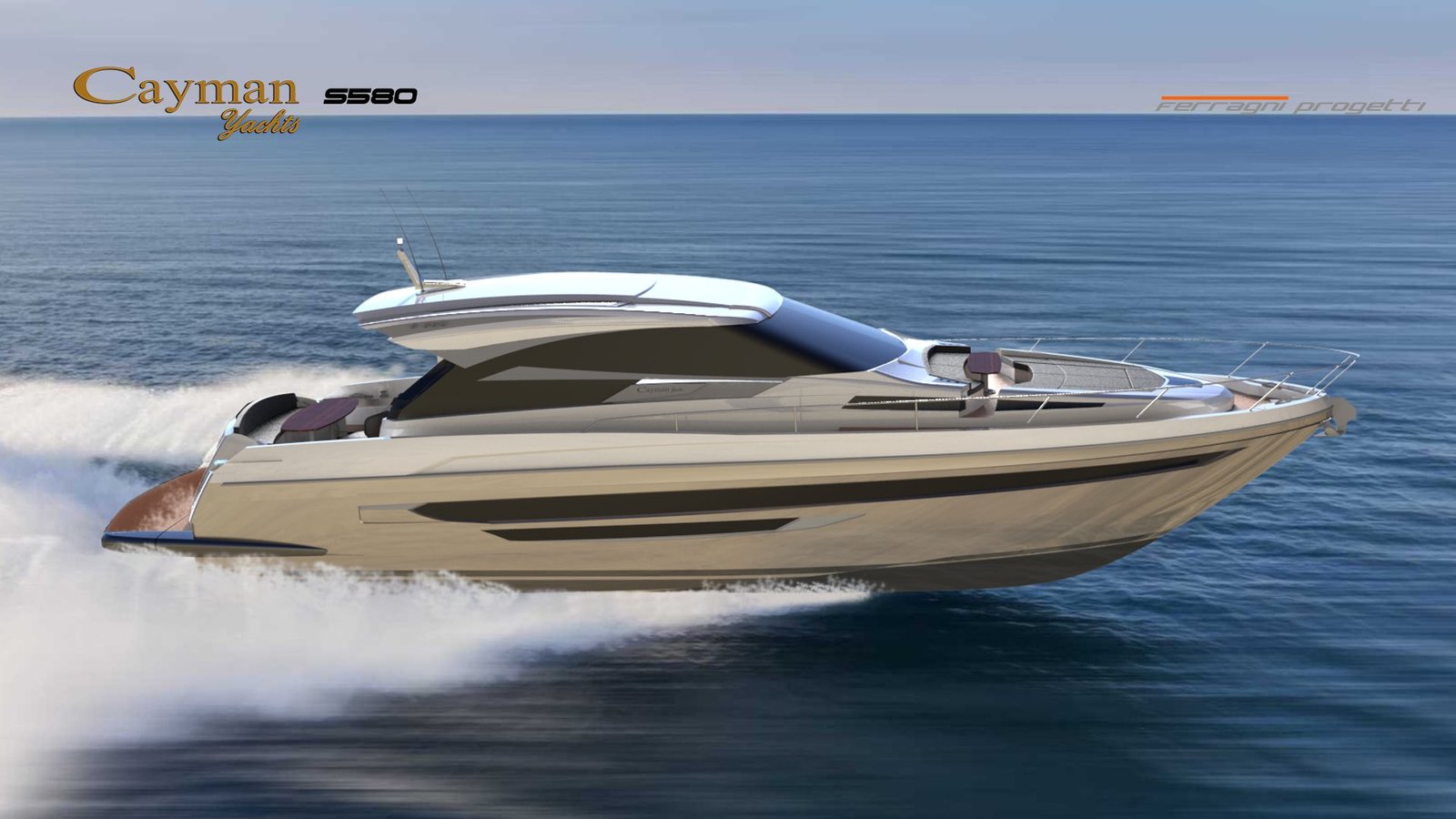
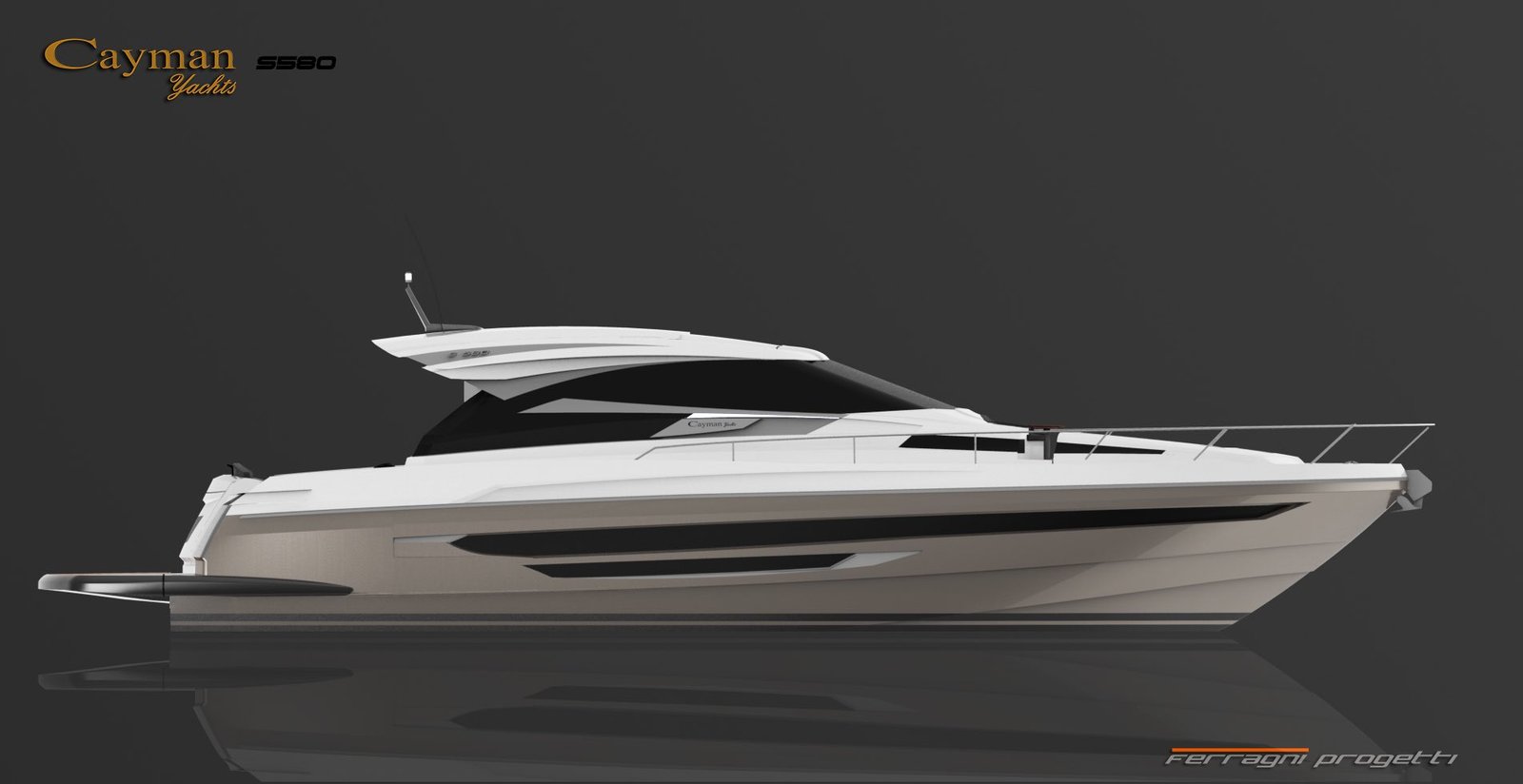
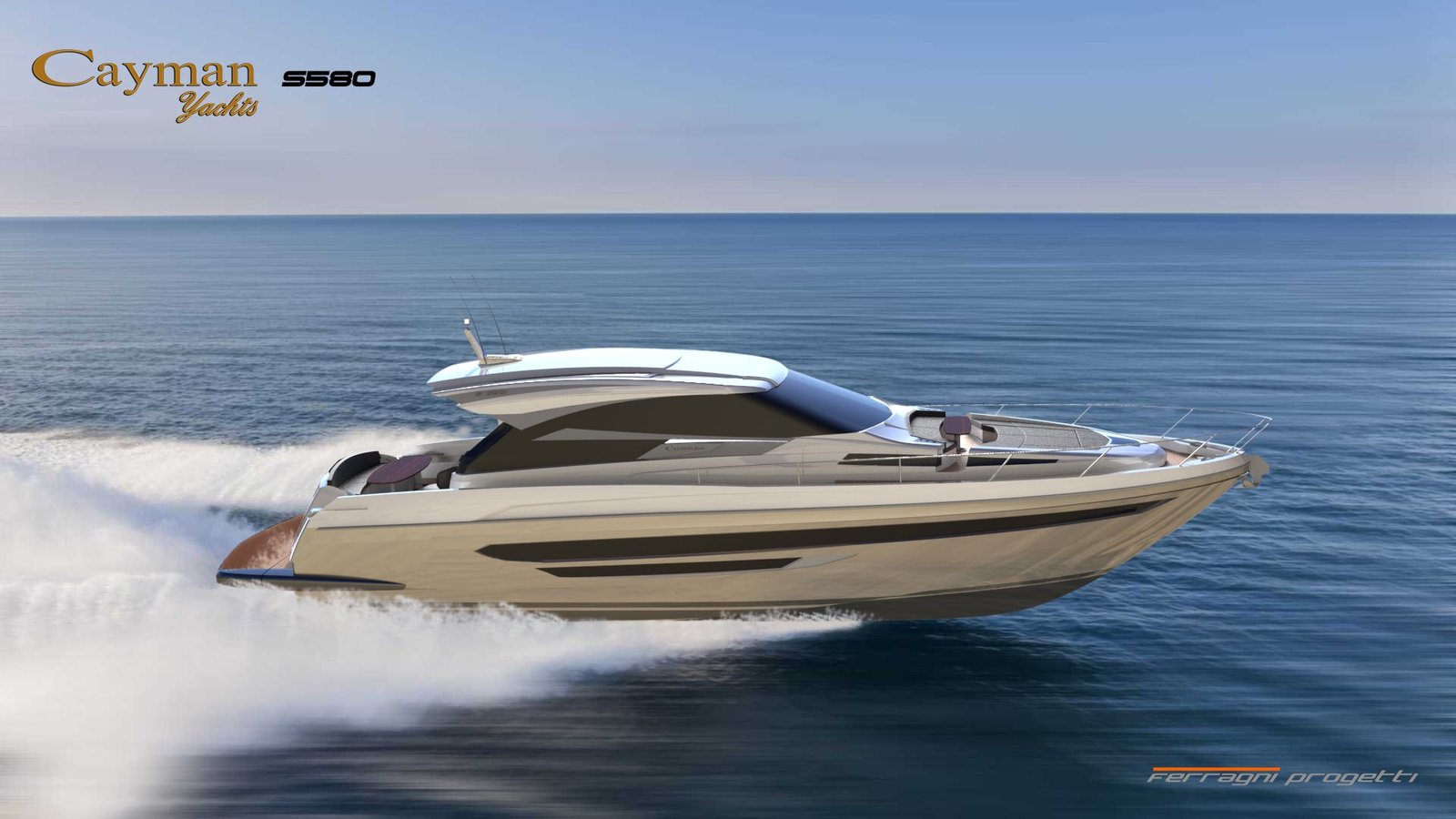
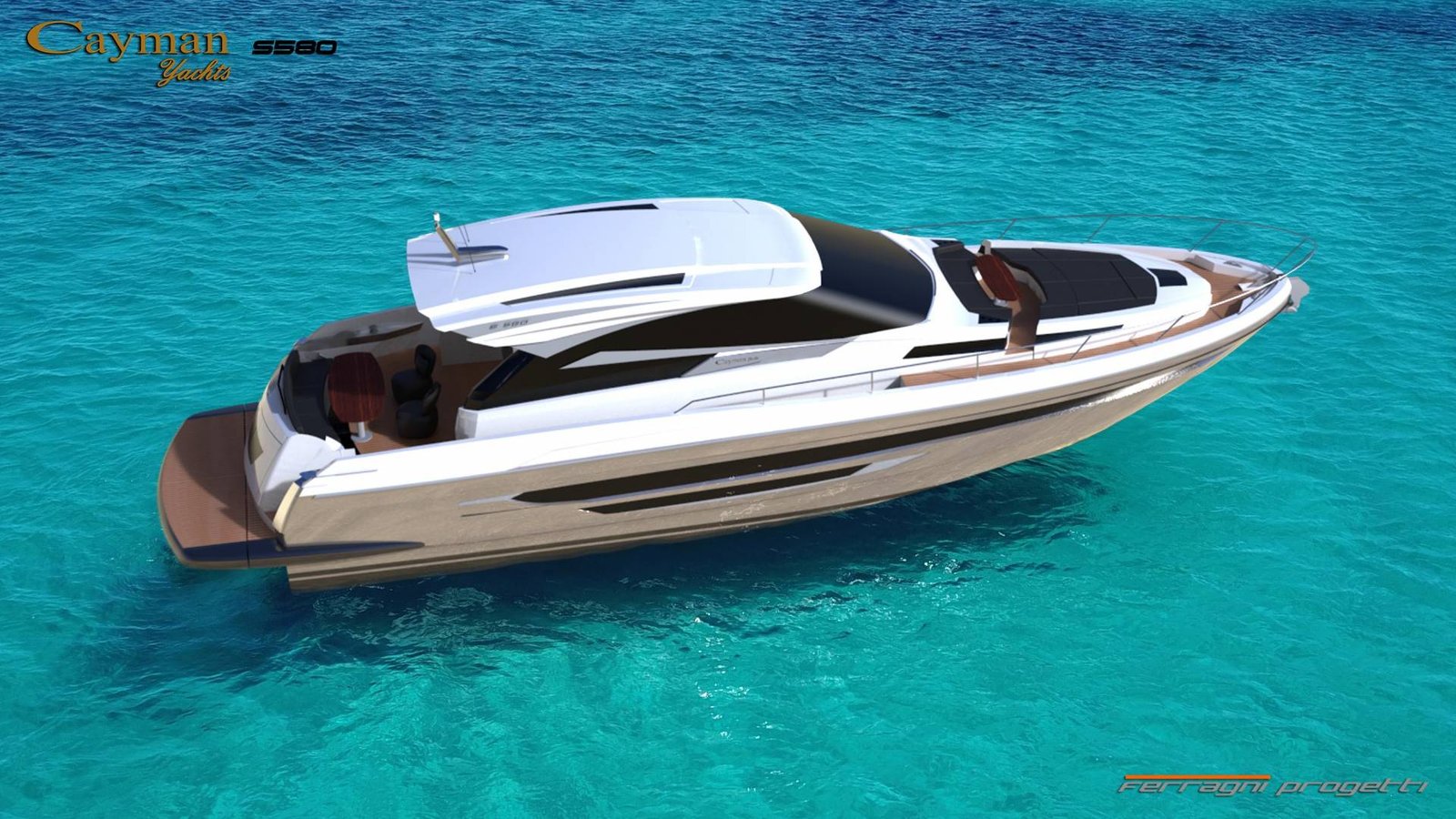
Cayman Yachts drew the S580 as the largest boat in its Sport line, and the proportions show where the effort went. At 17.60 metres with a 4.74 metre beam, the hull carries a long, low coupe profile under a fixed hardtop, with an unbroken sweep of glass down each flank that pulls daylight deep into the saloon. Ferragni Progetti handled the design, and the drawing rewards a second look: the sheer runs almost flat, the superstructure sits well aft, and the foredeck is left open for a sunpad rather than crowded with hardware.
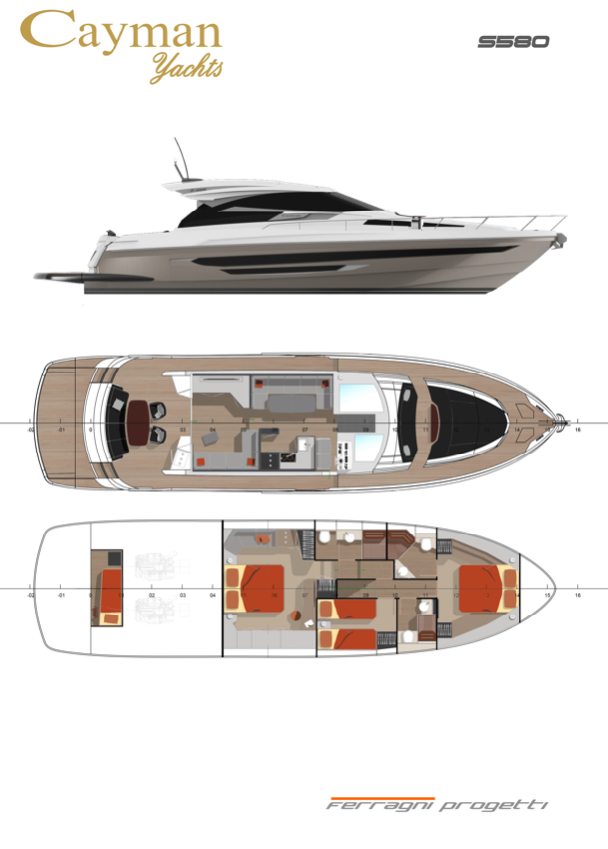
Below, three cabins sit on a single level. The owner’s suite takes the full beam amidships and gets the best of the hull windows, a VIP fills the bow, and a third cabin absorbs children or guests. A crew berth aft keeps service traffic out of the accommodation, which matters more on a boat of this length than the brochure suggests.
Twin MAN R6 diesels of 800 horsepower each move a 24 tonne hull certified to CE category B, so the S580 is set up for real passages rather than bay hopping, and the 2,000 litre fuel tank supports that intent. For a buyer weighing an Italian sport coupe against the German and British alternatives, the Cayman argument is volume and glass for the money, built to order at Rosignano Marittimo on the Tuscan coast.
Length
17.6M
Beam
4.7M
Draft
1.4M
Day Guests
Sleeping
6
Cabin
3
Crew
1
Cruise Speed
Max Speed
Fuel
2000L
Engine
2 x MAN R6 800 hp
Exterior
Ferragni Progetti
No yachts found matching your criteria.
A coupe profile this low only works if everything else gets out of its way.
Ferragni Progetti, the studio also behind Cayman’s F920, F520 and S520, draws the S580 with an almost flat sheer and a superstructure pushed well aft, leaving the foredeck open for a sunpad instead of crowding it with deck hardware. An unbroken run of glass down each flank pulls daylight deep into the saloon rather than stopping at a few scattered windows. Because every hull is built to order at the yard in Rosignano Marittimo on the Tuscan coast, the design brief stays consistent while the finish and layout detail can be tuned to the owner commissioning her, a different proposition to a boat pulled fully formed off a production line.
The main deck keeps to a simple brief: dining, galley and living in one uninterrupted run.
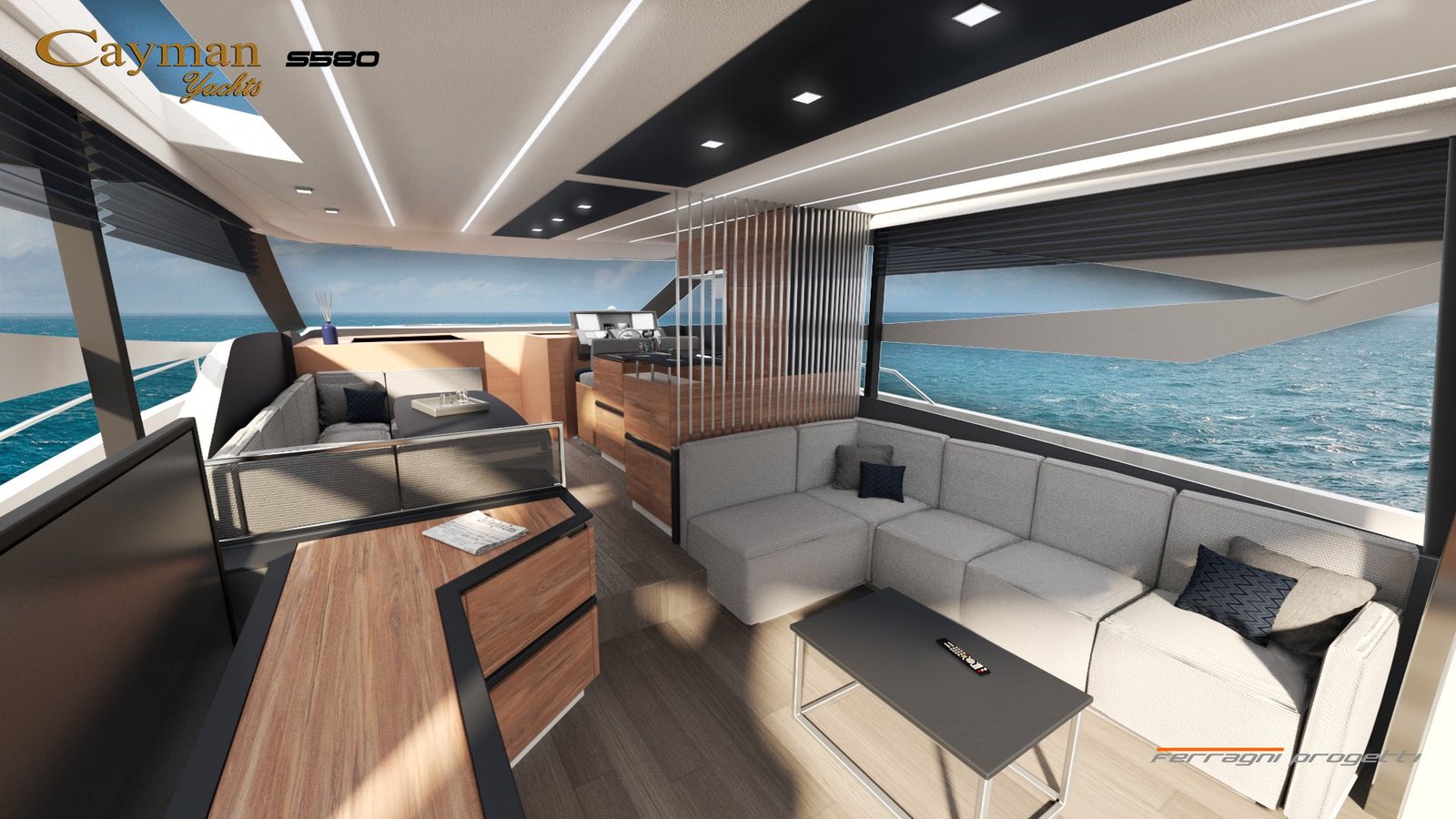
The first layout drawn for the S580 places a traditional galley centrally on the main deck, flanked by the dining and living areas rather than tucked away below, so whoever is cooking stays part of the conversation rather than exiled to a lower deck. The unbroken glass along each side keeps the space bright through the day, and the open foredeck beyond gives a separate sunbathing area entirely apart from the entertaining deck. It is a straightforward arrangement, and deliberately so: on a boat this size, moving the galley off the main deck usually means moving the owner’s attention off the guests.
Three cabins share a single level, and the best of them sits exactly where a buyer would hope.
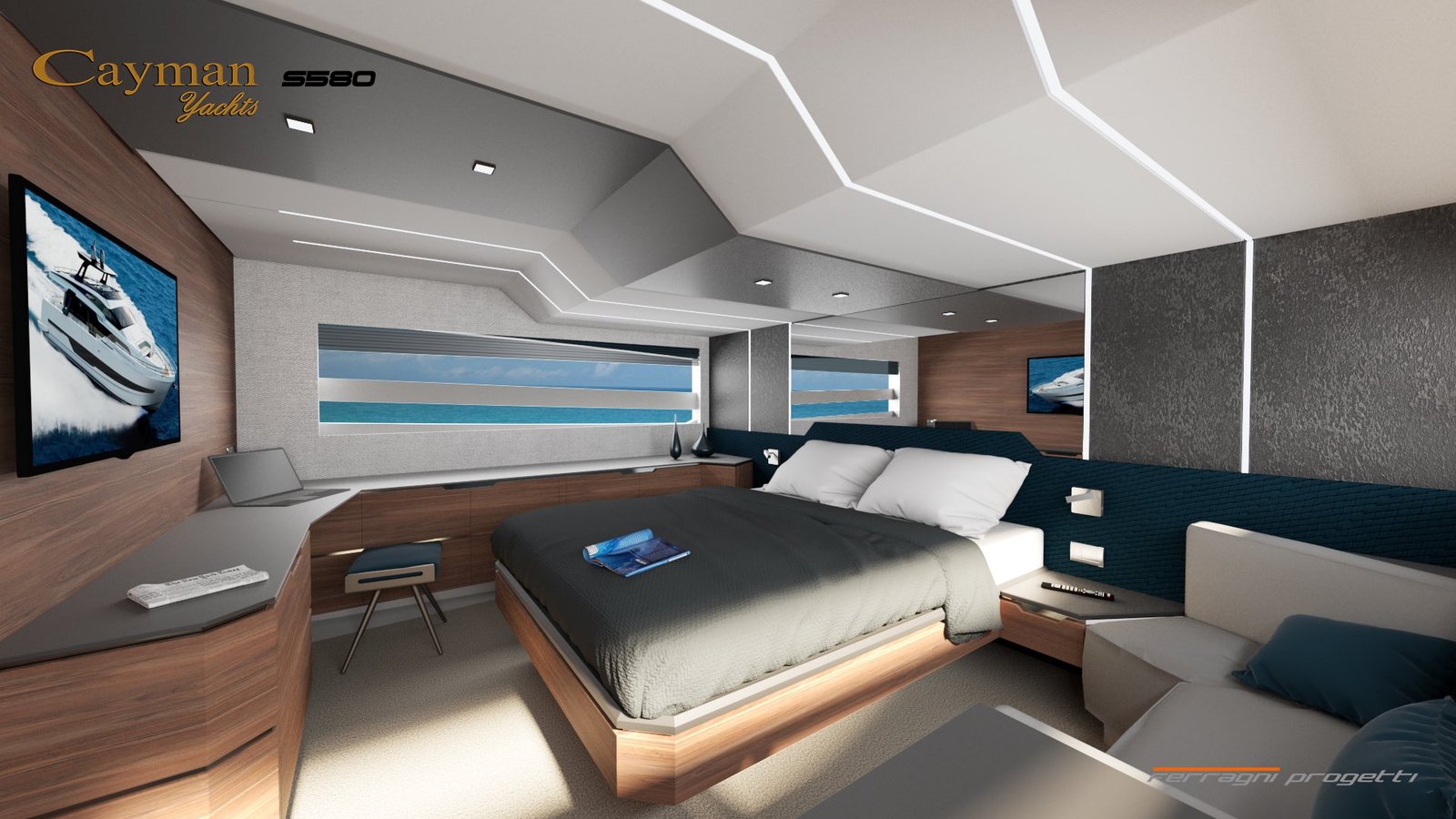
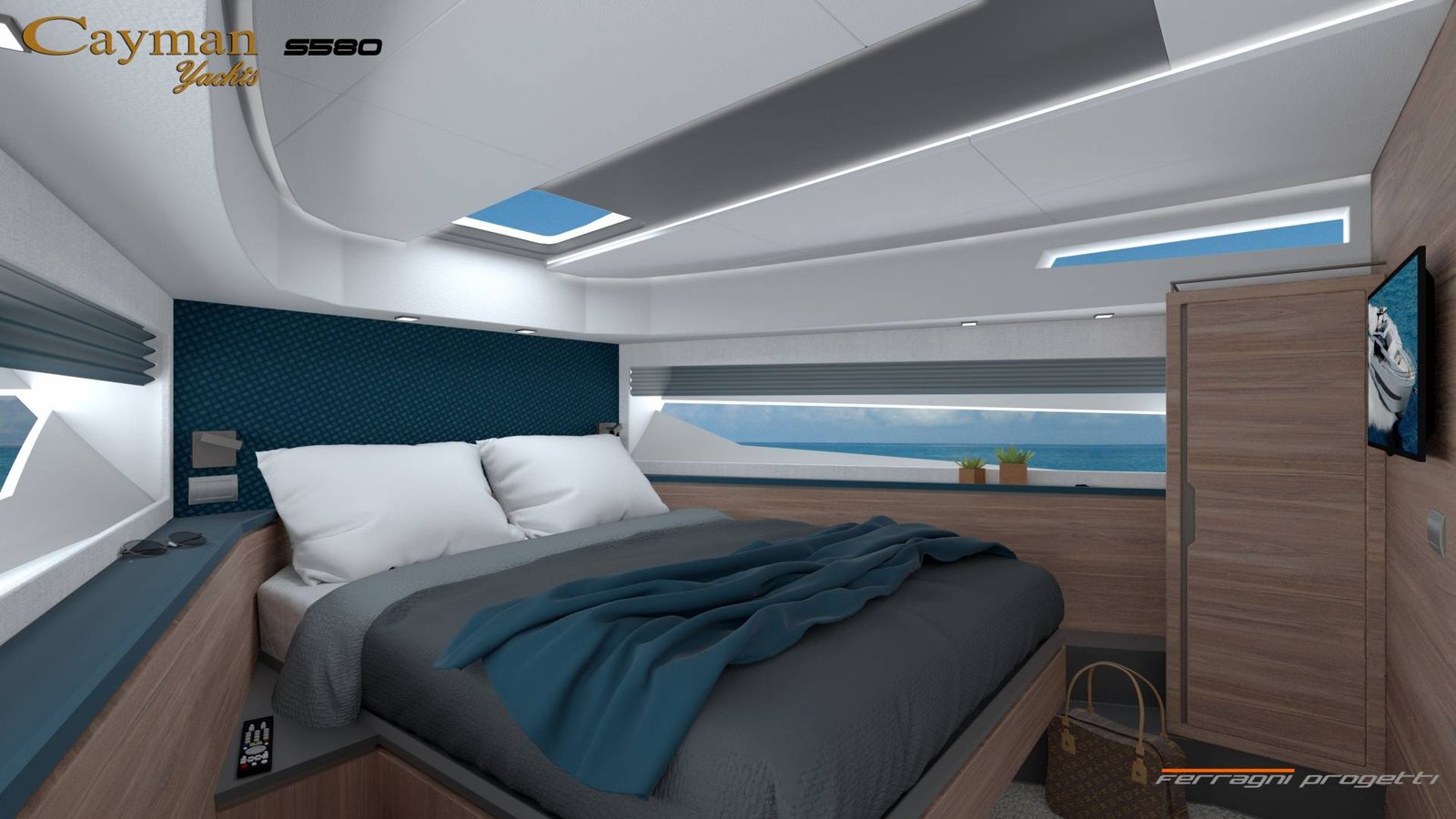
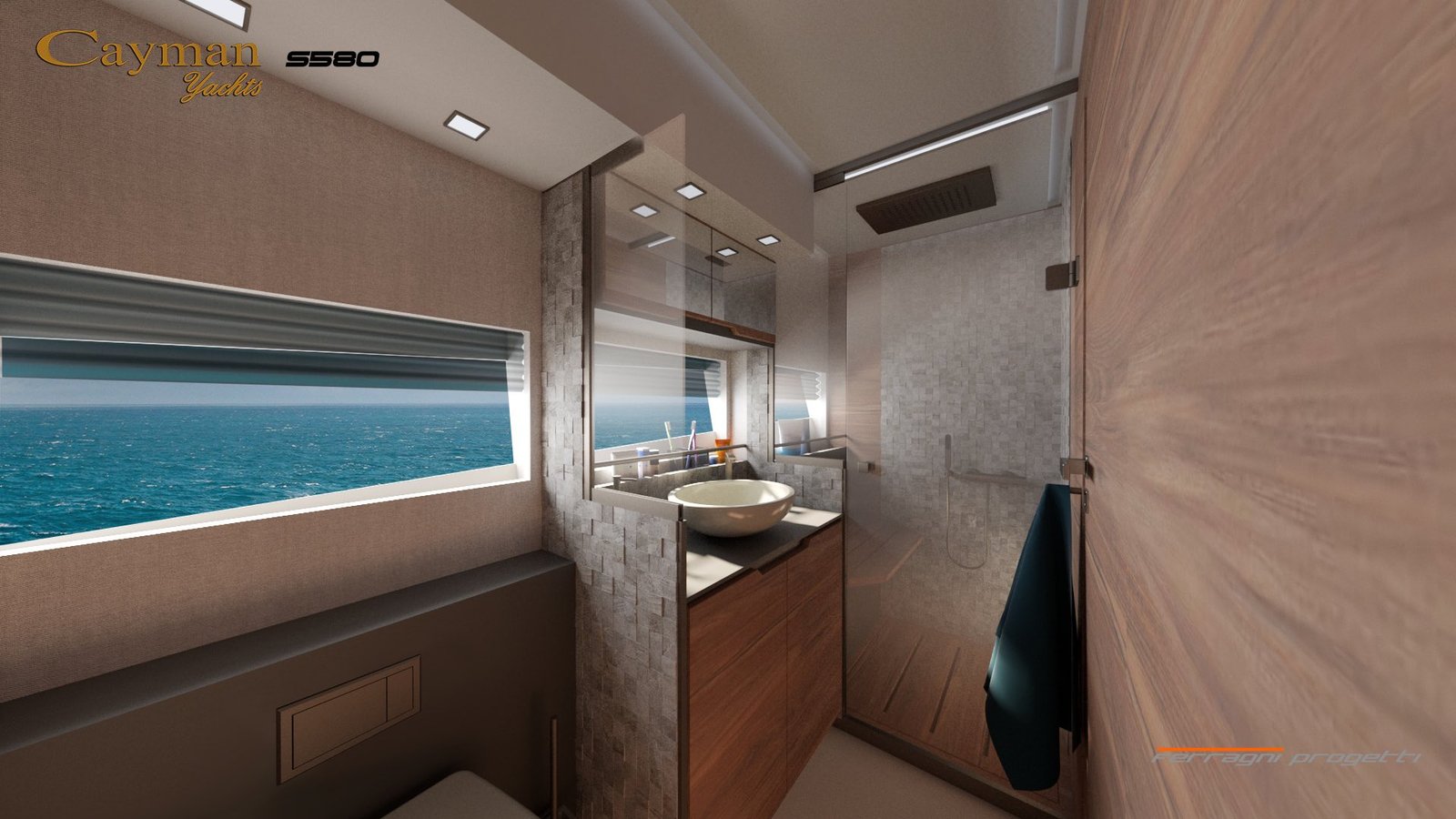
The owner’s suite runs full beam amidships, claiming the widest part of the hull and the best of its window line, with a VIP cabin forward in the bow and a third cabin aft to absorb children or guests. Each of the three carries its own private shower head, so nobody is sharing a head with a cabin they do not sleep in. A one person crew cabin sits aft and apart from the guest accommodation, modest but enough for a boat of this size to run with a single professional aboard rather than demanding a full crew roster.
Keeping every cabin on one level is a layout decision as much as a design one, and it simplifies how the whole boat moves.
Guests reach the owner’s suite, VIP and third cabin without climbing a level, which matters more on a 57 foot coupe than the brochure suggests, and it keeps the crew berth aft cleanly separated from the accommodation above. Because each S580 is built to order rather than drawn from a fixed catalogue, that single level plan can still flex: a buyer can shift cabin proportions, swap the third cabin’s use, or adjust the main deck’s galley position without touching the naval architecture underneath. It is the kind of flexibility a semi custom yard can offer that a production line cannot.
Line shaft propulsion is the straightforward, well proven choice, and Cayman has stayed with it rather than chasing pod drives.
Twin MAN R6 diesels of 800 horsepower each turn conventional shafts through a fibreglass hull built to CE category B, a certification that allows genuine open water work rather than sheltered cruising alone. She measures 17.6 metres on a 4.74 metre beam and a 1.4 metre draught, displacing 24 tonnes, with 2,000 litres of fuel aboard for the distance between marinas. None of it is flashy, and that is rather the point: a semi custom Italian sport coupe built on mechanicals the yard already knows inside out, with the risk kept in the layout rather than the drivetrain.

Tell us what you would like to know, and our team will respond with clear details on availability, specification, pricing and next steps.