Marshall Islands
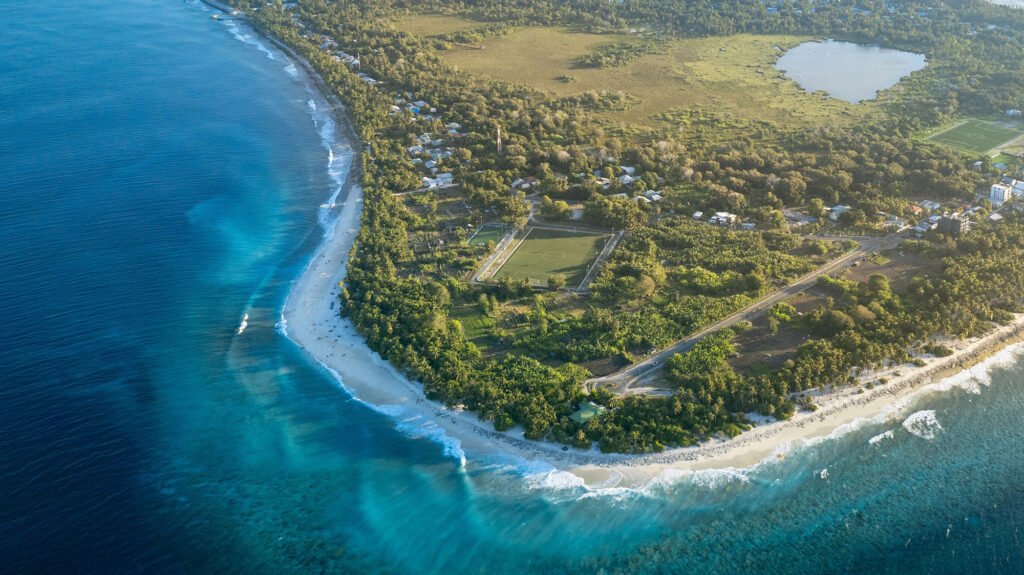
Majuro Lagoon
Arno Atoll
Mili Atoll
Jaluit Atoll
Rongelap Atoll
Dive the Bikini Atoll Wrecks
Snorkel Majuro’s Reef Passes
Visit the Alele Museum
Fish for Giant Trevally
Explore Kwajalein’s WWII Relics
Bikini Atoll
Kwajalein Atoll
Laura Beach
Majuro
Ailinglapalap Atoll
December through April is the drier, calmer season, with lighter trade winds and generally settled conditions for the long passages between atolls. The Marshall Islands sit mostly outside the main typhoon belt that affects the western Pacific, though the wetter months from July to November can still bring squally weather, so the dry season remains the more comfortable and predictable window for a charter.
Majuro’s Amata Kabua International Airport (MAJ) is the country’s main gateway, served by United Airlines’ twice-weekly Island Hopper route, which links Honolulu to Majuro, Kwajalein, Kosrae, Pohnpei, Chuuk and Guam on a single rotation. There are no direct long-haul flights from Europe, so most guests connect through Honolulu or Guam before joining a vessel in Majuro.
Majuro’s own lagoon is the most sheltered and practical base, with easy provisioning and calm water for a first night. Arno and Mili Atolls, both within a day’s sail, offer genuinely remote fishing-village anchorages, while Jaluit, the former colonial capital, and Rongelap add historical interest, though Bikini and Kwajalein require separate permits and considerably longer passages to reach.
Ten days is a realistic minimum given the distances involved, since even neighbouring atolls can be a full day’s sail apart. A charter focused purely on Majuro and its closest atolls, Arno and Mili, can work well in a week, while reaching Bikini or Kwajalein for wreck diving adds several more days of passage-making each way.
Yes. Bikini Atoll has no commercial flights, hotels or regular services, so access is arranged in advance through the Bikini Atoll Local Government and typically requires joining a dedicated liveaboard operation rather than a casual stop on a wider itinerary. Divers should also be comfortable with deep, penetration-style wreck diving, since several of the most famous wrecks, including the Saratoga, lie well beyond recreational depth limits.