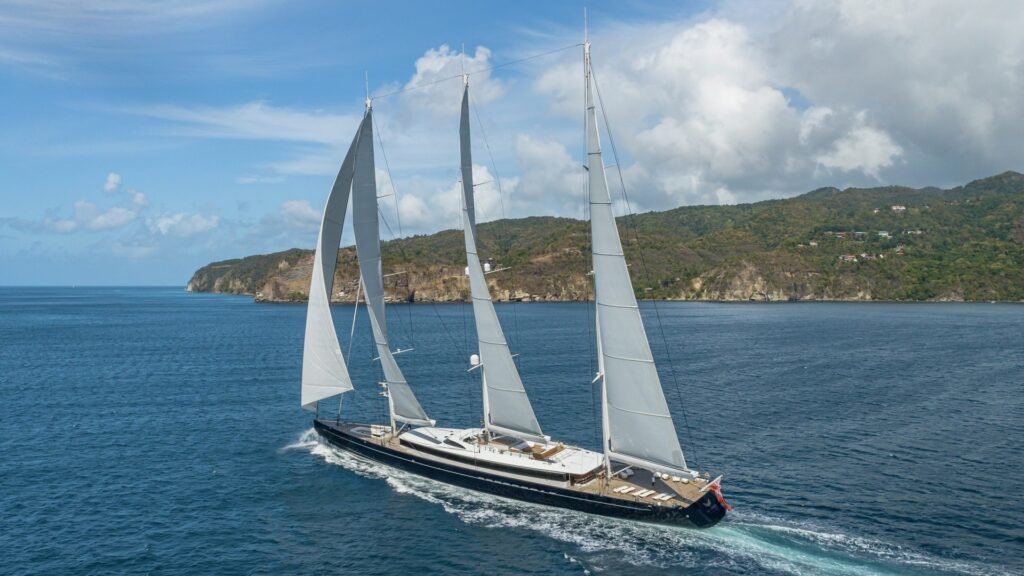
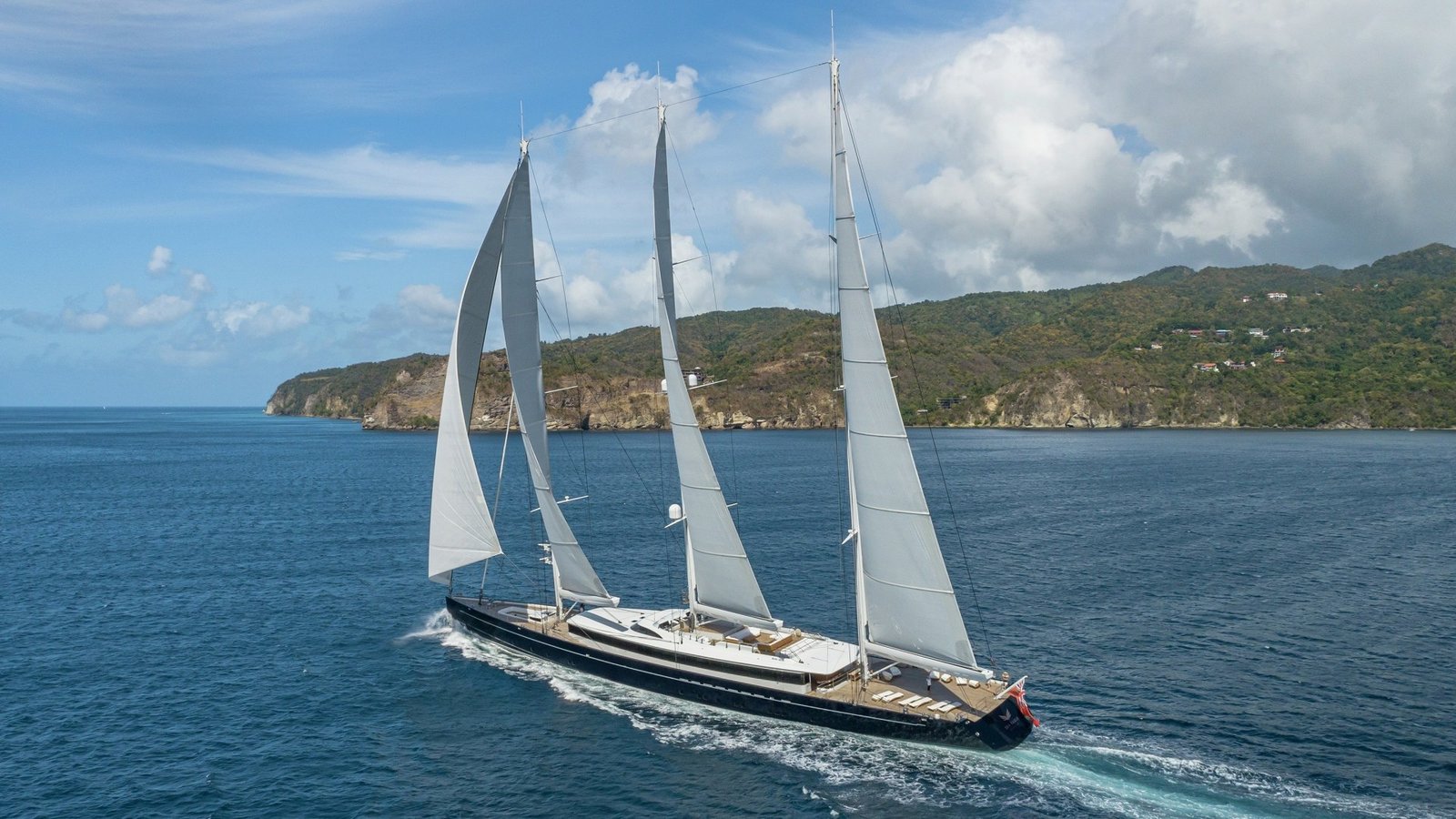
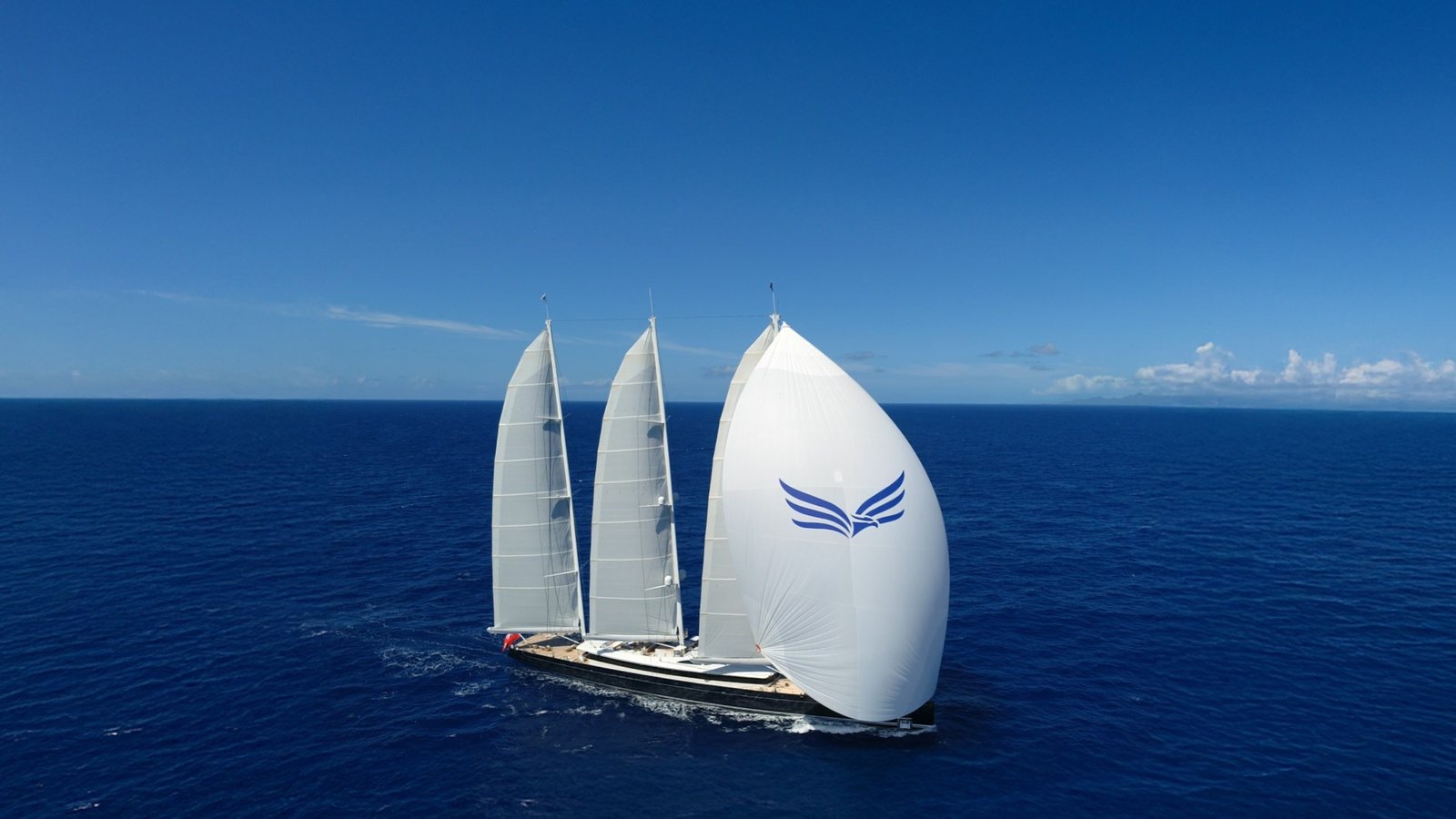
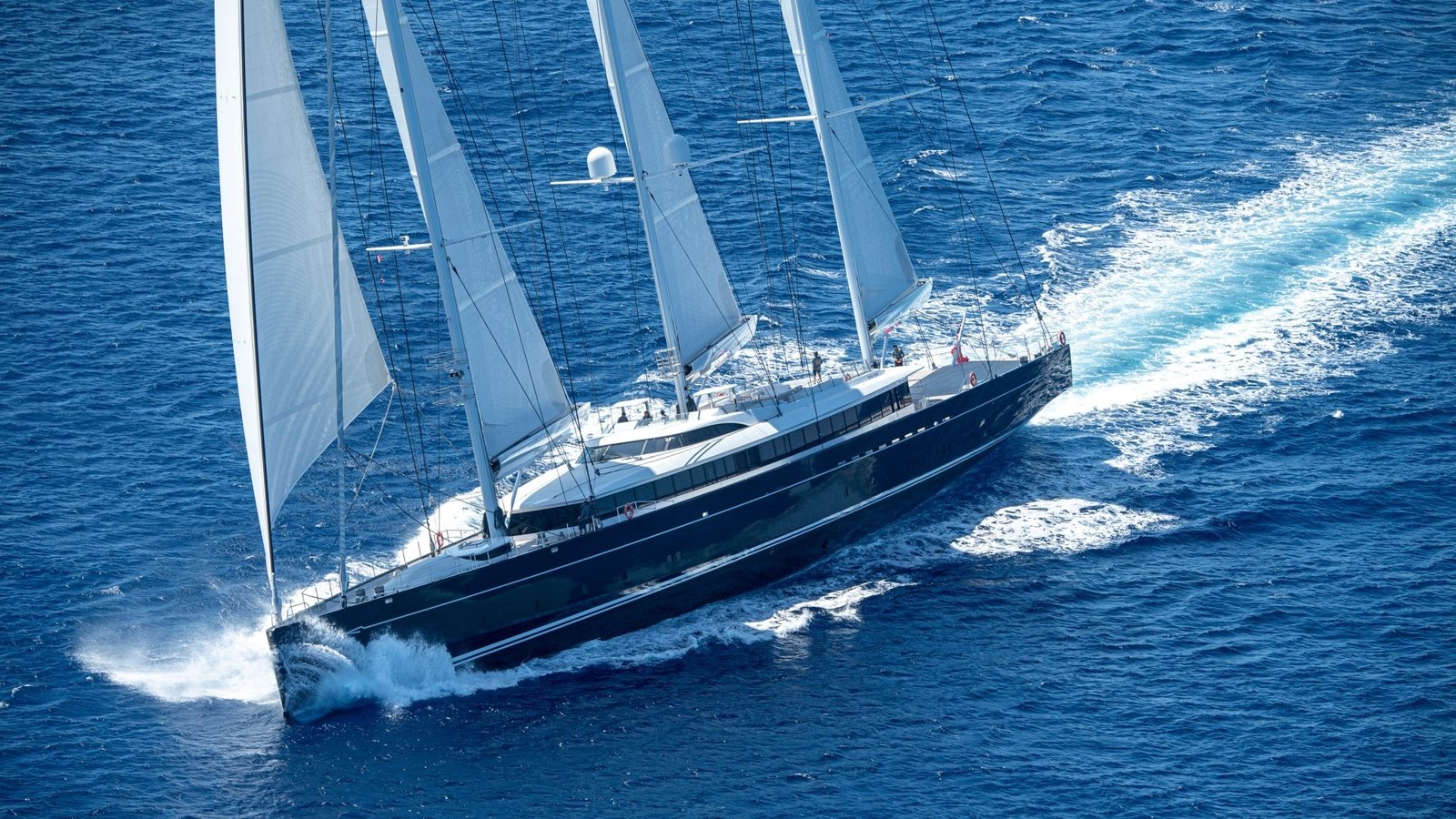
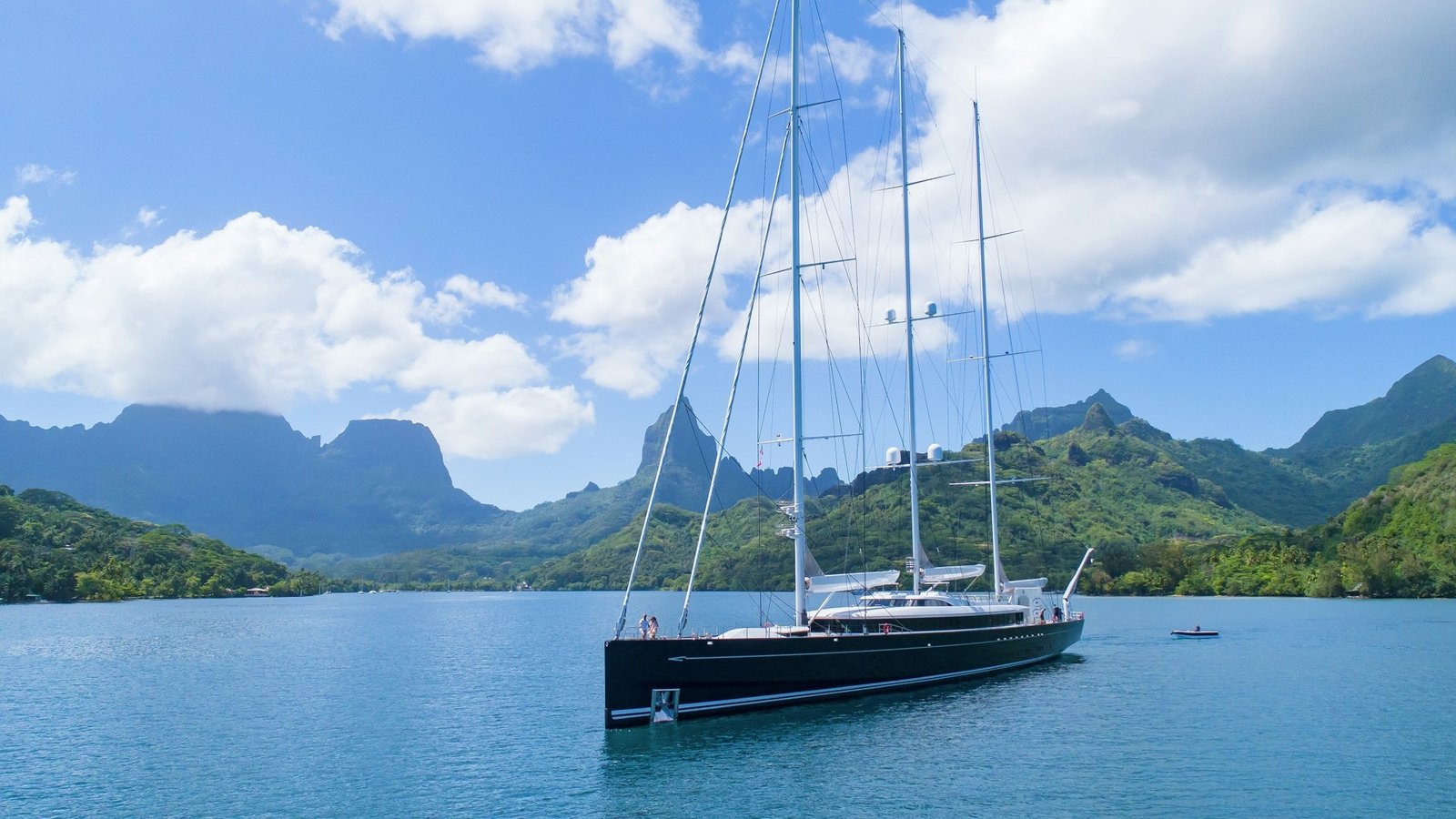
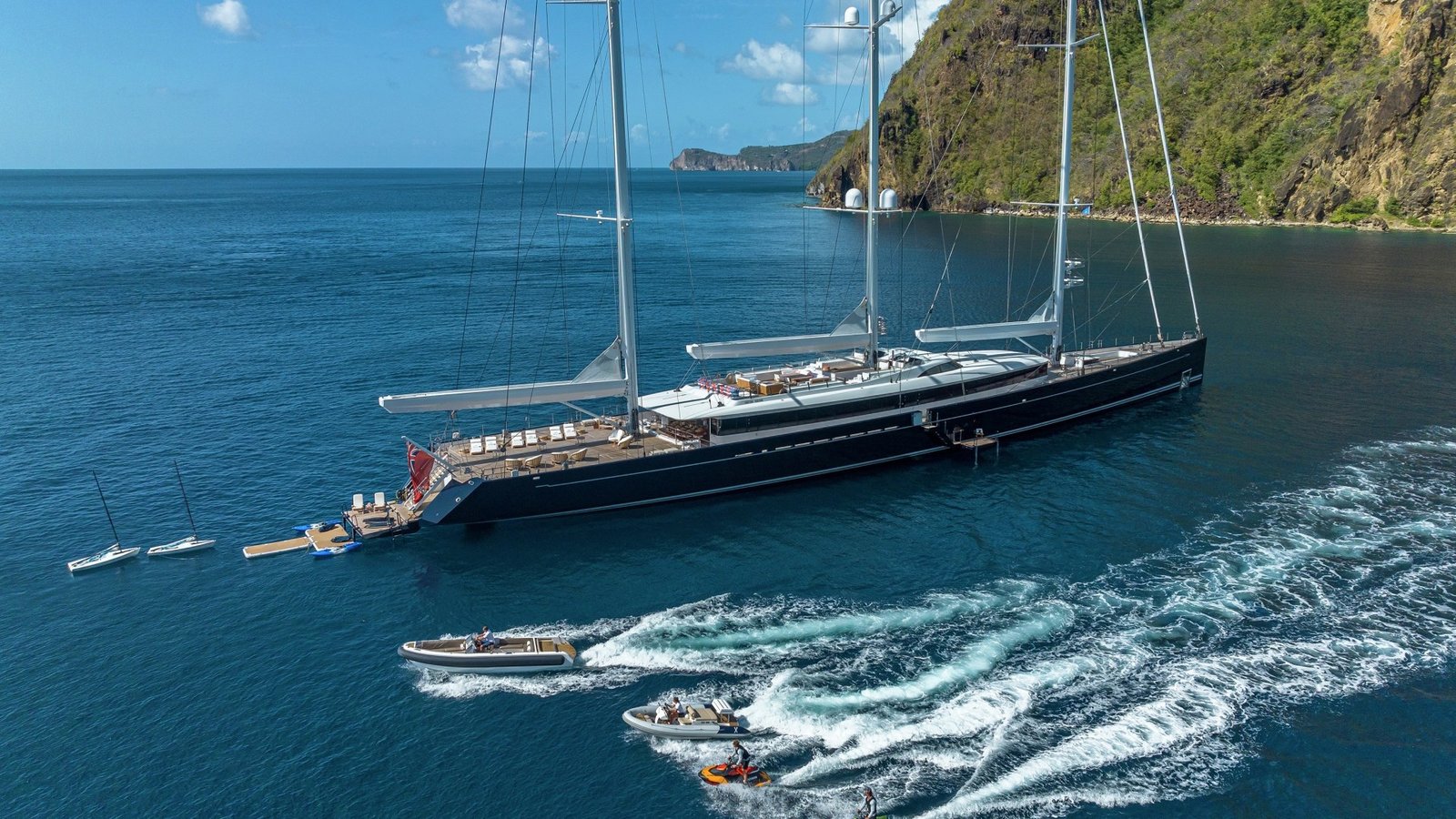
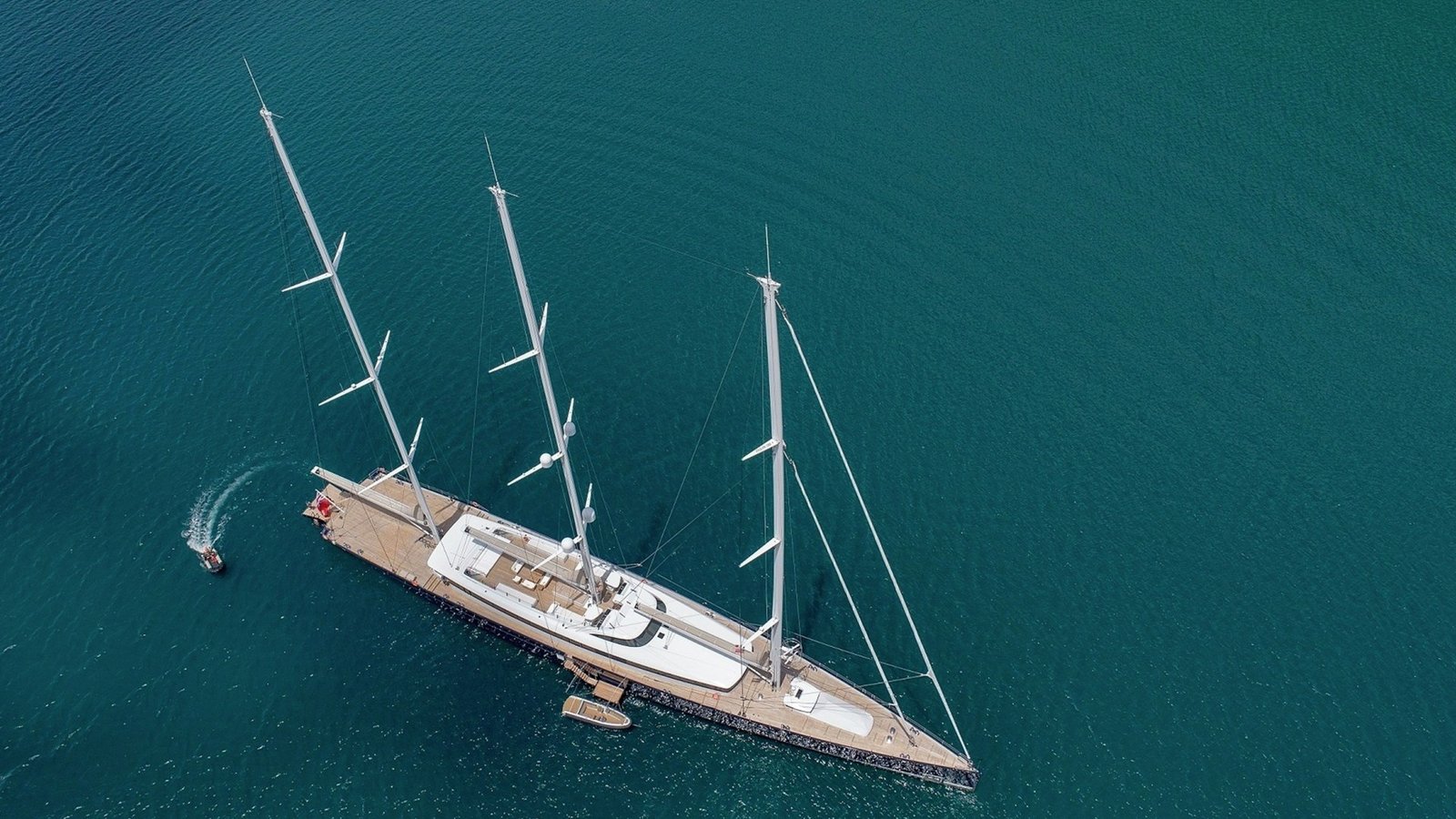
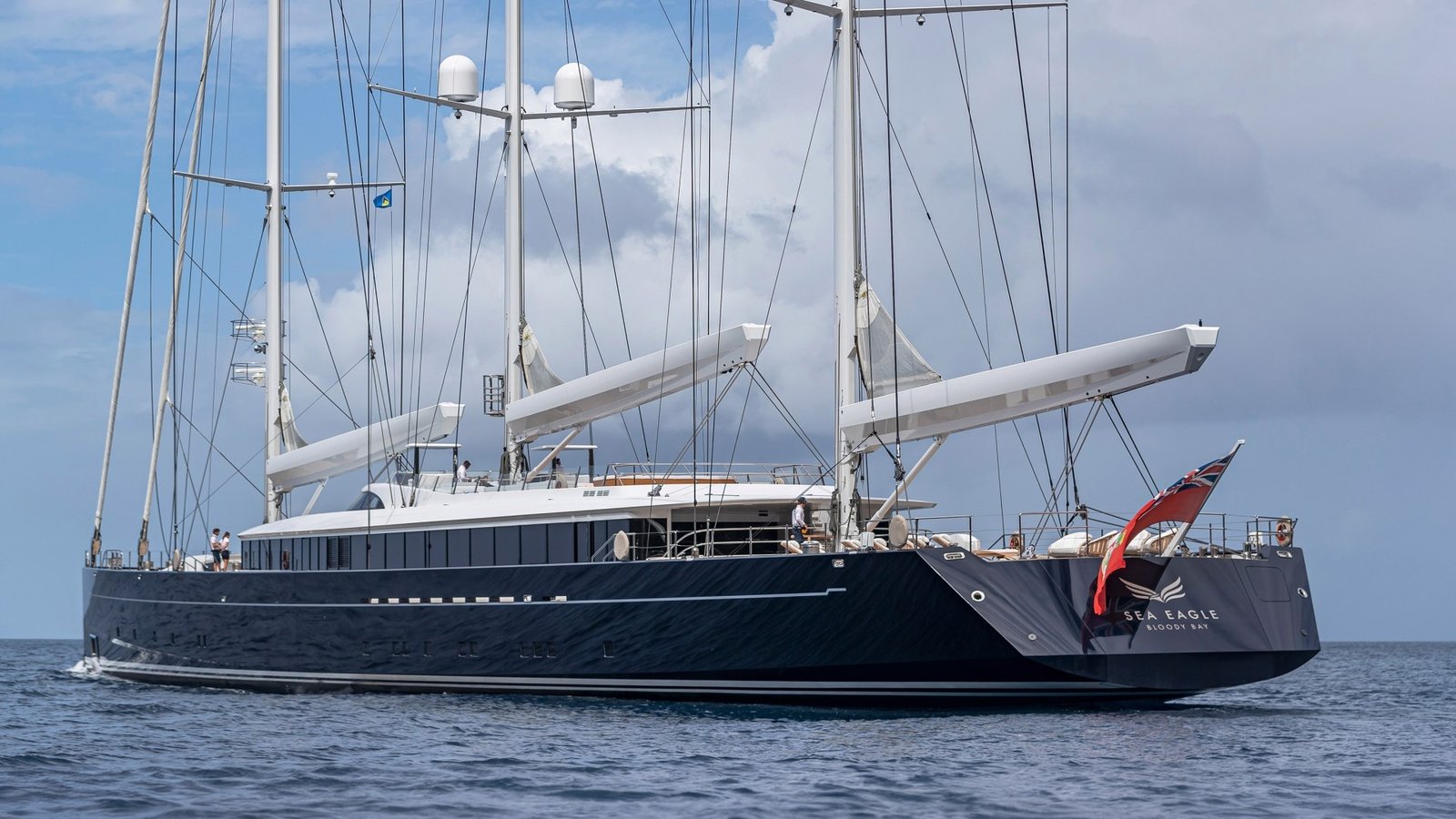
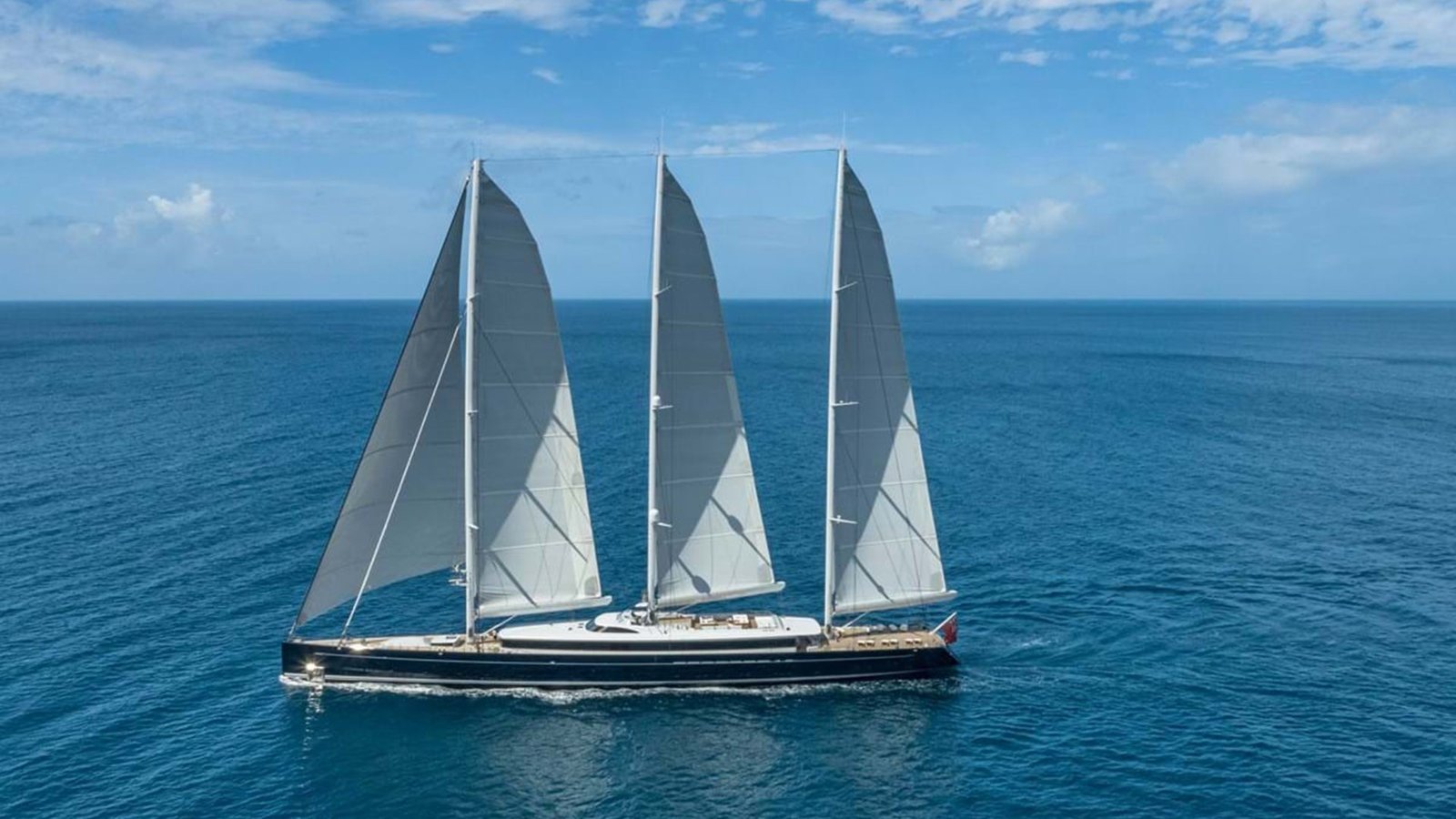
Sea Eagle is the largest aluminium sailing yacht in the world, and the only one of her size carrying three masts. That combination is not a statistic looking for a home. It is the whole point of her: Dykstra Naval Architects split the rig across three masts so that 2,580 square metres of upwind sail could be handled by a crew rather than a stadium, and Royal Huisman built her in aluminium so that 81 metres of yacht would still accelerate like something half her length.
She has proved it. Since delivery in 2020 she has run a non-stop circumnavigation with more than 45,000 nautical miles under her keel, and on sea trials in a moderate North Sea breeze she logged 21.5 knots, half a knot short of hull speed. Below the waterline a fin keel keeps wetted surface down and a five-metre carbon rudder — the largest ever produced — keeps her honest when the sail plan loads up. None of this is theoretical performance. It is the reason a charter aboard her covers ground other yachts of this volume simply cannot.
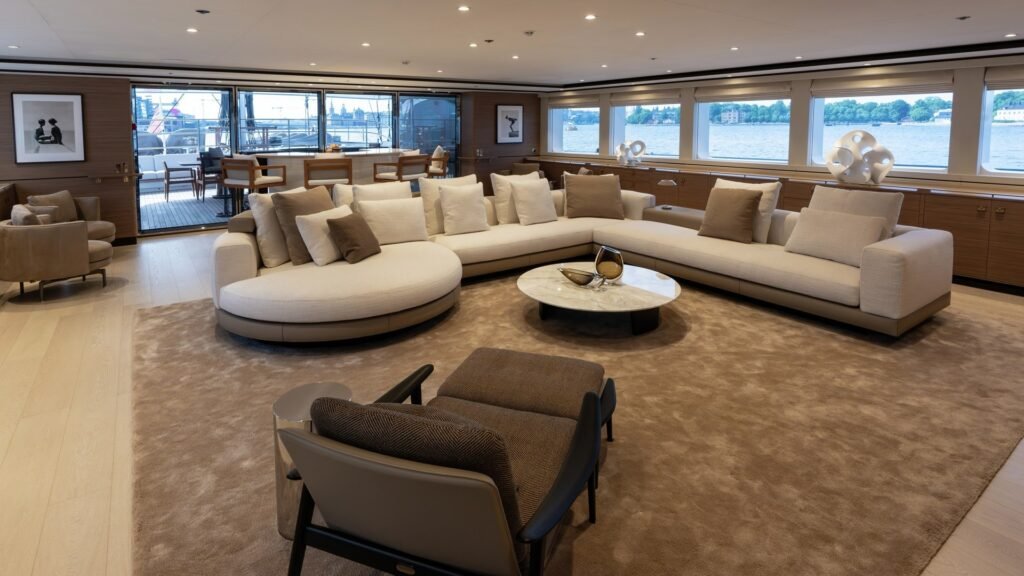
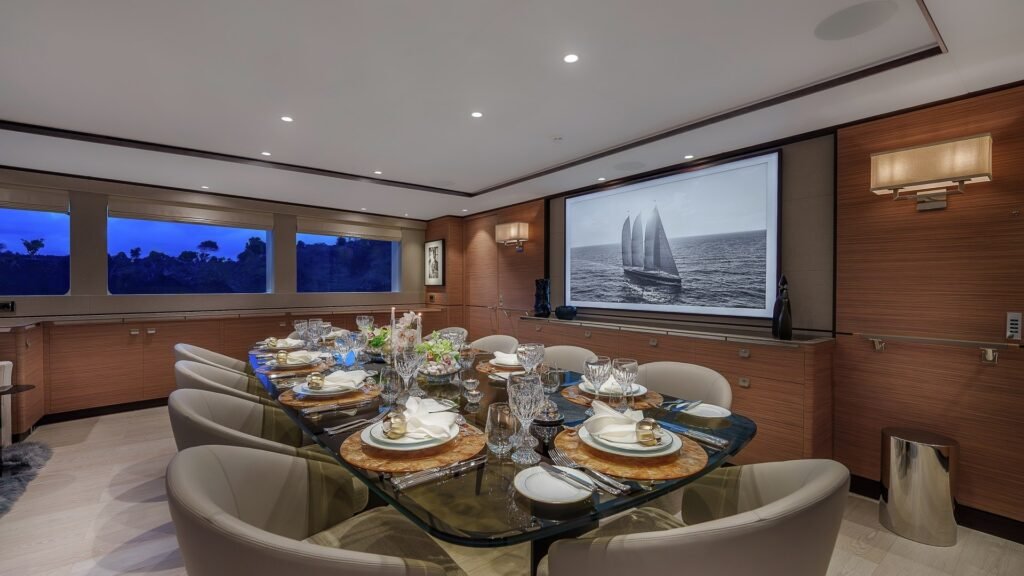
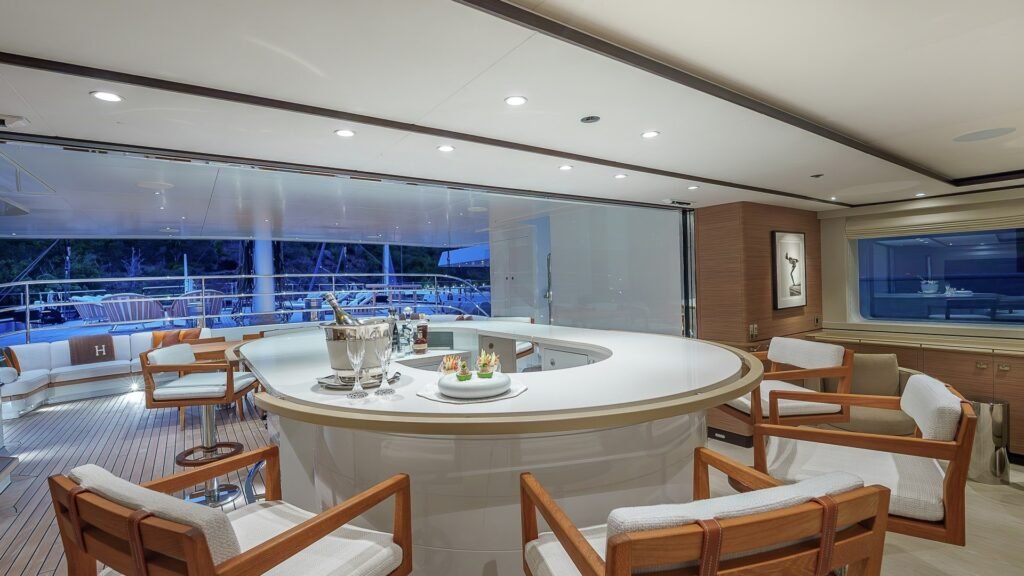
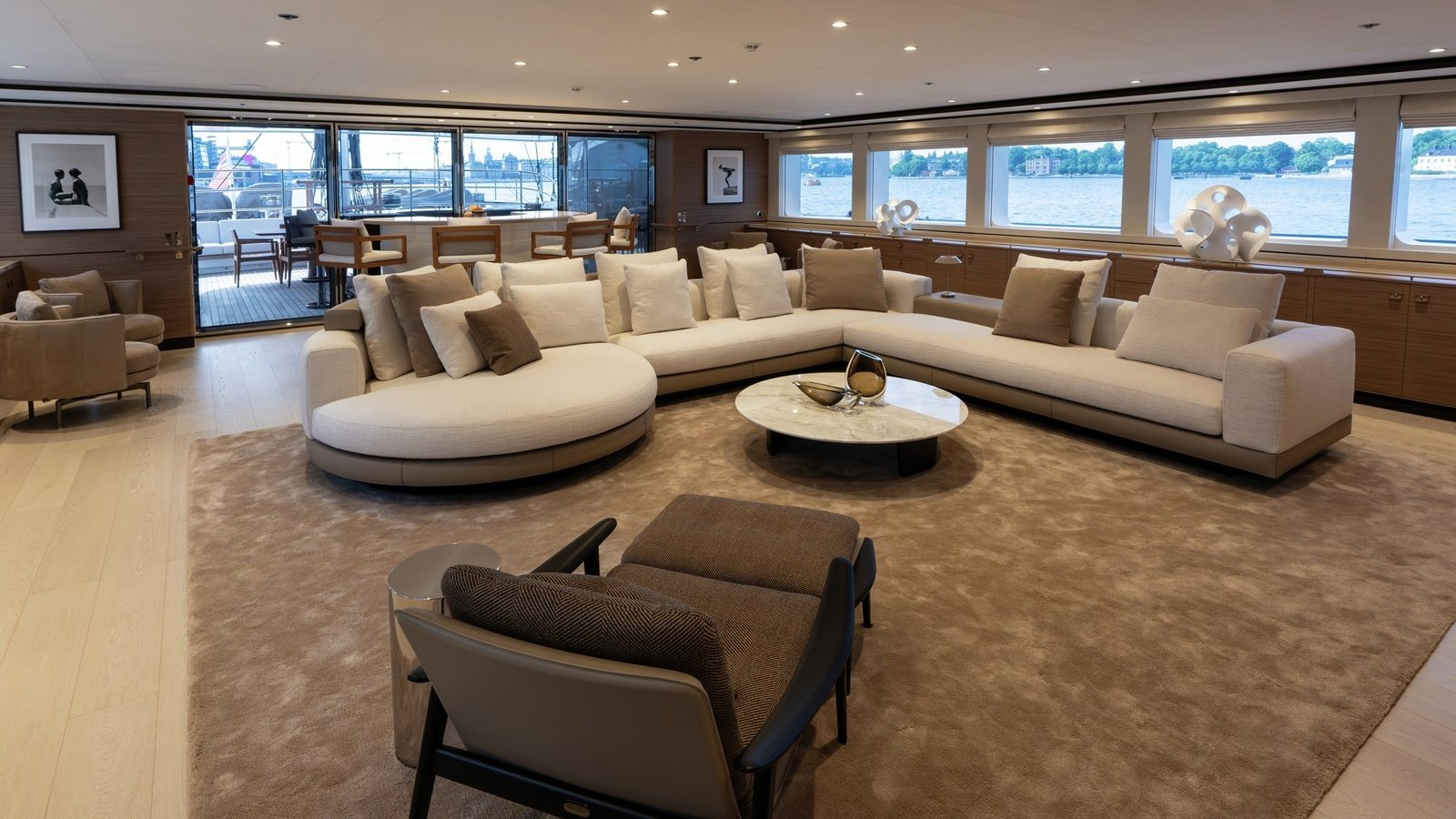
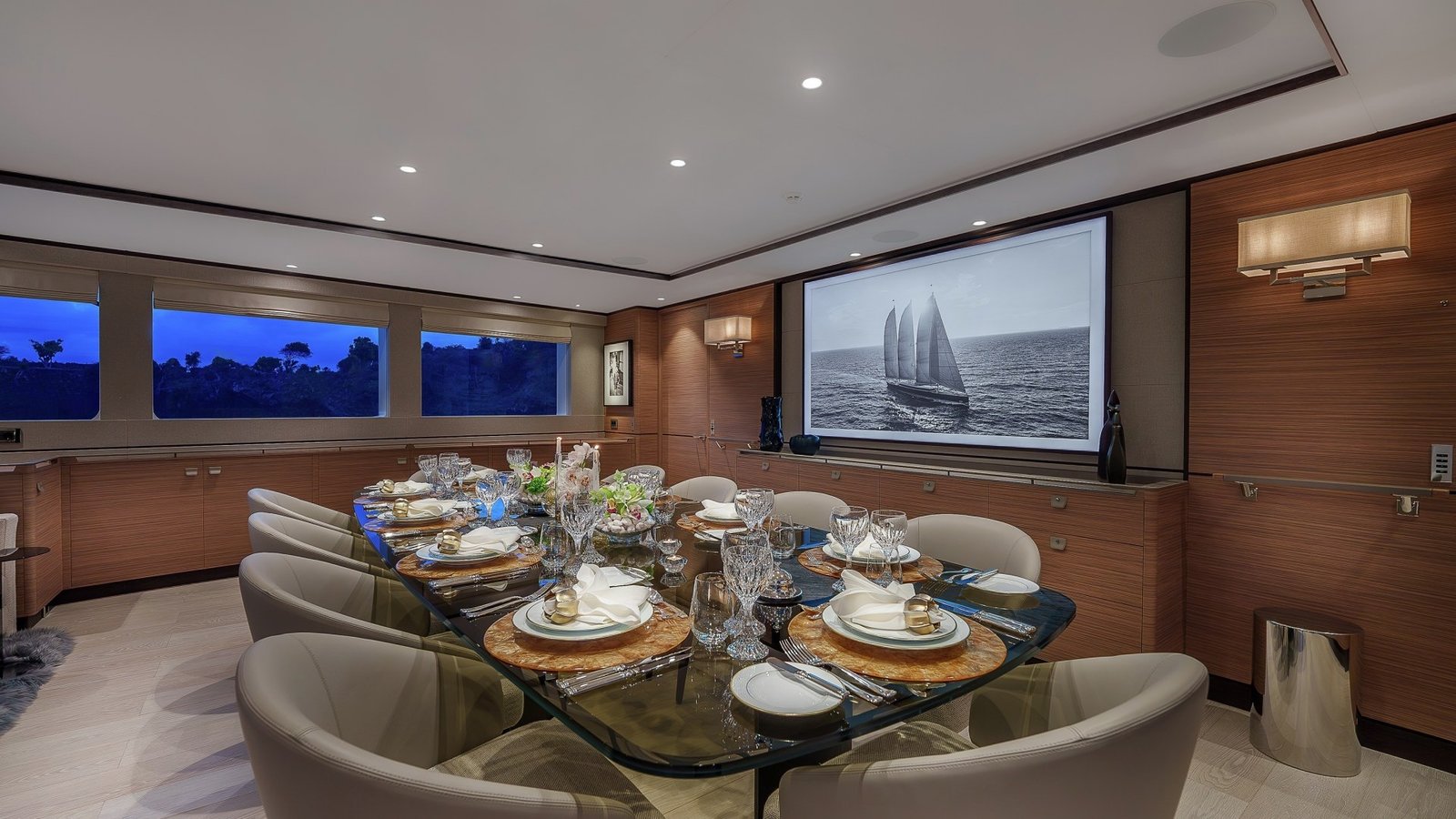
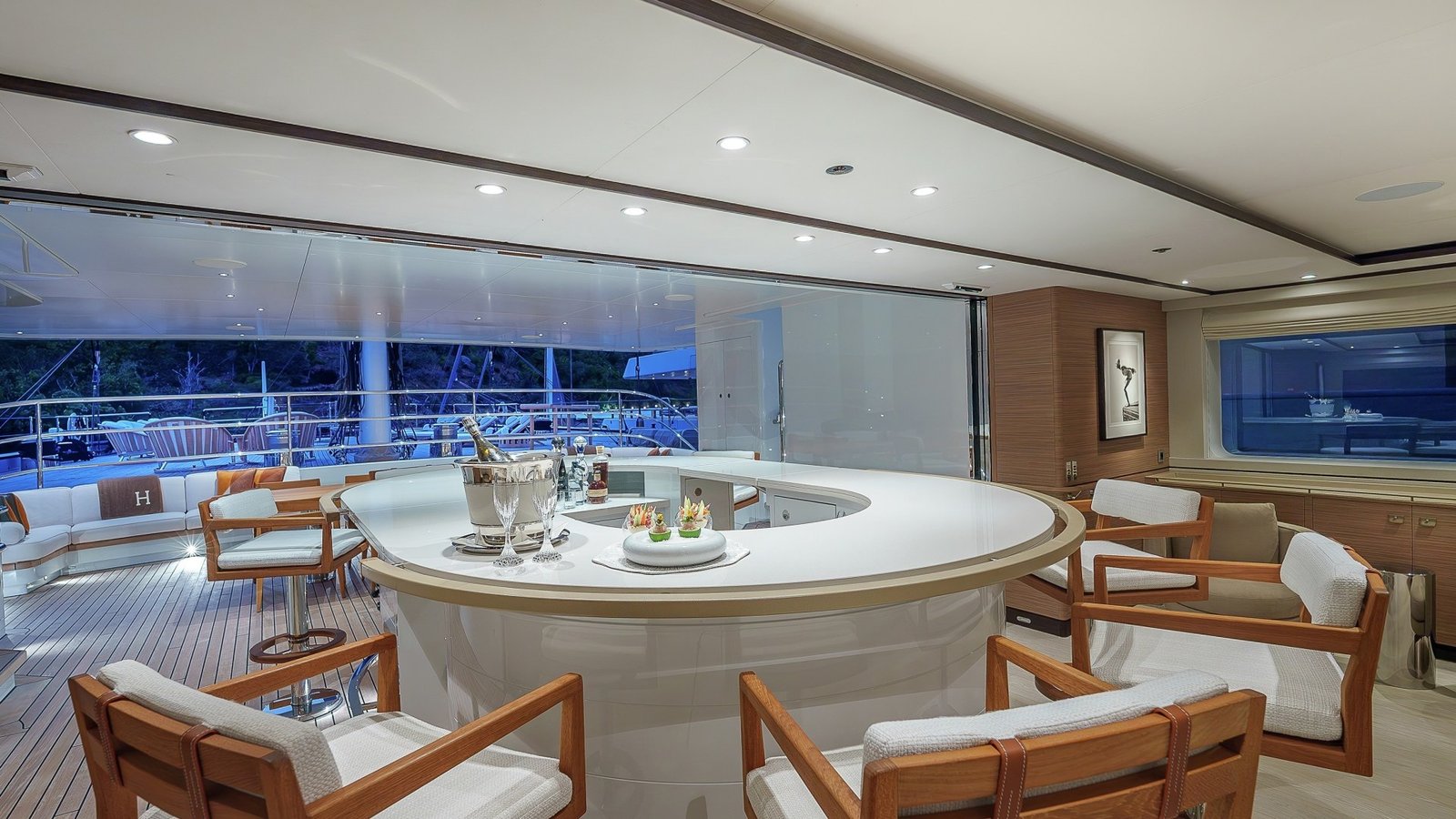
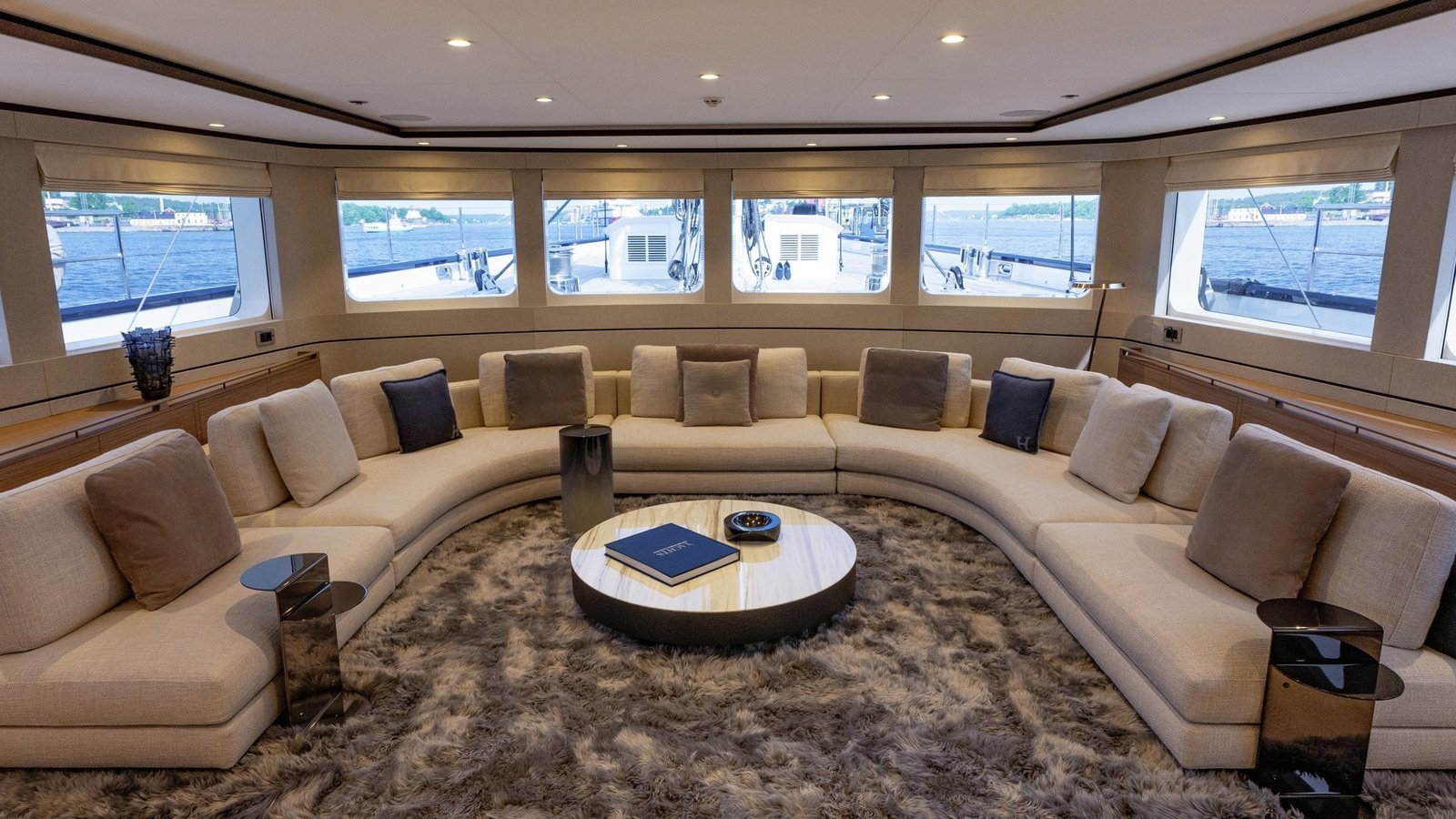
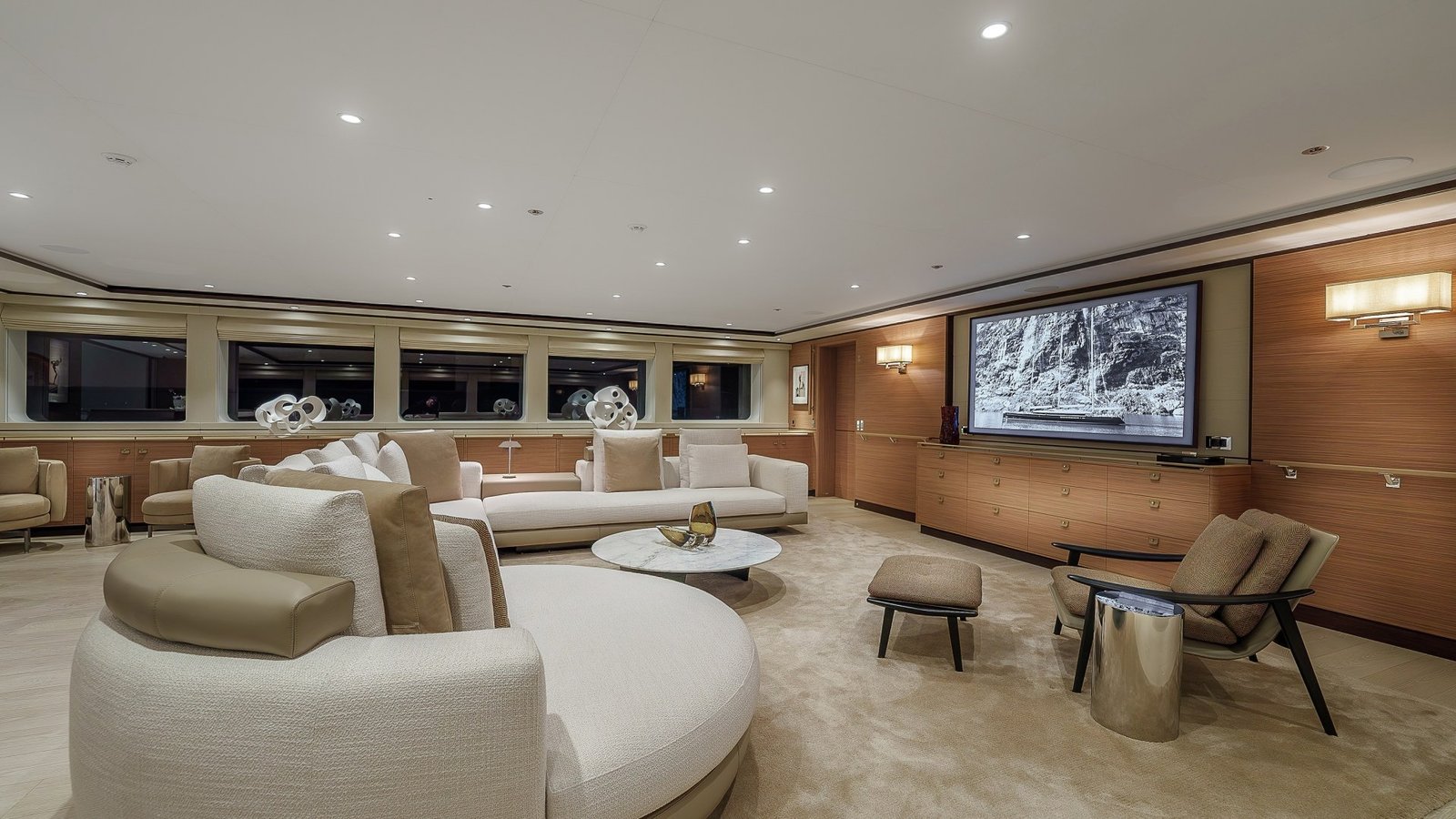
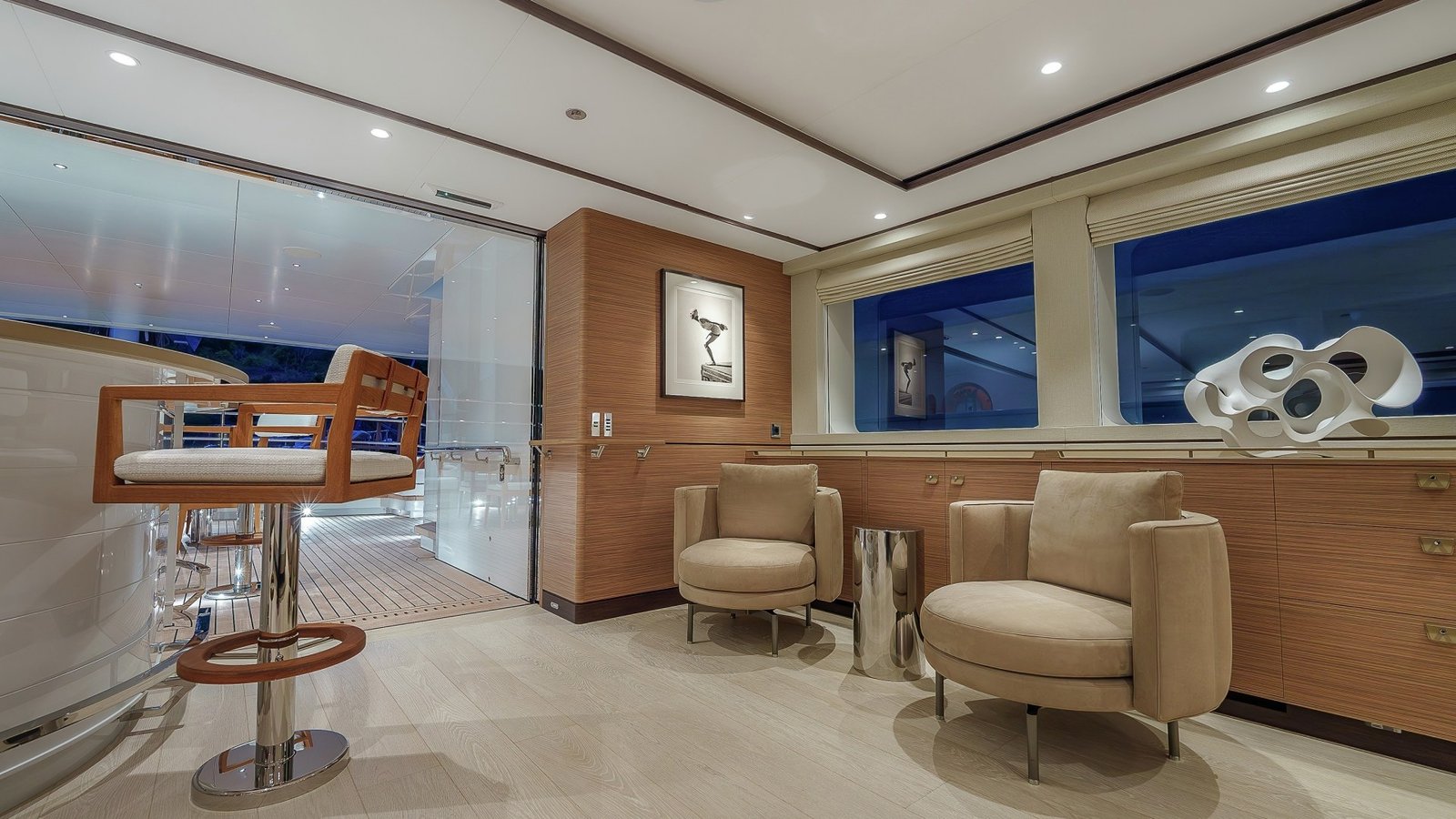
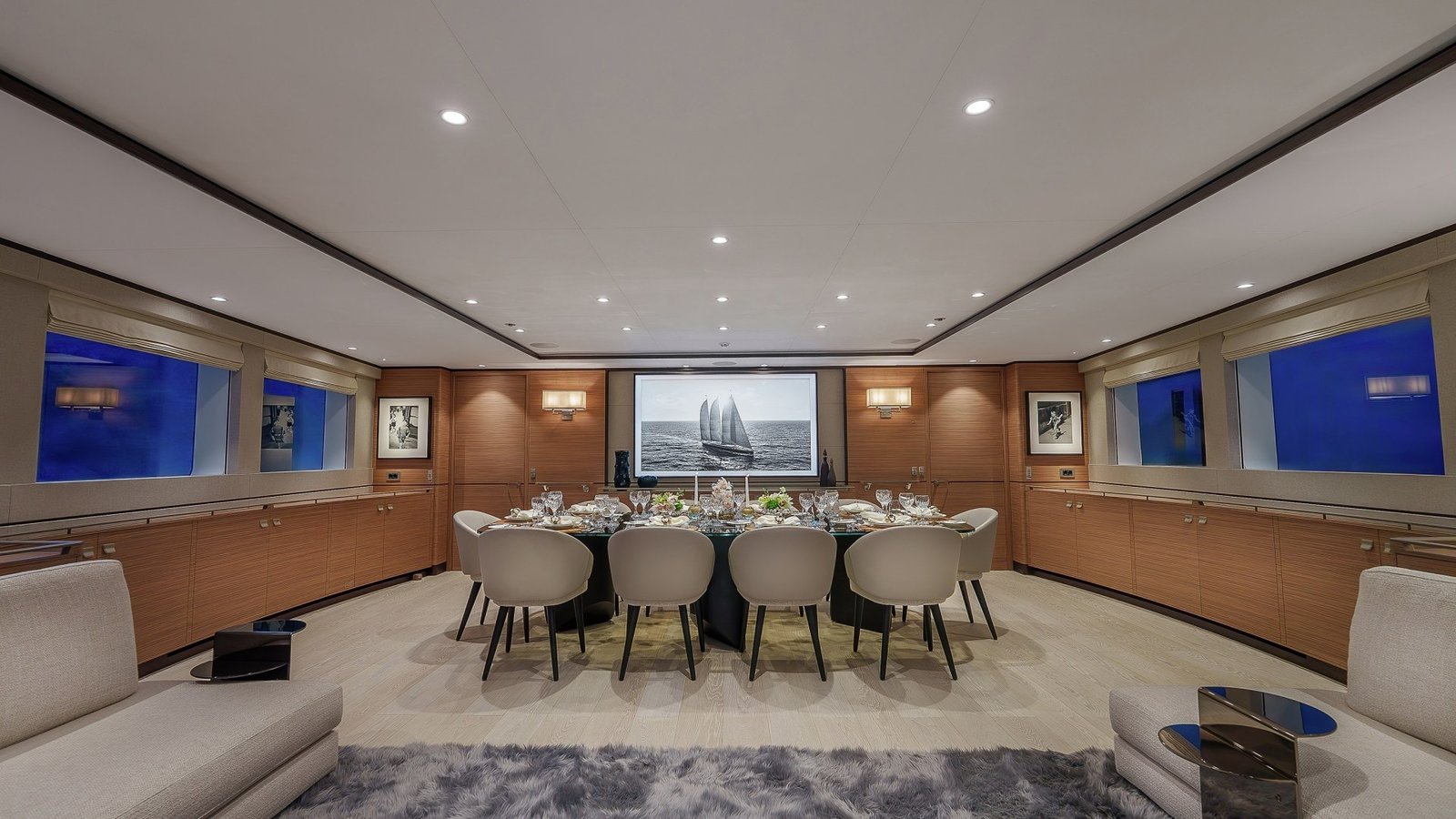
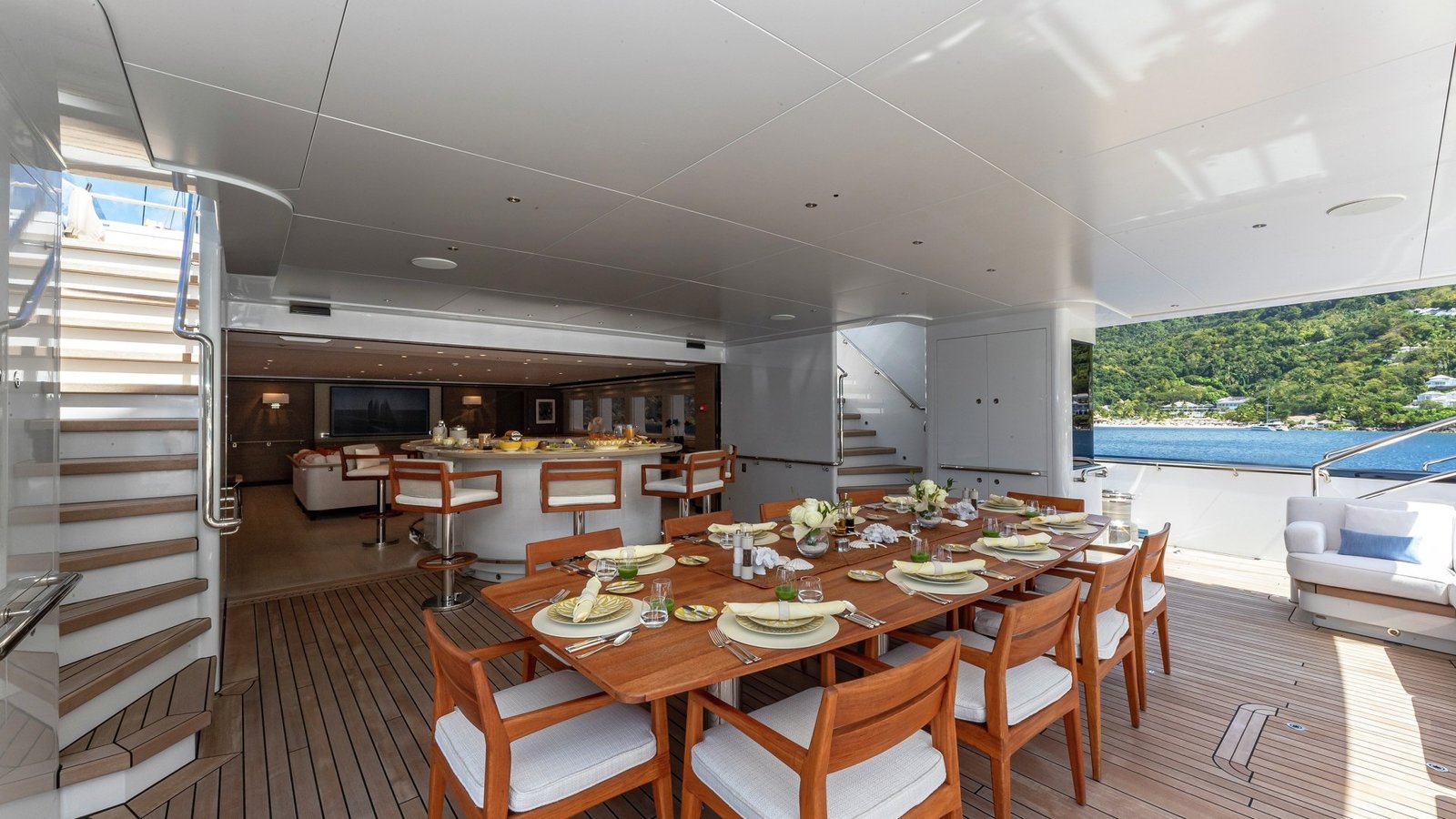
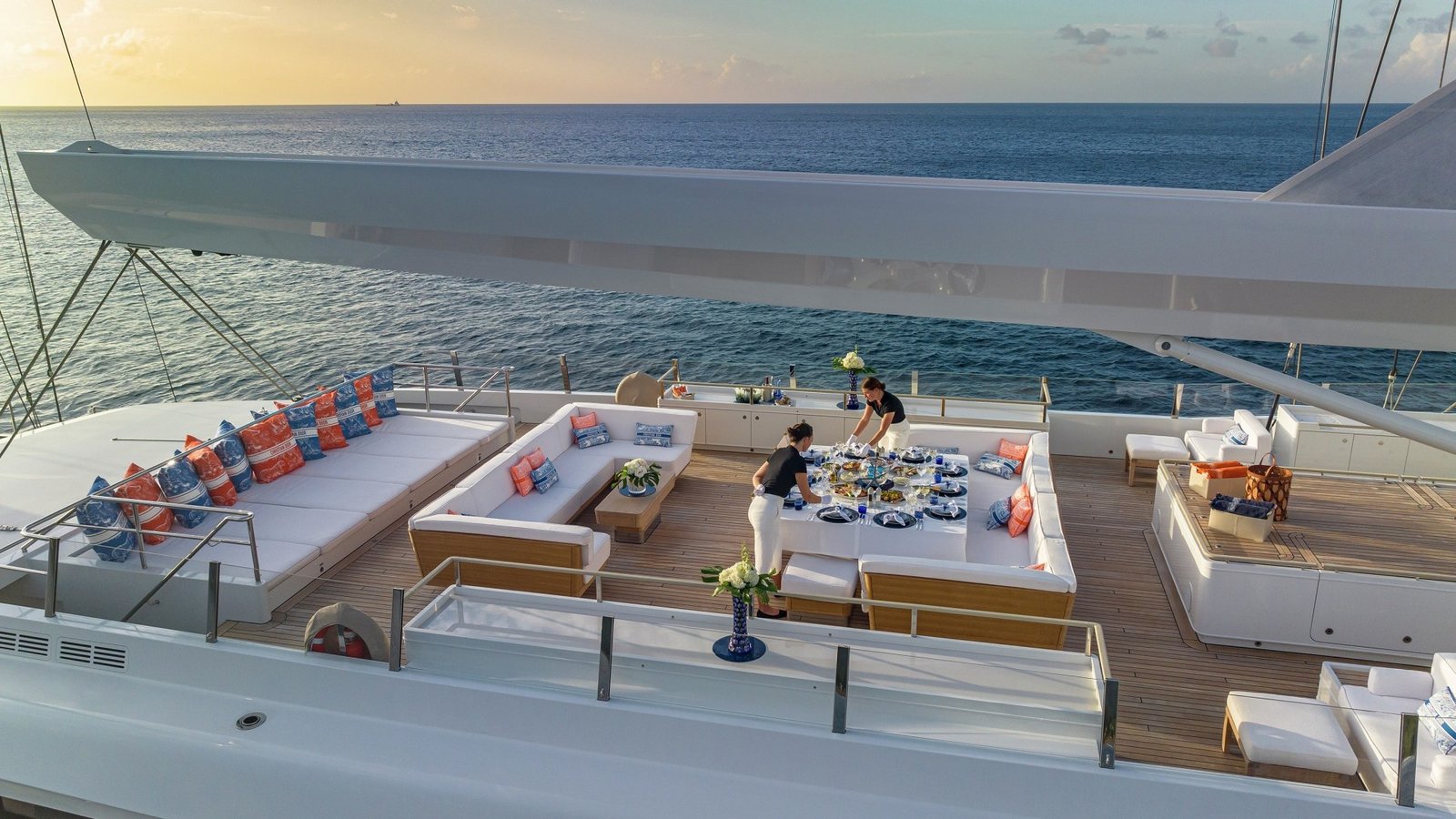
What surprises people is how calm she is inside. Mark Whiteley designed both the exterior lines and the interior, and the interior refuses to shout. The main saloon curves a long sofa along the hull under a low band of windows; the formal dining sits under a single black-and-white photograph; the deckhouse bar opens straight onto a shaded aft lounge so that the boundary between in and out effectively disappears. Pale timber, wool underfoot, brushed metal. The volume is enormous and the mood is quiet.
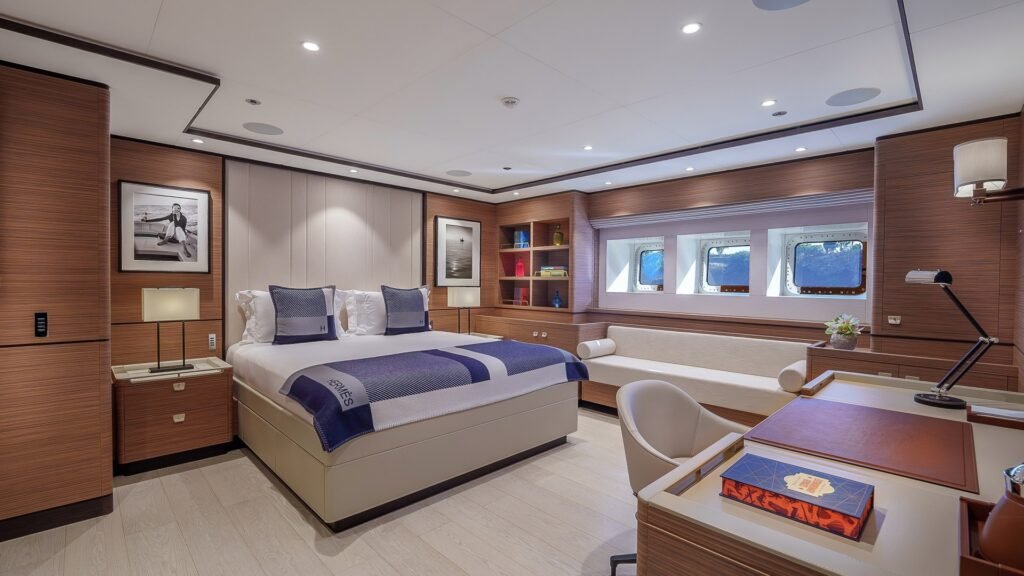
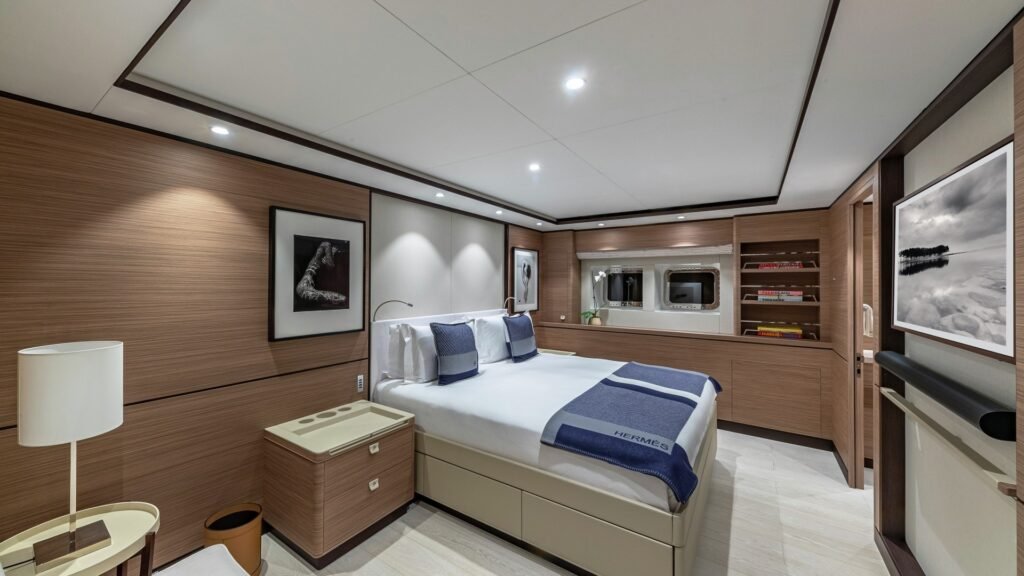
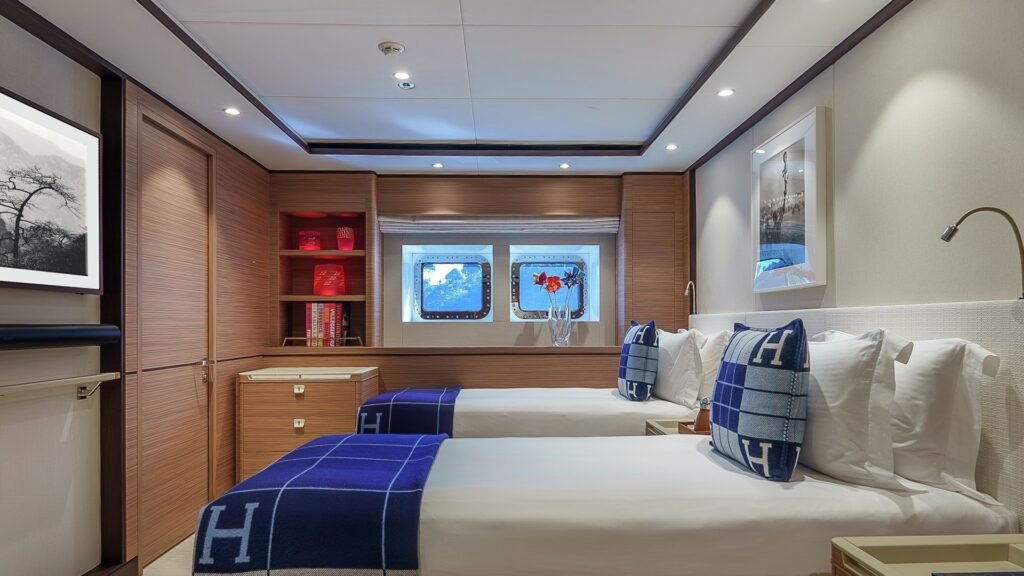
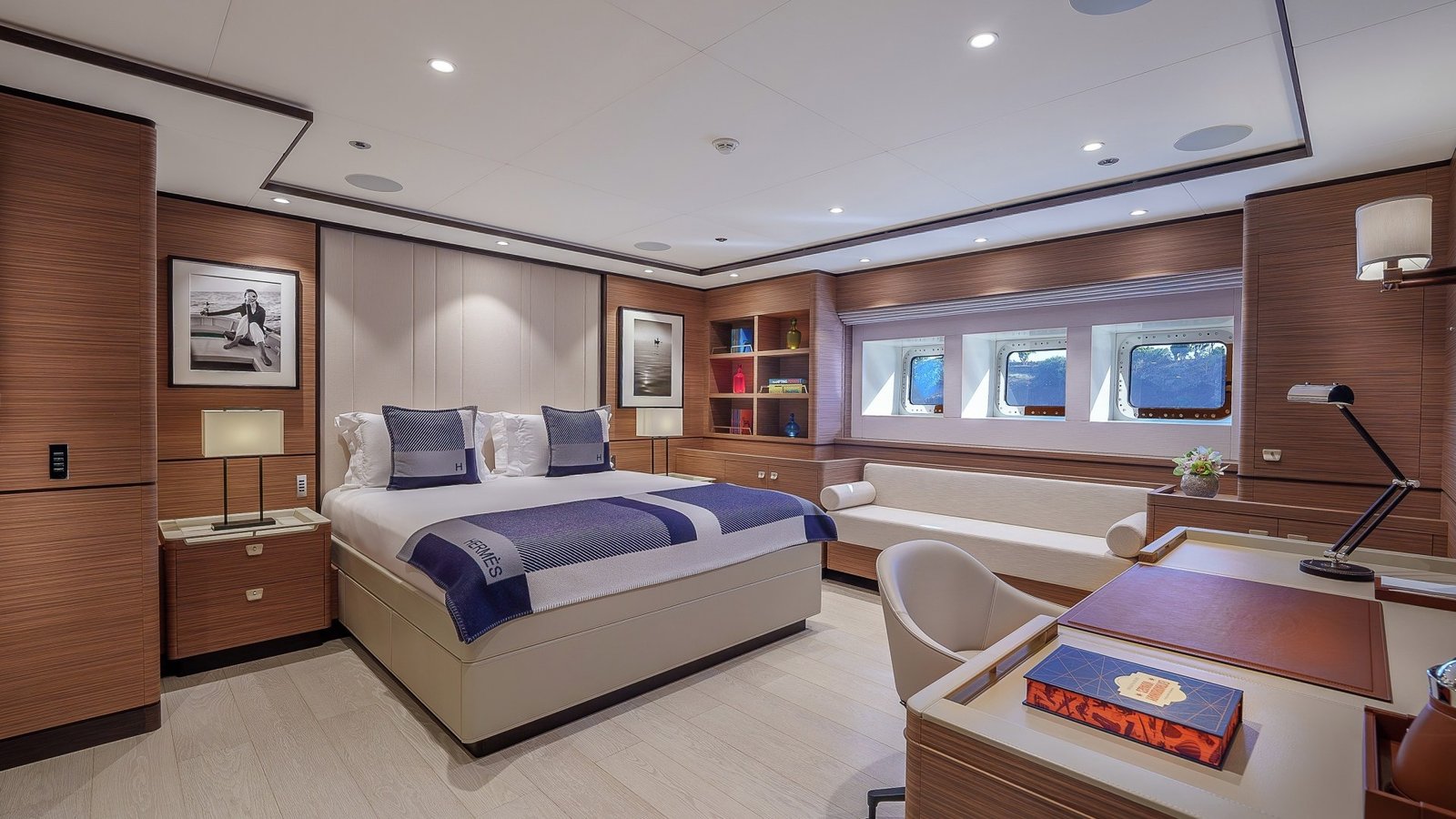
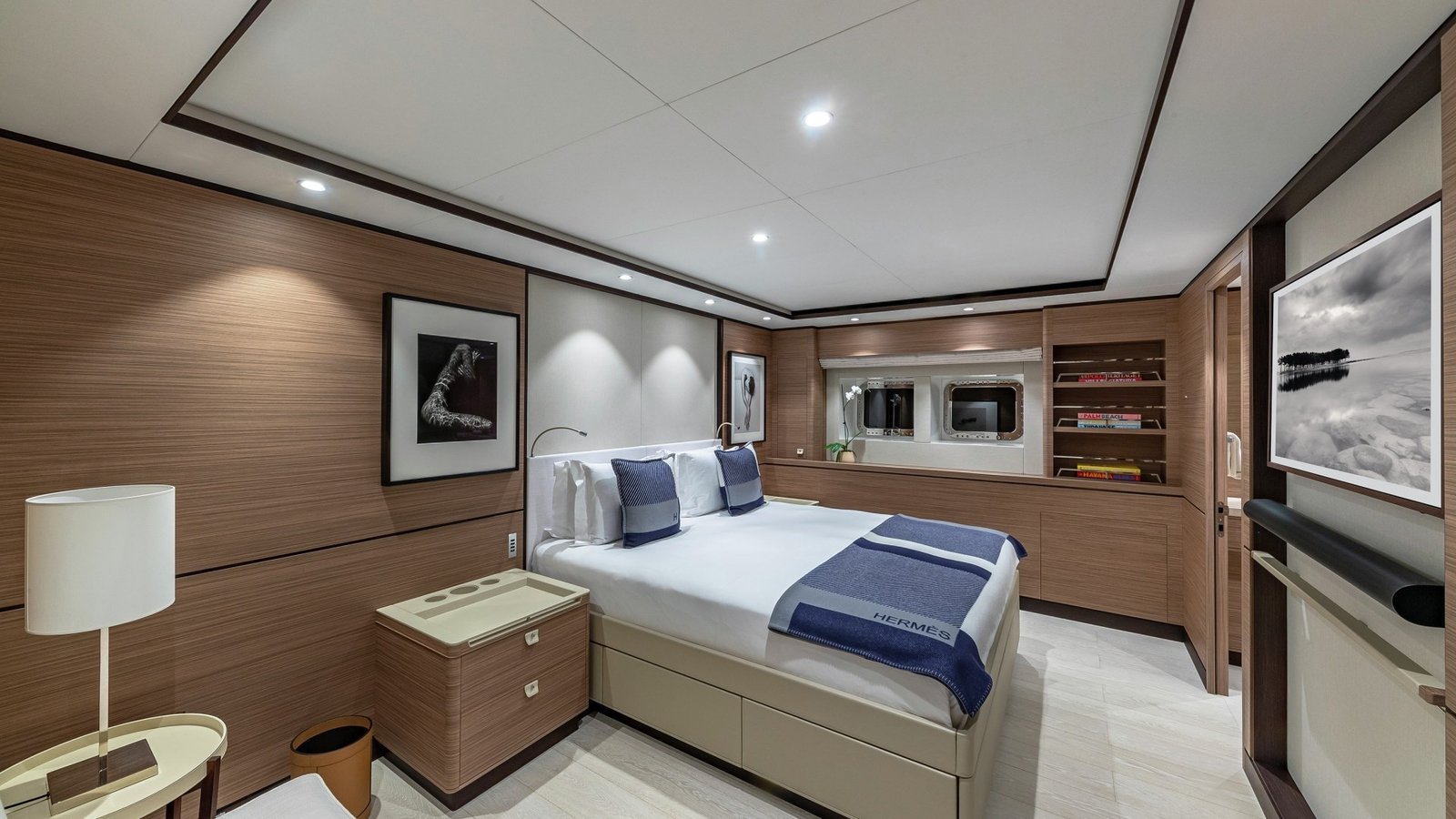
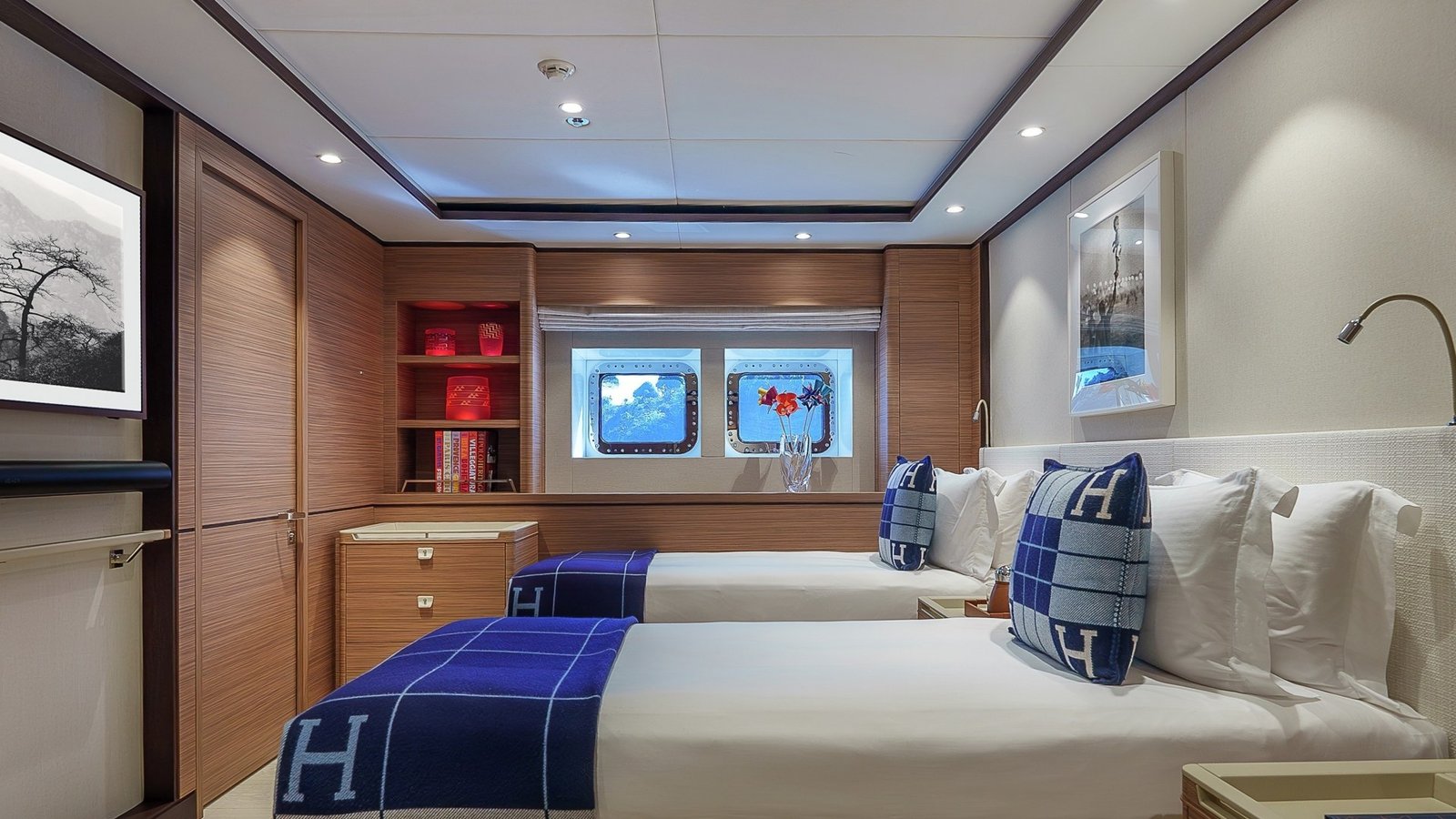
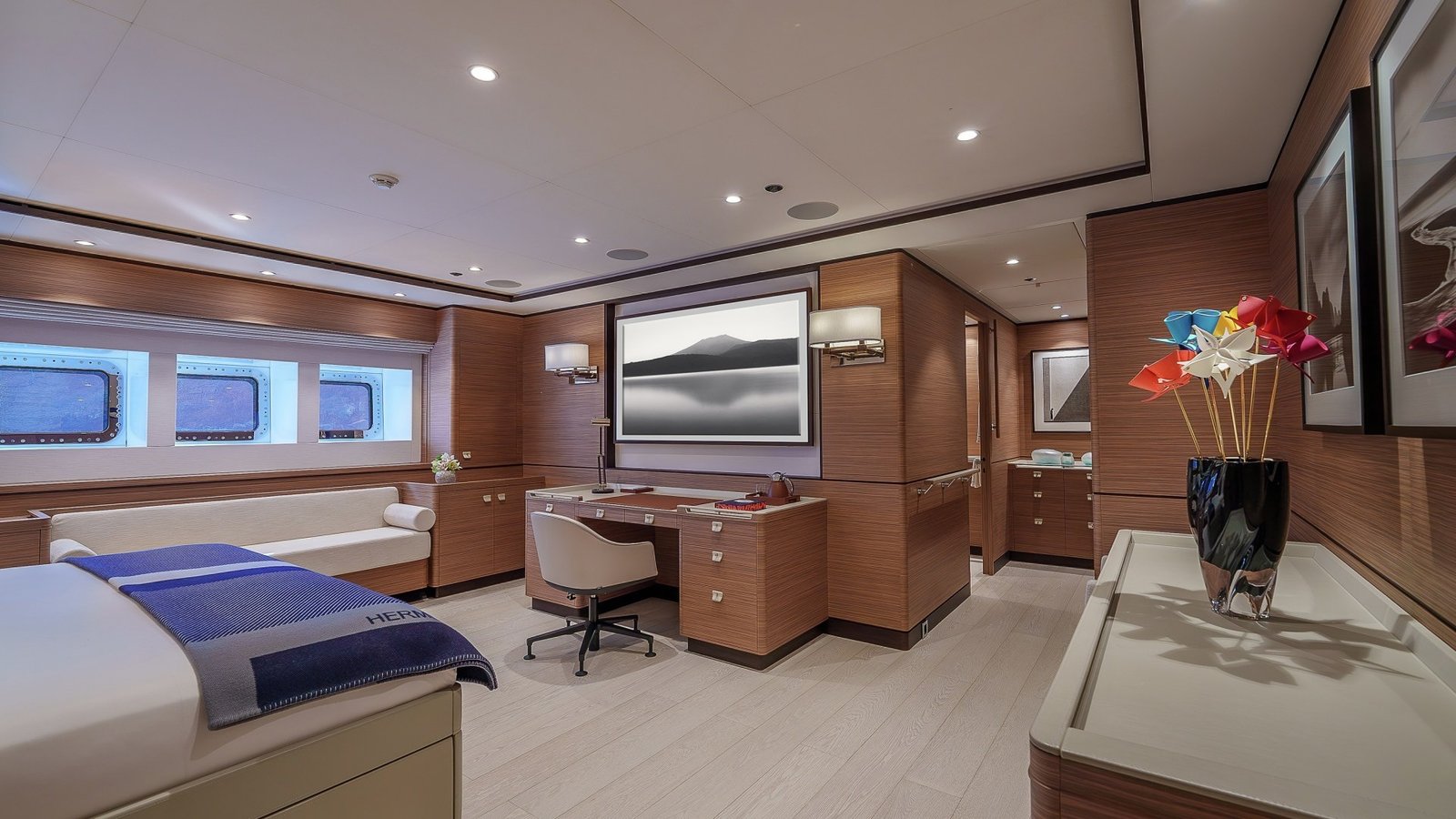
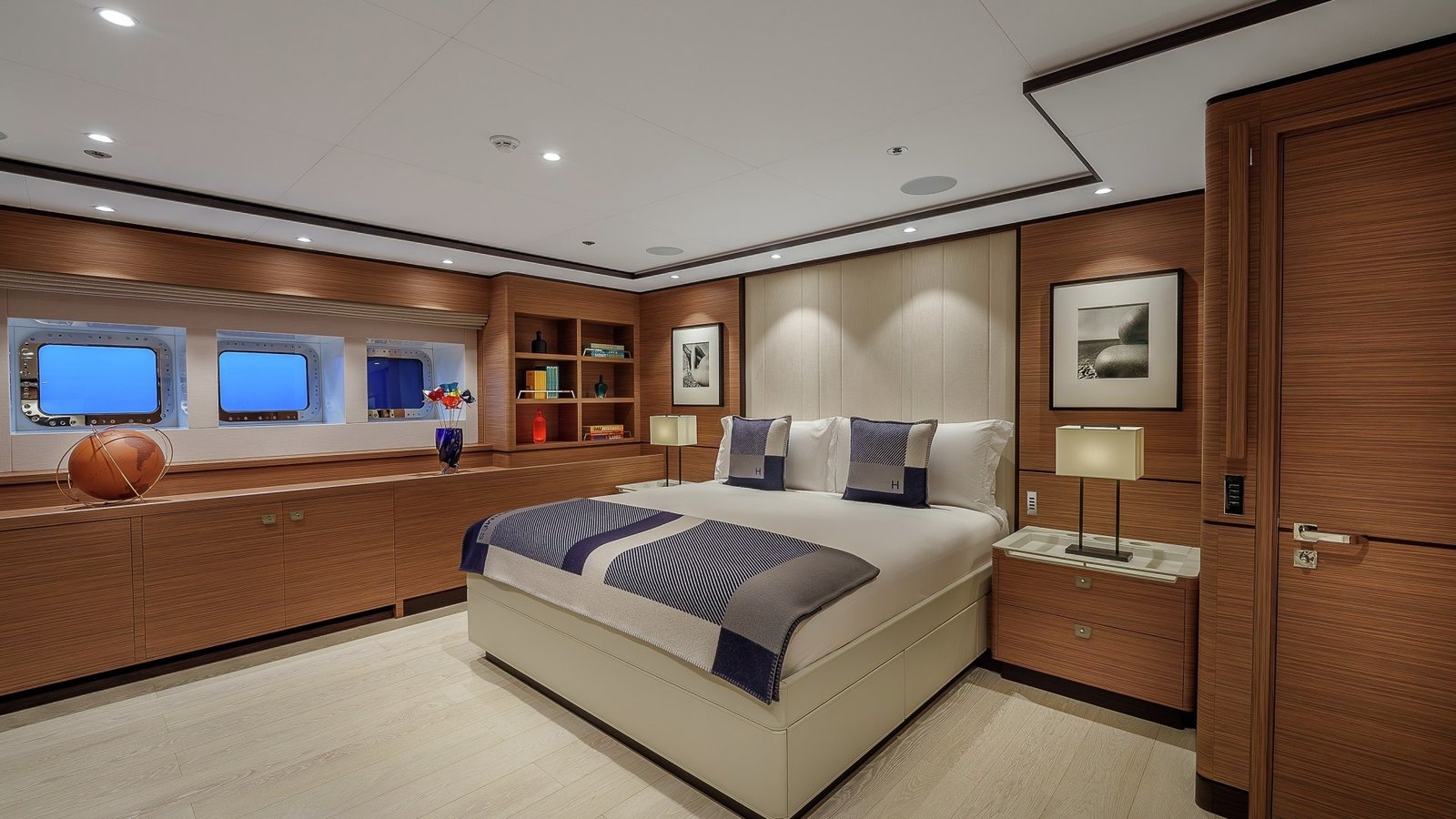
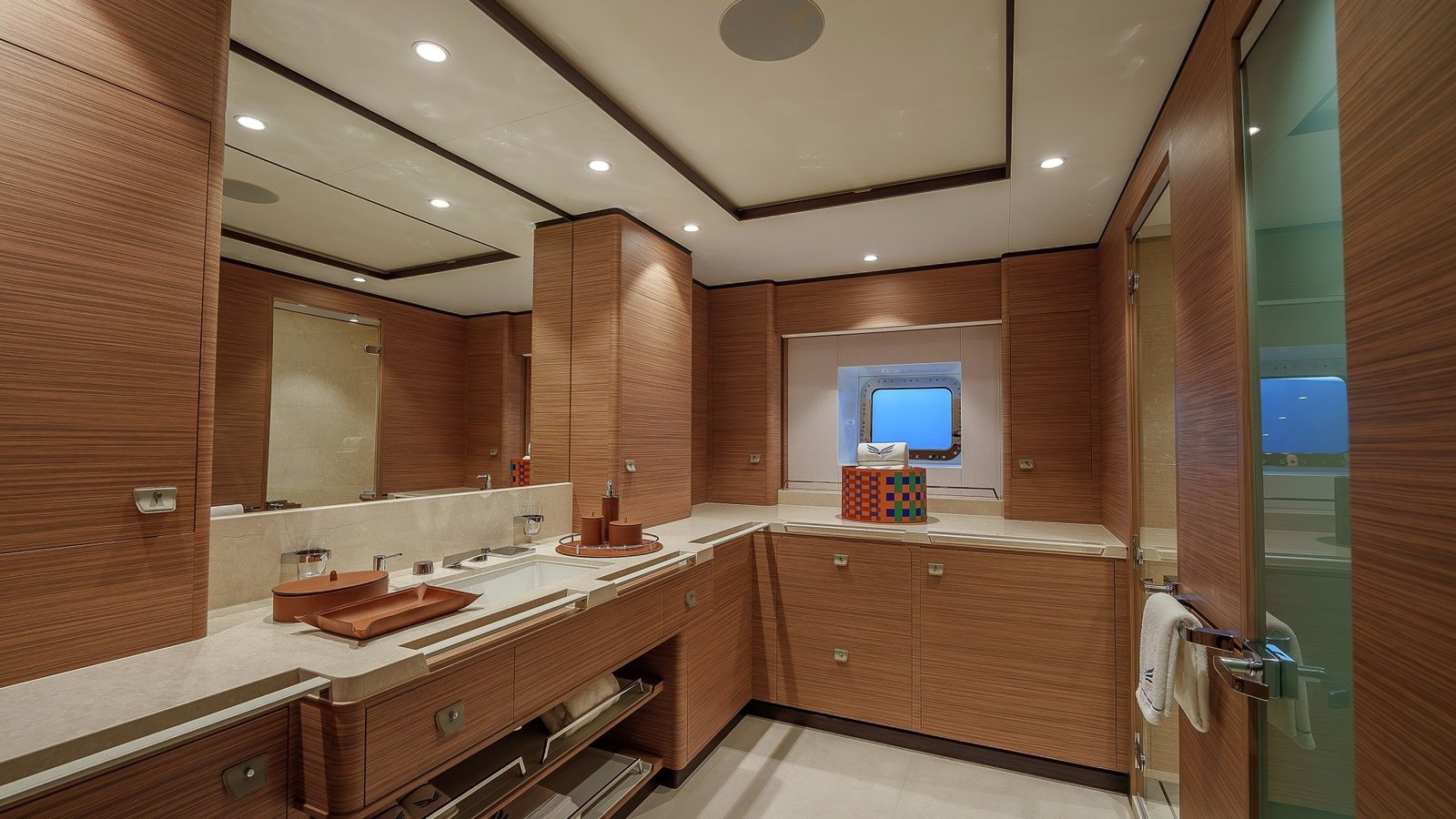
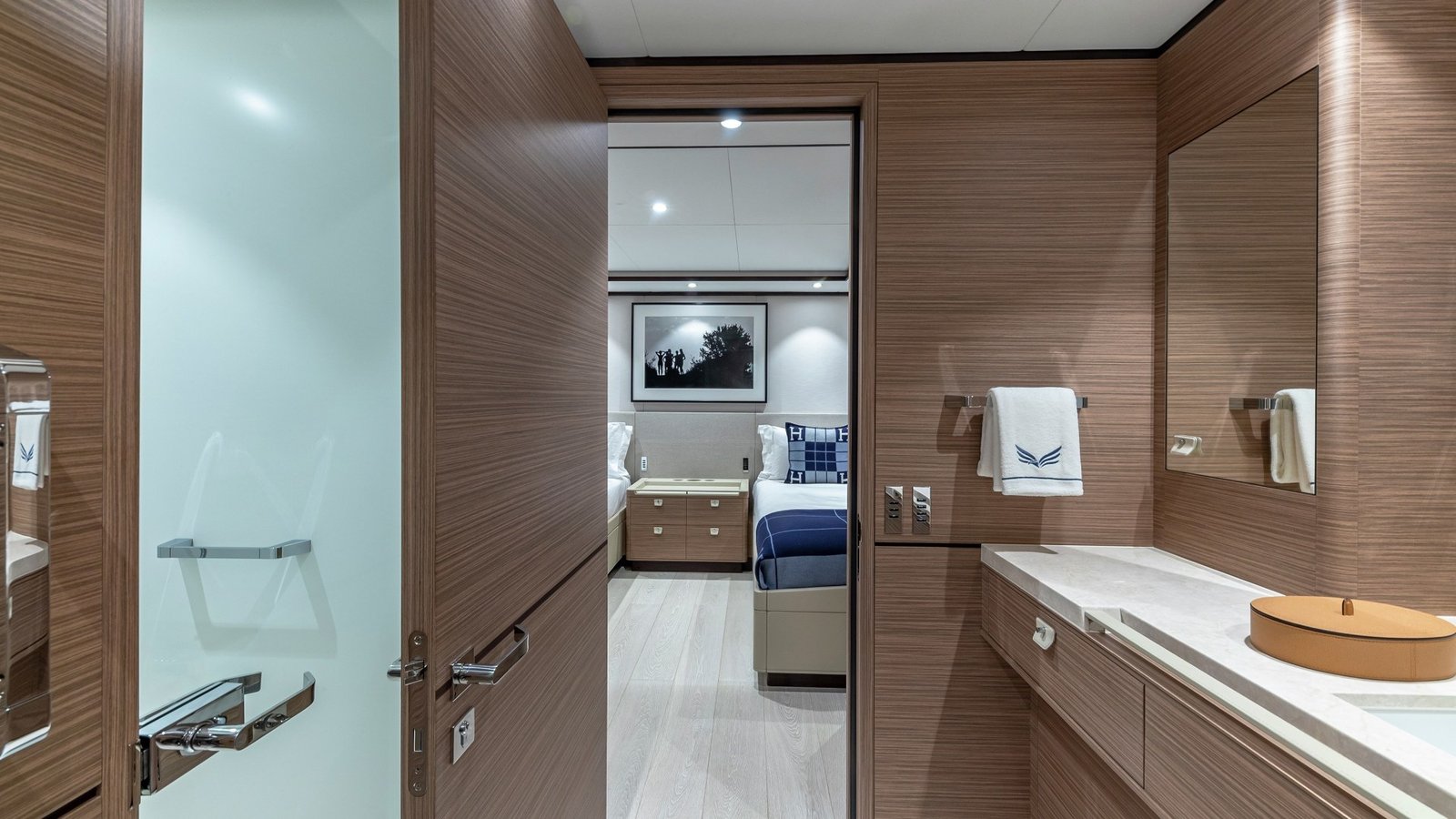
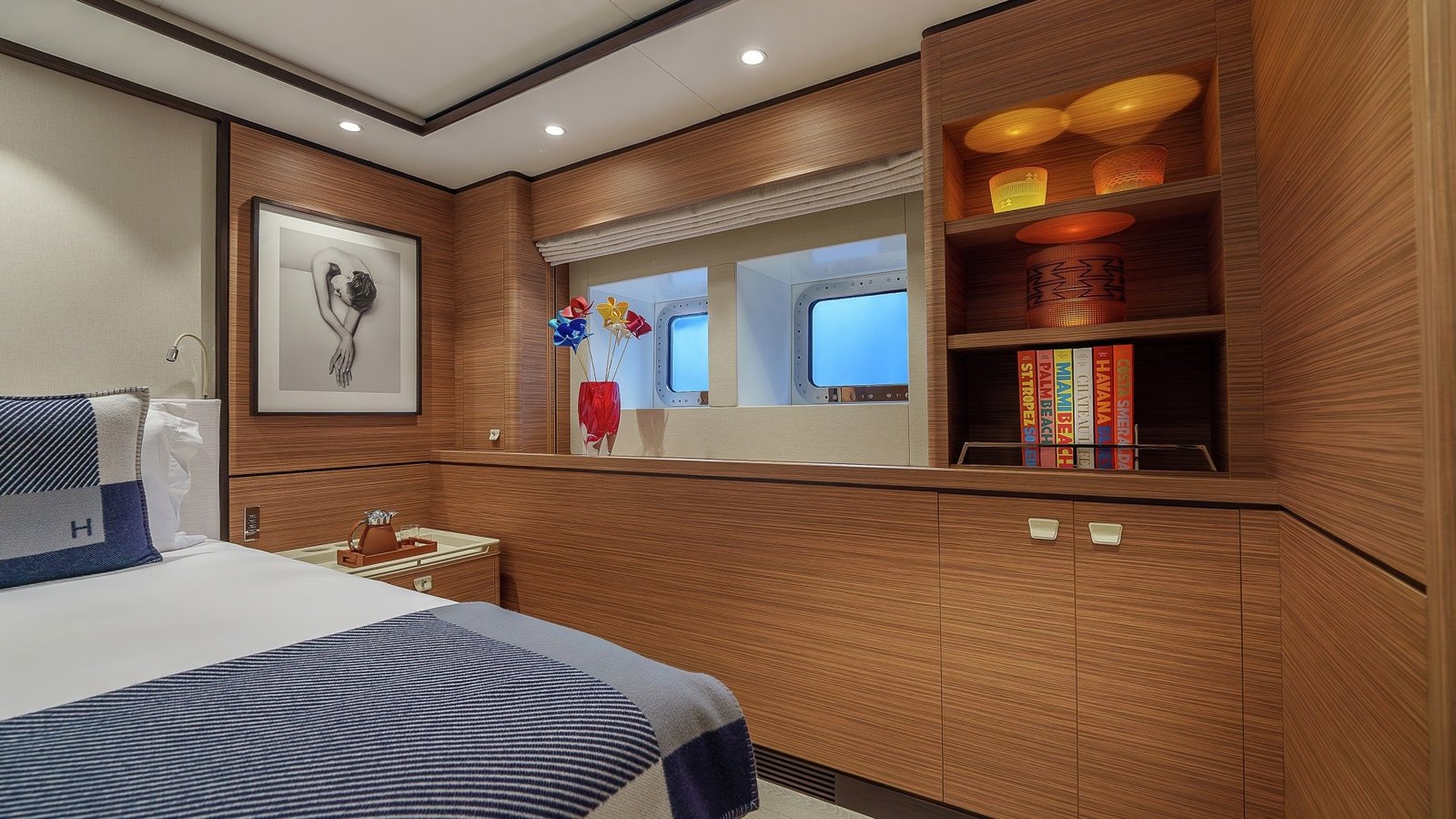
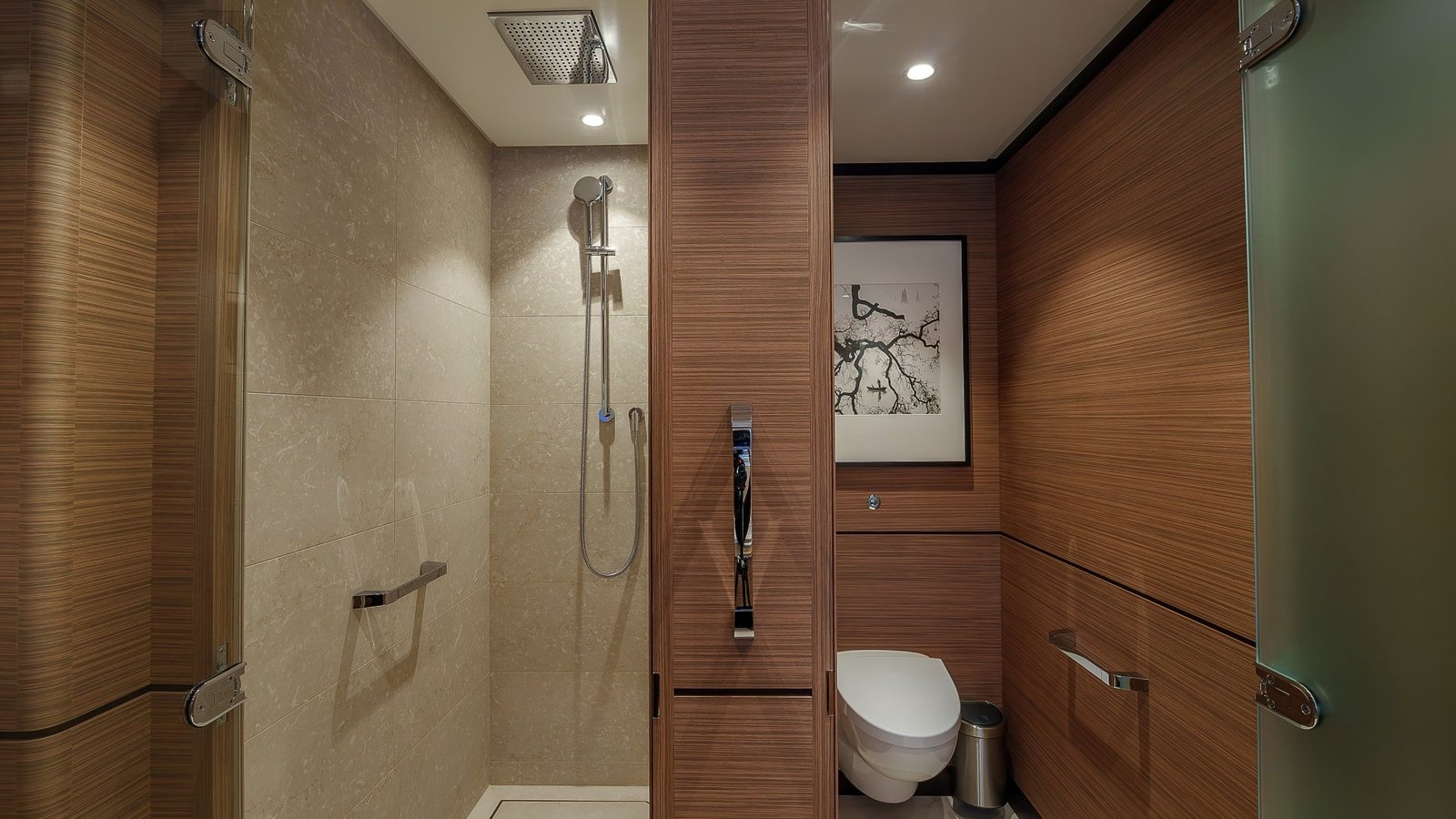
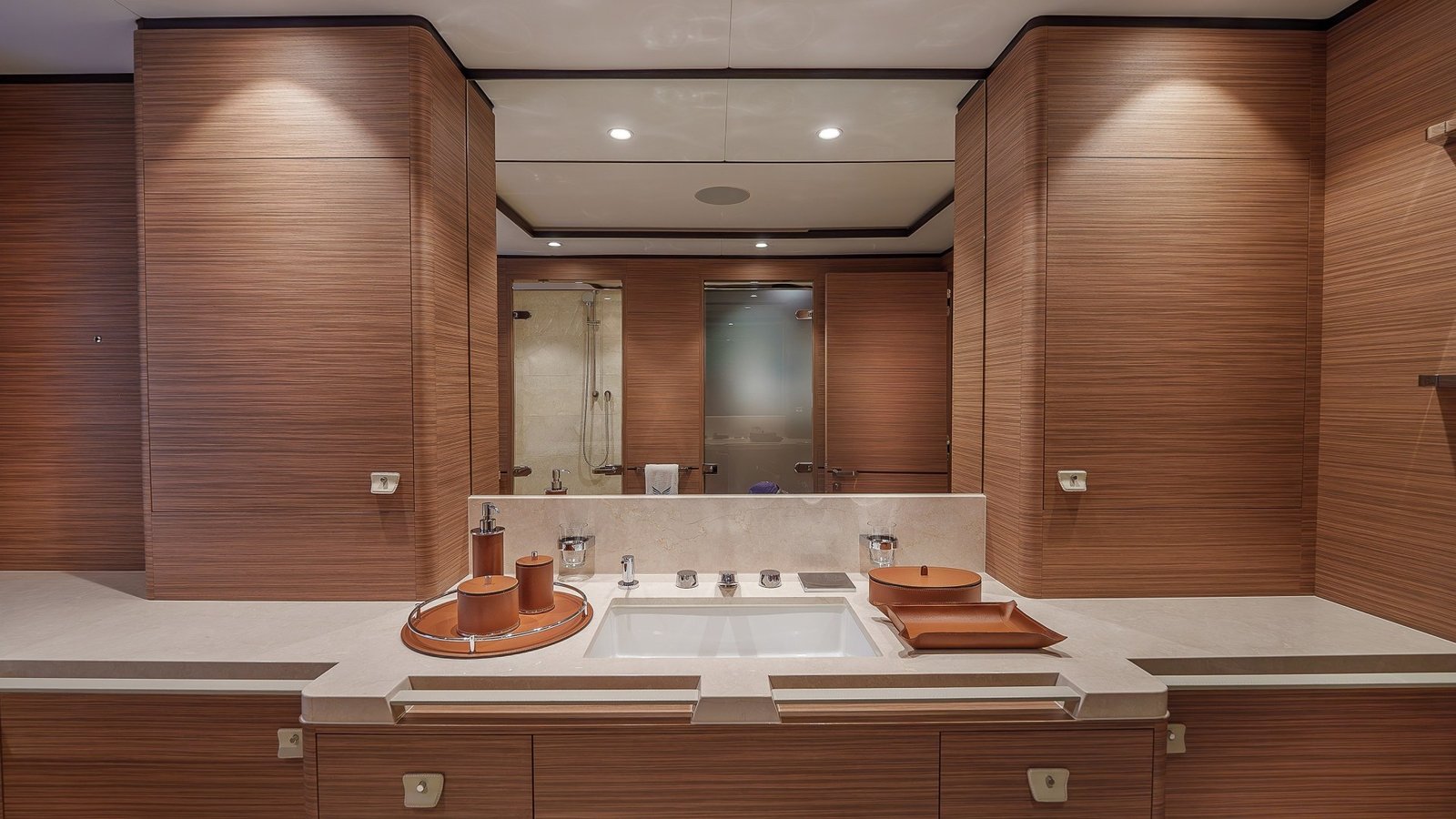
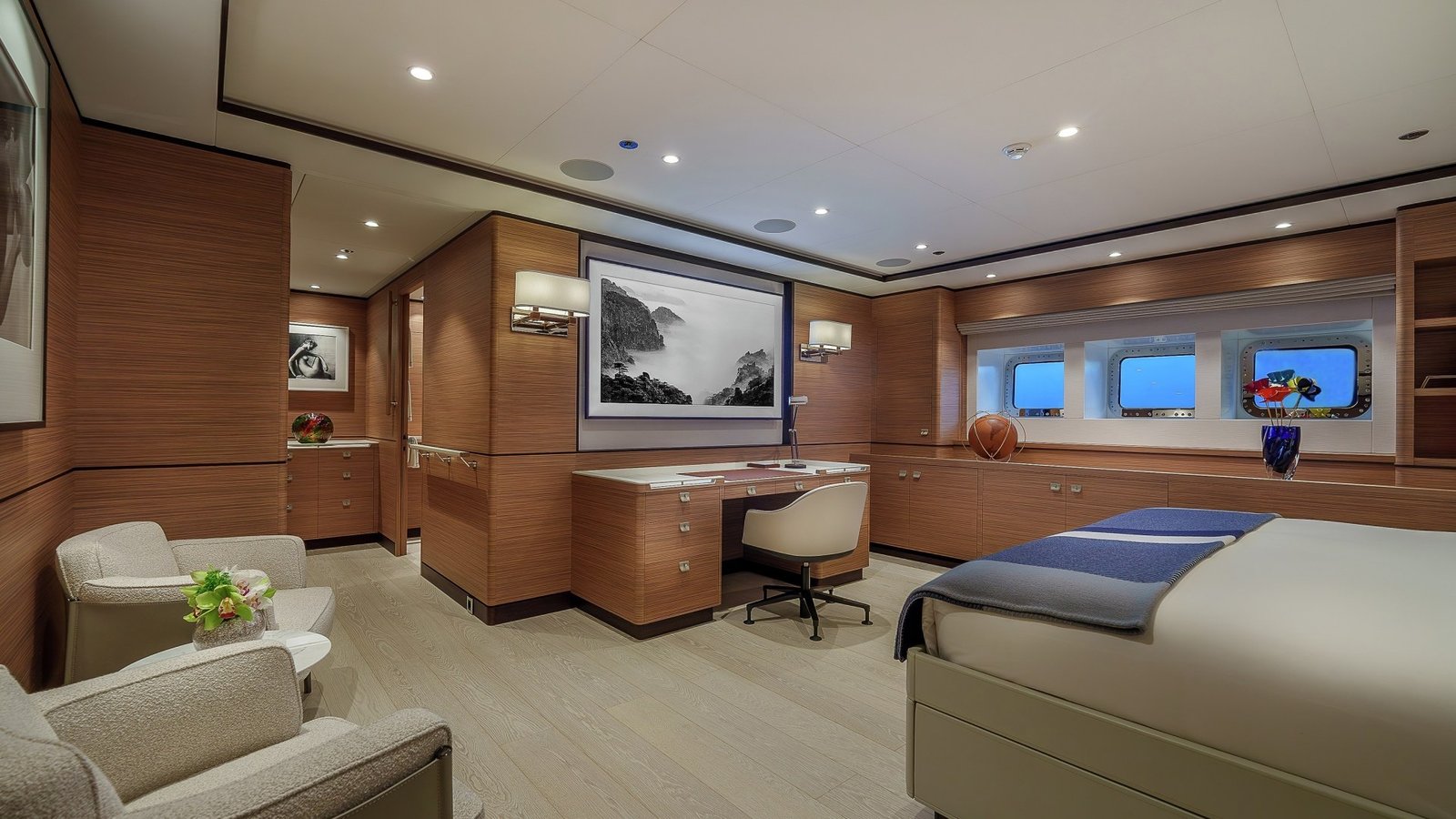
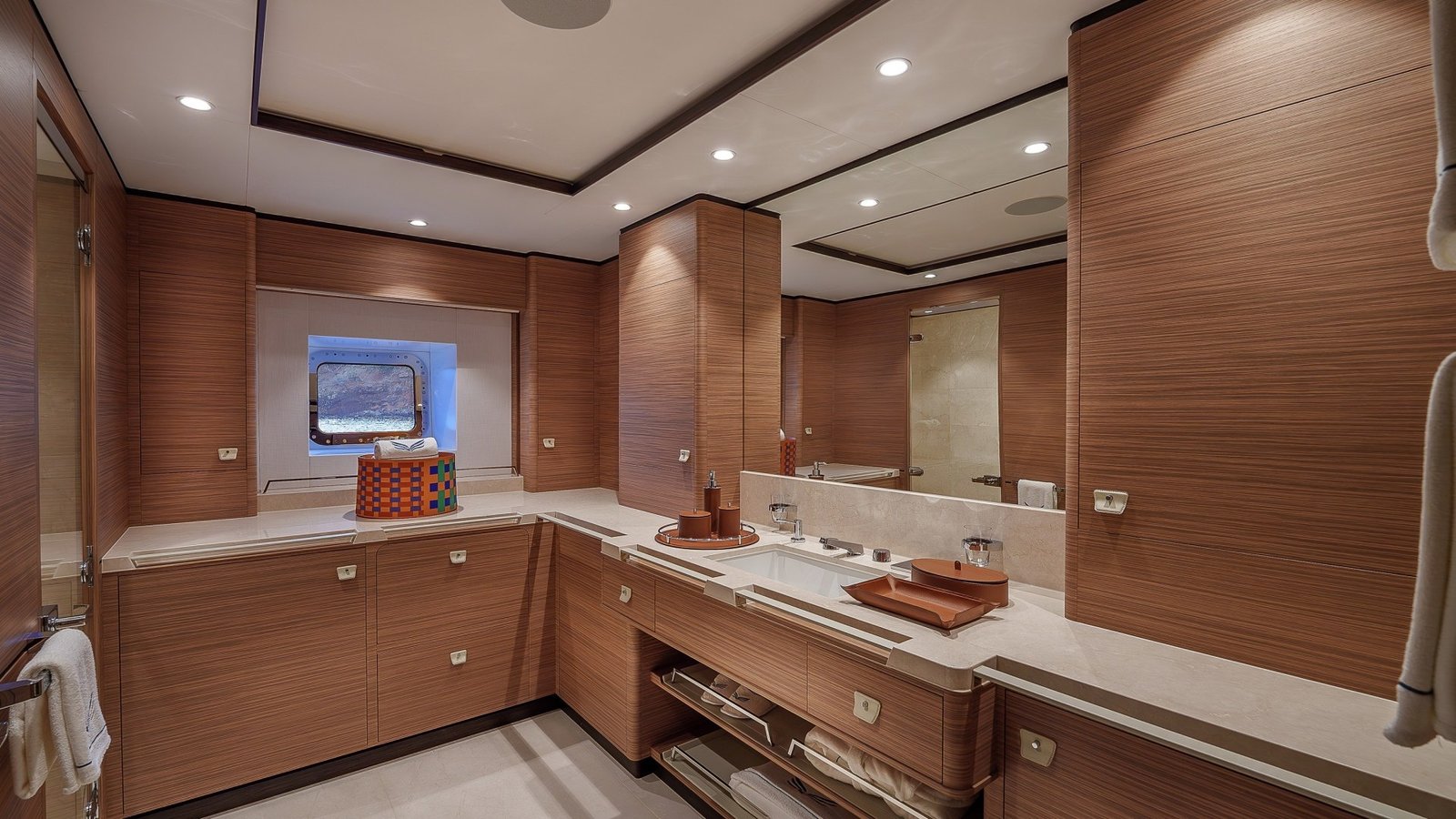
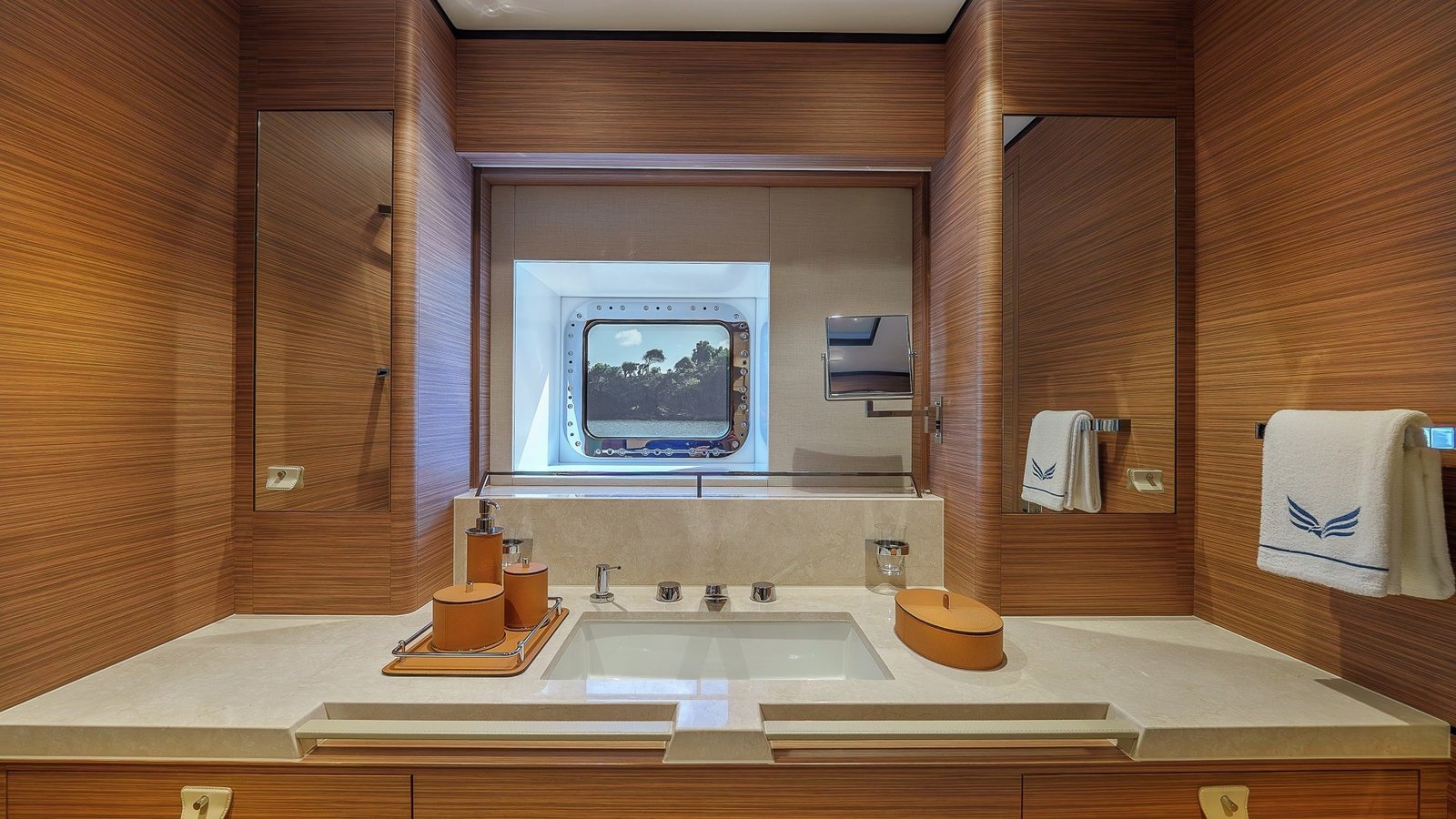
Twelve guests are carried in six cabins. The master runs full beam with a writing desk under the view ports and a window seat following the hull line; guest doubles and twins repeat the same restrained detailing, each with its own bathroom, and stowage is resolved to a standard that only matters on a yacht that genuinely crosses oceans. A crew of 15 runs her, which is the ratio that lets a sailing yacht this size operate like a private house rather than a shift rotation.
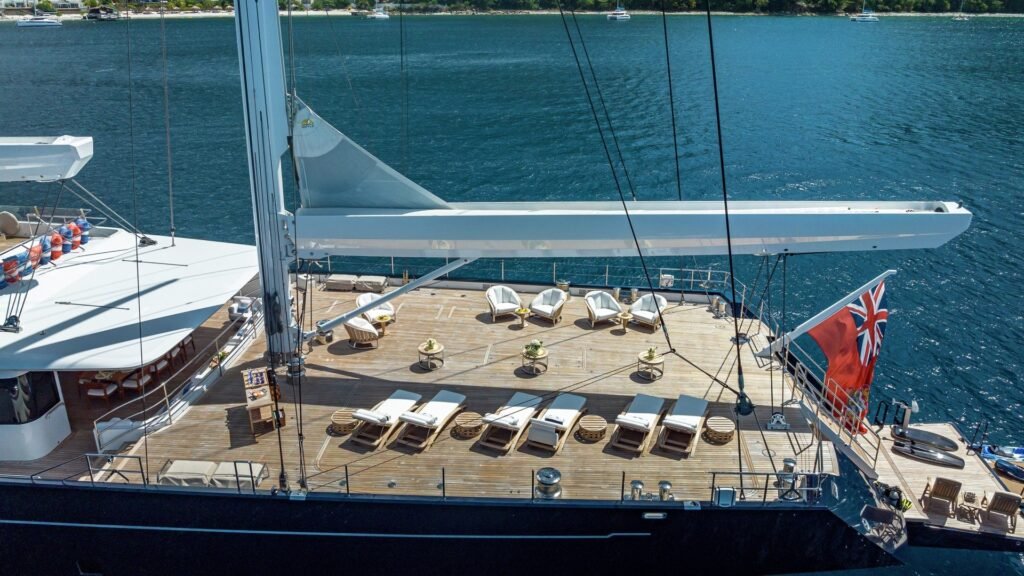
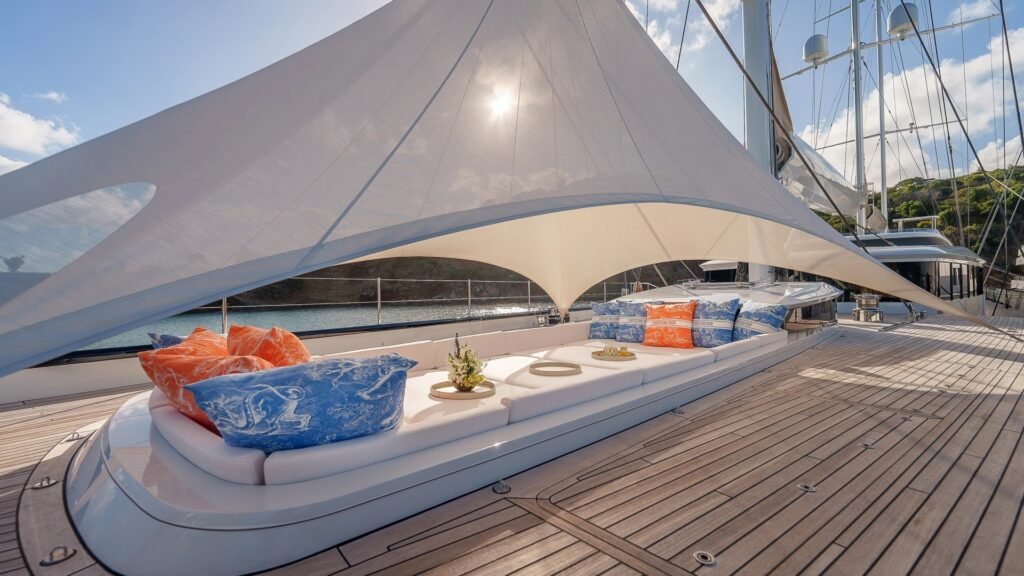
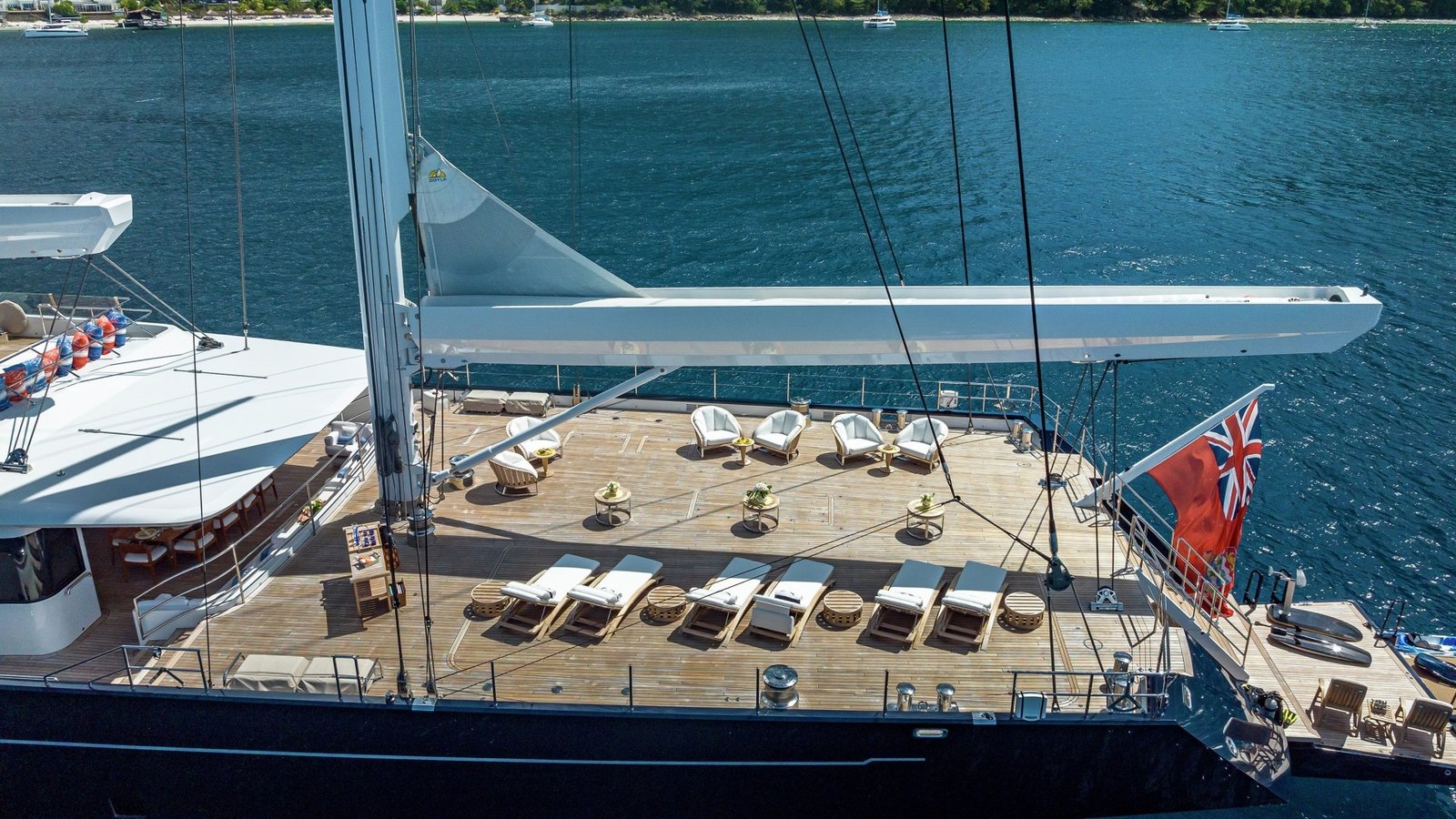
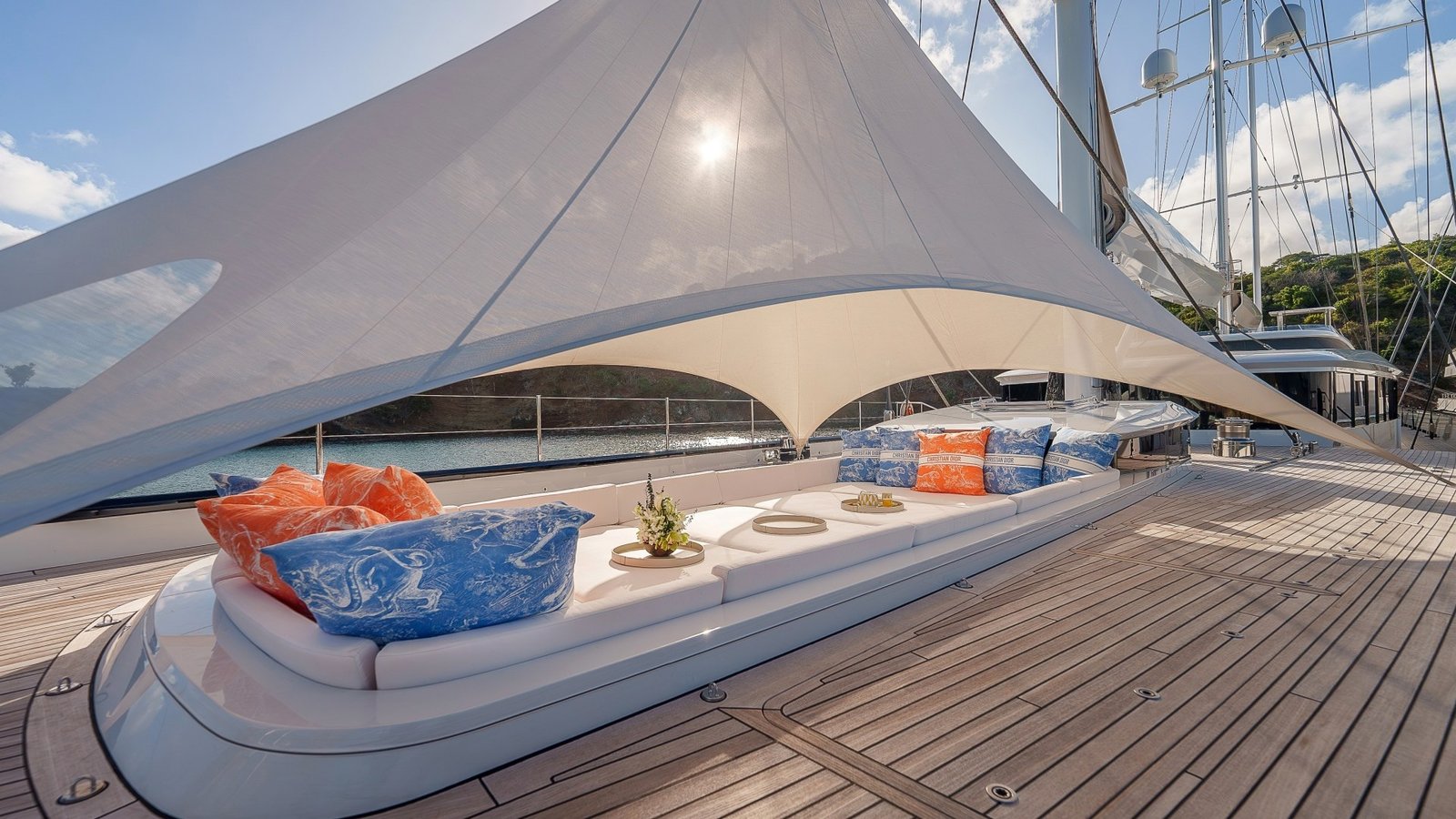
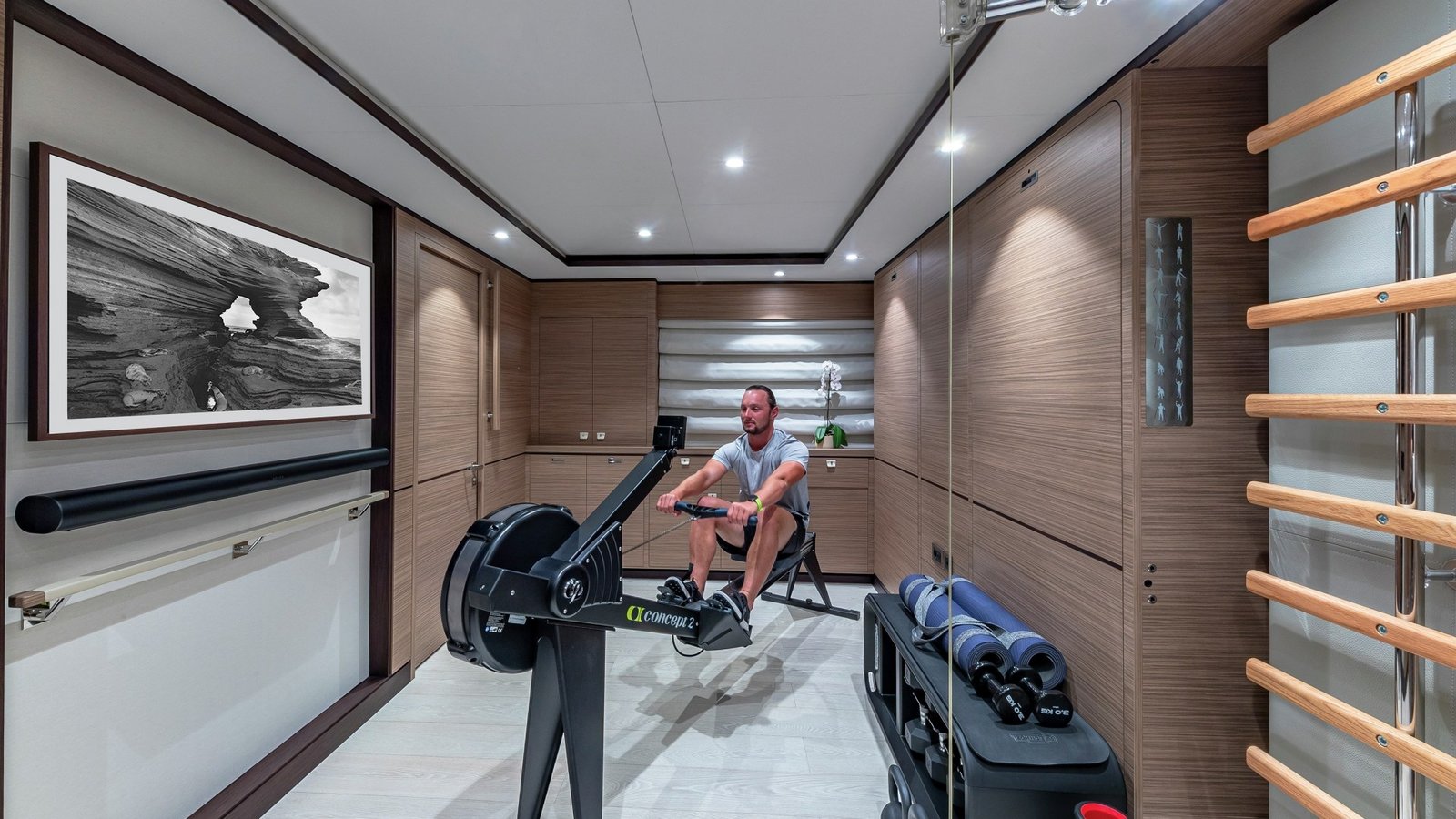
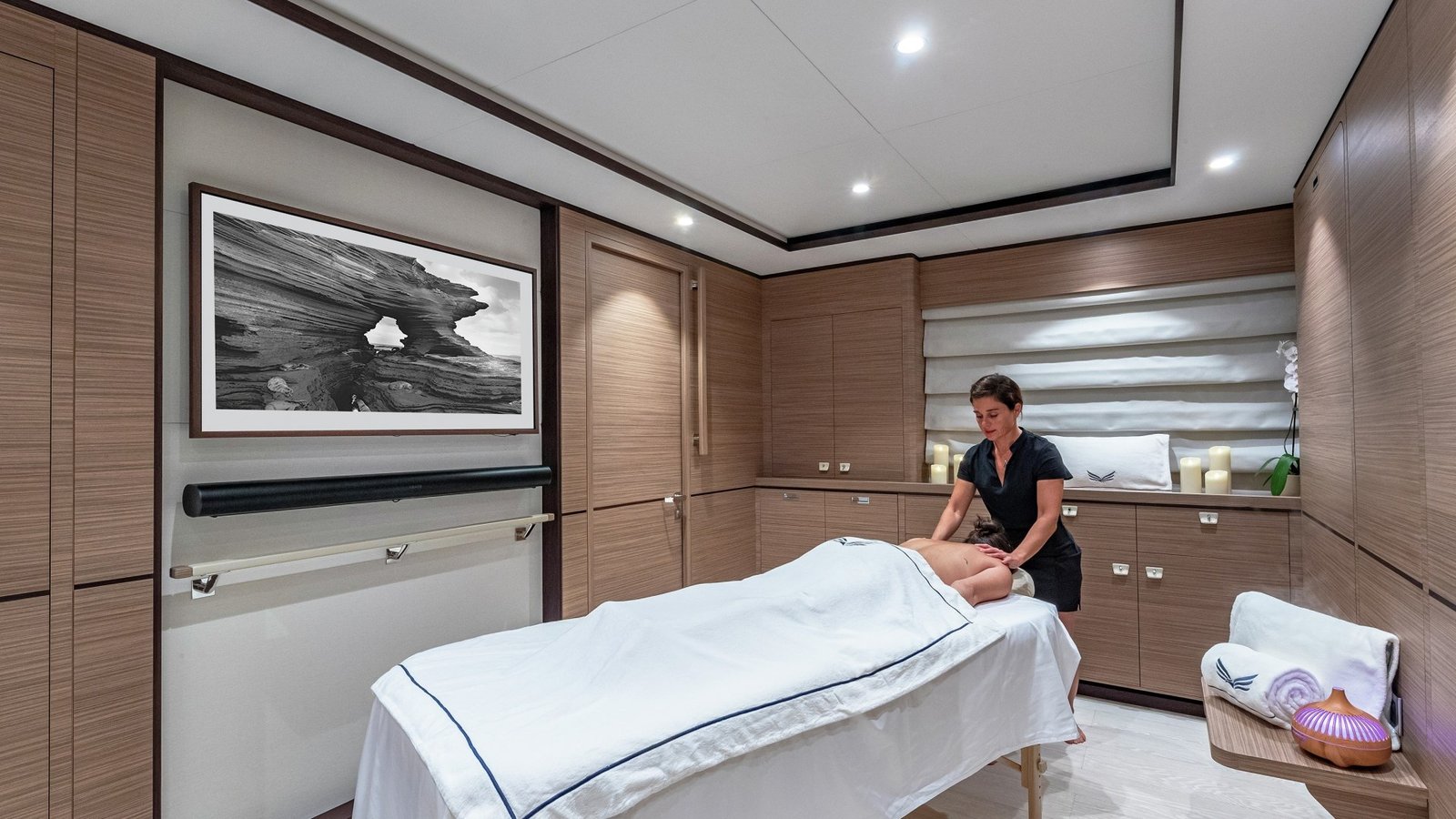
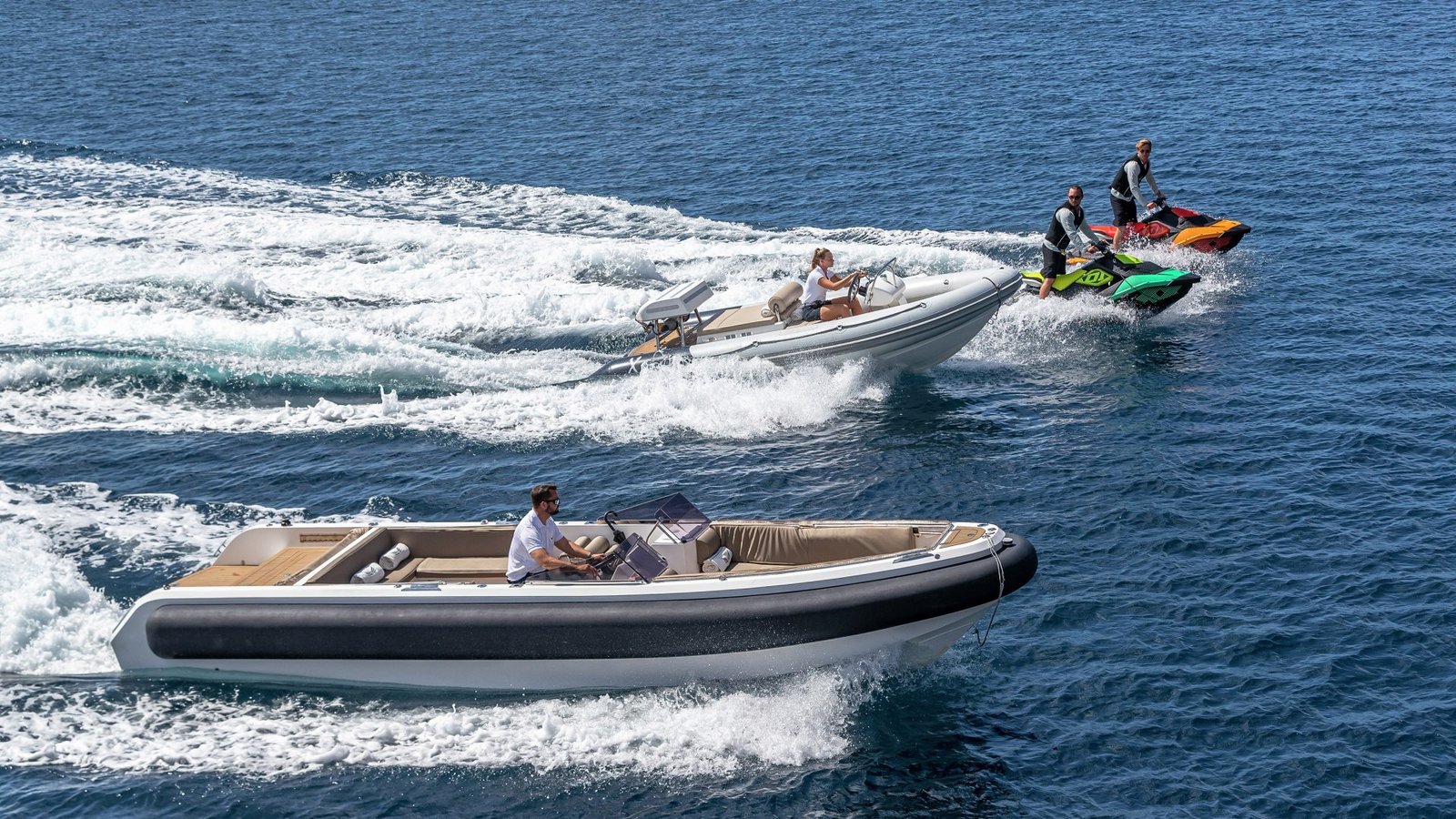
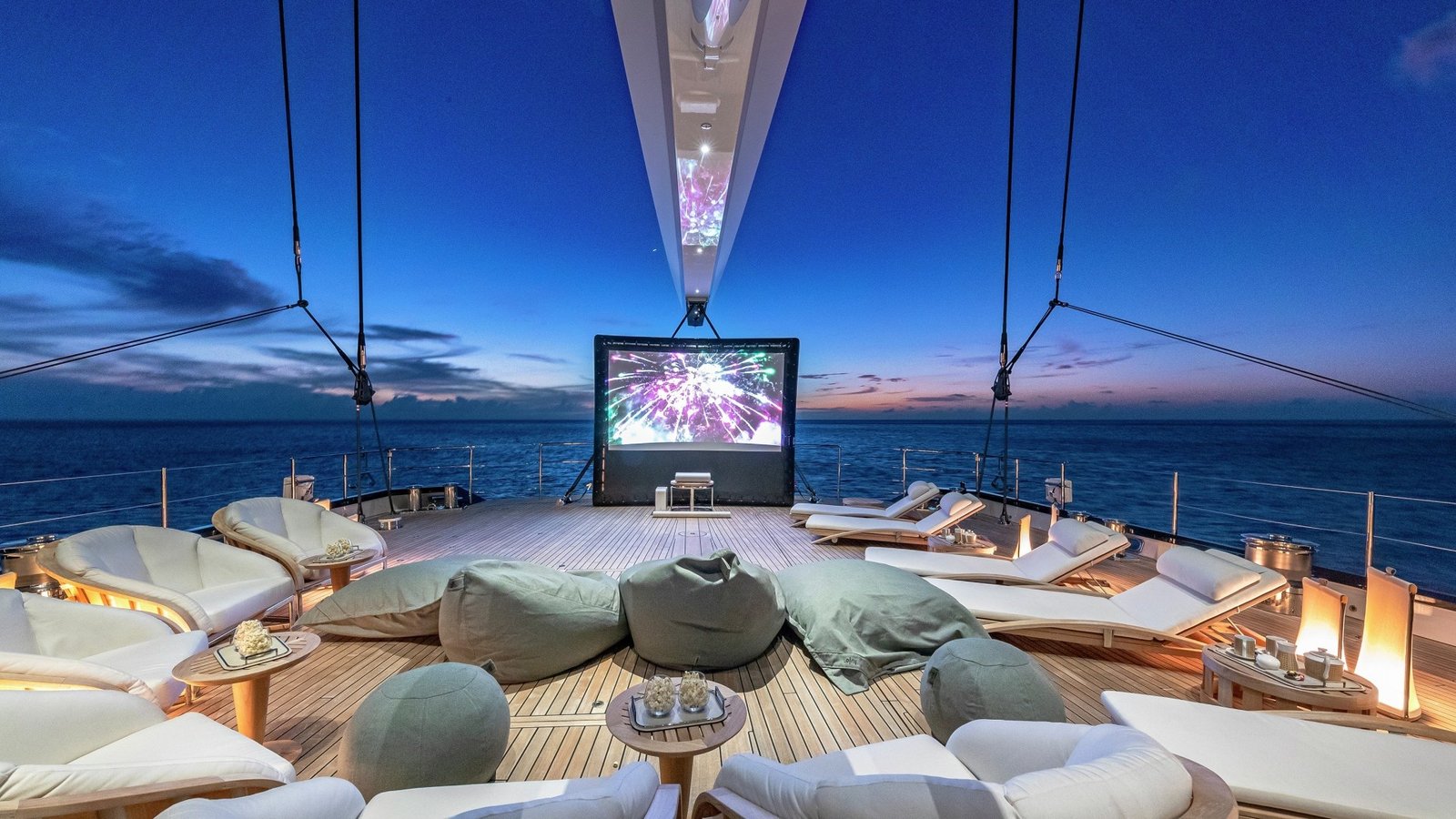
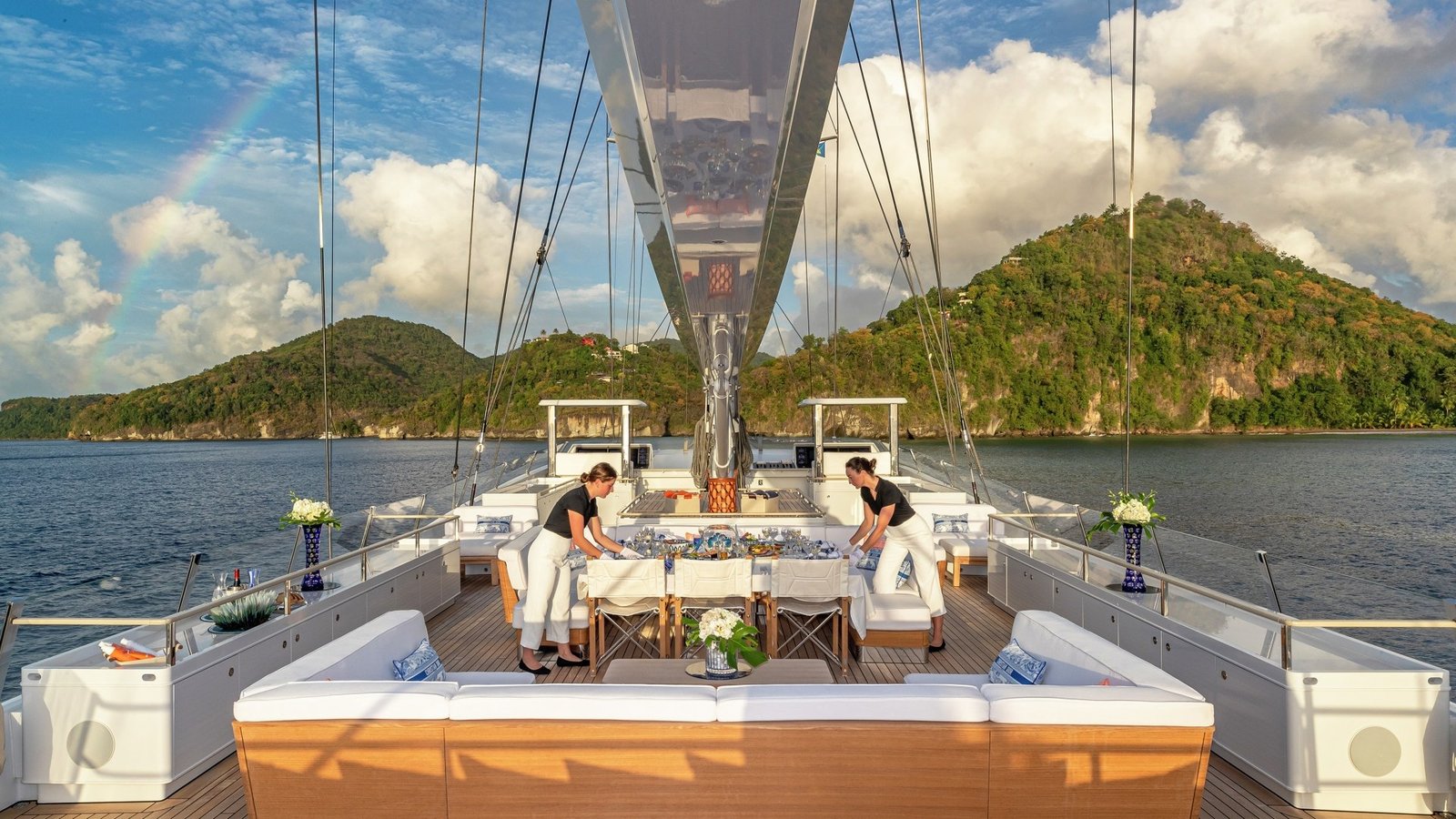
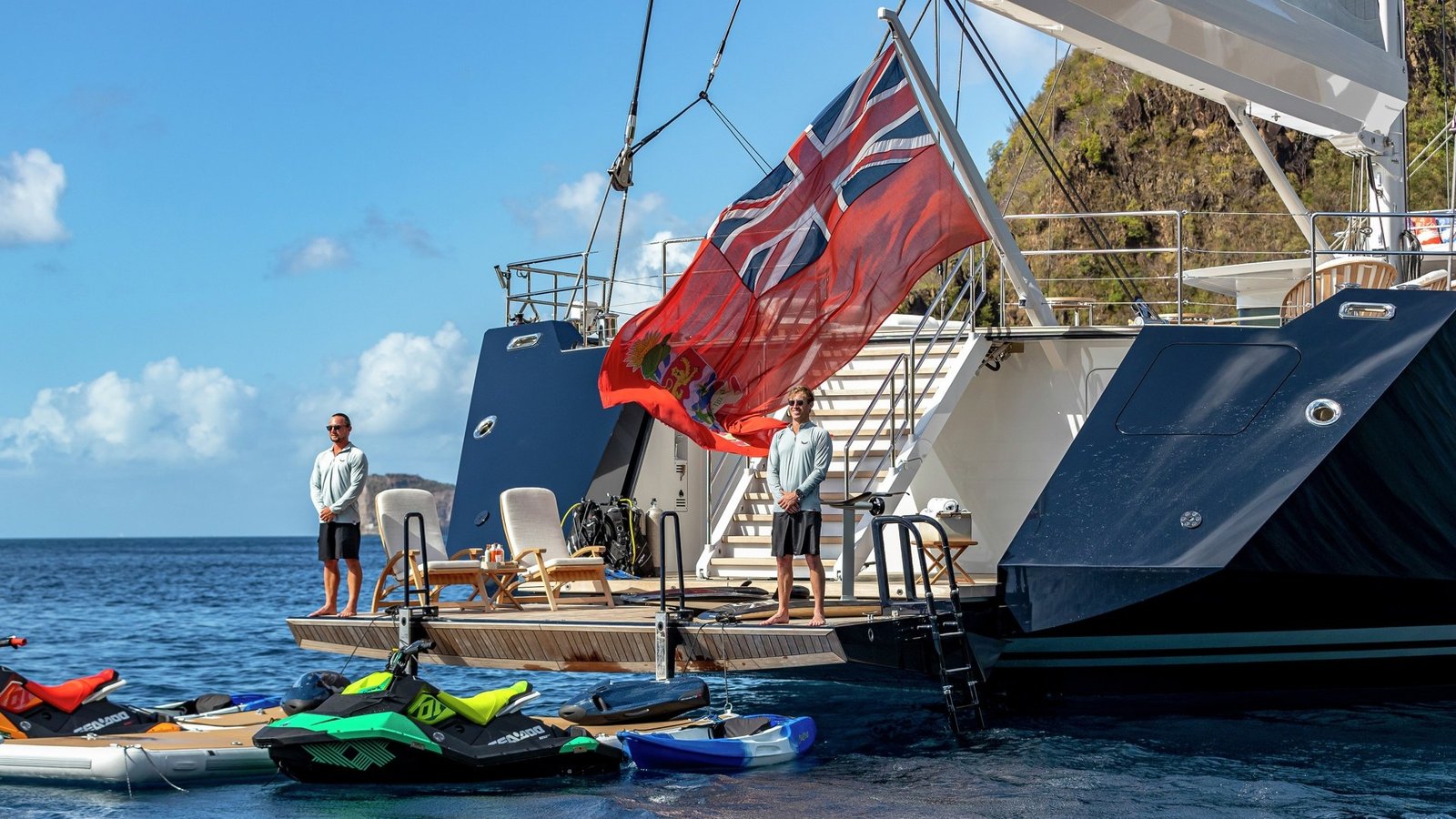
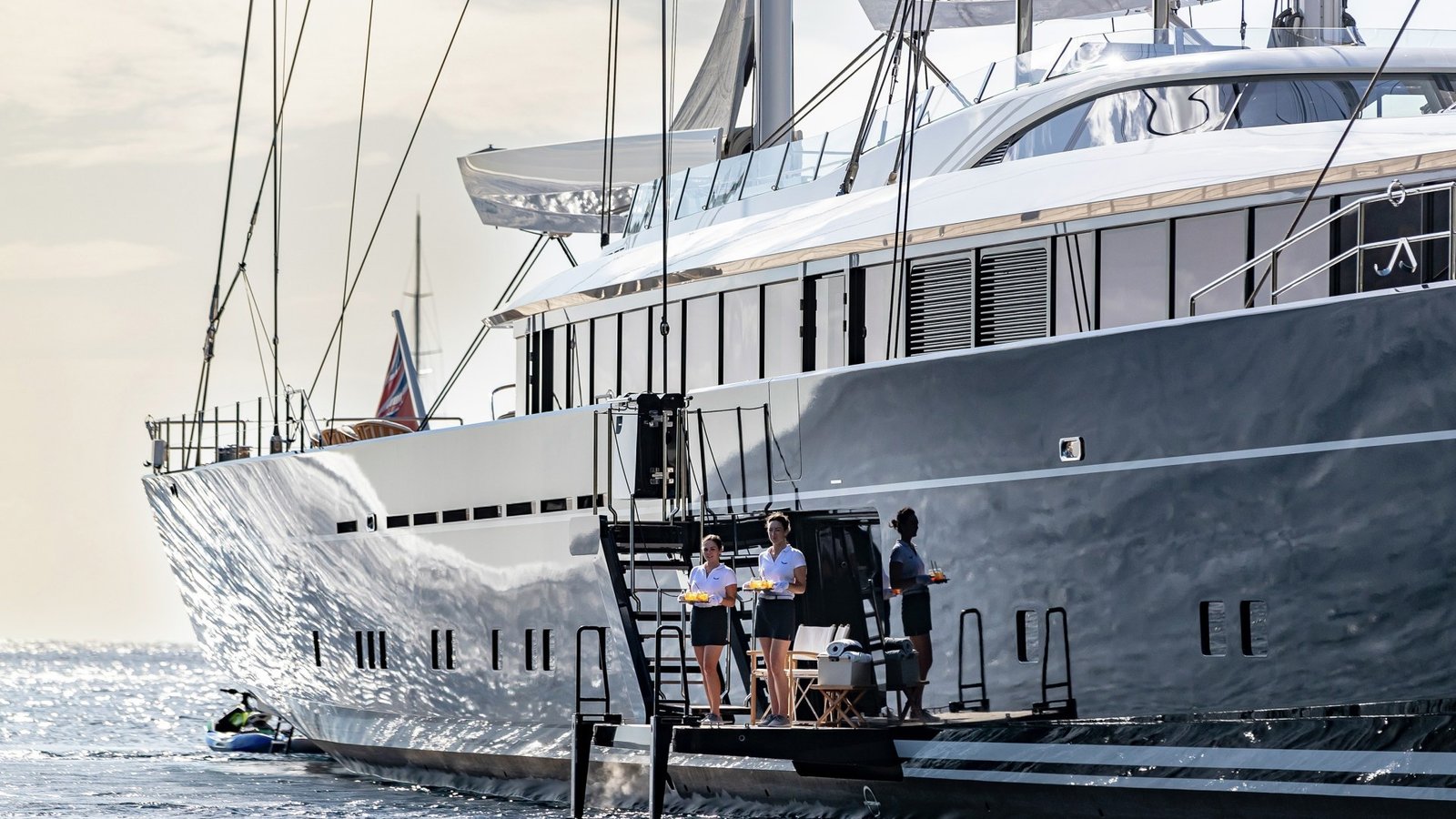
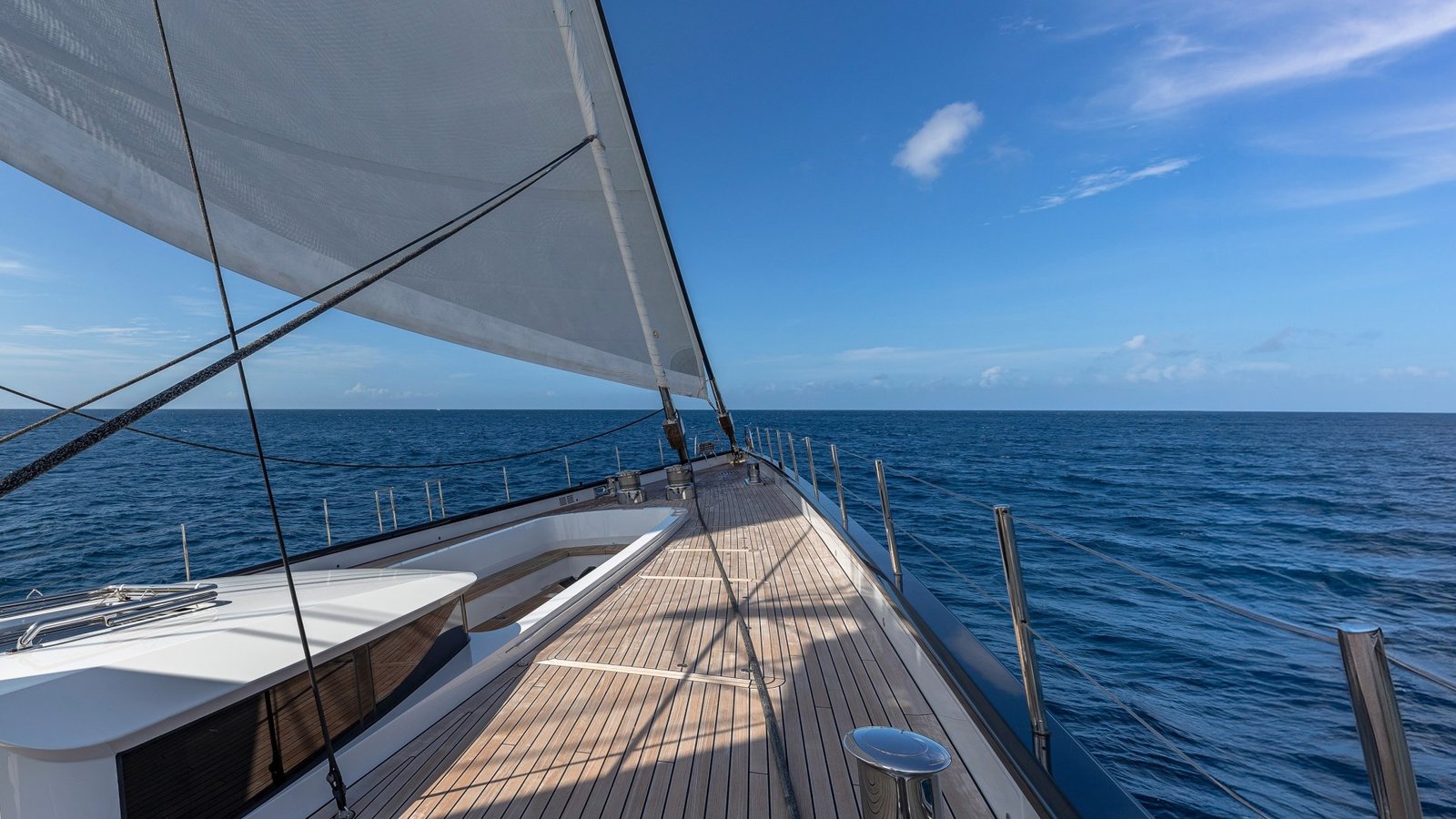
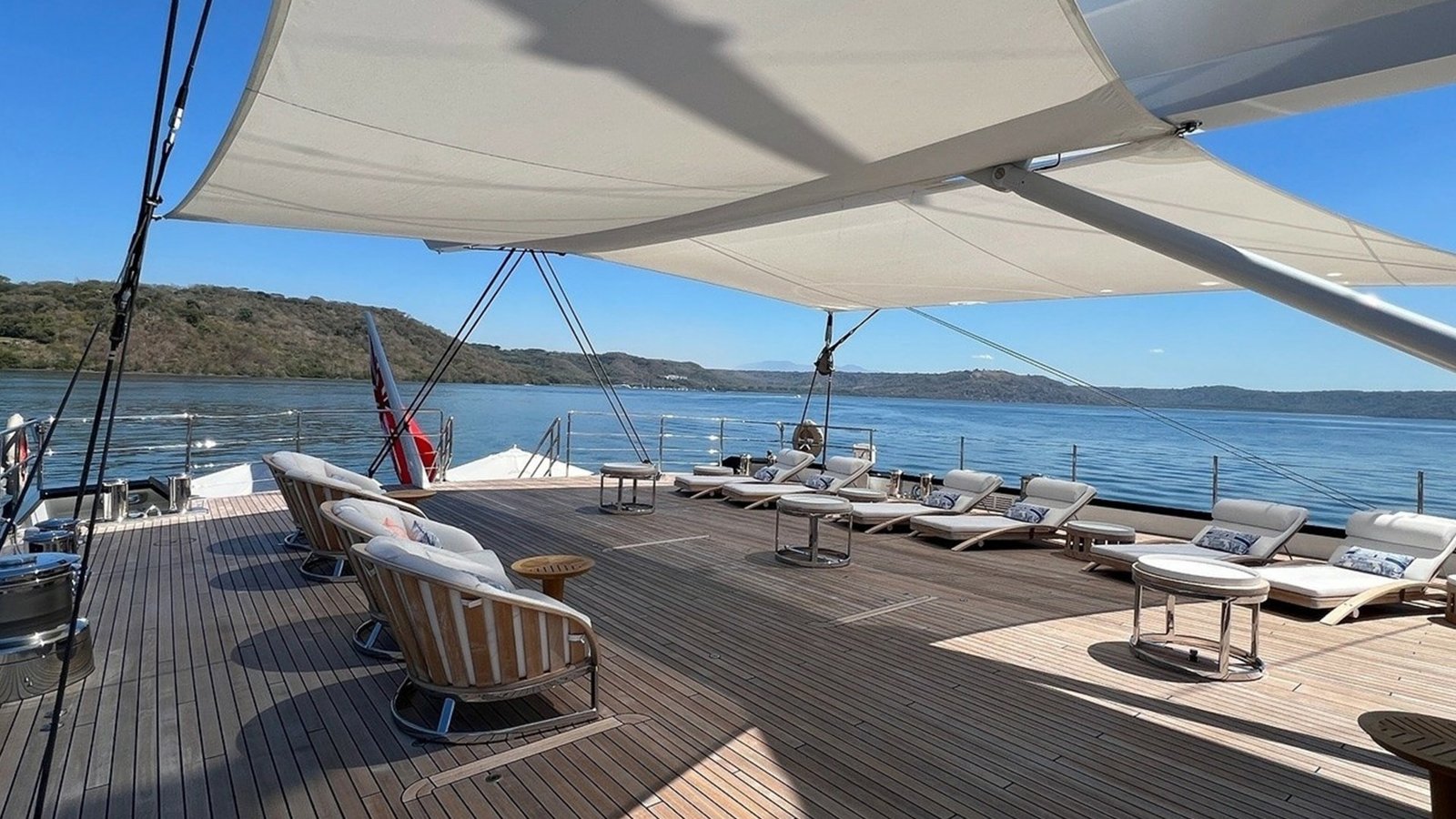
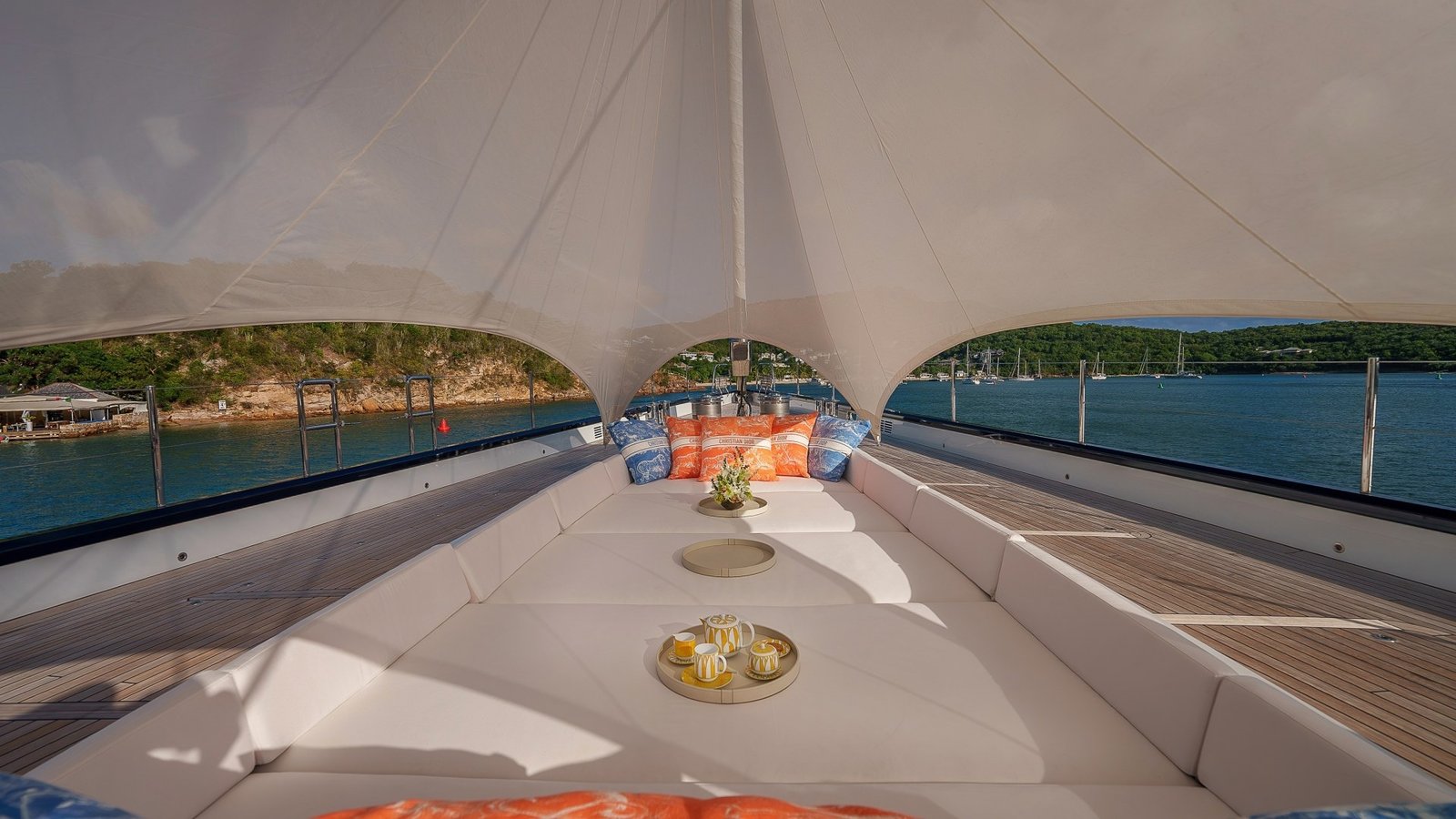
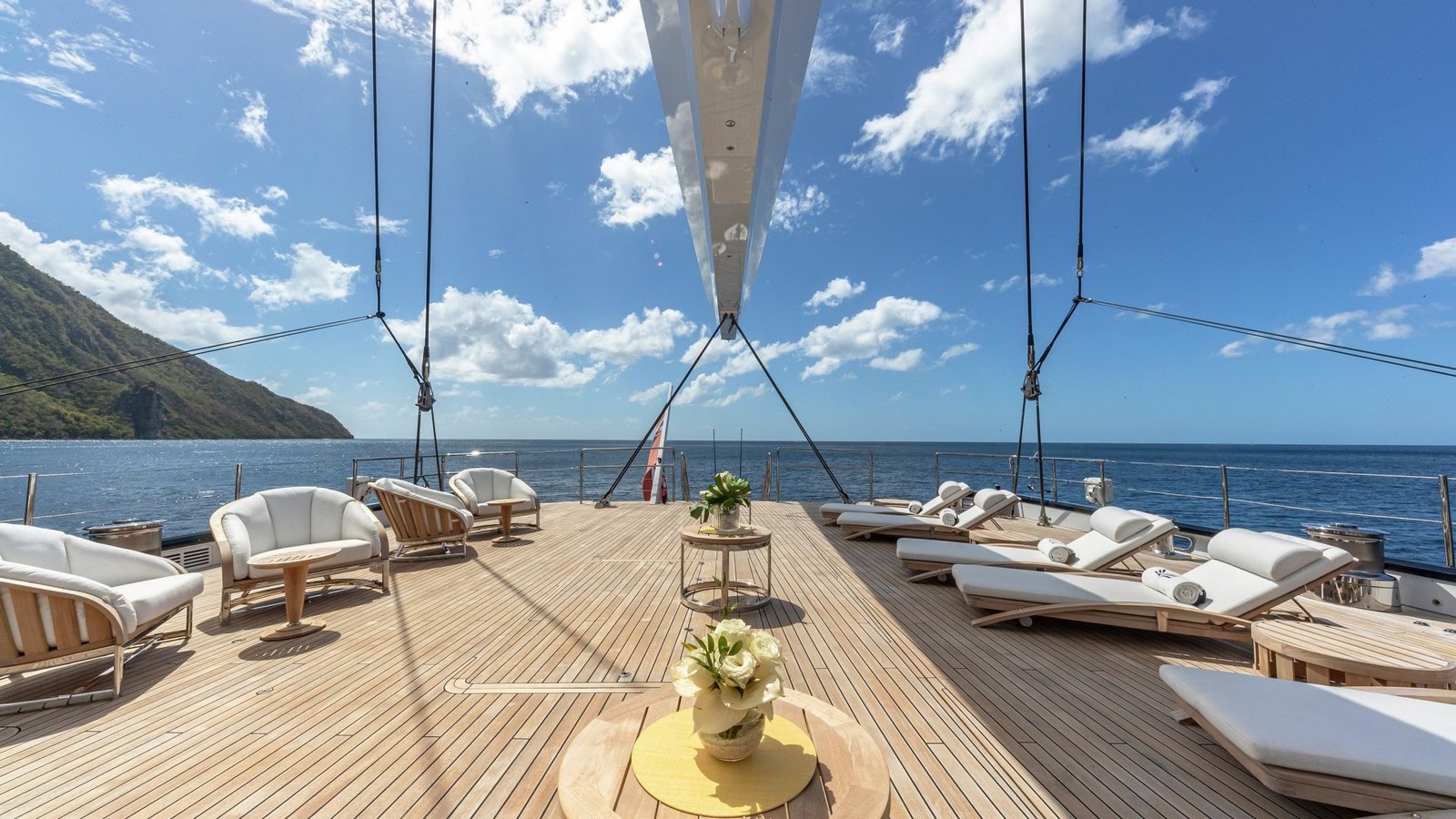
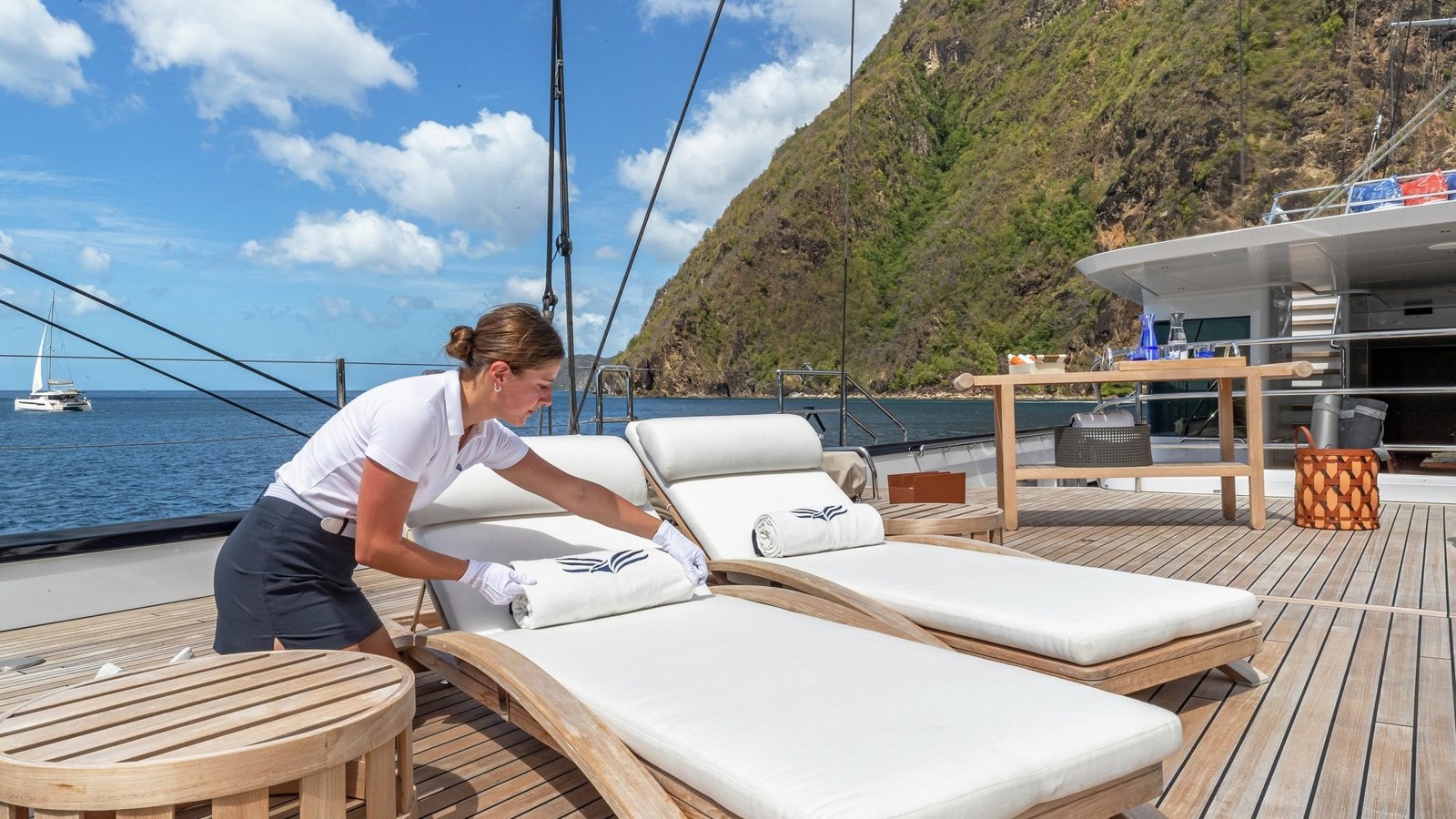
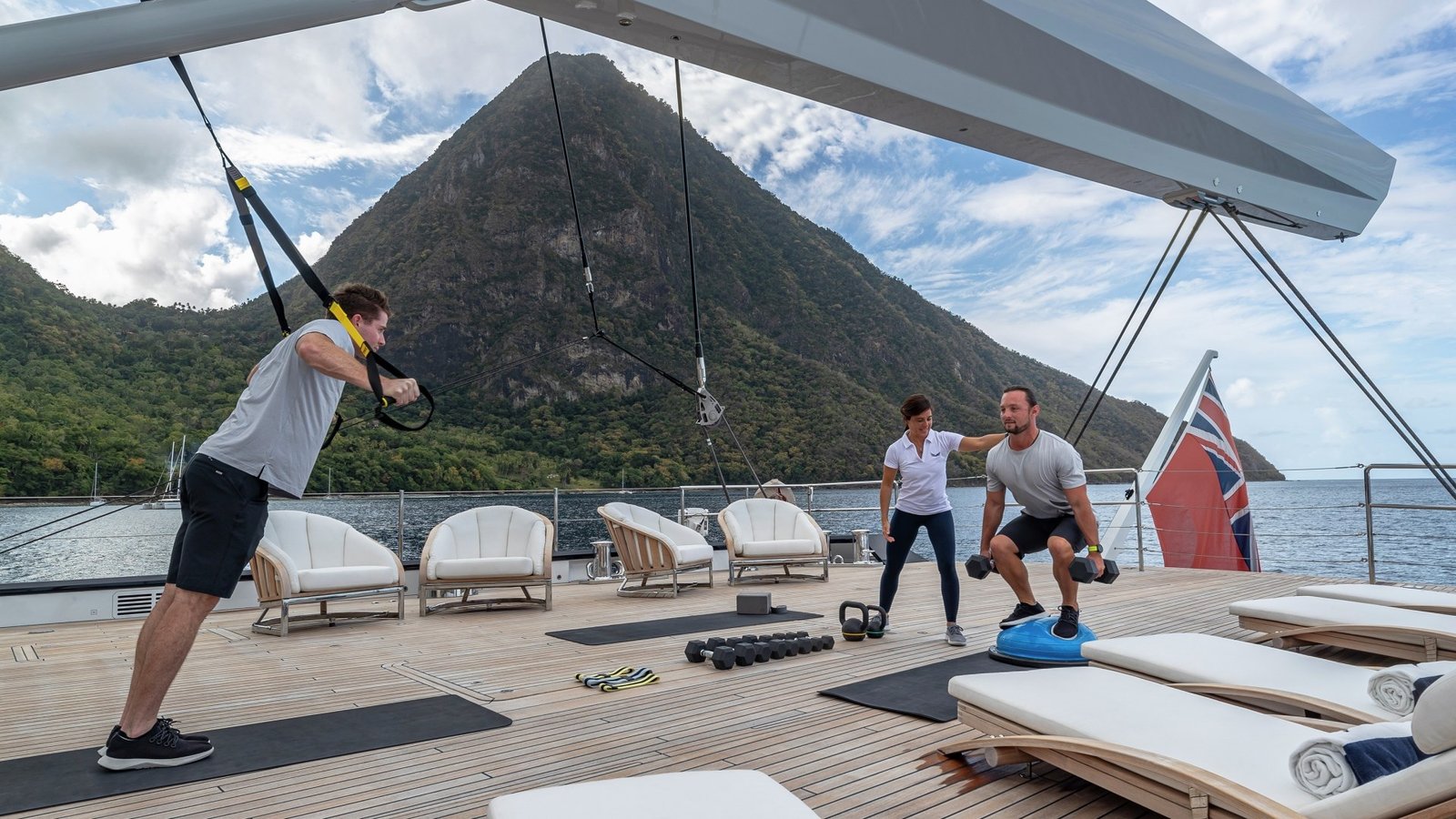
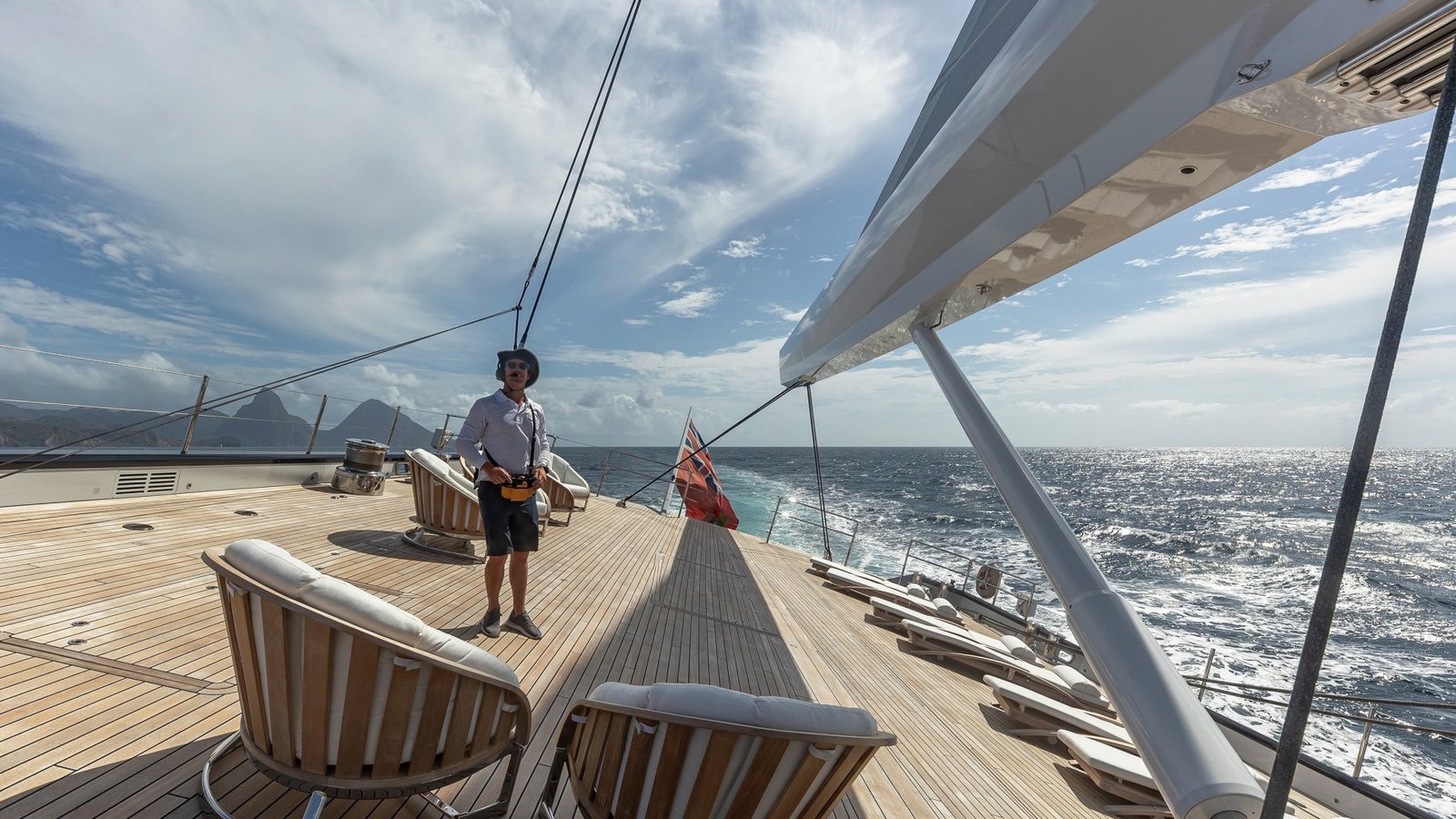
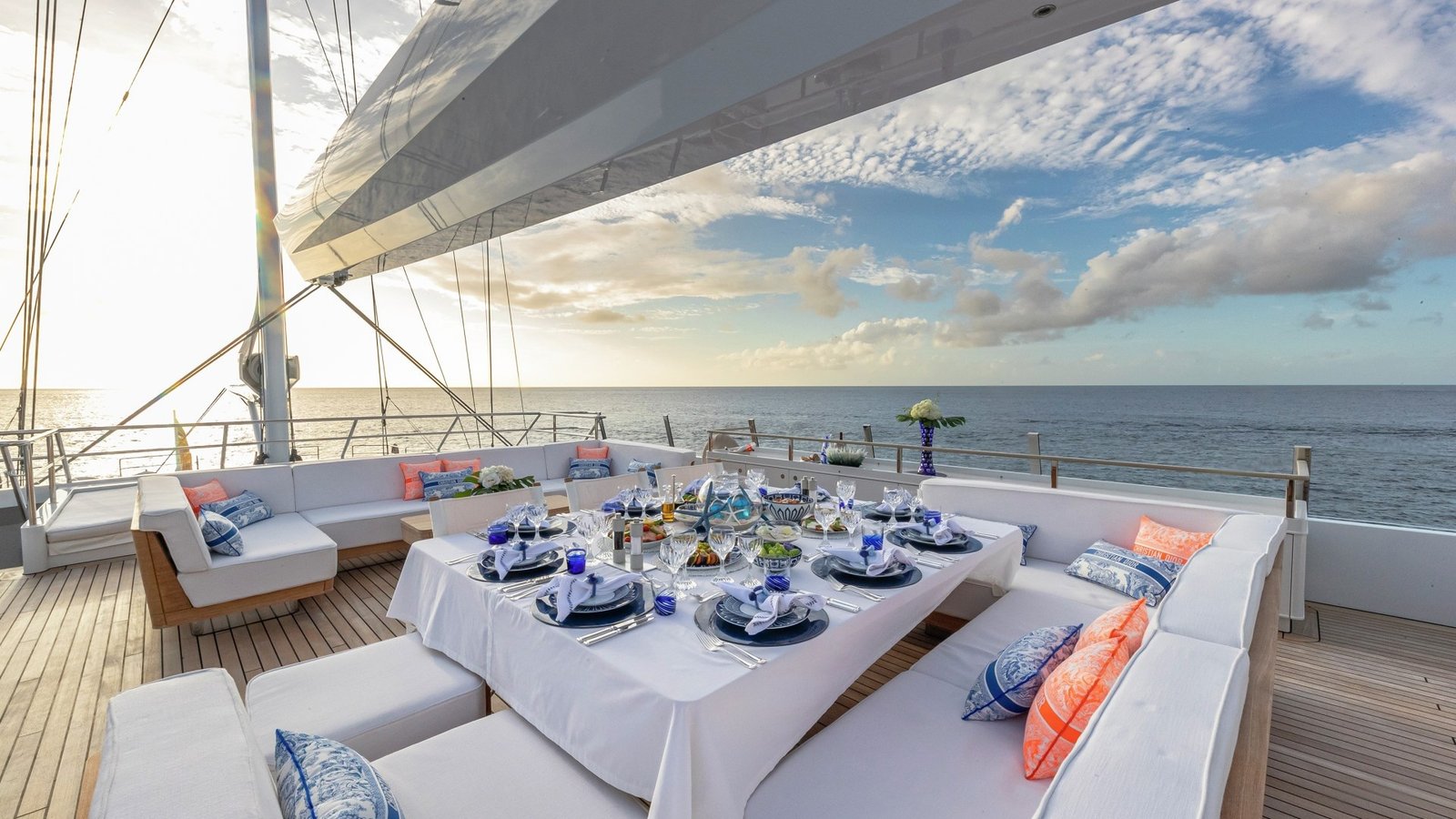
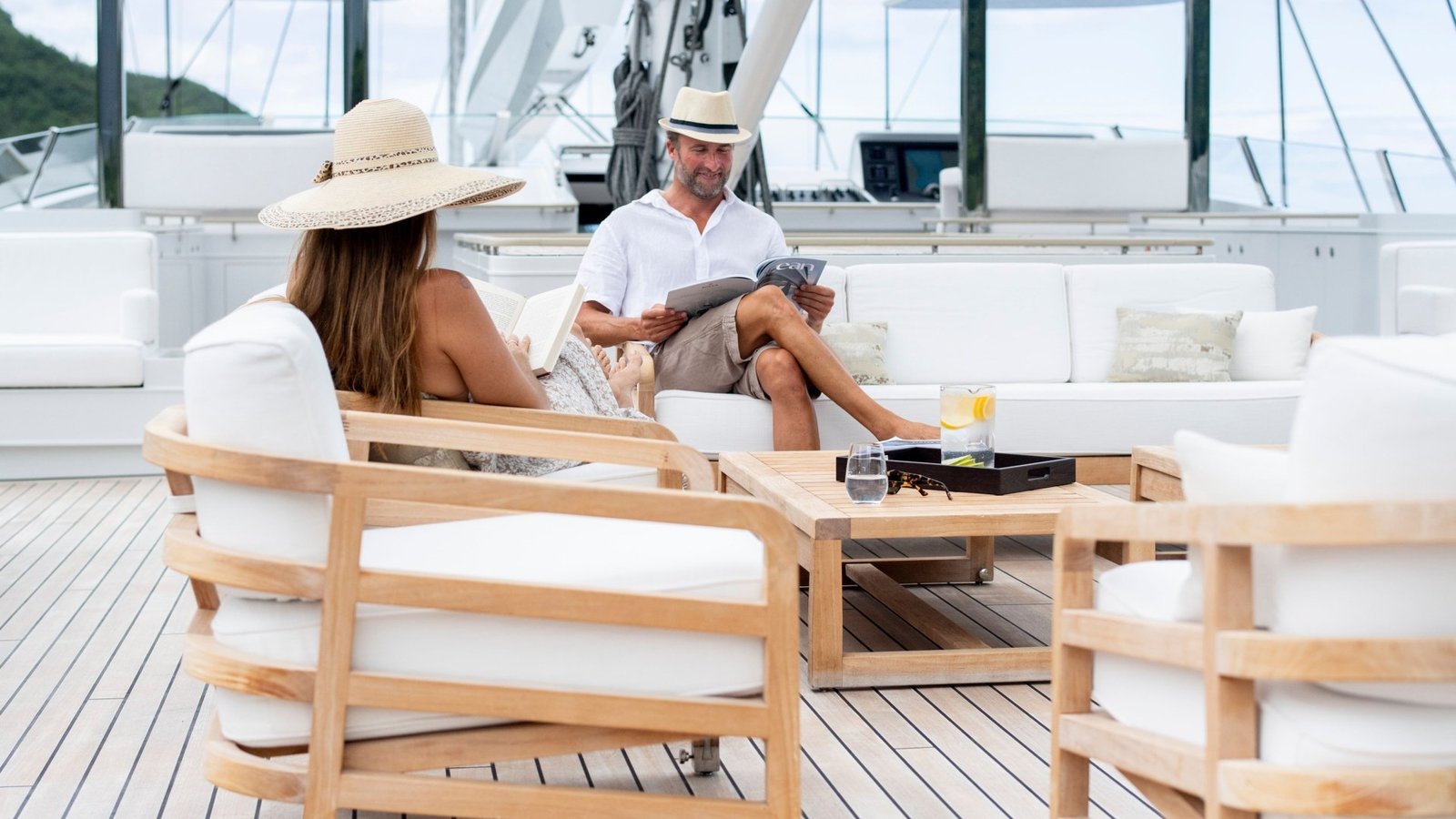
On deck, the teak runs wide and uncluttered from the deckhouse forward, with sunbeds laid out in a line and still enough room to work the boat around them. A tensioned canopy shades the aft lounge. Aboard there is a gym, a massage room and the toy and dive inventory you would expect of a yacht built for long ocean legs — tenders, foils, boards, jet skis, everything sized to be launched quickly rather than admired in a garage.
She charters through the Pacific and South East Asia, which suits her: those are long distances between good anchorages, and covering them under sail rather than under engine is exactly what she was drawn to do. For a charter party who want the sailing to be the point — not the backdrop — there is very little else at this scale, and nothing else at all with three masts and an aluminium hull. Royal Huisman delivered her in 2020 and she has barely stopped moving since, which tells you most of what you need to know about how she is set up to be used.