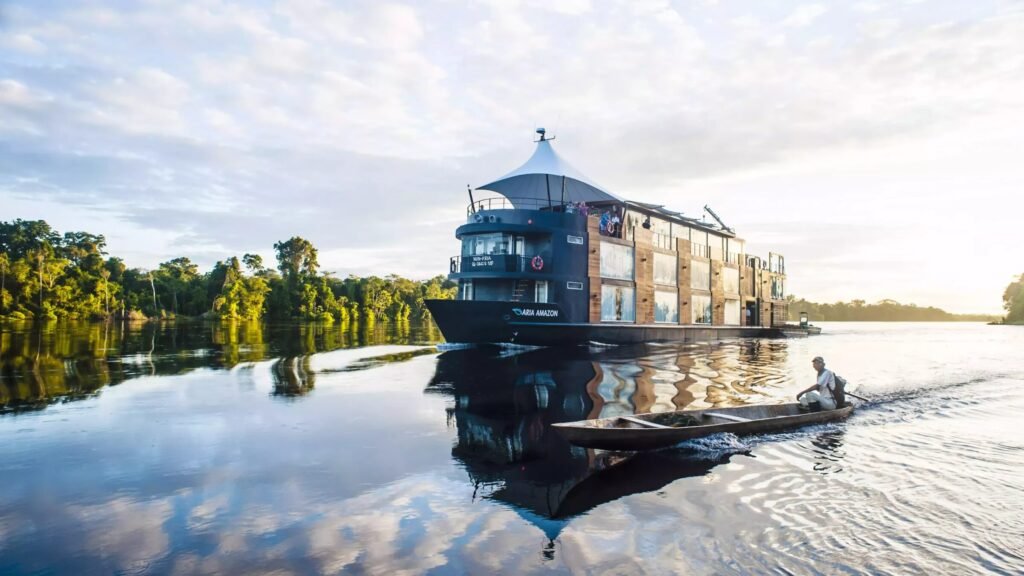
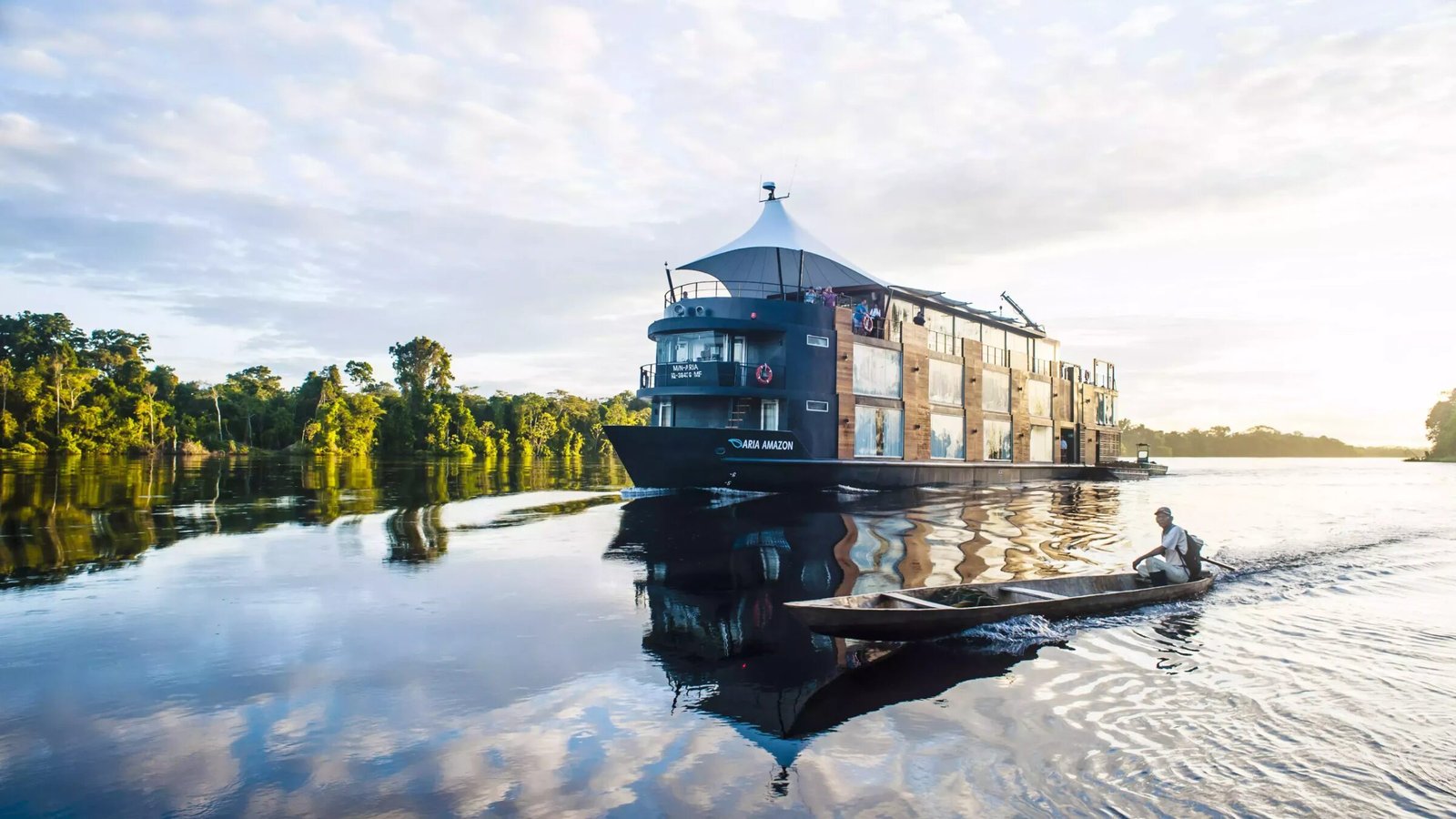
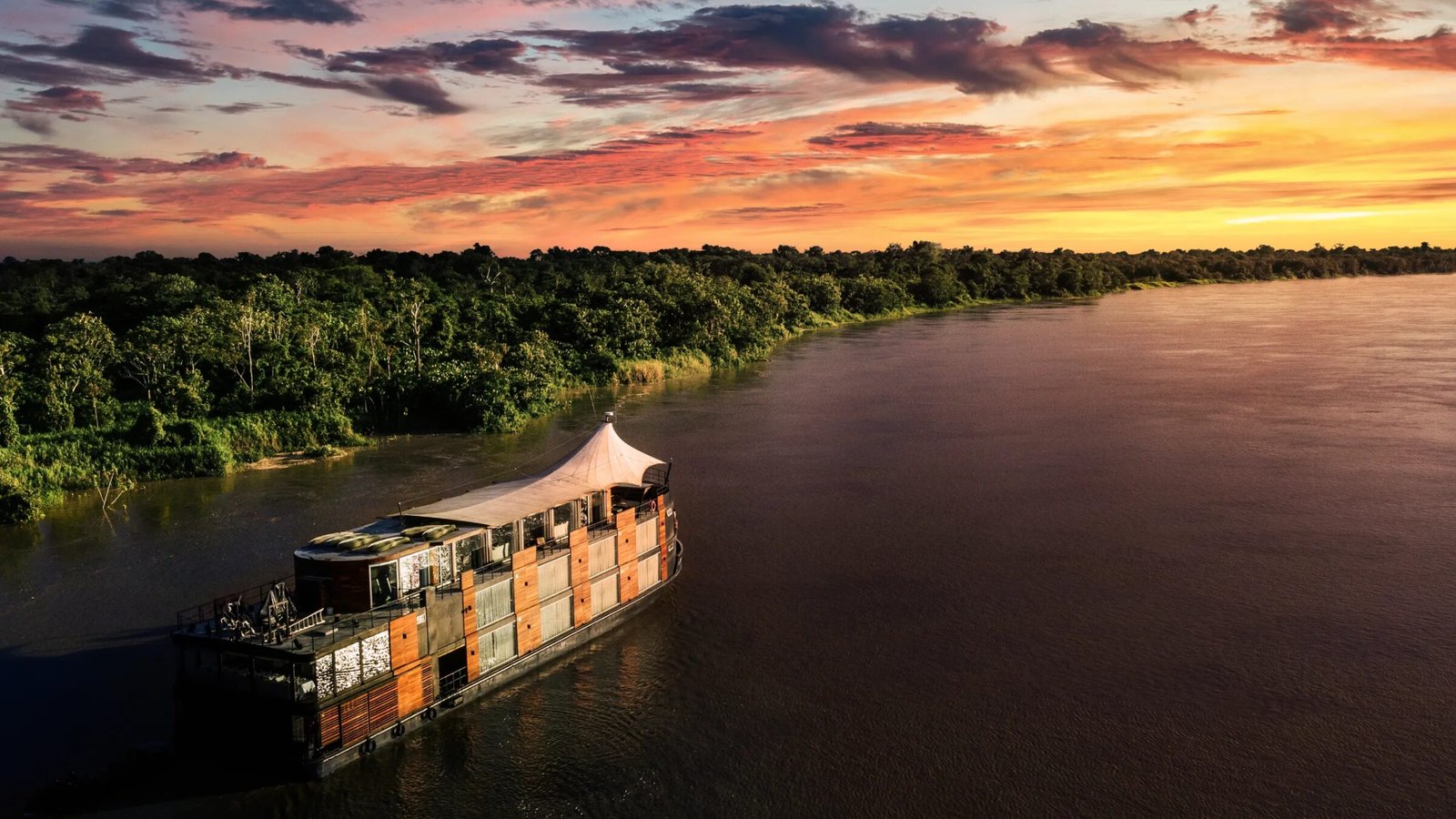
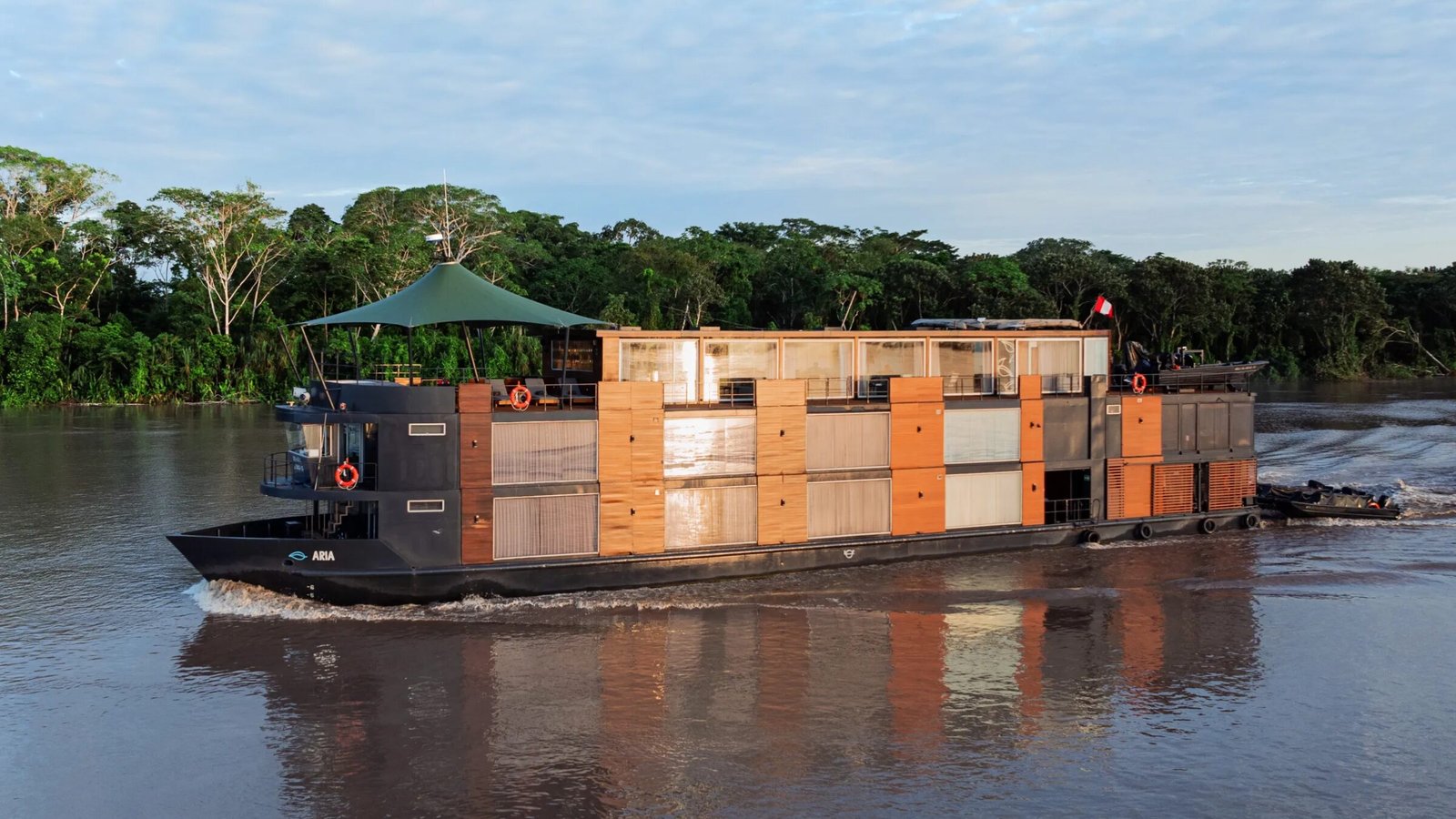
Aria Amazon was built for one river, and it shows in every decision aboard her. She is a
45-metre, purpose-built expedition ship working the Peruvian Amazon out of Iquitos, and her
shallow 1.5-metre draft is the single most important number in her specification. It is what
lets her turn into narrow tributaries, hold station over flooded forest and reach the
confluence country of the Maranon and Ucayali, where the wildlife is and where deeper hulls
simply cannot follow.
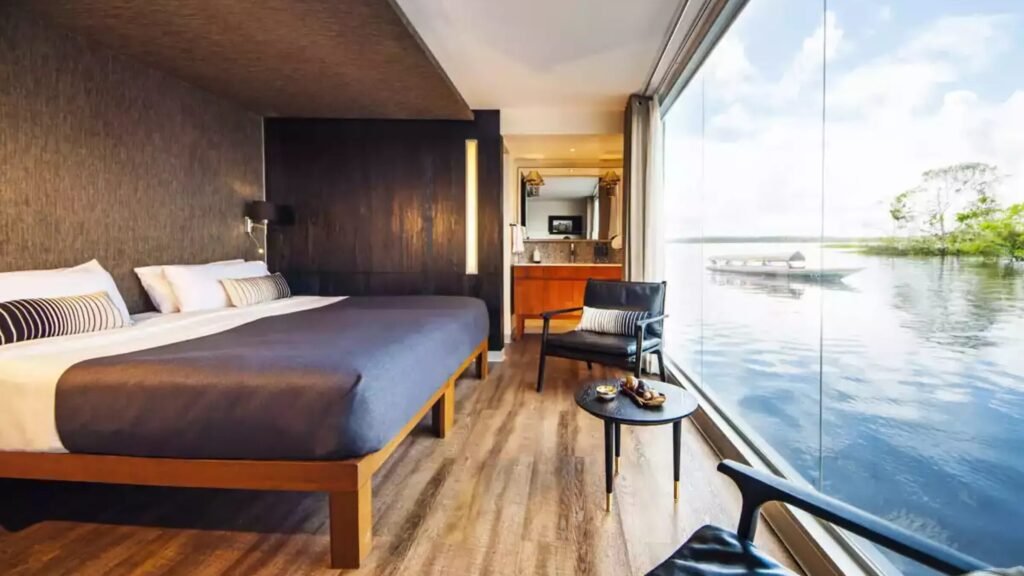
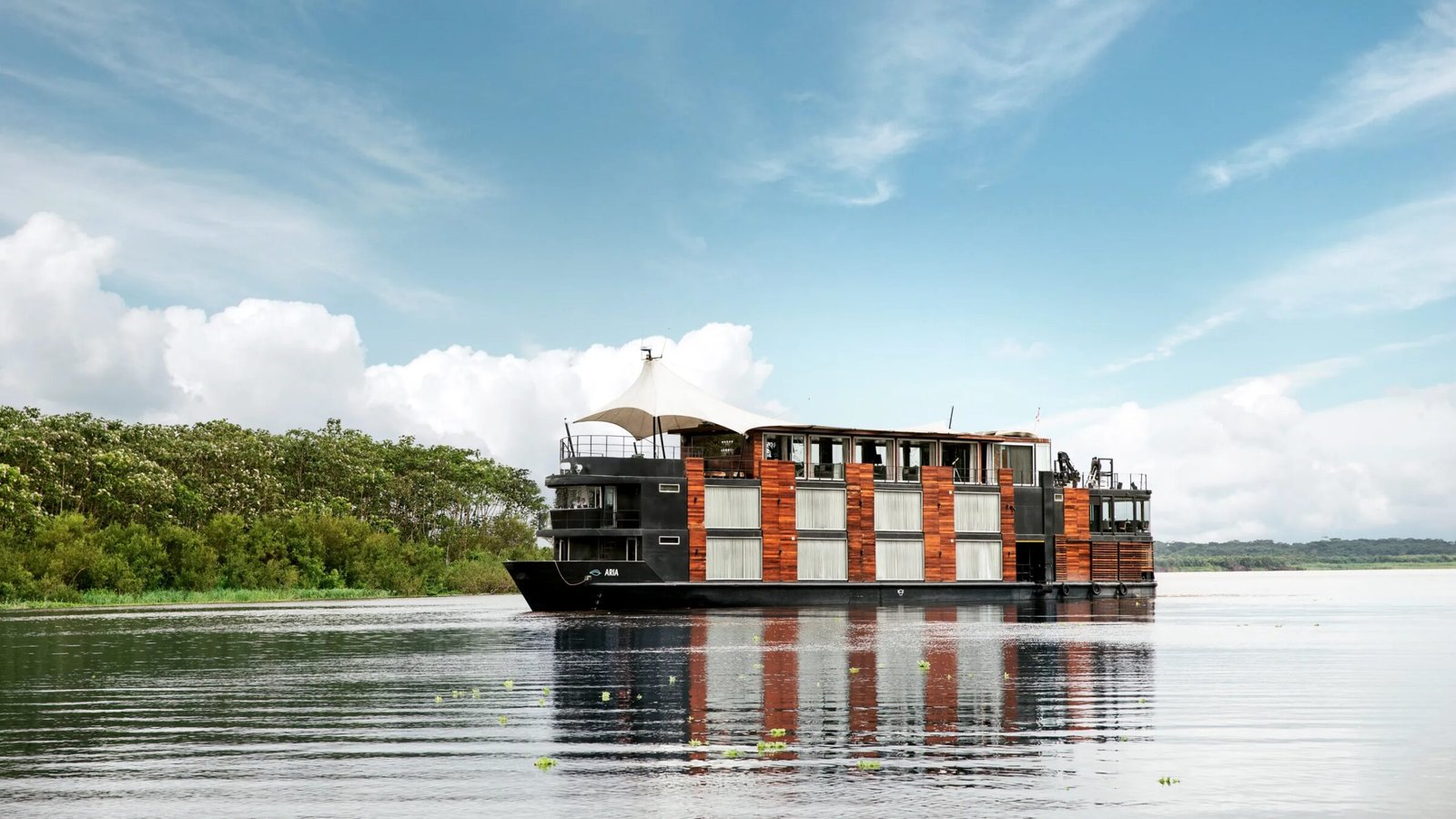
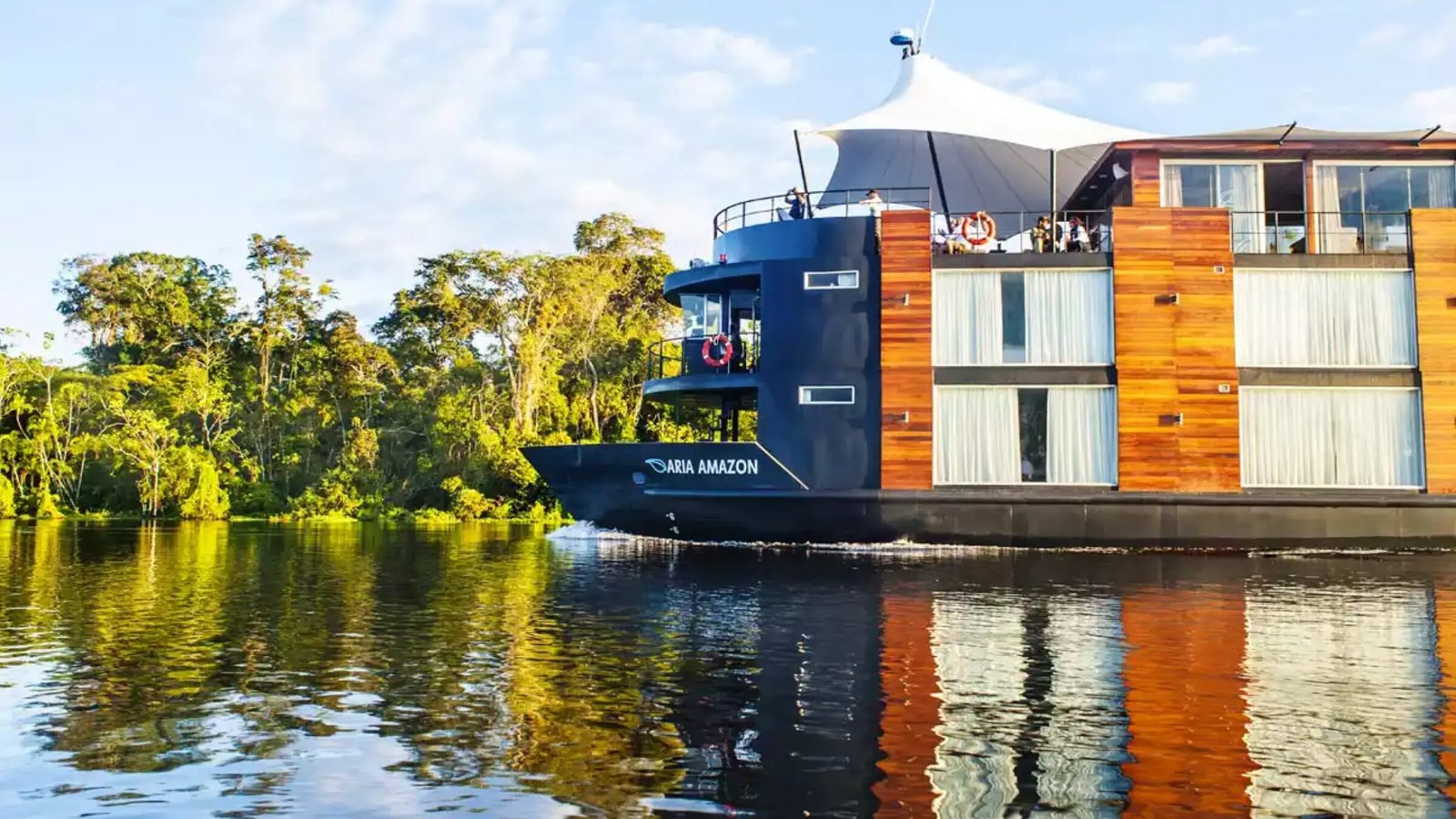
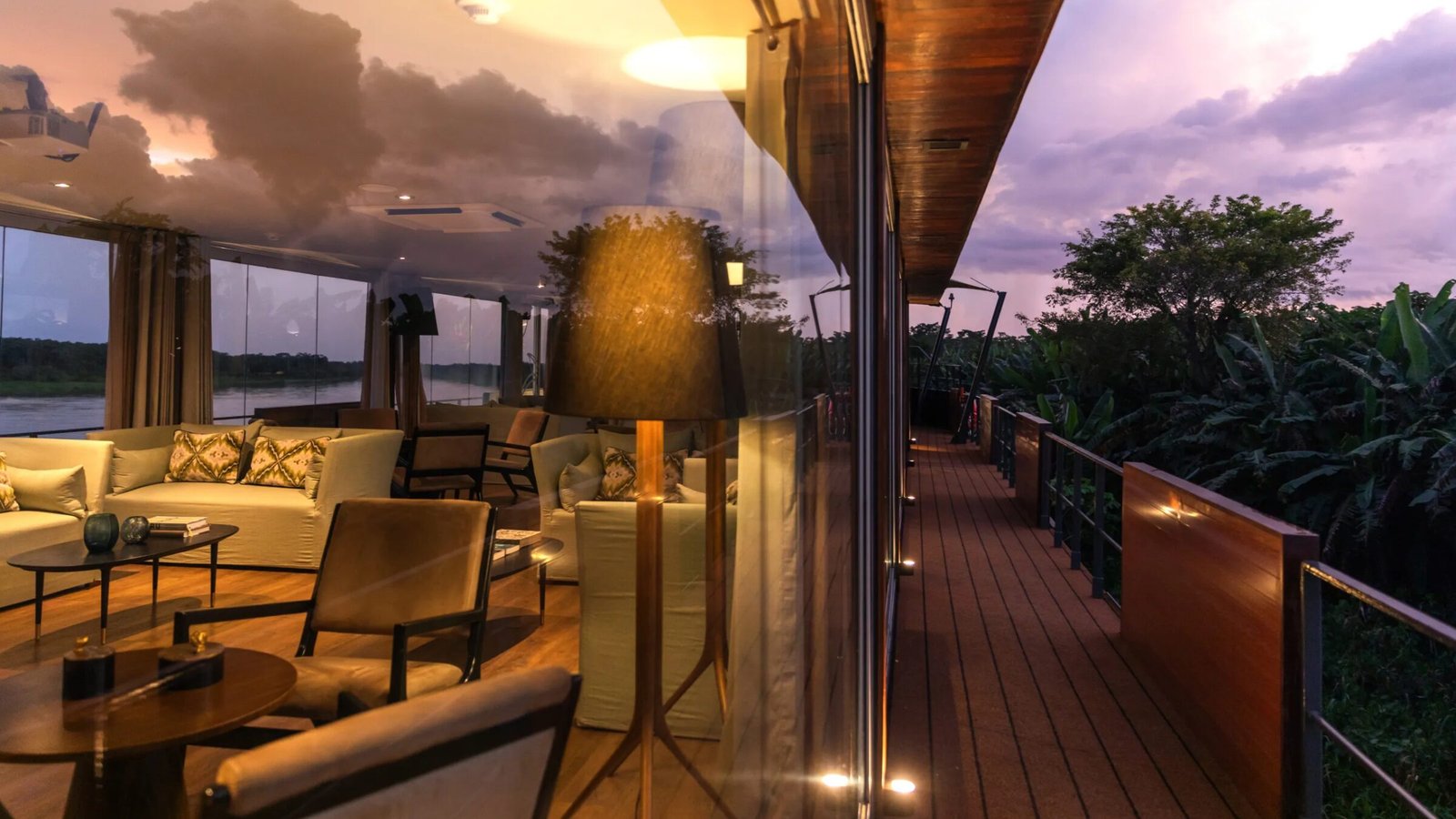
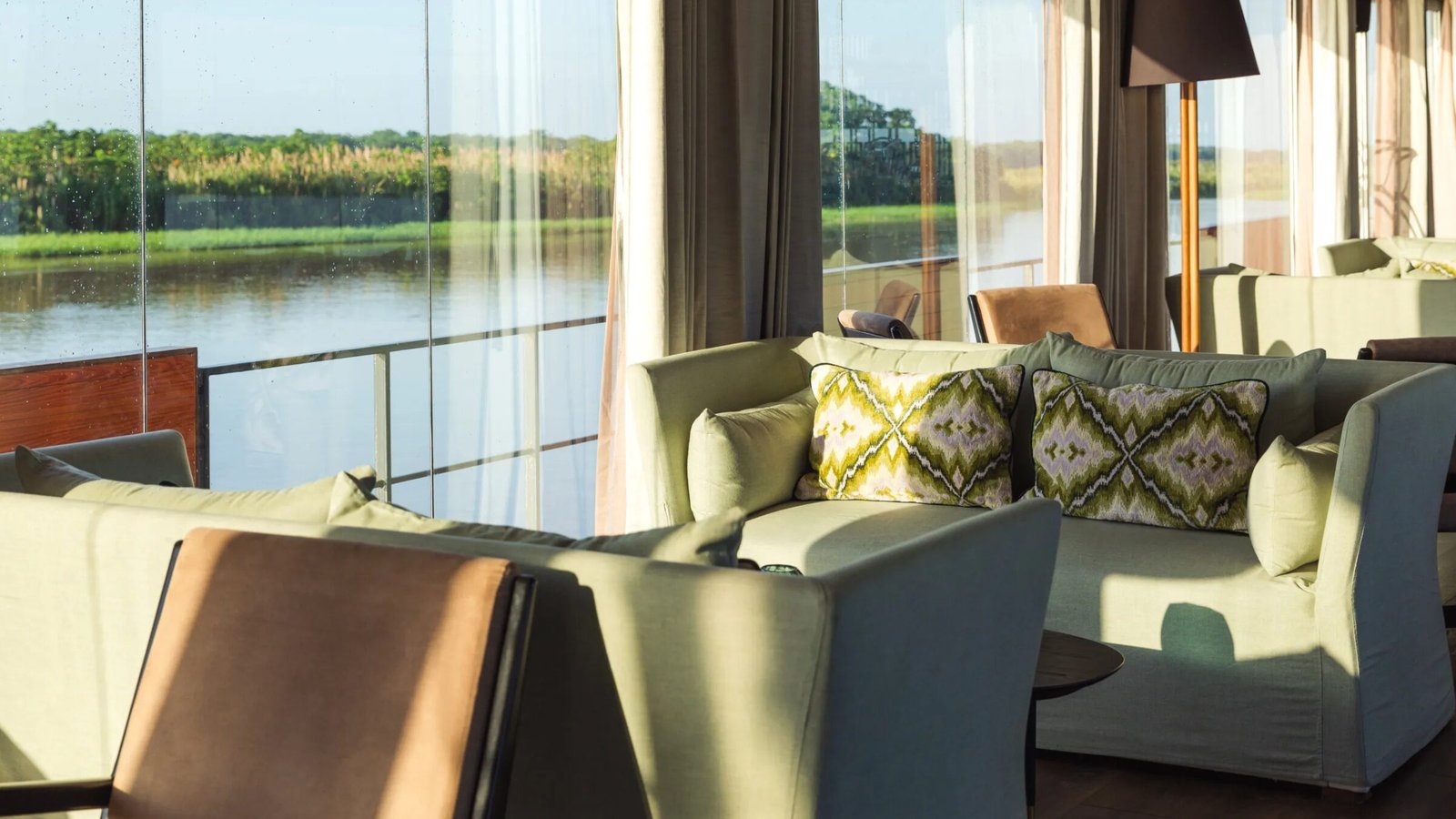
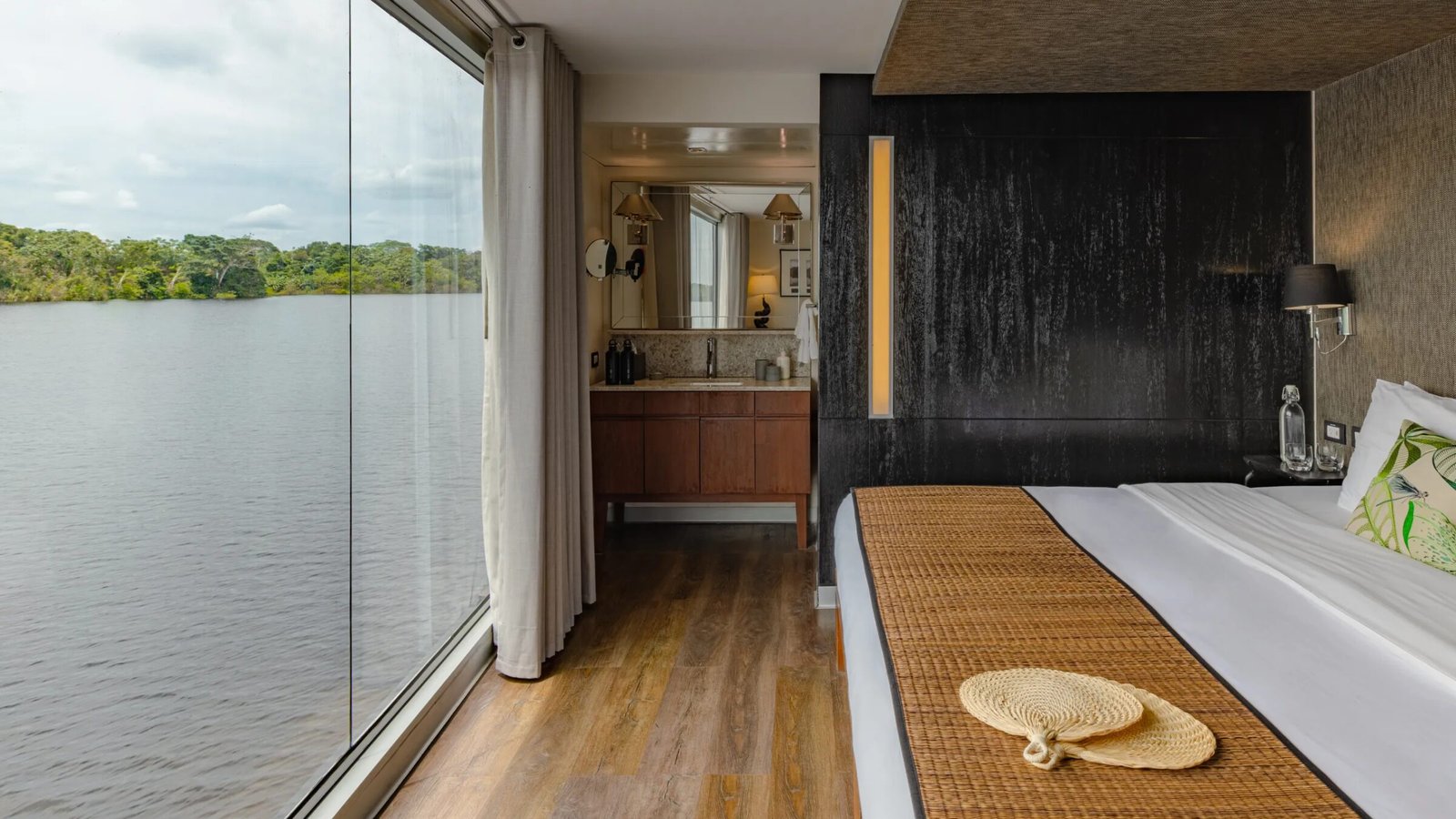
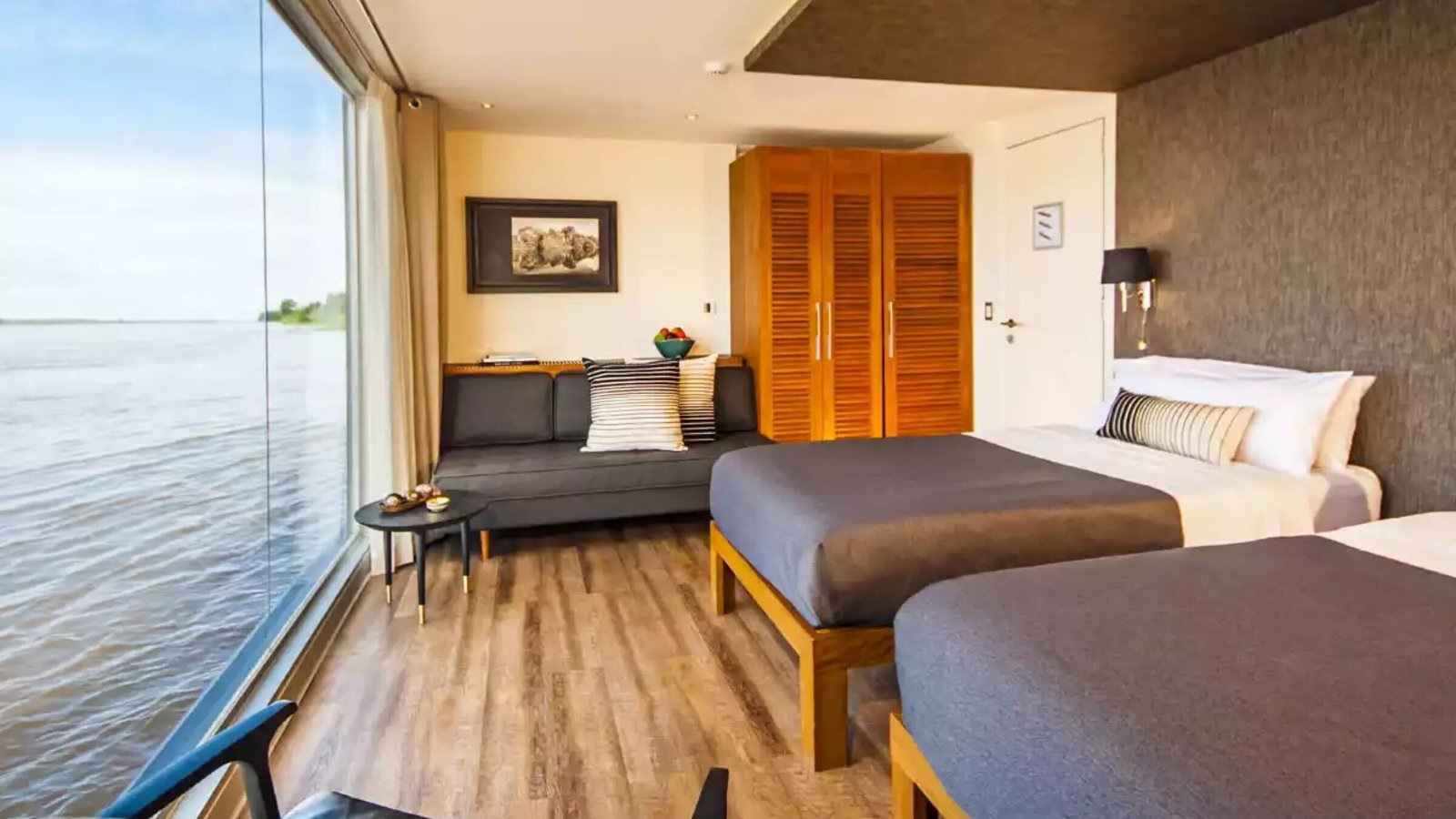
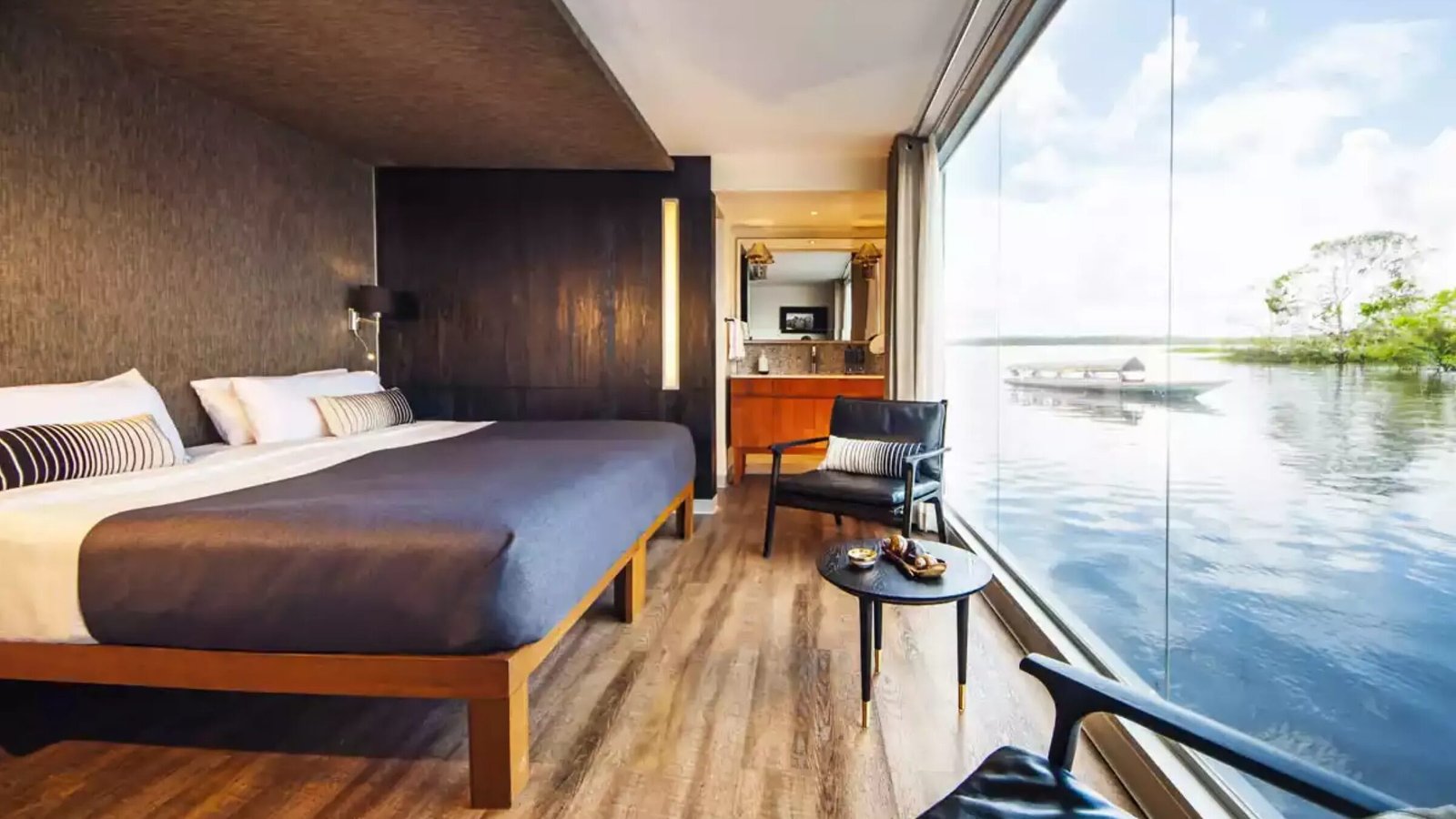
The design answers the setting directly. Three decks are glazed almost continuously, and all
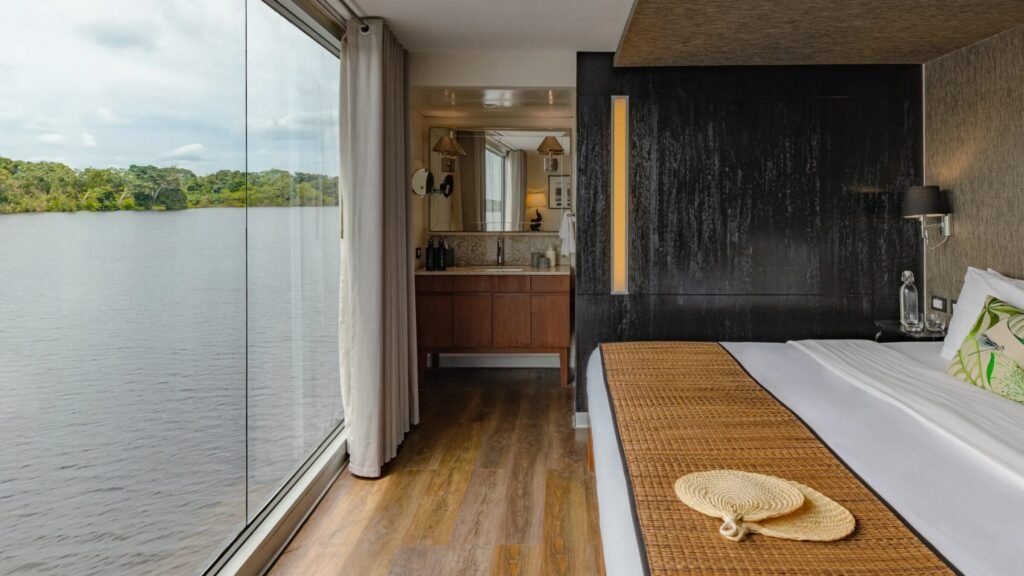
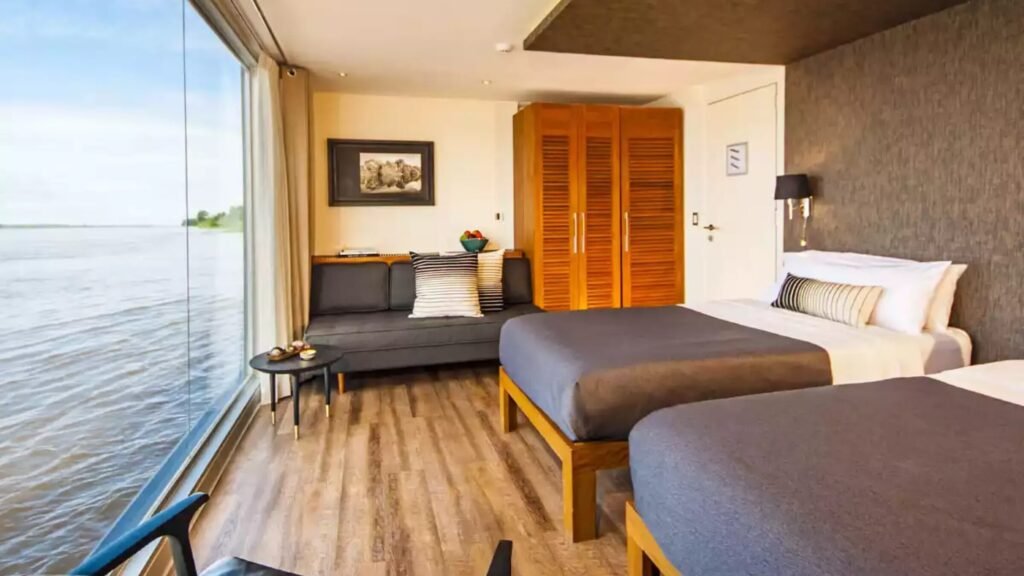
sixteen suites are pushed outboard against the hull sides so that every one has a floor-to-
ceiling window at eye level from the bed. Guests wake to the bank sliding past. The suites are
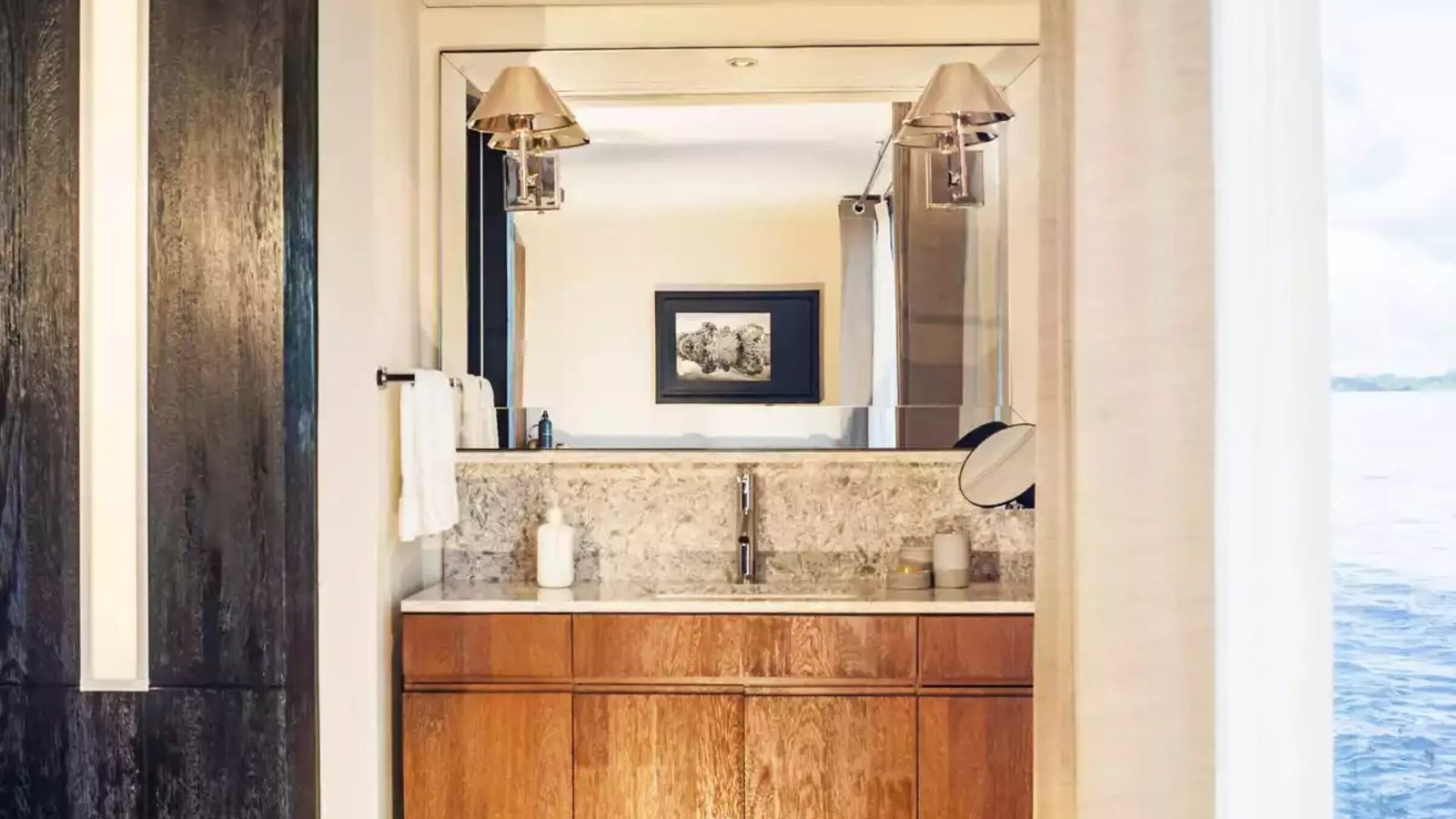
generous by river-ship standards, finished in pale timber and dark grasscloth, and arranged
as doubles and twins with the same footprint, the same glass and the same quiet
air-conditioning. Several carry a writing desk set into the window line, which turns out to
be the most-used seat aboard.
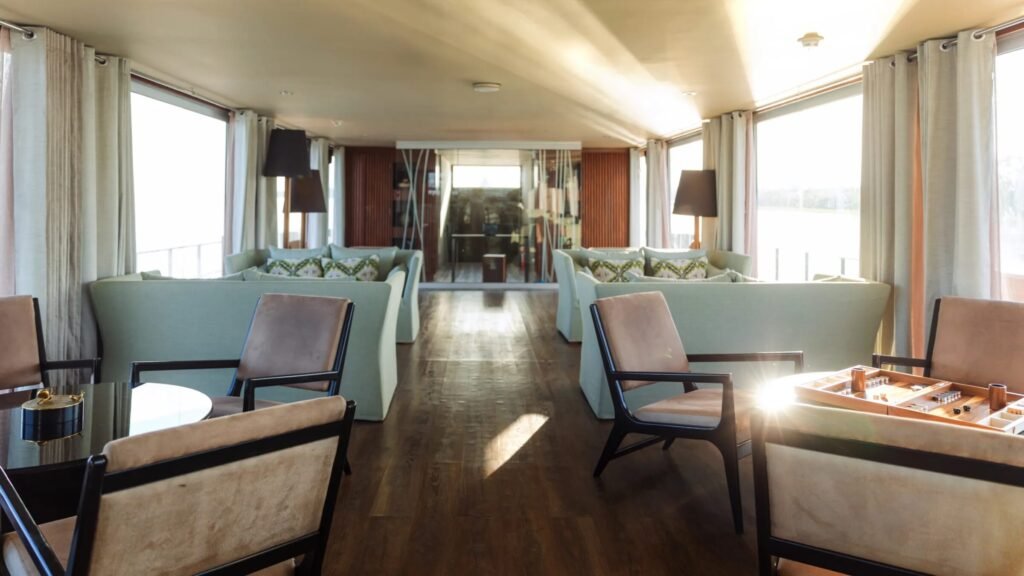
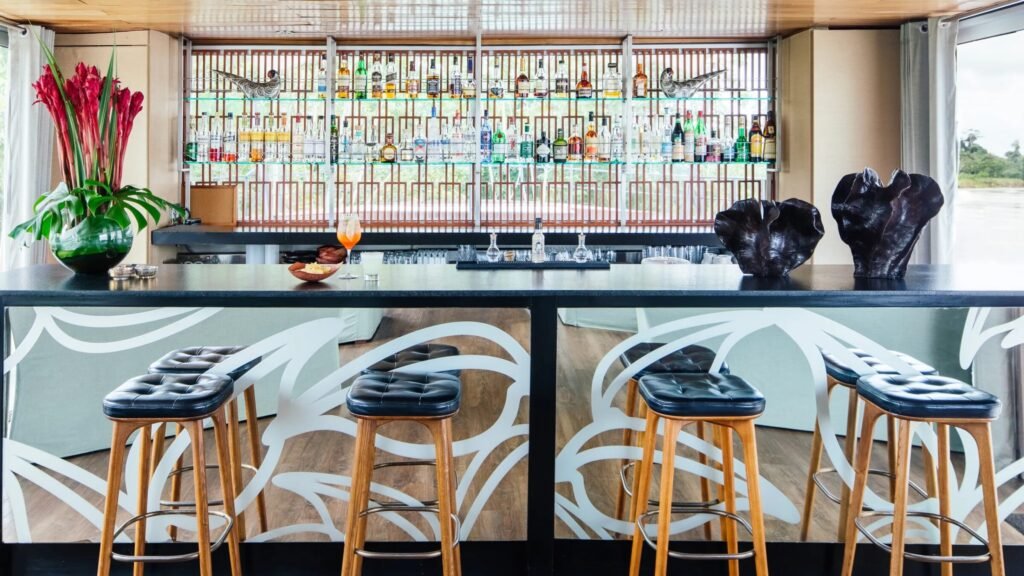
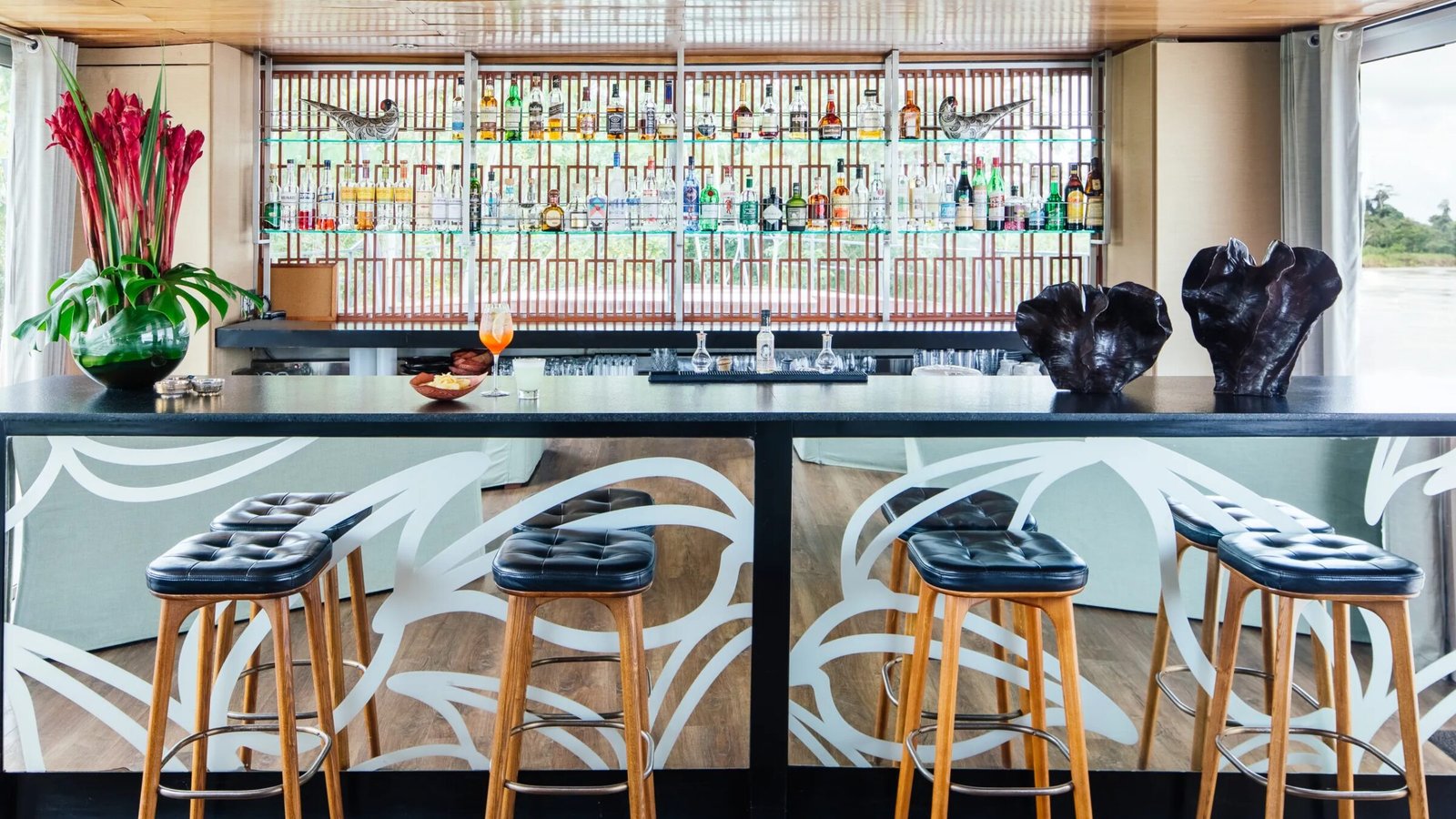
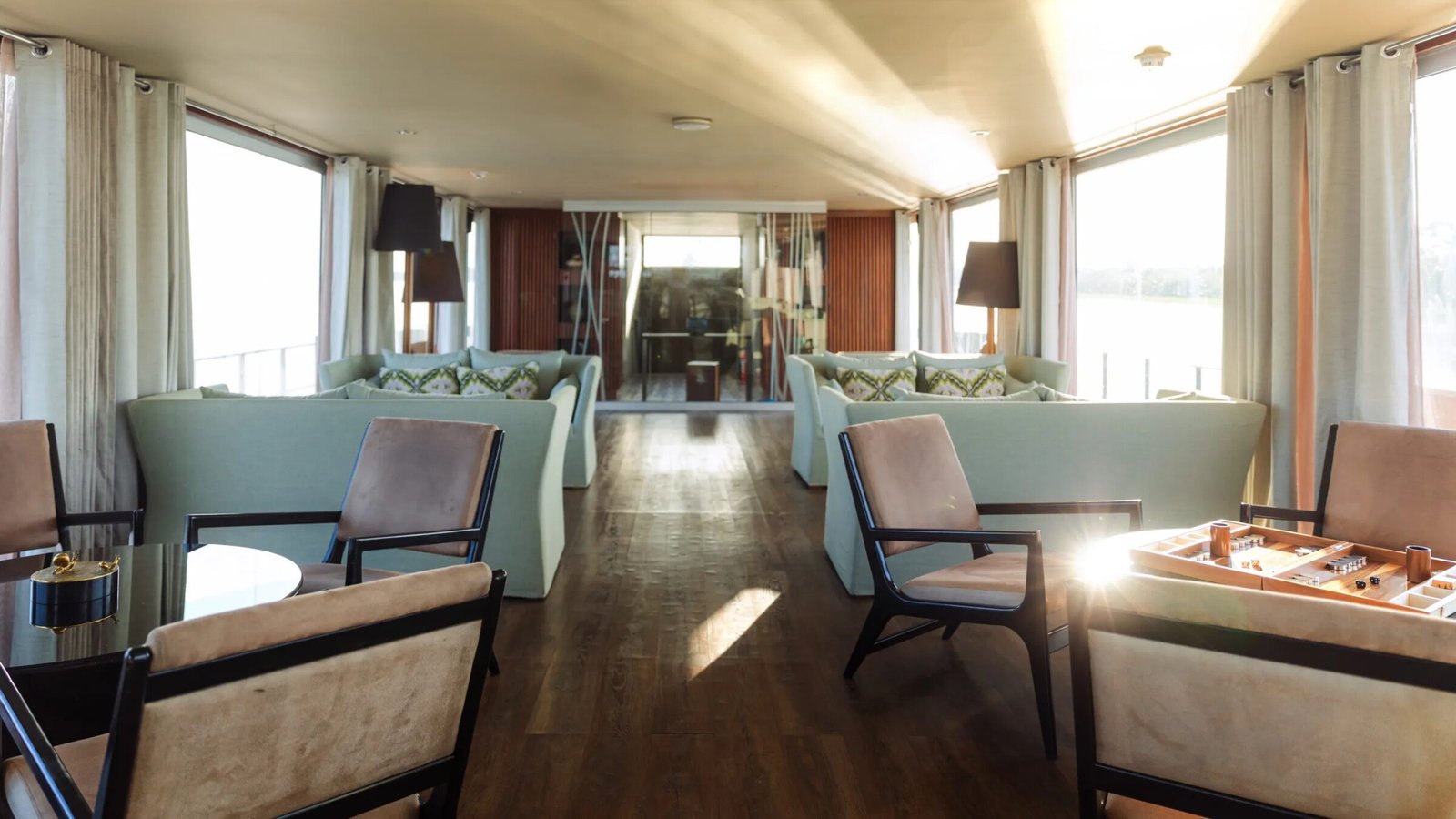
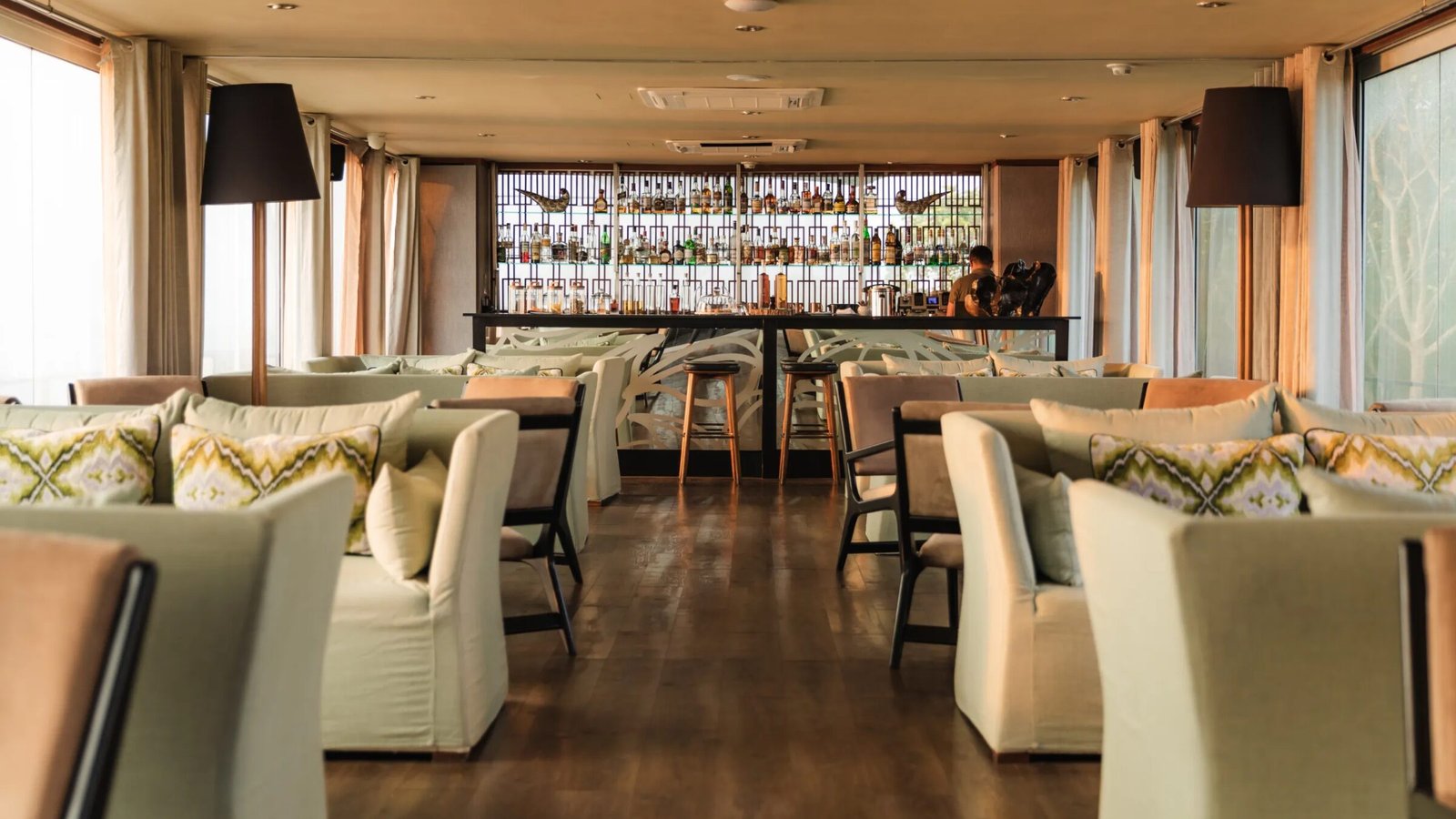
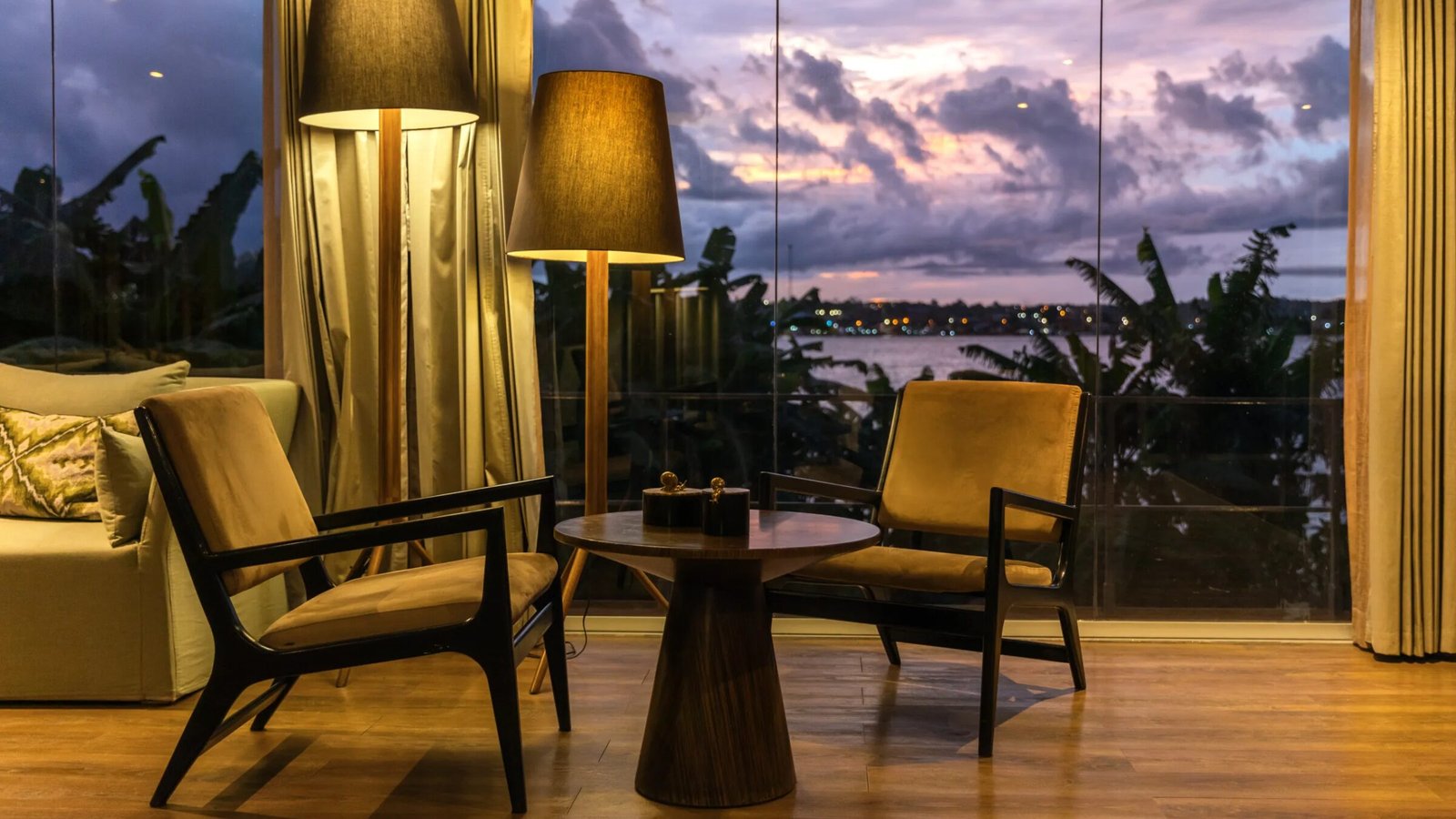
Social spaces run open along the main deck. The saloon is understated on purpose — low linen
seating, a games table, timber underfoot — and flows into a bar backed by a lit spirits wall,
where the day begins with coffee before the first skiff leaves and ends with something cold
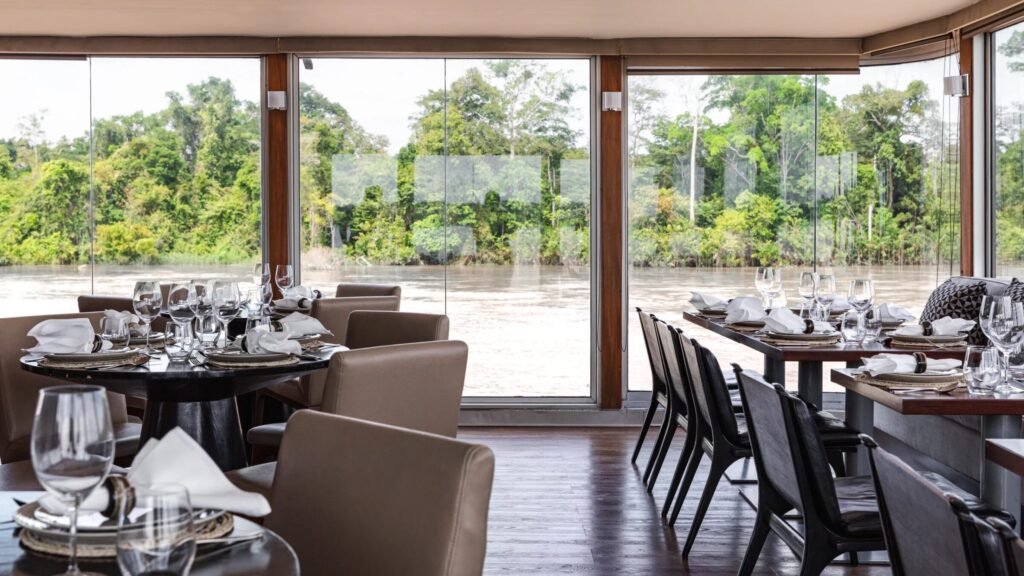
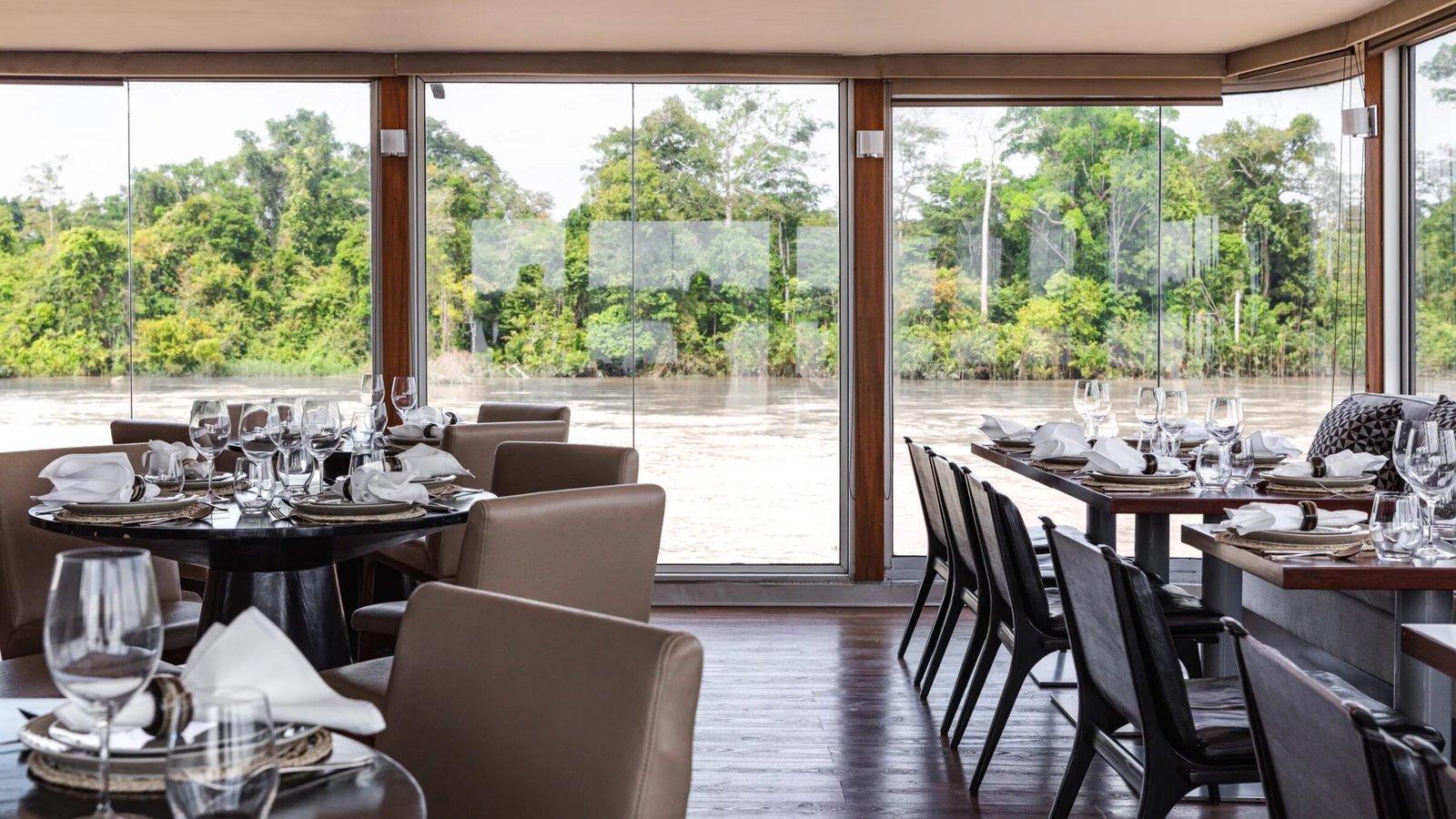
when the boats return. The dining room is glazed on both sides and laid properly, and the
galley works almost entirely from Amazonian produce: river fish, jungle fruit, and whatever
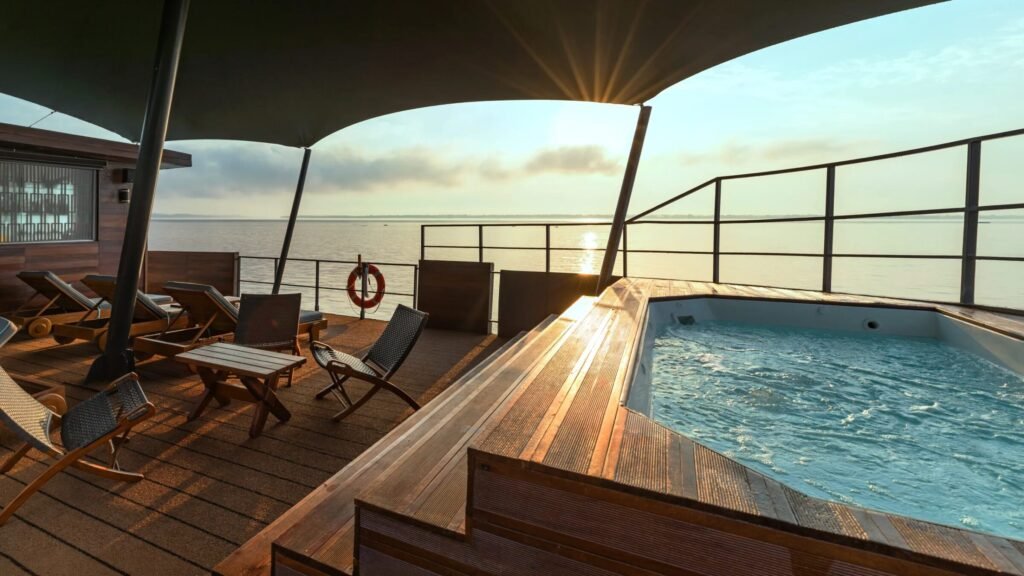
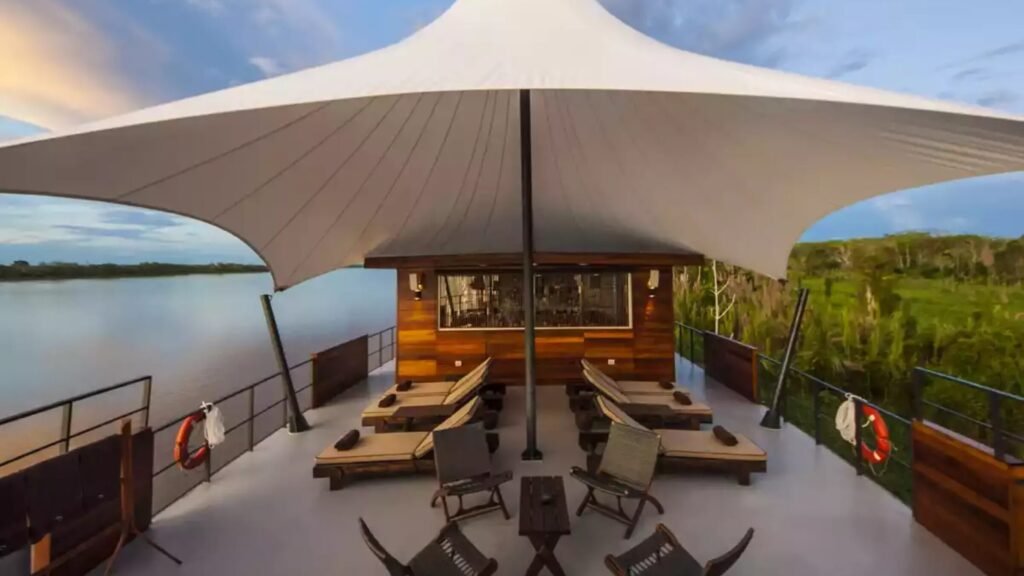
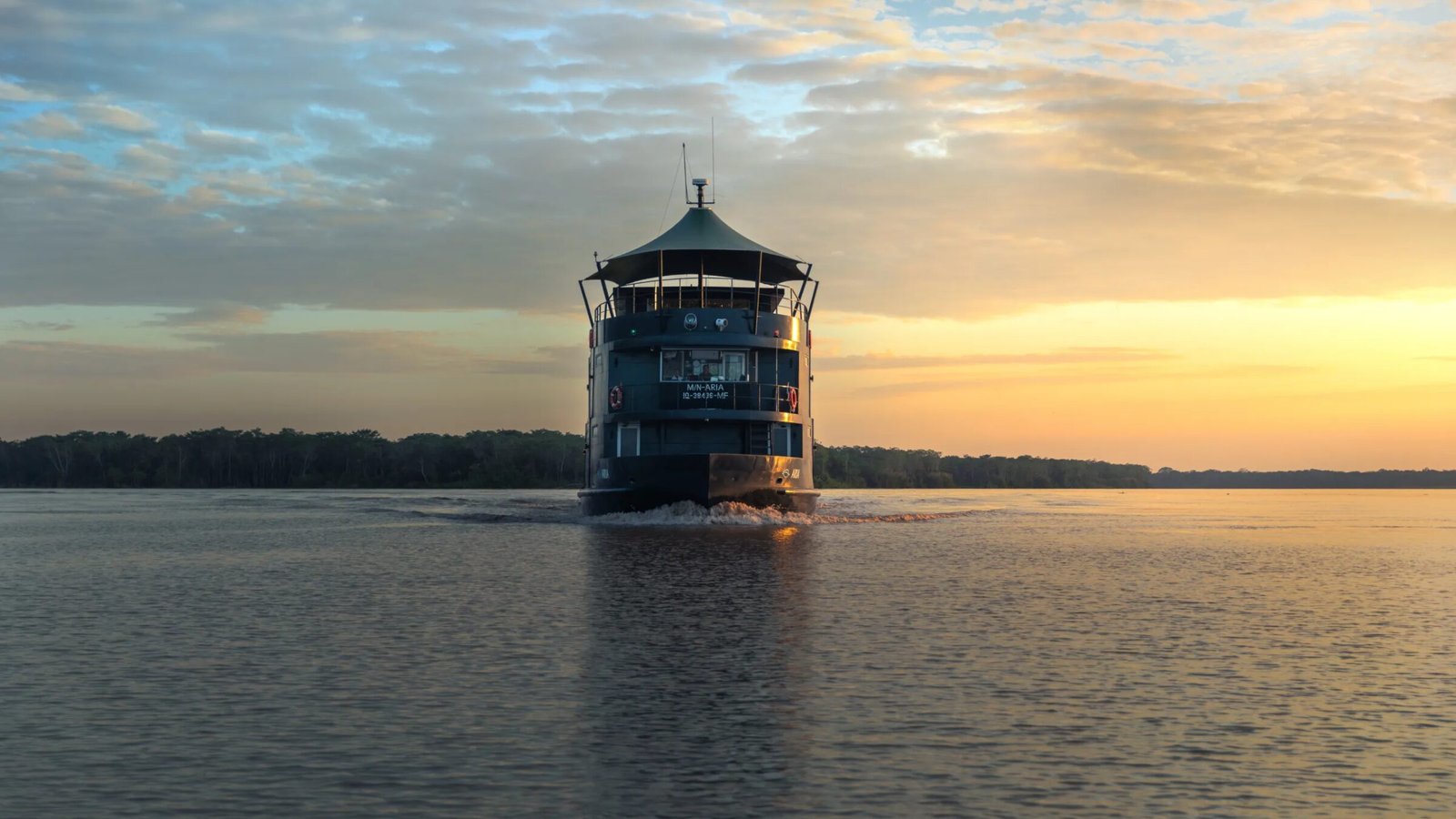
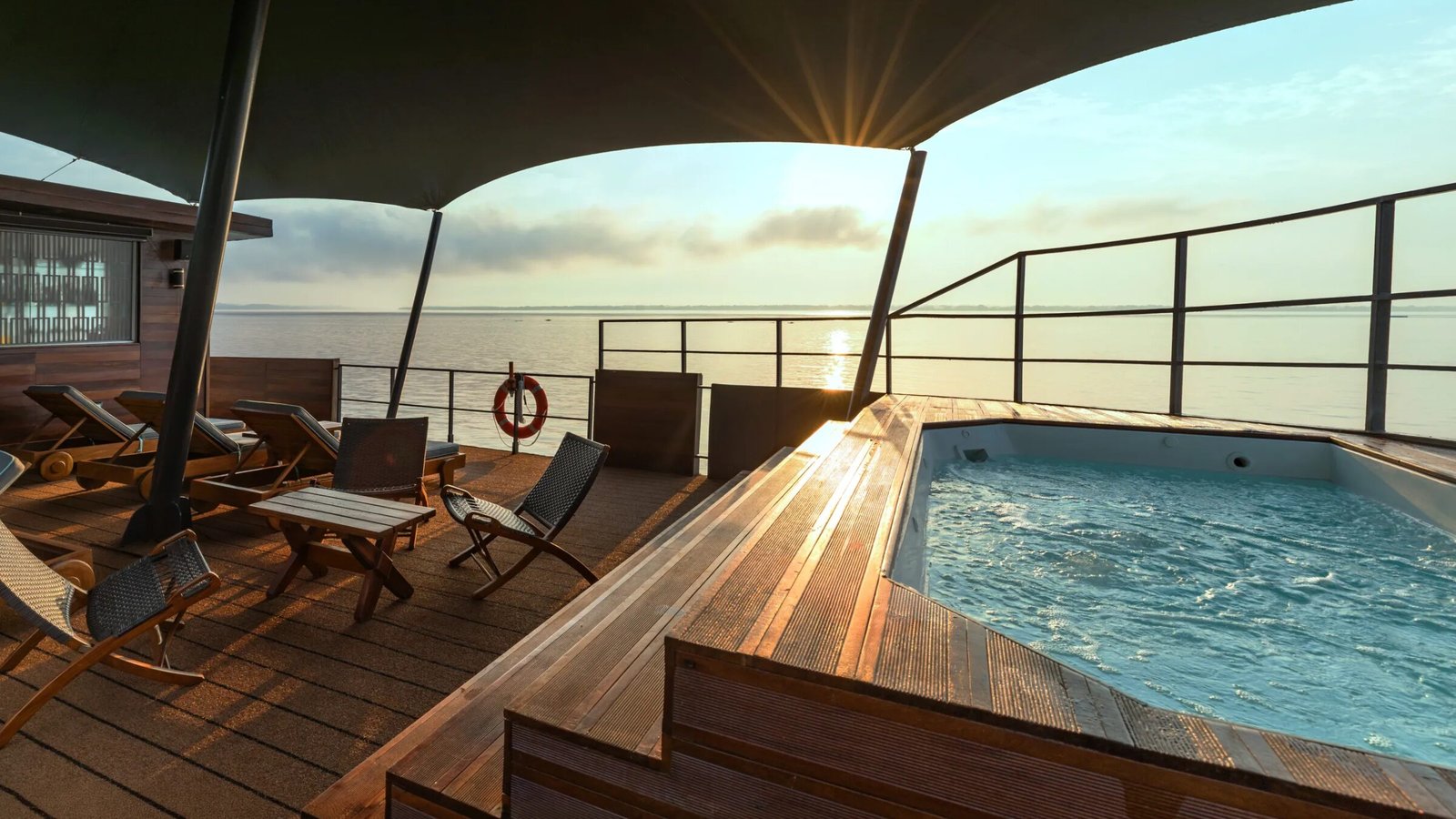
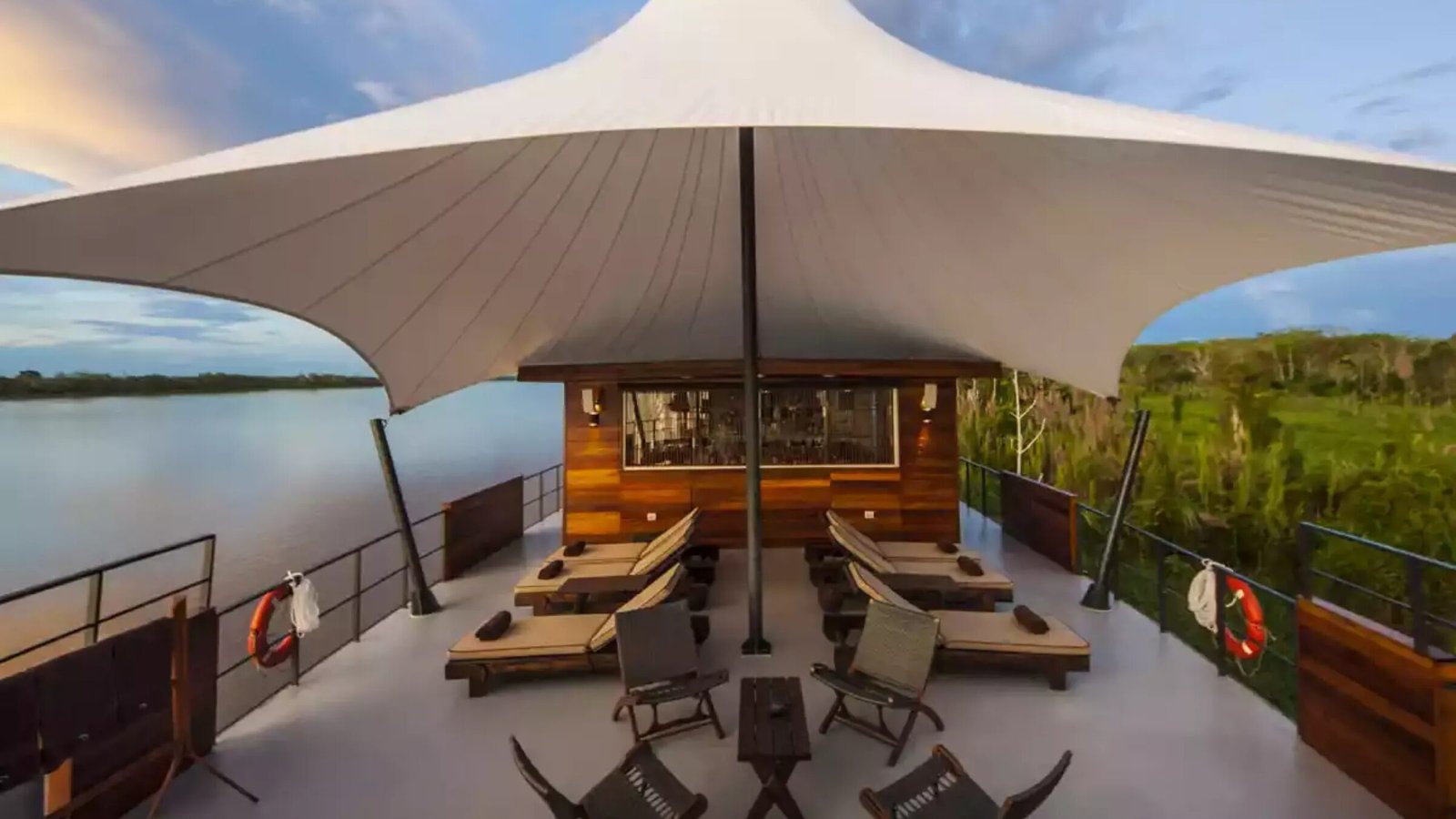
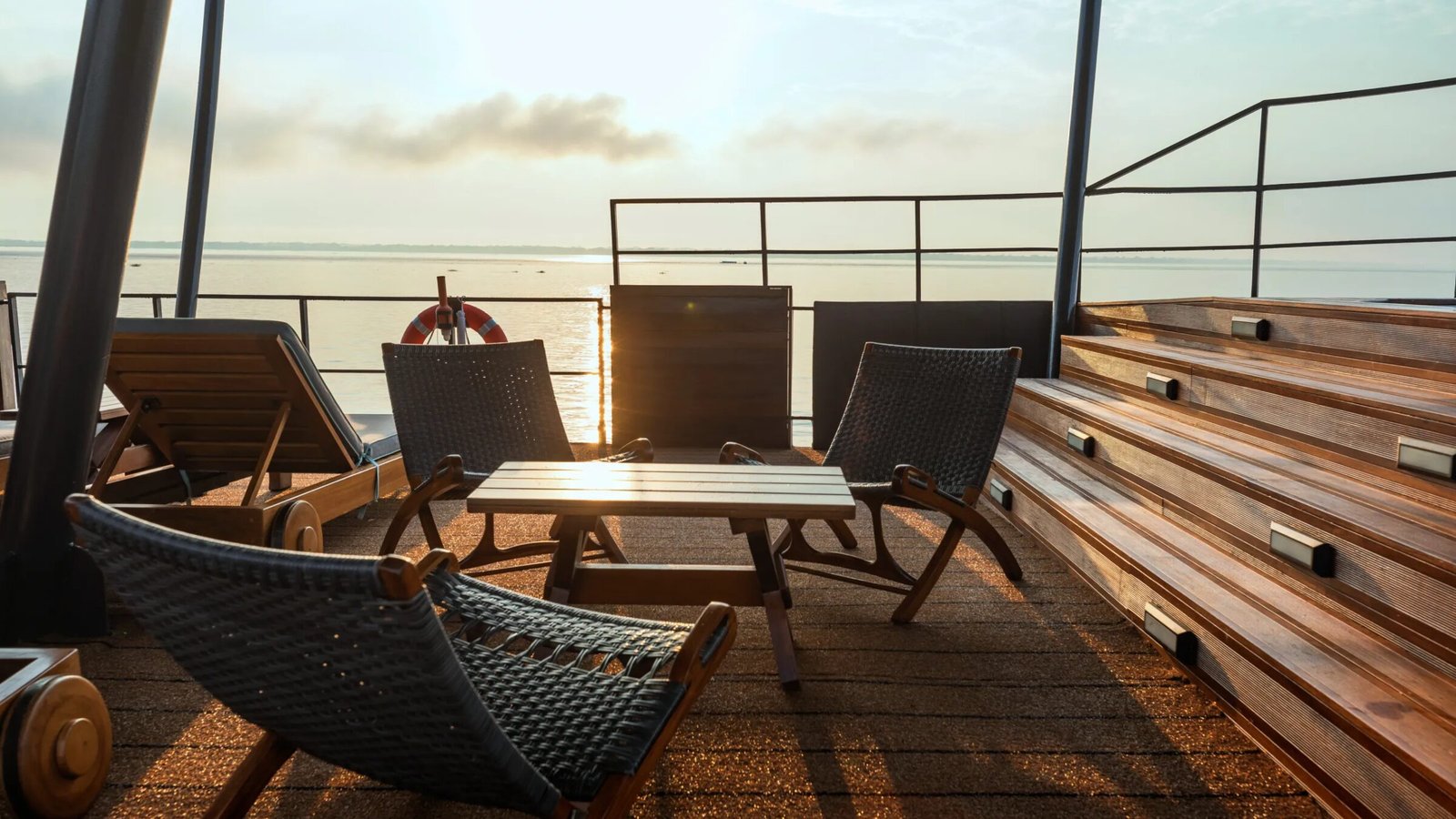
was bought upriver that morning. Above, a plunge pool is set flush into the sun deck with
loungers and shade sails, and forward of it a tensioned canopy covers an observation platform
facing over the bow.
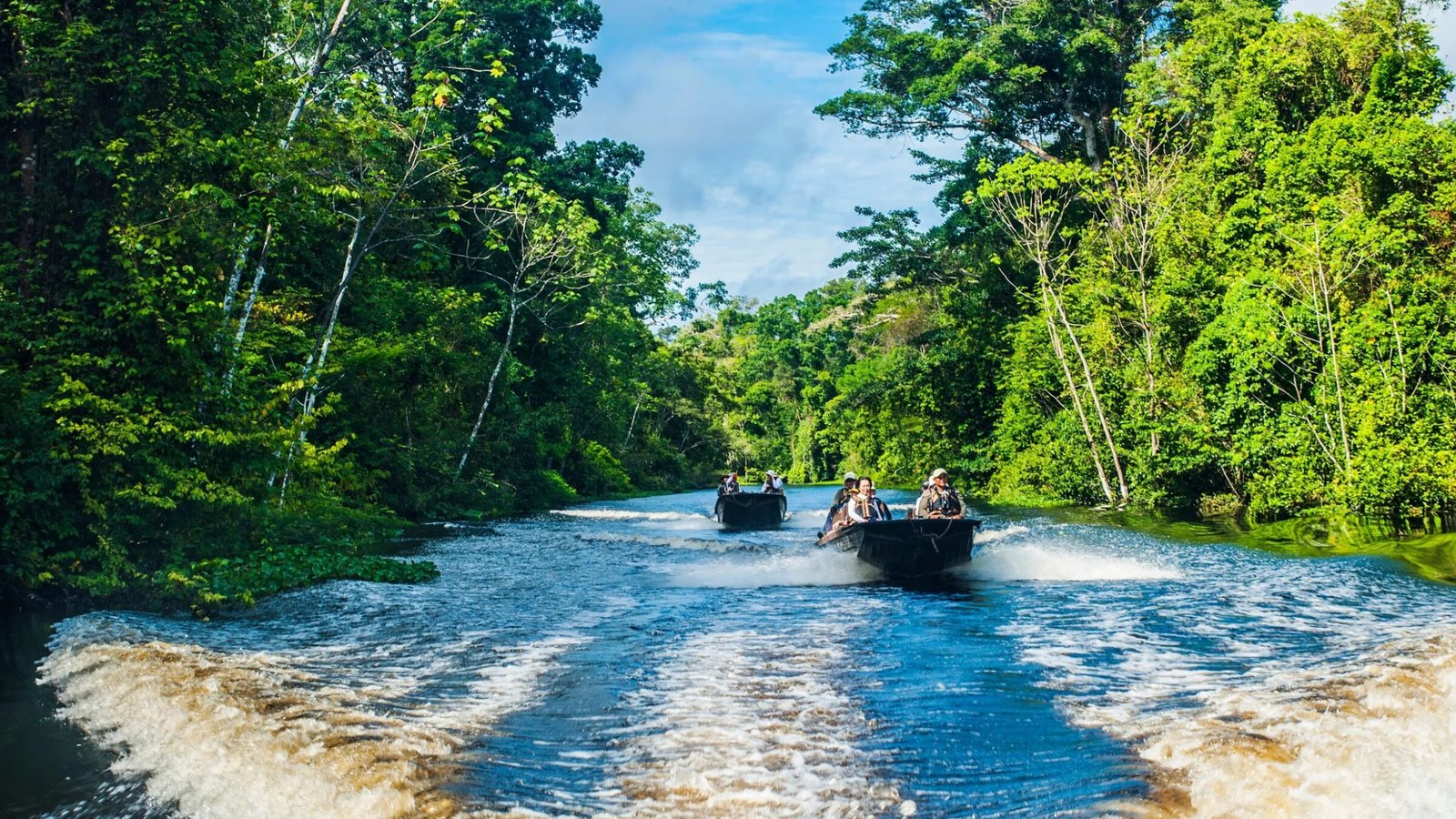
What actually defines a charter here is the operation rather than the ship. Aria Amazon
carries a crew of 27 for 32 guests — a ratio that includes a paramedic and four English-
speaking naturalist guides — and runs four skiffs on a twice-daily excursion programme,
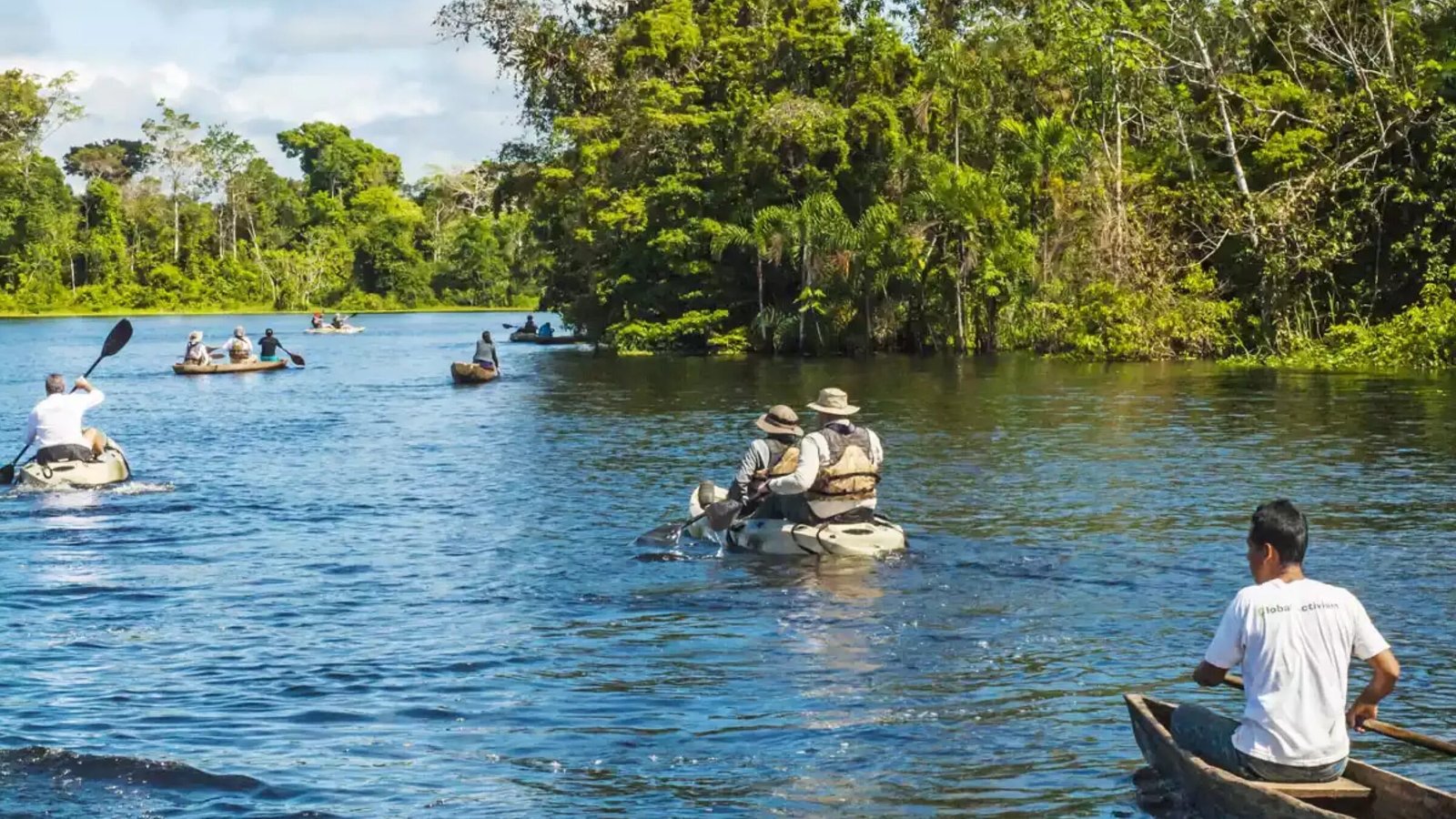
before breakfast and again in the late afternoon when the forest is active. Kayaks, bicycles
for the river villages and piranha fishing gear are all carried. Guides set the itinerary
against the water level, which moves by several metres between the high- and low-water
seasons and changes which channels are open. High water opens the flooded forest to paddling;
low water exposes beaches and concentrates the wildlife along the banks.
She cruises at 8 knots and tops out at 10, which is the correct pace for this kind of
travelling — distance is not the objective, and the ship is designed to be lived in slowly.
Her displacement hull and 9-metre beam make her steady on a river that can run hard, and the
enclosed, screened, fully conditioned interior means the heat and the insects stay outside.
For families and for groups taking the whole ship, she is one of very few vessels of this
size and standard operating this stretch of water. The combination is unusual and difficult
to reproduce: a shallow-draft hull with real range up the tributaries, suites that are
properly comfortable rather than merely adequate, a naturalist team that knows the river
season by season, and a front-row window on it from almost everywhere aboard.