
Greece / Ionian Islands / Paxos & Antipaxos
Lakka Bay
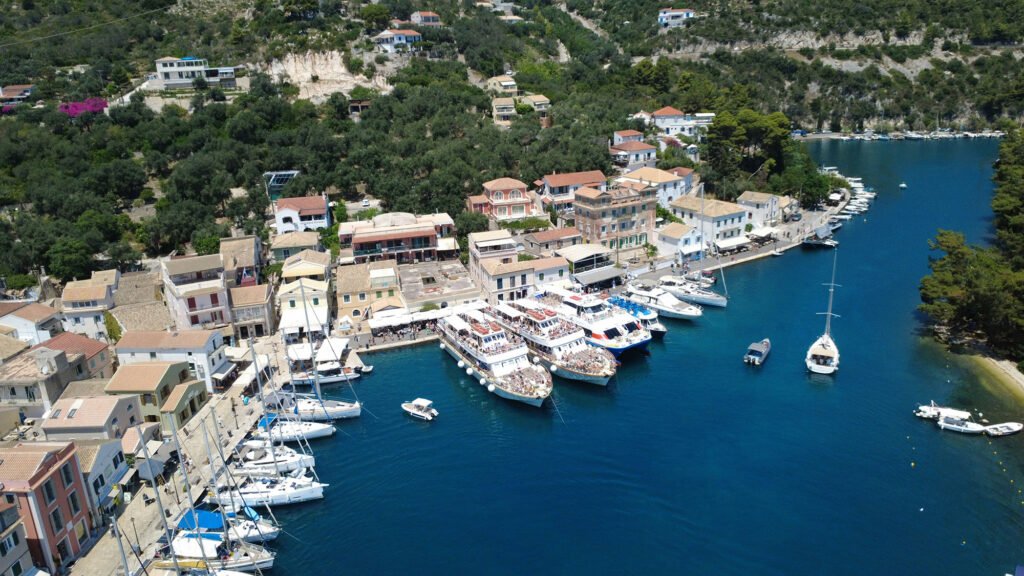
Loggos Harbour
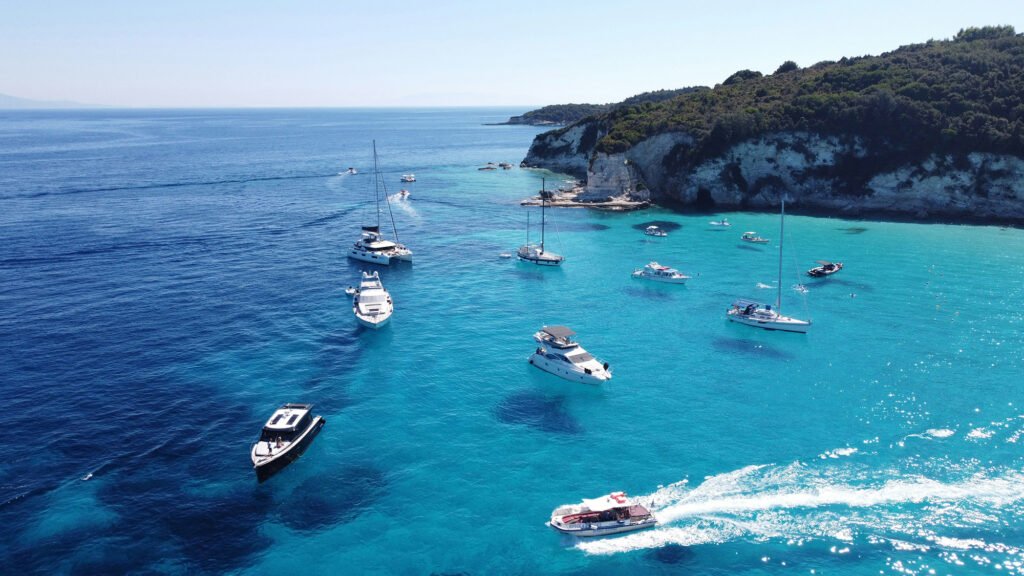
Mongonisi
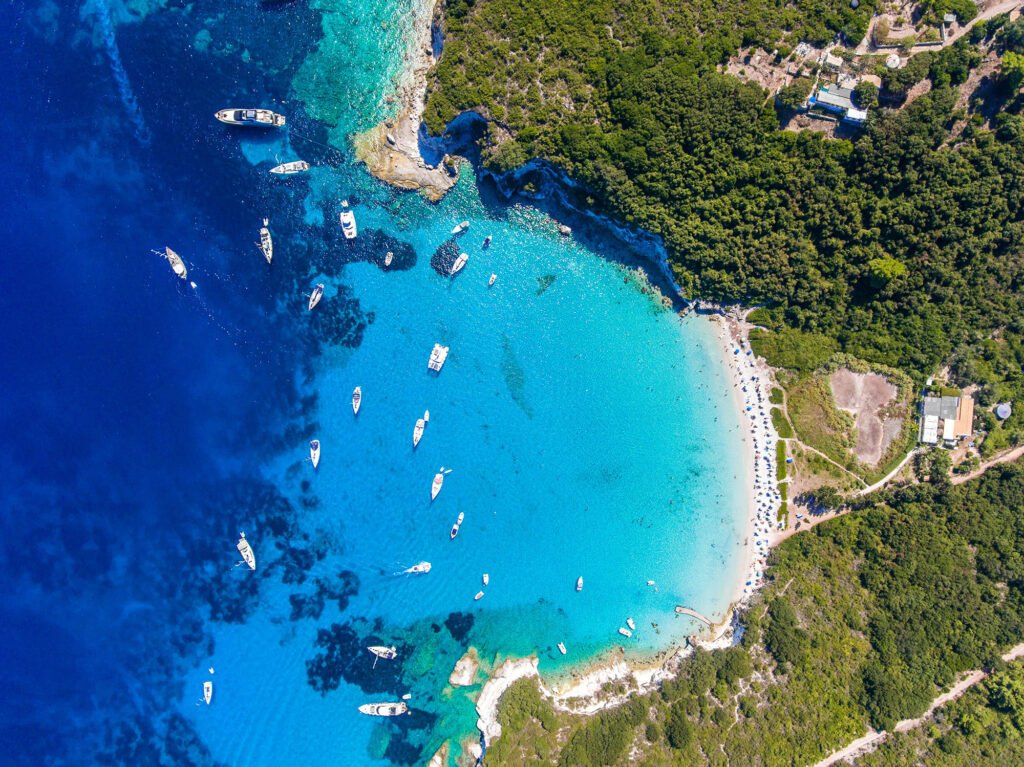
Marmari Beach
Vrika Beach, Antipaxos
Explore the sea caves and arches of Ipapanti on Paxos’s west coast
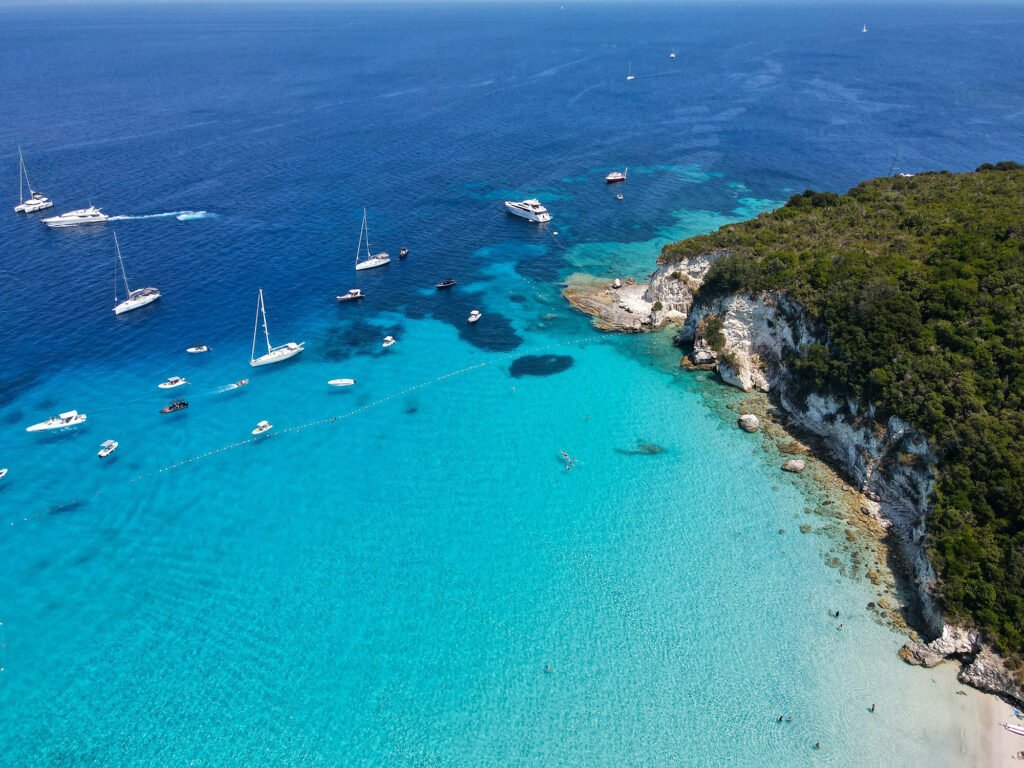
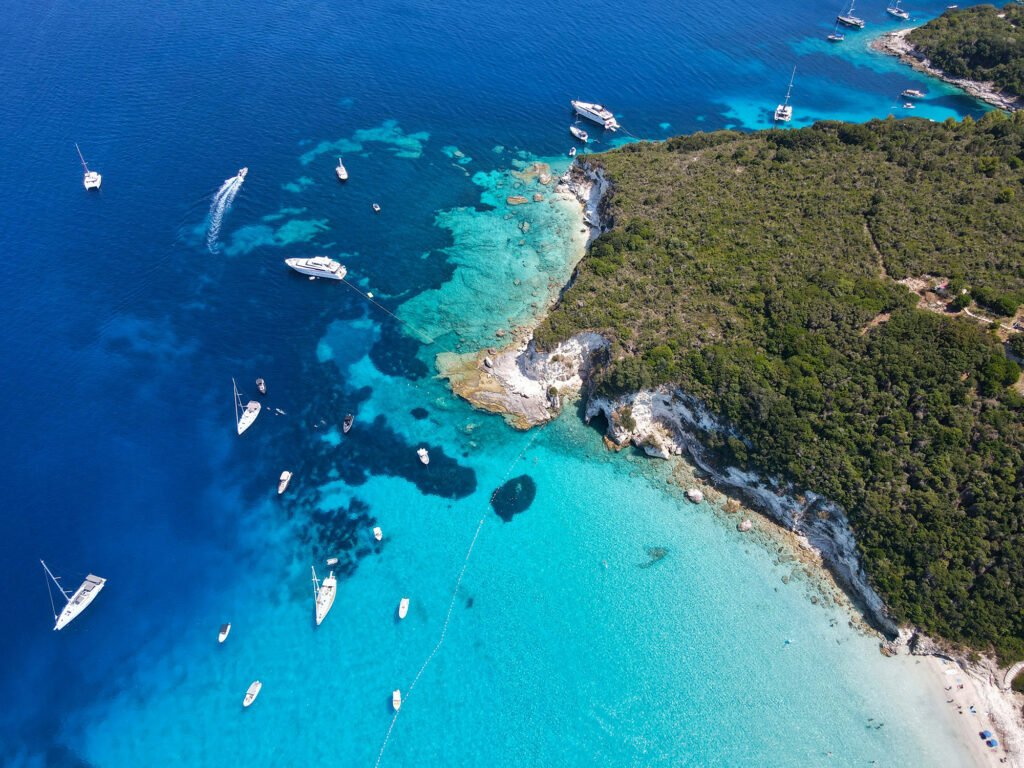
Swim the turquoise shallows off Antipaxos
Wander the harbour lanes of Loggos
Snorkel the clear water around Mongonisi islet
Walk the olive-grove paths above Lakka
Loggos village
Lakka village
Ipapanti Cave
Mongonisi islet
Antipaxos
May through September brings the most reliable sailing weather to this stretch of the Ionian, with July and August the warmest but also the busiest months in the harbours. Because Paxos sits outside the main Aegean Meltemi belt, conditions here are generally calmer than in the Cyclades, though the exposed west coast caves are best visited only in settled weather. June and September offer quieter anchorages without losing much summer warmth.
Paxos has no airport of its own, so most guests fly into Corfu, around an hour and a half away by seasonal ferry or catamaran, or Preveza’s Aktion airport on the mainland, a similar crossing away by boat. Car ferries also run year round from Igoumenitsa, about an hour and a half across open water. Many charter guests simply join their yacht already under way from a nearby Ionian anchorage.
Lakka, on the island’s northern tip, is the most popular overnight anchorage, its near circular bay offering good holding and a wide choice of tavernas ashore. Loggos, a little further south, is smaller and quieter, well protected from northwesterly winds. Mongonisi, off the southeastern coast, provides all round shelter in mud and a more secluded alternative when Lakka fills up in peak season.
Two nights let guests properly explore both islands: an evening in Lakka or Loggos, a day along the west coast caves in calm weather, and an afternoon anchored off Antipaxos for swimming. Given their small size, most charter itineraries pair Paxos and Antipaxos with Corfu to the north or Lefkada and Preveza to the south rather than treating them as a standalone base.
The caves and arches along the west coast are spectacular but lie fully exposed to the open Ionian, so they’re only worth visiting in calm, settled weather with little swell. Ipapanti Cave, the largest, is deep enough for a tender in good conditions but should be avoided if any northwesterly wind is forecast. Most captains treat the west coast as a fair weather excursion rather than a fixed stop on the itinerary.

Tell us what you would like to know, and our team will respond with clear details on availability, specification, pricing and next steps.