Greece / Zakhyntos
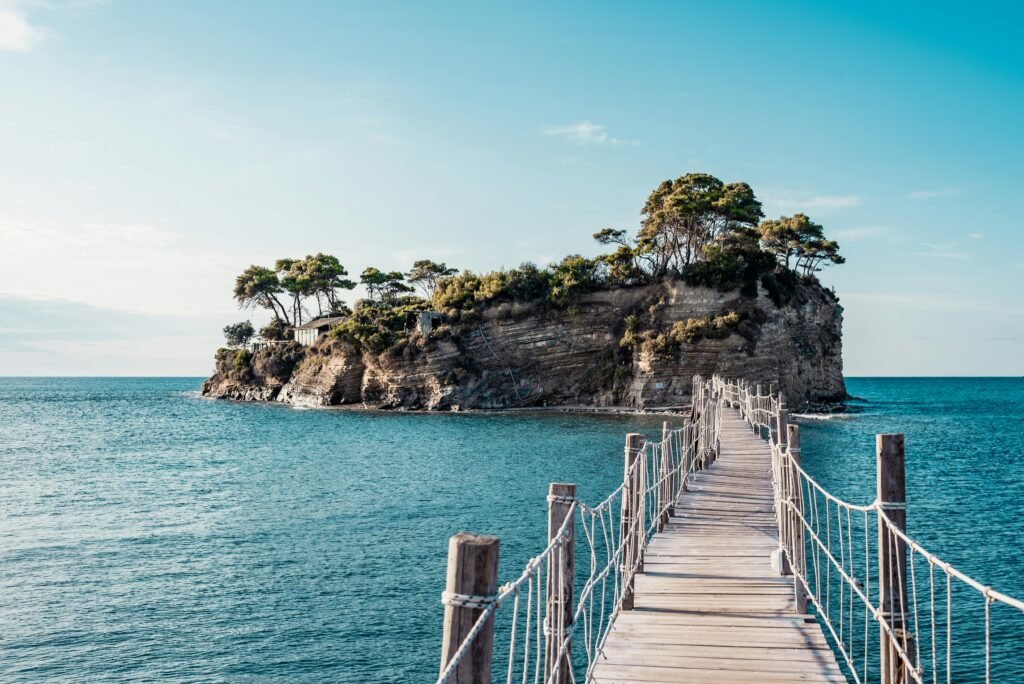
Porto Vromi
Agios Nikolaos, Volimes
Laganas Bay
Vasilikos Peninsula
Limni Keriou
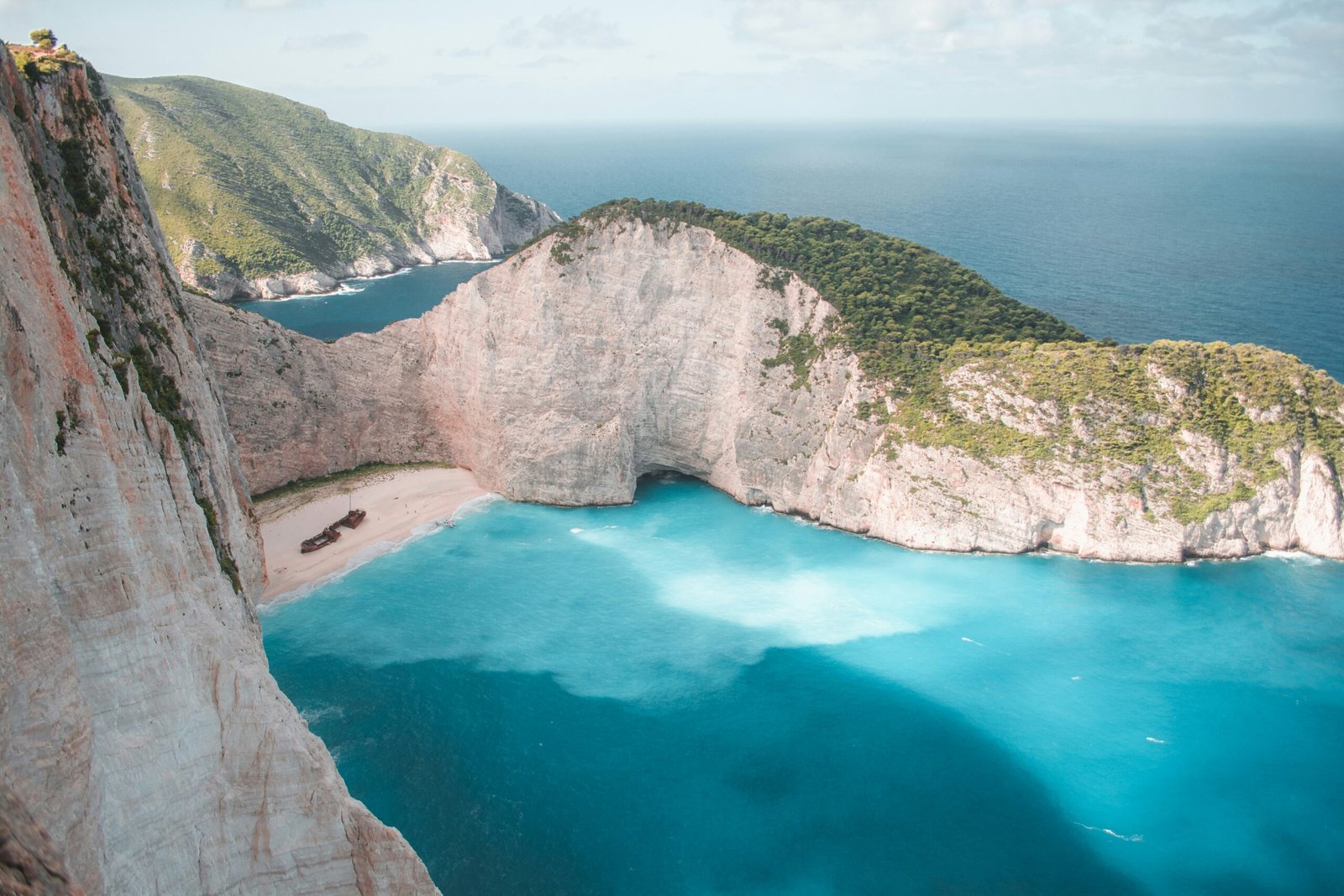
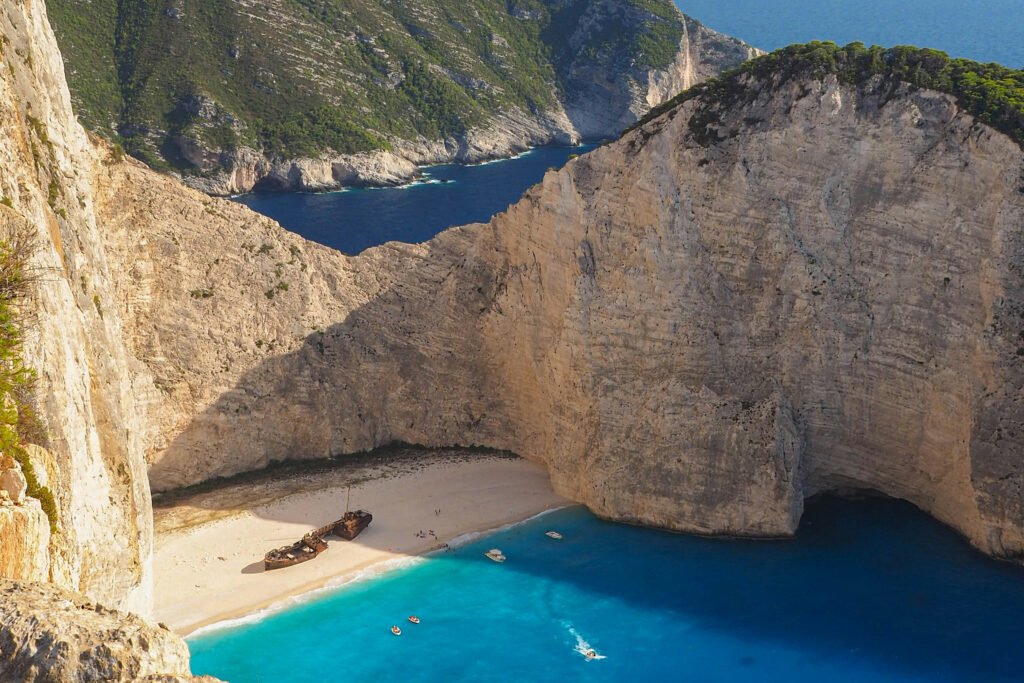
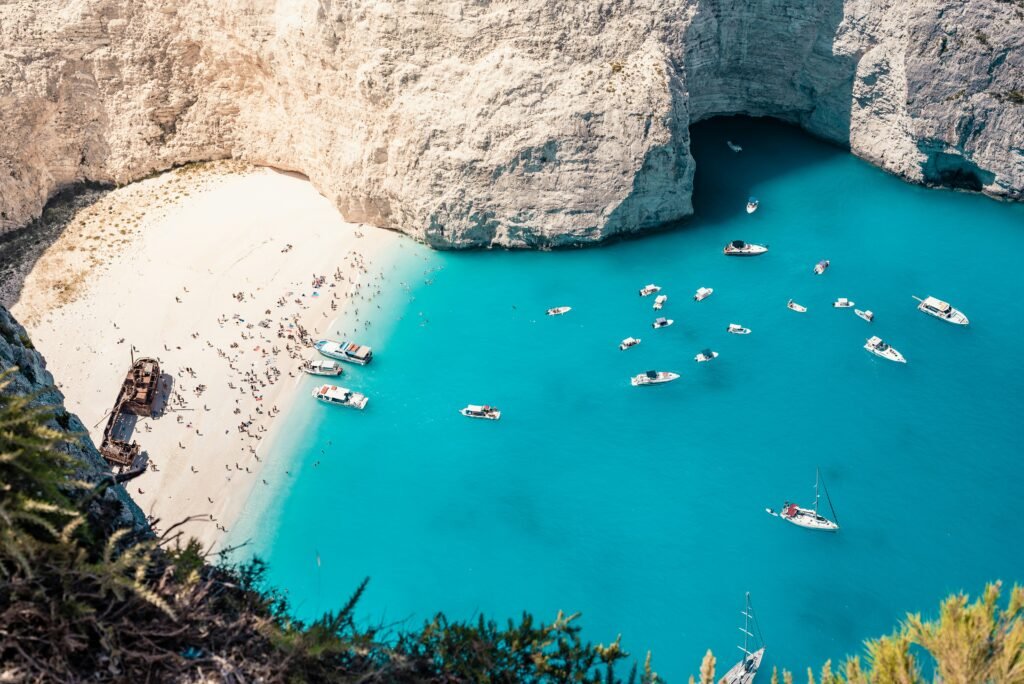
View Navagio Bay from the water
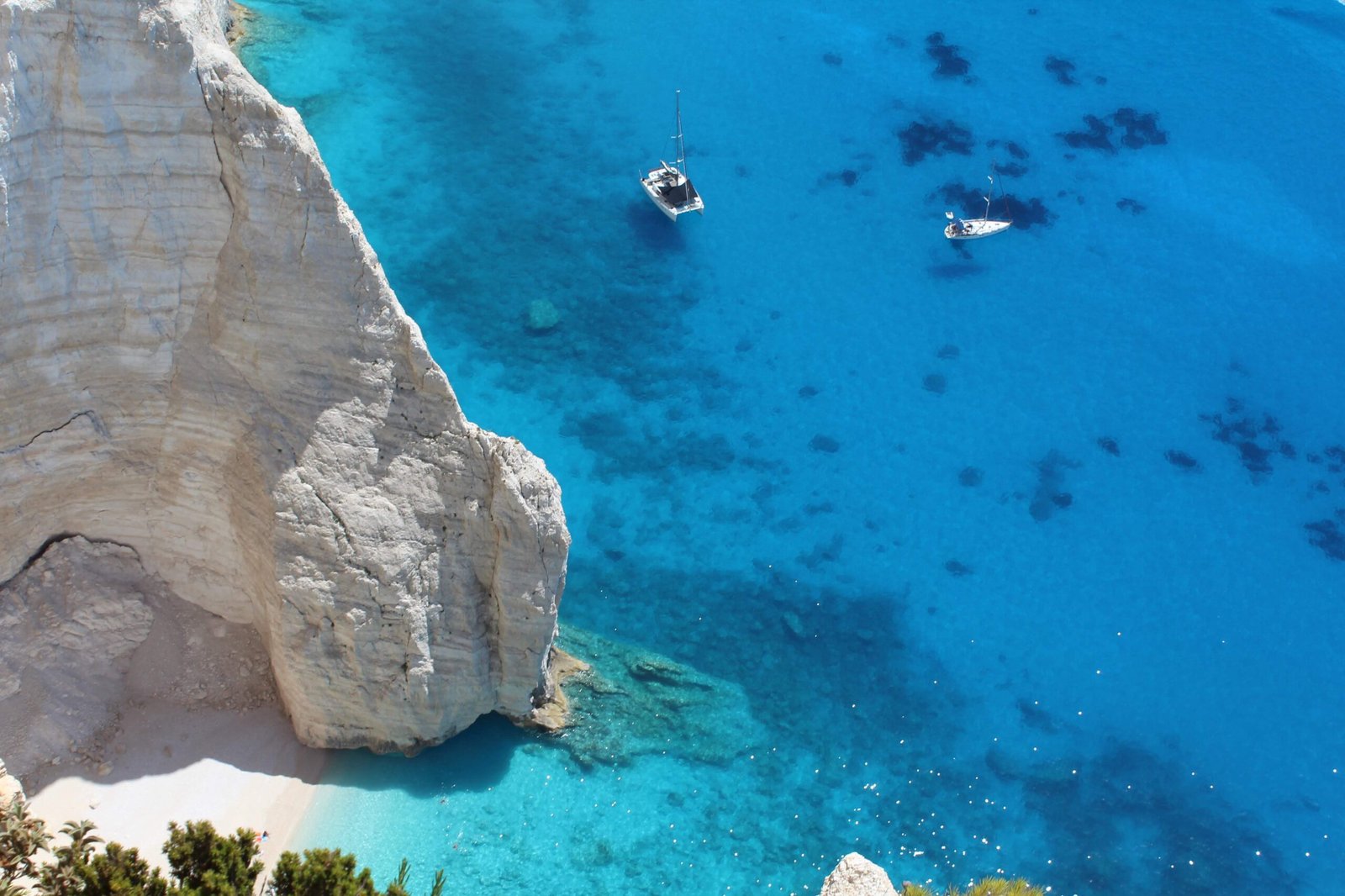
Snorkel the Blue Caves at Cape Skinari
Watch for loggerhead turtles in Laganas Bay
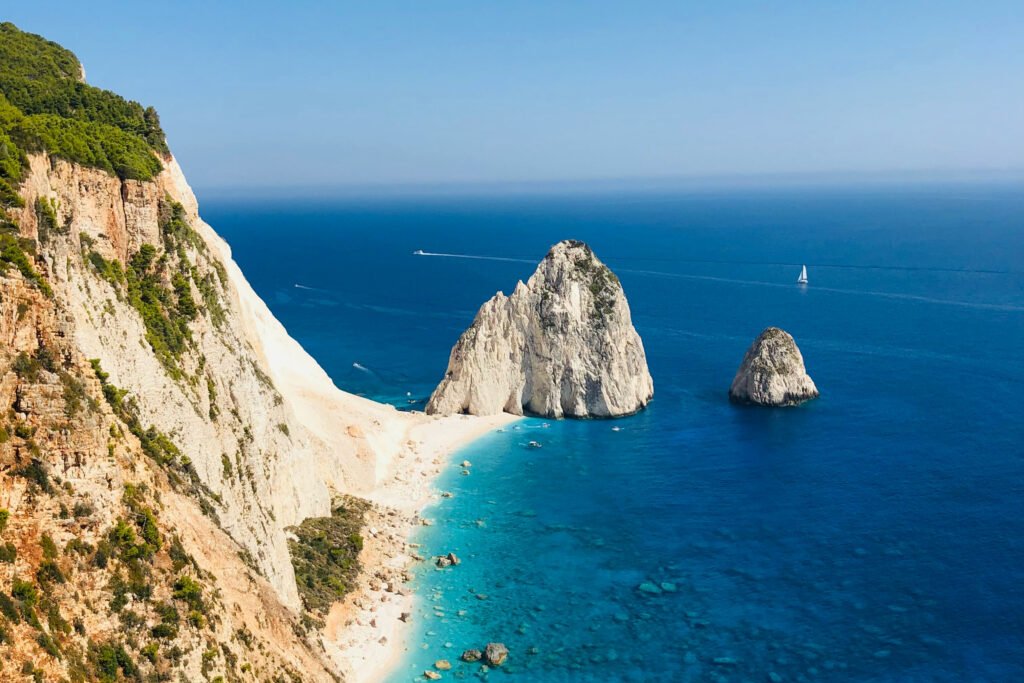
Explore the Keri sea caves
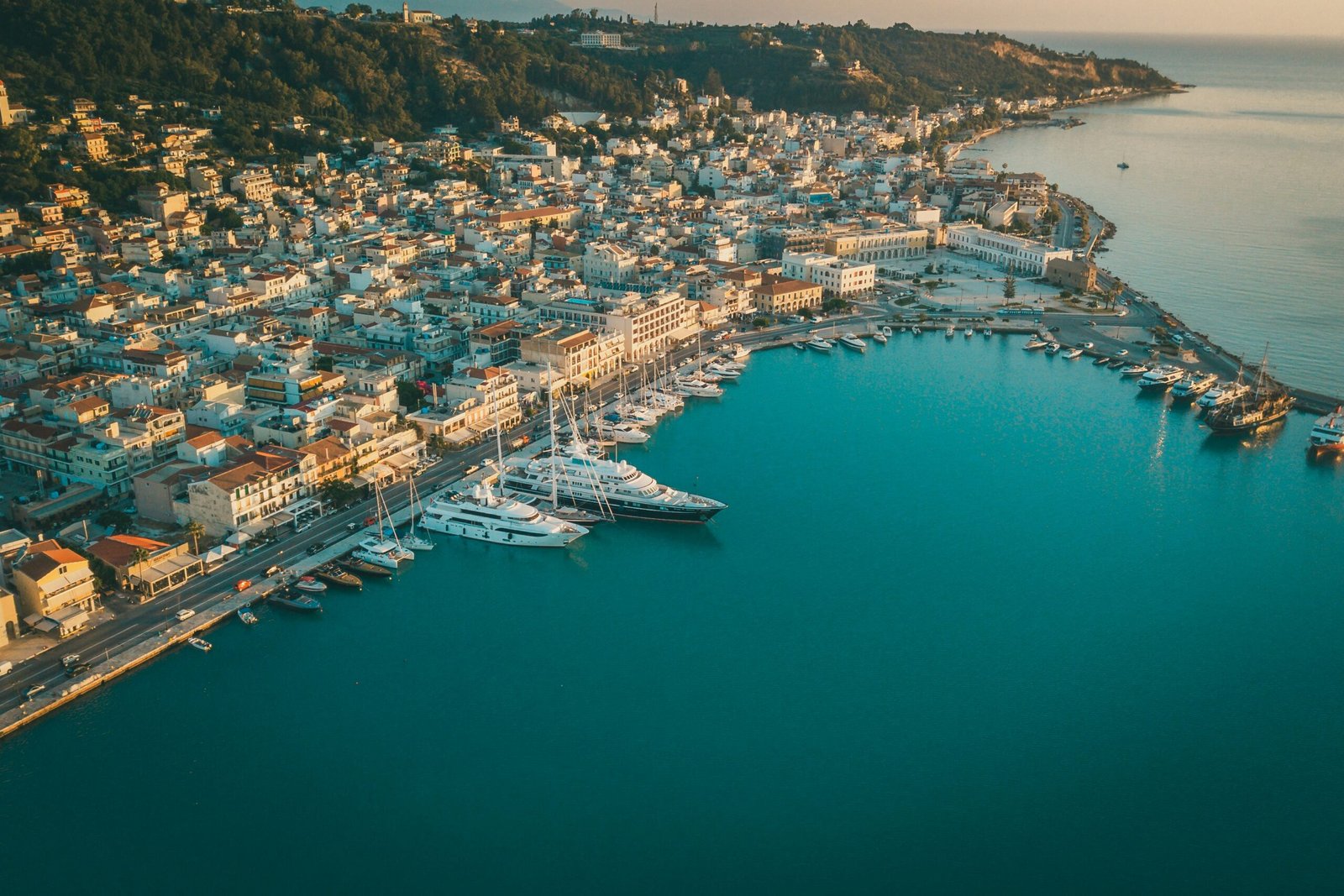
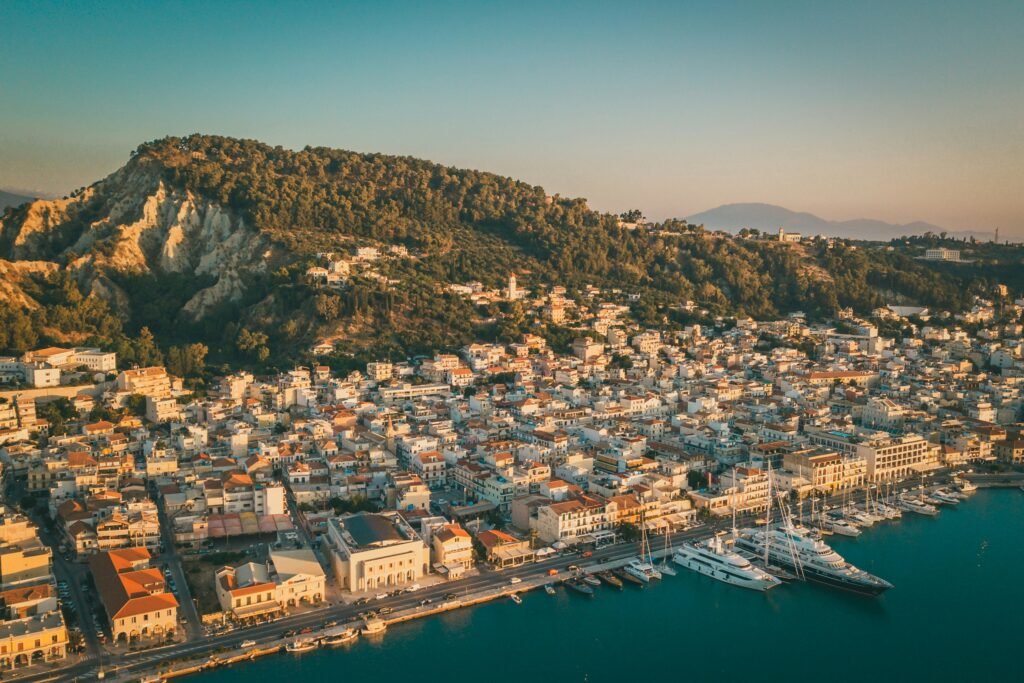
Walk Bochali hill above Zakynthos Town
Blue Caves, Cape Skinari
Bochali hill and the Venetian castle
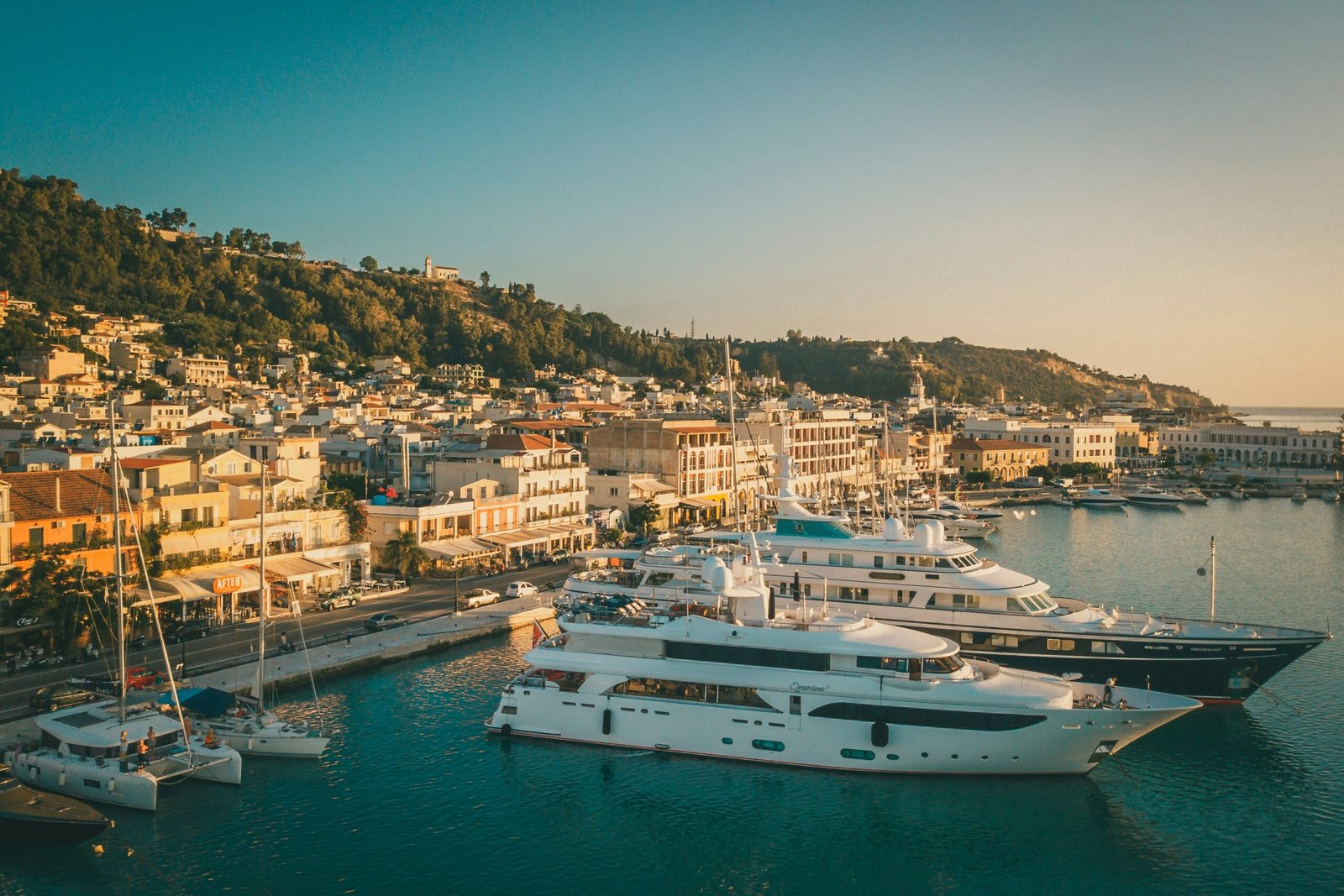
Zakynthos Town
Keri Lighthouse
Navagio clifftop viewpoint
April through October covers the season, with July and August the warmest but busiest months around Laganas and Navagio. The National Marine Park’s nesting-season restrictions run May to October, so anyone hoping to see loggerhead turtles should aim for that window, while those wanting the calmest water and fewest boats in the bay tend to favour late May or September instead.
Zakynthos International Airport, named for the poet Dionysios Solomos, sits about 4.3 kilometres from Zakynthos Town, close enough that many resorts along the southeast coast are within a ten-minute transfer. It handles seasonal direct flights from across Europe through summer. There’s no dedicated charter marina on the scale of Corfu’s Gouvia, so most yachts anchor or moor directly off the coast rather than basing from a large marina complex.
Porto Vromi on the west coast is the usual departure point for Navagio and has its own dramatic cliffs worth lingering at. Agios Nikolaos near Volimes serves the Blue Caves and tends to be quieter earlier in the day. Laganas Bay is convenient for the marine park but comes with the 6-knot speed restriction and seasonal turtle-nesting closures, so plan around those if anchoring there.
Three to four days covers the island’s main sights comfortably, including Navagio, the Blue Caves, and a slower day around Vasilikos or Keri. Many guests combine Zakynthos with a wider Ionian itinerary taking in Kefalonia or the mainland’s Sivota channel, since the crossings between them are short and the islands’ characters differ enough to justify splitting a week between them.
You can see it, but you can’t land on it. Repeated rockfalls, worsened by a 2022 earthquake and a further incident in June 2026, have kept the beach closed to walking and swimming through at least October 2026, with an 8.5 to 9 million euro restoration project planned for 2026 to 2030. Boats can still enter the bay for photographs and views, provided they stay at least 50 metres from the cliffs and shore.