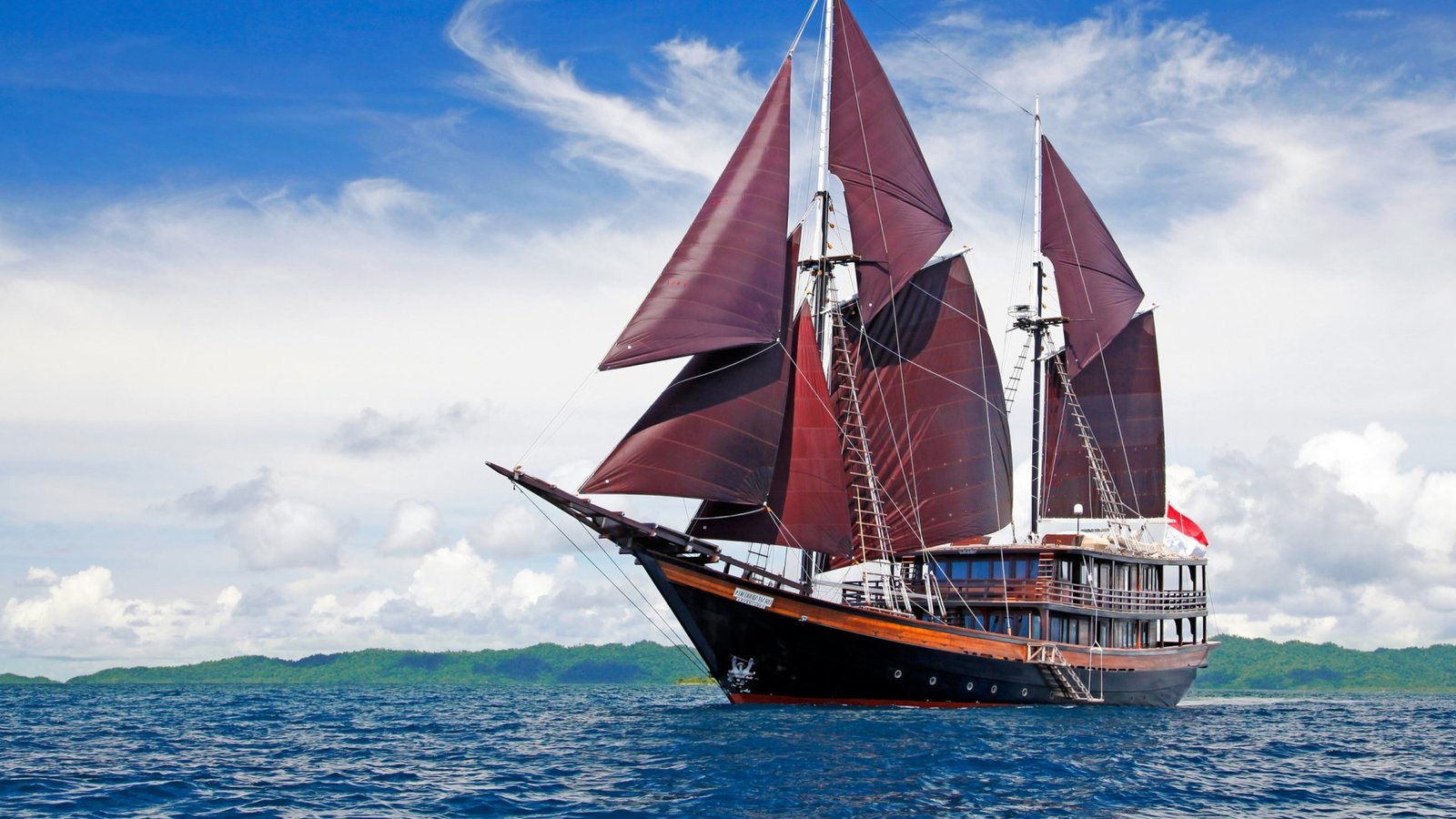
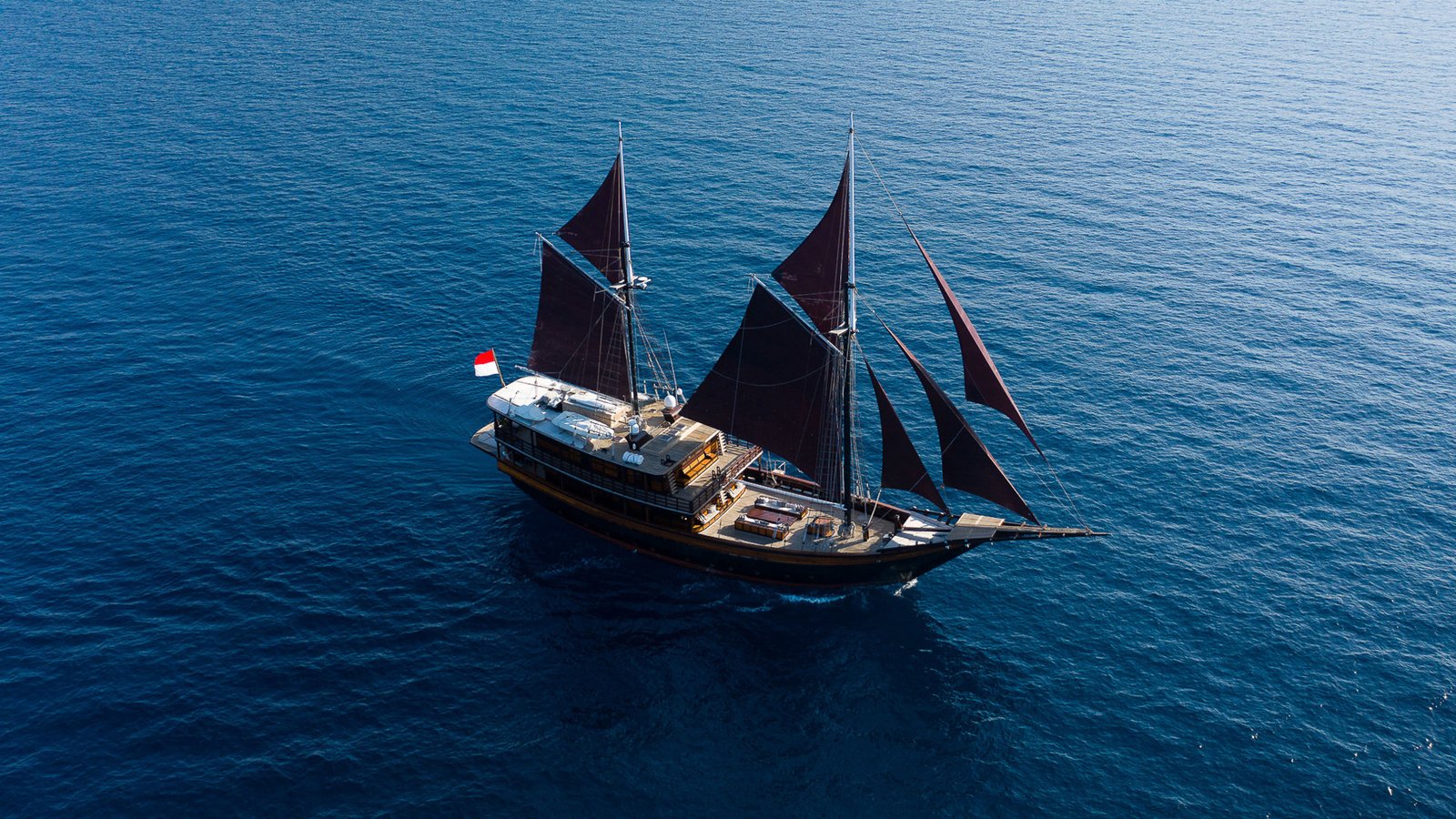
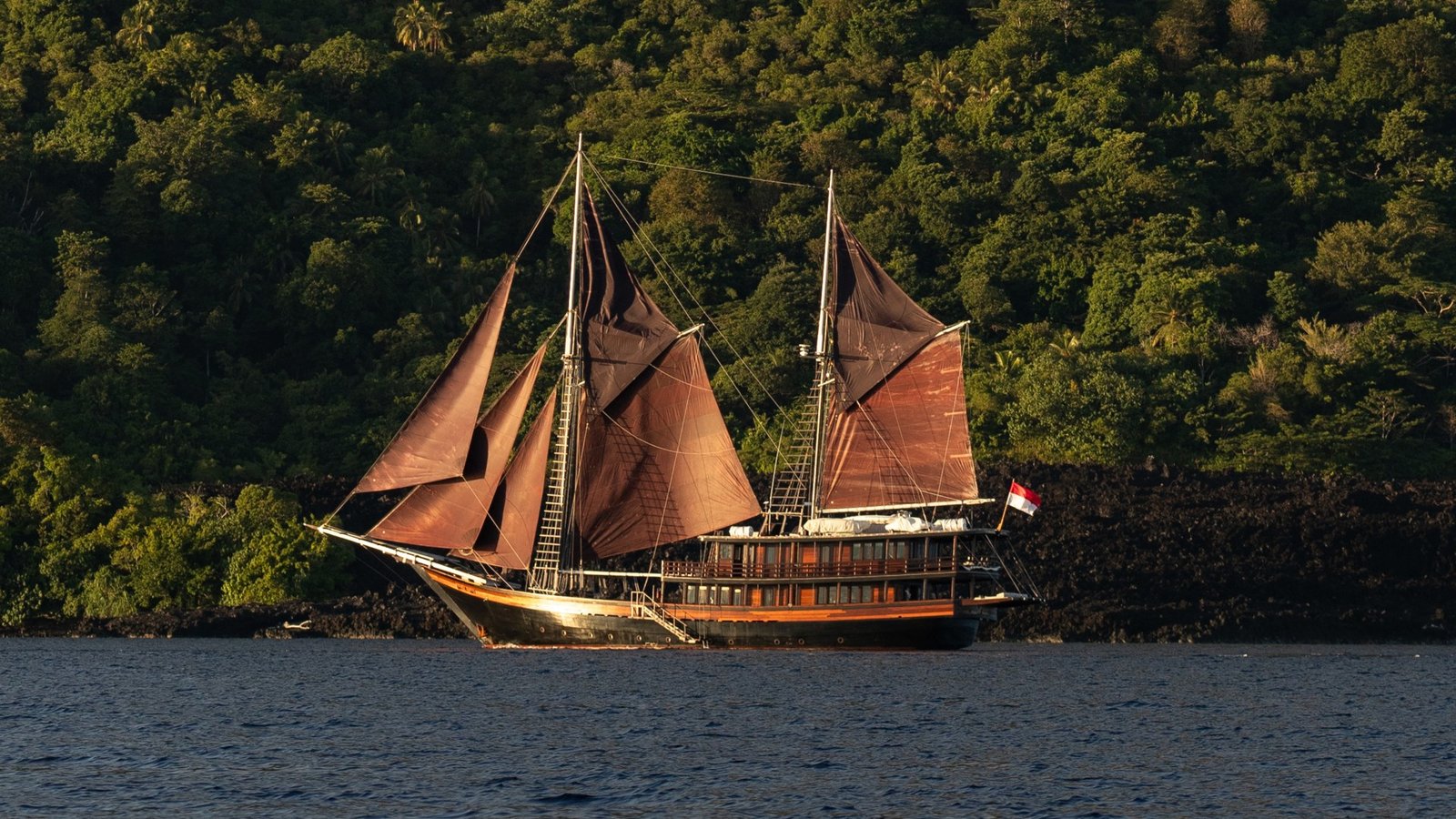
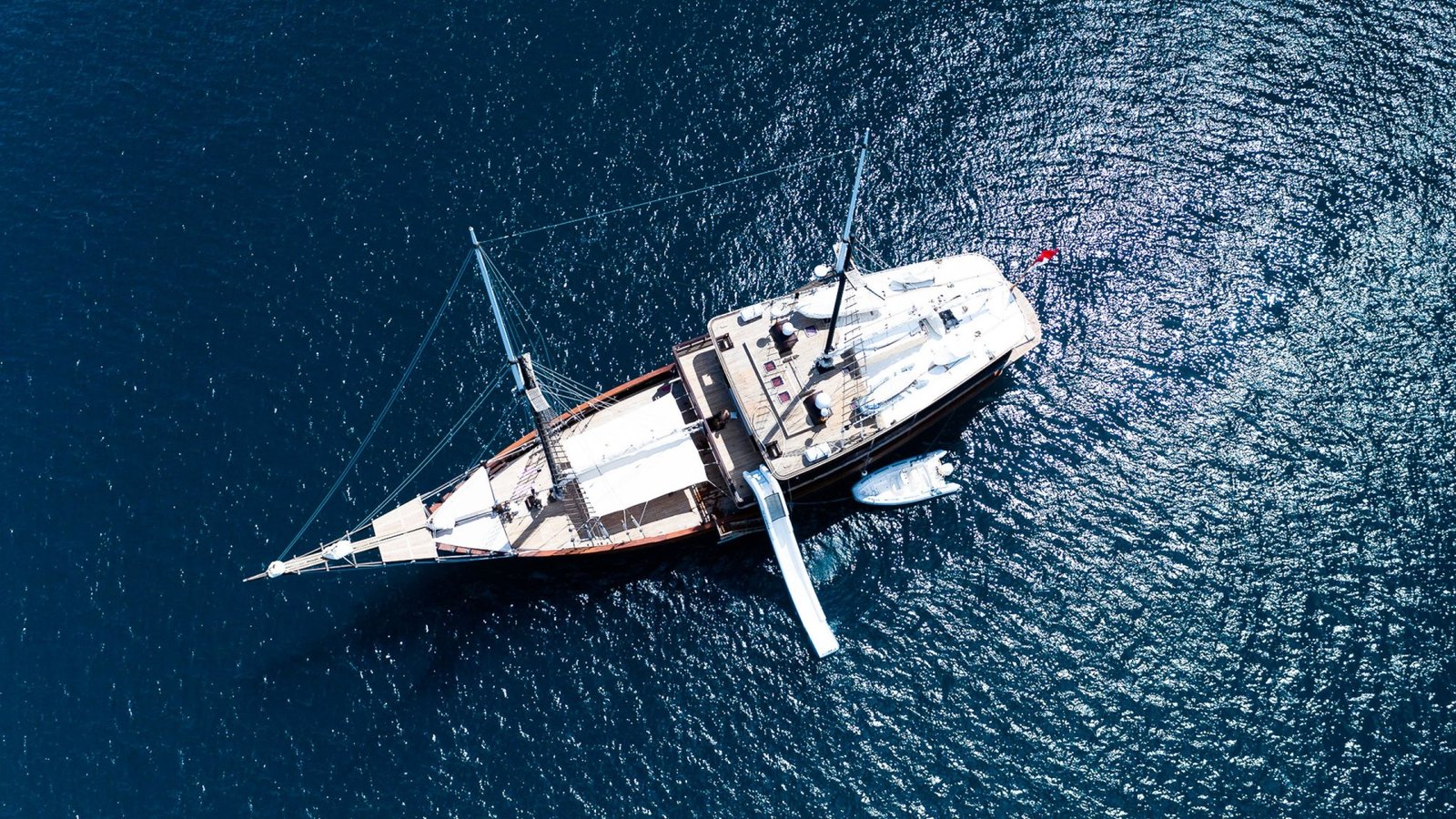
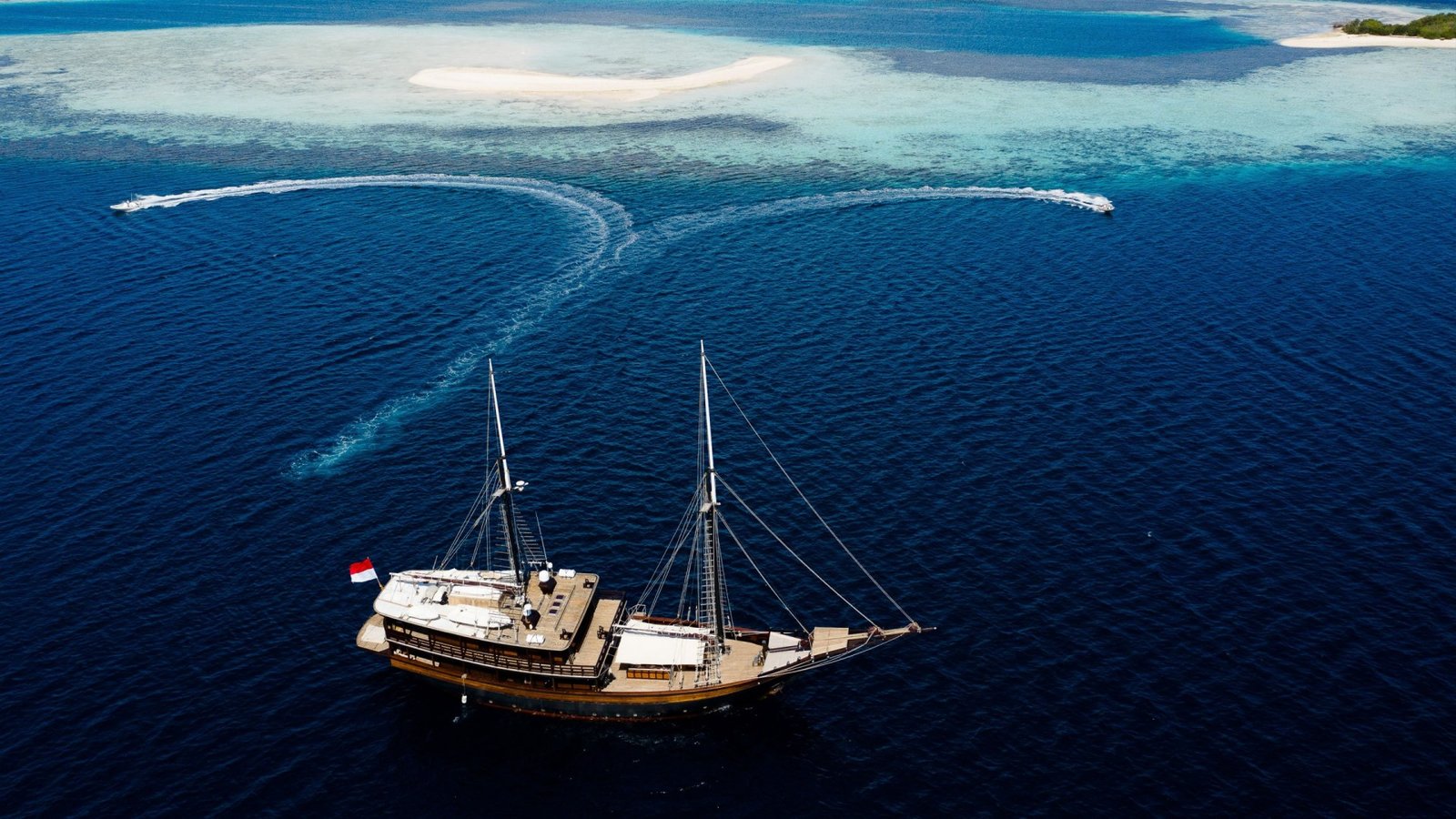
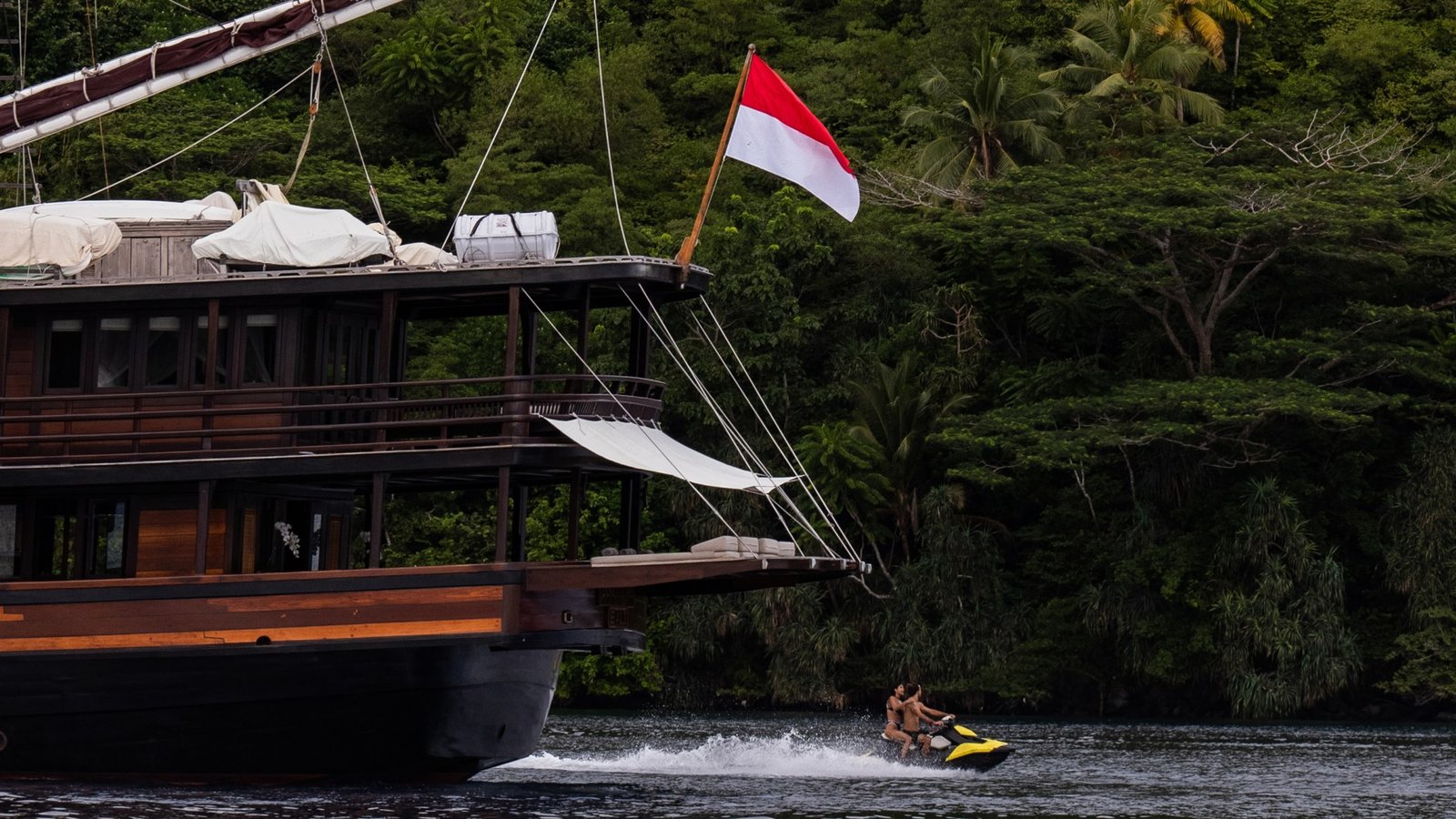
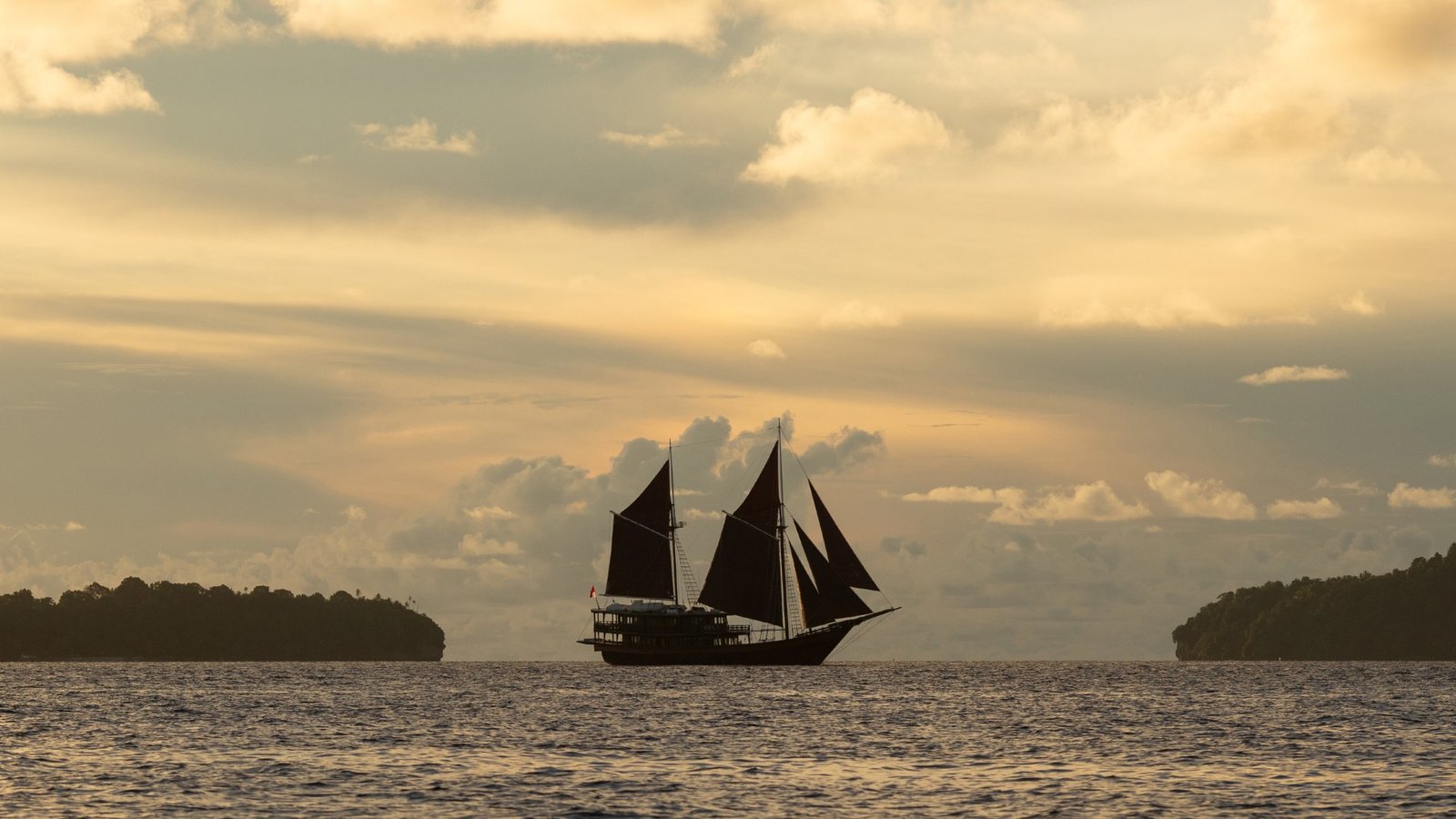
Dunia Baru was not designed and then built. She was built the way phinisi have been built on the beaches of South Sulawesi for centuries – by eye, by hand, by Konjo boatbuilders working without a mould – and it took eight years and several hundred cubic metres of ironwood and teak to finish her. Michael Kasten drew the naval architecture to make the result classifiable and seaworthy at 51 metres. Everything above the waterline is craft.
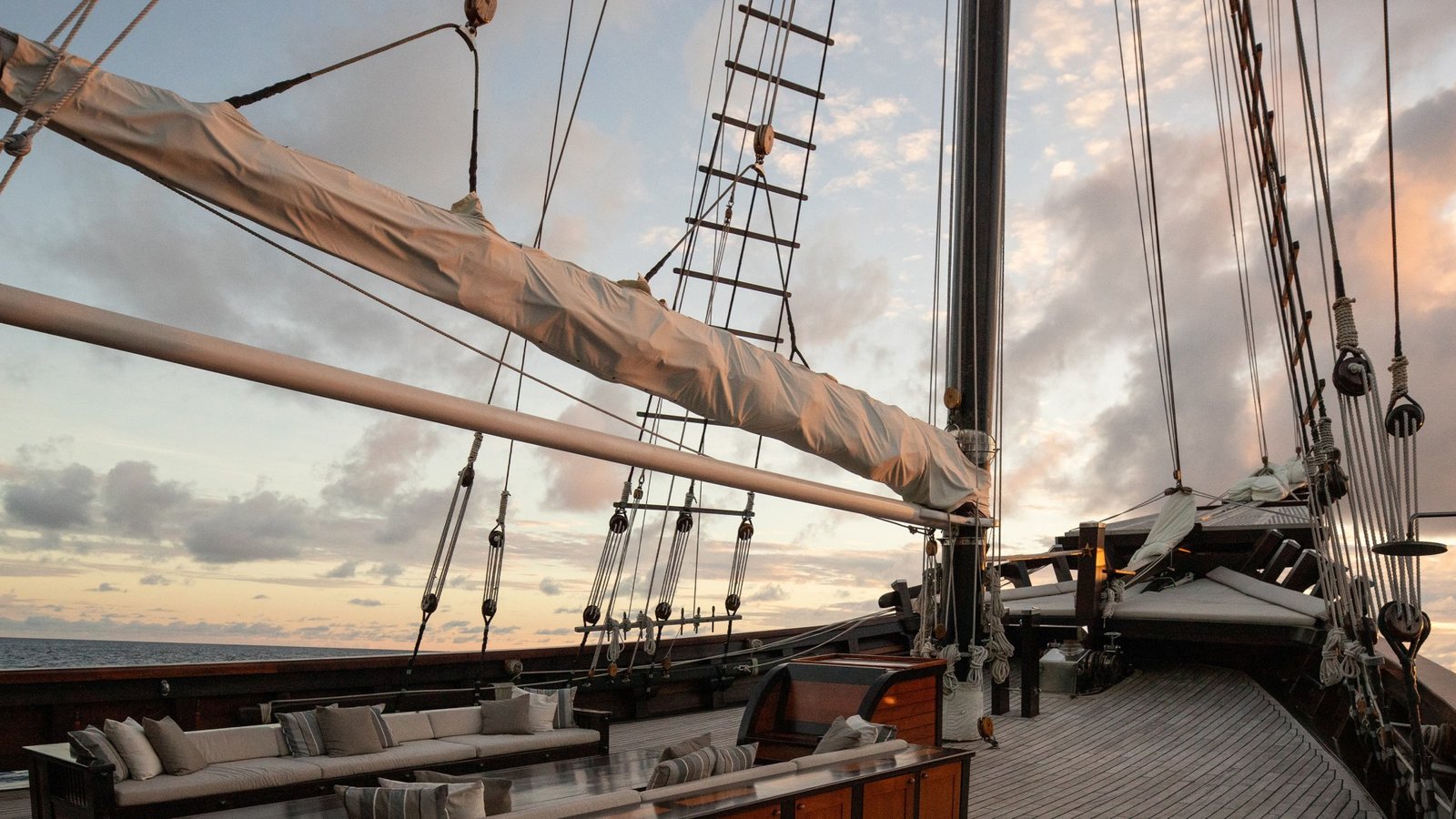
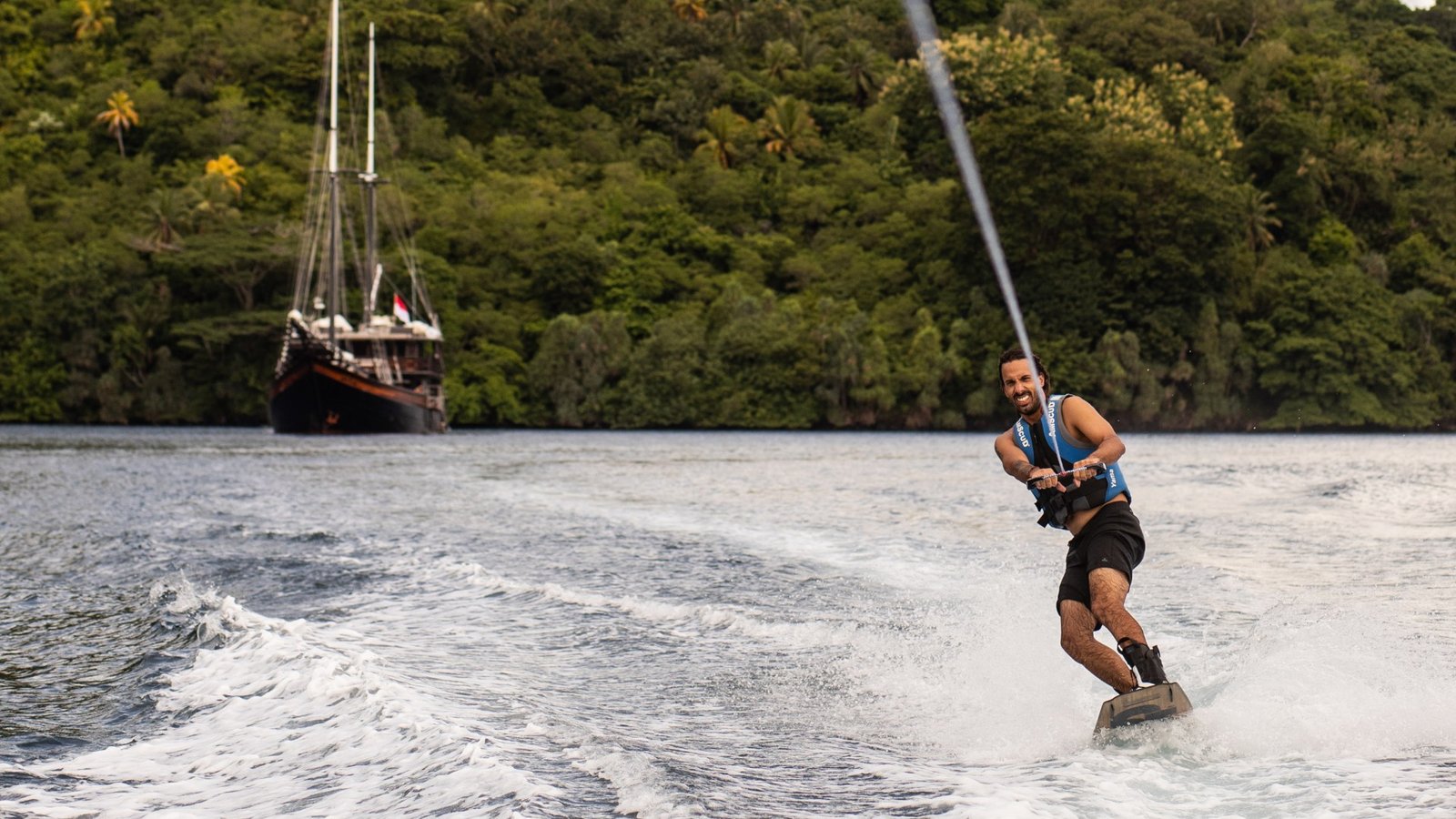
That history is not decoration. It is why she feels unlike any other yacht in her cruising ground. The deckhouse is joined timber rather than clad panel, the cabinetry is carved, the rail caps are shaped, and the two masts carry a working rig with tanbark sails that go up properly when the wind serves. She is a sailing vessel that happens to charter, not a motor yacht wearing masts.
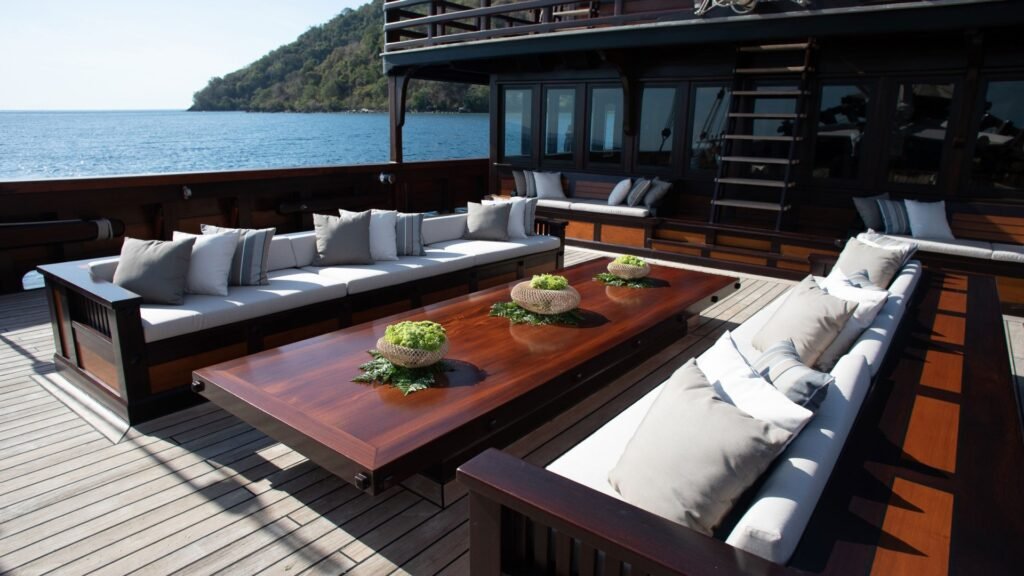
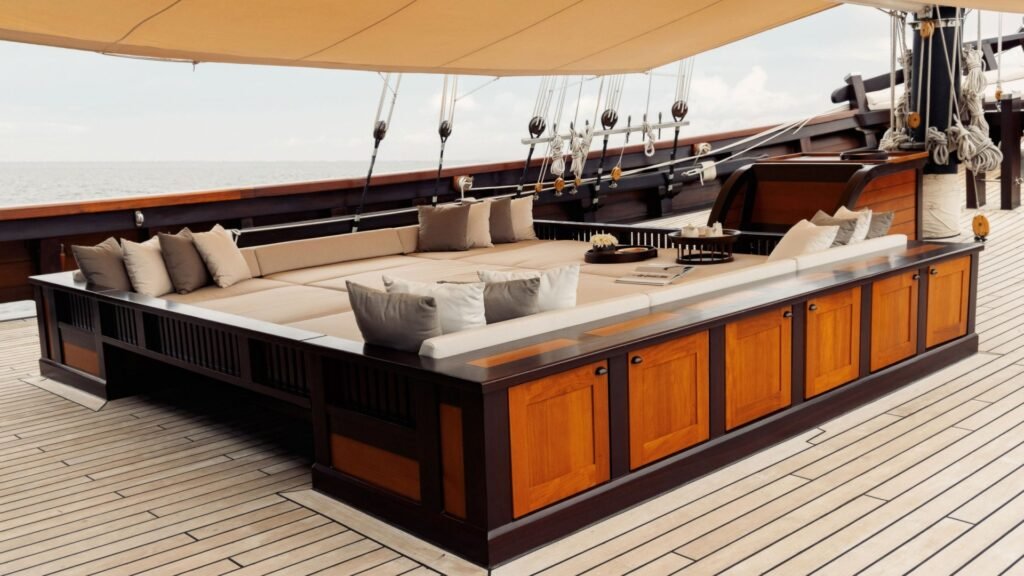
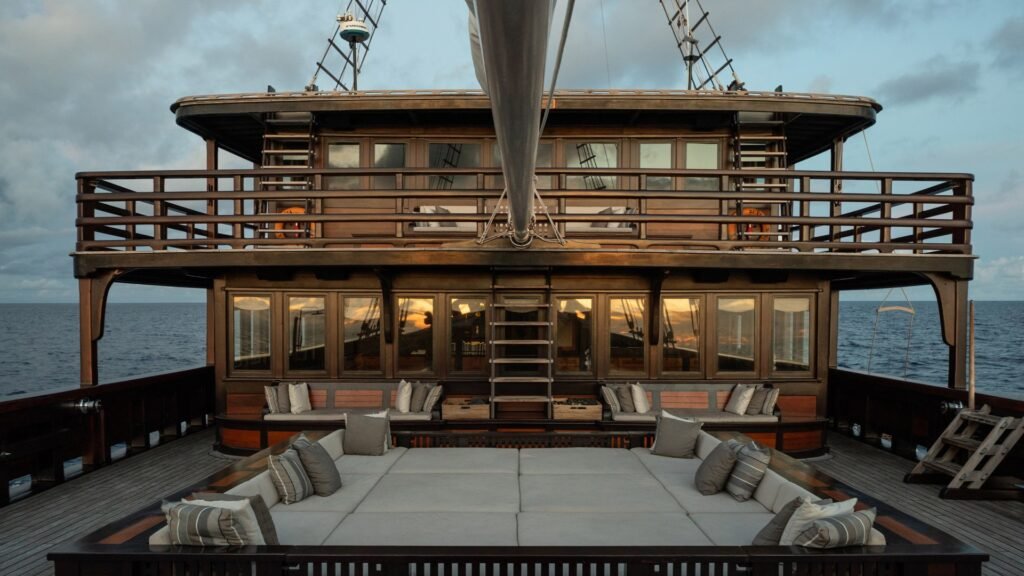
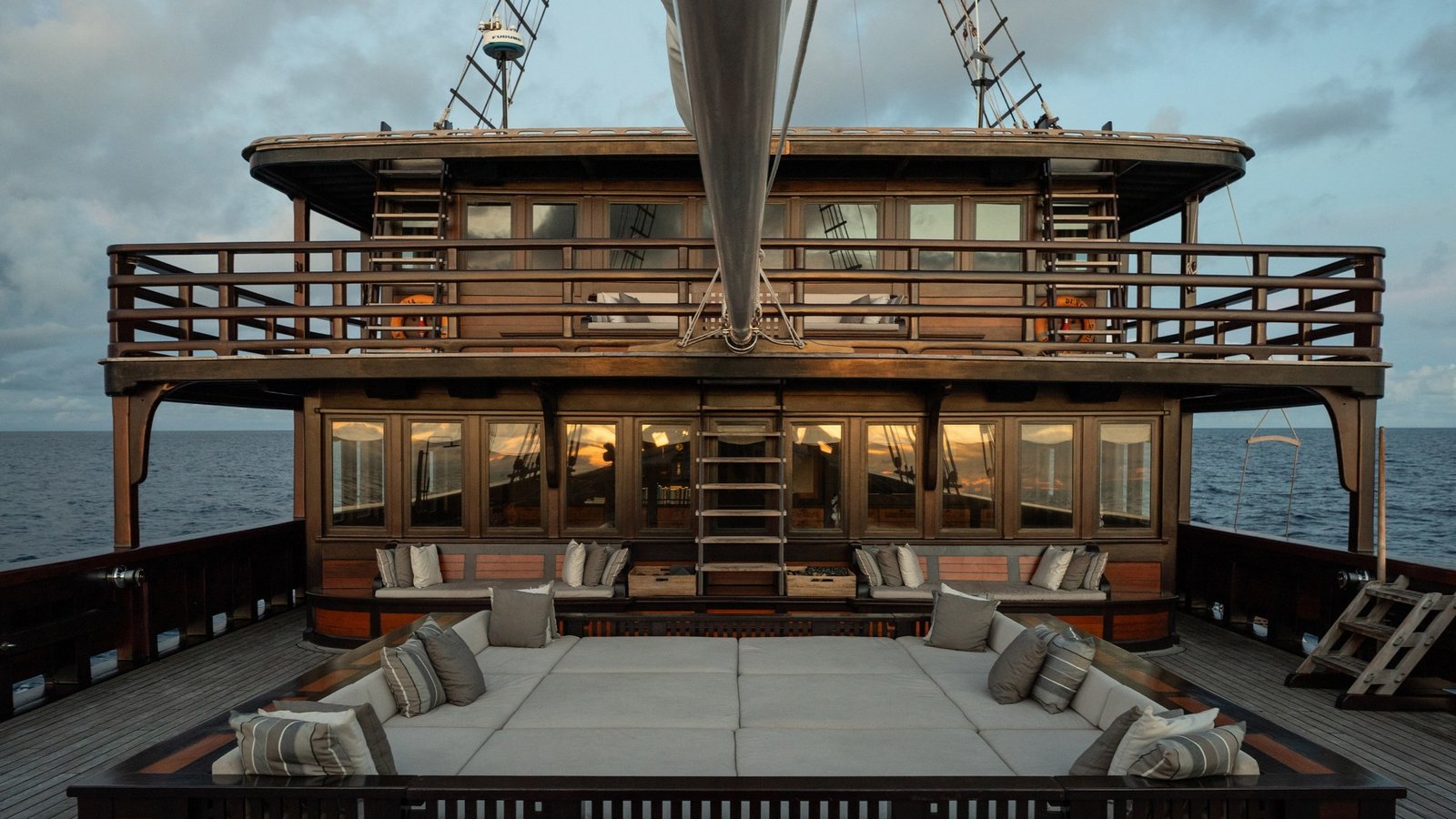
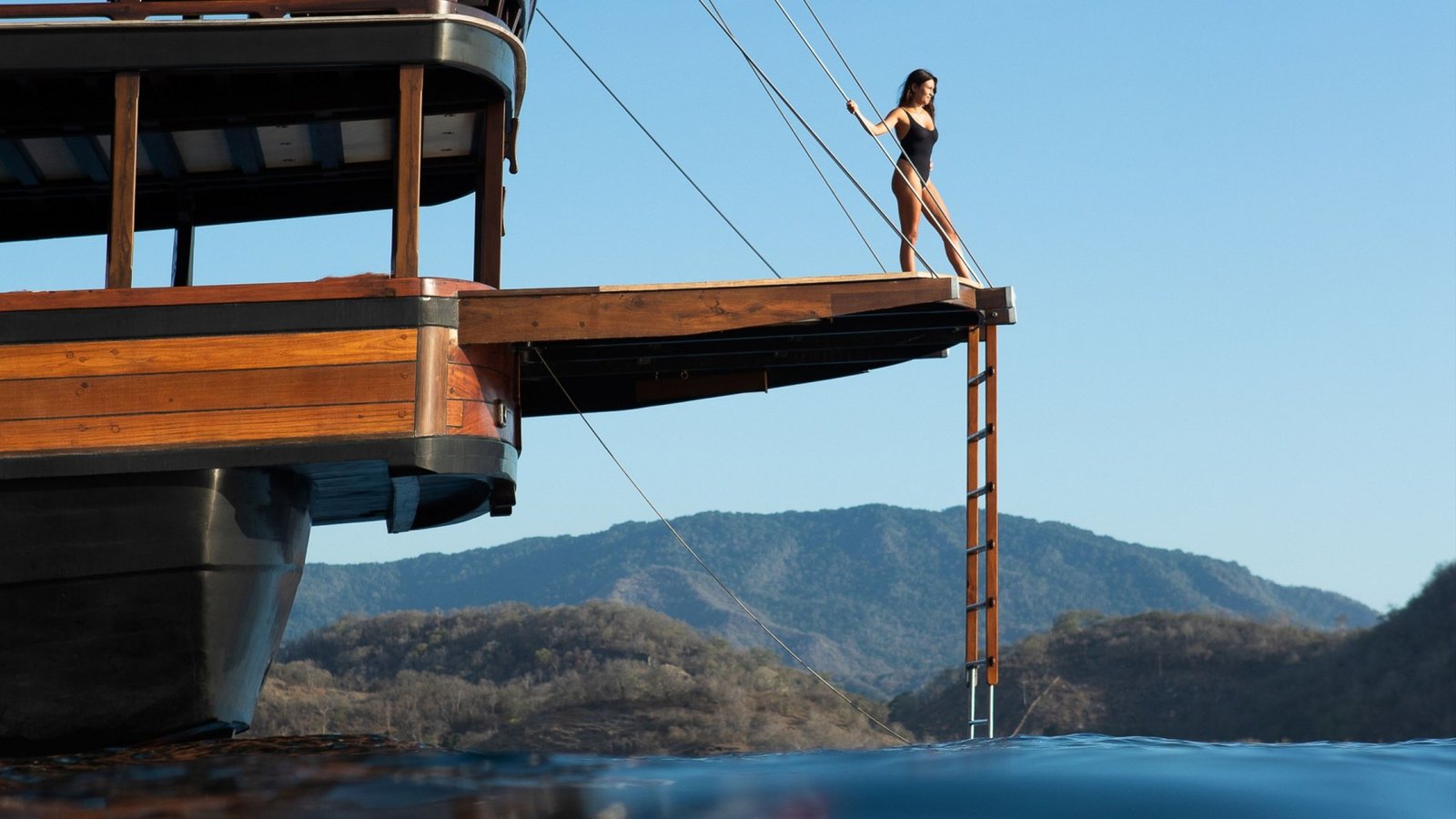
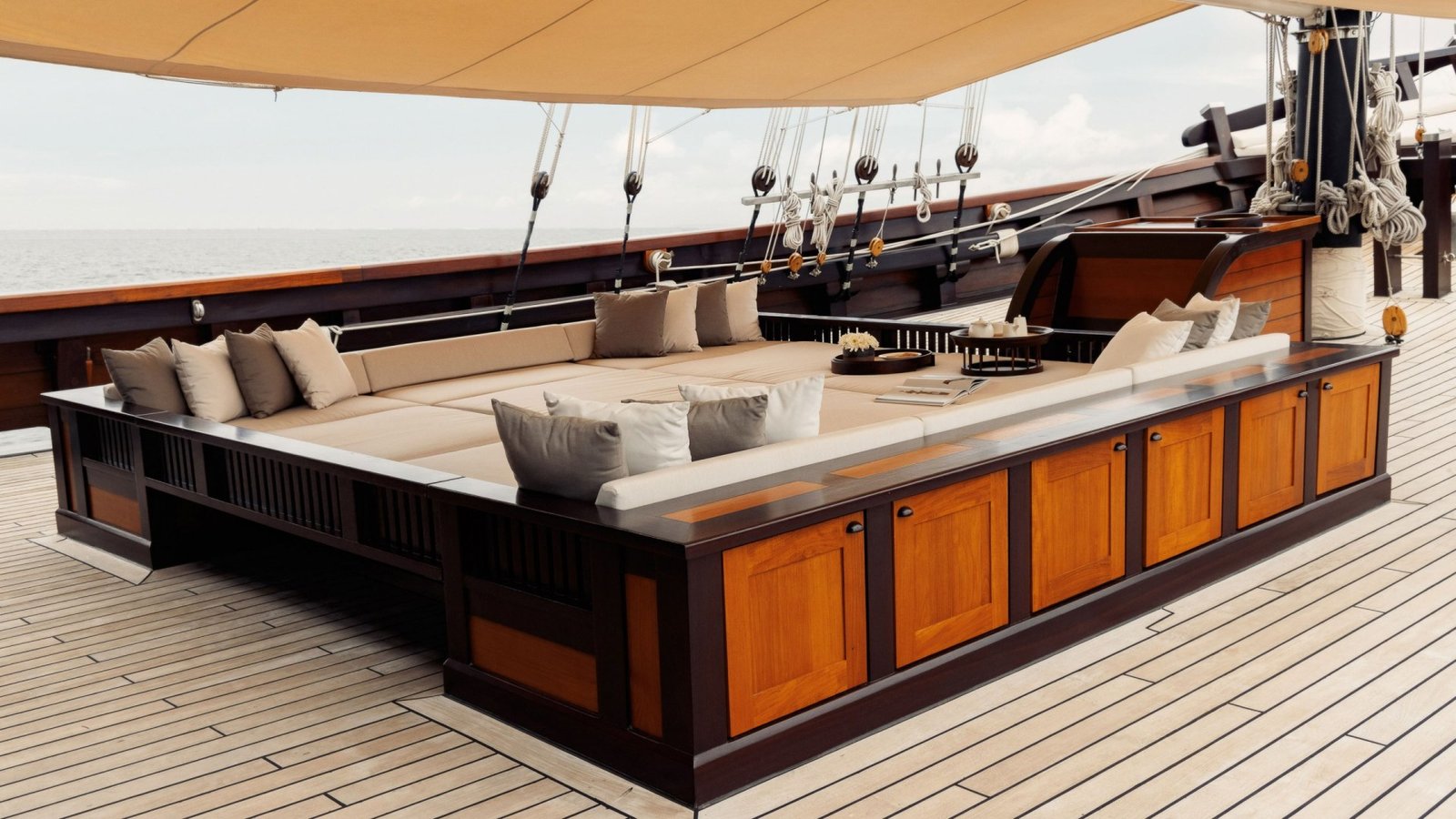
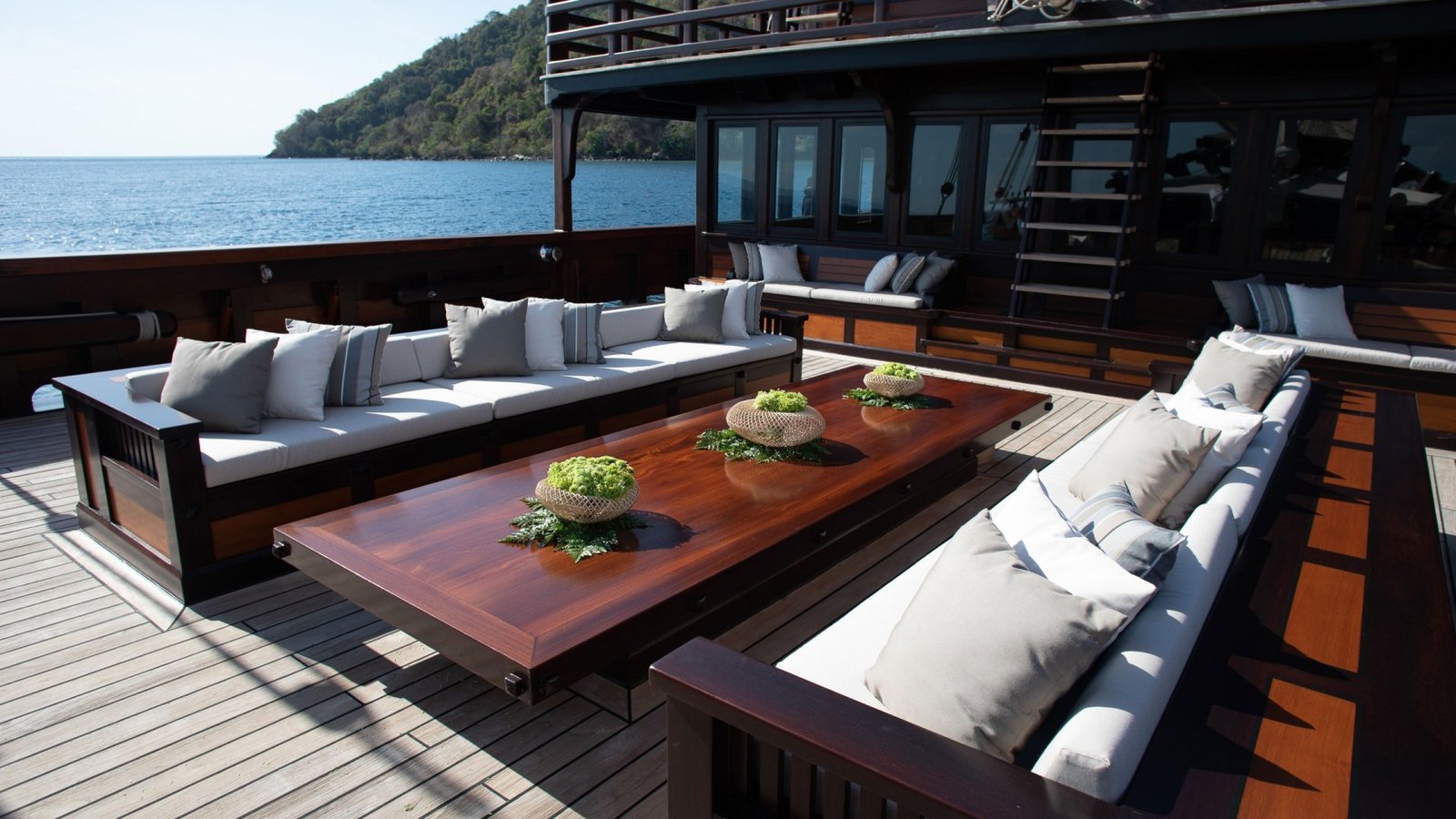
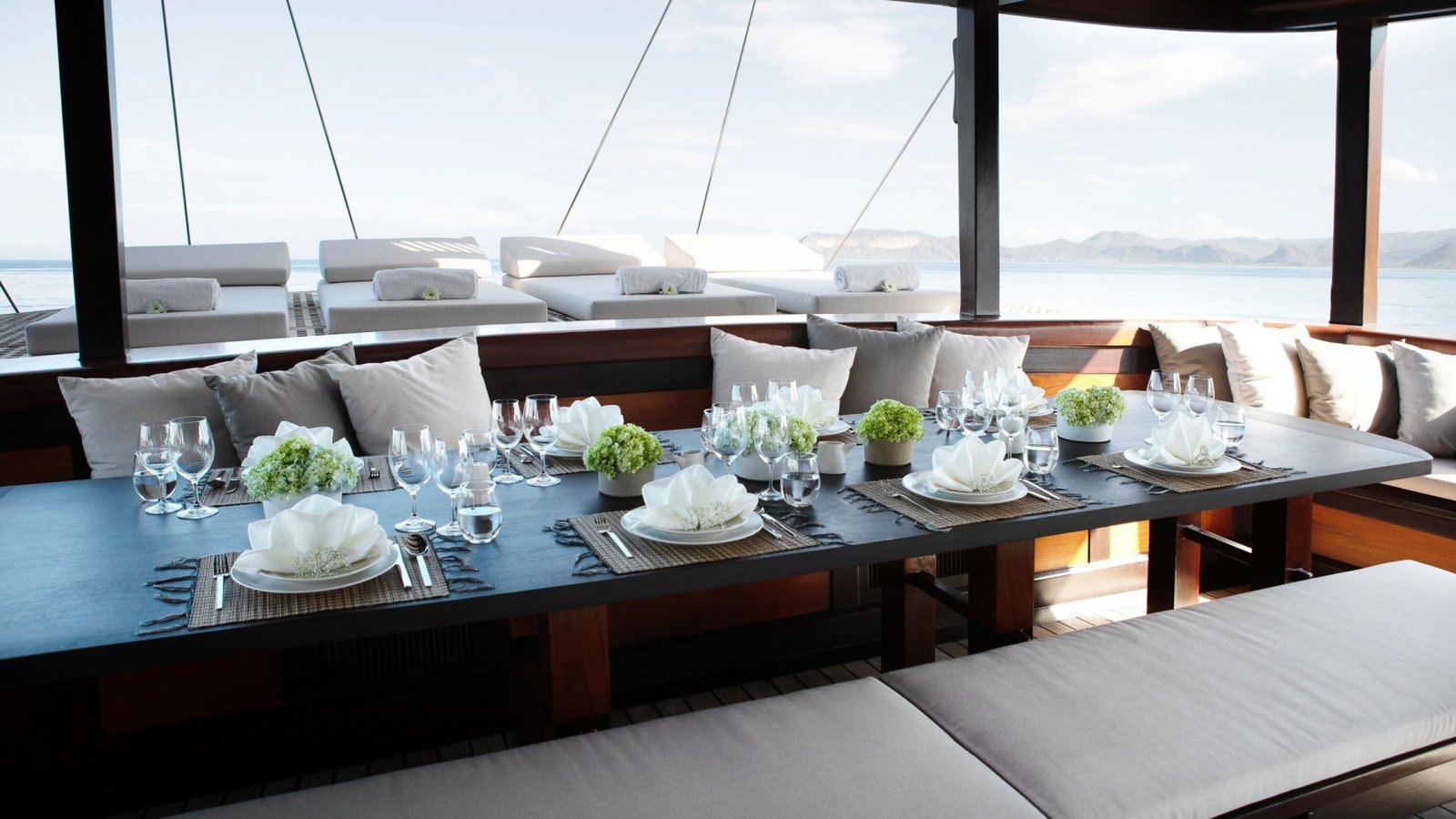
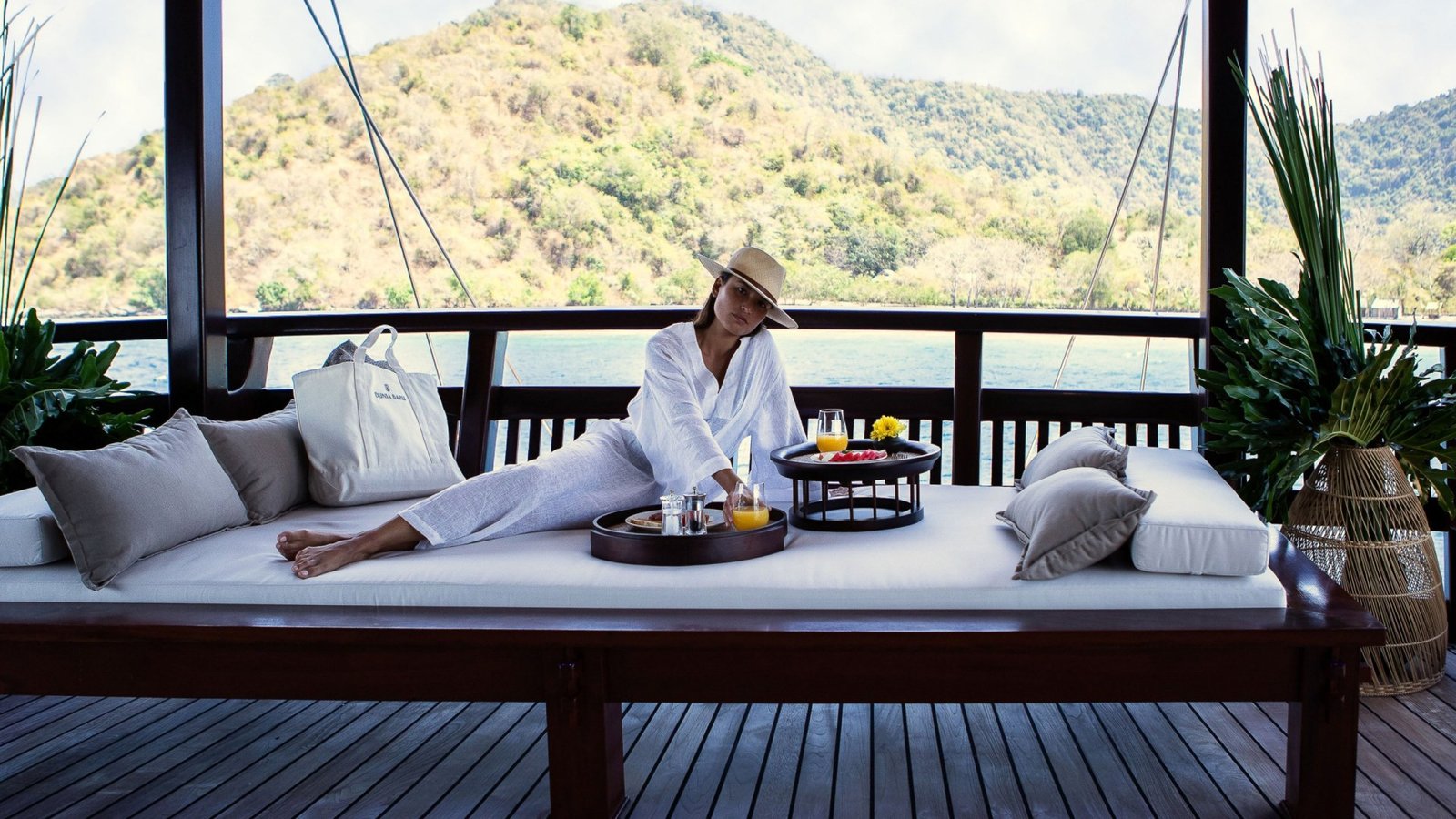
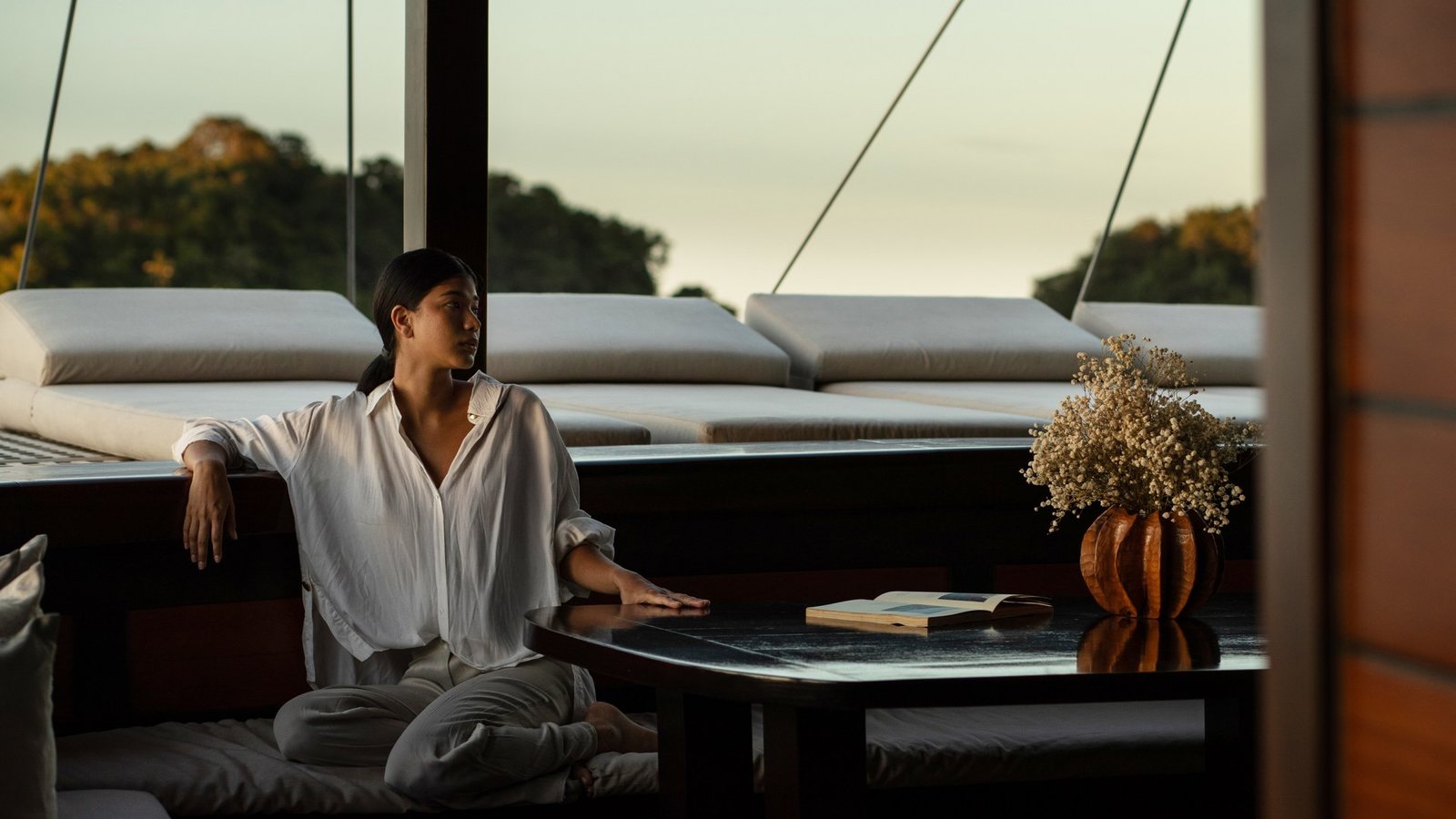
Her decks are the argument for booking her. A vast day bed sits forward of the mainmast, sheltered by the sailcloth awning, deep enough for six. Amidships, a lounge of dark timber frames and pale linen faces outboard over a long lacquered table. Aft and under the deckhouse overhang, another cushioned platform runs the full beam – the coolest place aboard at midday and the one that fills at dusk, when the lights come up through the deckhouse windows behind. A bowsprit platform doubles as a diving board.
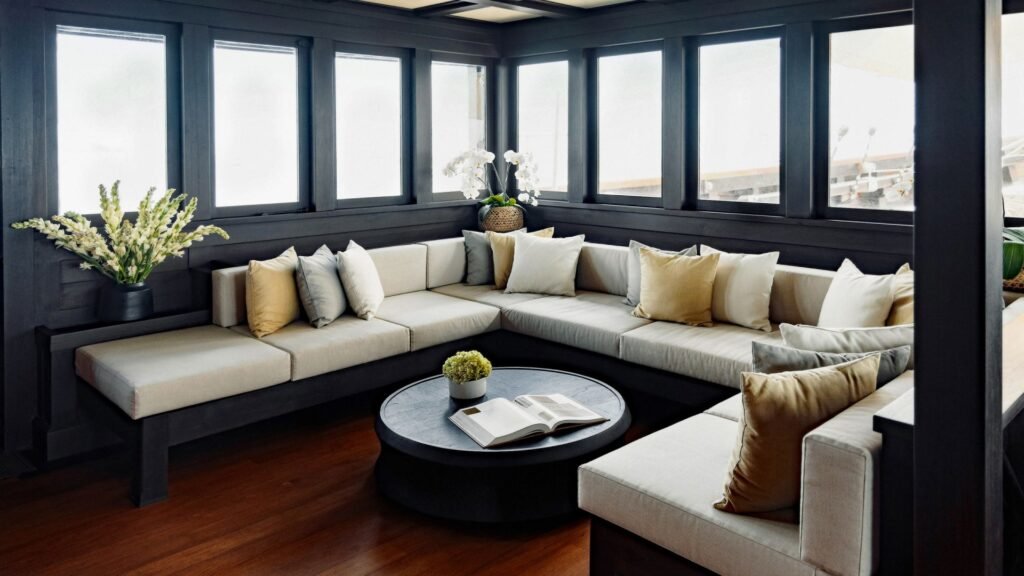
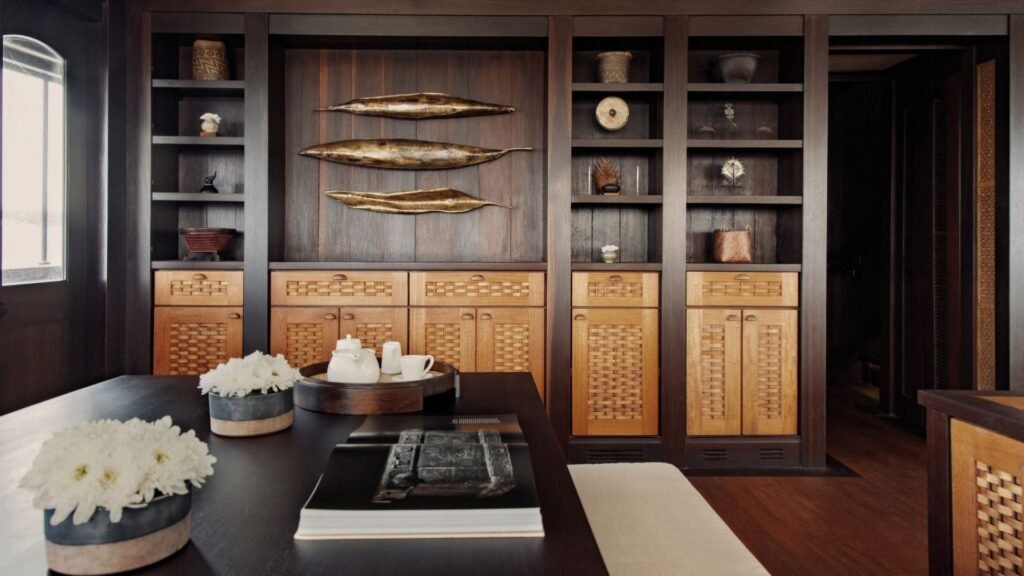
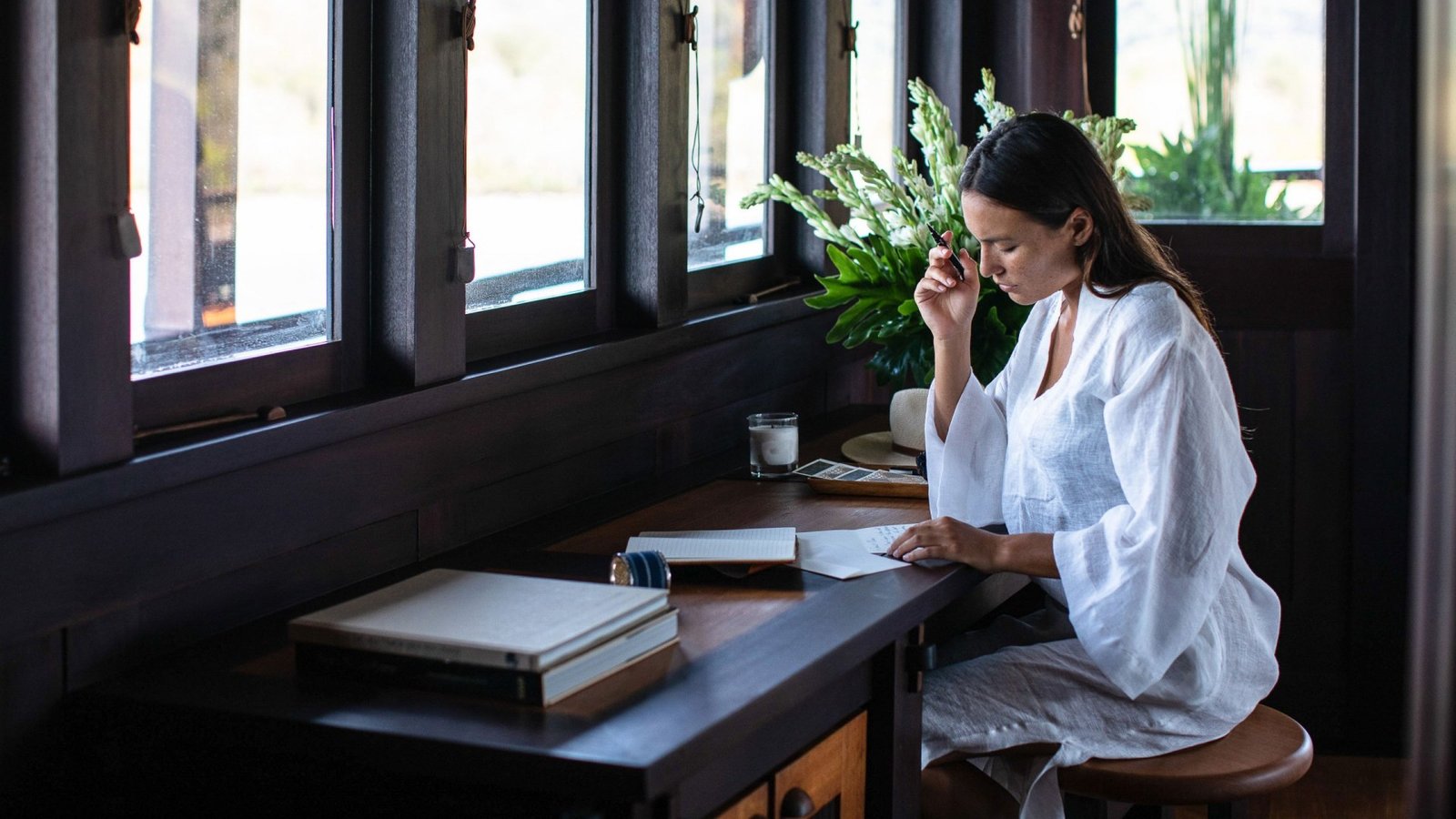
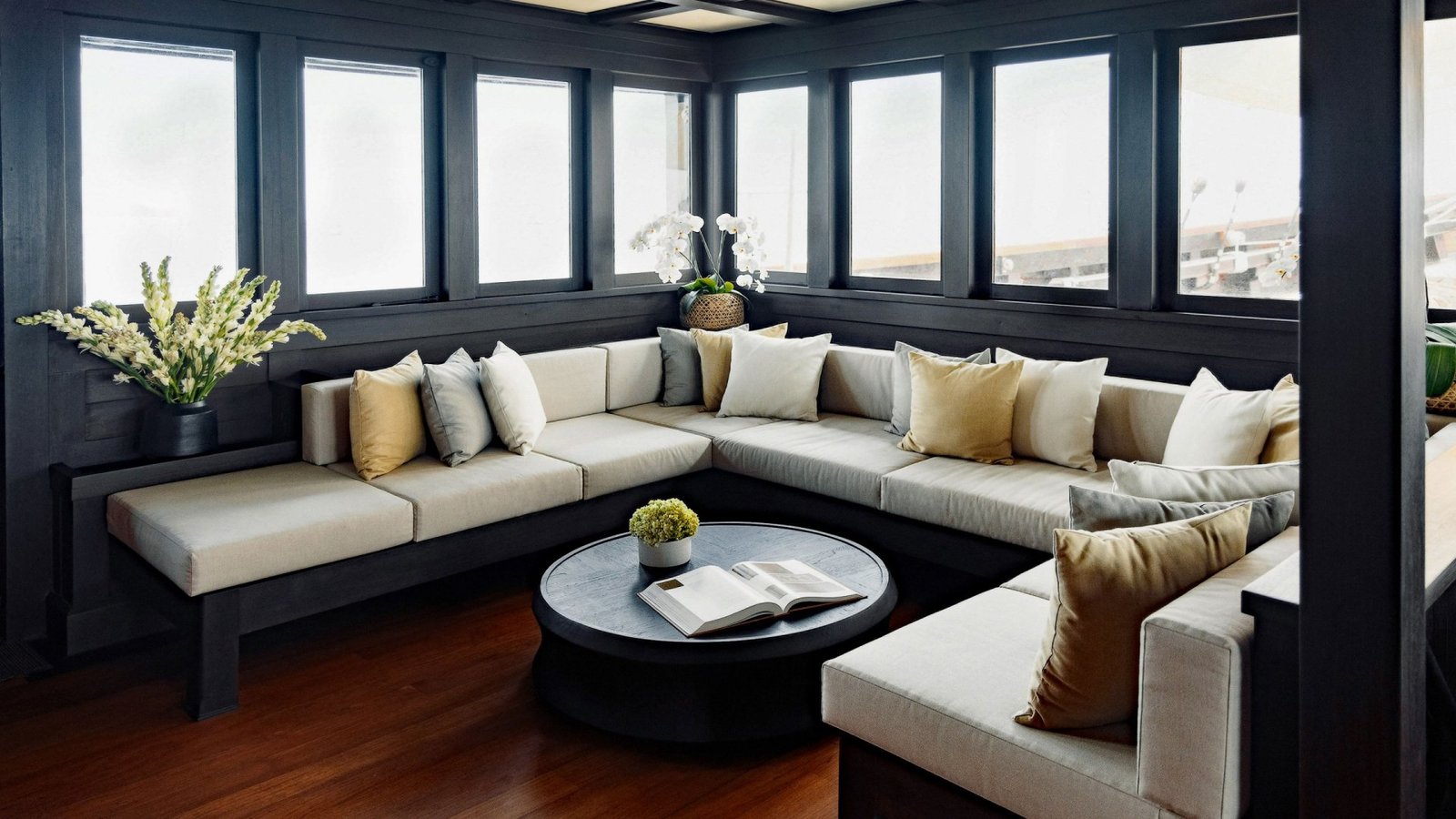
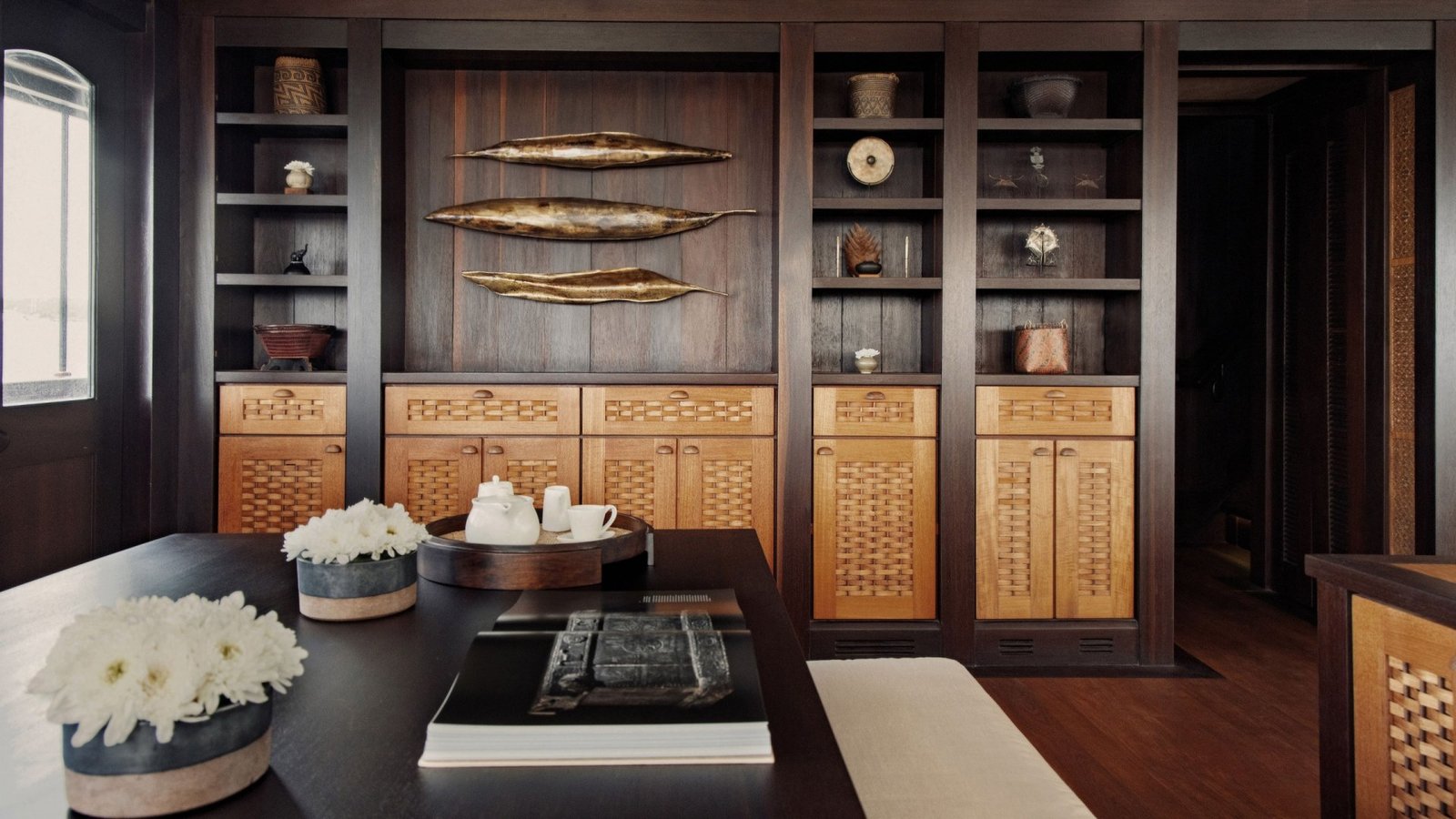
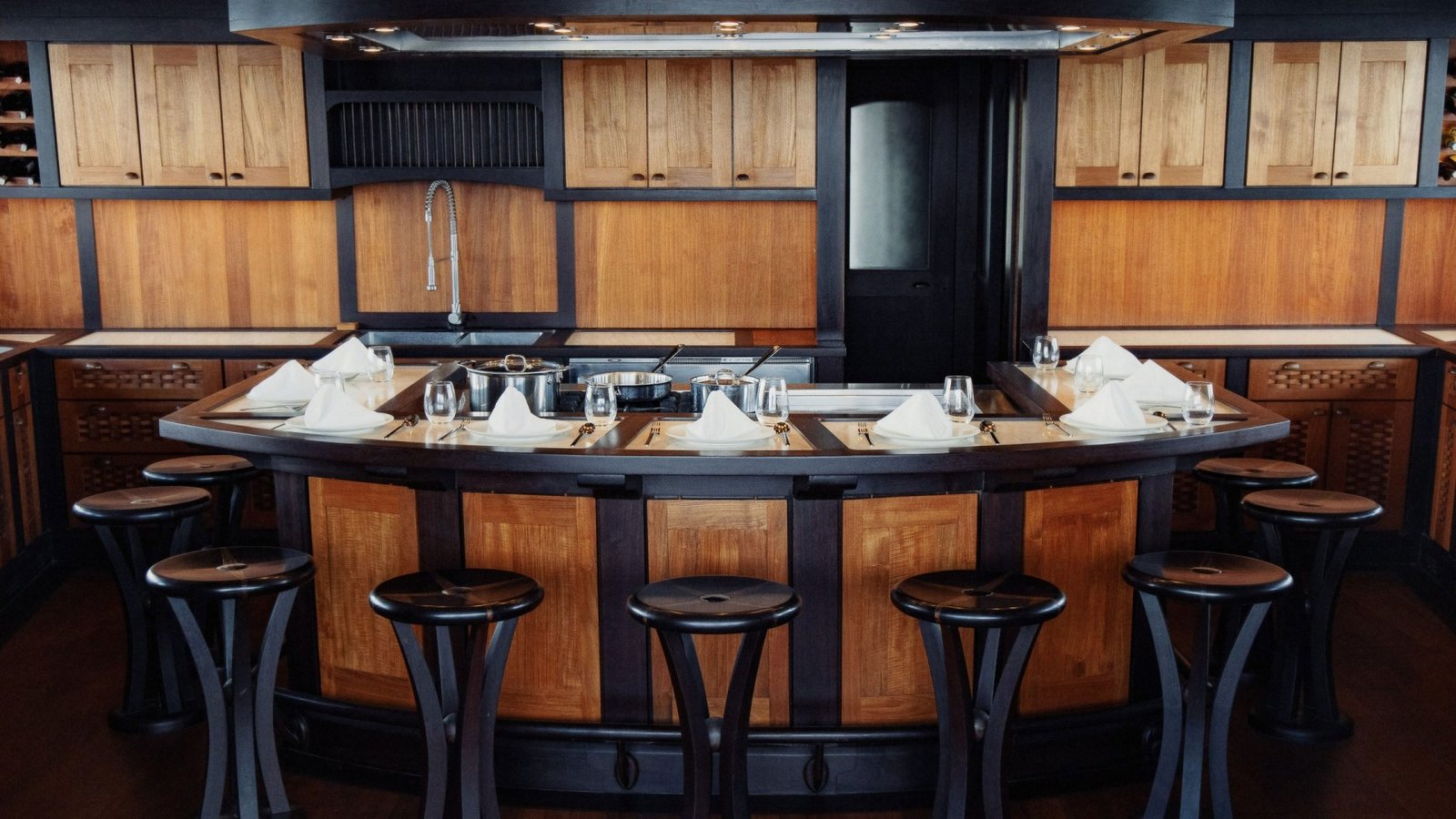
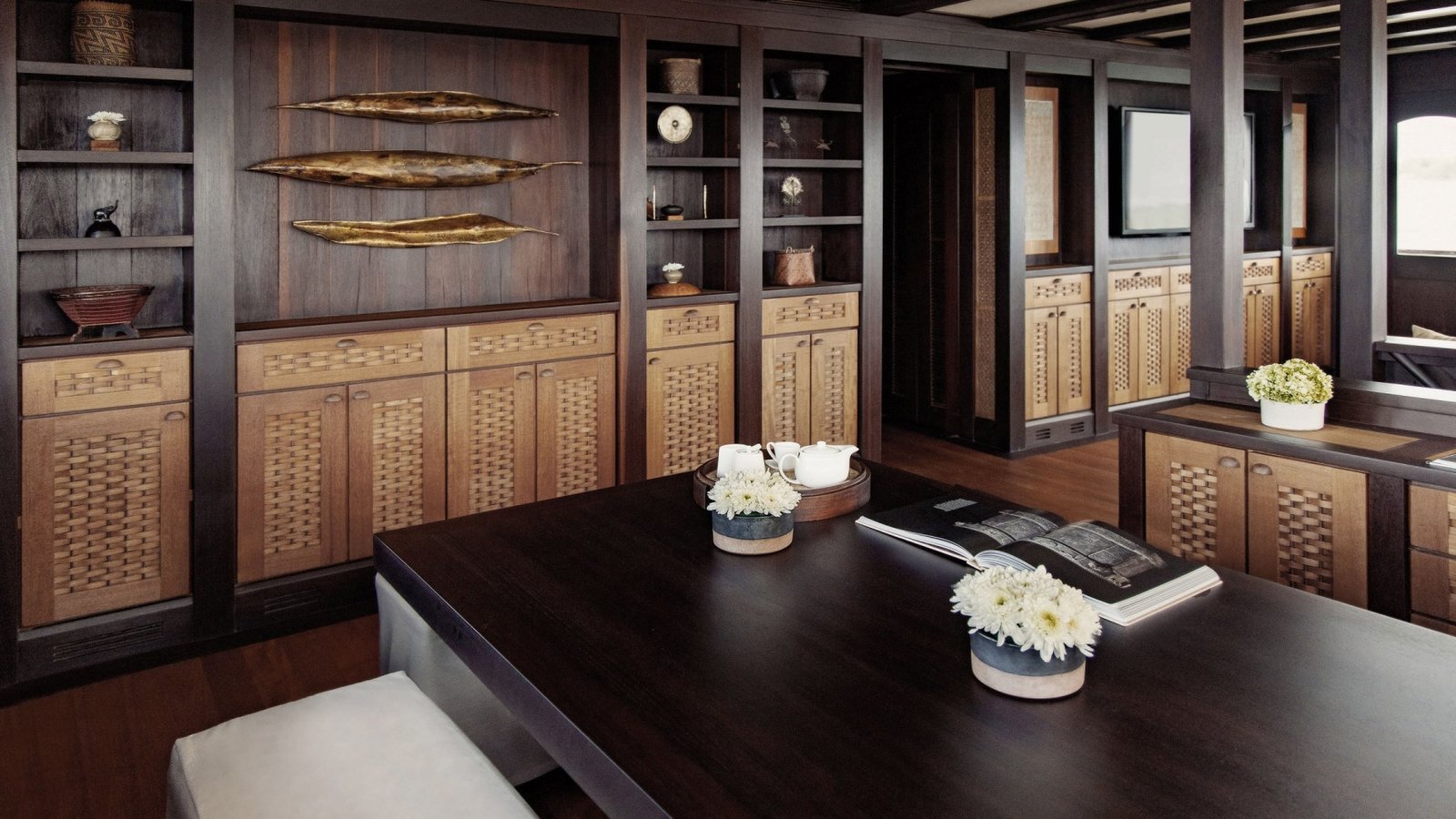
Inside, the deckhouse holds three distinct rooms. The main saloon wraps an L of cream banquettes around a low round table under a band of windows. Behind it, a library is the heart of the boat: carved cabinets, woven rattan panels, three brass fish mounted above the shelving and a long table for cards, charts and long lunches. Forward again, a curved bar with hand-turned stools looks straight into the galley, so the cooking is part of the evening rather than hidden from it.
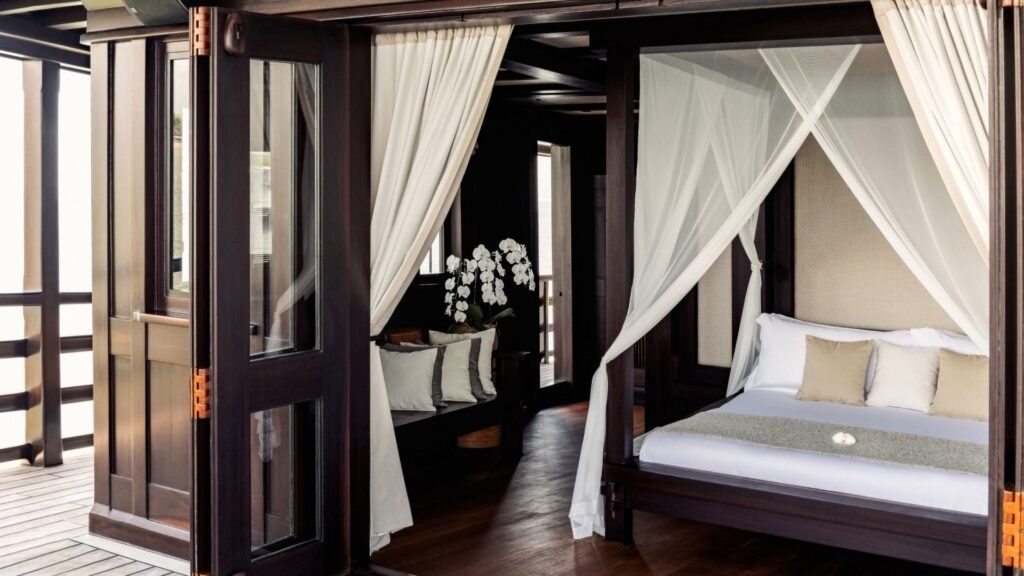
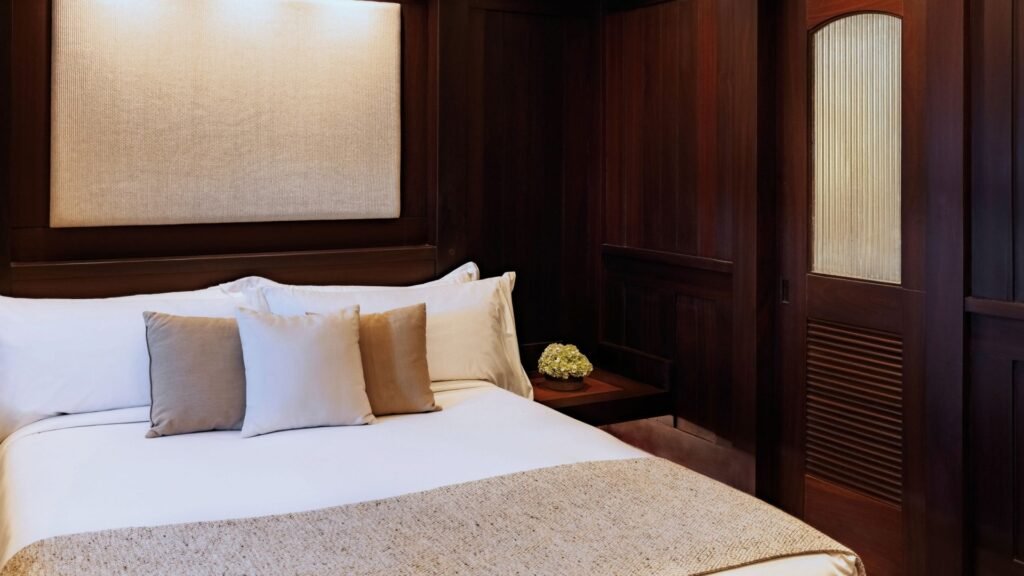
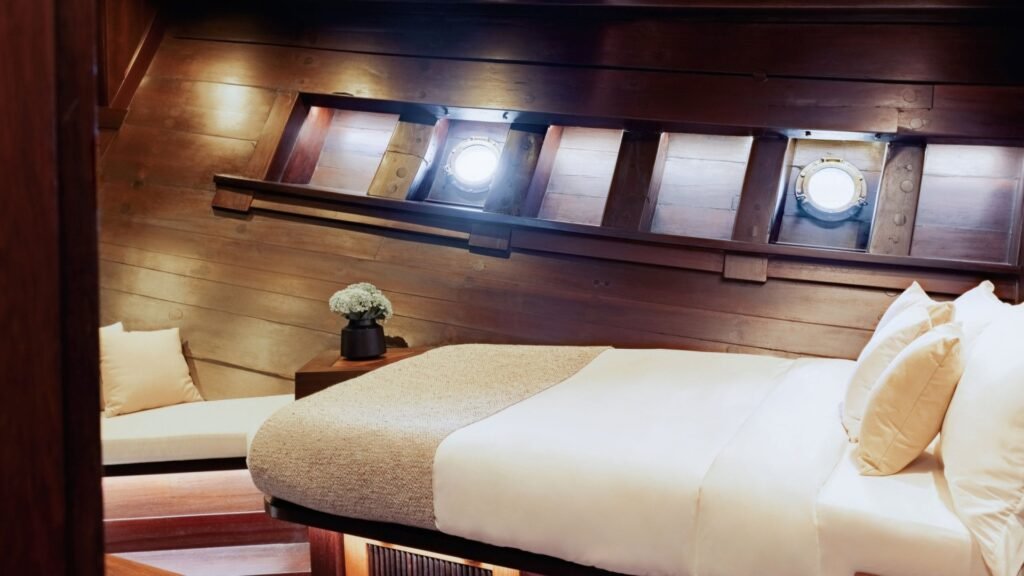
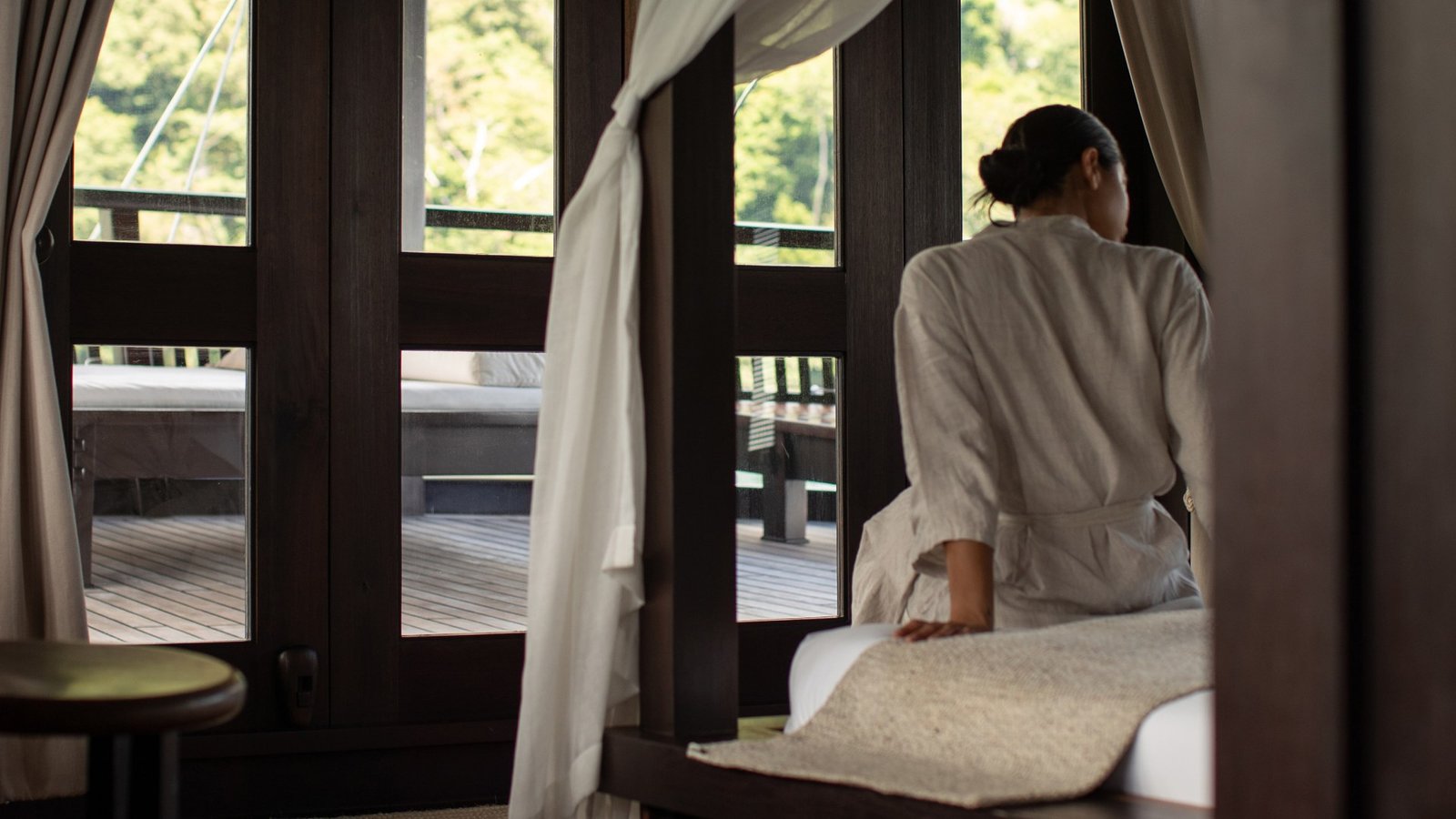
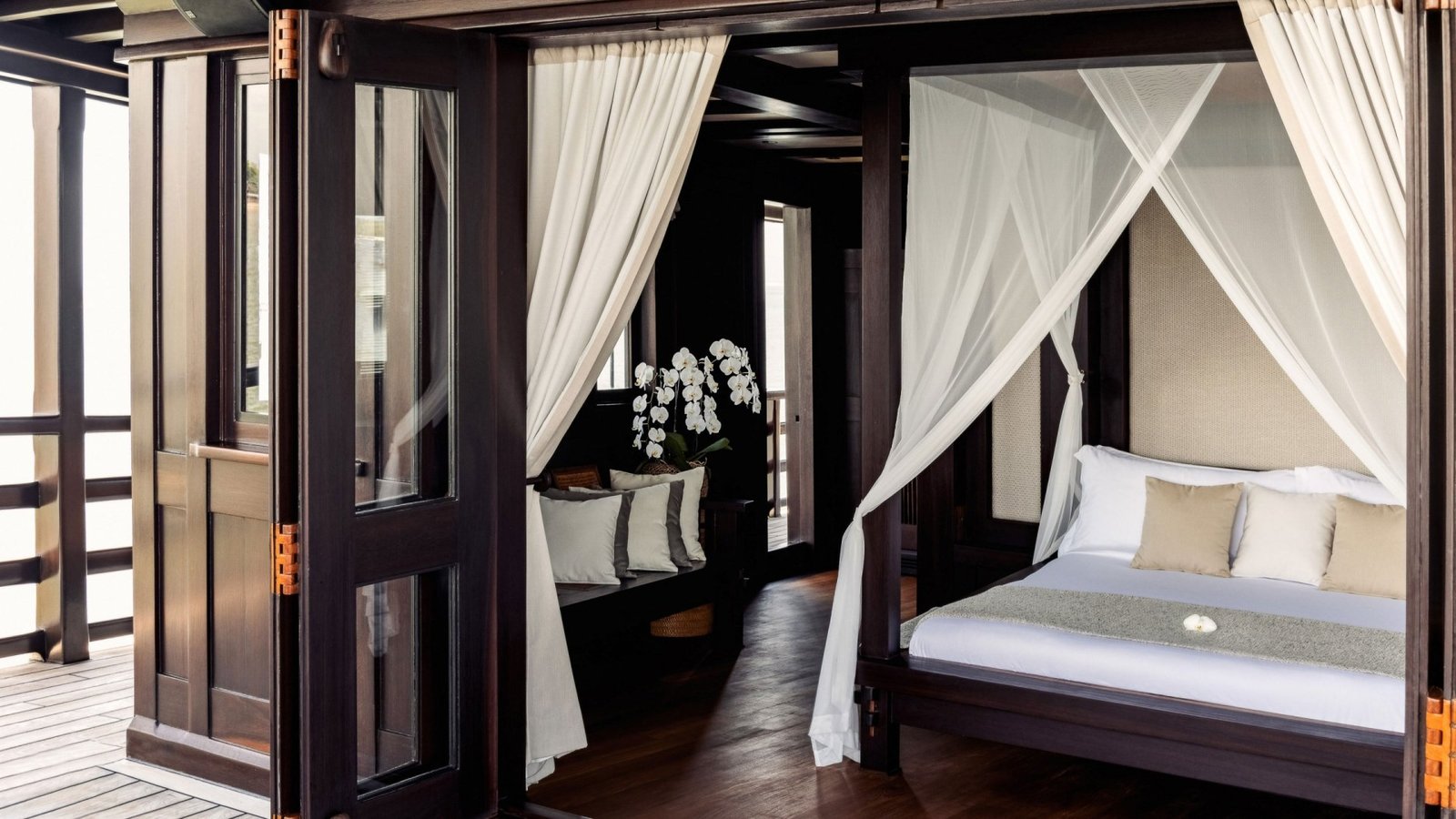
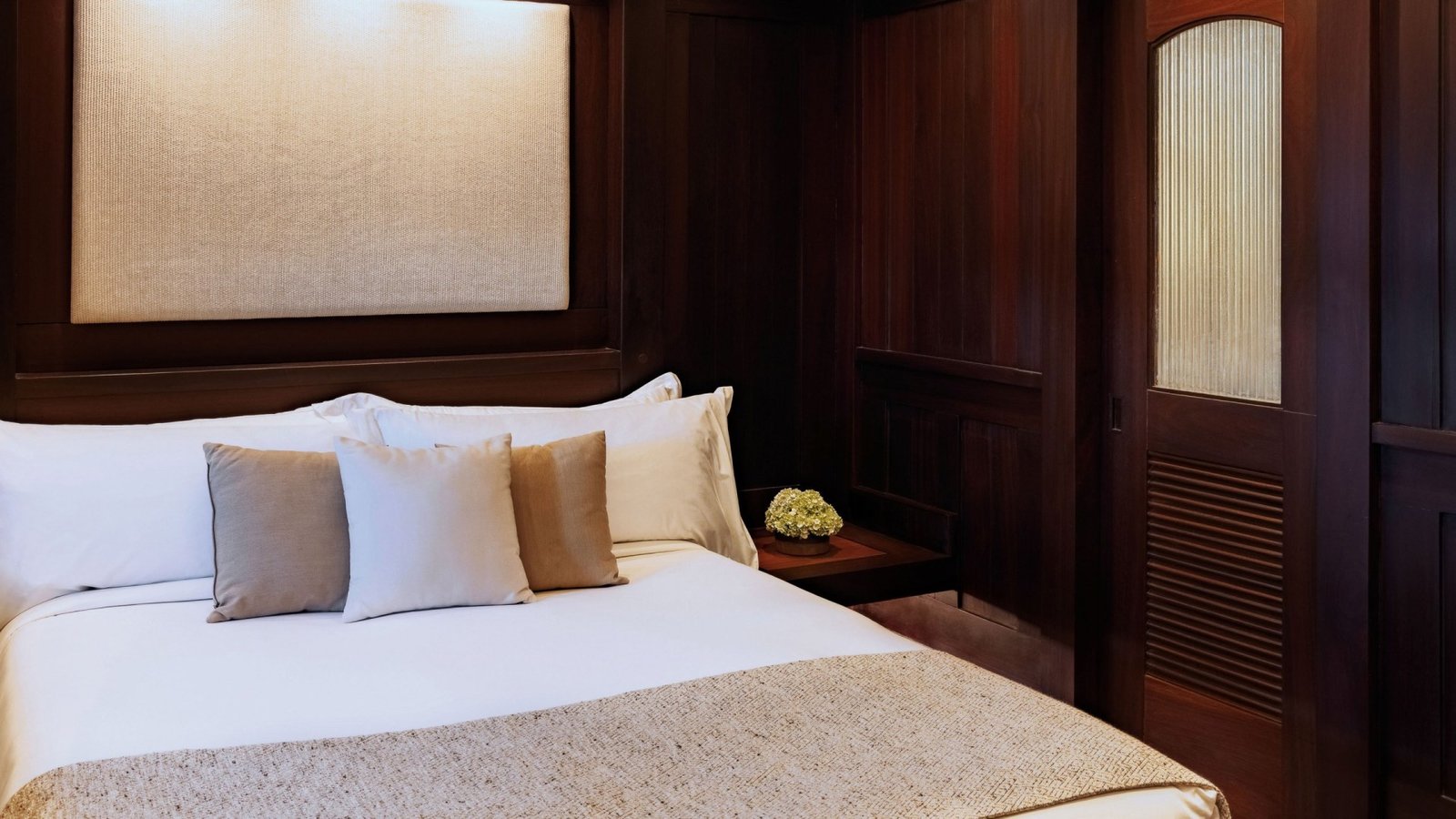
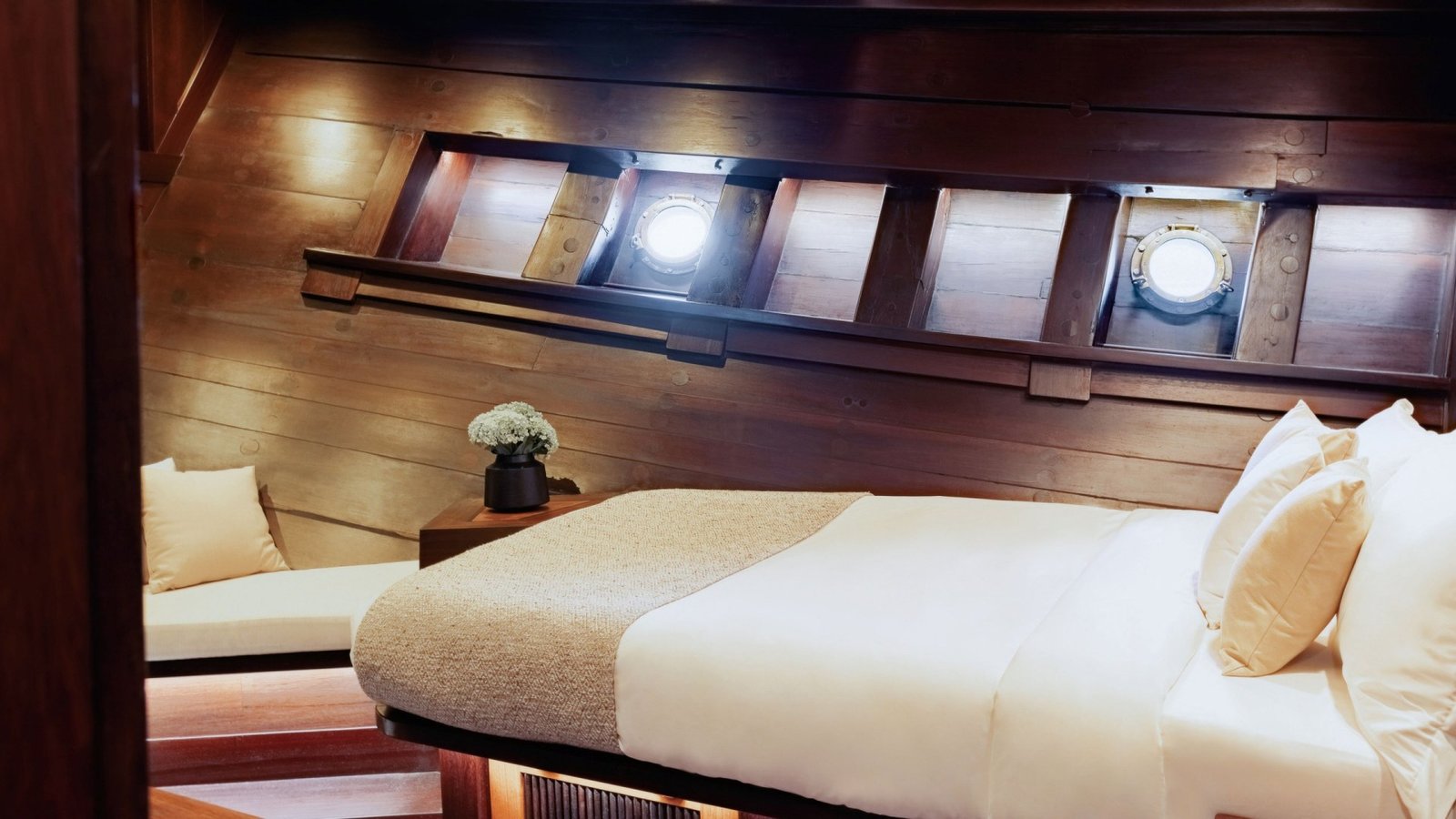
Fourteen guests sleep in seven cabins. The master is a four-poster under mosquito netting, its folding doors opening onto a private stretch of veranda. Guest cabins are panelled in the same dark timber with woven inserts and crisp white linen; the lower-deck rooms take their light from a run of bronze portholes set into the planking. Eighteen crew look after the fourteen, which in Indonesian waters means tenders in the water before breakfast and a boat that is never waiting on itself.
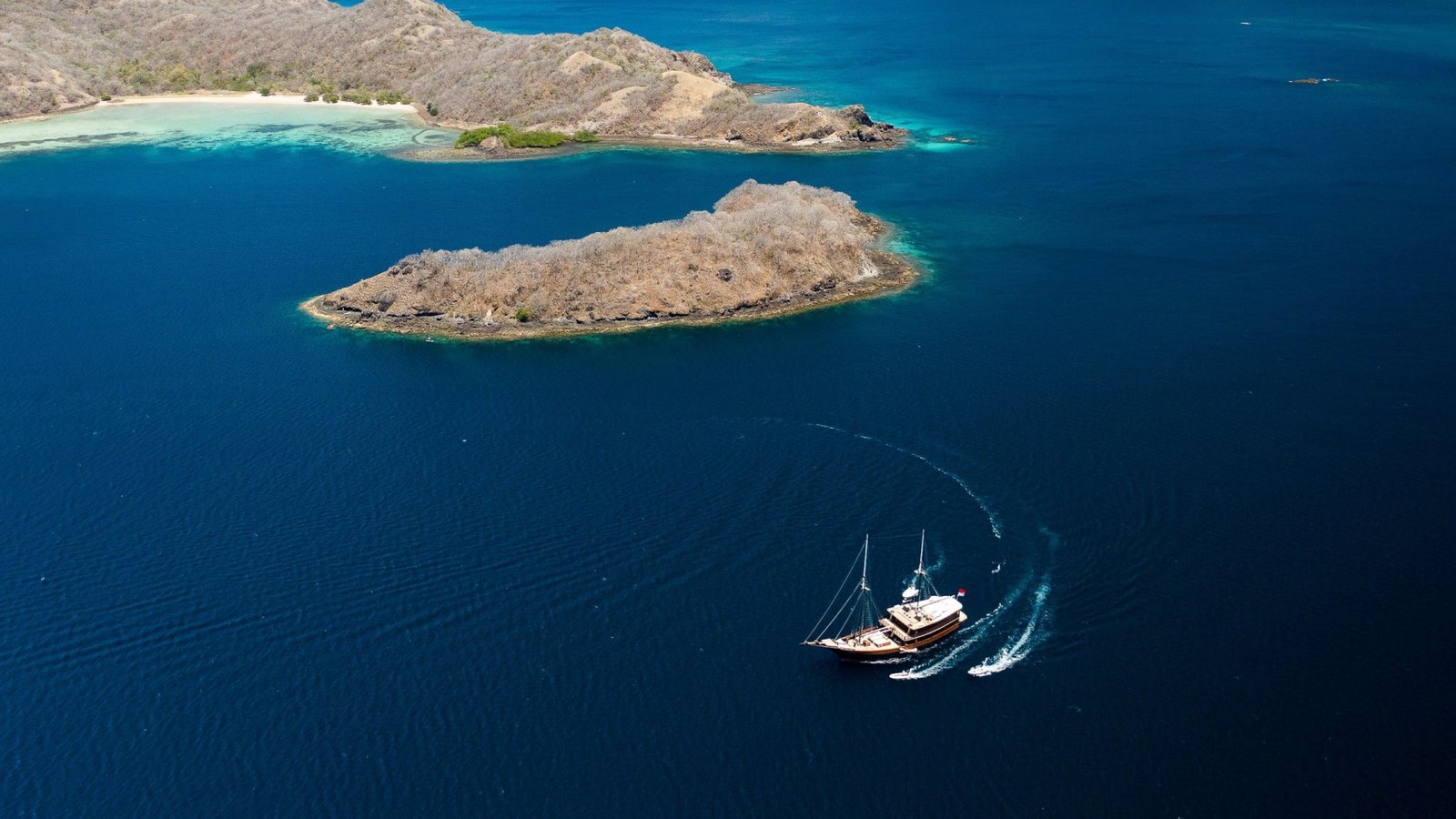
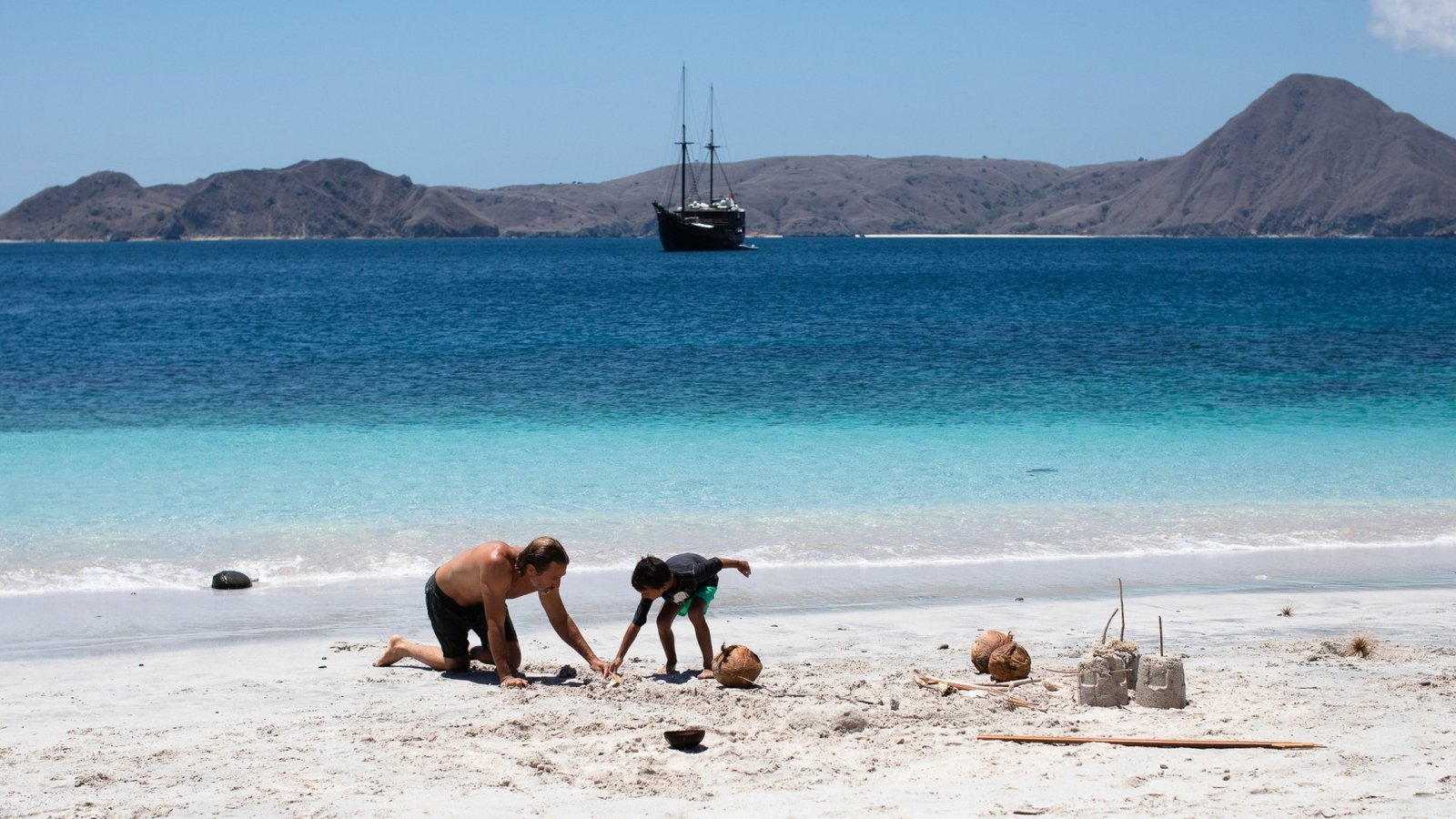
She works Komodo and Raja Ampat year-round, the two archipelagos where the diving, the topography and the light all arrive at once, and where a shallow-draught traditional hull can anchor where the deep-keeled fleet cannot. Guests spend their days on reefs, on empty sand, and on a foredeck that faces limestone islands rising straight out of turquoise water.
For a certain kind of charterer, this is the only boat in the region worth the crossing: not a superyacht dressed as a schooner, but a genuine phinisi finished to a standard that would flatter a European shipyard, and crewed by people who grew up in the waters she works.