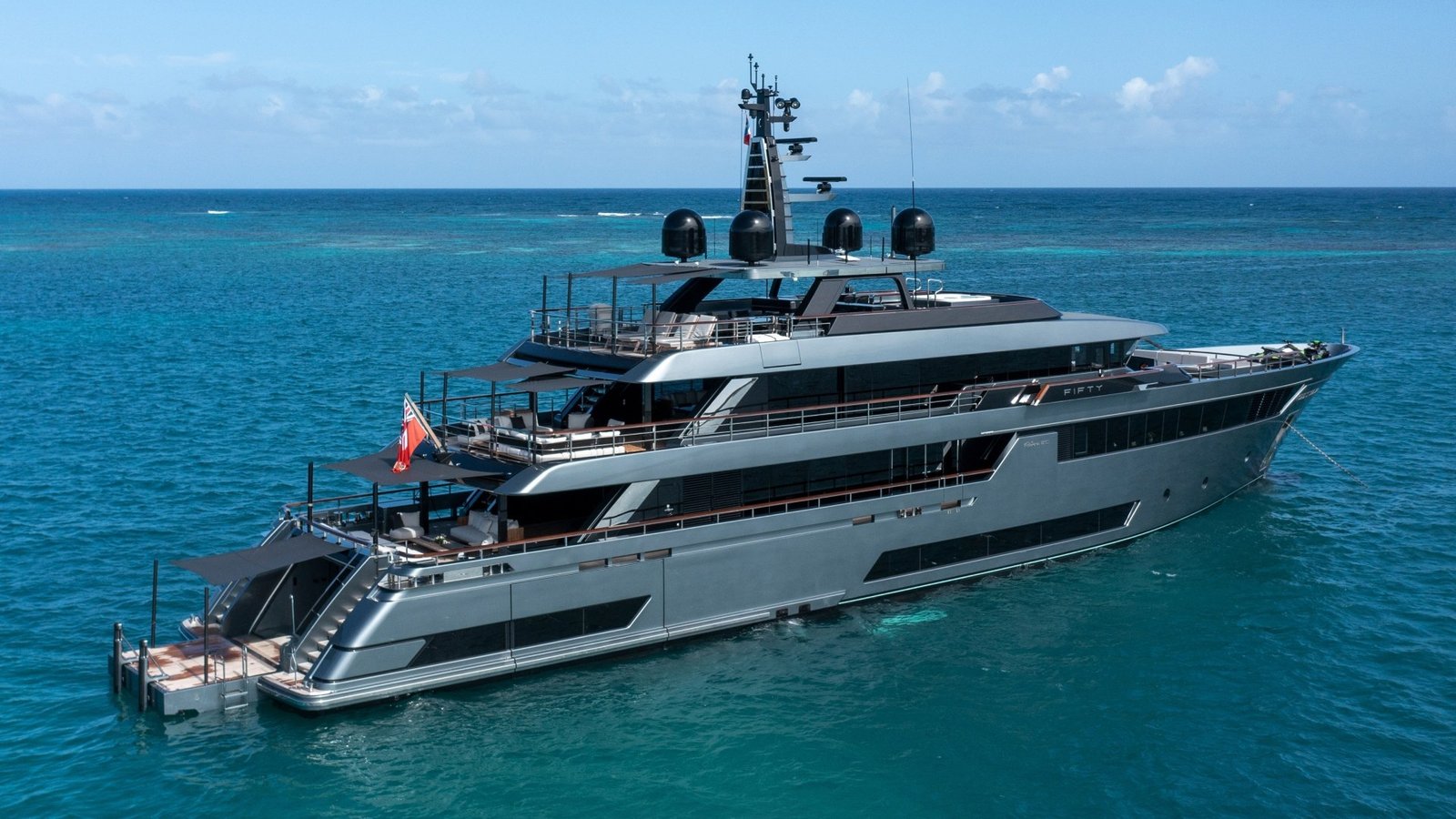
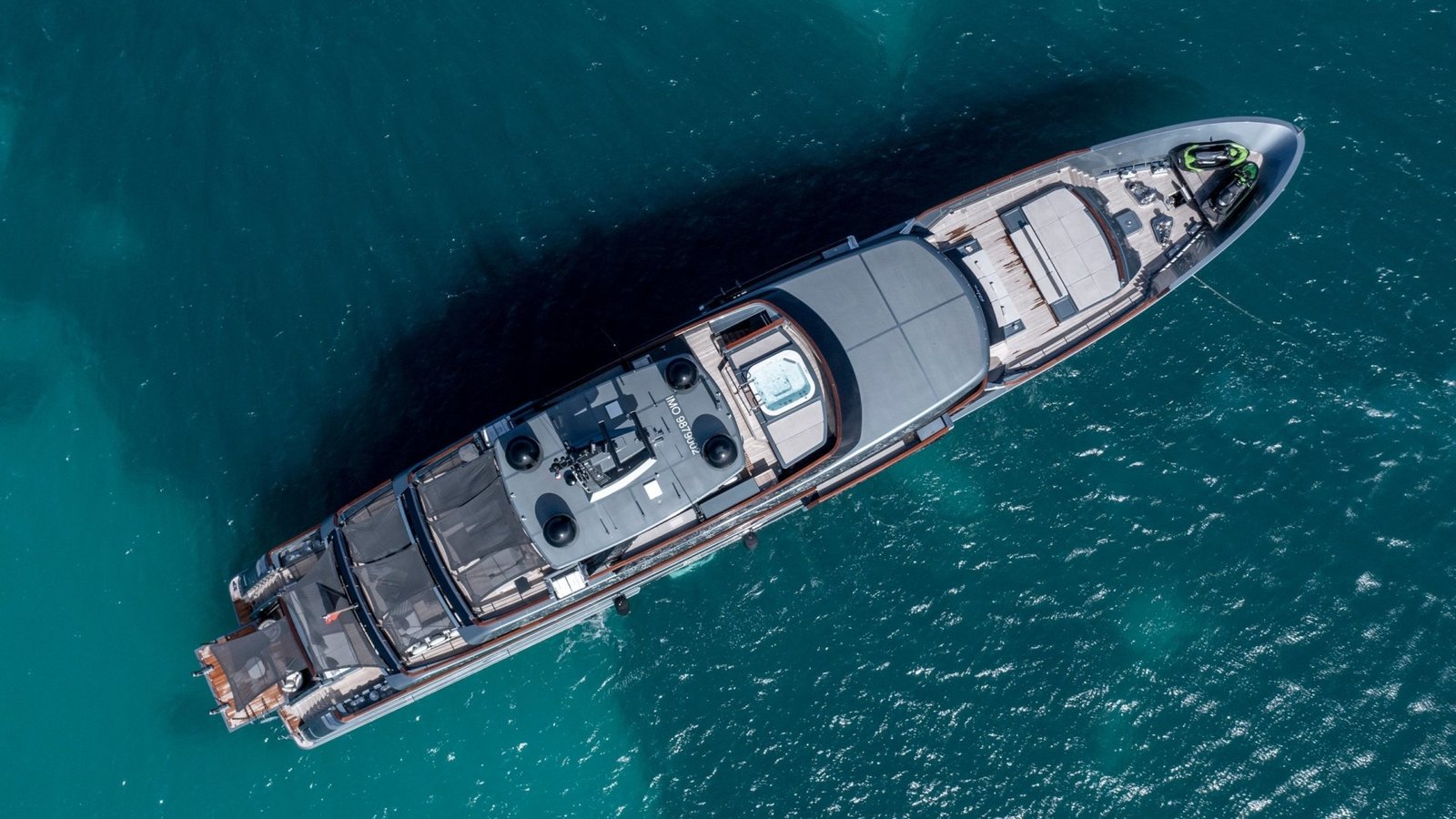
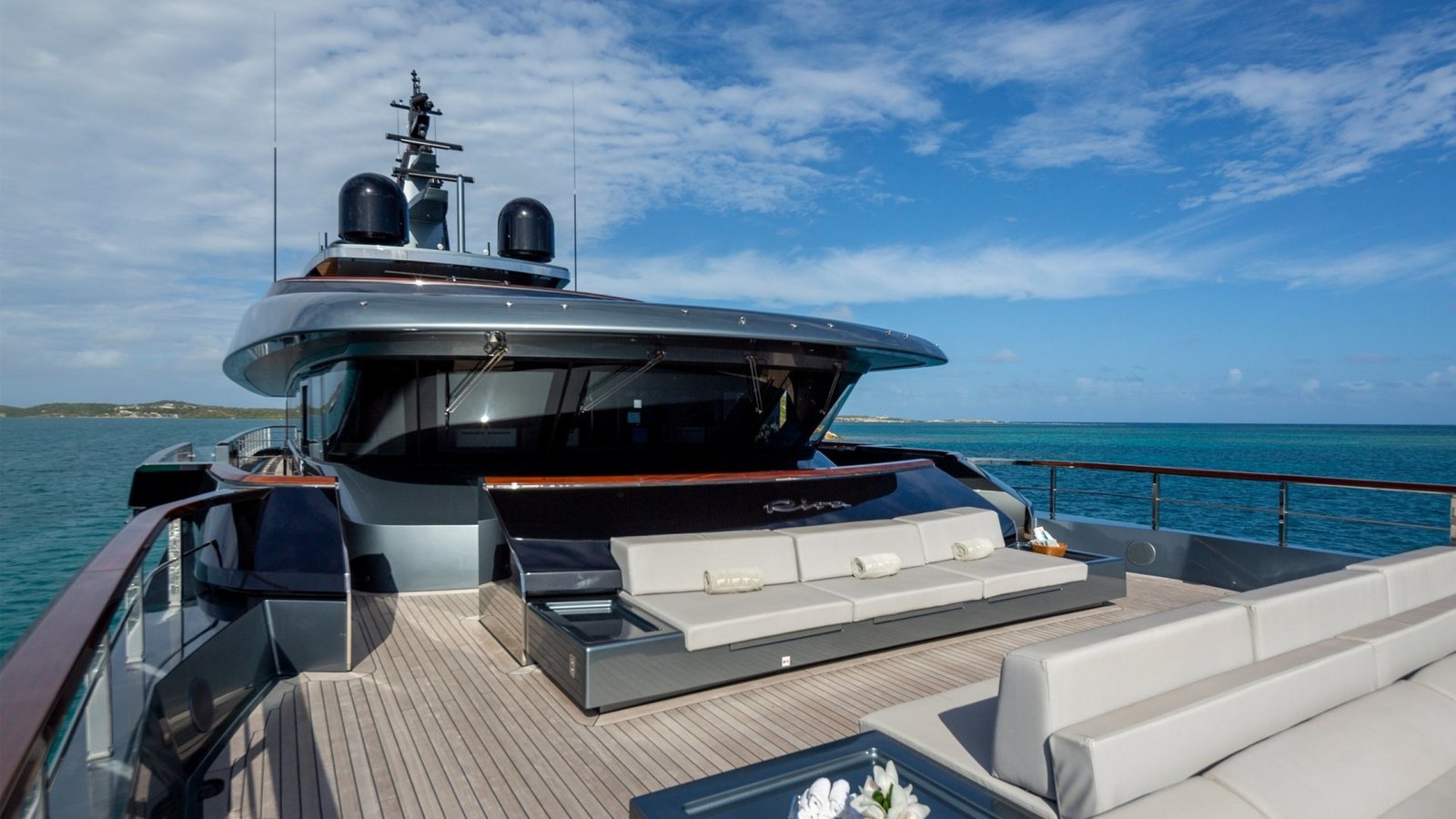
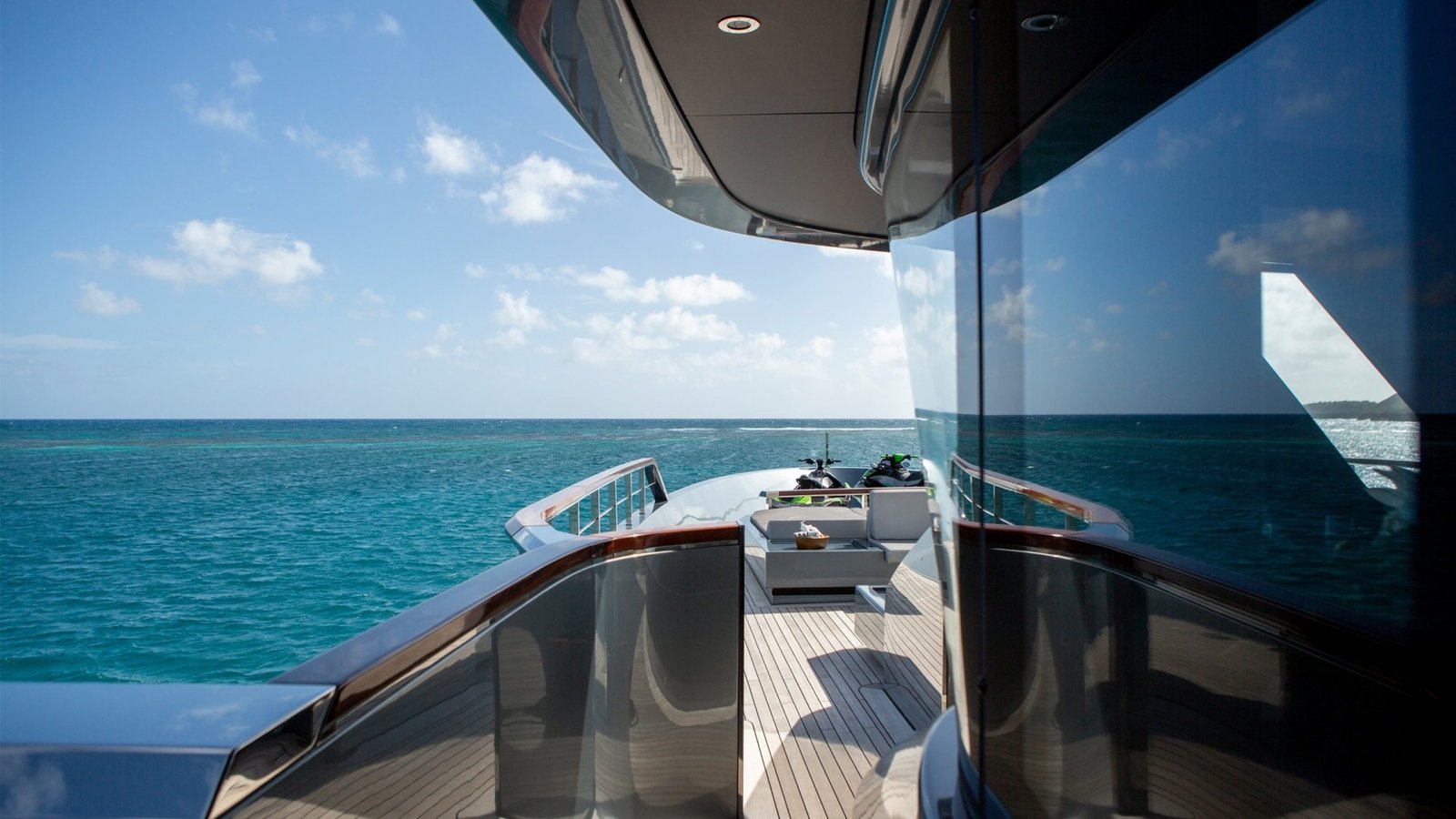
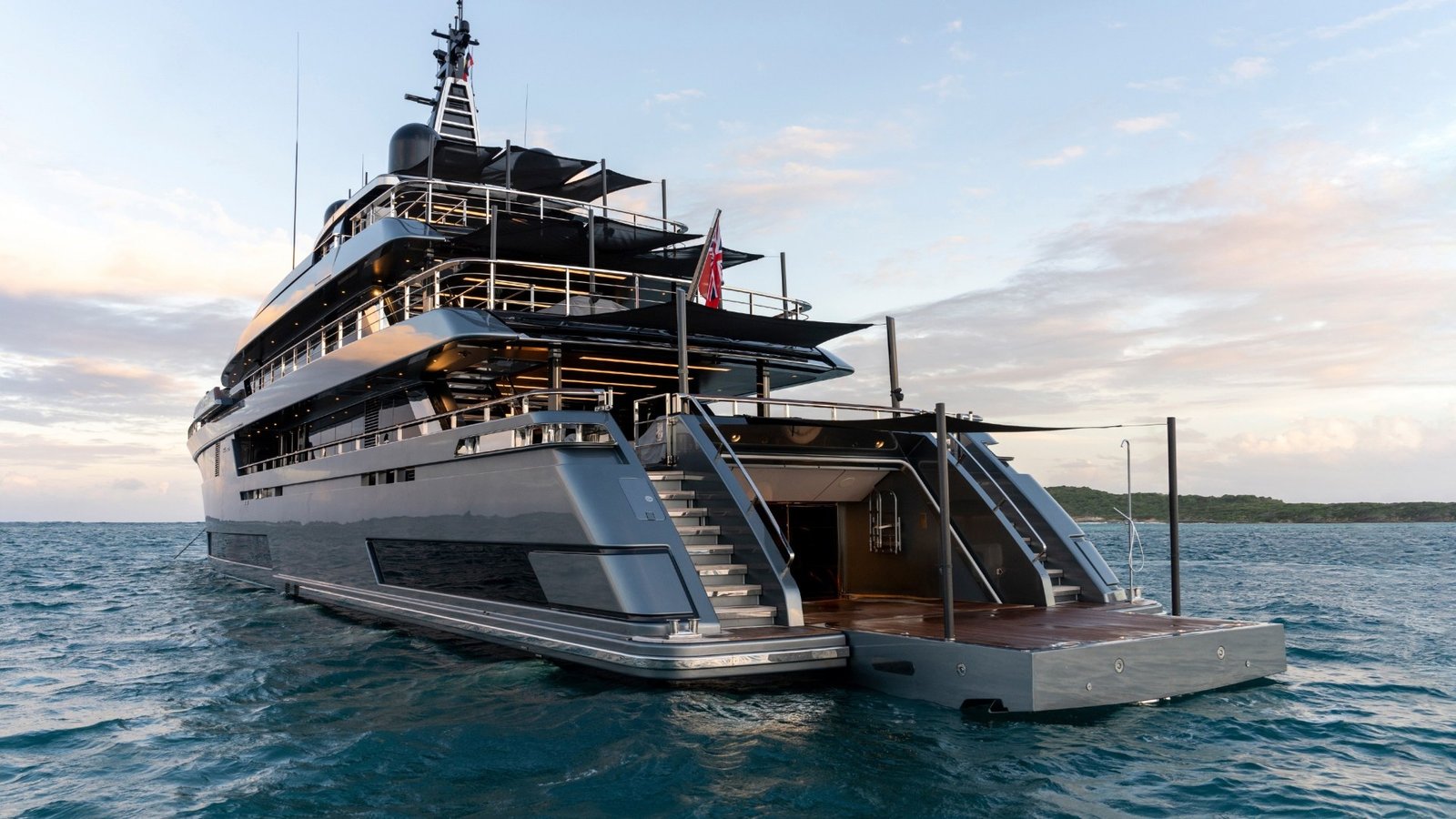
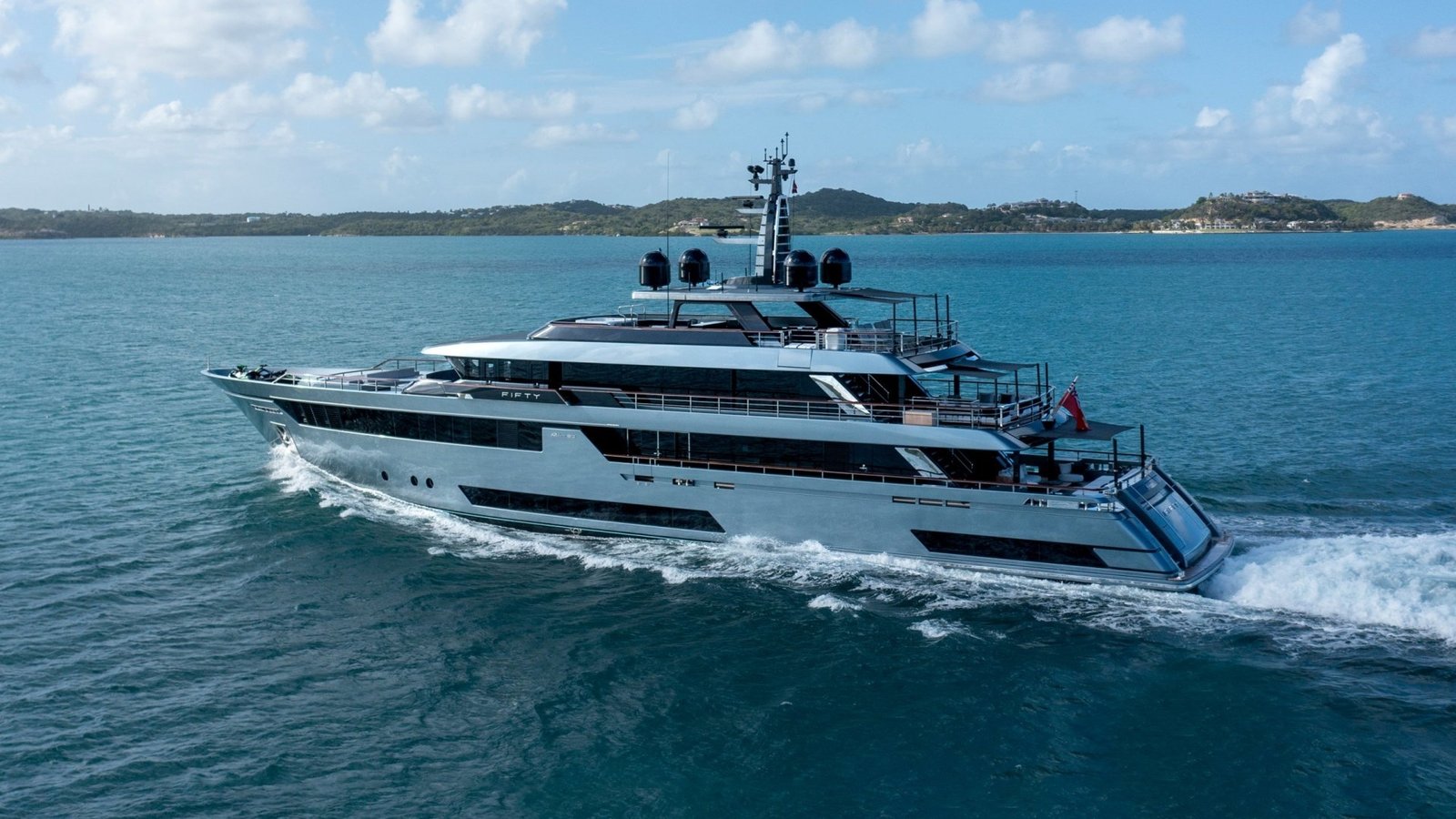
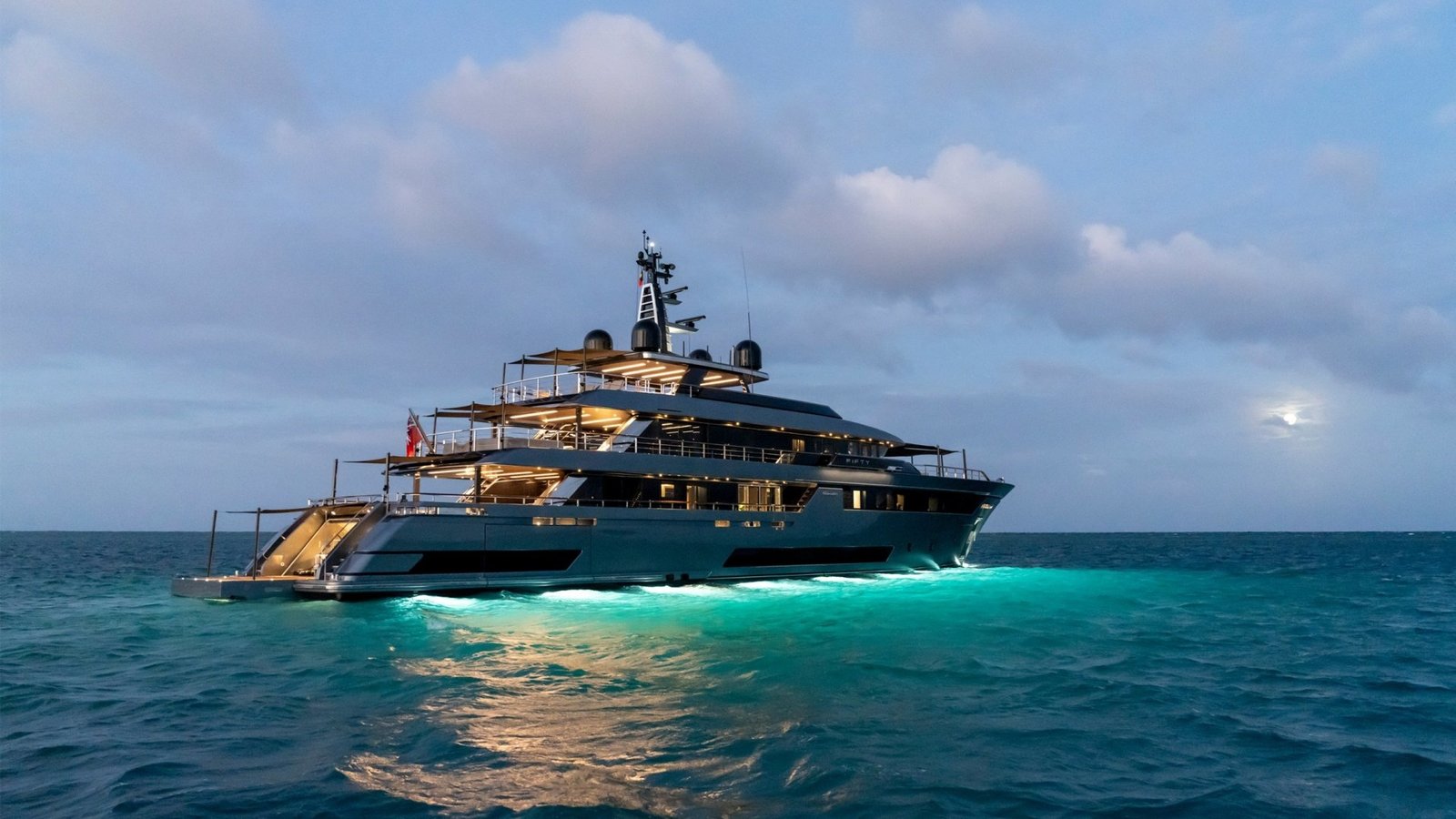
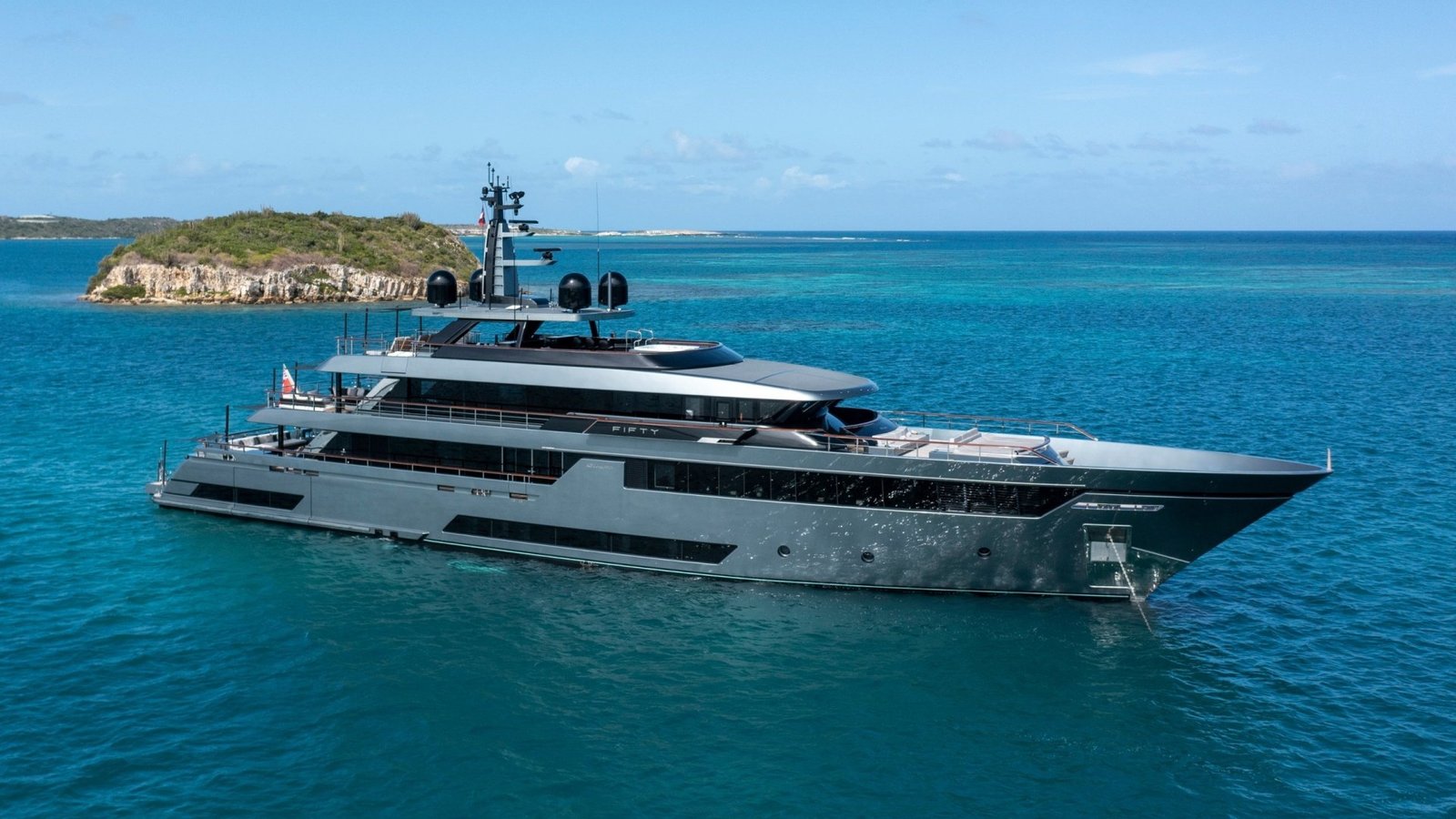
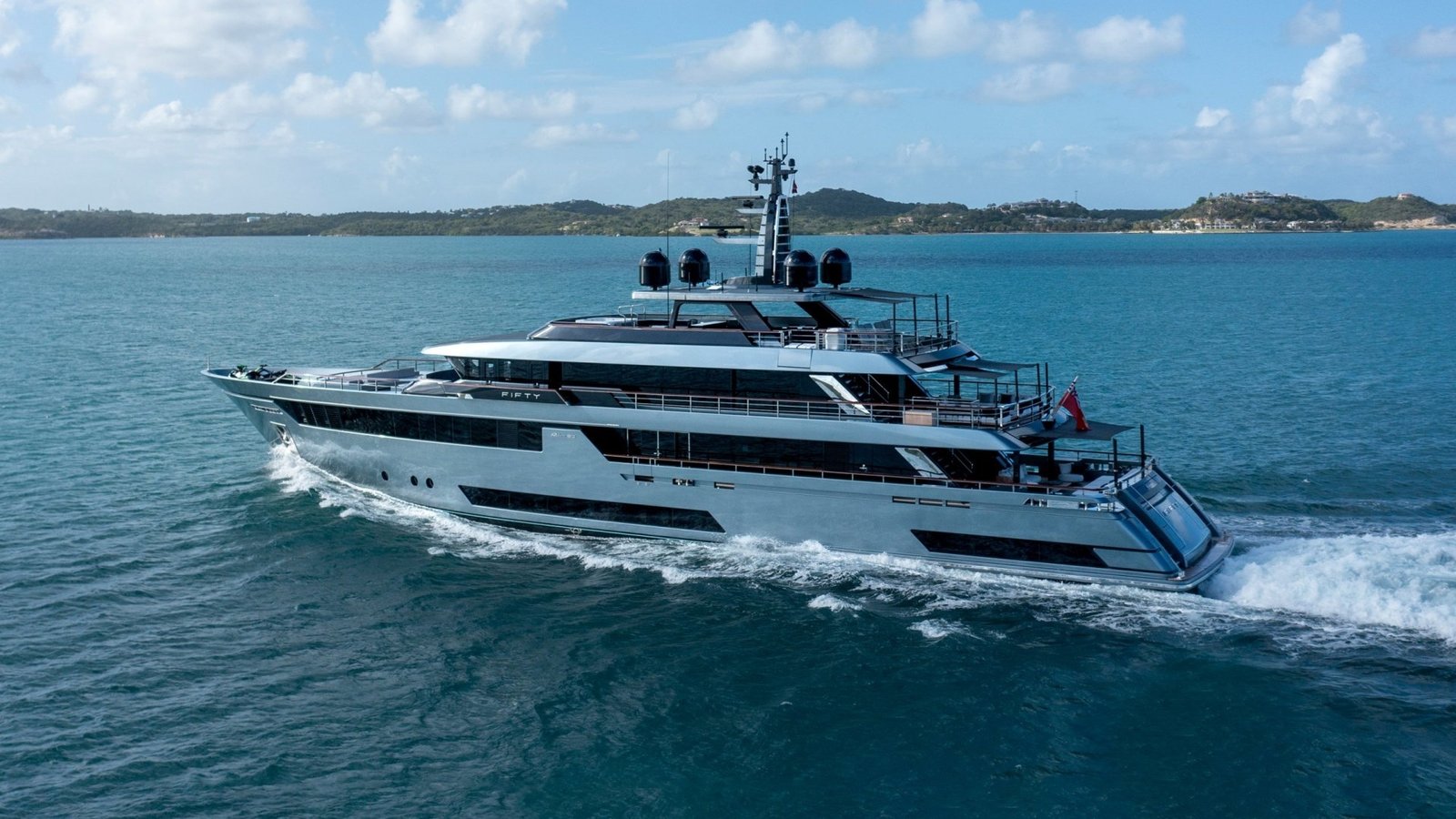
Fifty is the second hull of the Riva 50 Metri, and she matters because of what she proves. Riva spent a century building the most recognisable small boats in the world; the question was always whether that design language would survive being stretched to fifty metres. It did. The silver hull, the hard sheer, the long bands of dark glass and the stern that steps down to the water in planes — she is unmistakably a Riva at four times the size Riva was known for.
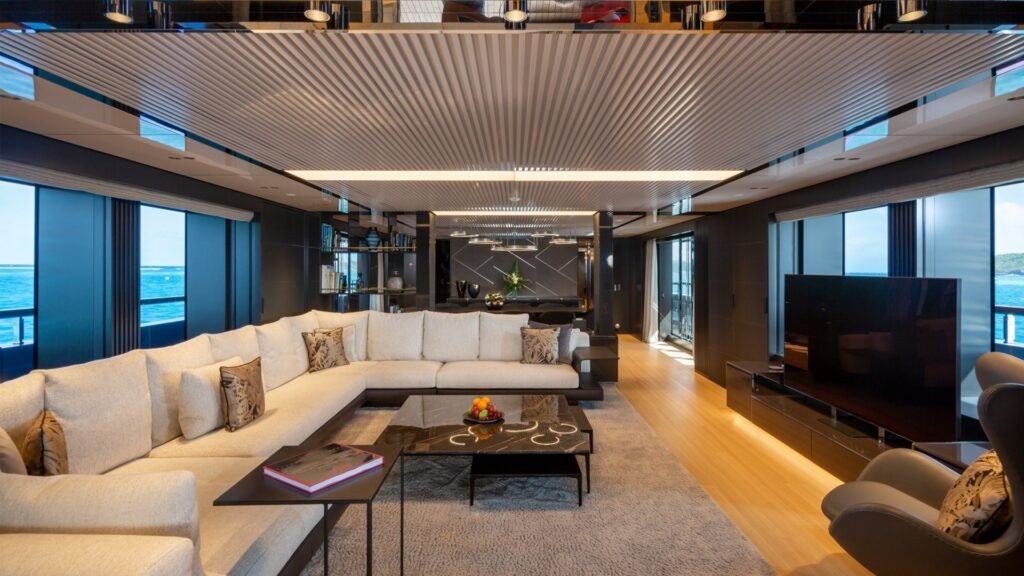
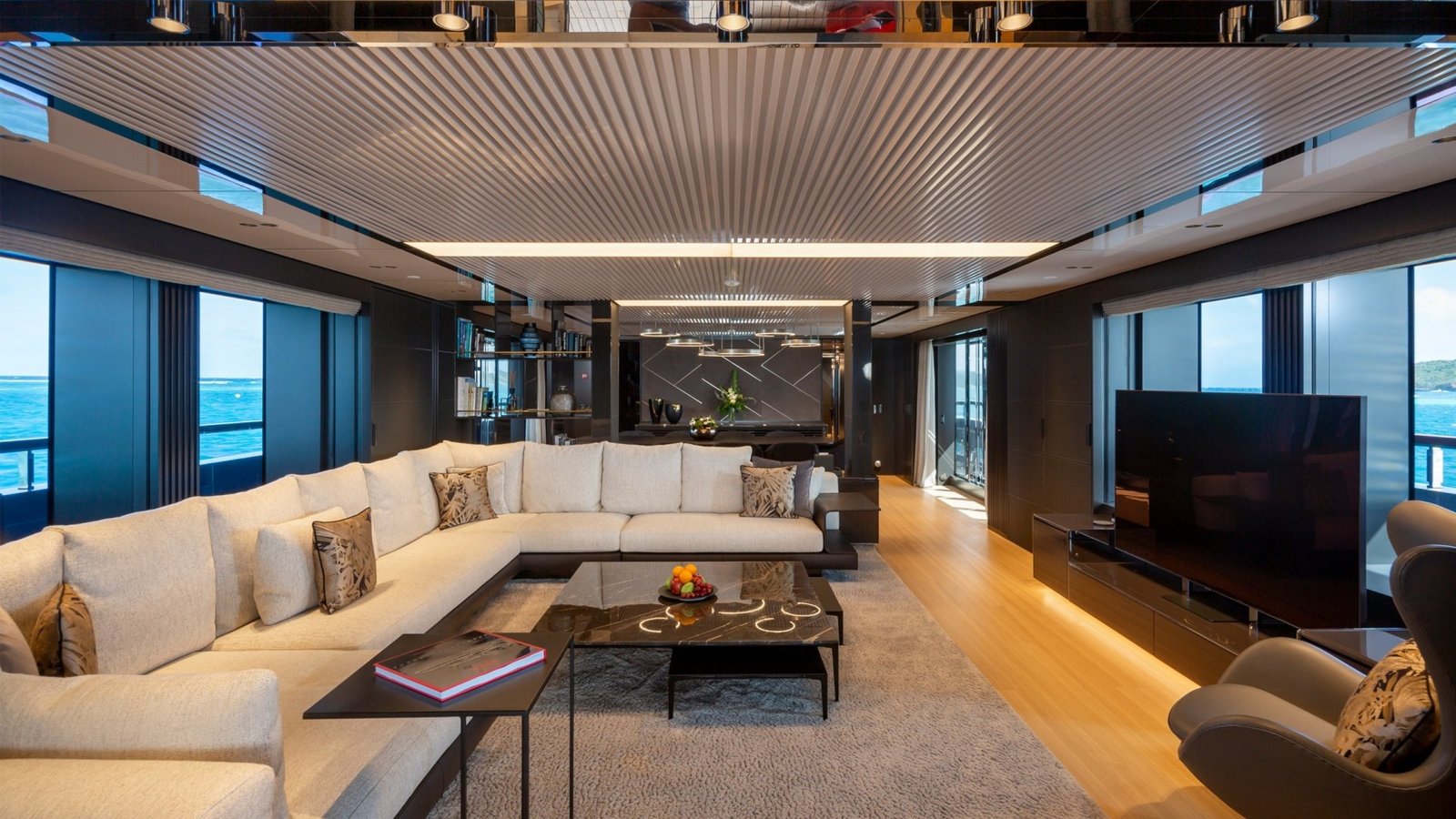
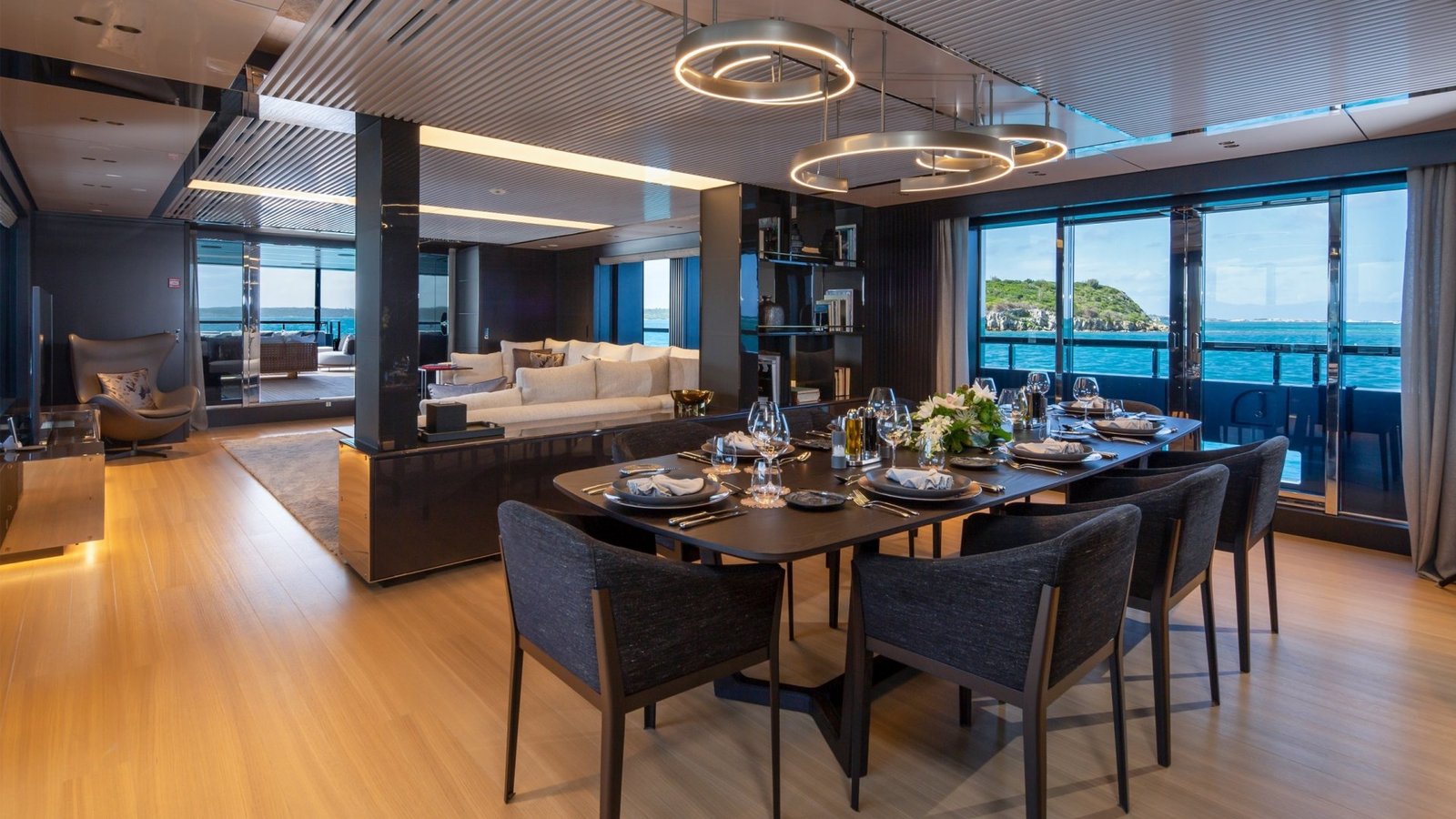
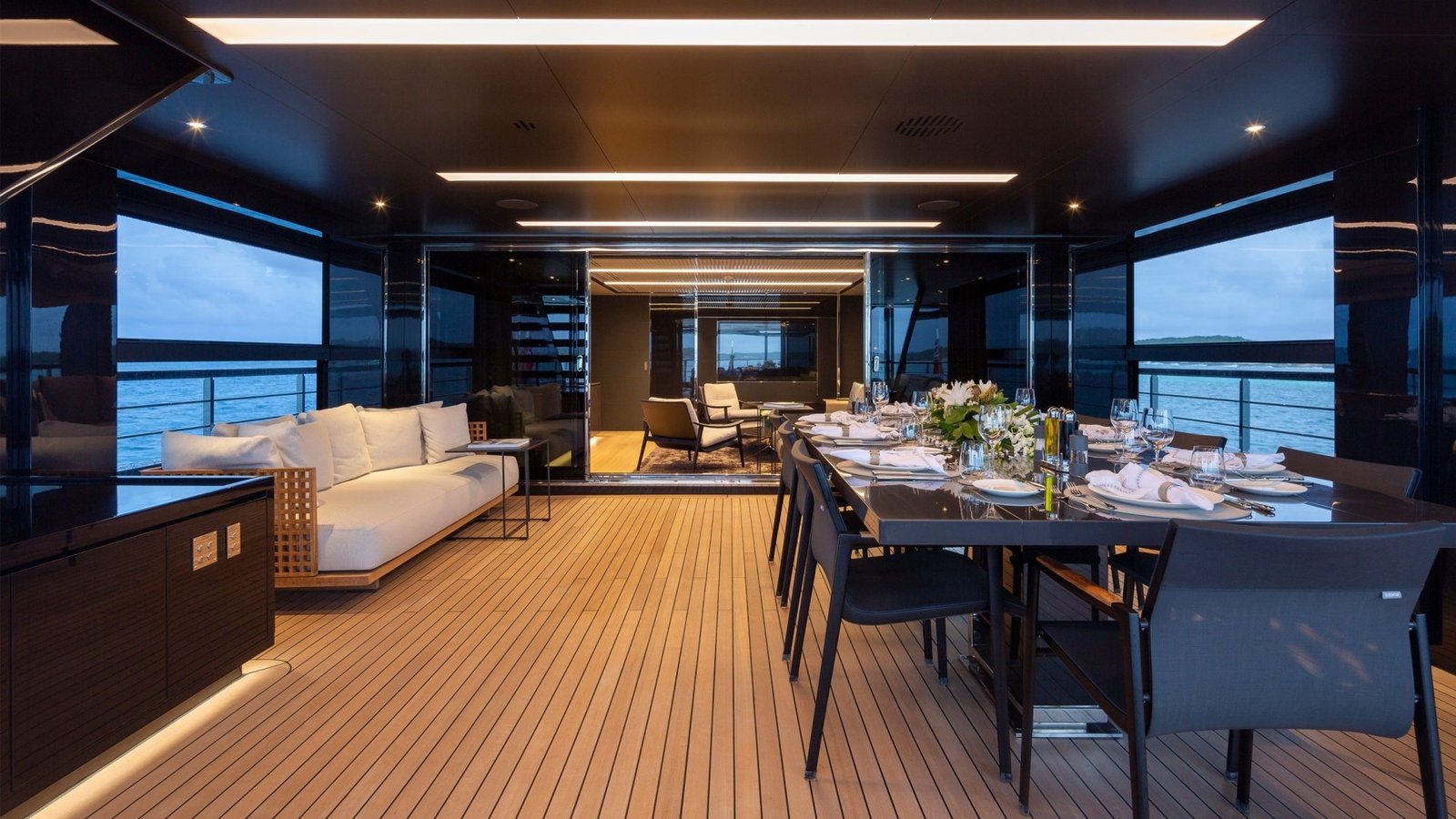
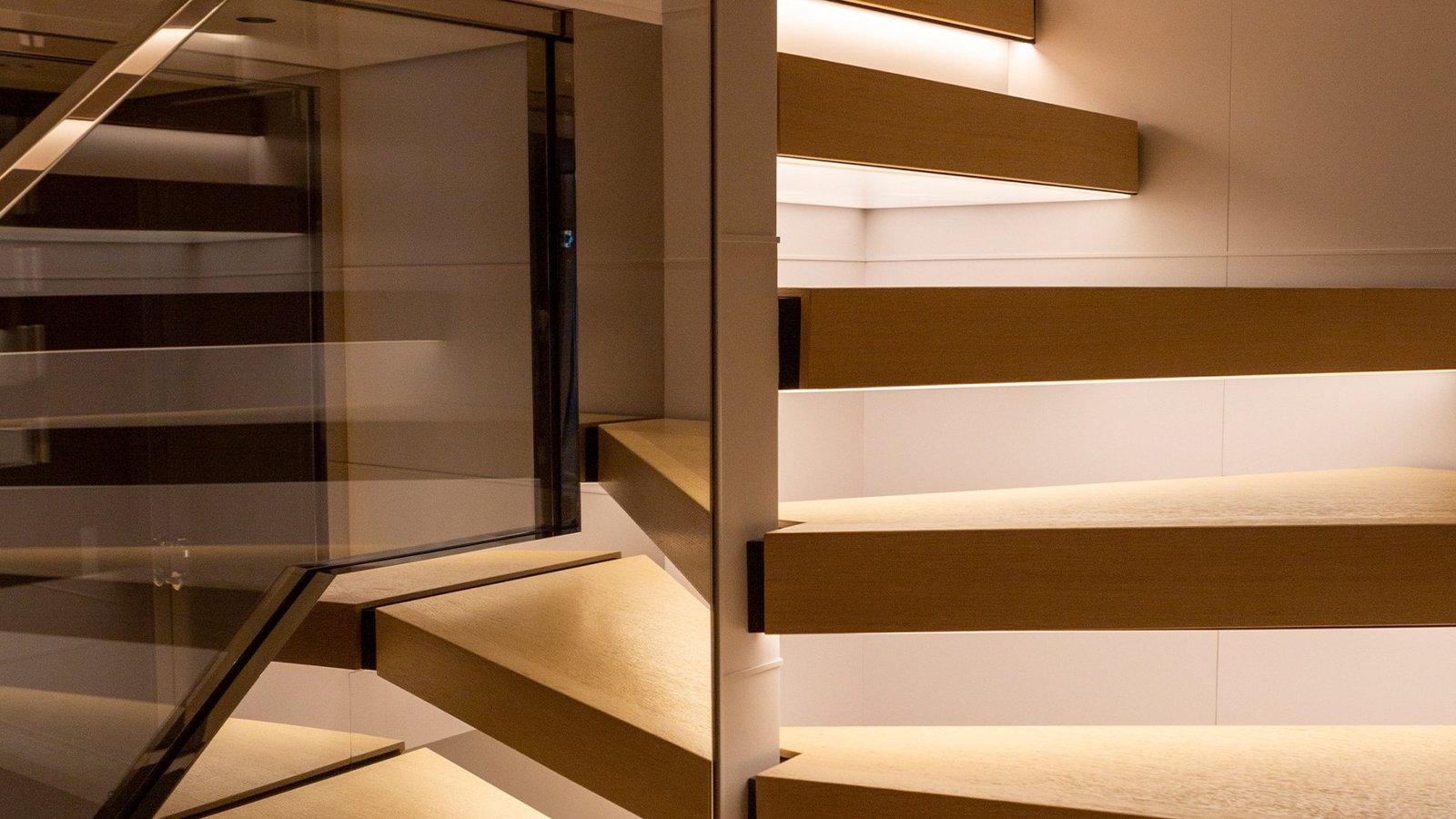
Officina Italiana Design drew both the exterior and the interior, which is why the two agree with each other so completely. Inside, the main deck runs as one long open space in oak, bronze and dark lacquer: a deep cream sectional along one side, a screen set into the joinery opposite, and the dining table at the forward end behind a lacquer sideboard under two suspended rings of light. Slatted timber ceilings, concealed lighting, glazing deep enough on both sides to make 8.7 metres of beam feel like considerably more.
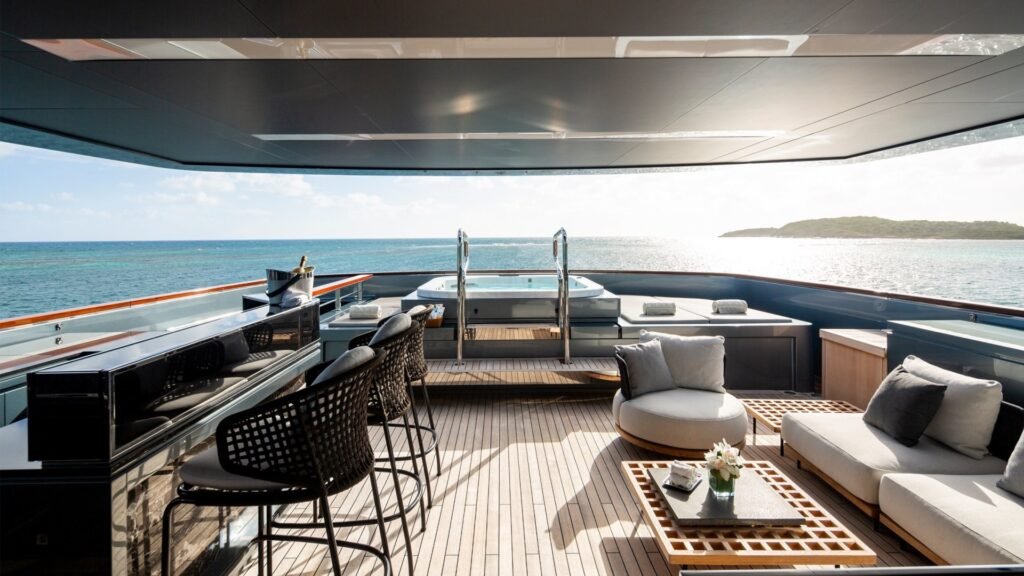
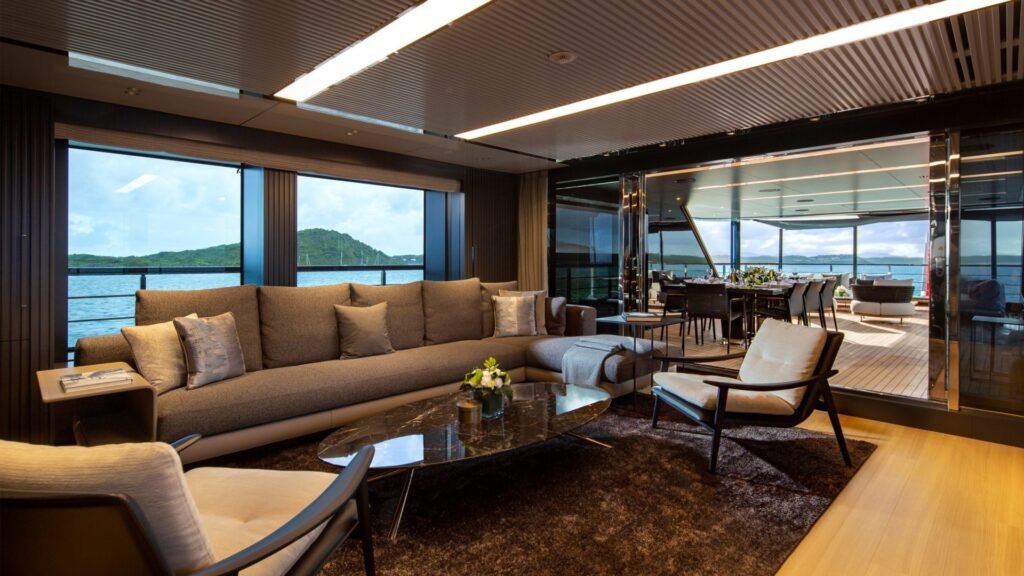
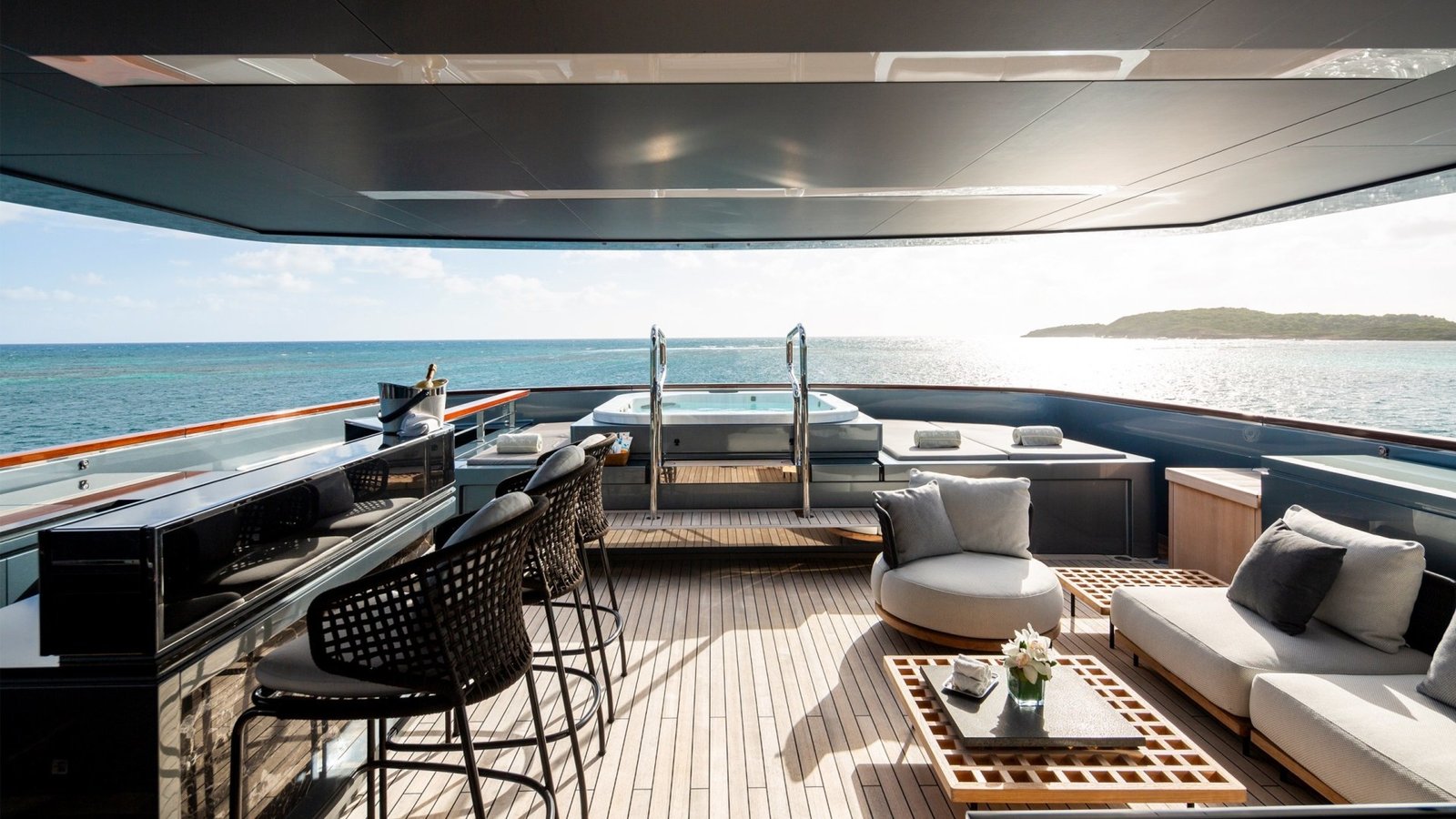
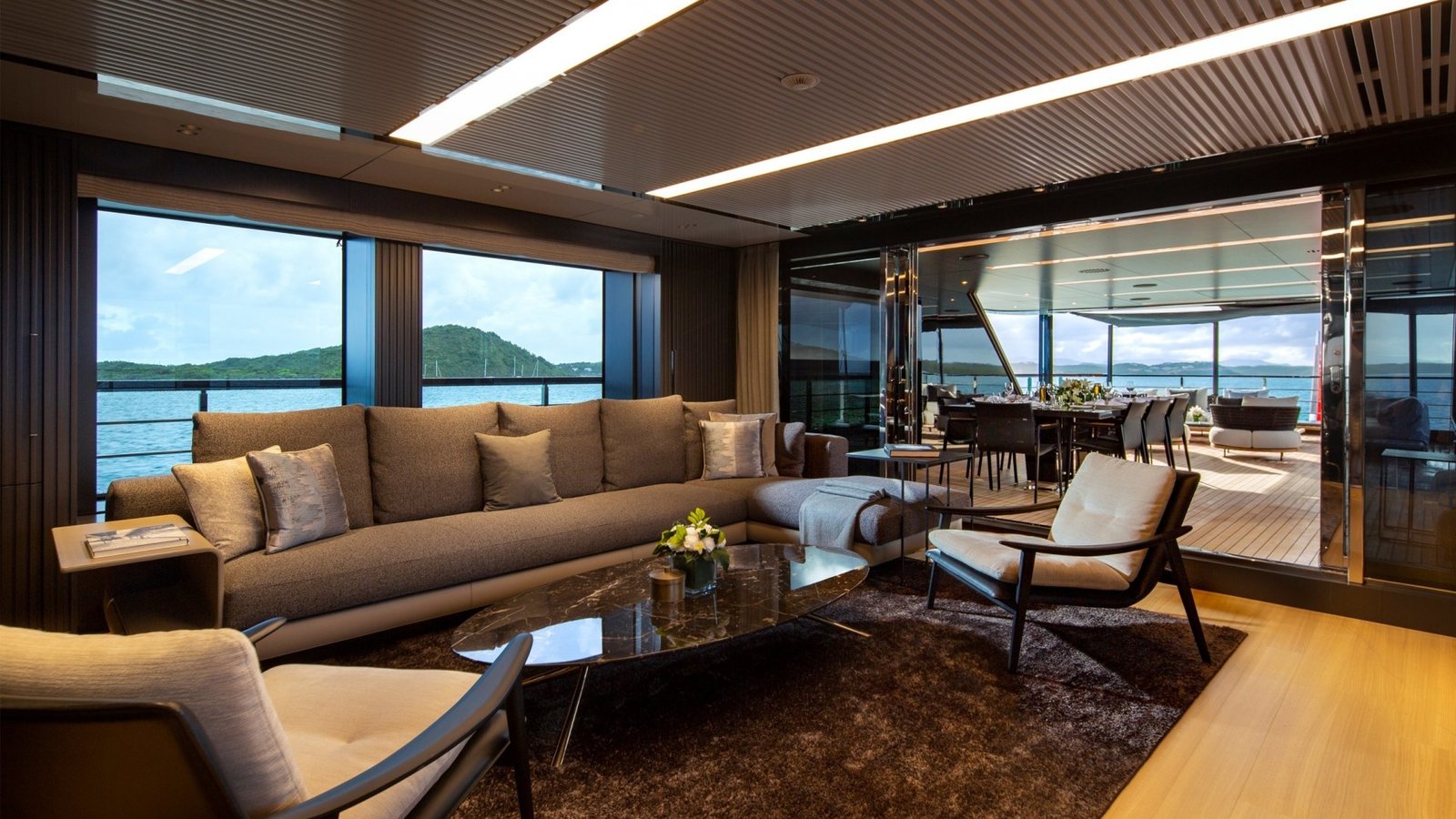
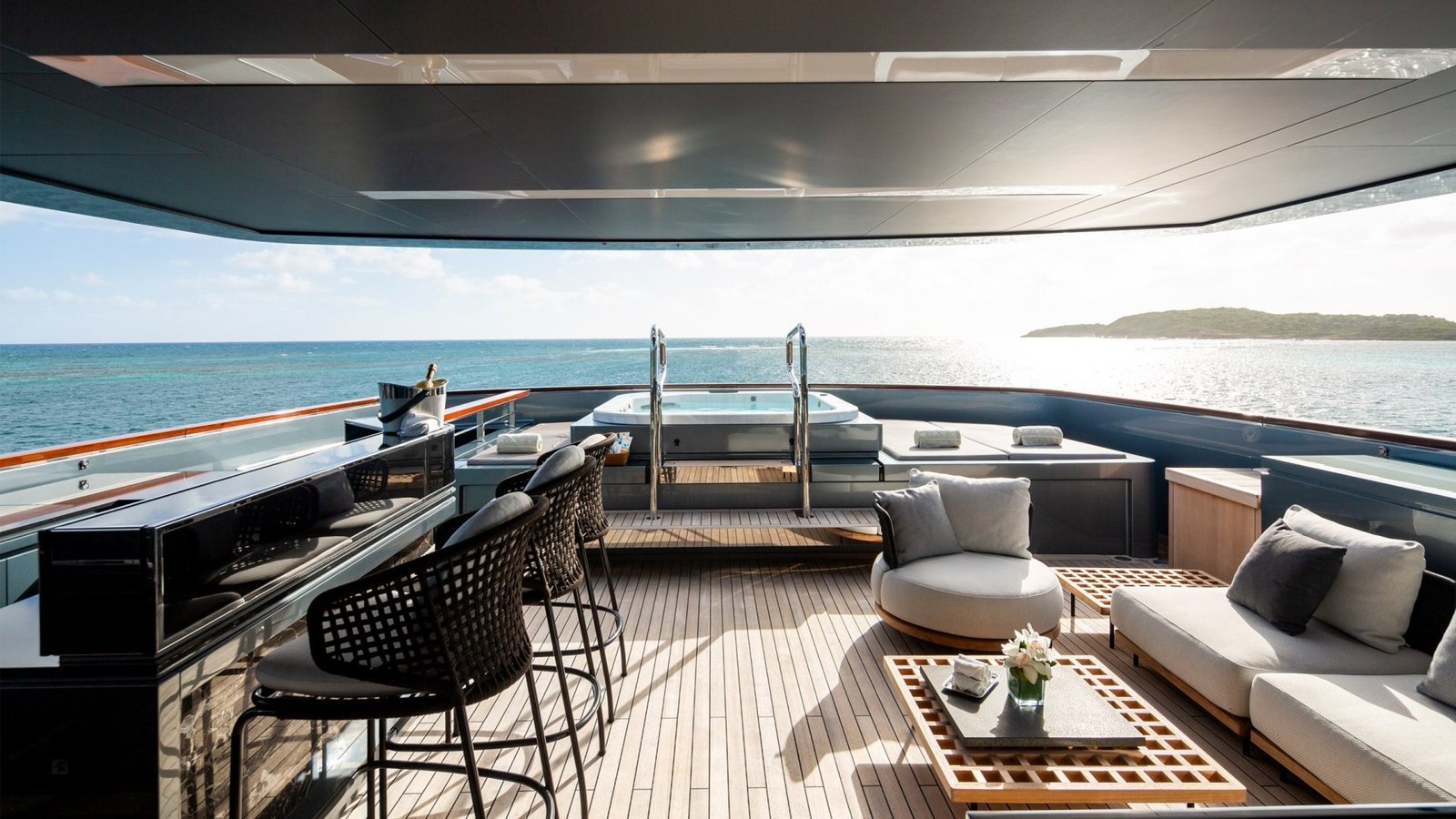
A second, quieter saloon sits on the deck above, with a long taupe sofa on a dark shag rug and glass doors that fold fully back onto the aft deck. That is the room that fills up before dinner and empties onto the deck when the food arrives. Above it again, the sundeck carries a full bar with woven stools, a curved daybed, sunpads and — forward of the bar — a genuine jacuzzi, contoured seating and two boarding rails, set into the teak with an uninterrupted view forward.
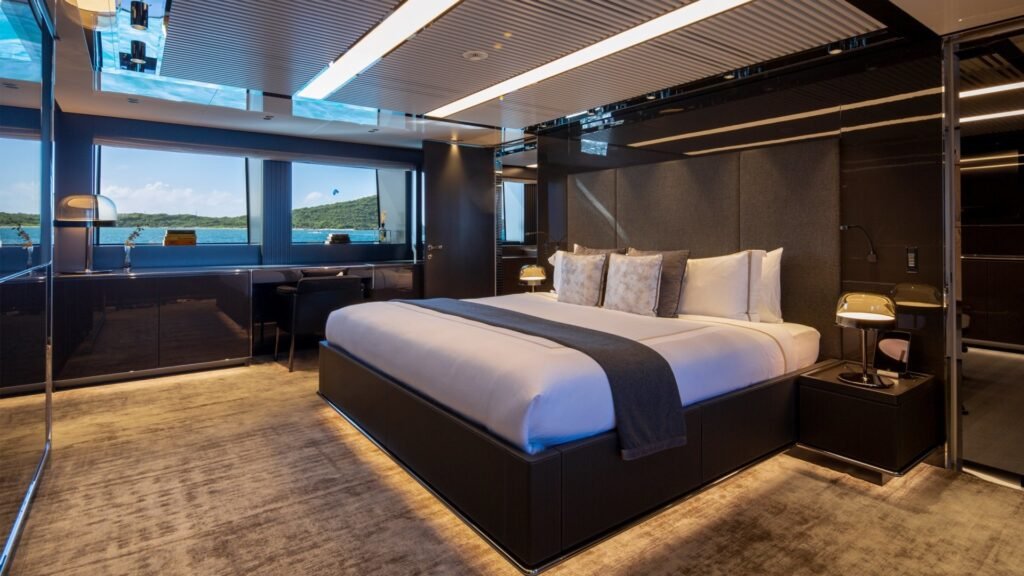
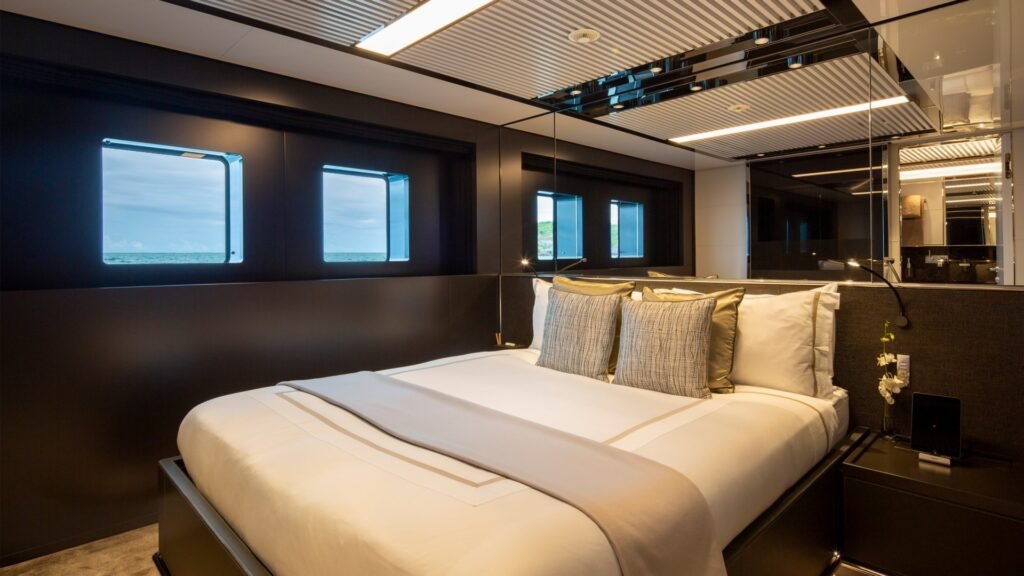
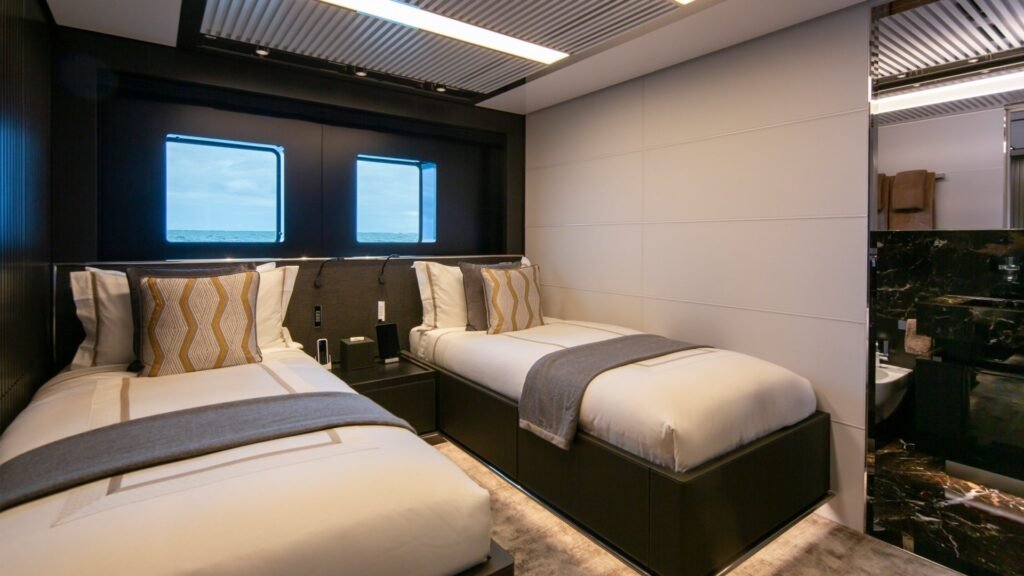
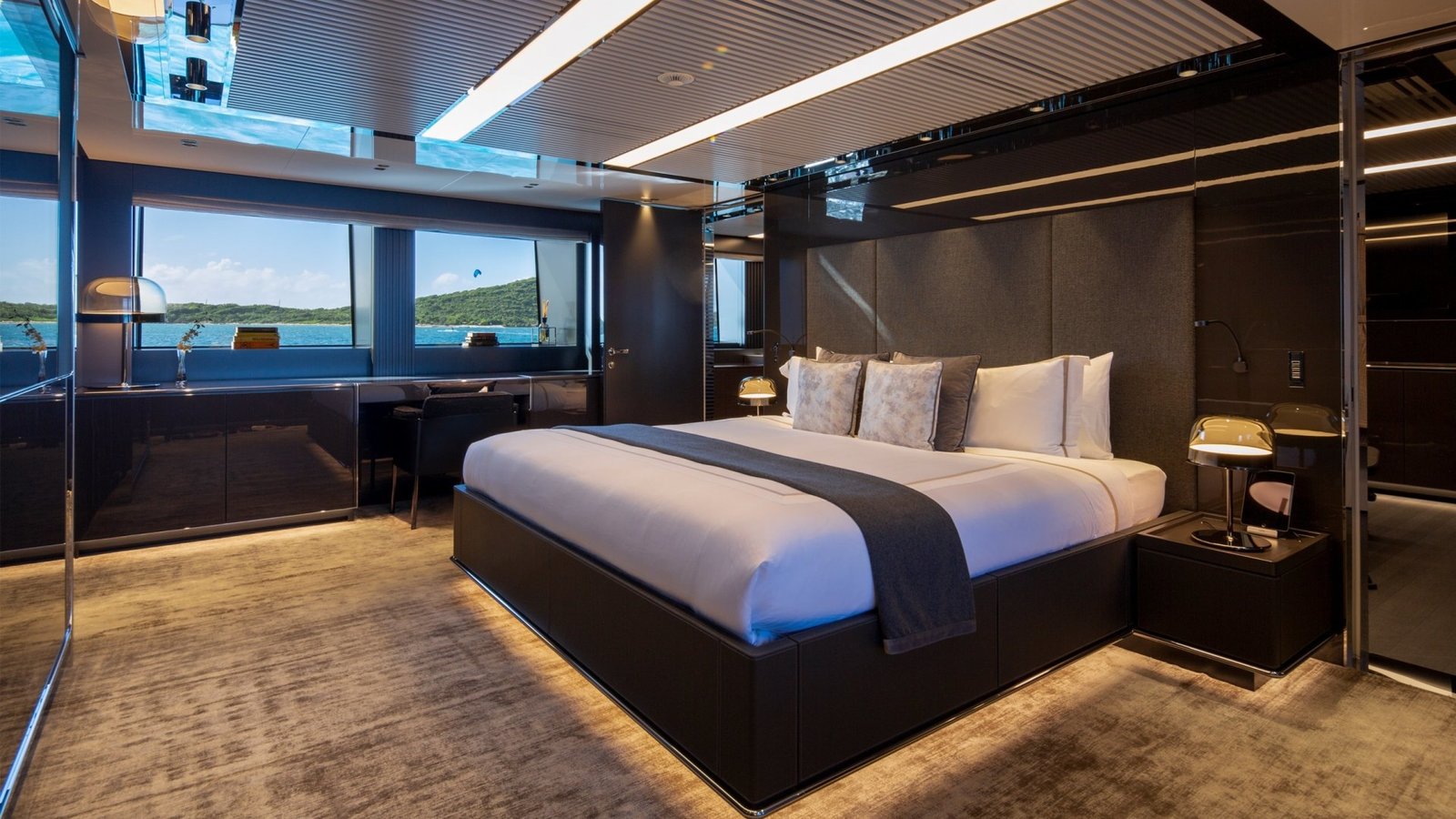
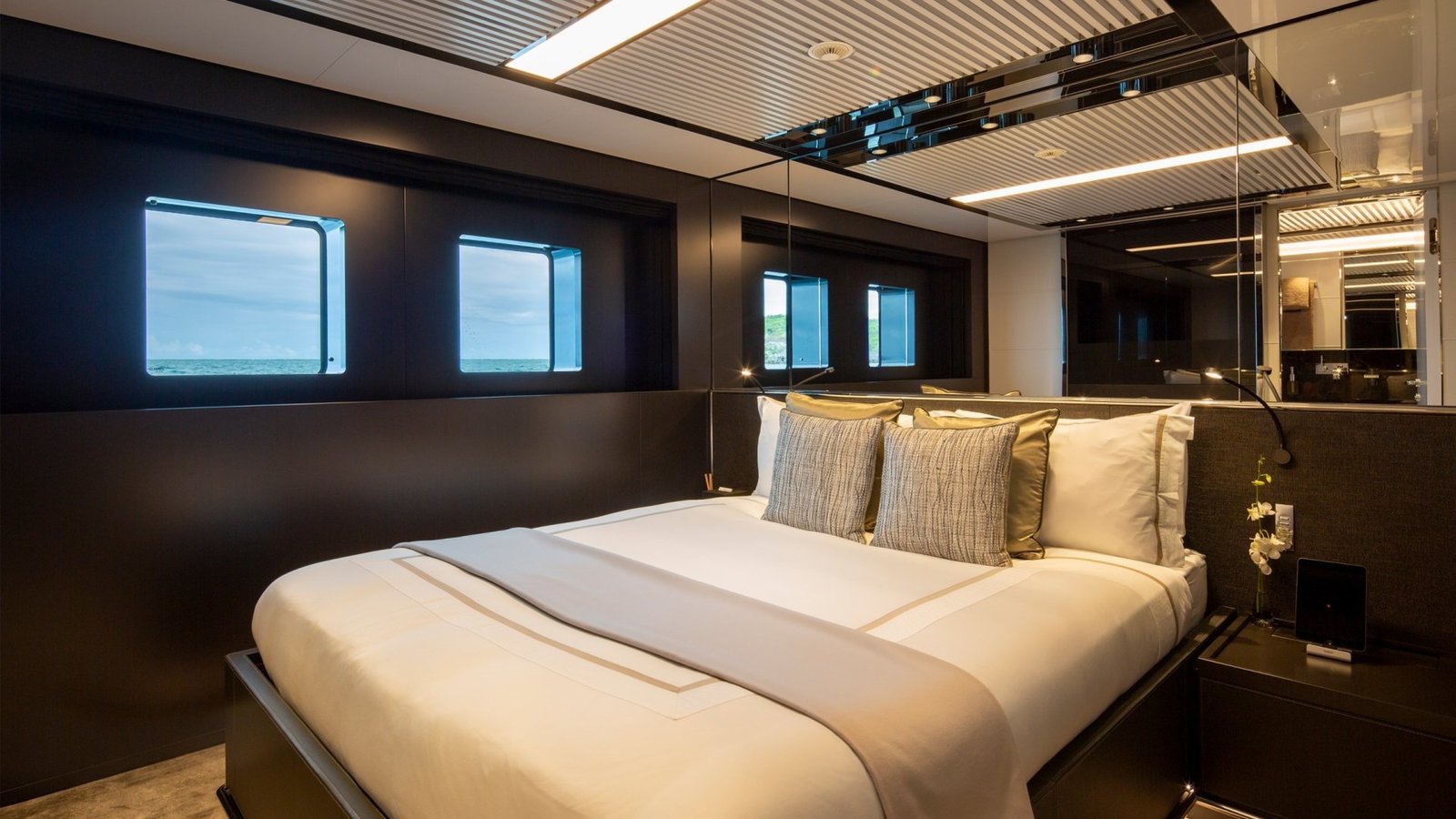
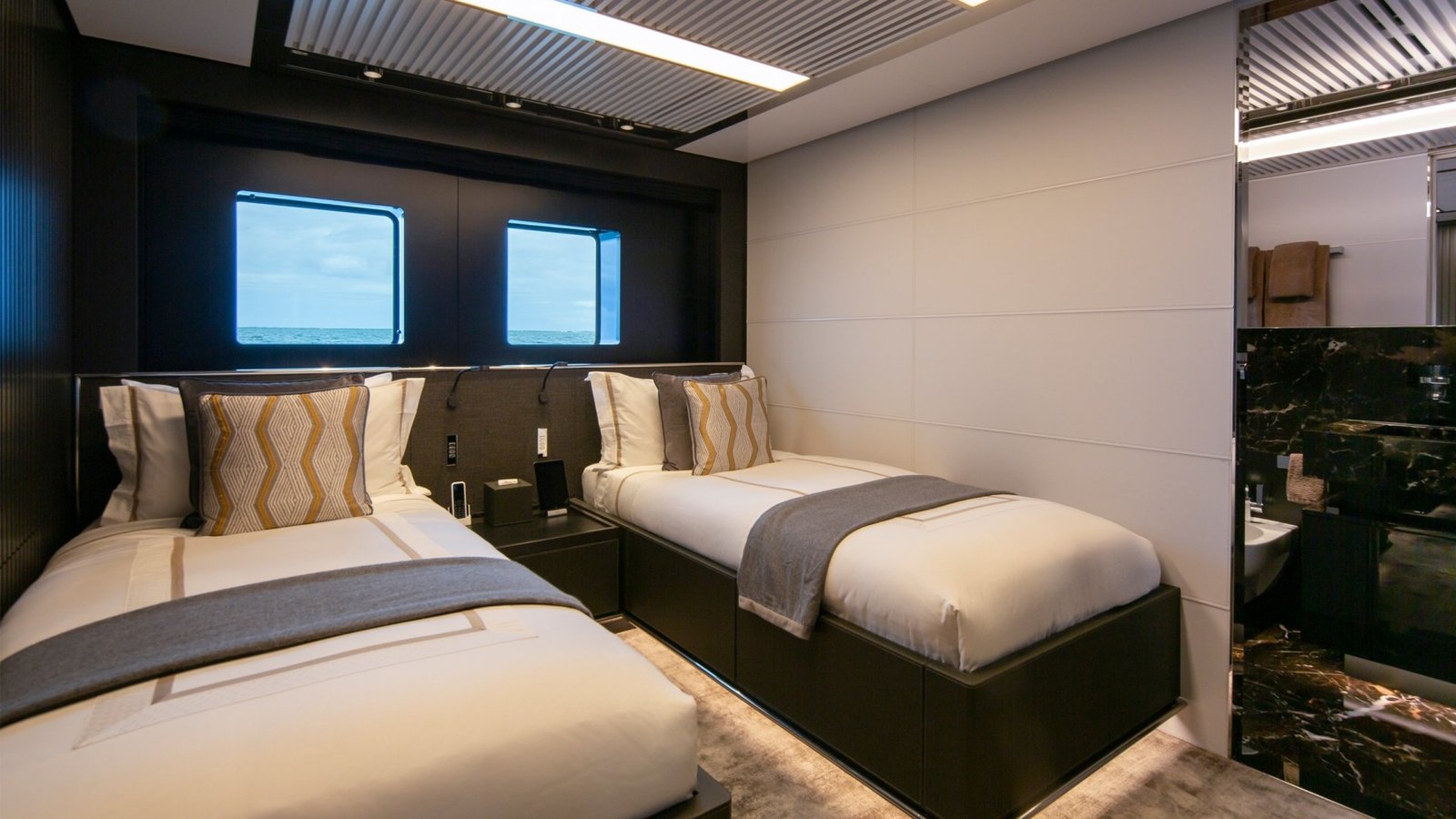
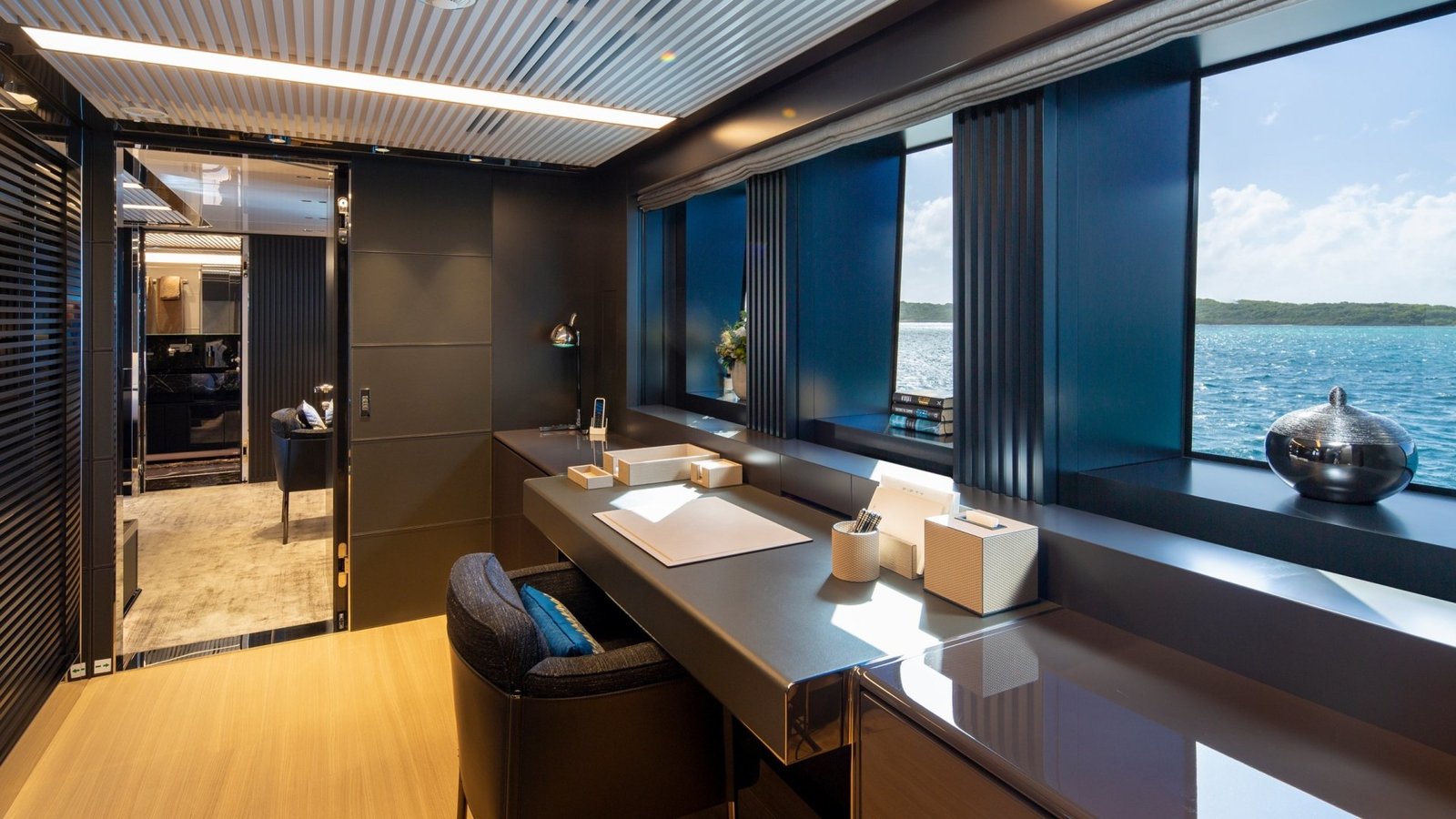
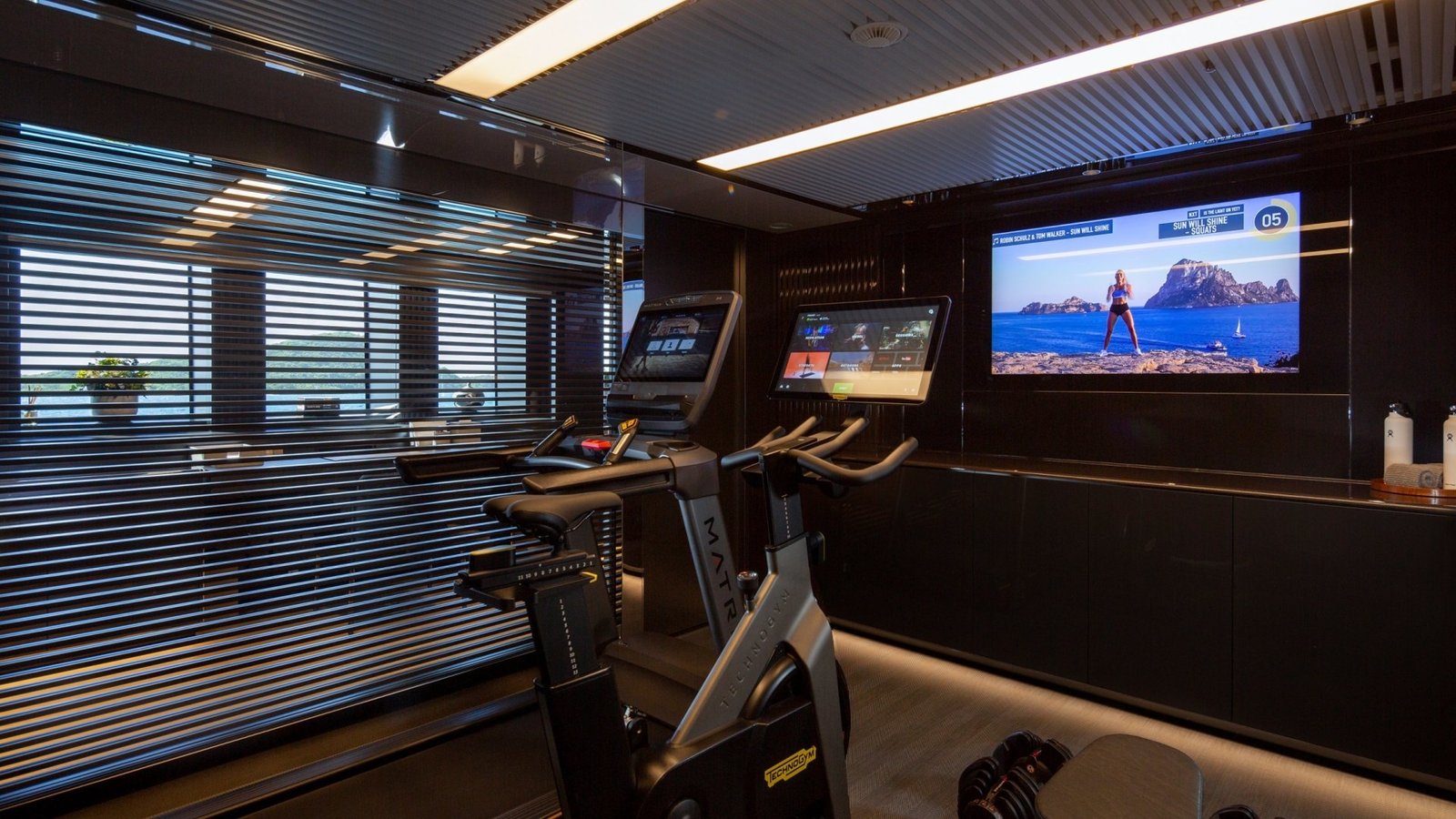
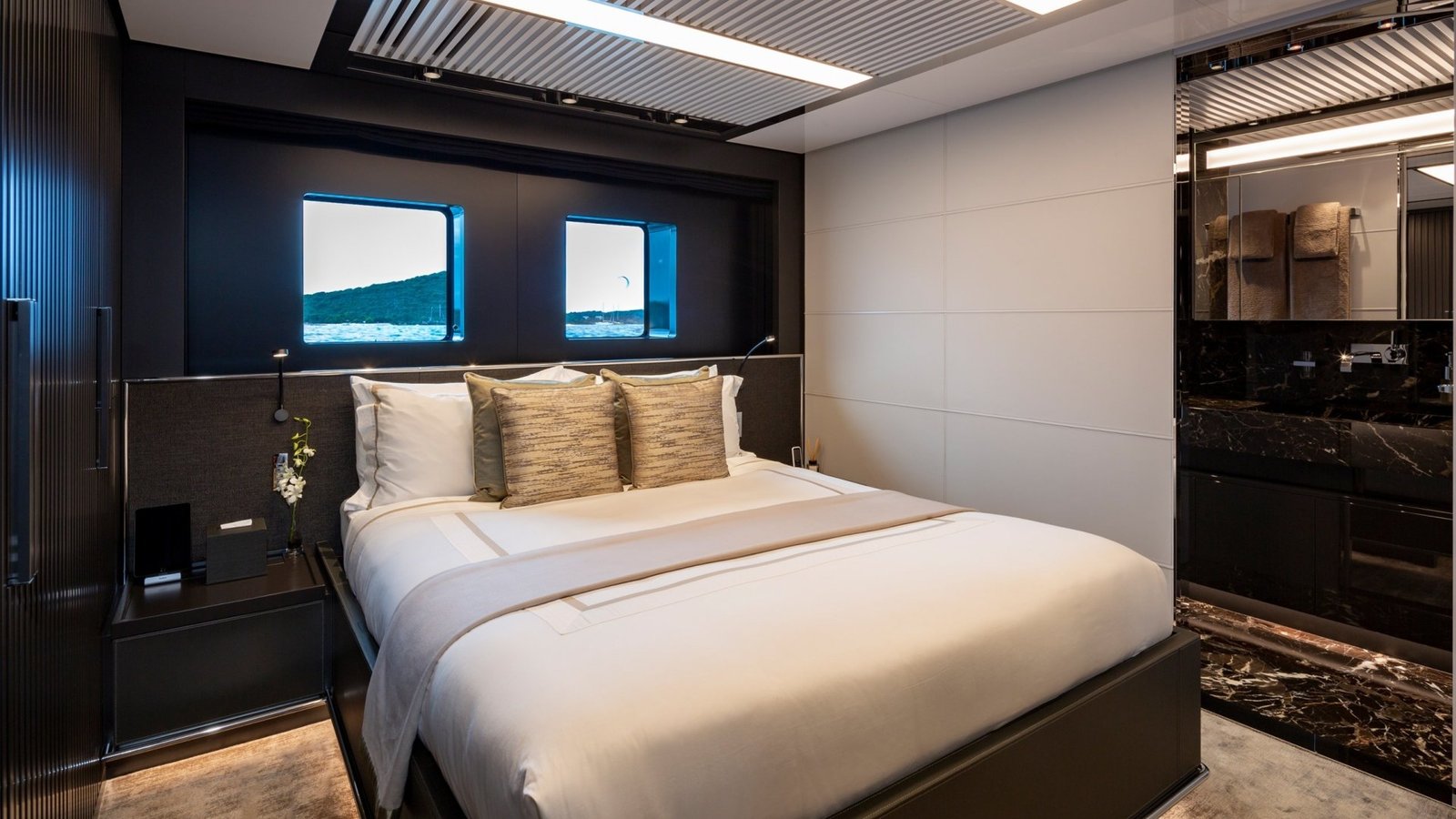
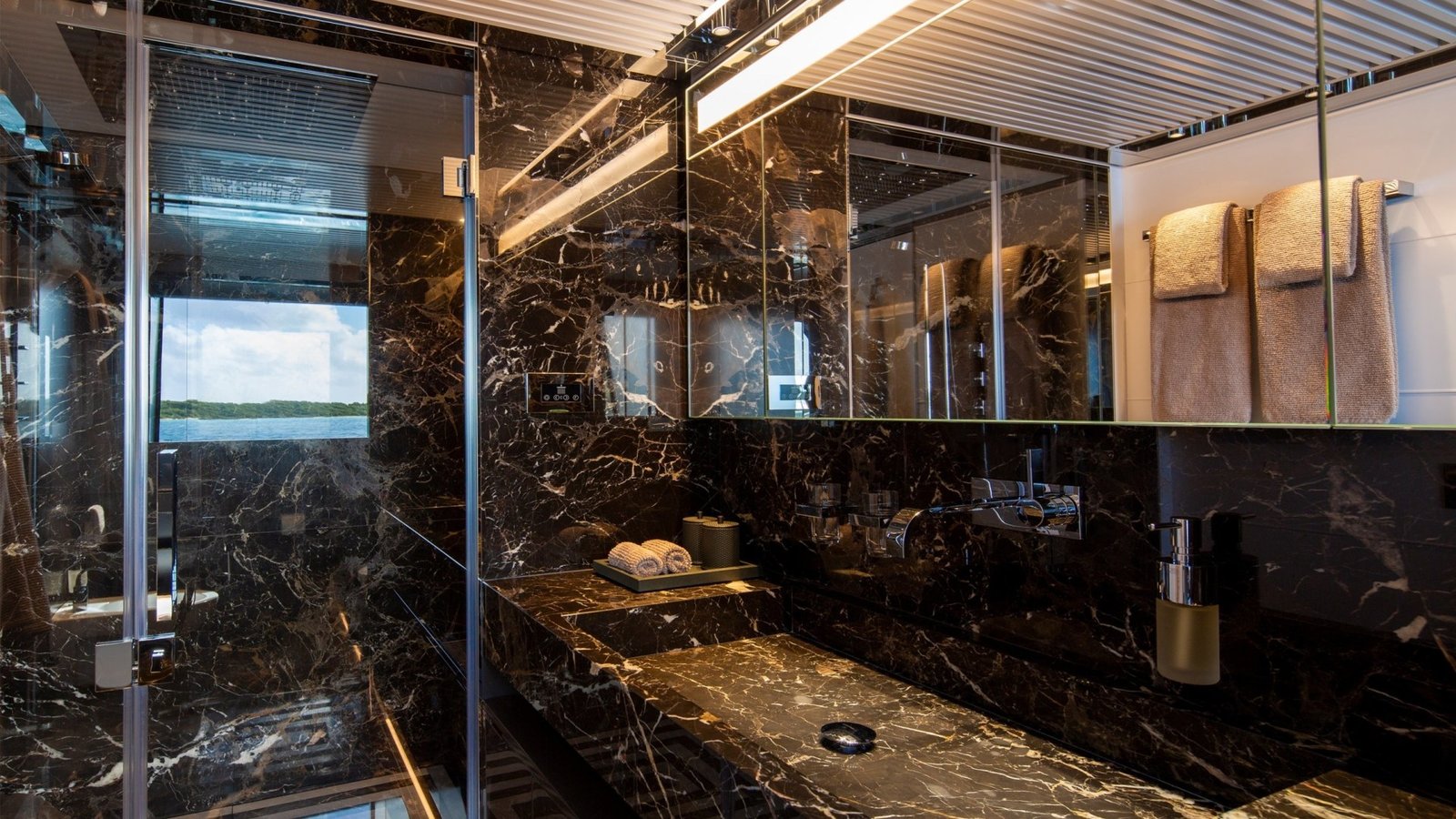
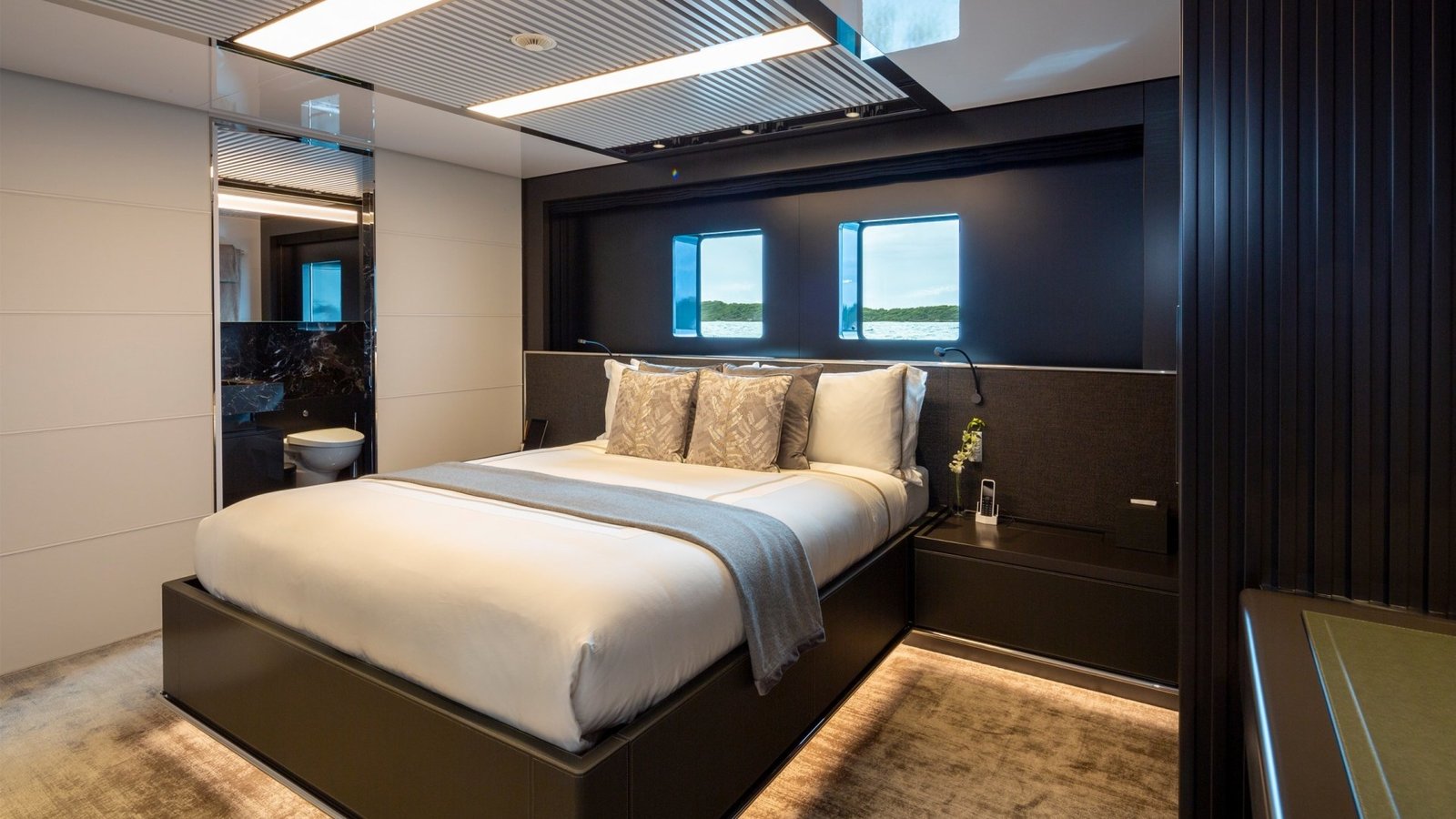
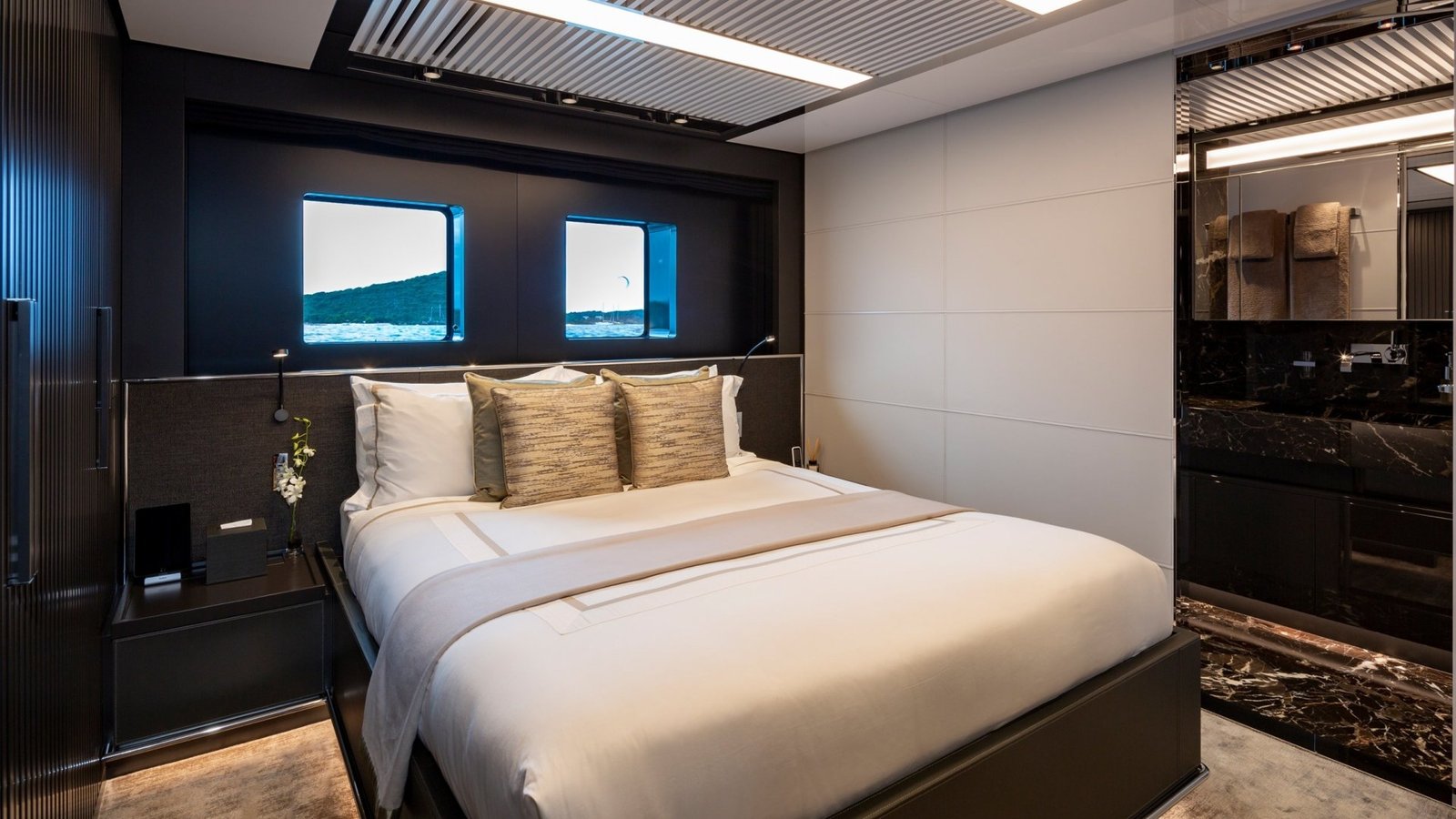
Ten guests are carried in five cabins. The master takes the full beam of the main deck forward, windows down both sides at bed height, the bed on a lit plinth and a writing desk to port. Four guest cabins sit on the lower deck in the same palette — gold and cream against dark lacquer, view ports at bed height, bathrooms in green or black marble. Nine crew run her, and she carries a gym with a screen wall facing the water and a wheelhouse fitted out to commercial standards.
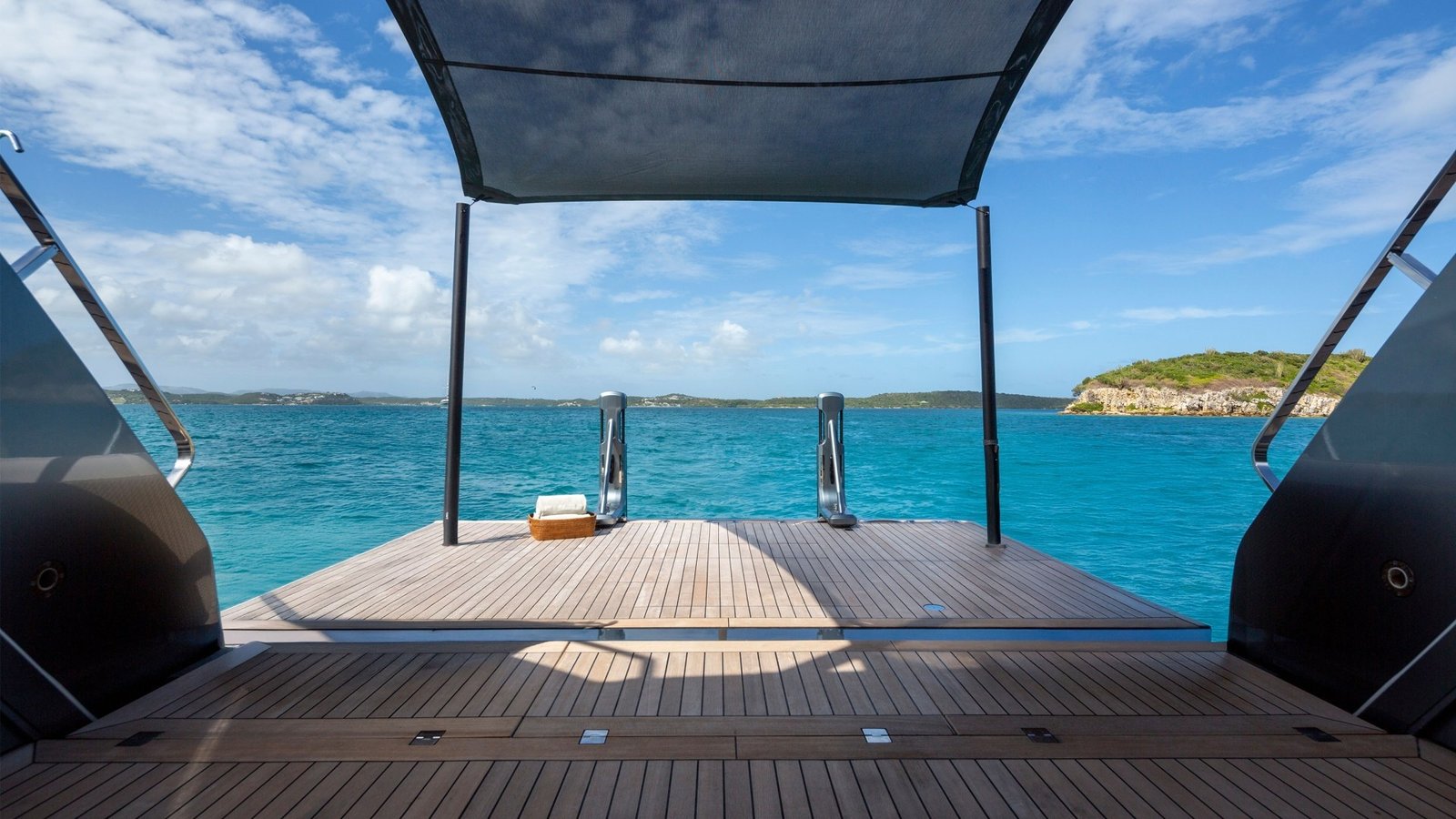
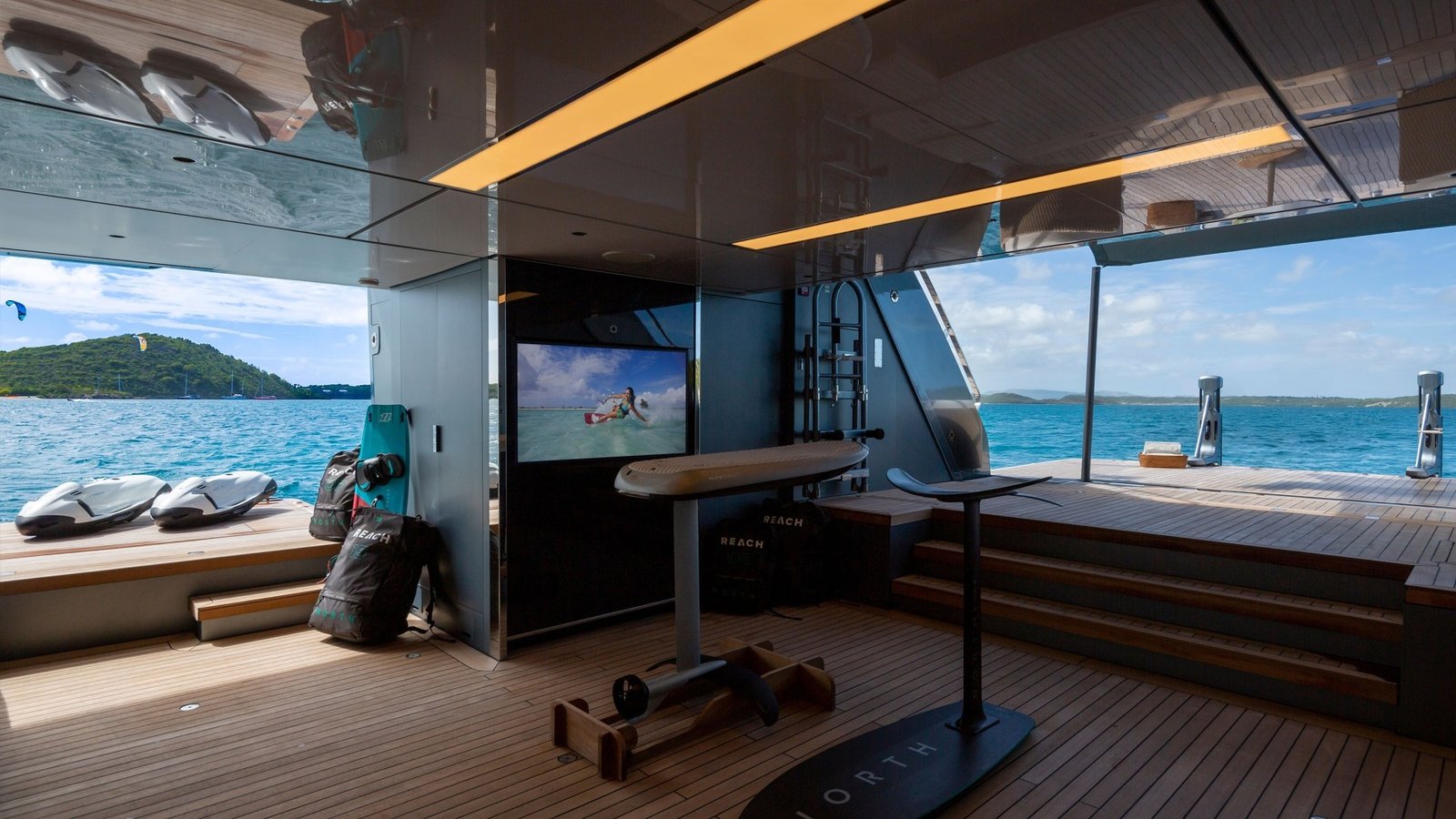
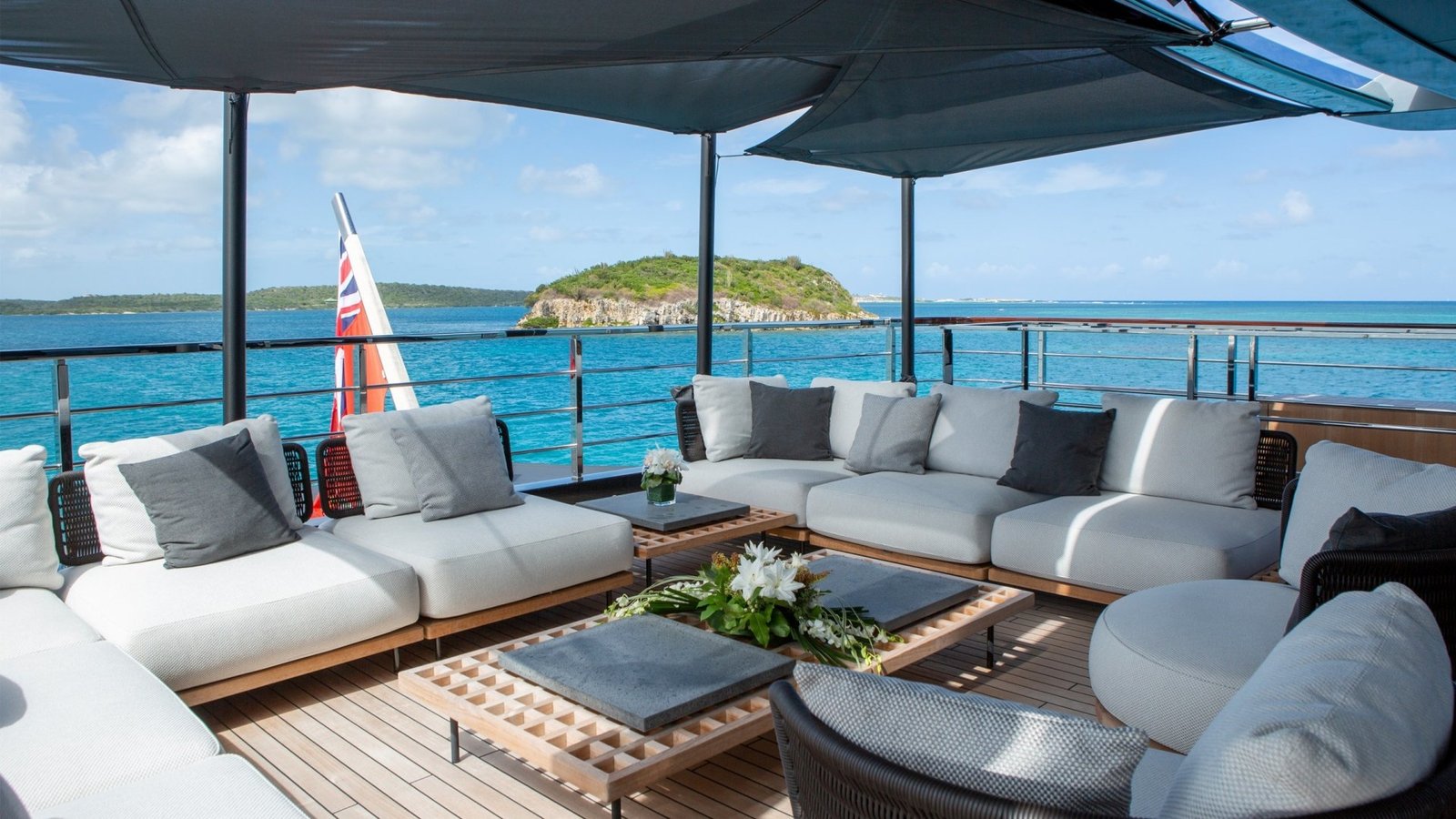
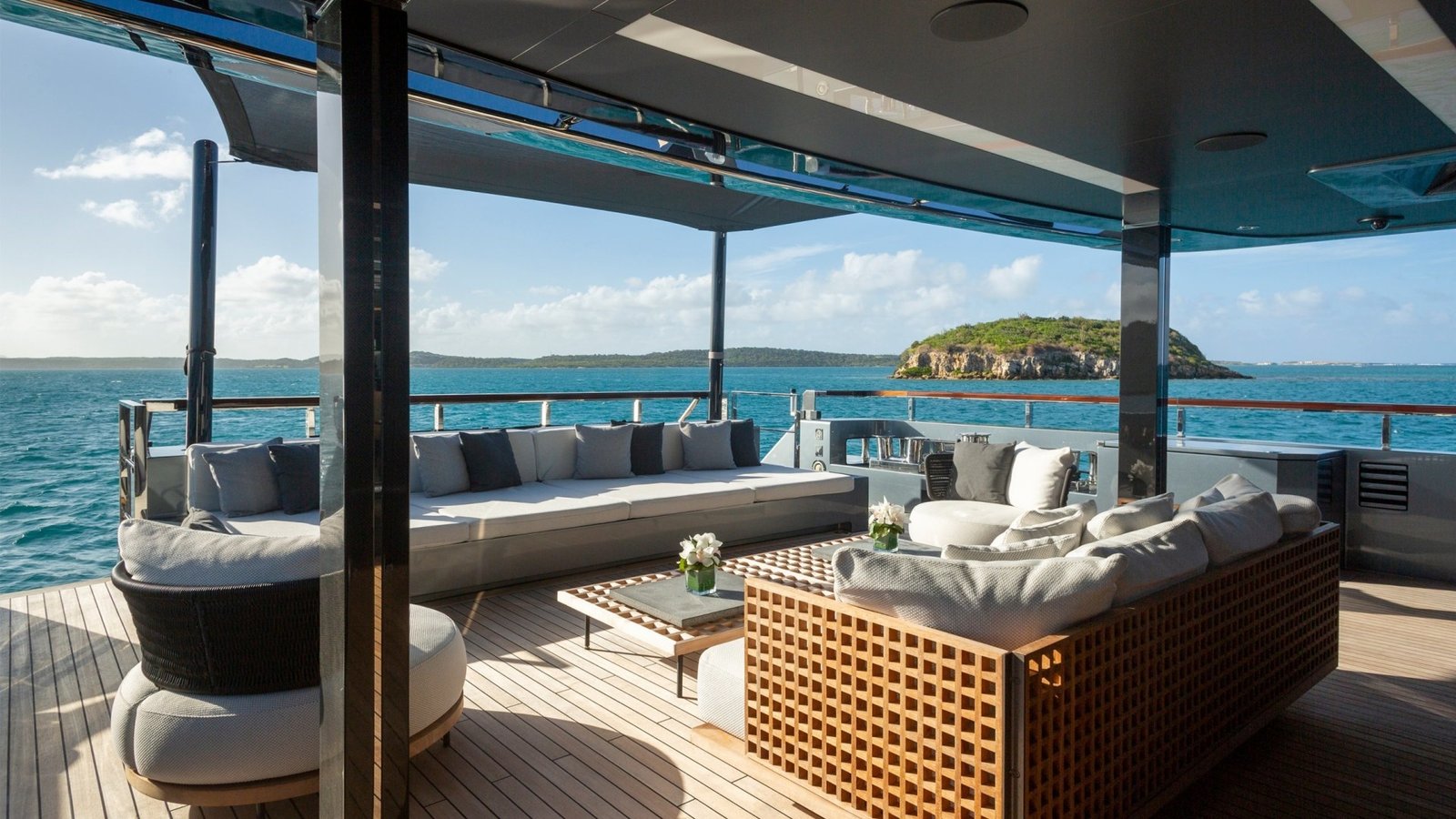
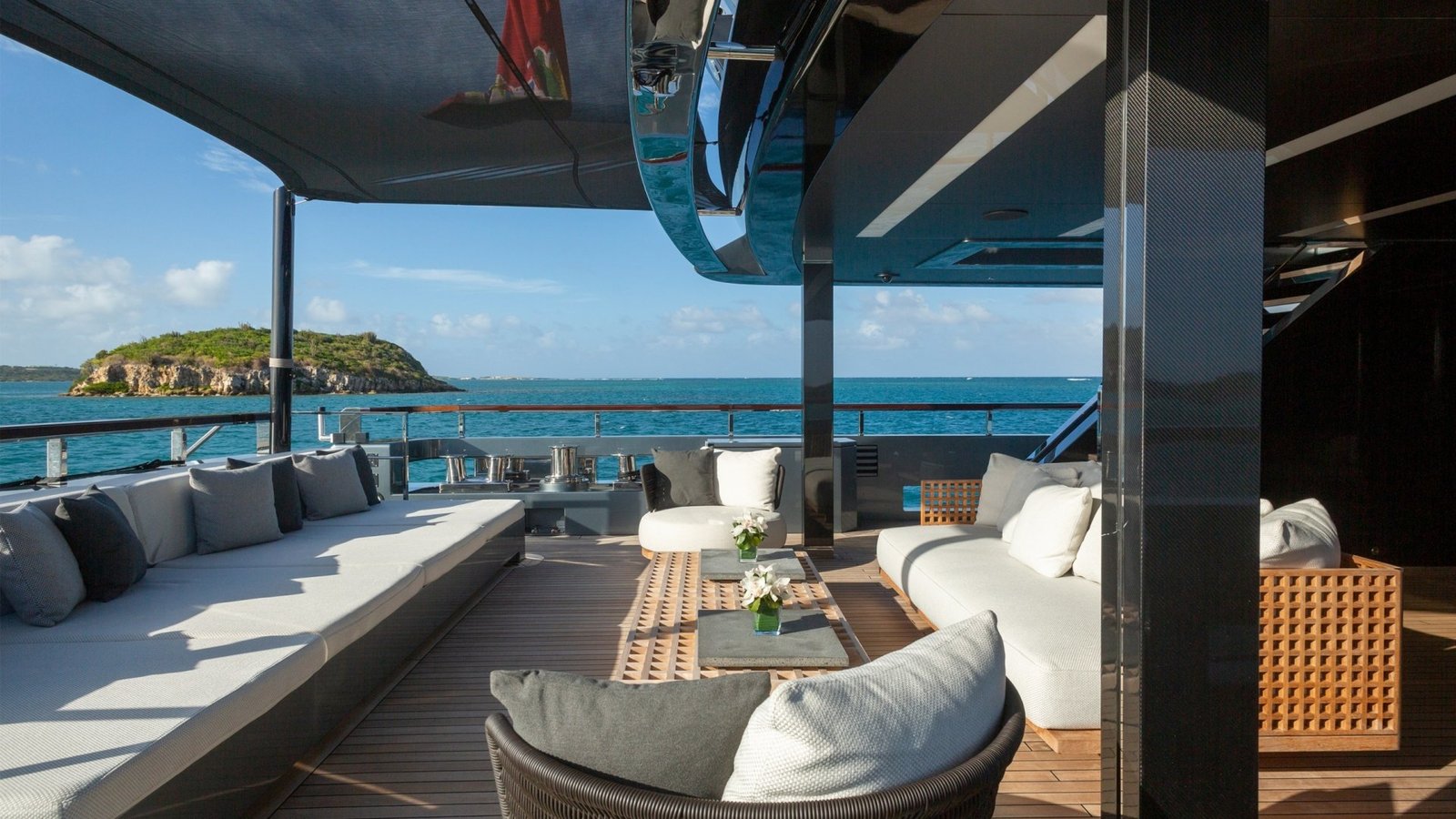
The transom folds down into a wide teak swim platform, shaded by a black sail rigged between the quarters and open to the sea on three sides. On a western Mediterranean charter that platform is effectively the main room of the yacht between eleven and six, and Riva gave it proper square metres rather than the usual ledge.
She charters the Mediterranean, western side, at 14 knots cruising and 15.5 flat out from twin MTUs, with 3,500 miles of range behind them. For ten guests who want a yacht that is new enough to have everything and small enough to still get into the good berths, at EUR 270,000 a week, she is a precise piece of positioning — and the design pedigree is not something the newer yards can manufacture.
The detail that makes the case is how consistent she is. The same oak, bronze and dark lacquer runs from the master through the guest deck to the upper saloon; the same concealed lighting; the same restraint about how much is on show at any one time. One studio drew all of it, and a yacht designed by one hand reads differently from one assembled by committee. A week aboard is the easiest way to understand why Riva took a century to build something this size, and then got it right first time.