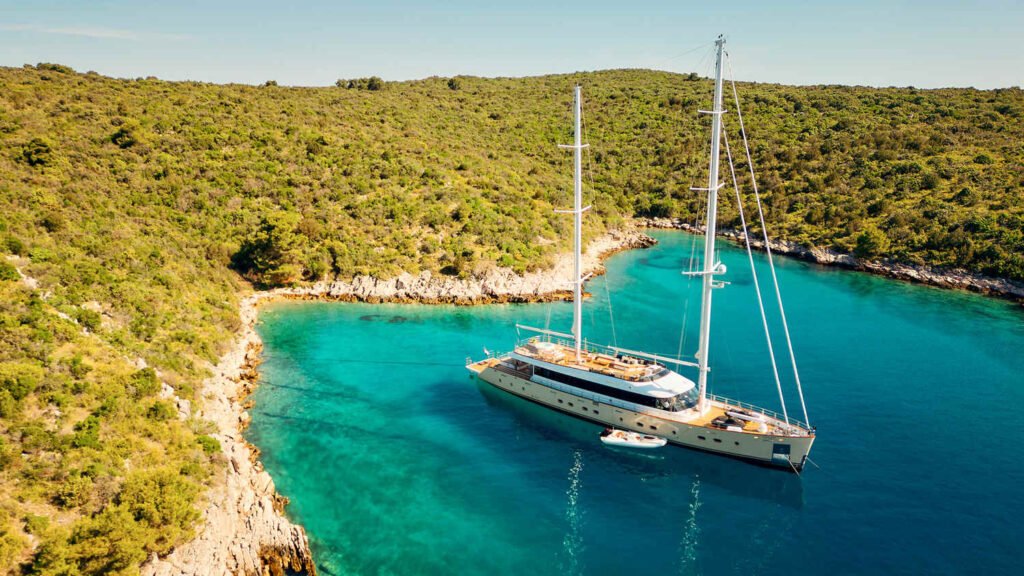
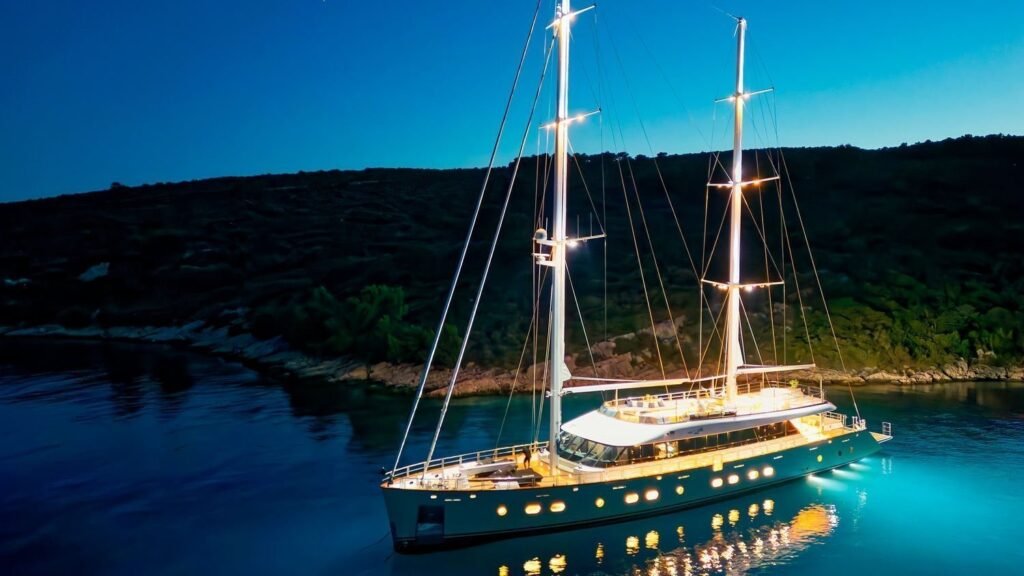
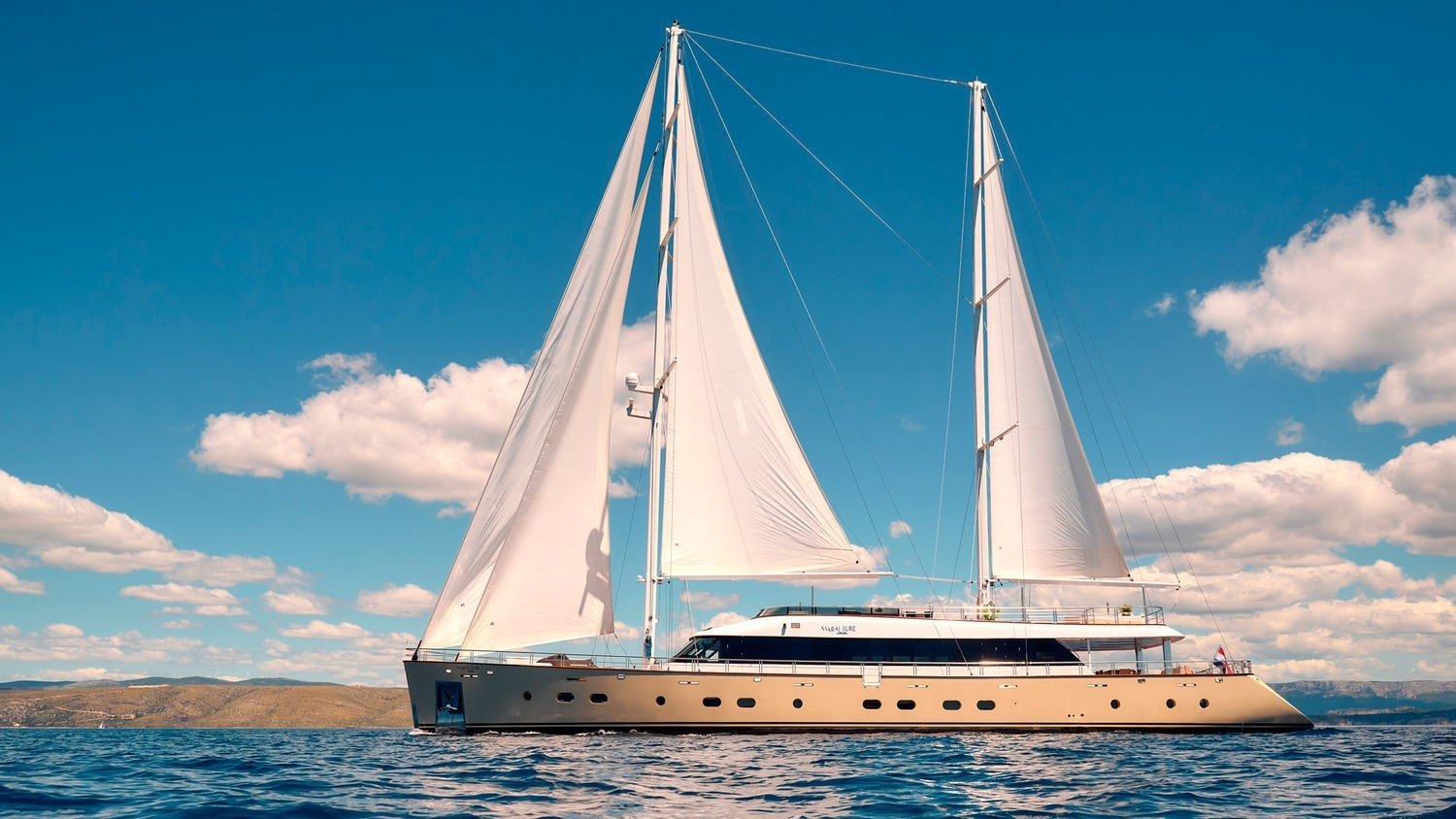
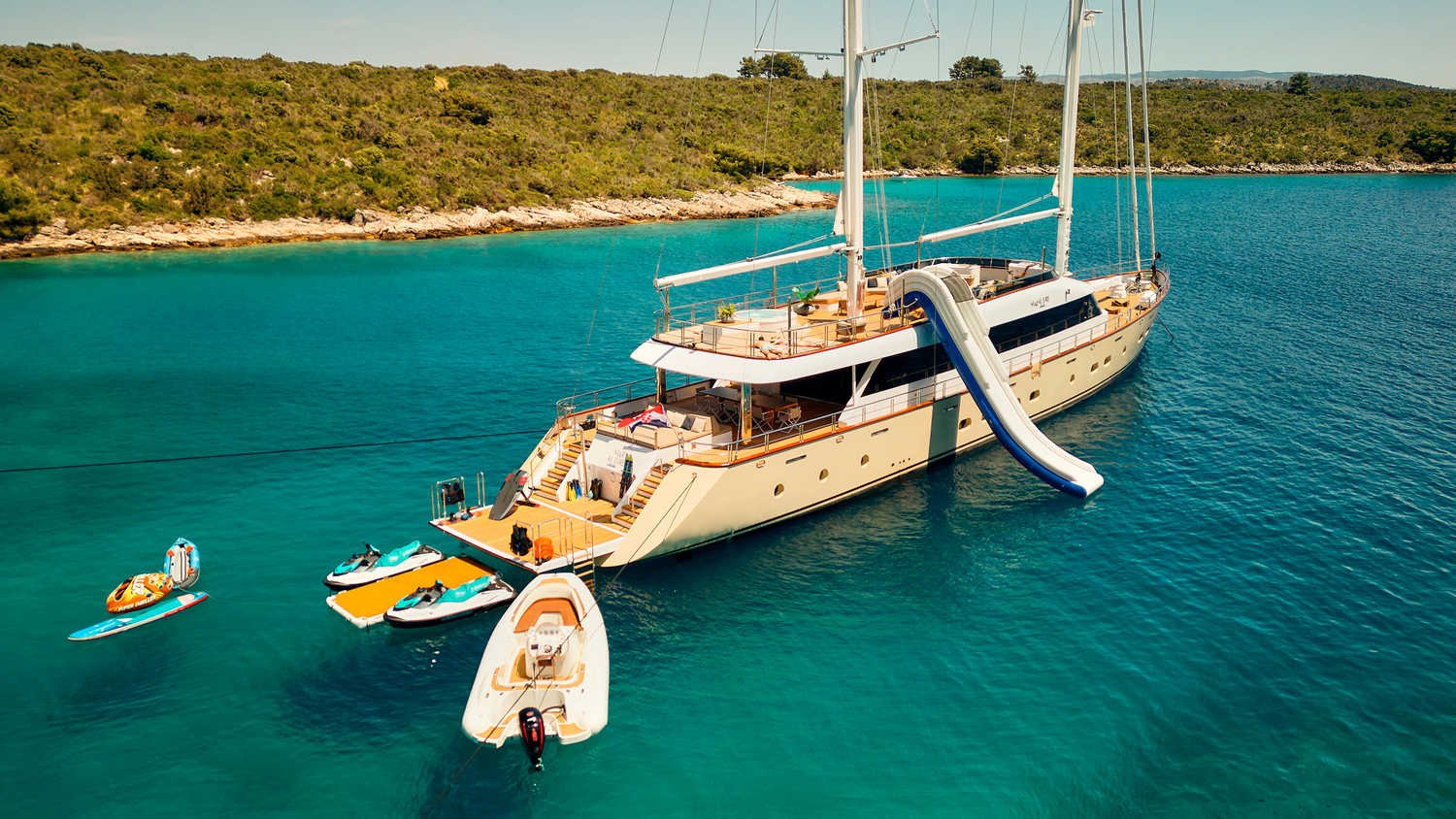
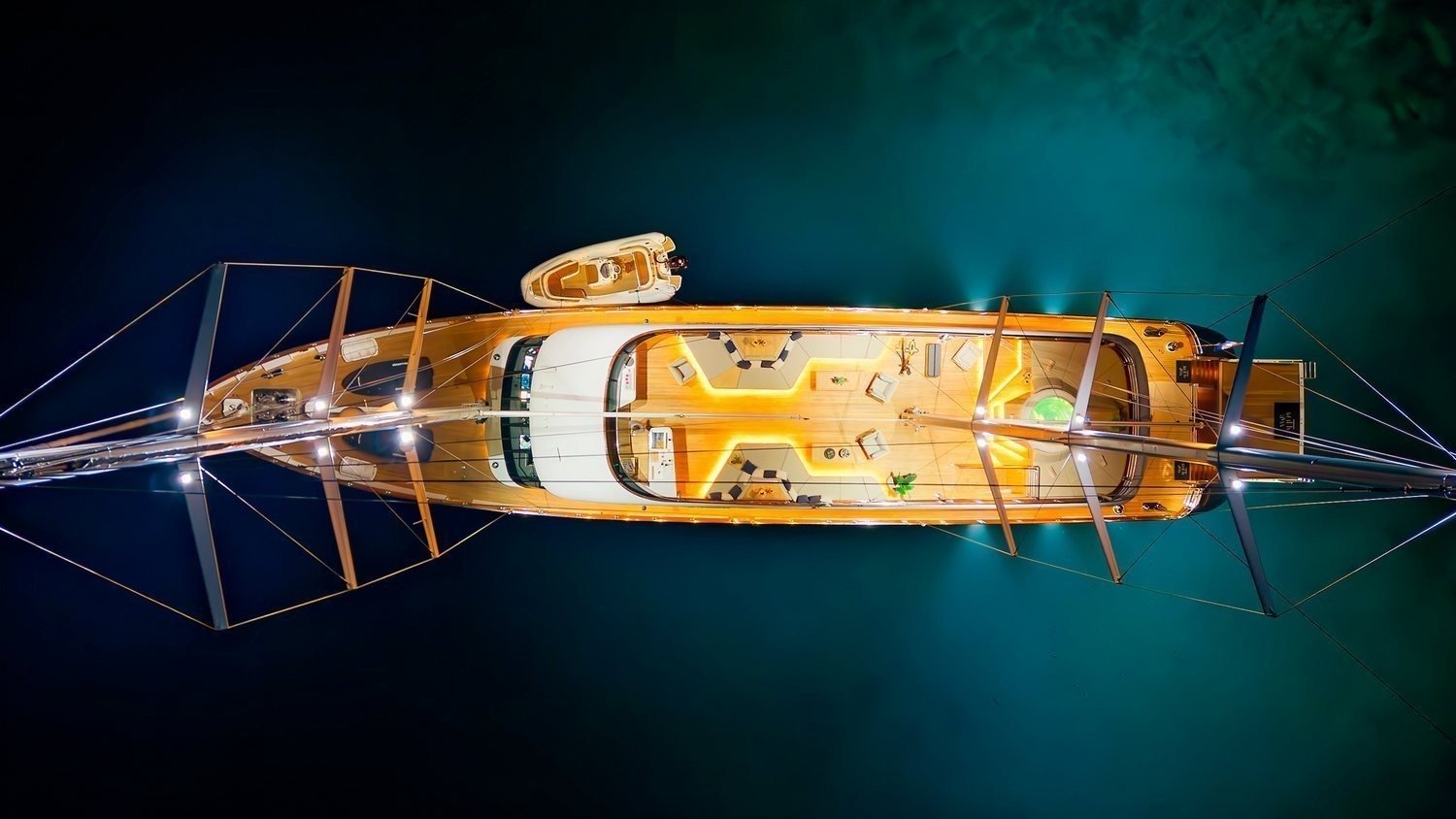
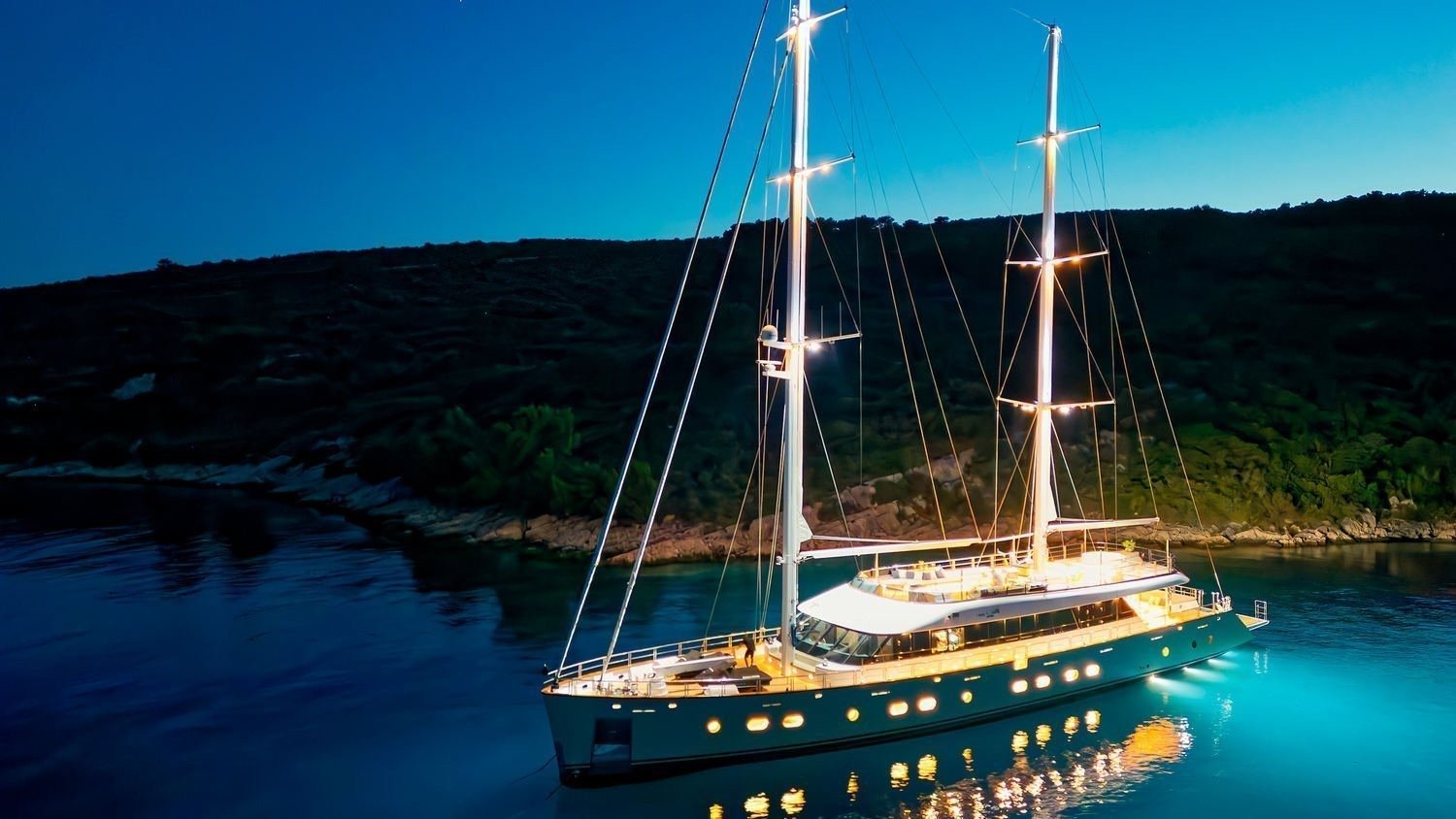
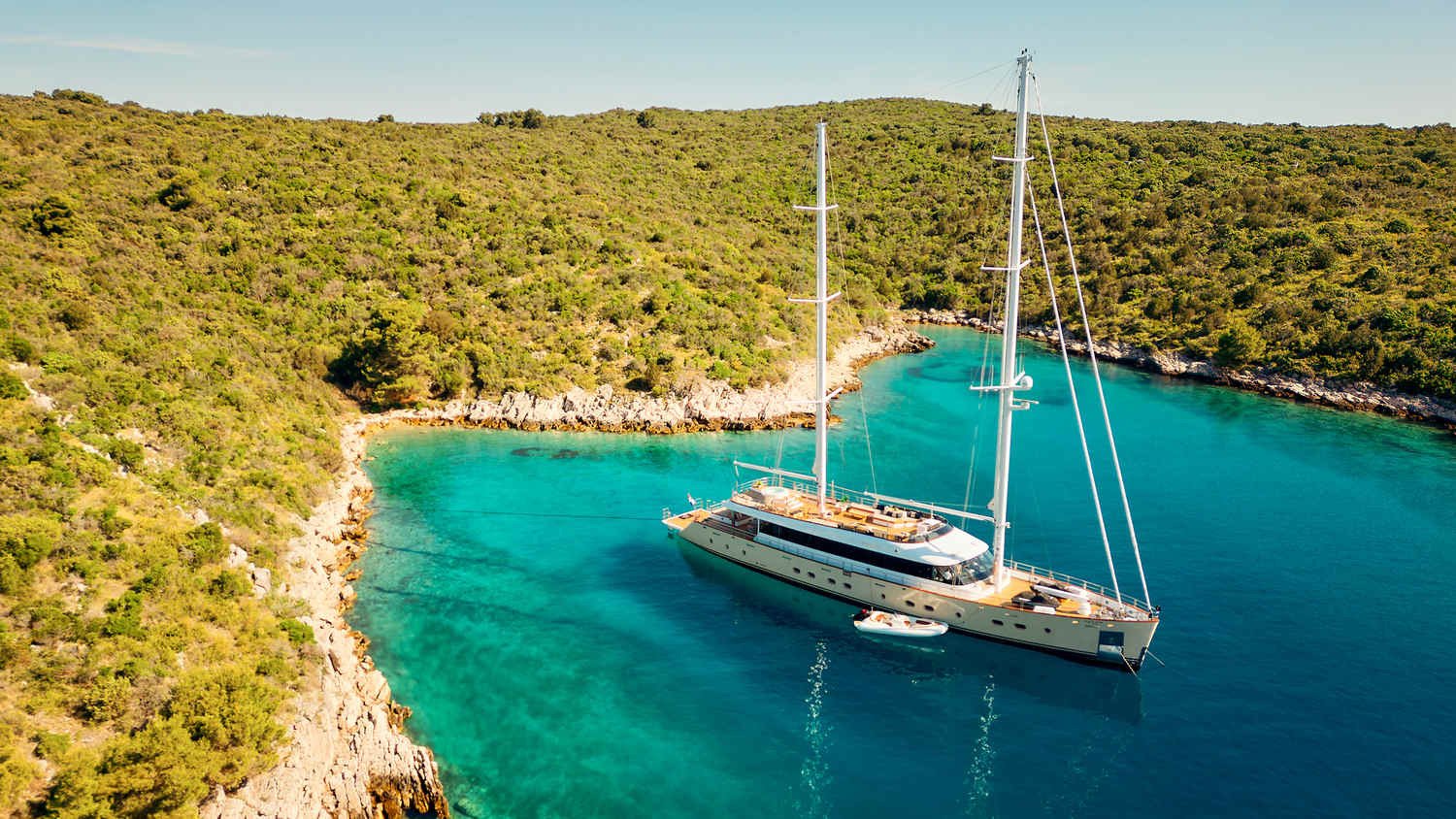
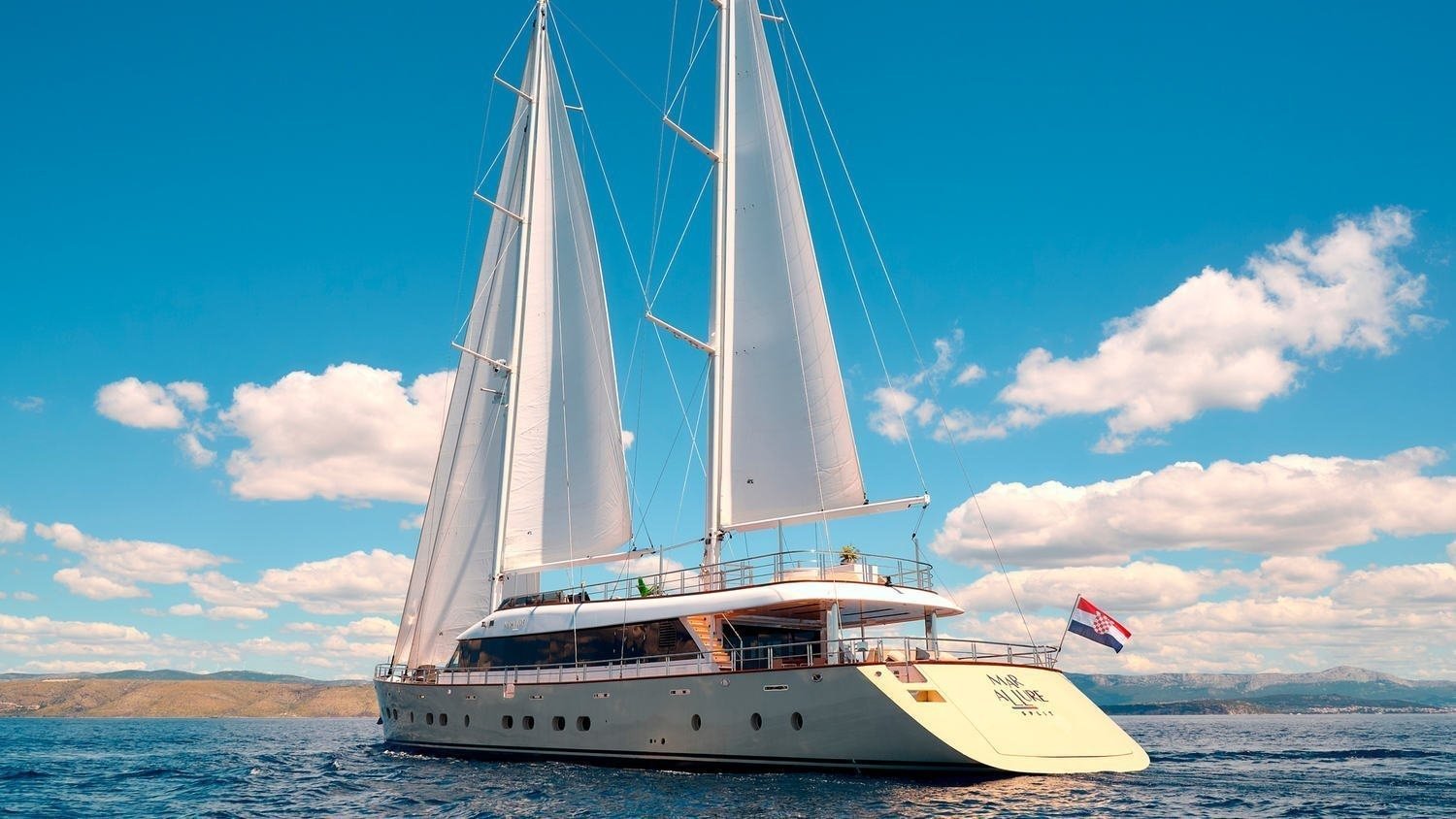
She is, by any measure, a rare thing, a sailing yacht with the proportions and polish of a full-size motor yacht, delivered new in 2023 from the BrodoTrogir shipyard in Croatia. At nearly forty-two metres she carries the scale that most motorsailers sacrifice to stay manageable under canvas, yet her twin masts and deep keel are no concession: under full sail she moves with the quiet authority of a true sailing vessel, her steel hull tracking through the Adriatic swell with the kind of directional stability that only displacement and waterline length can buy.
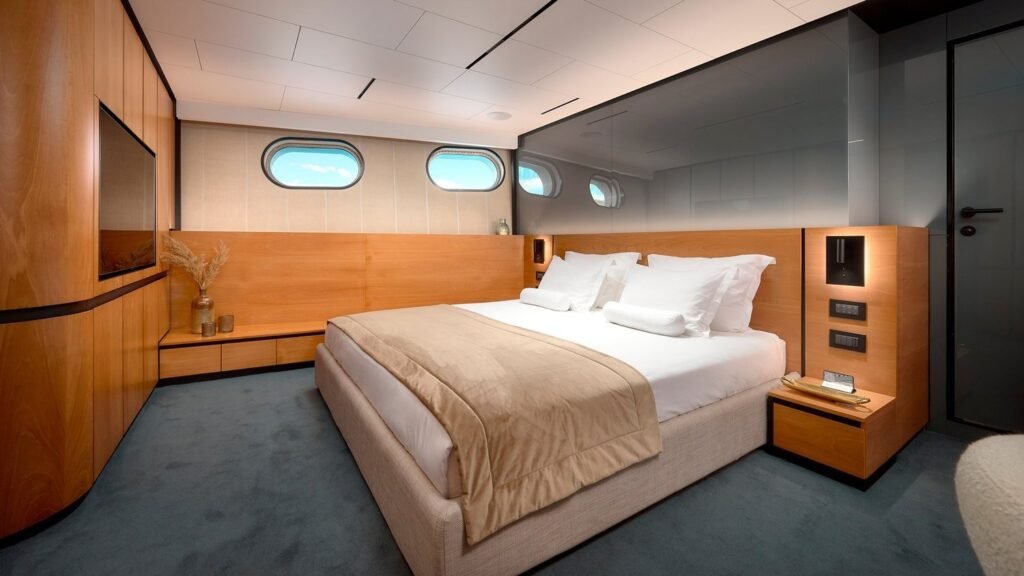
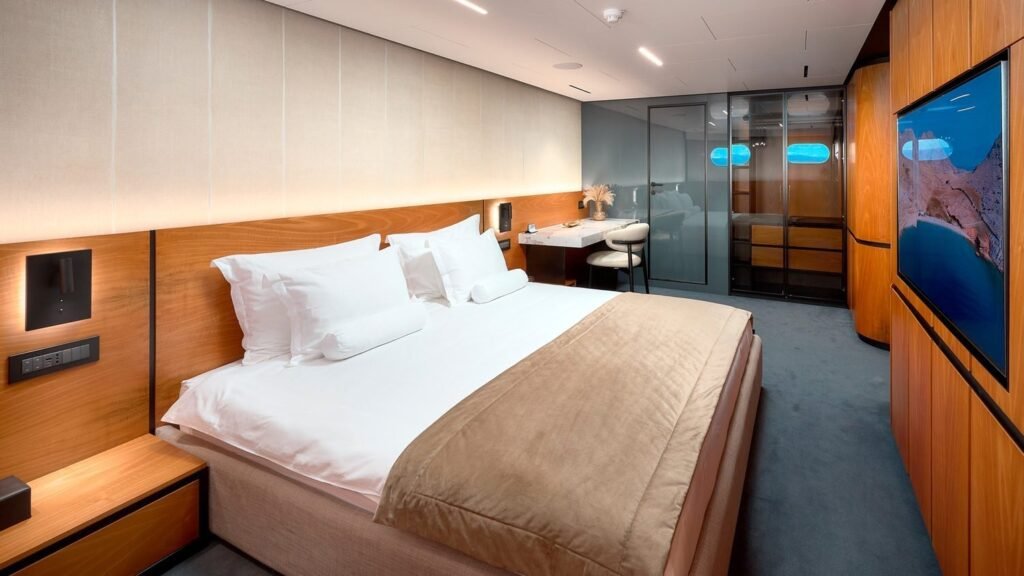
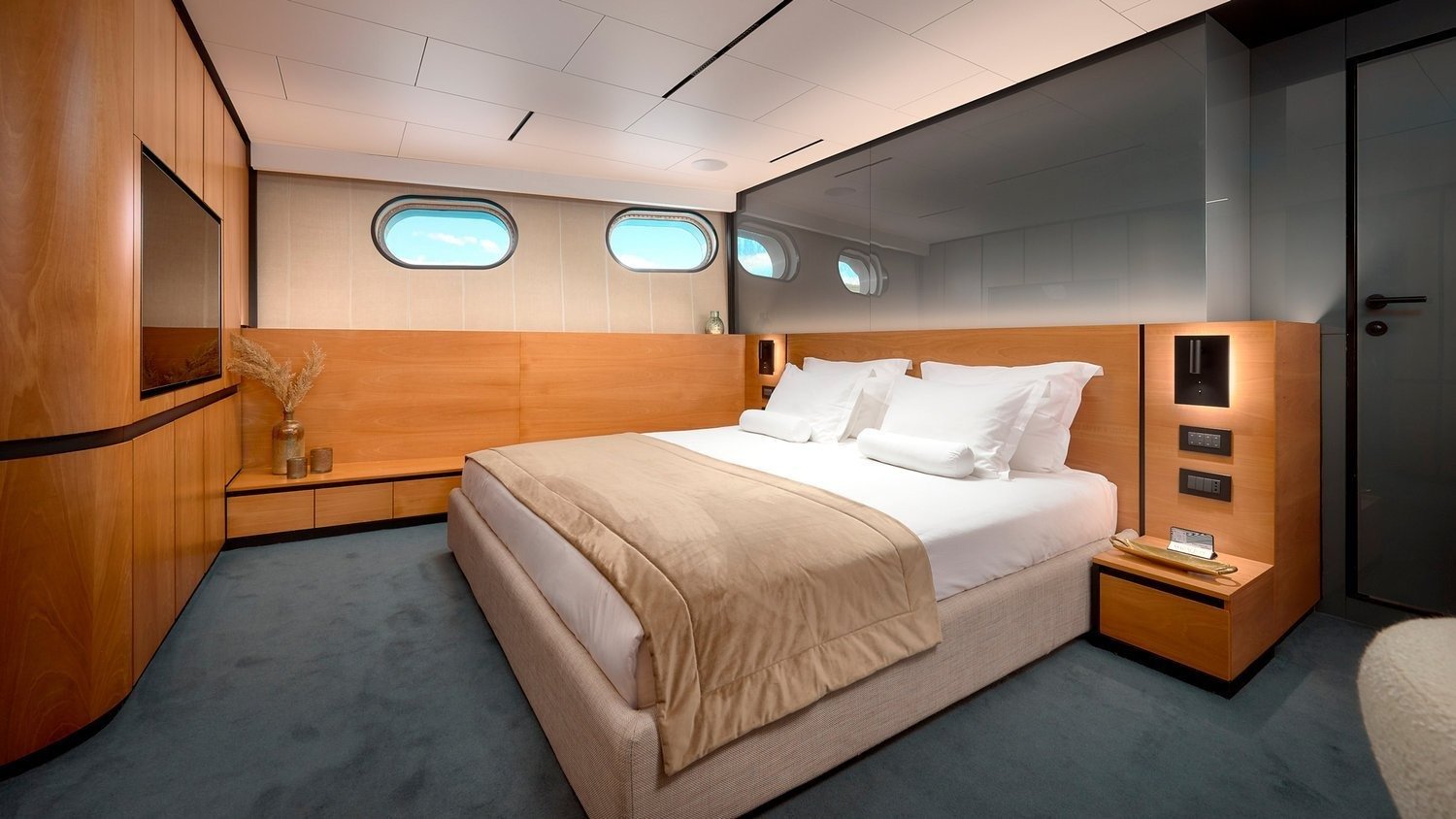
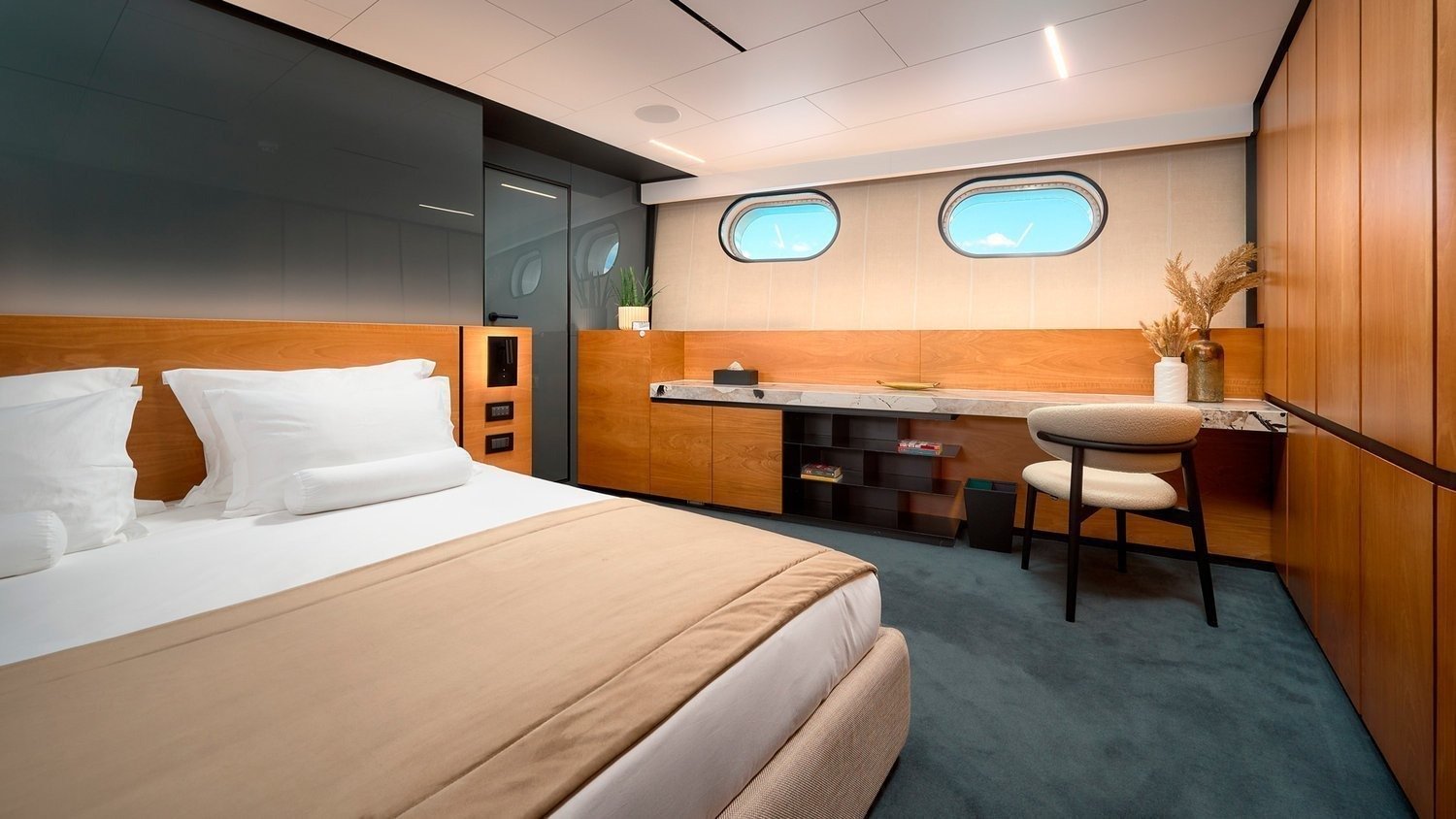
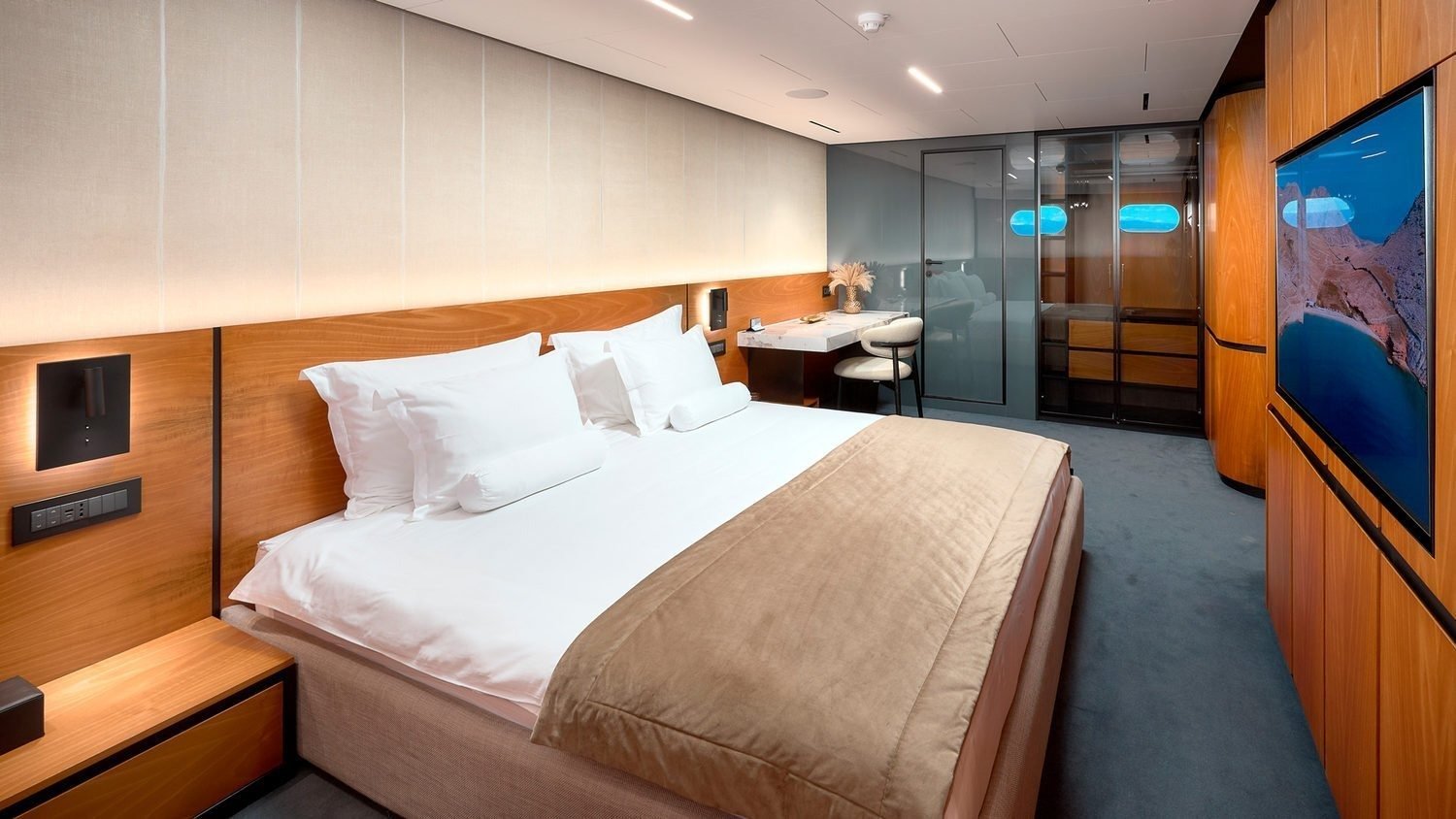
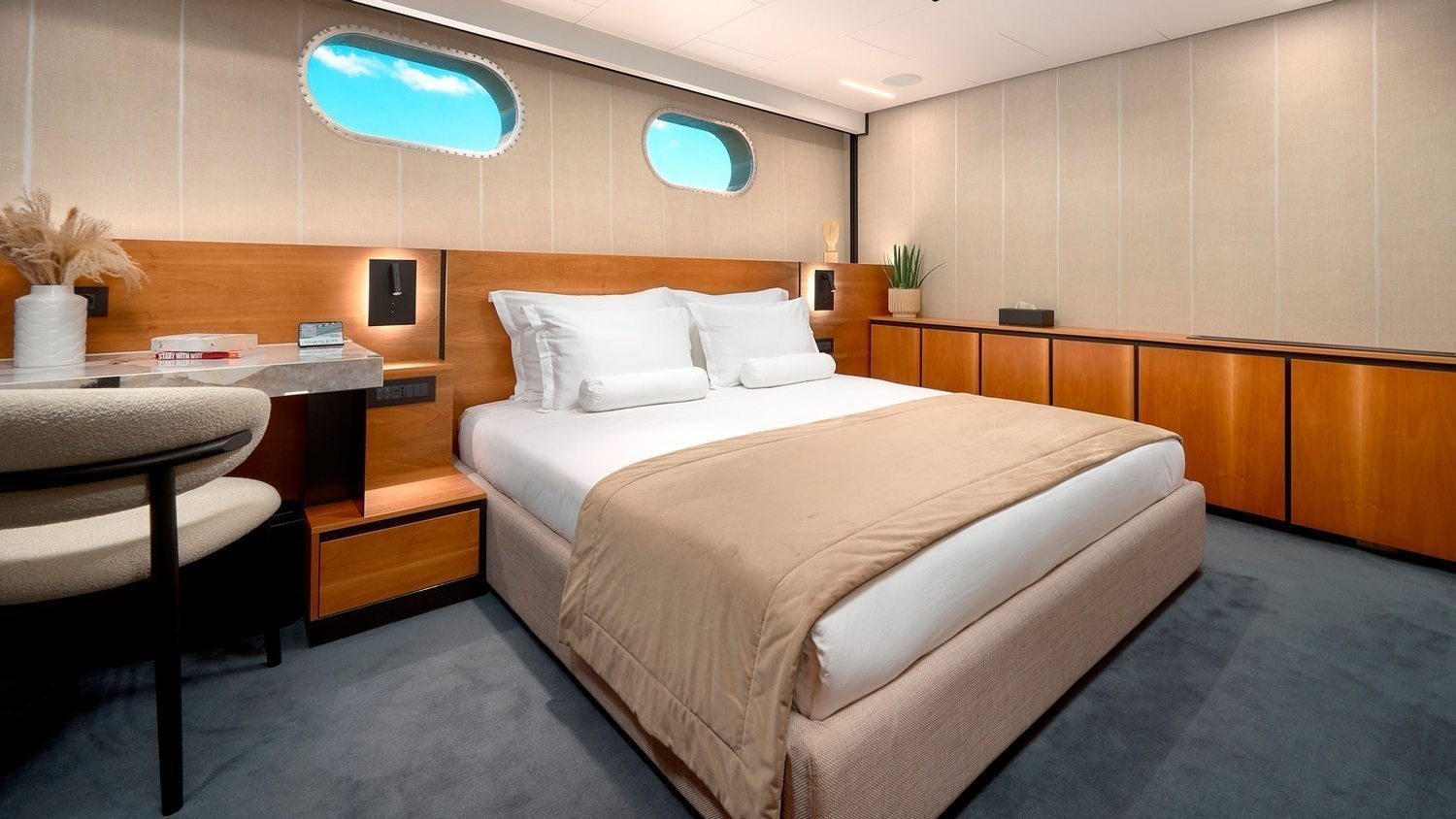
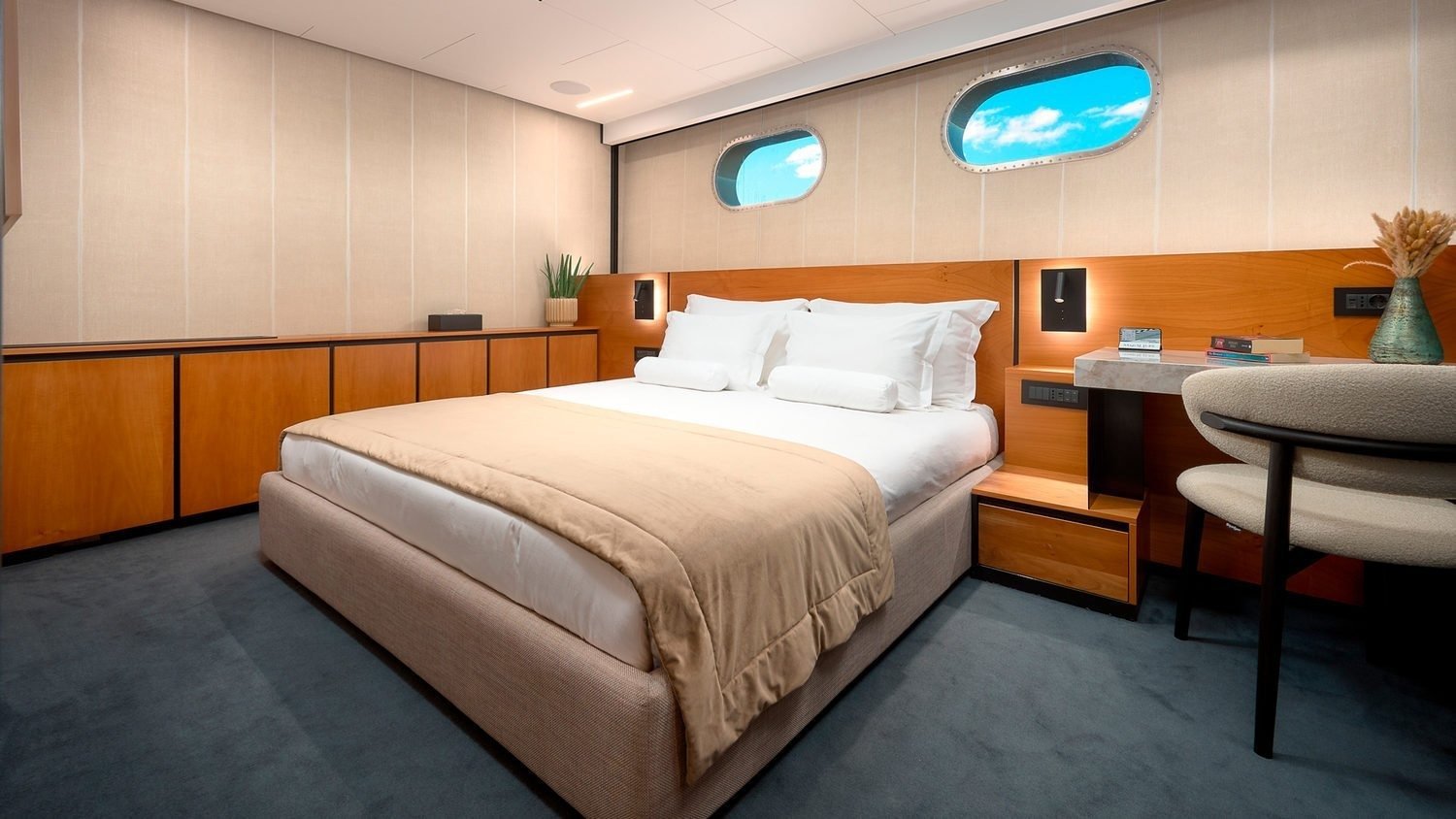
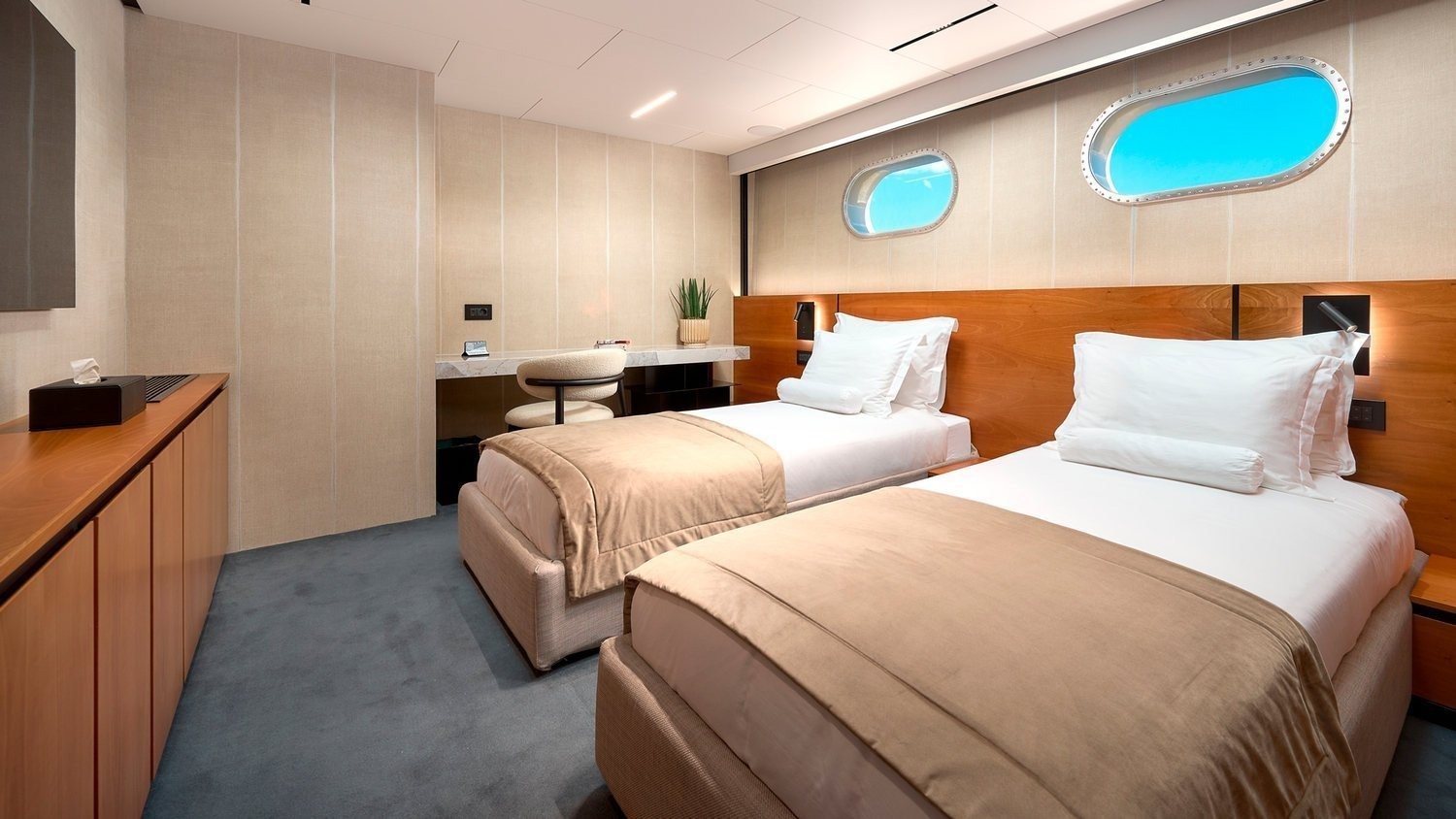
The design gives over most of her internal volume to guest comfort rather than machinery. Six cabins, a full-beam master, a VIP, two king-bedded doubles and two convertible twin-or-doubles, accommodate twelve guests to a standard that invites comparison with pure motor yachts twice her annual operating cost. Every cabin carries its own en-suite, its own porthole views and the same walnut-and-cream palette that runs throughout the interiors. The master suite occupies the widest point of the lower deck, its hull-side windows stretching from bedhead to vanity and letting the morning light arrive on its own schedule.
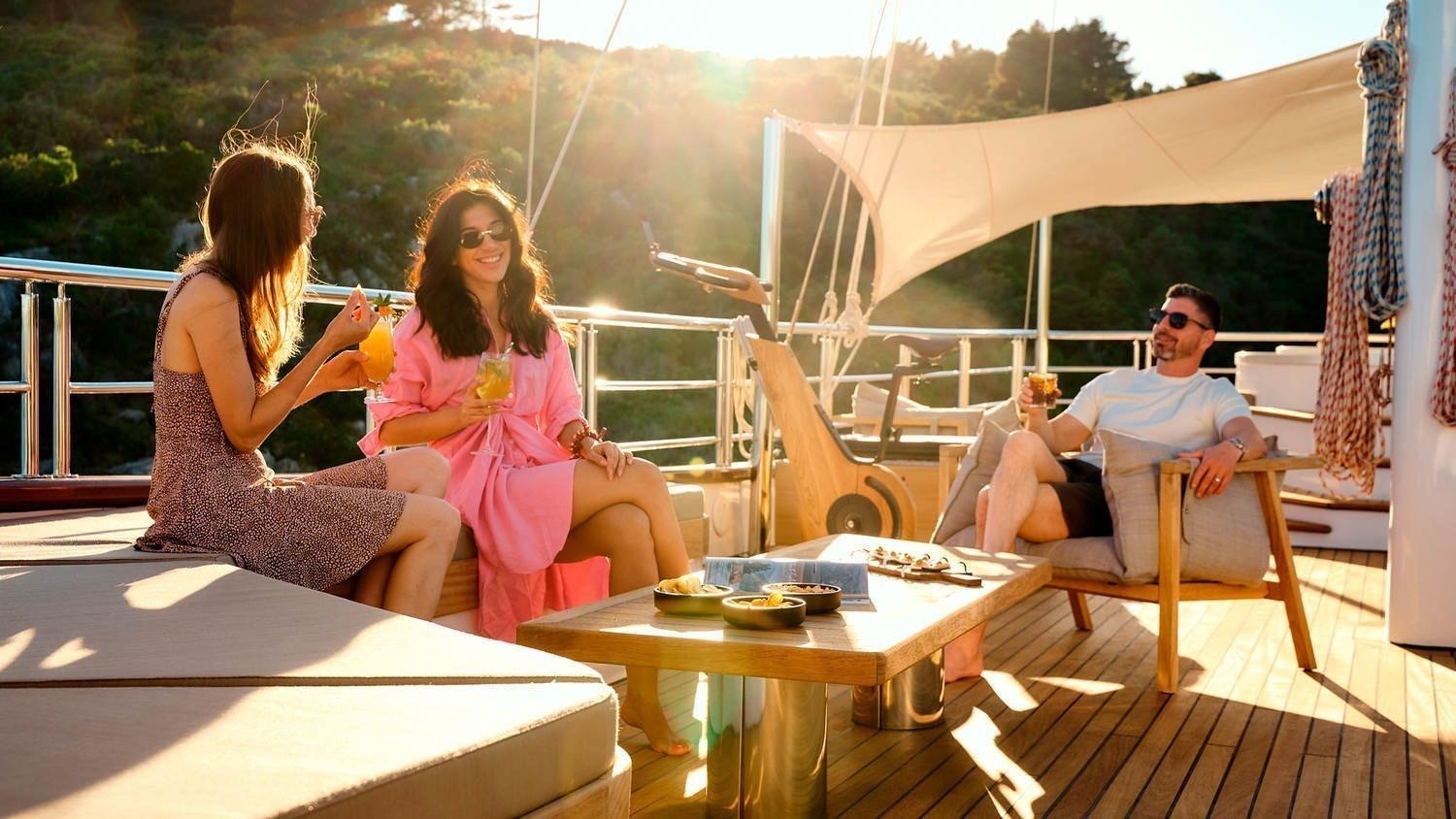
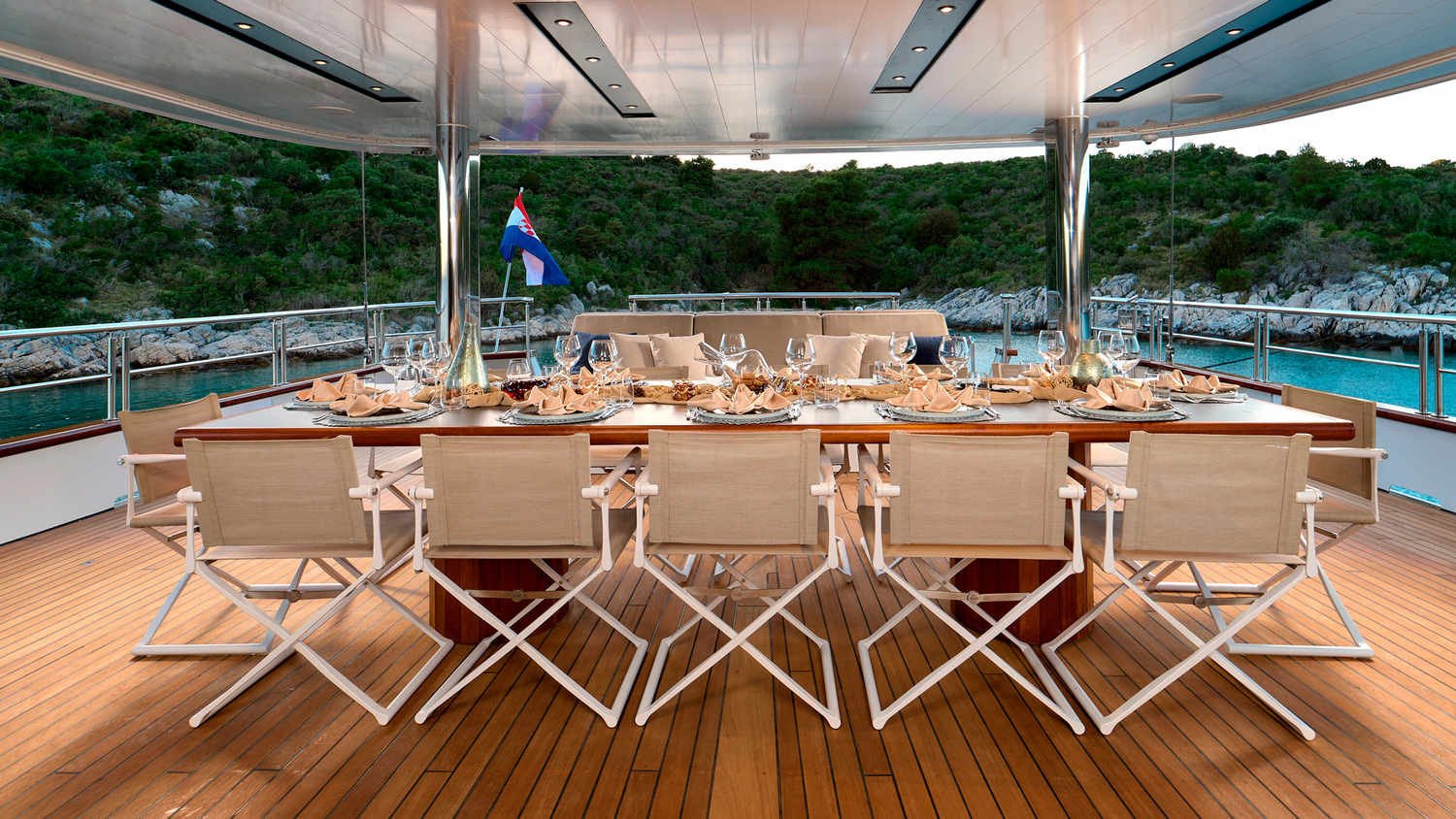
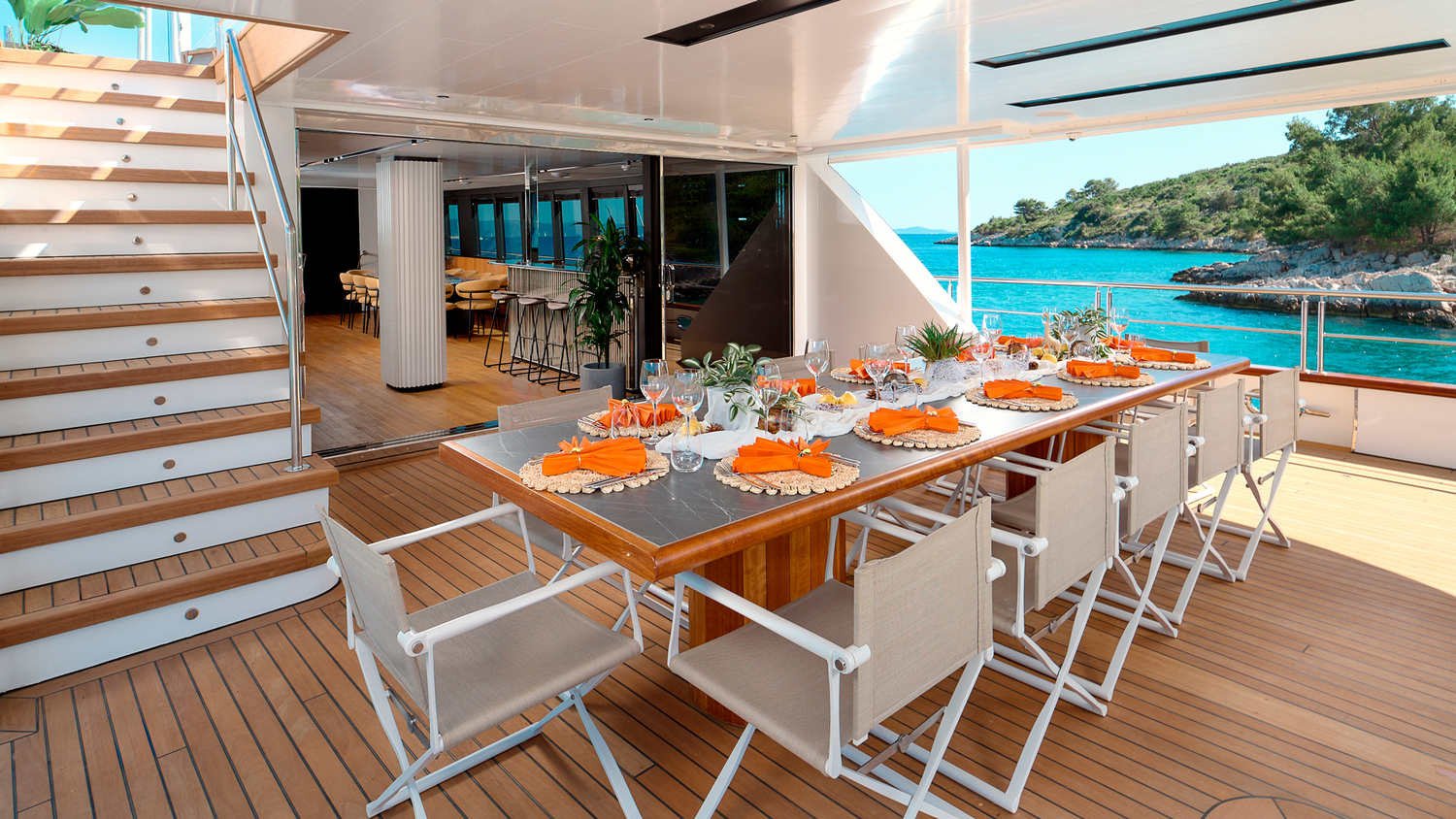
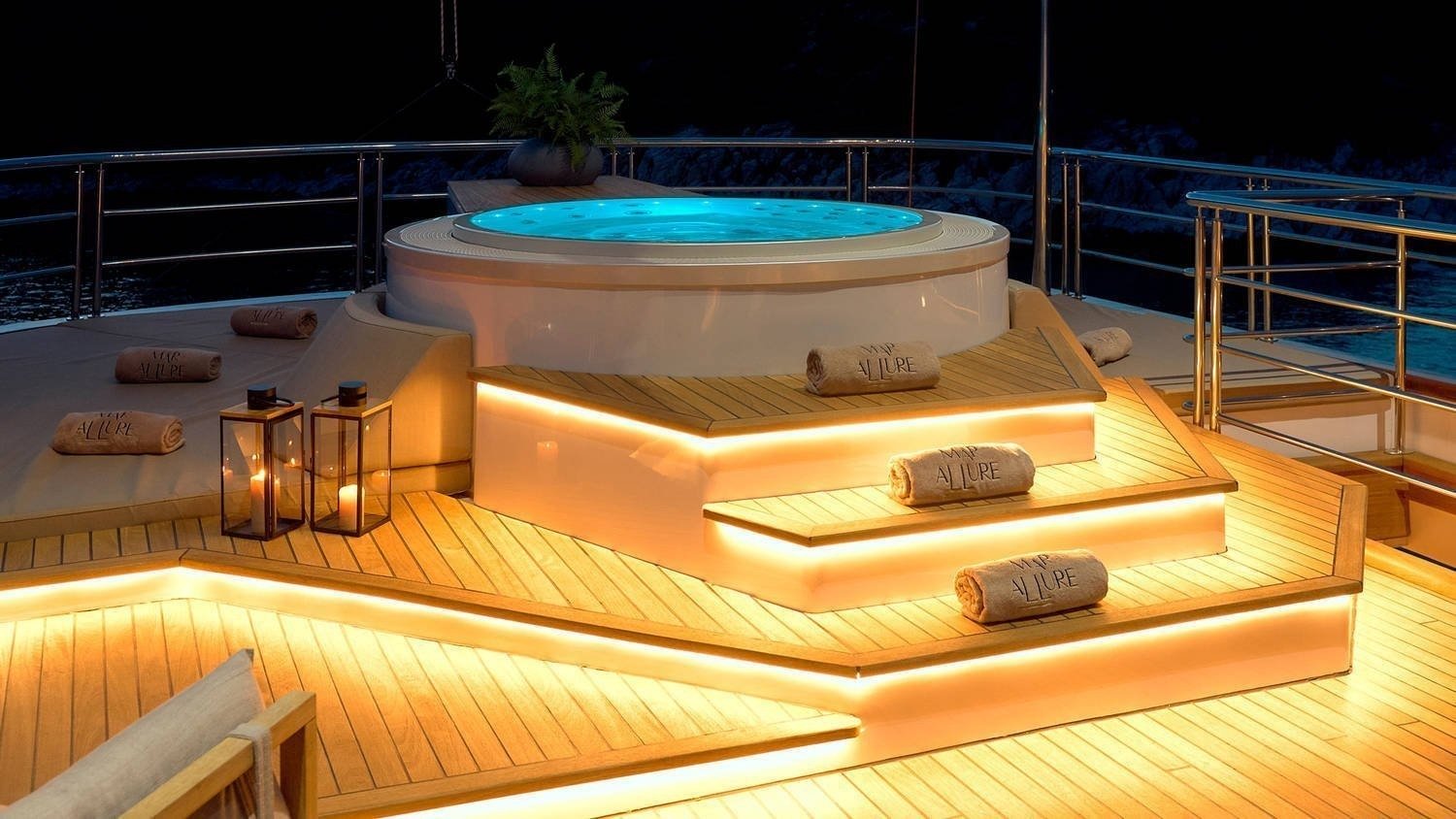
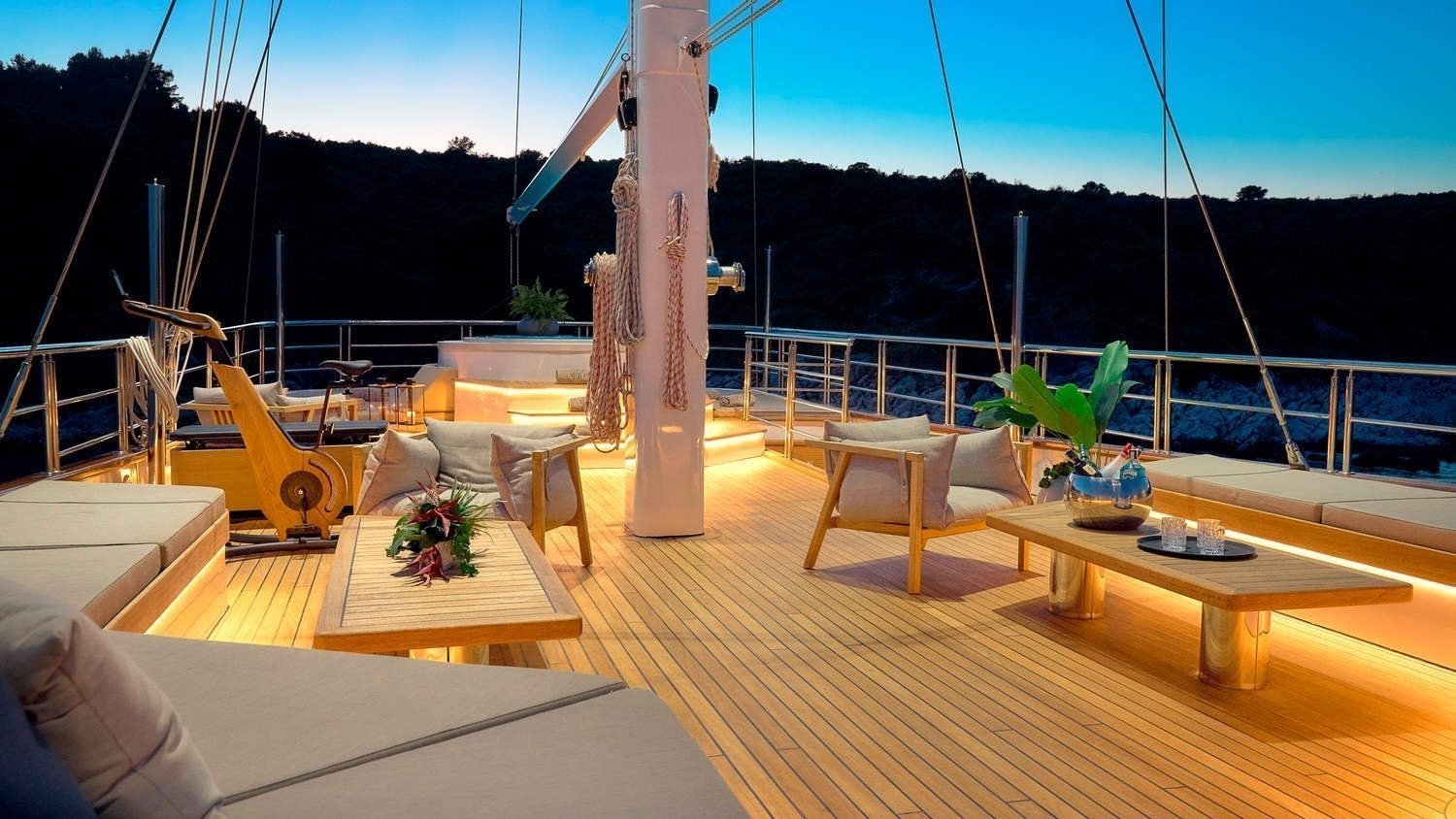
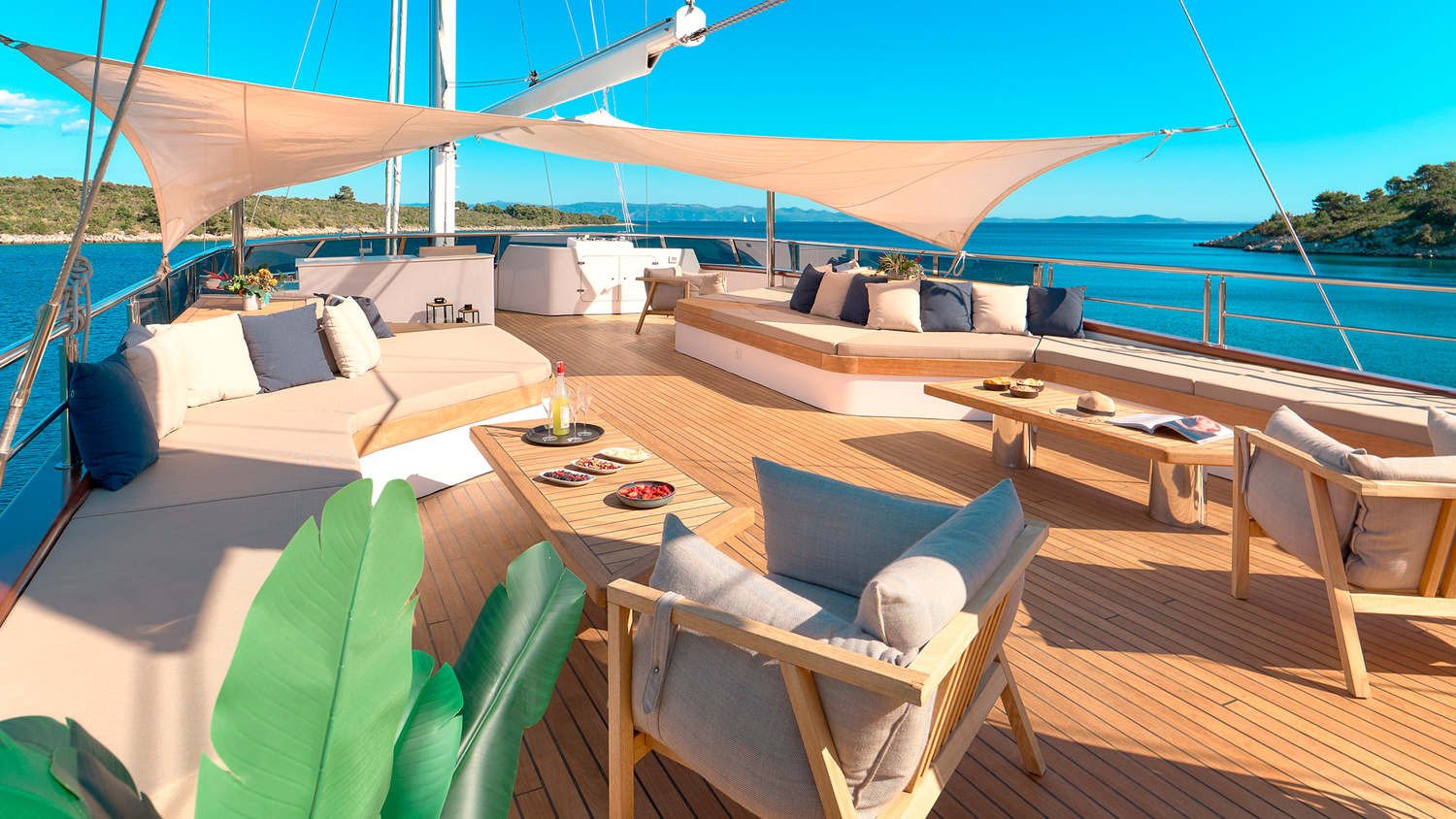
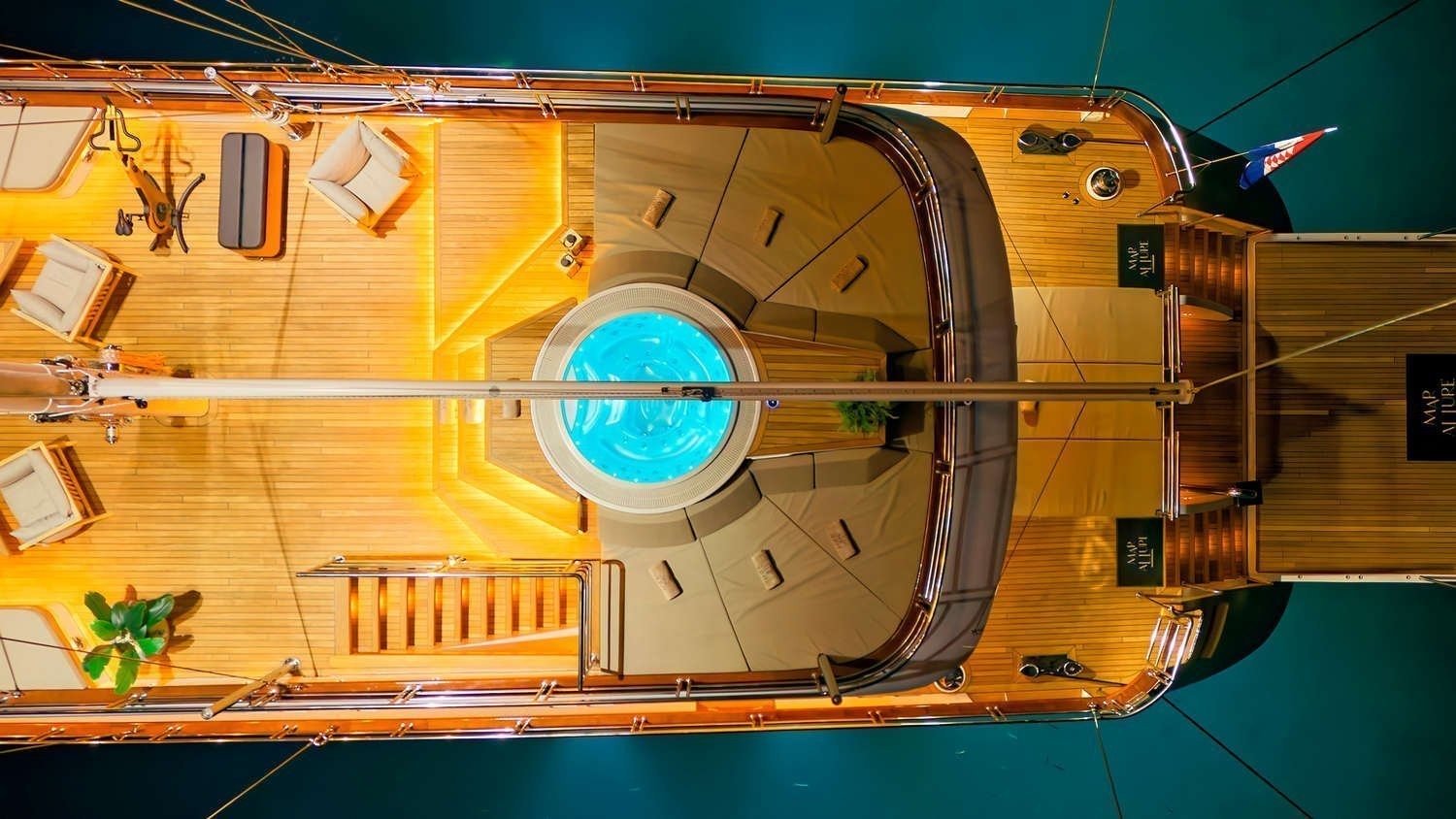
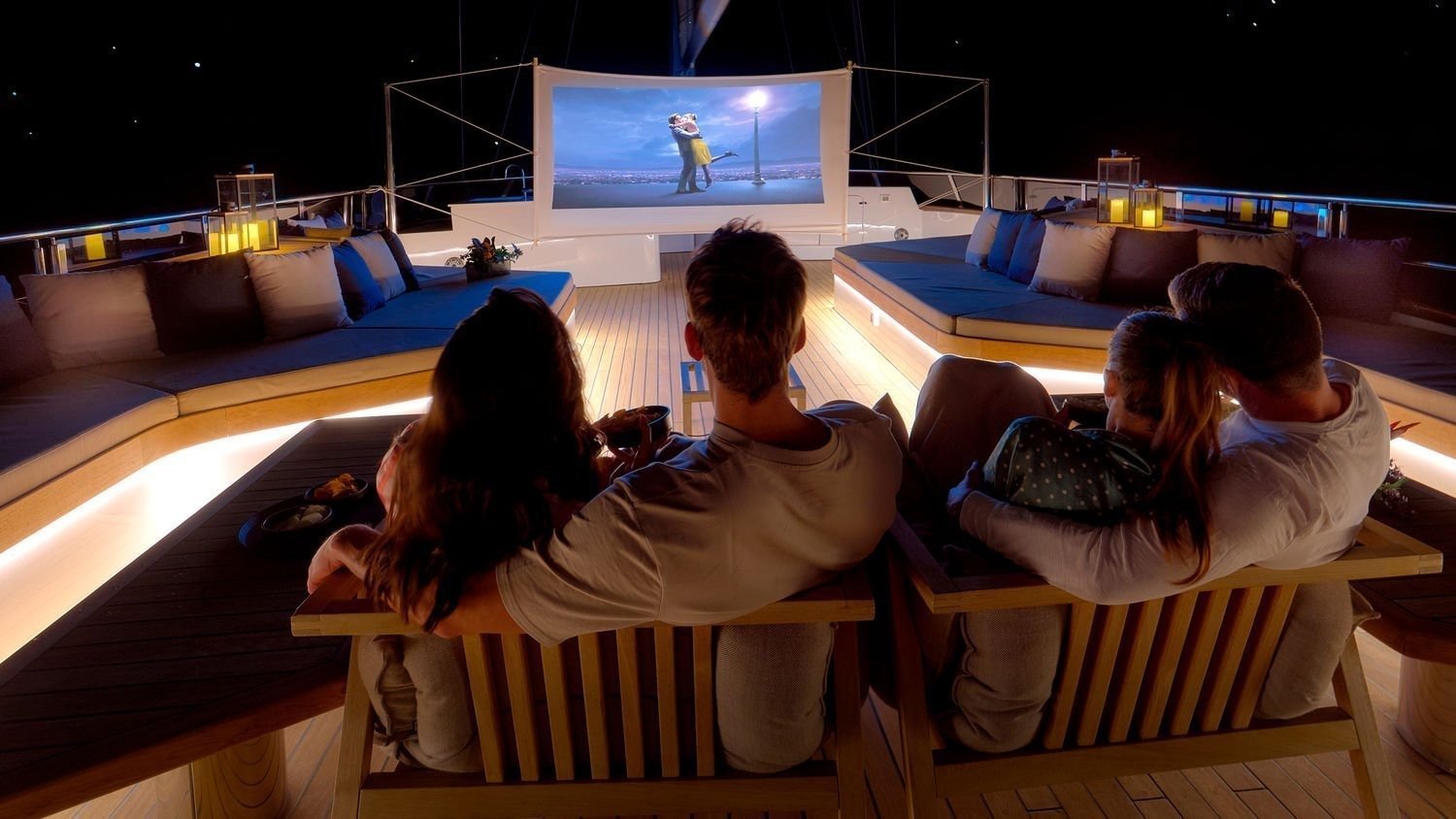
Above decks the arrangement rewards lingering rather than transit. The aft deck seats eight for dinner under a hardtop that doubles as a cinema screen after dark, its retractable awning rolling back to reveal the stars when the evening calls for it. A second dining station on the flybridge catches the breeze above the rigging, flanked by deep sunpads and a cocktail bar. The Jacuzzi sits forward of the flybridge, raised just enough to give its occupants a sightline over the bow and along the masts, a vantage point that frames the Croatian coastline as it unfolds.
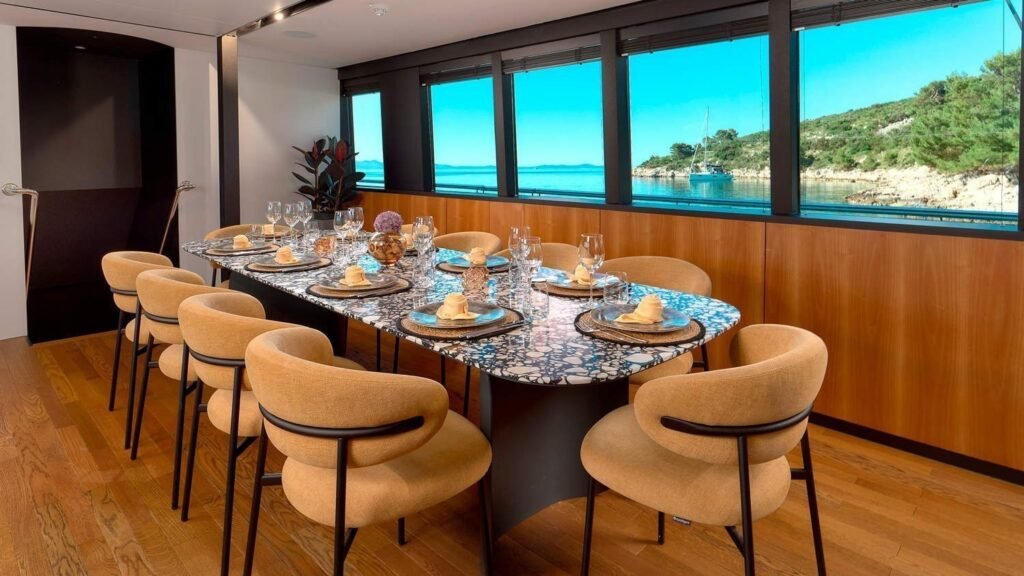
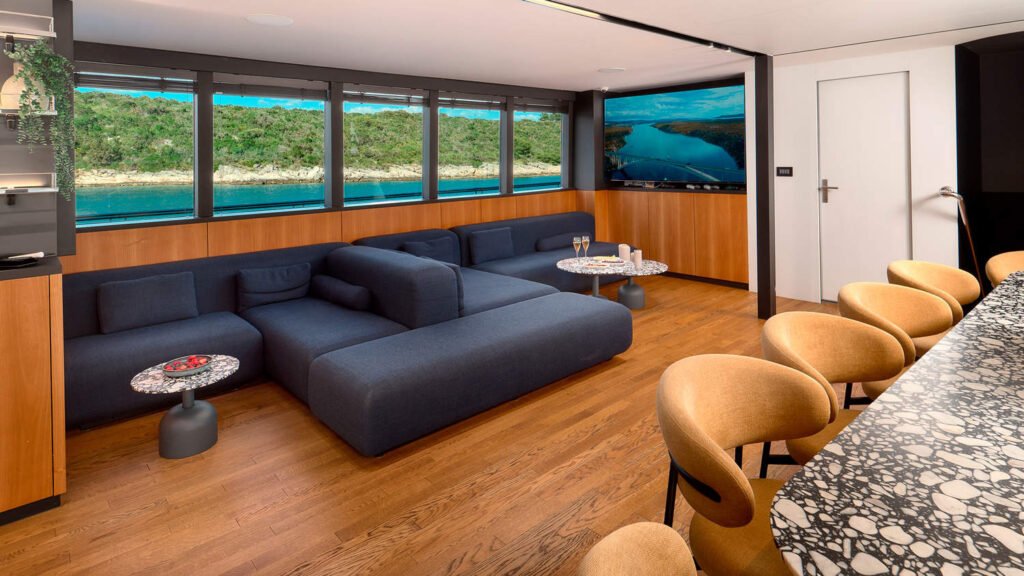
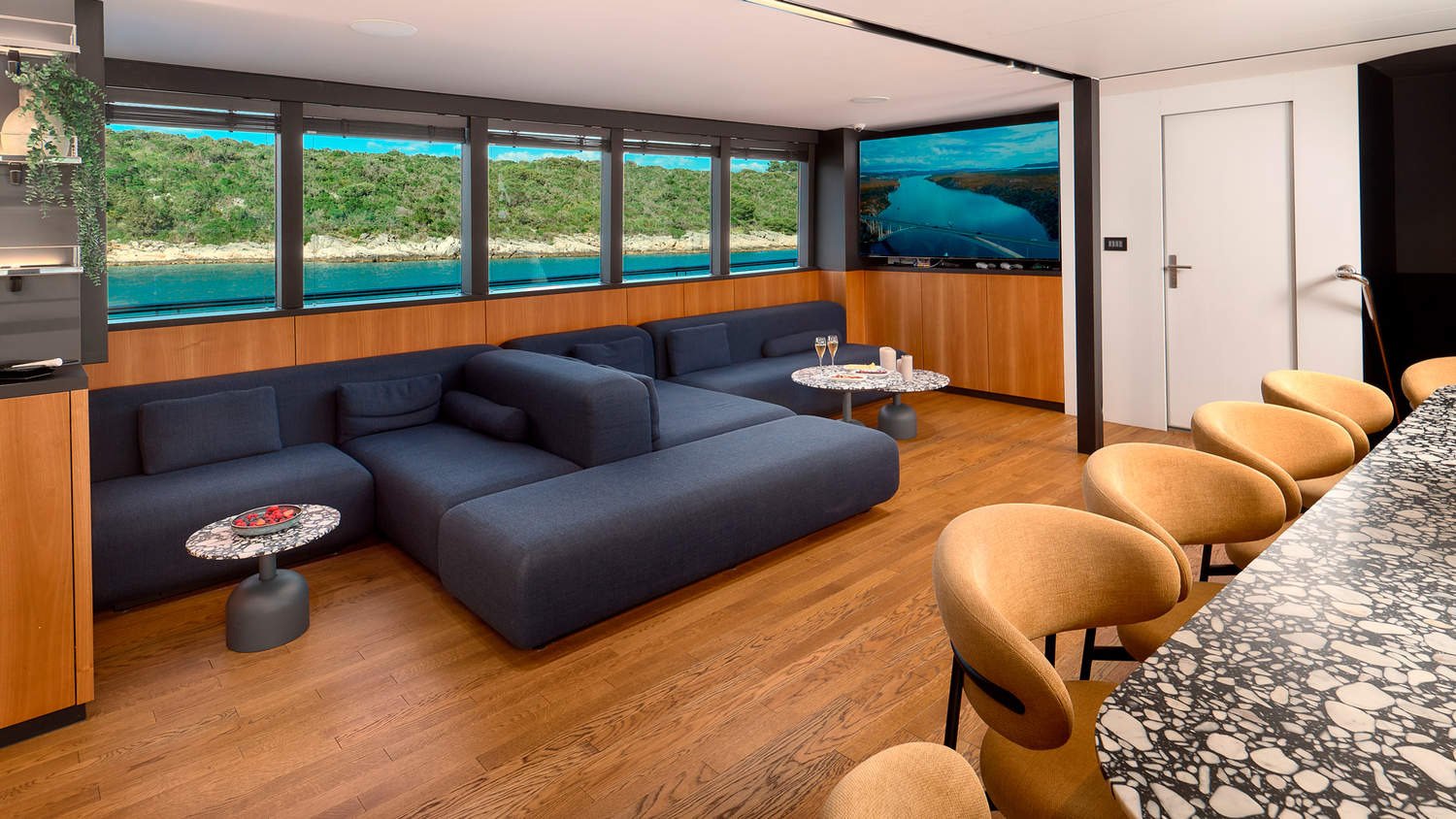
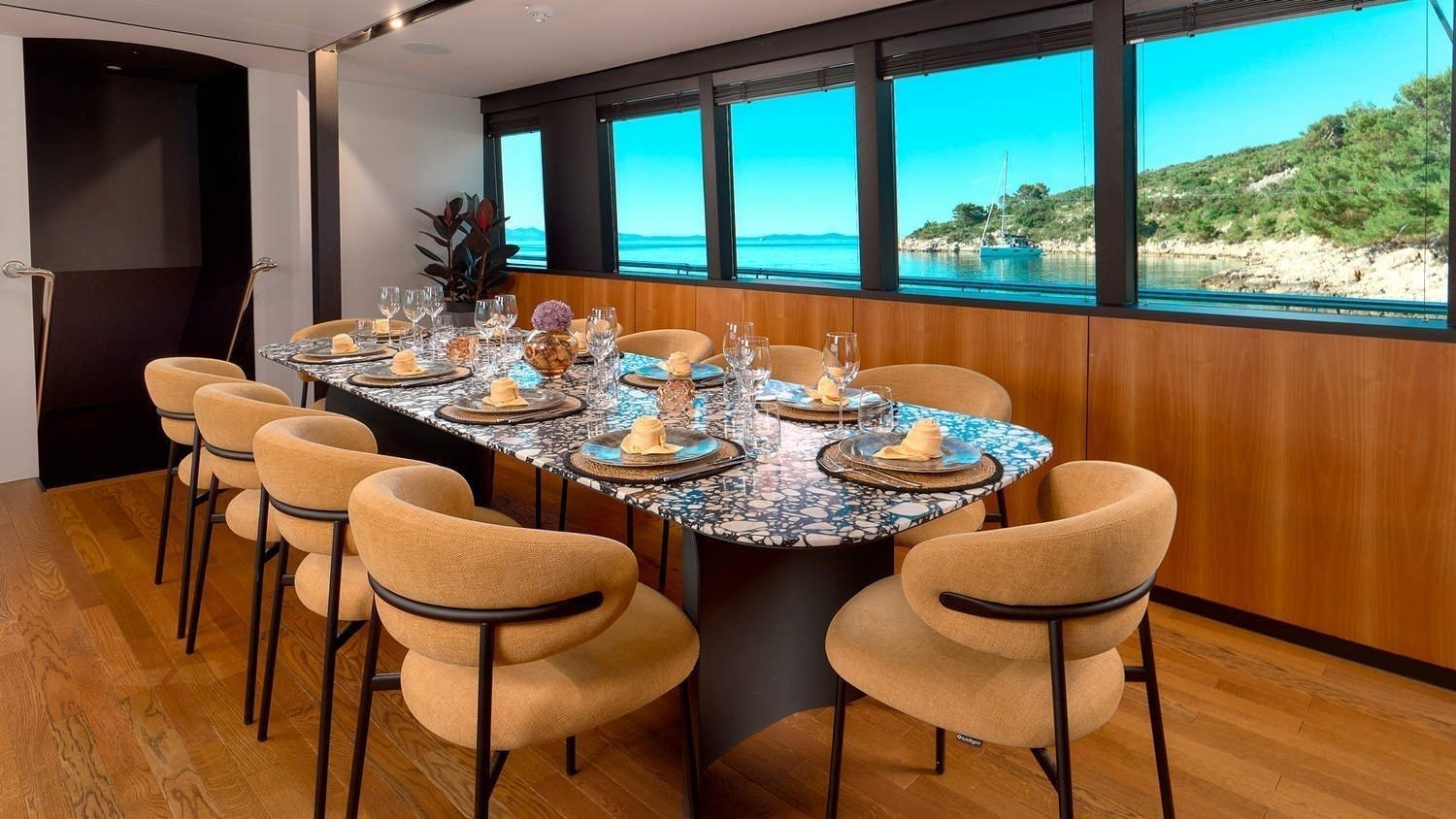
Inside, the main salon runs the full width of the vessel. The bar and galley counter occupy its forward end, backed by panoramic glazing and a pair of bar stools that have become the unofficial captain’s-audience seats; the formal dining table, lower lit and more intimate, sits aft beneath a dropped ceiling panel. A sky lounge on the upper deck offers a quieter alternative, softer light, deeper sofas, a second entertainment system for those who want to disappear from the group without disappearing below.
On the water she is more capable than her charter-yacht finish might suggest. Twin Cummins diesels deliver a cruising speed of ten knots and a maximum of twelve under power, and her sail plan adds range and steadiness in conditions where most charter yachts would simply motor through the chop. Her steel hull and aluminium superstructure were built for the open Adriatic, Montenegro’s Bay of Kotor, the Dalmatian islands, the quieter passages south of Dubrovnik where the mistral builds in the early afternoon and a sailing yacht earns her keep.
A crew of eight, led by a captain with local passage-making experience, runs the operation. The tender, a six-and-a-half-metre Ris Marine with a Mercury outboard, handles shore runs and island hopping, while the toy inventory includes a waterslide launched from the main deck, a pair of jet skis, paddleboards and an eFoil for the more adventurous. For a new-build sailing yacht with the space and staff of a motor yacht, the weekly rate of seventy-nine thousand euros positions her squarely as a proposition that would cost half again as much on a pure motor platform of the same length.