Croatia / Lastovo
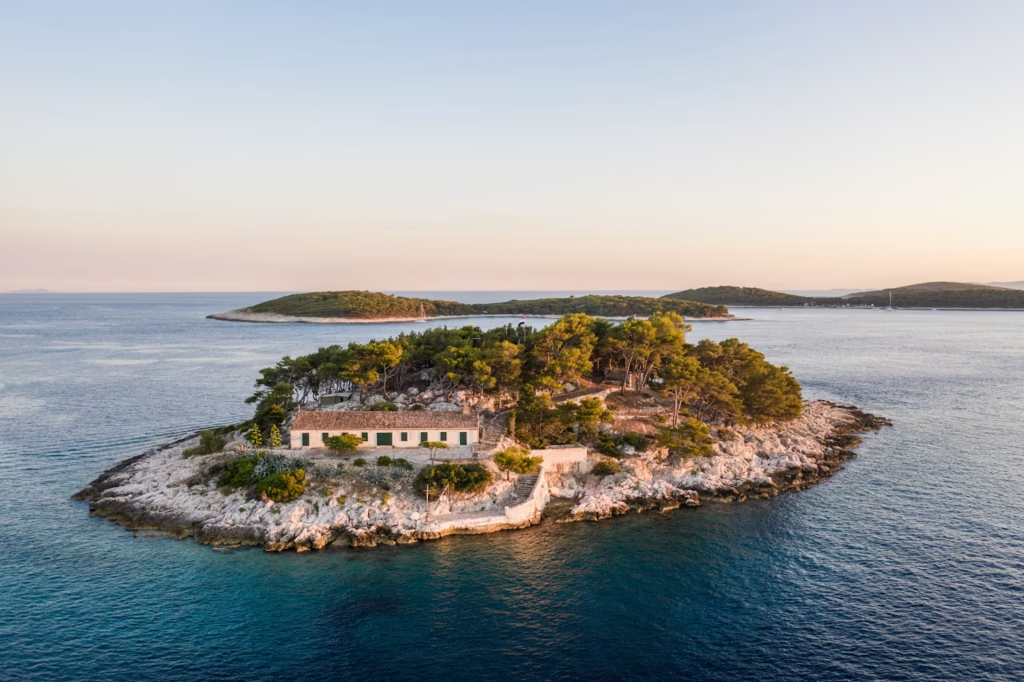
Skrivena Luka
Zaklopatica
Pasadur
Saplun
Ubli
Climb to Hum, the island’s 417-metre summit
Spot the fumari chimneys crowning the village rooftops
Visit the 11th-century Church of St Luke
Dine on fresh fish in Zaklopatica’s waterfront tavernas
Stargaze from the cliffs above Skrivena Luka
Lastovo Village
Struga Lighthouse
Church of St Luke
Kašćel Fortress
Lučica
June to September brings the calmest seas and warmest water for the crossing out to Lastovo, though the island rarely feels crowded even in August thanks to its distance from the mainland. Its remoteness means conditions ashore stay relaxed all season, so timing here matters less for crowds than for the sailing itself, which is easiest with settled summer winds. Clear, moonless nights in July and August are best for the island’s celebrated stargazing.
Split (SPU) is the nearest major airport, followed by a ferry to Ubli that takes around four and a half hours via Korčula’s Vela Luka, or a faster summer catamaran on a shorter routing. Most charter guests instead simply sail there from elsewhere in the Dalmatian islands, treating Lastovo as a further-flung stop rather than a starting point. The distance is part of the appeal: it keeps the island quieter than Korčula or Hvar just to the north.
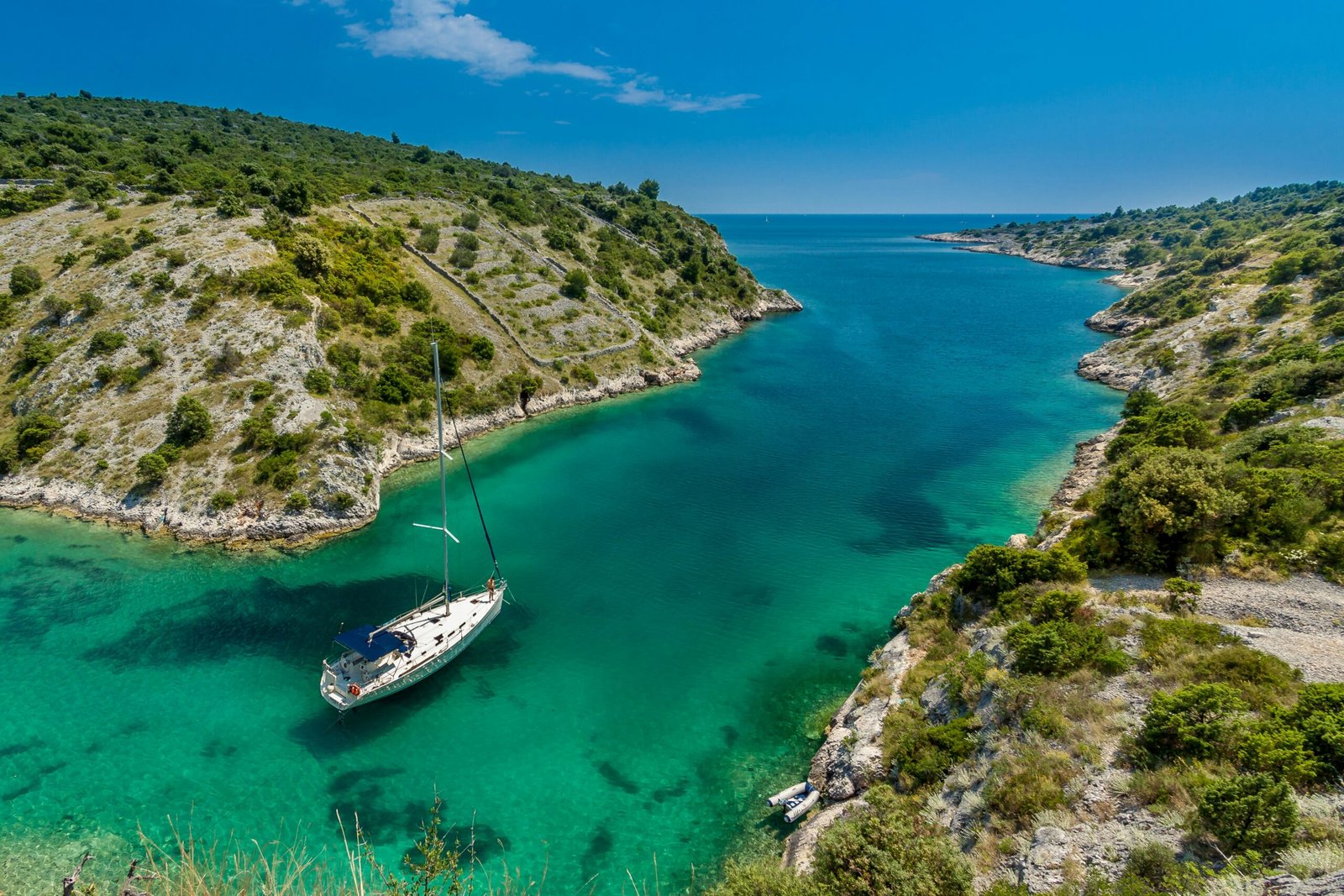
Skrivena Luka, the Hidden Harbour, is the most sheltered and best-known anchorage, tucked deep into the south coast with restaurants ashore and the historic Struga Lighthouse on the cliffs above. Zaklopatica, on the north side, is the pick when the wind is southerly, with a relaxed waterfront and clear water for swimming. Pasadur, near the Ubli ferry port, offers a quieter, more practical stop for provisioning or an early departure.
One to two days is typical, enough to explore a couple of anchorages, walk up to Lastovo village to see its distinctive chimneys, and enjoy a night at anchor under some of the darkest skies in the Adriatic. Given how far south it sits, most itineraries treat Lastovo as the turning point of a longer Dalmatian route rather than a standalone destination. Guests who value solitude over sightseeing sometimes linger longer, since so few other boats make it this far.
Yes. Lastovo served as a Yugoslav military base after the Second World War, and foreigners were barred from setting foot on the island until restrictions eased in 1988; the army did not fully withdraw until 1992, shortly after Croatian independence. Bunkers, tunnels and old barracks are still scattered around the island today, reminders of that closed period. The decades of isolation are widely credited with preserving Lastovo’s forests and coastline in a condition few other Adriatic islands can match.

Tell us what you would like to know, and our team will respond with clear details on availability, specification, pricing and next steps.