Croatia / Brač
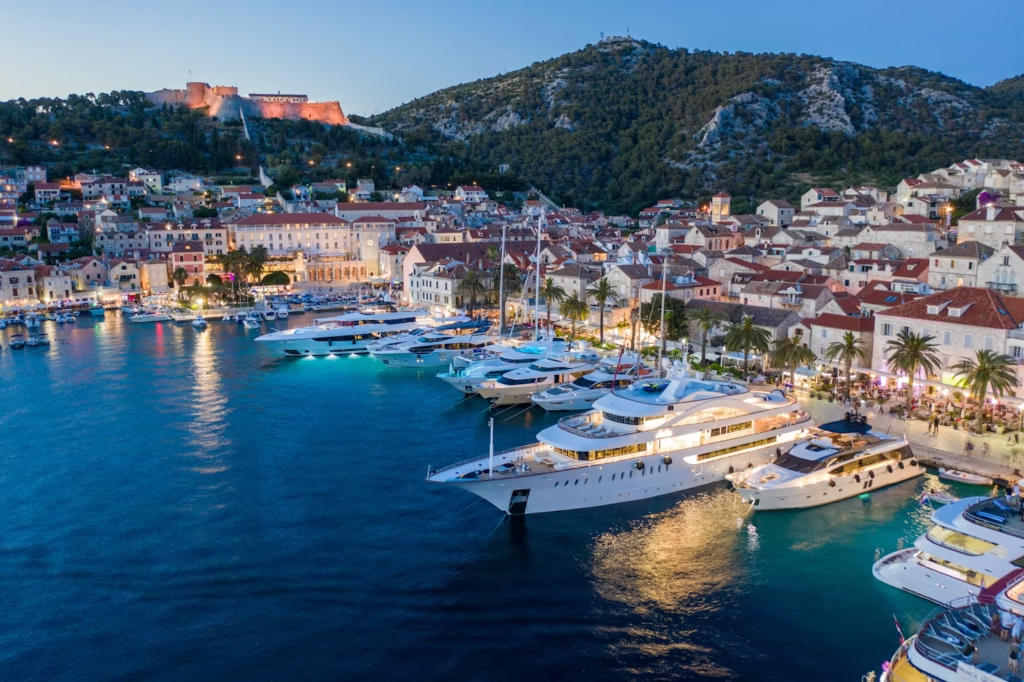
Bobovišća Bay
Pučišća
Povlja
Sutivan
Lučice Bay
Sunbathe on the shifting sands of Zlatni Rat
Hike to the summit of Vidova Gora
Tour the stonemasons’ school in Pučišća
Visit the abandoned hermitage at Blaca
Explore Dragon’s Cave near Murvica on a guided tour
Zlatni Rat
Vidova Gora
Blaca Hermitage
Škrip
Dragon’s Cave (Zmajeva Špilja)
June to September delivers the most settled weather and the warmest sea, though Zlatni Rat gets genuinely crowded in July and August, both on the beach and in the water just offshore. Late May, June and September offer nearly the same conditions with far fewer boats jostling for space at anchor, and cooler air that suits the hike up Vidova Gora better than midsummer heat. The island stays busy well into early autumn thanks to its ferry links.
Brač has its own small airport (BWK) near Bol, with seasonal flights to a handful of central European cities, making it one of the few Croatian islands with direct air access. Most guests instead fly into Split (SPU) and take the passenger or car ferry to Supetar, a crossing of around 50 minutes on one of the busiest routes in the Adriatic. Charter guests joining a yacht already in Dalmatian waters can simply sail across from Split or Hvar.
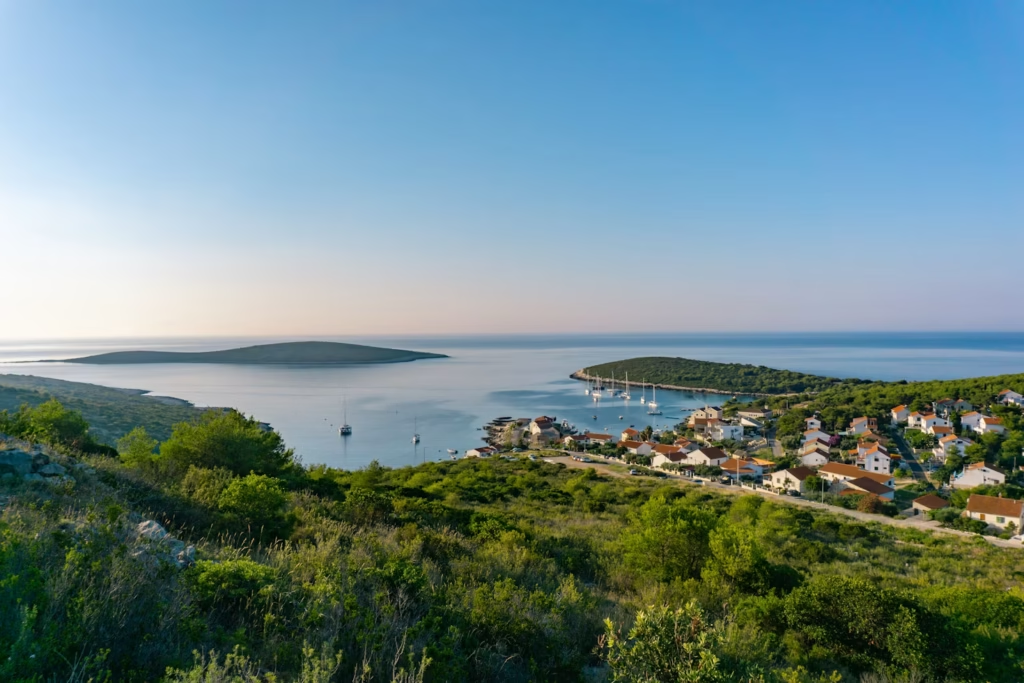
Bobovišća, on the sheltered west coast, is one of the most protected bays on the island and a favourite overnight stop. Lučice, a short walk from Zlatni Rat, offers a quieter alternative to anchoring directly off the famous beach itself, which can get crowded and exposed in a strong maestral. Pučišća’s long, fjord-like inlet gives good shelter on the north shore, useful when the wind swings around.
A day or two is typical, enough to swim off Zlatni Rat, walk up to Vidova Gora and explore one of the stone villages inland, before continuing on to Hvar or Split. Guests with a particular interest in hiking or diving sometimes extend to three days to properly cover the island’s quieter western and northern coves. Brač works well as a stepping stone between Split and the more social anchorages further south.
It’s a popular claim on the island, but not one backed by verified historical documentation, so it’s best treated as local lore rather than established fact. What is well documented is that Brač’s limestone, quarried around Pučišća since Roman times, built Diocletian’s Palace in Split and the cathedrals of Šibenik and Trogir, both UNESCO World Heritage sites. The Pučišća quarries remain active today, still training stonemasons at a school founded in 1909.

Tell us what you would like to know, and our team will respond with clear details on availability, specification, pricing and next steps.