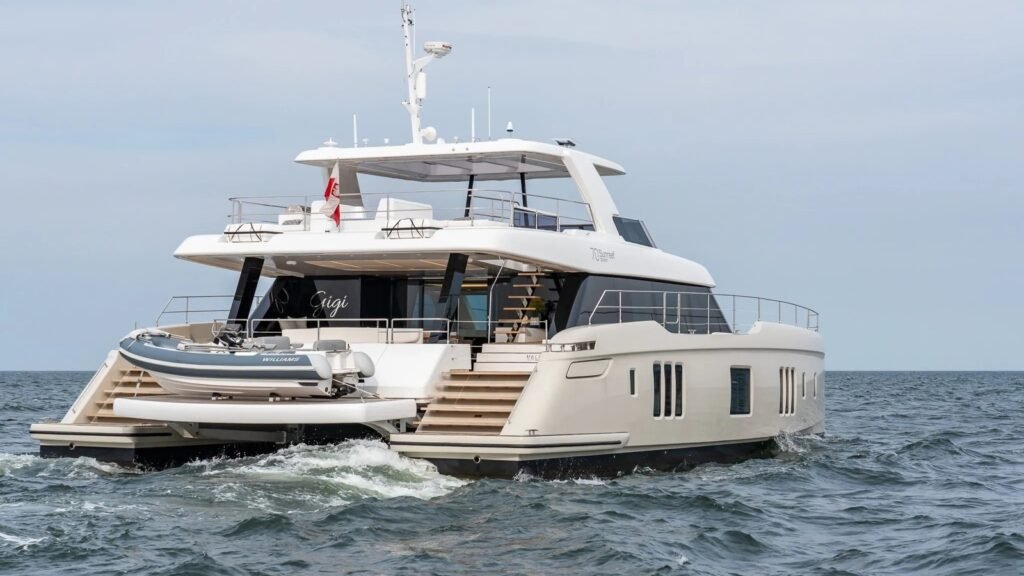
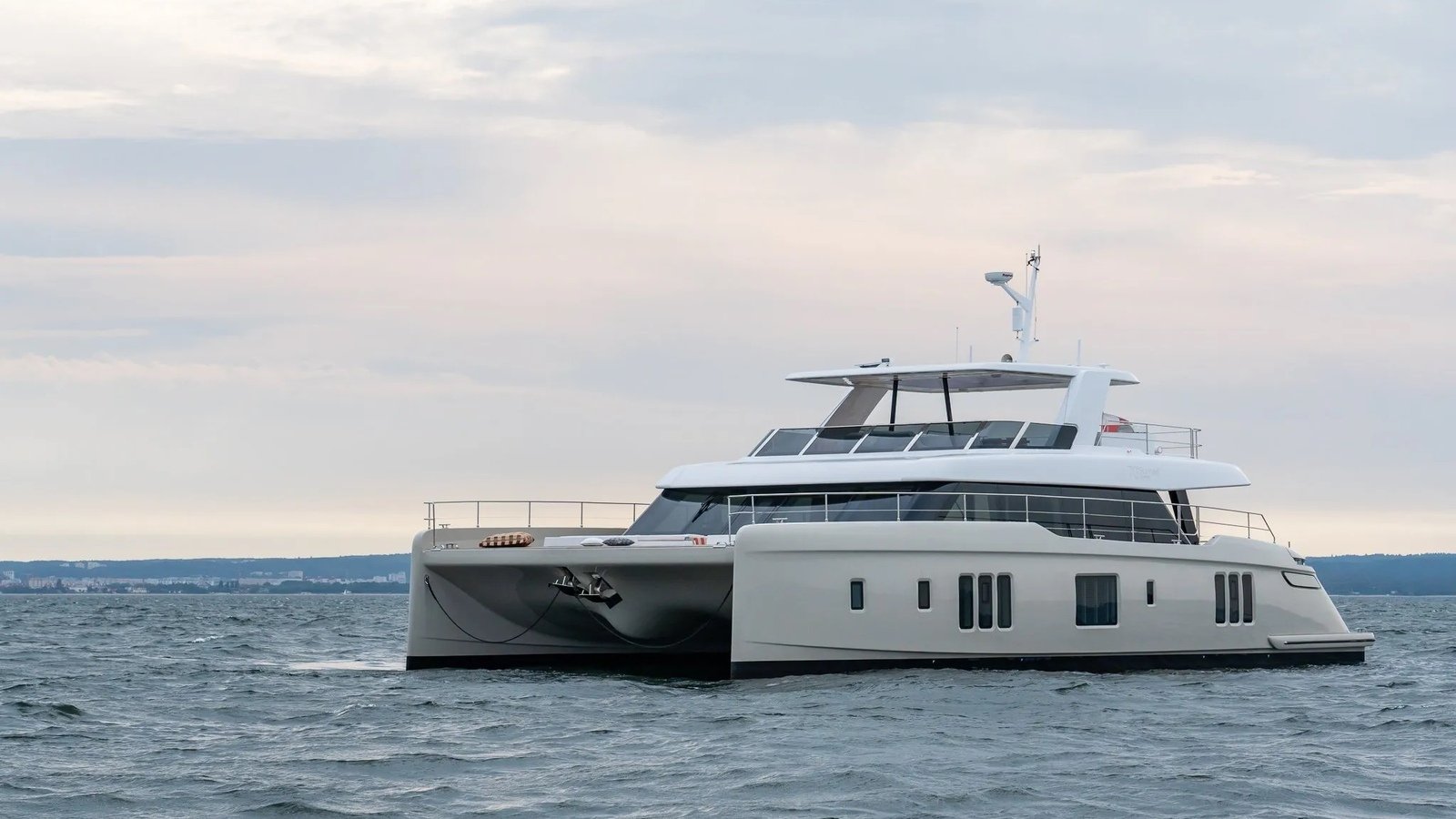
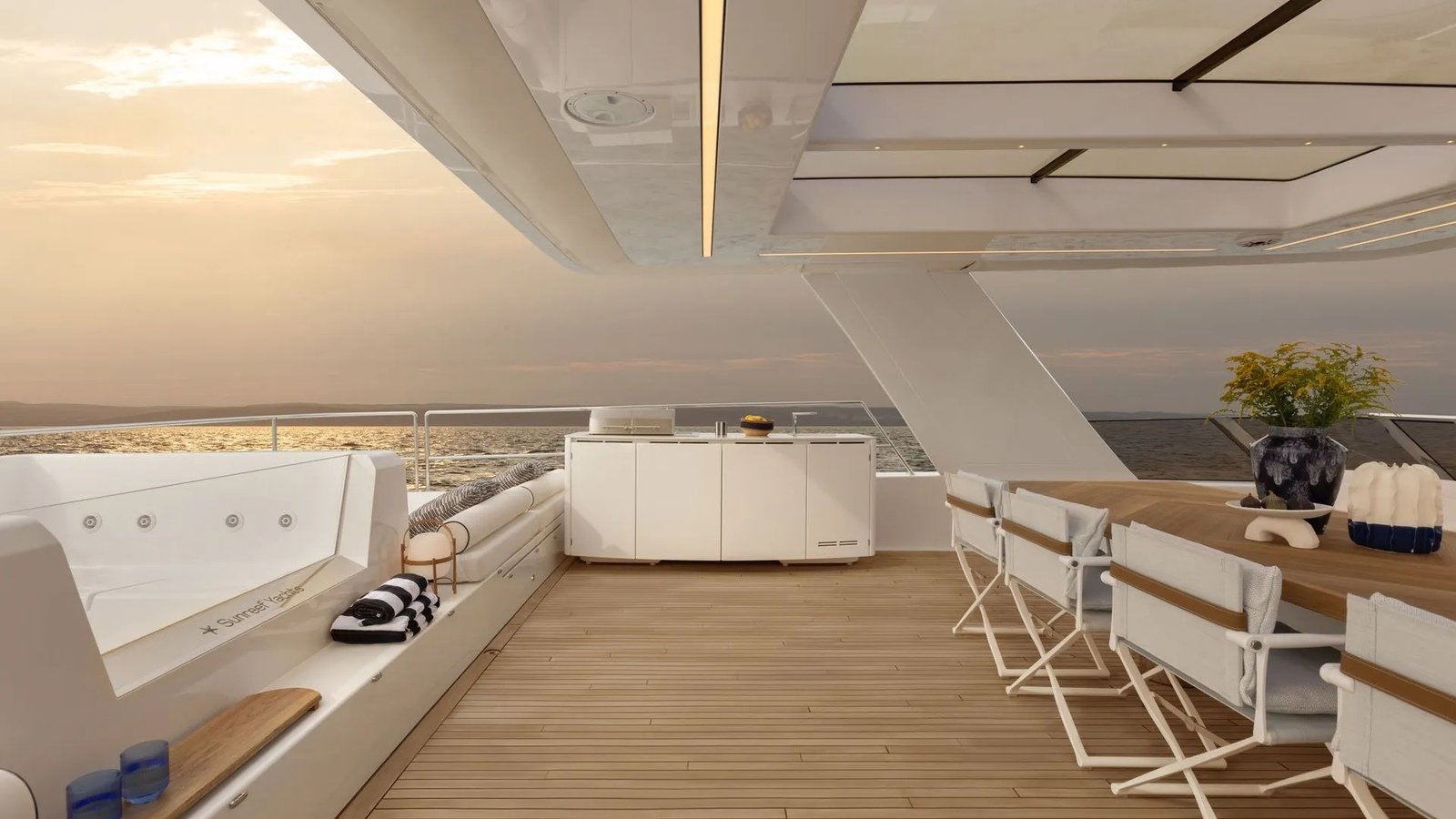
GIGI is a 2025 Sunreef 70 Power, a catamaran built around space rather than speed. Her 11.3 metre beam is the headline: it gives four guests decks the proportions of a small villa, with room to move easily between sea, shade and sky. For a party of eight this is a yacht that never feels crowded, and that single quality shapes the whole experience aboard.
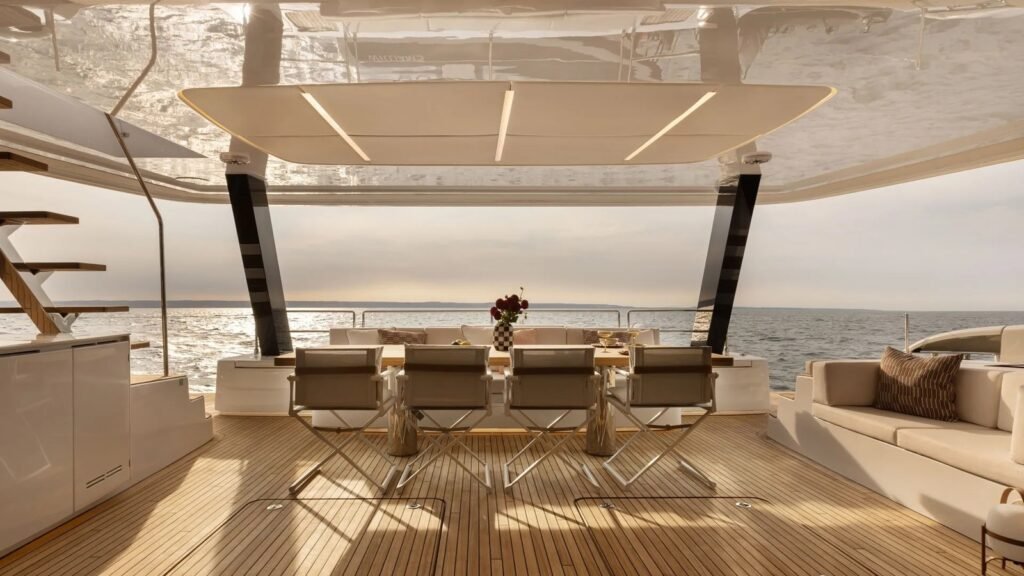
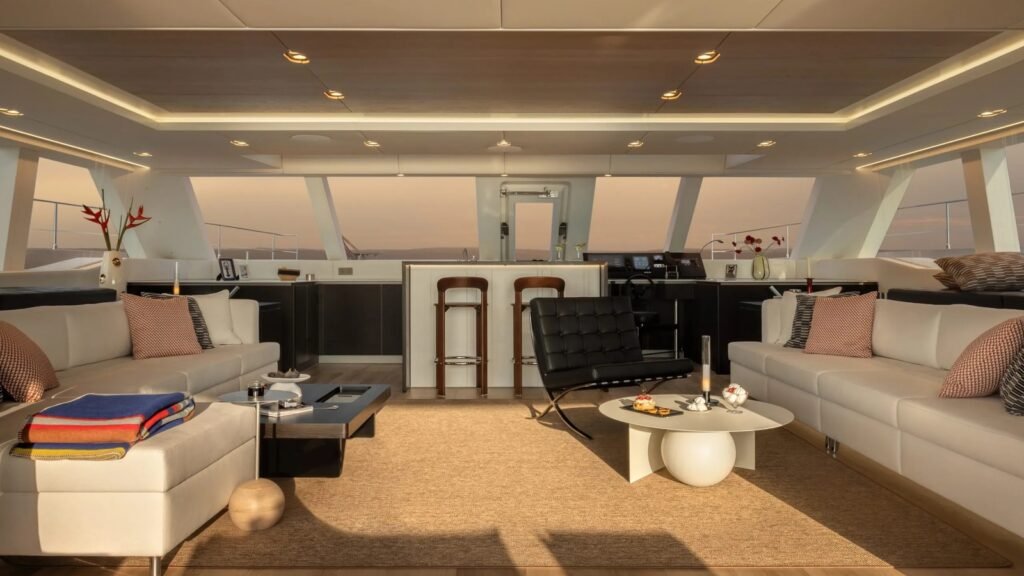
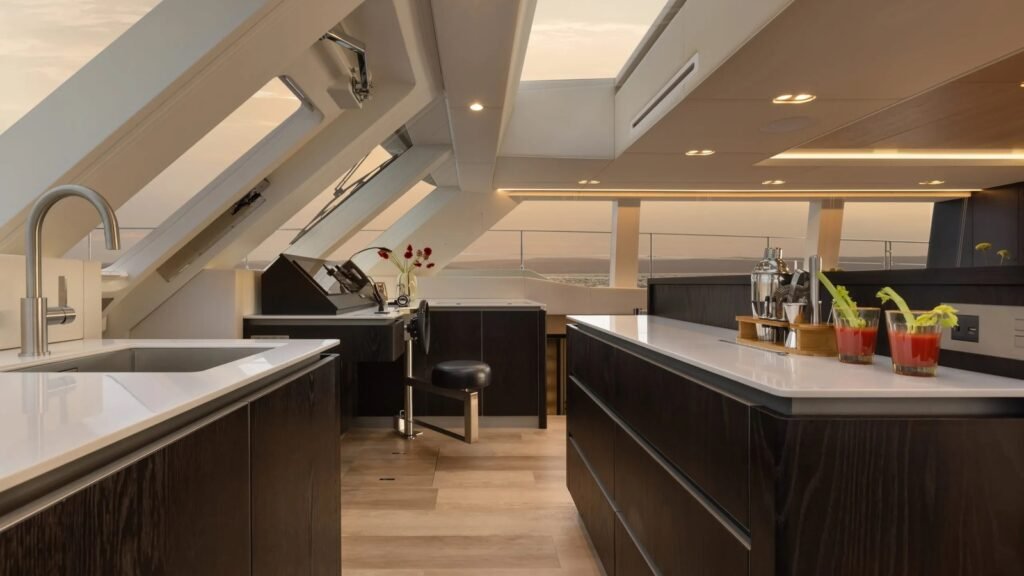
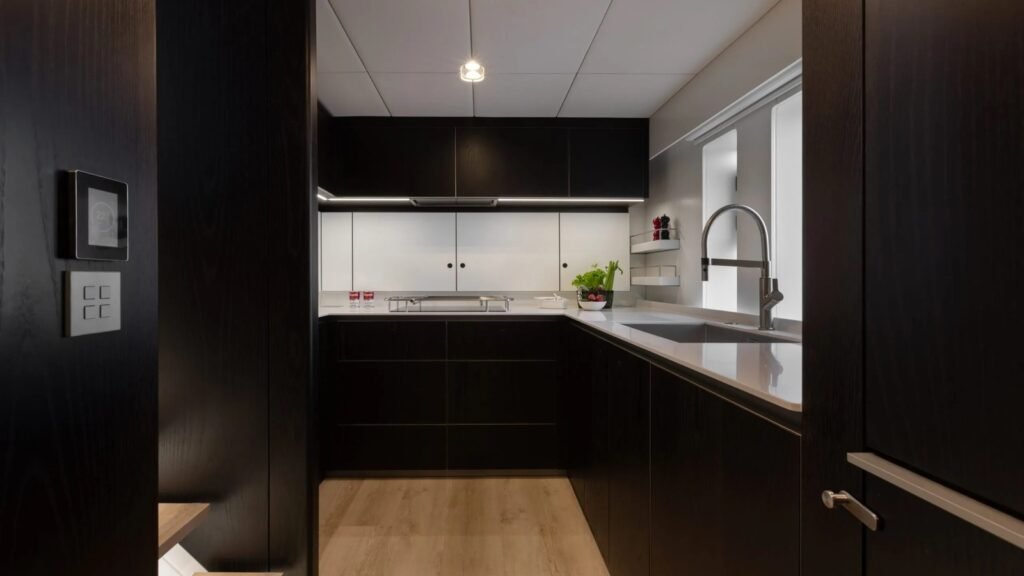
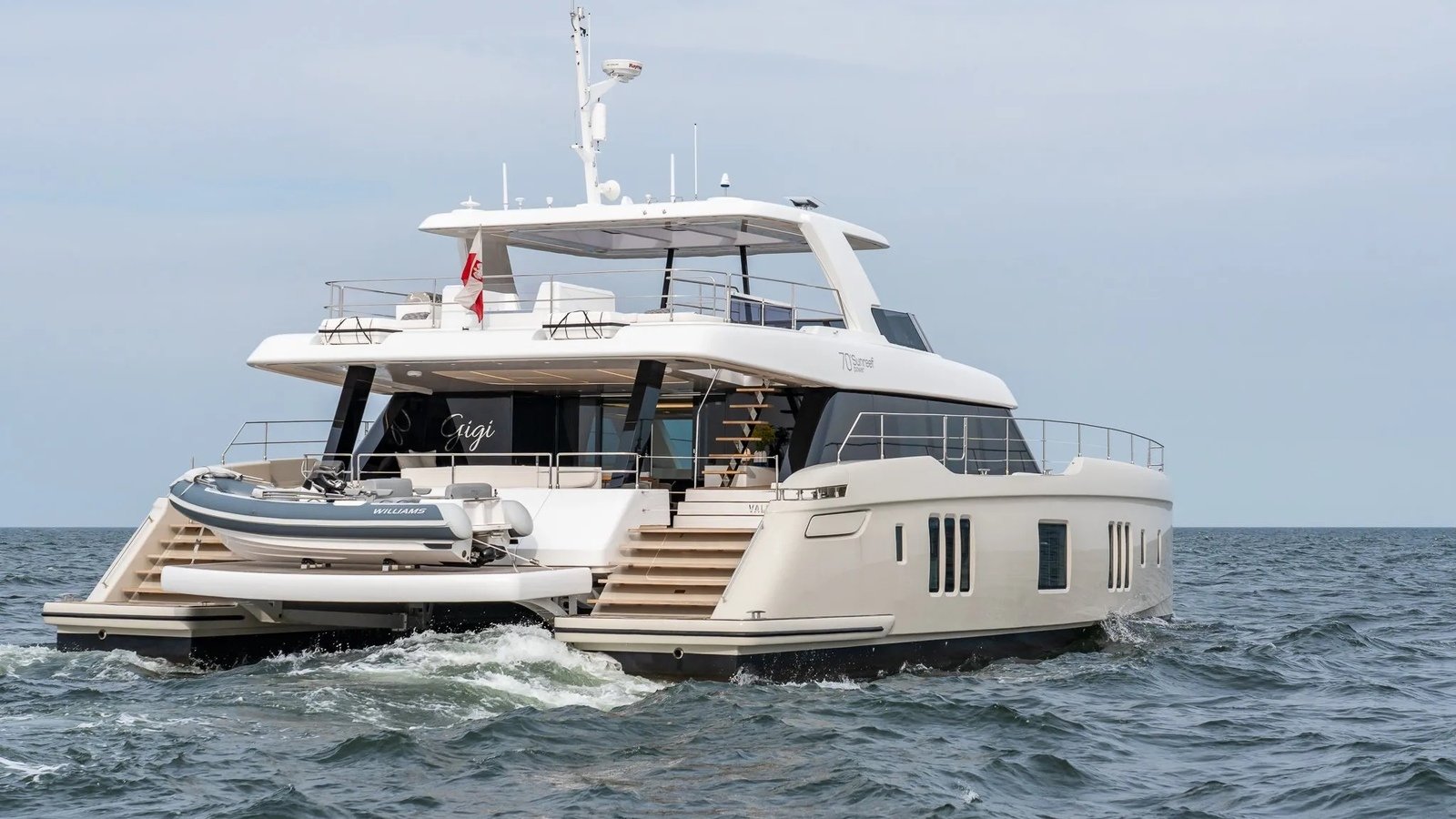
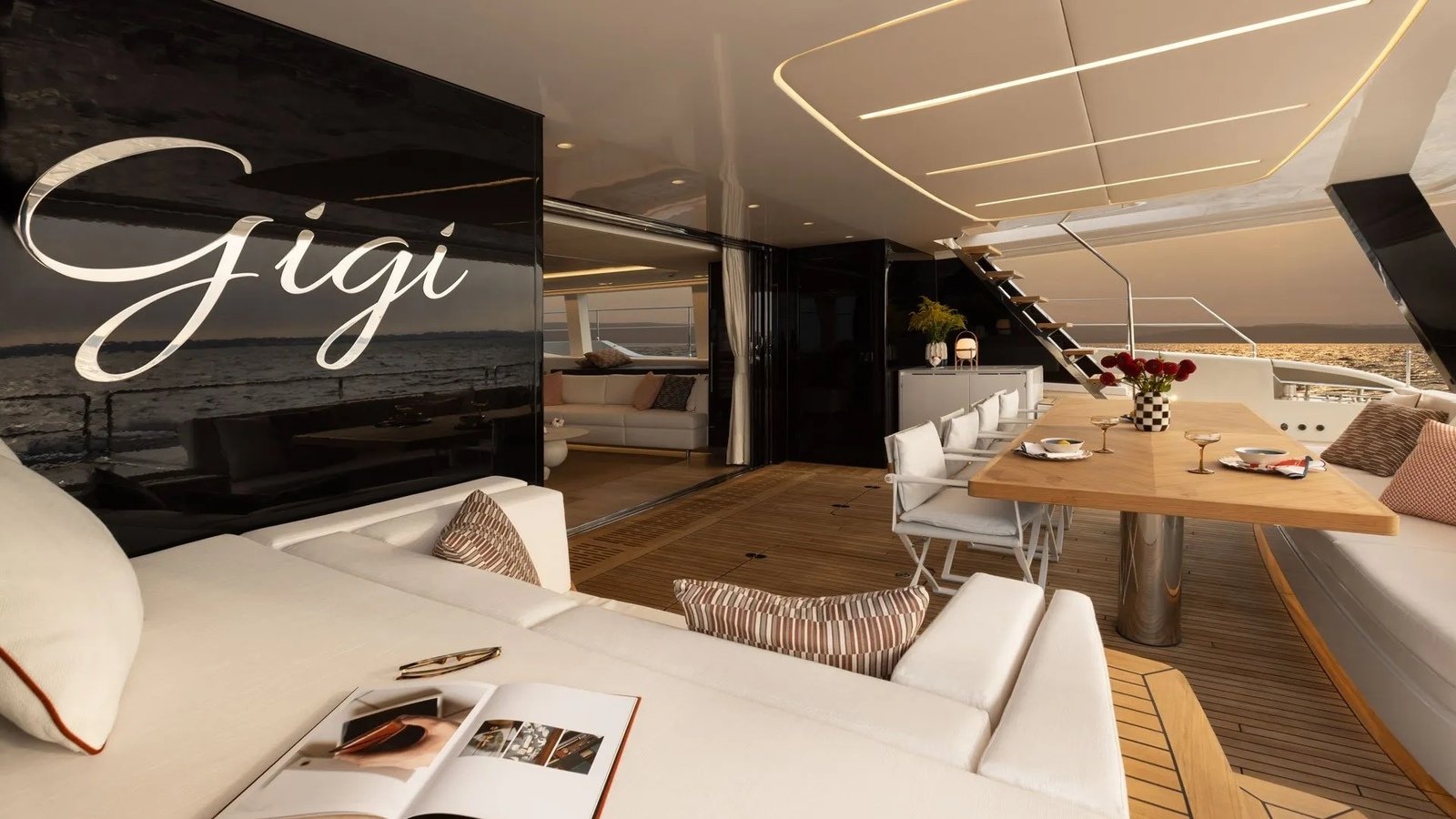
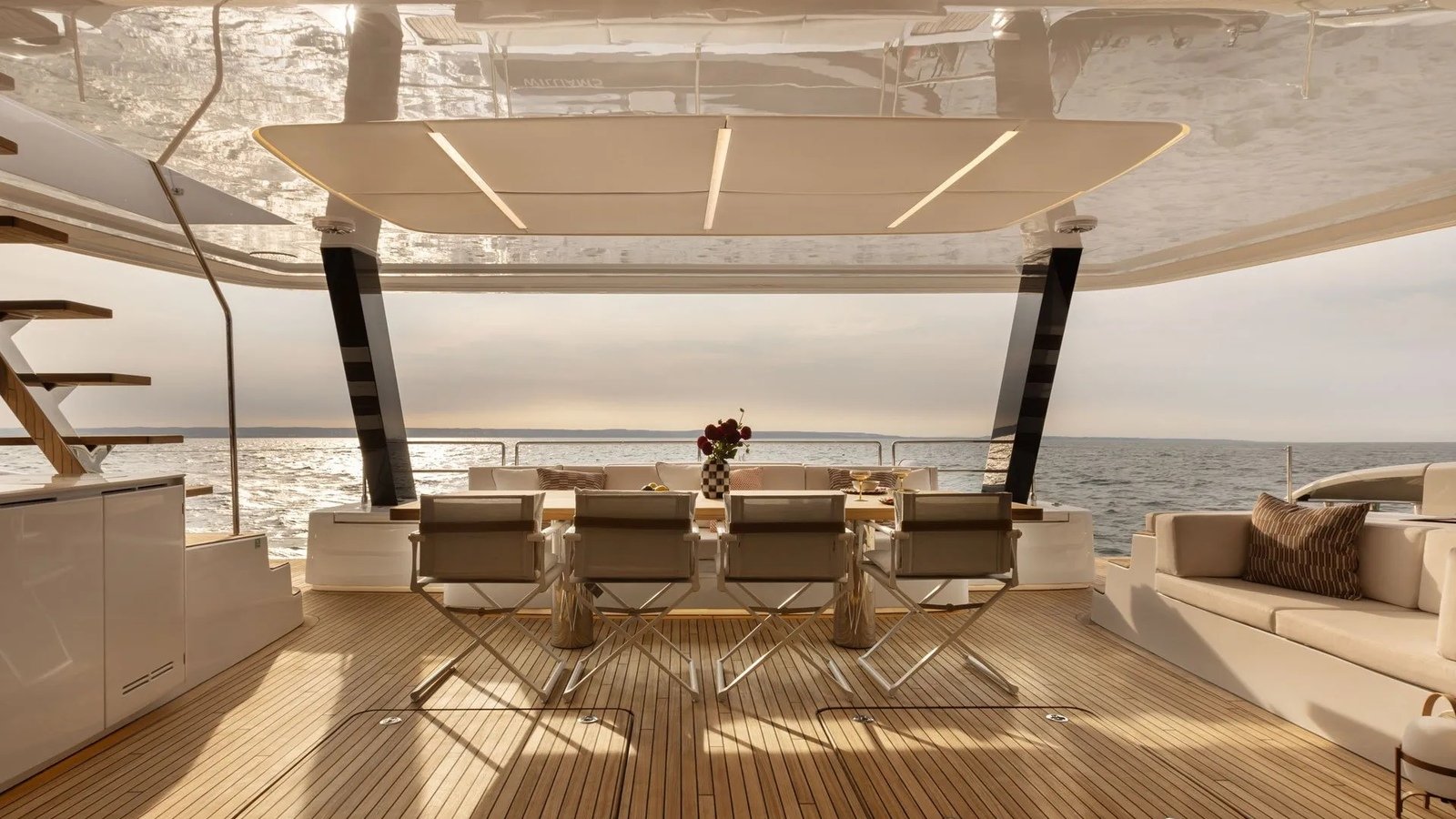
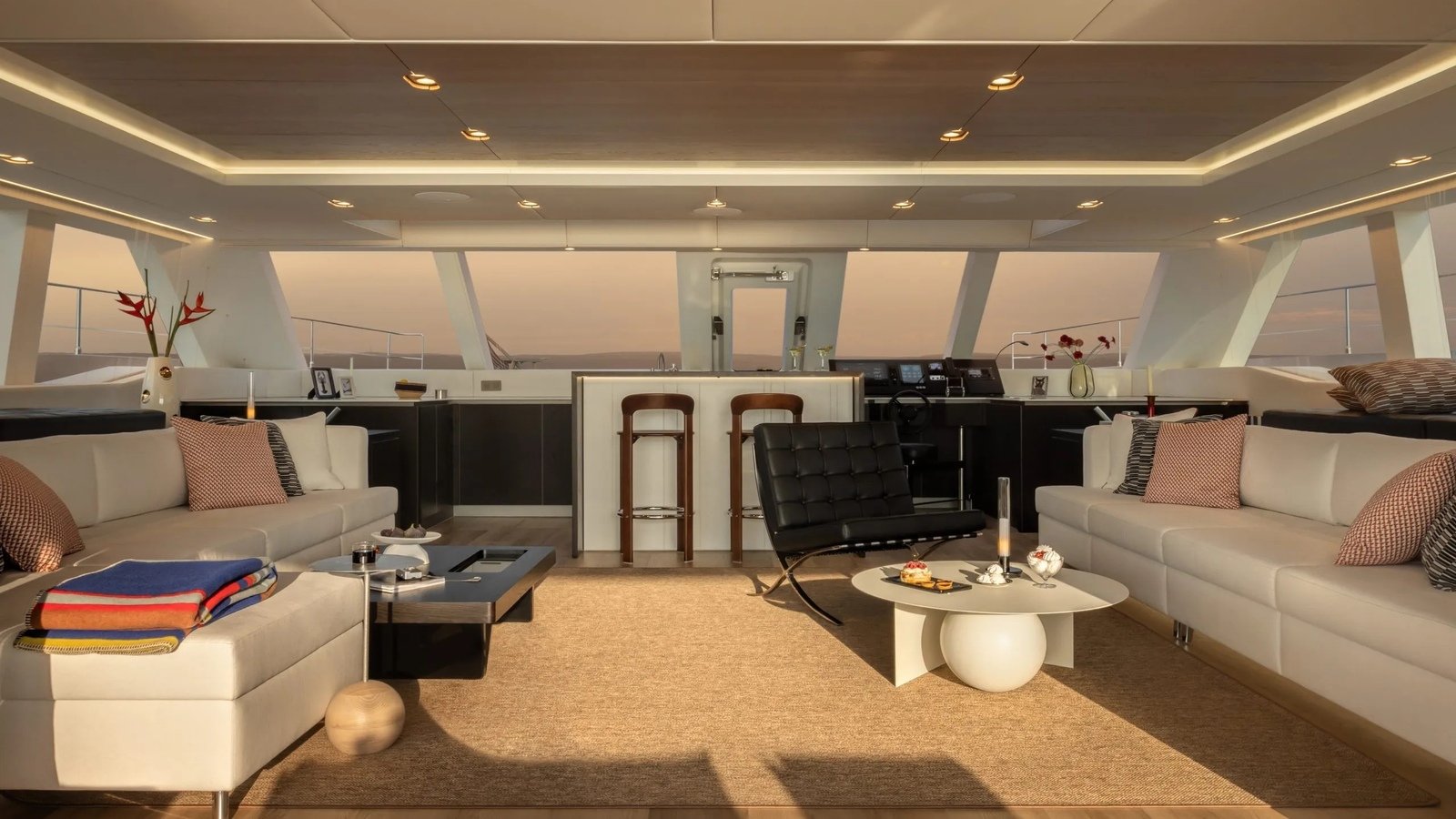
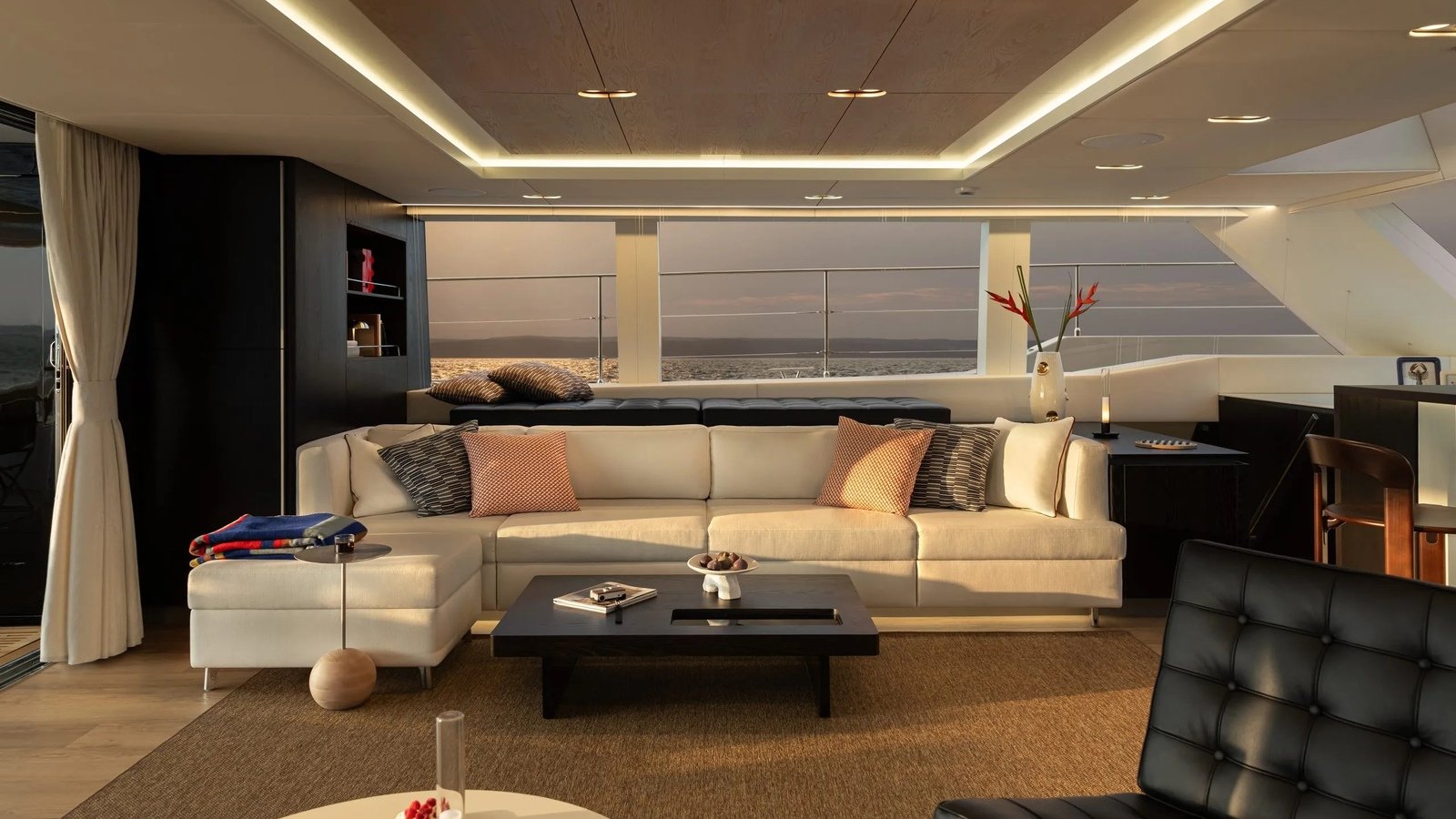
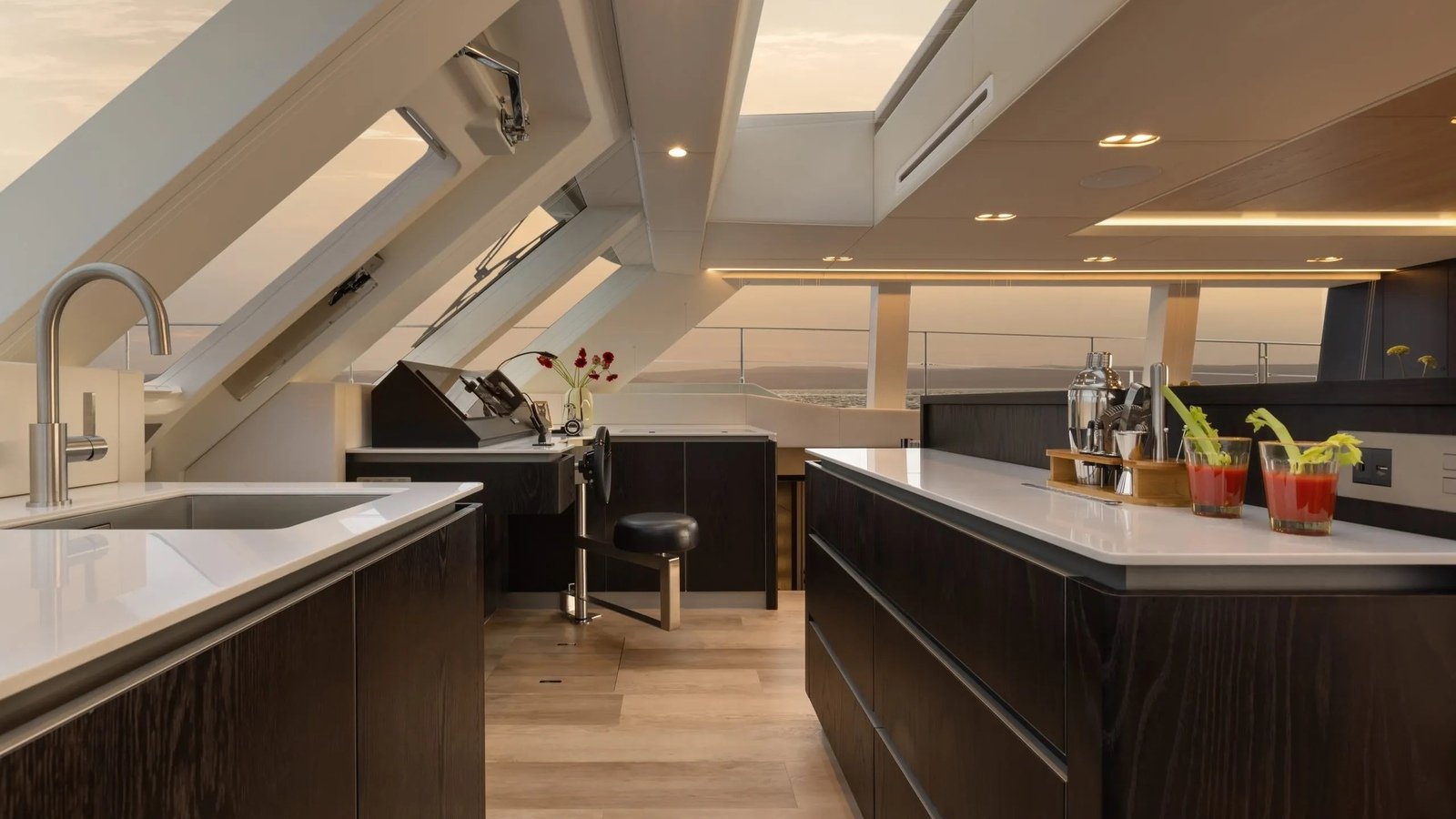
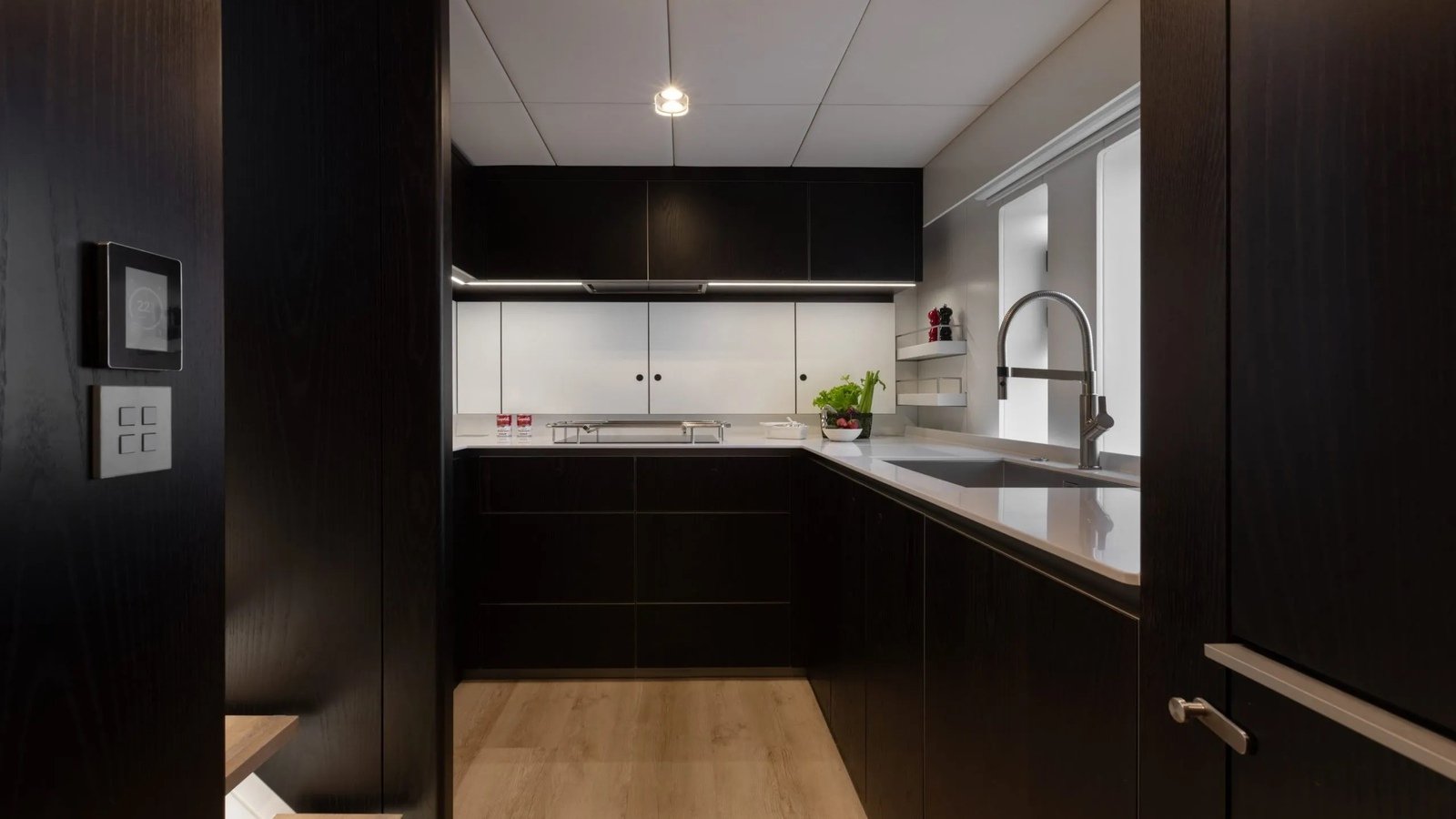
The main deck is the heart of her. A full beam salon opens straight onto the aft cockpit through wide glass, so the lounge, the bar and the open air dining merge into one social space when the doors slide back. The feel is calm and contemporary: pale woods, soft neutral upholstery and natural light on every side. A separate galley keeps the crew of four out of sight while they work, which matters on a yacht where guests live so close to the water.
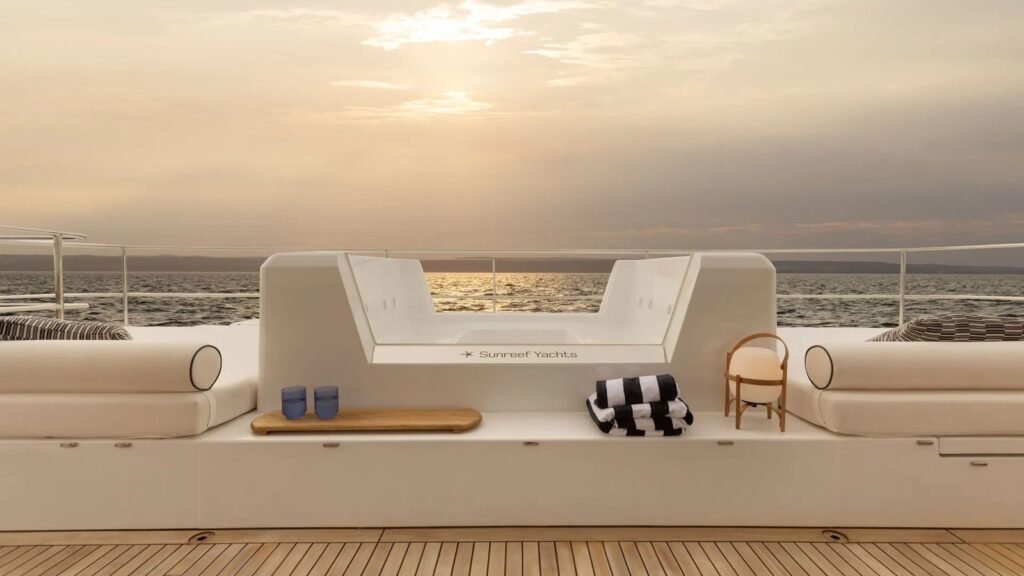
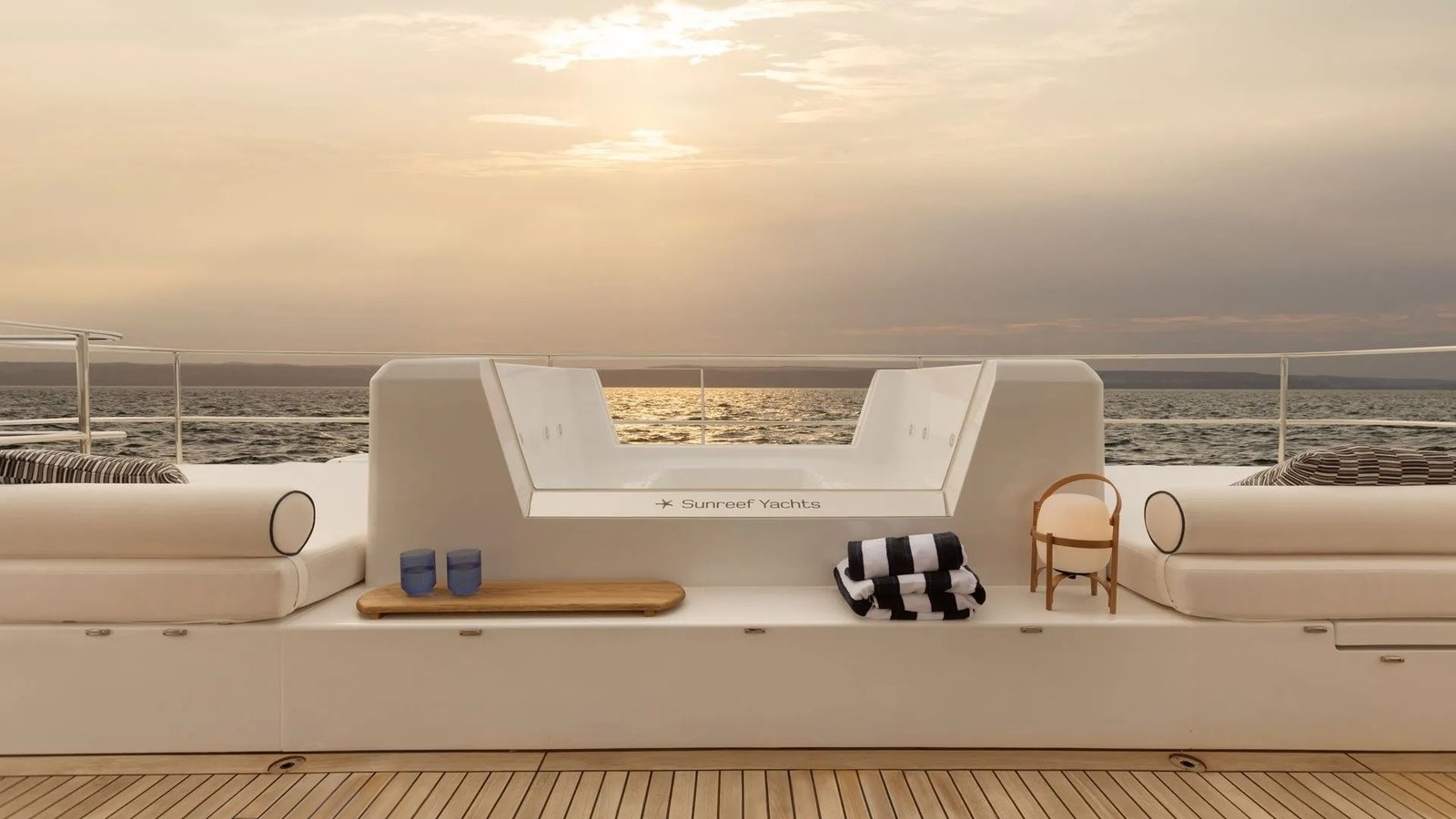
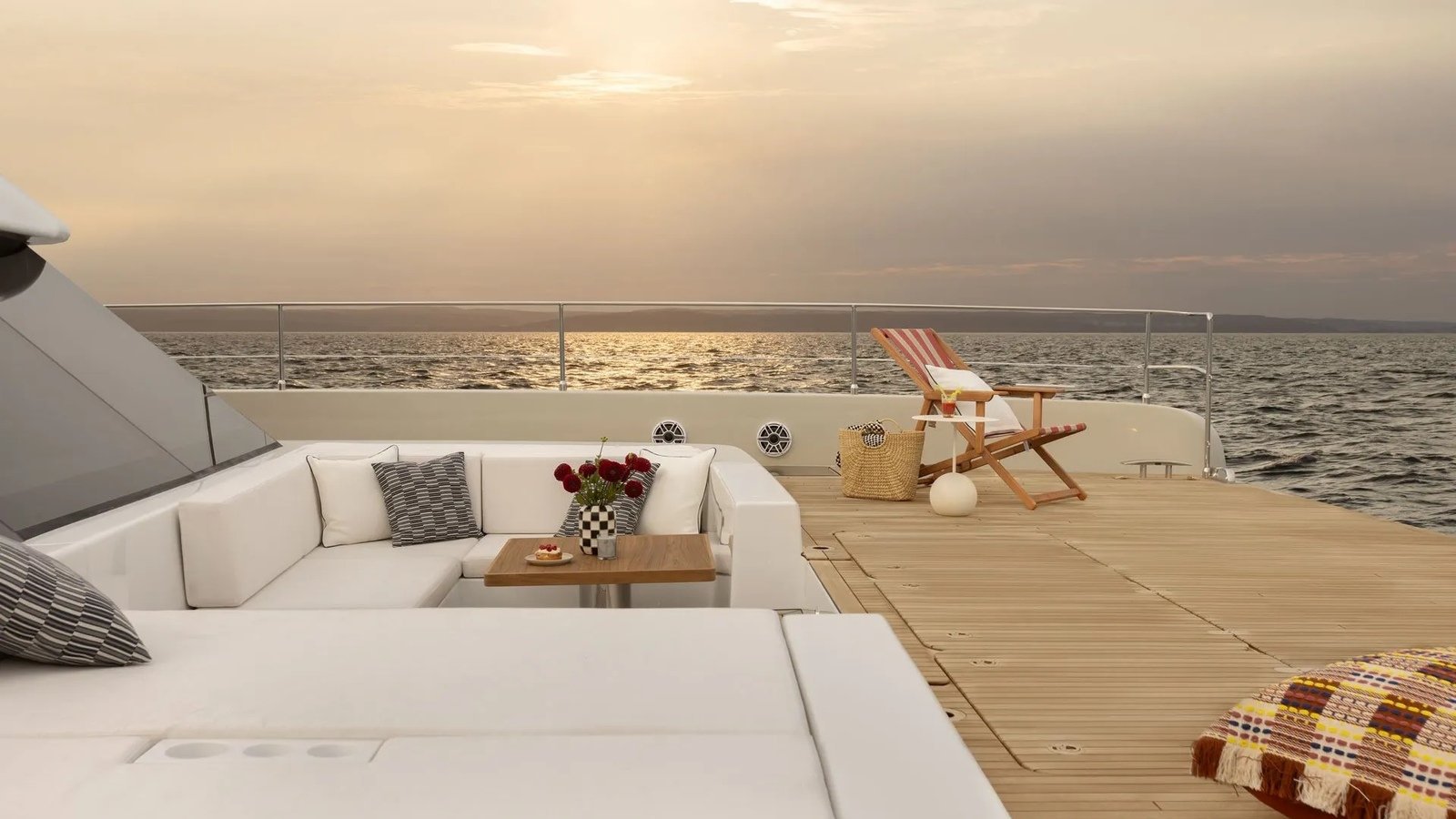
Up top, the sun deck is the yacht at her most relaxed. A jacuzzi sits forward of a long sunbathing run, with a shaded lounge behind it for the hours when the Mediterranean sun is high. The bow terrace is the quieter alternative, a private forward seat for morning coffee or a sundowner away from the main flow of the day.
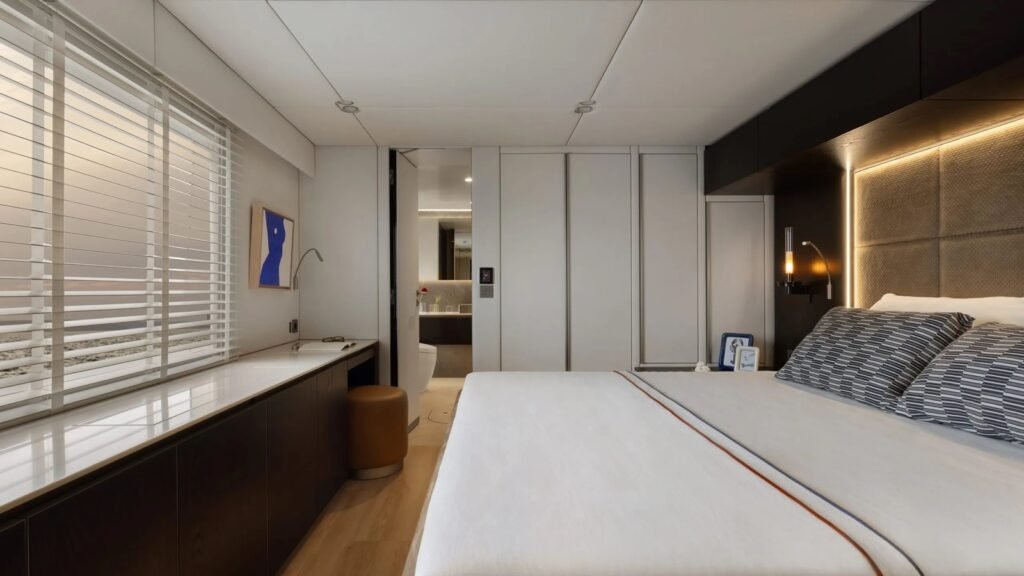
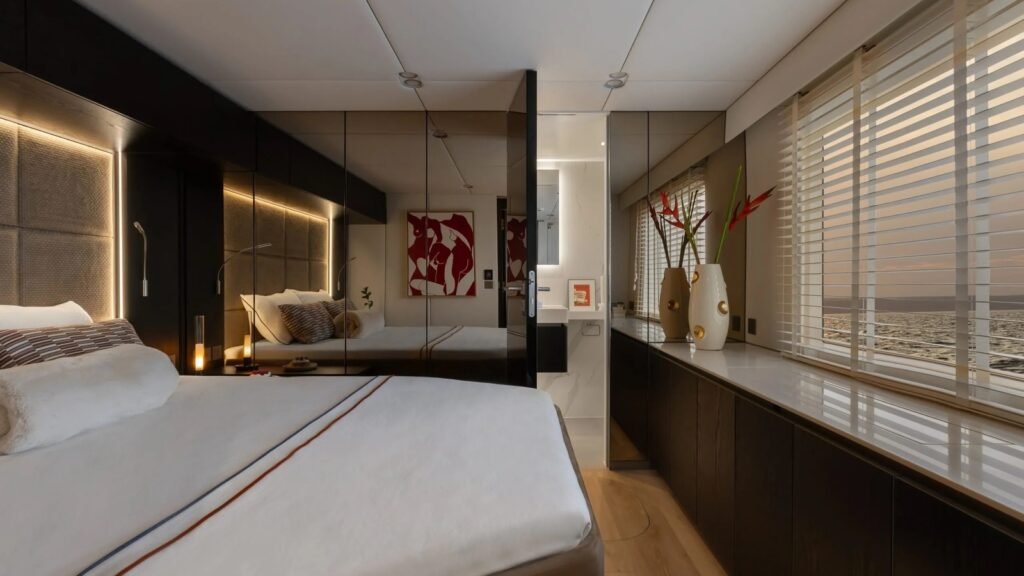
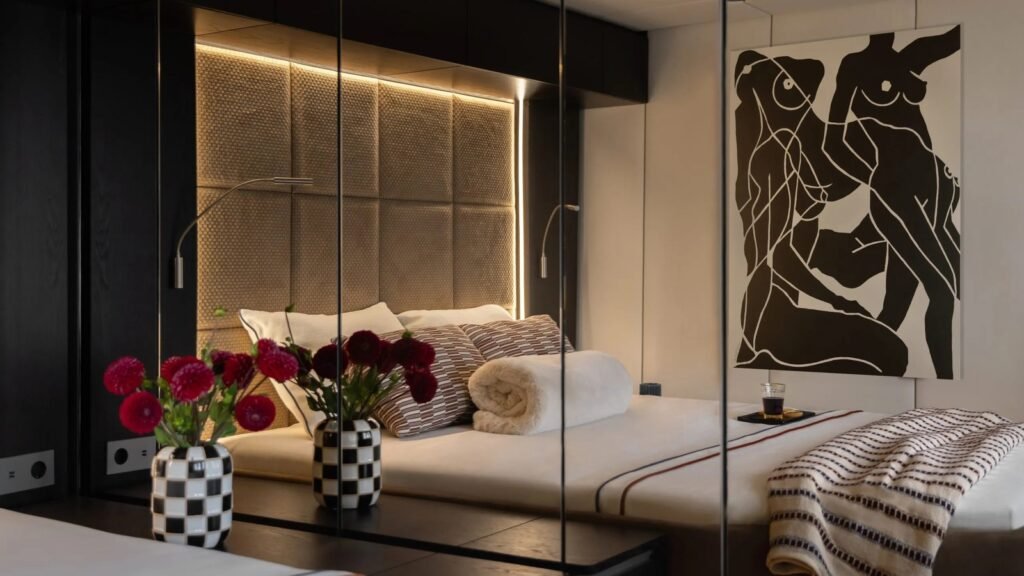
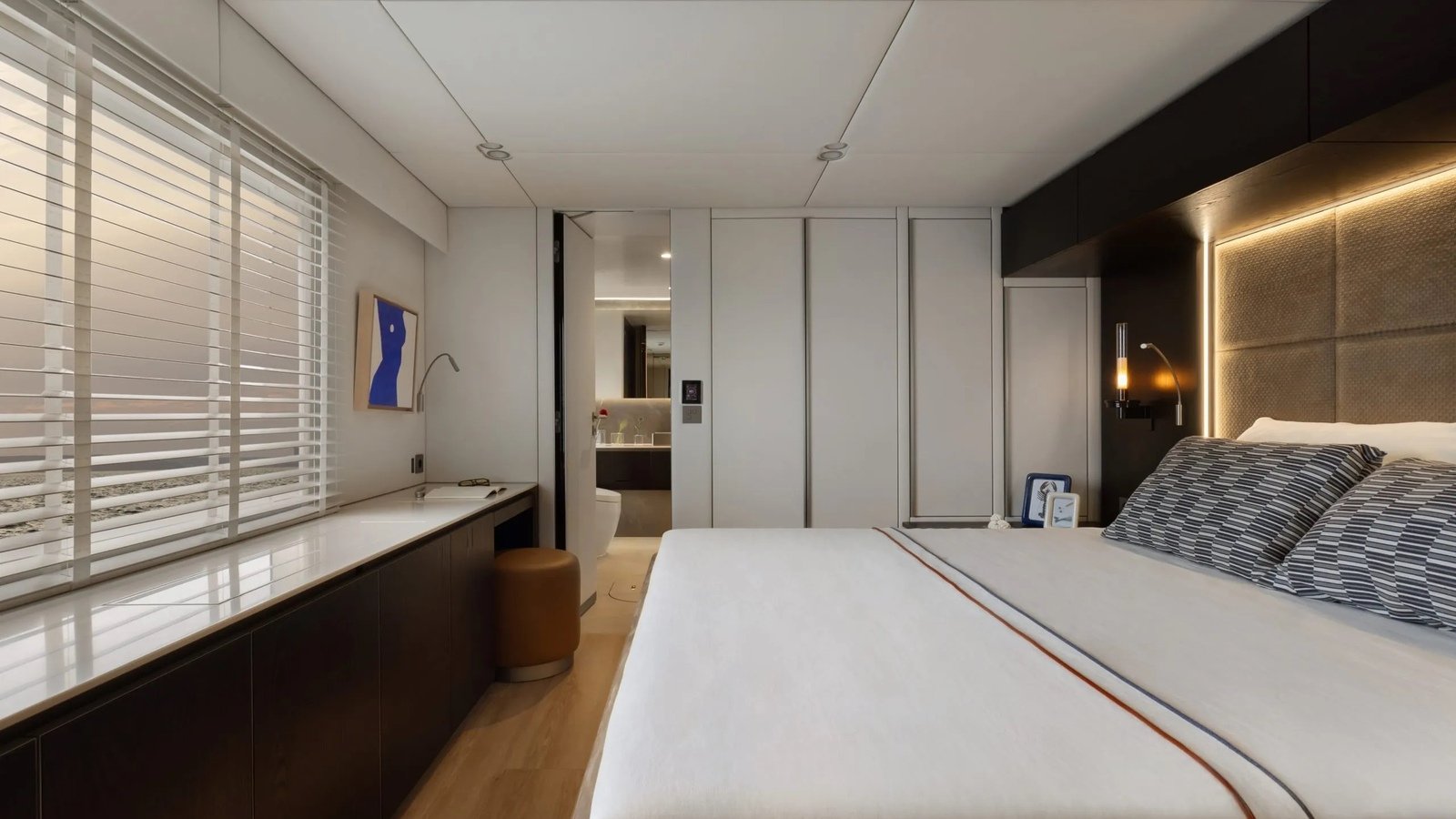
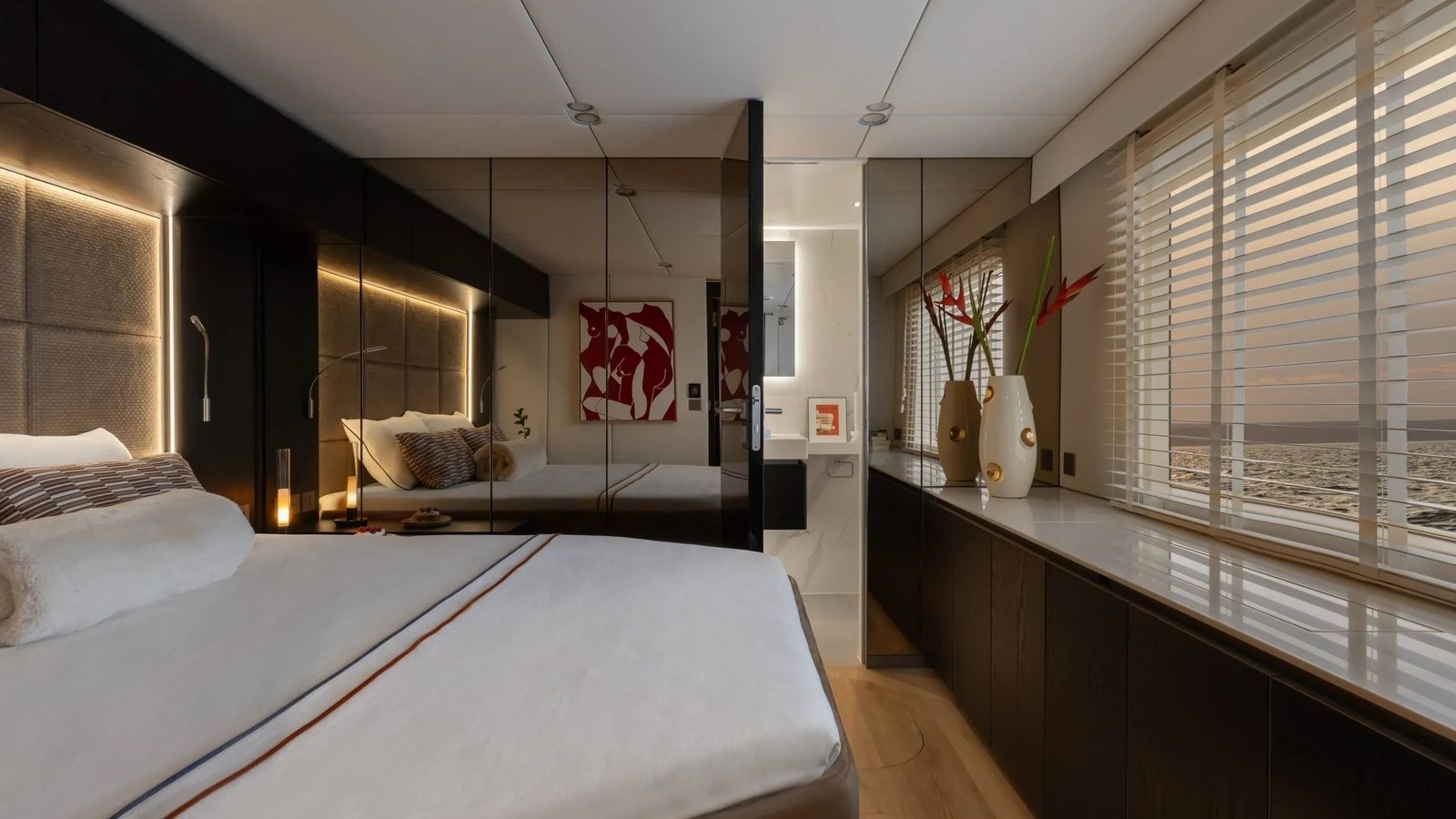
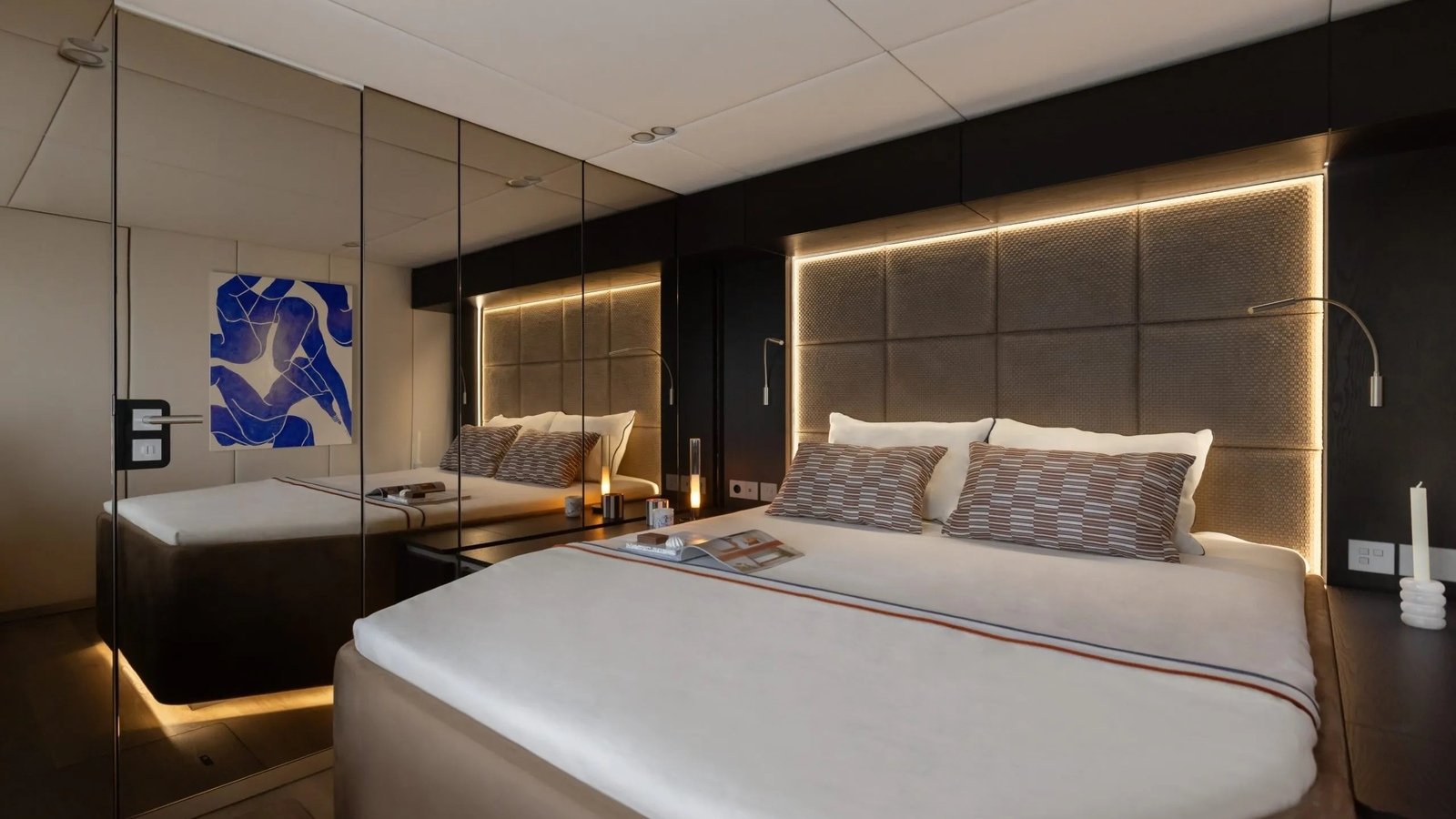
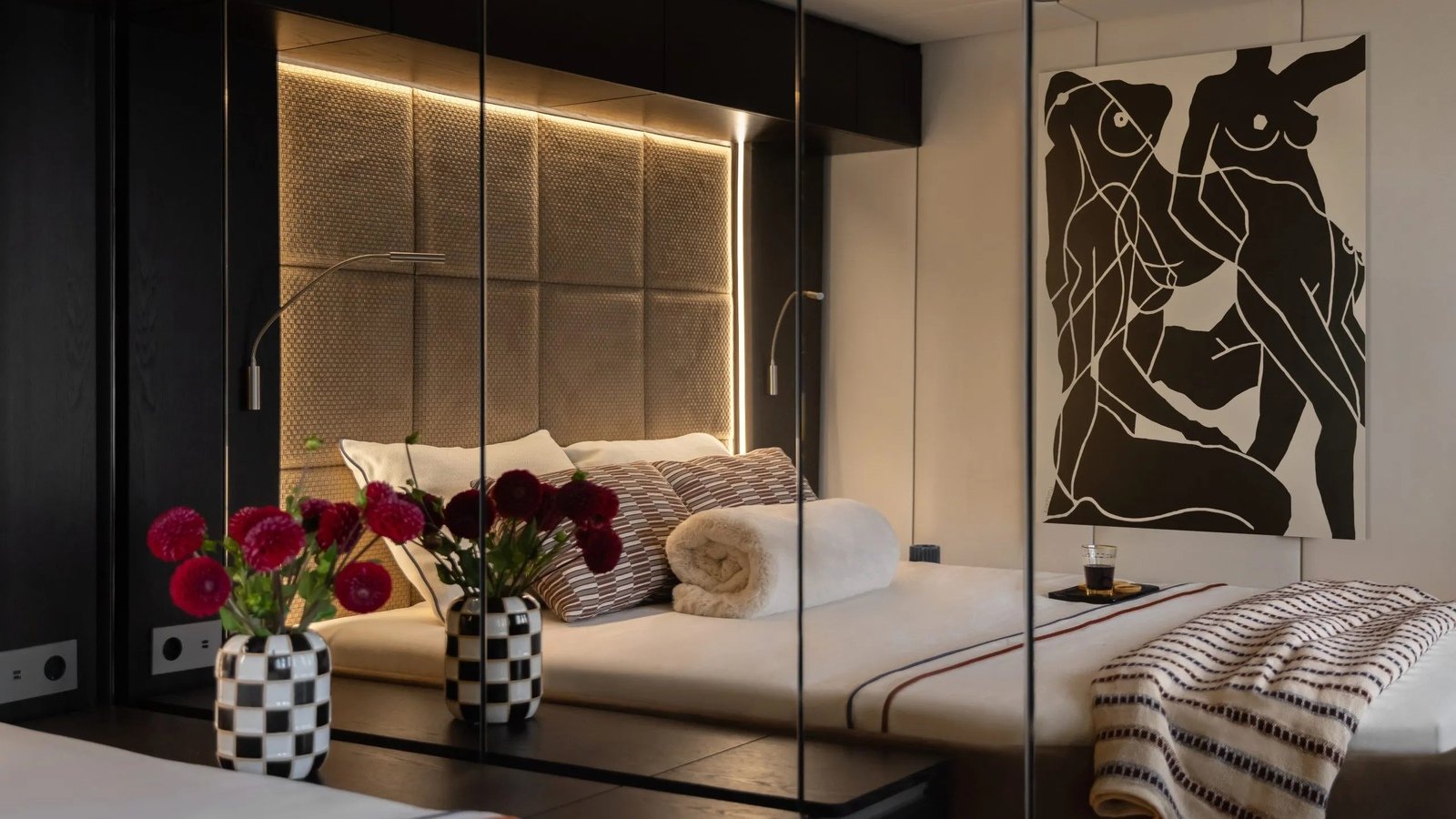
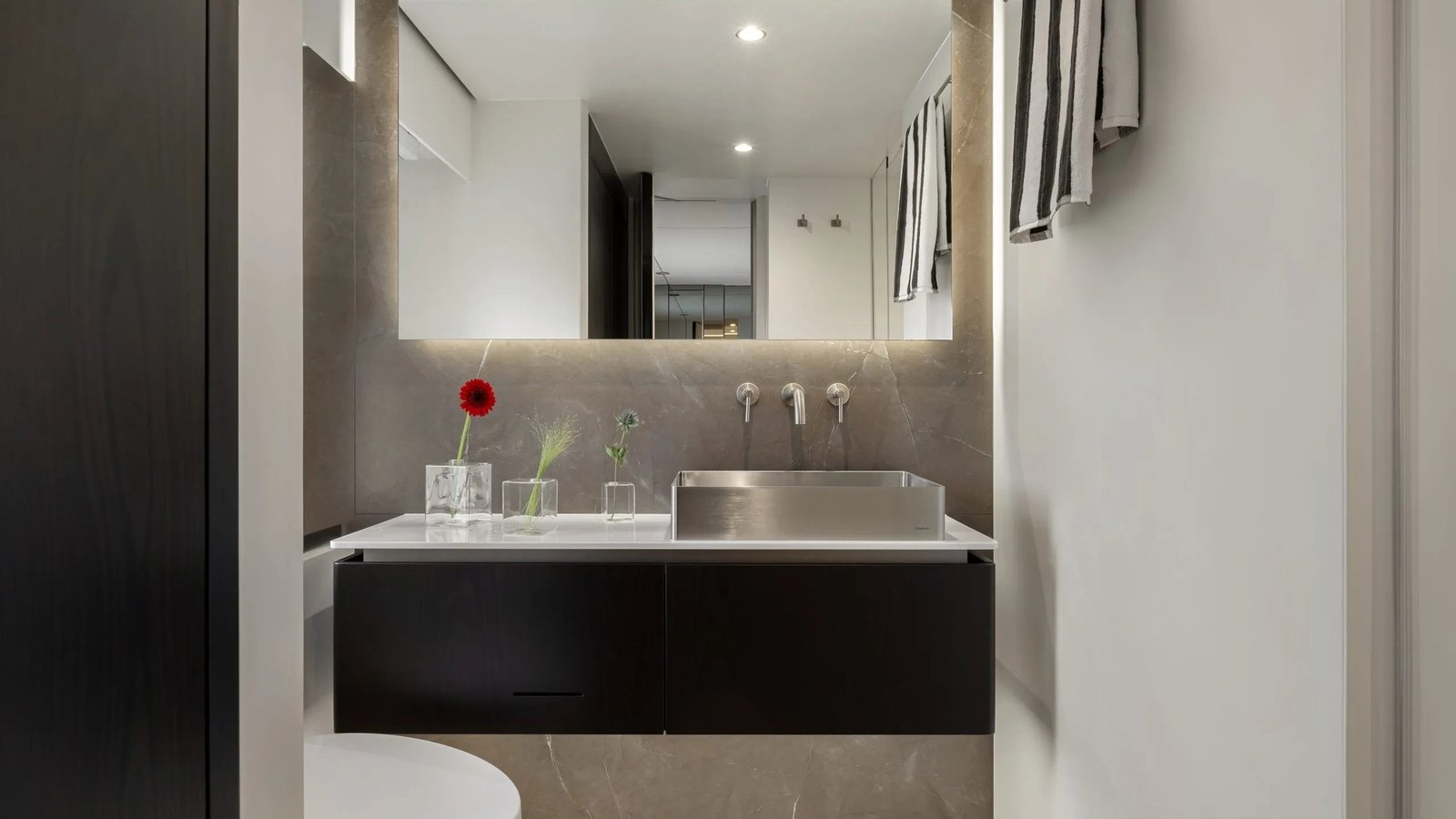
Accommodation is arranged as a true owner layout. The master suite runs the full beam with its own seating and sweeping sea views, while three further guest cabins are finished to the same standard, so there is no sense of a hierarchy among the party. Each has its own character and its own bathroom, and the quality of light below deck is a pleasant surprise on a catamaran of this size.
Performance is quiet and efficient. Twin MAN engines give a relaxed cruise of around 13 knots and a maximum near 17, enough to move between anchorages without fuss and to reach further afield on a longer charter. The low fuel burn of the hull form means more time on the water and fewer stops.
GIGI suits a family or a group of friends who want the ease of catamaran living with the finish of a modern superyacht. She is at her best in the western Mediterranean, slipping between coves for lunch, then settling somewhere sheltered for the night with the jacuzzi running and dinner laid out under the stars. Her crew of four cover the deck, the galley and the water toys, leaving guests to do very little beyond choosing the next bay.
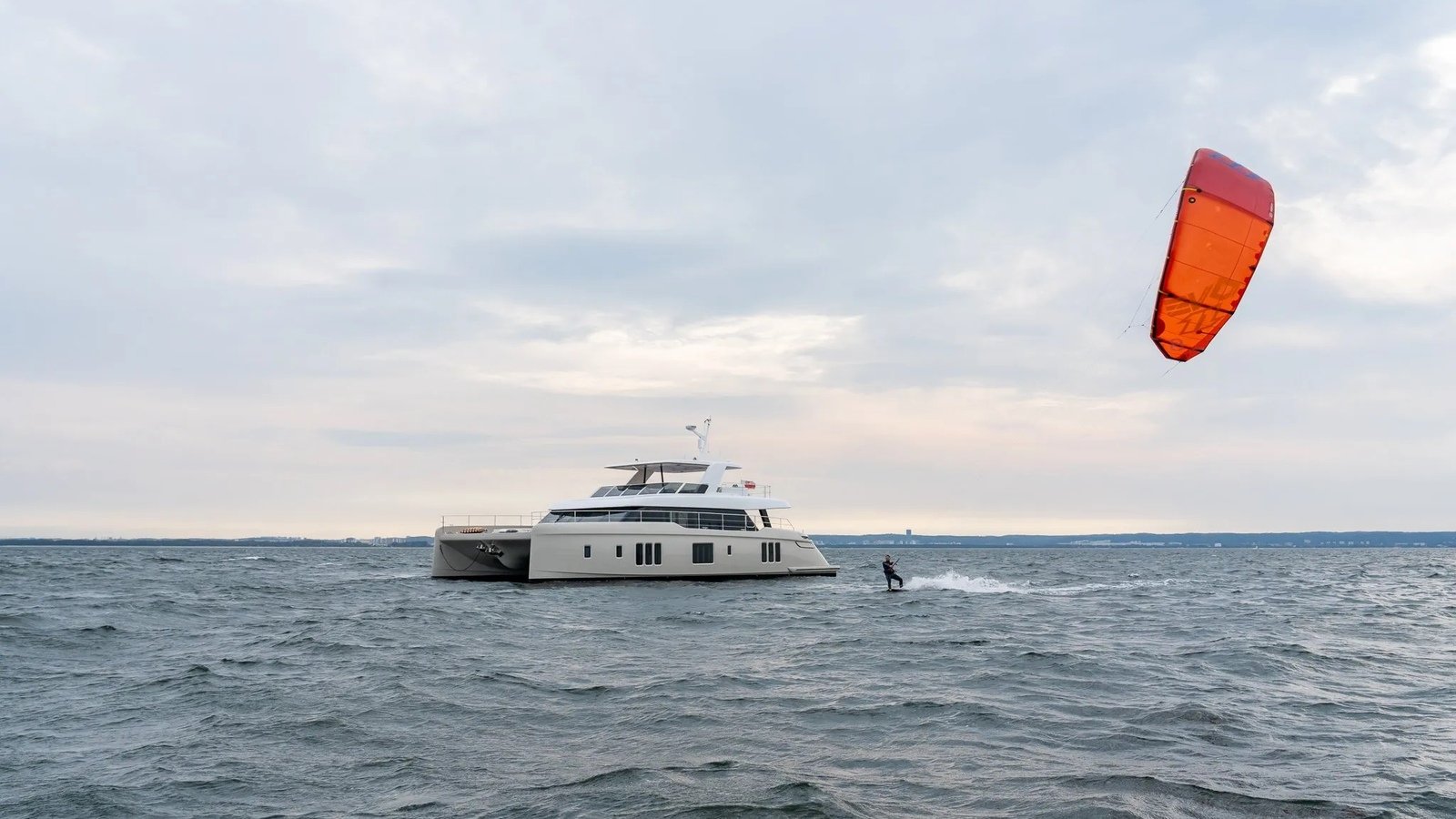
At water level she is just as considered. The twin hulls make getting in and out of the sea effortless, whether that means a swim before breakfast or an afternoon of paddleboards and snorkelling gear off the stern. The low freeboard and wide bathing area turn every anchorage into an open invitation, and for children in particular the easy access to the water is a quiet but real advantage that shapes how the days unfold.
She is a precise, current take on what a charter catamaran can be: generous where it counts, restrained in its styling, and built for people who measure a holiday in long easy days rather than long passages. For a western Mediterranean summer spent close to the water, she reads as a thoroughly modern answer to an old question, how to give a small group real space without losing the intimacy that makes a charter feel like their own.