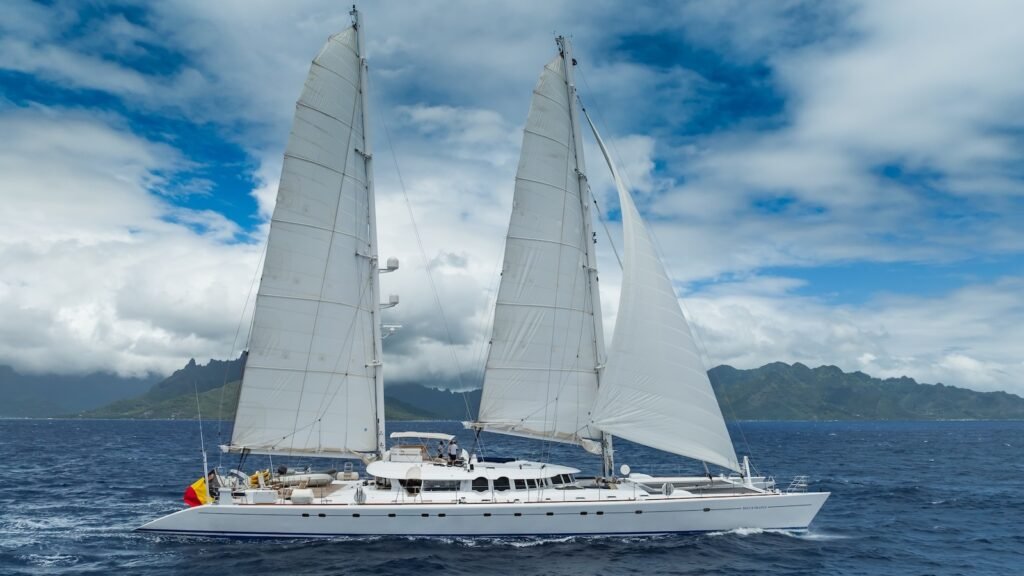
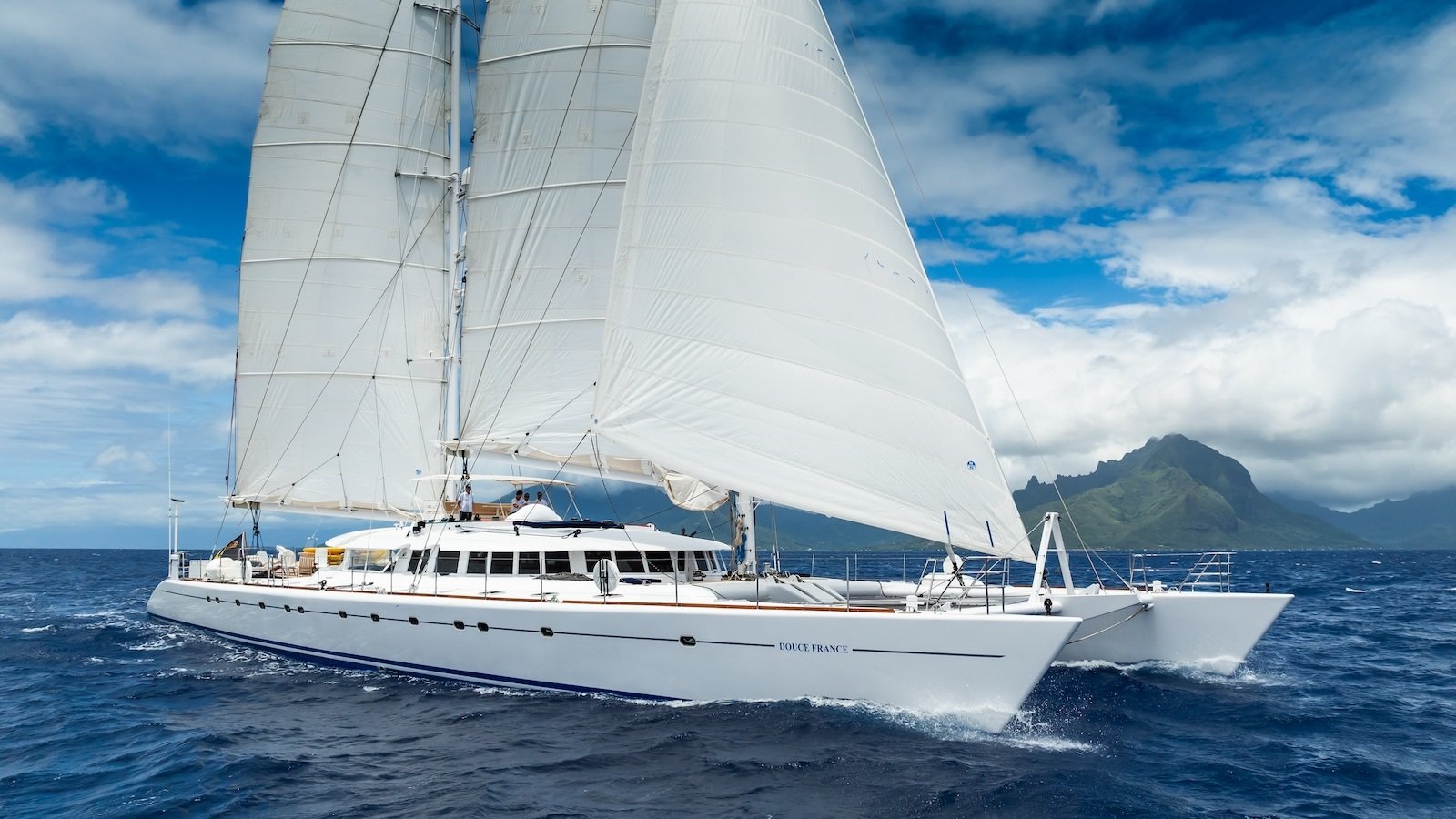
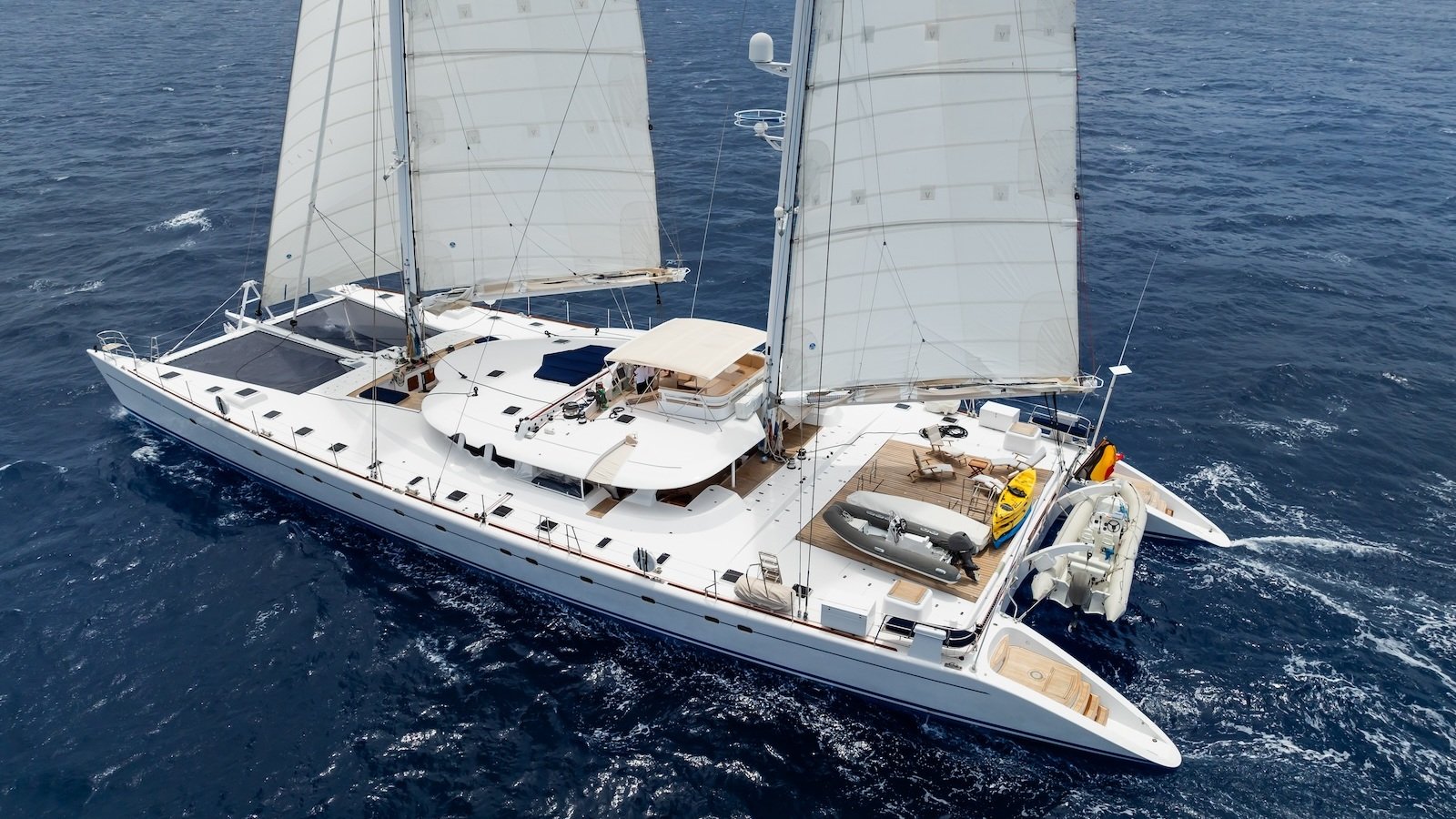
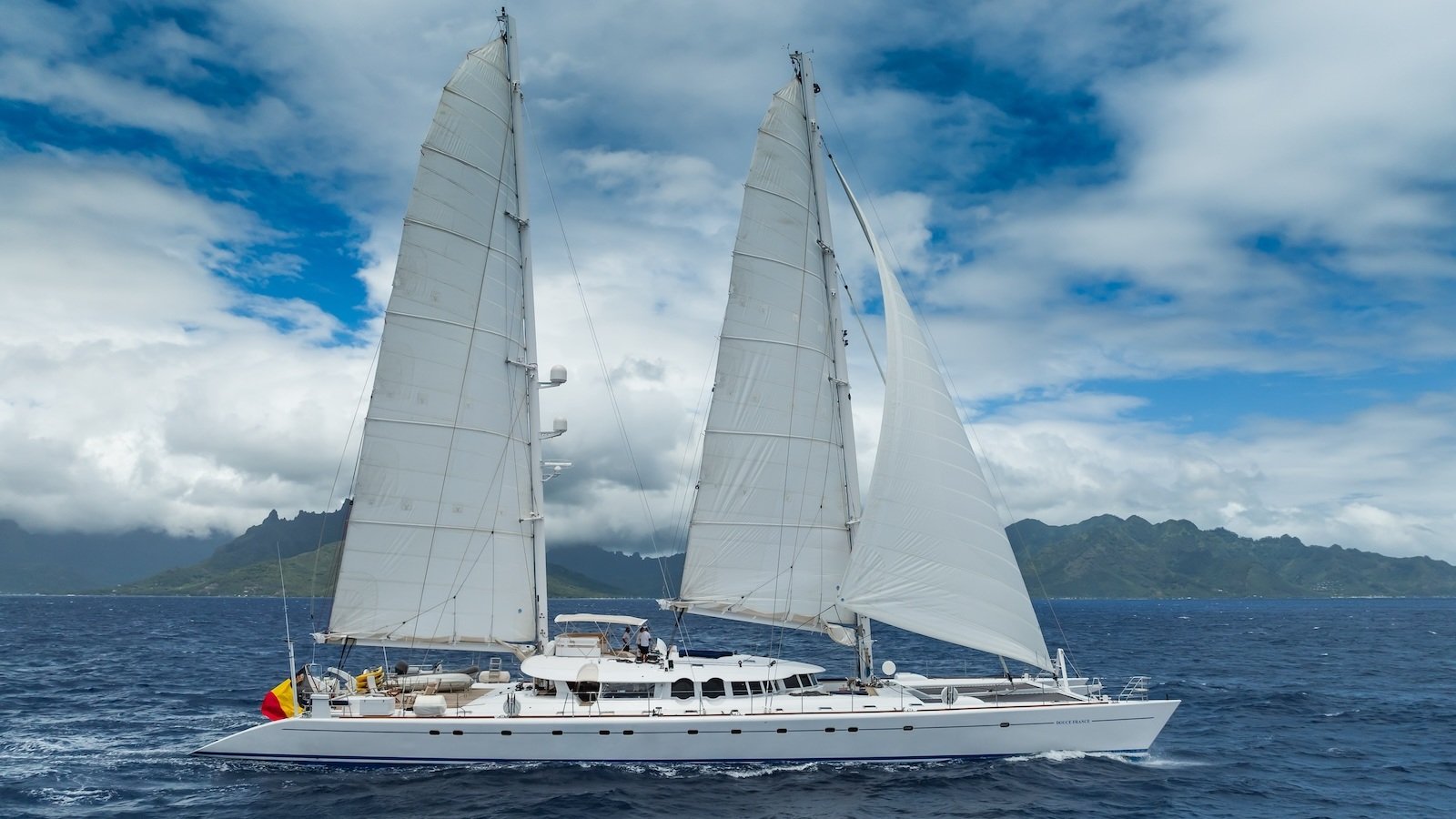
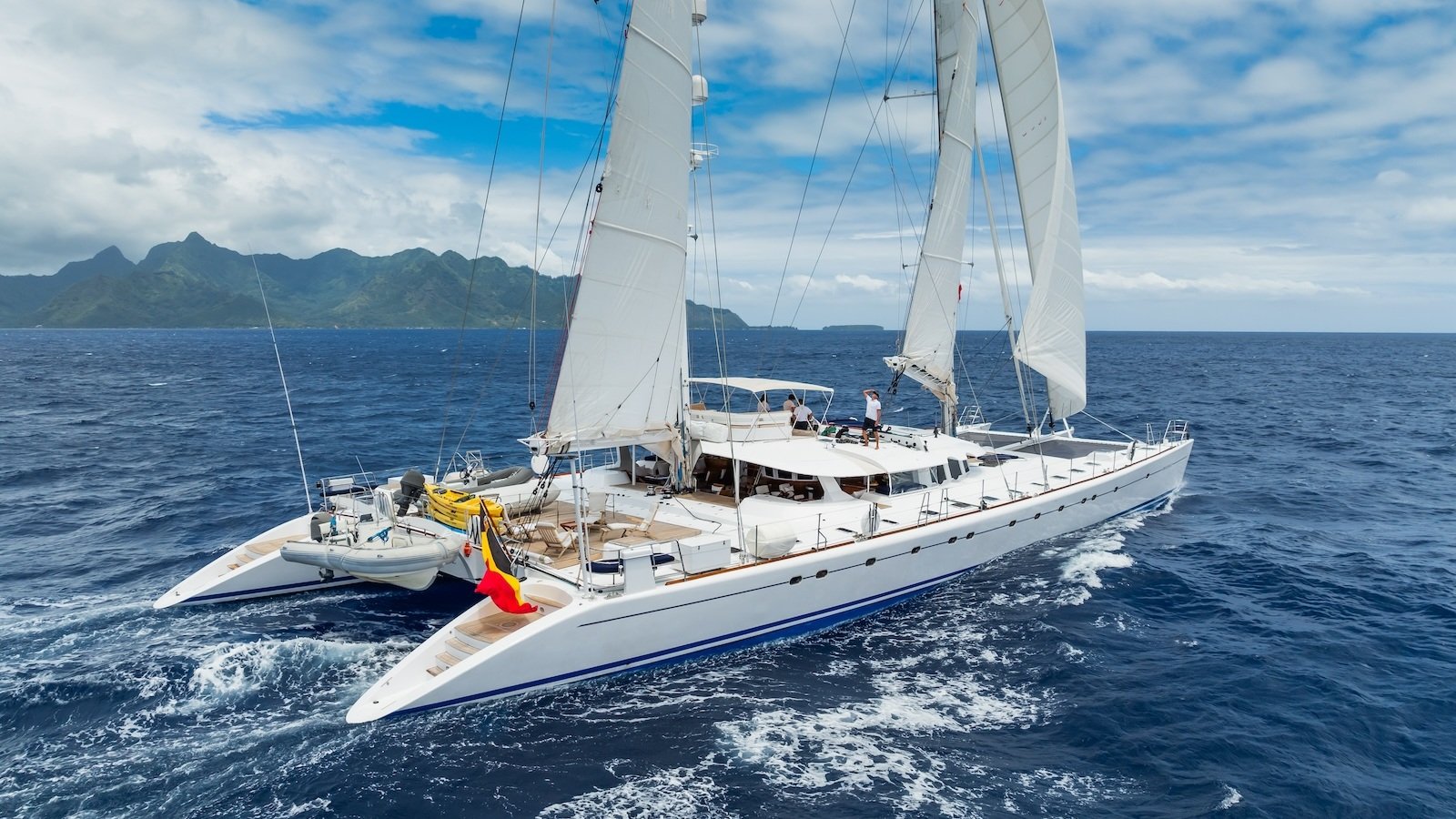
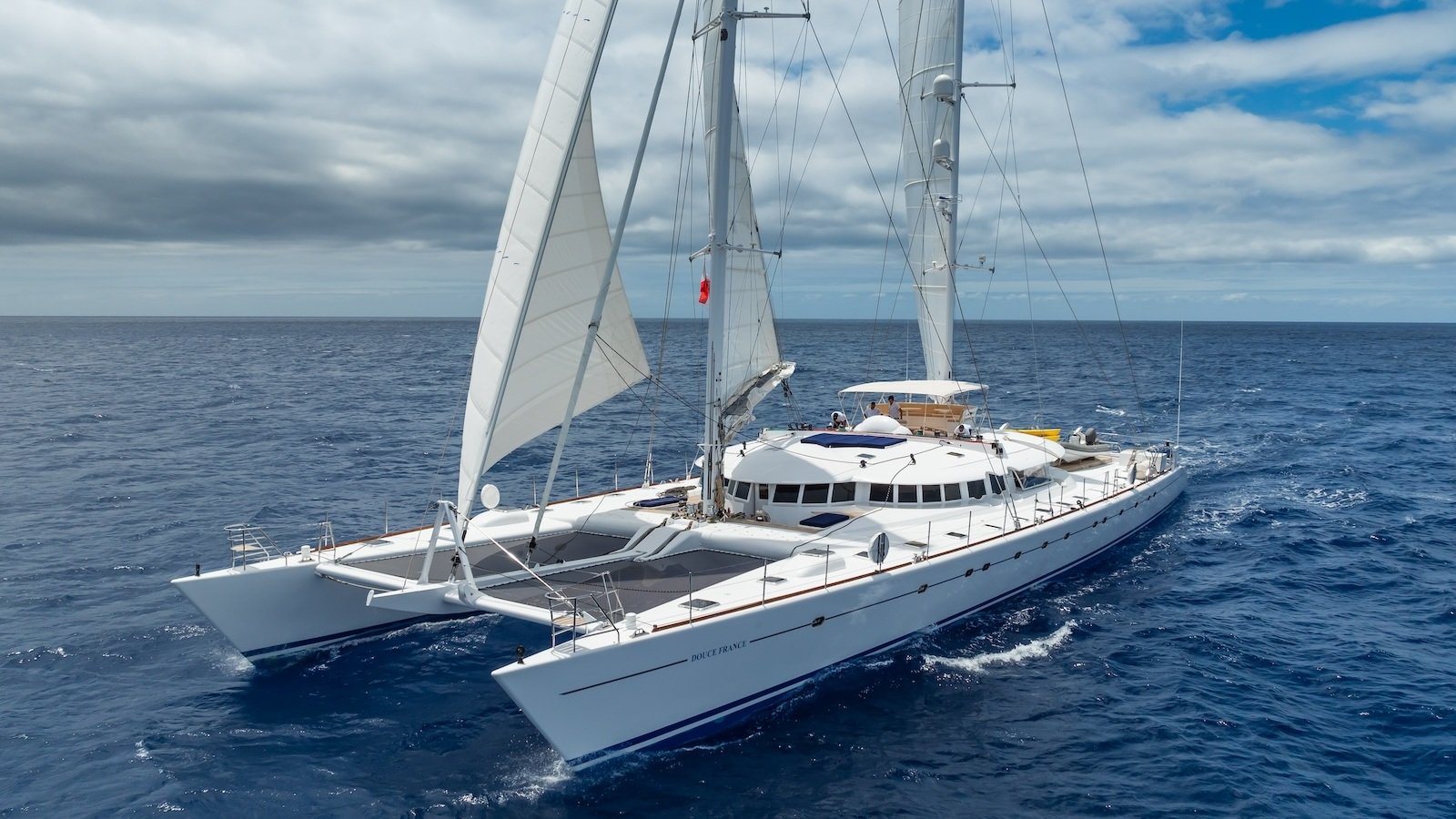
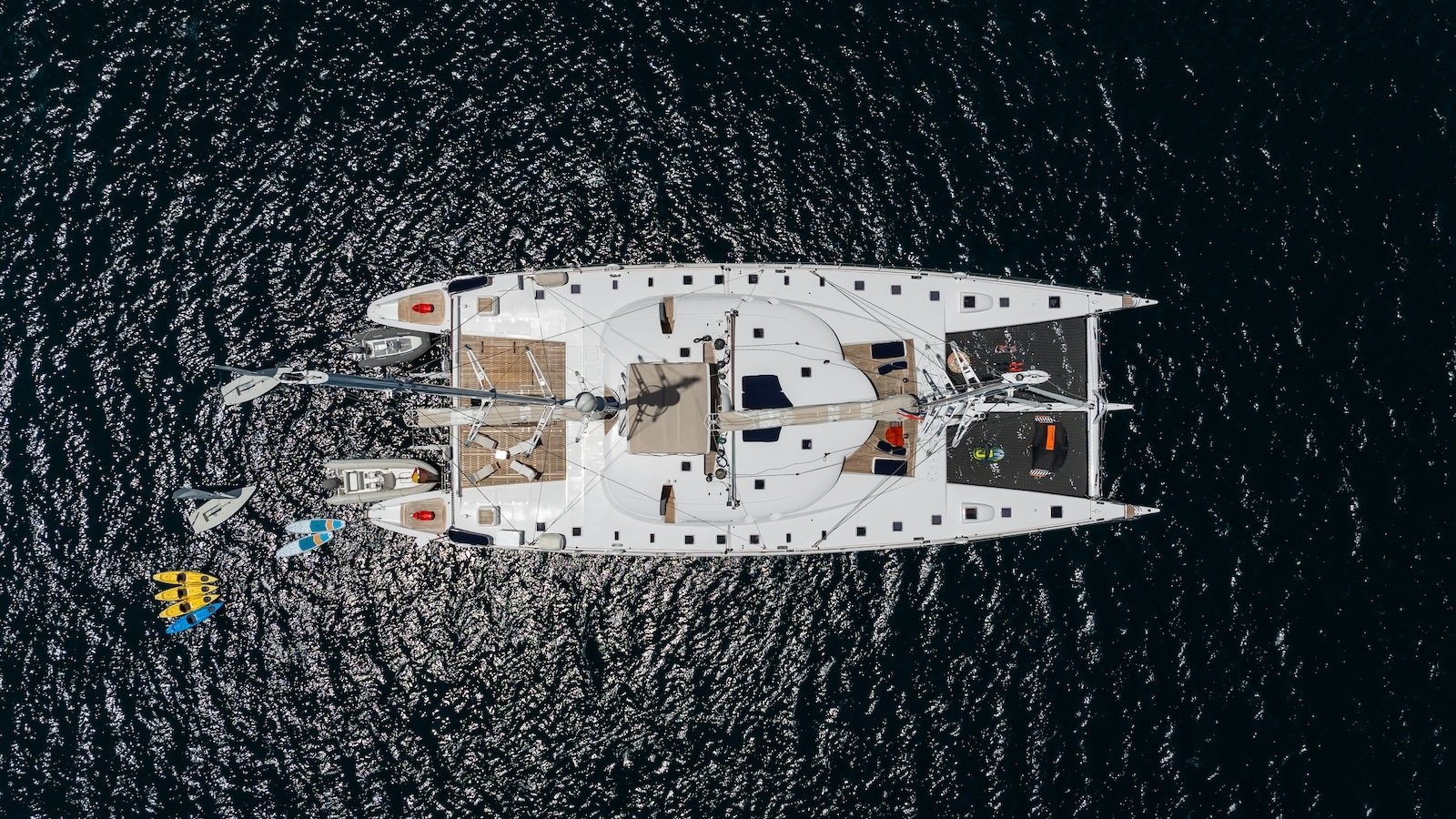
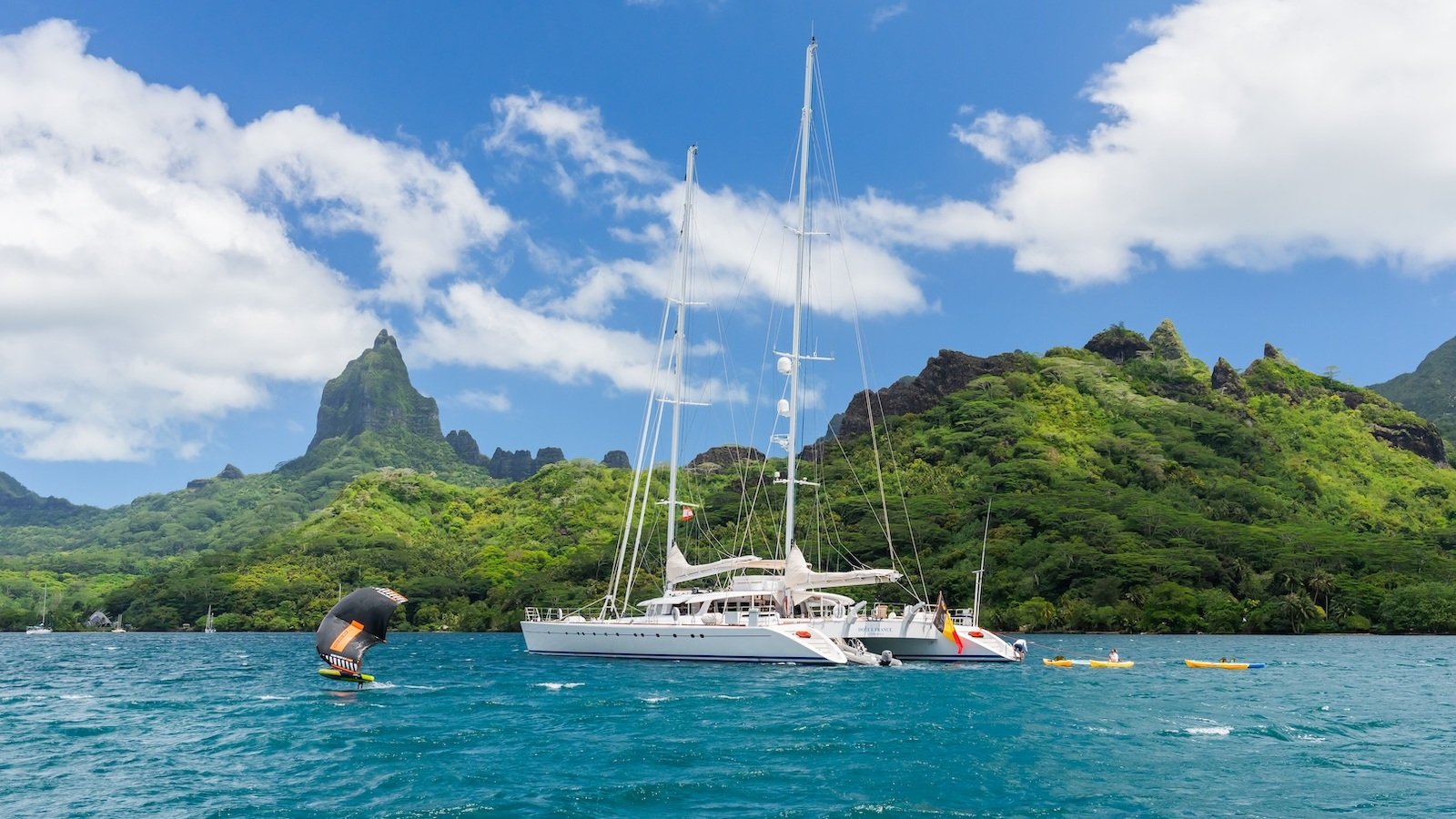
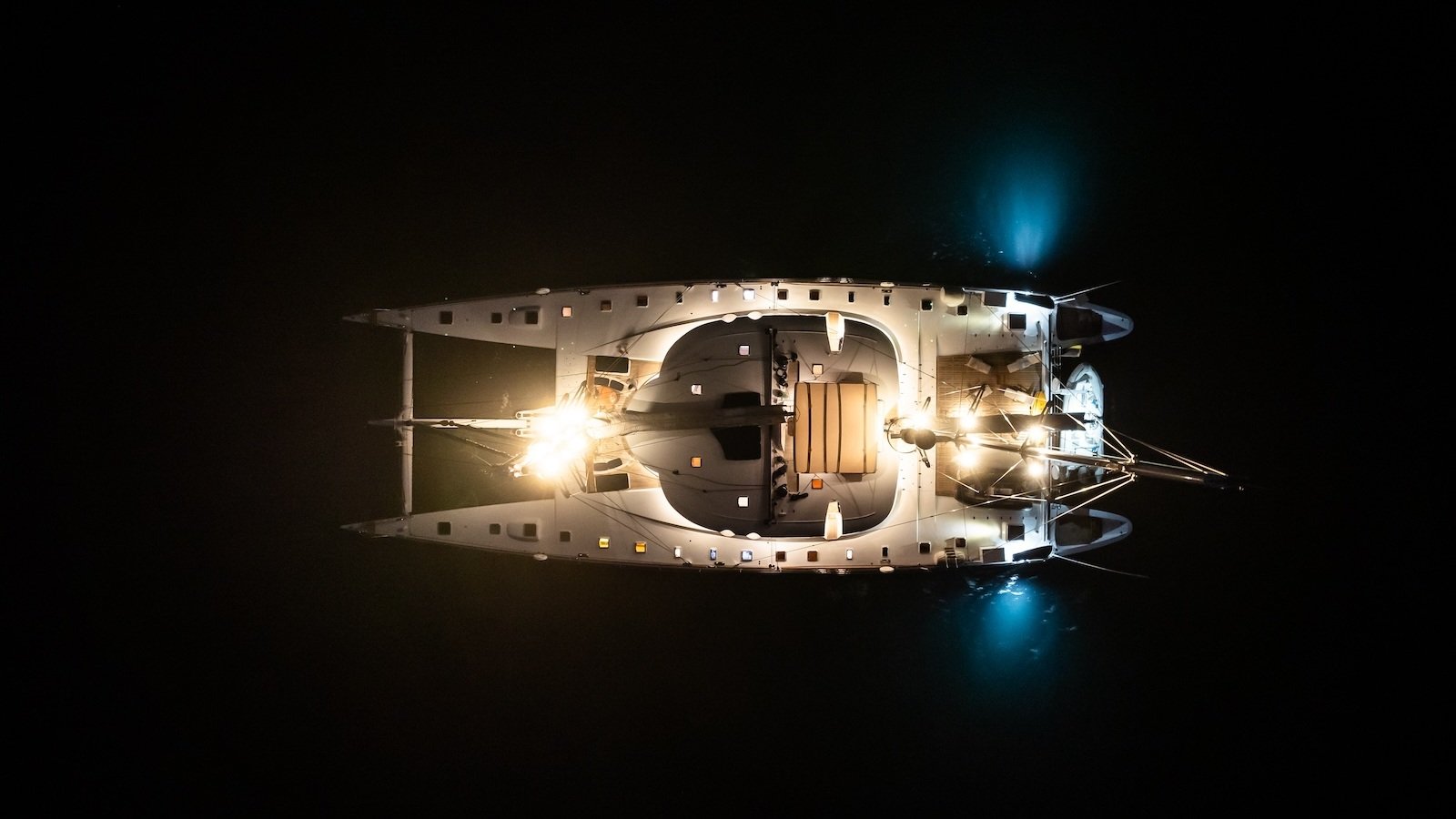
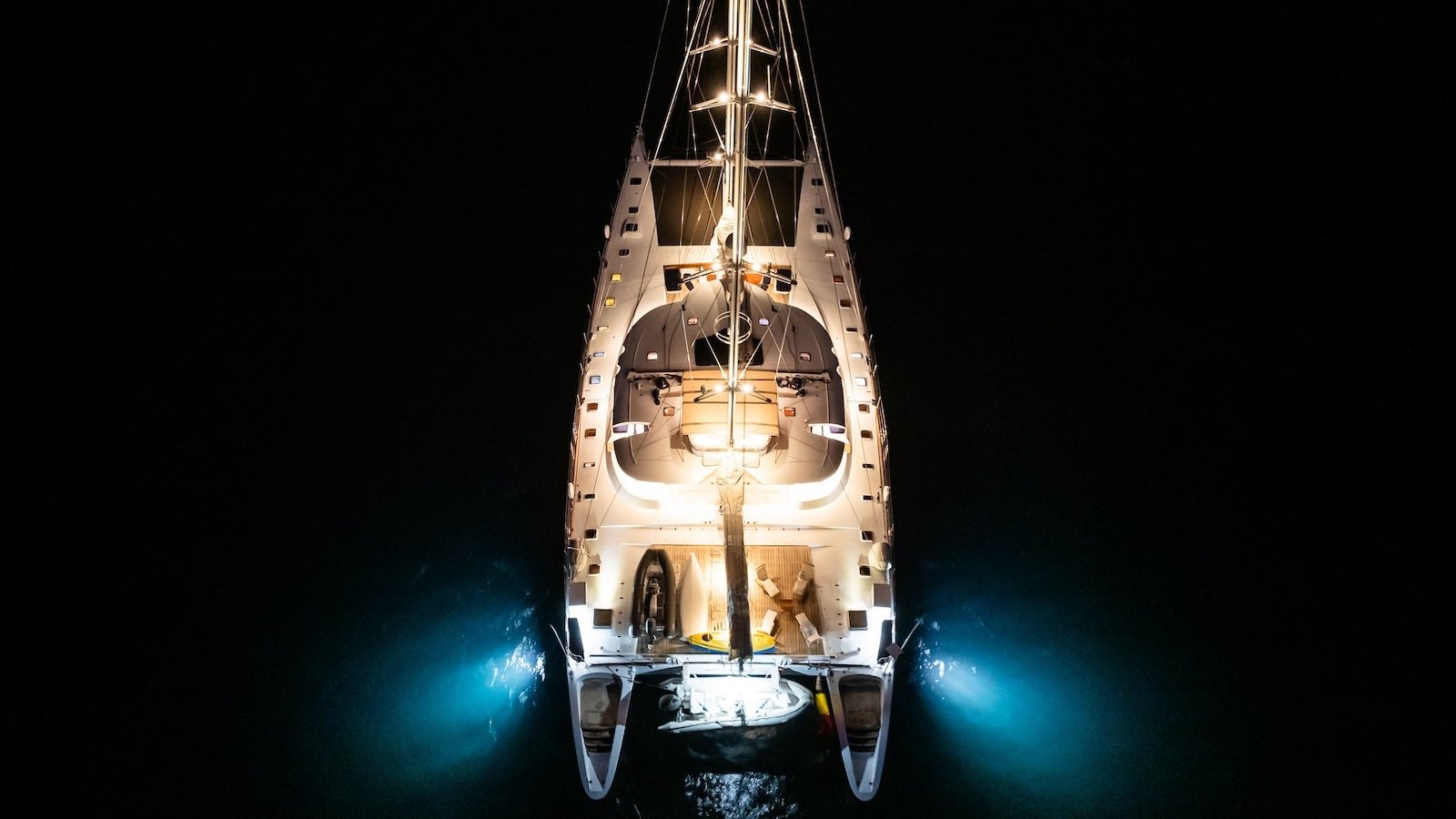
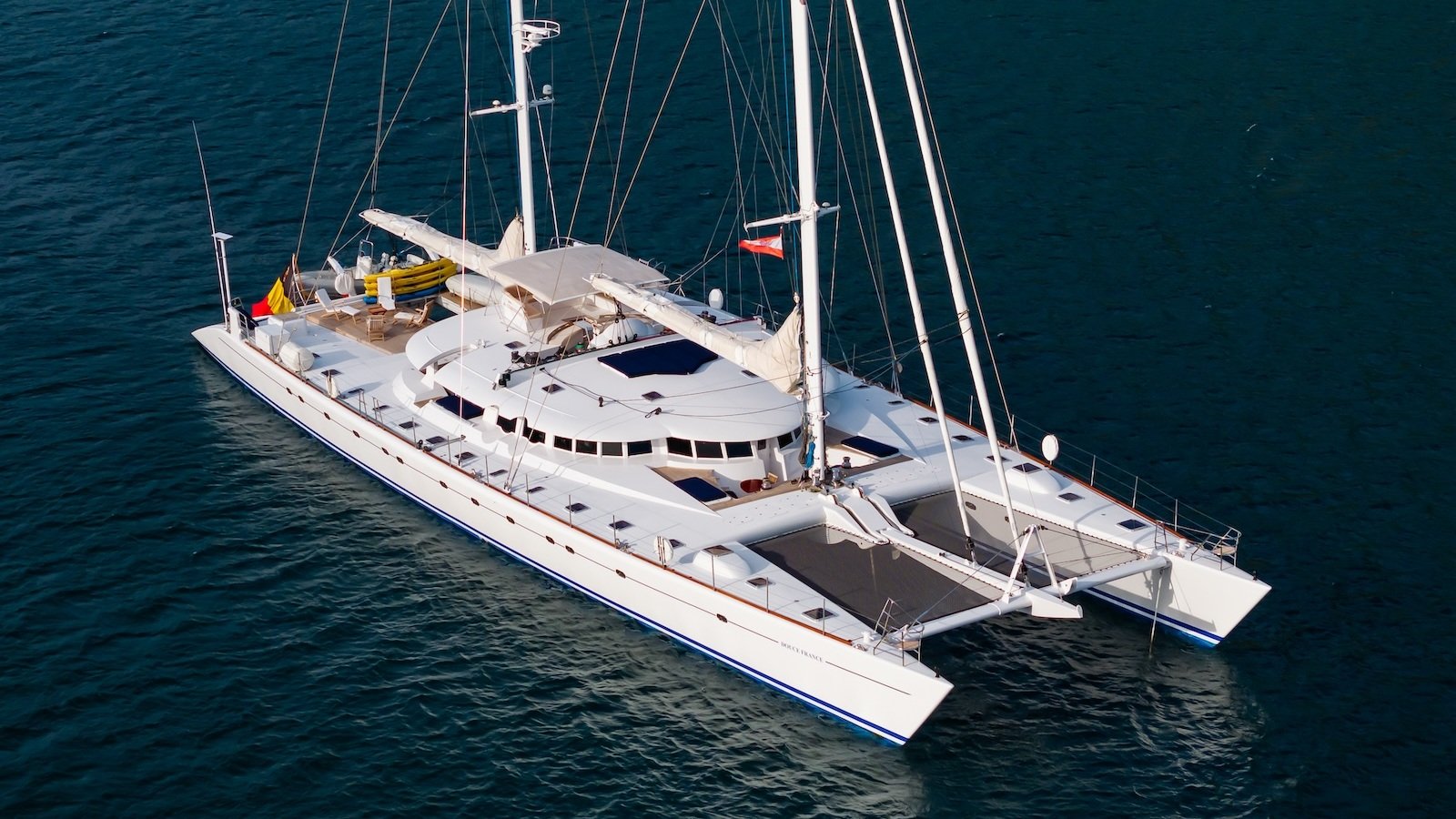
Fifteen and a half metres of beam. That single number explains DOUCE FRANCE better than any other, because everything a charter guest notices about her follows from it. She is 42.2 metres long and very nearly as wide as a 60-metre motor yacht, and the space that geometry releases has no equivalent in the monohull fleet.
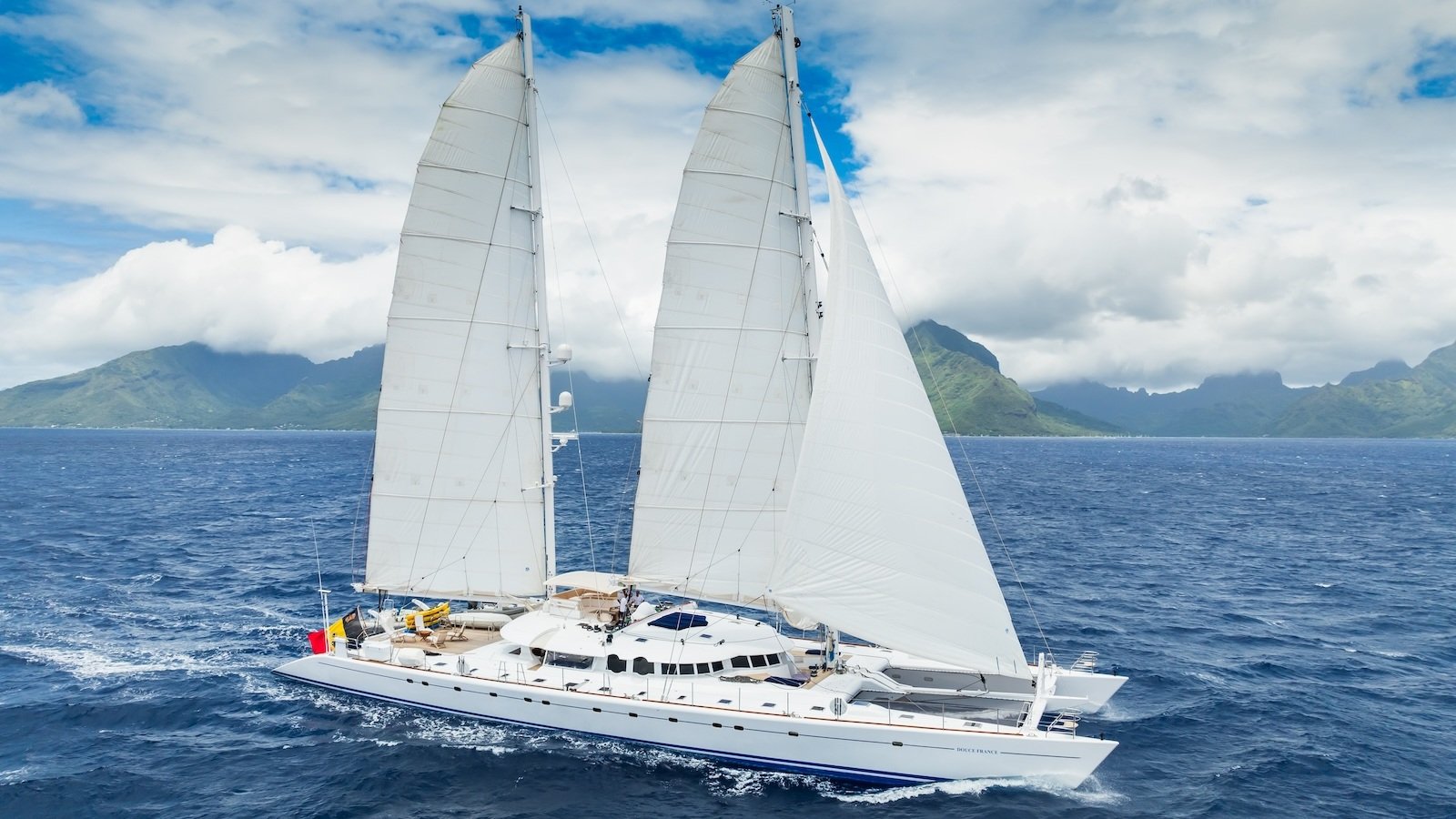
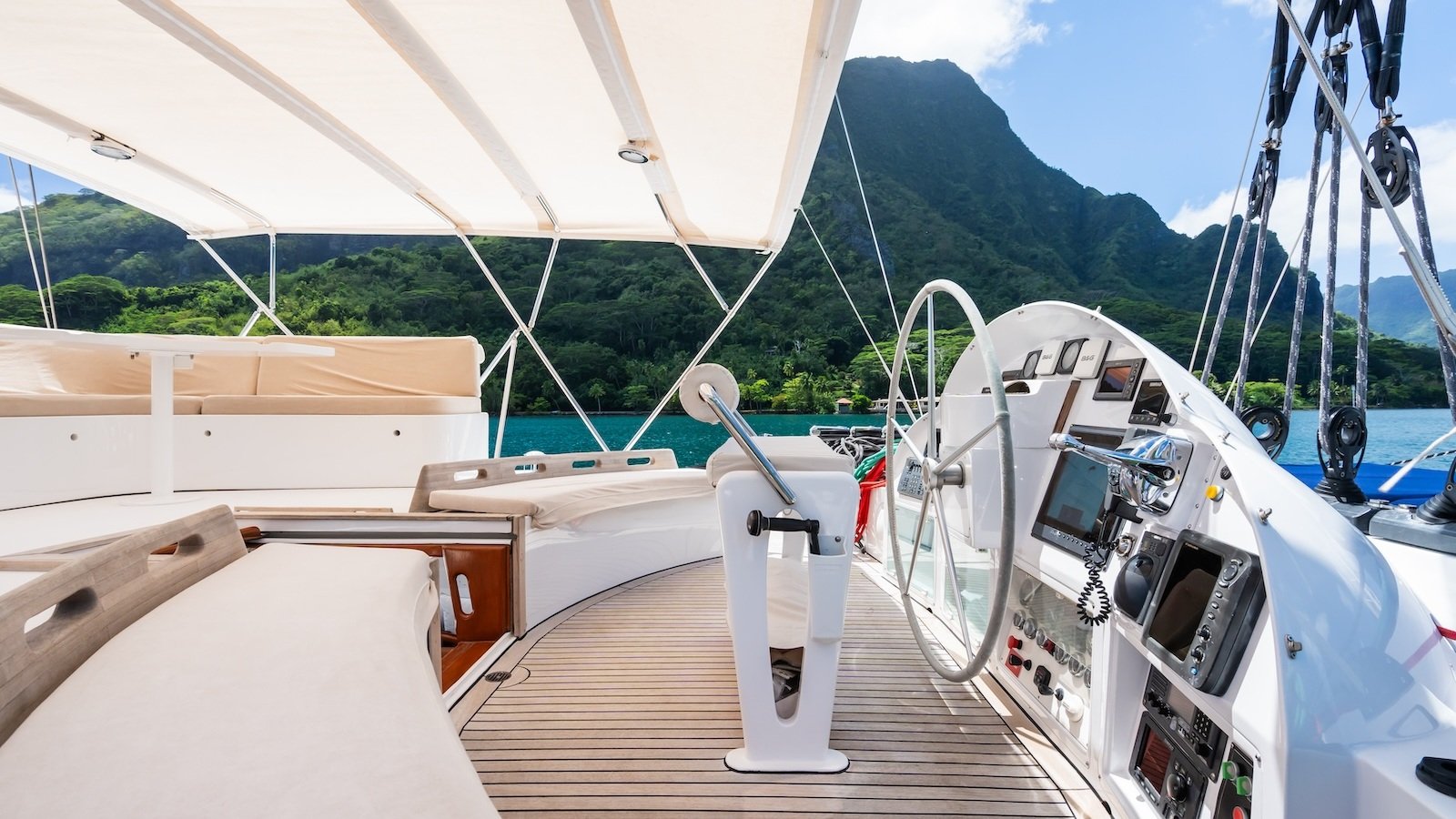
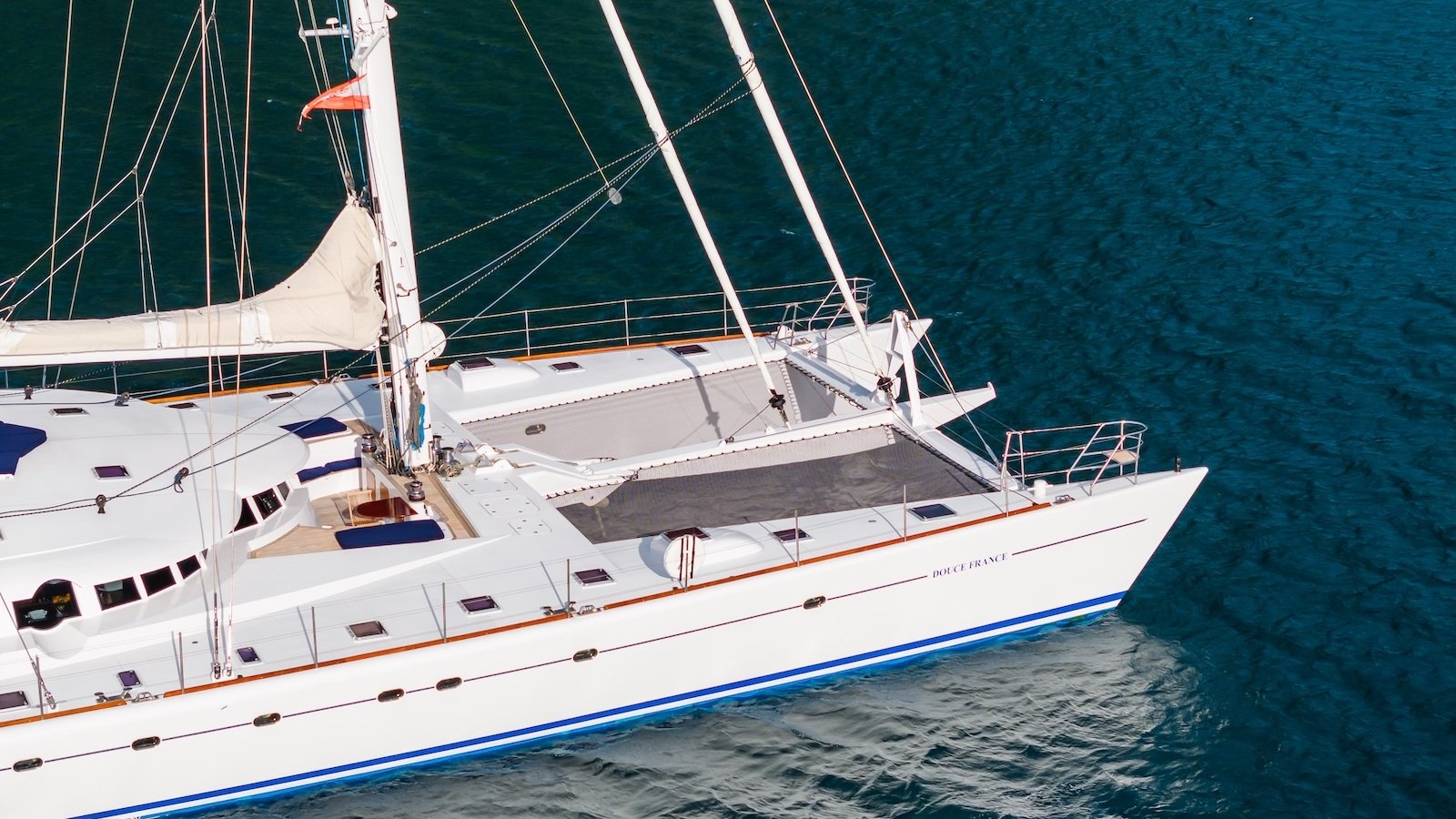
Alumarine launched her in 1998 to a VPLP design, and at the time she was the largest schooner-rigged sailing catamaran ever built. Twenty-seven years and a 2023 refit later, the concept has aged unusually well. Two masts rather than one keep the individual sails small enough for a crew of seven to handle without winches the size of dustbins, and they give her a profile that reads as a classic schooner from a distance and something considerably more modern up close.
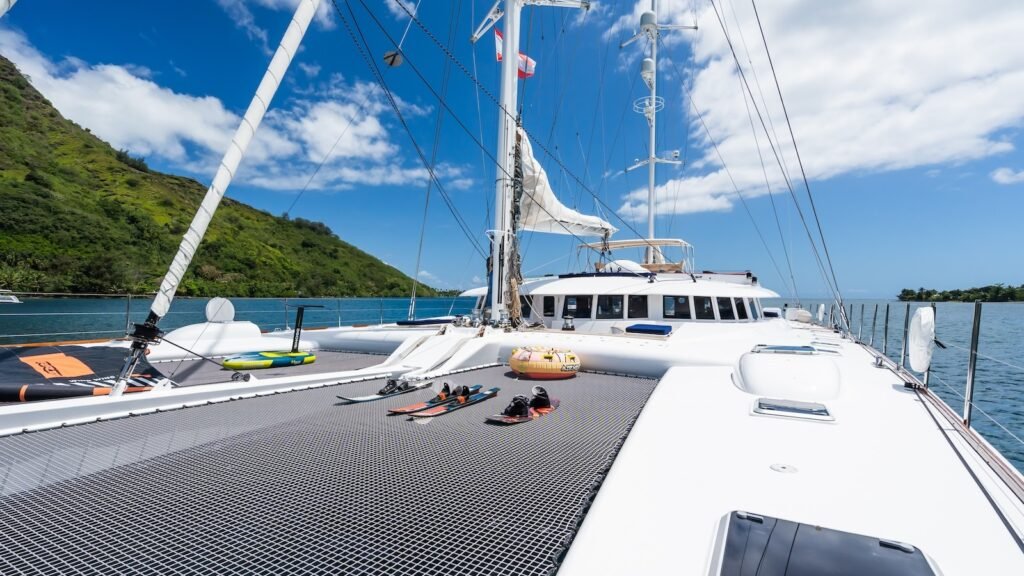
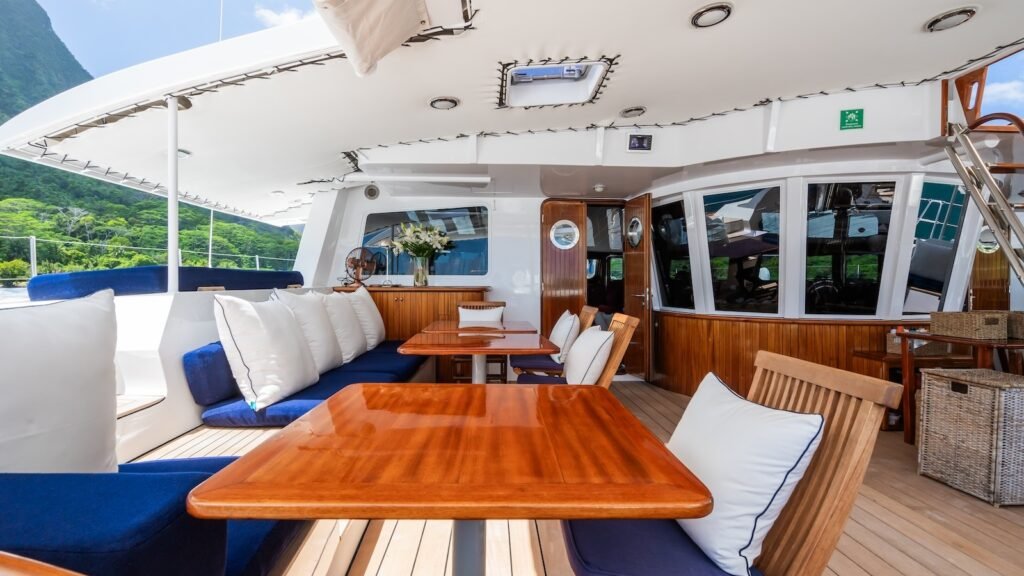
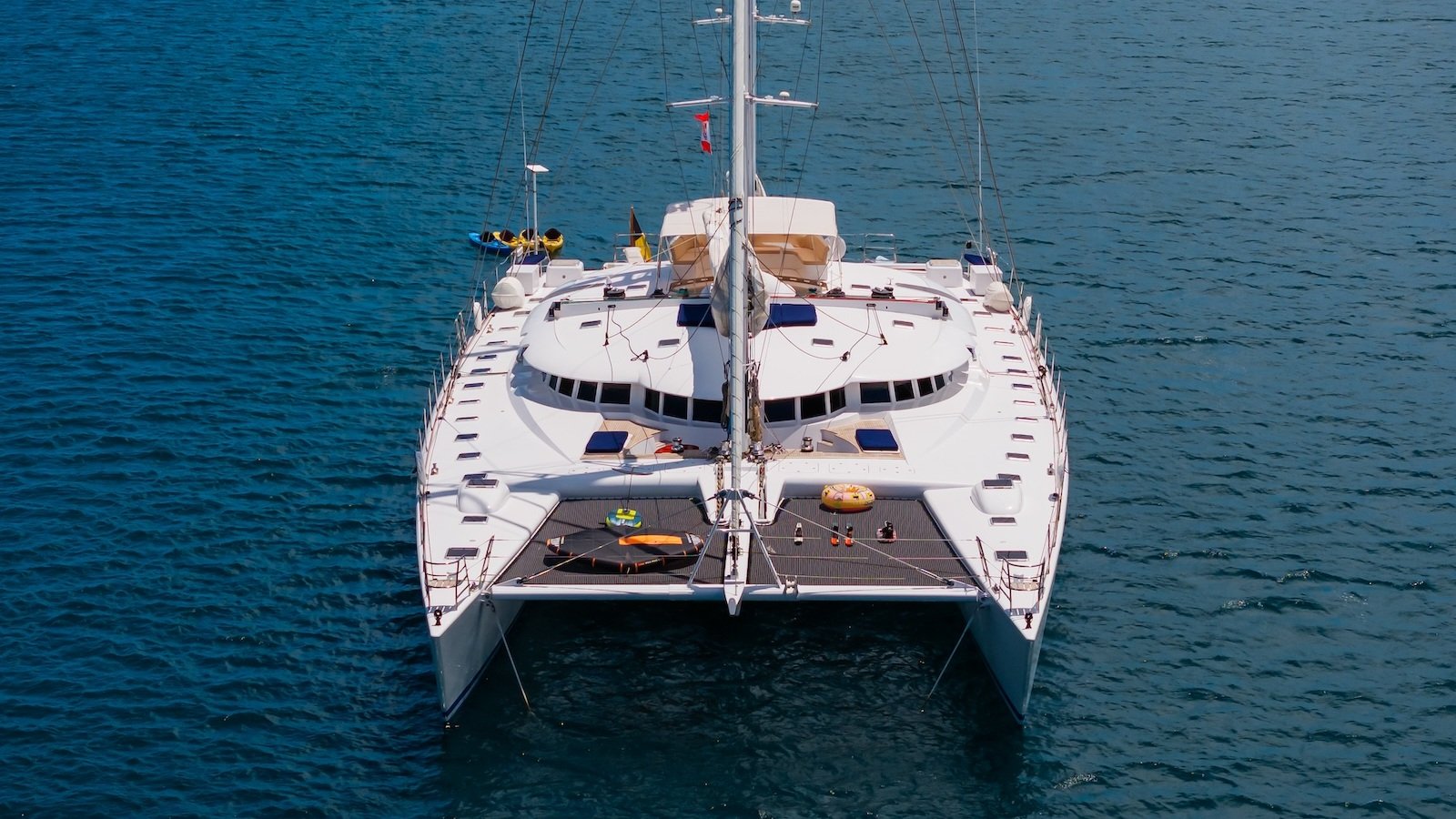
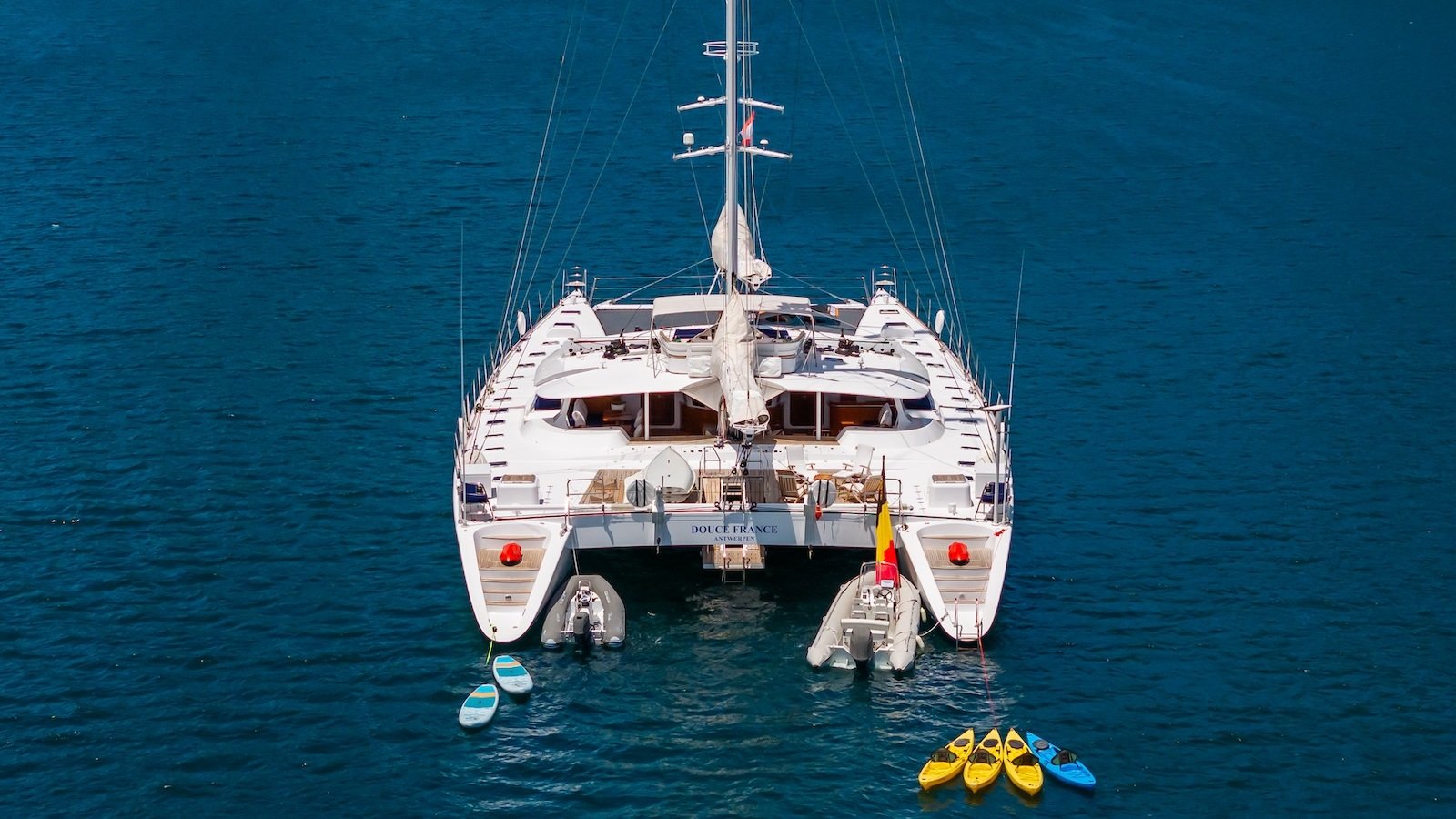
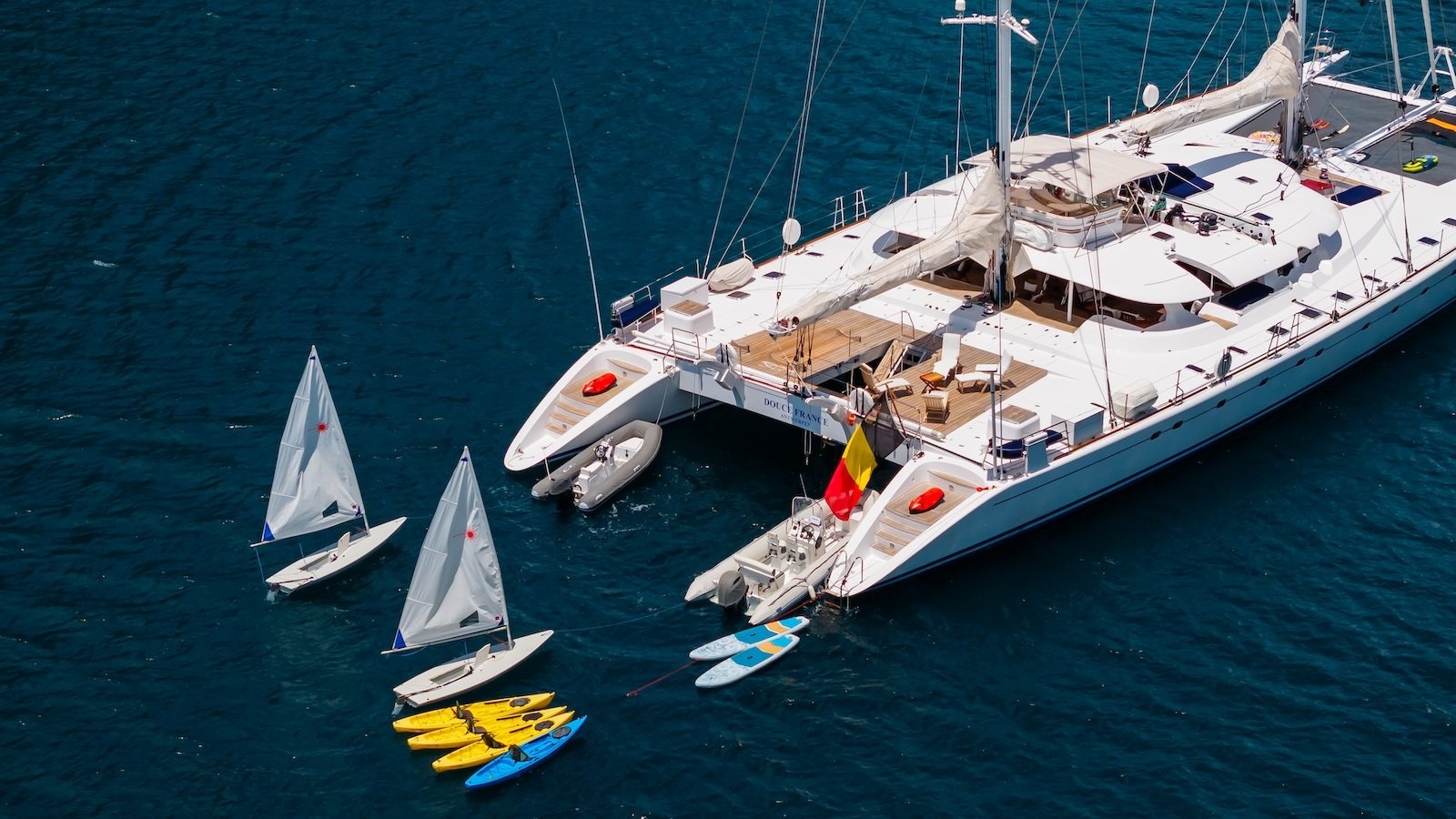
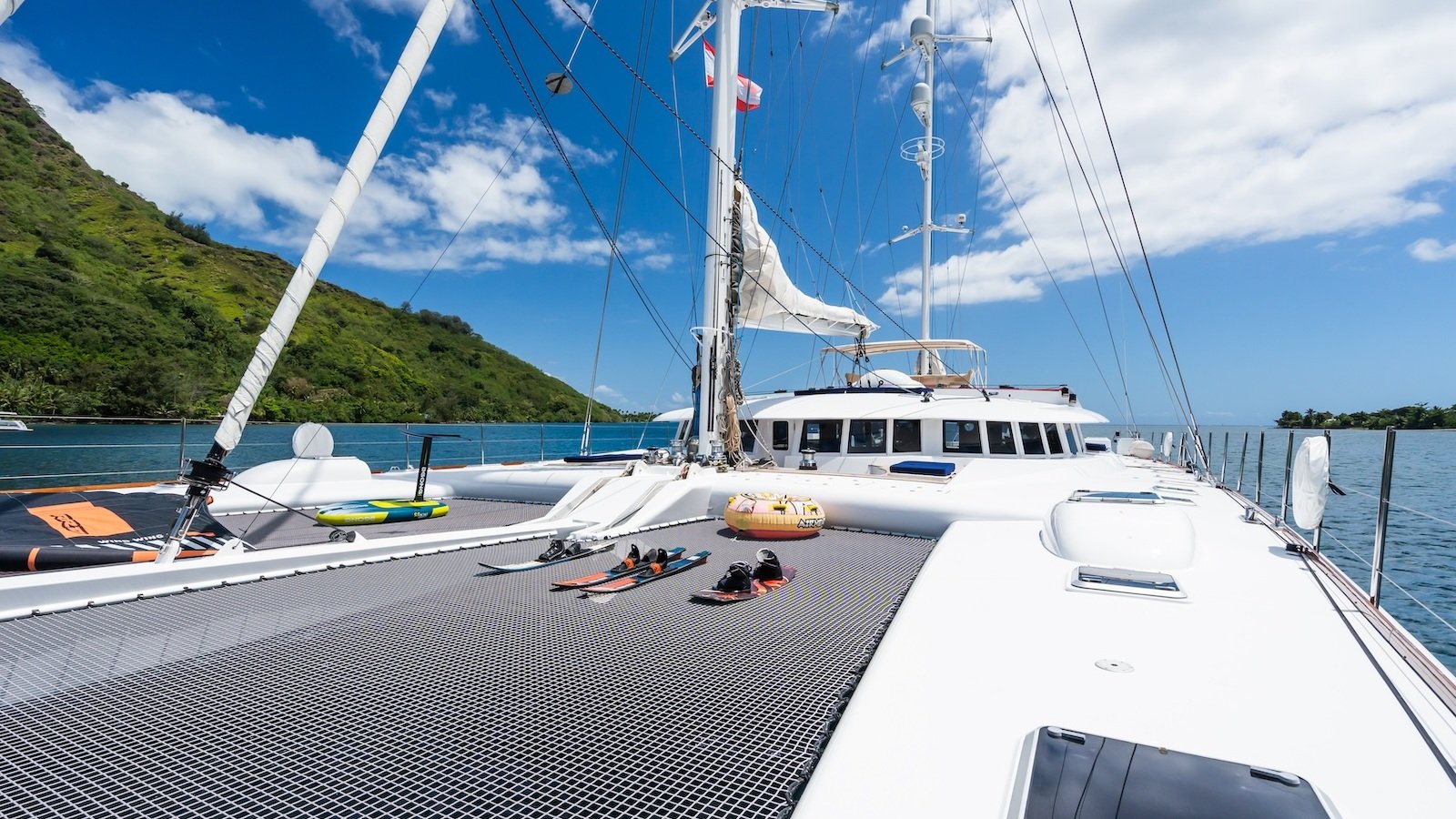
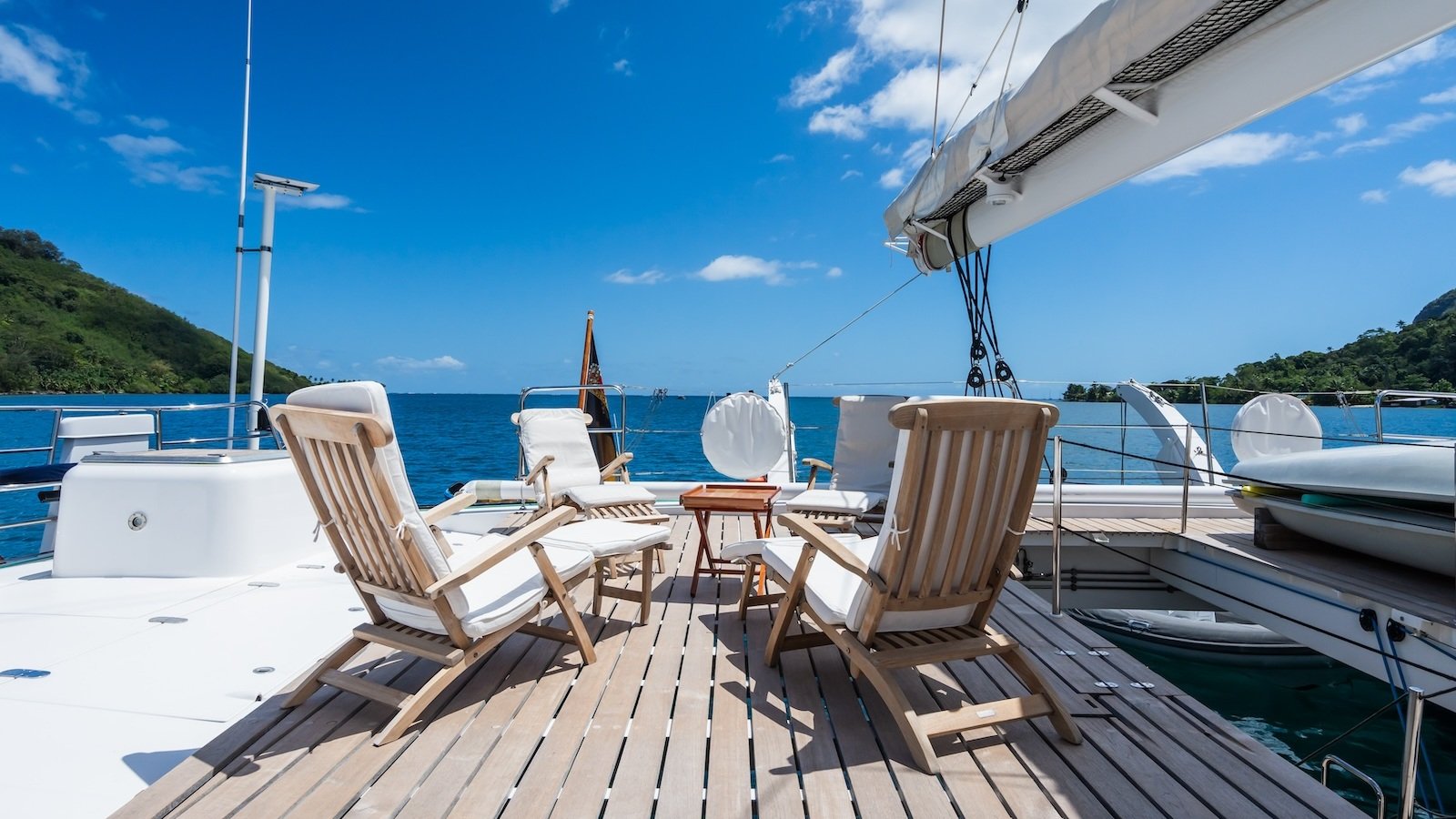
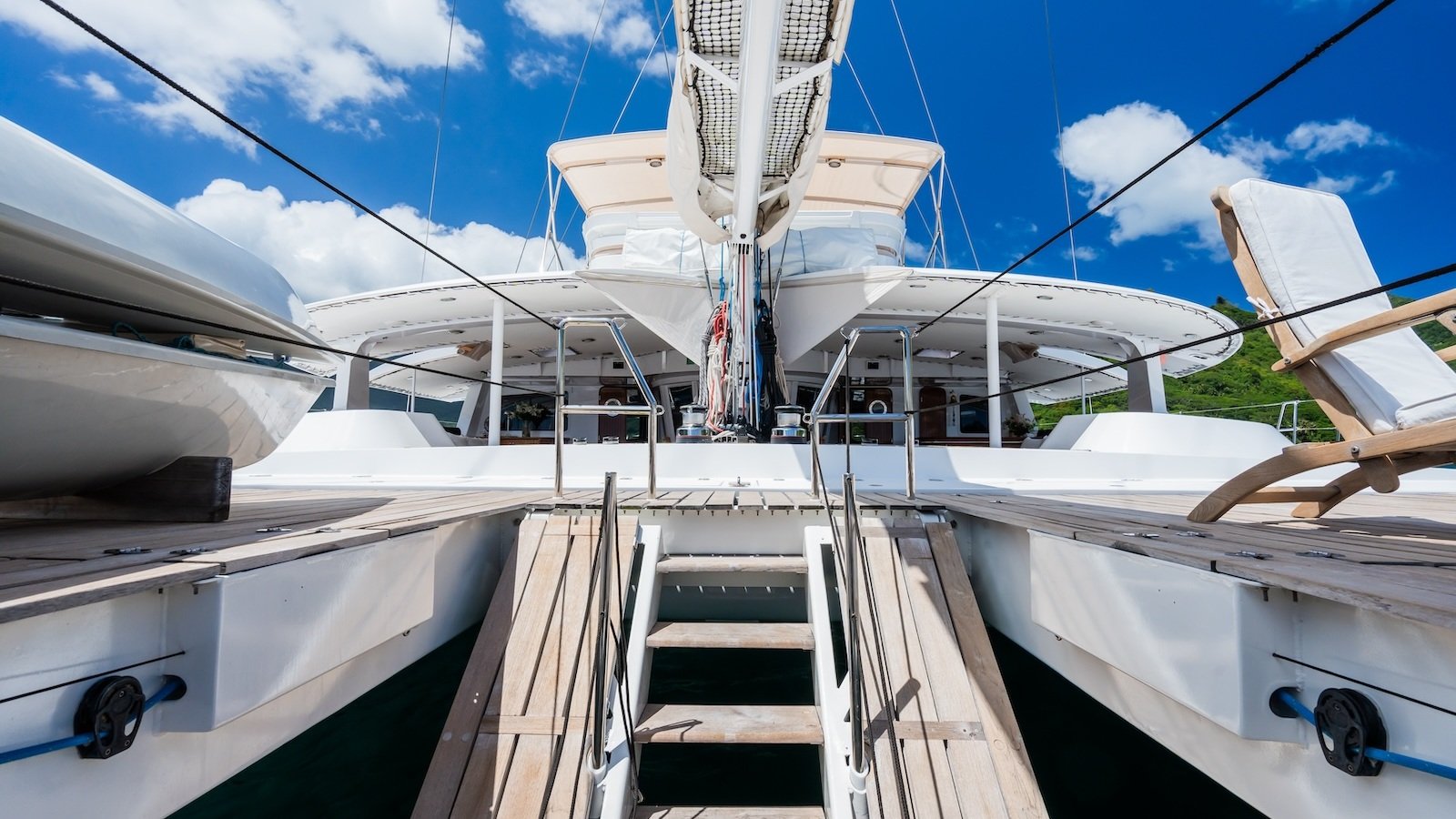
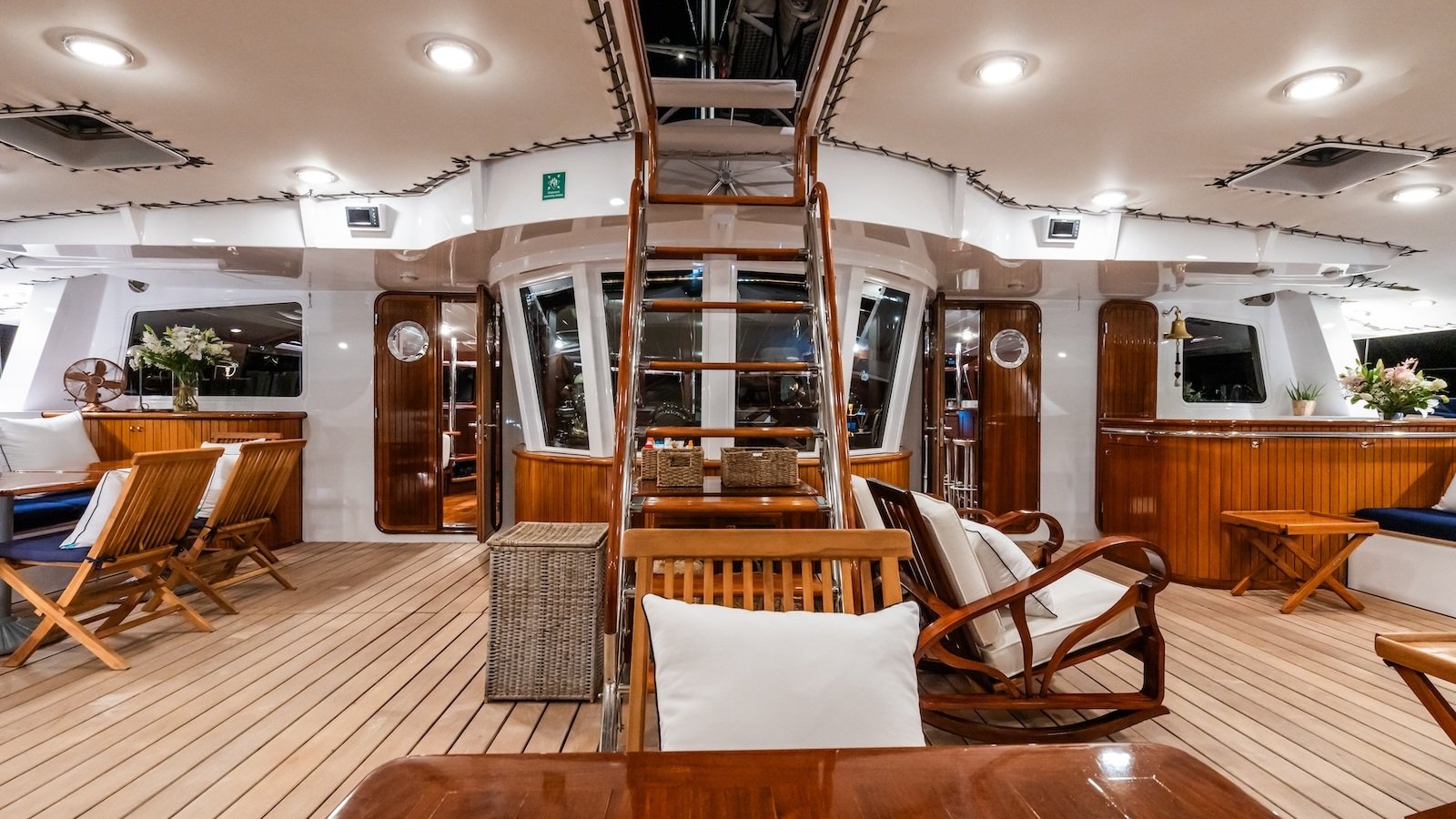
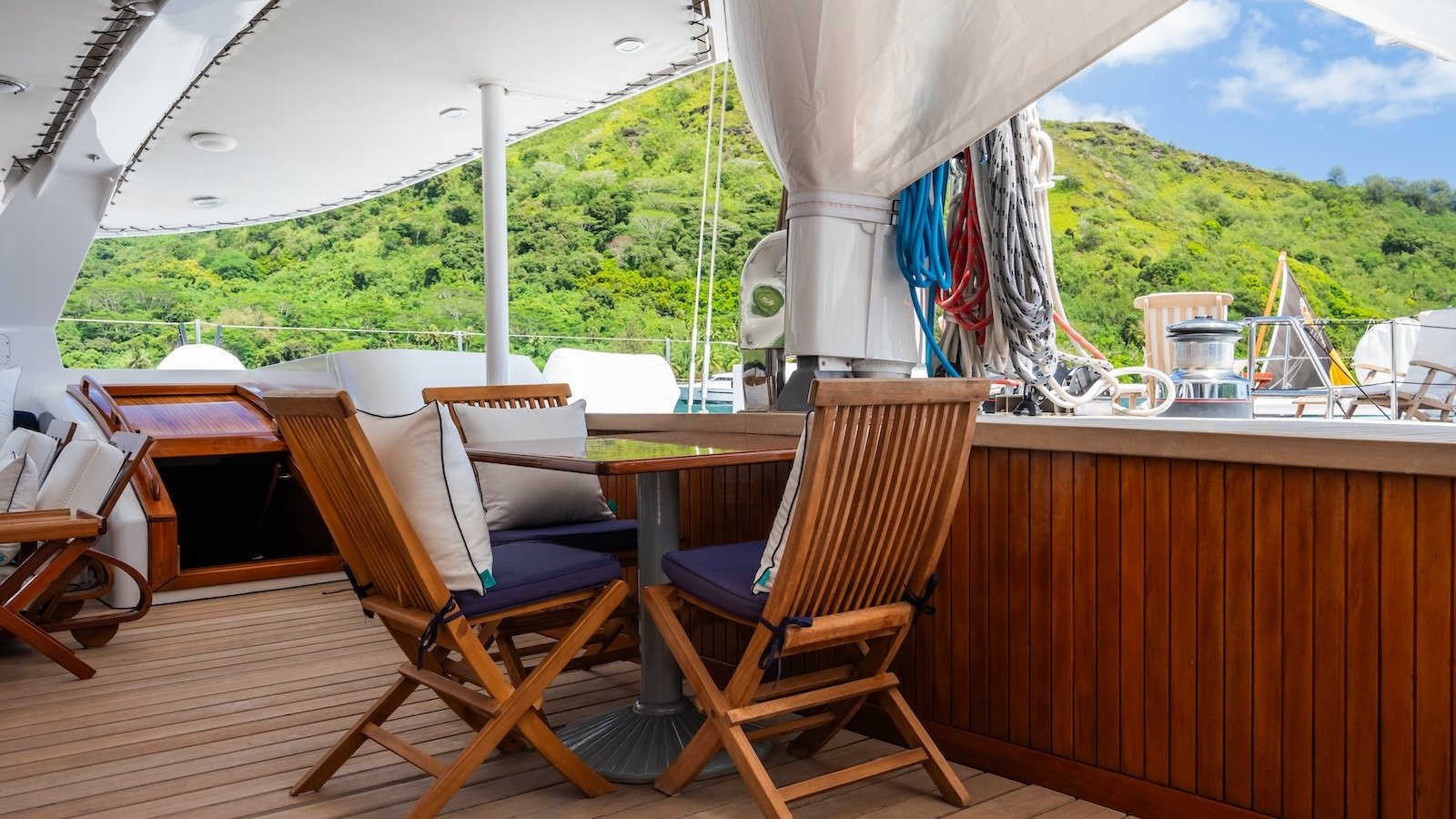
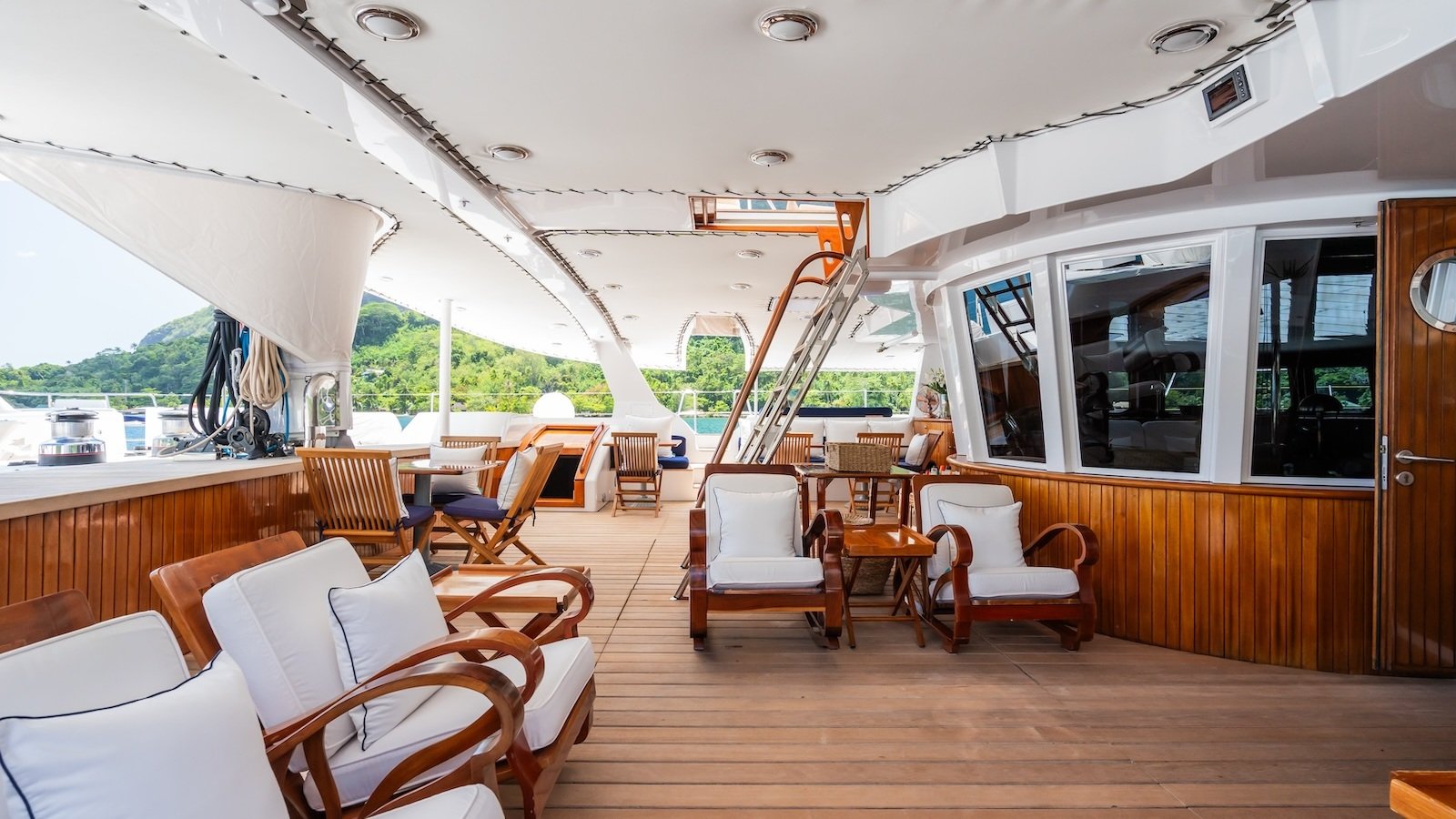
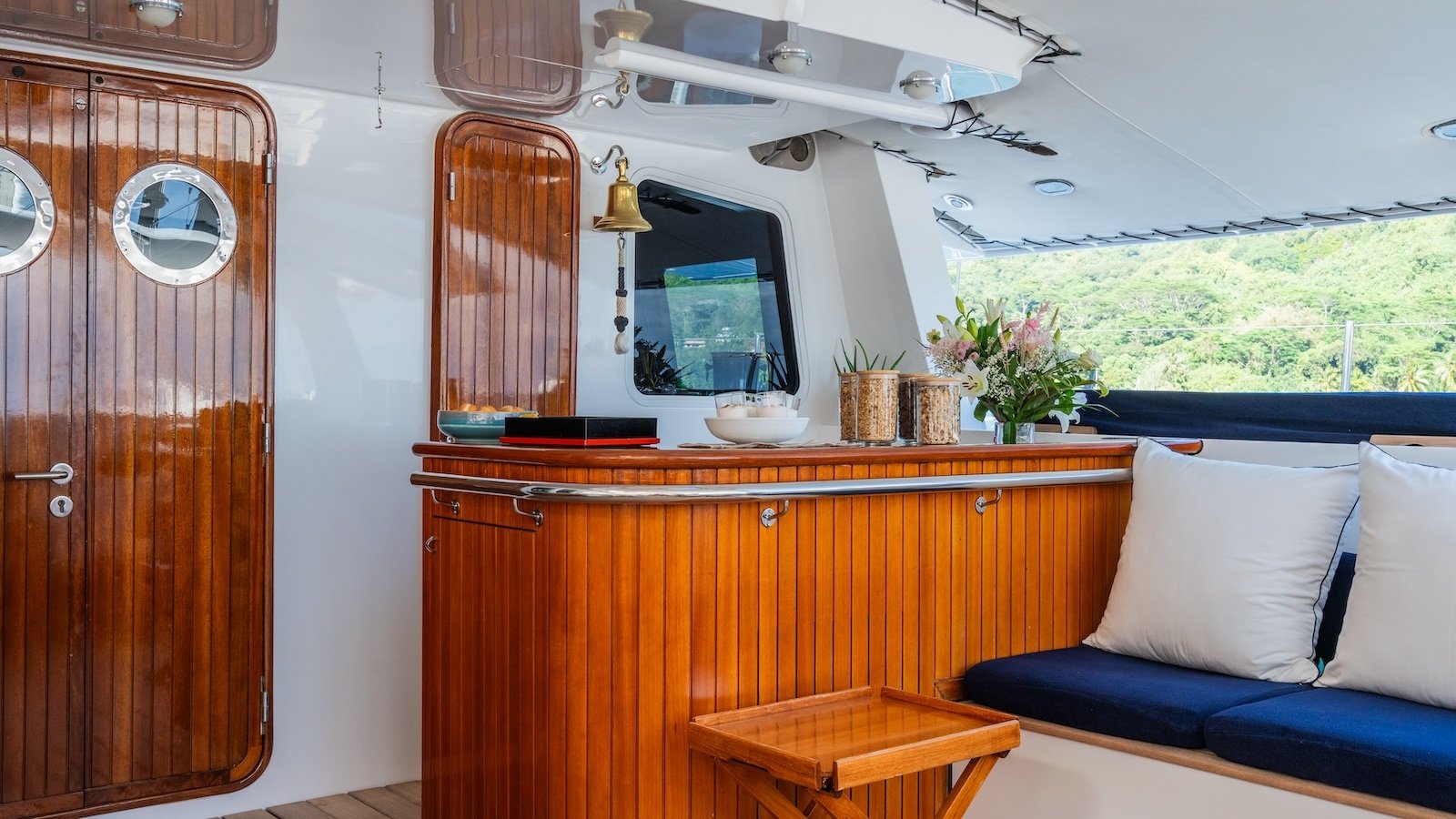
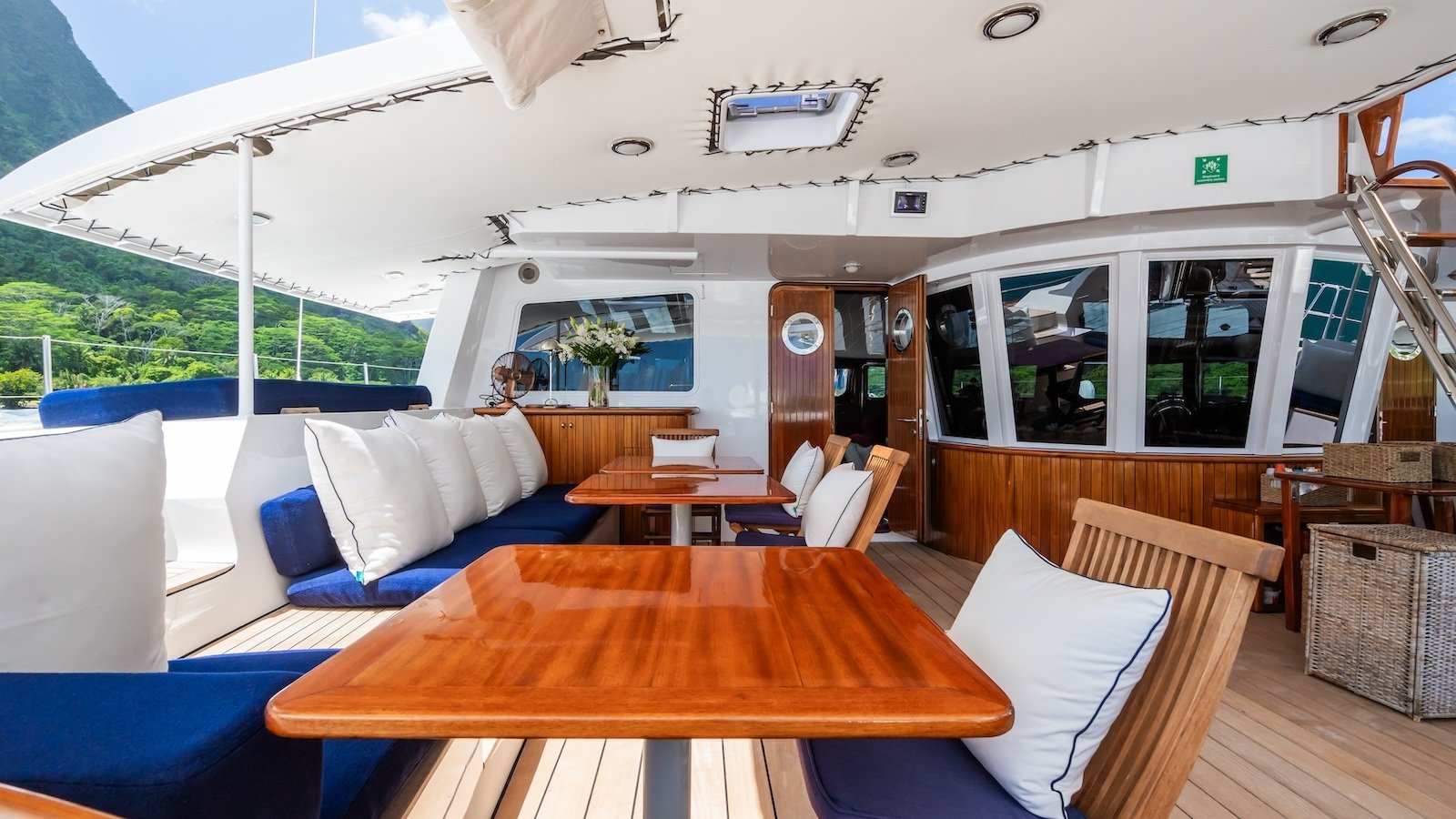
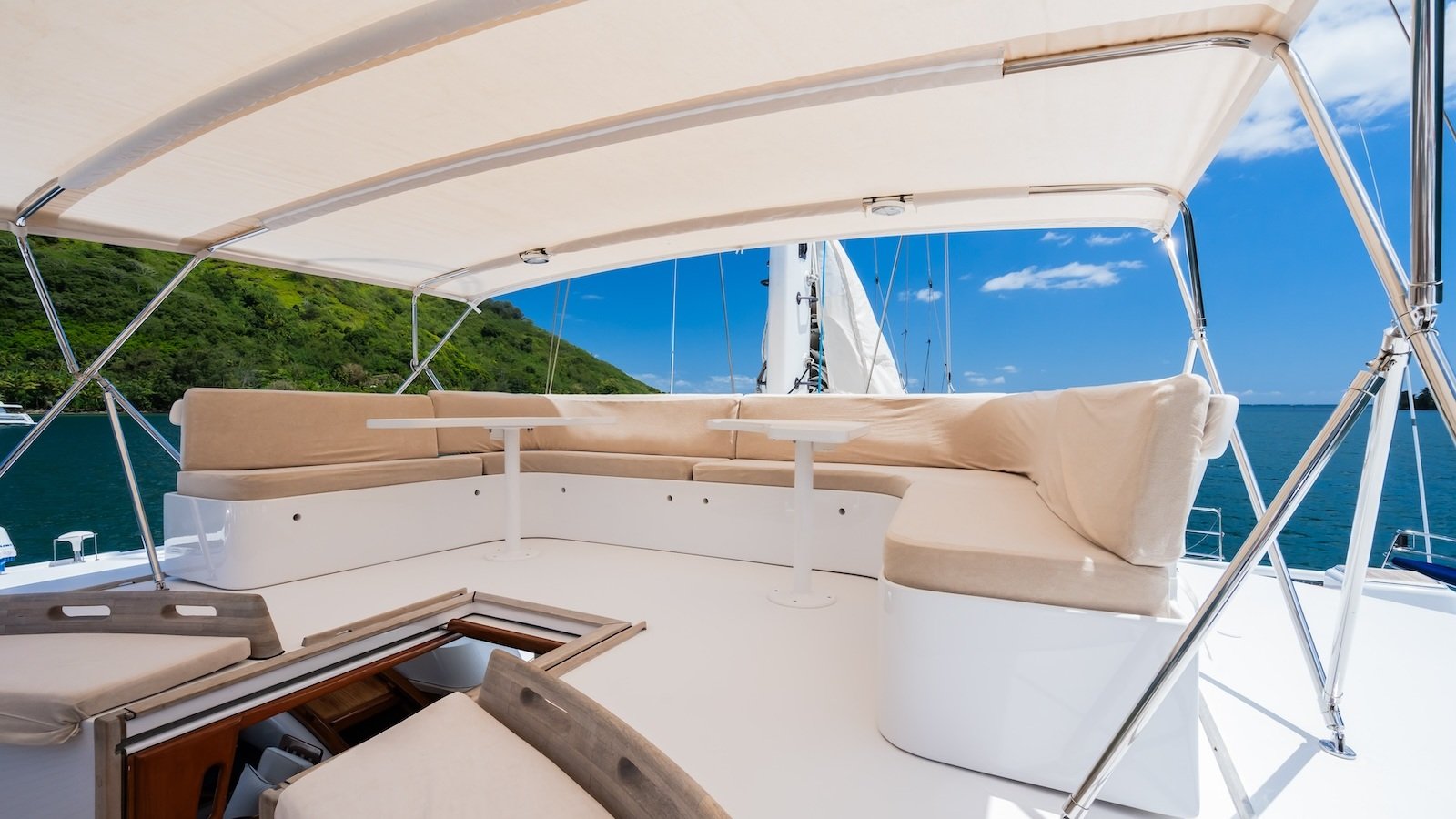
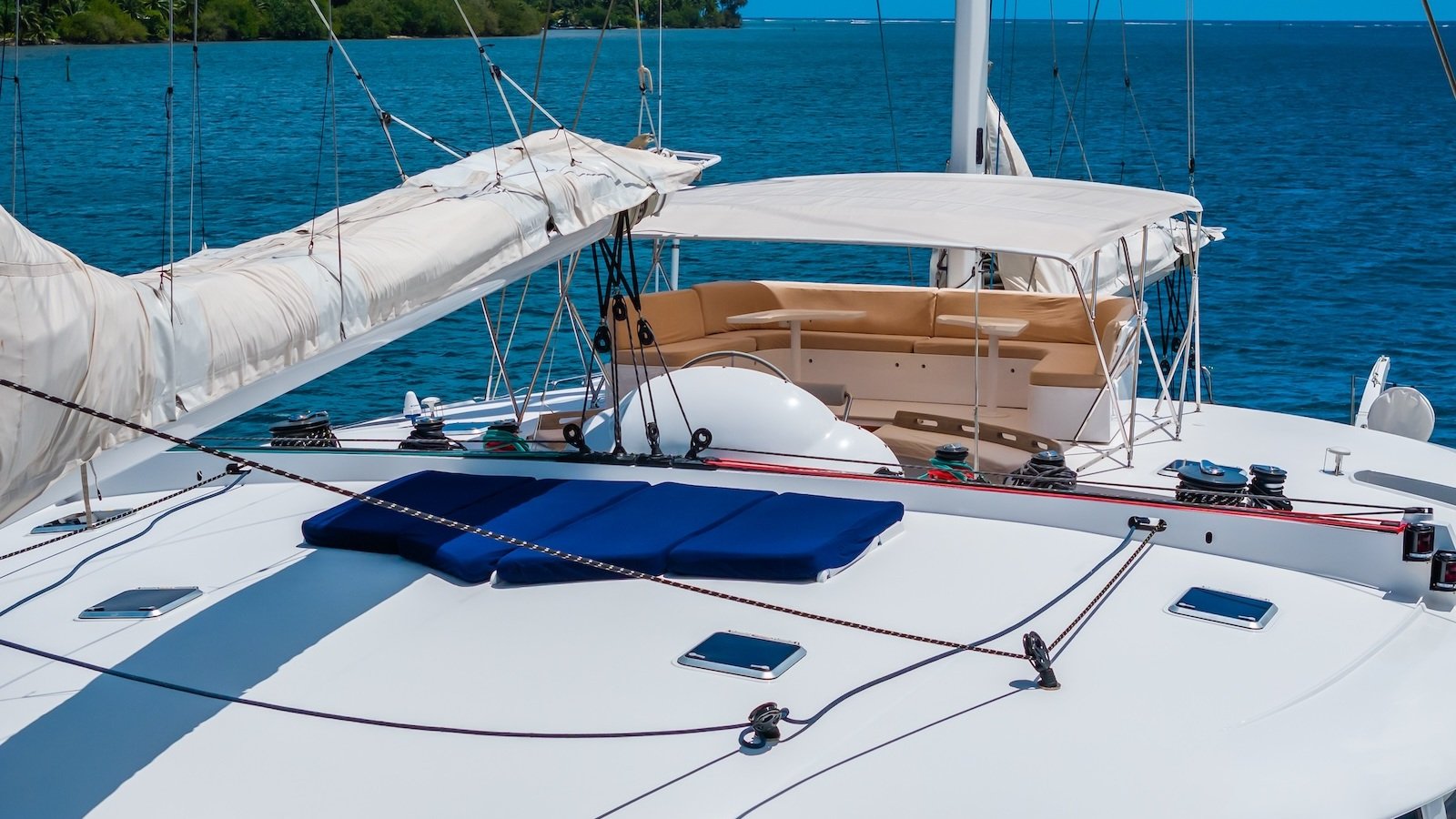
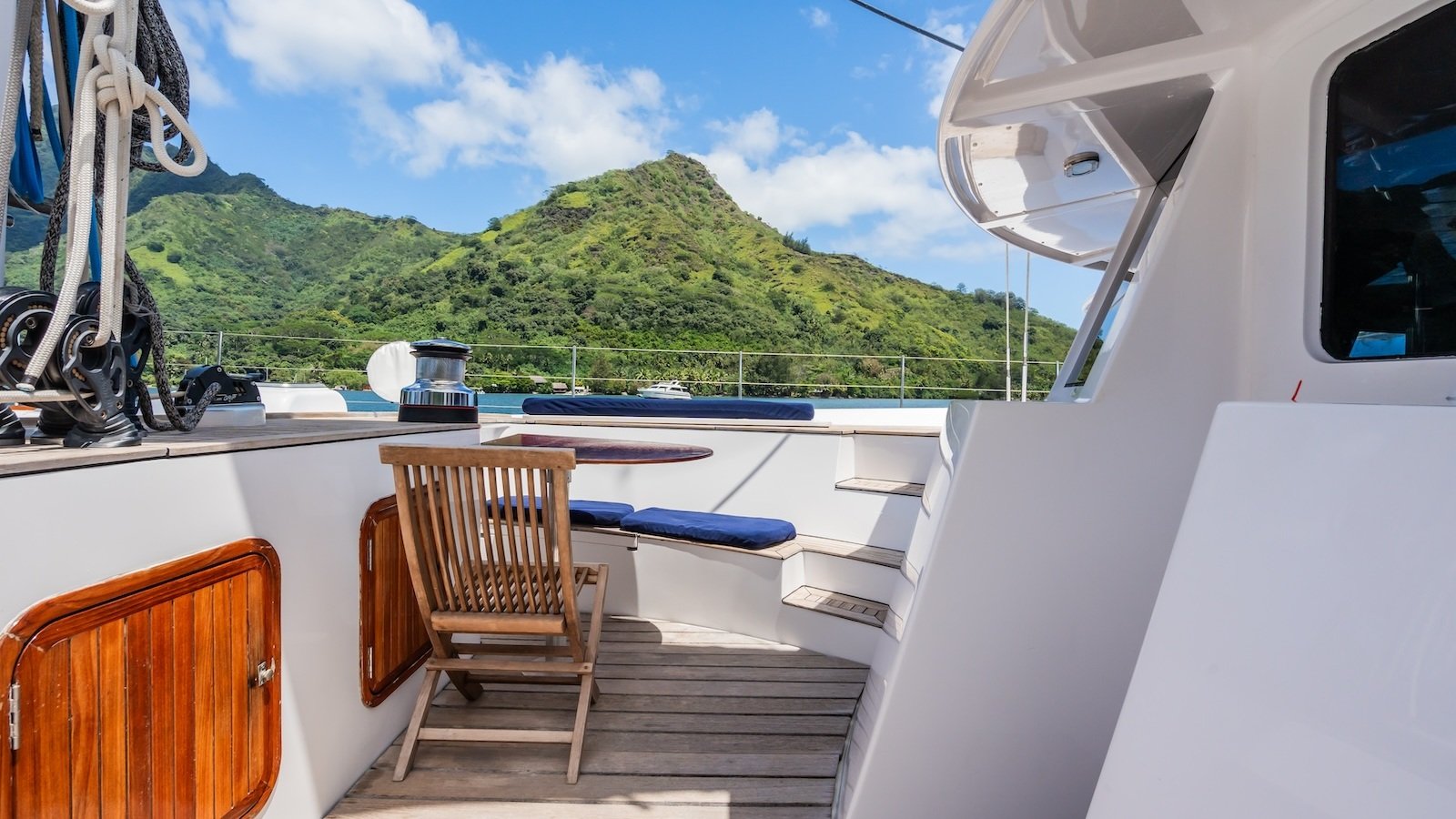
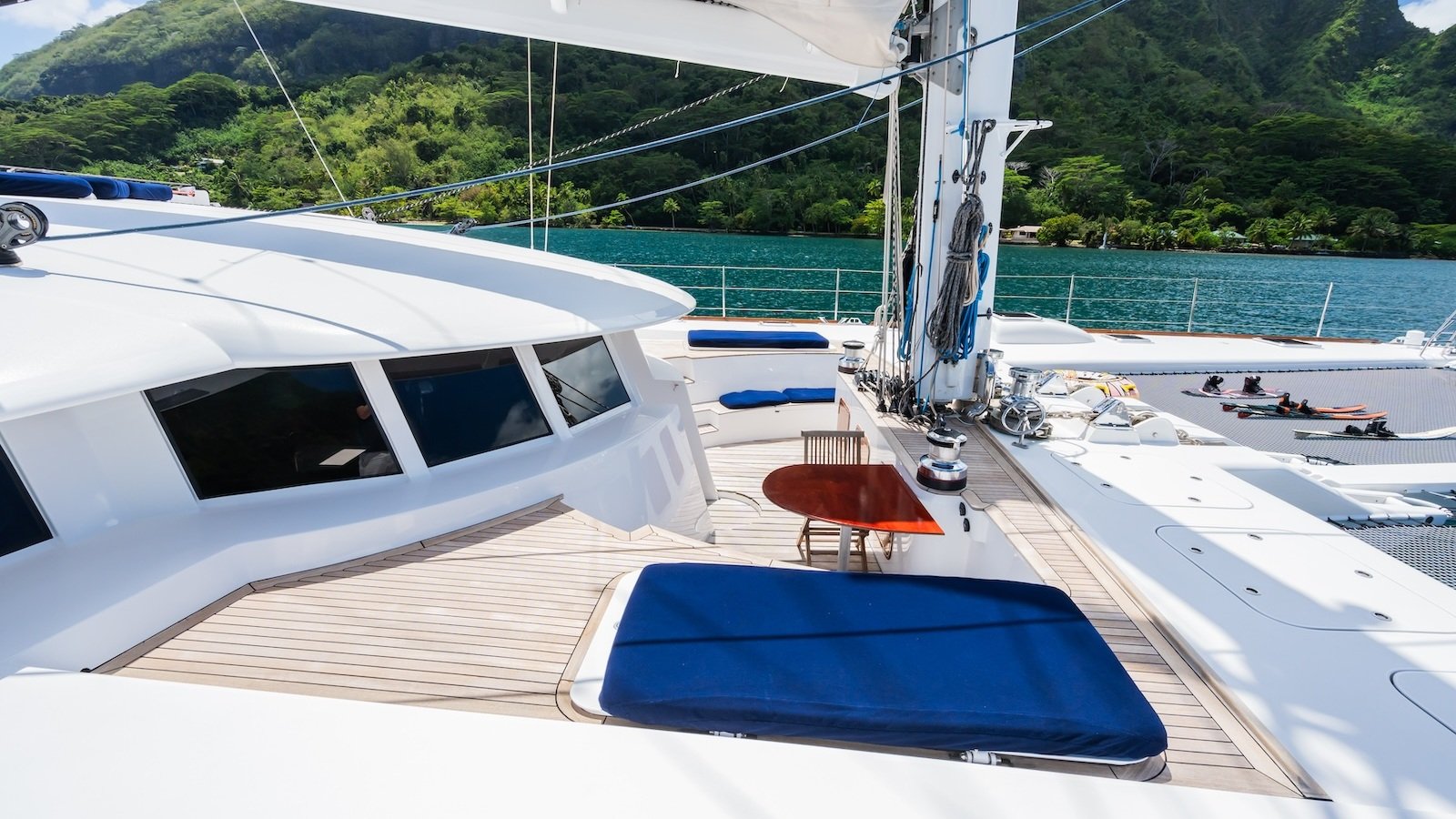
Her deck is where the beam pays out. The covered aft cockpit runs the full width between the hulls and works as the boat’s real living room: a long varnished table for twelve at one end, deep blue-cushioned banquettes and cane armchairs at the other, teak underfoot and open sea on three sides. Forward, the trampoline nets and flush foredeck give a second, entirely separate deck the size of a tennis court, where the toys are laid out and where guests end up when the cockpit is busy. Very few yachts of any length can offer two outdoor spaces this far apart.
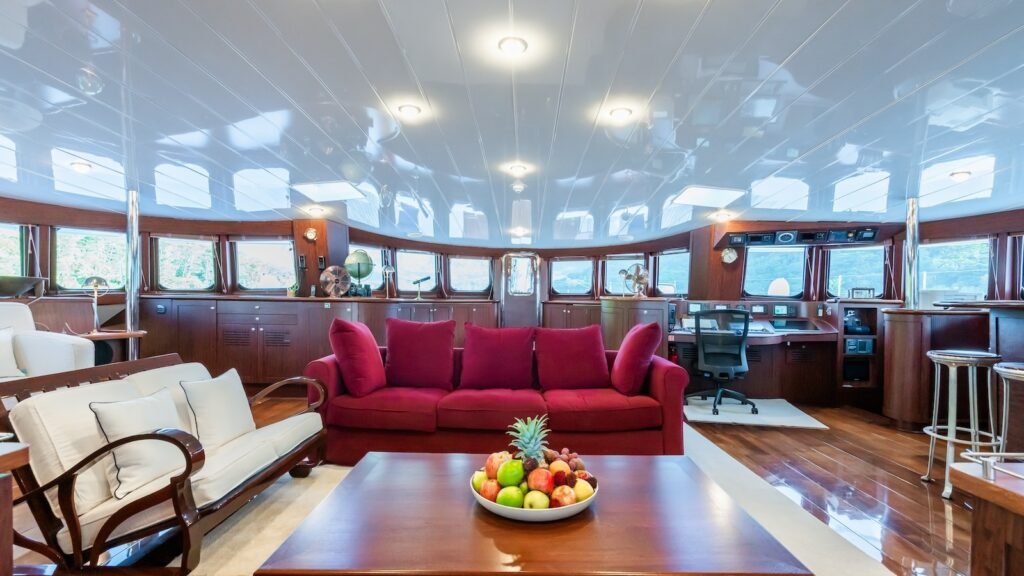
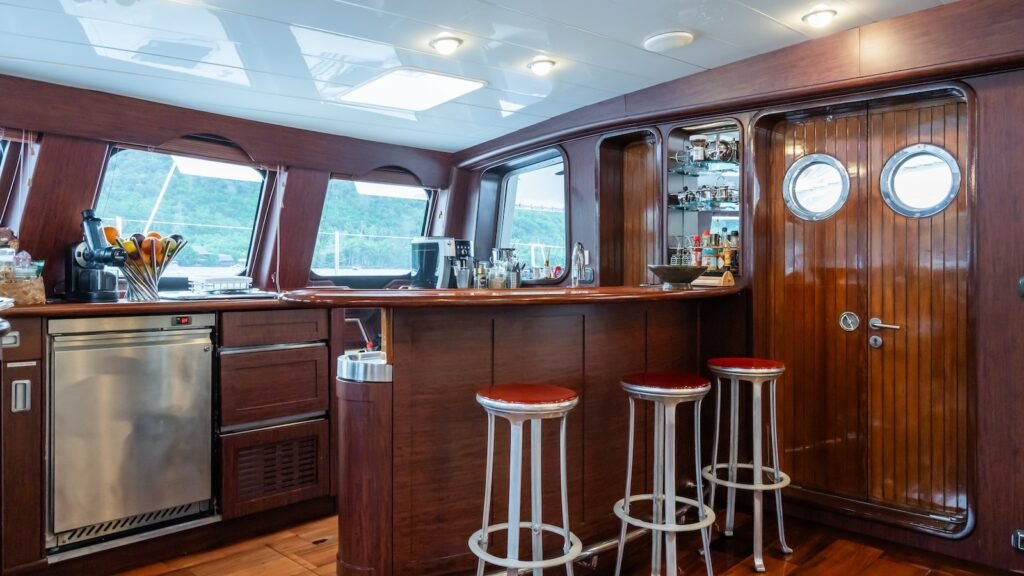
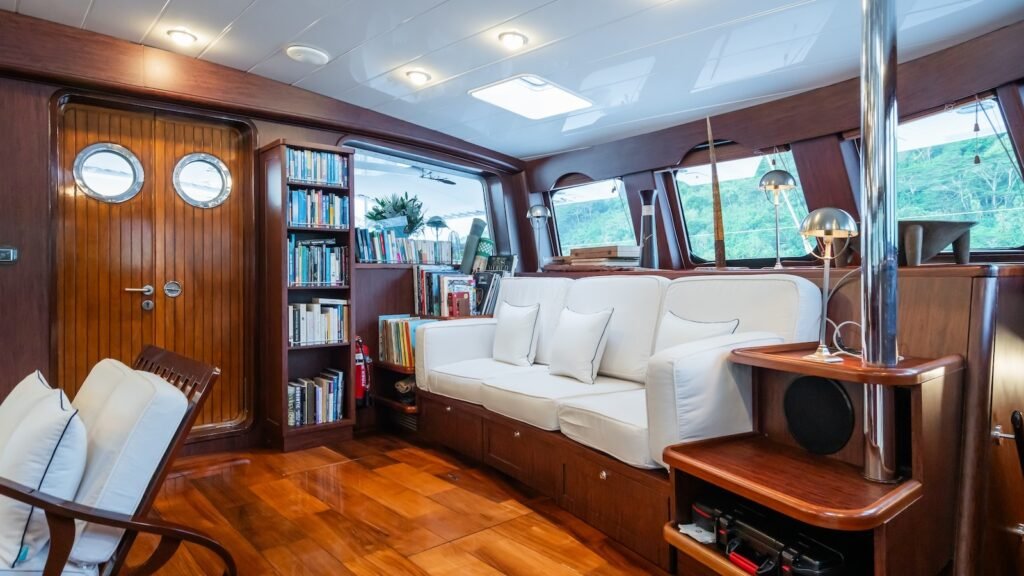
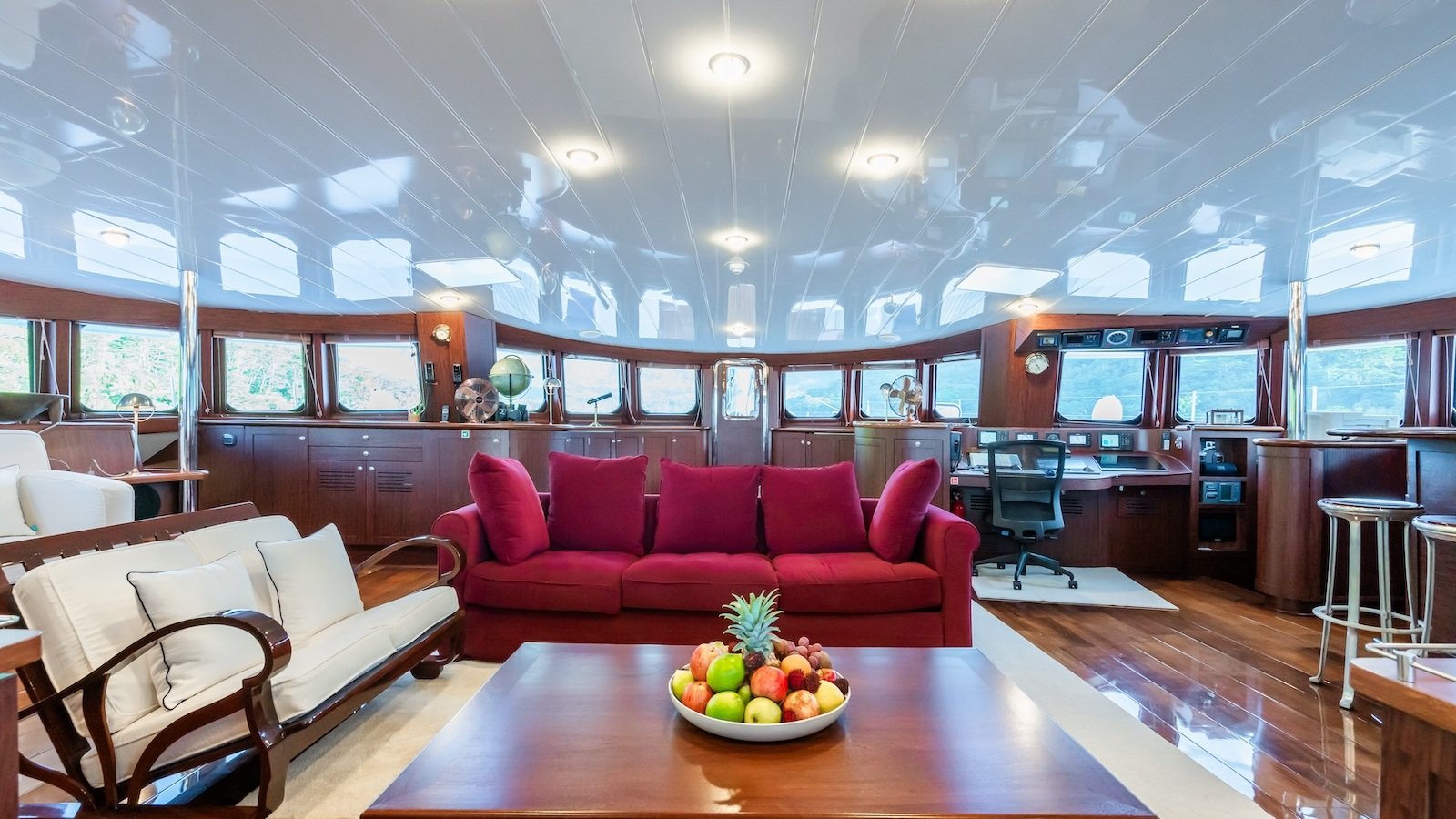
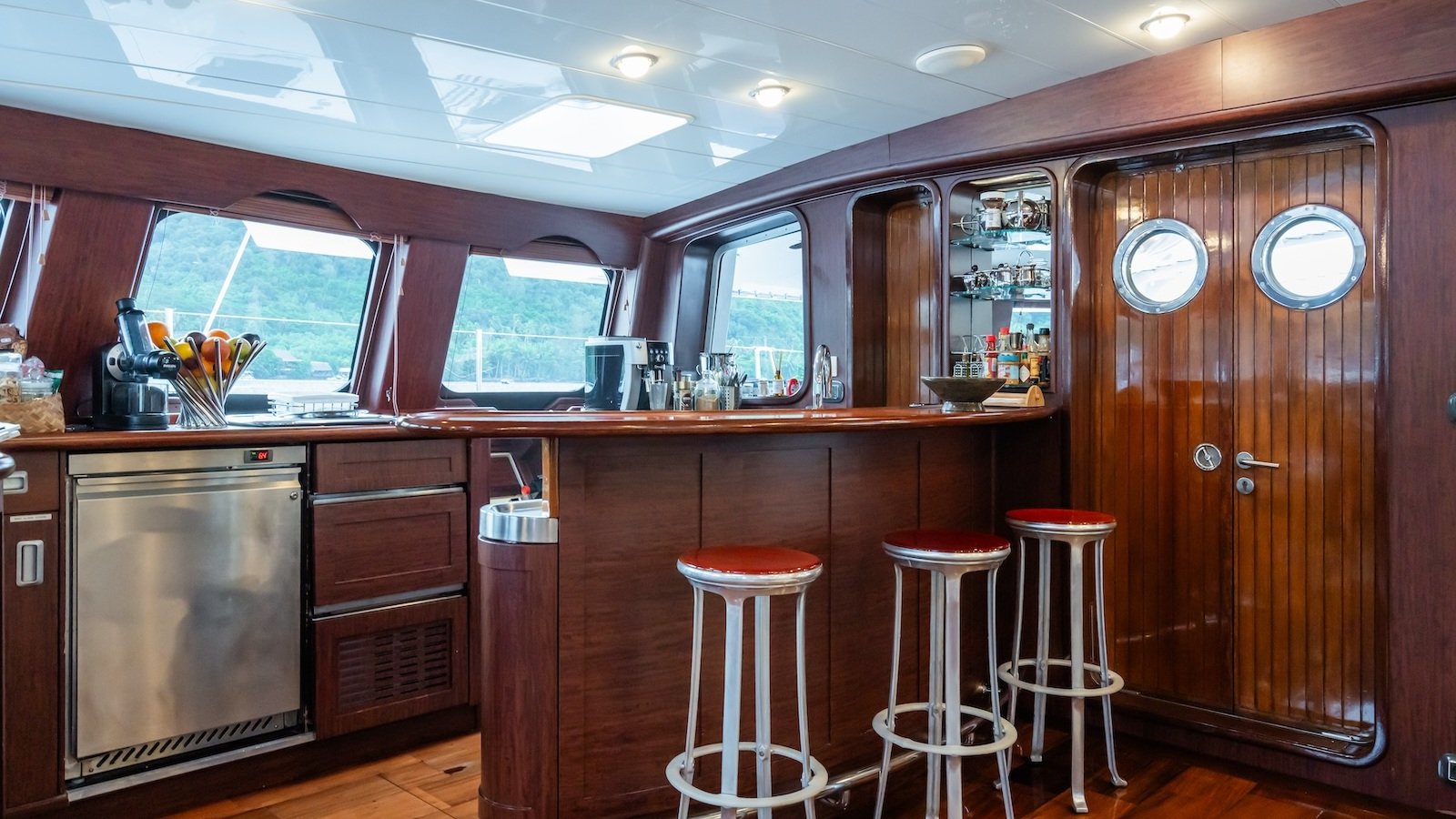
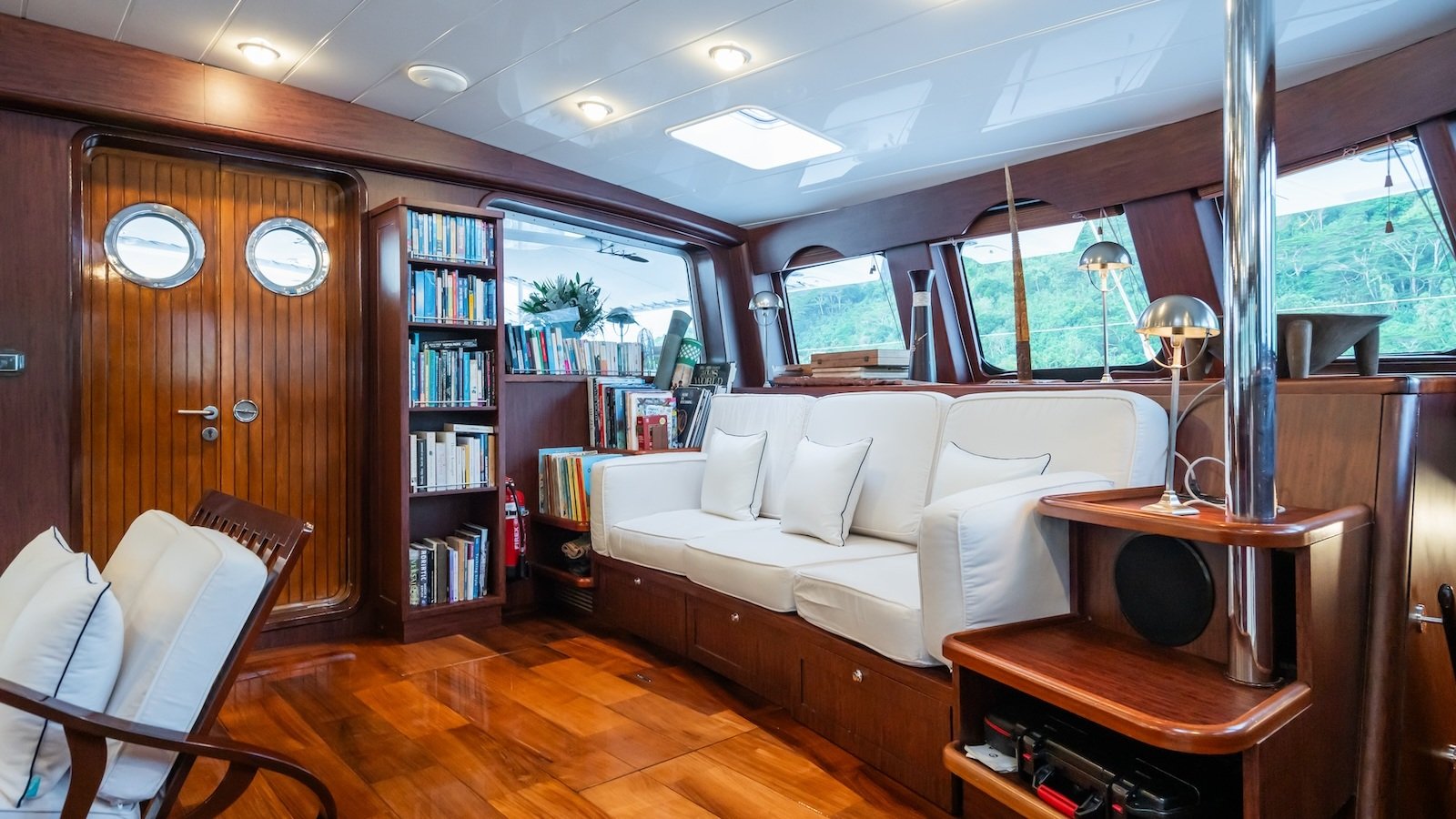
Below and between the hulls, the saloon carries the same generosity. Panoramic glazing wraps almost 360 degrees around a room with a magenta sofa, a working desk, a bar with stools at one end and a book-lined reading corner at the other. It is a single volume rather than a suite of rooms, which suits a boat where nobody wants to be shut away.
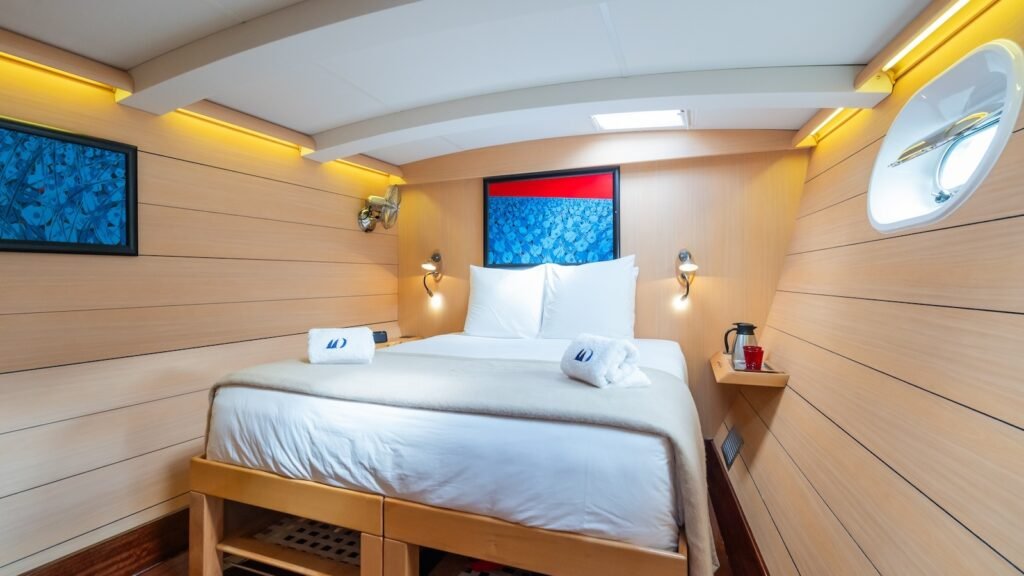
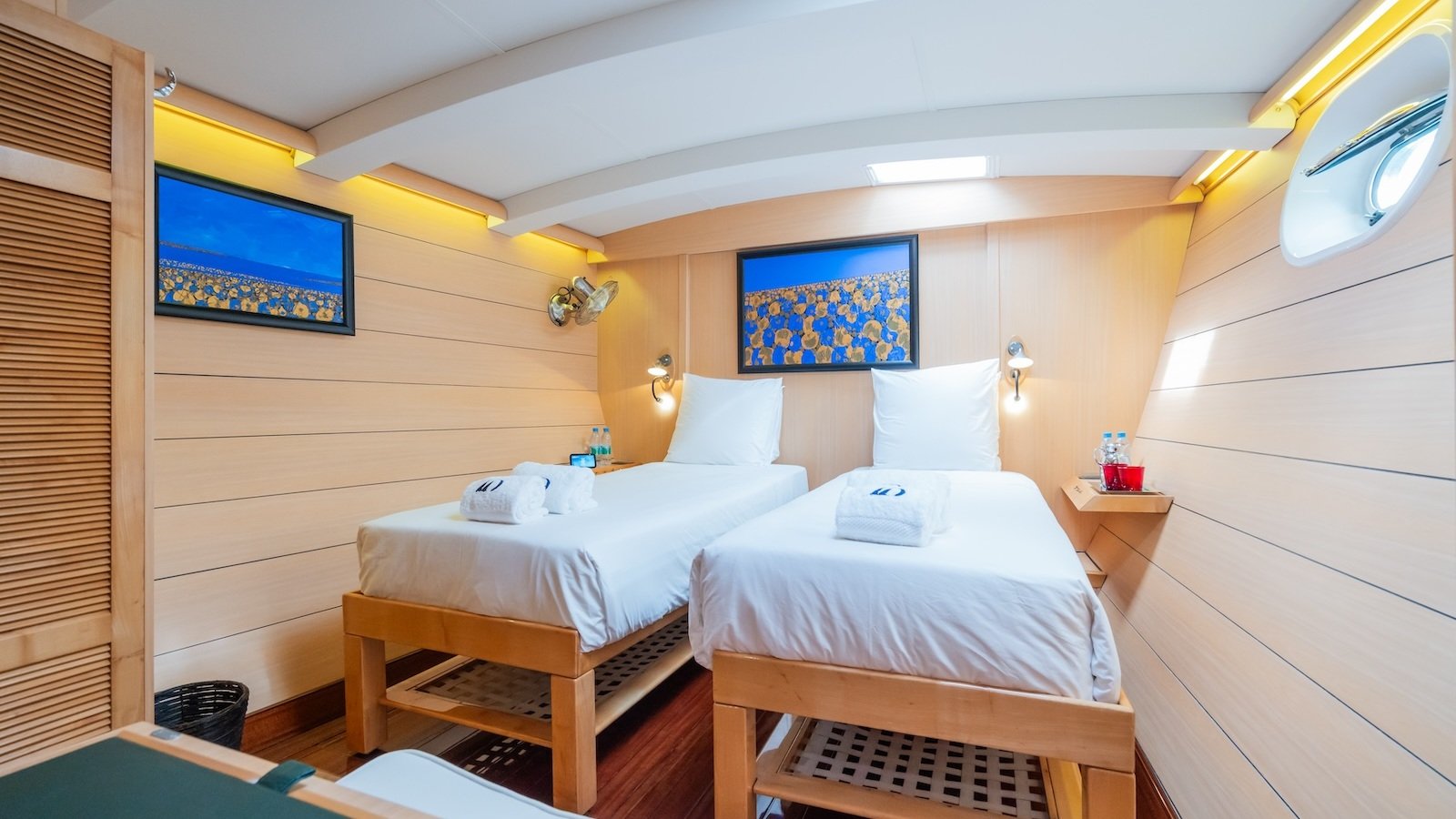
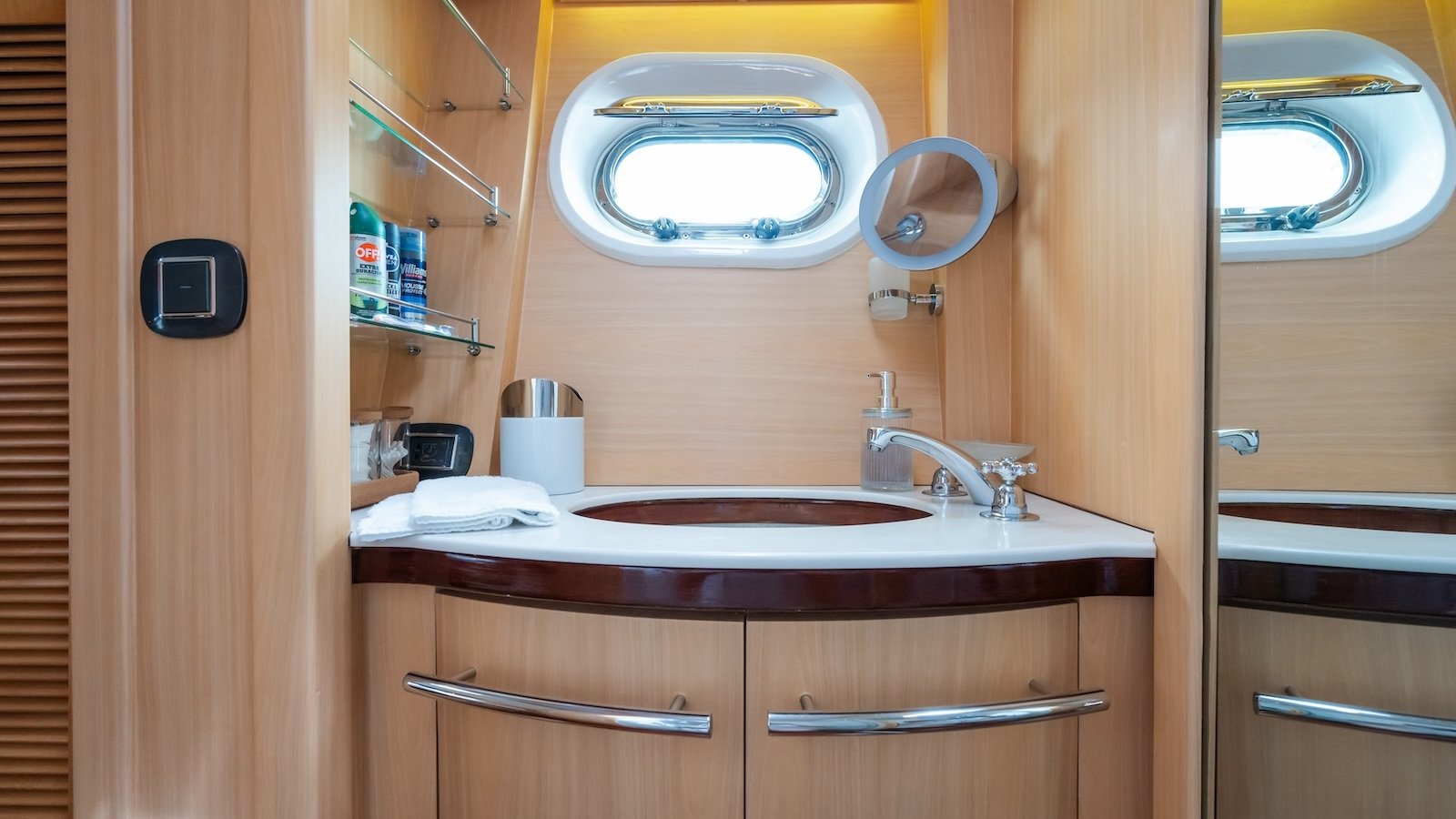
Accommodation runs to six cabins for twelve guests, four of them convertible between double and twin. The pale limed-oak joinery, curved deckheads and porthole light give them a lightness that darker interiors of the same vintage lost years ago. Each has its own bathroom.
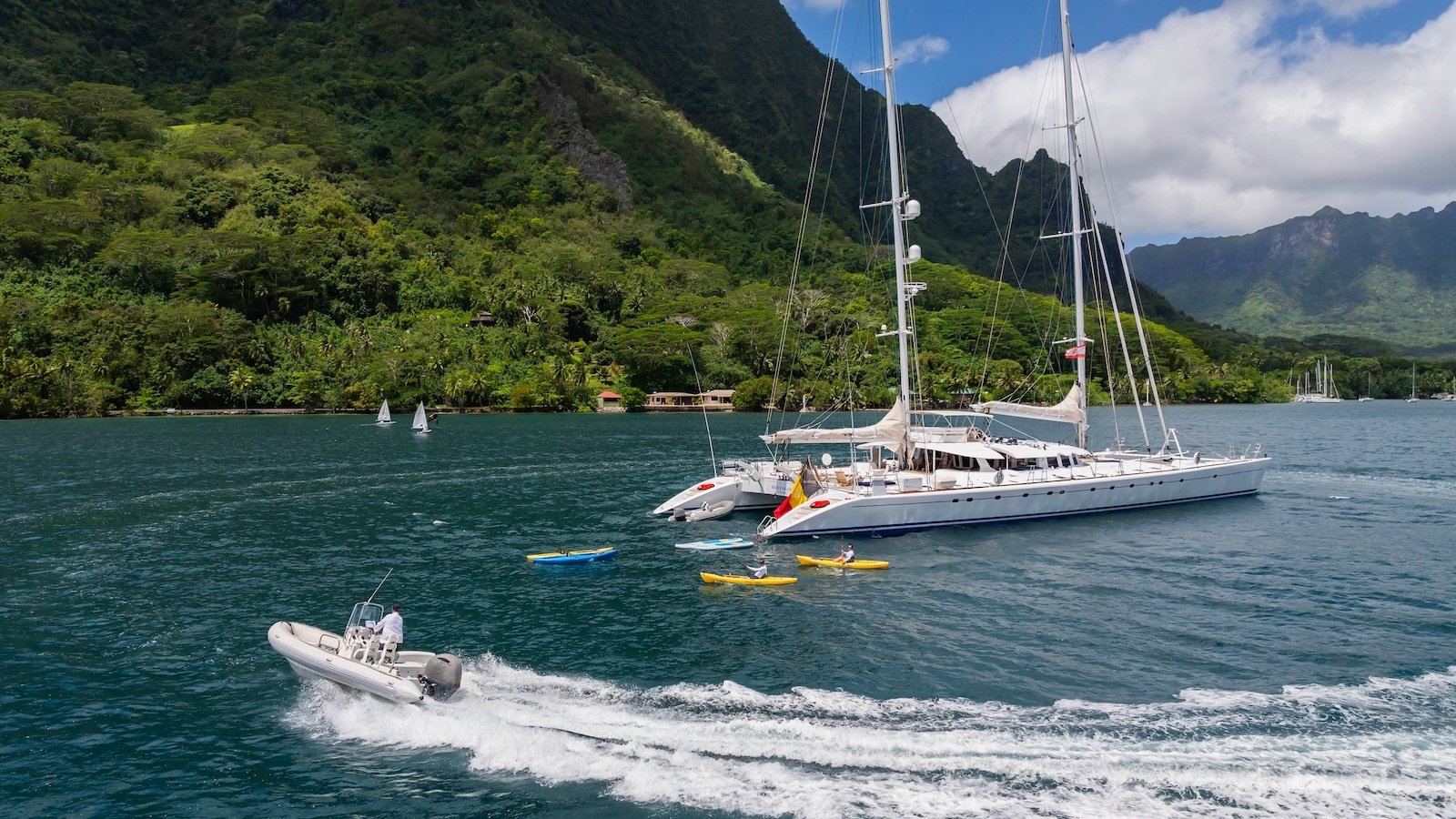
Her cruising ground is the argument that closes most charters. DOUCE FRANCE works the South Pacific all year, moving between the Marshall Islands in summer and French Polynesia in winter, with Fiji, Vanuatu, New Caledonia and the Coral Sea in between. She draws 2.8 metres, which in that part of the world is the difference between anchoring off a reef pass and anchoring inside it.
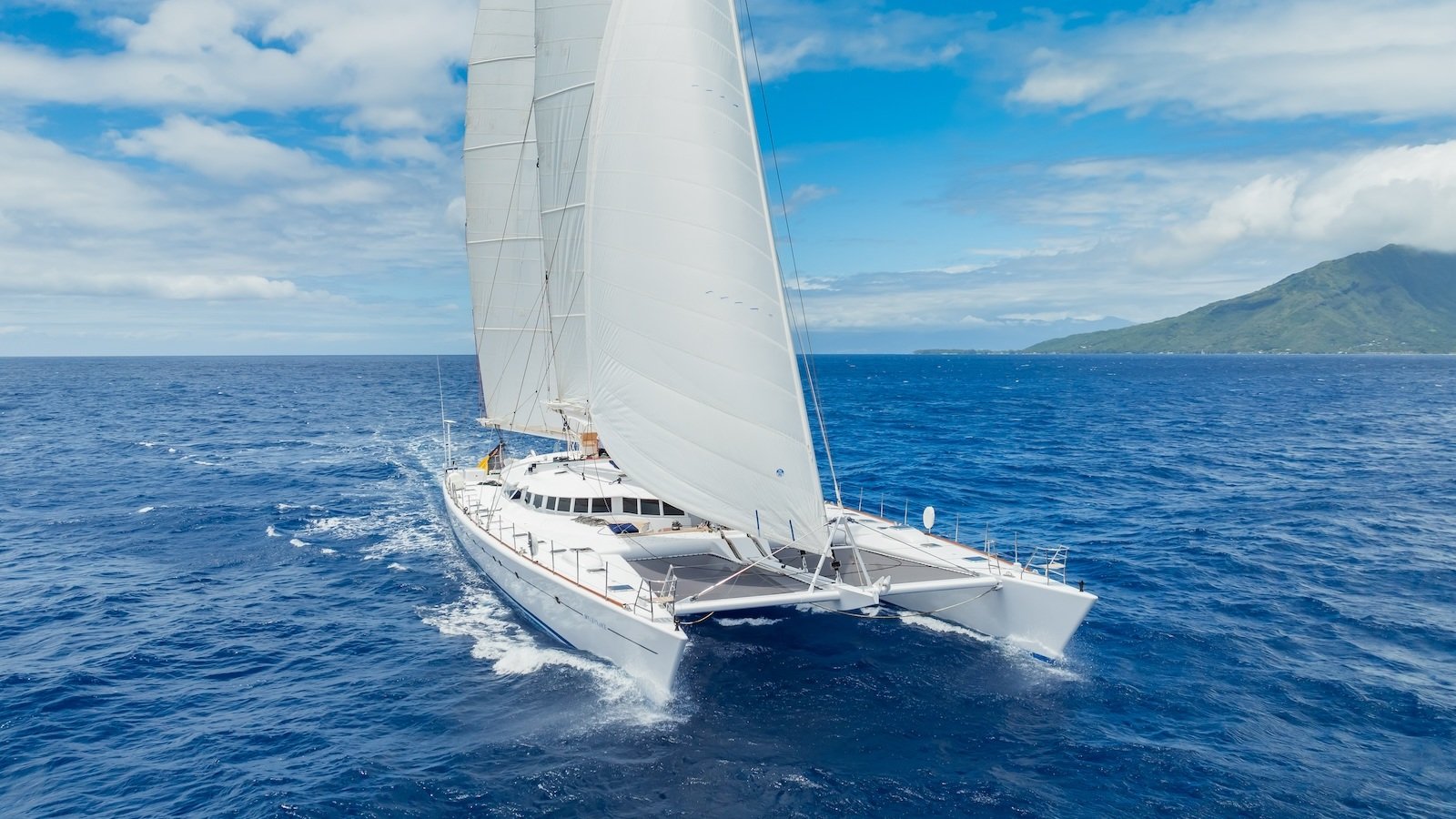
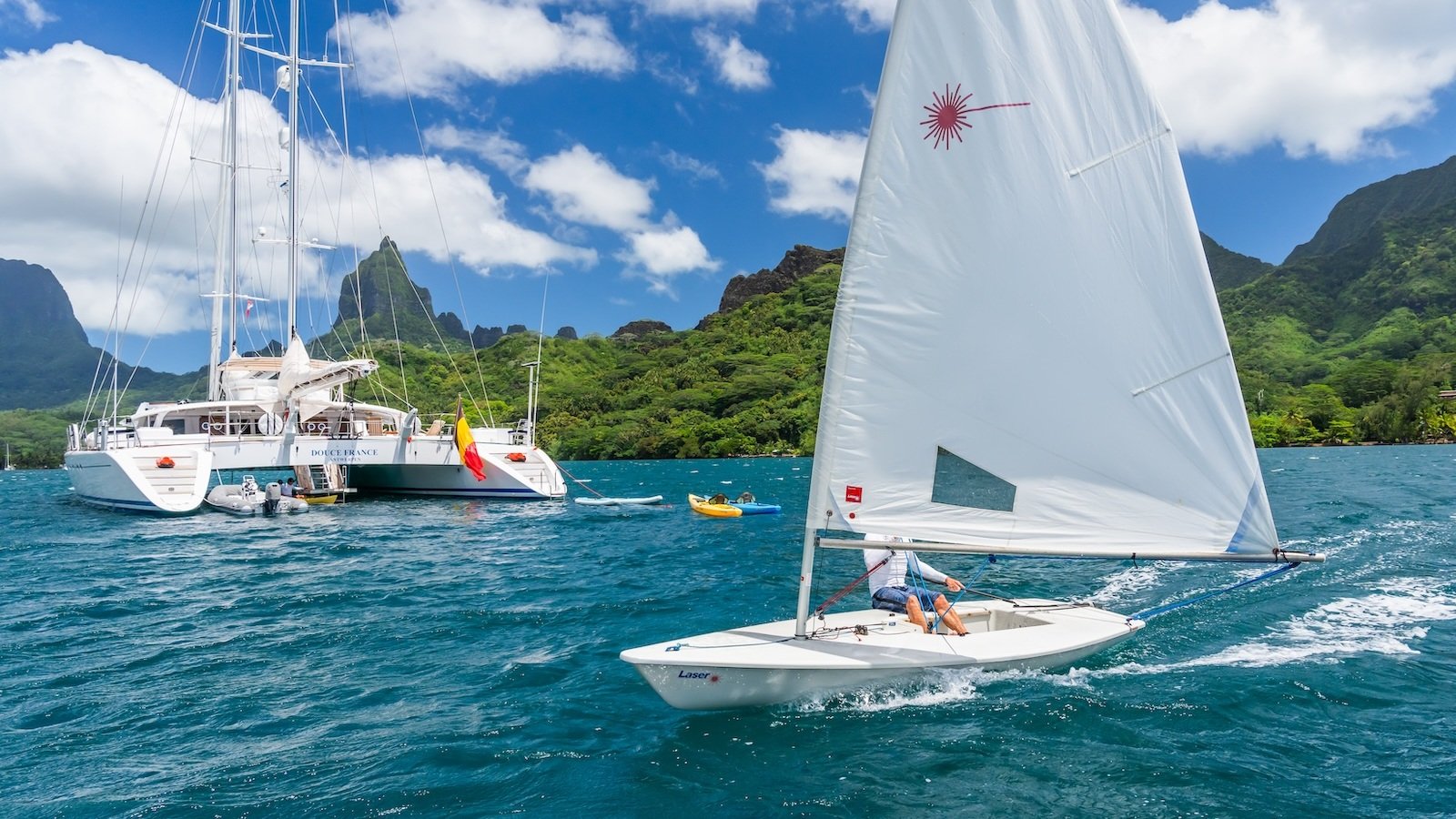
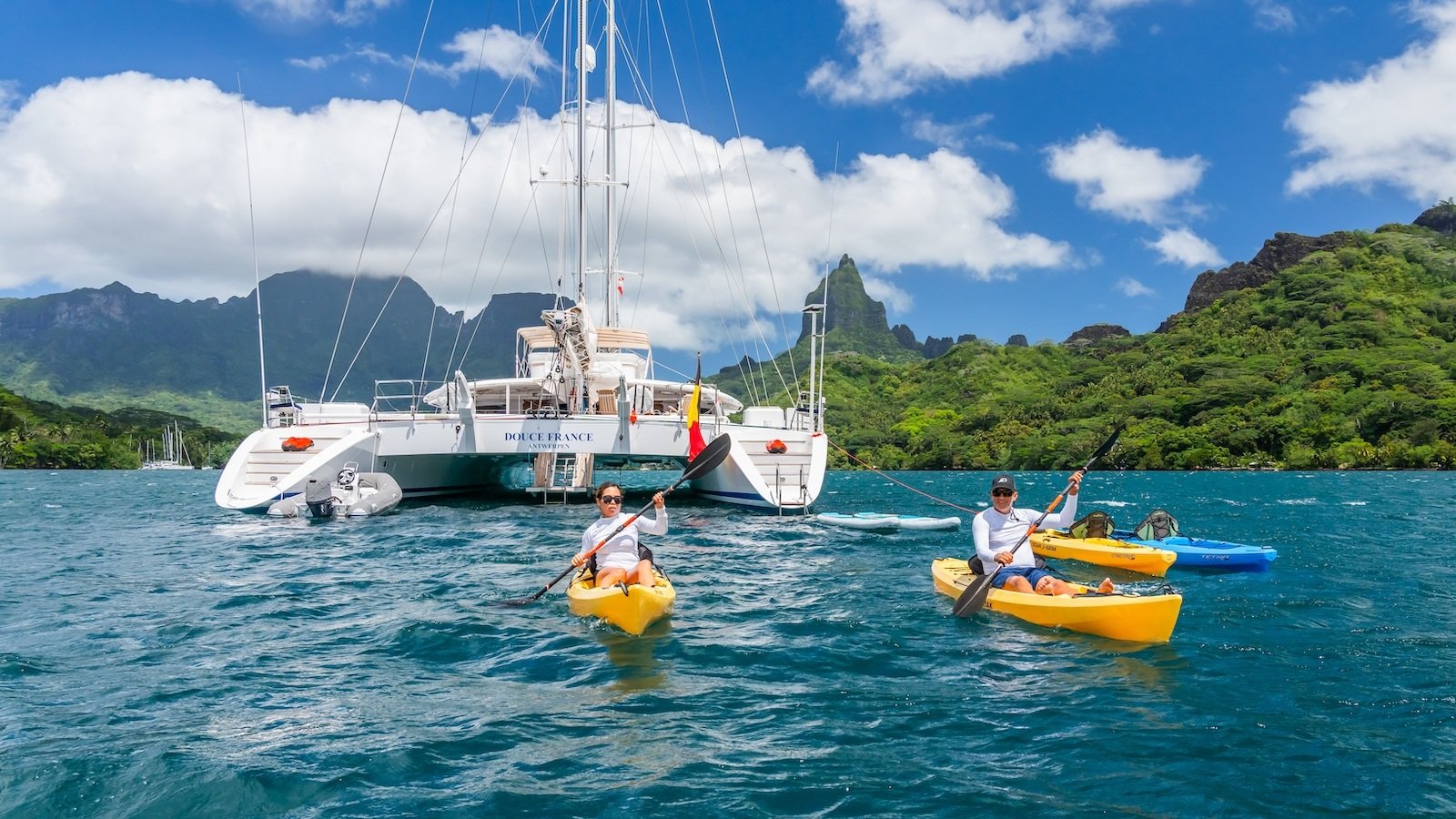
She carries scuba facilities with an instructor aboard, two sailing dinghies, kayaks, paddleboards, a Seabob, kitesurf and windsurf gear and full fishing tackle. Under power she cruises at ten knots and tops out at eighteen; under sail, with 5,692 square feet set across two rigs, she is genuinely quick and remarkably level. Guests who have never sailed tend to be surprised by how little a catamaran of this size leans.
Her crew of seven have run her for years and know the atolls she visits by name. For a group of twelve who want space, shallow water and the Pacific rather than the Mediterranean, there is not much else like her.