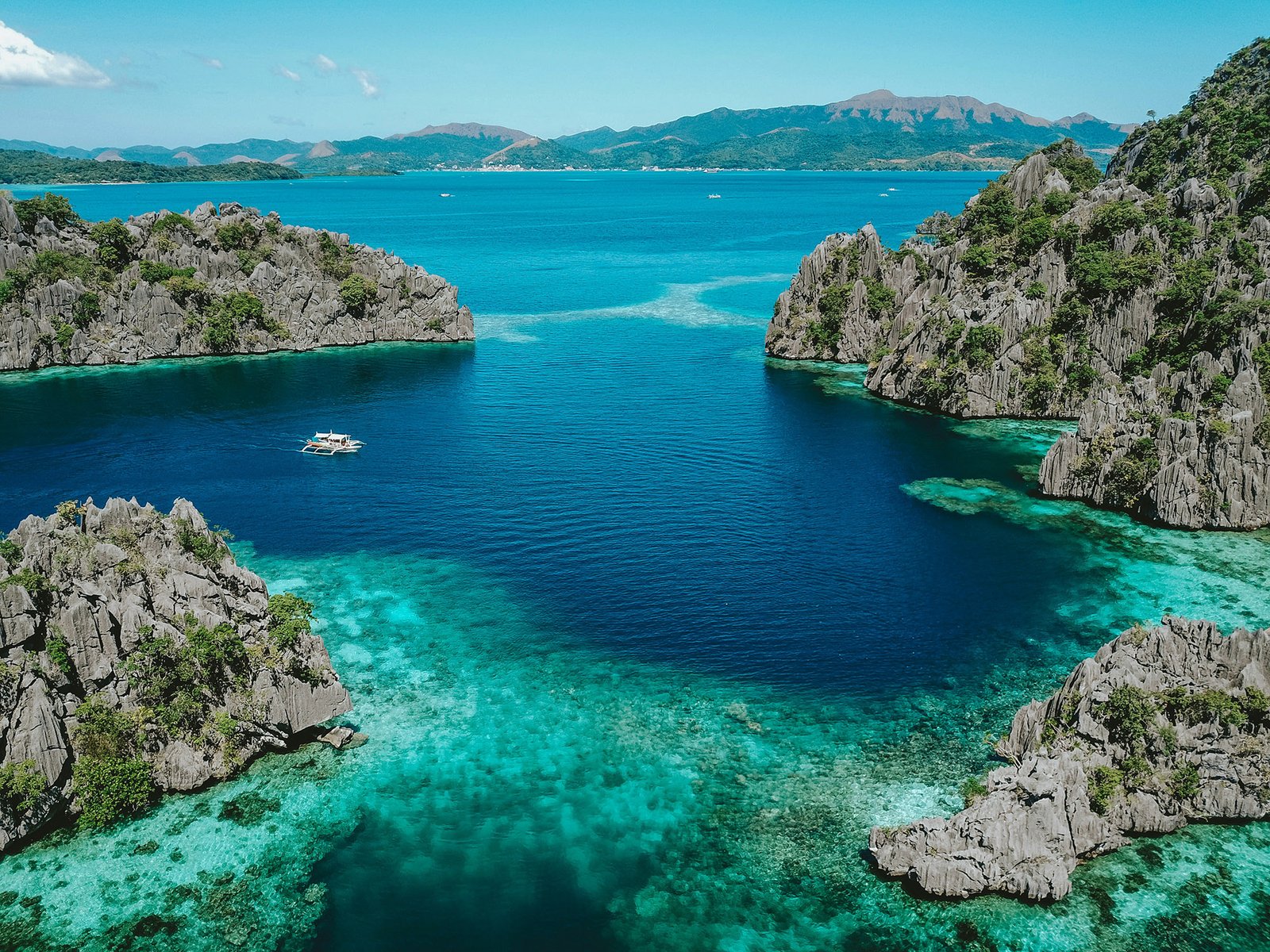
Philippines / Tubbataha Reefs


North Atoll
South Atoll
Ranger Station
Bird Islet
Malayan Wreck
Dive Malayan Wreck
Photograph reef sharks at Bird Islet
Snorkel the Ranger Station house reef
Spot manta rays along the reef walls
Meet Tubbataha’s park rangers
Amos Rock
South Rock
Black Rock
Lighthouse Islet
Jessie Beazley Reef
The park is open for a short window each year, typically mid-March to mid-June, when the southwest monsoon has not yet arrived and the Sulu Sea is calm enough for the crossing. Outside these months the park closes entirely and no vessels are permitted, so a Tubbataha visit has to be built around this fixed season rather than fitted around a wider Philippines itinerary.
Puerto Princesa International Airport (PPS) is the usual arrival point, roughly one hour fifteen minutes by flight from Manila. From there it’s a further ten to twelve hours by boat across open water to reach the reefs, since there is no other way in. All visits run through liveaboard operators accredited by the Tubbataha Management Office, which also issues the required park permits.
Amos Rock and Black Rock, on the North and South Atolls respectively, are known for dense schools of reef fish and healthy gorgonian fans along their walls. The Malayan Wreck offers a change of pace from the open-water drift dives, and Jessie Beazley Reef, a smaller outlying reef north of the main atolls, often turns up passing pelagics away from the busier sites.
Most liveaboards run four to five night itineraries, giving time for twelve to fifteen dives across both atolls plus a visit to Jessie Beazley Reef if conditions allow. Given the ten to twelve hour crossing each way, a shorter trip leaves little time underwater relative to the transit, so operators rarely offer anything briefer.
Yes. Every vessel and guest must be covered by a park permit issued through the Tubbataha Management Office, with a conservation fee payable per visitor, and only accredited liveaboard operators are authorised to enter the reserve. Anchoring directly on the reef is prohibited, so boats moor at fixed points to protect the coral, a system that has helped keep the reef in such good condition.