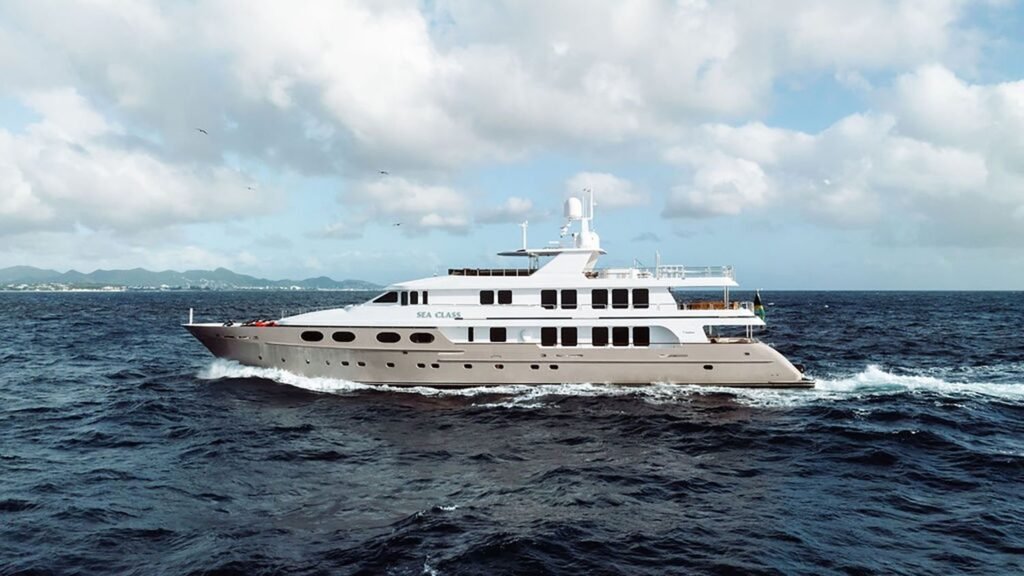
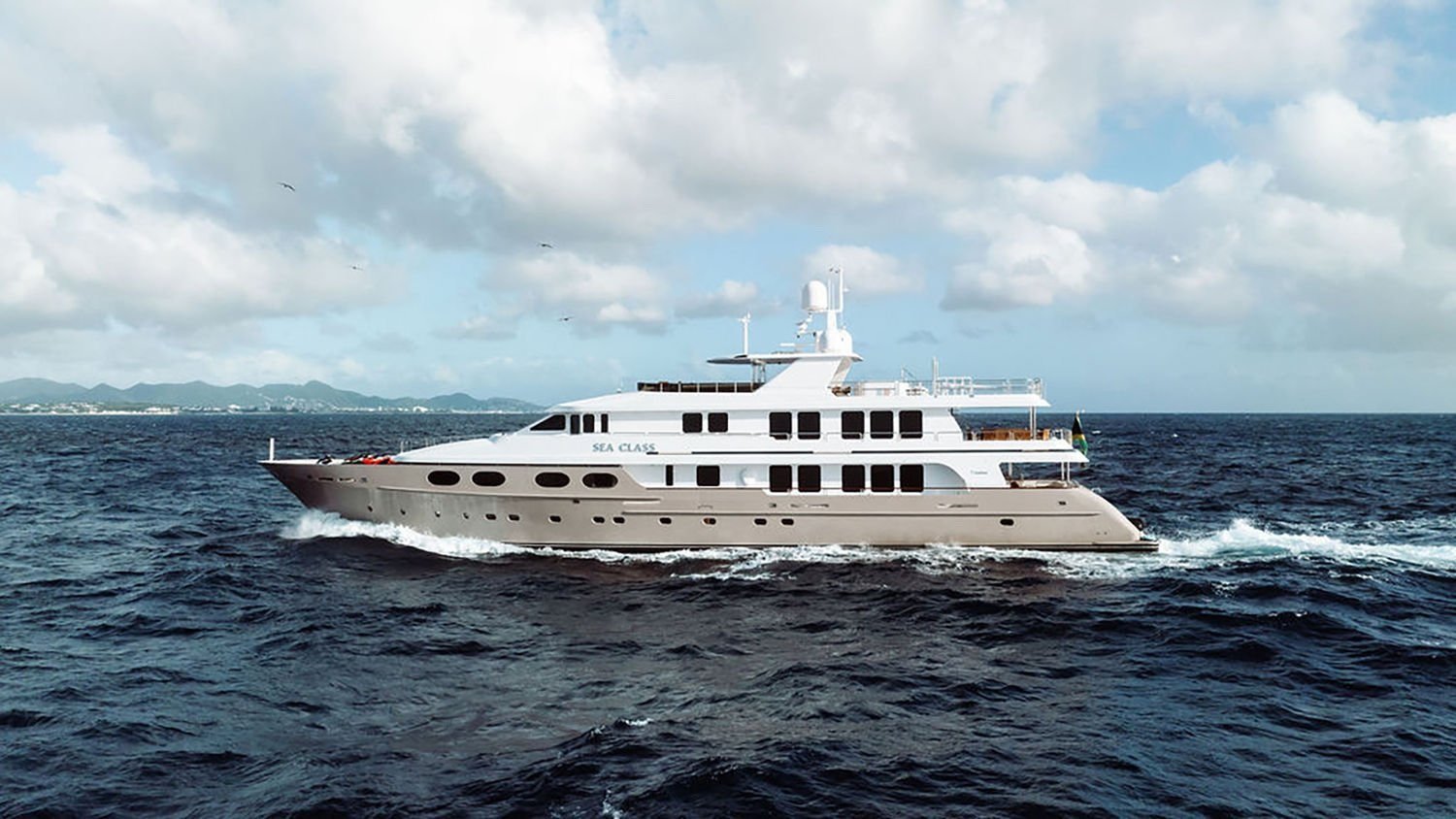
SEA CLASS is a 1997 Christensen with almost nothing left of 1997 about her. In
2012 she was stripped back to the bare hull and rebuilt over eighteen months.
Further work followed in 2018, a full hull and superstructure repaint in 2021
and 2022, an entirely new interior in 2023 and another refit through 2024. What
charters today is a 47-metre yacht with three decades of engineering maturity
and a two-year-old interior, at a price a comparable new build could not
approach.
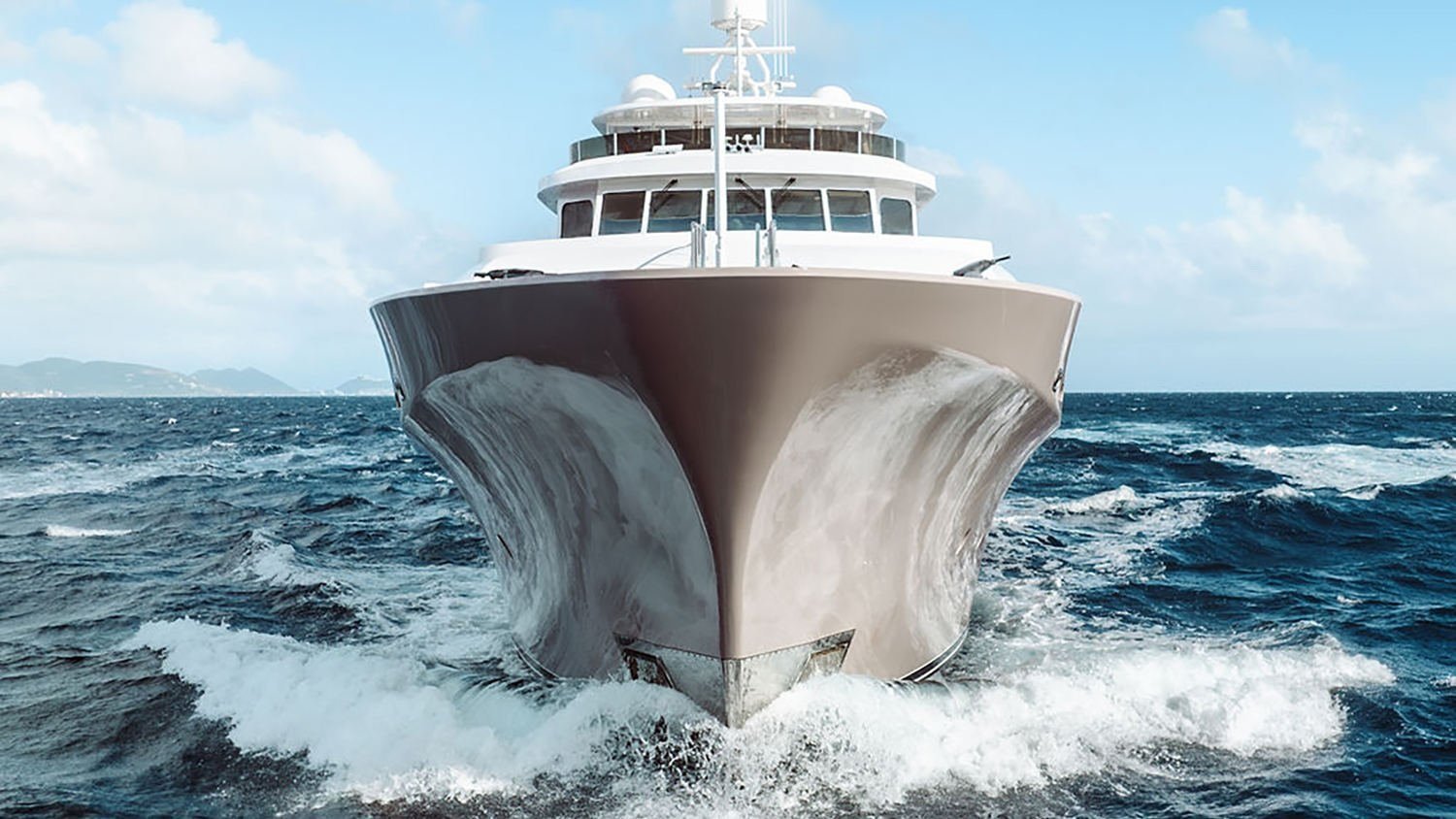
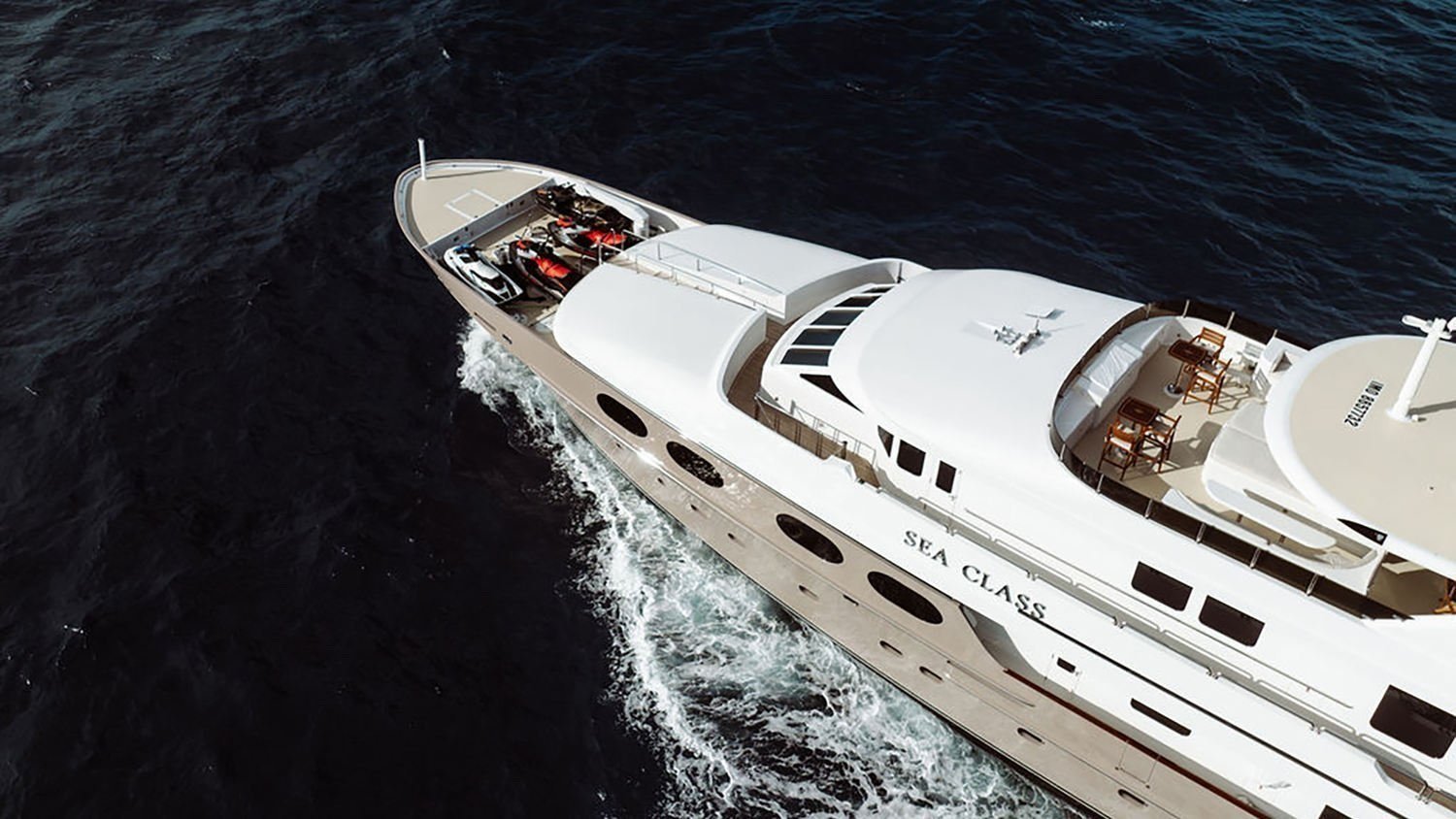
Christensen built her in GRP at Vancouver, Washington, on a hull that has aged
particularly well: 460 gross tonnes, a plumb-ish stem, low freeboard forward and
the long superstructure line Donald Starkey drew for her. She cruises at 13
knots and carries 3,500 miles of range, which in practice means a Caribbean
season without a single passage planned around fuel.
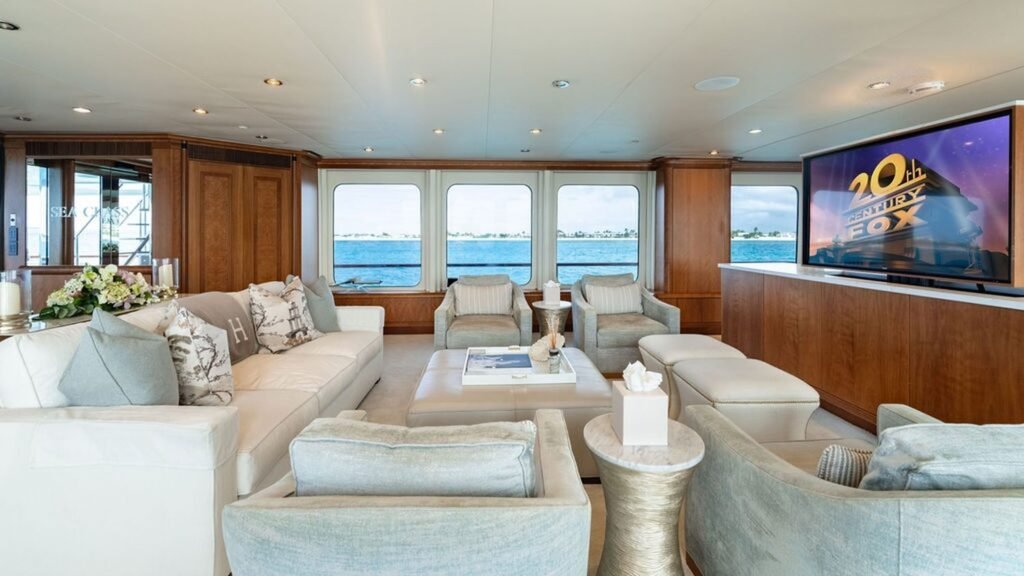
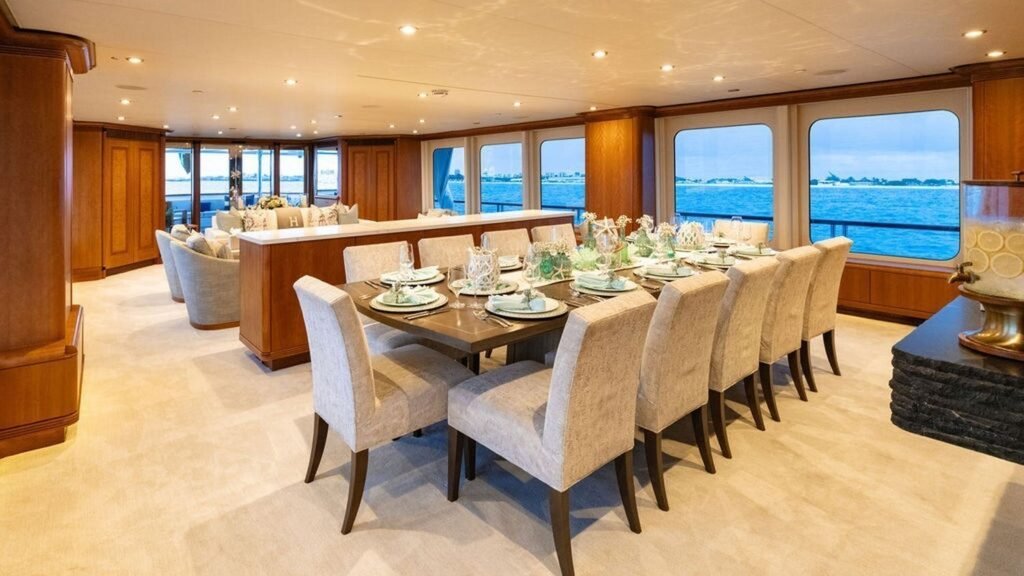
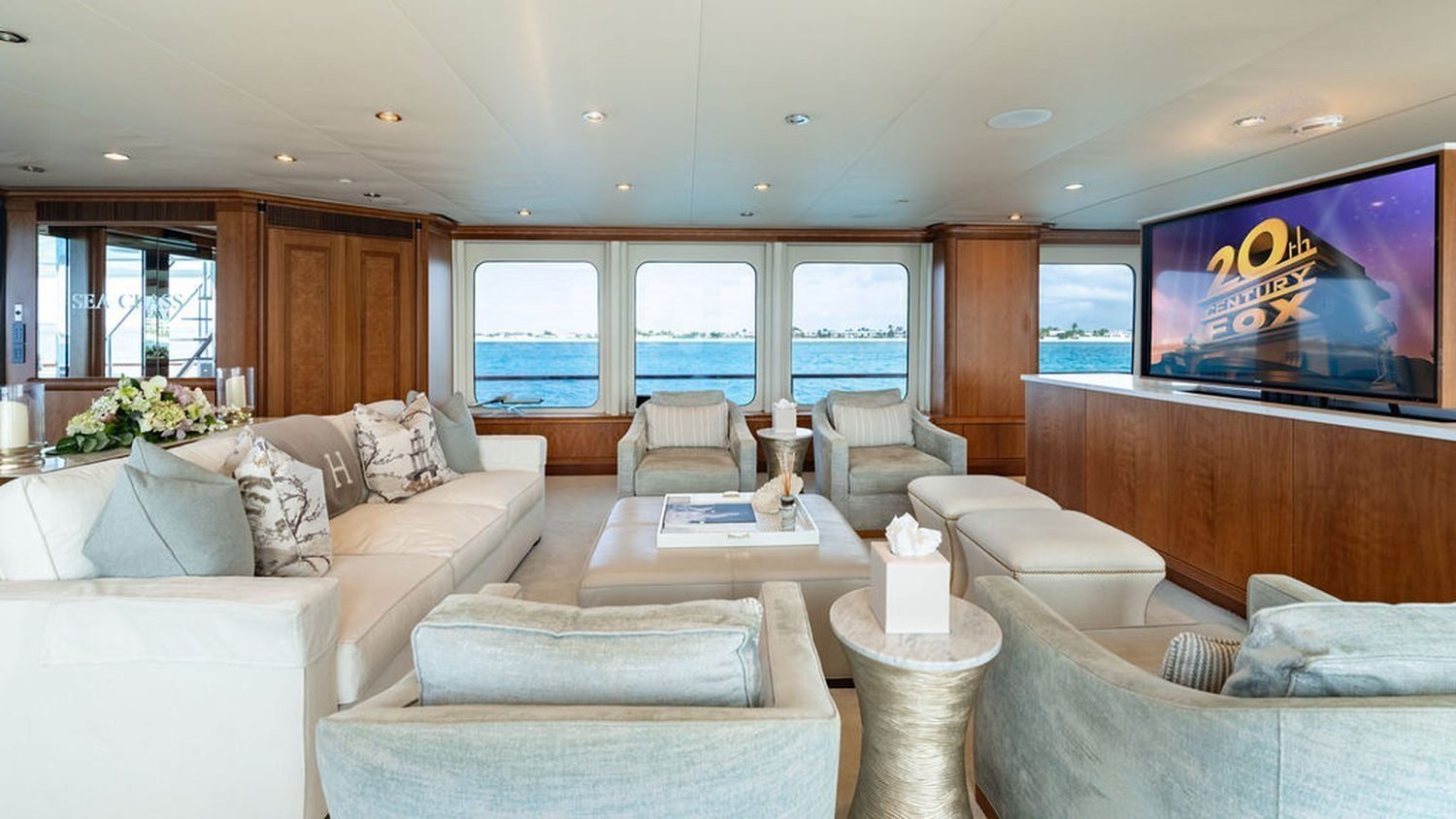
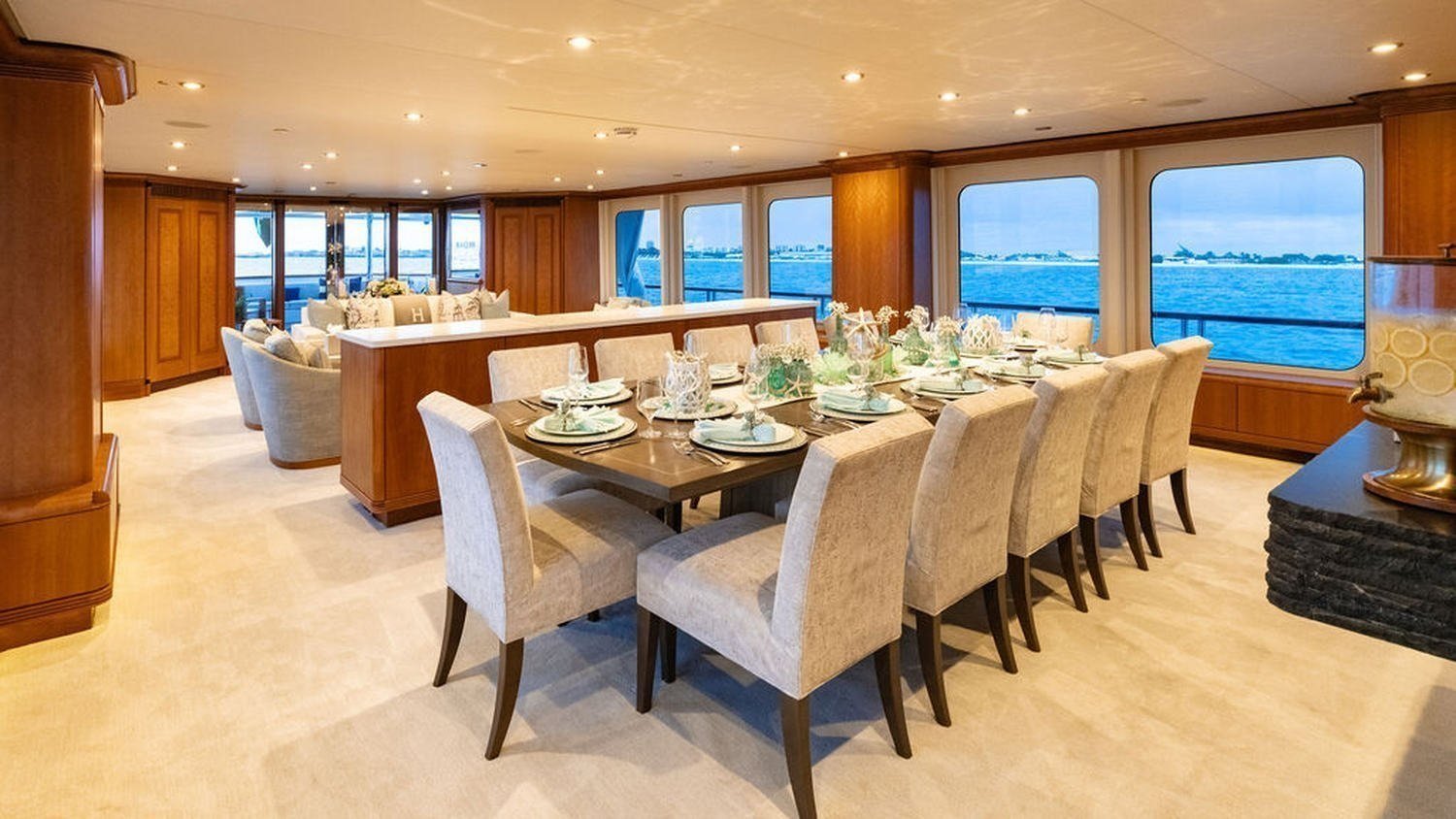
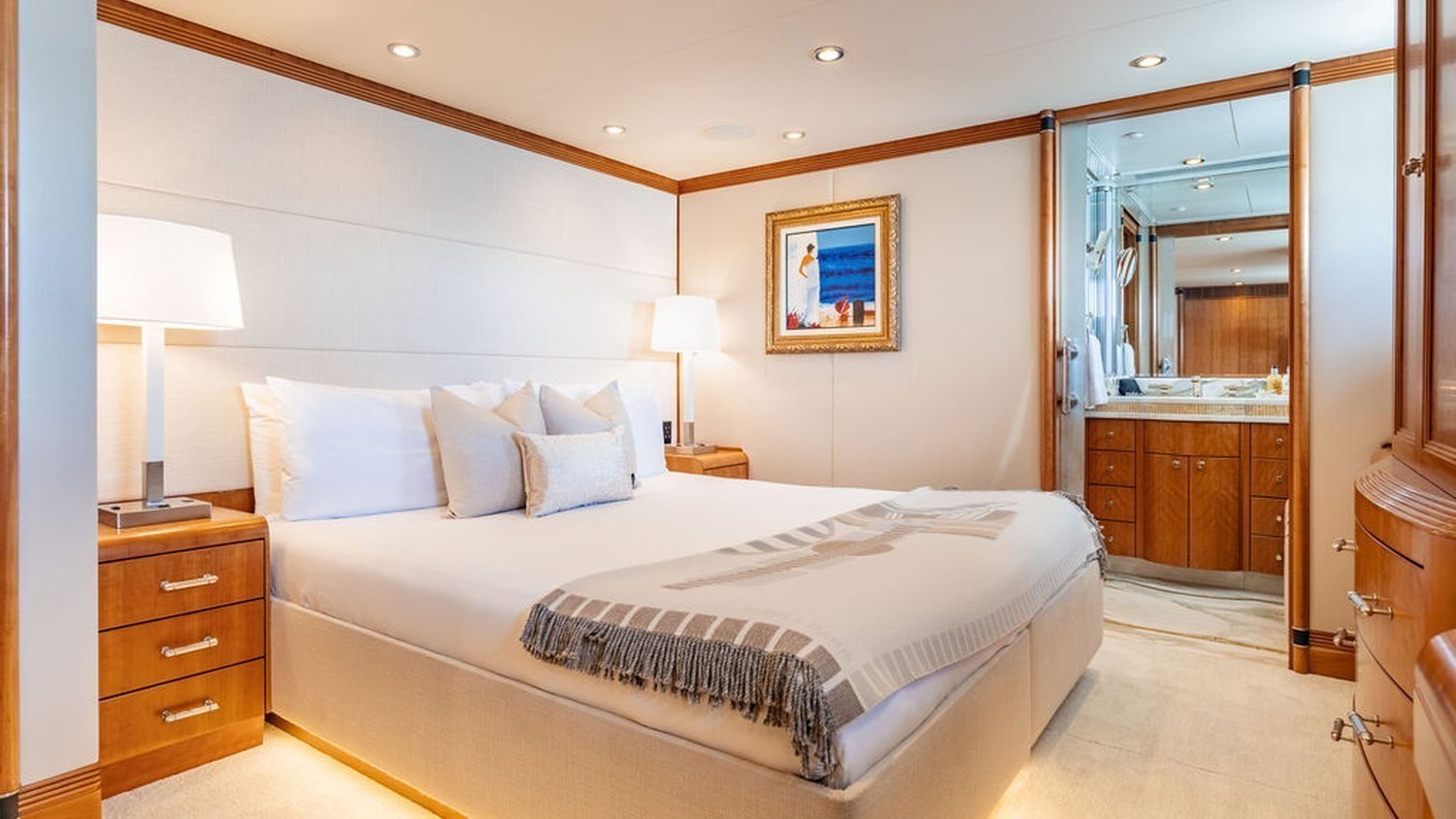
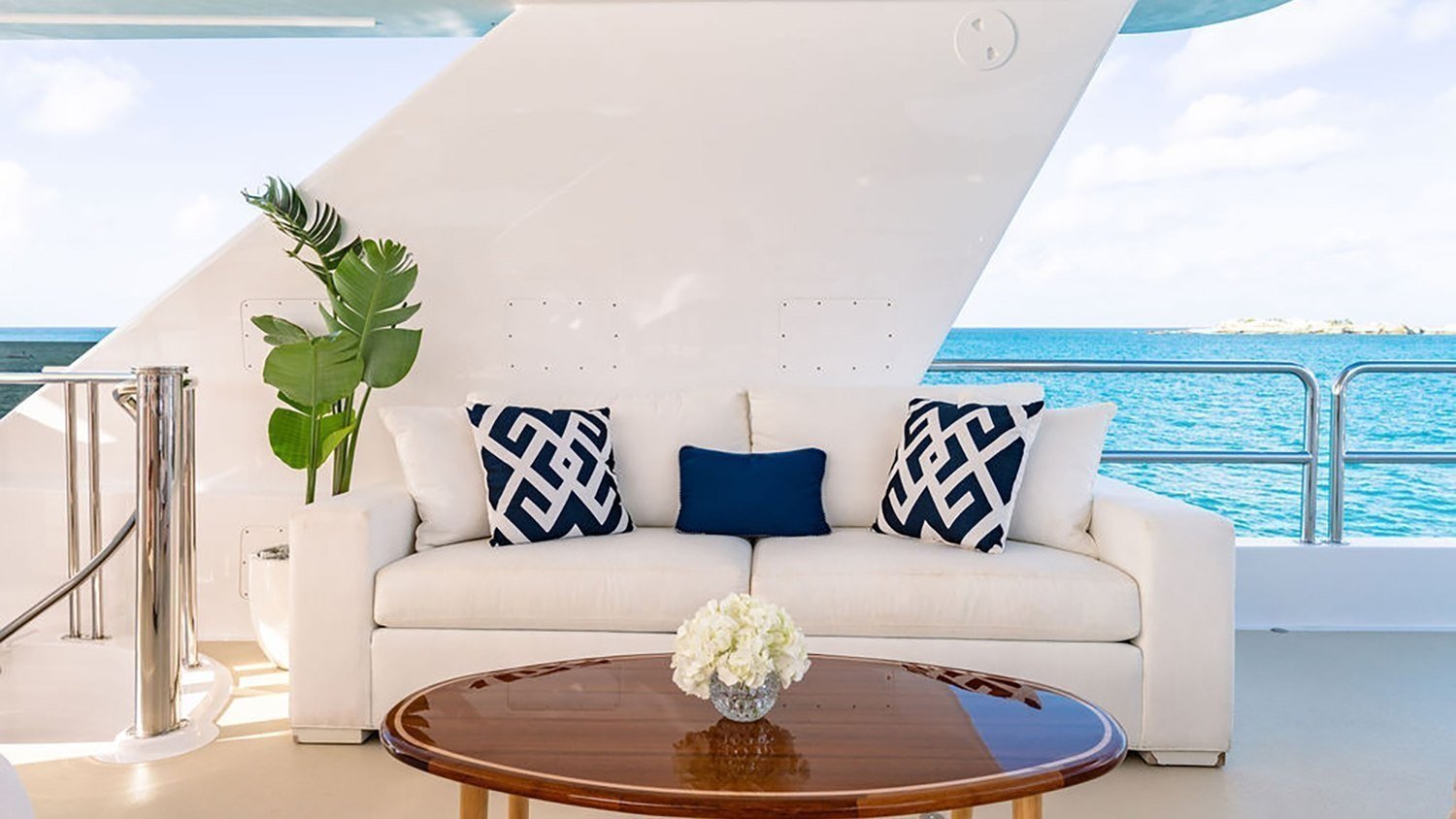
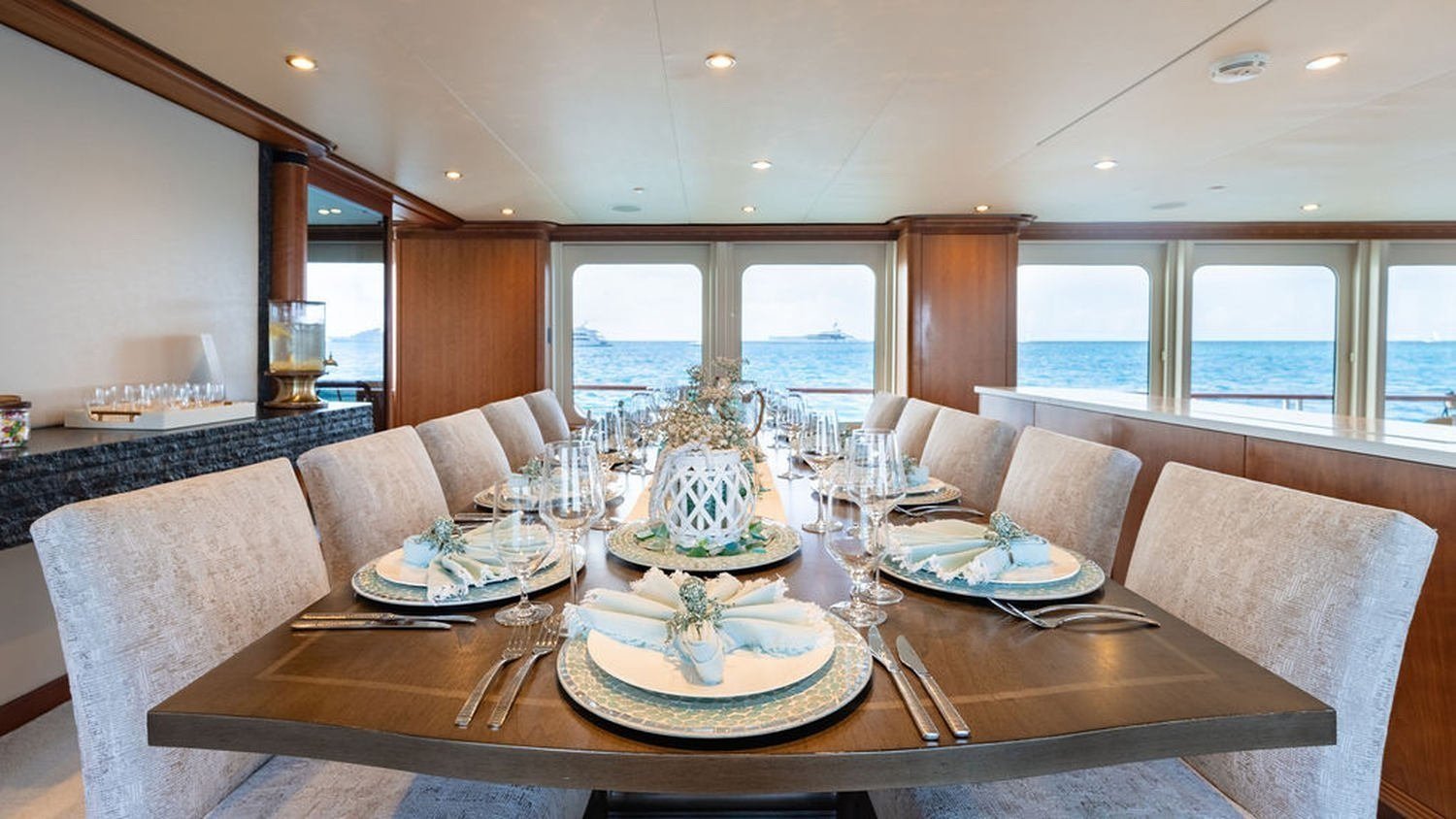
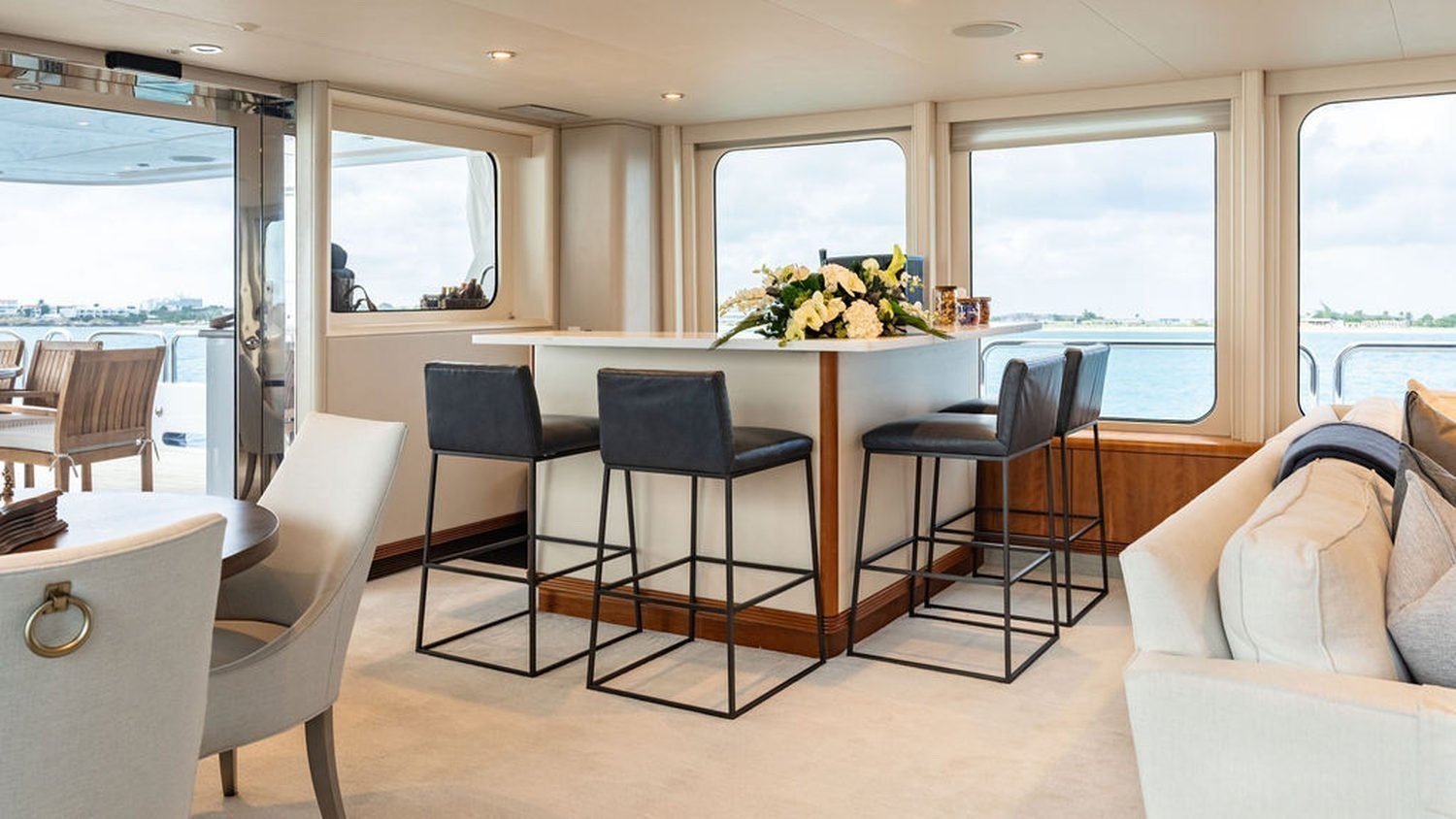
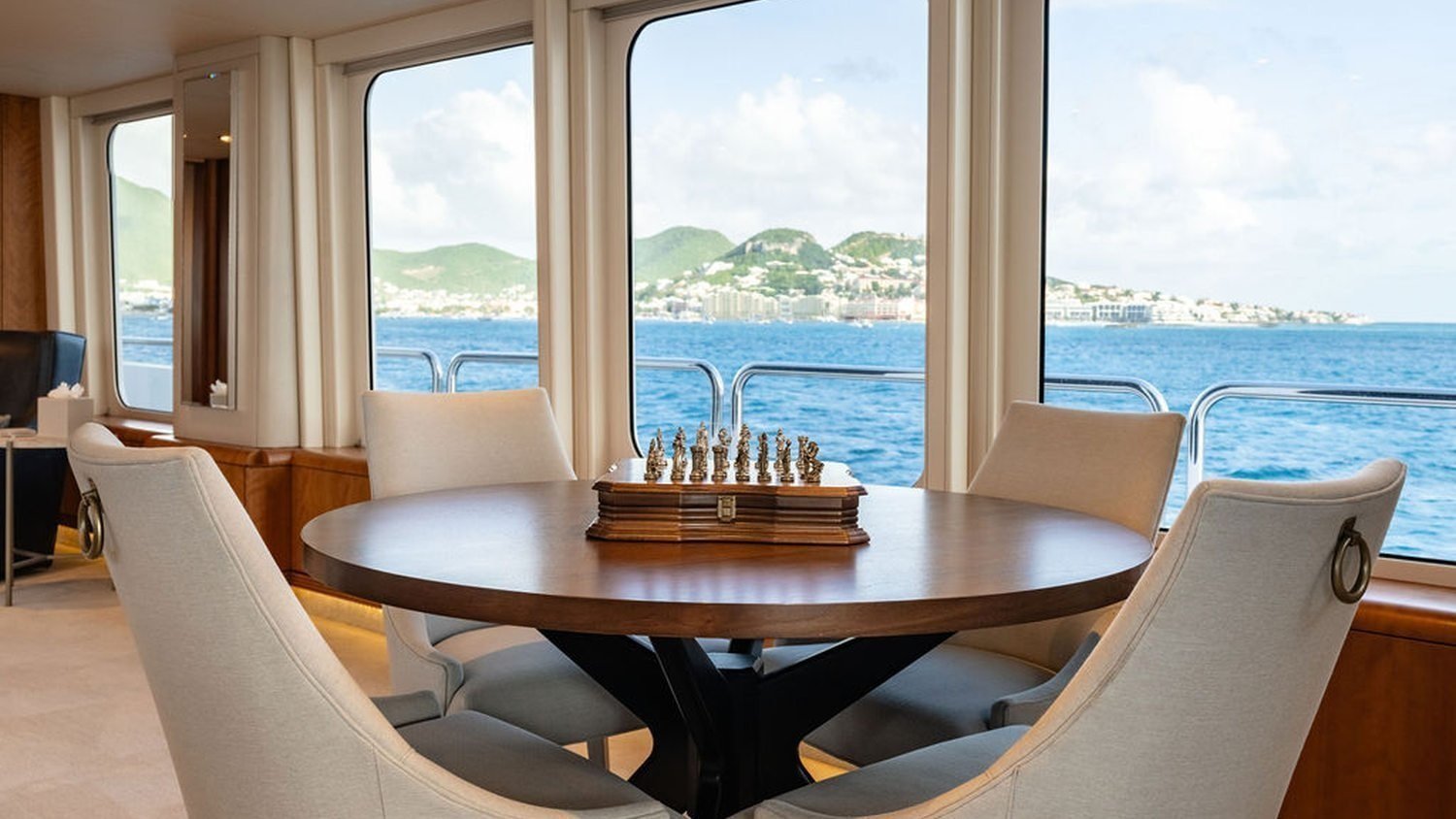
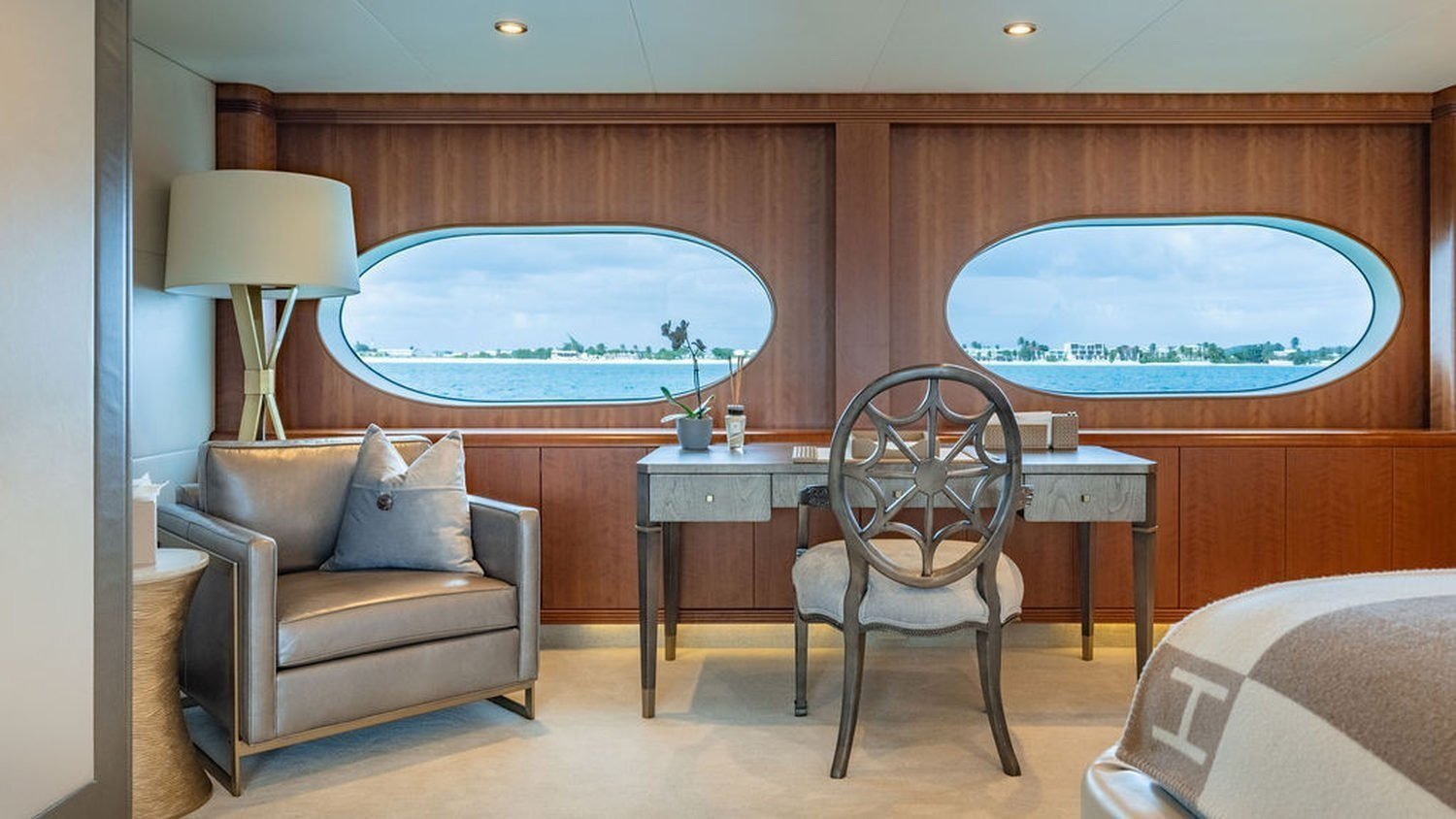
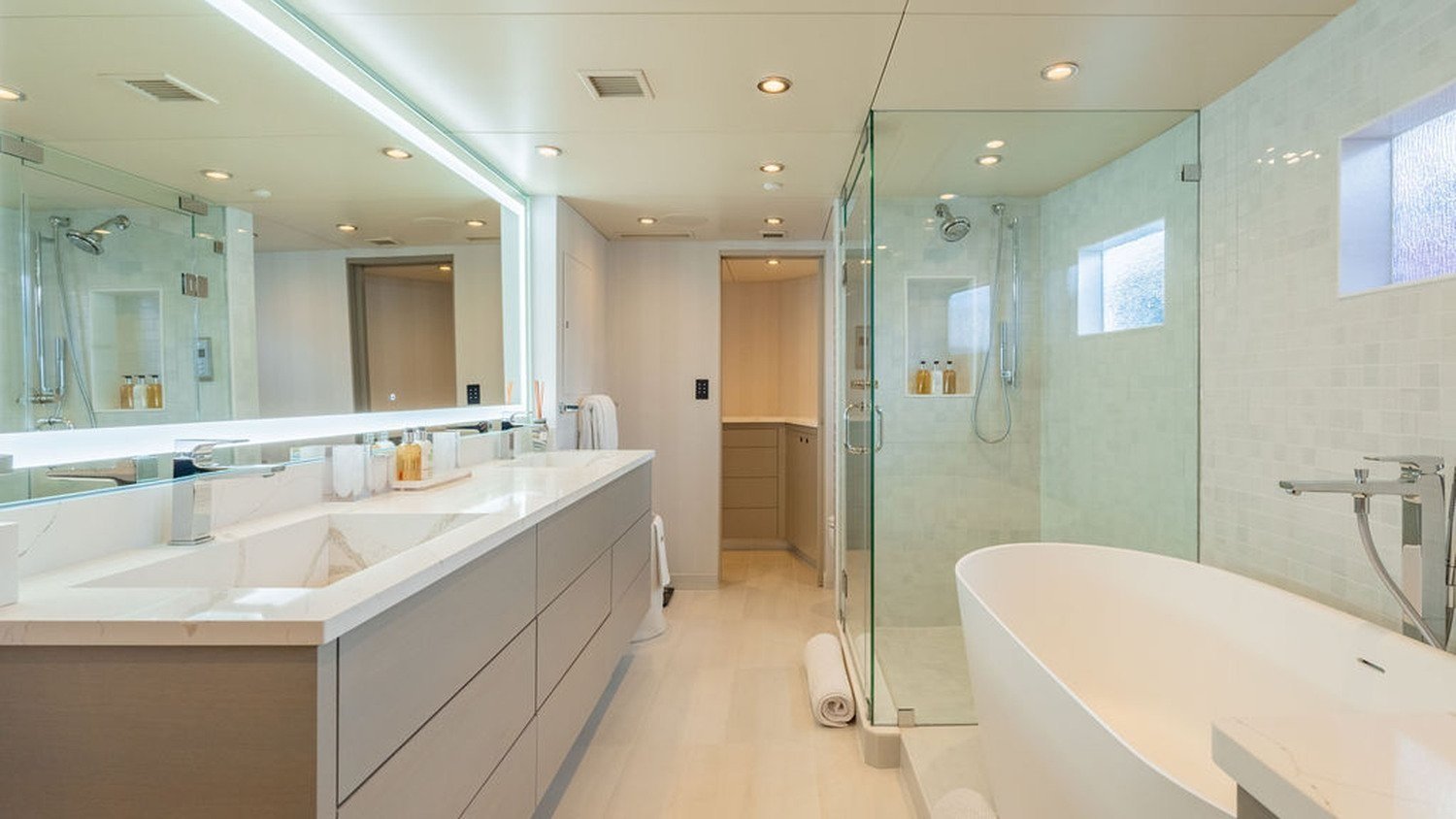
Glade Johnson’s interior is the current one and it is deliberately calm. Pale
carpets, honeyed timber panelling and window lines that run almost unbroken.
The main salon is furnished in cream and soft blue-green with a large screen
forward and etched glass doors aft; the formal dining room sits separately,
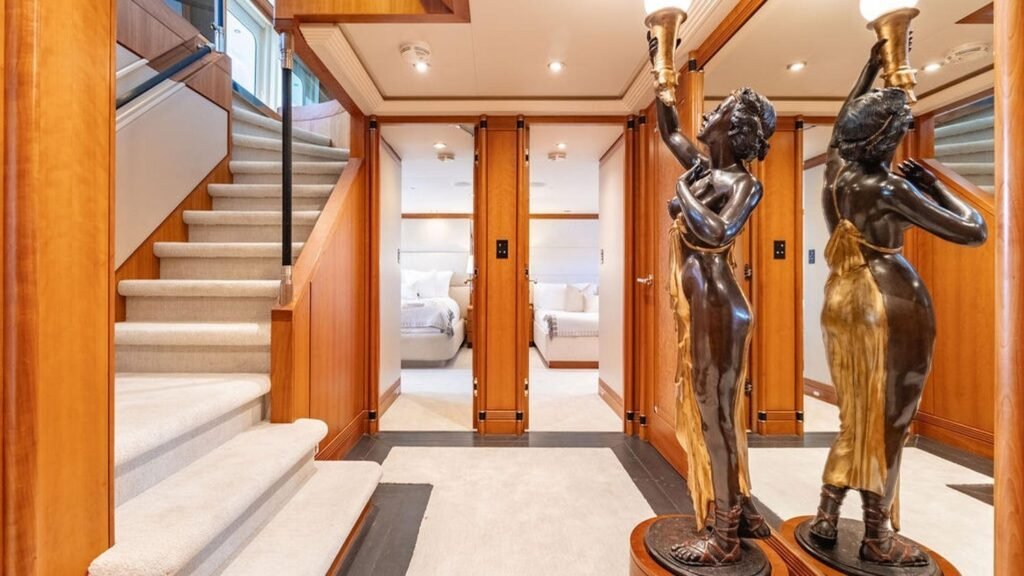
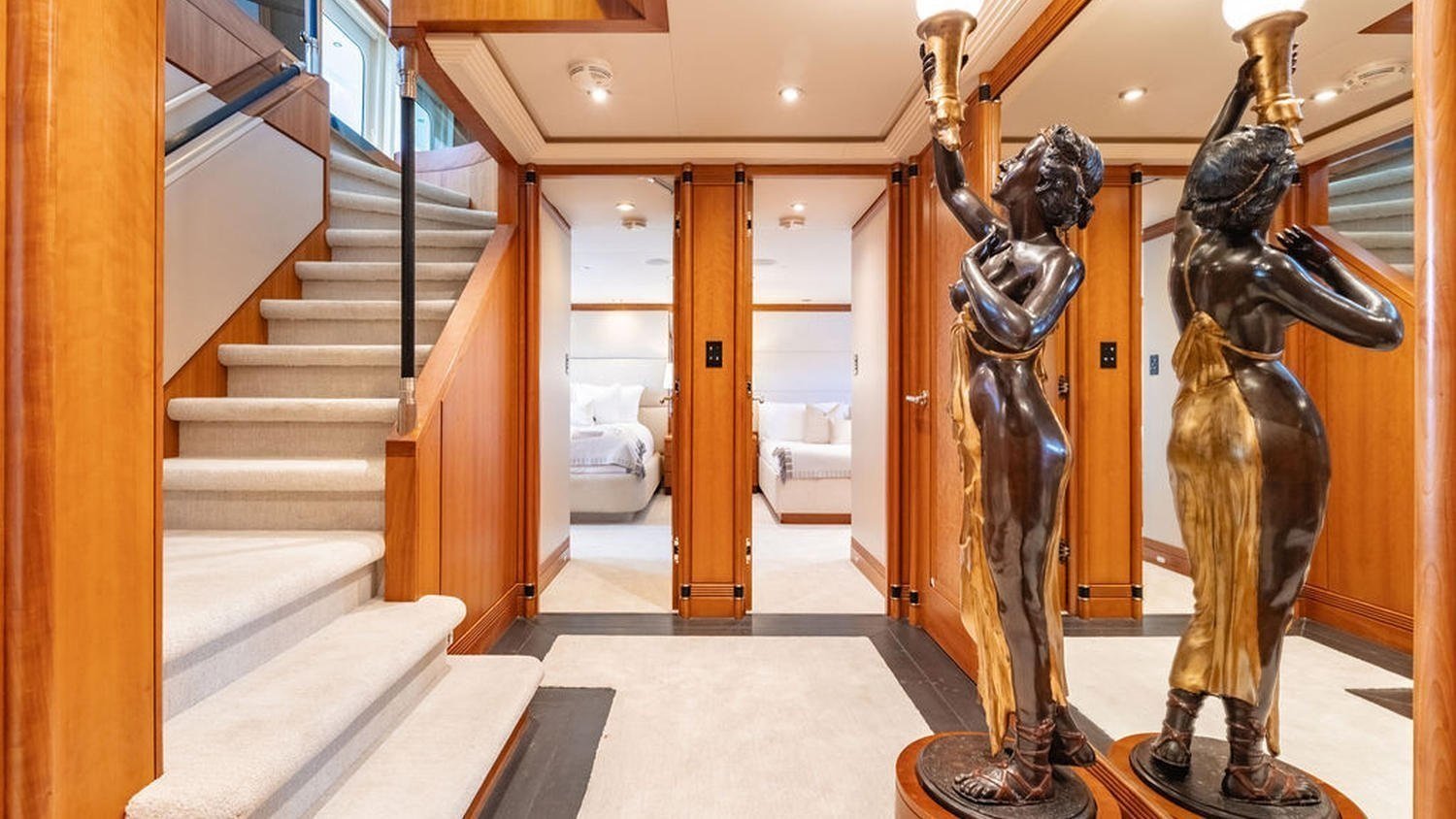
which at this size is a real luxury rather than a layout compromise. A foyer
between them, with a curved stair and a pair of bronze figures, does the work of
making a 47-metre yacht feel like a house rather than a corridor.
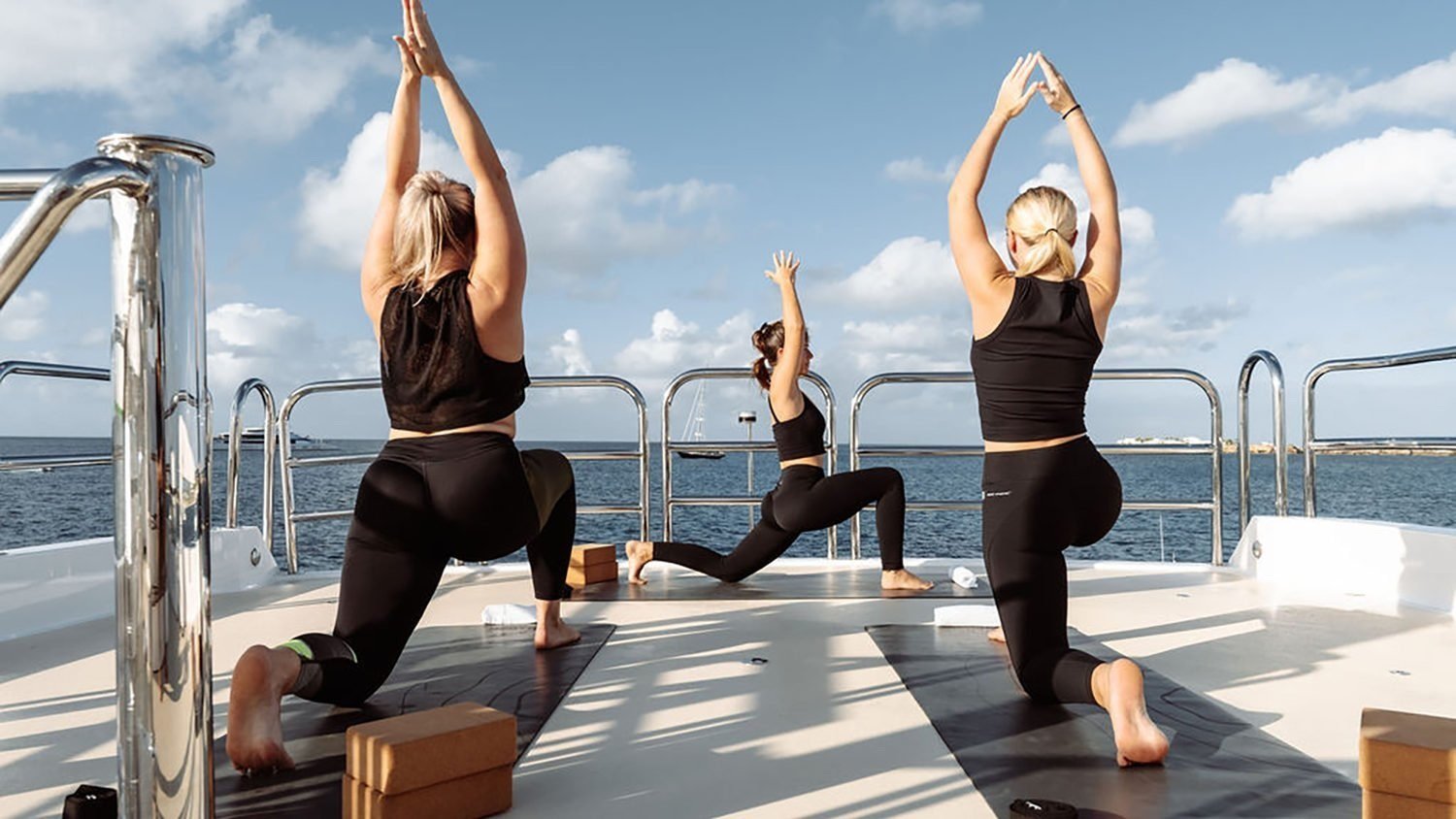
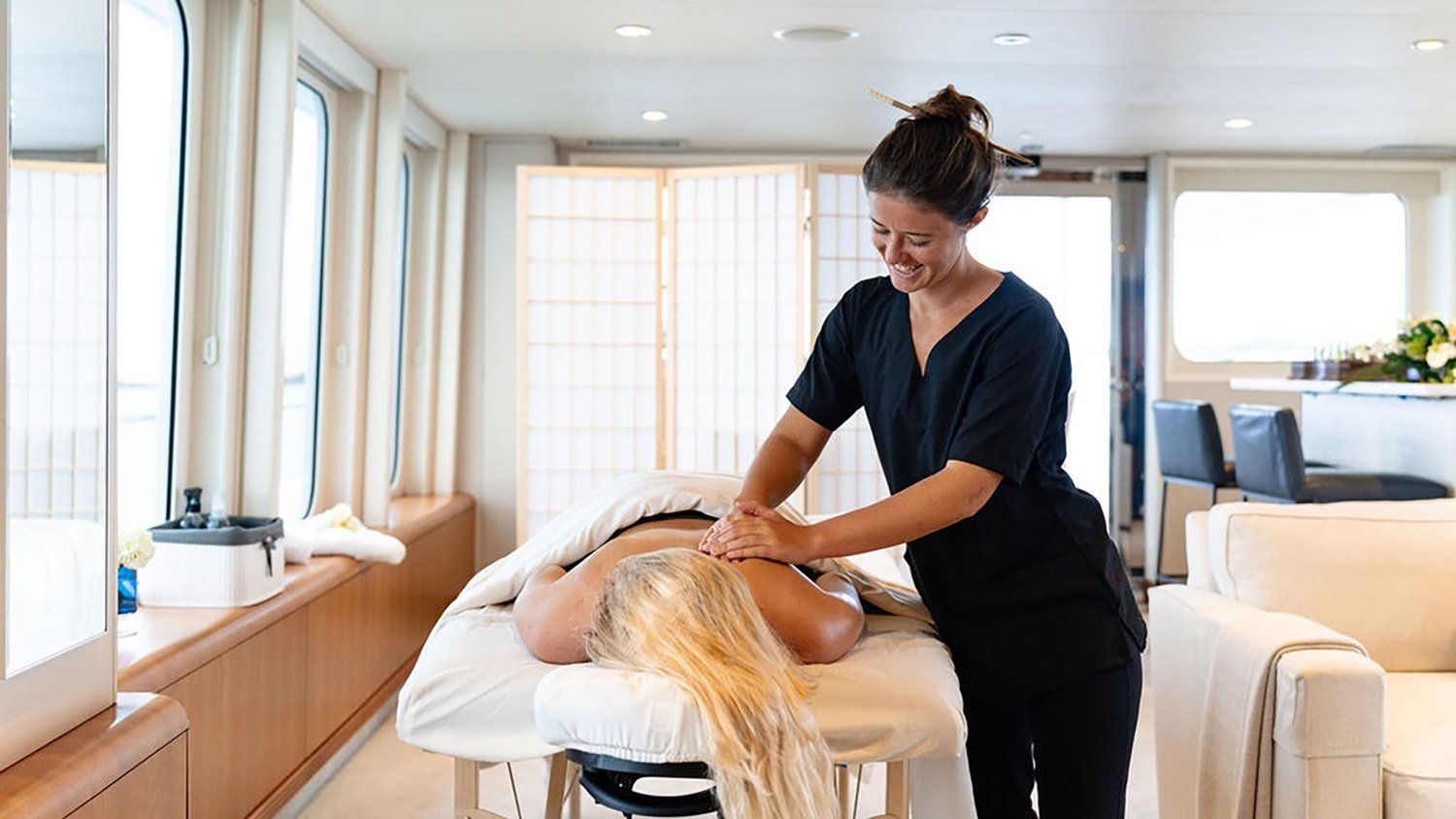
Where she genuinely distinguishes herself is in how the days are programmed. A
massage table is set up in a bright room with the sea outside, and the crew run
treatment sessions as part of the week. Yoga happens on the foredeck at first
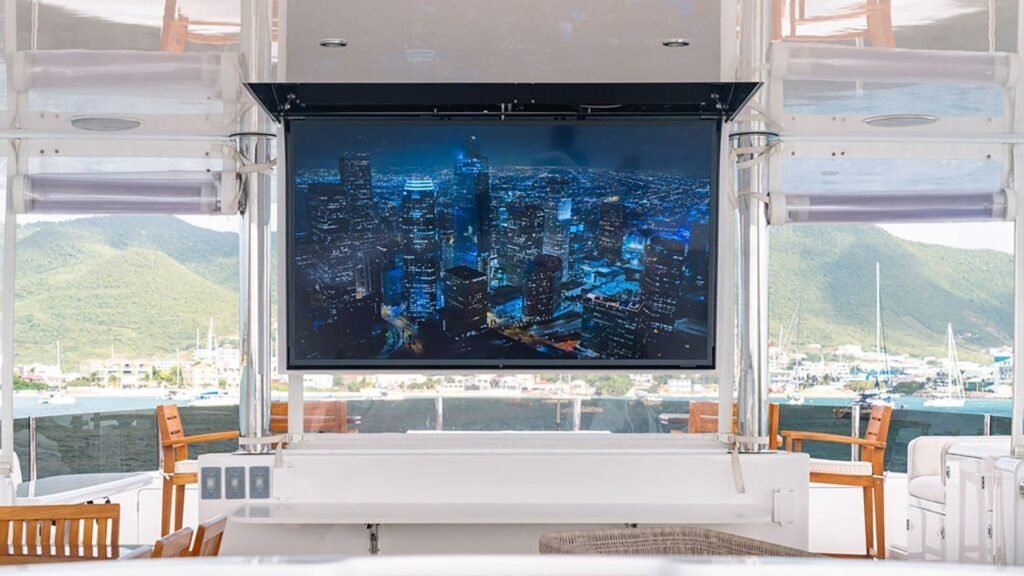
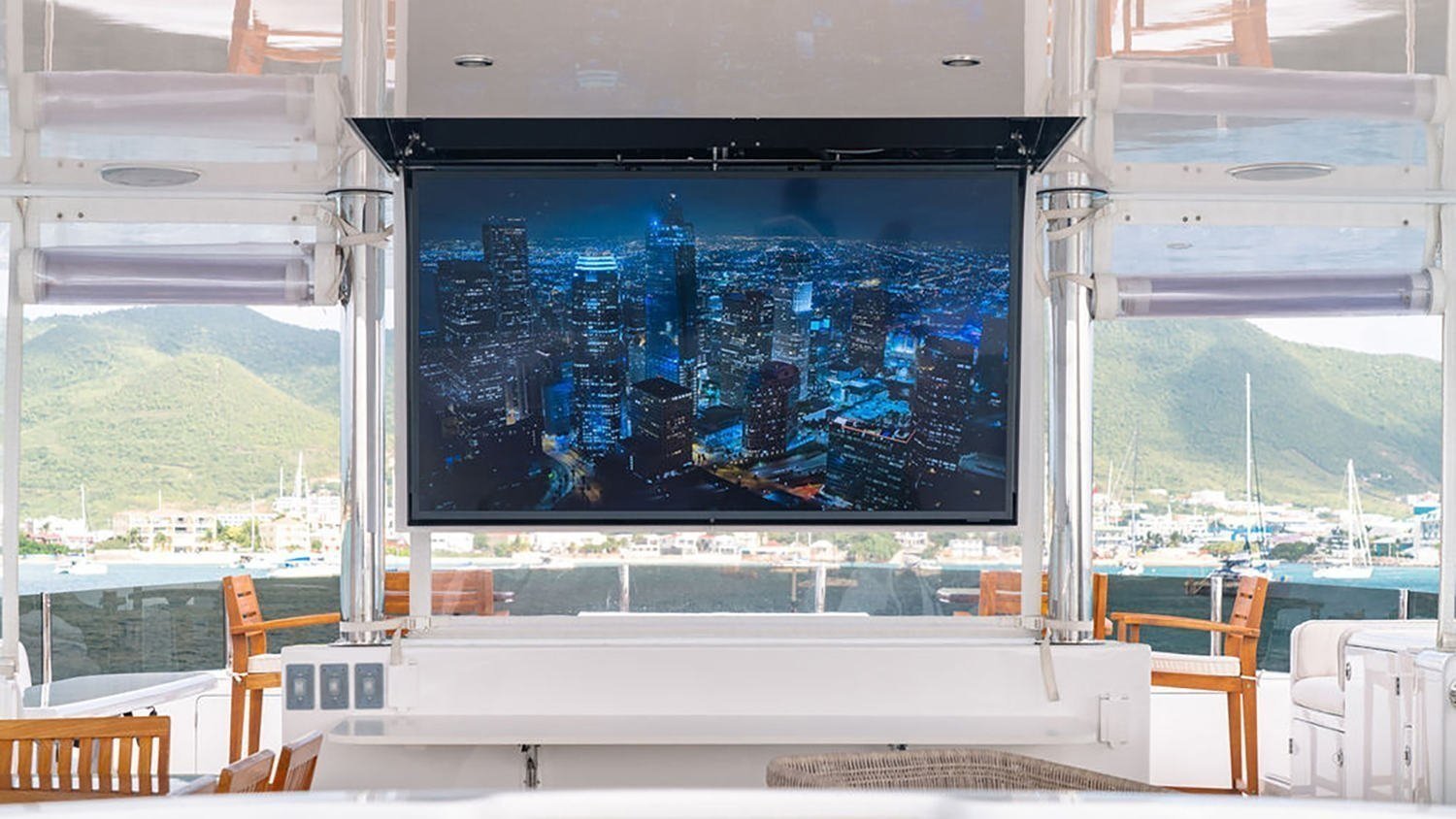
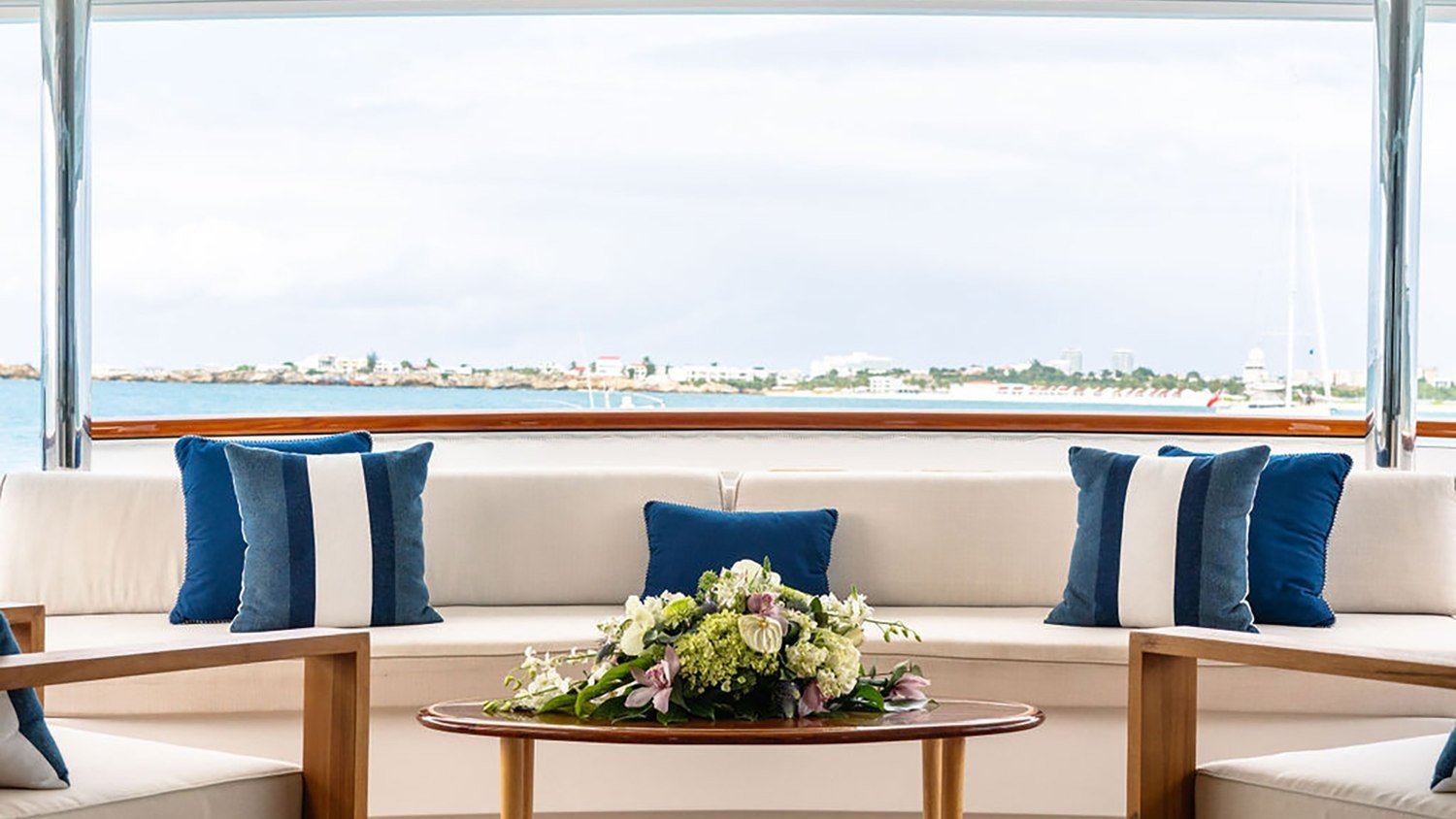
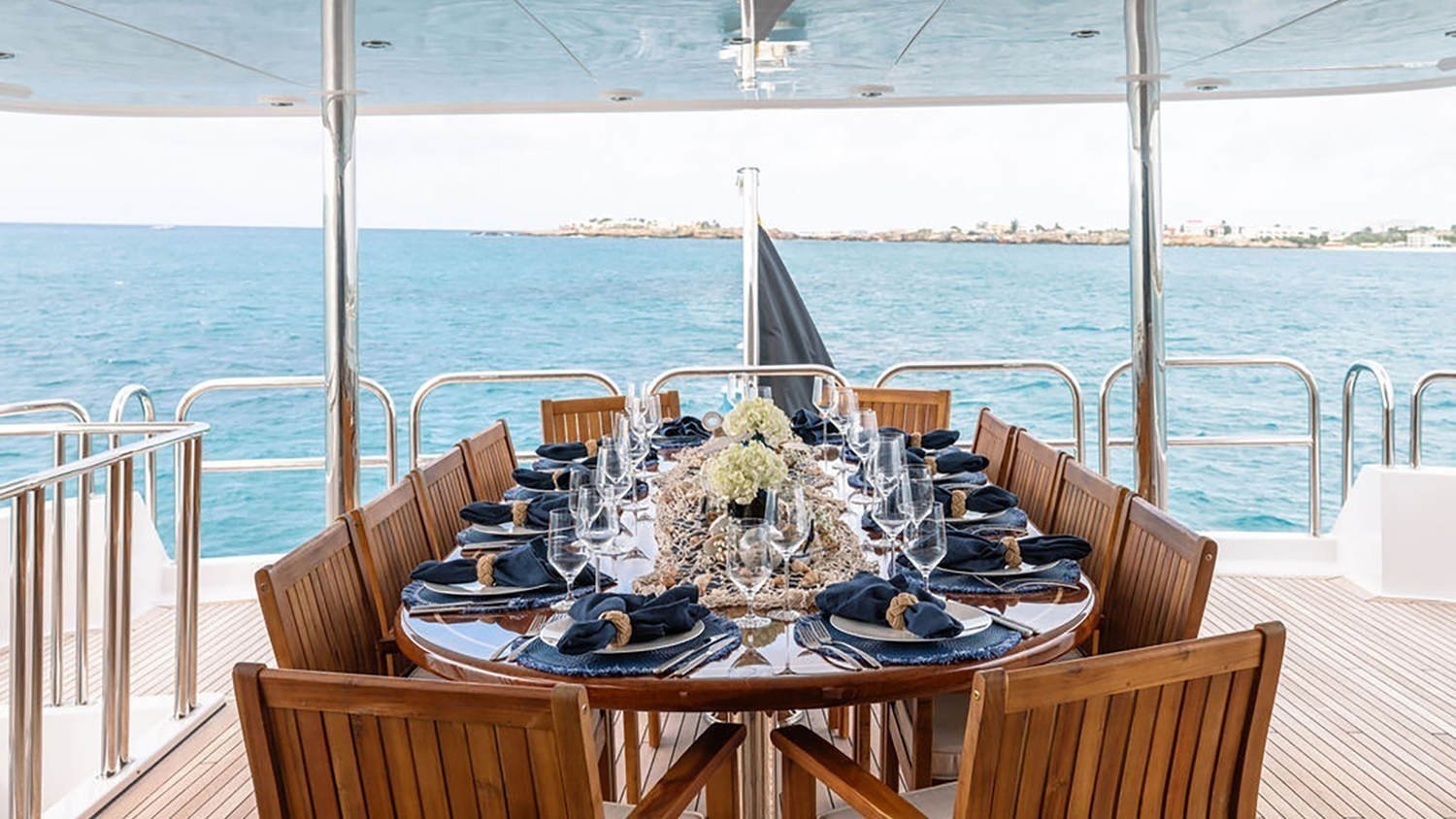
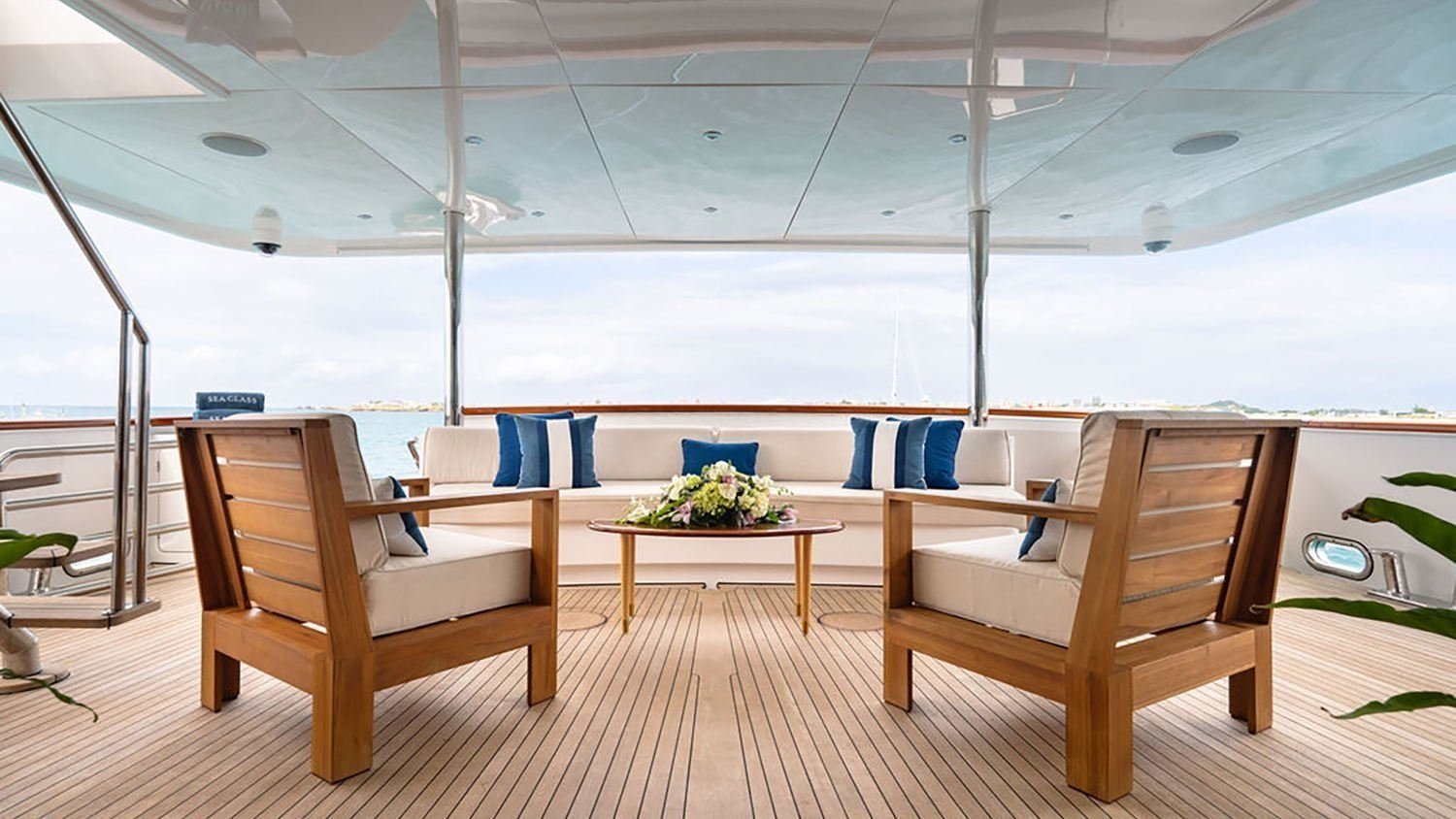
light. A drop-down cinema screen unrolls on deck after dinner, open to the air
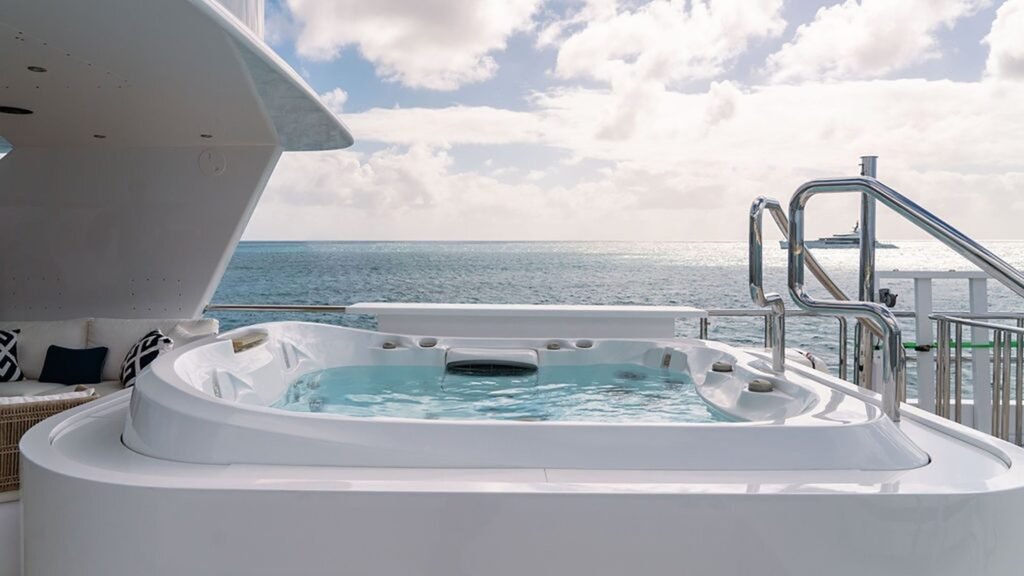
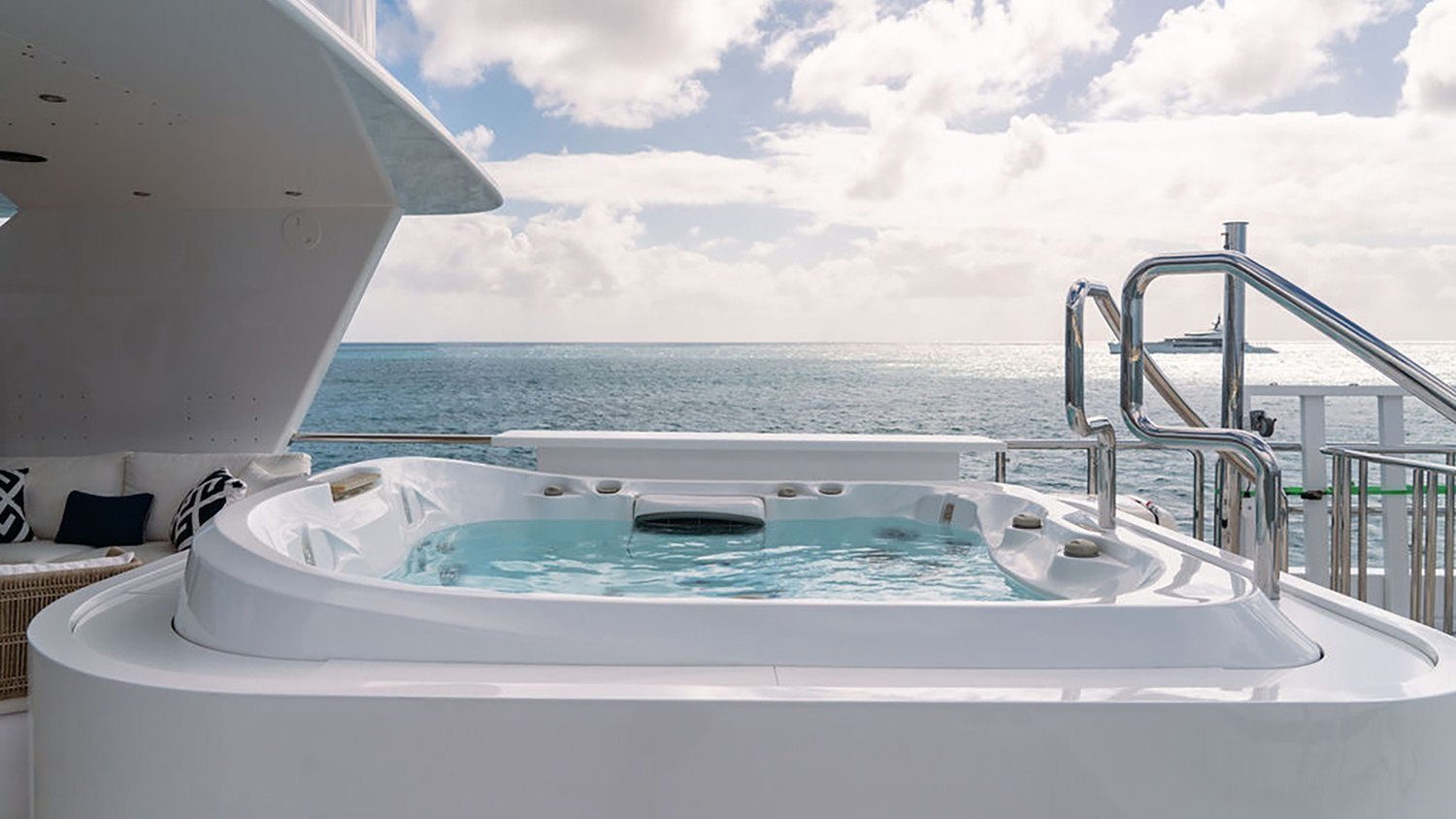
with the anchorage lights behind it. The foredeck jacuzzi sits with an open
horizon in front of it and no deck overlooking it, which is rarer than it
sounds.
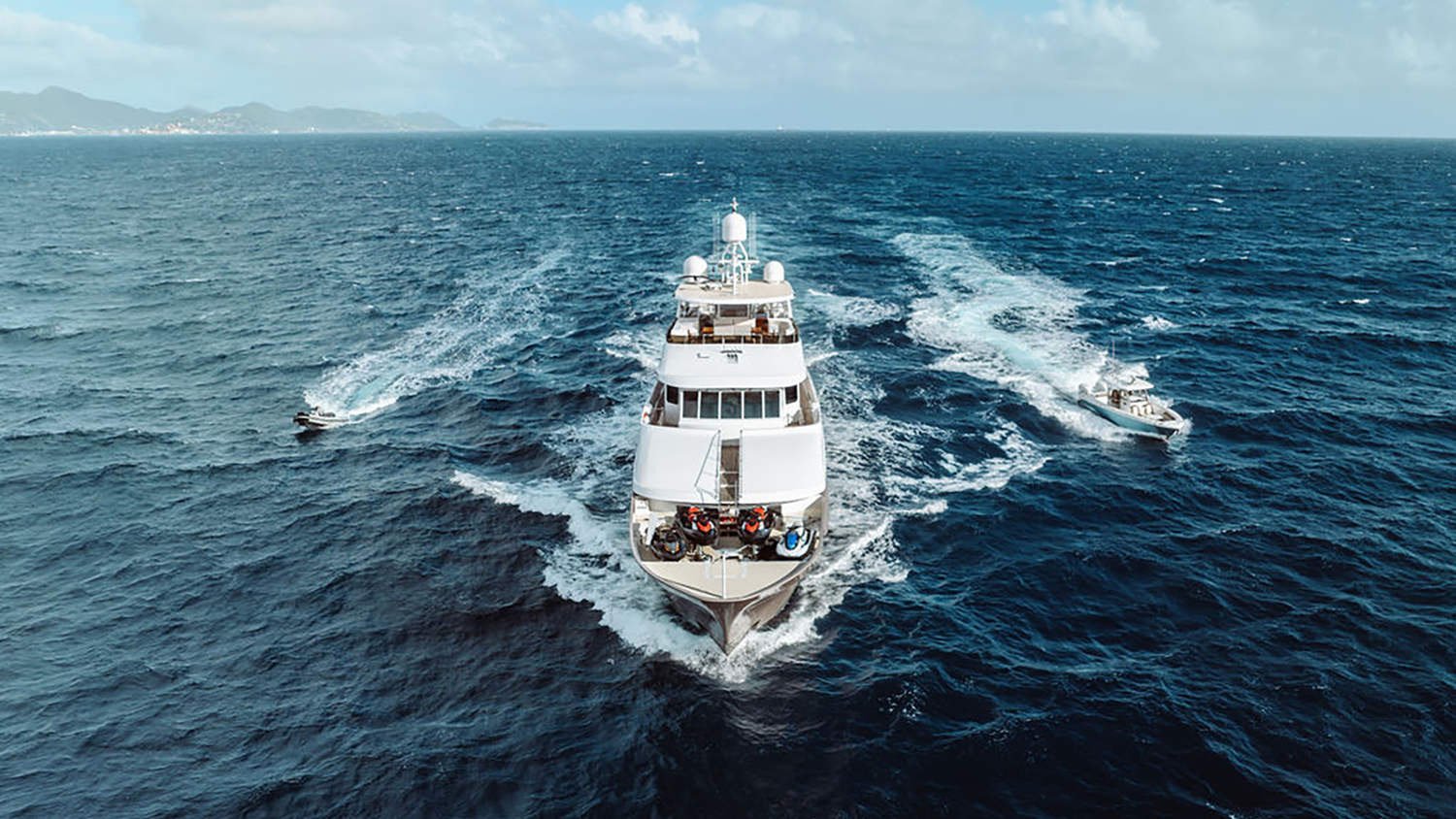
The water programme is serious: a 41-foot tender, a Zodiac, four three-person
Sea-Doo waverunners, two Seabobs, two Lift eFoils, a 27-foot FunAir waterslide,
a 30-foot inflatable pool, paddleboards, wakeboards, waterskis, towables,
spearfishing and fishing gear, and six full sets of ScubaPro dive equipment for
rendezvous diving.
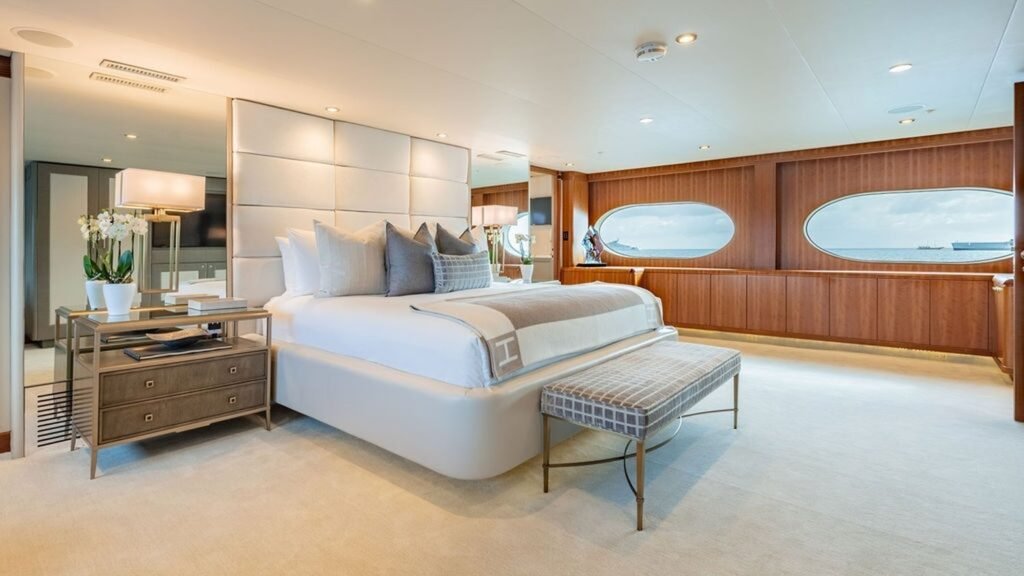
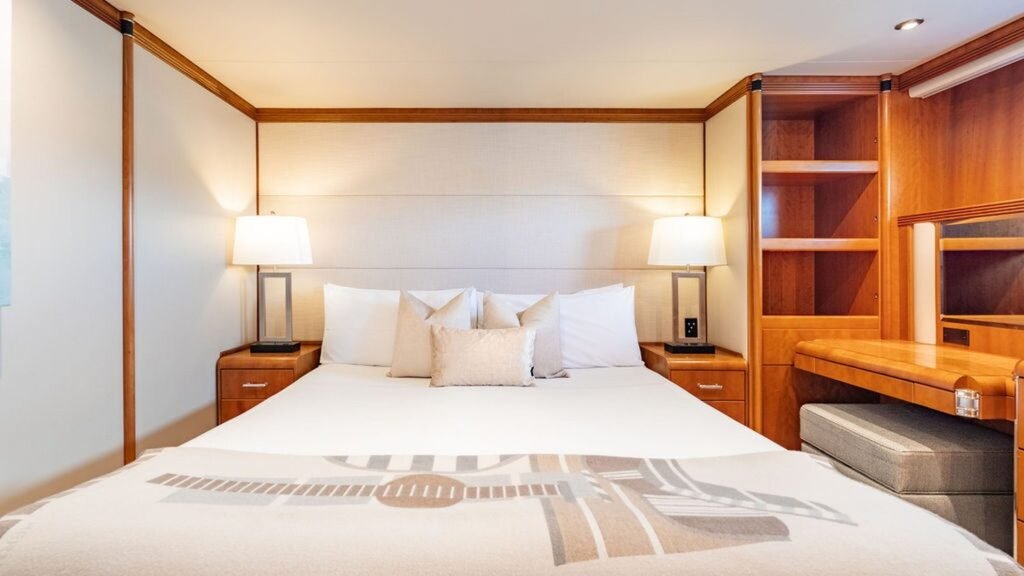
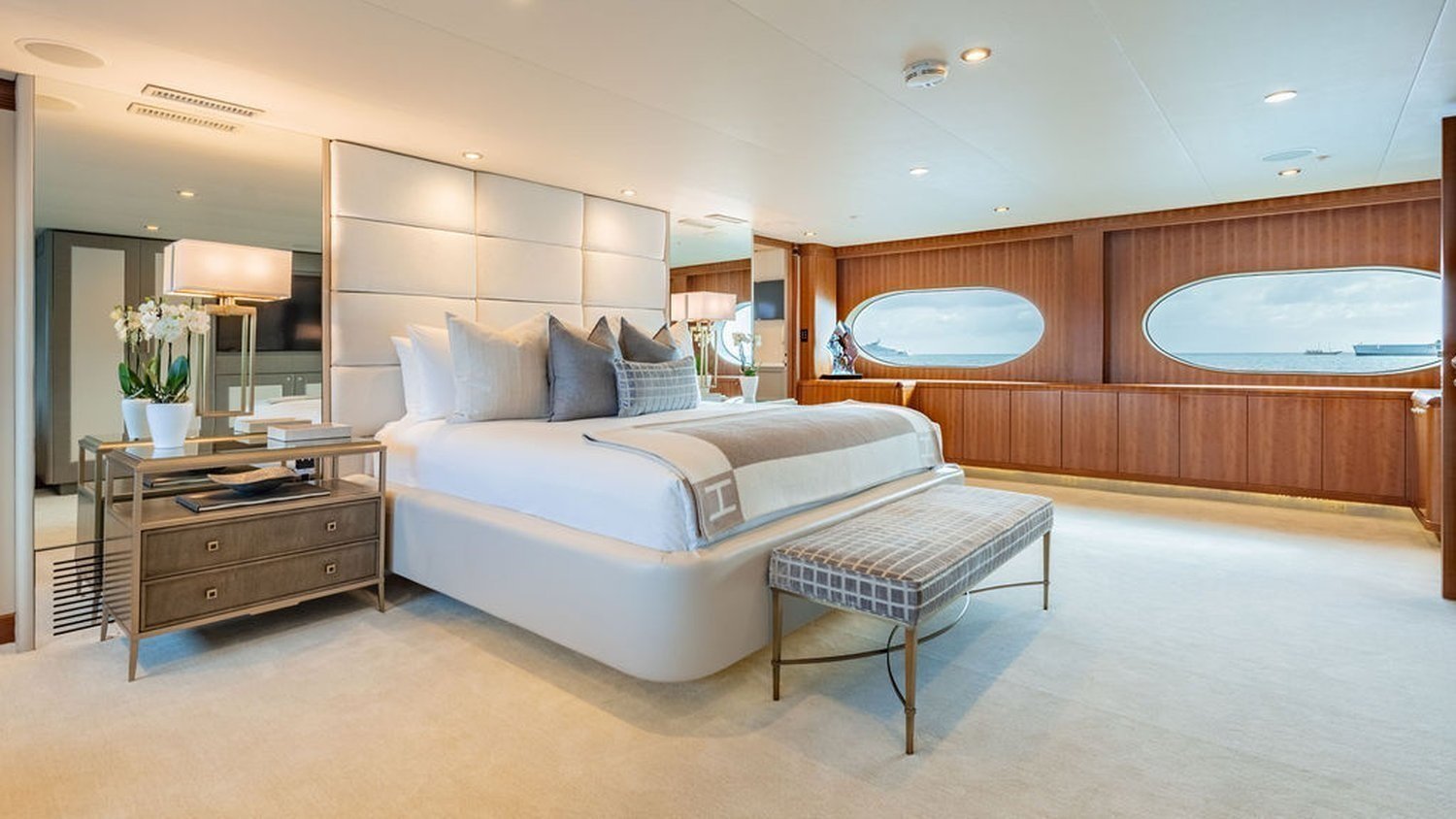
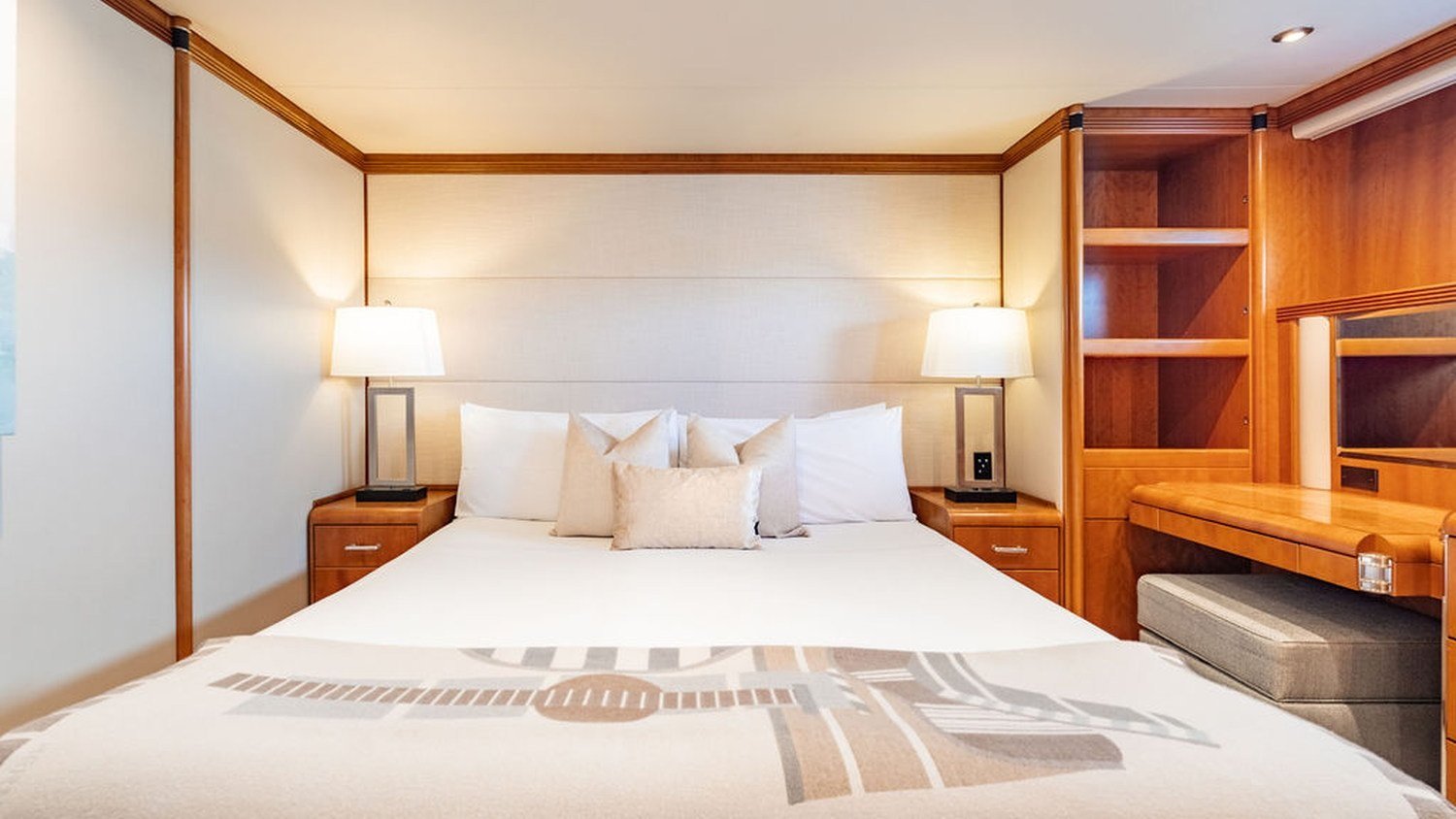
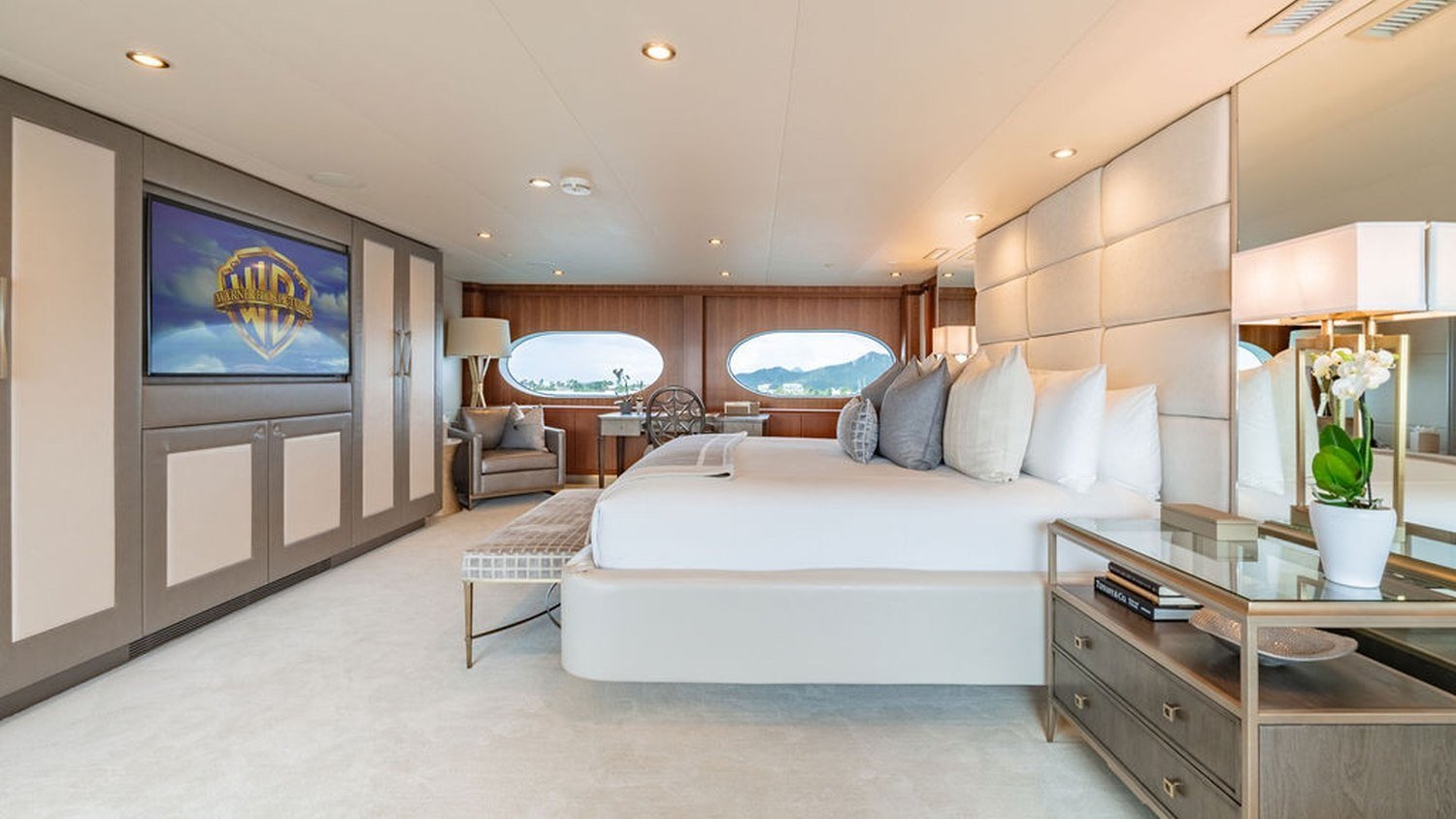
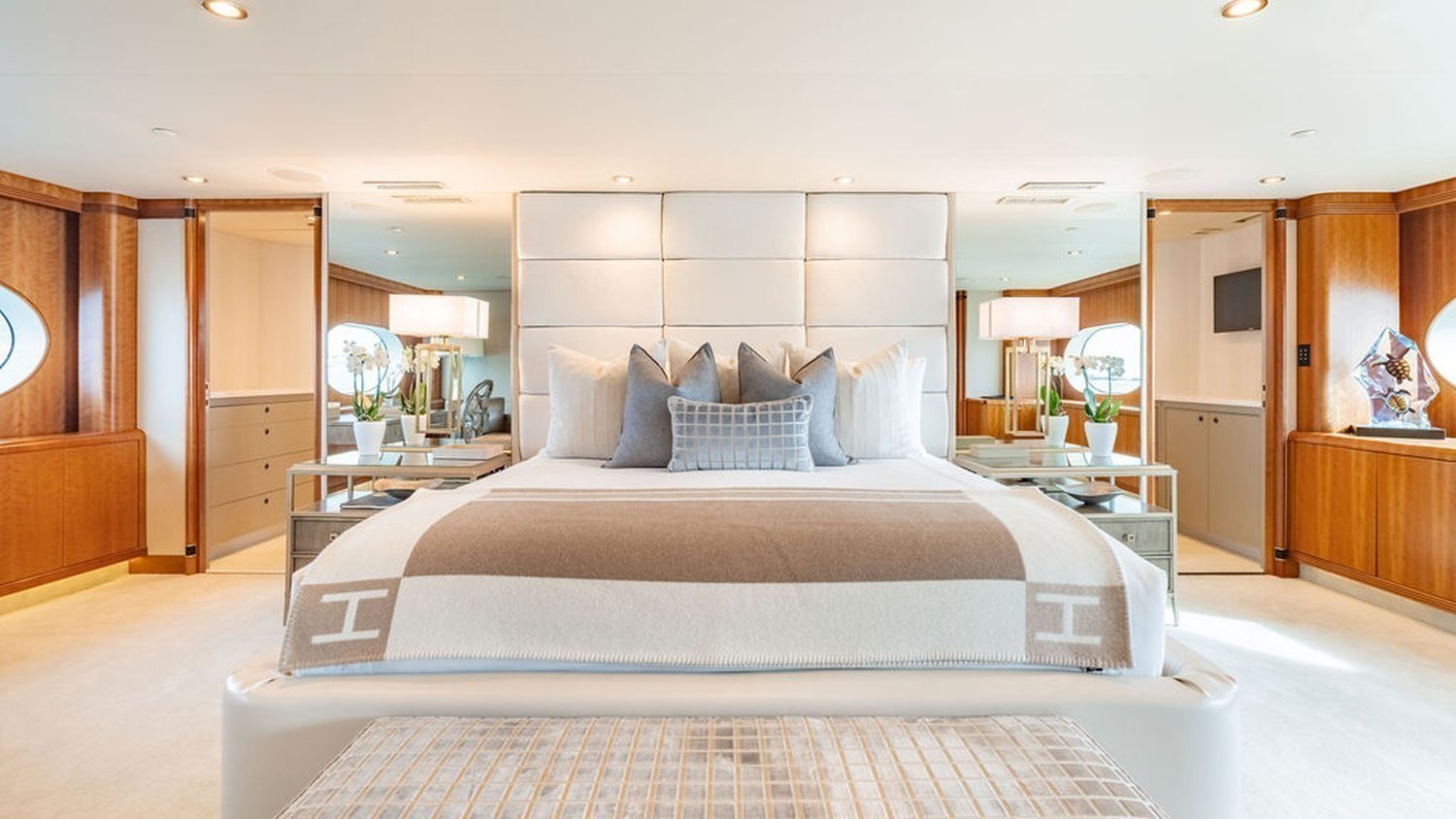
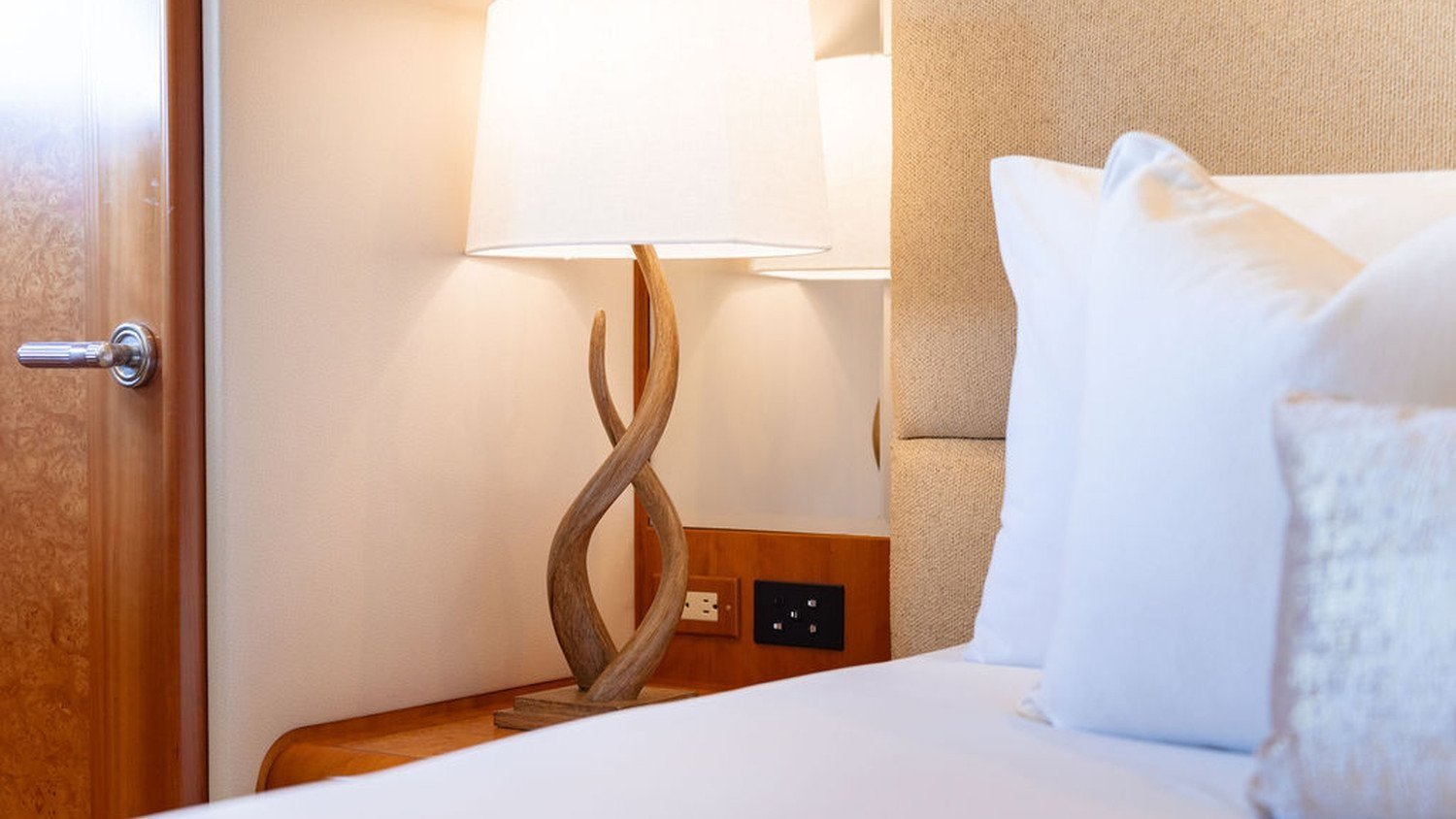
Twelve guests sleep in six cabins. The master is full-beam on the main deck,
bright rather than dark, with a white leather headboard, oval portlights and a
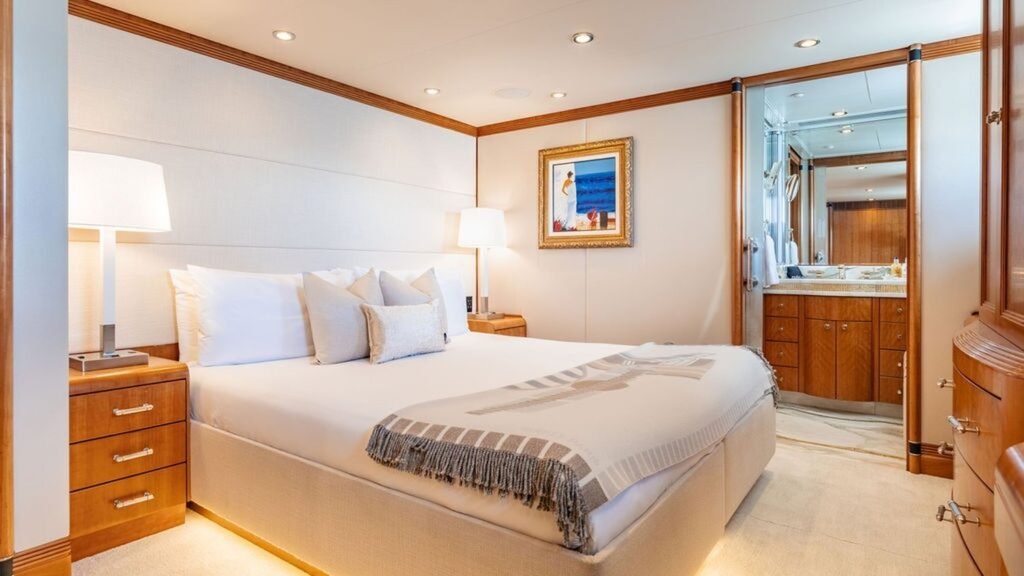
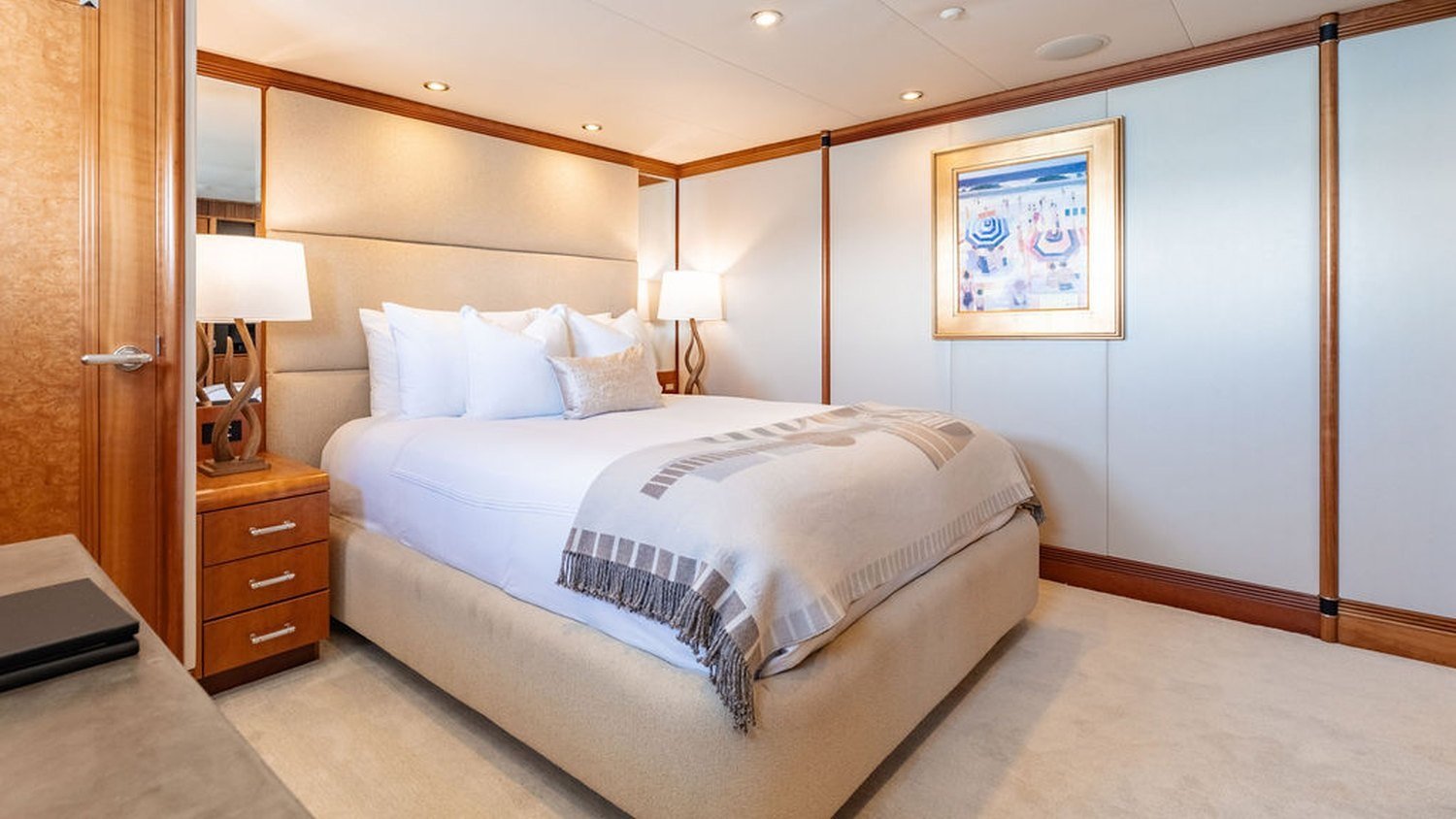
bench at the foot of the bed. Below, a VIP and four further staterooms are
finished in the same warm timber, three of them convertible between a king and
twins, which makes her unusually adaptable for a group that changes shape
between charters. Nine crew run her. For a family or two travelling together who
want space, a proper wellness offering and a boat with real sea miles in her,
she is a considered choice.
There is a broader point in her, too. The market has spent a decade pricing new
tonnage very highly, and a 47-metre yacht taken apart and put back together twice
sits in a quieter part of it. What a guest actually experiences aboard – the
volume, the deck space, the crew, the two-year-old interior – is not meaningfully
different from a new build at twice the weekly rate. The difference is the year
on the builder’s plate.