Indonesia


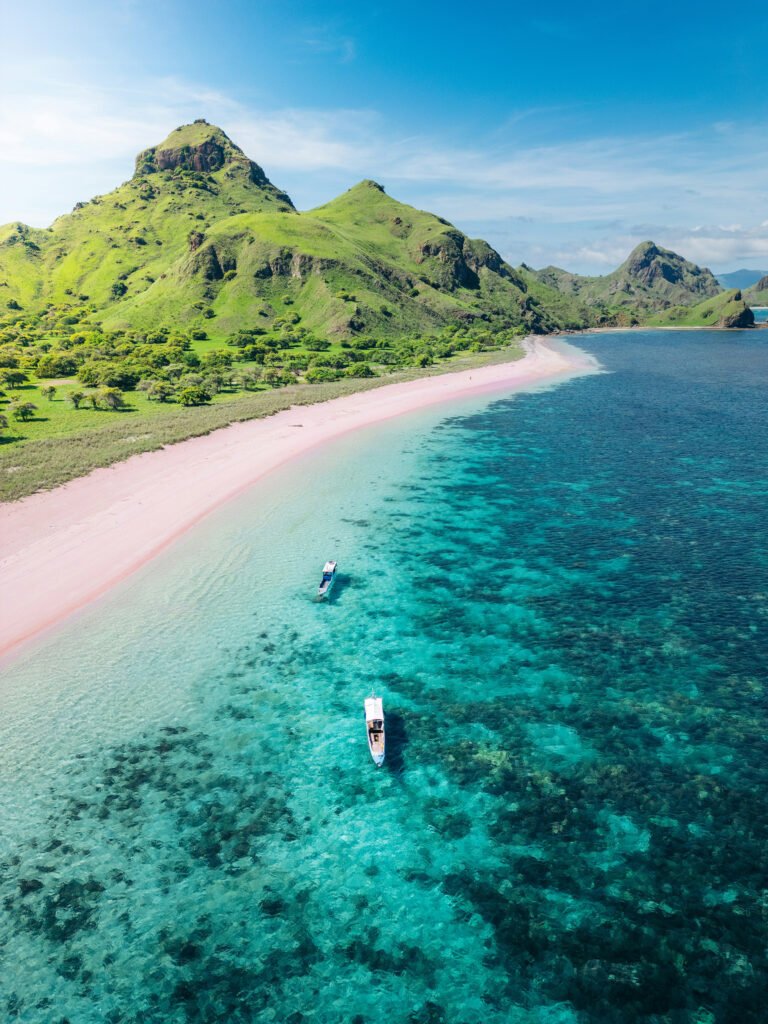

Padar Island, Komodo National Park
Pink Beach, Komodo
Gili Trawangan, Lombok
Wakatobi, Southeast Sulawesi
Labuan Bajo Harbour, Flores
Trek Mount Rinjani, Lombok
Dive Wakatobi’s reefs
See Komodo dragons on Rinca Island
Watch sunrise over Borobudur
Attend a Toraja ceremony, Sulawesi
Borobudur Temple, Java
Komodo National Park
Gili Islands, Lombok
Toraja, Sulawesi
Mount Bromo, Java
The dry season, April through October, is generally calmest, with the southeast trade winds settling in from June. Komodo and the Nusa Tenggara islands are driest overall, while Raja Ampat, further east and near the equator, sees less seasonal variation and can be sailed comfortably year-round. The wet season, November through March, brings squalls and higher humidity but far fewer other boats at anchor.
Denpasar’s Ngurah Rai International Airport (DPS) on Bali is Indonesia’s main international hub outside Jakarta and the easiest connection for a Bali-based charter. Komodo has its own airport at Labuan Bajo (LBJ), while Raja Ampat is reached via Sorong (SOQ) followed by a boat transfer, since neither location takes direct international flights.
Padar Island and Pink Beach are the signature stops inside Komodo National Park, both a short tender ride from deep, sheltered water. Further west, Gili Trawangan off Lombok combines a lively beachfront with easy snorkelling at Gili Meno and Gili Air nearby. Wakatobi, in the remote southeast of Sulawesi, rewards the extra distance with some of the least-dived reefs left in the country.
Komodo alone justifies five to seven days, given the spread between Padar Island, the dragon-viewing trails on Rinca and the manta ray sites further south. A wider itinerary combining Komodo with Raja Ampat or the Gili Islands needs closer to two weeks, since the distances between Indonesia’s regions are considerable and best covered with an internal flight rather than a long open-water passage.
Yes. Every foreign-flagged yacht needs clearance through YachtERS, Indonesia’s online registration system run by the Directorate General of Customs and Excise, which replaced the older CAIT process and roughly halved the paperwork time. The permit covers vessel details, crew and passenger passports, planned ports and insurance, and authorises a single entry for everyone listed aboard, so it needs to be filed well before departure.