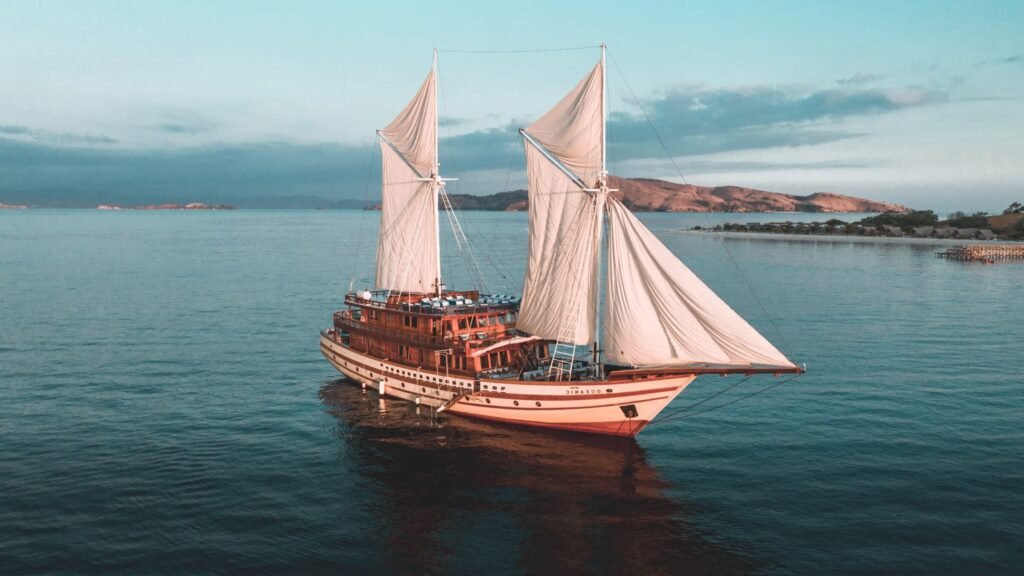
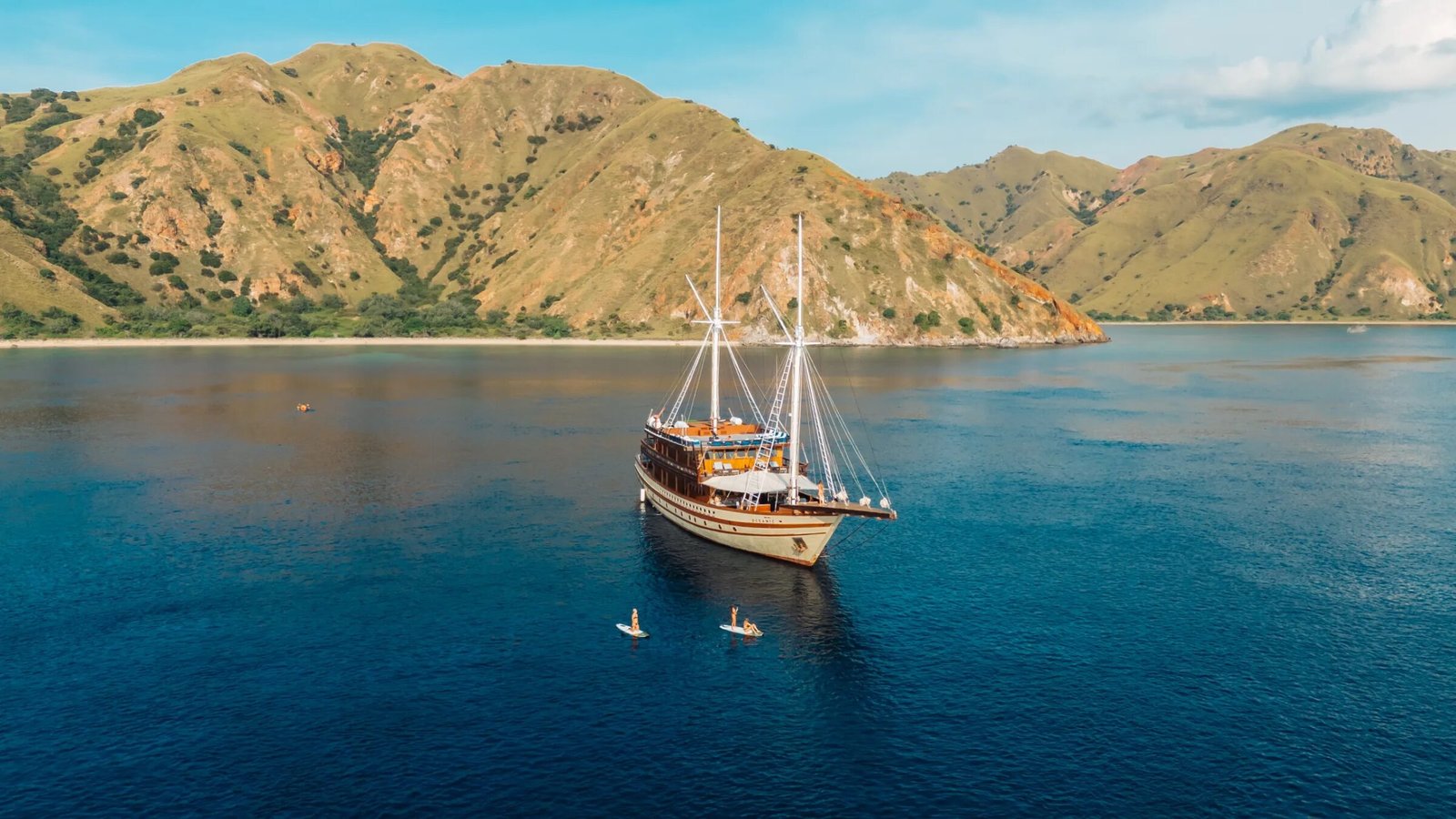
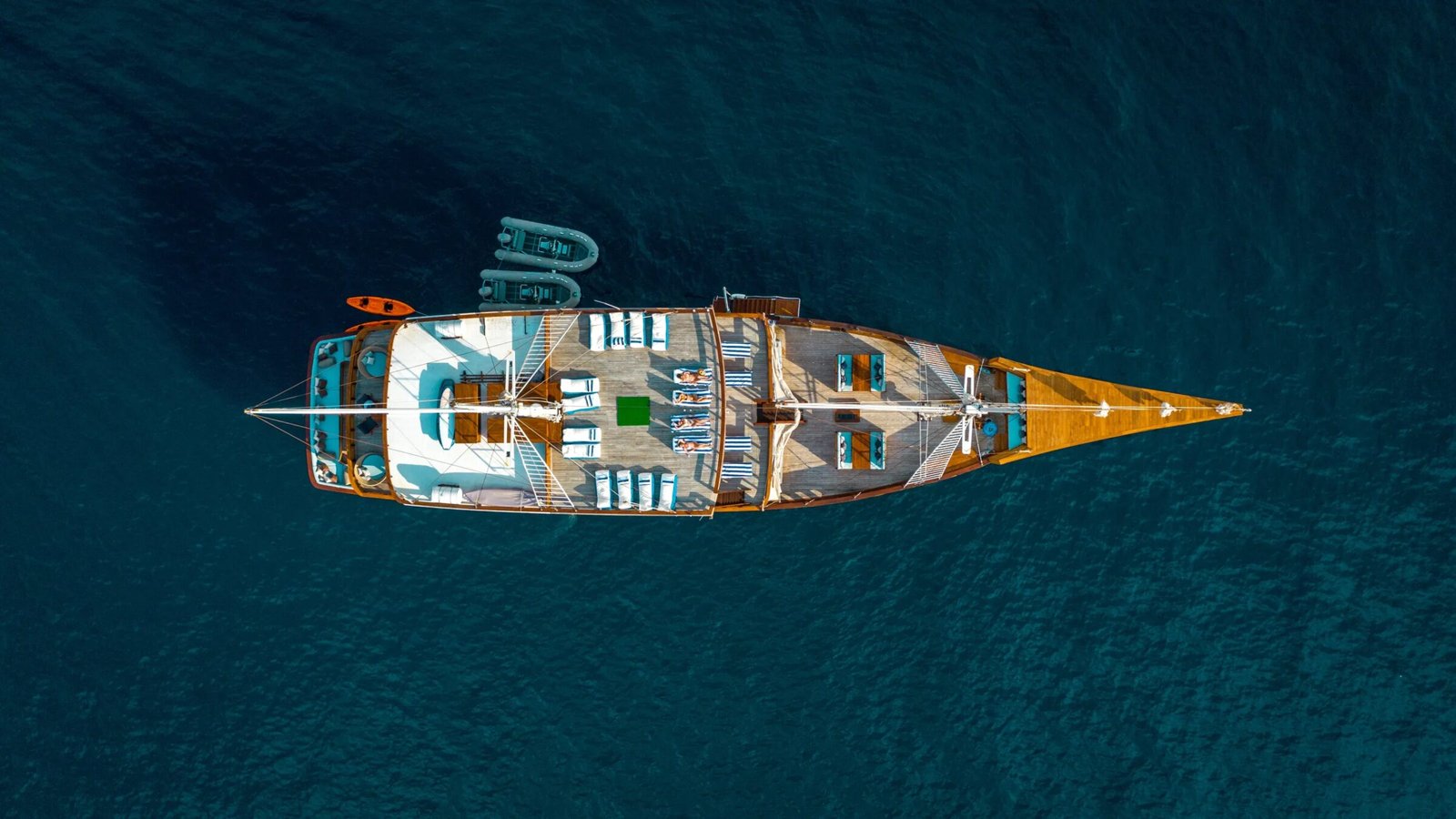
The Maj Oceanic is a phinisi, and that word carries more weight than it usually does in
charter marketing. She was built by hand on a beach in South Sulawesi by Konjo shipwrights,
using a method of construction that predates any drawing office — hull planking fitted first,
frames worked in afterwards — and she was launched in 2020 at 47 metres, which makes her one
of the largest traditional Indonesian vessels ever built to this standard. The hull is timber.
The superstructure is timber. The joinery inside was cut by the same people who shaped the
frames.
Under her two masts and seven sails she works the archipelago the way these boats always
have, on the wind when there is wind and under engine when there is not, at a cruising speed
of 9 knots. Speed is beside the point. The itinerary is: Komodo and the Flores Sea through
the dry season, when the ridgelines burn gold and the dragons are active on Rinca and Komodo
island; then east to Raja Ampat when the wind turns, for what is generally accepted to be the
richest reef diving on earth.
Diving is not an add-on here. She carries a compressor, tanks, and guides who know these
sites through the seasons, and the tender operation is set up to put divers on a reef and
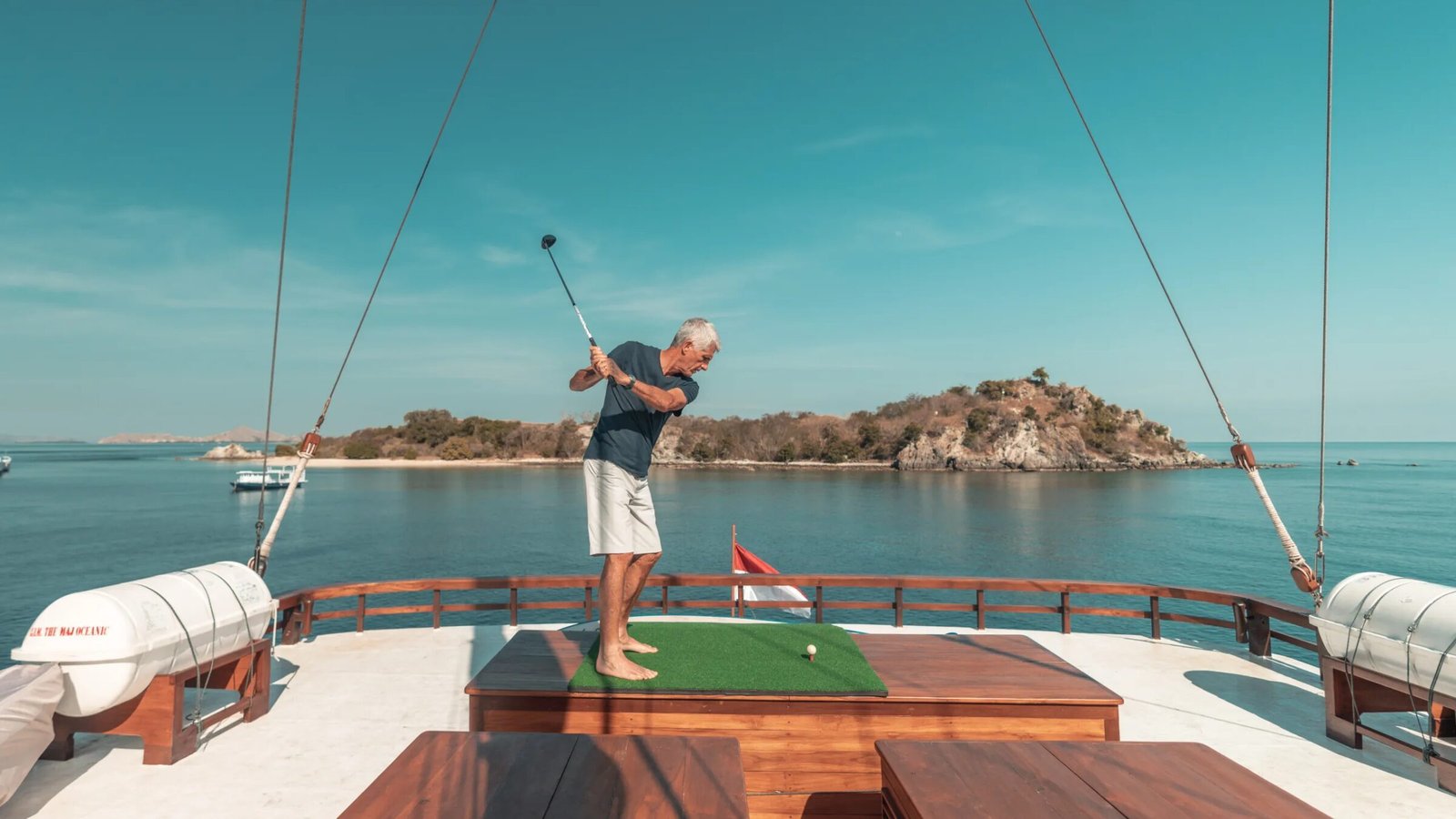
recover them without the mother ship having to move. Between dives there are kayaks and
paddleboards, and — more unexpectedly — a driving net and putting green rigged off the aft
deck, which is exactly the kind of detail that tells you the boat is used hard and lived in
rather than merely photographed.
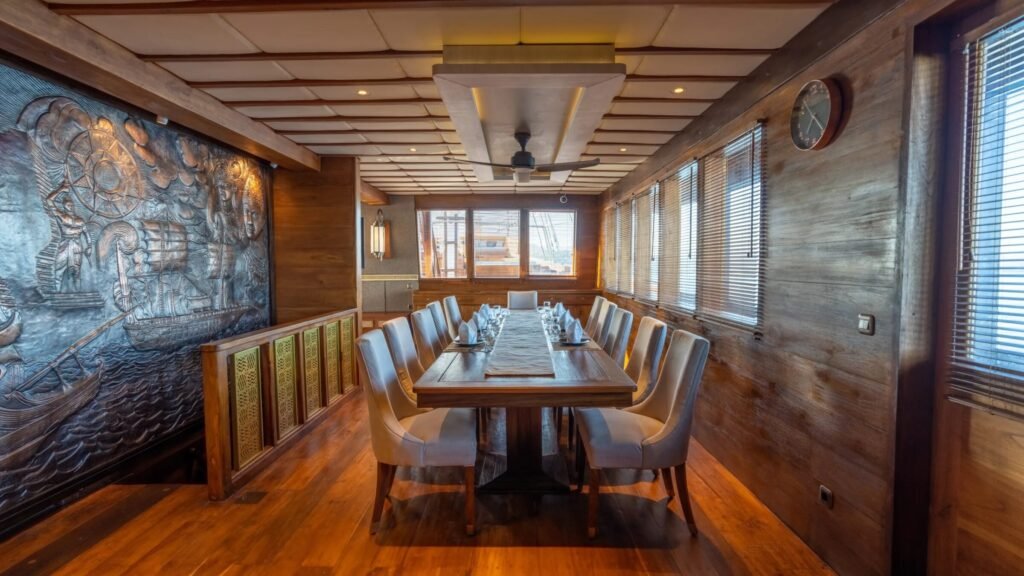
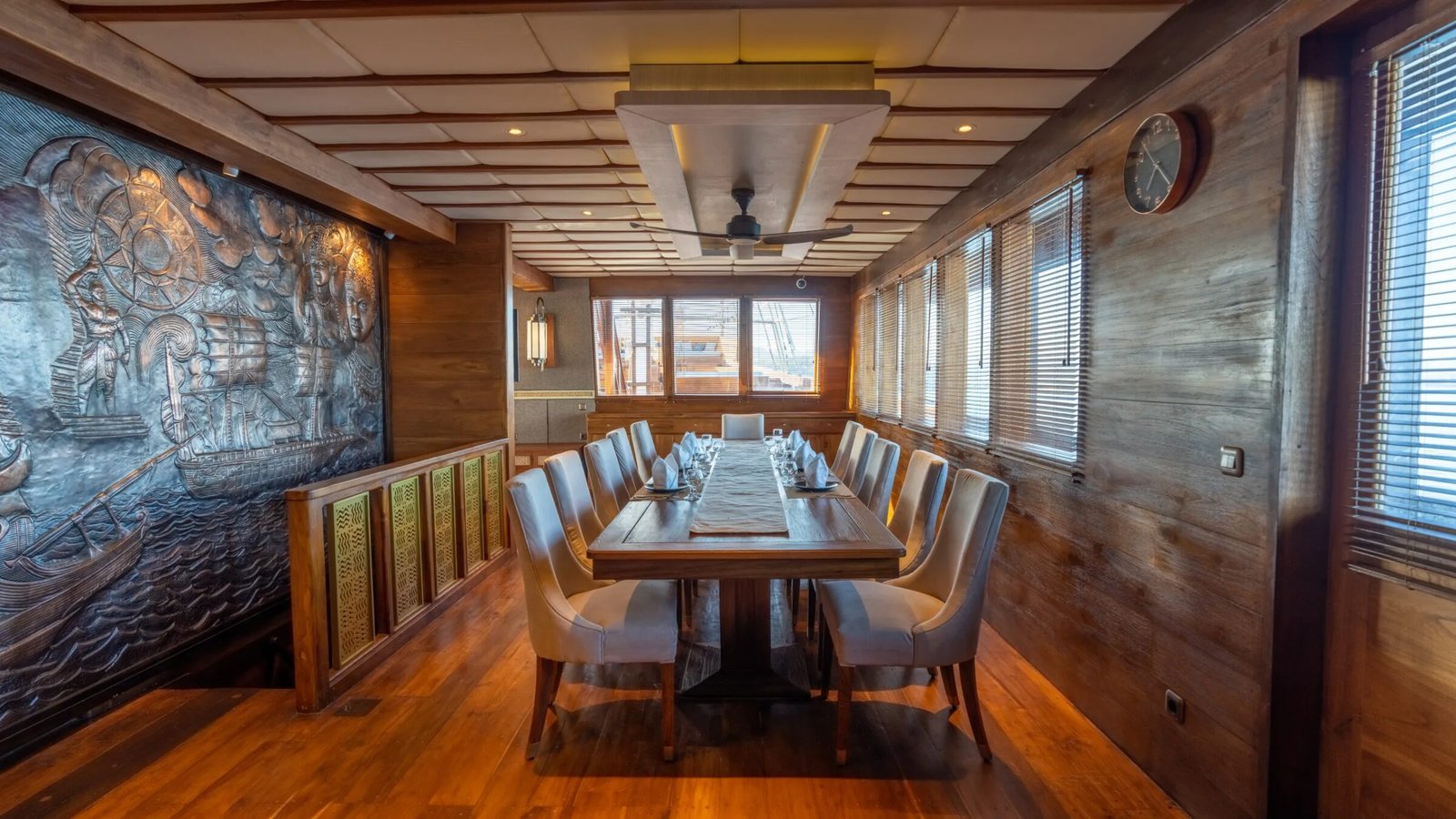
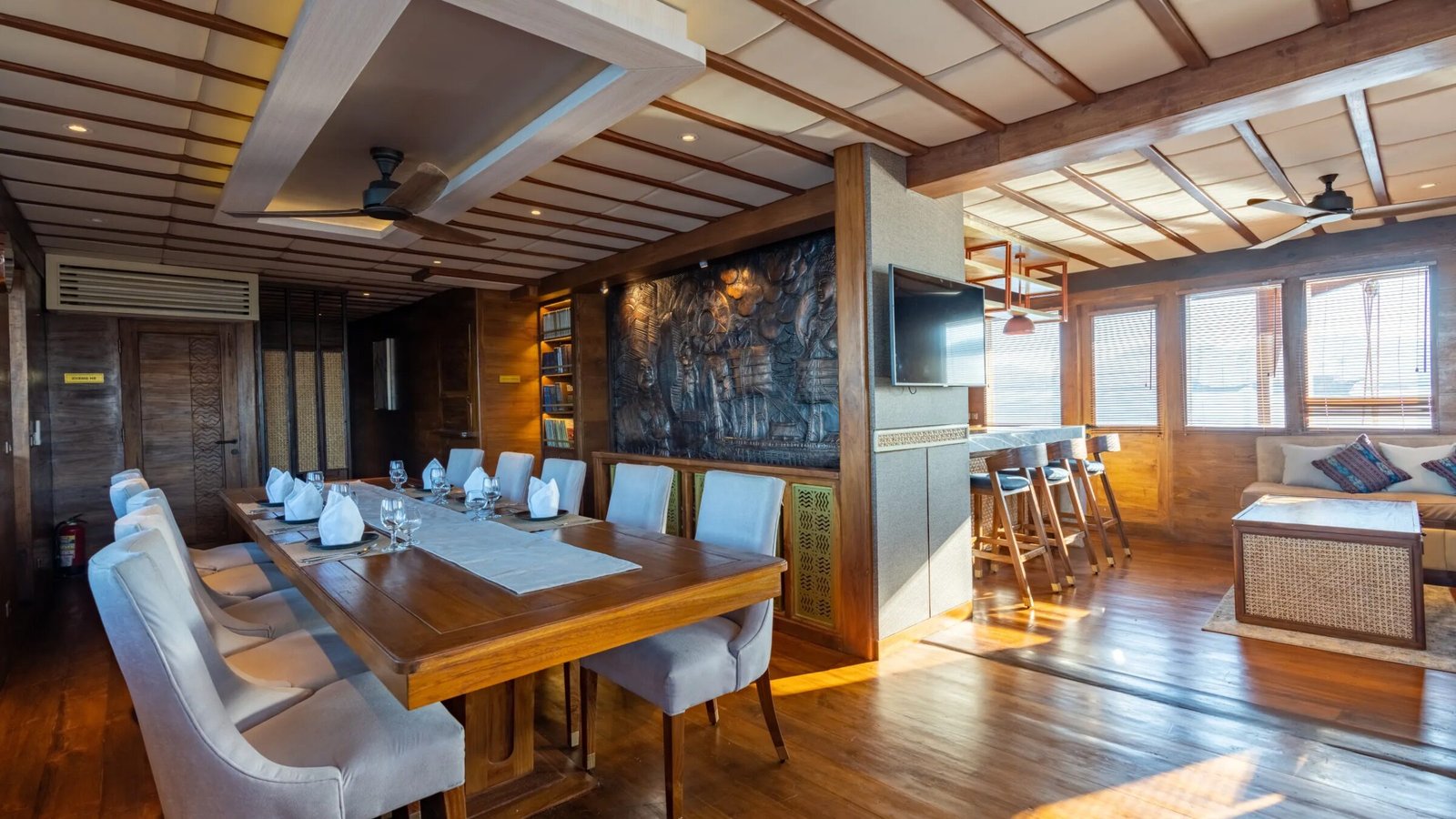
Aboard, the register is dark timber and deep shade. One long panelled room runs most of the
main deck, with a carved stone relief set into the bulkhead and a single table seating all
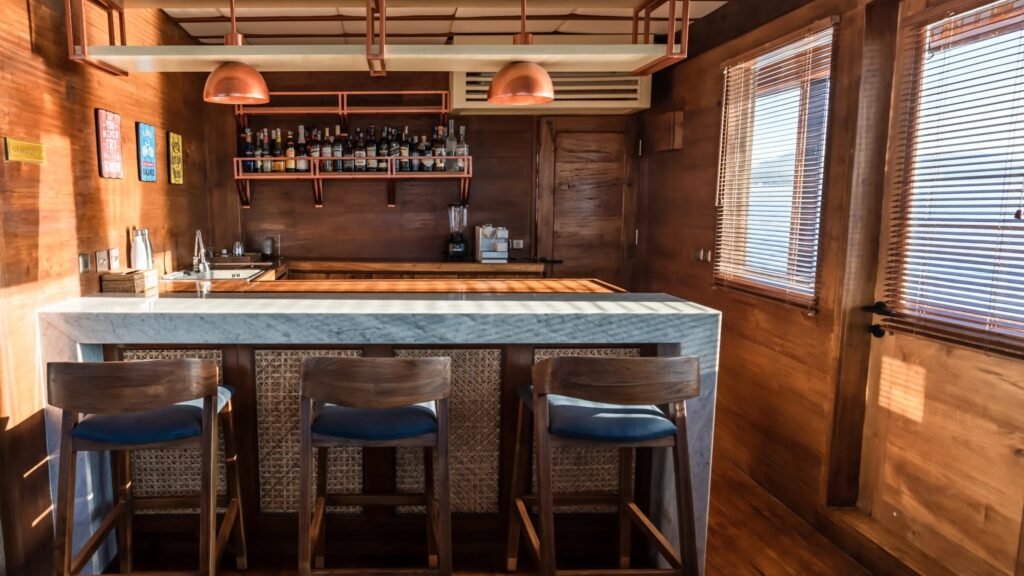
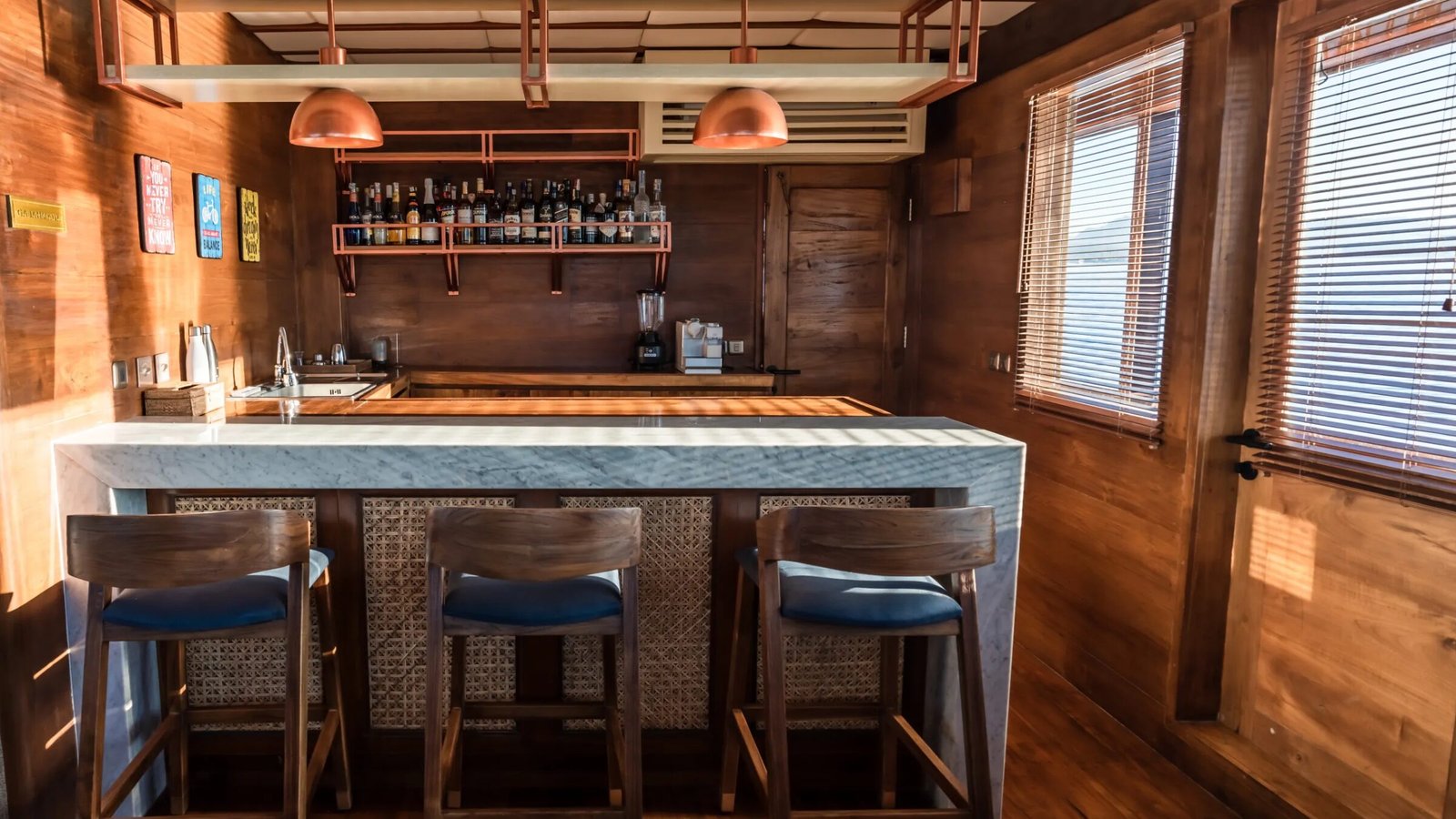
twelve, open through to a bar finished in a lighter hand with copper pendants over pale
stone. The windows are small and deep-set in the traditional way, which is why the interior
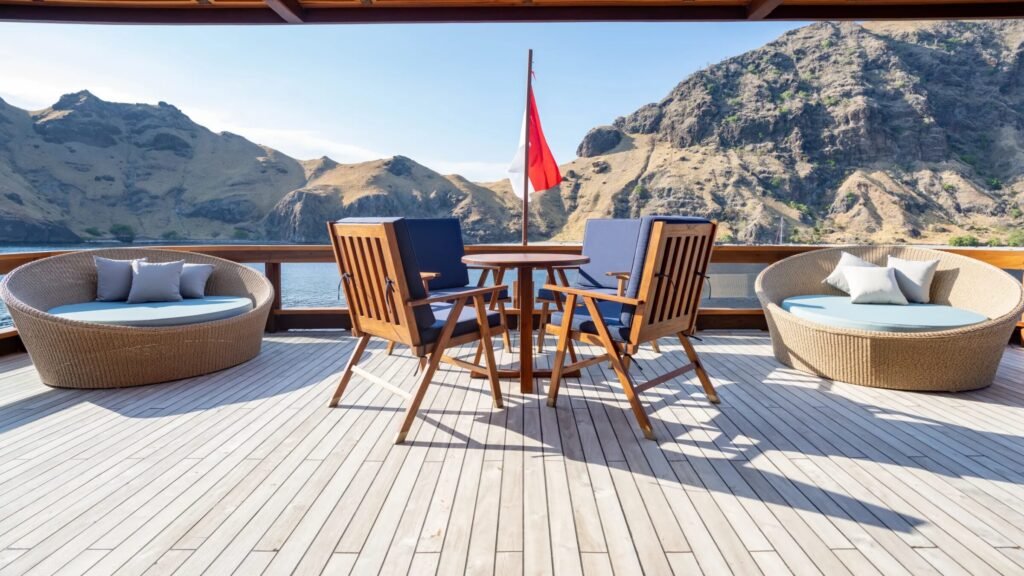
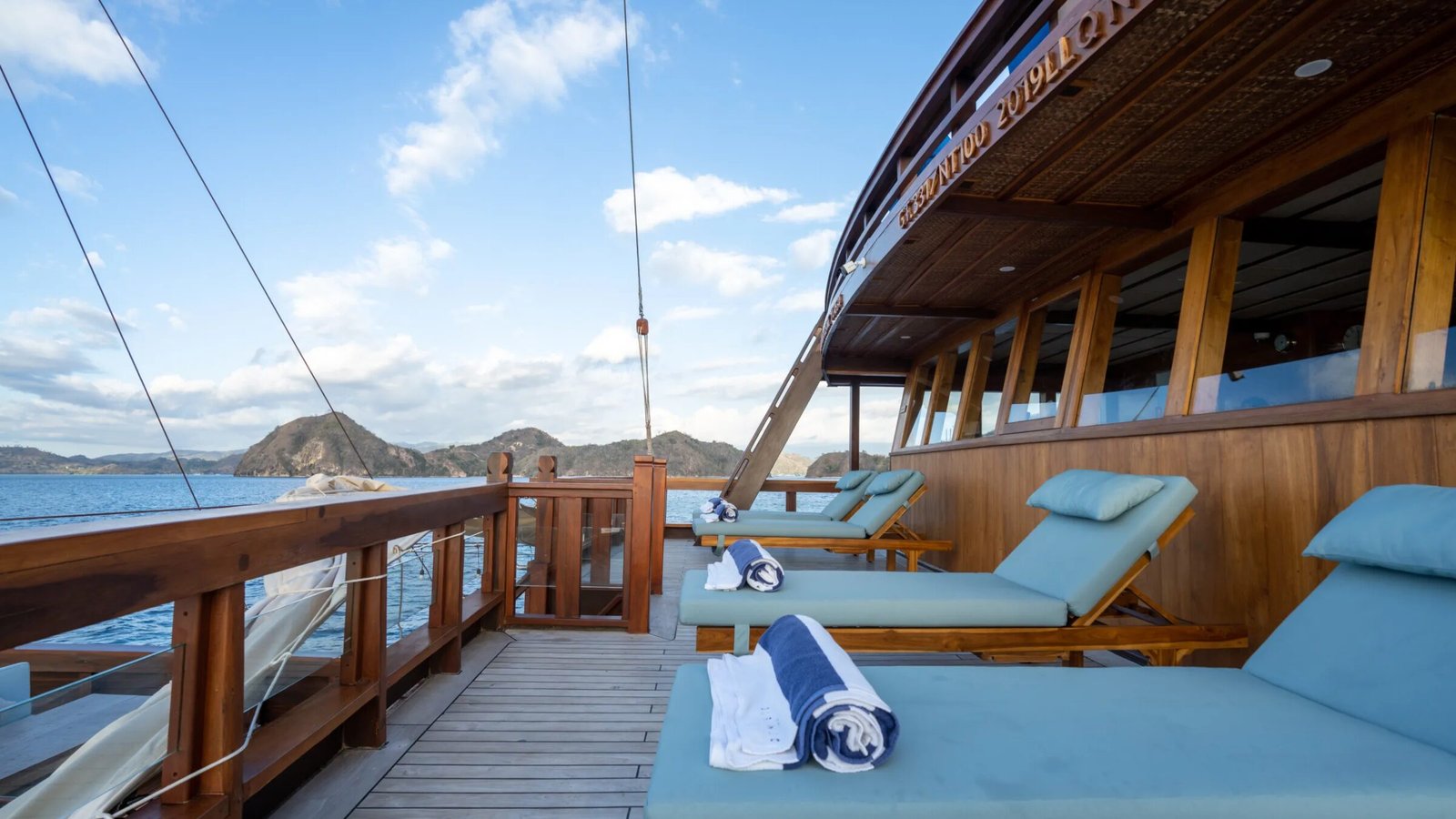
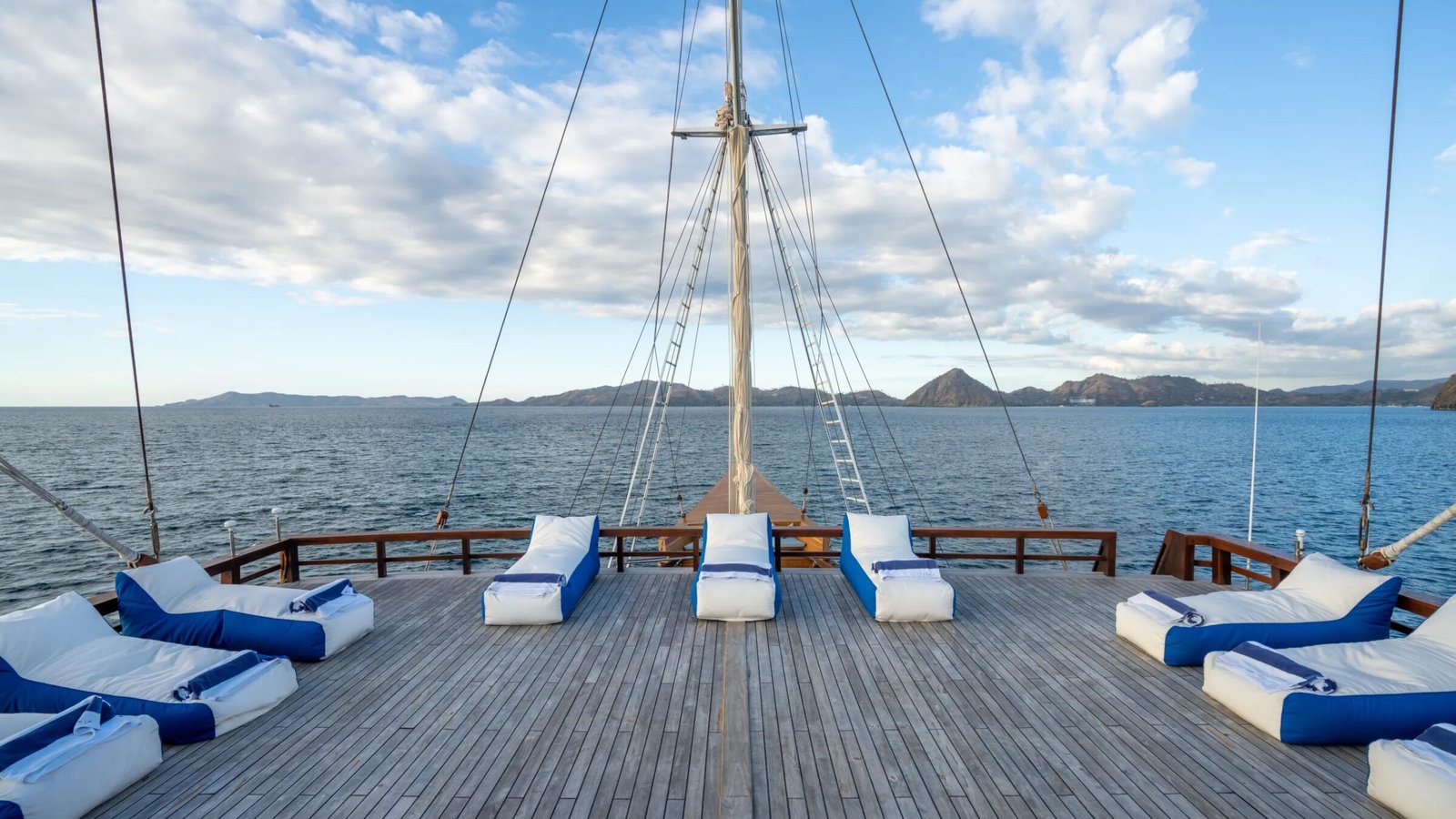
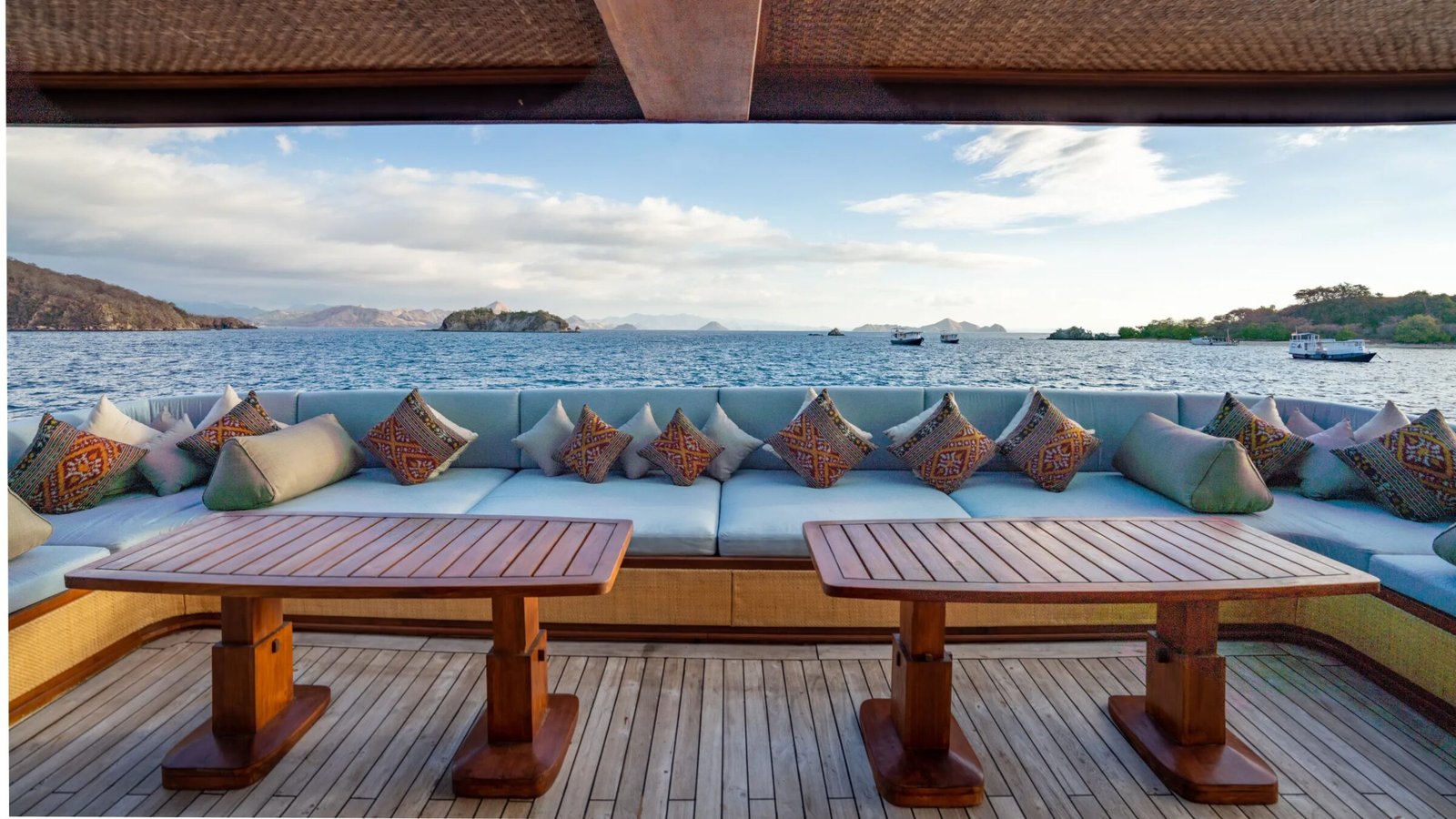
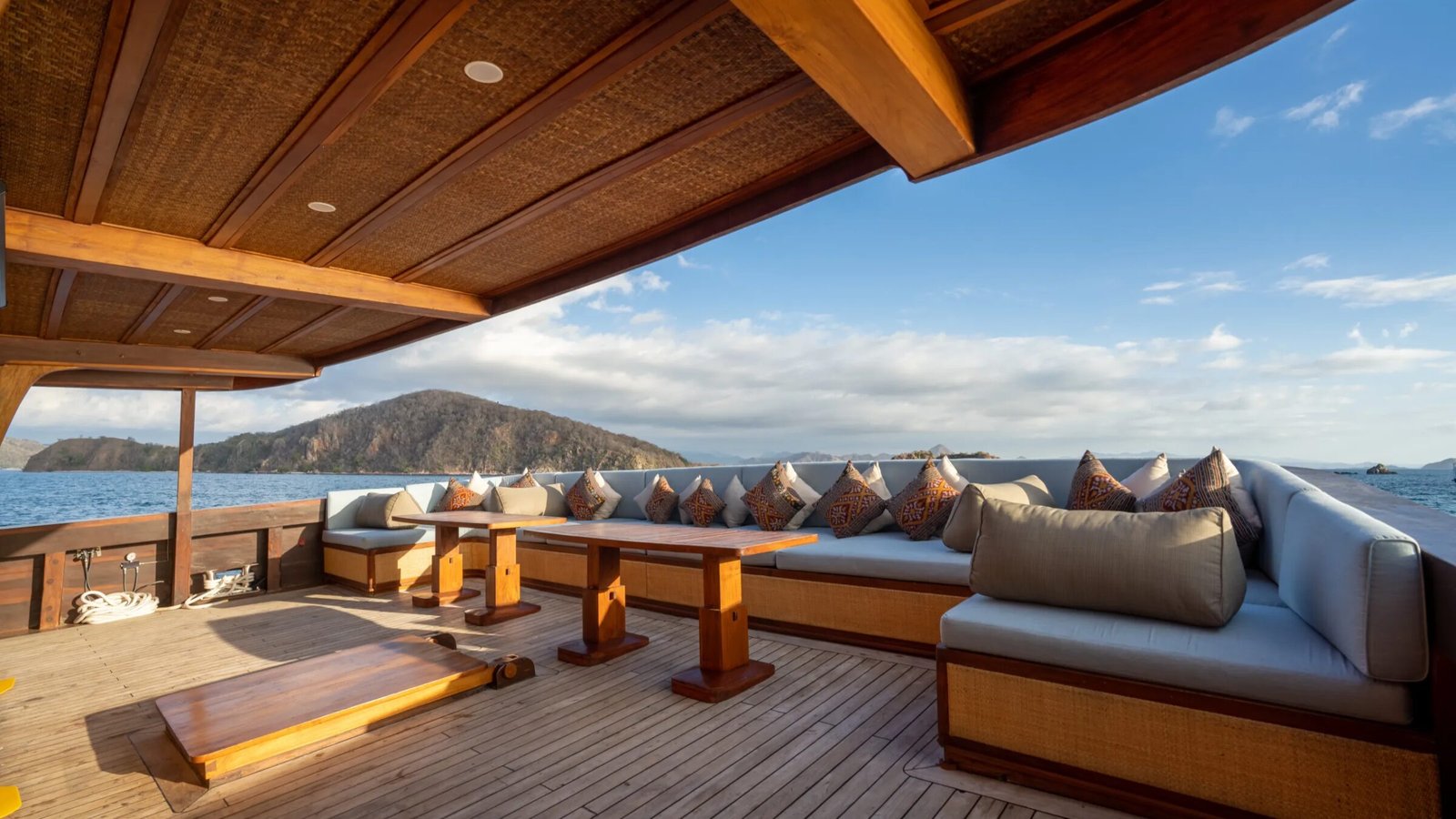
stays cool without working the air-conditioning hard. Above, a long run of loungers lines the
sun deck and rattan daybeds sit under the open sky aft, where most of the day actually
happens.
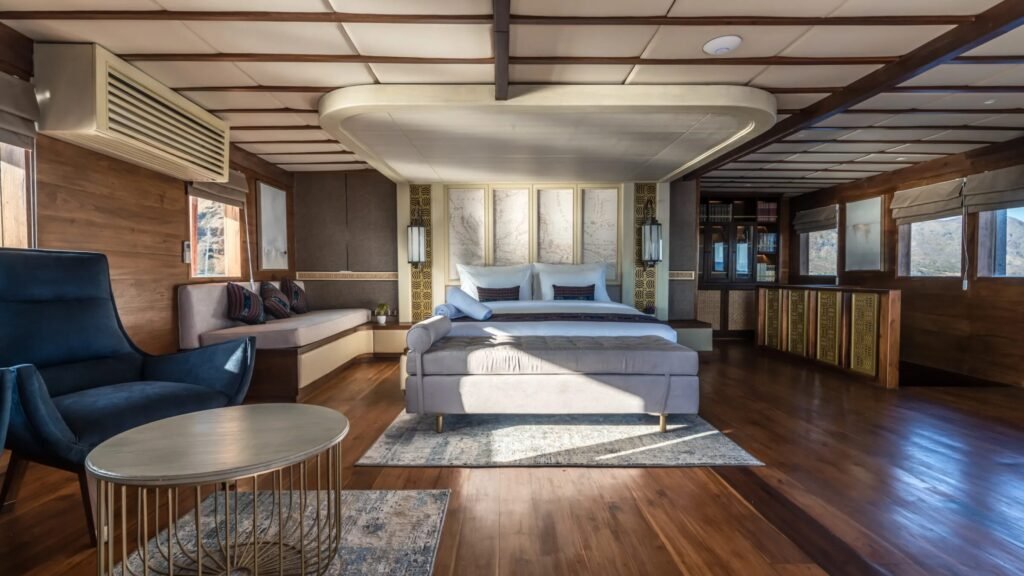
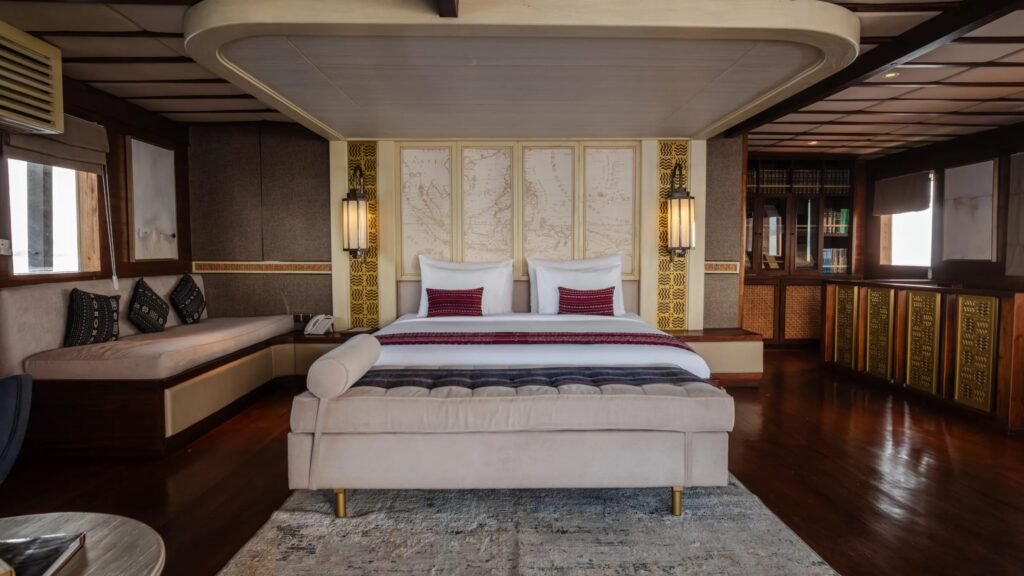
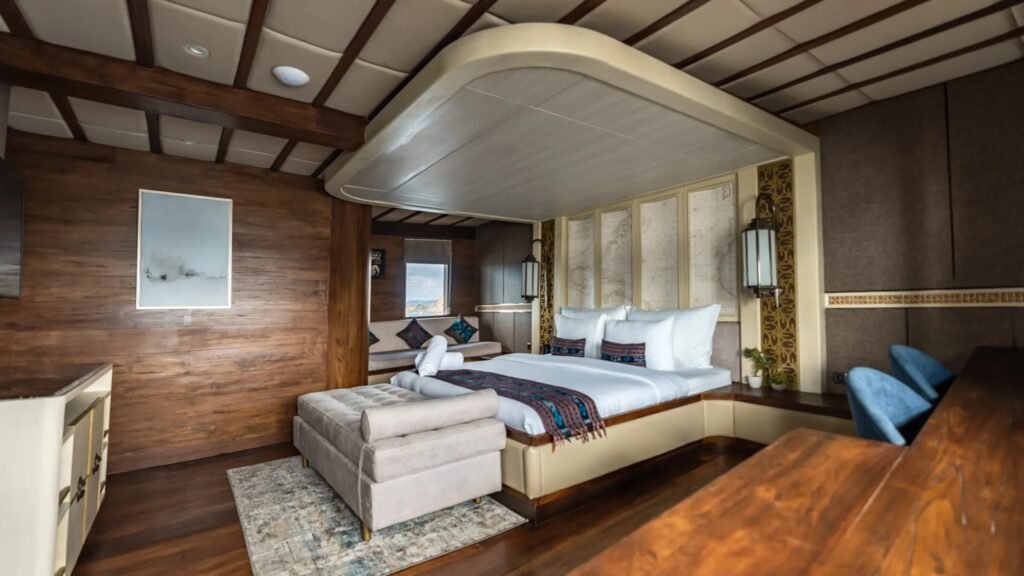
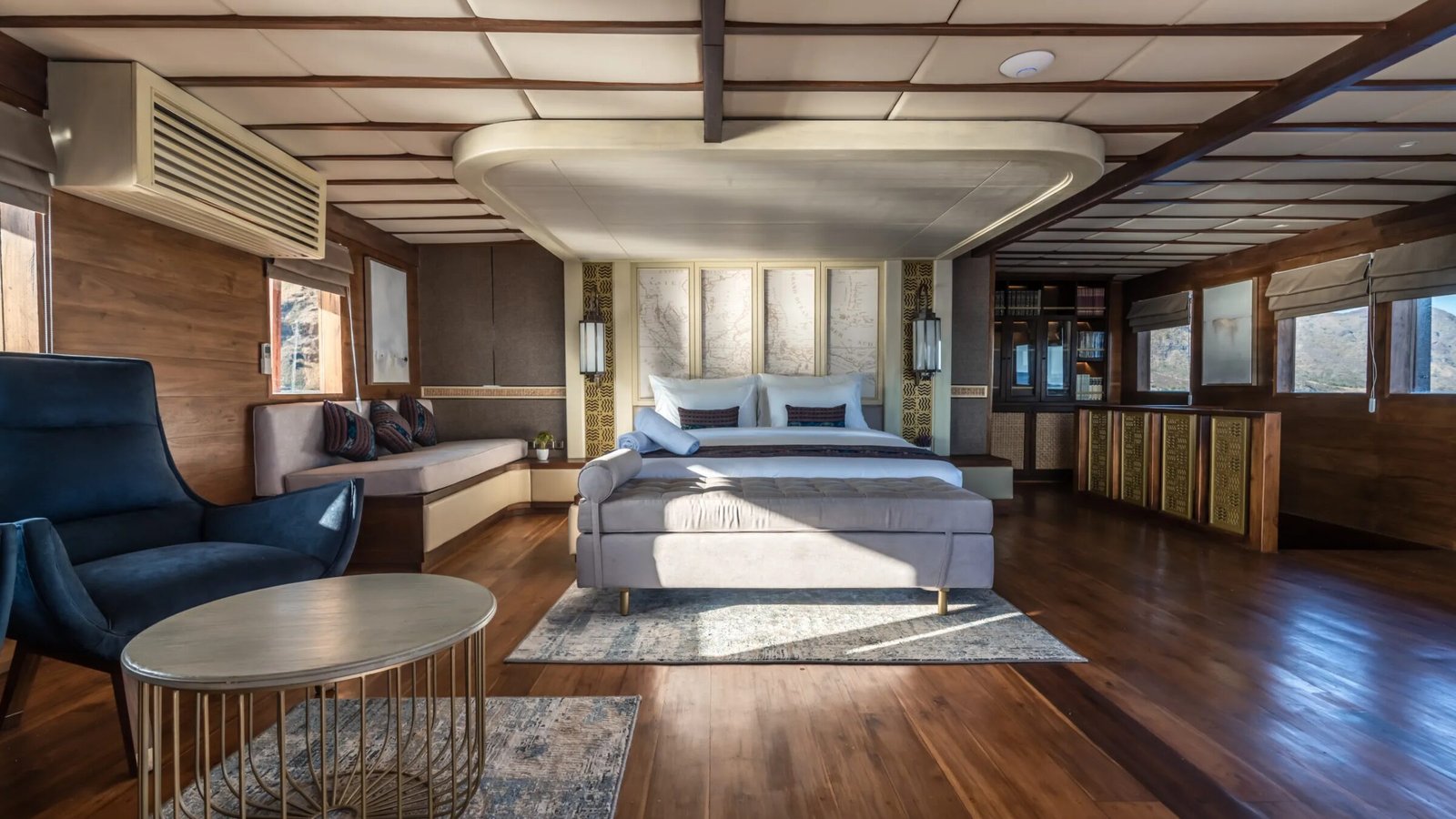
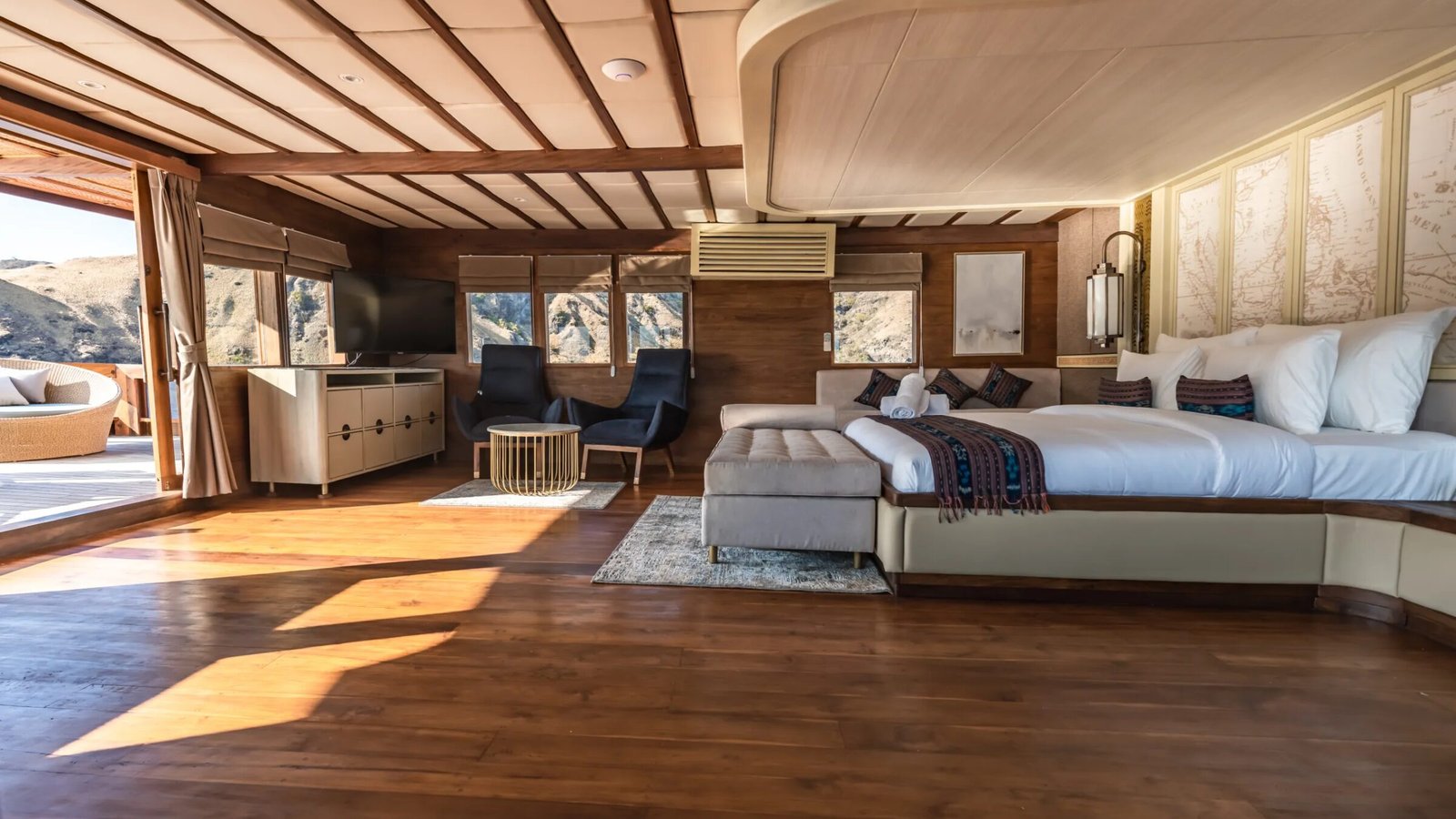
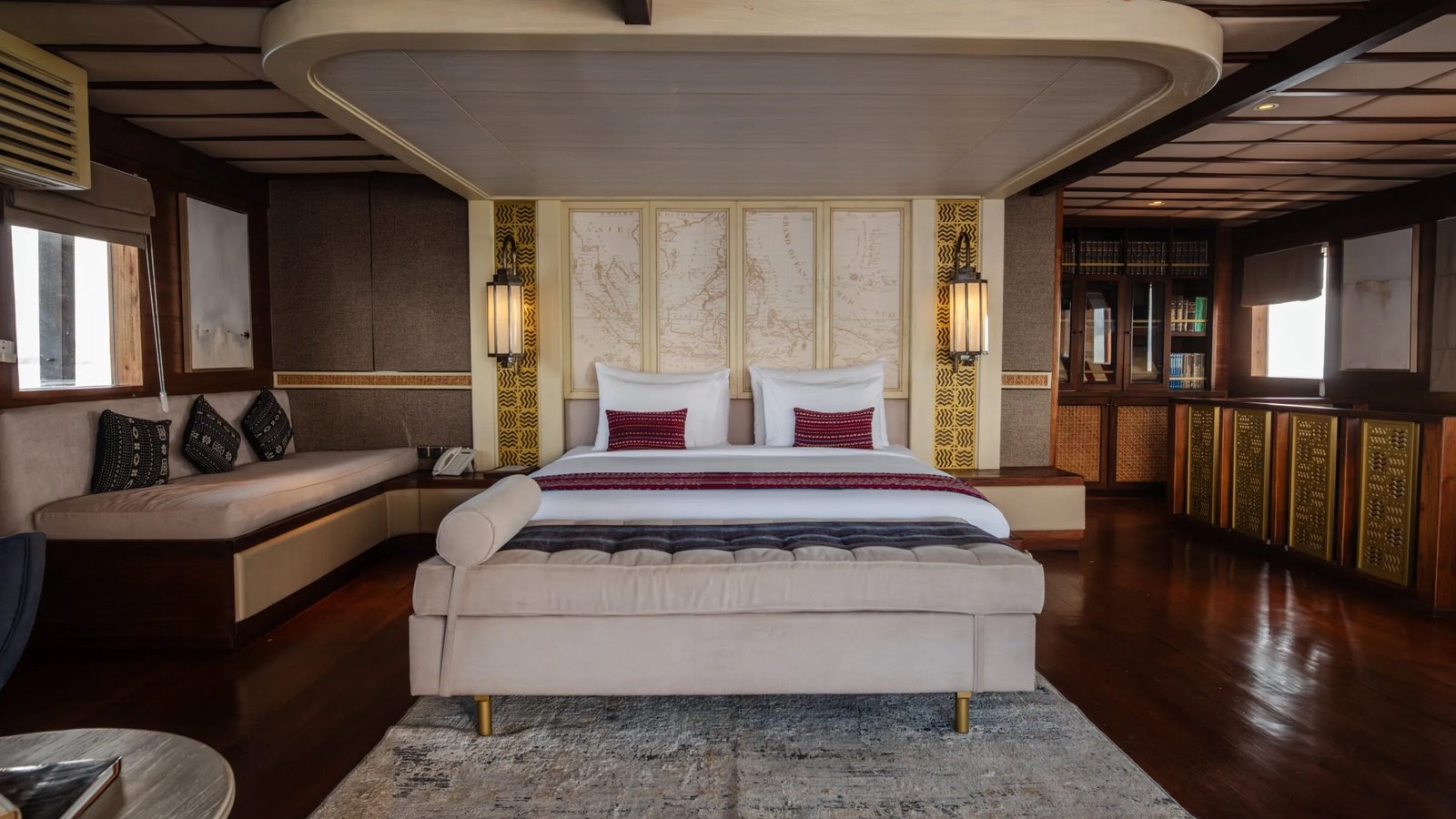
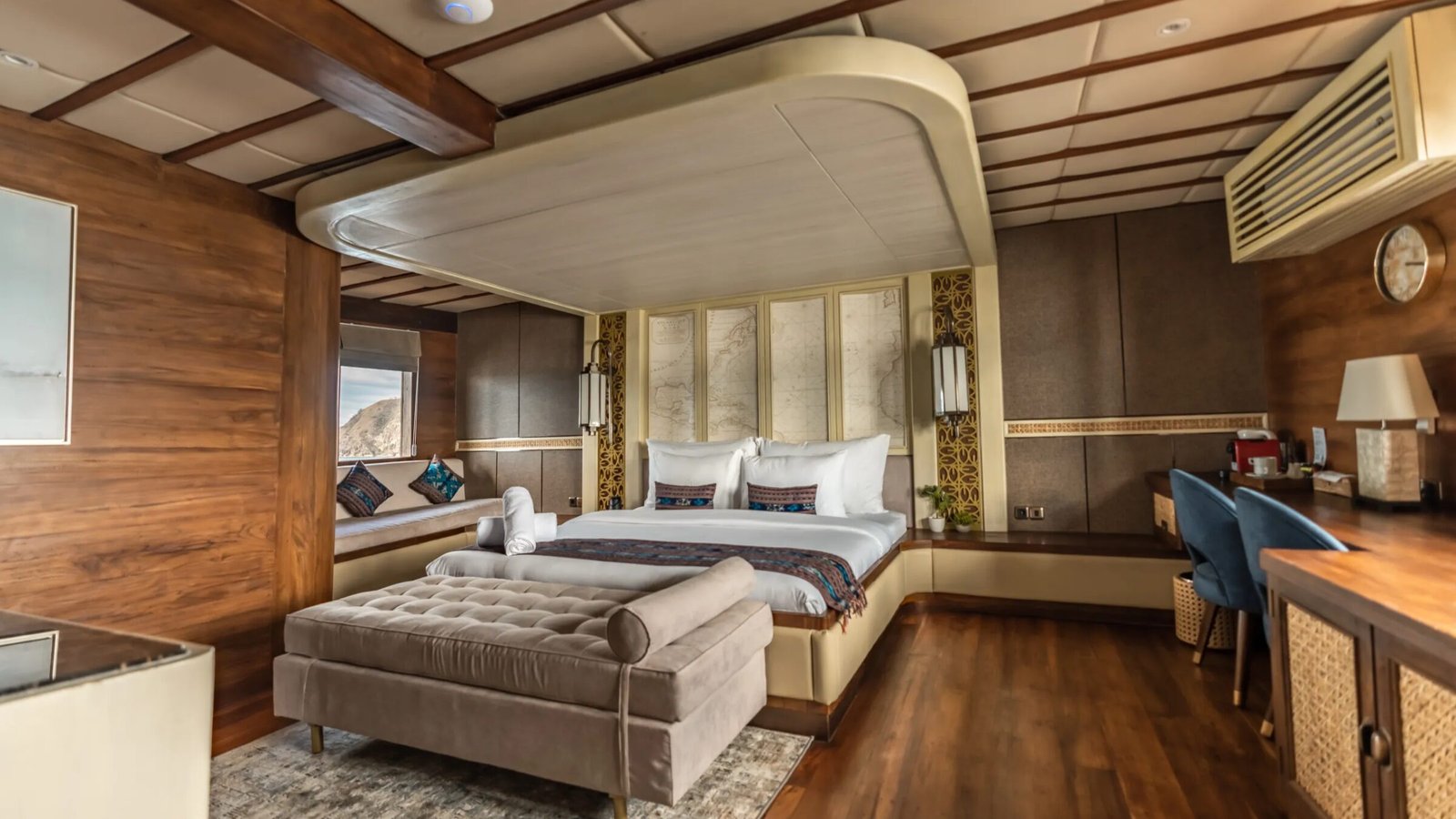
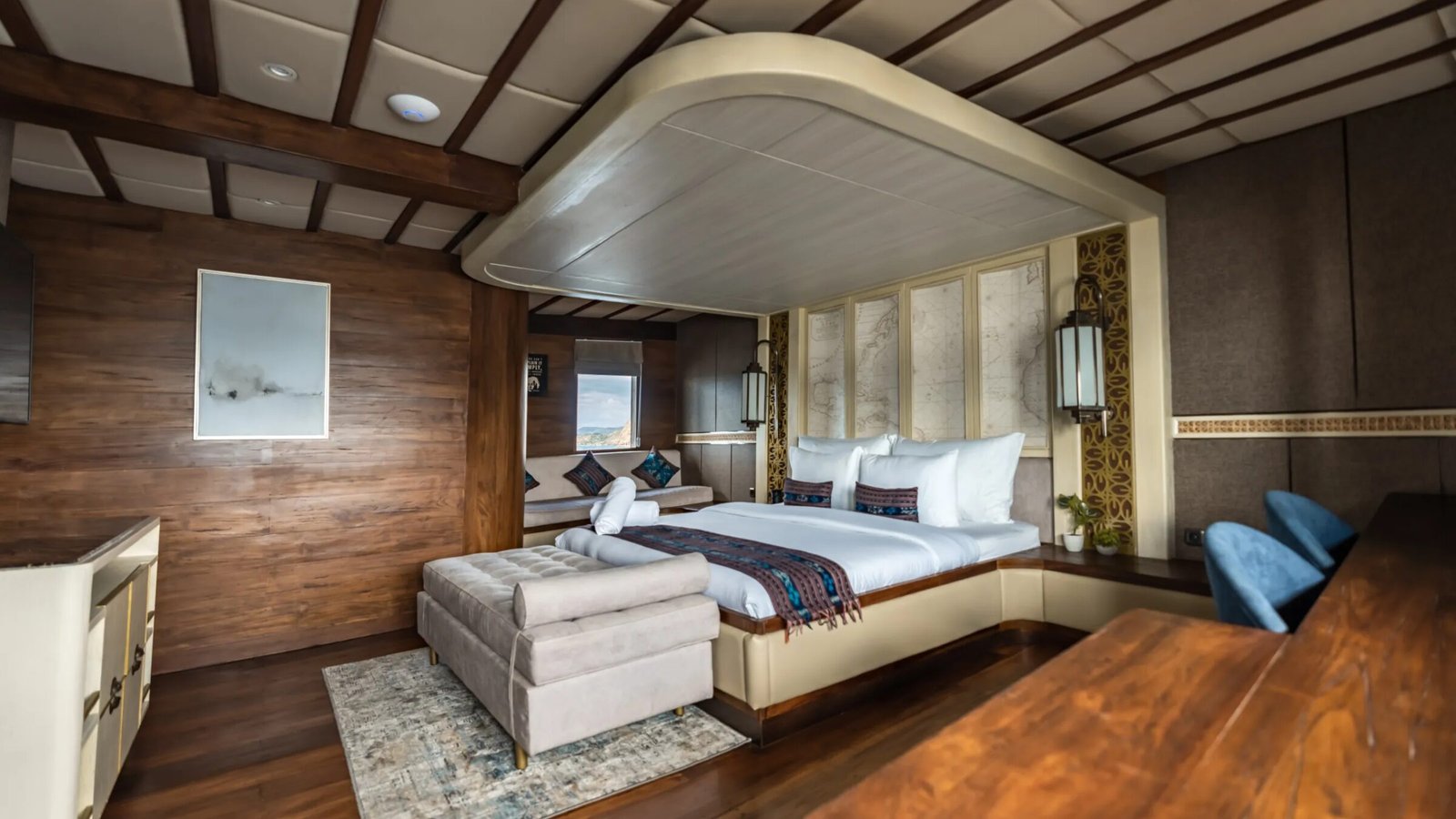
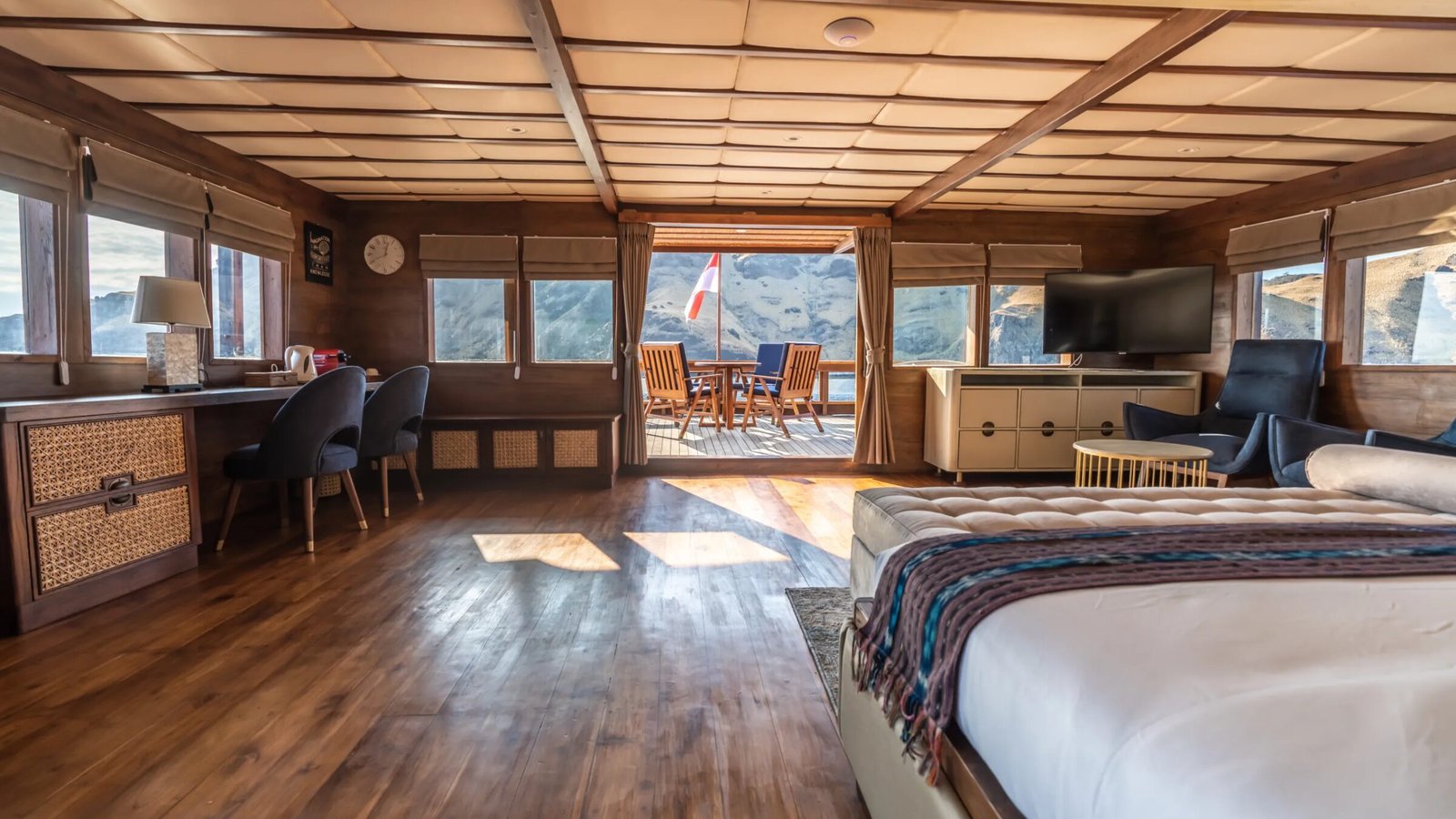
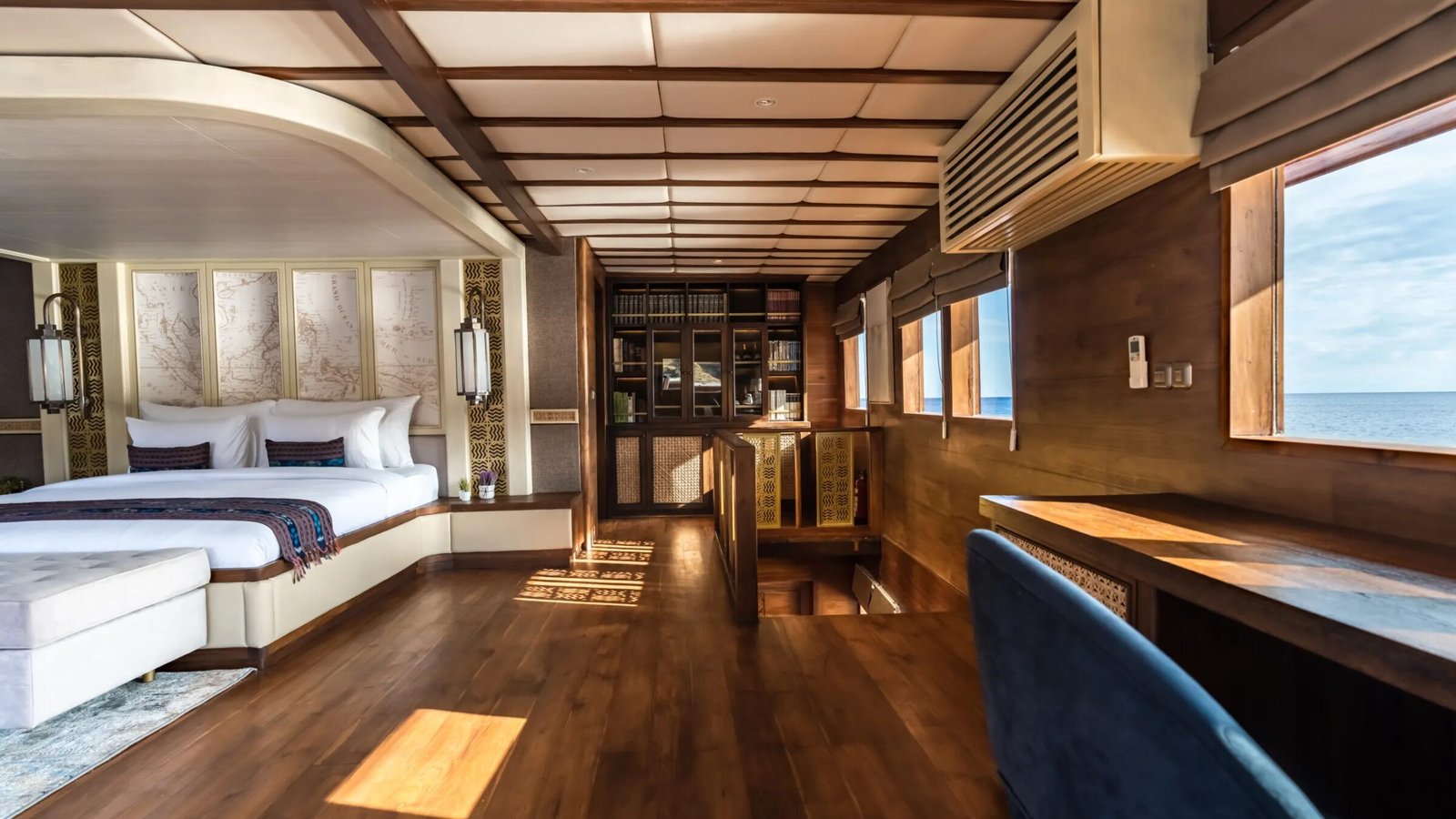
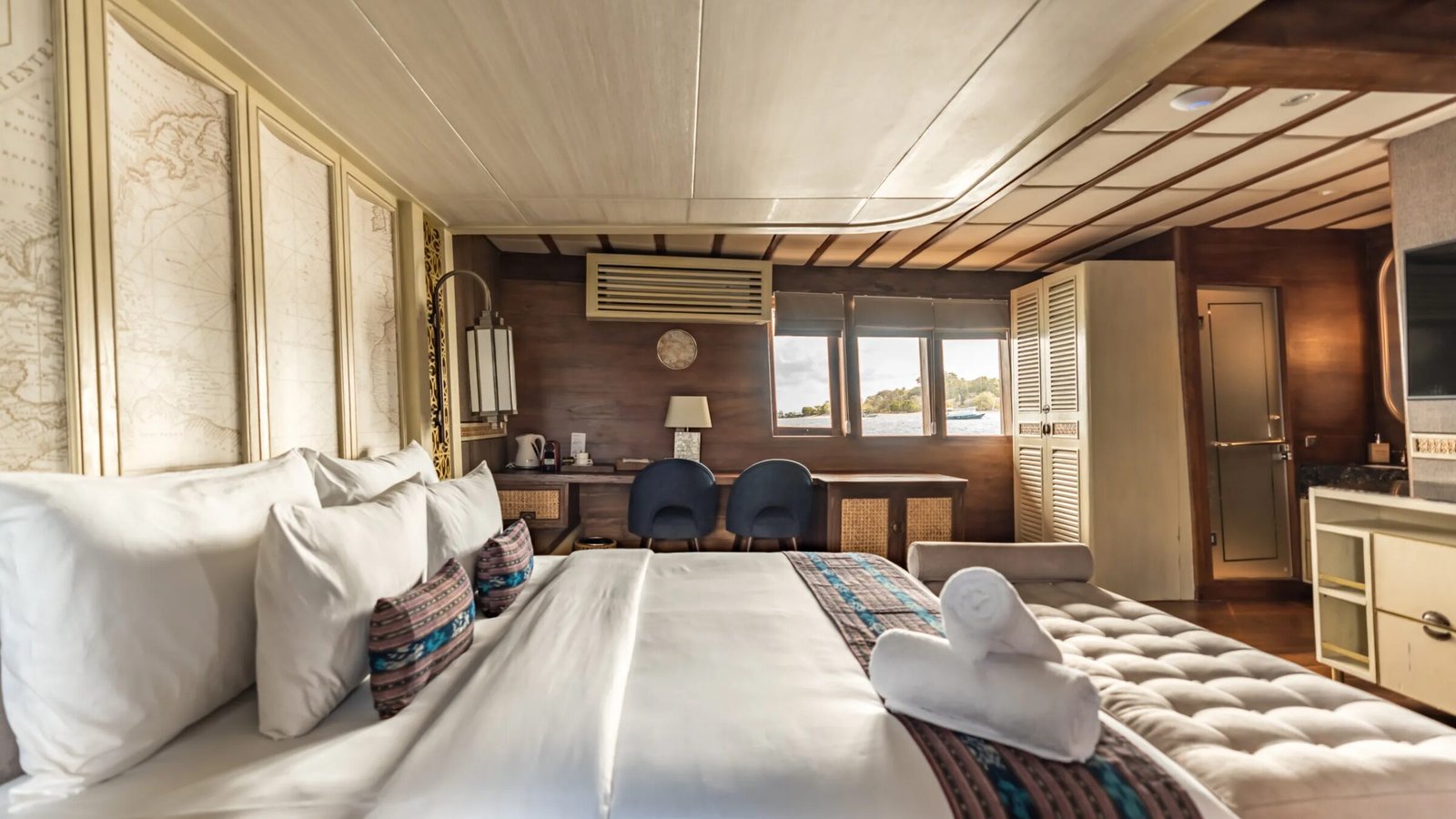
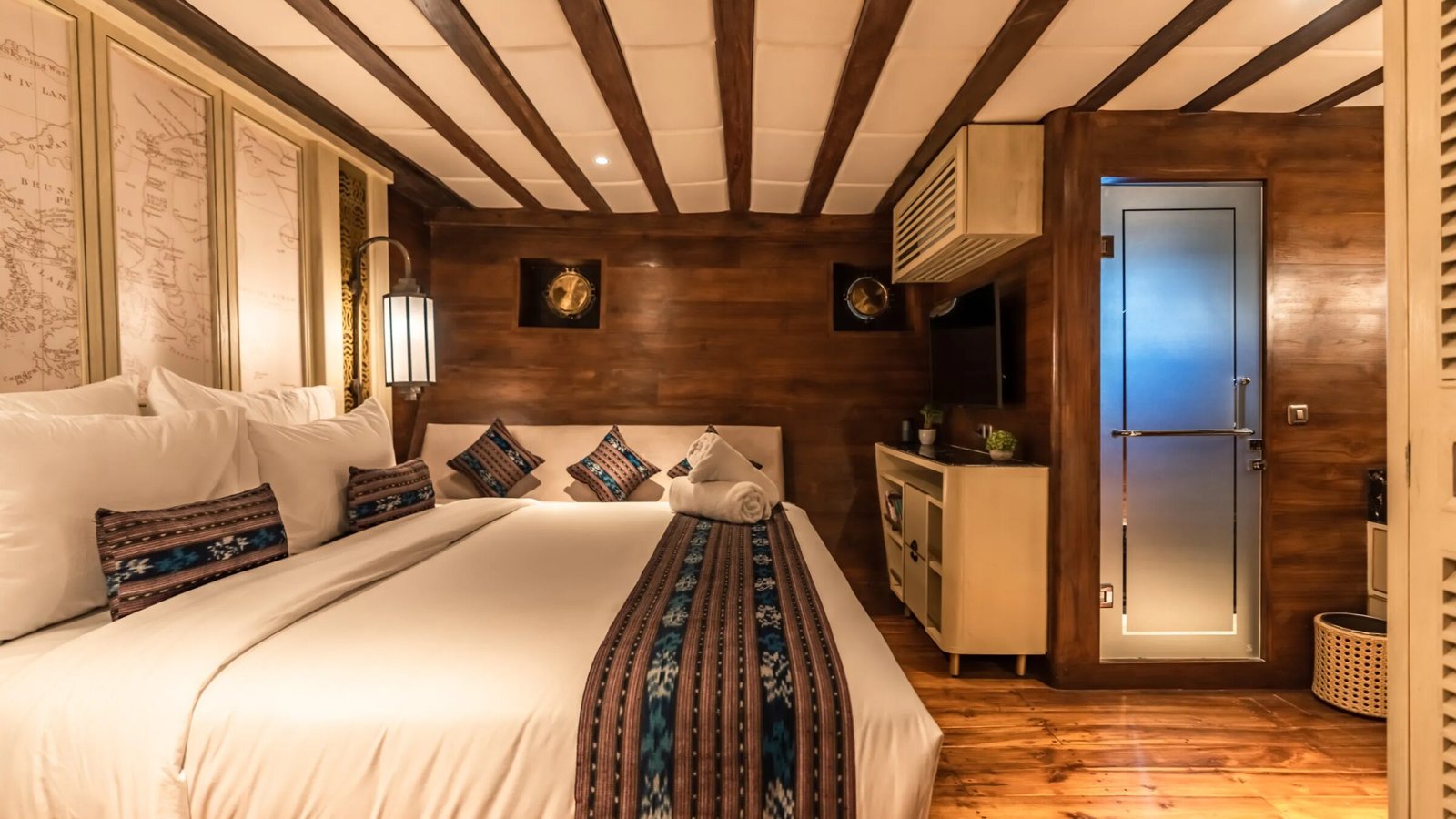
Seven suites sleep twelve. The master runs the full beam with windows on both sides and a
seating group forward of the bed; the guest cabins are set against carved cream panels and
hung with lanterns, each one different in its detailing because each one was made rather than
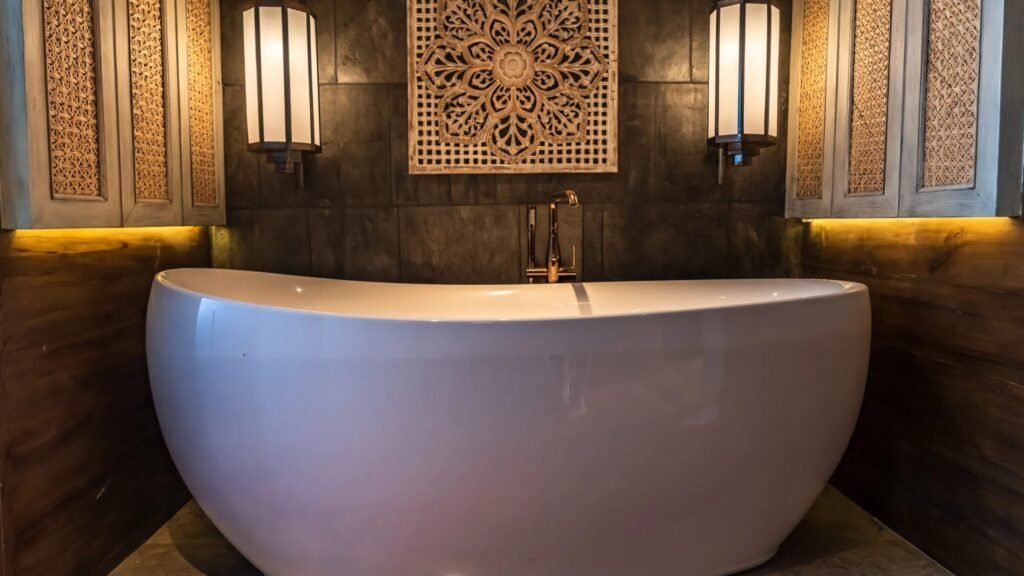
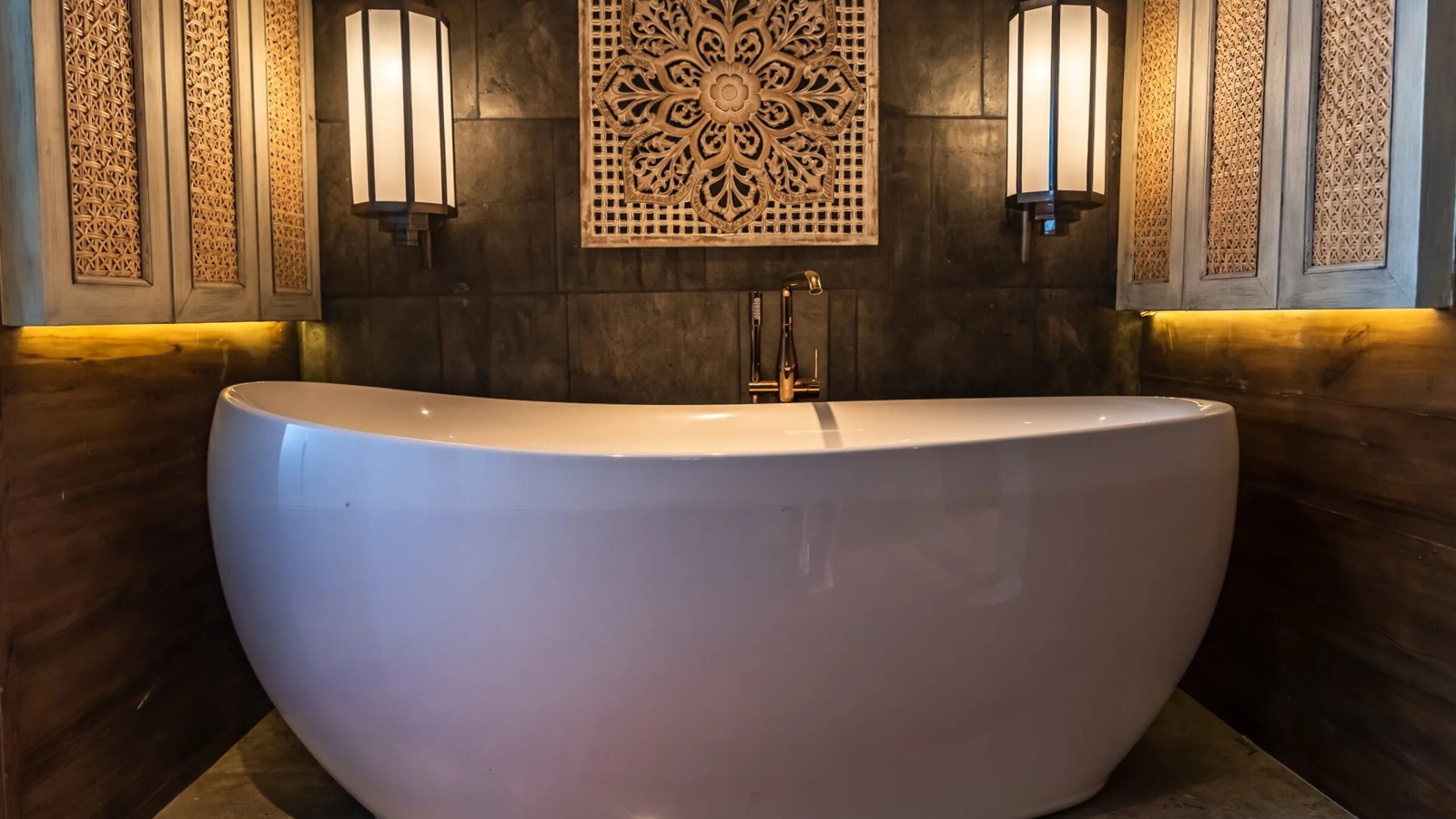
manufactured. The master bathroom, with a freestanding oval tub beneath carved panels and a
high window, is the clearest statement of the whole build: traditional craftsmanship applied
to something no working phinisi would ever have carried.
She runs with a crew of 14 for 12 guests, which is a generous ratio for a vessel of this
type, and it shows in how the diving, the tenders and the shore excursions are handled. For
charterers who want Indonesia rather than the Mediterranean transplanted to Indonesia, she is
a rare proposition: a genuinely traditional vessel, built to a standard that lets her carry
twelve guests properly, working the two best cruising grounds in the region on a seasonal
rotation.