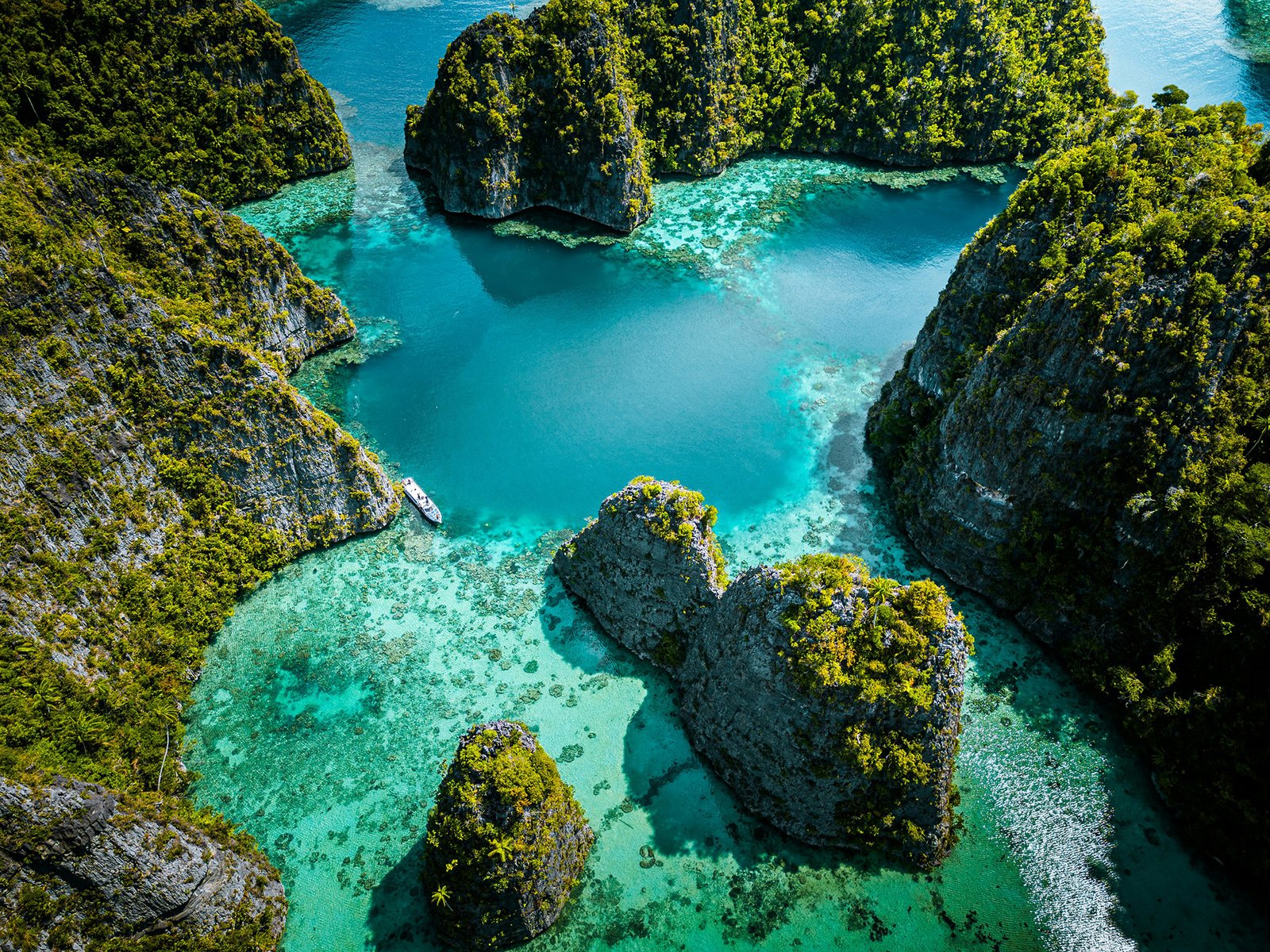
Indonesia / Raja Ampat / Waigeo
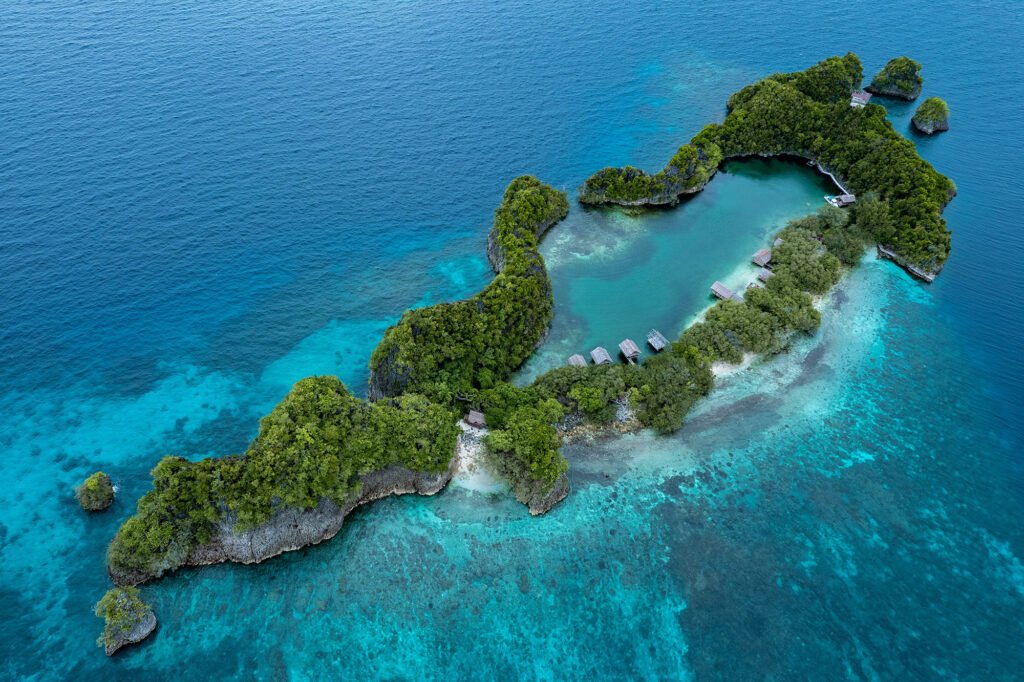
Mayalibit Bay
Aljui Bay
Waiwo Bay
Manyaifun
Saonek Besar
Trek to see Wilson’s bird-of-paradise display at dawn
Kayak the tide-scoured channel into Mayalibit Bay
Snorkel the pearl farm reefs at Aljui Bay
View ancient handprints at Selpele village
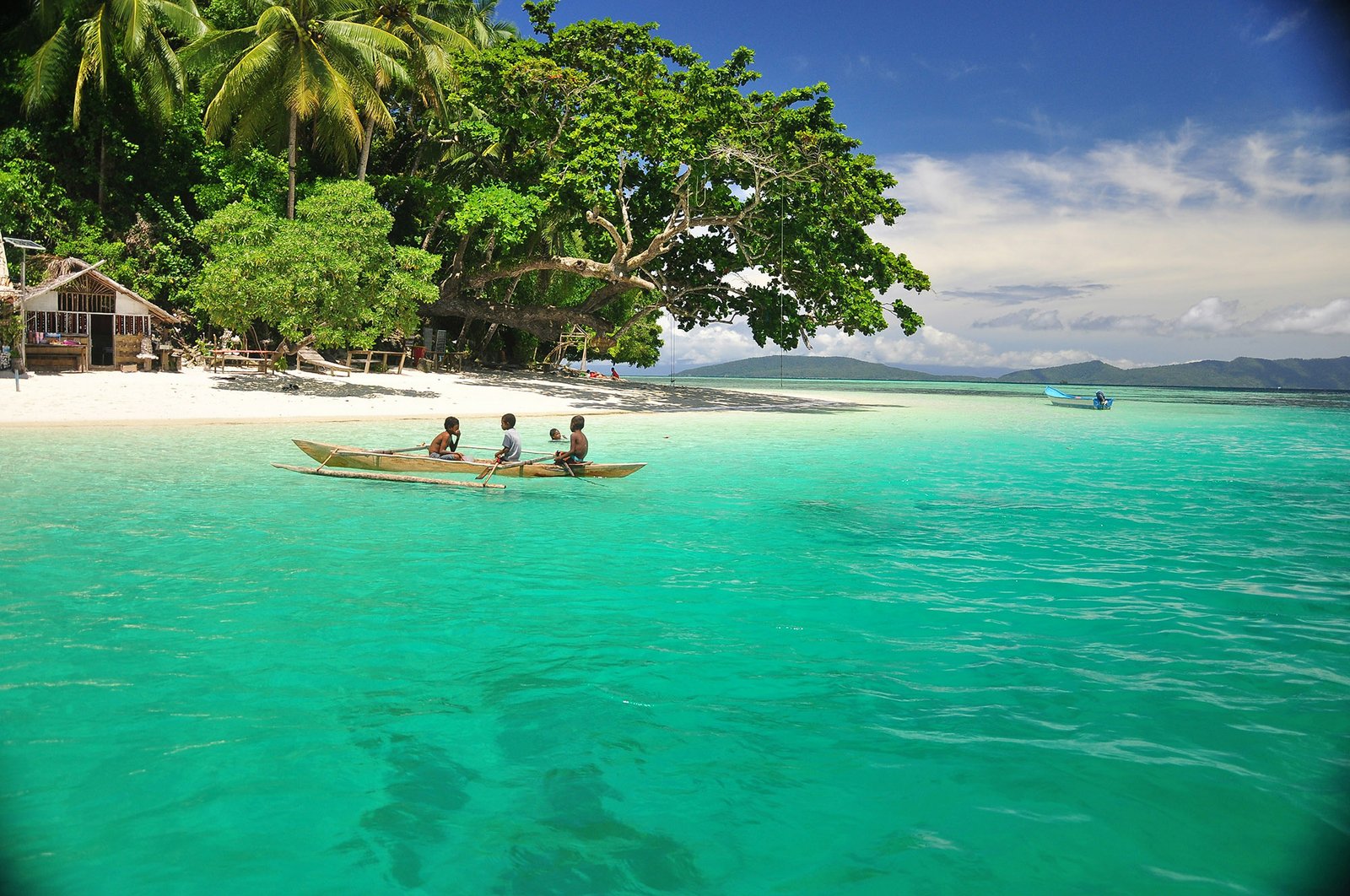
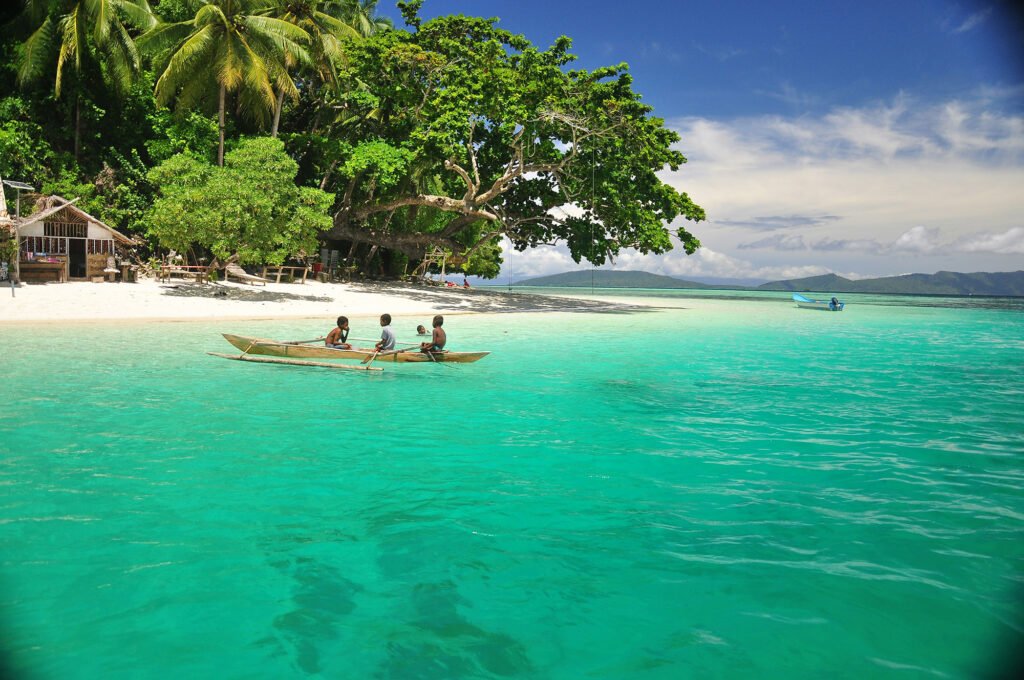
Swim at Waiwo Bay’s beaches
Mayalibit Bay
Aljui Bay
Selpele village
Manyaifun
Saonek Besar
Waigeo shares Raja Ampat’s broader pattern: good conditions from roughly September through June, with July and August standing out as the period to avoid, when the southeast monsoon brings rougher seas and lower visibility, particularly along the more exposed western anchorages near Aljui Bay. The calmer months from October to December are often singled out as the most reliable window for both diving and the dawn bird-watching excursions the island is known for.
Most guests fly into Domine Eduard Osok Airport (SOQ) in Sorong and continue by boat, either a roughly two hour public ferry to Waisai on Waigeo’s south coast or a direct private transfer. Waisai itself has a small airstrip served only by light aircraft, so it functions as a regional hub and provisioning stop rather than a practical arrival point for most charter guests.
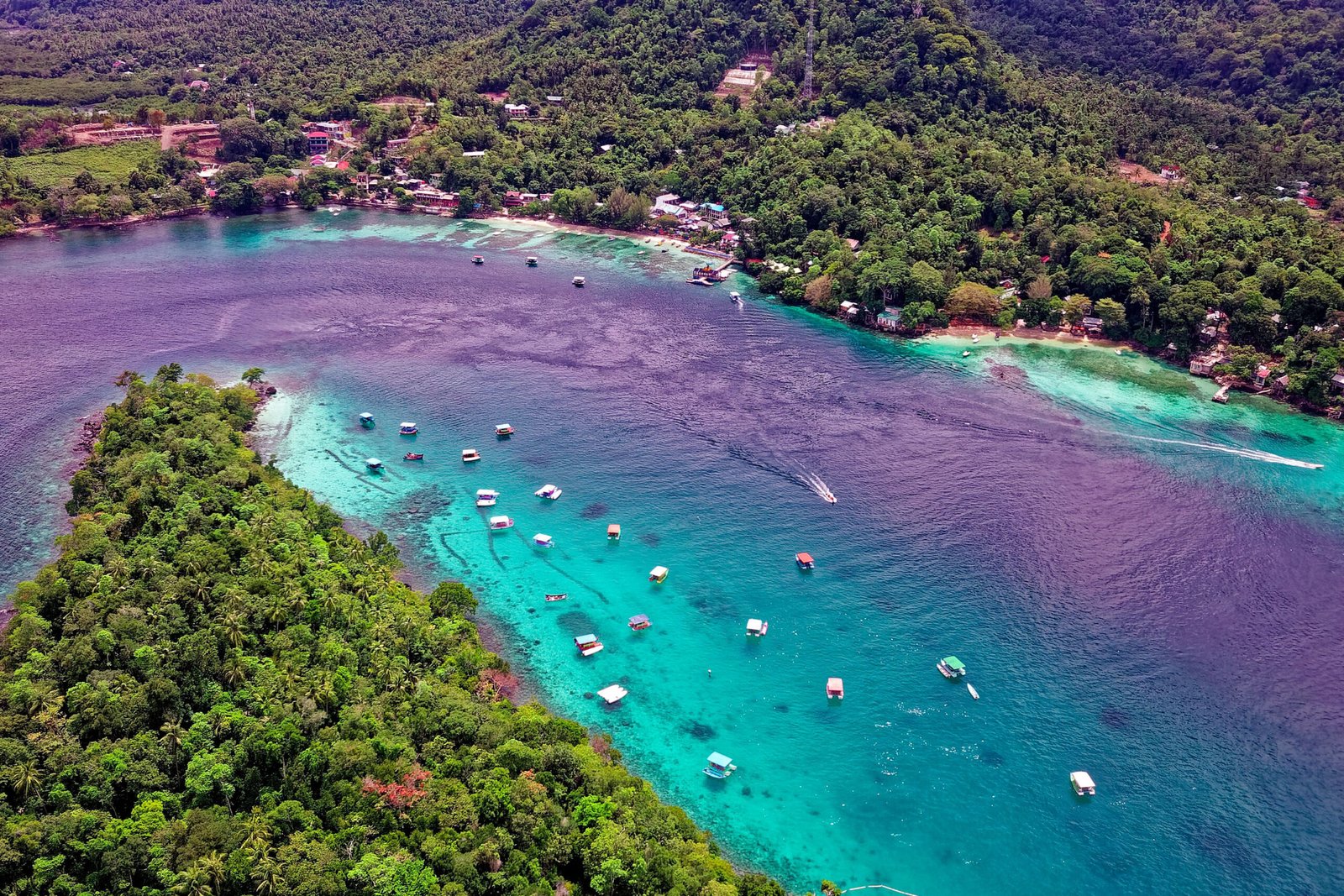
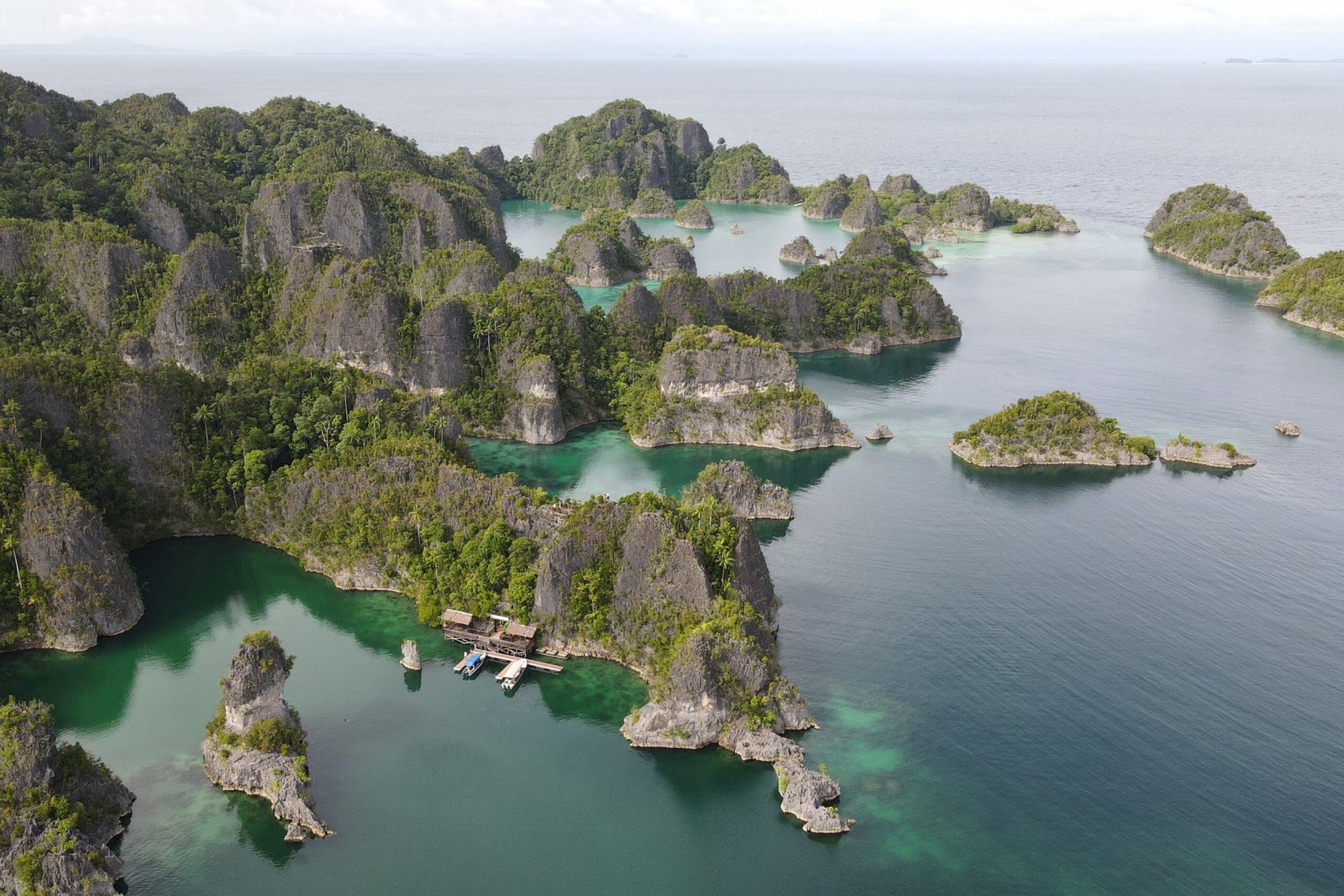
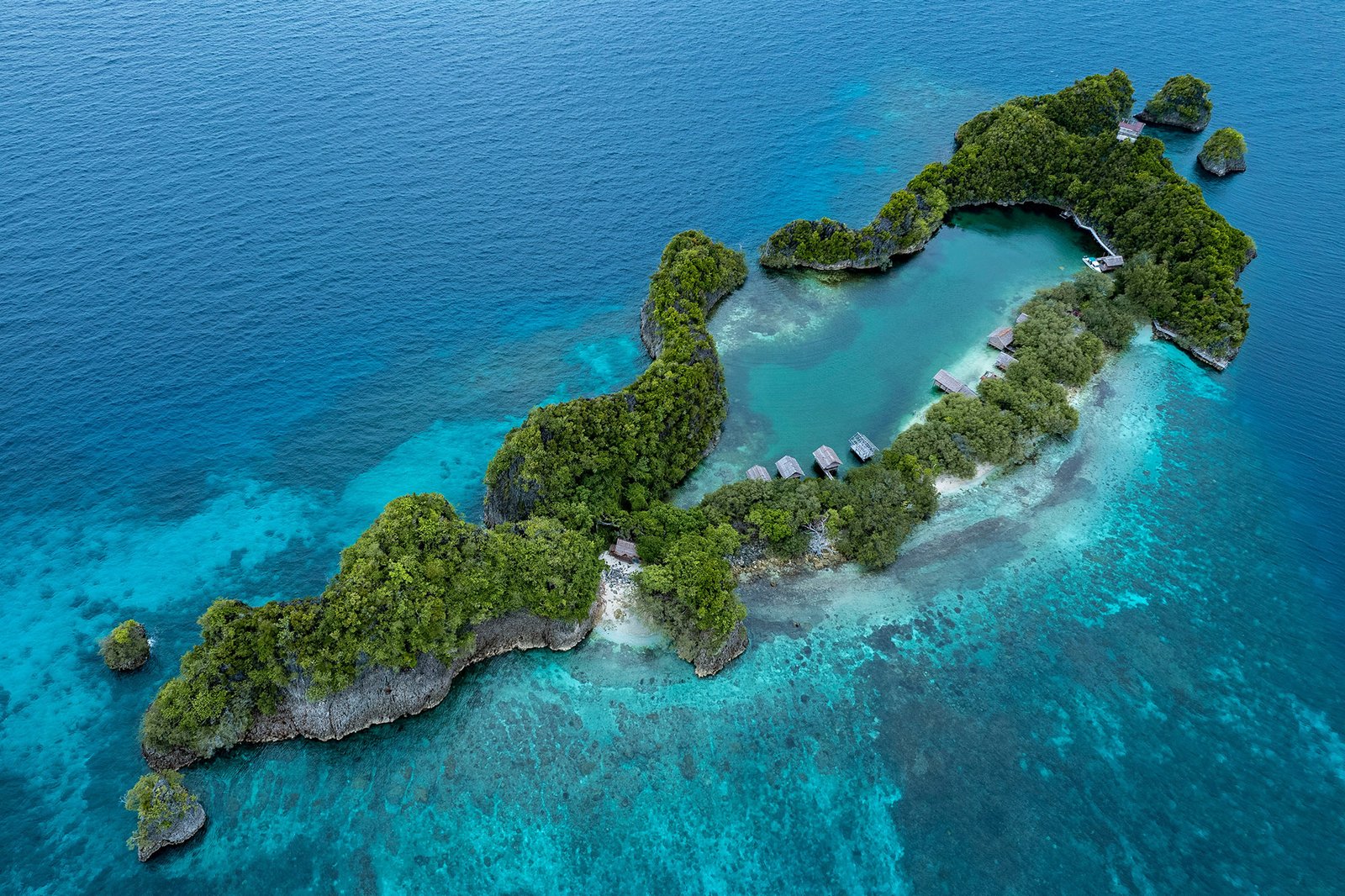
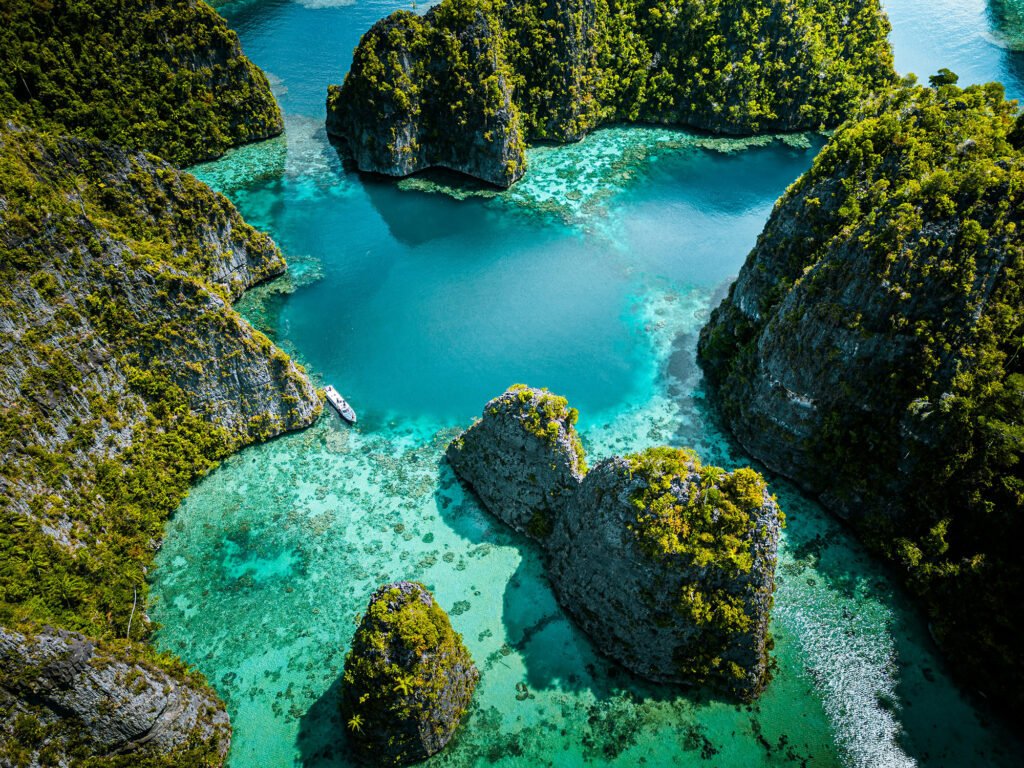
Mayalibit Bay, reached through a narrow tidal channel, offers a strikingly different, almost landlocked anchorage compared to the open reef country elsewhere in Raja Ampat, while Aljui Bay on the west coast combines sheltered water with dramatic sea cliffs. Waiwo Bay, closer to Waisai, is the easiest option for guests wanting good swimming beaches within a short run of the harbour.
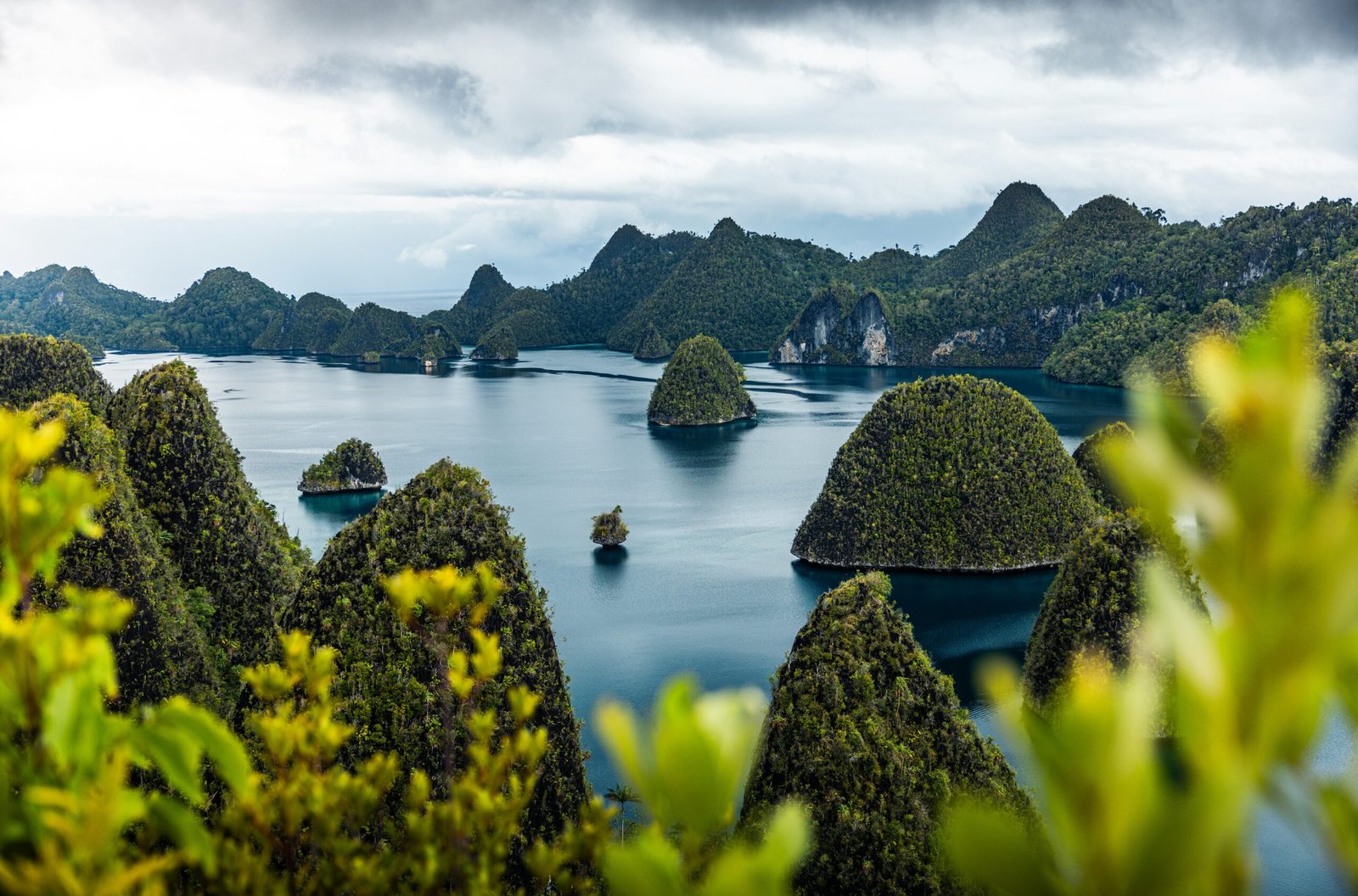
Two to three days allows time for a dawn birdwatching excursion, an exploration of Mayalibit Bay’s mangroves and channels, and a stop at one of the western anchorages, though Waigeo is more often used as a base for reaching Wayag and the wider northern islands than as a single, self-contained stop. Guests short on time can see the highlights in a single overnight near Waisai.
Yes. Wilson’s bird-of-paradise, with its cobalt-blue crown and curled tail feathers, is found displaying in the wild only on Waigeo and the smaller neighbouring island of Batanta, nowhere else on earth. Local guides know the display grounds well, and a typical excursion means a pre-dawn boat ride followed by an uphill walk to a viewing hide, timed to reach it before the brief sunrise window when the males are most active.