Italy / Portofino
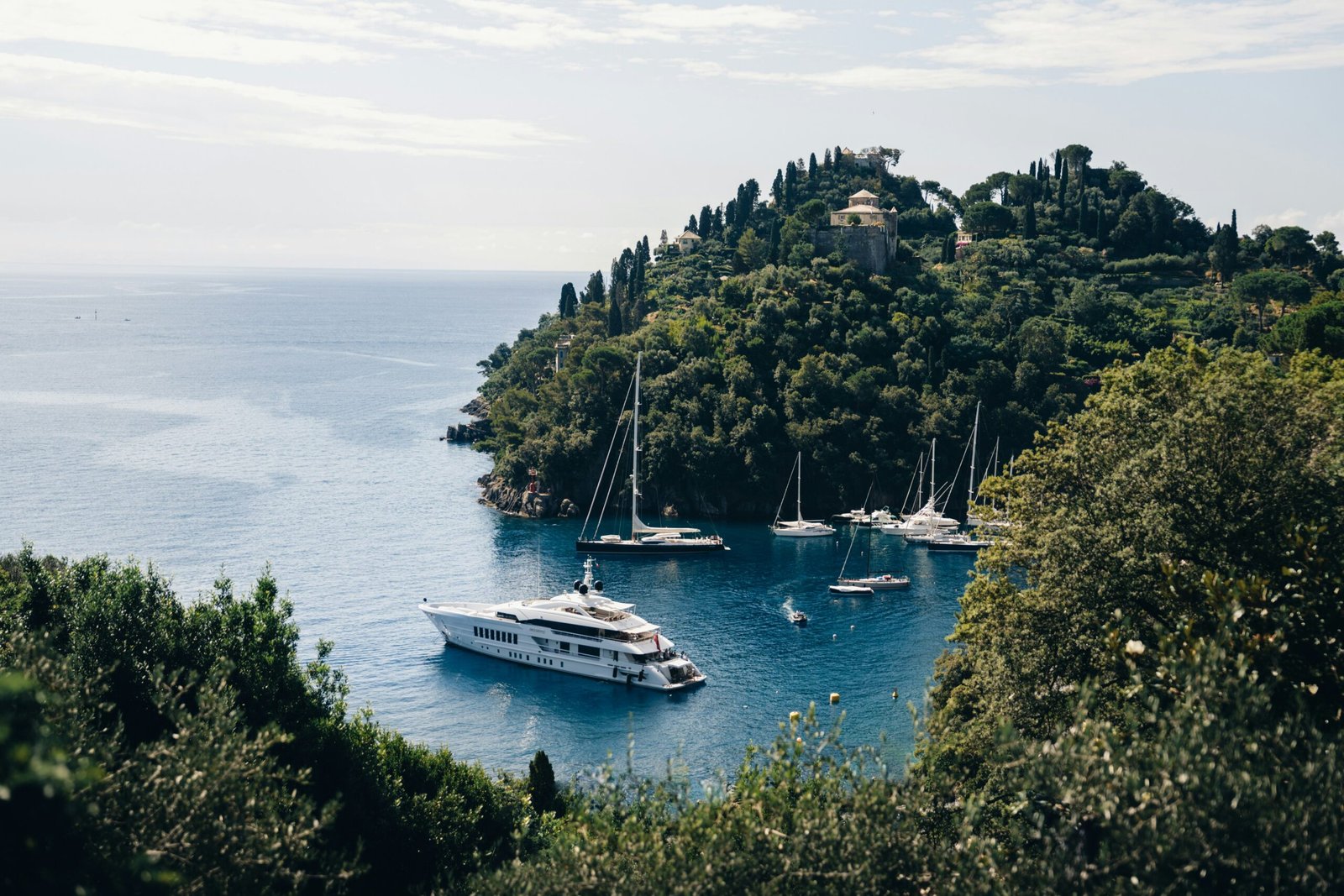
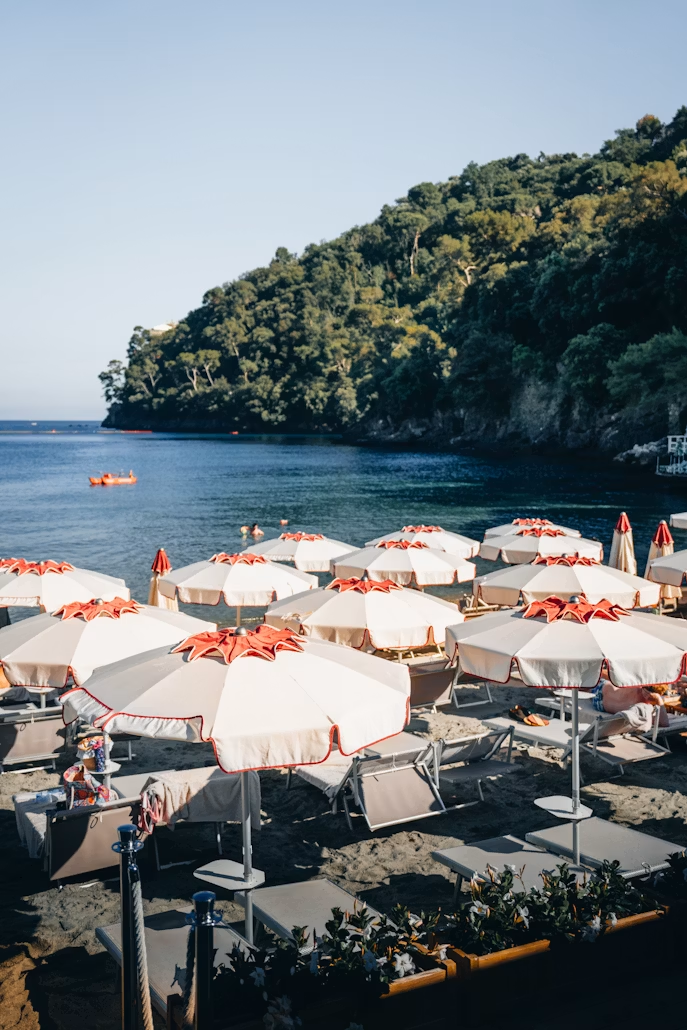
Paraggi Bay
San Fruttuoso Bay
Cala degli Inglesi
Punta Chiappa
Camogli Bay
Hike the Portofino Natural Park trails
Dive to the Christ of the Abyss
Tour Castello Brown
Sail to San Fruttuoso Abbey
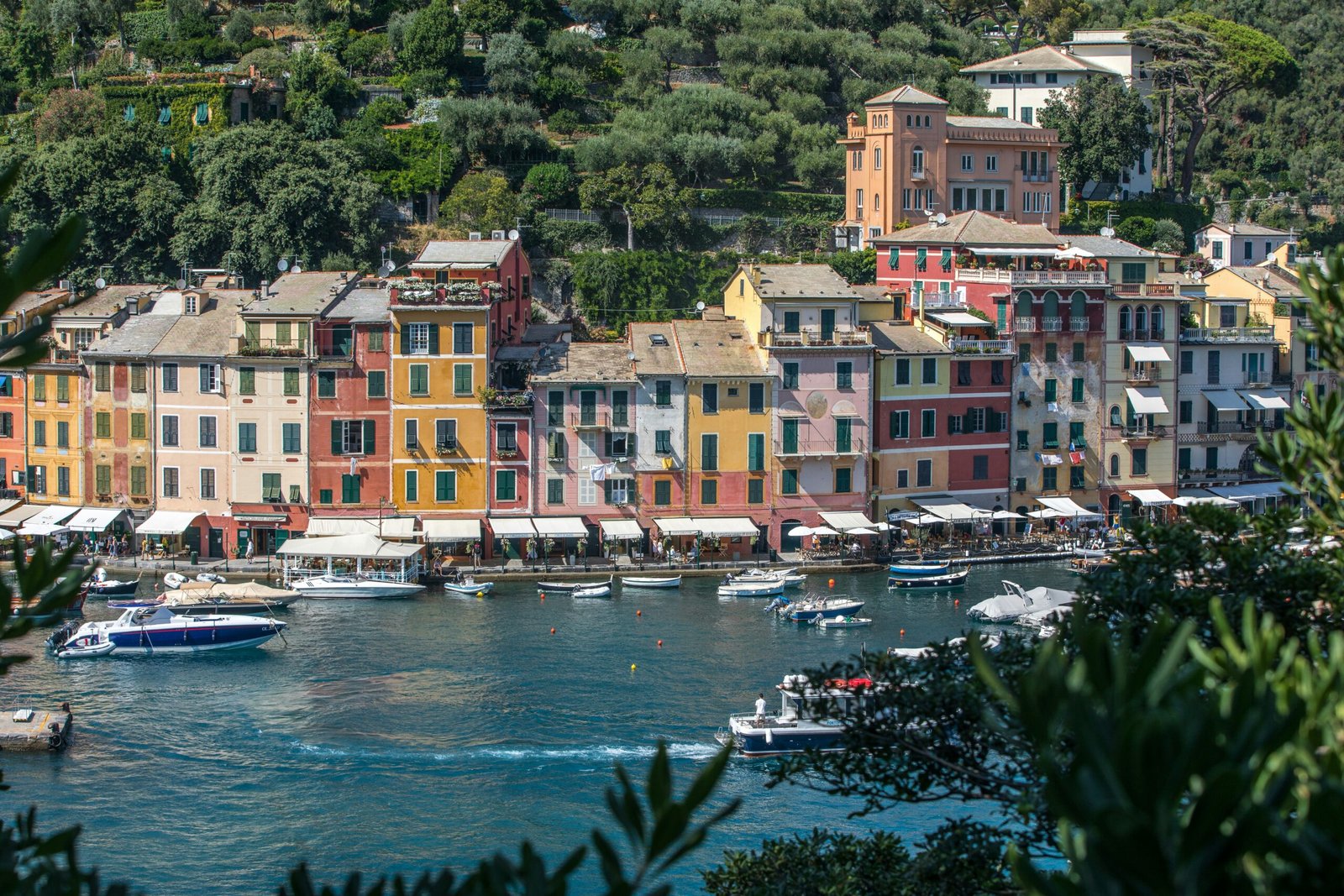
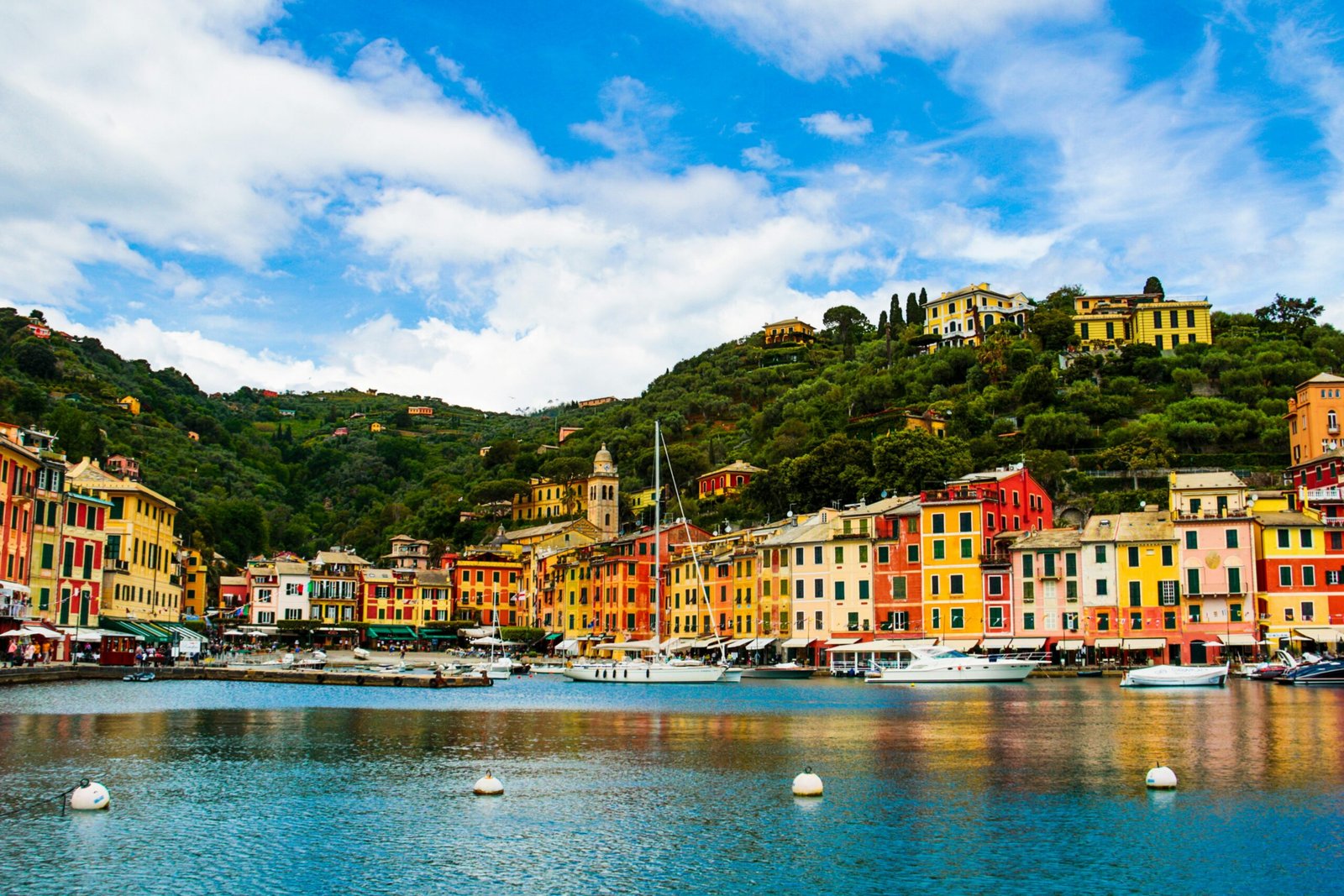
Browse the boutiques on the Piazzetta
Belmond Hotel Splendido
Church of San Giorgio
San Fruttuoso Abbey
Camogli
Rapallo
Late May through September brings the calmest seas and reliably warm weather, with June and September offering fewer crowds than the peak July-August stretch. Winter charters are rare here since many hotels and restaurants in the village close between November and March, and the open, north-facing harbour can be exposed in poor weather, so most itineraries are built around the late-spring-to-early-autumn window.
Genoa Cristoforo Colombo Airport (GOA) is the closest, around 45 kilometres by road, with the transfer typically taking 50 minutes and up to an hour during summer weekend traffic on the coastal roads. Nice Côte d’Azur Airport in France is a workable alternative for itineraries that also cover the French Riviera, though it adds roughly two hours to the transfer compared with flying into Genoa directly.
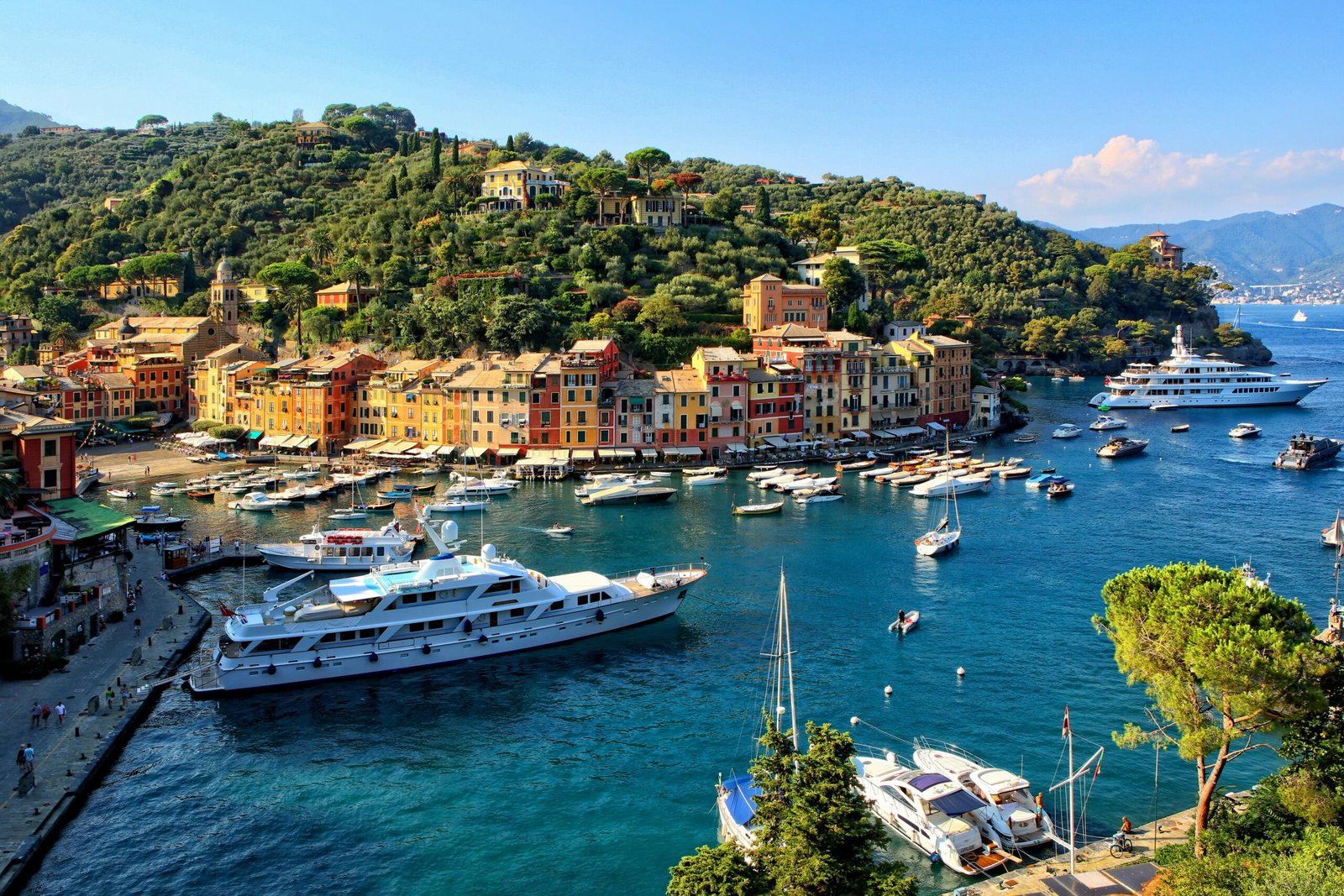
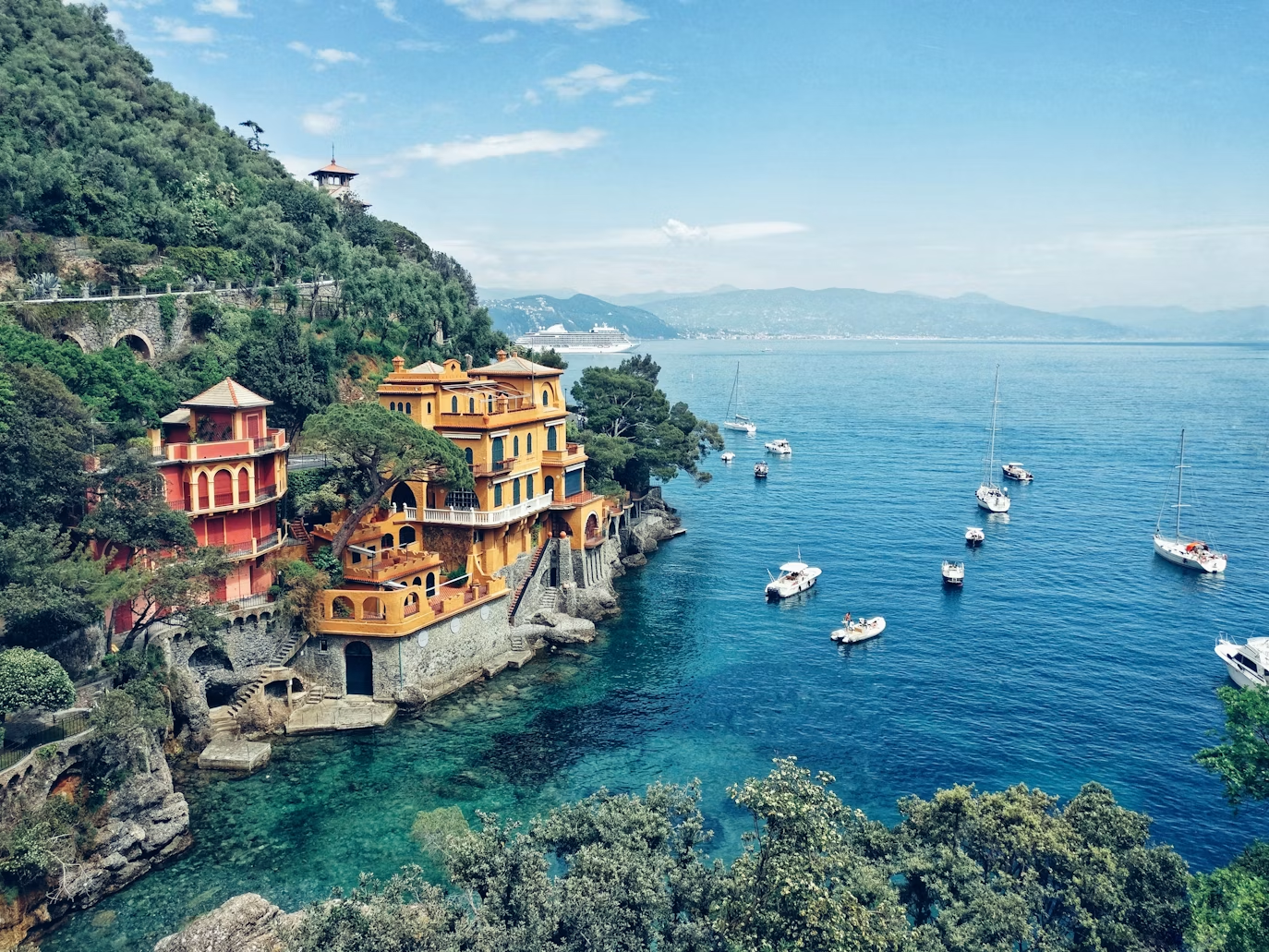
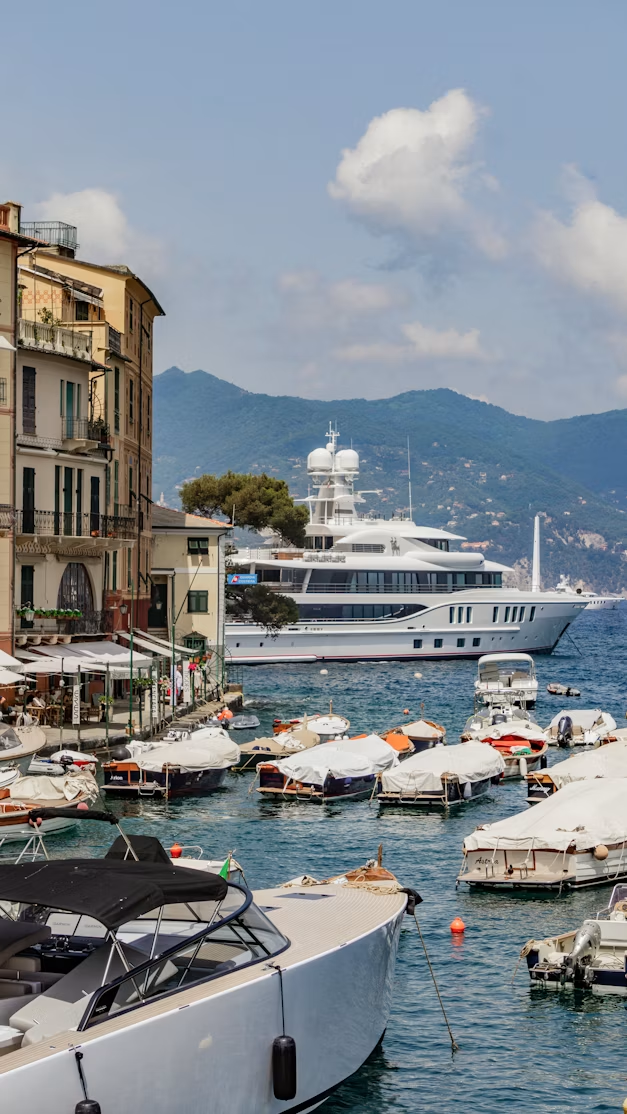
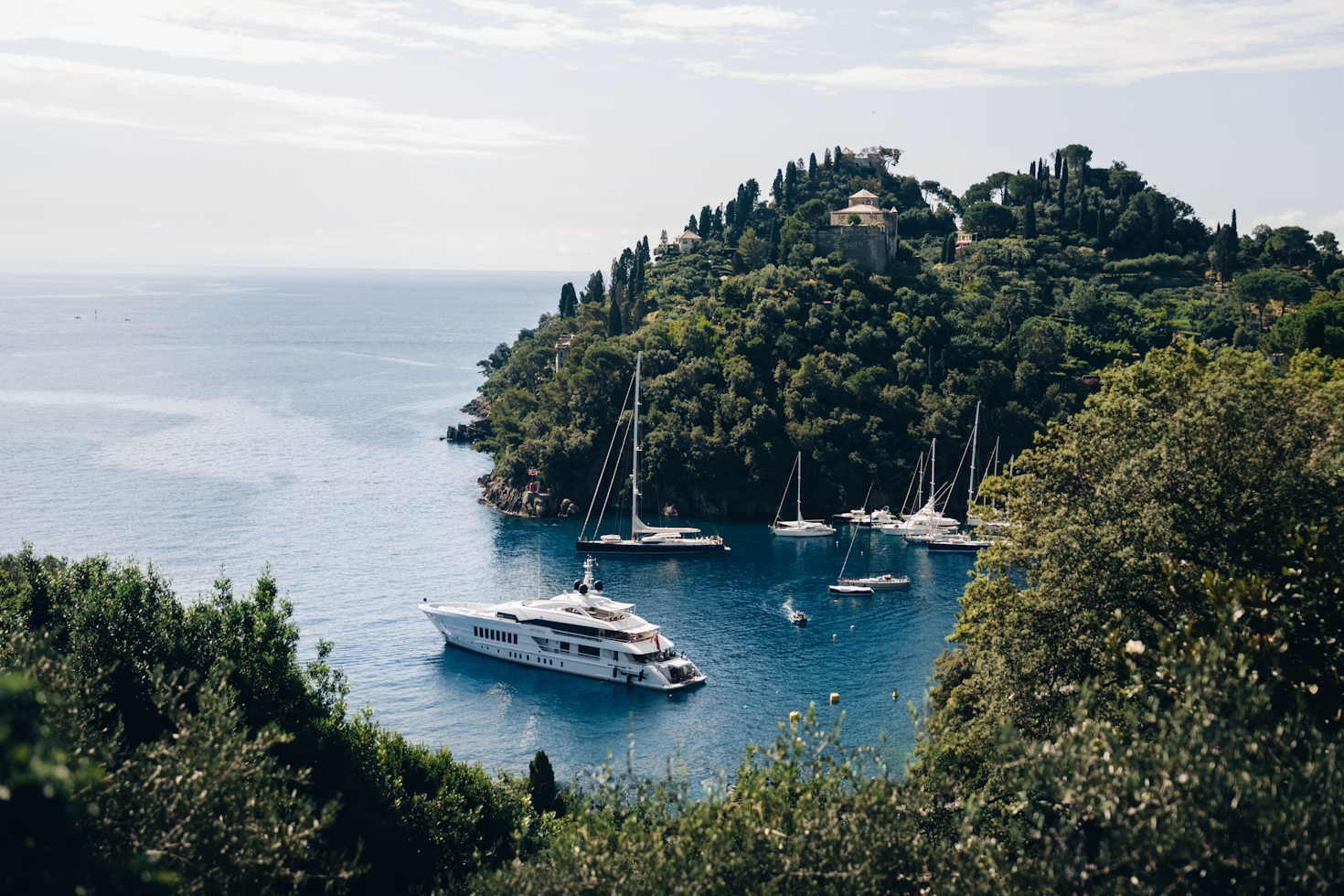
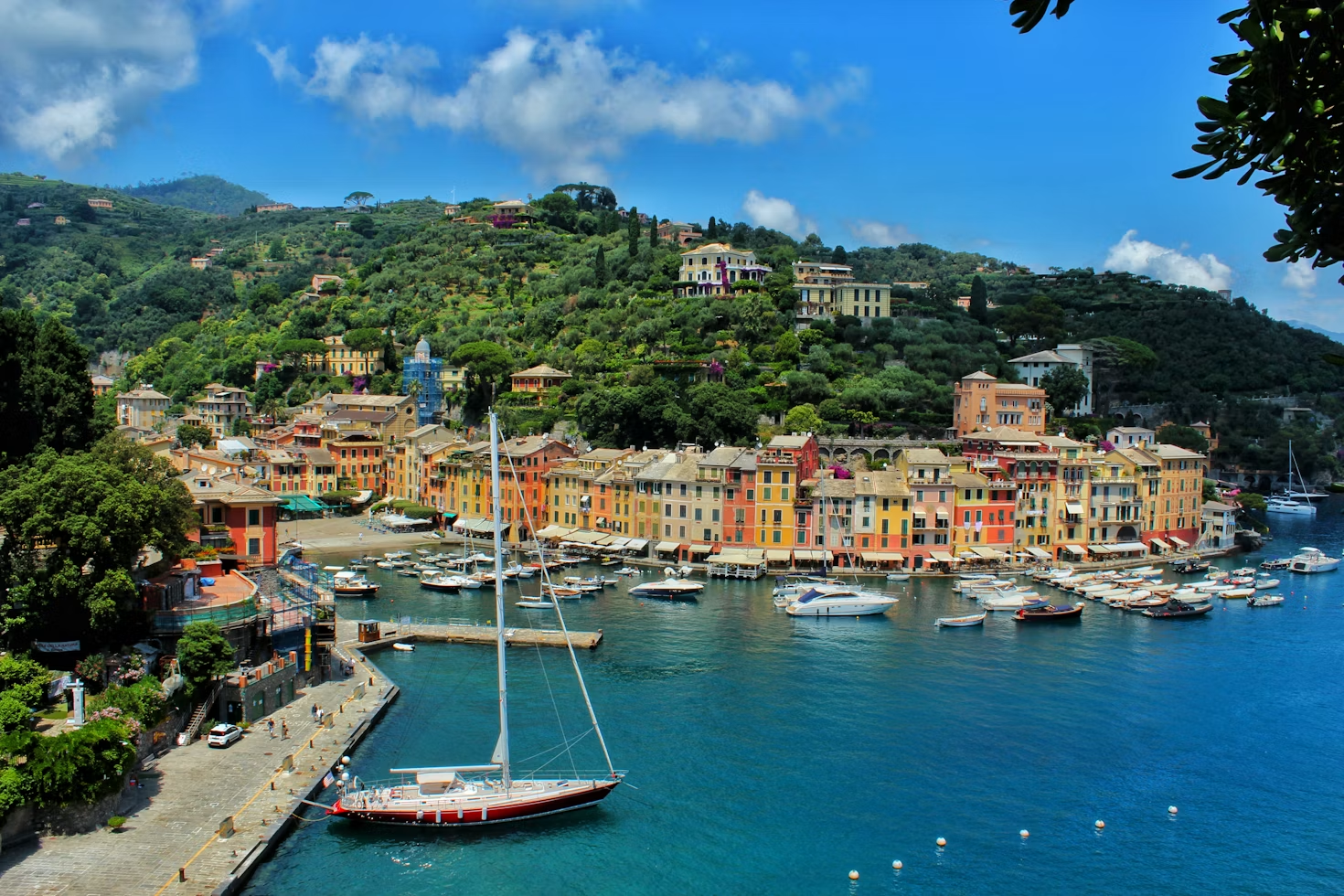
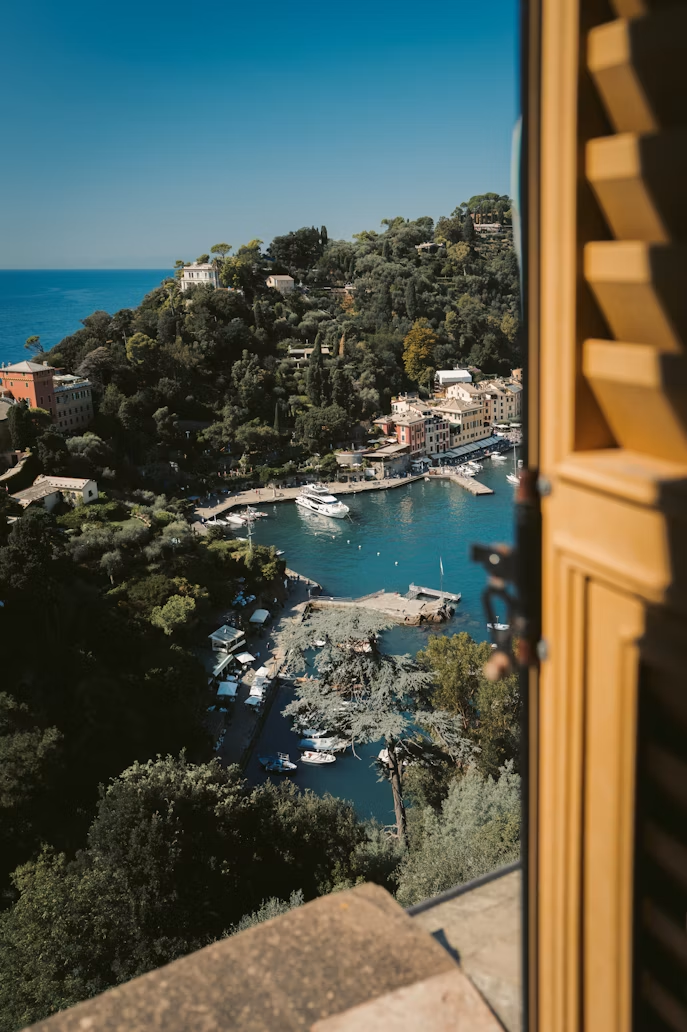
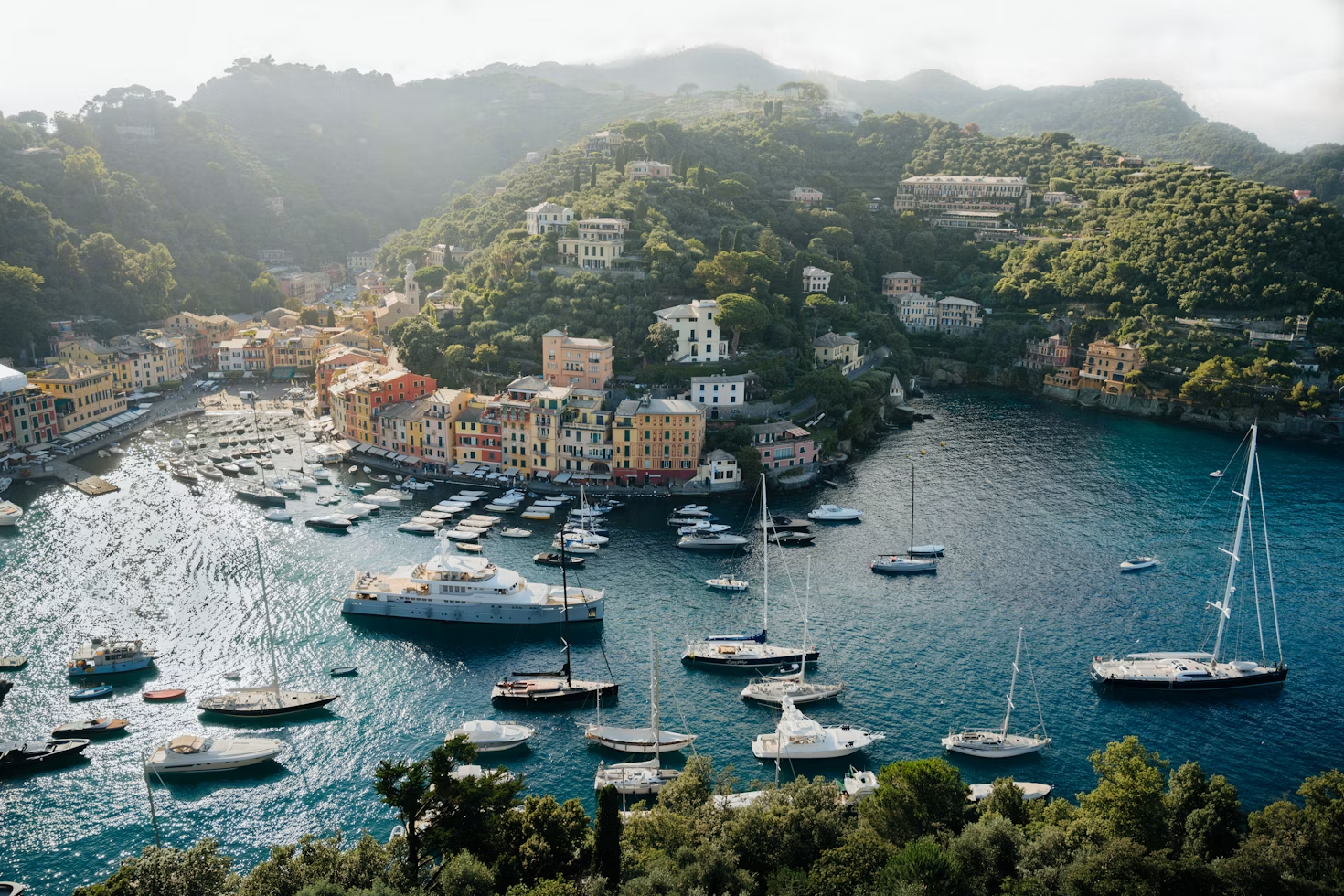
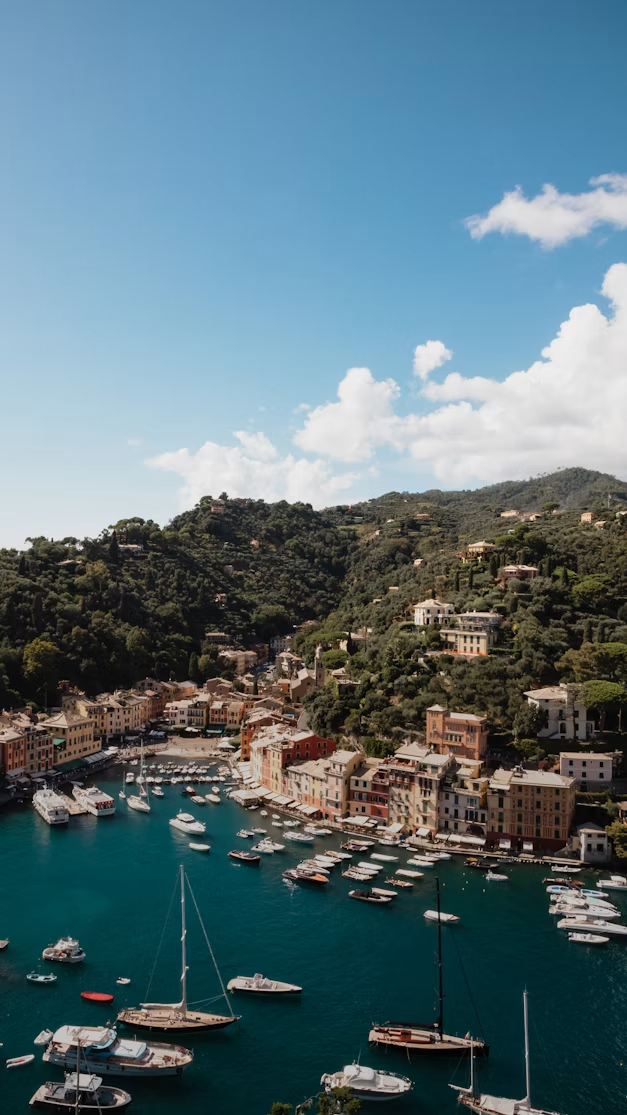
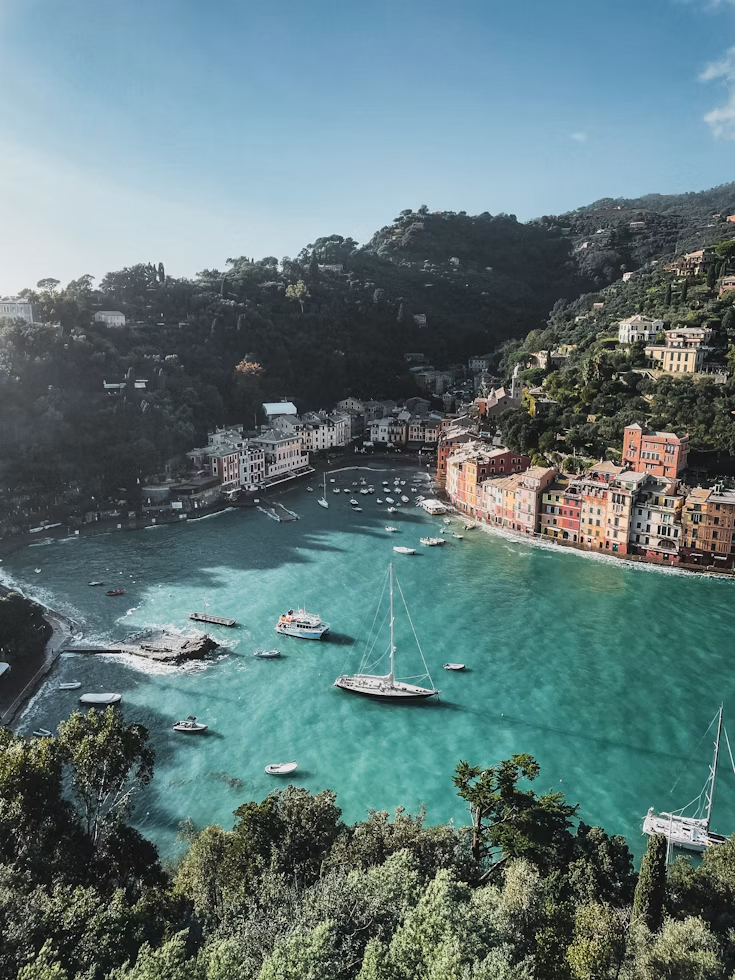
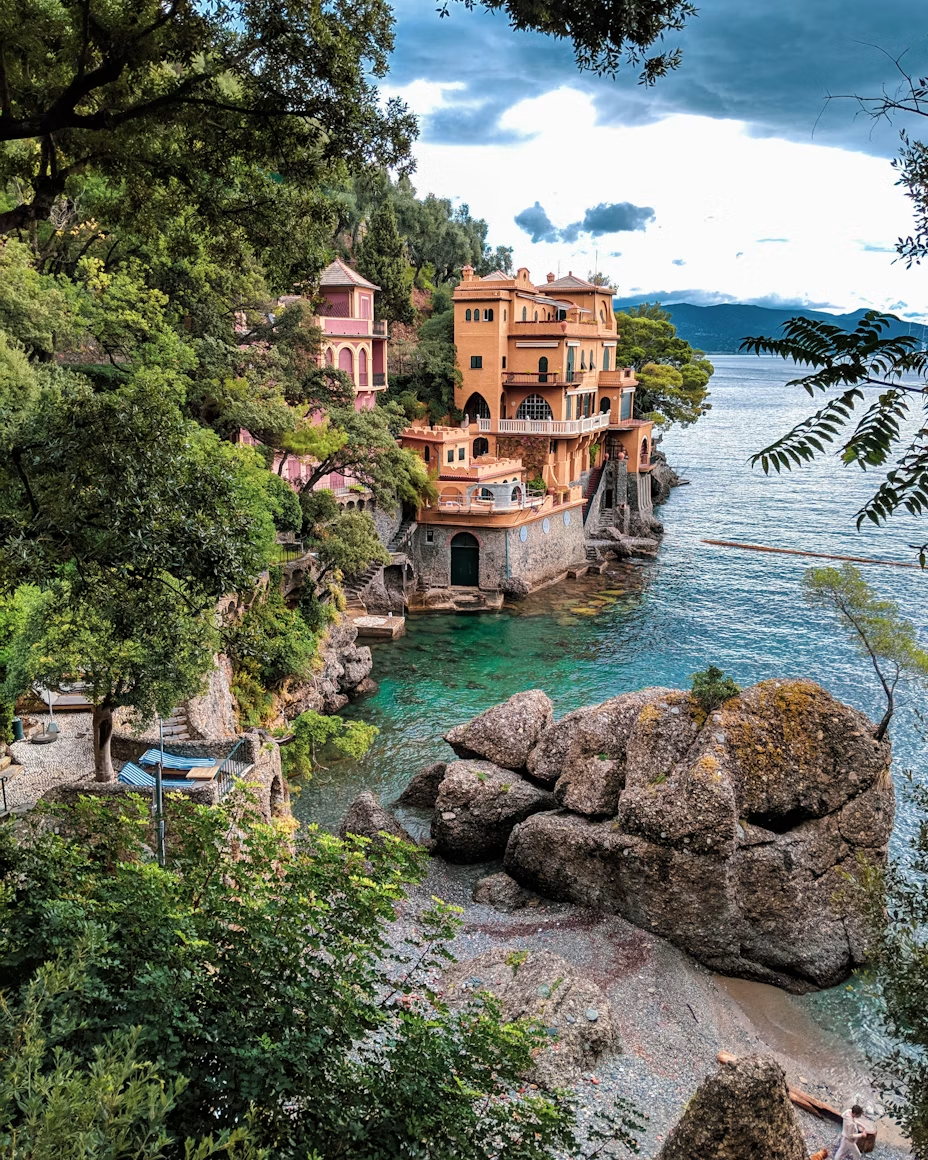
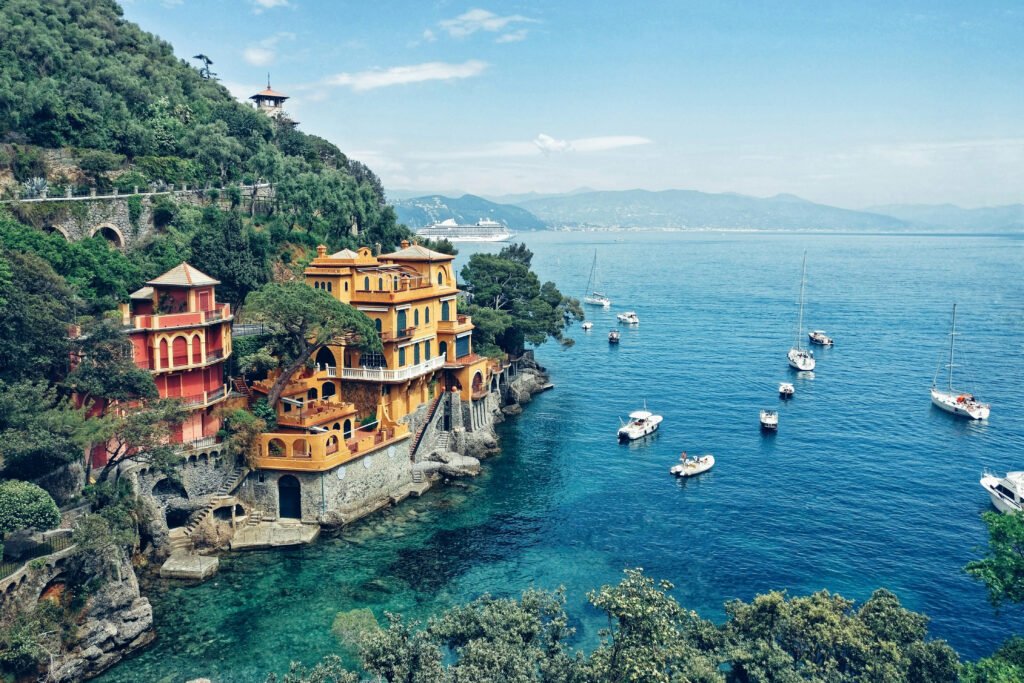
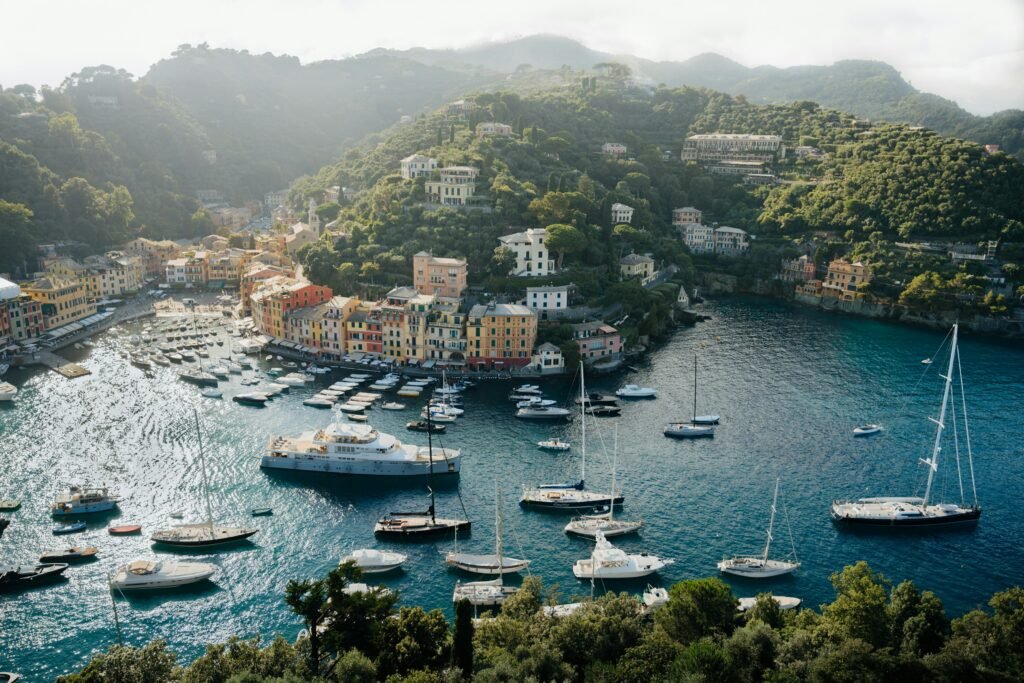
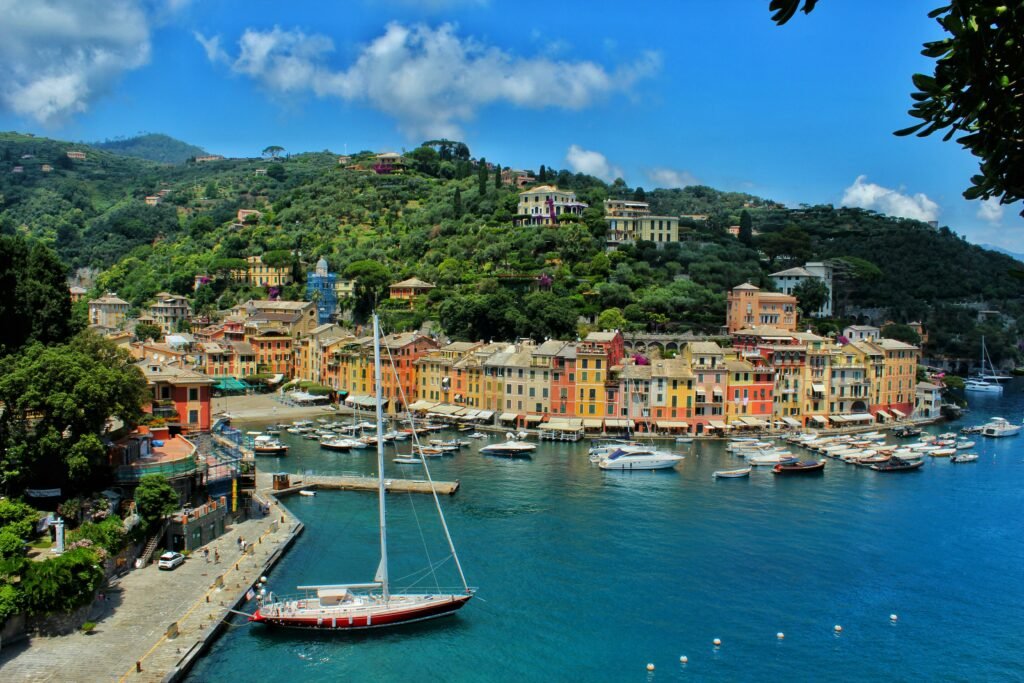
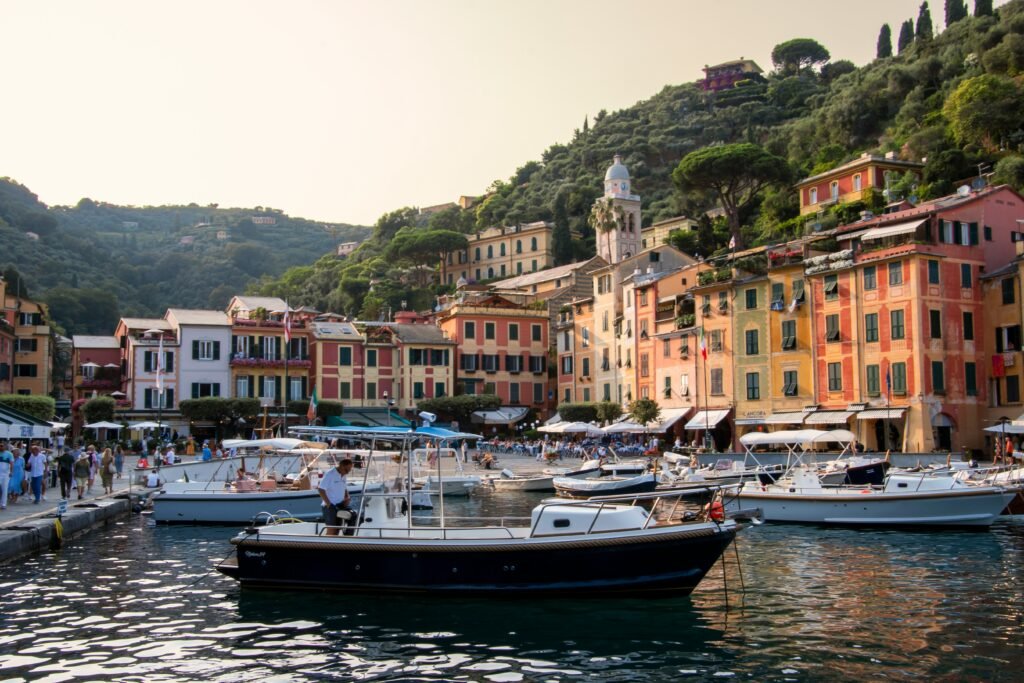
Paraggi Bay, just around the headland from the village, is the most sheltered option with clear water over sand. San Fruttuoso, reachable only by sea or on foot, offers a quieter alternative beside the abbey. Anchoring directly in Portofino’s own harbour is possible but tight and busy in season, so many captains prefer to pick up a mooring outside the Piazzetta and tender guests ashore.
Two to three days is enough to experience the village itself, dive or swim at the Christ of the Abyss, and take a slower day around San Fruttuoso and the natural park trails. Most charters combine Portofino with the wider Ligurian coast, adding Camogli, Rapallo, or the Cinque Terre further south to build out a week-long itinerary along this stretch of the Italian Riviera.
Yes. The waters around the promontory form the Portofino Marine Protected Area, and navigation and anchoring are prohibited across roughly a third of the reserve, the zones closest to the most sensitive seabed. In the remaining area, boats can anchor or pick up a mooring buoy subject to a daily fee set by the park authority, so it’s worth confirming current mooring locations with a local agent before arrival.