Italy / Sicily / Aeolian Islands / Stromboli
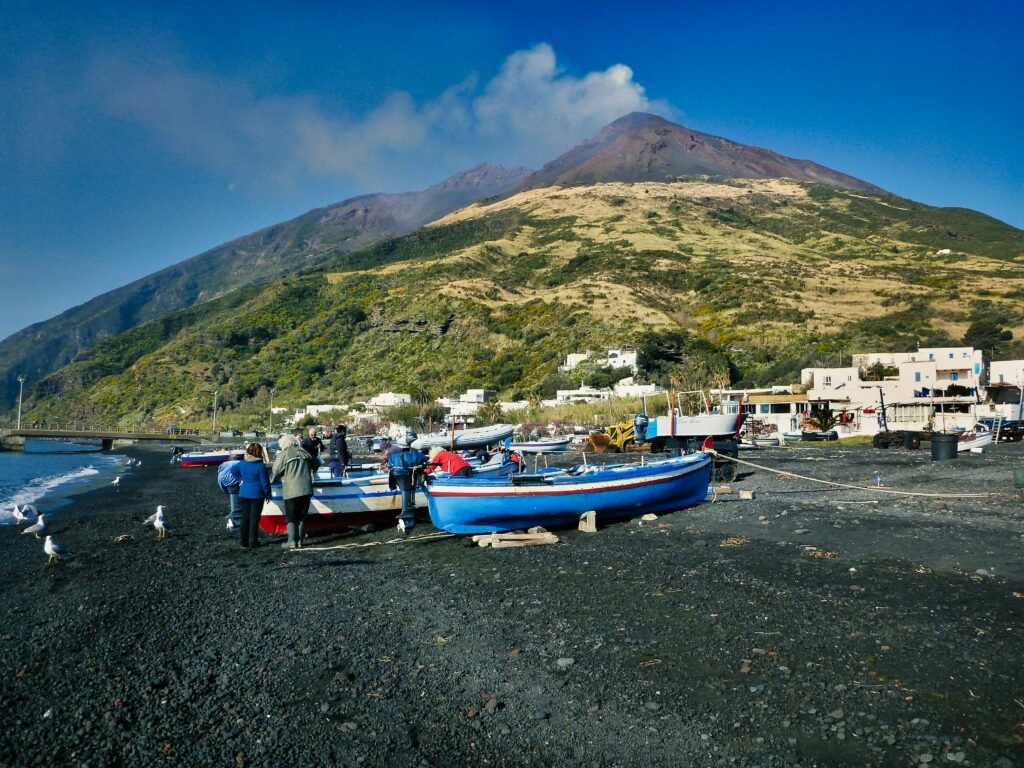
Scari
Punta Lena
Pertuso, Ginostra
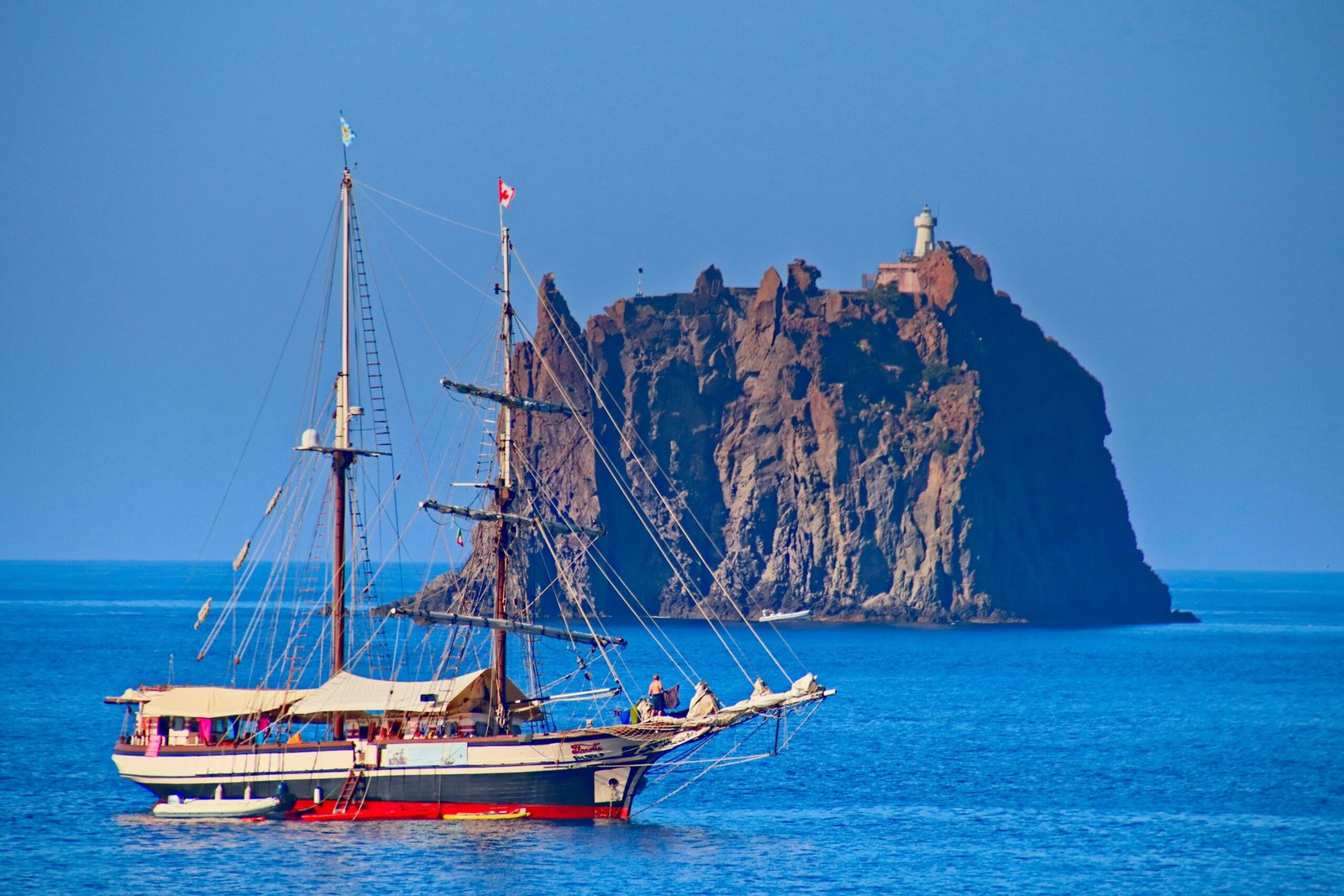
Strombolicchio
Piscità
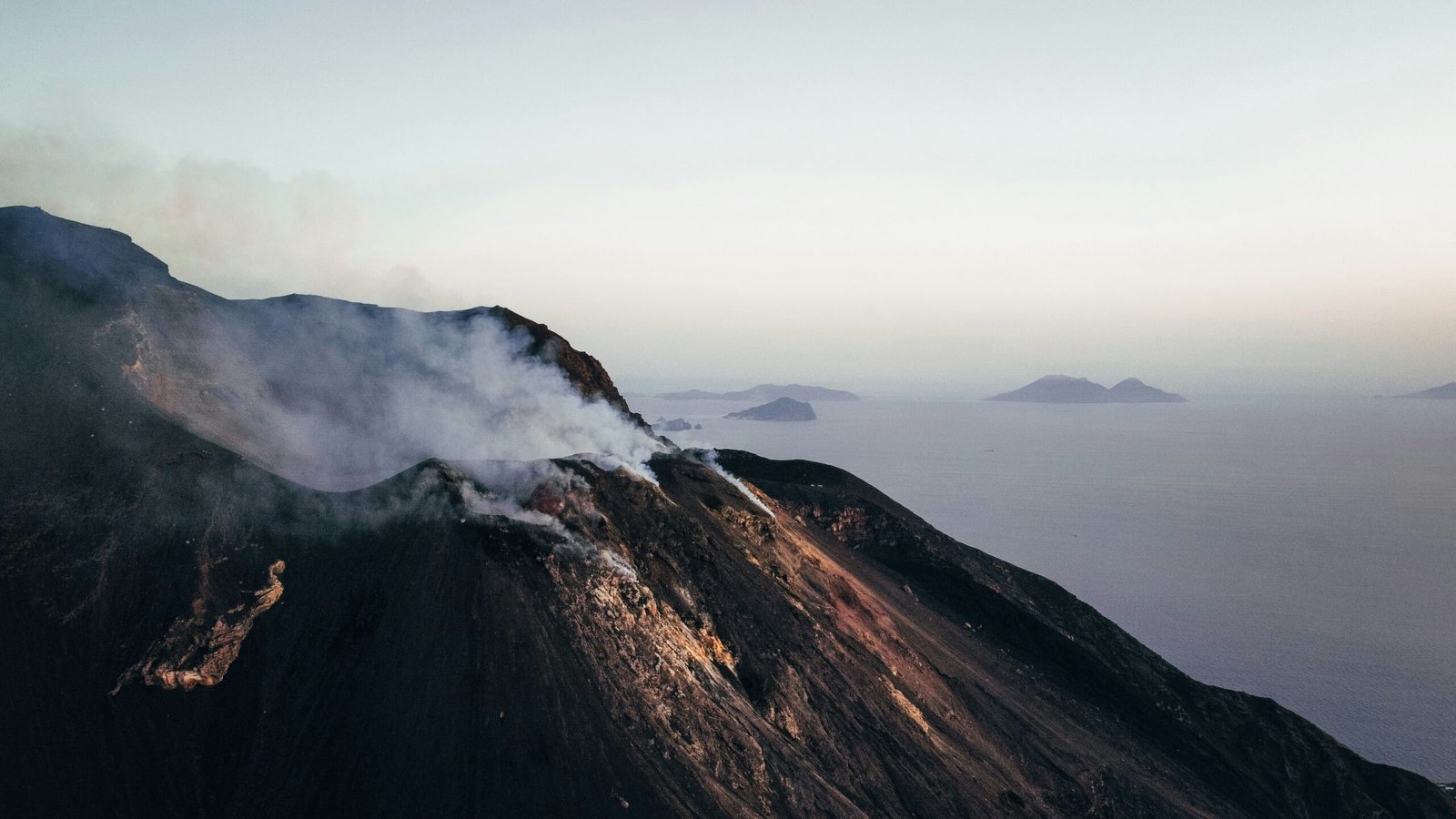
Hike to the guided 400-metre viewpoint over the craters
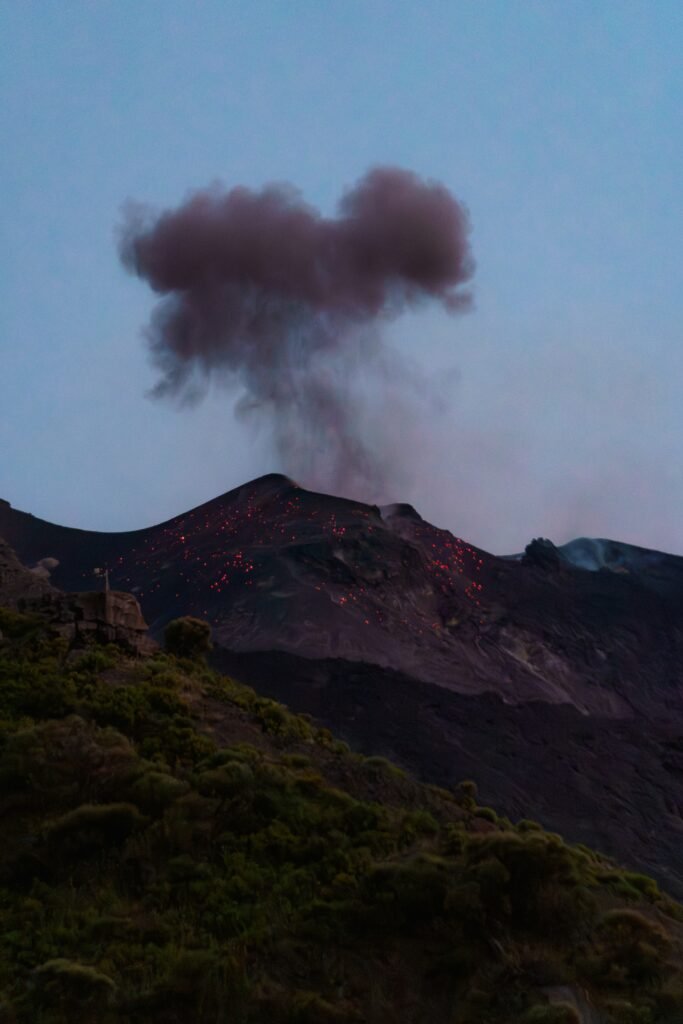
Watch molten rock cascade down the Sciara del Fuoco after dark
Explore car-free Ginostra, reached only by sea
Swim off the black-sand beach at Piscità
Visit the lighthouse-topped sea stack of Strombolicchio
Ginostra
San Vincenzo
Piscità
Sciara del Fuoco
Strombolicchio
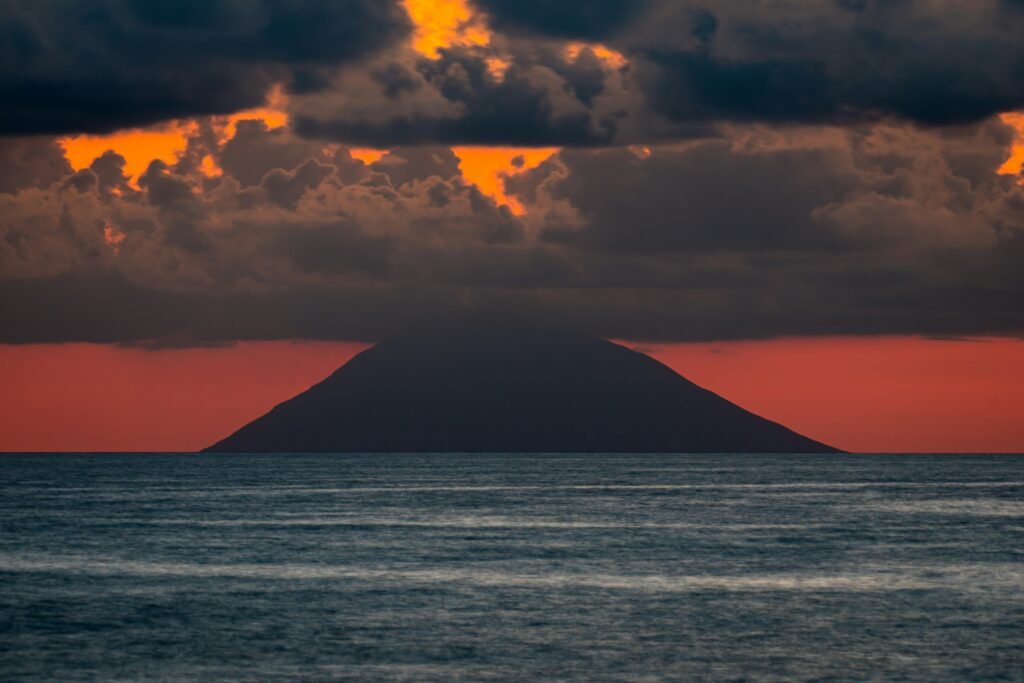
Stromboli erupts year-round, so there is no true off-season for watching it, but April to October brings the calmest seas for a comfortable night anchorage offshore. Clear, moonless nights give the sharpest view of the glow against the dark sky. July and August are busiest with day-trip boats from neighbouring islands, so guests wanting a quieter viewing spot tend to prefer June, September or October instead.
The nearest airports are Catania (CTA) and Palermo (PMO) in Sicily, both roughly a two to three hour road and ferry combination away via the port of Milazzo. Liberty Lines hydrofoils run from Milazzo to Stromboli in around two and a half to three hours, with slower Siremar ferries also available. In summer, seasonal hydrofoils connect Naples directly to the Aeolian Islands.
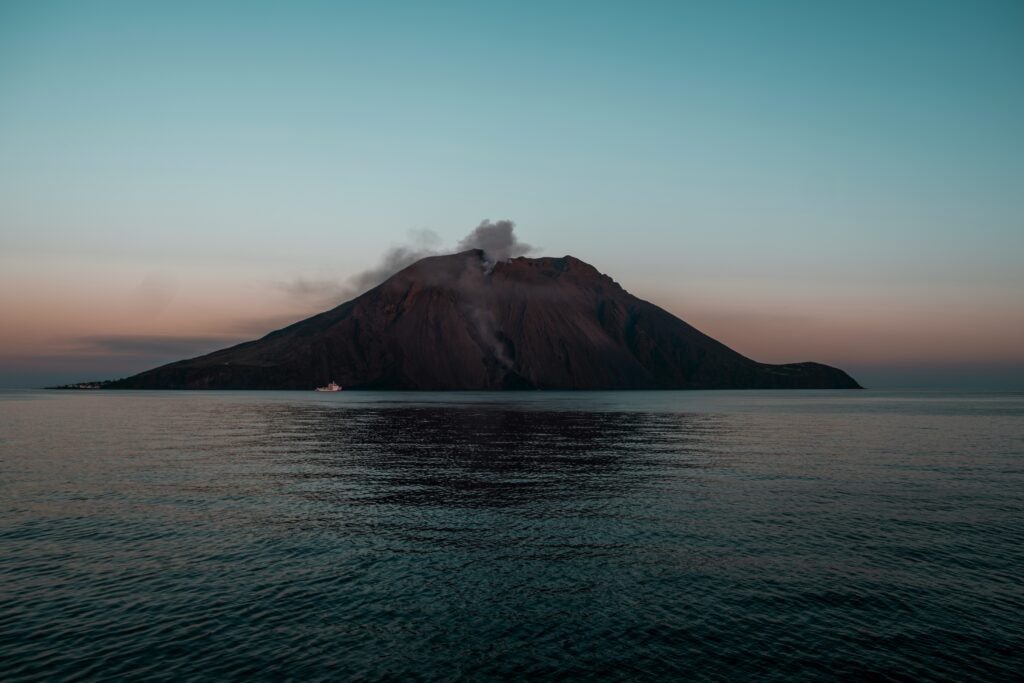
Scari, on the island’s sheltered northeastern side, is the main anchorage near the village and the easiest base for a night ashore. Punta Lena offers a quieter alternative nearby, close to its own black-sand beach. For the eruption viewing itself, boats typically anchor or hold position off the Sciara del Fuoco after dark, at a safe distance recommended by local operators given the volcano’s continuous activity.
A single night is usually enough to experience Stromboli properly, timed to include an after-dark viewing of the eruptions from the water. Most itineraries treat it as one stop within a wider Aeolian route that also takes in Panarea, Lipari and Salina, since the island itself, at just over twelve square kilometres, offers relatively little beyond its volcano and the two small villages.
Only partly, and only with a licensed volcanological guide. Unguided visitors are restricted to a viewpoint at 290 metres above sea level, marked by a fence along the main trail. Guides can take small groups higher, to around 400 metres, for a closer view of the crater activity; climbing past the unguided limit alone carries a fine of roughly 500 euros and is genuinely dangerous given the volcano’s unpredictable bursts.

Tell us what you would like to know, and our team will respond with clear details on availability, specification, pricing and next steps.