St Lucia



Marigot Bay
Rodney Bay
Anse Chastanet
Anse Cochon
Soufrière Bay
Hike Gros Piton
Soak at Sulphur Springs
Visit Diamond Falls Botanical Gardens
Zip-line Through the Rainforest Canopy
Snorkel Anse Chastanet Reef
Soufrière
Marigot Bay
Rodney Bay
Castries
Vieux Fort
December through April is the dry season and the island’s peak, with daytime temperatures around 28 to 30 degrees Celsius and lower rainfall than the rest of the year. The wetter season runs June through November, with hurricane risk concentrated August through October, though the island’s mountainous interior means rain often clears quickly. May is a strong shoulder month: the rains haven’t set in yet, crowds thin out, and the island hosts its Jazz and Arts Festival.
Hewanorra International Airport (UVF), near Vieux Fort in the south, handles most long-haul international flights from the US, Canada and Europe. George F. L. Charles Airport (SLU), in Castries in the north, is smaller and mainly serves regional Caribbean routes, so it suits guests connecting through another island rather than flying in directly. Charter guests should confirm which airport their crew is provisioning near, since the two sit roughly an hour apart by road.
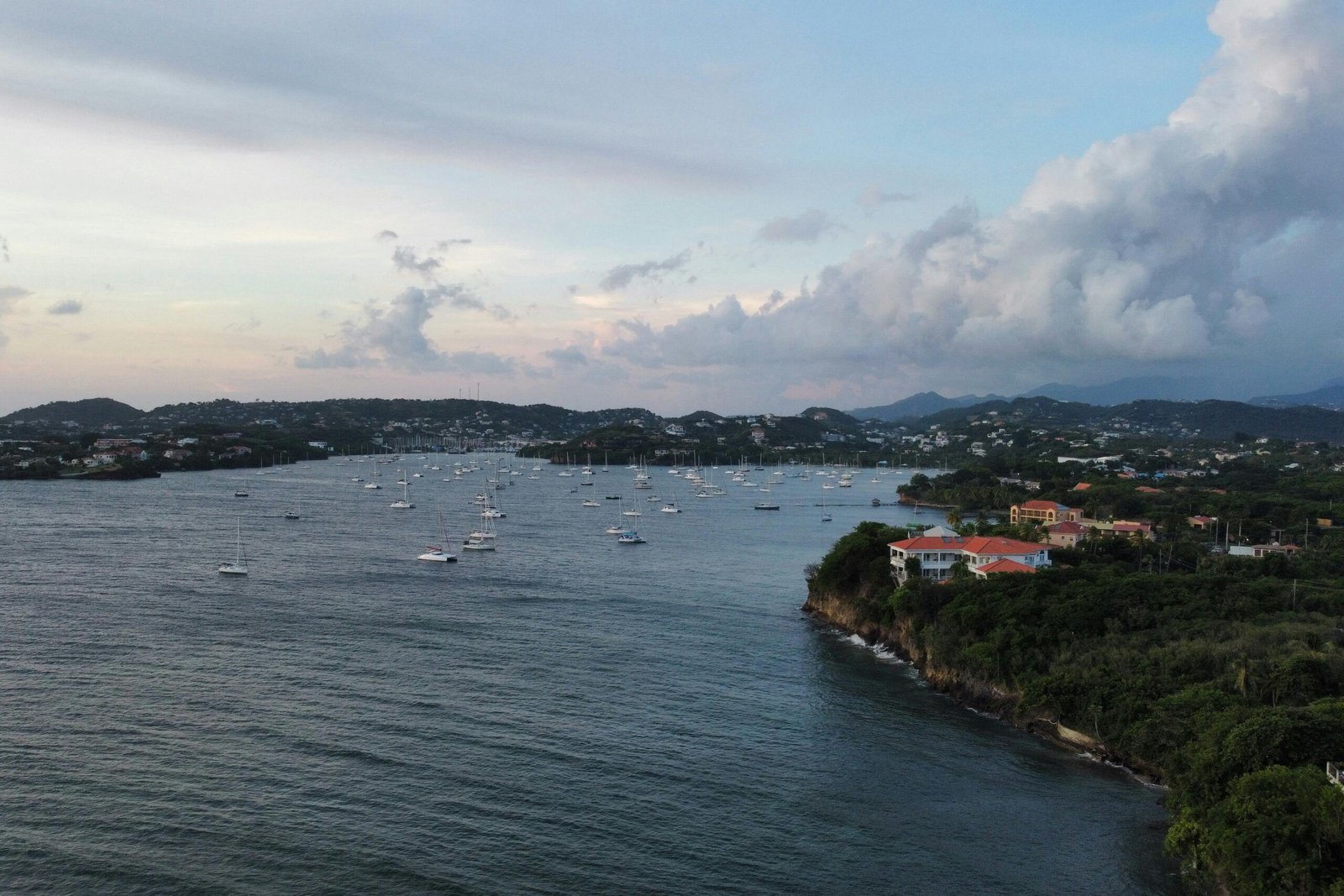
Marigot Bay, tucked behind a narrow entrance and lined with palms, is one of the most protected and photogenic anchorages in the Caribbean and a reliable overnight stop. Rodney Bay in the north offers marina berths and easy access to restaurants and provisioning. Further south, Anse Chastanet and Anse Cochon both sit on moorings rather than open anchor, with reef close enough to the boat for an evening snorkel before dinner.
Four to five days is enough to combine the Pitons and Soufrière’s volcanic sights in the south with Marigot Bay and Rodney Bay further north, without feeling rushed between them. St Lucia’s compact size, roughly 27 miles north to south, means the whole island is realistically coverable on a single-island charter, unlike some of the more spread-out multi-island itineraries elsewhere in the Caribbean.
Yes. The water off Soufrière, including the bays beneath both Pitons, falls within the Soufrière Marine Management Area, which prohibits anchoring outright and requires yachts to pick up one of its designated moorings instead. Fees are modest, roughly 20 US dollars a night for a boat under 70 feet, rising for larger vessels, and the money funds the area’s coral reef conservation program. Crews typically arrange this through their agent or hail the SMMA directly on VHF on arrival.