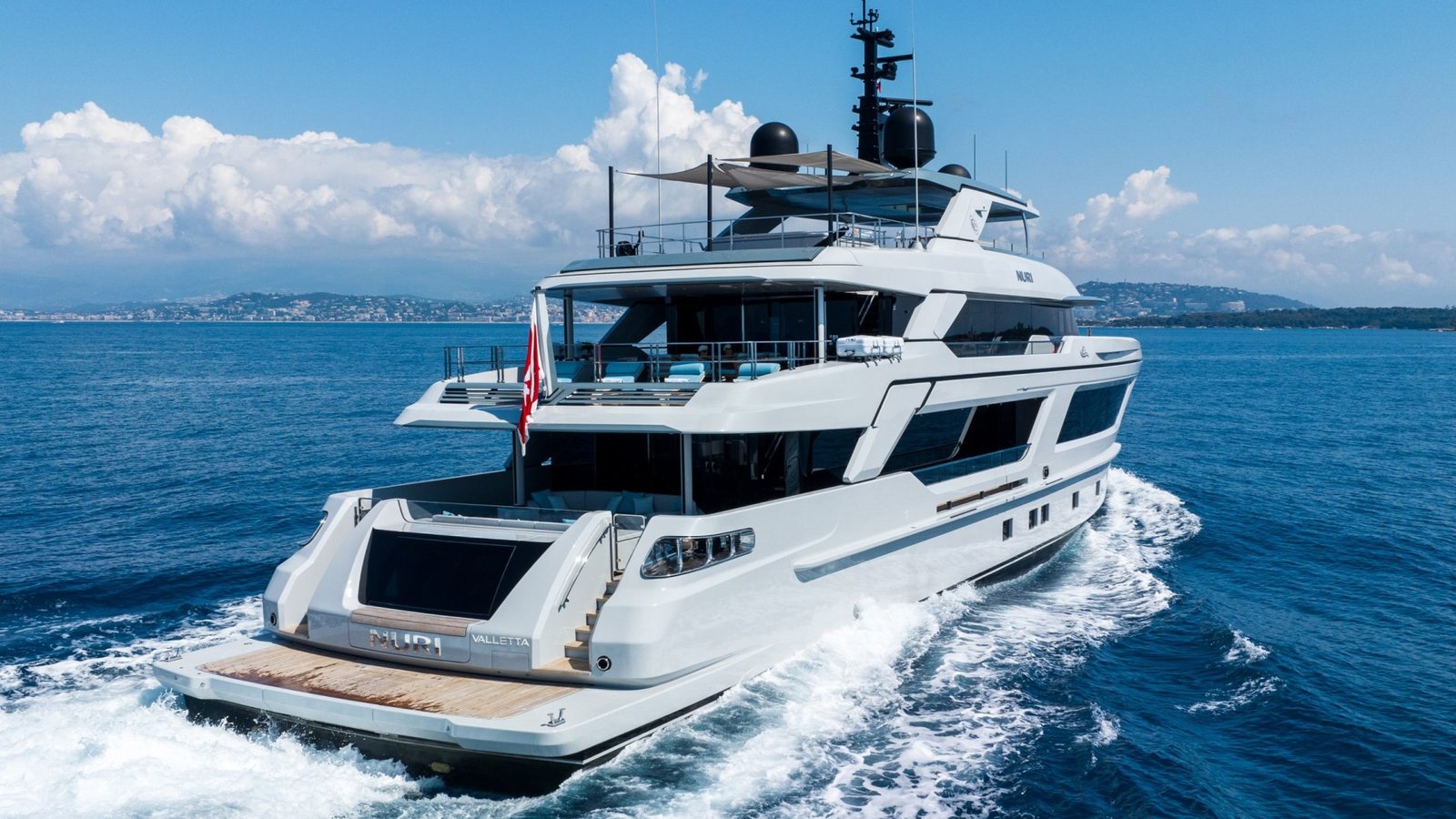
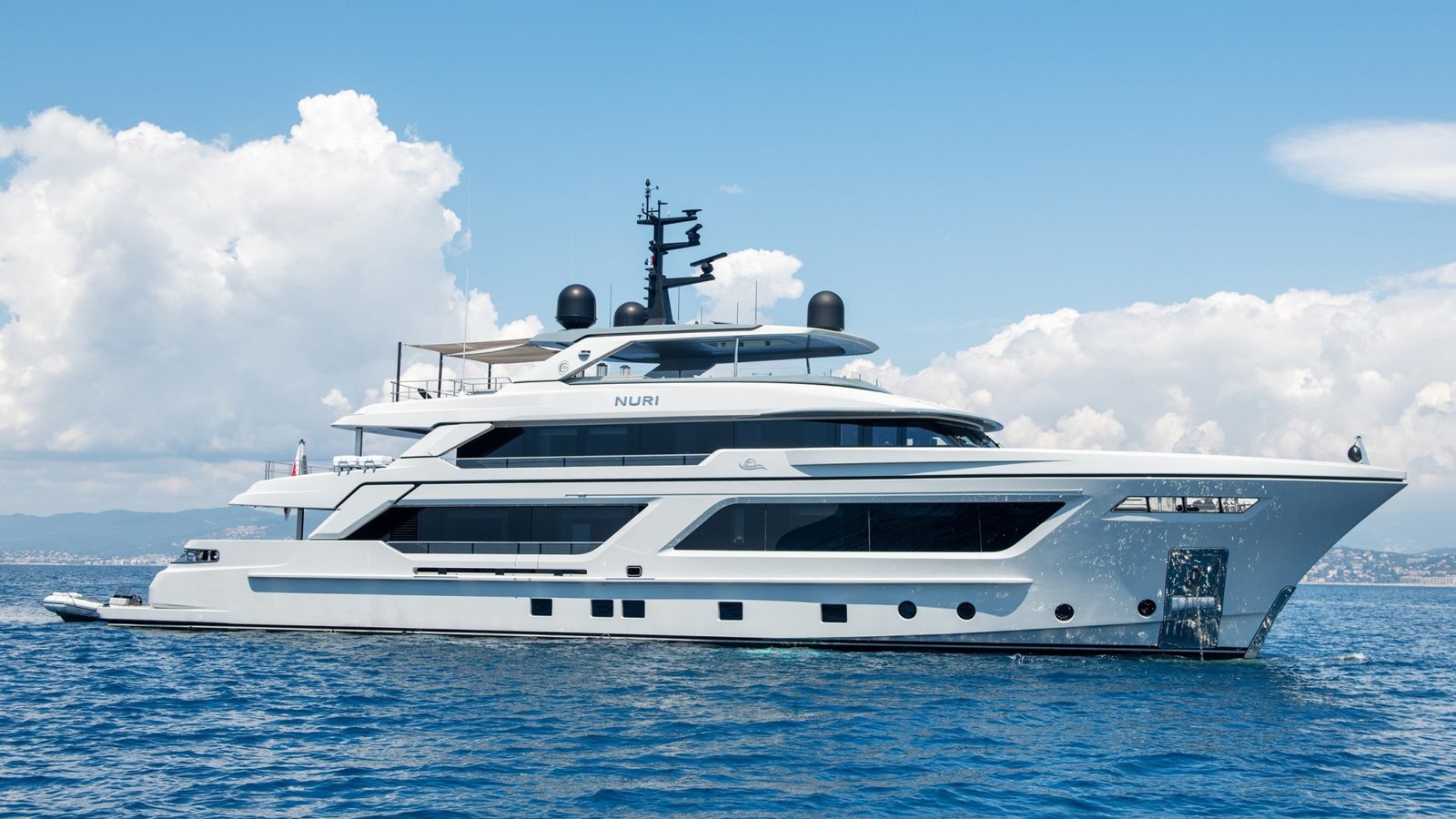
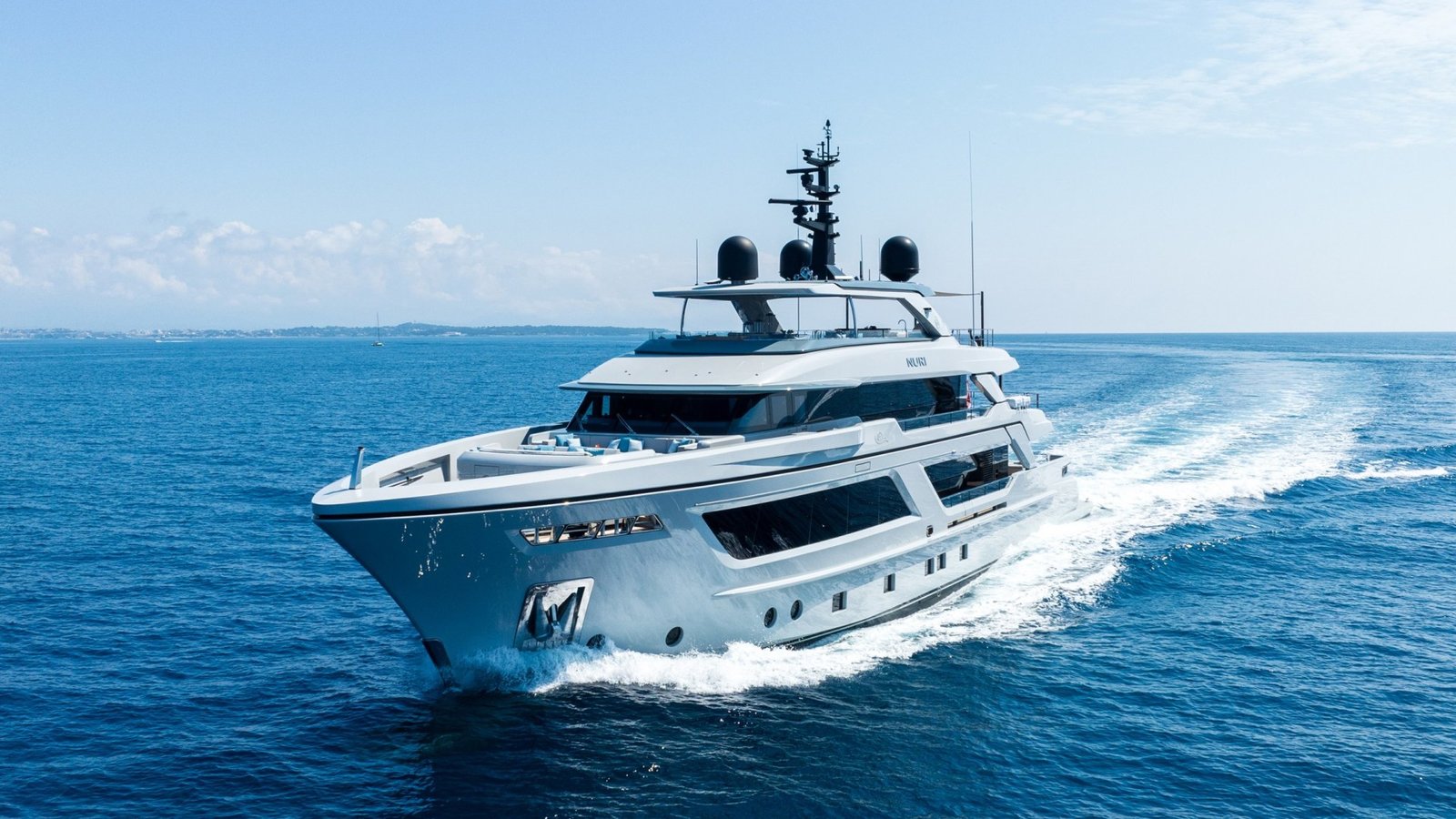
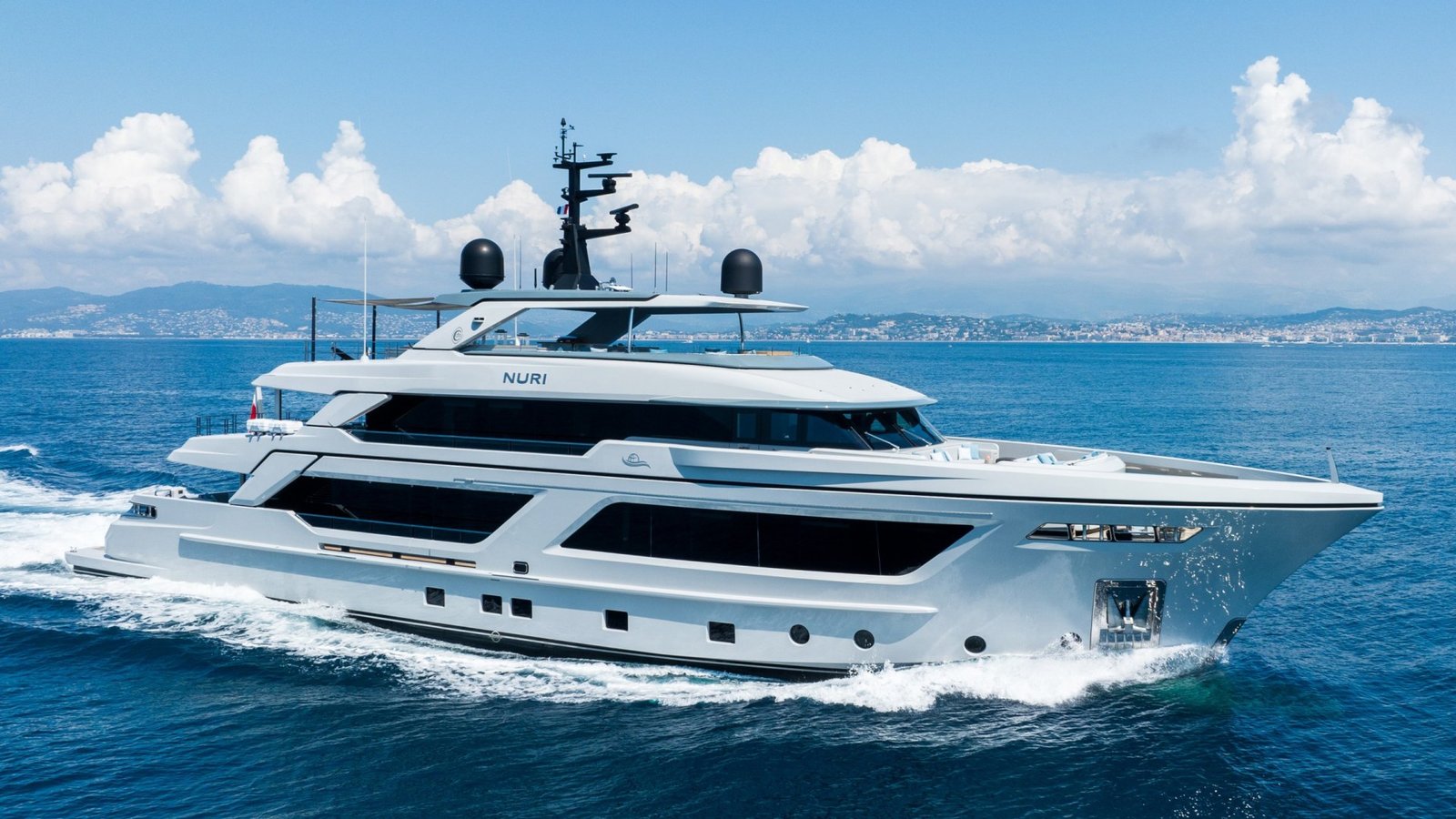
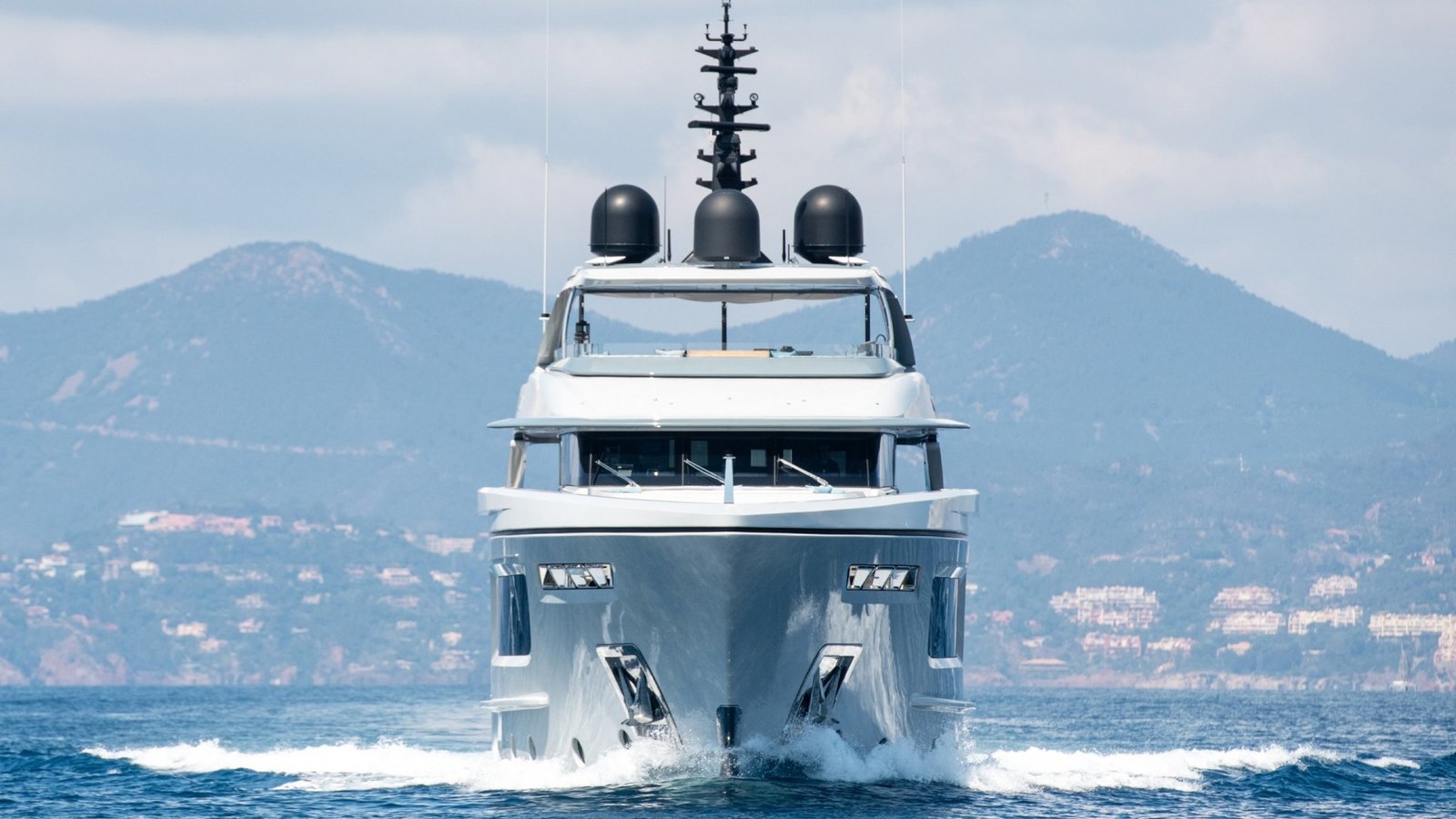
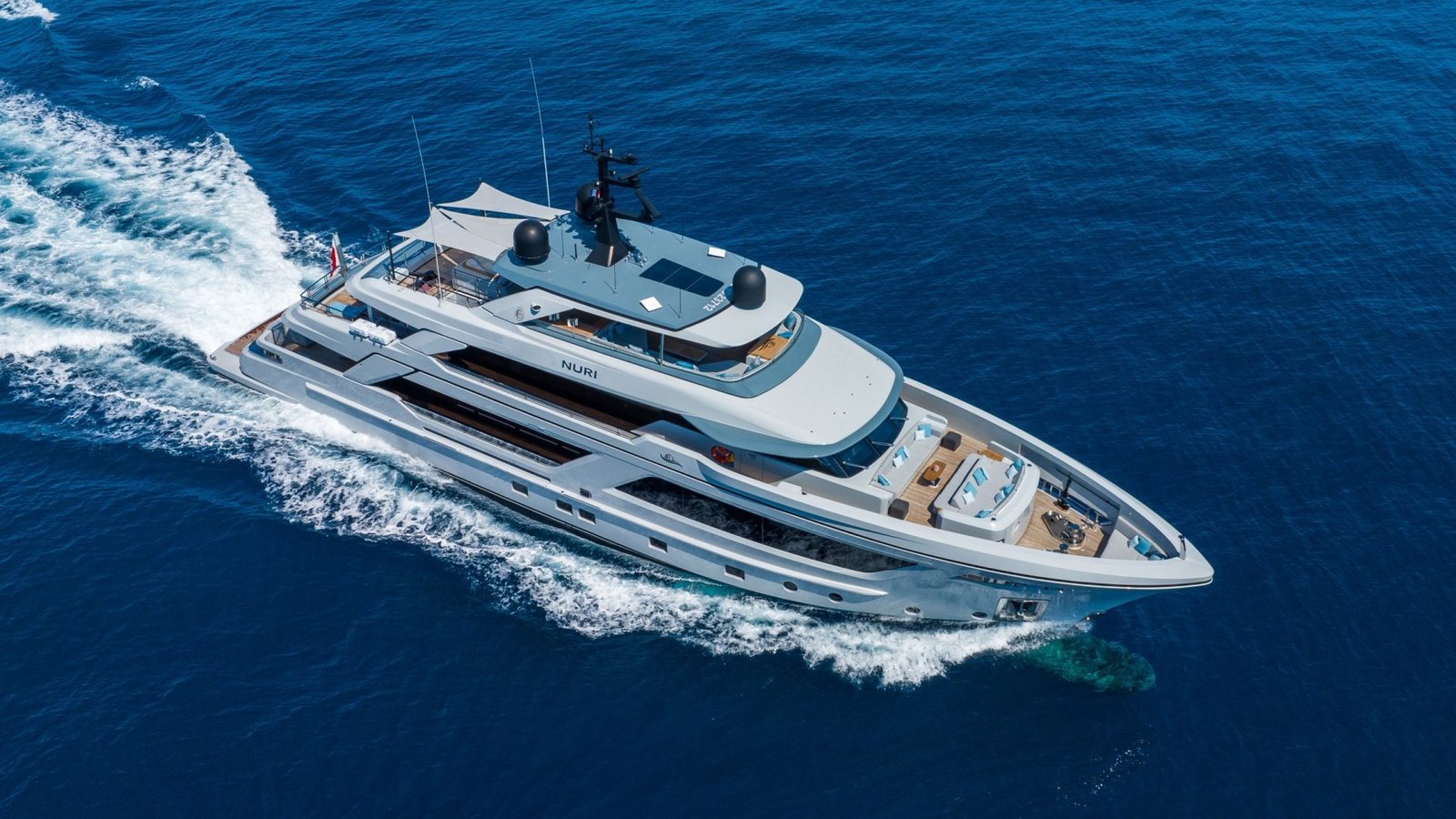
Cantiere delle Marche has built explorers for two decades, and Nuri is the only RJ130 to leave the yard. That matters more than a model name usually does. Where a series hull carries compromises made for the next twenty owners, hers were made once, for this boat: a steel hull and aluminium superstructure sized for 5,500 nautical miles, and a general arrangement that finds twelve berths inside forty metres without the corridors narrowing to make it work.
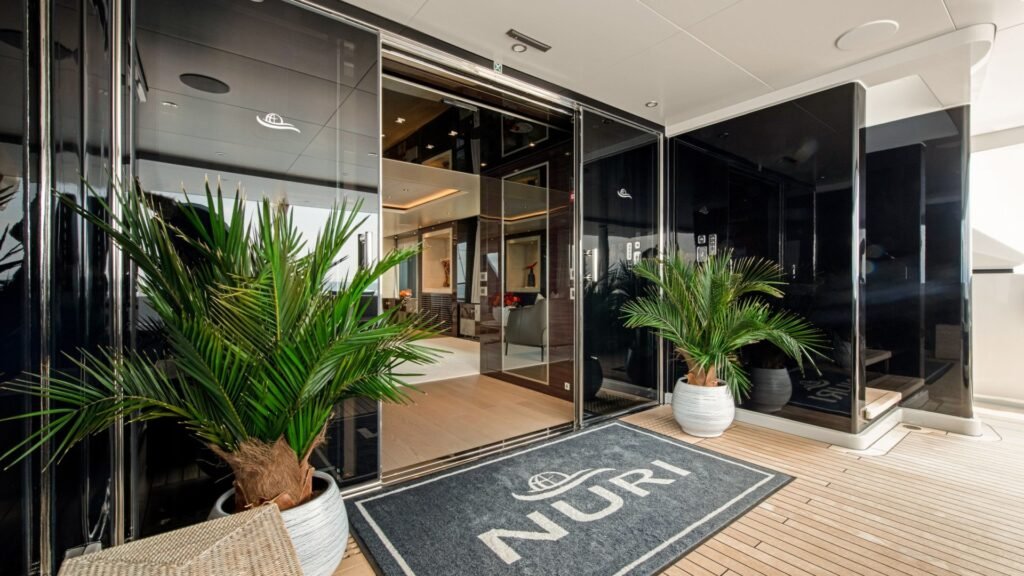
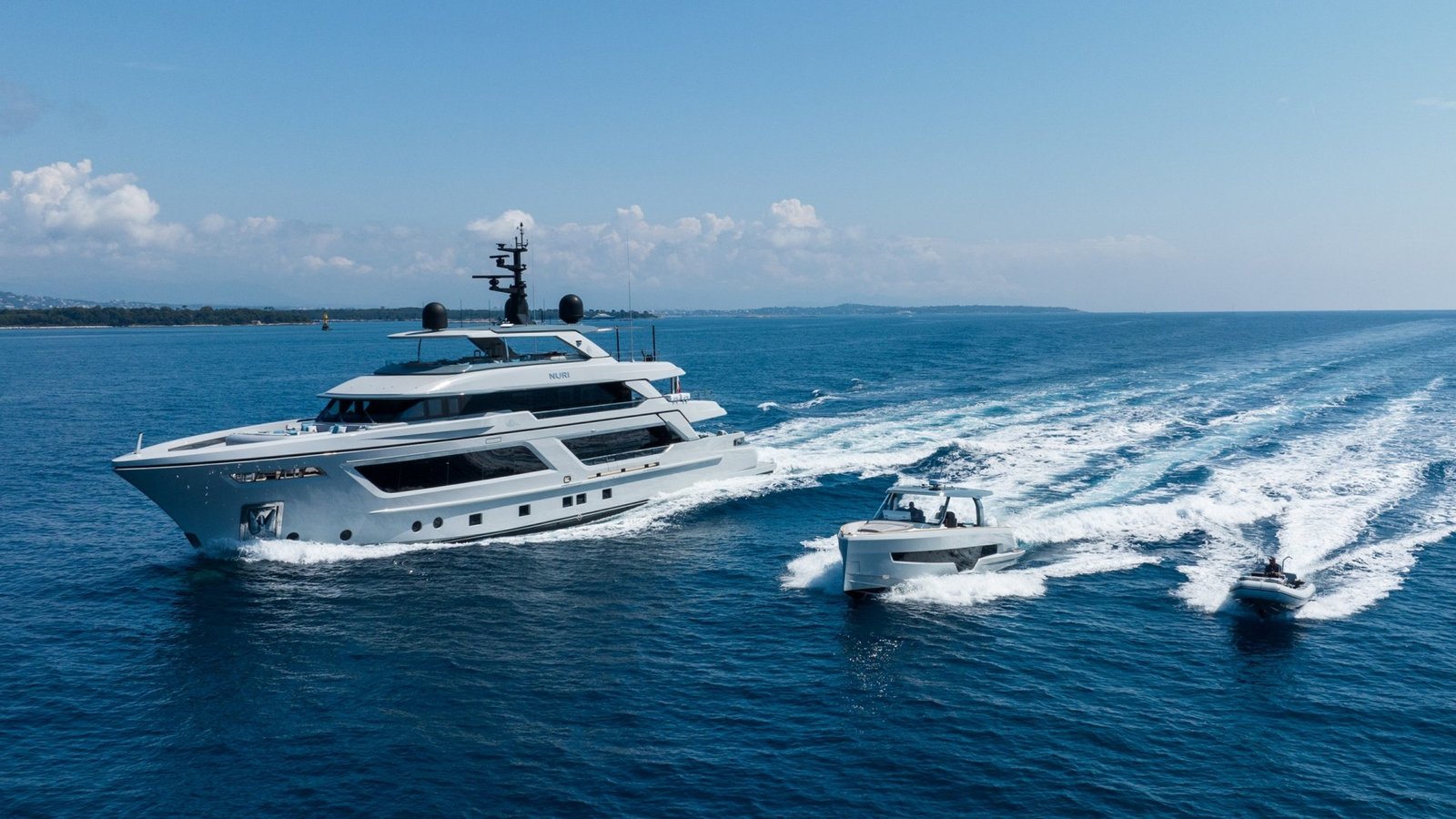
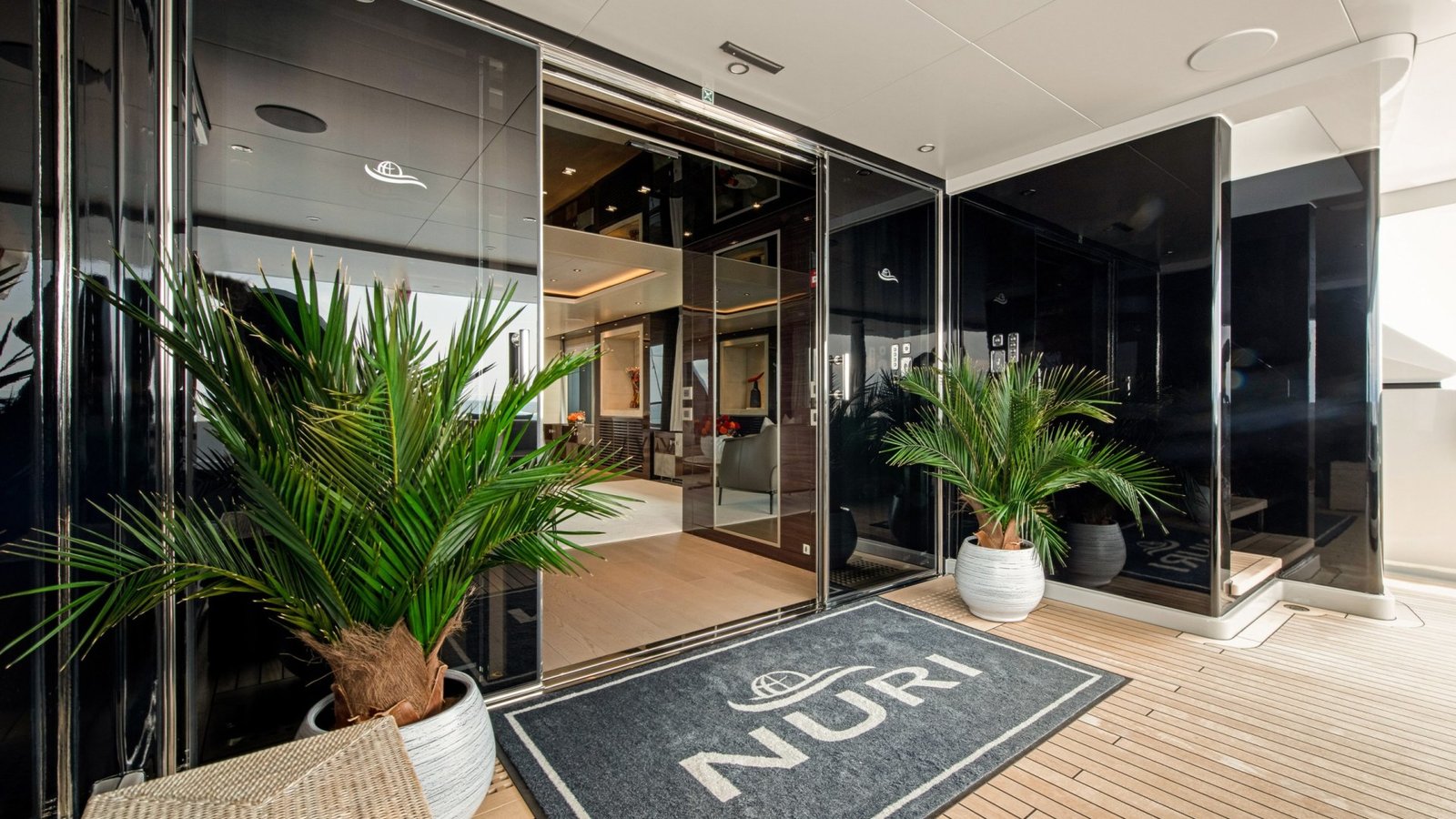
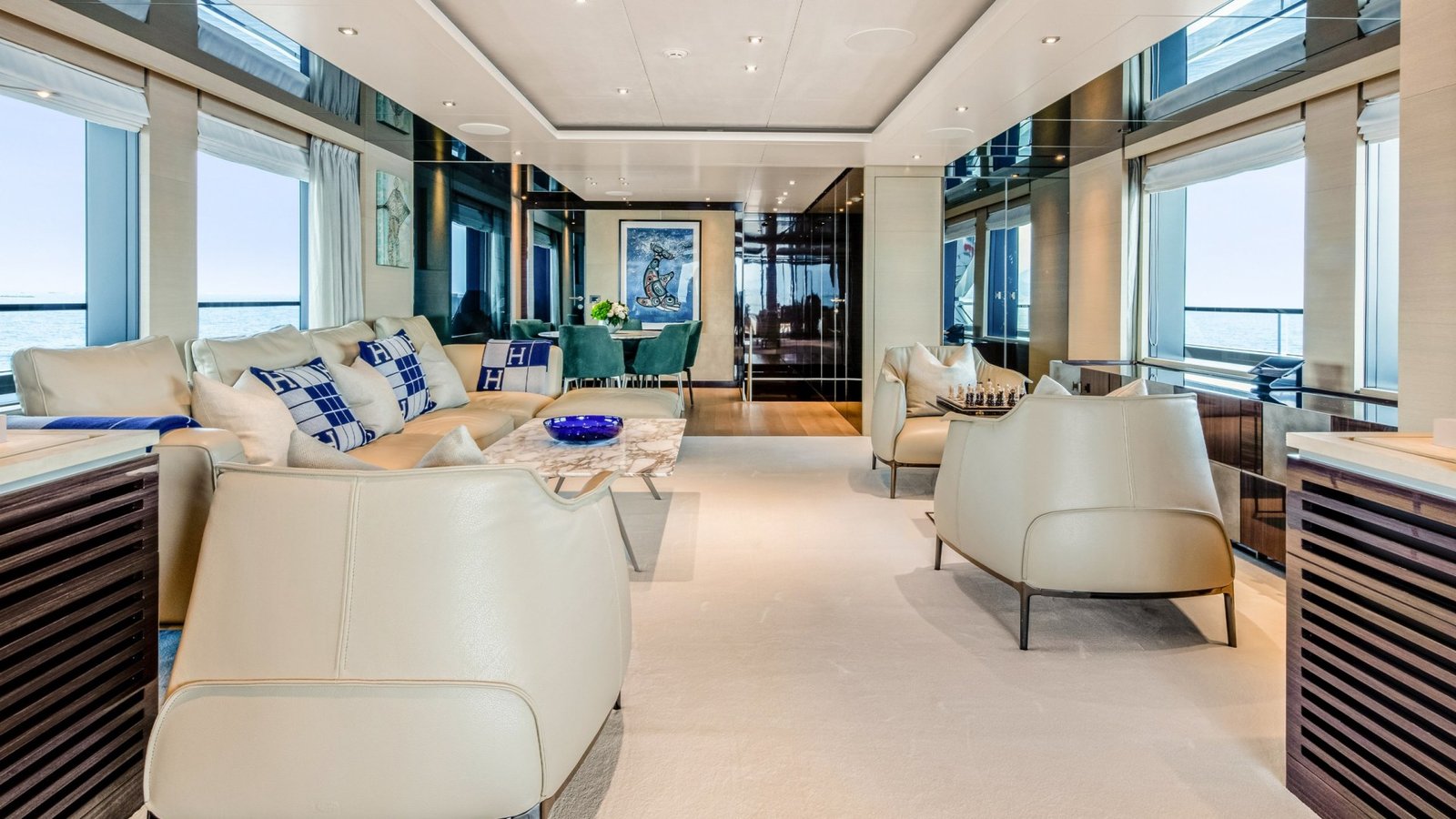
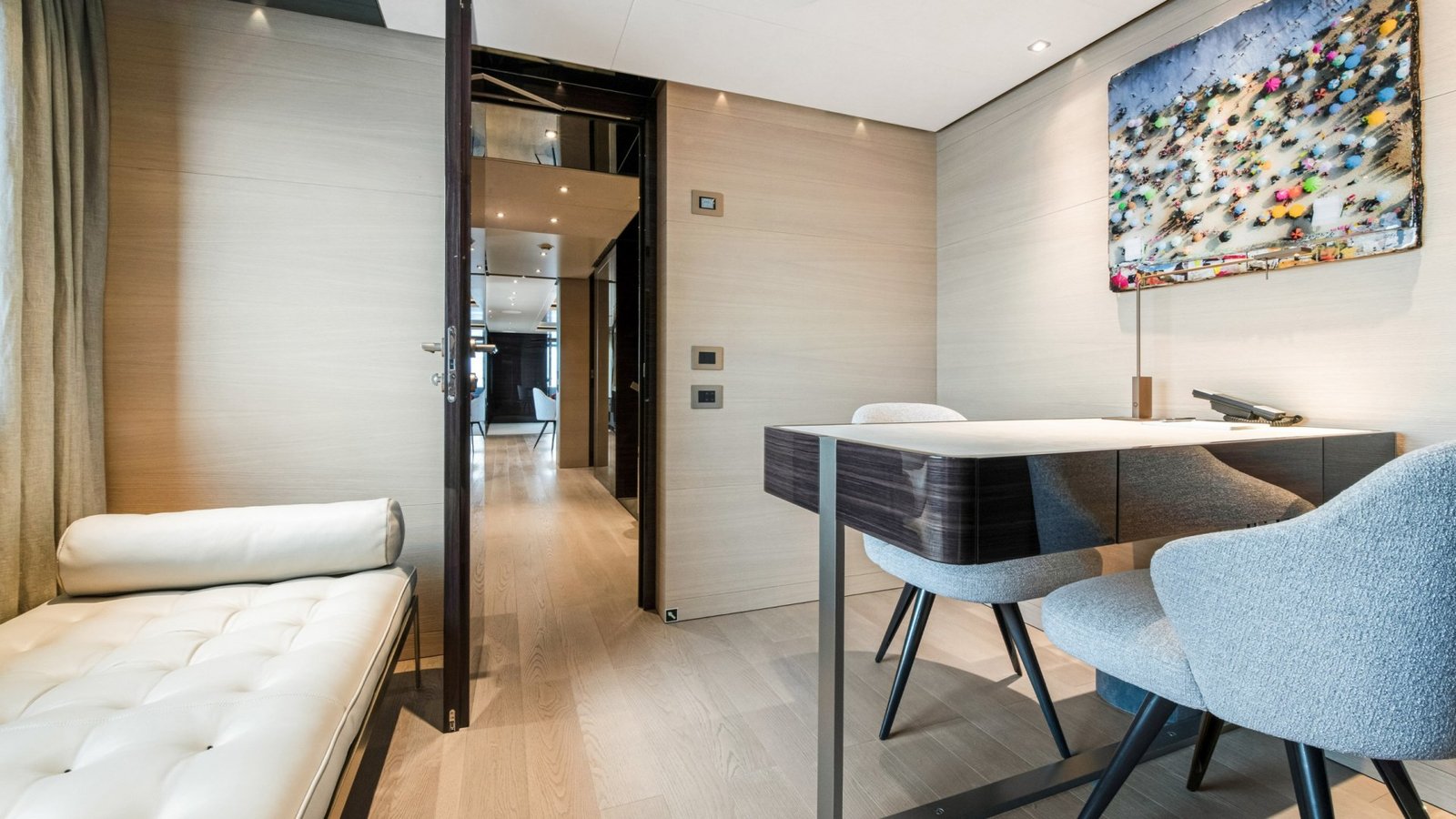
Francesco Paszkowski drew both her exterior and her interior, and the discipline shows. Her profile is low and horizontal, the windows long and unbroken, the mast kept minimal. Nothing on the outside announces itself. Step aboard and the same restraint reads as generosity: pale oak, bronze glass, cream leather and a floor plan that lets a full charter party move without meeting.
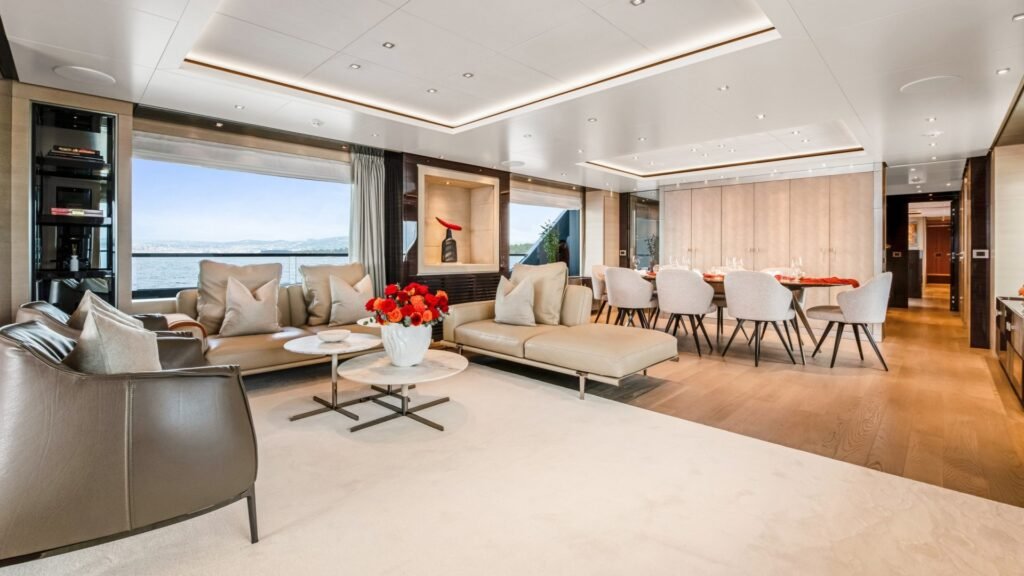
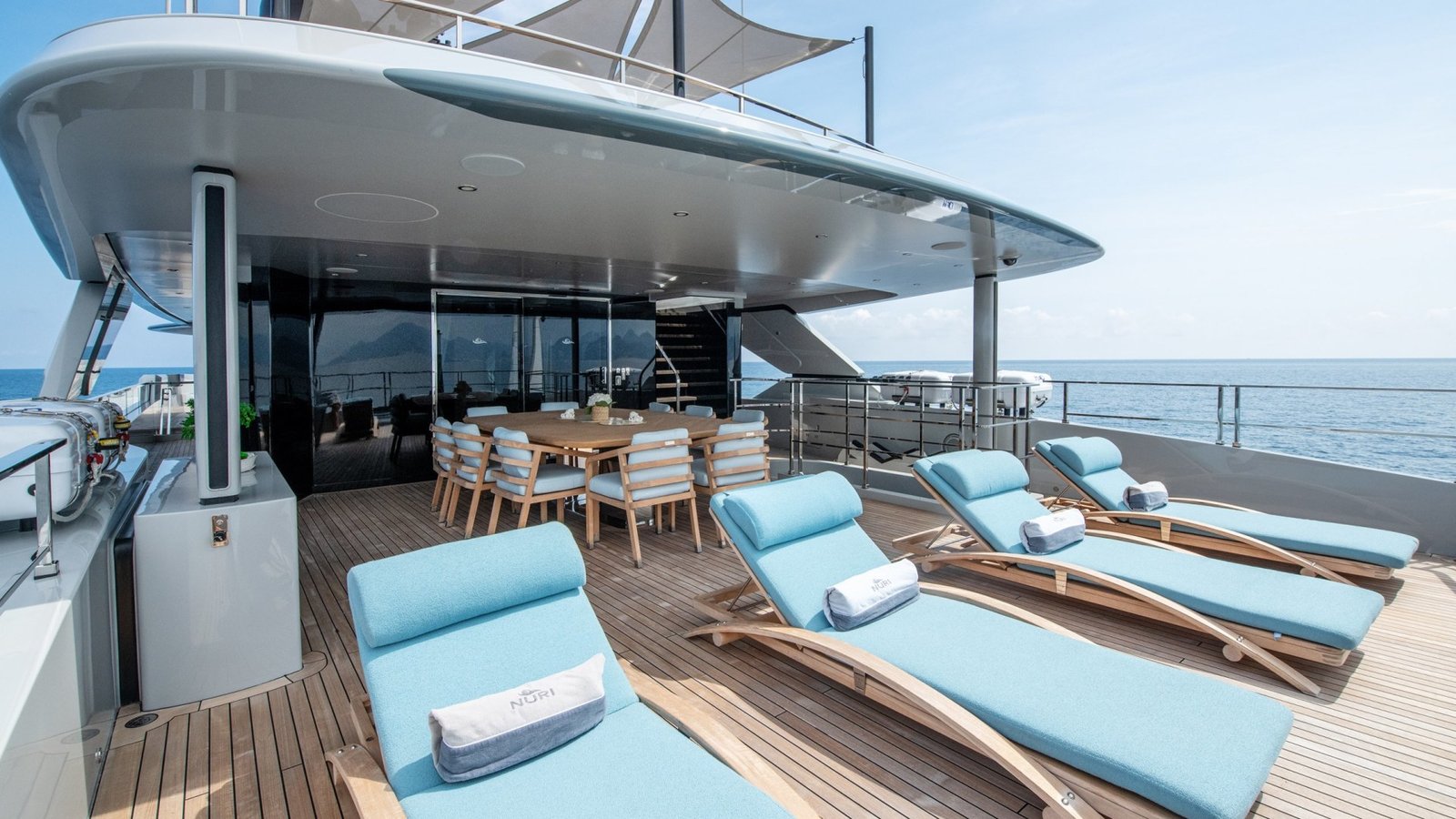
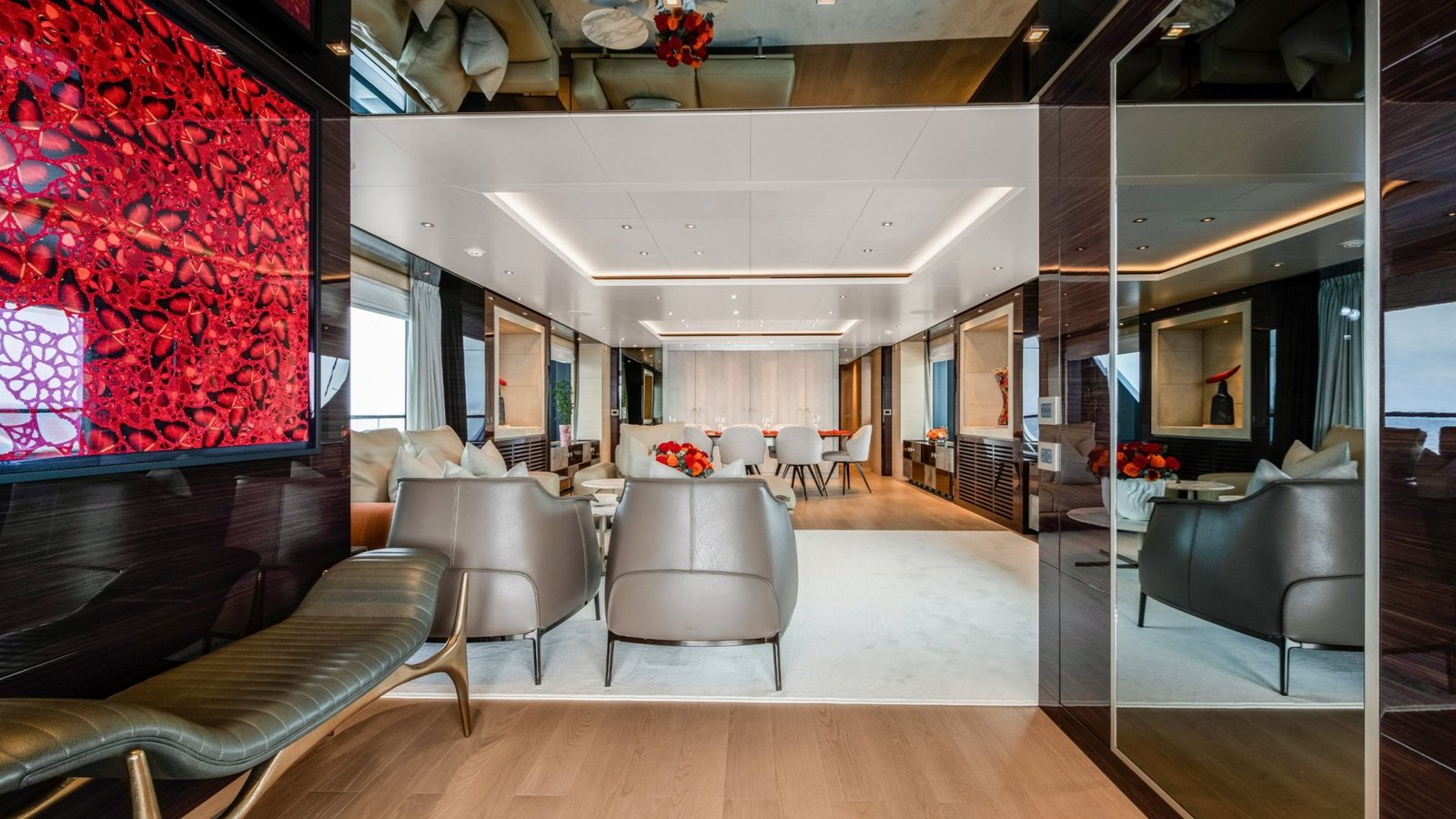
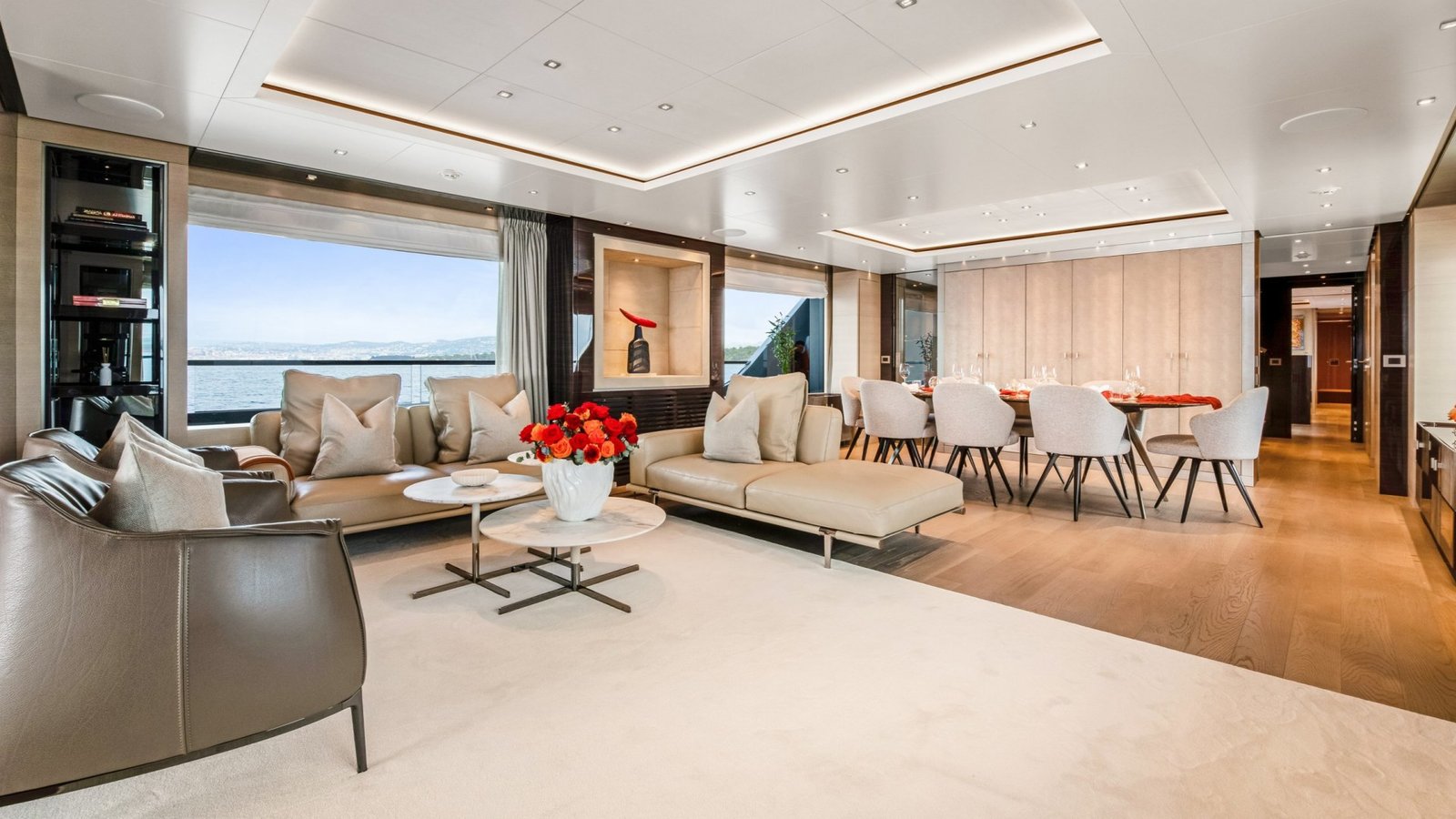
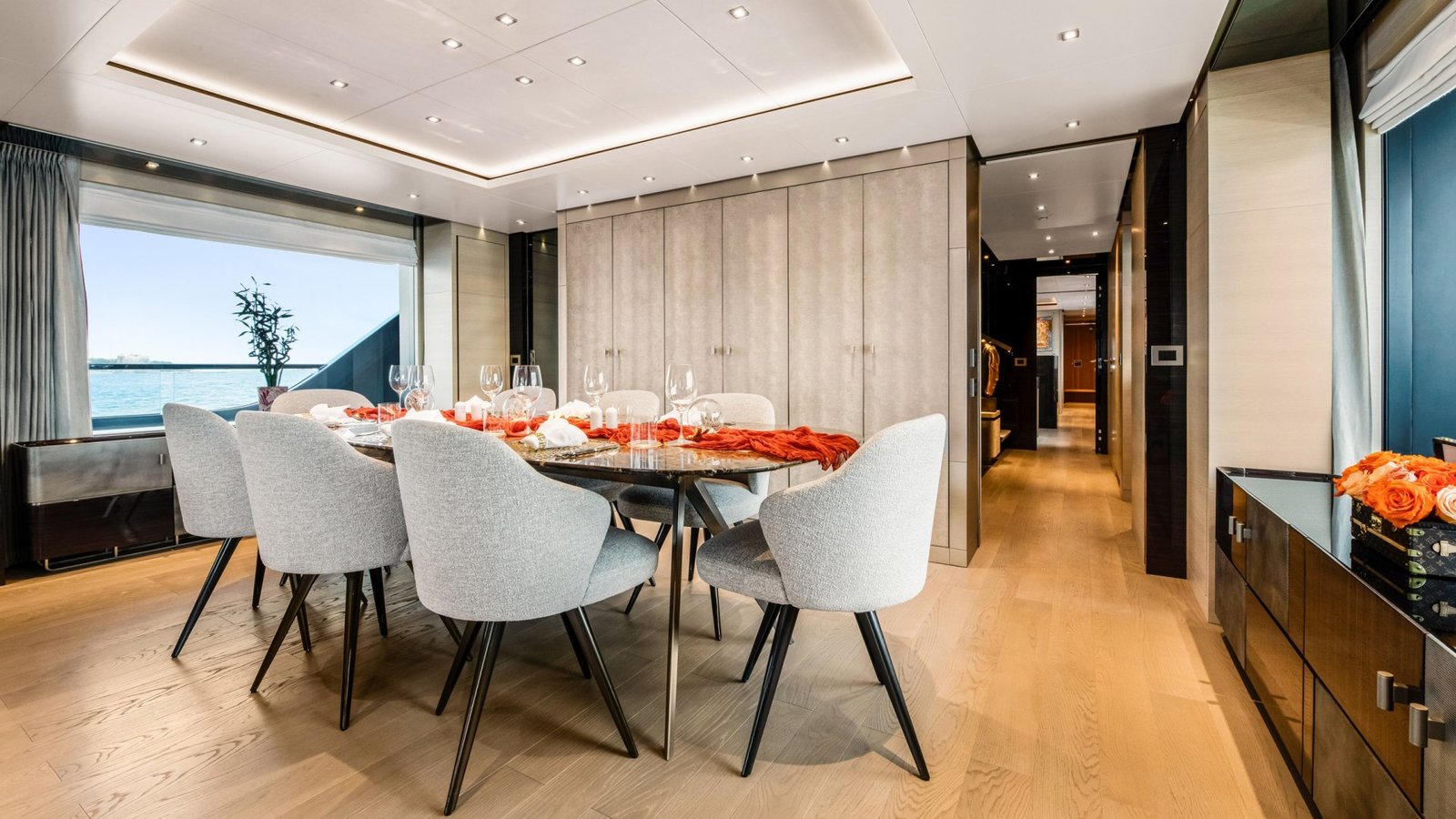
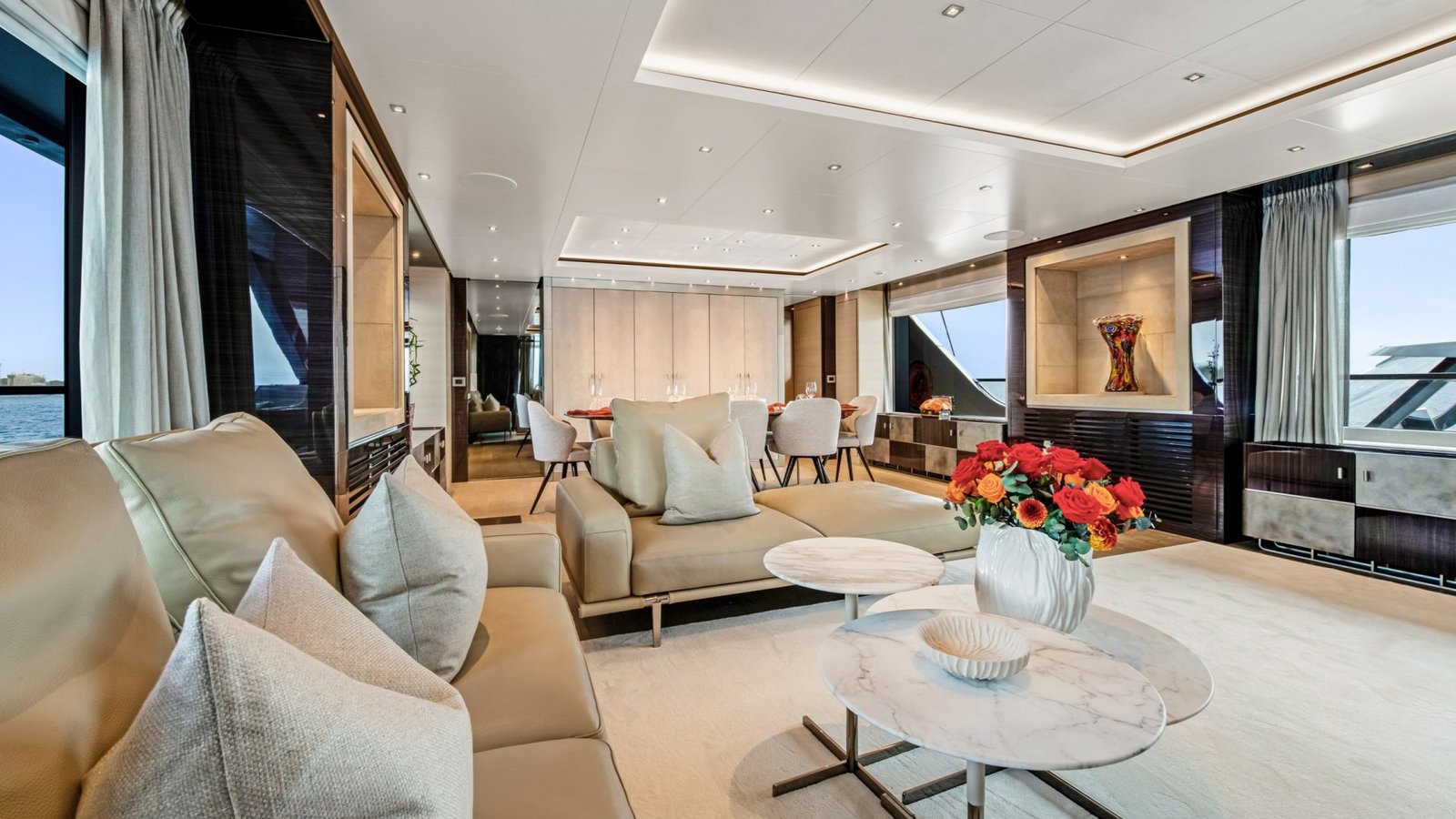
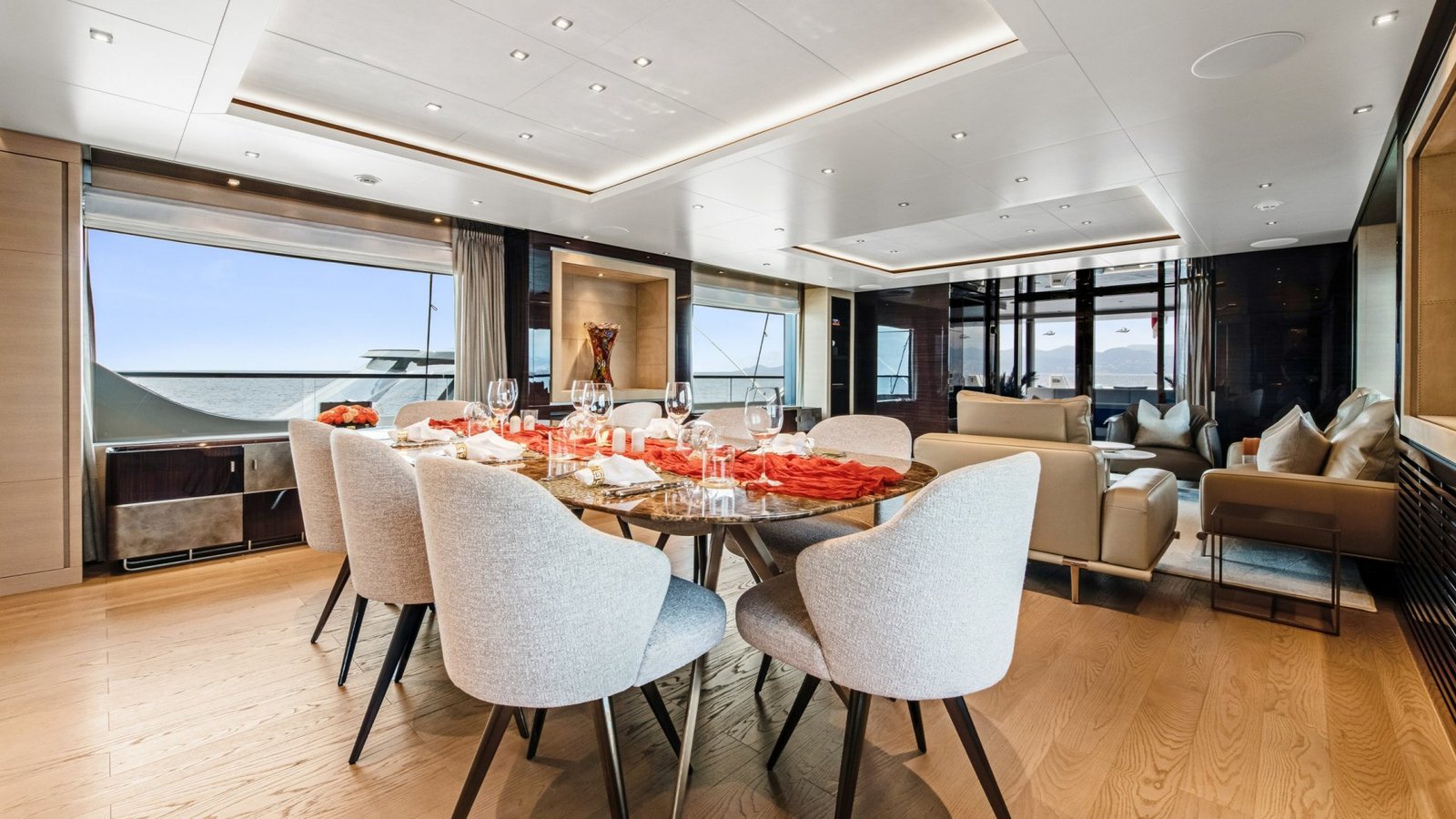
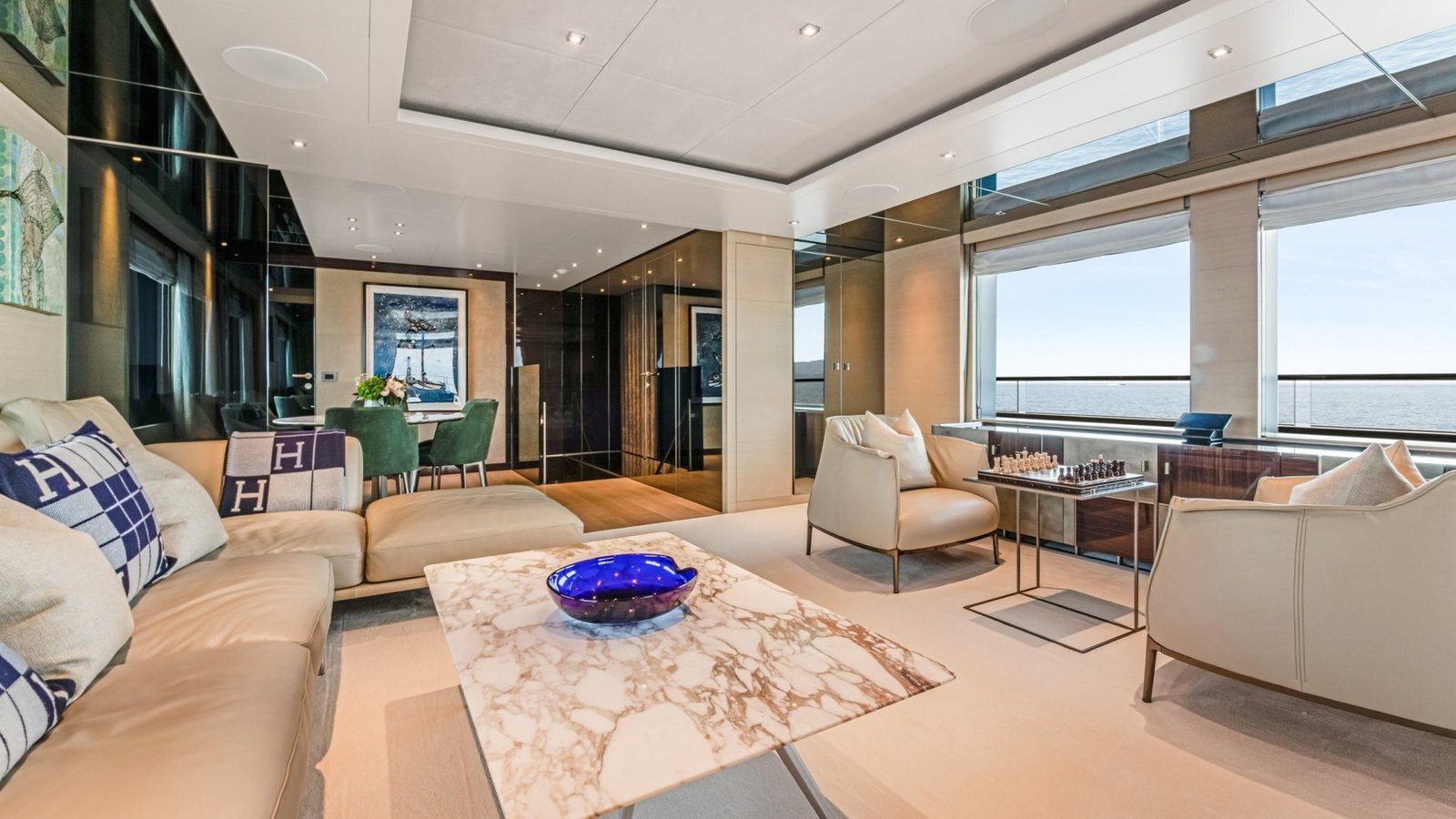
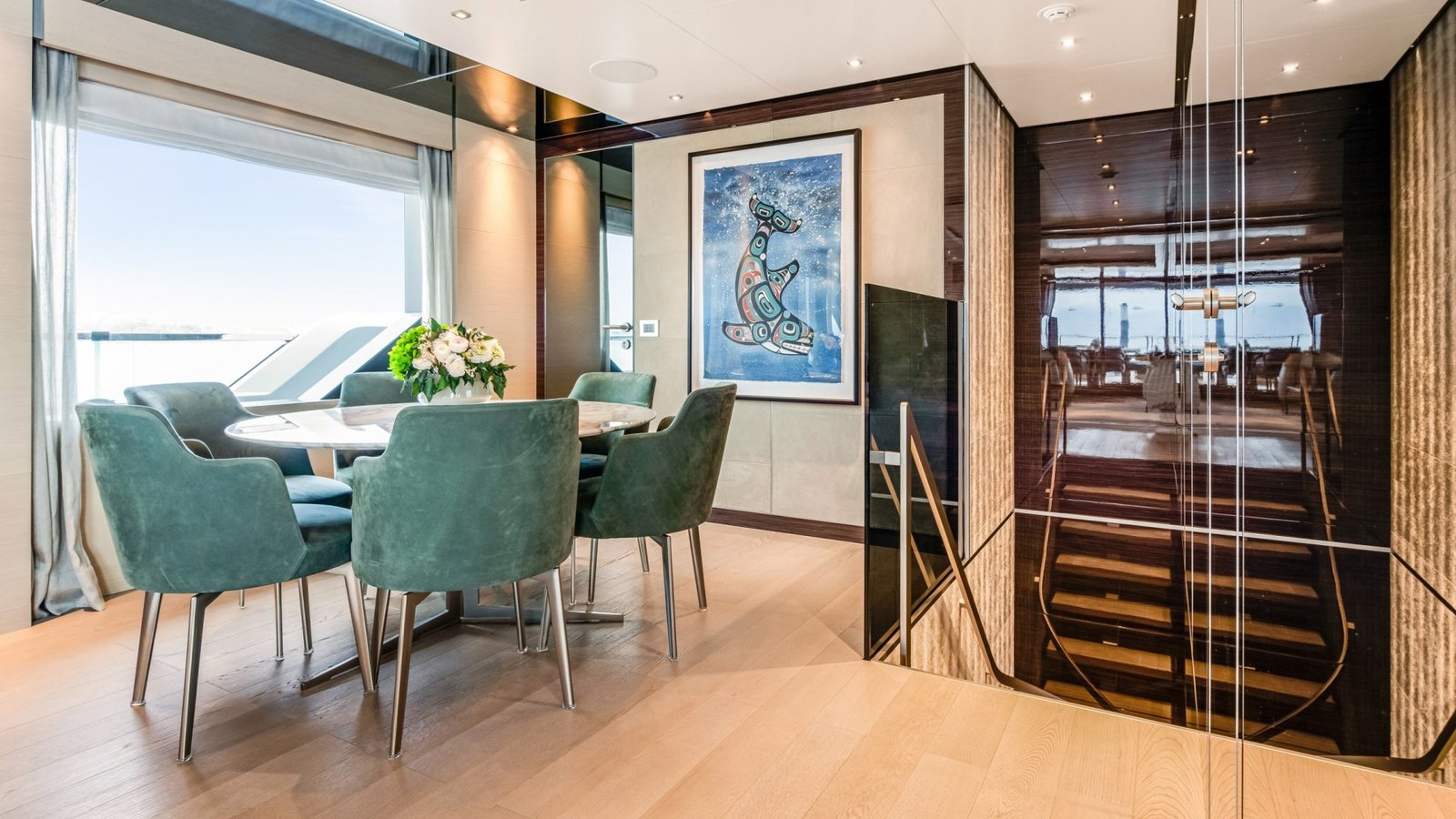
The main deck is one open room. Sofas gather at one end around nesting marble tables; a long dining table for eight sits at the other under the same ceiling, windows down both sides. Serving one space rather than two makes the deck feel considerably larger than her length suggests, and it keeps everyone in the same conversation. One deck up, a second saloon is quieter and more private – deeper sofas, a chess board, a dining table at its forward end for the nights when twelve is too many.
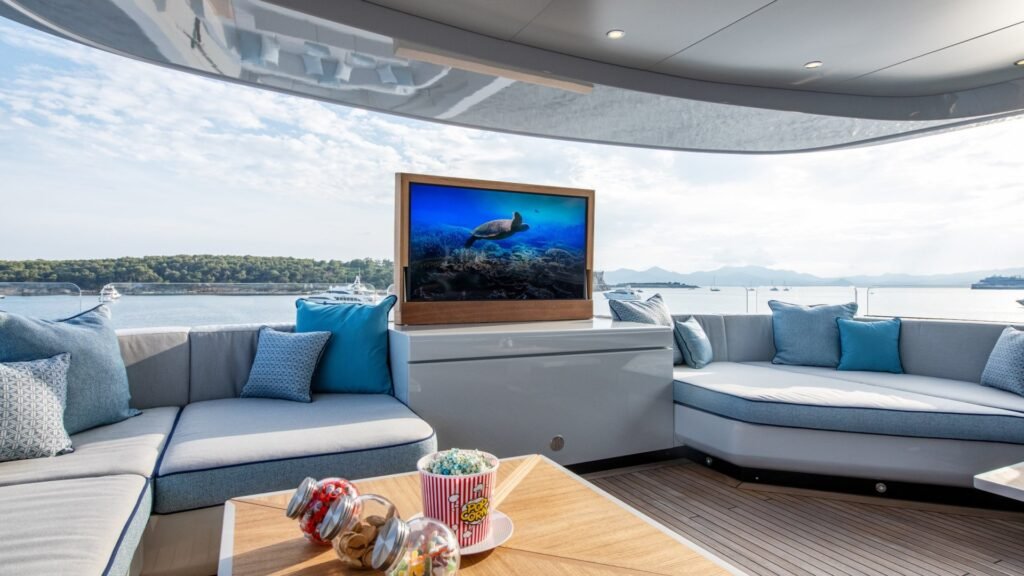
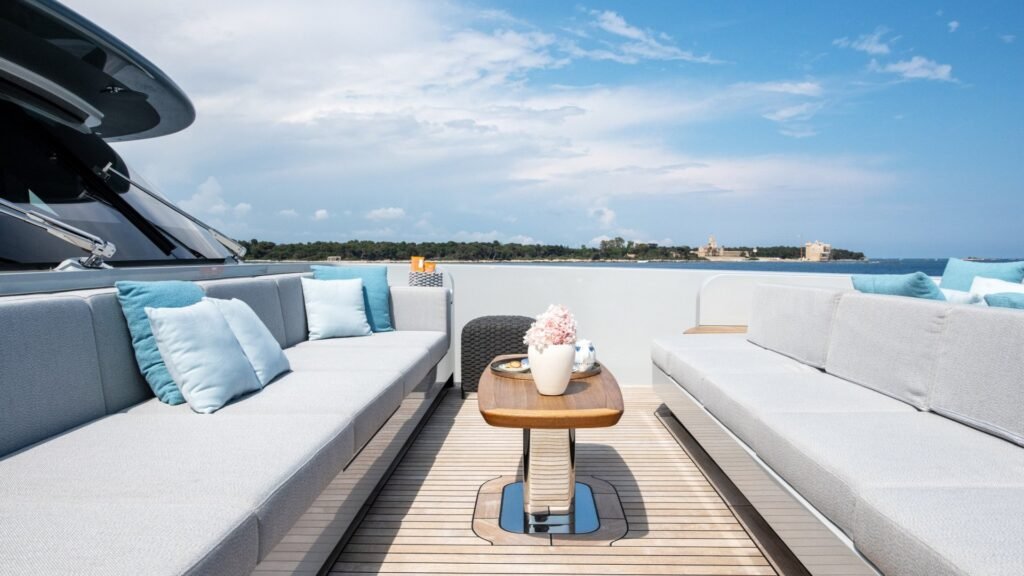
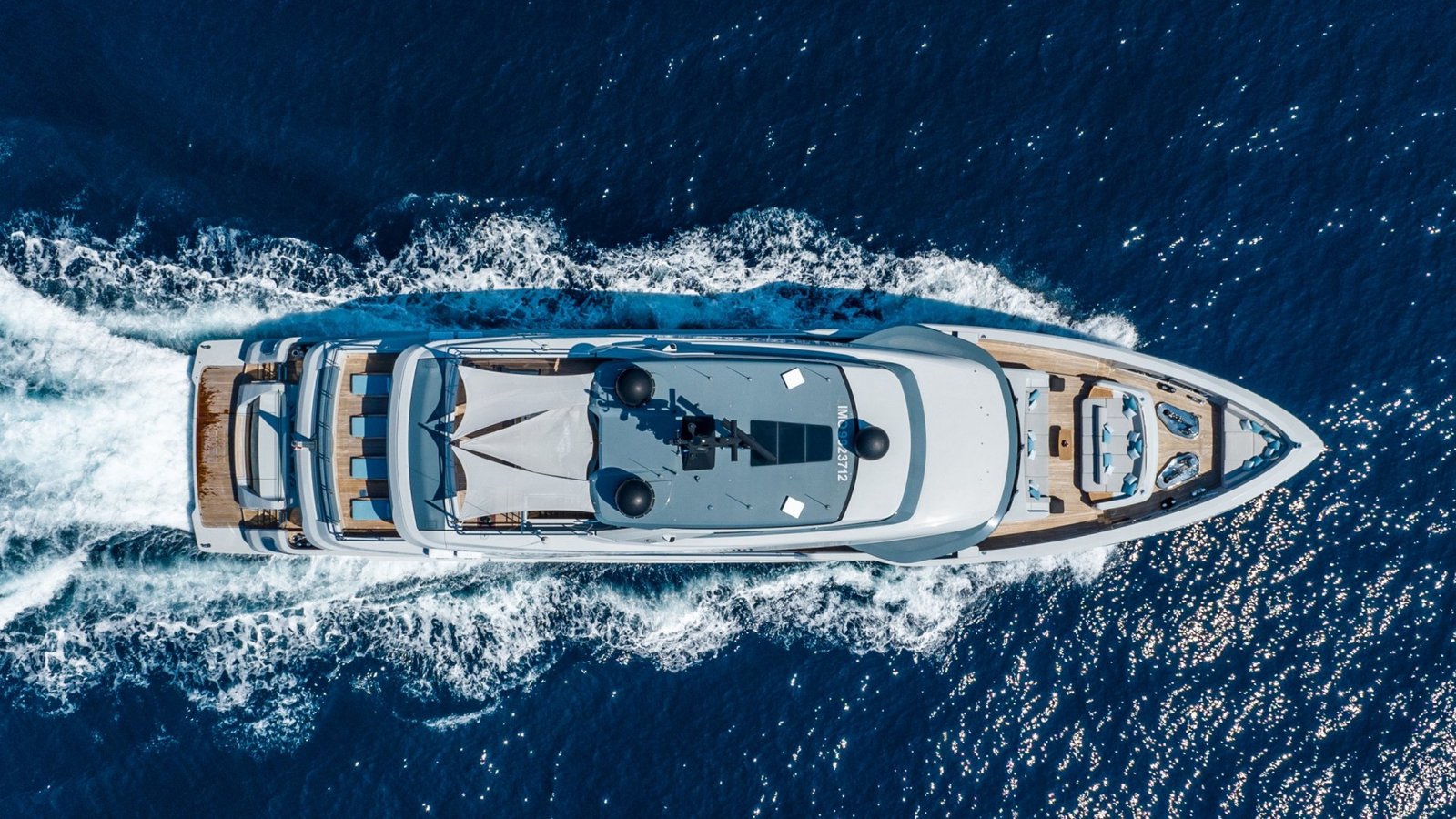
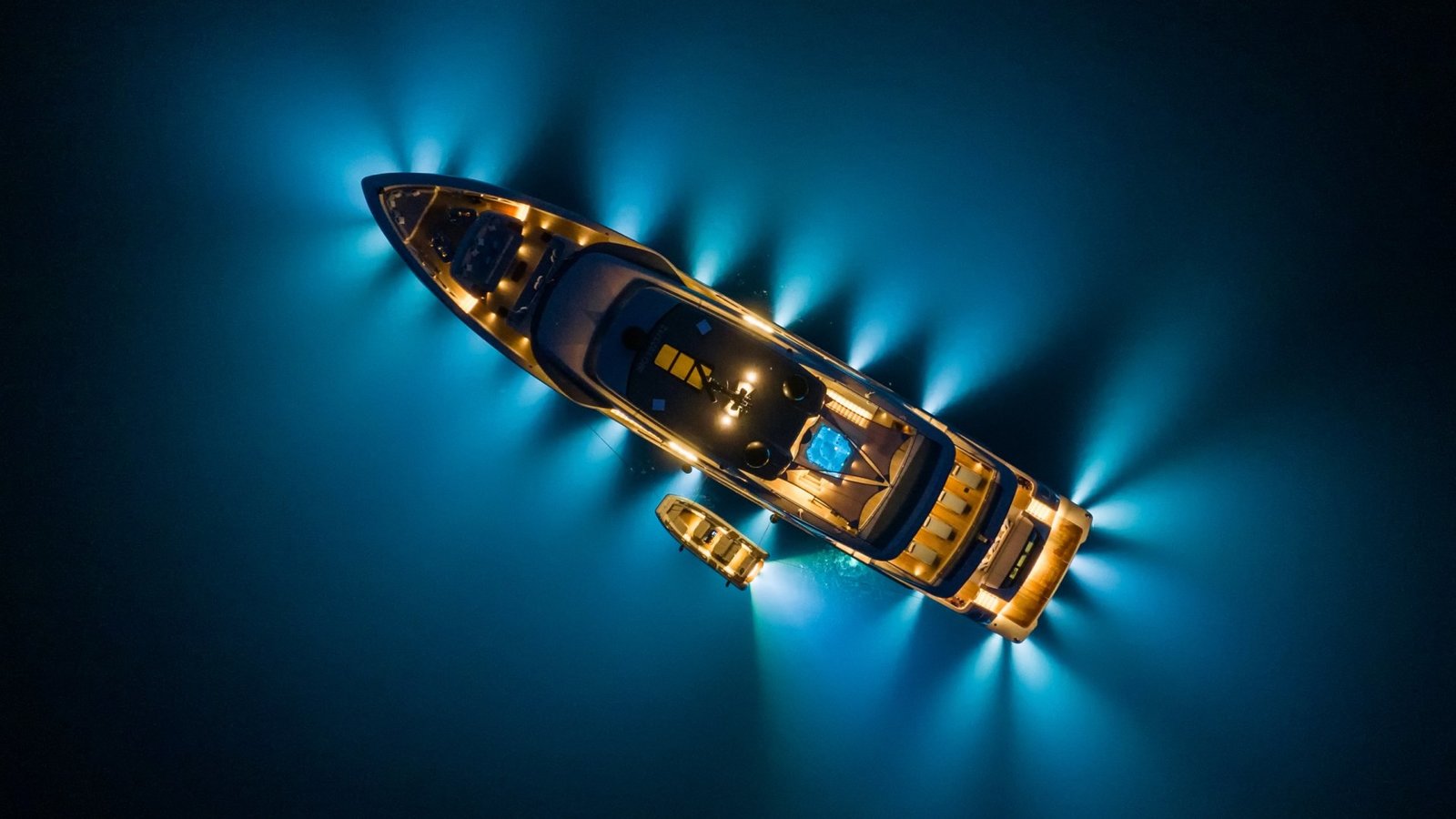
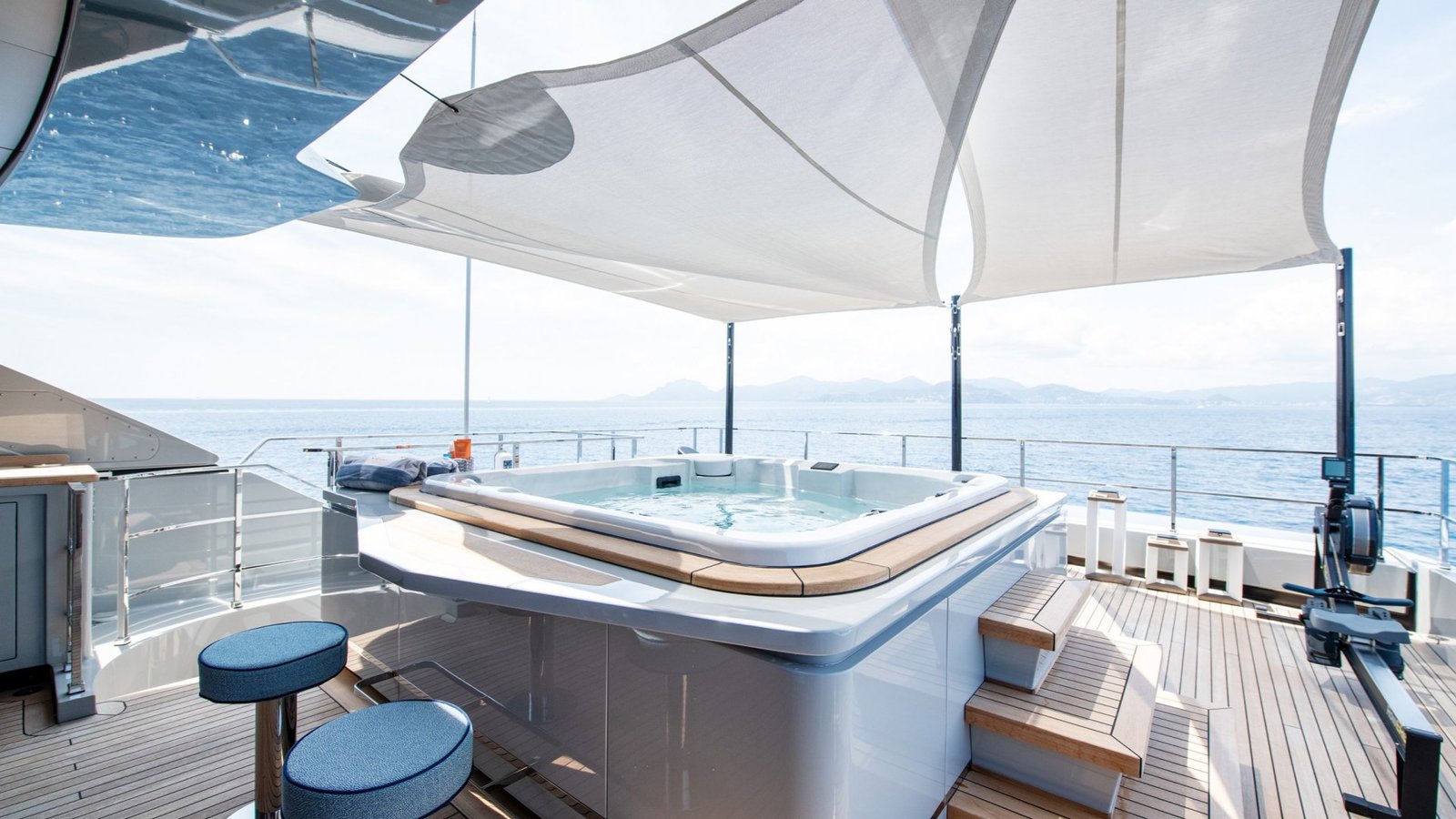
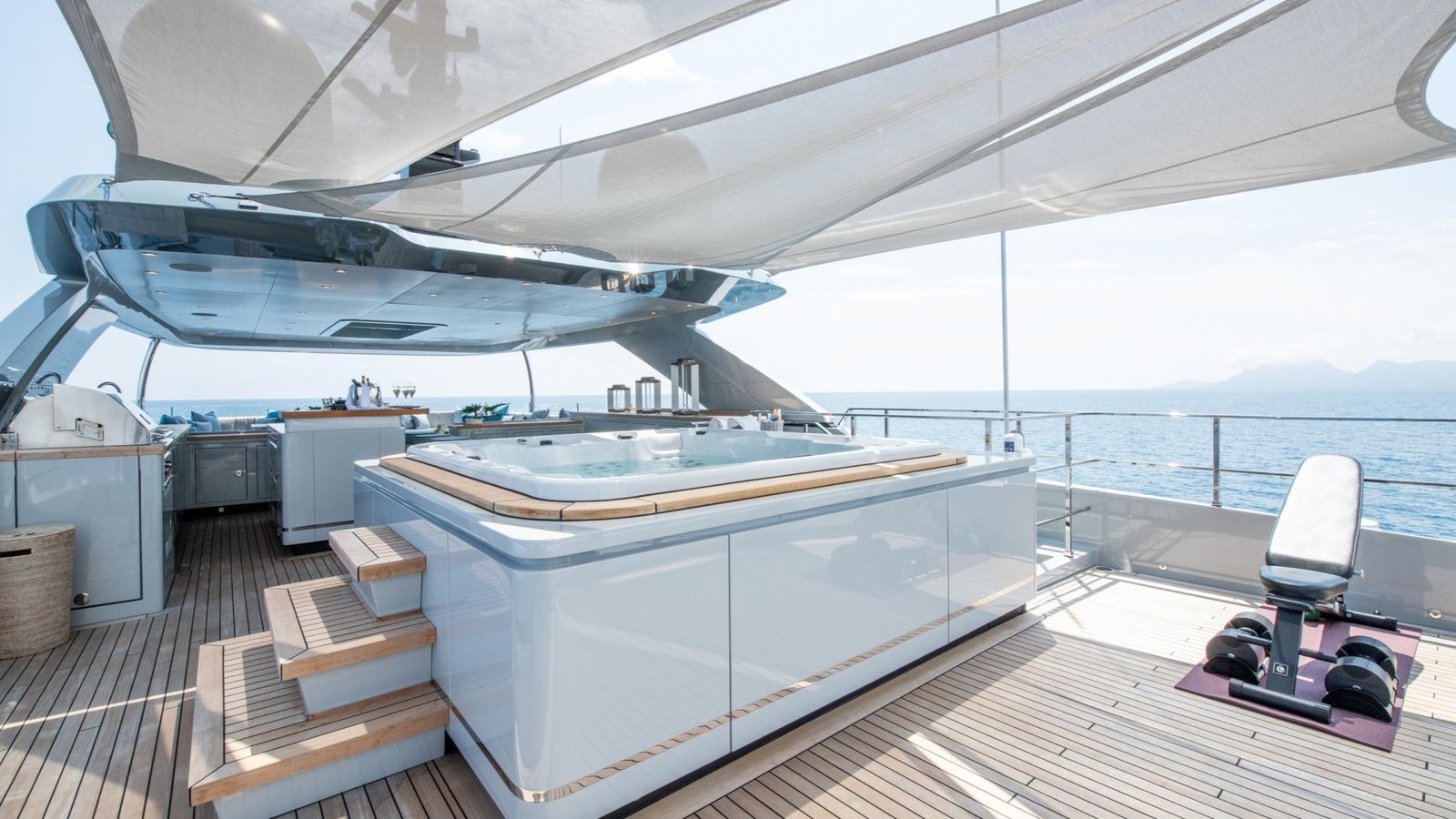
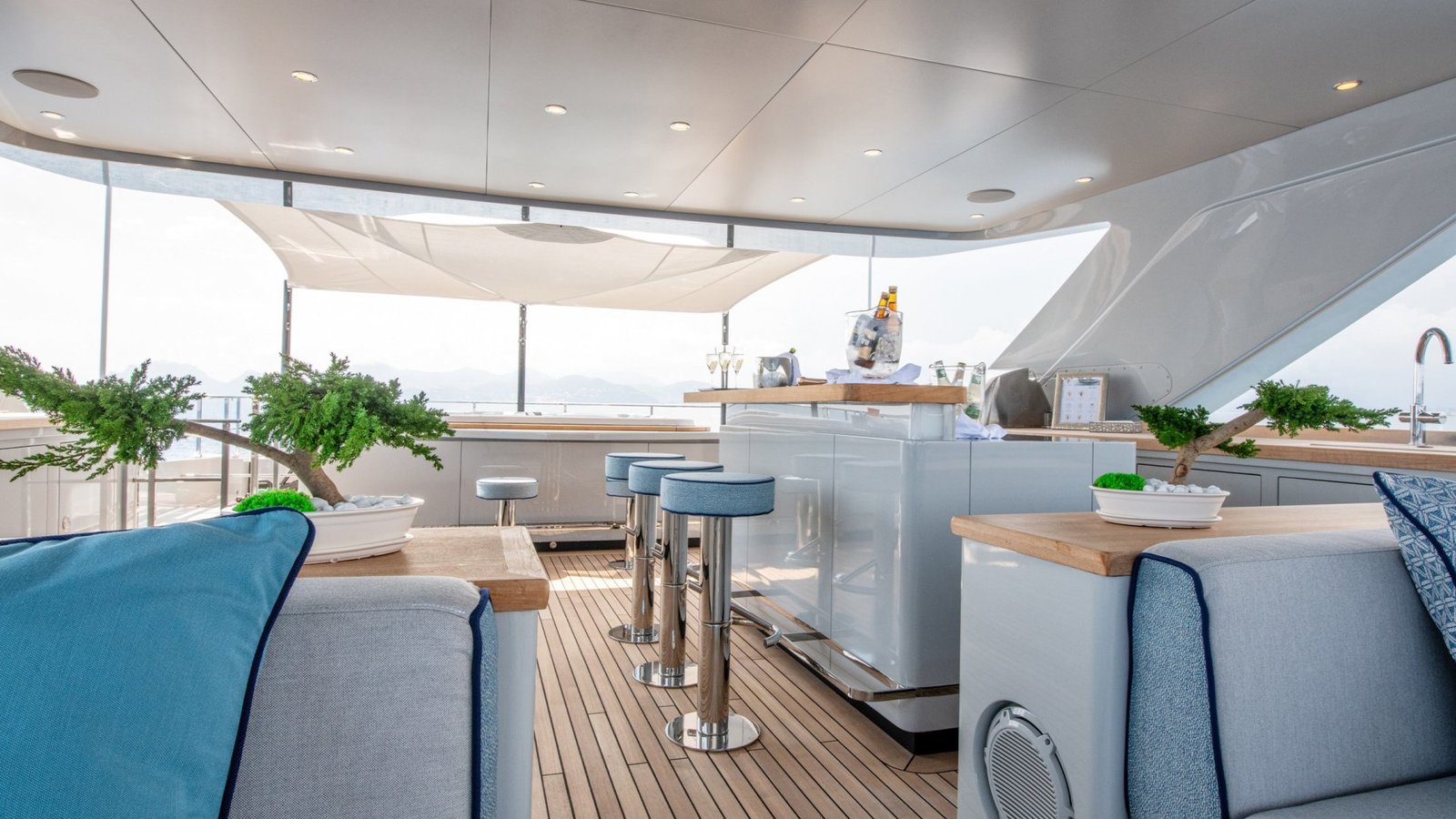
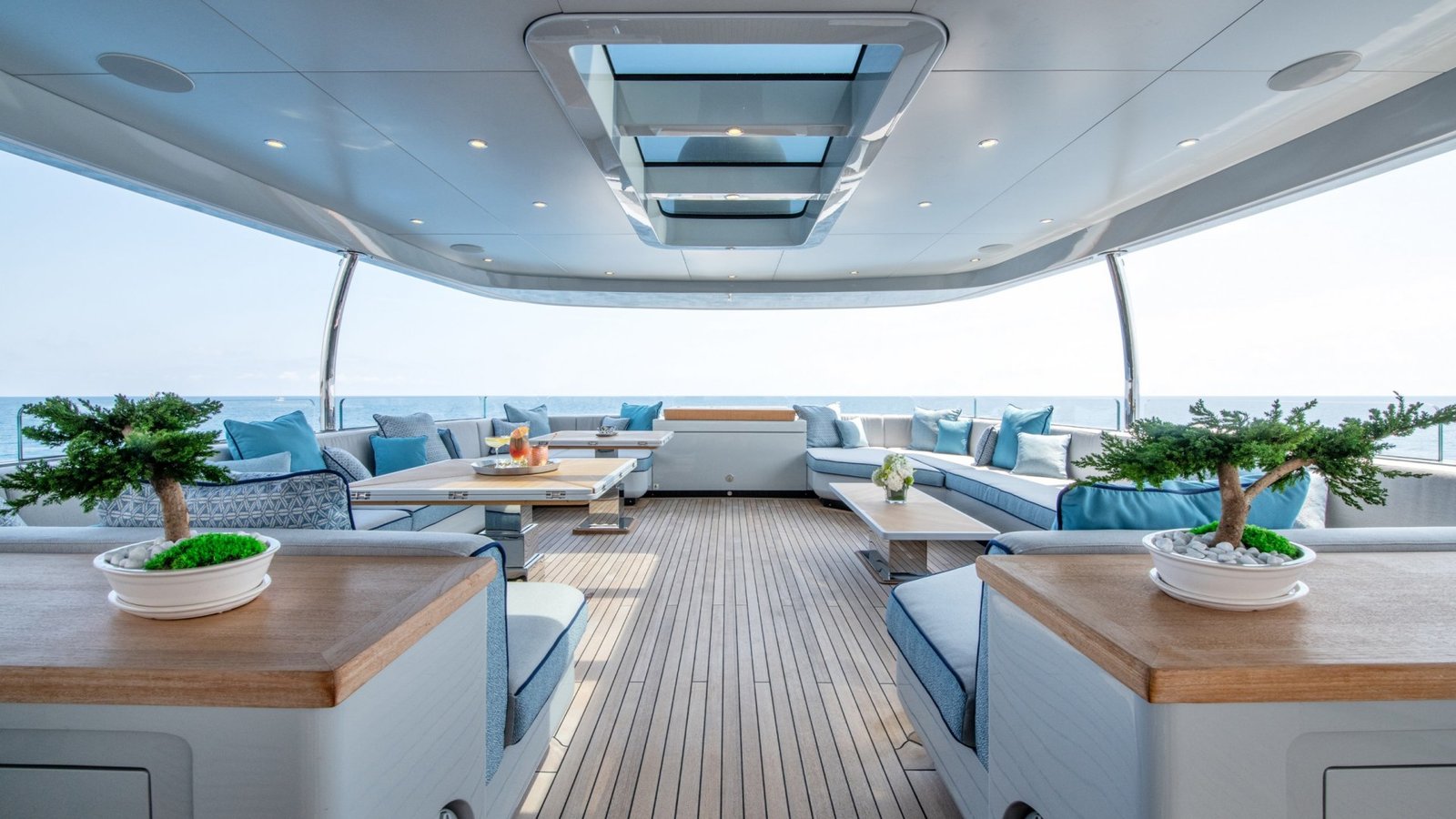
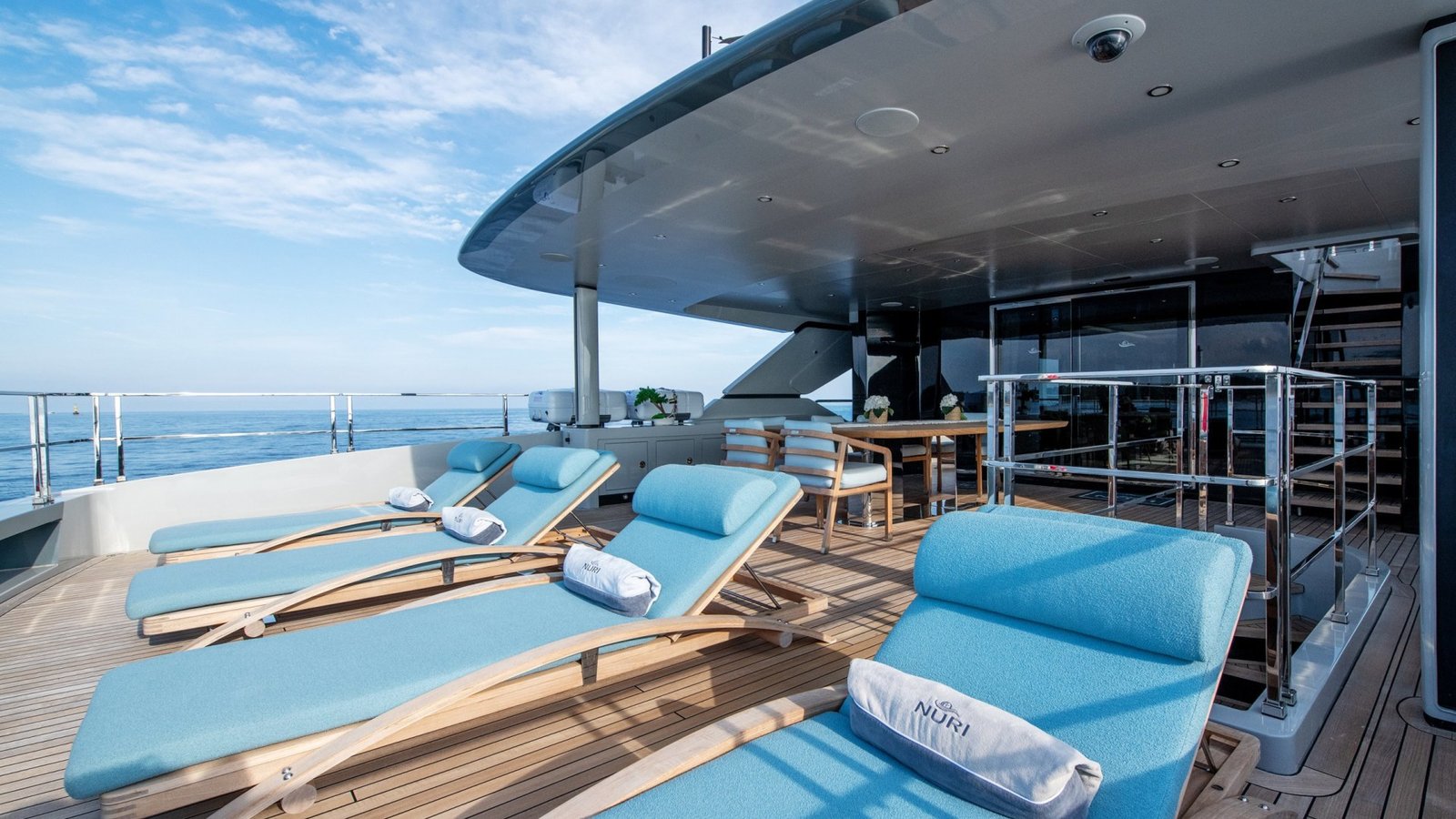
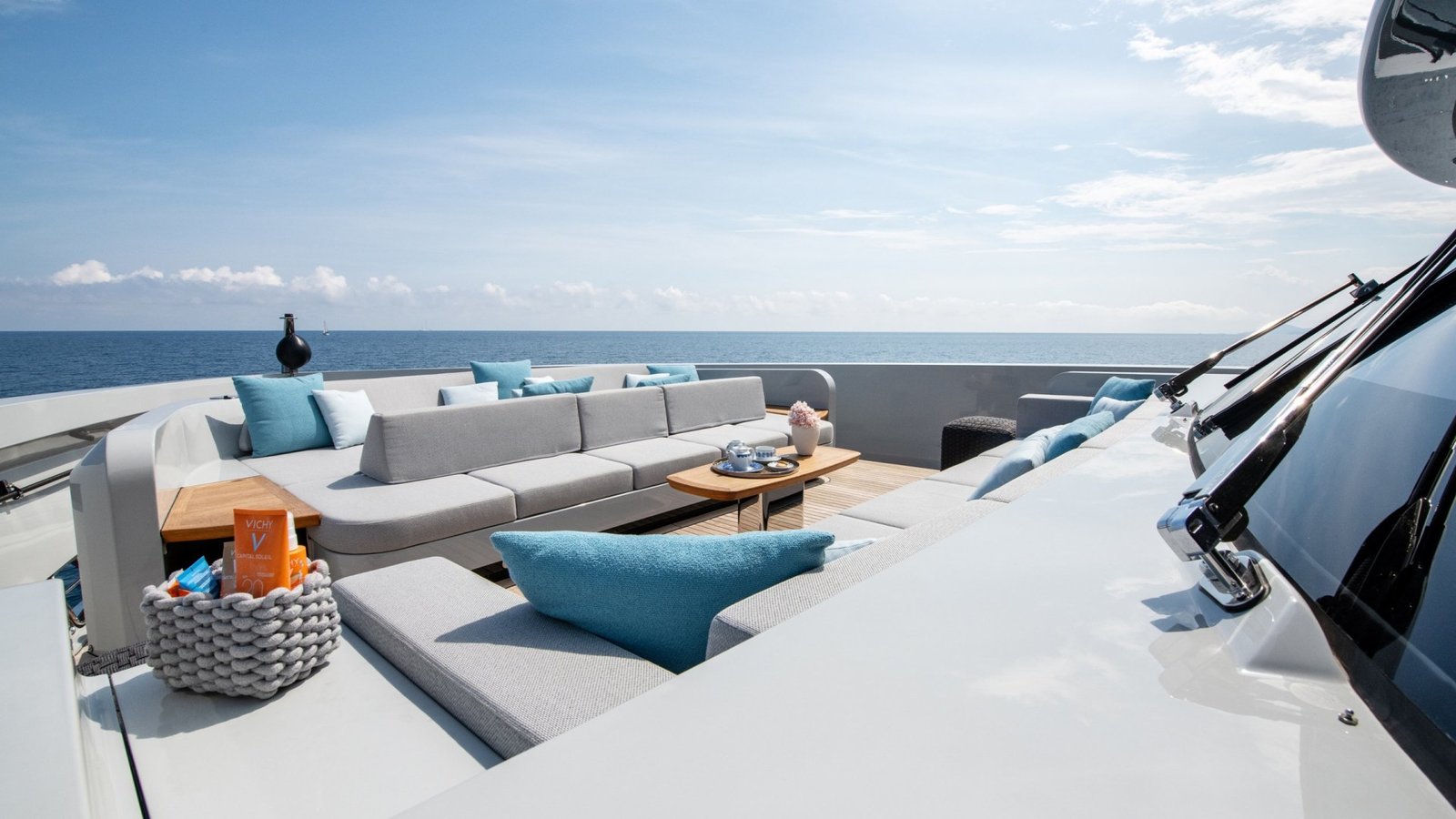
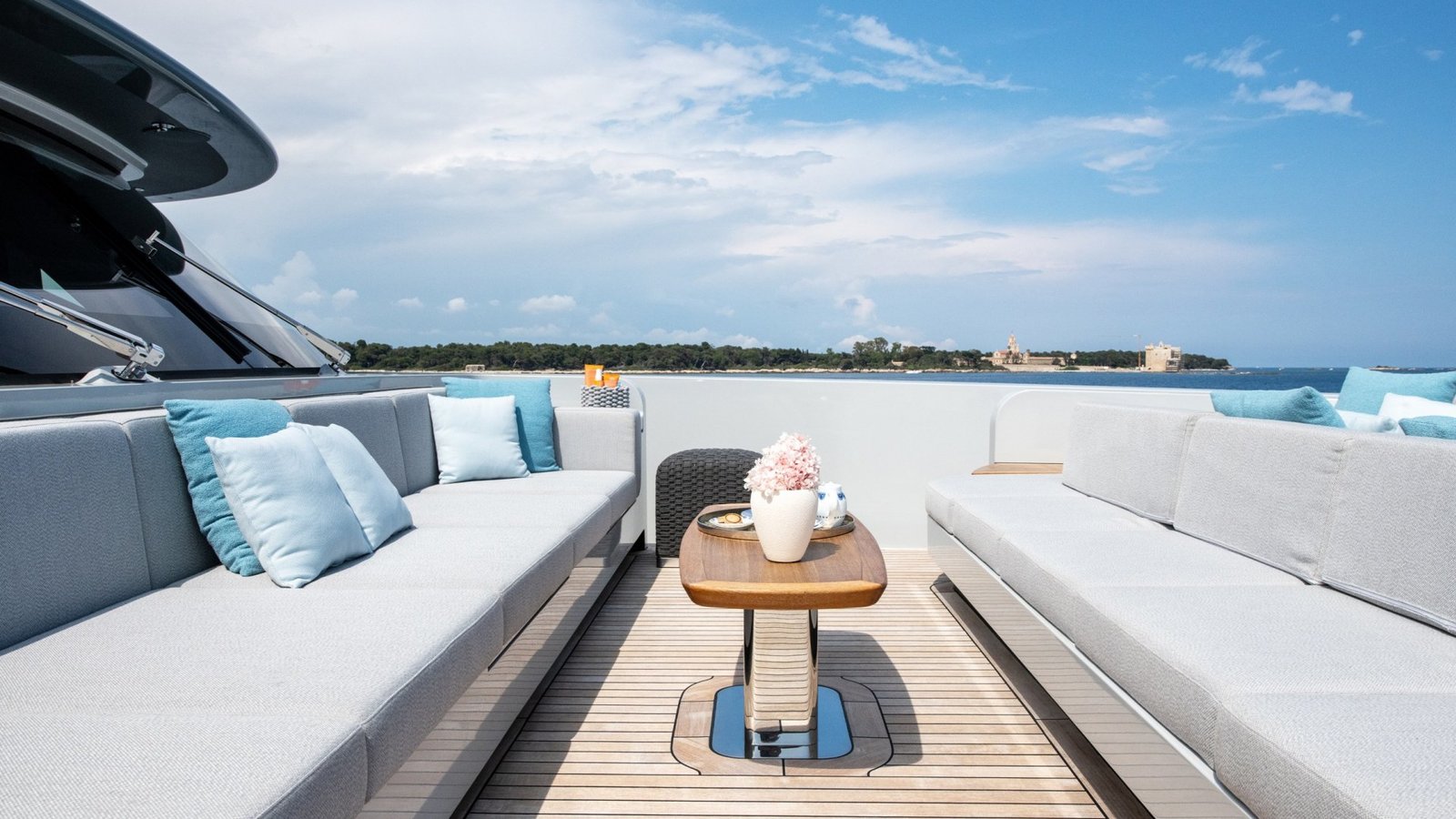
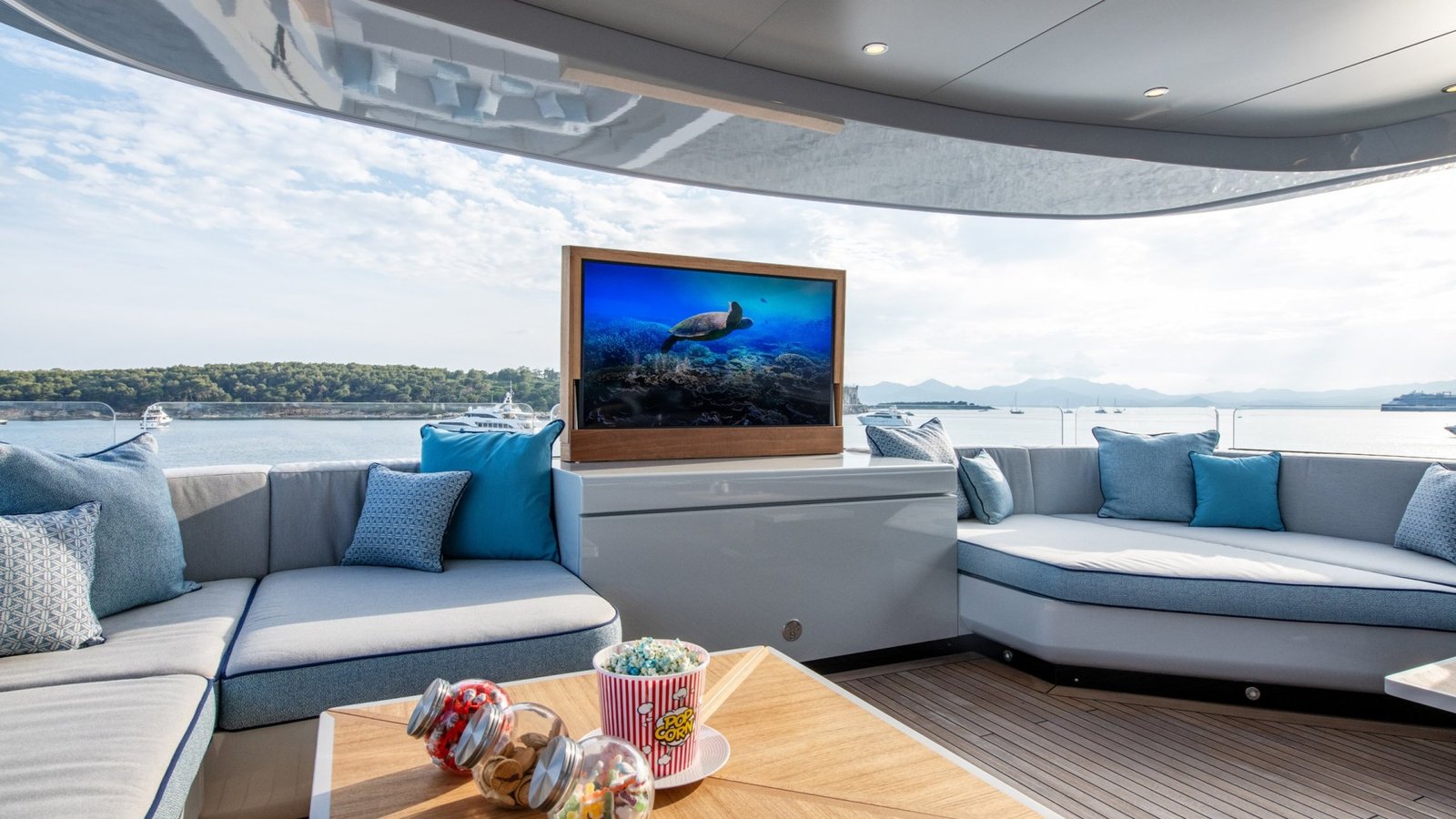
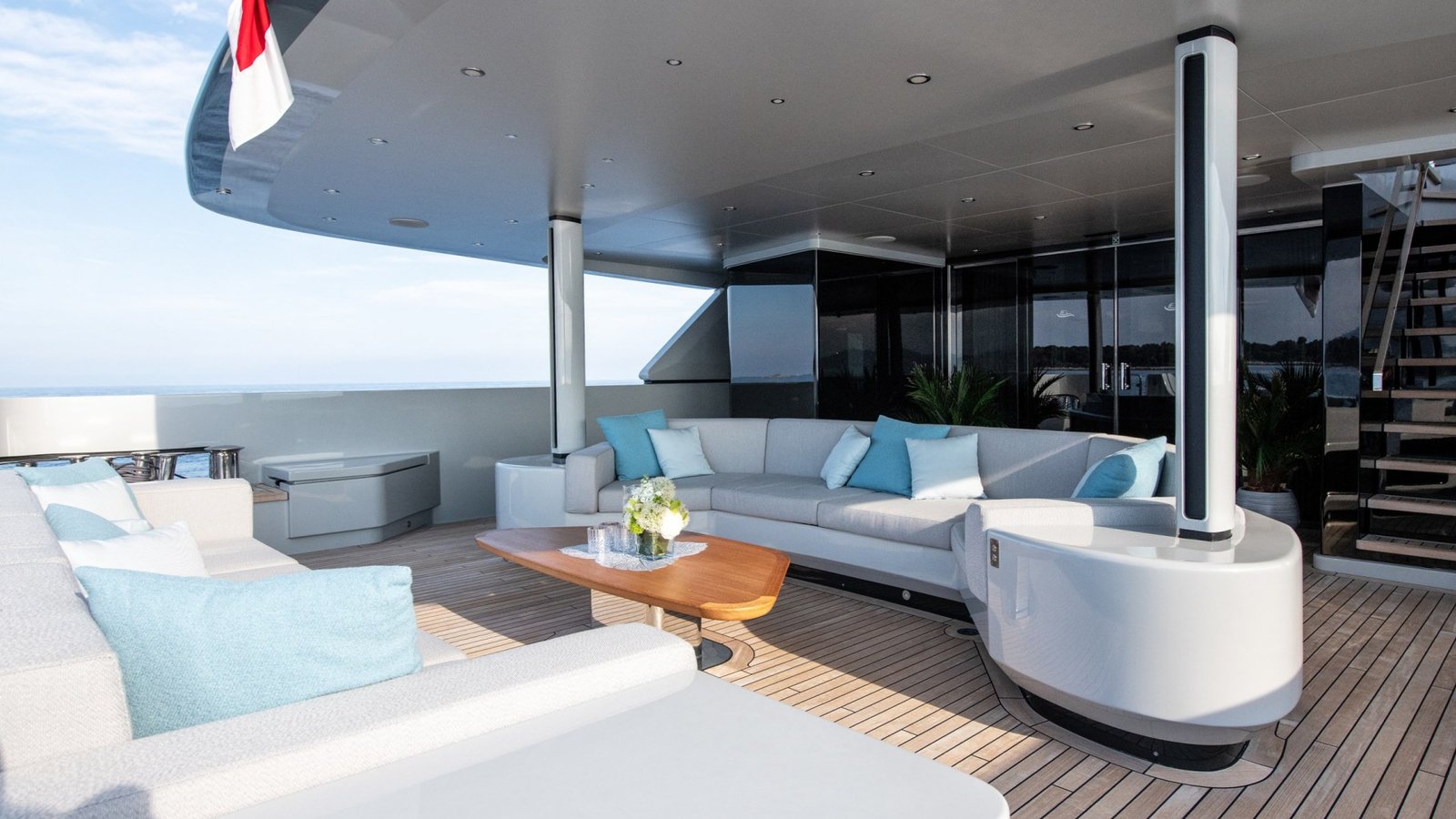
Outside is where she really earns her keep. The sundeck opens around a spa tub raised on its own moulded surround, jets running, with stools a step away and a folding sunshade drawn overhead. Forward of the superstructure a long sofa arrangement faces the anchorage, well clear of the traffic. Aft, a screen rises out of the deck console at dusk and turns the shaded lounge into a cinema; by day it is simply the coolest seat on board.
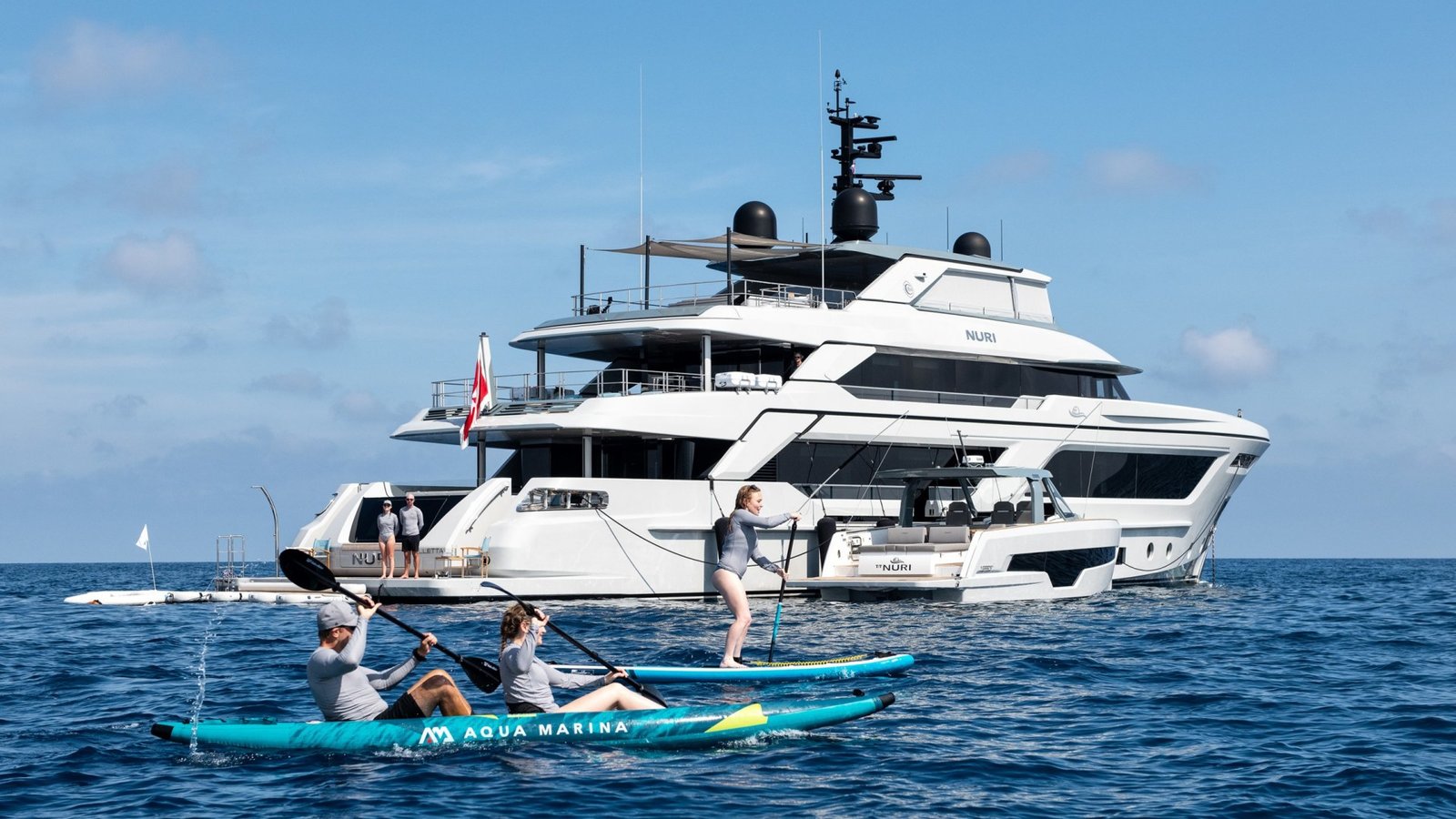
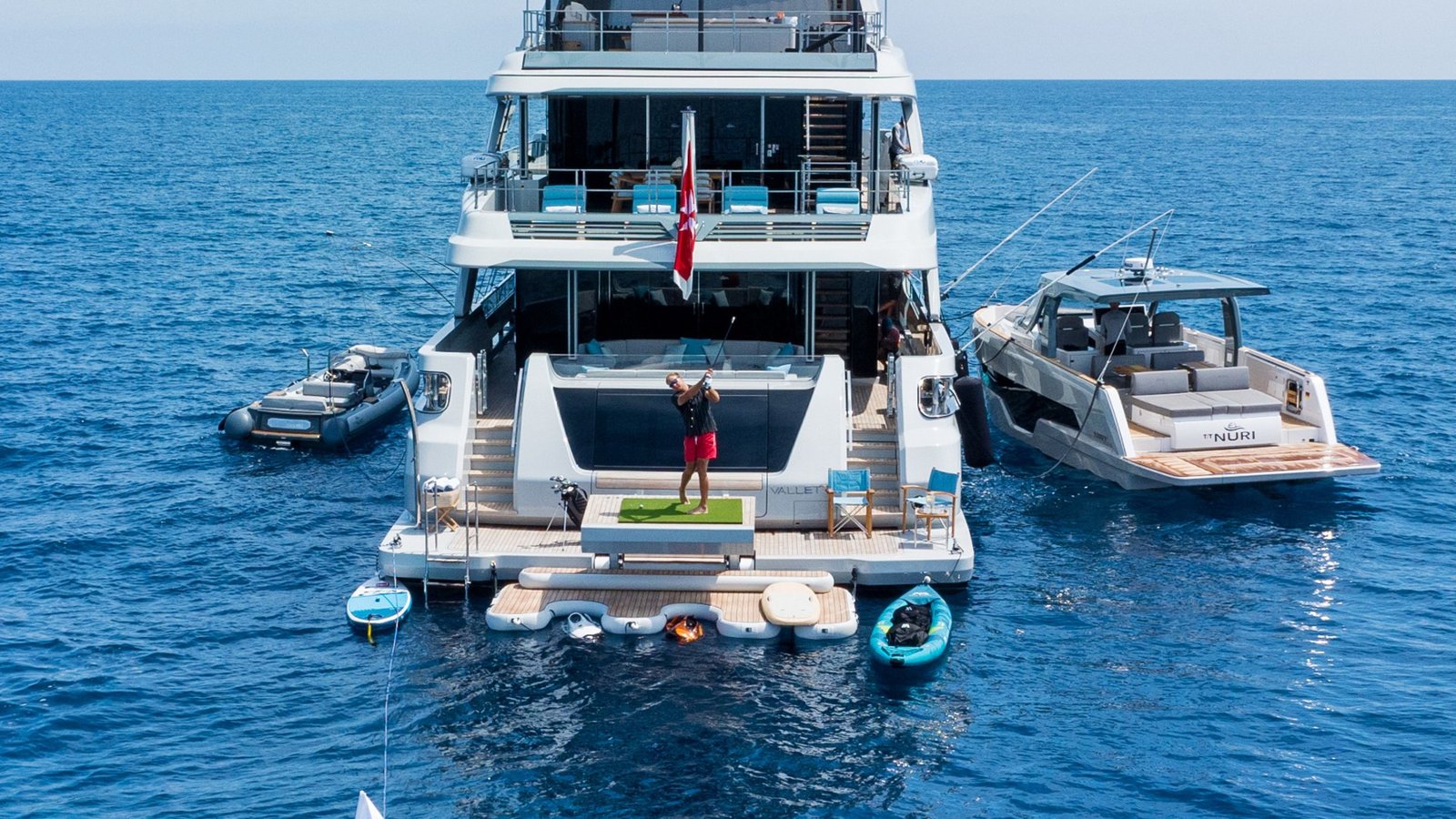
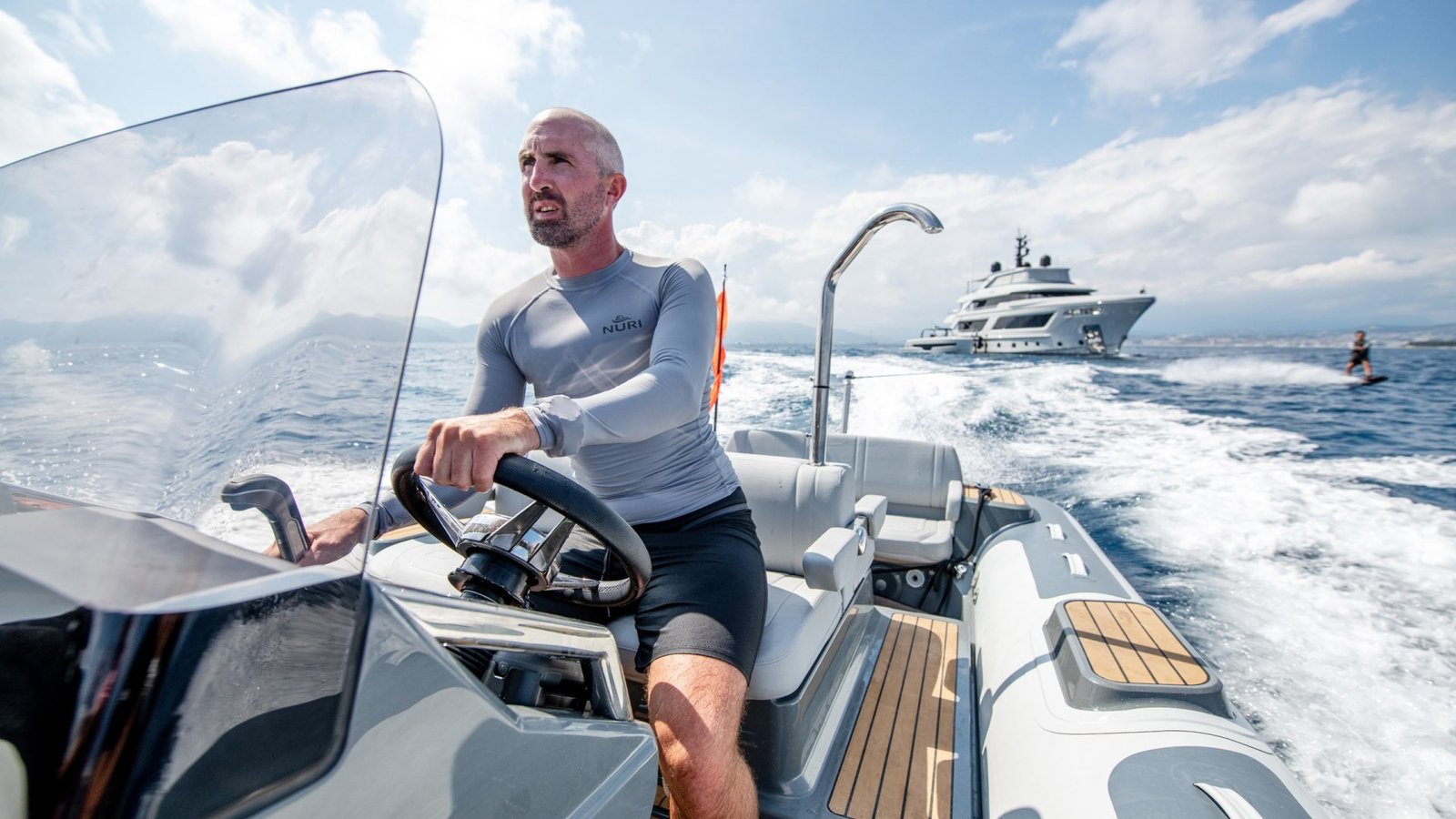
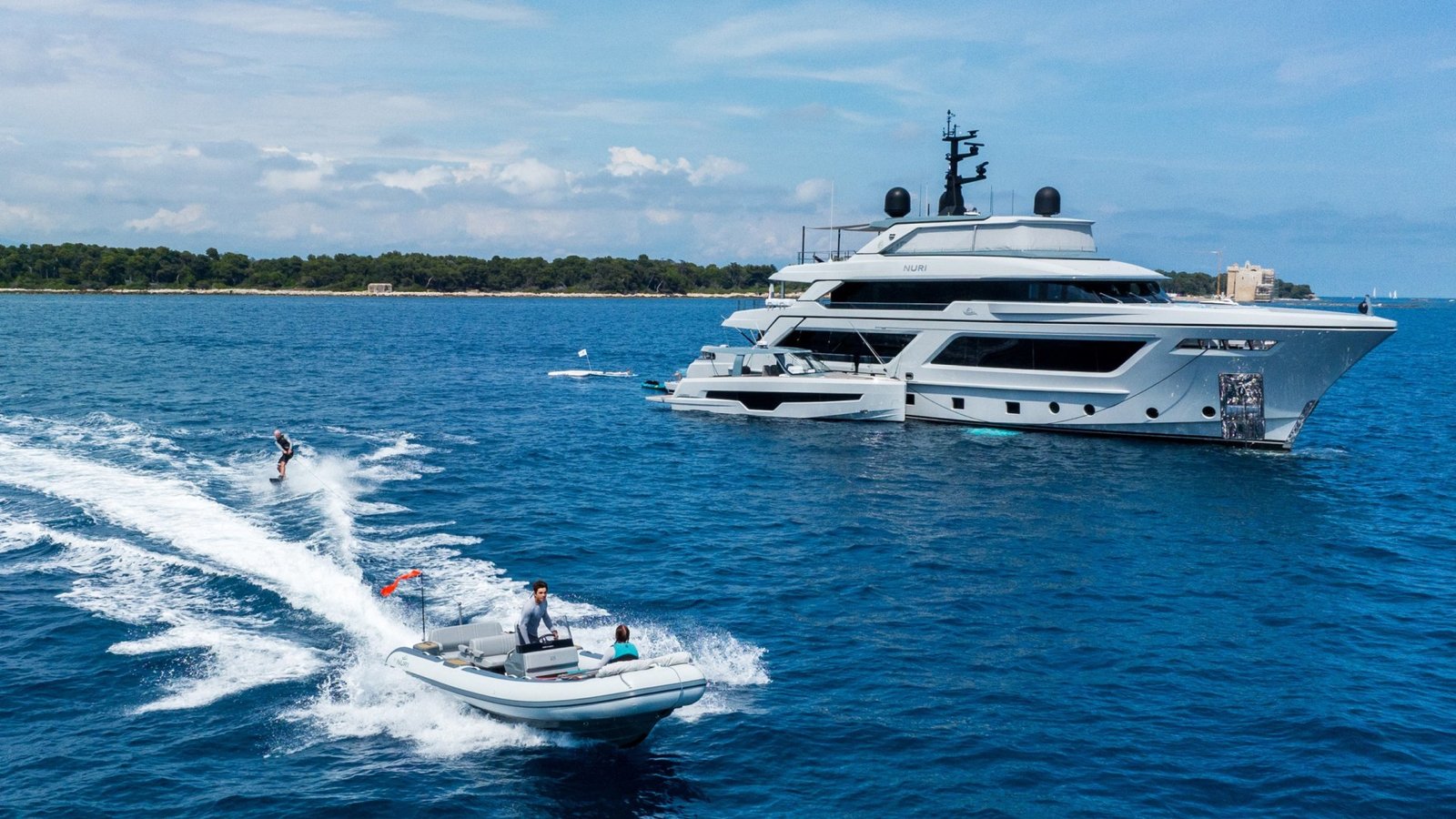
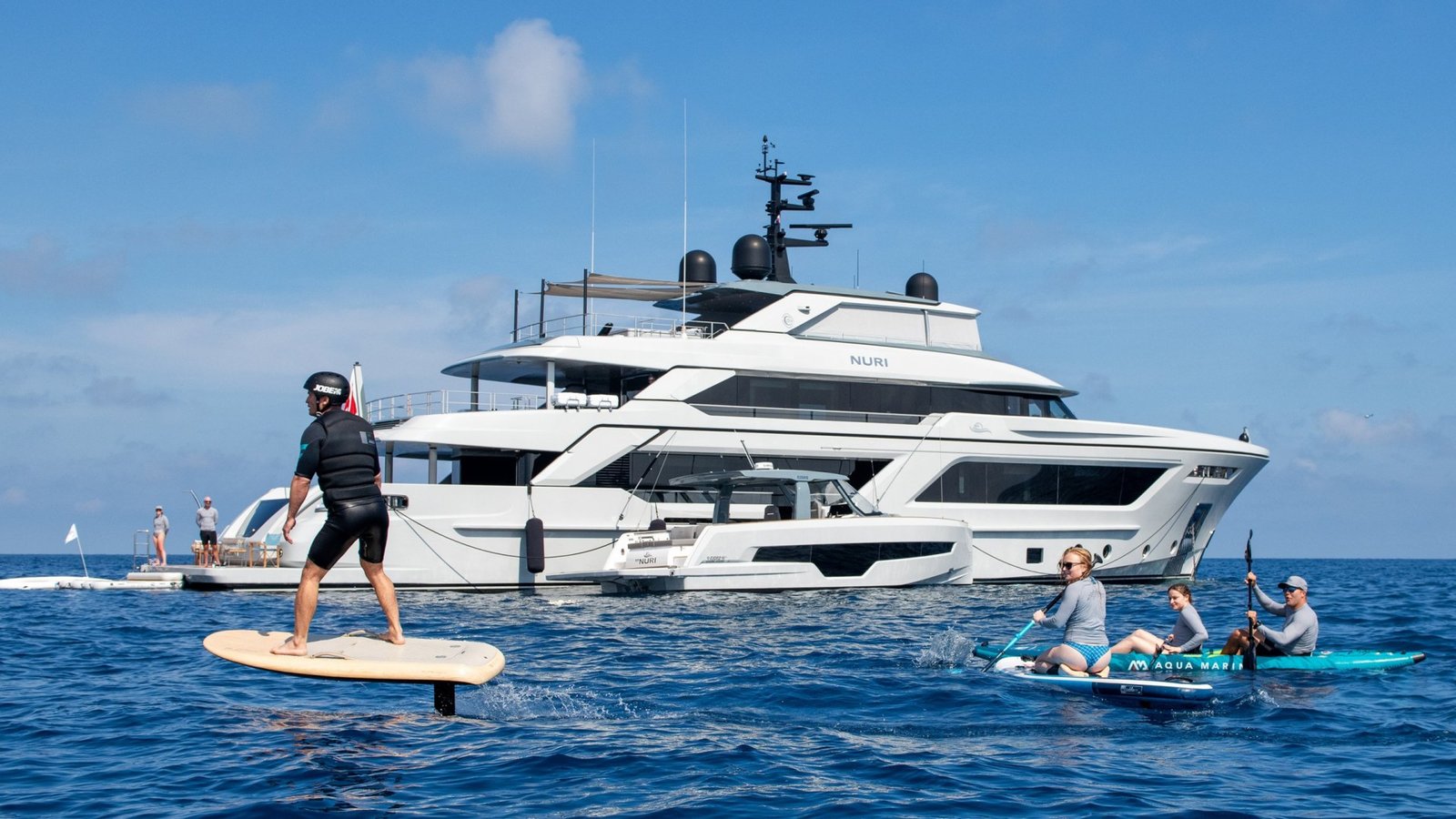
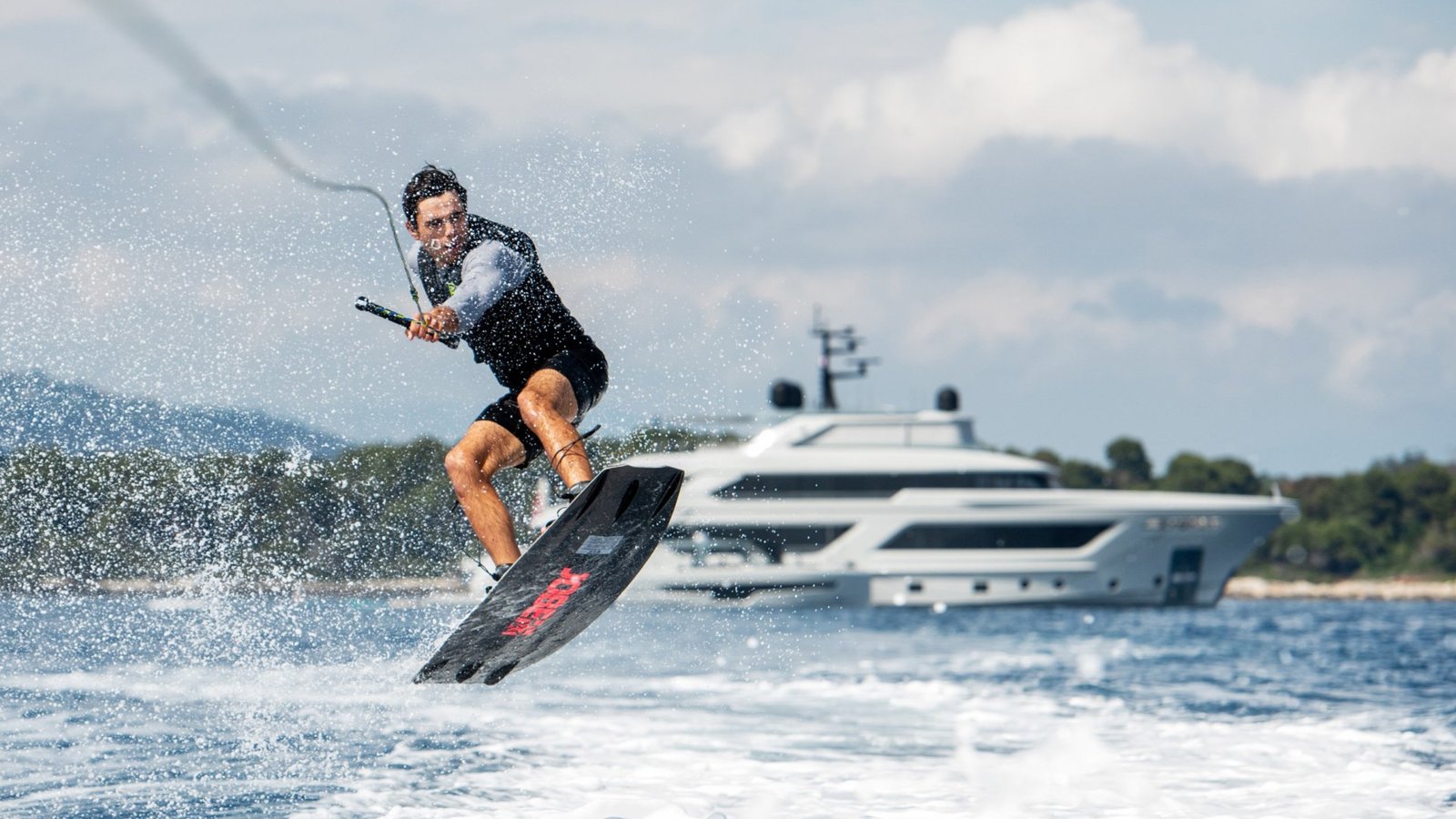
The toy programme is properly explorer-grade rather than decorative. A custom tender lettered T/T NURI runs the wakeboarders and the foilers, there is a golf tee rigged off the swim platform, and paddleboards and seabobs come off the transom directly. Nine crew handle it, which is a high ratio for a forty-metre boat and the reason the day never stalls.
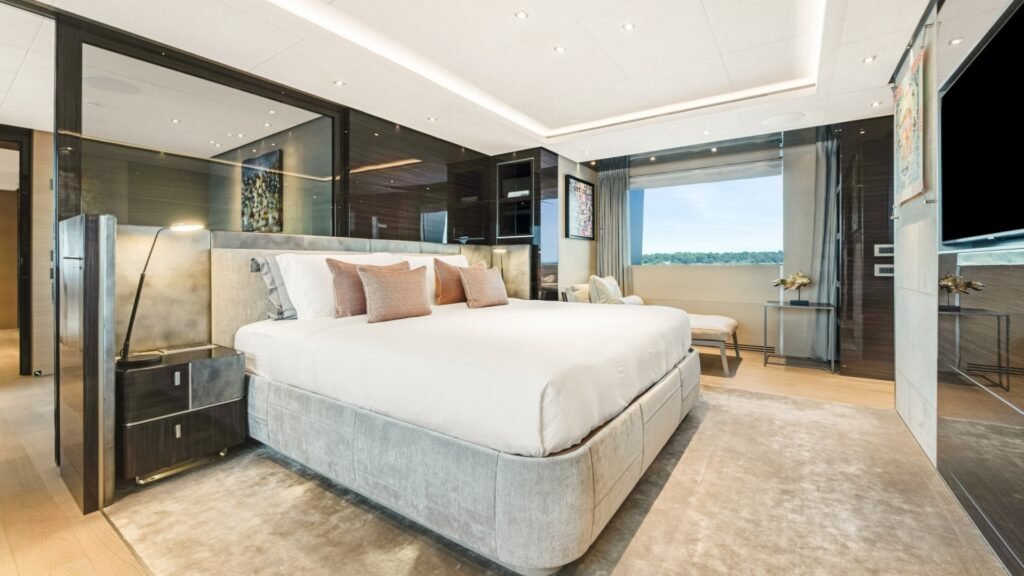
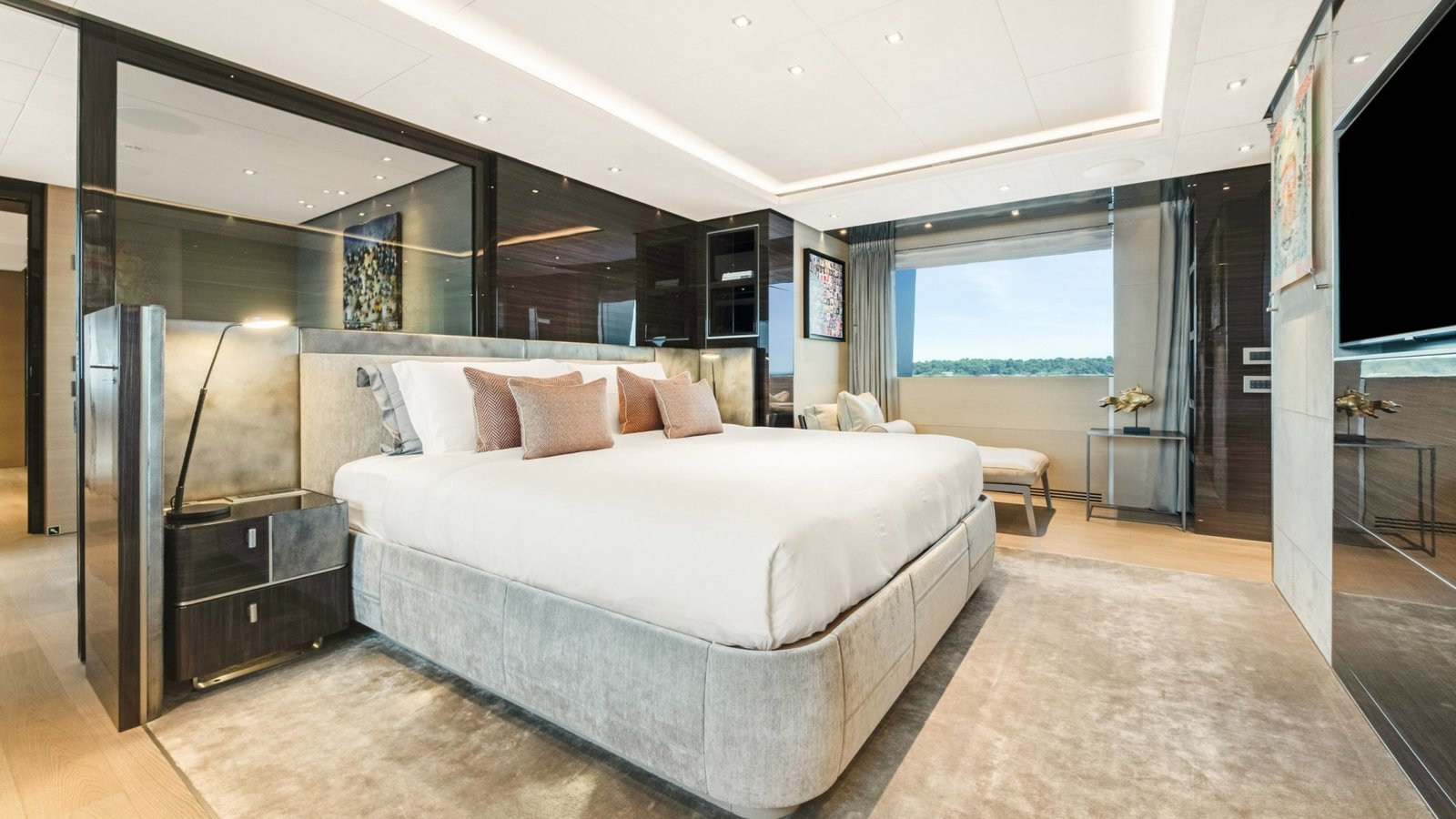
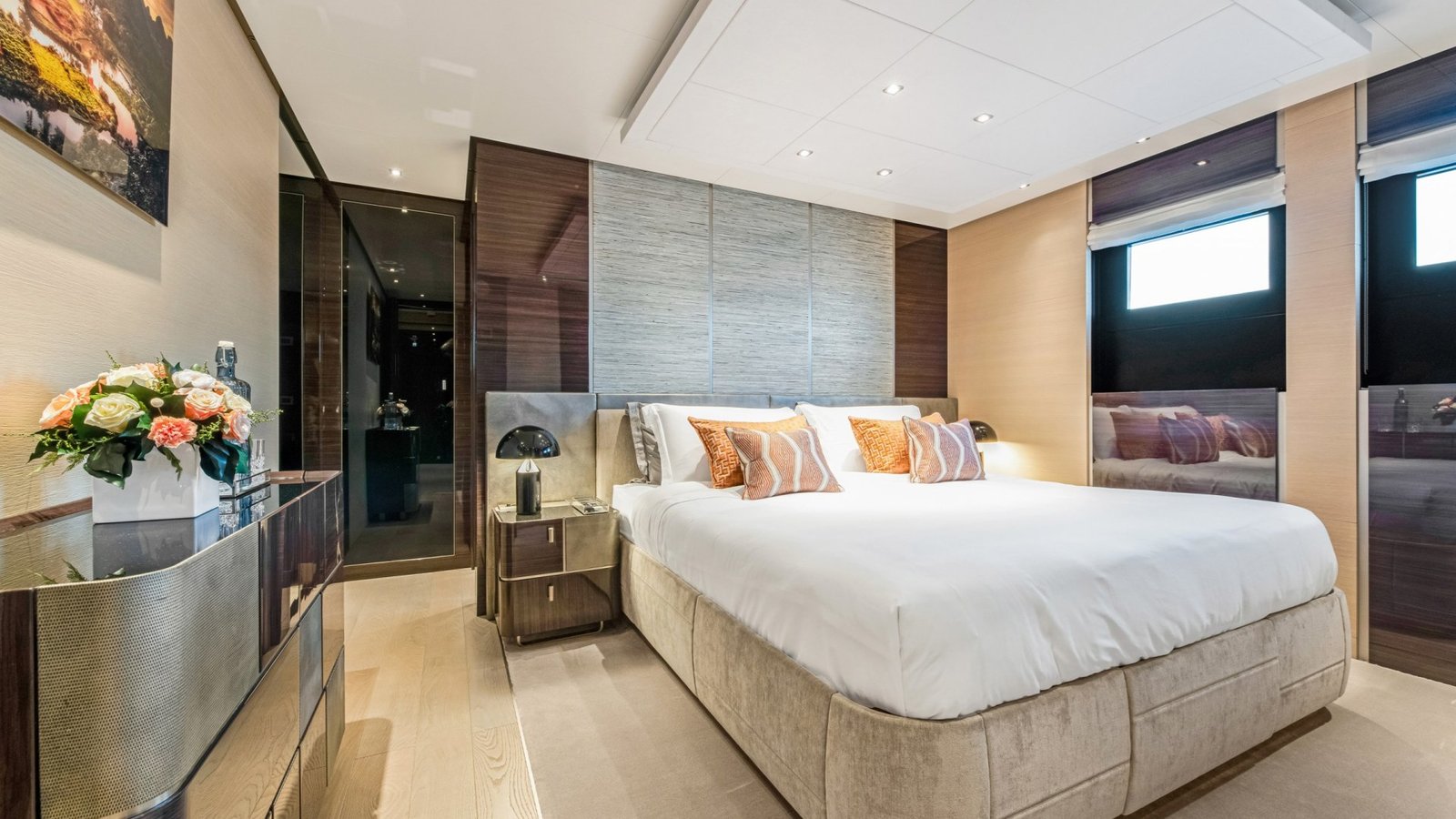
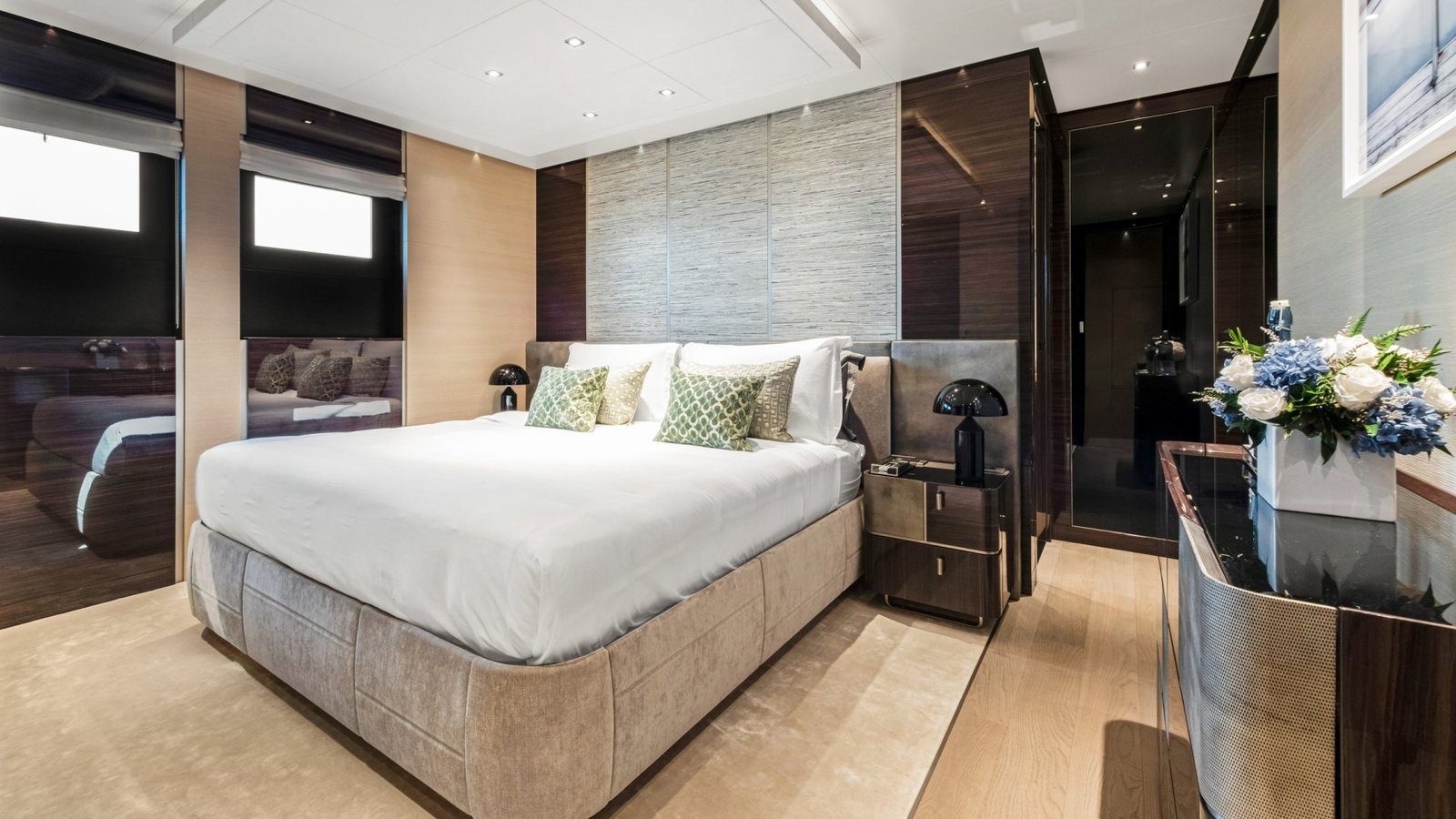
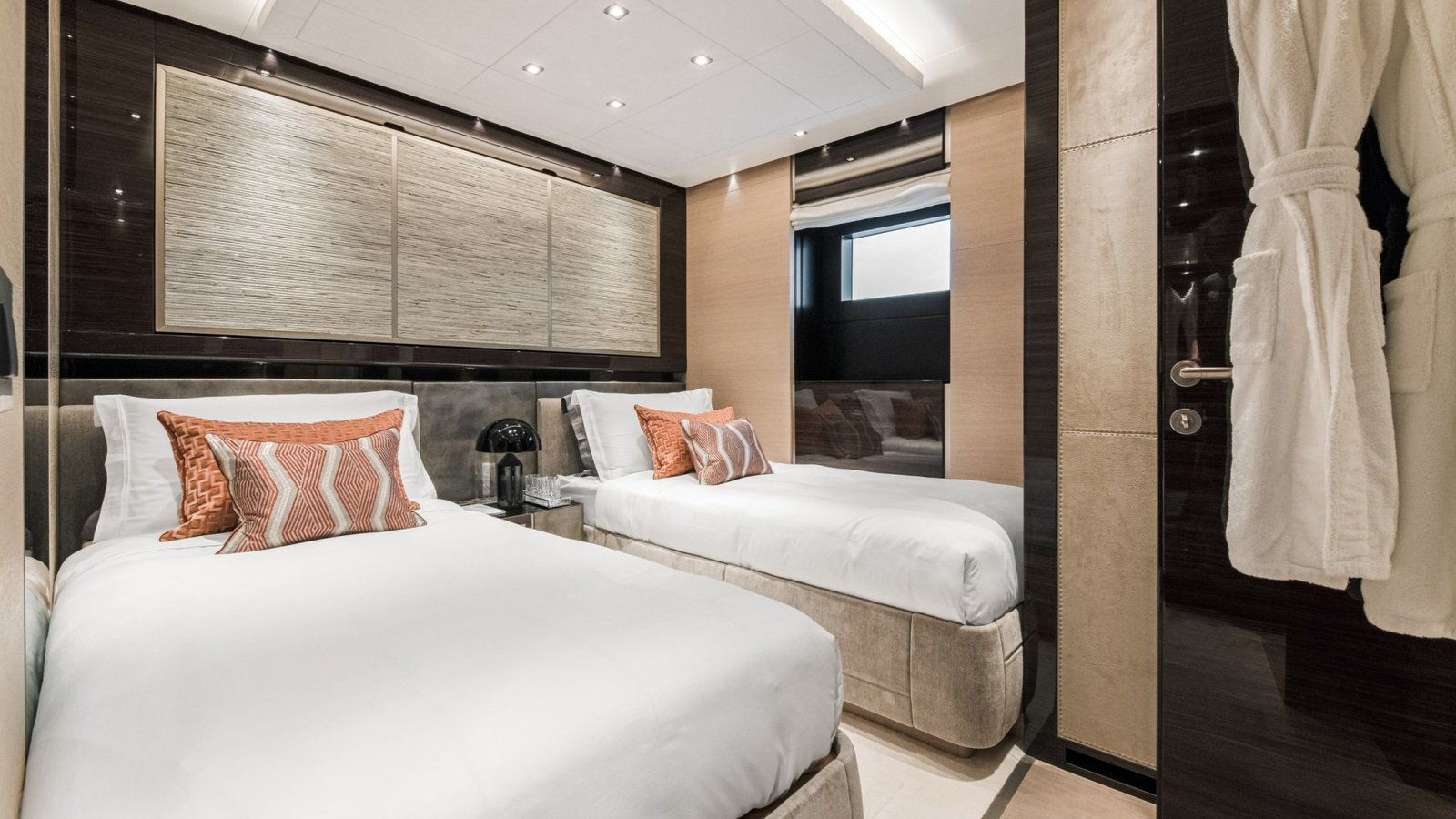
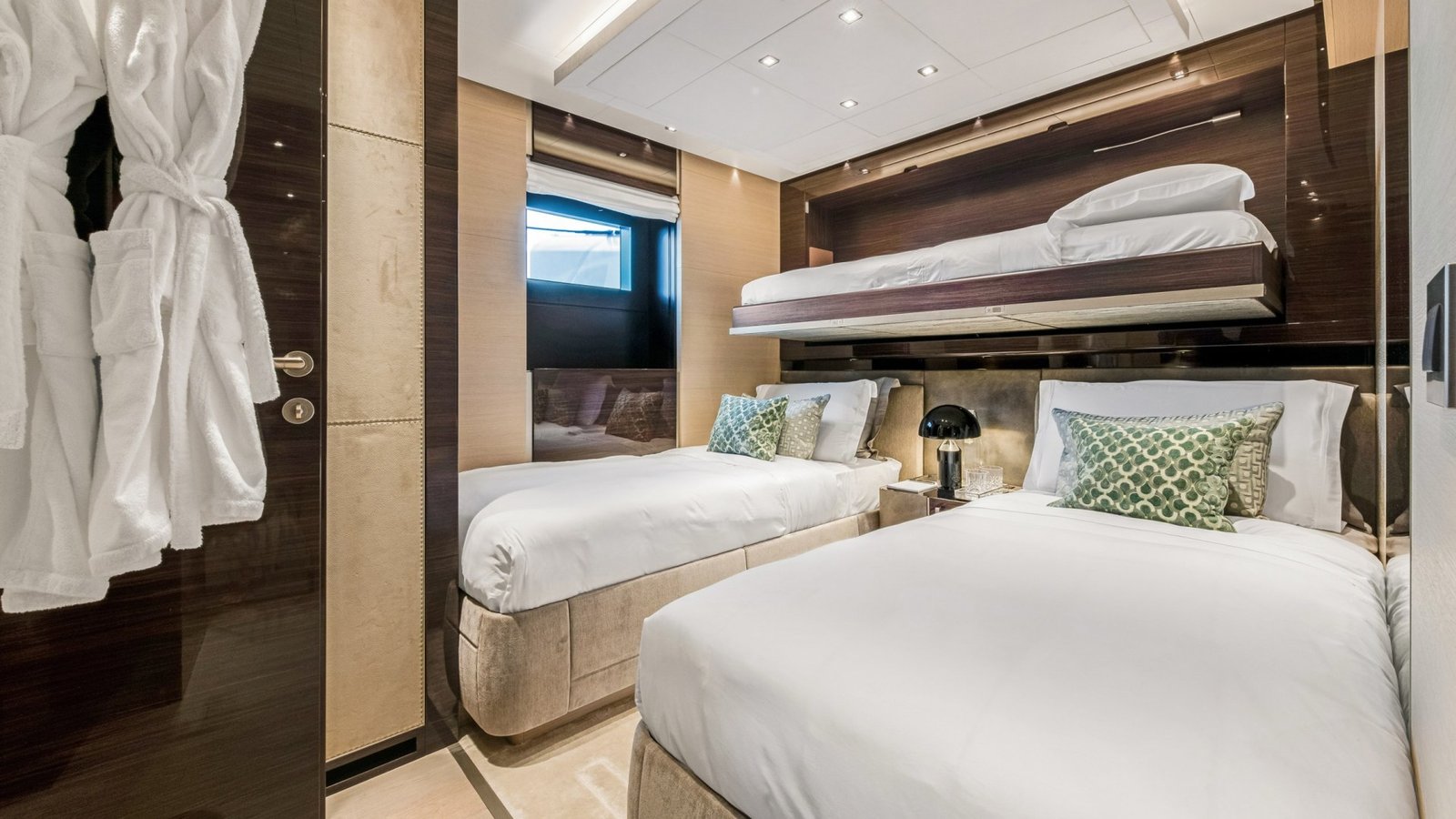
Below, the master runs full beam with its own dressing area and a window line that puts the sea at eye level from the bed. Four guest cabins follow – two doubles and two twins, one with a Pullman – all finished in the same oak and cream, all with their own bathrooms. Nothing is a compromise cabin.
Her interiors carry a strong art programme, which is unusual on a boat this size and gives each space its own centre of gravity: a red panel that anchors the main saloon, a polished bronze head on the stair landing, framed work in every cabin. It is the sort of detail that stops a modern yacht interior reading as a hotel corridor, and it is the reason she photographs so differently from her contemporaries.
She charters the western Mediterranean, working the stretch between the Cote d’Azur and the Italian islands where her range is a luxury rather than a necessity, and the same range that lets her cross to the Balearics without planning around fuel. Nuri is the rarer kind of explorer: built to go a long way, finished to make the going enjoyable, and small enough to take you into the anchorages the larger boats have to watch from outside.