Croatia / Vis
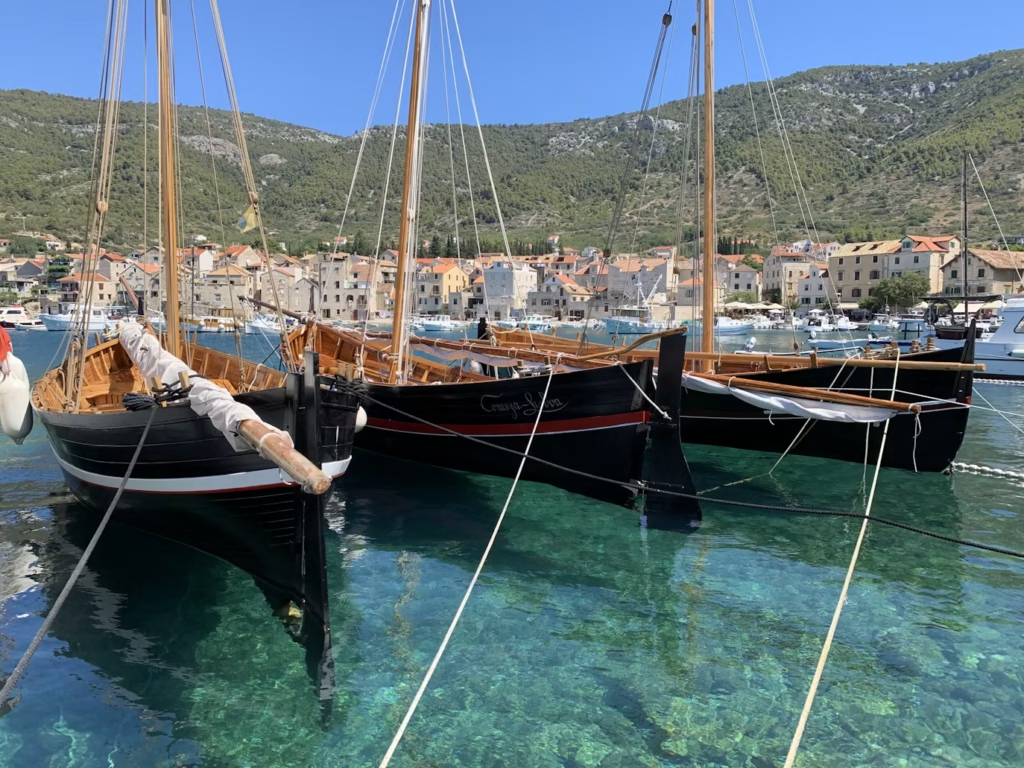
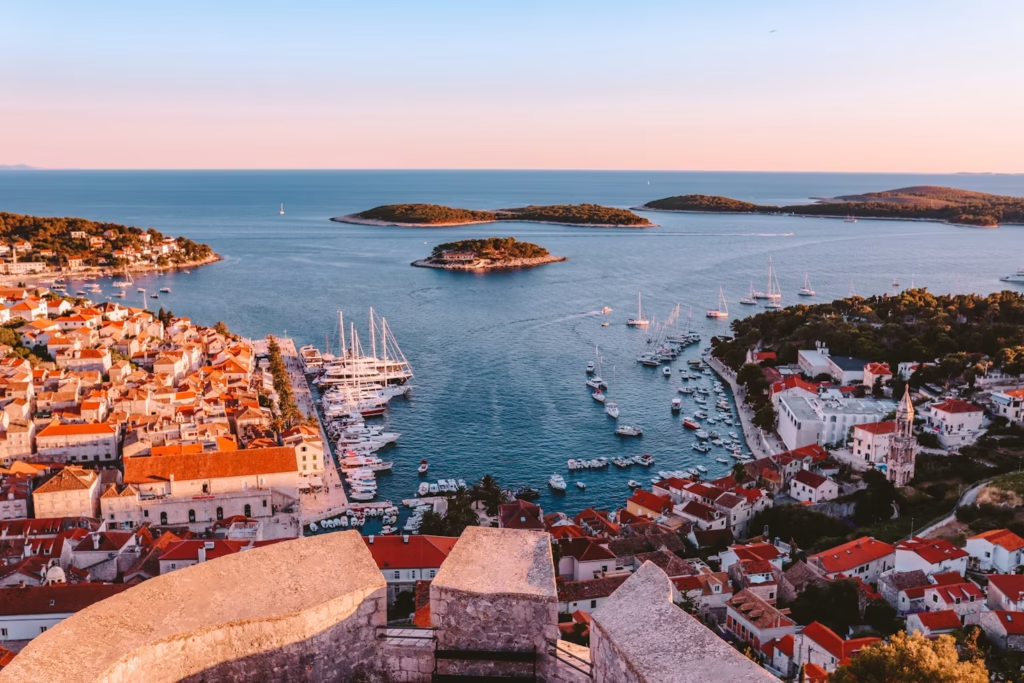
Komiža Harbour
Stiniva Cove
Rukavac Bay
Milna Bay, Vis
Stončica Bay
Dive the WWII aircraft and shipwrecks off Komiža
Snorkel the Green Cave on Ravnik islet
Hike to the summit of Hum
Taste Vugava wine at a family vineyard
Explore the Cold War tunnels at Parja Bay
The Kut quarter, Vis Town
Fort George (Fortica)
Ancient Issa’s Greek walls and Roman baths
Archaeological Museum of Vis
Church of Our Lady of Pirates, Komiža
Late May through September gives the most settled weather and the warmest, clearest water for diving and swimming around Vis’s coves. July and August bring the steadiest maestral, the afternoon sea breeze that fills sails most days, but also the busiest anchorages at Stiniva and the Blue Cave. June and September offer a quieter island with equally warm sea temperatures, and ferry connections to Split run far more frequently in high season than in spring or autumn.
The nearest airport is Split (SPU), Croatia’s main Dalmatian gateway, from which Vis lies roughly 45 nautical miles across open water, about two and a half to three hours by yacht at cruising speed. Guests joining a yacht already moored in Split typically cross by sea, while those meeting the boat directly on Vis can also take the Jadrolinija car ferry from Split, a journey of around two hours twenty minutes, though most charter guests prefer arriving aboard.
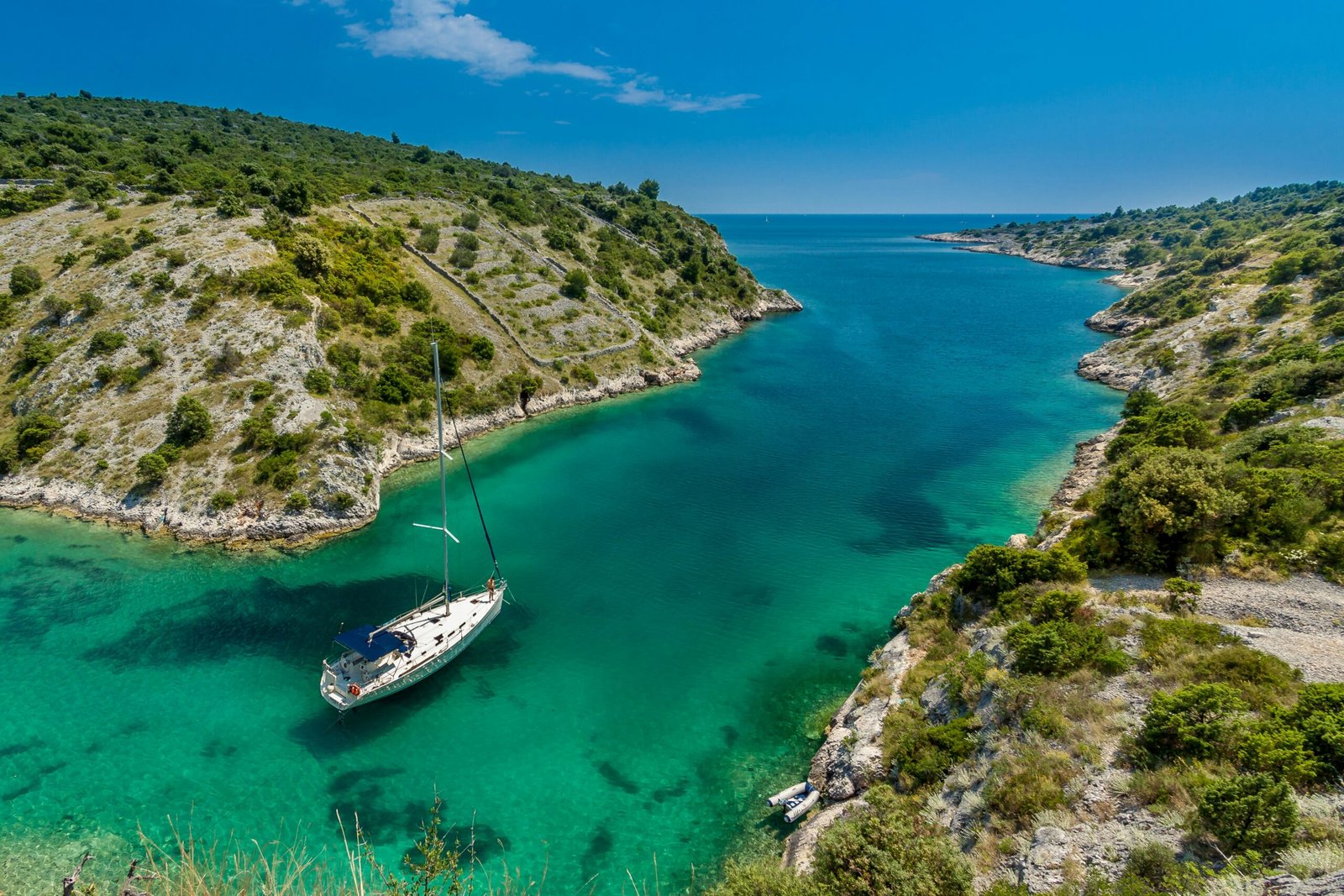
Stiniva Cove is the most photographed anchorage on the island, though its narrow, cliff-lined entrance means most yachts anchor just offshore and send guests in by tender rather than mooring inside. For calmer, more straightforward holding, Rukavac and Stončica on the eastern coast offer good shelter in typical summer winds, while Milna Bay’s pale sand makes it a favourite for an afternoon swim stop. Komiža harbour is the best base for exploring the Blue Cave and Biševo.
Two to three days lets guests take in Vis’s main highlights: a morning at the Blue Cave before the midday crowds, an afternoon anchored off Stiniva, and time ashore in both Vis Town and Komiža. Many itineraries combine Vis with Hvar or the Pakleni Islands to the north, using it as the remote, quieter counterpoint to those busier anchorages. Divers wanting to properly explore the WWII wrecks and Cold War tunnels should allow an extra day or two.
Yes. Decades as a closed Yugoslav military zone, off limits to visitors until 1989, left the surrounding waters unusually undisturbed, and Vis is now regarded as Croatia’s premier wreck diving destination. Sites include the WWII wrecks of a B-17 Flying Fortress and a B-24 Liberator bomber, both lost approaching an emergency airfield, and the 1939 steamship Vassilios T., one of the largest wrecks in the Adriatic. Komiža has several dive centres offering trips for both recreational and technical divers.

Tell us what you would like to know, and our team will respond with clear details on availability, specification, pricing and next steps.