Greece / Peloponnese / Nafplion
Nafplio Town Quay
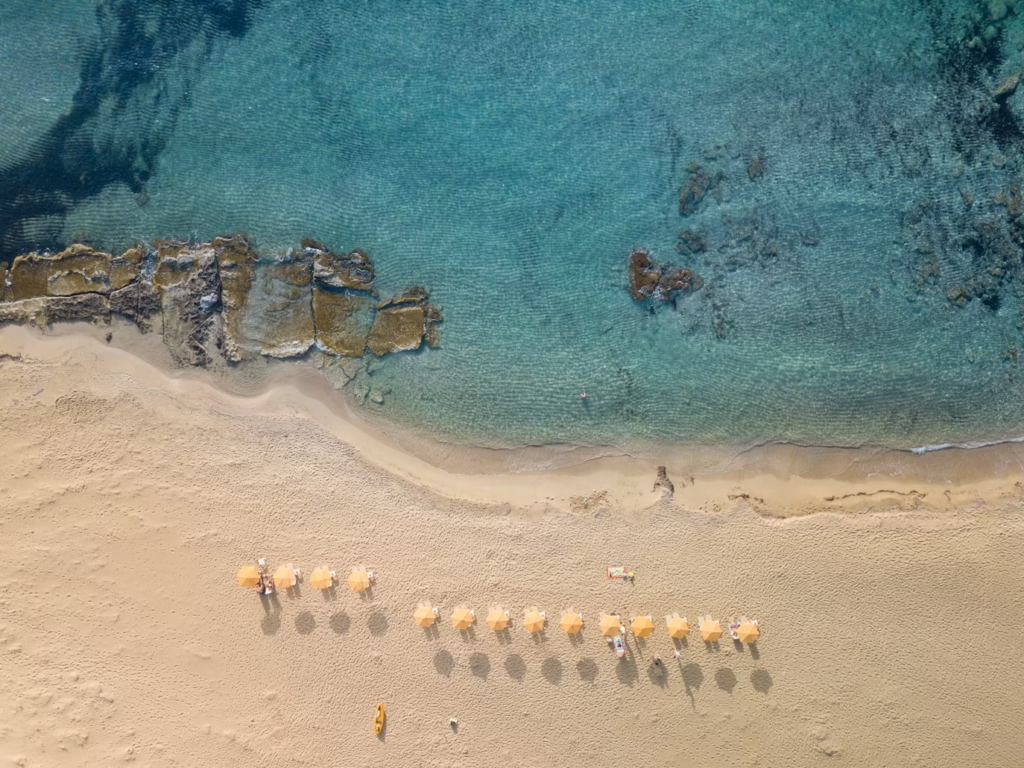
Arvanitia Beach
Karathona Bay
Tolo Bay
Psili Ammos Beach
Climb the 999 steps of the Palamidi fortress
Take a rowing boat out to Bourtzi Castle
Wander the neoclassical lanes around Syntagma Square
Visit Mycenae’s Lion Gate and the Treasury of Atreus
Explore the Bronze Age walls of ancient Tiryns
Old Town, Nafplio’s neoclassical quarter
Akronafplia, the town’s ancient citadel hill
Palamidi Fortress
Bourtzi Castle
Mycenae archaeological site
April through October covers the charter season, with July and August the warmest and busiest months around Syntagma Square. The Argolic Gulf is more sheltered than the open Aegean, so Nafplio sees less of the strong Meltemi that affects the Cyclades, making it a comfortable base even in high summer. May, June and September offer similarly reliable weather with noticeably quieter streets and beaches.
Nafplio has no airport of its own. Kalamata is the nearest, roughly 140 kilometres and just under two hours away by road across the Peloponnese, while Athens International Airport is a similar distance in the other direction. Many guests fly into Athens and either drive down or join their yacht already cruising the Argolic Gulf, since Nafplio sits within a short sail of Poros, Hydra and Epidavros.
The town quay beneath the Venetian walls puts guests within walking distance of Syntagma Square and the harbourfront tavernas, with Bourtzi Castle visible just offshore. Arvanitia, a short walk around the headland, offers a quieter pebble beach for swimming. Guests wanting more space can anchor off Karathona or Tolo, both a short cruise south, and tender back in for dinner.
Two nights allow time to explore the Old Town, climb Palamidi and take a half-day trip inland to Mycenae or Epidaurus, both under thirty minutes away by road. Nafplio also works well as a base for a wider Argolic Gulf itinerary, sitting within easy reach of Hydra, Poros and Epidavros for guests who want history and island-hopping on the same trip.
Nafplio served as the first capital of the modern Greek state between 1823 and 1834, before the seat of government moved to Athens, and its neoclassical architecture still reflects that brief but formative period. The town’s Palamidi fortress fell to Greek revolutionary forces in 1822, a pivotal moment in the War of Independence, and its harbour later saw the assassination of Greece’s first head of state, Ioannis Kapodistrias, in 1831.

Tell us what you would like to know, and our team will respond with clear details on availability, specification, pricing and next steps.